
Search
Market-leading solutions
Product families (53)Product configurations for any application
Product models (274)

Tried-and-tested applications
Applications (1171)

Electrodes for rod
Electrodes (475)Accessories for rod
Accessories (387)Columns for rod
Columns (20)Software for rod
Software (15)Manuals & brochures for rod
Documents (257)Blog for rod
Blog (175)Industries for rod
Industries (51)On-demand webinars for rod
Webinars (63)Unmatched support & service for rod
Support & service (35)Other content
Items (53)News for rod
News (45)OMNIS titrators
All-in-one potentiometric autotitrator platform: faster results, safer handling of chemicals, and maximum modularity for easier adaptability to your requirements.
Ti-Touch
Minimum bench space, maximum performance: A compact all-in-one potentiometric titrator for routine applications.
ProTrode sensors
Enhance your process insights with inline pH, dissolved oxygen, and dissolved carbon dioxide measurements
Professional CVS
Flexible benchtop analyzers for Cyclic Voltammetric Stripping.
OMNIS NIR Analyzer
Good vibes in your lab: State-of-the-art near-infrared spectrometer for easier, faster, and more efficient quality control and routine screening.
OMNIS KF titrators
Fully integrated solution for water content determination with volumetric and coulometric Karl Fischer titration.
VIONIC powered by INTELLO
The future of electrochemistry is pure. VIONIC: one instrument, pure discovery.
940 Professional IC Vario
One instrument – ultimate flexibility: Ion chromatograph with virtually no limitations to individual system configuration and customization.
2060 Platform
The robust and reliable modular analyzer platform for ultimate flexibility in customized process monitoring.
MIRA XTR
The premier handheld Raman system for safe in-field identification of unknown materials: compact, flexible, smart, and rugged.
949 pH Meter
Compact, entry-level benchtop pH meter for simple and reliable pH, mV, and ORP measurements.
MIRA P
The premier handheld Raman system for rapid onsite raw material verification: easy, fast, flexible, and transparent.
930 Compact IC Flex
Single-channel ion chromatograph for routine analysis with superior sensitivity for the analysis of anions, cations, and polar substances.
KF Titrando
Volumetric and coulometric Karl Fischer titrator for accurate determination of any water content, from 0.001 to 100%.
Portable Meters (912, 913, 914)
Robust portable pH meters, conductivity meters, and combined oxygen meters for use in the field or in the lab.
Professional VA
Flexible benchtop analyzers for trace analysis with voltammetry and polarography.
Compact Line
Space-saving potentiostats/galvanostats: lightweight, portable, and economical.
Titrando
From stand-alone titrator to a fully automated solution in an overarching network: a potentiometric titrator that can be tailored to your specific requirements.
2060 VA/CVS Process Analyzer
Precise trace metal analysis with Voltammetry or organic additives monitoring with CVS (Cyclic Voltammetric Stripping).
OMNIS Software
Modern laboratory data management software for the regulated and non-regulated environment. Increase the efficiency and productivity of your lab with the OMNIS Software.
KF Ti-Touch
Compact all-in-one volumetric or coulometric Karl Fischer titrator for routine water content determination.
Eco IC
Compact entry-level ion chromatograph offering Swiss quality at an affordable price.
Portable VA Analyzer
Portable voltammetric analyzers for the determination of trace levels of heavy metals in water in the field.
780/781 pH/ion meters
The instruments of choice for pH, ORP, and ion concentration measurements.
Modular Line
Build an instrument for electrochemical research that meets your exact requirements with only specifications and features you need.
i-Raman NxG
Next-generation quality control measurements utilizing laboratory Raman spectroscopy.
2060 XRF Process Analyzer
Reliable online x-ray fluorescence analysis for liquid process control
i-Raman Plus
Entry-level laboratory Raman that delivers research-grade results.
Multichannel Line
Multichannel instruments: electrochemistry times twelve.
2060 TI Process Analyzer
Integrated solution for 24/7 online monitoring of critical chemical parameters in industrial processes and wastewater streams with titration, pH, ISE, conductivity, coulometry, or photometry methods.
2060 Raman Analyzer
Unleashing analytical precision for comprehensive process monitoring
2060 RISE
An inline Raman spectroscopy sensor to elevate your process analysis
Coulometric Karl Fischer titrators
Stand-alone or computer-controlled coulometers for the determination of low water content or moisture content (0.001 to 1%) by coulometric titration.
Explosion-proof Process Analyzers
State-of-the-art protection for online process analysis.
867/856 Modules
High-end modules for customized pH, ion, and conductivity measurement.
Portable Line
Combining electrochemical research in the laboratory with in-field testing: Use well-established electrochemical techniques to maintain the highest levels of measurement quality and accuracy.
2060 The NIR Analyzer
A turnkey solution for Process Analytical Technology (PAT)
TacticID
Handheld Raman for field identification of chemicals, explosives, narcotics, and many other toxic industrial chemicals and materials.
Metrohm Inline Sample Preparation
Intelligent injection techniques and automation solutions for complex sample preparation in ion chromatography analysis.
NanoRam
State-of-the-art handheld 1064 nm Raman instrument for non-destructive identification and verification of incoming raw materials such as APIs, excipients, and intermediates.
2060 IC Process Analyzer
Complete and flexible system for online monitoring of ionic compounds in aqueous media from ng/L to % concentrations.
Automation for IC
Whatever the number of samples and whatever preparatory treatment, we provide automated solutions for ion chromatography to meet your requirements.
Portable Multichannel Line
Obtain more results in less time keeping the reduced size and simplicity
Integrated spectroelectrochemistry
The next-generation tools for spectroelectrochemical research: bipotentiostat/galvanostat, spectrometer, and light source all in one instrument, controlled by a single software. Meet SPELEC!
Hyphenated spectroelectrochemistry
EC-Raman and EC-UV/VIS spectroelectrochemistry using stand-alone Autolab PGSTATs and spectrometers
Electrochemiluminescence
The ultimate electrochemiluminescence instruments with improved simplicity, versatility, and sensitivity.
PTRam Analyzer
Inline self-calibrating process development Raman.
Rancimat and Thermomat
Accelerated aging testing (oxidation stability index and stability time) for natural oils and fats, fat-containing folds and cosmetics, biodiesel, and chlorine-containing polymers, such as PVC.
Sample preparation for voltammetry
Get rid of organic contamination of a sample using UV digestion, ensuring reliable determinations in voltammetry analyses.
Reliable solutions when the water content of samples cannot be titrated directly.
Automation for KF Ti-Touch
Save time and space: automated thermal sample preparation for water content analysis
Sample preparation for KF Titrando coulometers
Solutions for sample preparation with KF Titrando coulometers when samples cannot be titrated directly.
Automation for KF Titrando
Oven sample changer: Automated sample preparation for samples that cannot be titrated directly.
2.1006.0020
OMNIS Rod Stirrer TitrationRod stirrer for connection to one OMNIS Titrator (cable length 1.1 m).
2.1006.0010
OMNIS Rod Stirrer Sample RobotRod stirrer with permanently mounted cable (2.5 m) for direct connection to the OMNIS Sample Robot.
2.804.0010
804 Ti Stand without stand rodTitration stand and controller for 802 Stirrer. The 804 Ti Stand together with the optional 802 Stirrer provides an alternative to the magnetic stirrer. Without stand.
2.804.0040
804 Ti Stand with standTitration stand and controller for 802 Rod Stirrer. The 804 Ti Stand together with the optional 802 Rod Stirrer provides an alternative to the magnetic stirrer. Ti Stand with base plate, support rod and electrode holder.
2.728.0010
728 Magnetic Stirrer without standFor mounting on a stand rod 10 mm dia.; without base plate (or holder) and without stand rod; without power adapter, with fixed connecting cable.
2.728.0021
728 Magnetic Swing-out Stirrer without stand, 110 V USFor mounting on a stand rod 10 mm dia.; without base plate (or holder) and without stand rod; incl. 6.2119.020 power adapter. U = 100...120 V, US plug.
2.728.0024
728 Magnetic Stirrer without stand, 220 V EUFor mounting on a stand rod 10 mm dia.; without base plate (or holder) and without stand rod; incl. 6.2117.020 power adapter. U = 220...240 V, EU plug.
2.1010.1120
OMNIS Sample Robot S – WSM (1T/2P)OMNIS Sample Robot S – WSM, equipped with an OMNIS Workstation Module with 2 pumps for cleaning and extraction of the sensors and sample vessels, a workstation, rod stirrers, and extensive accessories for getting started directly with fully automated titration. The system provides space in two sample racks for 32 sample beakers of 120 mL each. This modular system is supplied completely installed and can thus be put into operation in a very short time. The system can also be extended upon request to include 2 additional peristaltic pumps and another workstation, thus doubling the throughput. If additional workstations are required, then the Sample Robot S can be extended to become an L-sized OMNIS Sample Robot, thus enabling samples from 7 racks to be processed in parallel on up to 4 workstations to quadruple the sample throughput.
2.1001.0010
OMNIS Titrator without stirrer, without function licenseInnovative, modular potentiometric OMNIS Titrator. Thanks to 3S Liquid Adapter technology, handling chemicals is safer than ever before. The titrator can be freely configured with measuring modules and cylinder units and can have a stirrer added as needed. Thanks to various software function licenses, various measuring modes and functionalities are possible. Actuation via PC or local network; Connection option for up to four additional titration or dosing modules for additional applications or auxiliary solutions; Can be supplemented with magnetic stirrer and/or rod stirrer; Various cylinder sizes available: 5, 10, 20 or 50 mL; Liquid Adapter with 3S technology: Safe handling of chemicals and automatic transfer of the reagent dataMeasuring modes and software options:; Endpoint titration: "Basic" function license; Endpoint and equivalence point titration (monotonic/dynamic): "Advanced" function license; Endpoint and equivalence point titration (monotonic/dynamic) with parallel titration: "Professional" function license; Optional licenses for additional measuring, titration, and operating modes (e.g. volumetric Karl Fischer titration, conductometric or thermometric titration, coulometry, determination of the bromine index);
2.802.0040
802 Stirrer for 804 Ti StandRod stirrer including 6.1909.010 stirring propeller.
2.802.0010
802 Stirrer for 727 Ti StandRod stirrer including separate 6.2137.000 speed controller and 6.1909.010 stirring propeller.
2.849.0030
849 Level Control metal-free (for bottles)Additional equipment for automatic "Inline Eluent Preparation" and for remotely monitoring the fill level in eluent or auxiliary solution bottles. The 849 Level Control prevents pump from running dry or prevents it from running over with the optionally available "FULL Sensor". The enclosed "EMPTY sensor" is suitable for use with aqueous solutions, solvents, and suspensions; the length of the rods is intended for the 2 L eluent bottle. The metal-free sensor works in solutions with very low conductivity. It is therefore suitable for use in ion chromatography, particularly for ultrapure water as well.
2.728.0031
728 Magnetic Stirrer with stand, 110 V USIncl. 6.2026.010 Base plate and stand rod; incl. 6.2119.020 Power adapter. U = 100...120 V, US plug.
2.728.0034
728 Magnetic Swing-out Stirrer with stand, 220 V EUIncl. 6.2026.010 Base plate and stand rod; incl. 6.2117.020 Power adapter. U = 220...240 V, EU plug.
2.802.0011
802 Stirrer, 110 V USRod stirrer with power supply unit for 110 V, US plug, with switching ring and speed controller.
2.802.0020
802 Stirrer for sample changerRod stirrer for sample changer and Sample Processor.With 104 mm 6.1909.020 stirring propeller and permanently installed cable.
2.802.0014
802 Stirrer, 220 V EURod stirrer for 727 Titration Stand. With power supply unit for 220 V, EU plug, with switching ring and speed controller.
2.1001.0120
OMNIS Basic Titrator with magnetic stirrerInnovative, modular potentiometric OMNIS Titrator for stand-alone operation or as the core of an OMNIS titration system for endpoint titration. Thanks to 3S Liquid Adapter technology, handling chemicals is more secure than ever before. The titrator can be freely configured with measuring modules and cylinder units and can have a rod stirrer added as needed. If required, the range of functions of the OMNIS Basic Titrator can be supplemented with a corresponding software function license. Control via PC or local network; Connection option for up to four additional titration or dosing modules for additional applications or auxiliary solutions; Connection option for one rod stirrer; Various cylinder sizes available: 5, 10, 20 or 50 mL; Liquid Adapter with 3S technology: Secure handling of chemicals, automatic transfer of the original reagent data of the manufacturerMeasuring modes and software options:; Endpoint titration: "Basic" function license; Endpoint and equivalence point titration (monotonic/dynamic): "Advanced" function license; Endpoint and equivalence point titration (monotonic/dynamic) with parallel titration: "Professional" function license;
2.859.1010
859 Titrotherm complete with tiamo™Computer-controlled titrator for thermometric titration. Including complete accessories for the titration (10 mL buret, titration stand with rod stirrer, Thermoprobe, titration vessel and tiamo™ light).
2.1001.0320
OMNIS Professional Titrator with magnetic stirrerInnovative, modular potentiometric OMNIS Titrator for stand-alone operation or as the core of an OMNIS titration system for endpoint titration and equivalence point titration (monotonic/dynamic). Thanks to 3S Liquid Adapter technology, handling chemicals is more secure than ever before. The titrator can be freely configured with measuring modules and cylinder units and can have a rod stirrer added as needed. Including "Professional" function license for parallel titration with additional titration or dosing modules. Actuation via PC or local network; Connection option for up to four additional titration or dosing modules for additional applications or auxiliary solutions; Connection option for one rod stirrer; Various cylinder sizes available: 5, 10, 20 or 50 mL; Liquid Adapter with 3S technology: Safe handling of chemicals, automatic transfer of the original reagent data from the manufacturerMeasuring modes and software options:; Endpoint titration: "Basic" function license; Endpoint and equivalence point titration (monotonic/dynamic): "Advanced" function license; Endpoint and equivalence point titration (monotonic/dynamic) with 5-way parallel titration: "Professional" function license;
2.949.0210
949 pH Meter without electrodeDiscover the 949 pH Tabletop Meter – Your compact pH measuring instrument for quick and reliable laboratory measurements.Complete pH measuring instrument with color display; Precise pH, mV and ORP measurements with integrated temperature display; Simple calibration with Metrohm, USA, and NIST buffers up to 3 points or by 2-point calibration with in-house buffers; Clearly structured display of the calibrated values using symbols for simple read-off; 3 stability criteria for measured value recognition for reliable results; GLP conformity of the measured values with embedded date and time; Overview of calibration data with monitoring function; RS232 port enables connection of a printer.; Included in the package are the 949 pH Meter, the electrode holder, and the power supply unit for immediate use in the laboratory.
2.949.0220
949 pH Meter with SolitrodeThe 949 pH Meter is the perfect tabletop pH meter for quick and precise pH measurements. Ideal for laboratories, research institutes and industrial environments where pH analyses are performed regularly.Complete tabletop pH measuring instrument with color display; Measures pH, mV, and ORP with temperature display for comprehensive analyses; Simple pH calibration with Metrohm, USA, and NIST buffers up to 3 points or by user-defined 2-point calibration; Display of the calibrated values with symbols for clear readability; Signals measurement stability and offers the option of selecting between 3 stability criteria for reliable results; In conformance with GLP with embedded date and time; Display of calibration data and setting of the calibration deadline; Solitrode with stable plastic shaft for long-lasting use; Included in the package are the 949 pH Meter, the electrode holder, the power supply unit, and the Solitrode with Pt1000 with fixed cable for simple and immediate use.
2.848.0120
Titropackage plus with printerCompact and economic system for automating potentiometric determinations on a minimum footprint. Includes the following instruments:1 x 848 Titrino plus1 x 802 Rod stirrer1 x 869 Compact Sample Changer1 x USB Thermodrucker NEO's
2.1003.0010
OMNIS Dosing Module without stirrerDosing module for connection to an OMNIS Titrator for extending the system to include an additional buret for titration/dosing. Can be supplemented with one magnetic stirrer or rod stirrer for use as separate titration stand. Freely selectable cylinder unit with 5, 10, 20 or 50 mL.
2.1001.0220
OMNIS Advanced Titrator with magnetic stirrerInnovative, modular potentiometric OMNIS Titrator for stand-alone operation or as the core of an OMNIS titration system for endpoint titration and equivalence point titration (monotonic/dynamic). Thanks to 3S Liquid Adapter technology, handling chemicals is more secure than ever before. The titrator can be freely configured with measuring modules and cylinder units and can have a rod stirrer added as needed. If required, the OMNIS Advanced Titrator can be equipped for parallel titration via a corresponding software function license. Control via PC or local network; Connection option for up to four additional titration or dosing modules for additional applications or auxiliary solutions; Connection option for one rod stirrer; Various cylinder sizes available: 5, 10, 20 or 50 mL; Liquid Adapter with 3S technology: Secure handling of chemicals, automatic transfer of the original reagent data from the manufacturerMeasuring modes and software options:; Endpoint titration: "Basic" function license; Endpoint and equivalence point titration (monotonic/dynamic): "Advanced" function license; Endpoint and equivalence point titration (monotonic/dynamic) with parallel titration: "Professional" function license;
2.1014.0010
Pick&Place moduleModule for installation in the module plate of the Pick&Place of the OMNIS Sample Robot. This workstation takes up the sample beaker for the analysis. Used sensors are cleaned or parked in the storage beaker of the Pick&Place module between analyses. If stirring is required during the analysis, then a separate rod stirrer must be used for this workstation.
2.728.0040
728 Magnetic Stirrer with standFor the extension of 645, 685, 665/765, 715/775, 725/776 Dosimats to Titration Stands, or supplement for Titrinos and KF Coulometers; incl. 6.2001.010 base plate with support rod and electrode holder; without power adapter, with fixed connecting cable.
2.1002.0010
OMNIS Titration Module without stirrerTitration module for connection to an OMNIS Titrator for extending the system to include an additional buret for titration/dosing and up to two measuring modules (analog or digital). Can be supplemented with one magnetic stirrer or rod stirrer for use as separate titration stand. Freely selectable cylinder unit with 5, 10, 20 or 50 mL.
2.801.0040
801 Stirrer with standMagnetic stirrer including base plate, support rod and electrode holder for supplementing the Titrino plus, Dosimat plus, Titrandos, Sample Processors, 805 Dosimat and 780/781 pH meters as well as the 856 and 867 measuring modules. With permanently attached cable for MSB (Metrohm Serial Bus).
2.1001.3220
OMNIS Titrator OilThe OMNIS Titrator Oil offers you the complete package for all conventional analyses of petrochemical products. The package contains the OMNIS Advanced Titrator with magnetic and rod stirrer, a 20 mL cylinder unit, a d-Solvotrode for nonaqueous acid-base titration and one stand-alone OMNIS Software license.
2.815.1110
815 Robotic Titration SoliprepThe 815 Robotic Titration is a system for the completely automatic preparation of solid samples that need to be reduced and placed in solution prior to titration.The system consists of:1 x 815 Robotic USB Sample Processor XL1 x 136 Polytron with power supply unit2 x 772 Pump Unit2 x 786 Swing Head1 x 802 Rod stirrer
2.1001.0020
OMNIS Titrator with magnetic stirrer, without function licenseInnovative, modular potentiometric OMNIS Titrator for stand-alone operation or as the core of an OMNIS titration system. Thanks to 3S Liquid Adapter technology, handling chemicals is more secure than ever before. The titrator can be freely configured with measuring modules and cylinder units and can have a stirrer added as needed. Thanks to various software function licenses, various measuring modes and functionalities are possible. Control via PC or local network; Connection option for up to four additional titration or dosing modules for additional applications or auxiliary solutions; Connection option for one rod stirrer; Various cylinder sizes available: 5, 10, 20 or 50 mL; Liquid Adapter with 3S technology: Secure handling of chemicals, automatic transfer of the original reagent data of the manufacturerMeasuring modes and software options:; Endpoint titration: "Basic" function license; Endpoint and equivalence point titration (monotonic/dynamic): "Advanced" function license; Endpoint and equivalence point titration (monotonic/dynamic) with parallel titration: "Professional" function license;
2.1024.0010
OMNIS Workstation Module (1T/0P)Module for installation in the OMNIS Sample Robot WSM. This module contains a workstation for the automatic processing of sample vessels without pumps. The workstation takes up the sample beaker for the analysis. Used sensors can be cleaned or parked in the storage beaker of the workstation between analyses. If stirring is required during the analysis, then a separate rod stirrer or a magnetic stirrer can be attached for this workstation.
2.851.0010
851 Titrando with generator electrode with diaphragmCoulometer including generator electrode with diaphragm and 801 Magnetic Stirrer.Coulometry is the ideal method for water content determination in liquids, solids, and gases when it comes to water content determination in the trace range (10 µg to 10 mg absolute water). In addition, coulometry is an absolute method and thus no titer determination is necessary.Coulometric titrations are carried out easily and quickly with the 851 Titrando.Recommended measuring range: 10 µg - 200 mg absolute waterFor use with OMNIS Software, tiamo software, or Touch Control unit. Compliance with GMP/GLP and FDA regulations such as 21 CFR Part 11, if required
2.851.0110
851 Titrando with generator electrode without diaphragmCoulometer including generator electrode without diaphragm.Coulometry is the ideal method for water content determination in liquids, solids, and gases when it comes to water content determination in the trace range (10 µg to 10 mg absolute water). In addition, coulometry is an absolute method and thus no titer determination is necessary.Coulometric titrations are carried out easily and quickly with the 851 Titrando.Recommended measuring range: 10 µg - 200 mg absolute water.For use with OMNIS Software, tiamo software, or Touch Control unit. Compliance with GMP/GLP and FDA regulations such as 21 CFR Part 11, if required.
2.852.0050
852 Titrando with generator electrode with diaphragmCoulometer including generator electrode with diaphragm, 801 Magnetic Stirrer, and complete volumetric titration cell.Coulometry is the ideal method for water content determination in liquids, solids, and gases when it comes to water content determination in the trace range (10 µg to 10 mg absolute water). In addition, coulometry is an absolute method and thus no titer determination is necessary.Recommended coulometry measuring range: 10 µg - 200 mg absolute waterThe 852 Titrando controls not only coulometric, but also volumetric Karl Fischer titration.For use with OMNIS Software, tiamo software, or Touch Control unit. Compliance with GMP/GLP and FDA regulations such as 21 CFR Part 11, if required.
2.852.0150
852 Titrando with generator electrode without diaphragmCoulometer including generator electrode without diaphragm and complete volumetric titration cellCoulometry is the ideal method for water content determination in liquids, solids, and gases when it comes to water content determination in the trace range (10 µg to 10 mg absolute water). In addition, coulometry is an absolute method and thus no titer determination is necessary.Recommended coulometry measuring range: 10 µg - 200 mg absolute water.The 852 Titrando controls not only coulometric, but also volumetric Karl Fischer titration.For use with OMNIS Software, tiamo software, or Touch Control unit. Compliance with GMP/GLP and FDA regulations such as 21 CFR Part 11, if required.
TitrIC Vario pro I
TitrIC Vario pro I – The basic hyphenated system for IC and titrationTitrIC Vario pro I – The basic systemFully automatic system for direct measurement of temperature, conductivity and pH value; the titrimetric determination of p value, m value, calcium and magnesium and the determination of anions by ion chromatography.The system consists of the 856 Conductivity Module, four 800 Dosinos, 802 Stirrer (rod stirrer), 905 Titrando, 815 Robotic USB Sample Processor XL and 930 Compact IC Flex Oven/SeS/PP/Deg with sequential suppression and the "iDetector" conductivity detector.TitrIC Vario – The power pack for ion analysis.
2.1001.0110
OMNIS Basic Titrator without stirrerInnovative, modular potentiometric OMNIS Titrator for endpoint titration. Thanks to 3S Liquid Adapter technology, handling chemicals is safer than ever before. The titrator can be freely configured with measuring modules and cylinder units and can have a stirrer added as needed. If required, the range of functions of the OMNIS Basic Titrator can be extended with a corresponding software function license. Control via PC or local network; Can be supplemented with magnetic stirrer and/or rod stirrer; Various cylinder sizes available: 5, 10, 20 or 50 mL; Connection option for up to four additional titration or dosing modules for additional applications or auxiliary solutions; Liquid Adapter with 3S technology: Safe handling of chemicals, automatic transfer of the original reagent data from the manufacturerMeasuring modes and software options:; Endpoint titration: "Basic" function license; Endpoint and equivalence point titration (monotonic/dynamic): "Advanced" function license; Endpoint and equivalence point titration (monotonic/dynamic) with parallel titration: "Professional" function license;
2.1024.0020
OMNIS Workstation Module (1T/2P)Module for installation in the OMNIS Sample Robot WSM. This module contains a workstation for the automatic processing of sample vessels and two pumps for the automatic cleaning (rinsing and extraction) of sample vessels and sensors. The workstation takes up the sample beaker for the analysis. Used sensors can be cleaned or parked in the storage beaker of the workstation between analyses. If stirring is required during the analysis, then a separate rod stirrer or a magnetic stirrer can be installed for this workstation.
2.1024.0030
OMNIS Workstation Module (2T/4P)Module for installation in the OMNIS Sample Robot WSM. This module contains 2 workstations for the automatic processing of sample vessels and 4 pumps for the automatic cleaning of sample vessels and sensors (rinsing and extraction) at both workstations. The workstations take up the sample beaker for the analysis. Used sensors can be cleaned or parked in the storage beakers of the workstations between analyses. If stirring is required during the analysis, then a separate rod stirrer or a magnetic stirrer can be installed for each workstation.
2.855.3010
Robotic Analyzer Basic with OMNIS SoftwareThe Robotic Analyzer Basic package contains all the components for a fully automated titration or measurement in the smallest possible space in a minimum of time.In addition to the Robotic Titrosampler Basic with a rack for 59 samples in 120 mL PP beakers, the package also includes a rod stirrer, a peristaltic pump and a Dosino with 20 mL dosing unit and the OMNIS control software.Only electrode cables, sensors and additional dosing devices as needed must be added, so that it will be available for flexible use as Acid-Base, TAN/TBN, Chloride or Fluoride Analyzer.
TitrIC flex I
TitrIC flex I – The basic hyphenated system for IC and titrationTitrIC flex I – the basic systemFully automated system for direct measurement of temperature, conductivity, and pH value; the titrimetric determination of p value, m value, calcium, and magnesium, and the determination of anions using ion chromatography following Inline Ultrafiltration.The system consists of the 856 Conductivity Module, three 800 Dosinos, Rod Stirrer "Sample Robot", OMNIS Titrator, OMNIS Dosing Module, OMNIS Sample Robot S, and 930 Compact IC Flex Oven/SeS/PP/Deg with sequential suppression, and an IC conductivity detector. The system is operated using the OMNIS and MagIC Net software packages.TitrIC flex – the power pack for ion analysis.
TitrIC Vario pro II
TitrIC Vario pro II – The hyphenated IC and titration system for comprehensive anion and cation analysisTitrIC Vario pro II – For the complete analysis of anions and cations.Fully automatic system for direct measurement of temperature, conductivity and pH value, the titrimetric determination of p and m values, the determination of cations including calcium and magnesium, as well as anions by ion chromatography.The system consists of the 856 Conductivity Module, two 800 Dosinos, 802 Stirrer (rod stirrer), 905 Titrando, 815 Robotic USB Sample Processor XL, one 930 Compact IC Flex Oven/Deg without suppression and one 930 Compact IC Vario Oven/SeS/PP/Deg with sequential suppression, each with one "iDetector" conductivity detector.TitrIC Vario – The power pack for ion analysis.
2.1001.0210
OMNIS Advanced Titrator without stirrerInnovative, modular potentiometric OMNIS Titrator for endpoint titration and equivalence point titration (monotonic/dynamic). Thanks to 3S Liquid Adapter technology, handling chemicals is safer than ever before. The titrator can be freely configured with measuring modules and cylinder units and can have a stirrer added as needed. If required, the OMNIS Advanced Titrator can be additionally equipped for parallel titration with a corresponding software function license. Control via PC or local network; Connection option for up to four additional titration or dosing modules for additional applications or auxiliary solutions; Can be supplemented with magnetic stirrer and/or rod stirrer; Various cylinder sizes available: 5, 10, 20 or 50 mL; Liquid Adapter with 3S technology: Safe handling of chemicals, automatic transfer of the original reagent data from the manufacturerMeasuring modes and software options:; Endpoint titration: "Basic" function license; Endpoint and equivalence point titration (monotonic/dynamic): "Advanced" function license; Endpoint and equivalence point titration (monotonic/dynamic) with parallel titration: "Professional" function license;
TitrIC Vario pro III
TitrIC Vario pro III – The professional hyphenated IC and titration system with lockable sample vesselsTitrIC Vario pro III – The professional solution with closed sample vessels.Fully automatic system for direct measurement of temperature, conductivity and pH value, the titrimetric determination of p and m values, the determination of cations including calcium and magnesium, as well as anions by ion chromatography. The sample changer is equipped with the DisCover function for automatic sample vessel cover removal.The system consists of 856 Conductivity Module, two 800 Dosinos, 802 Stirrer (rod stirrer), 905 Titrando, 815 Robotic USB Sample Processor XL and one 940 Professional IC Vario TWO/SeS/PP with two "iDetector" conductivity detectors for anions (sequential suppression) and cations.TitrIC Vario – The power pack for ion analysis.
2.1001.0310
OMNIS Professional Titrator without stirrerInnovative, modular potentiometric OMNIS Titrator for endpoint titration and equivalence point titration (monotonic/dynamic). Thanks to 3S Liquid Adapter technology, handling chemicals is safer than ever before. The titrator can be freely configured with measuring modules and cylinder units and can have a stirrer added as needed. Including "Professional" function license for parallel titration with additional titration or dosing modules. Actuation via PC or local network; Connection option for up to four additional titration or dosing modules for additional applications or auxiliary solutions; Can be supplemented with magnetic stirrer and/or rod stirrer; Various cylinder sizes available: 5, 10, 20 or 50 mL; Liquid Adapter with 3S technology: Safe handling of chemicals, automatic transfer of the original reagent data from the manufacturerMeasuring modes and software options:; Endpoint titration: "Basic" function license; Endpoint and equivalence point titration (monotonic/dynamic): "Advanced" function license; Endpoint and equivalence point titration (monotonic/dynamic) with 5-way parallel titration: "Professional" function license;
2.855.1030
Robotic Analyzer Light with OMNIS SoftwareThe Robotic Analyzer Light package contains all the components for a fully automated titration or measurement in the smallest possible space in a minimum of time.In addition to the Robotic Titrosampler Basic with a rack for 22 samples in 120 mL PP beakers, the package also includes a rod stirrer, a peristaltic pump and a Dosino with 20 mL dosing unit and the OMNIS control software.Only electrode cables, sensors and additional dosing devices as needed must be added, so that it will be available for flexible use as Acid-Base, TAN/TBN, Chloride or Fluoride Analyzer.Should the number of samples increase, then the option also exists of expanding the system to the Robotic Analyzer Basic.
2.916.2010
916 Salt Ti-Touch''Reduce to the max'' – this is the 916 Ti-Touch concept. The new compact titrator from Metrohm offers the maximum in the class of stand-alone systems for routine analysis.The 916 Ti-Touch now also fulfills FDA Regulation 21 CFR, Part 11. This means you are always on the safe side when it comes to audits.The 916 Salt Ti-Touch offers you the complete package for the analysis of chloride in a wide variety of samples. In addition to the determination methods described in detail, you also receive the complete accessories for your titrations. Included in the package are titrator with rod stirrer, 800 Dosino, 20 mL dosing unit and an iAg-Titrode for precipitation titration with silver nitrate.
2.916.3010
916 Oil Ti-Touch''Reduce to the max'' – this is the 916 Ti-Touch concept. The new compact titrator from Metrohm offers the maximum in the class of stand-alone systems for routine analysis.The 916 Ti-Touch now also fulfills FDA Regulation 21 CFR, Part 11. This means you are always on the safe side when it comes to audits.The 916 Oil Ti-Touch offers you the complete package for the determination of the acid and base numbers of oil products. In addition to the determination methods described in detail, you also receive the complete accessories for your titrations. Included in the package are titrator with rod stirrer, 800 Dosino, 20 mL dosing unit und an iSolvotrode, an intelligent pH glass electrode specialized for nonaqueous titrations.
TitrIC flex II
TitrIC flex II – the hyphenated IC and titration system for comprehensive anion and cation analysisTitrIC flex II – for complete analysis of anions and cations.Fully automated system for direct measurement of temperature, conductivity, and pH value, as well as for titrimetric determination of p value and m value. The cations (including calcium and magnesium) and anions are determined simultaneously with ion chromatography following Inline Ultrafiltration. Automatic calculation of the ion balance provides maximum confidence in the results.The system consists of 856 Conductivity Module, two 800 Dosinos, Rod Stirrer "Sample Robot", OMNIS Titrator, OMNIS Sample Robot S, one 930 Compact IC Flex Oven/Deg without suppression and one 930 Compact IC Flex Oven/SeS/PP/Deg with sequential suppression, each with one IC conductivity detector. The system is operated using the OMNIS and MagIC Net software packages.TitrIC flex – the power pack for ion analysis.
2.913.0020
913 pH/DO MeterThe 913 pH/DO Meter offers two measuring inputs for determining the pH value and dissolved oxygen in water.Portable meter with built-in battery pack and two galvanically isolated measuring inputs.; Analog pH measuring input for standard pH electrodes; Digital measuring input for O2 measurement using O2 Lumitrode or intelligent pH electrodes; Robust, water-tight, and dust-tight housing (IP67) for tough outdoor and laboratory use; LCD color display with background illumination making results easy to read; USB interface for simple data export to PC or printer; Large internal memory (10,000 data sets); Pin-protected User and Expert modes, prevents unwanted parameter changes; GLP-compliant printout and data export with User ID and timestamp;
2.913.0120
913 pH/DO Meter with accessories casePortable two-channel measuring instrument for measuring pH/mV and dissolved oxygen. This package includes everything needed to get started at once: measuring instrument, sensors, calibration solutions – and all packaged in a robust transport case.Portable pH meter with built-in battery pack and two galvanically isolated pH measuring inputs.; Analog pH measuring input for standard pH electrodes; Digital measuring input for the intelligent pH electrodes or the O2 Lumitrode; Robust, water-tight, and dust-tight housing (IP67) for tough outdoor and laboratory use; LCD color display with background illumination making results easy to read; USB interface for simple data export to PC or printer; Large internal memory (10,000 data sets); Pin-protected User mode and Expert mode, prevents unwanted parameter changes; GLP-compliant printout and data export with User ID and timestamp; Robust transport case for routine measurements in the field;
2.913.0220
913 pH/DO Meter, laboratory versionPortable two-channel measuring instrument for measuring pH/mV and for measuring the amount of dissolved oxygen in water. You will be optimally equipped for measurements in the field and in the laboratory with this battery-operated measuring instrument with a stand plate.Measuring instrument with built-in battery pack and two galvanically isolated measuring inputs.; Analog pH measuring input for standard pH electrodes; Digital pH measuring input for the intelligent pH electrodes or O2 Lumitrode; Robust, water-tight, and dust-tight housing (IP67) for tough outdoor and laboratory use; LCD color display with background illumination making results easy to read; USB interface for simple data export to PC or printer; Large internal memory (10,000 data sets); Pin-protected User mode and Expert mode, prevents unwanted parameter changes; GLP-compliant printout and data export with User ID and timestamp; With stand plate and electrode holder;
2.914.0030
914 pH/DO/ConductometerPortable two-channel pH/DO/conductivity measuring instrument with intelligent measuring input for the parallel measurement of pH/mV and conductivity or dissolved oxygen and conductivity in water.Parallel measurement of pH value and conductivity or of dissolved oxygen and conductivity; Analog conductivity measuring input for the 4-conductor conductivity measuring cells; Digital measuring input for the intelligent pH electrodes or the intelligent O2 Lumitrode; Robust, water-tight, and dust-tight housing (IP67) for tough outdoor and laboratory use; LCD color display with background illumination for simple legibility of the results; USB interface for simple data export to the PC or the printer; Large internal memory (10,000 data sets); Pin-protected User mode and Expert mode, prevents unwanted parameter changes; GLP-compatible printout and data export with User ID and timestamp;
2.914.0130
914 pH/DO/Conductometer with accessories casePortable 2-channel pH/DO/conductivity measuring instrument with analog and digital measuring input for parallel measurements of pH/mV/conductivity or dissolved oxygen and conductivity. You will be optimally equipped for measurements outdoors with this battery-operated measuring instrument in a transport case.Parallel measurement of pH value and conductivity; Parallel measurement of dissolved oxygen and conductivity; Analog conductivity measuring input for the 4-conductor conductivity measuring cells from Metrohm; Digital measuring input for the intelligent pH electrodes and O2 Lumitrode; Robust, water-tight, and dust-tight housing (IP67) for hard outdoor and laboratory use; LCD color display with background illumination making results easy to read; USB interface for simple data export to PC or printer; Large internal memory (10,000 data sets); Pin-protected User mode and Expert mode, prevents unwanted parameter changes; GLP-compliant printout and data export with User ID and timestamp; Robust transport case for routine measurements in the field;
2.914.0230
914 pH/DO/Conductometer, laboratory versionPortable two-channel pH/DO/conductivity measuring instrument with intelligent measuring input for measuring dissolved oxygen/pH/mV and analog measuring input for conductivity/TDS/salinity and temperature. You will be optimally equipped for measurements in the field and in the laboratory with this battery-operated measuring instrument with a stand plate.Digital measuring input for the O2 Lumitrode or the intelligent pH electrodes; Analog conductivity measuring input for the 4-conductor conductivity measuring cells; Laboratory pH/DO and conductivity measuring instrument with built-in battery pack; Parallel measurement of pH value and conductivity; Parallel measurement of oxygen and conductivity; Robust, water-tight, and dust-tight housing (IP67) for tough outdoor and laboratory use; LCD color display with background illumination making results easy to read; USB interface for simple data export to PC or printer; Large internal memory (10,000 data sets); Pin-protected User mode and Expert mode, prevents unwanted parameter changes; GLP-compliant printout and data export with User ID and timestamp;
2.916.4010
916 Food Ti-Touch''Reduce to the max'' – this is the 916 Ti-Touch concept. The new compact titrator from Metrohm offers the maximum in the class of stand-alone systems for routine analysis.The 916 Ti-Touch now also fulfills FDA Regulation 21 CFR, Part 11. This means you are always on the safe side when it comes to audits.The 916 Food Ti-Touch offers you the complete package for aqueous acid-base titrations in the food industry. In addition to the determination methods described in detail, you also receive the complete accessories for your titrations. Included in the package are titrator with rod stirrer, 800 Dosino, 20 mL dosing unit und an iEcotrode Plus, an intelligent pH glass electrode specialized for aqueous acid-base titrations.Profit from our more than 60 years of application know-how. Almost 100 tried and tested methods are waiting to be used by you. Programming the titrator can be dispensed with. Simply load the method from the USB Memory Stick supplied in the scope of delivery. The methods were formulated in the light of the following publications:Official Methods of Analysis of the Association of Official Analytical Chemists (AOAC, USA); U.S. Environmental Protection Agency (EPA); Swiss Food Manual; German standard methods for the examination of water, waste water and sludge;
DRP-SPECTROECL
SpectroElectrochemiluminescence instrument for Screen-Printed ElectrodesSpectroECL combines in one equipment a biopotentiostat/galvanostat and a microspectrometer integrated in an innovative cell for Screen-Printed Electrodes. This miniaturized and portable alternative is perfect for performing Electrogenerated ChemiLuminescence (ECL) measurements
2.1028.0010
Eco Coulometer with generator electrode with diaphragmThe Eco Coulometer with integrated magnetic stirrer and touch-sensitive display is ideal for water content determination in the 10 µg to 200 mg absolute water range. Predefined methods enable a smooth and easy instrument start-up. In addition to GLP-compliant printouts on paper or as PDFs, the Eco Coulometer also offers the option of being able to connect balances or send determination data to a PC via PC / LIMS reports. Indicator electrode and generator electrode with diaphragm are included in the scope of delivery.Coulometry is the ideal method for water content determination in the trace range in liquids, solids and gases. In addition, coulometry is an absolute method making titer determination unnecessary.
2.1028.0110
Eco Coulometer with generator electrode without diaphragmThe Eco Coulometer with integrated magnetic stirrer and touch-sensitive display is ideal for water content determination in the 10 µg to 200 mg absolute water range. Predefined methods enable a smooth and easy instrument start-up. In addition to GLP-compliant printouts on paper or as PDFs, the Eco Coulometer also offers the option of being able to connect balances or send determination data to a PC via PC / LIMS reports. Indicator electrode and generator electrode without diaphragm are included in the scope of delivery.Coulometry is the ideal method for water content determination in the trace range in liquids, solids and gases. In addition, coulometry is an absolute method making titer determination unnecessary.
2.756.0010
756 KF Coulometer with generator electrode with diaphragmKF coulometer with built-in printer and titration cell with generator electrode with diaphragm for water content determination down to trace levels.This coulometer has become indispensable in many laboratories thanks to its reliability, its backlit graphical display, the multi-language dialog and the simplicity of its operation. The clear display provides information regarding the relevant titration parameters and unambiguous indication of the progress of the titration in the form of a curve showing µg water over time.Recommended measuring range: 10 µg - 200 mg absolute water
2.756.0110
756 KF Coulometer with generator electrode without diaphragmKF coulometer with built-in printer and titration cell with generator electrode without diaphragm for water content determination down to trace levels.This coulometer has become indispensable in many laboratories thanks to its reliability, its backlit graphical display, the multi-language dialog and the simplicity of its operation. The clear display provides information regarding the relevant titration parameters and unambiguous indication of the progress of the titration in the form of a curve showing µg water over time.Recommended measuring range: 10 µg - 200 mg absolute water
2.826.0020
826 pH mobile with PrimatrodePortable pH meter with IrDa interface, including carrying strap, batteries and 6.0228.020 Primatrode with NTC (IP67).
2.827.0114
827 pH lab; 230 V, EU with PrimatrodeLaboratory pH meter with IrDa interface and 6.0228.010 Primatrode
2.827.0115
827 pH lab; 120 V, US with PrimatrodeLaboratory pH meter with IrDa interface and 6.0228.010 Primatrode
2.827.0117
827 pH lab; 240 V, AUS with PrimatrodeLaboratory pH meter with IrDa interface and 6.0228.010 Primatrode
2.827.0119
827 pH lab; 230 V, UK with PrimatrodeLaboratory pH meter with IrDa interface and 6.0228.010 Primatrode
2.827.0214
827 pH lab; 230 V, EU with UnitrodeLaboratory pH meter with IrDa interface and 6.0258.600 Unitrode
2.827.0215
827 pH lab; 120 V, US with UnitrodeLaboratory pH meter with IrDa interface and 6.0258.600 Unitrode
2.827.0217
827 pH lab; 240 V, AUS with UnitrodeLaboratory pH meter with IrDa interface and 6.0258.600 Unitrode
2.827.0219
827 pH lab; 230 V, UK with UnitrodeLaboratory pH meter with IrDa interface and 6.0258.600 Unitrode
2.831.0010
831 KF Coulometer with generator electrode with diaphragmInexpensive coulometer including titration cell and generator electrode with diaphragm for water content determination down to trace levels.This coulometer has become indispensable in many laboratories, thanks to its reliability, its backlit graphical display, the multi-language dialog and the simplicity of its operation. The clear display provides information regarding the relevant titration parameters and unambiguous indication of the progress of the titration in the form of a curve showing µg water over time.Recommended measuring range: 10 µg - 200 mg absolute water
2.831.0110
831 KF Coulometer with generator electrode without diaphragmInexpensive coulometer including titration cell with generator electrode without diaphragm for water content determination down to the trace range.This coulometer has become indispensable in many laboratories, thanks to its reliability, its backlit graphical display, the multi-language dialog and the simplicity of its operation. The clear display provides information regarding the relevant titration parameters and unambiguous indication of the progress of the titration in the form of a curve showing µg water over time.Recommended measuring range: 10 µg - 200 mg absolute water
2.851.0020
851 Titrando with Touch Control and generator electrode with diaphragmCoulometer including generator electrode with diaphragm, Touch Control, and 801 Magnetic Stirrer.Coulometry is the ideal method for water content determination in liquids, solids, and gases when it comes to water content determination in the trace range (10 µg to 10 mg absolute water). In addition, coulometry is an absolute method and thus no titer determination is necessary.Coulometric titrations are carried out easily and quickly with the 851 Titrando.Recommended measuring range: 10 µg - 200 mg absolute waterFor use with OMNIS Software, tiamo software, or Touch Control unit. Compliance with GMP/GLP and FDA regulations such as 21 CFR Part 11, if required
2.851.0120
851 Titrando with Touch Control and generator electrode without diaphragmCoulometer including generator electrode without diaphragm and Touch Control.Coulometry is the ideal method for water content determination in liquids, solids, and gases when it comes to water content determination in the trace range (10 µg to 10 mg absolute water). In addition, coulometry is an absolute method and thus no titer determination is necessary.Coulometric titrations are carried out easily and quickly with the 851 Titrando.Recommended measuring range: 10 µg - 200 mg absolute water.For use with OMNIS Software, tiamo software, or Touch Control unit. Compliance with GMP/GLP and FDA regulations such as 21 CFR Part 11, if required
2.852.0060
852 Titrando with Touch Control and generator electrode with diaphragmCoulometer including generator electrode with diaphragm, Touch Control, 801 Magnetic Stirrer, and complete volumetric titration cell.Coulometry is the ideal method for water content determination in liquids, solids, and gases when it comes to water content determination in the trace range (10 µg to 10 mg absolute water). In addition, coulometry is an absolute method and thus no titer determination is necessary.Recommended coulometry measuring range: 10 µg - 200 mg absolute waterThe 852 Titrando controls not only coulometric, but also volumetric Karl Fischer titration.For use with OMNIS Software, tiamo software, or Touch Control unit. Compliance with GMP/GLP and FDA regulations such as 21 CFR Part 11, if required.
2.852.0160
852 Titrando with Touch Control and generator electrode without diaphragmCoulometer including generator electrode without diaphragm, complete volumetric titration cell, and Touch Control.Coulometry is the ideal method for water content determination in liquids, solids, and gases when it comes to water content determination in the trace range (10 µg to 10 mg absolute water). In addition, coulometry is an absolute method and thus no titer determination is necessary.Recommended coulometry measuring range: 10 µg - 200 mg absolute waterThe 852 Titrando controls not only coulometric, but also volumetric Karl Fischer titration.For use with OMNIS Software, tiamo software, or Touch Control unit. Compliance with GMP/GLP and FDA regulations such as 21 CFR Part 11, if required.
2.884.0110
884 Professional VA manual for Multi-Mode Electrode (MME)884 Professional VA manual for Multi-Mode Electrode (MME) is the entry-level instrument for high-end trace analysis with voltammetry and polarography with the Multi-Mode Electrode pro or the scTRACE Gold or the Bismuth drop electrode. The proven Metrohm electrode methods in combination with a high-performance potentiostat/galvanostat and the extremely flexible viva software open up new perspectives for the determination of heavy metals. The potentiostat with a certified calibrator readjusts itself automatically before each measurement, thus guaranteeing maximum precision.Determinations with rotating disc electrodes can also be performed with the instrument, e.g. determinations of organic additives in electroplating baths with "Cyclic Voltammetric Stripping" (CVS), "Cyclic Pulse Voltammetric Stripping" (CPVS), and chronopotentiometry (CP). The replaceable measuring head enables rapid changes between the various applications with different electrodes.The viva software is required for control, data collection, and evaluation.The 884 Professional VA manual for MME is supplied with extensive accessories and a measuring head for the Multi-Mode Electrode pro. Electrode set and viva license need to be ordered separately.
2.884.1110
884 Professional VA semiautomated für Multi-Mode Electrode (MME) with 2 Dosinos884 Professional VA semiautomated for Multi-Mode Electrode (MME) is a convenient high-end routine analyzer for trace determinations with voltammetry and polarography with the Multi-Mode Electrode pro or the scTRACE Gold. The proven Metrohm electrode methods in combination with a high-performance potentiostat/galvanostat and the extremely flexible viva software open up new perspectives for the determination of heavy metals. The potentiostat with a certified calibrator readjusts itself automatically before each measurement, thus guaranteeing maximum precision.Determinations with rotating disc electrodes can also be performed with the instrument, e.g. determinations of organic additives in electroplating baths with "Cyclic Voltammetric Stripping" (CVS), "Cyclic Pulse Voltammetric Stripping" (CPVS), and chronopotentiometry (CP). The replaceable measuring head enables rapid changes between the various applications with different electrodes.2x 800 Dosinos (supplied) permit the automatic addition of auxiliary solutions during the determination, e.g., electrolyte, buffer or standard solutions.The viva software is required for control, data collection, and evaluation.The 884 Professional VA semiautomated for Multi-Mode Electrode (MME) is supplied with extensive accessories and a measuring head for the Multi-Mode Electrode pro. Electrode set and viva license need to be ordered separately.
2.899.0010
899 Coulometer with generator electrode with diaphragmThanks to the integrated stirrer, the 899 Coulometer takes up less space on the laboratory table than a sheet of DIN A4 paper. Although small and compact, the coulometer does not compromise on performance. Water contents can be determined with precision down to trace levels. Indicator electrode and generator electrode with diaphragm are included in the scope of delivery.Recommended measuring range: 10 µg - 200 mg absolute waterCoulometry is the ideal method for water content determination in liquids, solids and gases in the trace range. In addition, coulometry is an absolute method and thus no titer determination is necessary.
2.899.0110
899 Coulometer with generator electrode without diaphragmThanks to the integrated stirrer, the 899 Coulometer takes up less space on the laboratory table than a sheet of DIN A4 paper. Although small and compact, the coulometer does not compromise on performance. Water contents can be determined with precision down to trace levels. Indicator electrode and generator electrode without diaphragm are included in the scope of delivery.Recommended measuring range: 10 µg - 200 mg absolute waterCoulometry is the ideal method for water content determination in liquids, solids and gases in the trace range. In addition, coulometry is an absolute method and thus no titer determination is necessary.
2.899.1010
899 Coulometer with generator electrode with diaphragm and Q3X USB thermal printerThanks to the integrated stirrer, the 899 Coulometer takes up less space on the laboratory table than a sheet of DIN A4 paper. Although small and compact, the coulometer does not compromise on performance. Water contents can be determined with precision down to trace levels. Indicator electrode, generator electrode with diaphragm and a Q3X USB thermal printer are included in the scope of delivery.Recommended measuring range: 10 µg - 200 mg absolute waterCoulometry is the ideal method for water content determination in liquids, solids and gases in the trace range. In addition, coulometry is an absolute method and thus no titer determination is necessary.
2.899.1110
899 Coulometer with generator electrode without diaphragm and Neo's USB thermal printerThanks to the integrated stirrer, the 899 Coulometer takes up less space on the laboratory table than a sheet of DIN A4 paper. Although small and compact, the coulometer does not compromise on performance. Low water contents can be determined with precision down to trace levels. Indicator electrode, generator electrode without diaphragm and a Q3X USB thermal printer are included in the scope of delivery.Recommended measuring range: 10 µg - 200 mg absolute waterCoulometry is the ideal method for water content determination in liquids, solids and gases in the trace range. In addition, coulometry is an absolute method and thus no titer determination is necessary.
2.917.0010
917 Coulometer with generator electrode with diaphragmThe 917 Coulometer is a compact titrator for coulometric water determination in accordance with Karl Fischer. ''Reduced to the max'' – operating module, stirrer and pump are integrated in the 917 Coulometer for rapid reagent replacement. This saves a great deal of space on the laboratory table.Recommended measuring range: 10 µg…200 mg absolute waterCoulometry is the ideal method for water content determination in liquids, solids and gases in the trace range. In addition, coulometry is an absolute method and thus no titer determination is necessary.The 917 Coulometer now also fulfills FDA Regulation 21 CFR, Part 11. This means you are always on the safe side when it comes to audits.
2.917.0110
917 Coulometer with generator electrode without diaphragmThe 917 Coulometer is a compact titrator for coulometric water determination in accordance with Karl Fischer. ''Reduced to the max'' – operating module, stirrer and pump are integrated in the 917 Coulometer for rapid reagent replacement. This saves a great deal of space on the laboratory table.Recommended measuring range: 10 µg…200 mg absolute waterCoulometry is the ideal method for water content determination in liquids, solids and gases in the trace range. In addition, coulometry is an absolute method and thus no titer determination is necessary.The 917 Coulometer now also fulfills FDA Regulation 21 CFR, Part 11. This means you are always on the safe side when it comes to audits.
2.917.1010
917 Coulometer with generator electrode with diaphragm and 860 KF ThermoprepThe 917 Coulometer is a compact titrator for coulometric water determination in accordance with Karl Fischer. ''Reduced to the max'' – operating module, stirrer, and pump are integrated in the 917 Coulometer for rapid reagent replacement. This saves a great deal of space on the laboratory table.The 917 Coulometer now also fulfills FDA Regulation 21 CFR, Part 11. This means you are always on the safe side when it comes to audits.The 860 KF Thermoprep is used for thermal sample preparation. Many substances are not suitable for direct Karl Fischer titration because they are not soluble, react with the KF reagent, or because they only release their water content very slowly or only at high temperatures. Each of the samples is introduced into the oven in tightly sealed sample vessels and their water content is determined with the 917 Coulometer.
2.917.1110
917 Coulometer with generator electrode without diaphragm and 860 KF ThermoprepThe 917 Coulometer is a compact titrator for coulometric water determination in accordance with Karl Fischer. ''Reduced to the max'' – operating module, stirrer and pump are integrated in the 917 Coulometer for rapid reagent replacement. This saves a great deal of space on the laboratory table.The 917 Coulometer now also fulfills FDA Regulation 21 CFR, Part 11. This means you are always on the safe side when it comes to audits.The 860 KF Thermoprep is used for thermal sample preparation. Many substances are not suitable for direct Karl Fischer titration because they are not soluble, react with the KF reagent or because they release their water content only very slowly or only at high temperatures. Each of the samples is introduced into the oven in tightly sealed sample vessels and their water content is determined with the 917 Coulometer.
2.941.0010
941 Eluent Production ModuleThe 941 Eluent Production Module enables the automatic production of an eluent. It enables continuous working without manual intervention and guarantees stable retention times. It can be combined with all Metrohm IC instruments and is monitored by MagIC Net.
2.1008.0010
Eco TitratorThe compact Eco Titrator with integrated magnetic stirrer and touch-sensitive User Interface is ideal for routine analysis. It provides GLP-compliant results with minimum space requirements at all times (approx. DIN A4).Universally compatible with almost all potentiometric titrations, such as, for example, forFood products: Acid content, chloride, Vitamin C, iodine and peroxide number in fats; Water analysis: Carbonate and Ca/Mg hardness, chloride, sulfate, permanganate index; Petrochemistry: Acid/base number, sulfide & mercaptans, chloride, bromine number; Electroplating: Total acid, metal content, chloride; Surfactant analysis: Anionic, cationic and non-ionic surfactants; Photometry with the Optrode: p and m value, metals, water hardness;
2.780.0010
780 pH MeterIn addition to pH, voltage and temperature measurement, the 780 pH Meter also offers an automatic stirrer control, a multi-point calibration with up to nine buffers, a method memory and various monitoring functions. The automatic pH electrode test in conformance with GLP permits objective assessment of the electrode. The large backlit multi-line display provides an overview and makes the individual settings easy. The bi-directional RS-232 interface enables data transfer to a printer or PC.
2.781.0010
781 pH/Ion MeterIn addition to pH, ion, voltage and temperature measurement, the combined 781 pH/Ion Meter also offers an automatic stirrer control, a multi-point calibration with up to nine buffers (pH mode), a method memory and various monitoring functions. The automatic pH electrode test in conformance with GLP permits objective assessment of the electrode. The large backlit multi-line display provides an overview and makes the individual settings easy. The bi-directional RS-232 interface enables data transfer to a printer or PC.Three different modes are available for ion measurement: direct measurement, standard or sample addition. In the case of fully automated standard addition with an optional Dosimat, only the concentration of the standard and the desired quantity of addition steps need to be entered, the pH/ion meter takes care of the rest. Up to 19 standards can be used for the calibration for direct measurement.
2.867.0010
867 pH ModuleModule for pH/ion measurement as supplement to a Titrando or "stand-alone" in combination with a 900 Touch Control.In addition to measurements of pH, temperature, mV, Ipol, Upol and concentration, the pH Module can perform standard additions (manual, dos, autodos) and Liquid Handling (add, prep, empty). It enables the use of both conventional and intelligent sensors for measuring. Also integrated in the software is an automatic GLP-compliant pH electrode test.The pH Module has two USB interfaces for connecting printers, barcode readers or sample changers and four MSB interfaces for stirrers or Dosinos (for the addition of auxiliary solutions or for standard addition).For use with OMNIS Software, tiamo software, or Touch Control unit. Compliance with GMP/GLP and FDA regulations such as 21 CFR Part 11, if required.
2.867.0110
867 pH Module with Touch ControlHigh-end pH/ion meter based on the 867 pH Module, including 900 Touch Control, 854 iConnect and intelligent "iUnitrode" pH glass electrode.In addition to measurements of pH, temperature, mV, Ipol, Upol and concentration, the pH Module can perform standard additions (manual, dos, autodos) and Liquid Handling (add, prep, empty). It enables the use of both conventional and intelligent sensors for measuring. Also integrated in the software is an automatic GLP-compliant pH electrode test.The pH Module has two USB interfaces for connecting printers, barcode readers or sample changers and four MSB interfaces for stirrers or Dosinos (for the addition of auxiliary solutions or for standard addition).In combination with the Touch Control, it is in compliance with GLP and FDA 21 CFR part 11 requirements.
2.892.0010
892 Professional RancimatThe 892 Professional Rancimat is an analysis system for the simple and safe determination of the oxidation stability of natural fats and oils with the well-established Rancimat method. With eight measuring positions in two heating blocks. The built-in display shows the status of the instrument and each individual measuring position. Start buttons for every measuring position enable the measurement start on the instrument. Cleaning effort can be reduced to a minimum through the use of practical disposable reaction vessels and dishwasher-safe accessories. This saves time and costs and significantly improves accuracy and reproducibility.All accessories necessary for carrying out determinations are included in the scope of delivery. The StabNet software is required for instrument control, data recording and evaluation and for data storage.
2.893.0010
893 Professional Biodiesel RancimatThe 893 Professional Biodiesel Rancimat is an analysis system for easy and safe determination of the oxidation stability of biodiesel (fatty acid methyl ester, FAME) and biodiesel blends in accordance with EN 14112, EN 15751 and EN 16568 standards. With eight measuring positions in two heating blocks. The built-in display shows the status of the instrument and each individual measuring position. Start buttons for every measuring position enable the measurement start on the instrument. Cleaning effort can be reduced to a minimum through the use of practical disposable reaction vessels and dishwasher-safe accessories. This saves time and costs and significantly improves accuracy and reproducibility.All accessories necessary for carrying out determinations are included in the scope of delivery. The StabNet software is required for instrument control, data recording and evaluation and for data storage.
2.895.0010
895 Professional PVC ThermomatThe 895 Professional PVC Thermomat is an analysis system for the automatic determination of the thermostability of polyvinyl chloride (PVC) and related copolymers. With eight measuring positions in two heating blocks. The built-in display shows the status of the instrument and each individual measuring position. Start buttons for every measuring position enable the measurement start on the instrument. Cleaning effort can be reduced to a minimum through the use of practical disposable reaction vessels and dishwasher-safe accessories. This saves time and costs and significantly improves accuracy and reproducibility.All accessories necessary for carrying out determinations are included in the scope of delivery. The StabNet software is required for instrument control, data recording and evaluation and for data storage.
2.913.0010
913 pH MeterPortable two-channel pH measuring instrument for measuring pH/mV and temperature. You will be optimally equipped for measurements in the field with this battery-operated measuring instrument. Portable pH meter with built-in battery pack and two galvanically isolated pH measuring inputs; Analog pH measuring input for Metrohm standard pH electrodes; Digital pH measuring input for the intelligent pH electrodes from Metrohm; Robust, water-tight and dust-tight housing (IP67) for hard outdoor and laboratory use; LCD color display with background illumination for simple legibility of the results; USB interface for simple data export to PC or printer; Large internal memory (10,000 data sets); Pin-protected User and Expert modes, prevents unwanted parameter changes; GLP-compliant printout and data export with User ID and timestamp;
2.913.0110
913 pH Meter with accessories casePortable two-channel pH measuring instrument for measuring pH/mV and temperature. You will be optimally equipped for measurements outdoors with this battery-operated measuring instrument. Portable pH meter with built-in battery pack and two galvanically isolated pH measuring inputs.; Analog pH measuring input for Metrohm standard pH electrodes; Digital pH measuring input for the intelligent pH electrodes from Metrohm; Robust, water-tight, and dust-tight housing (IP67) for tough outdoor and laboratory use; LCD color display with background illumination making results easy to read; USB interface for simple data export to PC or printer; Large internal memory (10,000 data sets); Pin-protected User mode and Expert mode, prevents unwanted parameter changes; GLP-compliant printout and data export with User ID and timestamp; Robust transport case for routine measurements in the field;
2.913.0210
913 pH Meter, laboratory versionPortable two-channel pH measuring instrument for measuring pH/mV and temperature. You will be optimally equipped for measurements in the field and in the laboratory with this battery-operated measuring instrument with a stand plate. Portable pH meter with built-in battery pack and two galvanically isolated pH measuring inputs.; Analog pH measuring input for Metrohm standard pH electrodes; Digital pH measuring input for the intelligent pH electrodes from Metrohm; Robust, water-tight, and dust-tight housing (IP67) for tough outdoor and laboratory use; LCD color display with background illumination making results easy to read; USB interface for simple data export to PC or printer; Large internal memory (10,000 data sets); Pin-protected User mode and Expert mode, prevents unwanted parameter changes; GLP-compliant printout and data export with User ID and timestamp;
2.914.0020
914 pH/ConductometerTwo-channel pH/conductivity measuring instrument for measuring pH/mV/conductivity/TDS/salinity and temperature. You will be optimally equipped for measurements in the field with this battery-operated measuring instrument. Portable pH/conductivity measuring instrument with built-in battery pack; Parallel measurement of pH value and conductivity; Analog pH measuring input for Metrohm standard pH electrodes; Analog conductivity measuring input for the 4-conductor conductivity measuring cells from Metrohm; Robust, water-tight, and dust-tight housing (IP67) for tough outdoor and laboratory use; LCD color display with background illumination making results easy to read; USB interface for simple data export to PC or printer; Large internal memory (10,000 data sets); Pin-protected User mode and Expert mode, prevents unwanted parameter changes; GLP-compliant printout and data export with User ID and timestamp;
2.914.0120
914 pH/Conductometer with accessories casePortable two-channel pH/conductivity measuring instrument for parallel measurement of pH/mV/conductivity/TDS/salinity and temperature. You will be optimally equipped for measurements outdoors with this battery-operated measuring instrument. Parallel measurement of pH value and conductivity; Analog pH measuring input for Metrohm standard pH electrodes; Analog conductivity measuring input for the 4-conductor conductivity measuring cells from Metrohm; Robust, water-tight, and dust-tight housing (IP67) for tough outdoor and laboratory use; LCD color display with background illumination making results easy to read; USB interface for simple data export to PC or printer; Large internal memory (10,000 data sets); Pin-protected User mode and Expert mode, prevents unwanted parameter changes; GLP-compliant printout and data export with User ID and timestamp; Robust transport case for routine measurements in the field;
2.914.0220
914 pH/Conductometer, laboratory versionPortable two-channel pH/conductivity measuring instrument for measuring pH/mV/conductivity/TDS/salinity and temperature. You will be optimally equipped for measurements in the field and in the laboratory with this battery-operated measuring instrument with a stand plate. Analog pH measuring input for Metrohm standard pH electrodes; Analog conductivity measuring input for the 4-conductor conductivity measuring cells from Metrohm; Laboratory pH and conductivity measuring instrument with built-in battery pack; Parallel measurement of pH value and conductivity; Robust, water-tight, and dust-tight housing (IP67) for tough outdoor and laboratory use; LCD color display with background illumination making results easy to read; USB interface for simple data export to PC or printer; Large internal memory (10,000 data sets); Pin-protected User mode and Expert mode, prevents unwanted parameter changes; GLP-compliant printout and data export with User ID and timestamp;
2.922.0010
DS2500 Solid AnalyzerRobust near-infrared spectroscopy for quality control, not only in laboratories but also in production environments.The DS2500 Analyzer is the tried and tested, flexible solution for routine analysis of solids, creams, and optionally also liquids along the entire production chain. Its robust design makes the DS2500 Analyzer resistant to dust, moisture, vibrations, and temperature fluctuations, which means that it is eminently suited for use in harsh production environments.The DS2500 covers the full spectral range from 400 to 2500 nm and delivers accurate, reproducible results in less than one minute. The DS2500 Analyzer meets the demands of the pharmaceutical industry and supports users in their day-to-day routine tasks thanks to its simple operation.Thanks to accessories tailored perfectly to the instrument, optimum results are achieved with every sample type, no matter how challenging it is, e.g. coarse-grained solids such as granulates or semi-solid samples such as creams. The MultiSample Cup can help improve productivity when measuring solids, as it enables automated measurements of series containing up to 9 samples.
A062026010C
2026 TitrolyzerThe 2026 Titrolyzer performs potentiometric titrations by means of a high precision burette system and high performance electrodes. Different titration types include acid/base, redox and precipitation titrations. A self-finding inflection point technique can be applied for most applications. It is also possible to use the analyzer to measure pH in situations where inline sensors would otherwise fail.Additionally, the 2026 Titrolyzer can perform the dynamic standard addition method by means of the high precision burette and high performance Ion Selective Electrodes (ISE). This method adapts the standard addition volume to the actual sample concentration by means of a dynamic differential approach. Moreover it takes into account ISE slope values over several ranges. This means that ISEs can be used to their ultimate low or high measuring ranges. An accompanying temperature measurement eliminates possible temperature effects on the analysis results.Several markets are a perfect fit for the 2026 Titrolyzer such as chemical, petrochemical, semiconductor, environmental, mining, steel/metal, and potable water.Selected applications include:Acidic or alkaline solutions; Chloride; Hydrogen peroxide; Hardness; Cyanide; Copper; Hydrogen fluoride; pH; and more;
DRP-STATECL
µStat ECL Electrochemiluminescence InstrumentμStat ECL is a portable BiPotentiostat/Galvanostat combined with a specific ElectroChemiLuminescence (ECL) Cell that performs Electrochemiluminescence studies with DropSens Screen-Printed Electrodes (SPEs). Electrochemical and Chemiluminescence responses are perfectly synchronized and shown in real time. The equipment can also be used independently as a Bipotentiostat/Galvanostat.
2.899.2110
899 Coulometer with generator electrode without diaphragm and 860 KF ThermoprepThis titration system is comprised of an 899 Coulometer and an 860 KF Thermoprep.This means that samples unsuitable for direct Karl Fischer titration can be analyzed. With the aid of tightly sealed sample vials, the samples are moved into the oven of the 860 KF Thermoprep. The sample is heated up, the water it contains is vaporized and channeled into the titration cell. The water content of the sample is then determined with the 899 Coulometer.
2.899.3110
899 Coulometer with generator electrode without diaphragm and 885 Compact Oven SCThis titration system is comprised of an 899 Coulometer and an 885 Compact Oven Sample Changer. It offers automated thermal sample preparation with subsequent water content determination in the smallest of spaces.This means that samples unsuitable for direct Karl Fischer titration can be analyzed. With the aid of tightly sealed sample vials, the samples are moved into the oven of the 885 Compact Oven Sample Changer. The sample is heated up, the water it contains is vaporized and channeled into the titration cell. The water content of the sample is then determined with the 899 Coulometer.
2.917.2010
917 Coulometer with generator electrode with diaphragm and 885 Compact Oven SCThe 917 Coulometer is a compact titrator for coulometric water determination in accordance with Karl Fischer. ''Reduced to the max'' – operating module, stirrer, and pump are integrated in the 917 Coulometer for rapid reagent replacement. This saves a great deal of space on the laboratory table.The 885 Compact Oven SC is used for automatic thermal sample preparation. The samples are heated in the oven to a temperature of up to 250 °C. This causes the water to vaporize and then be transported with a dry carrier gas into the 917 Coulometer titration cell in which the analysis takes place.
2.917.2110
917 Coulometer with generator electrode without diaphragm and 885 Compact Oven SCThe 917 Coulometer is a compact titrator for coulometric water determination in accordance with Karl Fischer. ''Reduced to the max'' – operating module, stirrer and pump are integrated in the 917 Coulometer for rapid reagent replacement. This saves a great deal of space on the laboratory table.The 885 Compact Oven SC is used for automatic thermal sample preparation. The samples are heated in the oven to a temperature of up to 250 °C. This causes the water to vaporize and then be transported with a dry carrier gas into the 917 Coulometer titration cell in which the analysis takes place.
2.1008.1010
Eco Titrator Acid/BaseThe compact Eco Titrator with integrated magnetic stirrer and touch-sensitive user interface is ideal for routine analysis. It provides GLP-compliant results with minimum space requirements at all times (approx. DIN A4).The Eco Titrator Acid/Base offers you the complete package for acid-base titration in aqueous solutions. Included in the package are titrators, a 20 mL cylinder unit, and a combined Ecotrode plus pH electrode.
2.921.1410
NIRS XDS RapidLiquid AnalyzerRapid, precise analyses of liquids and suspensions of all types.The NIRS XDS RapidLiquid Analyzer enables rapid, precise analyses of liquid formulations and substances. Precise measurement results at the push of a button make the NIRS XDS RapidLiquid Analyzer an equally reliable and simple solution for quality monitoring in laboratories and processes. The samples are transferred to quartz cuvettes designed for multiple use or disposable glass vials; a tempered sample compartment ensures reproducible analysis conditions and thus accurate measurement results.
2.929.0010
DS2500 Liquid AnalyzerRobust near-infrared spectroscopy for quality control, not only in laboratories but also in production environments.The DS2500 Liquid Analyzer is the tried and tested, flexible solution for routine analysis of liquids along the entire production chain. Its robust design makes the DS2500 Liquid Analyzer resistant to dust, moisture and vibrations, which means that it is eminently suited for use in harsh production environments.The DS2500 Liquid Analyzer covers the full spectral range from 400 to 2500 nm, heats samples up to 80°C and is compatible with various disposable vials and quartz cuvettes. The DS2500 Liquid Analyzer is thus adaptable to your individual sample requirements and helps you obtain accurate and reproducible results in less than one minute. The integrated sample holder detection and the self-explanatory Vision Air Software also ensure simple and safe operation by the user.In the case of larger-sized sample quantities, productivity can be considerably increased by using a flow-through cell in combination with a Metrohm sample robot.
A062026020C
2026 pH AnalyzerThe 2026 Titrolyzer configured for pH measurements is the perfect instrument for situations where inline pH measurements fail.Temperature, pressure changes, streaming potential effects and more have no influence on the measurement. The electrode condition is continuously monitored, and calibration and cleaning is done automatically. This results in less maintenance, longer lifetime of the pH electrode, and more reliable measurements.Potential hazards and safety concerns regarding critical pipeline sample points are removed as the electrode does not need to be retracted for tasks like cleaning. You never have to worry about the membrane drying out since the electrode is always immersed in liquid.Several markets are a perfect fit for the 2026 Titrolyzer such as chemical, petrochemical, semiconductor, environmental, mining, steel/metal, and potable water.
DRP-STAT8000
µStat 8000 Multi Potentiostat/GalvanostatμStat 8000 is a portable Multi Potentiostat/Galvanostat that can be applied for Voltammetric, Amperometric or Potentiometric measurements, being able to perform up to 8 different independent measurements at the same time, including also a multichannel mode that allows you to work with up to 8 working electrodes sharing auxiliary and reference electrode. Li-ion Battery powered, it can be easily connected to a PC via USB or wireless.
2.1008.2010
Eco Titrator SaltThe compact Eco Titrator with integrated magnetic stirrer and touch-sensitive User Interface is ideal for routine analysis. It provides GLP-compliant results with minimum space requirements at all times (approx. DIN A4).The Eco Titrator Salt plus offers you the complete package for the analysis of chloride in a wide variety of samples. The package contains a titrator, a 10 mL cylinder unit and an Ag Titrode, a maintenance-free electrode for precipitation titration with silver nitrate.
2.922.1000
NIRS DS2500 Polymer AnalyzerRobust near-infrared spectroscopy for quality control of polymers, not only in laboratories, but also in production environments.The NIRS DS2500 Polymer Analyzer is the tried and tested, flexible solution for quality control and routine analysis of PE, PP, PET, polyamide, and other polymers in solid form along the entire production chain. Resistant to dust, moisture, vibrations, and temperature fluctuations, the NIRS DS2500 Polymer Analyzer is not only suitable for laboratory use, but also use in harsh production environments.The NIRS DS2500 Polymer Analyzer covers the full spectral range from 400 to 2,500 nm and delivers accurate results in less than one minute. The NIRS DS2500 Polymer Analyzer is ready for immediate use through pre-calibrations for PE, PP, PET, and polyamide (PA 6) and, thanks to its simple operation, supports users in their day-to-day routine tasks.
DRP-STAT8000P
µStat 8000P Multi PotentiostatμStat 8000P is a portable Multi Potentiostat that can be applied for Voltammetric or Amperometric measurements, being able to perform up to 8 different independent measurements at the same time, including also a multichannel mode that allows you to work with up to 8 working electrodes sharing auxiliary and reference electrode. Li-ion Battery powered, it can be easily connected to a PC via USB or wireless.
PGSTAT100N
Autolab PGSTAT100NThis product is no longer available to purchase, but it is under warranty. Should you have a service requirement please contact your Metrohm distributor. The PGSTAT100N is a high voltage potentiostat/galvanostat with a compliance voltage of 100 V and a maximum current of 250 mA (and a maximum of 10 A / 20 V when combined with BOOSTER10A). This instrument is designed to address the needs of scientists doing electrochemical measurements in extreme conditions such as organic electrolytes, soil, concrete etc.
2.1008.3010
Eco Titrator OilThe compact Eco Titrator with integrated magnetic stirrer and touch-sensitive User Interface is ideal for routine analysis. It provides GLP-compliant results with minimum space requirements at all times.The Eco Titrator Oil offers you the complete package for the determination of the acid or base number in petrochemical products. Included in the package are titrators and a 20 mL cylinder unit as well as a Solvotrode EasyClean, a robust, combined pH electrode specially developed for nonaqueous acid-base titration.
2.929.1000
NIRS DS2500 Polyol AnalyzerRobust, near-infrared spectroscopy for quality control of polyols, not only in laboratories, but also in production environments. The NIRS DS2500 Polyol Analyzer is the tried and tested, flexible solution for quality control and routine analysis of polyols and is compliant with the standards ASTM D6342-12 and ISO 15063:2011. Its robust design makes the NIRS DS2500 Polyol Analyzer resistant to dust, moisture, and vibrations, which means that it is highly suitable for use in harsh production environments.The NIRS DS2500 Polyol Analyzer covers the full spectral range from 400 to 2,500 nm, heats samples up to 80 °C, and delivers accurate results in less than one minute. The NIRS DS2500 Polyol Analyzer is ready for immediate use through pre-calibration for polyols and, thanks to its simple operation, supports users in their day-to-day routine tasks.
DRP-STAT4000
µStat 4000 Multi Potentiostat/GalvanostatμStat 4000 is a portable Multi Potentiostat/Galvanostat that can be applied for Voltammetric, Amperometric or Potentiometric measurements, being able to perform up to 4 different independent measurements at the same time and including also a multichannel mode that allows you to work with up to 4 working electrodes sharing auxiliary and reference electrode. Li-ion Battery powered, it can be easily connected to a PC via USB or wireless.
2.1008.4010
Eco Titrator RedoxThe compact Eco Titrator with integrated magnetic stirrer and touch-sensitive User Interface is ideal for routine analysis. It provides GLP-compliant results with minimum space requirements at all times (DIN A4).The Eco Titrator Redox plus offers you the complete package for redox titrations (e.g. iodometry, cerimetry, bromatometry, manganometry) in a wide variety of samples. The package contains a titrator, a 20 mL cylinder unit and a Pt Titrode, a maintenance-free electrode specially for redox titrations.
2.921.1110
NIRS XDS RapidContent AnalyzerRapid, nondestructive analyses of solid and liquid substances.The NIRS XDS RapidContent Analyzer enables rapid, nondestructive analyses of solid powders, coarser granulates, pellets or flakes.Composition or material identification testing is performed either in the laboratory or at-line, on samples contained in their original packaging, bags or vials. An optional variable spot-size feature enables the sample illumination to be adjusted based on the physical properties of your samples.The measurement of liquid samples succeeds through the addition of the NIRS Transflection Kit for liquid samples (order number: 6.7400.010).The sample is centered with the aid of the NIRS XDS iris (order number: 6.7425.000), thus enhancing the reproducibility of the analysis.Versions with built-in mobile sample slides in X or XY direction are also available and are used to investigate larger, nonhomogenous sample quantities or for the automated investigation of samples in vials or tablets in reflection.NIRS XDS RapidContent Analyzer – Solids: Sample slide in X direction (order number: 2.921.1120); NIRS XDS MultiVial Analyzer: Sample slide in XY direction (order number: 2.921.1210);
2.929.2000
NIRS DS2500 Petro AnalyzerRobust near-infrared spectroscopy for quality control of fuels, not only in laboratories but also in direct production environments. The NIRS DS2500 Petro Analyzer is the tried and tested, flexible solution for quality control and routine analysis of fuels and is compliant with the standard ASTM D6122. Resistant to dust, moisture, and vibrations, the NIRS DS2500 Petro Analyzer is not only suitable for laboratory use, but also use in direct production environments.The NIRS DS2500 Petro Analyzer covers the full spectral range from 400 to 2,500 nm and delivers accurate results in less than one minute. The NIRS DS2500 Petro Analyzer is ready for immediate use through pre-calibrations for gasoline, diesel, and kerosine and, thanks to its simple operation, supports users in their day-to-day routine tasks. In cases of larger-sized sample quantities, productivity can be considerably increased by using a flow-through cell in combination with a Metrohm sample robot.
DRP-STAT4000P
µStat 4000P Multi PotentiostatμStat 4000P is a portable Multi Potentiostat that can be applied for Voltammetric or Amperometric measurements, being able to perform up to 4 different independent measurements at the same time and including also a multichannel mode that allows you to work with up to 4 working electrodes sharing auxiliary and reference electrode. Li-ion Battery powered, it can be easily connected to a PC via USB or wireless.
2.1008.5010
Eco Titrator BiogasThe compact Eco Titrator with integrated magnetic stirrer and touch-sensitive user interface is ideal for routine analysis. It provides GLP-compliant results with minimum space requirements at all times (approx. DIN A4). The Eco Titrator Biogas offers you the complete package for determining the FOS/TAC value for monitoring your biogas reactor. The package contains the titrator, a 20 mL cylinder unit, a maintenance-free pH electrode with temperature sensor, and all buffer solutions and electrolytes for calibration and storage of the electrodes.
2.921.1510
NIRS XDS Interactance OptiProbe AnalyzerRobust measurement system for the monitoring of reactions in technical centers and in pilot plants.The NIRS XDS Interactance OptiProbe Analyzer enables the simple and reliable monitoring of chemical reactions in technical centers and pilot plants. The method development and the scale-up of production processes are areas of application in which the NIRS XDS Interactance OptiProbe Analyzer supplies precise results regarding the identity and quality of a wide variety of samples. Whereas solids, strongly scattering liquids and slurries are measured with the reflection probe, the immersion probe is used to analyze aqueous products, clear liquids and solvents. The probe is connected to the analyzer through an optical fiber to enable secure measurements even under rough and/or dangerous conditions in the processing environment.
DRP-STAT400
µStat 400 Bipotentiostat/GalvanostatμStat 400 is a portable BiPotentiostat/Galvanostat that can be applied for Voltammetric, Amperometric or Potentiometric measurements and can be used with one- or two-working electrodes configuration. Li-ion Battery powered, it can be easily connected to a PC via USB and wireless.
2.921.1520
NIRS XDS Transmission OptiProbe AnalyzerRobust measuring system for monitoring the reactions of liquids in the technical center and pilot plantsThe NIRS XDS Transmission OptiProbe Analyzer enables efficient determination of the composition of aqueous products, clear liquids, solvents, and viscous samples. The instrument is equally suitable for use in technical centers or for at-line applications when upscaling production processes. NIRS disposable glass vials are available for viscous samples, keeping cleaning costs to a minimum. The optional NIRS VialHeater enables analysis of samples at temperatures of up to 200 °C.
DRP-STAT300
µStat 300 BipotentiostatμStat 300 is a portable BiPotentiostat that can be applied for Voltammetric or Amperometric measurements and can be used with one- or two-working electrodes configuration. Li-ion Battery powered, it can be easily connected to a PC via USB and wireless.
2.925.1020
Eco IC PackageThe automated introductory model for water analysis and teaching. The IC Eco Package can be retrofitted with Inline Ultrafiltration at any time. The scope of delivery includes the Eco IC, the 863 Compact IC Autosampler, the conductivity detector, the Metrohm Suppressor Module ("MSM") and the MagIC Net Basic software.
2.0136.0610
Liquid Autosampler CIC (TEI), 30 positionsThe Liquid Autosampler CIC (TEI) is used for automated analysis of liquid samples using Combustion IC. It can be used in combination with the Boat Introduction Modules (6.07311.010 or 6.07311.020) and the Liquid Introduction Module (6.07311.040).
2.0136.0620
Solid Autosampler CIC (TEI)The Solid Autosampler CIC (TEI) is used for automated analysis of solid samples using Combustion IC. It can be used in combination with the Boat Introduction Modules (6.07311.010 or 6.07311.020). The sample rack for solids no. 1 (6.07312.010) and a cover for the sample rack are already included.
2.0136.0630
GLS Sampler CIC (TEI)The GLS Sampler CIC (TEI) is used to analyze liquid gas or gases under increased pressure using Combustion IC. It can be used in combination with either the manual or the automated Liquid Introduction Module for the Combustion Oven (TEI).
2.1001.1220
OMNIS Titrator SaltThe OMNIS Titrator Salt offers you the complete package for argentometric titration. The package contains the OMNIS Advanced Titrator with magnetic stirrer, a 10 mL cylinder unit, a d-AgTitrode for titration with silver nitrate and one stand-alone OMNIS Software license.
2.1001.2220
OMNIS Titrator FoodThe OMNIS Titrator Food offers you the complete package for aqueous acid-base titration. The package contains the OMNIS Advanced Titrator with magnetic stirrer, a 20 mL cylinder unit, a d-Ecotrode plus for aqueous acid-base titration and one stand-alone OMNIS Software license.
2.1070.0010
OMNIS NIR Analyzer LiquidNear-infrared spectrometer for liquid samples. Developed and produced in accordance with Swiss quality standards, the OMNIS NIR Analyzer is the near-infrared spectroscopy (NIRS) solution for routine analysis along the entire production chain. Its application of the latest technologies and its integration in the modern OMNIS Software are reflected in its speed, operability, and flexible utilization of this NIR spectrometer.Overview of the advantages of the OMNIS NIR Analyzer Liquid:Measurements of liquid samples in less than 10 seconds; Temperature control on the sample from 25–80 °C; Automatic detection of the insertion and removal of the sample vessel; Simple integration in an automation system or link with additional analysis technologies (titration); Supports numerous sample vessels with different path lengths;
2.1071.0010
OMNIS NIR Analyzer SolidNear-infrared spectrometer for solid and viscous samples. Developed and produced in accordance with Swiss quality standards, the OMNIS NIR Analyzer is the near-infrared spectroscopy (NIRS) solution for routine analysis along the entire production chain. Its application of the latest technologies and its integration in the modern OMNIS Software are reflected in its speed, operability and flexible utilization of this NIR spectrometer.Overview of the advantages of the OMNIS NIR Analyzer Solid:Measurements of solids and viscous samples in less than 10 seconds; Automated multi-position measurements for reproducible results, even with nonhomogeneous samples; Simple integration in an automation system or link with additional analysis technologies (titration); Supports numerous sample vessels;
2.1072.0010
OMNIS NIR Analyzer Liquid/SolidNear-infrared spectrometer for liquid, solid, and viscous samples. Developed and produced in accordance with Swiss quality standards, the OMNIS NIR Analyzer is the near-infrared spectroscopy (NIRS) solution for routine analysis along the entire production chain. Its application of the latest technologies and its integration in the modern OMNIS Software are reflected in its speed, operability and flexible utilization of this NIR spectrometer.Overview of the advantages of the OMNIS NIR Analyzer Liquid/Solid:Measurements of fluid, solid, and viscous samples in less than 10 seconds; Fast sequential measurement of liquid and solid samples without conversion of the system; Simple integration in an automation system or link with additional analysis technologies (titration); Supports numerous sample vessels; Highlights of measurements of liquids:Temperature control on the sample from 25–80 °C; Automatic detection of the sample; Highlights of measurements of solids:Automated multi-position measurements for reproducible results, even with nonhomogeneous samples;
2.136.0700
Combustion Module (Oven + ABD, AJ)The Combustion Module (Oven + ABD, AJ) enables sample digestion during pyrolysis and oxidation of all types of flammable samples. The Combustion Module consists of the combustion oven and the Auto Boat Driver (automatic sample introduction). Both are products made by Analytik Jena which have been optimized specially for coupling with ion chromatographs.
2.136.0710
Auto Boat Drive (AJ)The Auto Boat Drive (ABD) automatically guides the sample boats into the combustion oven. The sample can be put into the boat manually or using an appropriate sampler. This product made by Analytik Jena has been specially optimized for coupling with ion chromatographs.
2.136.0720
LPG/GSS Module (AJ)The LPG/GSS Module (AJ) is a sample injection system for either liquefied gases or gases under enhanced pressure. The module is controlled automatically and moves the respective amounts of gas to the combustion oven for combustion. The Analytik Jena product has been optimized specially for coupling with ion chromatographs.
2.136.0730
Combustion Module (Oven + LPG/GSS, AJ)The Combustion Module (Oven + LPG/GSS, AJ) enables sample digestion during the pyrolysis of liquefied gases and gases under pressure. The Combustion Module (Oven + LPG/GSS, AJ) is comprised of the combustion oven and the LPG/GSS module. Both are products of Analytik Jena which have been optimized specially for coupling with ion chromatographs.
2.136.0740
LPG Module (AJ)The LPG Module (AJ) is a sample injection system for liquefied gases. The module is controlled automatically and moves the respective quantities of gas to the combustion oven for combustion. This product from Analytik Jena has been specially optimized for coupling with ion chromatographs.
2.663.0020
663 VA Stand for Metrohm Autolab potentiostatsThe 663 VA Stand is a voltammetric measuring stand for Metrohm Autolab potentiostats. The 663 VA Stand can be used to perform polarographic and voltammetric measurements on the following electrodes: Multi-Mode electrode pro (MME), rotating disk electrodes or scTRACE Gold. Delivery with complete accessories and all electrodes for a complete measurement system: Multi-Mode electrode pro (MME), Ag/AgCl reference electrode and glassy carbon auxiliary electrode. Without cable and power supply unit. An IME663 interface is required as connector to the Metrohm Autolab potentiostats.
2.700.0010
700 DosinoDrive for dosing unit, with permanently installed cable and 9-pin plug (DB9).This product is no longer available!
2.700.0020
700 DosinoThe 700 Dosino is a drive for dosing units. With a permanently installed cable and Mini DIN plug.This product is no longer available!
2.757.0110
757 VA ComputraceVA Computrace with USB connection and complete accessory. Integrated PC-controlled voltammetric system for analysis and teaching. Complete accessory with all electrodes for a complete measurement system: Multi Mode Electrode (MME), Ag/AgCl reference electrode, and platinum (Pt) auxiliary electrode. Option: Rotating Disk Elektrode (RDE). Includes application binder, USB interface 6.5326.000, and PC program 6.6032.100 for Windows 2000 or XP Professional.
2.757.0120
757 VA Computrace with reduced accessoriesVA Computrace with USB connection and reduced accessories. Integrated PC-controlled voltammetric system for analysis and teaching. Reduced accessories without electrodes for replacement of older VA instruments (663 VA Stand or 647 VA Stand). Includes USB interface 6.5326.000 and PC program 6.6032.100 for Windows 2000 or XP Professional.
2.772.0030
Pump Unit 772 "Rinse"Peristaltic pump for rinsing sample beakers and electrodes. The "Rinse" version contains extensive accessories for rinsing. The pump can be actuated through a Relay Box 731. It is suitable for the conveyance of solvents.
2.791.0020
791 VA DetectorAmperometric Detector for Ion Chromatography.Electrochemical (amperometric) detection with the 791 VA Detector is a very sensitive detection method used successfully in both HPLC and ion chromatography. This method is also characterized by its very high selectivity: Only easily oxidizable or reducible substances are detected - chloride or sulfate are not detected and do not interfere with the electrochemical determination, even in high concentrations.The detector can be used in series or in parallel with other detectors that are frequently used in IC or HPLC (e.g. conductivity or UV/VIS detectors).Numerous electrodes suitable for each amperometric application are available.
2.797.0010
797 VA Computrace for trace analysisThe 797 VA Computrace is a modern voltammetric measuring stand that is connected to a PC via a USB port. The computer software provided controls the measurement, records the measured data and evaluates it. Operation is most straightforward due to the well-laid-out structure of the program. The integrated potentiostat with galvanostat guarantees the highest sensitivity with reduced noise.Voltammetry system for trace analysis and education. Complete accessories with VA Computrace software and all electrodes for a complete measurement system: Multi-Mode Electrode pro (MME pro), Ag/AgCl reference electrode and Pt auxiliary electrode.
2.797.0020
797 VA Computrace with reduced accessoriesThe 797 VA Computrace is a modern voltammetric measuring stand that is connected to a PC via a USB port. The PC software provided controls the measurement, records the measured data and evaluates it. Operation is most straightforward due to the well-laid-out structure of the program. The integrated potentiostat with galvanostat guarantees the highest sensitivity with reduced noise.Voltammetry system for trace analysis, the determination of organic additives in electroplating baths with "Cyclic Voltammetric Stripping" (CVS) and education. Reduced accessories without electrodes.
2.797.0030
797 VA Computrace for CVSThe 797 VA Computrace is a modern voltammetric measuring stand that is connected to a PC via a USB port. The computer software provided controls the measurement, records the measured data and evaluates it. Operation is most straightforward due to the well-laid-out structure of the program. The integrated potentiostat with galvanostat guarantees the highest sensitivity with reduced noise.Voltammetry system for the determination of organic additives in electroplating baths with "Cyclic Voltammetric Stripping" (CVS). Complete accessories with VA Computrace software and all electrodes for a complete measurement system: Rotating platinum disk electrode (RDE), Ag/AgCl reference electrode and Pt auxiliary electrode.
2.814.0010
814 USB Sample Processor (1T/1P)USB Sample Processor with one workstation and one built-in membrane pump for the automatic processing of routine samples in series with small to medium quantities. In addition to the built-in pump, an additional one (membrane or peristaltic) and up to three dosing devices for Liquid Handling tasks can be connected.Because of the multitude of application variants, rack, stirrer, titration head, Swing Head and sample vessels must be tailored to the application and ordered separately.The control is "stand alone" using Touch Control. The following software products can be selected for the PC control: tiamo™ titration software, MagIC Net chromatography software, viva voltammetry software, or OMNIS.
2.814.0020
814 USB Sample Processor (1T/2P)USB Sample Processor with one workstation and two built-in membrane pumps for the automatic processing of routine samples in series with small to medium quantities. In addition to the built-in pumps, up to three dosing devices for Liquid Handling tasks can be connected.Because of the multitude of application variants, rack, stirrer, titration head, Swing Head and sample vessels must be tailored to the application and ordered separately. The control is "stand alone" using Touch Control. The following software products can be selected for the PC control: tiamo™ titration software, MagIC Net chromatography software, viva voltammetry software, or OMNIS.
2.814.0030
814 USB Sample Processor (1T/0P)USB Sample Processor with one workstation for the automatic processing of routine samples in series with small to medium quantities. Up to two pumps (membrane or peristaltic) and three dosing devices for Liquid Handling tasks can be connected.Because of the multitude of application variants, rack, stirrer, titration head, Swing Head and sample vessels must be tailored to the application and ordered separately.The control is "stand alone" using Touch Control. The following software products can be selected for the PC control: tiamo™ titration software, MagIC Net chromatography software, viva voltammetry software, or OMNIS.
2.814.0110
814 USB Sample Processor (2T/2P)USB Sample Processor with two workstations and two built-in membrane pumps for the automatic processing of routine samples in series with small to medium quantities. In addition to the built-in pumps, two additional pumps (membrane or peristaltic) and up to three dosing devices for Liquid Handling tasks can be connected.Because of the multitude of application variants, rack, stirrer, titration head, Swing Head and sample vessels must be tailored to the application and ordered separately.The control is "stand alone" using Touch Control. The following software products can be selected for the PC control: tiamo™ titration software, MagIC Net chromatography software, viva voltammetry software, or OMNIS.
2.814.0120
814 USB Sample Processor (2T/4P)USB Sample Processor with two workstations and four built-in membrane pumps for the automatic processing of routine samples in series with small to medium quantities. In addition to the built-in pumps, up to three dosing devices for Liquid Handling tasks can be connected.Because of the multitude of application variants, rack, stirrer, titration head, Swing Head and sample vessels must be tailored to the application and ordered separately.The control is "stand alone" using Touch Control. The following software products can be selected for the PC control: tiamo™ titration software, MagIC Net chromatography software, viva voltammetry software, or OMNIS.
2.814.0130
814 USB Sample Processor (2T/0P)USB Sample Processor with two workstations for the automatic processing of routine samples in series with small to medium quantities. Up to four pumps (membrane or peristaltic) and three dosing devices for Liquid Handling tasks can be connected.Because of the multitude of application variants, rack, stirrer, titration head, Swing Head and sample vessels must be tailored to the application and ordered separately.The control is "stand alone" using Touch Control. The following software products can be selected for the PC control: tiamo™ titration software, MagIC Net chromatography software, viva voltammetry software, or OMNIS.
2.815.0010
815 Robotic USB Sample Processor XL (1T/1P)Robotic USB Sample Processor XL with one workstation and one built-in membrane pump for the automatic processing of routine samples in series with large quantities and for complex sample preparation or parallel runs. In addition to the built-in pump, an additional one (membrane or peristaltic) and up to three dosing devices for Liquid Handling tasks can be connected.Because of the multitude of application variants, rack, stirrer, titration head, robotic arm, Swing Head and sample vessels must be tailored to the application and ordered separately.The control is "stand alone" using Touch Control. The following software products can be selected for the PC control: tiamo™ titration software, MagIC Net chromatography software, viva voltammetry software, or OMNIS.
2.815.0020
815 Robotic USB Sample Processor XL (1T/2P)Robotic USB Sample Processor XL with one workstation and two built-in membrane pumps for the automatic processing of routine samples in series with large quantities and for complex sample preparation or parallel runs. Up to three dosing devices for Liquid Handling tasks can be connected.Because of the multitude of application variants, rack, stirrer, titration head, robotic arm, Swing Head and sample vessels must be tailored to the application and ordered separately.The control is "stand alone" using Touch Control. The following software products can be selected for the PC control: tiamo™ titration software, MagIC Net chromatography software, viva voltammetry software, or OMNIS.
2.815.0030
815 Robotic USB Sample Processor XL (1T/0P)Robotic USB Sample Processor XL with one workstation for the automatic processing of routine samples in series with large quantities and for complex sample preparation or parallel runs. Up to two pumps (membrane or peristaltic) and three dosing devices for Liquid Handling tasks can be connected.Because of the multitude of application variants, rack, stirrer, titration head, robotic arm, Swing Head and sample vessels must be tailored to the application and ordered separately.The control is "stand alone" using Touch Control. The following software products can be selected for the PC control: tiamo™ titration software, MagIC Net chromatography software, viva voltammetry software, or OMNIS.
2.815.0110
815 Robotic USB Sample Processor XL (2T/2P)Robotic USB Sample Processor XL with two workstations and two built-in membrane pumps for the automatic processing of routine samples in series with large quantities and for complex sample preparation or parallel runs. In addition to the built-in pumps, up to two additional pumps (membrane or peristaltic) and three dosing devices for Liquid Handling tasks can be connected.Because of the multitude of application variants, rack, stirrer, titration head, robotic arm, Swing Head and sample vessels must be tailored to the application and ordered separately.The control is "stand alone" using Touch Control. The following software products can be selected for the PC control: tiamo™ titration software, MagIC Net chromatography software, viva voltammetry software, or OMNIS.
2.815.0120
815 Robotic USB Sample Processor XL (2T/4P)Robotic USB Sample Processor XL with two workstations and four built-in membrane pumps for the automatic processing of routine samples in series with large quantities and for complex sample preparation or parallel runs. Up to three dosing devices for Liquid Handling tasks can be connected.Because of the multitude of application variants, rack, stirrer, titration head, robotic arm, Swing Head, and sample vessels must be tailored to the application and ordered separately.The control is "stand alone" using Touch Control. The following software products can be selected for the PC control: tiamo™ titration software, MagIC Net chromatography software, viva voltammetry software, or OMNIS.
2.815.0130
815 Robotic USB Sample Processor XL (2T/0P)Robotic USB Sample Processor XL for the automatic processing of routine samples in series with large quantities and for complex sample preparation or parallel runs. Up to four pumps (membrane or peristaltic) and three dosing devices for Liquid Handling tasks can be connected.Because of the multitude of application variants, rack, stirrer, titration head, robotic arm, Swing Head, and sample vessels must be tailored to the application and ordered separately.The control is "stand alone" using Touch Control. The following software products can be selected for the PC control: tiamo™ titration software, MagIC Net chromatography software, viva voltammetry software, or OMNIS.
2.826.0110
826 pH mobile with carrying casePortable pH meter with IrDa interface. With carrying case, ample accessories for calibration, including 6.0228.020 Primatrode.
2.831.2010
831 KF Coulometer and 860 KF ThermoprepThis titration system is comprised of an 831 Coulometer (with generator electrode with diaphragm) and an 860 KF Thermoprep.This means that samples unsuitable for direct Karl Fischer titration can be analyzed. With the aid of tightly sealed sample vials, the samples are moved into the oven of the 860 KF Thermoprep. The sample is heated up, the water it contains is vaporized and channeled into the titration cell. The water content of the sample is then determined with the 831 Coulometer.
2.848.0110
848 Titropackage plusCompact and inexpensive system for the automation of potentiometric determinations in the smallest possible space.The 848 Titropackage plus contains everything required to enable rapid installation and direct entry into working with the system. A large number of pre-defined titration methods, combined with very simple operation, permits immediate use. The system is comprised of 848 Titrino plus, 869 Compact Sample Changer, 802 Stirrer (propeller stirrer), the Ecotrode Plus and additional accessories.
2.848.1010
Food/Beverage Titrino plusThe Food/Beverage Titrino plus offers you the complete package for all conventional analyses of foods, beverages and wine. You receive an all-inclusive care package comprised of titrator, magnetic stirrer, electrode, electrolyte and storage solution for the Ecotrode Plus, the optimum pH glass electrode for aqueous acid-base titrations. Buffers for calibration are also included.Profit from our more than 60 years of application know-how. Almost 100 tried and tested methods are waiting to be used by you. Programming the titrator can be dispensed with. Simply load the method from the USB Memory Stick supplied in the scope of delivery. The methods were formulated in the light of the following publications:Official Methods of Analysis of the Association of Official Analytical Chemists (AOAC, USA); U.S. Environmental Protection Agency (EPA); Swiss Food Manual; German standard methods for the examination of water, waste water and sludge;
2.848.2010
Salt Titrino plusThe Salt Titrino plus offers you the complete package for the analysis of chloride in a wide variety of samples. In addition to the determination methods described in detail, you also receive the complete accessories for your titrations. The package contains a titrator, a magnetic stirrer and an Ag Titrode, a maintenance-free electrode for precipitation titration with silver nitrate.
2.848.3010
Oil Titrino plusThe Oil Titrino plus offers you the complete package for the determination of the acid and base numbers of oil products. In addition to the determination methods described in detail, you also receive the complete accessories for your titrations. The package contains titrator, propeller stirrer and a Solvotrode easyClean, a pH glass electrode that is specialized for nonaqueous titrations.
2.848.3020
Oil Titrino plus with printerThe Oil Titrino plus offers you the complete package for the determination of the acid and base numbers of oil products. In addition to the determination methods described in detail, you also receive the complete accessories for your titrations. Including Q3X USB thermal printer.
2.850.9020
IC Conductivity Detector MBCompact and intelligent high performance conductivity detector for intelligent IC instruments. Optimized for microbore columns. Outstanding temperature stability, the complete signal processing within the protected detector block and the latest generation of DSP – Digital Signal Processing – guarantee the highest precision of the measurement. No change of measuring ranges (not even automatic ones) is required, due to the dynamic working range.Typical areas of application:Anion or cation determinations with chemical suppression, sequential suppression or without suppression and conductivity detection; Optimized for microbore (2 mm) applications, ideally suitable for coupling techniques (IC-MS or IC-ICP/MS); Specification at a glance:0–15000 μS/cm without range switching; Cell volume: 0.3 μL; Ring-shaped electrodes made of stainless steel X2CrNiMo17-12-2 (316 L), compatible with MSA; Maximum operating pressure: 10.0 MPa (100 bar); Cell temperature: 20–50 °C in increments of 5 °C; Temperature stability: 0.001 °C; Baseline noise: 0.2 nS/cm typical for sequential suppression; Capillaries: ID 0.18 mm; Supported with MagIC Net 4.1 and higher
2.855.0030
Robotic Titrosampler "Light" (1T/1P)Entry-level model of the Robotic Titrosampler for medium sample throughput. The space-saving Robotic Sample Processor XL with integrated Titrando, one workstation, and one built-in membrane pump is expanded for application-specific automation in titration through the selection of sample rack and electrode. Either an external peristaltic pump or membrane pump can be connected for aspiration of the titrated solution (optional). The programming of the methods is accomplished by means of the handy Touch Control or with the tiamo™ titration software or OMNIS Software. With increasing sample throughputs, the Robotic Titrosampler "Light" can be expanded simply and inexpensively to become the "Basic" model with which many times the original sample quantity can be managed.
2.855.0040
Robotic Titrosampler "Light" (1T/2P)Entry-level model of the Robotic Titrosampler for medium sample throughput. The space-saving Robotic Sample Processor XL with integrated Titrando, one workstation and two built-in membrane pumps is expanded for application-specific automation in titration through the selection of sample rack and electrode. The programming of the methods is accomplished by means of the handy Touch Control or with the tiamo™ titration software or OMNIS Software.With increasing sample throughputs, the Robotic Titrosampler "Light" can be expanded simply and inexpensively to become the "Basic" model with which many times the original sample quantity can be managed.
2.856.1210
Conductometric TitratorComplete package for conductometric titration, e.g., determination of the alkali number in oil products in accordance with IP 400.Including 856 Conductivity Module, 801 Magnetic Stirrer, 800 Dosino, 807 Dosing Unit (20 mL), conductivity measuring cell, and tiamo™ light.
2.856.2210
Conductometric Titrator + SolventComplete package for conductometric titration, e.g., determination of the alkali number in oil products in accordance with IP 400. With additional second buret for automatic addition of the solvent.Including 856 Conductivity Module, 801 Magnetic Stirrer, 2 x 800 Dosino, 2 x 807 Dosing Unit (20 and 50 mL), conductivity measuring cell, and tiamo™ light.
2.856.3210
Conductometric Titrator w. Exchange UnitComplete package for conductometric titration for the determination of alpha acids in hop products in accordance with EBC 7.4.Including 856 Conductivity Module, 801 Magnetic Stirrer, 805 Dosimat, 20 mL exchange unit, conductivity measuring cell, and tiamo™ light.
2.862.0010
862 Compact TitrosamplerThe 862 Compact Titrosampler – titrator and sample changer in one – is a completely automated titration station with the support surface of a commercially available analytical balance.Compact and economical instrument for the automatic performance of dynamic (DET) and monotonic (MET) titrations with automatic equivalence point finding and endpoint titrations (SET) in a very small space. Various titrations can be performed fully automatically and the electrodes can be cleaned and stored in a total of 12 positions. The titration curve is directly in view thanks to the large, clearly organized Live Display and the current status of the sample series is recognizable at once. Pressing samples can be given priority analysis at any time.
2.862.1010
862 Food/Beverage Compact TitrosamplerThe 862 Food/Beverage Compact Titrosampler is just the right choice for the automatic performance of potentiometric analyses required in the food industry.The combination of titrator and sample changer in a single instrument that offers the automatic performance of dynamic (DET) and monotonic (MET) titrations with automatic equivalence point finding and endpoint titrations (SET) in a very small space. Equipped with extensive accessories, the 862 Food/Beverage Compact Titrosampler is ready for immediate use.Various titrations can be performed fully automatically and the electrodes can be cleaned and stored in a total of 12 positions. The titration curve is directly in view thanks to the large, clearly organized Live Display and the current status of the sample series is recognizable at once. Pressing samples can be given priority analysis at any time.
2.862.2010
862 Salt Compact TitrosamplerThe 862 Salt Compact Titrosampler is just the right choice for the automatic performance of potentiometric chloride analyses in a wide variety of samples.The combination of titrator and sample changer in a single instrument that offers the automatic performance of dynamic (DET) and monotonic (MET) titrations with automatic equivalence point finding and endpoint titrations (SET) in a very small space. Equipped with extensive accessories, the 862 Salt Compact Titrosampler is ready for immediate use.Various titrations can be performed fully automatically and the electrodes can be cleaned and stored in a total of 12 positions. The titration curve is directly in view thanks to the large, clearly organized Live Display and the current status of the sample series is recognizable at once. Pressing samples can be given priority analysis at any time.
2.864.1130
864 Robotic Balance Sample Processor TAN/TBNThe Robotic Balance Sample Processor TAN/TBN offers the rapid and convenient preparation and analysis of petrochemical products in a single system.An aliquot of the sample is fully automatically weighed into the titration beaker and diluted with solvent, after which titration is used to determine the TAN and/or TBN value. After analysis, the titration beaker is emptied and the electrode is cleaned and conditioned. Traceability is ensured by the direct preparation on the Balance Sample Processor and the danger of mixing up externally prepared samples is eliminated.The entire system is monitored with the proven titration and control software tiamo™, the database of which documents each preparation step (including sample size) and the titration results, clearly and separately for each sample.
2.867.0210
867 pH Module with tiamo™ lightHigh-end pH/ion meter based on the 867 pH Module, including tiamo™ light, 854 iConnect and intelligent "iUnitrode" pH glass electrode.In addition to measurements of pH, temperature, mV, Ipol, Upol and concentration, the pH Module can perform standard additions (manual, dos, autodos) and Liquid Handling (add, prep, empty). It enables the use of both conventional and intelligent sensors for measuring. Also integrated in the software is an automatic GLP-compliant pH electrode test.The pH Module has two USB interfaces for connecting printers, barcode readers or sample changers and four MSB interfaces for stirrers or Dosinos (for the addition of auxiliary solutions or for standard addition).Integrated in tiamo™ (from 2.0), it is in compliance with GLP and FDA 21 CFR part 11 requirements.
2.869.0010
869 Compact Sample ChangerThe 869 Compact Sample Changer offers the rapid and simple automation of Titrino plus applications in a very small space. For low numbers of multiple determinations or small sample series, this sample changer is just the right choice. Various titrations can be performed fully automatically and the electrodes can be cleaned and stored in a total of 12 positions. Thanks to the large and clearly organized live display, the current status of the sample series can be recognized directly and important samples can be given preferential analysis at any time. Various method templates can be used as the basis for creating and storing application-specific methods. Communication between Compact Sample Changer and Titrino plus takes place via remote signals without an additional control box or PC being required.
2.870.0010
870 KF Titrino plusThe inexpensive 870 KF Titrino plus is a KF titrator for volumetric water content determination. With it, water contents from a few ppm to 100% can be determined reliably and precisely in solid, liquid and gaseous samples.With its user interface, which is tailored to routine users, the 870 KF Titrino plus is so simple to operate that only brief orientation periods are required. It is the ideal titrator for routine determinations, also because of its robustness.Titration vessel and electrode are included in the scope of delivery.
2.870.1010
870 KF Titrino plus completeThe inexpensive 870 KF Titrino plus is a KF titrator for volumetric water content determination. With it, water contents from a few ppm to 100% can be determined reliably and precisely in solid, liquid and gaseous samples.With its user interface, which is tailored to routine users, the 870 Titrino plus is so simple to operate that only brief orientation periods are required. It is the ideal titrator for routine determinations, also because of its robustness. Stirrer, titration vessel, 10 mL exchange unit and electrode are included in the scope of delivery.
2.870.1020
870 KF Titrino plus with printerThe inexpensive 870 KF Titrino plus is a KF titrator for volumetric water content determination. With it, water contents from a few ppm to 100% can be determined reliably and precisely in solid, liquid and gaseous samples.With its user interface, which is tailored to routine users, the 870 Titrino plus is so simple to operate that only brief orientation periods are required. It is the ideal titrator for routine determinations, also because of its robustness.Stirrer, titration vessel, 10 mL exchange unit, Q3X USB thermal printer and electrode are included in the scope of delivery
2.871.0010
871 Advanced BioscanPulsed amperometric detector for the highly sensitive determination of sugars, sugar alcohols and sugar acids, polysaccharides and other oxidizable substances. The 871 Advanced Bioscan extends the IC program from Metrohm by adding carbohydrate analysis to the capabilities of ion chromatography. The heart of the 871 Advanced Bioscan is the pulsed amperometric detector with built-in injector and column heater. The system is controlled by the Metrodata IC Net software.Besides carbohydrates the 871 Advanced Bioscan is used to determine oxidizable inorganic anions. There are different measuring cells with either gold, silver, platinum or glassy carbon as electrode material available.
2.884.0010
884 Professional VA884 Professional VA is the universal entry-level instrument in the Professional VA/CVS instrument series. In conjunction with the compatible measuring head and compatible electrode set, you can perform trace analysis determinations with voltammetry and polarography using the Multi-Mode Electrode pro, the scTRACE Gold, the Bismuth drop electrode or determinations of organic additives in electroplating baths, with "Cyclic Voltammetric Stripping" (CVS), "Cyclic Pulse Voltammetric Stripping" (CPVS), and chronopotentiometry (CP). The proven Metrohm electrode methods combined with a high-performance potentiostat/galvanostat and the extremely flexible viva software open up new perspectives. The potentiostat with a certified calibrator readjusts itself automatically before each measurement, thus guaranteeing maximum precision. The replaceable measuring head enables rapid changes between the various applications with different electrodes.The viva software is required for control, data collection, and evaluation.The 884 Professional VA is supplied with reduced accessories, without measuring head and electrodes. Electrode set and viva license need to be ordered separately.
2.884.0210
884 Professional VA manual for CVS884 Professional VA manual for CVS applications is the entry-level for high-end determinations of organic additives in electroplating baths with "Cyclic Voltammetric Stripping" (CVS), "Cyclic Pulse Voltammetric Stripping" (CPVS), and chronopotentiometry (CP), or voltammetric heavy metal determinations with rotating disk electrodes. The proven Metrohm electrode methods combined with a high-performance potentiostat/galvanostat and the extremely flexible viva software open up new perspectives in CVS. The potentiostat with a certified calibrator readjusts itself automatically before each measurement, thus guaranteeing maximum precision. The integrated temperature measurement input allows you to monitor the solution temperature during the measurement.The instrument can also be used to perform voltammetric determinations. The replaceable measuring head enables rapid changes between the various applications with different electrodes. The viva software is required for control, data collection, and evaluation.The 884 Professional VA manual for CVS applications is supplied with extensive accessories and a measuring head for rotating disk electrodes. Electrode set and viva license need to be ordered separately.
2.884.1210
884 Professional VA semiautomated for CVS with 2 Dosinos884 Professional VA semiautomated for CVS applications is a convenient high-end routine analyzer for determinations of organic additives in electroplating baths with "Cyclic Voltammetric Stripping" (CVS), "Cyclic Pulse Voltammetric Stripping" (CPVS), and chronopotentiometry (CP), or voltammetric heavy metal determinations with rotating disk electrodes. The proven Metrohm electrode methods combined with a high-performance potentiostat/galvanostat and the extremely flexible viva software open up new perspectives in CVS. The potentiostat with a certified calibrator readjusts itself automatically before each measurement, thus guaranteeing maximum precision. The integrated temperature measurement input allows you to monitor the solution temperature during the measurement.The instrument can also be used to perform voltammetric determinations. The replaceable measuring head enables rapid changes between the various applications with different electrodes.2x 800 Dosinos (supplied) permit the automatic addition of auxiliary solutions during the determination, e.g., VMS, standard solutions or samples for the Dilution Titration technique (DT).The viva software is required for control, data collection, and evaluation.The 884 Professional VA semiautomated for CVS applications is supplied with extensive accessories and a measuring head for rotating disk electrodes. Electrode set and viva license need to be ordered separately.
2.884.1310
884 Professional VA semiautomated for CVS with 3 Dosinos884 Professional VA semiautomated for CVS applications is a convenient high-end routine analyzer for determinations of organic additives in electroplating baths with "Cyclic Voltammetric Stripping" (CVS), "Cyclic Pulse Voltammetric Stripping" (CPVS), and chronopotentiometry (CP), or voltammetric heavy metal determinations with rotating disk electrodes. The proven Metrohm electrode methods combined with a high-performance potentiostat/galvanostat and the extremely flexible viva software open up new perspectives in CVS. The potentiostat with a certified calibrator readjusts itself automatically before each measurement, thus guaranteeing maximum precision. The integrated temperature measurement input allows you to monitor the solution temperature during the measurement.The instrument can also be used to perform voltammetric determinations. The replaceable measuring head enables rapid changes between the various applications with different electrodes.3x 800 Dosinos (supplied) permit the automatic addition of auxiliary solutions during the determination, e.g., VMS, standard solutions or samples for the Dilution Titration technique (DT).The viva software is required for control, data collection, and evaluation.The 884 Professional VA semiautomated for CVS applications is supplied with extensive accessories and a measuring head for rotating disk electrodes. Electrode set and viva license need to be ordered separately.
2.888.0010
888 TitrandoHigh-end titrator with built-in buret driveWithout accessories; Operation with 900 Touch Control or OMNIS Software; Dynamic (DET), monotonic (MET), endpoint titration (SET), and Karl Fischer titration (KFT, only with operation with OMNIS SW); Four MSB connectors; one galvanically isolated measuring interface (also for intelligent "iTrodes" electrodes); USB connector;
2.888.0110
888 Titrando with Touch ControlHigh-end titrator with built-in buret driveincluding 900 Touch Control, 801 Stirrer magnetic stirrer, exchange unit (20 mL) and combined "Ecotrode plus" pH glass electrode; dynamic (DET), monotonic (MET) and endpoint titration (SET); four MSB connectors; one galvanically isolated measuring interface (also for intelligent "iTrodes" electrodes); USB connector;
2.888.0310
888 Titrando with OMNIS SWHigh-end titrator with built-in buret drive• Includes OMNIS standalone license, 801 Stirrer magnetic stirrer, 20 mL exchange unit and combined "Ecotrode plus" pH glass electrode• Dynamic (DET), monotone (MET), end point titration (SET), Karl-Fischer Titration (KFT)• Four MSB connectors• Optional second buret for titration• A galvanically isolated measuring interface (also for intelligent electrodes "iTrodes")• USB connector
2.890.0010
890 TitrandoHigh-end titrator with built-in buret drive for volumetric Karl Fischer titrations.With four MSB connections, one galvanically isolated measuring interface and USB connector.Operation with 900 Touch Control or OMNIS SoftwareWith KF titration vessel und double Pt ring electrode for KFT, without 803 Ti-Stand and exchange unit.
2.894.0210
894 Professional CVS manual894 Professional CVS manual is the entry-level instrument for high-end determinations of organic additives in electroplating baths with "Cyclic Voltammetric Stripping" (CVS), "Cyclic Pulse Voltammetric Stripping" (CPVS), and chronopotentiometry (CP). The proven Metrohm electrode methods combined with a high-performance potentiostat/galvanostat and the extremely flexible viva software open up new perspectives in CVS. The replaceable measuring head enables rapid changes between various applications with different electrodes. The potentiostat with a certified calibrator readjusts itself automatically before each measurement, thus guaranteeing maximum precision. The integrated temperature measurement input allows you to monitor the solution temperature during the measurement.The viva software is required for control, data collection, and evaluation.The 894 Professional CVS manual is supplied with extensive accessories and measuring head for rotating disk electrodes. Electrode set and viva license need to be ordered separately.
2.894.1210
894 Professional CVS semiautomated with 2 Dosinos894 Professional CVS semiautomated is a convenient, high-end routine analyzer for the determination of organic additives in electroplating baths using "Cyclic Voltammetric Stripping" (CVS), "Cyclic Pulse Voltammetric Stripping" (CPVS) and Chronopotentiometry (CP). The proven Metrohm electrode methods combined with a high-performance potentiostat/galvanostat and the extremely flexible viva software open up new perspectives in CVS. The replaceable measuring head enables rapid changes between various applications with different electrodes. The potentiostat with a certified calibrator readjusts itself automatically before each measurement, thus guaranteeing maximum precision. The integrated temperature measurement input allows you to monitor the solution temperature during the measurement.2x 800 Dosinos (supplied) permit the automatic addition of auxiliary solutions during the determination, e.g., VMS, standard solutions or samples for the Dilution Titration technique (DT). The viva software is required for control, data collection, and evaluation.The 894 Professional CVS semiautomated is supplied with extensive accessories and measuring head for rotating disk electrodes. Electrode set and viva license need to be ordered separately.


- AN-COR-014AN-COR-014Corrosion Inhibitor Efficiency Measurement in Turbulent Flow Conditions with the Autolab Rotating Cylinder Electrode (RCE), According to ASTM G185
The rotating cylinder electrode (RCE) is a technique used in corrosion research to simulate in a laboratory environment the turbulent flow which usually occurs when liquids are transported through pipelines. The RCE is used to generate a turbulent flow at the surface of a sample, simulating the pipe flow conditions. Experiments that involve an RCE are regulated by the ASTM G185 standard. In this application note, The RCE with a 1018 carbon steel cylinder sample was used with the linear polarization (LP) measurement technique.
- AN-RS-021Trace Detection of Erythrosine B in Sugar
Erythrosine B (EB), also known as Red Dye #3, is a synthetic dye approved for use in candy in the US, and in pharmaceuticals and cosmetics in the EU and elsewhere. However, rodent studies suggest that ingestion of EB can promote thyroid tumor formation. EB may also be implicated as a dietary factor contributing to hyperkinesis in children. WHO recommends a daily intake of EB less than 0.1 mg/kg of body weight.The ability to obtain fast results with a portable test platform recommends Misa (Metrohm Instant SERS Analyzer) as a competitive and cost-effective alternative to laboratory technologies (e.g., CE, HPLC) currently employed for detecting EB in foodstuffs.
- AN-V-226Zinc in drinking water with a glassy carbon electrode
No health-based guideline value exists for zinc. However, to maintain good quality municipal drinking water, the United States Environmental Protection Agency (US-EPA) set a maximum concentration of 5 mg/L as the limit value. Typical concentrations in surface and ground waters are between 10–40 μg/L Zn, with values up to 1 mg/L in tap water. Anodic stripping voltammetry (ASV) on the ex-situ mercury film modified glassy carbon electrode provides a less complex alternative to atomic absorption spectroscopy (AAS) for zinc determination in drinking water.
- AN-V-223Nickel and cobalt in drinking water with a Bi drop electrode
The main sources of nickel pollution are electroplating, metallurgical operations, or leaching from pipes and fittings. Catalysts for the petroleum and chemical industries are major application fields for cobalt. In both cases, the metal is either released directly, or via the waste water-river pathway into the drinking water system. Therefore in the EU the legislation specifies 20 µg/L as the limit value for the Ni concentration in drinking water.The simultaneous and straightforward determination of nickel and cobalt is based on adsorptive stripping voltammetry (AdSV). The unique properties of the non-toxic Bi drop electrode combined with AdSV results in an excellent performance in terms of sensitivity.
- AN-V-227Chromium(VI) in drinking water with a glassy carbon electrode
The guideline value for chromium in the World Health Organization’s (WHO) «Guidelines for Drinking-water Quality» is 50 µg/L. It should be noted here that chromium concentrations are often expressed as total chromium and not as chromium(III) or (VI). Chromium(VI) is responsible for changes in genetic material, and is found in significantly lower concentrations than Cr(III). Therefore an extremely sensitive method is required to monitor Cr(VI) in drinking water.The powerful adsorptive stripping voltammetry (AdSV) technique on the ex-situ mercury film modified glassy carbon electrode using DTPA as complexing agent can be used to determine such low concentrations.
- AN-V-221Cadmium and lead in drinking water with a Bi drop electrode
To reduce the toxic effects of cadmium on the human body, as well as to limit the neurotoxic effects of lead, the provisional guideline values in the World Health Organization’s «Guidelines for Drinking-water Quality» are set to a maximum concentration of 3 µg/L for cadmium and 10 µg/L for lead. The completely mercury-free Bi drop electrode takes the next step towards converting voltammetric analysis into a non-toxic approach for heavy metal detection. Using this environmentally friendly sensor for anodic stripping voltammetry (ASV) allows the simultaneous determination of Cd and Pb in drinking water. The outstanding sensitivity is more than sufficient to monitor the provisional WHO guideline values.
- AN-V-225Cadmium and lead in drinking water with a glassy carbon electrode
To reduce the toxic effects of cadmium on the kidneys, skeleton, and the respiratory system, as well as the neurotoxic effects of lead, the provisional guideline values in the World Health Organization’s (WHO) «Guidelines for Drinking-water Quality» are set to a maximum concentration of 3 µg/L for cadmium and 10 µg/L for lead.The powerful anodic stripping voltammetry (ASV) technique on the ex-situ mercury film modified glassy carbon electrode is more than sufficient to monitor the proposed WHO guidelines for Cd and Pb in drinking water.
- AN-V-224Nickel and cobalt in drinking water with a glassy carbon electrode
Due to the toxicity and the detrimental effects of nickel and cobalt on human health, their concentrations in drinking water must be controlled. Therefore, EU the legislation specifies 20 µg/L as the limit value for nickel in drinking water. The current provisional guideline value for Ni in the World Health Organization’s «Guidelines for Drinking-water Quality» is set to a maximum concentration of 70 µg/L. To monitor the concentrations of Ni and Co with the 884 Professional VA, a method for simultaneous determination on the glassy carbon electrode (GC-RDE) modified with a Bi film is used.
- 8.000.61108.000.6110Fluoride in OTC Products by Ion Chromatography
Fluoride is commonly used in dental products to help prevent tooth decay. When fluoride is present in high concentrations, these products are regulated by 21 CFR 355. Three fluoride compounds used in over the counter (OTC) anti‐cavity dental products are sodium fluoride, stannous fluoride and sodium monofluorophosphate (MFP). The assay of fluoride in these active ingredients and finished formulations are determined by manual titration, or by ion‐selective electrodes. As a part of USP’s global monograph modernization initiative, an alternative selective and sensitive method has been developed and validated – ion chromatography (IC). The proposed IC method can also be used for the identification test as an alternative to the wet chemistry method.
- AB-082AB-082Determination of fluoride with an ion-selective electrode
This Bulletin describes fluoride determination in various matrices with the help of the ion-selective fluoride electrode (F-ISE). The F-ISE is comprised of a lanthanum fluoride crystal and exhibits a response in accordance with the Nernst equation across a wide range of fluoride concentrations.The first part of this Bulletin contains notes regarding the handling and care of the electrode and the actual fluoride determination itself. The second part demonstrates the direct determination of fluoride with the standard addition technique in table salt, toothpaste and mouthwash.
- AB-083AB-083Sodium analysis by ion-selective electrode
This document explains how to measure Na ion concentration in diverse matrices with a sodium ion-selective electrode (Na-ISE) using direct measurement and standard addition.
- AB-135AB-135Potentiometric determination of hydrogen sulfide, carbonyl sulfide, and mercaptans in petroleum products
This Bulletin describes the potentiometric determination of hydrogen sulfide, carbonyl sulfide, and mercaptans in gaseous and liquid products of the oil industry (natural gas, liquefied petroleum gas, used absorption solutions, distillate fuels, aviation gasoline, gasoline, kerosene, etc.). The samples are titrated with alcoholic silver nitrate solution using the Ag Titrode.
- AB-233AB-233Potentiometric determination of anionic and cationic surfactants with surfactant electrodes
Anionic surfactants can be titrated with cationic surfactants and vice-versa. The Bulletin describes a multitude of substances that can be determined in this fashion and specifies the respective working conditions and parameters. In contrast to the classic two-phase titration in accordance with Epton, the titration with the anionic and cationic surfactants electrodes can be performed without chloroform. Furthermore, the equivalence point of the titration is difficult to determine in some cases with the Epton method and the titration cannot be automated.In many cases, a surfactant ISE is a remedy that is both environmentally friendly and suitable here. It was developed specially for application with potentiometrically indicated surfactant determinations.
- AB-269AB-269Potentiometric determination of ionic surfactant through two-phase titration with the Surfactrode
On the basis of a multitude of practical examples, this Bulletin describes the potentiometric two-phase titration of ionic surfactants in raw materials and many other formulations.Two surfactant electrodes – the Surfactrode Resistant and the Surfactrode Refill – make it possible to perform this type of surfactant titration, analogous to the classic "Epton titration", with a high degree of automation. The achieved results correlate very well with those of Epton titration. The toxic, carcinogenic and environmentally hazardous chloroform can be replaced by other solvents such as methyl iosbutyl ketone or n-hexane.
- AB-358AB-358Analysis of residual moisture in a lyophilized pharmaceutical product by near-infrared spectroscopy (NIRS)
This Application Bulletin describes the method of near-infrared spectroscopy in diffuse reflection for the purpose of determining residual moisture in a lyophilized pharmaceutical product. Numerous sample vials containing freeze-dried pharmaceuticals were spiked with varying amounts of water for calibration purposes. The resulting differences in the absorption wavelengths of the OH-oscillation were correlated with the water content determined by Karl Fischer titration using the algorithm of multiple linear regression (MLR).
- AB-404AB-404Total acid number titration of petroleum products
The determination of the acid number plays a significant role in the analysis of petroleum products. This is manifested in the numerous standard procedures in use over the world (internal specifications of multinational companies, national and international specifications of ASTM, DIN, IP, ISO, etc.). These procedures differ mainly in the composition of the used solvents and titrants.This bulletin describes the determination of the acid number in petroleum products by applying different types of titration.The potentiometric determination is described according to ASTM D664, the photometric according to ASTM D974 and the thermometric titration according to ASTM D8045.
- AN-COR-015AN-COR-015Corrosion Rates Measurements in Quiescent and Turbulent Flow conditions by using Rotating Cylinder Electrode (RCE)
The rotating cylinder electrode (RCE) is successfully used in a laboratory environment to generate a turbulent flow at the surface of a sample, simulating realistic pipe flow conditions. In this application note, the corrosion rate is measured and compared between quiescent and turbulent flow conditions, while keeping all the other experimental conditions unchanged. The linear polarization (LP) technique was used together with the RCE (with and without rotation).
- AN-EC-002AN-EC-002Reference electrodes and their usage
A reference electrode has a stable and well-defined electrochemical potential (at constant temperature), against which the applied or measured potentials in an electrochemical cell are referred. A good reference electrode is therefore stable and non-polarizable. In other words, the potential of such an electrode will remain stable in the used environment and also upon the passage of a small current. This application note lists the most used reference electrodes, together with their range of use.
- AN-EC-011AN-EC-011Investigation of intermediates in the electrodeposition of copper using the Autolab rotating ring disc electrode (RRDE)
Copper is arguably one of the most technologically relevant metals, especially for the semiconductor industry. The deposition process used in this industry is known as the dual-damascene process and it involves the electrodeposition of copper from an acidic cupric compound, in the presence of additives.This Application Note illustrates the use of the Autolab rotating ring disc electrode (RRDE) for the study of electrodeposition of copper and the detection of the Cu+ intermediate.
- AN-H-024AN-H-024Determination of tar acids (phenolics) in tar products
Determination of tar acids in coal tar products. This procedure may also be applied to the determination of a range of weakly acidic organic compounds such as carboxylic acids, hydroxy acids, phenols, phenolic acids, keto-enols, imides, and aromatic nitro compounds.11 Vaughan, G. A. Thermometric and Enthalpimetric Titrimetry. Van Nostrand Reinhold Co. Ltd (1973)
- AN-K-070Water in petroleum products
Moisture in petroleum products causes several issues: corrosion and wear in pipelines and storage tanks, an increase in debris load resulting in diminished lubrication, blocked filters, or even harmful bacterial growth. As a result, increased water content can lead to infrastructure damage, higher maintenance costs, or even unwanted downtimes.Coulometric Karl Fischer titration is the method of choice for low water content in petroleum products. Using a Karl Fischer oven to vaporize the water present in the sample prior to titration not only greatly reduces matrix interferences, it can also be fully automated. This allows a reliable and cost-efficient analysis of the water content according to ASTM D6304 (Procedure B) in products such as diesel, hydraulic oil, lubricant, additive, turbine oil, and base oil.
- AN-M-001AN-M-001Aliphatic monocarboxylic acids in produced water using IC/MS coupling
Determination of acetic, propionic, butyric, valeric, and caproic acid in produced water using anion chromatography with conductivity and MS detection after post-column addition of ammonia for MS detection and inline sample preparation by dialysis.
- AN-M-003AN-M-003Phosphate in produced water using IC/MS coupling after sample preparation by inline dialysis
Determination of phosphate in produced water containing up to 100 g/L chloride as well as crude oil using anion chromatography with conductivity and MS detection after inline dialysis.
- AN-S-308AN-S-308Azide in air from pharmaceutical production
Azide may be formed during the production of certain pharmaceutical products. It can cause explosions during manufacturing. Therefore, its concentration in the air needs to be monitored in order to prevent such accidents. Azide (N3-) is well separated from standard anions on the Metrosep A Supp 5 - 250/4.0 under standard conditions.
- AN-T-028AN-T-028Hydrogen sulfide and mercaptans in petroleum products
Simultaneous determination of hydrogen sulfide and mercaptans in petroleum products by potentiometric titration with silver nitrate using the Ag-Titrode.
- AN-T-065AN-T-065Astemizole in raw products
Determination of the antihistamine astemizole in raw products by nonaqueous potentiometric titration with perchloric acid using separate electrodes.
- AN-T-071AN-T-071Determination of palladium using the «Ionic Surfactant» electrode
Determination of palladium(II) by potentiometric titration with hexadecylpyridinium chloride using the «Ionic Surfactant» electrode.
- AN-T-118AN-T-118Automatic determination of zinc and magnesium mixtures with ion-selective copper electrode (Cu ISE)
Zinc and magnesium ion mixtures are analyzed using back-titration at different pH values. The ion-selective copper electrode is used here as the indicator electrode. First, the zinc is determined in acidic solution and then the magnesium in alkali solution.
- AN-T-152AN-T-152Automatic determination of mercaptans in refinery products
Potentiometric titration with silver nitrate can be used for the determination of mercaptans in refinery products. This Application Note describes their automatic determination in a middle distillate sample (gas oil).
- WP-055WP-055Corrosion Best Practice – Creating Pipe-flow Conditions Using a Rotating Cylinder Electrode
Electrochemical measurements utilizing a rotating cylinder electrode (RCE) are widely used in industrial corrosion applications when simulation of realistic pipe conditions are necessary in a lab environment. This white paper allows further insight into the particularities and parameters which govern the electrochemical measurements, in particular measurements performed in turbulent flow conditions, and shows a complete picture of the best practice use of this technique. The annexes provide an overview and short explanation of the parameters and laws specific to the fluid behavior in electrochemical cells with RCE.
- WP-061WP-061Moisture in petroleum products according to ASTM D6304
Knowledge of the water content in lubricating oils, additives, and similar products is important in the manufacturing, purchase, sale, or transfer of petroleum products to help estimate their quality and performance characteristics. Monitoring the water content in such products can prevent damage to infrastructure and ensure safe operation by avoiding corrosion processes and subsequent engine wear. This White Paper explains the easy determination of moisture in petroleum samples by coulometric Karl Fischer titration according to the three procedures outlined in ASTM Method D6304. A comparison is given between the procedures to determine which is most suitable for different sample types.
- AN-V-057Thiomersal in eye drops
Thiomersal (also called thimerosal) is a mercury containing organic molecule that has been widely used as preservative for vaccines and eye drops. It is very effective, even in very low concentrations, against a wide range of microorganisms and viruses. To reduce the risk for consumers the maximum concentration of mercury in the products is limited by the authorities. Polarography or voltammetry can be used to accurately determine the concentration of thiomersal in vaccines or other cosmetic and pharmaceutical solutions (such as eye drops). The method is simple to perform, specific, and free of interferences.
- AN-V-195Iodate in electroless nickel baths
Electroless nickel plating is an important and well established process in the surface finishing industry. In the past, the addition of small amounts of lead has widely been used to stabilize the plating bath. With the increasing number of restrictions in recent years on the use of lead in consumber products, particularly electronics, alternative stabilizers were developed and introduced. One of the stabilizers used as lead replacement is iodate. It can be used as a single additive or in combination with bismuth or antimony. This method allows the determination of iodate directly in the plating bath sample by polarography. The method is simple and fast, however, sensitive and robust.
- AN-V-196Antimony and bismuth in electroless nickel baths
Electroless nickel plating is an important and well established process in the surface finishing industry. In the past the addition of small amounts of lead has widely been used to stabilize the plating bath. With the increasing number of restrictions in recent years on the use of lead in consumber products, particularly electronics, alternative stabilizers were developed and introduced. Two of the stabilizers used as lead replacement are antimony and bismuth. They can be used as a single additive or in combination with each other or iodate. This method allows the determination of antimony and bismuth directly in the plating bath sample by anodic stripping voltammetry (ASV). The method is simple and fast, however sensitive and robust
- AN-H-141Acid number in crude oil and gas oil according to ASTM D8045
Thermometric titration can determine the total acid number (TAN) of various crude oil products according to ASTM D8045 without requiring any sensor maintenance.
- AN-V-237Lead stabilizer in an electroless Ni plating bath
Electroless nickel plating ensures low-cost wear and corrosion resistance. Monitoring lead stabilizer levels in Ni plating baths is possible with the Bi drop electrode.
- AN-COR-019Determining the corrosion rate with INTELLO
Tafel analysis is an important electrochemical technique used to understand reaction kinetics. By studying the Tafel slope, it reveals the rate-determining steps in electrode reactions, aiding fields like corrosion and fuel cell research. This method helps industries optimize processes and improve device performance by tailoring materials and conditions for greater efficiency.
- 8.000.60108.000.6010Inline sample preparation – An effective tool for ion analysis in pharmaceutical products
By means of azide analysis in Irbesartan a simple, fast, precise and accurate ion chromatographic method for the determination of traces of inorganic contaminants in pharmaceuticals is described. Traces of toxic azides in pharmaceutical products can accurately be determined in the sub-ppb range after Metrohm Inline Matrix Elimination using isocratic ion chromatography (IC) with suppressed conductivity detection. While the azide anions are retained on the preconcentration column, the interfering pharmaceutical matrix is washed away by a transfer solution, ideally consisting of 70% methanol and 30% ultrapure water. The analytical setup provides a well-resolved azide peak and thus alleviates the common drawback of excipient interferences, especially from the nitrate anion. Calibration with azide standards is linear over the range of 5…80 ppb, providing a coefficient of determination of 0.9995. The limit of detection (LOD) and the limit of quantification (LOQ) of azide in Irbesartan are 5 and 30 µg/L respectively; the relative standard deviations (RSD) for the peak area, peak height and retention time being smaller than 3.9%. Robustness testing involved variation of column oven temperature and composition of the transfer solution and, in terms of peak area, provided RSDs smaller than 2.8% and 3.1% respectively.
- AB-025AB-025Coatings on silver electrodes
Ag electrodes are used for the indication of the potentiometric endpoints in precipitation titrations between silver and halide or sulfide ions. A coating on the silver ring may increase the sensitivity of the electrode and can thus reduce the limit of detection. This is why a variety of coated Ag electrodes are commercially available. This bulletin describes how the silver ring of Ag electrodes can be coated with AgCl, AgBr, AgI or Ag2S by electrolysis.
- AB-048AB-048Check of Silver, Platinum and Gold electrodes
It is essential to know before starting the sample analysis if the electrode is in a good state or not. A well workingelectrode will increase the quality of your results, as the accuracy and precision will be increased. Furthermore, tedious error tracking can be omitted and no sample is wasted due to a defect or old electrode. There exist several ways how to check metal electrodes, e.g., measurement of redox potentials, potentiometric titration or bivoltammetric titration. This bulletin describes the best methods for the various by Metrohm available metal electrodes.
- AB-050AB-050Determination of lead in petroleum products by stripping voltammetry
The determination of the lead content in engine fuels has gained considerable importance since the introduction of the catalytic converter technique. Even small contents of lead interfere with the effectiveness of the catalysts or may destroy them. On the other hand, there are still many vehicles on the roads which run on leaded fuel (addition of tetraalkyl lead). Here also the knowledge of the lead content is of interest.With reference to DIN 51769 and ASTM 0-1269 a simplified procedure for the determination of lead in petrochemical products is described. The products are digested with HCl and the lead compounds are converted to lead(II) chloride. After extraction with water, the inverse voltammetric Pb determination is carried out.
- AB-064AB-064Platinization of platinum electrodes and conductivity measuring cells
It is a comparatively easy matter to coat platinum electrodes with platinum black by electrolytic deposition of the metal from a platinizing solution.
- AB-086AB-086Measuring the pH value of dairy products
This Bulletin describes methods for measuring the pH value of dairy products. Particular attention has been paid to the handling, maintenance, and storage of the pH electrodes.
- AB-087AB-087Analysis of dairy products
This Bulletin describes potentiometric titration methods for the determination of the acidity in milk and yoghurt according to DIN 10316, ISO/TS 11869, IDF/RM 150, ISO 6091 and IDF 86, the chloride content in milk, butter and cheese according to EN ISO 5943, IDF 88, ISO 15648, IDF 179, ISO 21422, and IDF 242. Additionally the determination of the sodium content in milk using the thermometric titration is described. The determination of the oxidation stability of butter in accordance to AOCS Cd 12b-92, ISO 6886 and GB/T 21121 as well as the determination of lactose in lactose free milk by ion chromatography is also described.For the determination of the pH value in dairy products see Application Bulletin AB-086 and for the determination of calcium and magnesium see Application Bulletin AB-235.
- AB-096AB-096Determination of mercury at the rotating gold electrode by anodic stripping voltammetry
This Application Bulletin describes the determination of mercury by anodic stripping voltammetry (ASV) at the rotating gold electrode. With a deposition time of 90 s, the calibration curve is linear from 0.4 to 15 μg/L; the limit of quantification is 0.4 μg/L.The method has primarily been drawn up for investigating water samples. After appropriate digestion, the determination of mercury is possible even in samples with a high load of organic substances (wastewater, food and semi-luxuries, biological fluids, pharmaceuticals).
- AB-133AB-133Determination of ammonia with the ion-selective electrode – Tips and tricks for a reliable determination according to common standards
Although the known photometric methods for the determination of ammonia/ammonium are accurate, they require a considerable amount of time (Nessler method 30 min, indophenol method 90 min reaction time). A further disadvantage of these methods is that only clear solutions can be measured. Opaque solutions must first be clarified by time-consuming procedures. These problems do not exist with the ion-selective ammonia electrode. Measurements can be easily performed in waste water, liquid fertilizer, and urine as well as in soil extracts. Especially for fresh water and waste water samples several standards, such as ISO 6778, EPA 350.2, EPA 305.3 and ASTM D1426, describe the analysis of ammonium by ion measurement. In this Application Bulletin, the determination according to these standards is described besides the determination of other samples as well as some general tips and tricks on how to handle the ammonia ion selective electrode. Determination of ammonia in ammonium salts, of the nitric acid content in nitrates, and of the nitrogen content of organic compounds with the ion-selective ammonia electrode is based on the principle that the ammonium ion is released as ammonia gas upon addition of excess caustic soda:NH4+ + OH- = NH3 + H2OThe outer membrane of the electrode allows the ammonia to diffuse through. The change in the pH value of the inner electrolyte solution is monitored by a combined glass electrode. If the substance to be measured is not present in the form of an ammonium salt, it must first be converted into one. Organic nitrogen compounds, especially amino compounds are digested according to Kjeldahl by heating with concentrated sulfuric acid. The carbon is oxidized to carbon dioxide in the process while the organic nitrogen is transformed quantitatively into ammonium sulfate.
- AB-134AB-134Determination of potassium with an ion-selective electrode
Potassium is one of the most common elements and can be found in many different minerals and other potassium compounds. It is of importance for humans, animals and plants as it is an essential mineral nutrient and involved in many cellular functions like cell metabolism and cell growth. For these reasons, it is important to be able to declare the potassium content of food or soil to reduce problems that may arise by a potassium deficiency or extensive consumption.This bulletin describes an alternative to flame photometric method using an ion selective electrode and direct measurement or standard addition technique. Several potassium determinations in different matrices using the combined potassium ion-selective electrode (ISE) are presented here. Additionally, general hints, tips and tricks for best measurement practice are given.
- AB-177AB-177Automatic determination of the bromine number and the bromine index in petroleum products
The bromine number and bromine index are important quality control parameters for the determination of aliphatic C=Cdouble bonds in petroleum products. Both indices provide information on the content of substances that react withbromine. The difference between the two indices is that the bromine number indicates the consumption of bromine in gfor 100 g sample and the bromine index in mg for 100 g sample.This Application Bulletin describes the determination of the bromine number according to ASTM D1159, ISO 3839, BS2000-130, IP 130, GB/T 11135 and DIN-51774-1. The bromine index determination for aliphatic hydrocarbons is described according to ASTM D2710, IP 299, GB/T 11136 and DIN 51774-2. For aromatic hydrocarbons the determination of the bromine index is described according to ASTM D5776 and SH/T 1767. UOP 304 is not recommended for the determination of the bromine number or bromine index because its titration solvent contains mercuric chloride.
- AB-226AB-226Determination of arsenic by stripping voltammetry at the rotating gold electrode
This Bulletin describes the determination of arsenic by anodic stripping voltammetry (ASV) at the rotating gold electrode. A determination limit of 0.5 μg/L can be achieved with 10 mL sample solution. A differentiation between the As(III) concentration and the total arsenic concentration can be made by appropriate selection of the deposition potential. The analyses are performed with a special gold electrode whose active surface is located laterally; c(HCl) = 5 mol/L is used as supporting electrolyte. For the determination of the total arsenic content, As(III) and As(V) are reduced at -1200 mV by nascent hydrogen to As0, which is preconcentrated on the electrode surface. If the deposition is carried out at -200 mV then only As(III) is reduced; this allows the differentiation between total arsenic and As(III). During the subsequent voltammetric determination the preconcentrated As0 is again oxidized to As(III).
- AB-230AB-230Potentiometric determination of nonionic surfactants based on polyoxyethylene adducts with the NIO electrode
The titrimetric determination of nonionic surfactants on the basis of polyoxyethylene adducts (POE adducts) is described in the Bulletin. The basis for the determination is the transfer of the nonionic surfactant into a pseudo-cation compound and its precipitation titration with sodium tetraphenylborate (Na-TPB). The NIO electrode is used for the indication of the potentiometric titration. This Bulletin describes determinations in raw products, formulations and wastewater and draws attention to special features, possibilities, limits and disruptions.
- AB-235AB-235Potentiometric titration of calcium (magnesium) in dairy products
This Bulletin describes a simple method for the determination of the calcium content in dairy products. The use of CuEGTA and the ion-selective copper electrode (Cu ISE) as indicator electrode allows the determination to be performed without time-consuming sample preparation. If the complexing agent EDTA is used as titrant instead of EGTA, the sum of calcium and magnesium is obtained. The magnesium content can then be calculated from the difference between the results of the two titrations.
- AB-241AB-241Determination of cadmium and lead by anodic stripping voltammetry at a mercury film electrode
This Application Bulletin describes the determination of cadmium and lead at a mercury film electrode (MFE) by anodic stripping voltammetry (ASV). The mercury film is plated ex situ on a glassy carbon electrode and can be used for up to one day. With a deposition time of 30 s, the limit of detection is ß(Cd2+) = 0.02 µg/L and ß(Pb2+) = 0.05 µg/L. The linear working range for both elements goes up to approx. 50 μg/L using the same deposition time.
- AB-254AB-254Determination of zinc, cadmium and lead by anodic stripping voltammetry at a mercury film electrode
This Application Bulletin describes the determination of zinc at a mercury film electrode (MFE). Zinc can also be determined simultaneously with cadmium and lead. The determination of copper at the MFE is not possible. The mercury film is plated ex-situ on a glassy carbon electrode and can be used for half a day up to one day.Zinc can be determined at the mercury film electrode by anodic stripping voltammetry (ASV). The presence of copper, which is naturally present in many samples, affects the determination of zinc due to the formation of an intermetallic compound. As a result the determined concentrations of zinc are too low. The addition of gallium can eliminate the interference to a certain extent since the intermetallic complex of gallium and copper is more stable than the complex of zinc and copper.With a deposition time of 10 s, the limit of detection is β(Zn2+) = 0.15 μg/L. The linear working range goes up to approx. 300 μg/L.With the deposition time of 10 s the method is suitable for samples between 10 μg/L and 150 μg/L Zn content. For samples with lower concentrations the results are more reliable if the deposition time is increased to e.g. 30 s. Samples with higher concentrations have to be diluted.
- AB-305AB-305Check of surfactant electrodes
This Application Bulletin describes methods for checking the condition of electrodes for surfactant titration. For testing electrodes used for ionic surfactant titration (Ionic Surfactant electrodes), sodium dodecyl sulfate (SDS) is determined using TEGO®trant. Conversely, for testing electrodes used for cationic surfactant titration (Cationic Surfactant electrodes), TEGO®trant is titrated with SDS.For non-ionic surfactant electrodes (NIO surfactant electrode), PEG 1000 is titrated with sodium tetraphenylborate (STPB).For testing Surfactrode Resistant and Surfactrode Refill electrodes, titrations of SDS with TEGO®trant are performed. Suitable criteria for the test are the height of the potential jump and the shape of the titration curve.Key word: NaPh4B
- AB-405AB-405Total base number titration of petroleum products
This Application Bulletin shows the determination of the total base number in petroleum products by applying different titration types according to various standards.
- AB-427AB-427Acid number in petroleum products with thermometric titration
This Application Bulletin describes the determination of the total acid number in various oil samples by catalytic thermometric titration as per ASTM D8045.
- AB-438AB-438Determination of cadmium and lead in water samples by anodic stripping voltammetry with a Bi drop electrode
Heavy metals, particularly cadmium and lead, are known to be highly toxic to humans. Therefore, controlling the cadmium and lead content in drinking water is of utmost importance. In many countries, the limit in drinking water for cadmium is between 3–5 µg/L, and for lead it is between 5–15 µg/L. These trace concentrations can reliably be determined with the method described in this Application Bulletin. The determination is carried out by anodic stripping voltammetry (ASV) using the non-toxic Bi drop electrode in a slightly acidic electrolyte.
- AN-C-060AN-C-060Magnesium, strontium, and barium in produced water (11 g/L sodium)
Determination of magnesium, strontium, and barium in produced water using cation chromatography with direct conductivity detection.
- AN-C-085AN-C-085Betaine in an Echinacea product
Determination of betaine in the presence of standard cations in an Echinacea product using cation chromatography with direct conductivity detection.
- AN-C-109AN-C-109Trans-4-methylcyclohexylamine in a pharmaceutical product
Determination of trans-4-methylcyclohexylamine in a pharmaceutical product using cation chromatography with direct conductivity detection.
- AN-CS-001AN-CS-001Reproducibility of 10 µg/L injections after cation suppression
Cation chromatography with sequential suppression enables the determination of cations in their hydrogen carbonate form. The eluent – usually nitric acid – is converted into carbonic acid. Following its decomposition into carbon dioxide and water, the former is continuously removed by the CO2 suppressor. The reduction of baseline noise thus achieved permits the lowering of the detection limits and improves reproducibility, even at very low cation concentrations. This Note shows the reproducibilities determined for cation concentrations of 10 µg/L.
- AN-EC-006AN-EC-006Displacement Deposition of Platinum on Gold Electrodes
This document describes a very simple procedure that can be used to produce small deposits of platinum on a goldsubstrate. This simple procedure is based on an electrochemical process known as displacement deposition, during which the deposition of a noble metal occurs by the oxidation of a precursor metal adlayer deposited on the substrate, at open circuit potential (OCP).
- AN-EC-014AN-EC-014Oxygen Reduction Reaction with the Rotating Ring Disk Electrode
The oxygen reduction reaction (ORR) is important to the functional readiness of a fuel cell. Rotating ring disk electrode (RRDE) experiments allow the reaction to be studied in hydrodynamic conditions to determine kinetic properties via the Levich and Koutecký-Levich equations. Mechanistic information is simultaneously obtained from the reaction of intermediates at the secondary (ring) electrode. This application note describes how the RRDE from Metrohm Autolab can be used to study the ORR.
- AN-EC-025Study of the hydrogen region at platinum electrodes with linear scan cyclic voltammetry
The study of the electrochemical behavior of platinum in acidic media is of crucial importance in fundamental electrochemistry and electrocatalysis. Most electrocatalytic processes occurring at Pt electrodes are highly sensitive to the structure of the platinum surface. Cyclic voltammetry (CV) is a widely used rapid measurement technique that provides both a qualitative and quantitative fingerprint of platinum surfaces. A comparison of results given by linear and staircase CVs is presented in this Application Note.
- AN-EC-027Measuring the potential at the counter electrode with VIONIC powered by INTELLO
Many different configurations are made possible when using two-, three-, or four-electrode cell setups in research. Depending on the experimental requirements, one setup may be preferred over another. Therefore, the proper electrode arrangements for these three situations are defined in this Application Note. As an example, the potential at the counter electrode is measured during the platinum oxidation in acidic media, with the second sense (S2) of VIONIC powered by INTELLO. Since dissolved Pt in solution could bias the results, it is important to be able to monitor the potential of the counter electrode.
- AN-EC-030Electrochemistry of microelectrodes: a comparison with common-size electrodes
In this Application Note, the electrochemical properties of electrodes with a micrometer-size surface area are compared with the electrochemical properties of electrodes with millimeter-size surface area. The comparison is made through cyclic voltammetry in a Fe3+/Fe2+ (ferro/ferri) solution, and the differences in the voltammograms are explained with the different diffusion profiles at the electrode-electrolyte interface.
- AN-H-122AN-H-122Determination of sodium in canned fish products
This Application Note describes the determination of total sodium content in canned fish products using thermometric titration. In addition to this application note, you can find more information on thermometric sodium determination in foods in our application video available on YouTube:https://youtu.be/lnCp9jBxoEs
- AN-I-032Dissolved oxygen, conductivity, and pH value in liquid dairy products
In the food industry, it is essential to determine and monitor certain quality parameters to guarantee consistency. This is especially important for liquid dairy products, which are subject to a strict cold chain. Both the dissolved oxygen (DO) and the pH value have proven to be reliable quality criteria. Oxygen shortens the shelf life and influences the product quality (e.g., nutritional value, color, and flavor). The DO content depends on the salinity in the sample, which is automatically calculated and corrected by the 914 pH/DO/Conductometer during the parallel conductivity measurement. Acidity is another important characteristic to measure that can be checked easily using the pH value. With the 914 pH/DO/Conductometer, all important quality criteria can be monitored with one device.
- AN-I-035Sodium content in food using an ion-selective electrode
Excess sodium intake increases the risk of health issues. Ion-selective electrodes (ISEs) offer a fast, accurate, and cost-effective method for measuring sodium in food.
- AN-NIR-009AN-NIR-009Determination of hardwood/softwood content in wood products by near-infrared spectroscopy
Near-infrared spectroscopy (NIRS) is ideally suited to monitor the hardwood and softwood content in pulp and paper products.The herein described method bases on the fact that the changes in hardwood and softwood content are reflected in the intensity of the absorption bands of cellulose. A linear least-squares regression on second derivative spectra provide results that correspond very well with those of conventional laboratory determinations. With NIRS, an analytic method is available that provides results in real time.
- AN-NIR-010AN-NIR-010Process monitoring in a butyl acetate production stream using near-infrared spectroscopy
This Application Note describes an NIR method for monitoring the esterification process in butyl acetate production. The developed NIR method shows excellent analytical performance equivalent to that obtainable with more time-consuming GC methods.
- AN-NIR-079Moisture analysis in fertilizer products
Moisture content is one of the most commonly measured properties of fertilizers. Globally, regulations for different fertilizers vary, but local legal limits ensure that the maximum amount of water must not be exceeded. Next to gravimetric methods, Karl Fischer titration is often used for accurate moisture determination.Compared to these methods, near-infrared spectroscopy (NIRS) offers unique advantages: it generates reliable results within seconds, and at the same time does not create chemical waste. This Application Note explains how NIRS can offer fast, reagent-free analysis of moisture content in various fertilizer products.
- AN-PAN-1036Online determination of alkalinity and hardness in process and make up water for beer production
Beer is a popular beverage consumed by millions of people for enjoyment, despite its humble beginnings as a water purification technique in pre-modern times. Brewing beer requires large amounts of water which must adhere to strict alkalinity, hardness, and pH parameters to ensure uniformity in flavor and appearance between each batch. Alkalinity is introduced by carbonates and hydroxides in water which raise and buffer the pH. Hardness, balanced to a large degree by the alkalinity, comes from Ca and Mg ions, mainly present as hydrogen carbonates. Depending on the concentration ranges, the 2035 Process Analyzer or the 2060 Process Analyzer are ideally suited for the fully automatic execution of these important analyses, as well as additional parameters like pH or conductivity. These process analyzers can signal the plant’s distribution system to correct the water chemistry, ensuring consistent product quality. In addition to alkalinity and water hardness, numerous other parameters can also be determined (pH, conductivity, etc.).
- AN-PAN-1049Online determination of bromate and other disinfection byproducts in drinking & bottled water with IC
Drinking water which has been disinfected via the ozonation process can contain undesirable levels of bromate, a carcinogen, via oxidation of bromide in the raw water. Already several agencies including the World Health Organization have recommended concentration limits for bromate set in place to limit its risks to our health. Ion chromatography is mentioned in several analytical standards for the determination of disinfection byproducts (DBP) including bromate, such as EPA 300.1, 317.0, 321.8, 326.0, ASTM D6581, ISO 11206, and ISO 15061. Monitoring trace levels of bromate online means higher throughput and less time spent performing manual laboratory tests, and ensures quality drinking water is produced.
- AN-PAN-1053Monitoring of DOTP production via esterification with inline analysis
This Process Application Note presents a way to closely monitor multiple parameters simultaneously during the dioctyl terephthalate production process with near-infrared spectroscopy.
- AN-R-021AN-R-021Oxidation stability of cosmetics and personal care products – Fast determination of oxidation stability without sample preparation
The oxidation stability is an important factor for the quality of cosmetics. It also provides information about the long-term and storage stability of the product. Most cosmetic formulations cannot be measured directly with the Rancimat as no evaluable induction time is obtained. There are many reasons for this, for example a high water content, a too low fat content or various matrix effects. However, using polyethylene glycol (PEG) as carrier material, many of these samples can be directly and reproducibly measured without sample preparation. This is due to the antioxidants that are naturally present in the sample matrix, and which stabilize the induction time of the PEG. The induction time can therefore be directly related to the oxidation stability of the sample.In addition, this method eliminates a costly sample preparation. A reproducible and accurate determination of the oxidation stability using the 892 Professional Rancimat can be realized. In this Application Notes the oxidation stability of body care cream, moisturizer, body milk, body lotion, and toothpaste is determined in this way. More information on the Rancimat method can be found on the Metrohm website.
- AN-RA-002AN-RA-002The carbon battle characterization of screen-printed carbon electrodes with SPELEC RAMAN
Carbon materials are a remarkable choice as electrode surfaces. They are not only cost-effective and chemically inert, but also have a low background current and a wide potential window. Physical and chemical properties of new carbon nanomaterials depend mainly on their structure, so their characterization is essential to choose the right material for different applications.Raman spectroscopy is a very attractive technique for this purpose, effortlessly distinguishing information about the bond structure of carbon materials, and, therefore, about their possible properties. DropSens screen-printed electrodes (SPEs) are low-cost, disposable devices, available with working electrodes fabricated in several carbon materials. This Application Note describes how their properties can be studied by Raman spectroscopy.
- AN-RA-003AN-RA-003In situ, fast and sensitive: Electrochemical SERS with screen-printed electrodes
Substrates for surface-enhanced Raman spectroscopy (SERS) are typically fabricated with complex (micro/nano)structures of noble metals, enabling trace level detection of analytes. Due to the high costs and reactivity of these SERS substrates, they often have a limited shelf life. Development of new substrate materials which minimize these issues yet maintain the same performance standards is a constant concern.Screen-printed electrodes can be easily fabricated using different metallic materials with the well-established screen-printing method, leading to mass production of versatile, cost-effective, and disposable devices. In this Application Note, the feasibility of using readily-available screen-printed metal electrodes as suitable substrates for the fast and sensitive detection of different chemical species by in situ electrochemical SERS (EC-SERS) is shown.
- AN-RS-015Trace Detection of Melamine in Dairy Products
In 2008, a scandal was discovered in China that melamine was being deliberately added to raw milk. Thousands of young children and infants that consumed formula produced from melamine-tainted milk experienced kidney damage and death. As a result, both daily intake limits and increased monitoring of melamine in dairy products were established globally.Misa (Metrohm Instant SERS Analyzer) provides quick, easy, and robust detection of melamine in a complex food matrix. As a direct test with no additional reagents, Misa’s assay format requires minimal user training, in contrast to standard analytical tests for detecting melamine, including capillary electrophoresis, GC-MS, LC-MS, and immune-based assays.
- AN-S-048AN-S-048Traces of chloride in a technical product containing benzotriazole and sulfuric acid
Determination of traces of chloride in a technical product using anion chromatography with conductivity detection after chemical suppression.
- AN-S-055AN-S-055Reproducibility of 18 injections in the ppb range on the Metrohm IC system using the MSM
Reproducibility of fluoride, chloride, nitrite, bromide, nitrate, and sulfate in the ppb range using anion chromatography with conductivity detection after chemical suppression.
- AN-S-119AN-S-119Acetate, chloride, sulfate, and citrate in a pharmaceutical product
Determination of acetate, chloride, sulfate, and citrate in a pharmaceutical product using anion chromatography with conductivity detection after chemical suppression and dialysis for sample preparation.
- AN-S-261AN-S-261Chloride, nitrate, and sulfate in produced water
Determination of chloride, nitrate, and sulfate in produced water using anion chromatography with conductivity detection after chemical suppression.
- AN-S-291AN-S-291Reproducibility of the Metrohm Suppressor Module (MSM)
The state-of-the-art tri-chamber suppressor technology provides a fresh suppressor chamber for each measurement. The complete regeneration of the chamber after each sample ensures highly efficient cation exchange – today, tomorrow, and even after years of continuous operation.The chromatograms as well as the statistical data demonstrate the outstanding reproducibility of the measurements with the Metrohm Suppressor Module.
- AN-S-381AN-S-381Phenylacetate in biogas production process
Food waste is an important raw material for biogas production. However, during the fermentation process, phenylacetate can be produced from phenylalanine. As phenylacetate inhibits bacterial growth and their metabolism, it is an important parameter to monitor in order to guarantee a successful fermentation process. Aside from phenylacetate, chloride, nitrate, sulfite, sulfate, phosphate, and thiosulfate are also determined in the fermentation broth sample.
- AN-SEC-003UV-Vis spectroelectrochemical cell for conventional electrodes
The development of a novel reflection cell for conventional electrodes facilitates the performance of spectroelectrochemical measurements. This device allows researchers to work in aqueous solutions as well as in organic media due to its chemical resistance.
- AN-T-004Chloride in meat products
In order to maintain product quality, the sodium chloride content in meat products must be monitored, as the limit values defined by the respective public health authorities must not be exceeded. The chloride content in food correlates with the salt content, its determination is therefore described in various norms and standards. However, preparation of meat samples is time consuming, as it requires homogenization with a mixer and a chloride extraction with water.In order to reduce workload and working hours, this Application Note describes a fully automatic potentiometric titration of chloride with silver nitrate in meat products based on ISO 1841-2, including fully automated sample preparation using a Polytron homogenizer.
- AN-T-079AN-T-079Determination of calcium in cement by photometric titration of the solubilized product according to EN 196-2
This Application Note covers the photometric determination of calcium in cement using the Optrode (610 nm). After digestion of the cement sample, calcium is titrated with EDTA to the murexide endpoint.
- AN-T-097Base number in petroleum products with potentiometric titration
Basic chemicals are added to petroleum products to prevent corrosion as they neutralize acidic components that form during the use and aging of these products. The base number (BN) gives an indication regarding the amount of these basic additives present, and it can be used as a measure for the degradation of the petroleum product.This Application Note describes the potentiometric determination of the base number according to ISO 3771, ASTM D2896, and IP 276 using the Metrohm Solvotrode easyClean and a fully automated OMNIS system.
- AN-T-116AN-T-116Automatic sulfate determination in aqueous solution using a combined ion-selective calcium electrode (Ca ISE)
This Application Note describes automatic sulfate determination using a combined ion-selective calcium electrode. Sulfate is precipitated with an excess of barium chloride solution. Excess barium is subsequently back-titrated with a standard EGTA solution.
- AN-T-117AN-T-117Automatic determination of aluminum and magnesium mixtures with ion-selective copper electrode (Cu ISE)
Aluminum and magnesium ion mixtures are analyzed using back-titration at different pH values. The ion-selective copper electrode is used here as the indicator electrode. First, the aluminum is determined in acidic solution and then the magnesium in alkali solution.
- AN-T-120AN-T-120Automatic manganese determination in aqueous solution using the ion-selective copper electrode (Cu ISE)
Manganese in aqueous solution can be determined using back titration in alkali solution. The ion-selective copper electrode is used here as the indicator electrode.
- AN-T-121AN-T-121Automatic indium determination in aqueous solution using the ion-selective copper electrode (Cu ISE)
This application note shows the use of an ion-selective copper electrode to measure the indium concentration in an aqueous solution.
- AN-T-122AN-T-122Automatic thallium determination in aqueous solution using the ion-selective copper electrode (Cu ISE)
Thallium in aqueous solution can be determined using back titration in a weak acidic solution. The ion-selective copper electrode is used here as the indicator electrode.
- AN-T-123AN-T-123Automatic zirconium determination in aqueous solution with ion-selective copper electrode (Cu ISE)
Zirconium can be analyzed quickly and easily in slightly acidic solutions with back titration. The ion-selective copper electrode is used in this Application Note to determine zirconium in aqueous solution.
- AN-T-140AN-T-140Automatic photometric determination of lead using the Optrode
Lead is determined at pH 4 to 5 using back titration with zinc sulfate. Xylenol orange is used as an indicator for visualization of the equivalence point. The equivalence point is detected with the Optrode at a wavelength of 574 mm.
- AN-T-141AN-T-141Automatic photometric determination of manganese using the Optrode
Manganese is determined as Mn(II) in aqueous solutions at pH 10 with Eriochrome Black T as indicator. Ascorbic acid is added to ensure that manganese is present in its bivalent form. The precipitation of water-insoluble manganese hydroxide is prevented by adding triethanolamine (TEA). The Optrode is used for detection at a wavelength of 610 nm.
- AN-T-171AN-T-171Redox titration of vitamin C in milk powder using the double Au-ring electrode
Vitamin C is an important antioxidant included in milk powder. The double Auring electrode provides an excellent titration curve when using 2,6-dichlorophenolindophenol (DPIP) as titrant and is easy to clean.With the OMNIS system, a fast and accurate determination of vitamin C in milk powder by a bi-voltametric titration is realized.
- AN-T-182AN-T-182Determination of the bromine number in petroleum products and aliphatic olefins according to ASTM D1159
The bromine number is an important parameter for the determination of aliphatic C=C double bonds in petroleum products. The bromine number is usually determined using electrochemical titration at 5 °C, where the bromine is generated in situ from a bromide/bromate solution. For the titration, a solvent mixture of glacial acetic acid, methanol, and chloroform is used. In this Application Note, the toxic chloroform was replaced with diethyl carbonate.
- AN-U-080Nitrite and nitrate in meat products
Nitrite and nitrate salts are used as preservatives for meat and meat products. Nitrate salts (labeled E 251 or E 252) have a low toxicity but long-term exposure is of concern, as the lower gut reduces them to nitrite, a precursor of nitrosamines (classified as carcinogenic). Nitrite itself is classified as probably carcinogenic to humans. The European Food Safety Authority (EFSA) lists the MPL (maximum permitted levels) after the manufacturing process for nitrite (labeled E 249 or E 250) as between 50–180 mg/kg, and for nitrate between 150–300 mg/kg, depending on the product. The European Commission (Regulation (EC) No 1333/2008) limits nitrate and nitrite salts in processed meat to less than 150 mg/kg. Ion chromatography with UV detection offers a robust and universal method for quality control of nitrite and nitrate in different meat matrices. Additional sample preparation techniques like Inline Ultrafiltration help to save time and costs as well as overcome analysis issues with difficult sample matrices.
- AN-V-054AN-V-054Palladium in pharmaceutical products
The concentration of Pd in pharmaceutical products is determined by polarography after wet digestion.
- AN-V-061Iron speciation in water with the Multi-Mode Electrode pro
Accurate determination of Fe(II) and Fe(III) in water is crucial for many industries. Cathodic sweeping voltammetry (CSV) offers a robust, cost-effective solution.
- AN-V-178AN-V-178Copper in seawater with the Mercury Film Electrode (MFE)
The concentration of Cu in seawater is determined by anodic stripping voltammetry (ASV) in acetate buffer on a mercury film electrode (MFE). Gallium is added to overcome zinc interferences.
- AN-V-185AN-V-185Cadmium and lead in electronic components as part of electrotechnical products
The EU directive on «Restriction of Hazardous Substances» (RoHS) requires the testing of four regulated heavy metals (Pb, Hg, Cd, Cr(VI)) in electrotechnical products. After sample preparation according to IEC 62321 the determination of lead and cadmium in electronic components can be carried out by anodic stripping voltammetry (ASV) using ammonium oxalate buffer pH 2.
- AN-V-186AN-V-186Chromium(VI) in electronic components as part of electrotechnical products
The EU directive on «Restriction of Hazardous Substances» (RoHS) requires the testing of four regulated heavy metals (Pb, Hg, Cd, Cr(VI)) in electrotechnical products. After sample preparation according to IEC 62321 the determination of chromium(VI) in electronic components can be carried out by polarography in ammonia buffer pH 9.6.
- AN-V-187AN-V-187Mercury in electronic components as part of electrotechnical products
The EU directive on «Restriction of Hazardous Substances» (RoHS) requires the testing of four regulated heavy metals (Pb, Hg, Cd, Cr(VI)) in electrotechnical products. After sample preparation according to IEC 62321 the determination of mercury in electronic components can be carried out by anodic stripping voltammetry (ASV) at a gold rotating disk electrode (Au-RDE).
- AN-V-188AN-V-188Cadmium and lead in polymer materials as part of electrotechnical products
The EU directive on «Restriction of Hazardous Substances» (RoHS) requires the testing of four regulated heavy metals (Pb, Hg, Cd, Cr(VI)) in electrotechnical products. After sample preparation according to IEC 62321 the determination of lead and cadmium in polymer materials can be carried out by anodic stripping voltammetry (ASV) using ammonium oxalate buffer pH 2.
- AN-V-189AN-V-189Chromium(VI) in polymer materials as part of electrotechnical products
The EU directive on «Restriction of Hazardous Substances» (RoHS) requires the testing of four regulated heavy metals (Pb, Hg, Cd, Cr(VI)) in electrotechnical products. After sample preparation according to IEC 62321 the determination of chromium(VI) in polymer materials can be carried out by polarography in ammonia buffer pH 9.6.
- AN-V-190AN-V-190Mercury in polymer materials as part of electrotechnical products
The EU directive on «Restriction of Hazardous Substances» (RoHS) requires the testing of four regulatedheavy metals (Pb, Hg, Cd, Cr(VI)) in electrotechnical products. After sample preparation according to IEC62321 the determination of mercury in polymer materials can be carried out by anodic stripping voltammetry (ASV)at a gold rotating disk electrode (Au-RDE).
- AN-V-191AN-V-191Cadmium and lead in metallic materials as part of electrotechnical products
The EU directive on «Restriction of Hazardous Substances» (RoHS) requires the testing of four regulated heavy metals (Pb, Hg, Cd, Cr(VI)) in electrotechnical products. After sample preparation according to IEC 62321 the determination of lead and cadmium in metallic materials can be carried out by anodic stripping voltammetry (ASV) using ammonium oxalate buffer pH 2.
- AN-V-192AN-V-192Chromium(VI) in chromate coating on metallic materials as part of electrotechnical products
The EU directive on «Restriction of Hazardous Substances» (RoHS) requires the testing of four regulated heavy metals (Pb, Hg, Cd, Cr(VI)) in electrotechnical products. After sample preparation according to IEC 62321 the determination of chromium(VI) in chromate coating on metallic materials can be carried out by adsorptive stripping voltammetry (AdSV) using DTPA (diethylenetriamine pentaacetic acid) as complexing agent.
- AN-V-193AN-V-193Mercury in metallic materials as part of electrotechnical products
The EU directive on «Restriction of Hazardous Substances» (RoHS) requires the testing of four regulated heavy metals (Pb, Hg, Cd, Cr(VI)) in electrotechnical products. After sample preparation according to IEC 62321 the determination of mercury in metallic materials can be carried out by anodic stripping voltammetry (ASV) at a gold rotating disk electrode (Au-RDE).
- AN-V-203AN-V-203Determination of copper in electrolyte solutions for production of CIGS solar cells
This Application Note describes the polarograhic determination of copper in electroplating baths used in the production of thin-film copper indium gallium diselenide solar cells (CIGS cells). The CIGS absorber layer is electrodeposited on a molybdenum-coated substrate.Copper analysis is carried out after dilution of the sample with sulfuric acid as supporting electrolyte.
- AN-V-204AN-V-204Determination of indium in electrolyte solutions for production of CIGS solar cells
This Application Note describes the polarographic determination of indium in electroplating baths used in the production of copper indium gallium diselenide thin-film solar cells (CIGS cells). The CIGS absorber layer is electrodeposited on the molybdenum-coated substrate. Indium analysis is carried out after dilution of the bath sample with sulfuric acid as supporting electrolyte.
- AN-V-205AN-V-205Determination of gallium in electrolyte solutions for production of CIGS solar cells
This Application Note describes the determination of gallium in electroplating baths used in the production of copper indium gallium diselenide thin-film solar cells (CIGS cells). The CIGS absorber layer is electrodeposited on a molybdenum-coated substrate. Gallium analysis using anodic stripping voltammetry (ASV) is carried out after dilution of the sample with sulfuric acid as supporting electrolyte.
- AN-V-206AN-V-206Determination of selenite in electrolyte solutions for production of CIGS solar cells
This Application Note describes the polarographic determination of selenite in electroplating baths used in the production of copper indium gallium diselenide thin-film solar cells (CIGS cells). The CIGS absorber layer is electrodeposited on a molybdenum-coated substrate. Selenite analysis is carried out after dilution of the sample with sulfuric acid as supporting electrolyte.
- AN-V-207AN-V-207Determination of cadmium in electrolyte solutions for production of CIS and CIGS solar cells
This Application Note describes the polarographic determination of cadmium in electroplating baths used in the production of copper indium gallium diselenide (CIGS) or copper indium diselenide thin-film solar cells (CIS). Cadmium sulfide (CdS) from the electrolyte solution is deposited as a thin film on the CIS or CIGS absorber layer via chemical bath deposition (CBD).
- AN-V-208AN-V-208Determination of thiourea in electrolytes for production of CIS and CIGS solar cells
This Application Note describes the polarographic determination of thiourea in electroplating baths used in the production of copper indium gallium diselenide (CIGS) or copper indium diselenide thin-film solar cells (CIS). Cadmium sulfide (CdS) from the electrolyte solution is deposited as a thin film on the CIS or CIGS absorber layer via chemical bath deposition (CBD).
- AN-V-231Cadmium and lead in drinking water with screen-printed carbon electrodes
The provisional guideline values in the World Health Organization’s (WHO) «Guidelines for Drinking-water Quality» are set to 3 µg/L for cadmium and 10 µg/L for lead. The anodic stripping voltammetry (ASV) technique performed on the ex-situ mercury film modified Metrohm DropSens screen-printed electrode (SPE) can be used to simultaneously detect concentrations as low as 0.3 µg/L for both elements. This is suitable to monitor the WHO guideline values. The main advantage of this method lies in the innovative and cost-effective screen-printed electrode.
- AN-V-232Nickel and cobalt in drinking water with screen-printed carbon electrodes
EU legislation specifies 20 µg/L as the limit value for nickel in drinking water. The current provisional guideline value for Ni in the World Health Organization’s «Guidelines for Drinking-water Quality» is set to a maximum concentration of 70 µg/L. The adsorptive stripping voltammetry (AdSV) technique performed on the ex-situ bismuth film modified Metrohm DropSens 11L screen-printed electrode (SPE) can be used to simultaneously detect concentrations as low as 0.4 µg/L for nickel and 0.2 µg/L for cobalt with a 30 s deposition time.The disposable, maintenance-free sensor can be used conventionally in the laboratory with the 884 Professional VA, or alternatively in the field with the 946 Portable VA Analyzer. This method is best suited for manual systems.
- WP-022WP-022In situ SERS effect with screen-printed silver electrodes
In this work, time resolved Raman spectroelectrochemistry measurements with screen printed electrodes are shown. The instrument used combines in a totally integrated box: a 785 nm laser source, a high resolution Raman spectrometer and a bipotentiostat/galvanostat. Experiments are controlled with an excellent spectroelectrochemical software which allows real time data collection and useful data treatment.
- WP-048WP-048Utilizing online chemical analysis to optimize propylene oxide production
Propylene oxide (PO) is a major industrial product used in assorted industrial applications, mainly for the production of polyols (the building blocks for polyurethane plastics). Several production methods exist, with and without co-products. This white paper lays out opportunities to optimize PO production for safer and more efficient processes, higher quality products, and substantial time savings by using online process analysis instead of laboratory measurements.
- WP-088Simplified analysis of dairy products with Metrohm Inline Dialysis
This White Paper compares automated Inline Ultrafiltration and Inline Dialysis to the traditional Carrez clarification procedure for the analysis of milk samples by ion chromatography (IC). A continuous test series over approximately six months proved Inline Dialysis to be a reliable and valuable alternative to treat dairy products prior to IC analysis.
- AN-T-208Nicotine in e-liquids
The vaping and electronic cigarette industries have grown impressively in the past decade. The mixtures used in these products are usually called «e-liquid», «e-fluid», or «e-juice». To ensure the quality of these e-liquids, testing the most important quality parameters, such as nicotine content, is required. Nicotine in tobacco is usually determined by gas chromatography or liquid chromatography. Aqueous acid base titration is a much more affordable alternative for this determination. As e-liquids do not contain other components which might interfere with the titration, the aqueous acid base titration presented in this Application Note can be applied for nicotine determination. This method is an affordable and reliable way to determine the nicotine content in e-liquids and their nicotine starting material, ensuring the quality of these products.
- AN-COR-003Measurement of polarization resistance
Polarization resistance (Rp) can quantify the corrosion resistance of metals as an alternative to Tafel analysis. Its methodology and practical use as described in ASTM G59 are discussed.
- AN-V-220Remaining Useful Life of lubricants
Testing of in-service lubricating oils for their remaining antioxidant content is critical for capital equipment uptime as well as reducing running costs and repair expenses. Test methodologies such as RPVOT (rotating pressure vessel oxidation test) are time consuming and expensive to perform. Remaining Useful Life is a proven voltammetric method for testing the remaining active antioxidant content in minutes. Depending on the electrolyte, aromatic amine and phenolic antioxidants or hindered phenolic antioxidants can be determined.For the first time, a fully automated system is demonstrated, showing dramatically improved repeatability of data for confidence in reporting. Operator time is saved during sample preparation and irreproducible manual interpretation is eliminated via completely autonomous software processing. The user adds the sample into the vials, then the determination process of the sample series (including sample preparation and result calculations) is carried out automatically. The system is based on methods ASTM D6810, ASTM D6971, ASTM D7527, and ASTM D7590.
- AN-V-019Lead in a nickel plating bath
Lead is commonly used as stabilizer in electroless nickel plating processes. The regular and precise determination of the electrochemically active Pb(II) concentration is essential to keep the plating process running optimally under stable conditions. Differential pulse anodic stripping voltammetry can be used to determine the active lead content after dilution. The voltammetric determination has been established as a straightforward, sensitive, selective, and interference-free method for this application.
- AN-V-240Determination of total iodine in thyroid tablets with polarography
Accurate iodine determination in thyroid tablets, ensuring treatment efficacy, is achieved using the 884 Professional VA and Multi-Mode Electrode pro per USP guidelines.
- AN-V-222Iron determination in drinking water
The presence of iron in drinking water can lead to an unpleasant taste, stains, or even growth of «iron bacteria» that can clog plumbing and cause an offensive odor. Over a longer period, the formation of insoluble iron deposits is problematic in many industrial and agricultural applications. To avoid these problems, the U.S. Environmental Protection Agency (EPA) defines the Secondary Maximum Contaminant Level (SMCL) for water treatment and processing plants as 0.3 mg/L Fe in drinking water.The voltammetric determination of the iron triethanolamine complex on the non-toxic Bi drop electrode allows both the detection at very low levels (limit of detection of 0.005 mg/L) and measurements in a wide range of concentrations up to 0.5 mg/L.
- AN-H-140Titration of phosphoric, nitric, and acetic acid mixtures
Nitric acid, phosphoric acid, and acetic acid are easily determined in etching baths using thermometric titration (TET). Compared to potentiometric titration, TET is faster and more convenient. Analysis is complete in less than two minutes.
- AN-V-127Fe(II) in iron sucrose injection (USP)
Iron sucrose injection is a dark brown liquid which contains sucrose and iron(III) hydroxide in an aqueous solution, commonly used for the treatment of iron deficiency anemia. As a medical product, iron sucrose is subject to strict controls. Among other tests, the U.S. Pharmacopeia (USP) requires to monitor the limit of Fe(II) in the iron sucrose injection solution by polarography. The benefit of polarography is that Fe(II) and Fe(III) show signals at different potentials, and therefore an easier determination of Fe(II) without a previous separation of the two oxidation states is possible. The 884 Professional VA together with the viva software allows a straightforward determination of the Fe(II) content of iron sucrose injection solution following the requirements of the USP. The Fe(II) content is automatically calculated and stored in a database together with all relevant determination and calculation parameters.
- AN-V-235Cadmium in chocolate
The toxic element cadmium (Cd) can be found in elevated concentrations with high bioavailability in some soils. Under such conditions, cacao trees can accumulate cadmium in the beans, which are then processed into cocoa. Chocolate produced from the affected beans will contain elevated cadmium levels. Typical limit values in the European Union are between 100 µg/kg and 800 µg/kg (EU Commission Regulation 1881/2006) depending on the cocoa content of the chocolate.Anodic stripping voltammetry (ASV) can be used to accurately determine trace quantities of cadmium in chocolate down to approximately 10 µg/kg. The method is simple to perform, specific, and free of interferences. Prior to determination the samples are ashed in a furnace at 450 °C.
- AN-T-188Iron content in iron ore
The total iron content in iron ore plays a central economic role for mining companies. The higher the iron content in the ore, the more profitable the mining operation. Therefore, a fast and accurate analysis is important to determine the most profitable areas to work.The iron ore is dissolved in hydrochloric acid at 80 °C. Afterwards, the iron is quickly and accurately determined by potentiometric titration using the Pt-ring electrode and potassium dichromate as titrant.
- 8.000.60138.000.6013Analysis of produced water contaminants by ion chromatography
The analytical challenge treated by the present work consists in detecting sub-ppm quantities of bromide, sulfate, aliphatic monocarboxylic acids and several alkaline earth metals in the presence of very high concentrations of sodium and chloride. Bromide, sulfate, acetate and butyrate can be reliably determined by suppressed conductivity detection. Due to matrix effects, propionate can only be detected qualitatively. This drawback can be overcome by coupling the ion chromatograph (IC) to a mass spectrometric (MS) detector. This results in reduced matrix interferences and significantly enhanced sensitivities. The cations magnesium, barium and strontium are determined by non-suppressed conductivity detection.
- AB-121AB-121Determination of nitrate with the ion-selective electrode
It has been known for years that consuming too much nitrates from foodstuffs can result in cyanosis, particularly for small children and susceptible adults. According to the WHO standard, the hazard level lies at a mass concentration c(NO3-) ≥ 50 mg/L. However, more recent studies have shown that when nitrate concentrations in the human body are too high, they can (via nitrite) result in the formation of carcinogenic and even more hazardous nitrosamines.Known photometric methods for the determination of the nitrate anion are time-consuming and prone to a wide range of interferences. With nitrate analysis continually increasing in importance, the demand for a selective, rapid, and relatively accurate method has also increased. Such a method is described in this Application Bulletin. The Appendix contains a cselection of application examples where nitrate concentrations have been determined in water samples, soil extracts, fertilizers, vegetables, and beverages.
- AN-U-025AN-U-025Saccharin and its degradation products (benzamide, o-toluenesulfonamide) in a nickel electroplating bath
Determination of saccharin, benzamide, and o-toluenesulfonamide in a nickel electroplating bath using RP chromatography with UV detection.
- WP-084WP-084Quality control of analytical parameters in battery production
Lithium-ion batteries (LIBs) are the most common rechargeable options available today. Production of LIBs needs to follow stringent quality standards.
- 410000014-B410000014-BRaman Spectroscopy as a Tool for Process Analytical Technology
This article demonstrates the utility of portable Raman spectroscopy as a versatile tool for process analytical technology (PAT) for raw material identification, in-situ monitoring of reactions in developing active pharmaceutical ingredients (APIs), and for real-time process monitoring. Raw material identification is done for verification of starting materials as required by PIC/S and cGMP, and can be readily done with handheld Raman. Portable Raman systems allow users to make measurements to bring process understanding and also provide proof of concept for the Raman measurements to be implemented in pilot plants or large-scale production sites. For known reactions which are repetitively performed or for continuous online process monitoring of reactions, Raman provides a convenient solution for process understanding and the basis for process control.
- 410000028-A410000028-AIdentification of Additives used in the Pharmaceutical and Food Industries with the NanoRam Handheld Raman Spectrometer
Today’s Raman instrumentation is faster, more rugged, and less expensive than previous instrumentation.The design of high performance, portable and handheld devices has introduced the technology to new application areas that were previously not possible with older, more cumbersome instruments. Handheld Raman instruments such as the NanoRam® from B&W Tek are well-suited for pharmaceutical applications such as the testing of raw materials, verification of final products and the identification of counterfeit drugs due to the technique’s extremely high molecular selectivity.
- 410000043-A410000043-AHigh Throughput Large Spot Adaptor
Conventional Raman typically has a very small sampling area with a high power density (PD) at the laser focal point on the sample, which means that only a limited portion of a sample is measured, and the result tends to be irreproducible for heterogeneous sample. The high power density may also cause samples to heat up or burn. The large spot adaptor (LSA) for B&W Tek’s handheld Raman products, featuring a much larger sampling area of 4.5 mm in diameter, is designed to overcome these issues.
- 410000047-A410000047-ANanoRam-1064 Fast Fact: Raw Material Verification of Cellulose and its Derivatives
Cellulose is a common naturally-derived raw excipient found in the majority of pharmaceutical products. Raw material testing is required to ensure that consumers are receiving quality cellulose and its derivatives. The NanoRam®-1064 is an asset for pharmaceutical identity testing, minimizing fluorescence generated by typical handheld Raman systems with 785 nm lasers. As such, the NanoRam®-1064 is used here to identify cellulose derivatives that would normally fluoresce with a 785 nm laser.
- 410000061-A410000061-AIdentification of Starting Materials in Pharmaceutical industry using STRam®-1064
100% starting materials identification testing is one of the FDA’s directives as per 211.84 for FDA regulated industries such as Pharmaceutical, Vaccines, Cosmetics, Tobacco, Animal veterinary products, Food, etc. STRam®-1064 is a Raman analyzer uniquely suited for this purpose. It measures samples through thick packaging materials such as plastics, multilayer kraft paper sacks, and HDPE containers. A long wavelength laser is used to suppress fluorescence. The ID algorithm isolates the sample signature by subtracting that of the packaging material and compares that with library spectra to achieve identification.
- 8.000.60238.000.6023Determination of anionic and cationic surfactants by potentiometric two-phase titration
Compared to the classical Epton titration, potentiometrically indicated two-phase titrations using organic-solvent-resistant Surfactrodes can be easily automated and require no toxic and environmentally hazardous chloroform. Even challenging matrices such as fats and oils in bath oils and hair conditioners or strong oxidizing agents in washing powder and industrial cleaners do not interfere with the titration of the ionic surfactants. Results obtained show excellent agreement to those of the Epton titration. Irrespective of the matrix, relative standard deviations of threefold determinations are all below 2.1%. While the Surfactrode Resistant is mainly used for oil-containing formulations, the Surfactrode Refill is ideal for washing powders and soaps. Both electrodes excel by their ruggedness and allow the rapid and precise determination of anionic and cationic surfactants.
- 8.000.60668.000.6066Determination of the total acid number (TAN) using thermometric titration
The thermometric titration method presented here permits a simple and direct determination of the total acid number (TAN) in petroleum products. It is an invaluable alternative to current manual and potentiometric methods. Thermometric titration uses a maintenance-free temperature sensor that does not require rehydration and is free of fouling and matrix effects. The procedure requires minimal sample preparation. Results agree closely with those from the potentiometric titrimetric procedure according to ASTM D664, but the thermometric titration method is far superior in terms of reproducibility and speed of analysis, with determinations being complete in approximately one minute.
- 8.000.61028.000.6102Ion chromatography – the all-rounder for pharmaceutical analysis
Pharmaceutical analysis guarantees drug safety by providing information on the identity, content, quality, purity, and stability of pharmaceutical products using analytical chemistry. Ion chromatography (IC) offers a broad range of pharmacopeia-compliant applications for quality control, monitoring, and improving drug manufacturing.As a very accurate and versatile technique, IC meets the requirements of many pharmaceutical applications. IC is a USP-accepted standard method for the determination of active pharmaceutical ingredients (APIs), excipients, impurities,pharmaceutical solutions as well as pharmaceutical starting materials, finished pharmaceutical products (FPPs) and even body fluids.This poster describes some typical examples.
- AB-018AB-018Simultaneous determination of gold and copper in electroplating baths and/or alloys by potentiometric titration
This Bulletin describes the simultaneous determination of gold and copper by potentiometric titration using an Fe(II) solution as titrant. Fe(II) reduces Au(III) directly to the free metal, whereas Cu(II) does not react. By the addition of fluoride ions the Fe(III) is complexed and a shift of the redox potential is effected. Afterwards, potassium iodide is added, thus reducing the Cu(II) to Cu(I), and the free iodine is again titrated with the Fe(II) solution using a Pt Titrode.Chemical reactions:Au(III) + 3 Fe(II) → Au + 3 Fe(III)2 Cu(II) + 2 I- → 2 Cu(I) + I2I2 + 2 Fe(II) → 2 I- + 2 Fe(III)
- AB-036AB-036Half wave potentials of metal ions for the determination by polarography
In the following tables, the half-wave potentials or peak potentials of 90 metal ions are listed. The half-wave potentials (listed in volts) are measured at the dropping mercury electrode (DME) at 25 °C unless indicated otherwise.
- AB-066AB-066Potentiometric and thermometric determination of boric acid
Boric acid is used in many primary circuits of nuclear power plants, in nickel plating baths, and in the production of optical glasses. Furthermore, boron compounds are found in washing powders and fertilizers. This bulletin describes the potentiometric and thermometric determination of boric acid. The determination also covers further boron compounds, when acidic digestion is applied.
- AB-077AB-077Volumetric water content determination according to Karl Fischer – Tips and tricks for volumetric Karl Fischer titration
This Application Bulletin gives an overview of the volumetric water content determination according to Karl Fischer. Amongst others, it describes the handling of electrodes, samples, and water standards. The described procedures and parameters comply with the ASTM E203.
- AB-101AB-101Complexometric titrations with the Cu ISE
This Bulletin describes the complexometric potentiometric titration of metal ions. An ion-selective copper electrode is used to indicate the endpoint of the titration. Since this electrode does not respond directly to complexing agents, the corresponding Cu complex is added to the solution. With the described electrode, it is possible to determine water hardness and to analyze metal concentrations in electroplating baths, metal salts, minerals, and ores. The following metal ions have been determined: Al3+, Ba2+, Bi3+, Ca2+, Co2+, Fe3+, Mg2+, Ni2+, Pb2+, Sr2+, and Zn2+.
- AB-132AB-132Polarographic determination of molybdenum in strongly ferruginous materials
A method is described in this Bulletin that allows molybdenum to be determined in steel and other materials containing a high iron concentration. Mo(VI) is determined at the dropping mercury electrode by catalytic polarography. The determination limit is approx. 10 μg/L Mo(VI).
- AB-137AB-137Coulometric water content determination according to Karl Fischer
This Application Bulletin gives an overview of the coulometric water content determination according to Karl Fischer.Amongst others, it describes the handling of electrodes, samples, and water standards. The described procedures and parameters comply with the ASTM E1064.
- AB-140AB-140Titrimetric sulfate determination
This Bulletin describes three potentiometric, one photometric, one thermometric and one conductometric titration method for sulfate determination. The question of which indication method is the most suitable depends primarily on the sample matrix.Method 1: Precipitation as barium sulfate and back titration of the Ba2+ surplus with EGTA. Use of the ion-selective calcium electrode as indicator electrode.Method 2: As with Method 1, although with the electrode combination tungsten/platinum.Method 3: Precipitation titration in semi-aqueous solution with lead nitrate in accordance with the European Pharmacopoeia using the ion-selective lead electrode as indicator electrode.Method 4: Photometric titration with lead nitrate, dithizone indicator and the Optrode 610 nm, particularly suitable for low concentrations (up to 5 mg SO42- in the sample solution).Method 5: Thermometric precipitation titration with Ba2+ in aqueous solution, particularly suitable for fertilizers.Method 6: Conductometric titration with barium acetate in accordance with DIN 53127
- AB-141AB-141Analysis of edible fats and oils – The seven most important parameters for quality control
As the determination of the exact content of individual glycerides in fats and oils is difficult and time-consuming, several fat sum parameters or fat indices are used for the characterization and quality control of fats and oils. Fats and oils are not only essential for cooking, they are also an important ingredient in pharmaceuticals and personal care products, such as ointments and creams. Consequently, several norms and standards describe the determination of the most important quality control parameters. This Application Bulletin describes eight important analytical methods for the following fat parameters in edible oils and fats:Determination of water content in accordance with the Karl Fischer method; Oxidation stability in accordance with the Rancimat method; Iodine value; Peroxide value; Saponification value; Acid value, free fatty acids (FFA); Hydroxyl number; Traces of nickel using polarography; Special care is taken to avoid chlorinated solvents in these methods. Also, as many of the mentioned methods as possible are automated.
- AB-181AB-181Automatic potentiometric titration of aluminum and magnesium in the same solution
Mixtures of aluminum and magnesium ions can be analyzed automatically using potentiometric titration. The excess DCTA is back-titrated with copper(II) sulfate solution after the addition of 1,2-diaminocyclohexanetetraacetic acid (DCTA) and complex formation. The ion-selective copper electrode is used here as the indicator electrode. First, the aluminum is determined in acidic solution and then the magnesium in alkali solution.
- AB-268AB-268Potentiometric titration of surfactants and pharmaceuticals – an overview
The present Bulletin offers an overview of the multitude of surfactants and pharmaceuticals that can be determined with potentiometric titration. Metrohm provides five different surfactant electrodes for indicating the titration endpoint: the Ionic Surfactant, the High Sense, the Surfactrode Resistant, the Surfactrode Refill and the NIO Surfactant electrode. The manufacture of the respective titrants and their titer determination are described in detail. In addition to this, the Bulletin contains a tabular overview of more than 170 proven applications from the area of surfactant and pharmaceutical analysis. This guideline leads you reliably to your destination: At a glance you can see from the table which surfactant electrode and which titrant are optimally suitable for your product.
- AB-317AB-317Determination of iron in the µg/L-range by polarography
This Application Bulletin describes two methods for the determination of iron at the Multi Mode Electrode.Method 1, the polarographic determination at the DME, is recommended for concentrations of β(Fe) > 200 μg/L. For this method the linear range is up to β(Fe) = 800 μg/L.For concentrations < 200 μg/LMethod 2, the voltammetric determination at the HMDE, is to be preferred. The detection limit for this method is β(Fe) = 2 μg/L, the limit of quantification is β(Fe) = 6 μg/L. The sensitivity of the method cannot be increased by deposition.Iron(II) and iron(III) have the same sensitivity for both methods.These methods have been elaborated for the determination of iron in water samples. For water samples with high calcium and magnesium concentrations such as, for example, seawater, a slightly modified electrolyte is used in order to prevent precipitation of the corresponding metal hydroxides. The methods can also be used for samples with organic loading (wastewater, beverages, biological fluids, pharmaceutical or crude oil products) after appropriate digestion.
- AB-420AB-420Determination of suppressor with CVS using the calibration technique «smartDT» with dynamic addition volumes
The Application Bulletin describes the determination of suppressor in acid copper baths by smartDT. The determination of suppressor with dilution titration (DT) involves numerous additions with standard solution or sample to reach the evaluation ratio. Usually fixed, equidistant addition volumes are used. With smartDT, variable addition volumes are used that are dynamically calculated by the software. At the beginning, the volumes are bigger. Towards the evaluation ratio, the addition volume becomes smaller to guarantee a good accuracy of the result. The operator defines the first and the smallest addition volume to be used. All volumes in between are calculated by the software considering the progress of the determination. The time saving with smartDT compared to a classic DT with fixed addition volumes can be up to 40%. smartDT is suitable for nonlinear regression and quadratic regression as well as linear interpolation. It can be used for determination of suppressor in acid copper baths as well as in tin and tin-lead baths and works with 1, 2, and 3 mm Pt working electrodes. A 800 Dosino is required for the automatic addition of suppressor standard or sample. The method can also be used in fully automated systems.
- AB-428AB-428Automatic conductometry in water samples with low electrical conductivity in accordance with USP<645>
This Bulletin describes the automatic measurement of conductivity in water samples with low electrical conductivity in accordance with USP<645>. Conductivity measurement is demonstrated on the example of ultrapure water, which is used, among other things, to produce injection solutions in the pharmaceutical sector.
- AB-441AB-441Assay of pyrithione complexes – Reliable determination by potentiometric titration
Pyrithione complexes, such as zinc pyrithione (ZnPT), copper pyrithione (CuPT), and sodium pyrithione (NaPT), are used as fungicides and bactericides. ZnPT is used in the treatment of skin conditions such as seborrheic dermatitis or dandruff. Furthermore, ZnPT is sometimes used as an antibacterial agent in paints to prevent algae and mildew growth. CuPT is primarily in use as a biocide to prevent biofouling of surfaces submerged in water. Meanwhile, NaPT is used as antifungal agent for treatment of mycosis, such as athlete’s foot. The different pyrithione complexes are determined by iodometric titration using a maintenance-free Pt Titrode for the indication.
- AN-C-110AN-C-110Tributylamine in gabapentine
Determination of tributylamine in a pharmaceutical product (gabapentine) using cation chromatography with direct conductivity detection.
- AN-C-111AN-C-111N-methylpyrrolidone impurity in Cefepime Hydrochloride
Determination of N-methylpyrrolidone (N-MP) in a pharmaceutical product (Cefepime Hydrochloride) using cation chromatography with direct conductivity detection.
- AN-C-146AN-C-146Bethanechol and HPTA (2-hydroxy-propyl-trimethyl ammonium) besides sodium and calcium (Metrosep C 6 - 250/4.0)
Bethanechol is a pharmaceutical compound which is used to treat urinary retention. This API (active pharmaceutical ingredient) can be determined by cation chromatography with direct conductivity detection. A good separation is achieved between bethanechol and its degradation product 2-hydroxy-propyl-trimethyl ammonium (HPTA) and the standard cations. Peak shape and resolution meet the USP requirements for bethanechol.
- AN-C-164AN-C-164Amine analysis in gas scrubber solutions from refineries with direct conductivity detection
In natural gas production, the removal of contaminants, and in particular acidic gases such as H2S and CO2, is exceptionally important. These acidic gases are removed in the amine wash through chemical treatment with amines or alkanol amines. This application shows a convenient and precise analysis with the separation of various amines and standard cations on a column of the Metrosep C 6 - 250/4.0 type with subsequent direct conductivity detection.
- AN-C-175AN-C-175Purity of 2-amino-N-(2,2,2-trifluoroethyl)-acetamide by ion chromatography
2-amino-N-(2,2,2-trifluoroethyl)-acetamide is a organic building block for synthesis of pharmaceutical products. Its purity is crucial for the success of the respective synthesis step. 2,2,2-trifluoroethylamine, glycine, and inorganic cations are of interest. Their total peak area is required to be < 2 % of the peak area of all peaks above the reporting level. Separation and quantification is achieved on a Metrosep C 4 - 250/4.0 cation column.
- AN-C-181AN-C-181Potassium in potassium bitartrate as per USP
Within the scope of the USP monograph modernization, potassium is determined in potassium bitartrate applying cation chromatography with direct conductivity detection. The USP41 monograph for “Potassium bitartrate” does not yet mention an assay for potassium. The separation is performed on a Metrosep C 6 - 150/4.0 column (L76). The assay of potassium is performed with two commercially available products according to USP definitions. All acceptance criteria are fulfilled.
- AN-C-182AN-C-182Potassium in potassium sodium tartrate as per USP
Within the scope of the USP monograph modernization, potassium is determined in potassium sodium tartrate applying cation chromatography with direct conductivity detection. The USP41 monograph for “Potassium sodium tartrate” does not yet mention an assay for potassium. The separation is performed on a Metrosep C 6 - 150/4.0 column (L76). The assay of potassium is performed with two commercially available products according to USP definitions. All acceptance criteria are fulfilled.
- AN-C-186AN-C-186Sodium in potassium sodium tartrate as per USP
Within the scope of the USP monograph modernization, sodium is determined in potassium sodium tartrate applying cation chromatography with direct conductivity detection. The USP41 monograph for «Potassium sodium tartrate» does not yet mention an assay for sodium. The separation is performed on a Metrosep C 6 - 150/4.0 column (L76). The assay of potassium is performed with two commercially available products according to USP definitions. All acceptance criteria are fulfilled. See AN-C-182 for the respective determination of potassium. Apllying this method allows to determine sodium and potassium simultaneously according to USP.
- AN-CIC-023AN-CIC-023Halogens and sulfur in LPG according to ASTM D7994
ASTM D7994 - 17 describes the determination of fluorine, chlorine, and sulfur in liquefied petroleum gas (LPG) by oxidative pyrohydrolytic combustion followed by ion chromatography. A synthetic butane sample is analyzed. 50 µL of the sample is injected into the combustion system using the LPG Module. The combustion products are analyzed by IC applying intelligent Partial Loop Injection Technique after Inline Matrix Elimination.
- AN-CIC-026AN-CIC-026Organic bound fluorine in Ezetimibe by Combustion Ion Chromatography
Ezetimibe is a cholesterol-reducing drug. It reduces the cholesterol resorption in the small intestine. The molecule holds two fluorophenyl groups. Applying Combustion IC the amount of fluorine in the drug is determined. To avoid an excessive introduction of fluoride into the system, Ezetimibe is dissolved in ethanol prior to the combustion.
- AN-CIC-029AN-CIC-029Organic halides in crude oil
Crude oil typically contains no organic halides. These are introduced at production sites, in pipelines, or in storage tanks. These components produce HF, HCl, and other acids in reforming and hydro-treating processes, leading to corrosion and catalyst poisoning. Speciation of the halides is an important parameter to measure in order to trace the contamination source. The current specifications expect to find less than 2 mg/kg organic chlorine in crude oil. Sulfur in crude oil could be quantified on the fly. Due to the specific request in this application, only the halogens are determined.
- AN-COR-001AN-COR-001Corrosion part 1 – basic concepts
Corrosion refers to a process that involves deterioration or degradation of metal. The most common example of corrosion is the formation of rust on steel. Most corrosion phenomena are of electrochemical nature and consist of at least two reactions on the surface of the corroding metal.
- AN-COR-002AN-COR-002Corrosion Part 2 – Calculation of Corrosion Parameters with NOVA
Electrochemical methods provide an alternative to traditional methods used to determine the rate of corrosion. For example, corrosion rates, the rates at which a specimen corrodes, can be calculated from simple electrochemical measurements like a linear sweep voltammetry (LSV).
- AN-EC-034Ion-selective electrodes based on screen-printed technology
Advances in polymeric membranes and screen-printed technologies have enabled miniaturized, portable potentiometric sensors ideal for point-of-care analysis.
- AN-EIS-002Electrochemical Impedance Spectroscopy (EIS) Part 2 – Experimental Setup
A typical electrochemical impedance spectroscopy (EIS) experimental setup consists of an electrochemical cell, a potentiostat/galvanostat, and a frequency response analyzer (FRA). This Application Note introduces common EIS experimental setups as well as details of the main experimental parameters.
- AN-EIS-003Electrochemical Impedance Spectroscopy (EIS) Part 3 – Data Analysis
Here, the most common circuit elements for EIS are introduced which may be assembled in different configurations to obtain equivalent circuits used for data analysis.
- AN-EIS-007AN-EIS-007EIS Data fitting – How to obtain good starting values of equivalent circuit elements
Electrochemical impedance spectroscopy (EIS) is a powerful technique which provides information about the processes occurring at the electrode-electrolyte interface. The data collected with EIS are modeled with a suitable electrical equivalent circuit. The fitting procedure will change the values of the parameters until the mathematical function matches the experimental data within a certain margin of error. In this Application Note, some suggestions are given in order to get acceptable initial parameters and to perform an accurate fitting.
- AN-H-143AN-H-143Sulfuric acid and tartaric acid in tartaric sulfuric anodizing bath – Rapid, sequential determination using a thermometric sensor (thermometric titration)
Tartaric Sulfuric Anodizing (TSA) is an established technique for corrosion protection in the aerospace industry. It is an alternative to the environmentally harmful chromic anodizing process. As such, a method to monitor the levels of sulfuric acid and tartaric acid in TSA plating baths is required. Potentiometric titration methods have been developed, and are widely used across the industry. Their disadvantage is that two titrations with different electrodes and solvents are required.In this Application Note, an alternative method is presented, where the concentration of both acids is determined in sequence using a thermometric sensor. Compared to potentiometric titration, thermometric titration is faster and more convenient (no sensor maintenance required). On a fully automated system, the determination of both parameters takes about 7 minutes.
- AN-I-001AN-I-001Fluoride content in toothpaste
Fluoride protects dental enamel and is an important trace element in toothpaste. A rapid and precise determination is made via standard addition with the help of an ion-selective fluoride electrode (F-ISE).
- AN-I-036Sodium content in water using an ion-selective electrode
Groundwater contains many minerals, but can be contaminated by sodium-rich leachate from landfills. Accurate Na determination in water is possible following AOAC 976.25 using the Na-ISE.
- AN-K-074Water content in crude oil determined with Karl Fischer titration
To determine water in crude oil, ASTM D4928 recommends coulometric Karl Fischer titration with the oven method, allowing full automation for high reproducibility.
- AN-NIR-062AN-NIR-062Determination of sun protection factor in creams using visible near-infrared spectroscopy
This Application Note shows that visible near-infrared spectroscopy (Vis-NIRS) can determine the sun protection factor (SPF) of sunscreen products. Thanks to measurement durations of less than 30 seconds, NIR spectroscopy is ideally suited for rapid and reliable quality control.
- AN-NIR-076Quality control of polyvinyl alcohol
Polyvinyl alcohol (PVA) is a linear polymer, used in a variety of medical products (e.g. eye drops). Here, the degree of alcoholysis is an important index for the water solubility, viscosity, and adhesion of the product. The degree of alcoholysis is defined as the percentage of hydroxyl functional groups compared to the total functional groups accessible in the molecule. Conventional alcoholysis determination can take up to six hours per sample. Compared to the primary method, analysis with near-infrared spectroscopy (NIRS) only takes one minute. The following application note describes the determination of the degree of alcoholysis by NIRS.
- AN-NIR-078Automated moisture analysis in pharmaceutical peptides
The quantification of residual moisture in lyophilized pharmaceutical peptides is an important measure for quality control in the pharmaceutical industry. For development purposes, such measurements are necessary and routinely performed during stability studies and to optimize the freeze-drying process (lyophilization). Currently, Karl Fischer titration is widely used for moisture determination in routine analysis. However, this method is time consuming and destroys the sample during analysis. This Application Note shows that near-infrared spectroscopy (NIRS) is a fast, reagentless, non-destructive method to determine moisture content in lyophilized pharmaceutical products.
- AN-NIR-099Quality Control of fermentation broths
Cell fermentation processes are a reliable production method for small molecules and protein-based active pharmaceutical ingredients (APIs). The fermentation process requires monitoring of many different parameters to ensure optimal production. These quality parameters include pH, bacterial content, potency, glucose, and concentration of reducing sugars. Traditional laboratory analysis takes a significant amount of time and requires different analytical techniques to monitor these different quality parameters. Near-infrared spectroscopy (NIRS) offers a faster and more cost-efficient alternative to traditional methods for the determination of critical parameters in fermentation broths at any stage of the fermentation process.
- AN-P-077AN-P-077Proof of concept for the determination of lactose and its derivatives as well as sialic acid* in fermentation broths
The separation of lactose, lactobionic acid, sialic acid*, 6’-sialyllactose, and 3’-sialyllactose is shown as a proof of concept for the control of these components in fermentation process for a pharmaceutical product. The acceptance criterion of a minimum resolution of the peaks (< 1.3) is reached. The separation is achieved on a Metrosep Carb 2 - 250/4.0 column with subsequent pulsed amperometric detection.
- AN-P-080AN-P-080Content of gentamicin according to USP applying pulsed amperometric detection
Gentamicin is an aminoglycoside antibiotic and is composed of a number of related gentamicins. It is applied for several types of infections. For the determination of the major components, USP asks for chromatographic separation with pulsed amperometric detection using a gold working electrode. A post-column addition of NaOH is performed prior to the detection.
- AN-PAN-1019Online analysis of acids and iron in pickling baths
Pickling baths are used in the galvanic industry to clean steel surfaces and prevent corrosion through passivation. Maintaining specific Fe2+/Fe3+ and free acid/total acid ratios is vital to ensure the baths' optimal performance, which directly impacts the final product quality and reduces production costs by minimizing reagent consumption. This application presents a method to regularly monitor the acid and iron composition in pickling baths online by using a process analyzer from Metrohm Process Analytics.
- AN-PAN-1047Monitoring water content in refined products inline with NIR spectroscopy
A safer way to monitor moisture content in crude distillation unit overhead fractions is with inline near-infrared spectroscopy using the 2060 The NIR-Ex Analyzer.
- AN-PAN-1050Inline moisture analysis in fluid bed dryers by near-infrared spectroscopy
In the pharmaceutical industry, the fluid bed granulator/dryer is an integral point in the manufacture of powdered materials. Residual moisture must be kept within certain specifications to avoid fracturing of particles or caking (stickiness) of the bulk material. Current methods are slow and cumbersome, which can lead to damaged or degraded product. The ability to monitor the residual moisture content inline after drying is possible with near-infrared spectroscopy (NIRS). The 2060 The NIR Analyzer offers fast, reagent-free, nondestructive analysis of residual moisture of powders with a fluid bed probe specifically designed for these applications.
- AN-PAN-1060Inline process monitoring of moisture content in tetrahydrofuran
This Process Application Note presents a method to accurately monitor low levels of moisture in tetrahydrofuran (THF) in «real-time» safely, reliably, and optimally with a 2060 The NIR Analyzer from Metrohm Process Analytics. Due to the hazardous and hygroscopic nature of THF, a single explosion-proof inline process analyzer is the preferred solution for industries to reduce chemical treatment, improve product quality, and increase profits.
- AN-R-015AN-R-015Oxidation stability of suntan oil
Using the Rancimat method, the oxidation stability of suntan oil can be determined reproducibly and reliably.
- AN-R-033Determination of antioxidant content with PEG as carrier material
Higher antioxidant levels mean longer product viability. The 892 Professional Rancimat determines antioxidant content in many products using a linear regression method.
- AN-RA-010SERS detection of pesticides using screen-printed electrodes
EC-SERS enhances Raman sensitivity using electrochemically activated gold SPEs, enabling rapid, simplified pesticide detection without complex prep or instrumentation.
- AN-S-116AN-S-116Borate, chloride, and sulfate in a single run applying a step gradient
Determination of borate and chloride with direct conductivity detection (exhausted MSM). After the introduction of the fresh MSM unit and after the eluent change, sulfate is analyzed with conductivity detection after chemical suppression.
- AN-S-316AN-S-316Determination of brighteners in copper baths with the help of IC and Metrohm Inline Cation Removal in addition to column switching technique
Special brighteners are used in electroplating baths in order to provide the refined surfaces with greater brightness. The concentration of brighteners must be kept constant at all times in order to ensure uniform end product quality. This Application Note describes how brighteners are determined in parallel with IC and CVS. The corresponding CVS application can be found under AN-V-183.
- AN-S-343AN-S-343Heat-stable salts in an MDEA scrubber solution
Hydrogen sulfide (H2S) and carbon dioxide (CO2) are disruptive byproducts of natural gas that must be eliminated during conveyance. This is accomplished with the aid of gas scrubbing, during which the gas flow is cleaned with absorbers such as alkanolamines or akylalkanolamines (e.g., methyldiethanolamine, MDEA). Reliable analysis is imperative, given that heat-stable salts often accumulate in the absorber and thus inhibit the absorption capacity for acid gases.The determination of heat-stable salts (SCN–, S2O32–, SO32–, SO42–, etc.) in MDEA solutions takes place on the Metrosep A Supp 5 - 250/4.0 column with conductivity detection following sequential suppression.Key words: amine gas treating, scrubber
- AN-S-375Fluoride in sodium fluoride for pharmaceutical use
Dental care products often contain sodium fluoride as an active ingredient. Manufacturers use the United States Pharmacopeia and National Formulary (USP-NF) Monograph «Sodium Fluoride» to quantify sodium fluoride and its anionic contaminants chloride and acetate in these products. The validated USP method proposes ion chromatography (IC) with suppressed conductivity detection to carry out the fluoride assay as well as the impurity determination in a single chromatogram.
- AN-S-389AN-S-389Heat-stable salts in monoethanolamine (MEA) for gas sweetening
In the petrochemical industry, natural gas is processed to remove contaminants and meet product specifications. Process contaminants include acidic gases such as hydrogen sulfide and carbon dioxide, which can corrode costly refinery equipment downstream. Typically, the acidic gases are removed via alkanolamine treatment using monoethanolamine (MEA) or methyldiethanolamine (MDEA). The amine solutions absorb the acidic gases, and then the amine compounds are removed from the natural gas. In addition to the acidic gases, heat stable salts (HSS) that remain in the natural gas are also corrosive to the treatment plants. These are also removed via gas sweetening and need to be determined in the used gas sweetening amine solution. Some typical heat stable salts of interest include acetate (1), formate (2), chloride (3), phosphate (4), sulfate (5), oxalate (6), thiosulfate (7), and thiocyanate (8).
- AN-S-399IC assay for fluoride in sodium fluoride and acidulated phosphate topical solution
Anticavity pharmaceuticals like sodium fluoride and acidulated phosphate topical solution products require strict quality control. This Application Note outlines the fluoride IC assay as described in the USP Monograph Sodium Fluoride and Acidulated Phosphate Topical Solution.


Measuring dissolved oxygen with the new O2 Lumitrode optical sensor
The O2-Lumitrode can be used with our portable meter to determine the oxygen content in water (dissolved oxygen).
Electrode Finder
Find electrodes for pH/conductivity measurement, titration, electrochemistry, and voltammetry/CVS.
Products
Metrohm offers a wide range of analytical instrumentation, laboratory equipment, and accessories.
20 years sensing the future
For two decades, the 110 Carbon Screen-Printed Electrode (SPE) has been at the heart of discovery, innovation, and progress of the scientific community. Let's celebrate together!
Lab data management software
OMNIS Software is the modern and intuitive laboratory data management software from Metrohm. Increase the efficiency and productivity of your lab with the OMNIS Software.
Automated analysis of water
The Laboratory of the Swiss Canton of Zurich uses OMNIS and TitrIC from Metrohm for fast, reliable, and reproducible drinking water analyses.
Flexible and reliable electrochemical recycling
ESy-Labs uses a Metrohm Autolab potentiostat to accurately compare potential electrode materials and gather more information about the reactions.
Accessories
Sensors, electrodes, IC columns, glassware, tubing, and all other accessories for Metrohm instruments.
Eluent generators
Automated production of hydroxide eluents and carbonate and nitric acid-based eluents for faster, safer, and more reliable measurements.
ASTM D8192: Automated water hardness determination
The norm ASTM D8192 presents automated photometric titration for water hardness determination. A free white paper describes the determination of total, calcium, and magnesium hardness using the optical sensor Optrode from Metrohm for more reliable, accurate, and precise measurements compared to manual titrations.
Competence Center und Marketing
Unsere Aufgaben sind komplex und erfordern Spezialwissen. Deshalb arbeiten wir fast immer in Projektteams. Gemeinsam verfolgen wir dasselbe Ziel: die erfolgreichen Markteinführung eines neuen Produkts, die besseren Durchdringung eines neuen Marktsegments oder den erfolgreichen Launch einer neuen Website.
Trennsäulen
Der interdisziplinäre Bereich Trennsäulen entwickelt und produziert das Herzstück der Ionenchromatographie und ist aus Fachexperten aus der Produktion, Entwicklung und Forschung zusammengesetzt.
Operations
Über 80 % des Metrohm-Produktportfolios werden in Herisau entwickelt, produziert, bewirtschaftet und an unsere Tochter- und Vertriebsgesellschaften in aller Welt ausgeliefert.
Accessories for electrochemistry
Electrochemistry accessories including rotating disk, rotating ring disk, and rotating cylinder electrodes.
Lab automation & robotics
Achieve efficient, reliable, and reproducible analysis with our flexible lab automation – from benchtop sample robots to fully customized robotic systems.
Golden Ticket Terms & Conditions
Terms & Conditions for the promotion Golden Ticket by Metrohm DropSens.
Raman Libraries
Accurate material identification with Raman spectral libraries created using instruments from Metrohm. Comprehensive coverage of drugs and related substances.
About Us
Based in Switzerland, Metrohm provides titration, ion chromatography, Raman and NIR spectroscopy, electrochemistry, and process analysis solutions to customers worldwide.
Finding the perfect handheld Raman solution
The portable Raman spectrometers of Metrohm offer ease-of-use, compact ruggedness, speed, and accuracy for both compliant and non-compliant identification and verification of materials.
Process Raman Analyzers
Explore our cutting-edge Raman systems, including the PTRam Analyzer, 2060 Raman Analyzer, and 2060 RISE to enhance process analysis capabilities.
Nanomaterials and reagents
Metrohm offers a variety of nanomaterials and reagents for leading-edge electrochemical research: carbon nanomaterials, metal nanowires and nanoparticles, quantum dots, electroactive enzymatic compounds.
Karl Fischer titrators
KF titrators and accessories for volumetric and coulometric water content determination in liquid, solid, or gaseous samples.
Raman spectrometers
Handheld and laboratory Raman instruments as well as Surface Enhanced Raman Scattering (SERS) analyzers for material identification and verification.
pH/Ions, DO & conductivity
High-precision instruments for pH, ORP, ion, conductivity, TDS, salinity, dissolved oxygen (DO) and temperature measurement in the lab or in the field.
Liquid Handling
Liquid handlers for advanced liquid handling tasks in laboratories: dosing, pipetting, diluting, and dispensing.
Voltammetry/CVS
Instruments for trace analysis of metals and other electrochemically active substances with voltammetry, polarography, and CVS.
Potentiostats & galvanostats
Electrochemical workstations, modular extensions, software, and accessories for research
Process analysis
Advanced process analyzers for industrial inline, online, and atline analysis: petrochemical, energy, semiconductor, metal, paper, mining, and (waste)water applications.
NIR spectrometers
Near-infrared (NIR) spectrometers for non-destructive analysis of a wide variety of samples in the lab and the process, from liquids, solids, and pastes to slurries, tablets, and capsules.
Ion chromatographs
Ion chromatography instruments for routine use and research applications: flexible, reliable, and easy to use.
Titrators
Manual and fully automated titrators, titration accessories, and titration software for potentiometric and thermometric titrations.
Lab robotics
Fully customized laboratory robotics solutions for complex projects involving high sample throughput, numerous sample preparation tasks, and more.
Customer voices
Hear what our customers have to say about their experience with Metrohm instruments.
Spectroelectrochemistry with one instrument
The University of Burgos partnered up with Metrohm to create the first integrated spectroelectrochemistry instrument on the market.
Quality control and RMID with a handheld device
Iris Biotech has consolidated their regular quality control testing on a single, handheld Raman spectrometer – MIRA P. This device allows the company to identify and verify the quality of materials in just a few seconds.
Columns for IC
Ion chromatography columns from Metrohm include separation columns, guard columns, precolumns, trap columns, accessories for columns, and more.
Technology triumph: Metrohm's steel industry impact
ArcelorMittal uses a process analyzer from Metrohm Process Analytics to monitor the quality of phosphate treatement and improve the efficiency of the process overall.
Metrohm Process Analyzers
Metrohm Process Analytics has a long expertise in providing solutions for process analysis, process control, and process monitoring for any requirements and in all industries.
Polymer ID verification in under two minutes
Hauff-Technik relies on the handheld Raman spectrometer MIRA XTR from Metrohm for fast and reliable ID verification of incoming polymer pellets.
USP recommendations: Overcoming manual titration
USP has published recommendations how to convert manual titration methods into automatic titration methods for pharmaceutical assay testing. Download our free White Paper and learn how to convert your manual titration methods and modernize your pharmaceutical assay testing.
Digitalization runs in the veins of Metrohm
Metrohm has always been committed to digitalization and has incorporated the latest digital technology into its instruments. Learn more about Lab 4.0, laboratory automation and robotics, Process analytics 4.0, and Metrohm Enterprise Services.
Ion chromatography mass spectrometry
Hyphenation of ion chromatography and mass spectrometry improves the sensitivity and selectivity of your IC analysis.
Voices from Analytica 2024
Various customers wanted to share their experience with Metrohm instruments at Analytica 2024. Hear how our instruments are used for various applications in different industries.
Quality control of beer
Feldschloesschen AG uses a combined system of titration and ion chromatography instruments from Metrohm to perform their quality control analyses of beers.
Drug monographs, assays, and impurity evaluations using Metrohm Ion Chromatography
Metrohm IC offers robust solutions for your USP-standardized pharmaceutical analyses. Compliance with USP General Chapters such as <1225> Validation of Compendial Procedures, <621> Chromatography, <1065> Ion Chromatography, <191> Identification Tests – General.
SERS trace detection solutions
Discover our SERS materials. Surface-Enhanced Raman Scattering (SERS) can detect analytes at trace levels, overcome fluorescence, detect multiple analytes in complex samples, and enables quantitation using chemometrics.
Lehre bei Metrohm
Wir bieten Lehrberufe in spannenden Bereichen an, vom Elektroniker, Konstrukteur, Polymechaniker, Informatiker, Chemielaboranten, Kaufmann, bis hin zu Mechanikpraktiker, Apparateglasbläser und Logistiker.
Global IT
Unsere «Global IT» verteilt sich auf Standorte in Singapur, Bratislava, Herisau und Tampa. Mit 22 IT Spezialisten am Standort Herisau liegt hier unser Zentrum.
Entwicklung
Der Bereich Entwicklung in der Metrohm verbindet Expertise in Maschinenbau, Elektrotechnik, Systems Engineering, Softwareentwicklung, Projektmanagement und Technischer Dokumentation mit Exzellenz in Chemie.
Academy
Individual training and resources on laboratory instruments and equipment for chemical analysis at the Metrohm Academy.
IMPACT software
The IMPACT software has been specifically designed for 24/7 inline, online, and atline analysis of multiple parameters across the plant, from quality control to manufacturing.
Electrochemical cells
We offer a wide range of cells for flow-injection analysis, batch-injection analysis, spectroelectrochemistry, and HPLC.
Custom-made electrochemical sensors
Metrohm DropSens develops customized electrochemical sensors with a scalable and cost-effective manufacturing process.
66071740
MIRA MCRL - Personal Care ProductsMetrohm Comprehensive Raman Library (MCRL) Personal Care Products for MIRA.
66079040
Metrohm TacticID-1064 ST MCRL - Personal Care ProductsMetrohm Comprehensive Raman Library (MCRL) Personal Care Products for the Metrohm TacticID-1064 ST.
66079210
SpecSuite MCRL Personal Care Products Products LibraryMetrohm Comprehensive Raman Library (MCRL) Personal Care Products for SpecSuite software.
66079470
NanoRam-1064 MCRL - Personal Care ProductsMetrohm Comprehensive Raman Library (MCRL) Personal Care Products for NanoRam-1064.
BWT-840000939
TID-EX Software Drive and Product ManualUSB flash drive containing TacticID-1064 PC software TID-EX installation package and TacticID-1064 product manuals.
BWT-840000971
NanoRam-1064 Software and Product ManualNanoRam-1064 accessories: USB flash drive containing NID EX software installation package; NanoRam-1064 Product Manual (PDF); NID EX Installation Instructions (PDF).
BWT-840001302
TacticID Mobile MCRL - Personal Care ProductsMetrohm Comprehensive Raman Library (MCRL) Personal Care Products for TacticID Mobile.
DropView 8400M
DropView 8400M SoftwareDropView 8400M is the advanced software for all electrochemical Metrohm DropSens instruments allowing you to perform electrochemical experiments easily and intuitively. It detects the instrument connected automatically and adjusts the menus. Thanks to shortcut buttons and drop-down menus, performing electrochemical instruments is as easy as can be. Key Features:Depending on the specific features of each of the equipments:Easy-to-use and intuitive; Advanced electrochemistry software; Features all main potentiostatic and galvanostatic techniques (including EIS); Includes advanced features for data treatment in corrosion, impedance analysis or hydrogen permeation experiments; Software capabilities for remote connection allowing a multiuser experience; Independent channel configuration or multichannel configuration allowing measurements with several WEs sharing AUX and REF electrodes; Export to any format, save and load in one click your method, curves and measurements; Treat and design the view of your experiment with different options including 3D plot; Use the script command to program routine experiments and the manual script command to create your own electrochemical technique; Automatic control of external devices/systems via PIO configuration; Computer requirements for running DropView 8400M:Compatible with Windows 8, 8.1, 10 or 11. Compatible with Mac OS X , “Mountain Lion” or later (under request).; 8 GB of free RAM space is required; 64-bit (x64) processor. - 16 GB RAM minimum and 32 GB advised.; Screen resolution of 1024 x 768 minimum and 1280 x 1024 advised;
66071700
MIRA Comprehensive Raman LibraryMIRA Metrohm Comprehensive Raman Library - More than 29,000 spectral entries of chemicals, minerals, organic chemicals, solvents, polymers, dyes and pigments, TICs, TIMs, inorganics and organometallics, personal care products, and illicit materials..
66079000
Metrohm TacticID-1064 ST Comprehensive Raman LibraryMetrohm Comprehensive Raman Library - More than 29,000 spectral entries of chemicals, minerals, organic chemicals, solvents, polymers, dyes and pigments, TICs, TIMs, inorganics and organometallics, personal care products, and illicit materials for the Metrohm TacticID-1064 ST.
66079180
SpecSuite Comprehensive LibrarySpecSuite Metrohm Comprehensive Raman Library - More than 27,700 spectral entries of chemicals, minerals, organic chemicals, solvents, polymers, dyes and pigments, TICs, TIMs, inorganics and organometallics, personal care products, and illicit materials.
66079530
NanoRam-1064 Comprehensive Raman LibraryMetrohm Comprehensive Raman Library - More than 29,000 spectral entries of chemicals, minerals, organic chemicals, solvents, polymers, dyes and pigments, TICs, TIMs, inorganics and organometallics, personal care products, and illicit materials for NanoRam-1064.
BWT-810000044
BWSpec SoftwareBWSpec® is B&W Tek’s general spectroscopy software for instrument control and data acquisition, including real-time peak analysis and trending. BWSpec is the operating software included with the purchase of all B&W Tek portable Raman systems and spectrometer products. It is designed with features for broad range applications, performing complex measurements and calculations at the click of a button. It supports multiple data formats and provides the option to optimize measurement parameters, such as integration time and laser output power control. In addition to data acquisition and data processing, it also offers automatic dark removal, spectral smoothing, baseline correction, as well as peak monitoring and trending.
BWT-840000981
TID-SFW-PS TacticID Plus SoftwareUSB flash drive containing TacticID Plus TID software for PC, TID installation package and TacticID Plus Product Manuals.
BWT-840001266
TacticID Mobile Comprehensive Raman LibraryTacticID Mobile Metrohm Comprehensive Raman Library - More than 29,000 spectral entries of chemicals, minerals, organic chemicals, solvents, polymers, dyes and pigments, TICs, TIMs, inorganics and organometallics, personal care products, and illicit materials.TDL-XM-MCRL


6.1248.000
Platinum Electrode RodPlatinum Electrode Rod for separate metal pin electrode
6.1248.030
Gold Electrode RodGold Electrode Rod for separate metal pin electrode
6.1248.040
Glassy Carbon Electrode RodGlassy Carbon Electrode Rod for separate metal pin electrode
6.1248.050
Tungsten Electrode RodTungsten Electrode Rod for separate metal rod electrode
6.1248.010
Silver Electrode RodSilver Electrode Rod for separate metal pin electrode
6.0331.010BR
Separate Ag-rod electrode with AgBr coatingThis metal electrode has to be used in combination with a reference electrode (c(KNO3) = 1 mol/L as reference electrolyte) and is well suited for precipitation titrations (titrant silver nitrate). The robust shaft made of polypropylene and the metal rod can be replaced separately. The silver rod is coated with bromide (AgBr) for higher sensitivity.
6.0331.010S
Separate Ag-rod electrode with Ag2S coatingThis metal electrode has to be used in combination with a reference electrode (c(KNO3) = 1 mol/L as reference electrolyte) and is well suited for precipitation titrations (titrant silver nitrate). The robust shaft made of polypropylene and the metal rod can be replaced separately. The silver rod is coated with sulfide (Ag2S) for higher sensitivity.
6.0331.010
Separate Ag-rod electrodeThis metal electrode has to be used in combination with a reference electrode (c(KNO3) = 1 mol/L as reference electrolyte) and is well suited for precipitation titrations (titrant silver nitrate). The robust shaft made of polypropylene and the metal rod can be replaced separately.
6.0331.000
Separate Pt Rod ElectrodeThis metal electrode has to be used in combination with a reference electrode (c(KCl) = 3 mol/L as reference electrolyte) and is well suited: for redox titrations; as an auxiliary electrode for differential potentiometry; The robust shaft made of polypropylene and the metal rod can be replaced separately.
6.0343.100
Separate Pt Rod ElectrodePlatinum auxiliary electrode for voltammetry and CVS.
6.1247.000
Glassy carbon rod (GC)For electrode holder 6.1241.020 or 6.1241.120 for VA auxiliary electrode.
6.1241.020
Electrode holderElectrode holder for VA auxiliary electrodes with lock bolt. For use with glassy carbon rod (6.1247.000) or platinum pin (6.1247.010).
6.1241.120
Electrode holderElectrode holder for VA auxiliary electrodes with plug contact 5.5. mm. For use with glassy carbon rod (6.1247.000) or platinum pin (6.1247.010).
6.00350.100
Separate Ag ring electrodeThis silver electrode must be used in combination with a reference electrode (c(KNO3) = 1 mol/L as reference electrolyte) and is suitable for precipitation titrations (titrant silver nitrate), e.g. of: chloride, bromide, iodide; sulfides; hydrogen sulfide; mercaptans; cyanides; The permanently fused-in silver ring is resistant to highly concentrated acids and saline solutions.
6.00430.100
Ag TitrodeCombined silver ring electrode with a pH glass membrane as reference electrode.This maintenance-free electrode is suitable for precipitation titrations when the pH value remains constant (titrant silver nitrate), for example of: chloride, bromide, iodide; sulfides; hydrogen sulfide; mercaptans; cyanides ; This electrode is stored in distilled water.Depending on the application, we recommend using an Ag Titrode with a coating (AgBr, AgCl or Ag2S coating), which can be ordered accordingly.
6.00450.100
Combined Ag ring electrodeCombined silver ring electrode with fixed ground-joint diaphragm.This electrode is suitable for precipitation titrations when the pH value varies (titrant silver nitrate) of, e.g.: Chloride, bromide, iodide; Sulfides; Hydrogen sulfide; Mercaptans; Cyanides; The fixed ground-joint diaphragm is insensitive to contamination and the permanently fused-in silver ring is resistant to more highly concentrated acids and saline solutions.c(KNO3) = 1 mol/L is used as reference electrolyte and storage solution. Depending on the application, we recommend using an Ag ring electrode with a coating (AgBr, AgCl or Ag2S coating), which can be ordered accordingly.
6.00450.300
Combined iAg-ring electrodeIntelligent, combined silver ring electrode with integrated memory chip for storing sensor data.This electrode is suitable for precipitation titrations when the pH value varies (titrant silver nitrate) of, e.g.: chloride, bromide, iodide; sulfides; hydrogen sulfide; mercaptans; cyanides; The fixed ground-joint diaphragm is insensitive to contamination and the permanently fused-in silver ring is resistant to more highly concentrated acids and saline solutions.c(KNO3) = 1 mol/L is used as reference electrolyte and storage solution.
DRP-110-U75
Screen-Printed Carbon ElectrodeScreen-Printed Carbon Electrode (Aux.:C; Ref.:Ag). Suitable for working with microvolumes, for decentralized assays or to develop specific sensors.
DRP-C110-U75
Screen-Printed Carbon Electrode / Work in SolutionScreen-Printed Carbon Electrode (Aux.:C; Ref.:Ag) / Work in Solution. Recommended for working in batch analysis.
DRP-150-U75
Screen-Printed Carbon Electrode (Aux.:Pt; Ref.:Ag)Screen-Printed Carbon Electrode (Aux.:Pt; Ref.:Ag). Suitable for working with microvolumes, for decentralized assays or to develop specific sensors.
DRP-220AT-U75
Screen-Printed Gold Electrode (Aux.:Au; Ref.:Ag) / Ink ATScreen-Printed Gold Electrode (Aux.:Au; Ref.:Ag) / Ink AT. Suitable for working with microvolumes, for decentralized assays or to develop specific sensors.
DRP-220BT-U75
Screen-Printed Gold Electrode (Aux.:Au; Ref.:Ag) / Ink BTScreen-Printed Gold Electrode (Aux.:Au; Ref.:Ag) / Ink BT. Suitable for working with microvolumes, for decentralized assays or to develop specific sensors.
DRP-C220AT-U75
Screen-Printed Gold Electrode (Aux.:Au; Ref.:Ag) / Ink AT / Work in SolutionScreen-Printed Gold Electrode (Aux.:Au; Ref.:Ag) / Ink AT / Work in Solution. Recommended for working in batch analysis.
DRP-C220BT-U75
Screen-Printed Gold Electrode (Aux.:Au; Ref.:Ag) / Ink BT / Work in SolutionScreen-Printed Gold Electrode (Aux.:Au; Ref.:Ag) / Ink BT / Work in Solution. Recommended for working in batch analysis.
DRP-C223AT-U75
Screen-Printed Gold Electrode (Aux.:Au; Ref.:Ag) d. 1.6 / Ink ATScreen-Printed Gold Electrode (Aux.:Au; Ref.:Ag) / Ink AT. Working Electrode of 1.6 mm diameter.
DRP-C223BT-U75
Screen-Printed Gold Electrode (Aux.:Au; Ref.:Ag) d. 1.6 / Ink BTScreen-Printed Gold Electrode (Aux.:Au; Ref.:Ag) / Ink BT. Working Electrode of 1.6 mm diameter.
DRP-250AT-U75
Screen-Printed Gold Electrode (Aux.:Pt; Ref.:Ag) / Ink ATScreen-Printed Gold Electrode (Aux.:Pt; Ref.:Ag) / Ink AT. Suitable for working with microvolumes, for decentralized assays or to develop specific sensors.
DRP-250BT-U75
Screen-Printed Gold Electrode (Aux.:Pt; Ref.:Ag) / Ink BTScreen-Printed Gold Electrode (Aux.:Pt; Ref.:Ag) / Ink BT. Suitable for working with microvolumes, for decentralized assays or to develop specific sensors.
DRP-410-U75
Screen-Printed Co-phthalocyanine/Carbon ElectrodeScreen-Printed Co-phthalocyanine/Carbon Electrode. Ideal for the determination of hydrogen peroxide at a low detection potential. These electrodes are recommended for the development of enzymatic biosensors based on oxidases.
DRP-550-U75
Screen-Printed Platinum Electrode (Aux.:Pt; Ref.:Ag)Screen-Printed Platinum Electrode (Aux.:Pt; Ref.:Ag). Suitable for working with microvolumes, for decentralized assays or to develop specific sensors.
DRP-610-U75
Screen-Printed Meldola's Blue/Carbon ElectrodeScreen-Printed Meldola's Blue / Carbon Electrode. Ideal for the determination of NADH at a low detection potential. These electrodes are recommended for the development of enzymatic biosensors based on dehydrogenases.
DRP-710-U75
Screen-Printed Prussian Blue/Carbon ElectrodeScreen-Printed Prussian Blue/Carbon Electrode. Ideal for the determination of hydrogen peroxide at a low detection potential.
DRP-F10-U75
Screen-Printed Ferrocyanide/Carbon ElectrodeScreen-Printed Ferrocyanide/Carbon Electrode. Ideal for the determination of hydrogen peroxide at a low detection potential.
DRP-810-U50
Screen-Printed Ruthenium Oxide ElectrodeScreen-Printed Ruthenium Oxide Electrode. Suitable for working with microvolumes, for decentralized assays or to develop specific sensors.
DRP-C013-U75
Screen-Printed Silver Electrode (Aux.:C; Ref.:Ag)Screen-Printed Silver Electrode (Aux.:C; Ref.:Ag). Working Electrode of 1.6 mm diameter.
DRP-110AGNP-U50
Silver Nanoparticles modified Screen-Printed Carbon ElectrodeSilver Nanoparticles modified Screen-Printed Carbon Electrode. Designed for the development of (bio) sensors with an enhanced electrochemical active area.
DRP-110BI-U50
Bismuth Oxide modified Screen-Printed Carbon ElectrodeBismuth Oxide modified Screen-Printed Carbon Electrode. Ideal for the environmental friendly determination of heavy metals at ppb levels.
DRP-110CNF-U50
Carbon Nanofibres modified Screen-Printed Carbon ElectrodeCarbon Nanofibres modified Screen-Printed Carbon Electrode designed for the development of (bio) sensors with an enhanced electrochemical active area.
DRP-110CNF-GNP-U50
Carbon Nanofibres-Gold Nanoparticles modified Screen-Printed Carbon ElectrodeCarbon Nanofibres-Gold Nanoparticles modified Screen-Printed Carbon Electrode designed for the development of (bio) sensors with an enhanced electrochemical active area.
DRP-110CNT-U50
Multi-Walled Carbon Nanotubes modified Screen-Printed Carbon ElectrodeMulti-Walled Carbon Nanotubes modified Screen-Printed Carbon Electrode designed for the development of (bio) sensors with an enhanced electrochemical active area.
DRP-110CNT-GNP-U50
Multi-Walled Carbon Nanotubes-Gold Nanoparticles modified Screen-Printed Carbon ElectrodeMulti-Walled Carbon Nanotubes-Gold Nanoparticles modified Screen-Printed Carbon Electrode designed for the development of (bio) sensors with an enhanced electrochemical active area.
DRP-110CSQD-U50
Core-shell Quantum Dots ZnS/CdSe modified Screen-Printed Carbon ElectrodeCore-shell Quantum Dots ZnS/CdSe modified Screen-Printed Carbon Electrode designed for the development of sensors with a different electrochemical active area. Also suitable to perform electrochemiluminescence experiments.
DRP-110GNP-U50
Gold Nanoparticles modified Screen-Printed Carbon ElectrodeGold Nanoparticles modified Screen-Printed Carbon Electrode designed for the development of (bio) sensors with an enhanced electrochemical active area.
DRP-110GNP-STR-U50
Streptavidin modified Gold Nanostructured Screen-Printed Carbon ElectrodeStreptavidin modified Gold Nanostructured Screen-Printed Carbon Electrode
DRP-110GPH-U50
Graphene modified Screen-Printed Carbon ElectrodeGraphene modified Screen-Printed Carbon Electrode designed for the development of (bio) sensors with an enhanced electrochemical active area.
DRP-110GPH-GNP-U50
Graphene-Gold Nanoparticles modified Screen-Printed Carbon ElectrodeGraphene-Gold Nanoparticles modified Screen-Printed Carbon Electrode designed for the development of (bio) sensors with an enhanced electrochemical active area.
DRP-110GPHOX-U50
Graphene Oxide modified Screen-Printed Carbon ElectrodeGraphene Oxide modified Screen-Printed Carbon Electrode designed for the development of (bio) sensors with an enhanced electrochemical active area.
DRP-110MC-U50
Mesoporous Carbon modified Screen-Printed Carbon ElectrodeMesoporous Carbon modified Screen-Printed Carbon Electrode designed for the development of (bio) sensors with an enhanced electrochemical active area.
DRP-110NI-U50
Nickel Oxide modified Screen-Printed Carbon ElectrodeNickel Oxide modified Screen-Printed Carbon Electrode designed for the electrocatalytic oxidation of small organic molecules such as carbohydrates and alcohols.
DRP-110OMC-U50
Ordered Mesoporous Carbon modified Screen-Printed Carbon ElectrodeOrdered Mesoporous Carbon modified Screen-Printed Carbon Electrode designed for the development of (bio) sensors with an enhanced electrochemical active area.
DRP-110PANI-U50
Polyaniline modified Screen-Printed Carbon ElectrodePolyaniline modified Screen-Printed Carbon Electrode designed for the development of (bio) sensors with an enhanced electrochemical active area.
DRP-110QD-U50
Core Quantum Dots CdSe modified Screen-Printed Carbon ElectrodeCore Quantum Dots CdSe modified Screen-Printed Carbon Electrode designed for the development of sensors with a different electrochemical active area. Also suitable to perform electrochemiluminescence experiments.
DRP-110RGPHOX-U50
Reduced Graphene Oxide modified Screen-Printed Carbon ElectrodeReduced Graphene Oxide modified Screen-Printed Carbon Electrode designed for the development of (bio) sensors with an enhanced electrochemical active area.
DRP-110STR-U50
Streptavidin modified Screen-Printed Carbon ElectrodeStreptavidin modified Screen-Printed Carbon Electrodes provide a stable high affinity surface for a large amount of biotinylated molecules.
DRP-110SWCNT-U50
Single-Walled Carbon Nanotubes modified Screen-Printed Carbon ElectrodeSingle-Walled Carbon Nanotubes modified Screen-Printed Carbon Electrode designed for the development of (bio) sensors with an enhanced electrochemical active area.
DRP-110XTR-U50
Extravidin modified Screen-Printed Carbon ElectrodeExtravidin modified Screen-Printed Carbon Electrode. ExtrAvidin combines Avidin high specificity with low non-specific adsorption of Streptavidin. These SPCEs are designed for the development of (bio) sensors with an enhanced electrochemical active area.
DRP-4W110-U20
4 WEs Screen-Printed Carbon Electrode4 WEs Screen-Printed Carbon Electrode (1 Aux.: C; 1 Ref.:Ag). Aimed at detecting four signals simultaneously, allowing (differential) measurement of up to four analytes in the solution.
DRP-8W110-U20
8 WEs Screen-Printed Carbon Electrode8 WEs Screen-Printed Carbon Electrode (1 Aux.: C; 1 Ref.:Ag) Aimed at detecting eight signals simultaneously, allowing (differential) measurement of up to eight analytes in the solution.
DRP-8X110-U20
8X Screen-Printed Carbon Electrode8X Screen-Printed Carbon Electrode (Aux.: Carbon; Ref.:Ag) Screen-printed electrochemical array formed by eight 3-electrode electrochemical cells. Specially designed for the development of multiple simultaneous analysis.
DRP-96X110-U4
96X Screen-Printed Carbon Electrode96X Screen-Printed Carbon Electrode. Formed by 96 three-electrode electrochemical cells. Gold plated contact paths are printed in the backside of the plate
DRP-96X110CNT-U2
96X Multi-Walled Carbon Nanotubes modified Screen-Printed Carbon Electrode96X Multi-Walled Carbon Nanotubes modified Screen-Printed Carbon Electrode. Formed by 96 three-electrode electrochemical cells. Gold plated contact paths are printed in the backside of the plate
DRP-96X110CNT-GNP-U2
96X Multi-Walled Carbon Nanotubes-Gold Nanoparticles modified Screen-Printed Carbon Electrode96X Multi-Walled Carbon Nanotubes-Gold Nanoparticles modified Screen-Printed Carbon Electrode. Formed by 96 three-electrode electrochemical cells. Gold plated contact paths are printed in the backside of the plate
DRP-96X110GNP-U2
96X Gold Nanoparticles modified Screen-Printed Carbon Electrode96X Gold Nanoparticles modified Screen-Printed Carbon Electrode. Formed by 96 three-electrode electrochemical cells. Gold plated contact paths are printed in the backside of the plate
DRP-96X110GNP-STR-U2
96X Streptavidin modified Gold Nanostructured modified Screen-Printed Carbon Electrode96X Streptavidin modified Gold Nanostructured modified Screen-Printed Carbon Electrode. Formed by 96 three-electrode electrochemical cells. Gold plated contact paths are printed in the backside of the plate. The Streptavidin modification provides a stable high affinity surface for a large amount of biotinylated molecules.
DRP-96X110STR-U2
96X Streptavidin modified Screen-Printed Carbon Electrode96X Streptavidin modified Screen-Printed Carbon Electrode. Formed by 96 three-electrode electrochemical cells. Gold plated contact paths are printed in the backside of the plate. Streptavidin provides a stable high affinity surface for a large amount of biotinylated molecules
DRP-96X110SWCNT-U2
96X Single-Walled Carbon Nanotubes modified Screen-Printed Carbon Electrode96X Single-Walled Carbon Nanotubes modified Screen-Printed Carbon Electrode. Formed by 96 three-electrode electrochemical cells. Gold plated contact paths are printed in the backside of the plate
DRP-96X110XTR-U2
96X Extravidin modified Screen-Printed Carbon Electrode96X Extravidin modified Screen-Printed Carbon Electrode. Formed by 96 three-electrode electrochemical cells. Gold plated contact paths are printed in the backside of the plate
DRP-96X220-U4
96X Screen-Printed Gold Electrode96X Screen-Printed Gold Electrode. Formed by 96 three-electrode electrochemical cells. Gold plated contact paths are printed in the backside of the plate
DRP-96X550-U4
96X Screen-Printed Platinum Electrode96X Screen-Printed Platinum Electrode. Formed by 96 three-electrode electrochemical cells. Gold plated contact paths are printed in the backside of the plate
DRP-X1110-U75
Dual Screen-Printed Carbon ElectrodeDual Screen-Printed Carbon Electrode (1 Aux.: C; 1 Ref.:Ag). Aimed at detecting two signals simultaneously, allowing (differential) measurement of up to two analytes in the solution.
DRP-X1110AGNP-U50
Silver Nanoparticles modified Dual Screen-Printed Carbon ElectrodeSilver Nanoparticles modified Dual Screen-Printed Carbon Electrode
DRP-X1110BI-U50
Bismuth Oxide modified Dual Screen-Printed Carbon ElectrodeBismuth Oxide modified Dual Screen-Printed Carbon Electrode. Ideal for the environmental friendly determination of heavy metals at ppb levels.
DRP-X1110CNF-U50
Carbon Nanofibres modified Dual Screen-Printed Carbon ElectrodeCarbon Nanofibres modified Dual Screen-Printed Carbon Electrode.Designed for the development of (bio) sensors with an enhanced electrochemical active area.
DRP-X1110CNF-GNP-U50
Carbon Nanofibres-Gold Nanoparticles modified Dual Screen-Printed Carbon ElectrodeCarbon Nanofibres-Gold Nanoparticles modified Dual Screen-Printed Carbon Electrode. Designed for the development of (bio) sensors with an enhanced electrochemical active area.
DRP-X1110CNT-U50
Carbon Nanotubes modified Dual Screen-Printed Carbon ElectrodeCarbon Nanotubes modified Dual Screen-Printed Carbon Electrode. Designed for the development of (bio) sensors with an enhanced electrochemical active area.
DRP-X1110CNT-GNP-U50
Multi-Walled Carbon Nanotubes-Gold Nanoparticles modified Dual Screen-Printed Carbon ElectrodeMulti-Walled Carbon Nanotubes-Gold Nanoparticles modified Dual Screen-Printed Carbon Electrode. Designed for the development of (bio) sensors with an enhanced electrochemical active area.
DRP-X1110CSQD-U50
Core-shell Quantum Dots ZnS/CdSe modified Dual Screen-Printed Carbon ElectrodeCore-shell Quantum Dots ZnS/CdSe modified Dual Screen-Printed Carbon Electrode. Designed for the development of sensors with a different electrochemical active area. Also suitable to perform electrochemiluminescence experiments.
DRP-X1110GNP-U50
Gold Nanoparticles modified Dual Screen-Printed Carbon ElectrodeGold Nanoparticles modified Dual Screen-Printed Carbon Electrode.Designed for the development of (bio) sensors with an enhanced electrochemical active area.
DRP-X1110GNP-STR-U50
Streptavidin modified Gold Nanostructured Dual Screen-Printed Carbon ElectrodeStreptavidin modified Gold Nanostructured Dual Screen-Printed Carbon Electrode. Designed for the development of (bio) sensors with an enhanced electrochemical active area.
DRP-X1110GPH-U50
Graphene modified Dual Screen-Printed Carbon ElectrodeGraphene modified Dual Screen-Printed Carbon Electrode. Designed for the development of (bio) sensors with an enhanced electrochemical active area.
DRP-X1110GPH-GNP-U50
Graphene-Gold Nanoparticles modified Dual Screen-Printed Carbon ElectrodeGraphene-Gold Nanoparticles modified Dual Screen-Printed Carbon Electrode. Designed for the development of (bio) sensors with an enhanced electrochemical active area.
DRP-X1110GPHOX-U50
Graphene Oxide modified Dual Screen-Printed Carbon ElectrodeGraphene Oxide modified Dual Screen-Printed Carbon Electrode. Designed for the development of (bio) sensors with an enhanced electrochemical active area.
DRP-X1110MC-U50
Mesoporous Carbon modified Dual Screen-Printed Carbon ElectrodeMesoporous Carbon modified Dual Screen-Printed Carbon Electrode. Designed for the development of (bio) sensors with an enhanced electrochemical active area.
DRP-X1110NI-U50
Nickel Oxide modified Dual Screen-Printed Carbon ElectrodeNickel Oxide modified Dual Screen-Printed Carbon Electrode. Designed for the electrocatalytic oxidation of small organic molecules such as carbohydrates and alcohols.
DRP-X1110OMC-U50
Ordered Mesoporous Carbon modified Dual Screen-Printed Carbon ElectrodeOrdered Mesoporous Carbon modified Dual Screen-Printed Carbon Electrode designed for the development of (bio) sensors with an enhanced electrochemical active area.
DRP-X1110PANI-U50
Polyaniline modified Dual Screen-Printed Carbon ElectrodePolyaniline modified Dual Screen-Printed Carbon Electrode designed for the development of (bio) sensors with an enhanced electrochemical active area.
DRP-X1110QD -U50
Core Quantum Dots CdSe modified Dual Screen-Printed Carbon ElectrodeCore Quantum Dots CdSe modified Dual Screen-Printed Carbon Electrode designed for the development of sensors with a different electrochemical active area. Also suitable to perform electrochemiluminescence experiments.
DRP-X1110RGPHOX-U50
Reduced Graphene Oxide modified Dual Screen-Printed Carbon ElectrodeReduced Graphene Oxide modified Dual Screen-Printed Carbon Electrode. Designed for the development of (bio) sensors with an enhanced electrochemical active area.
DRP-X1110STR-U50
Streptavidin modified Dual Screen-Printed Carbon ElectrodeStreptavidin modified Dual Screen-Printed Carbon Electrode provides a stable high affinity surface for a large amount of biotinylated molecules.
DRP-X1110SWCNT-U50
Single-Walled Carbon Nanotubes modified Dual Screen-Printed Carbon ElectrodeSingle-Walled Carbon Nanotubes modified Dual Screen-Printed Carbon Electrode designed for the development of (bio) sensors with an enhanced electrochemical active area.
DRP-X1110XTR-U50
Extravidin modified Dual Screen-Printed Carbon ElectrodeExtravidin modified Dual Screen-Printed Carbon Electrode. ExtrAvidin combines Avidin high specificity with low non-specific adsorption of Streptavidin. These SPCEs are designed for the development of (bio) sensors with an enhanced electrochemical active area.
DRP-ITO10-U20
Optically Transparent ITO Screen-Printed ElectrodeOptically Transparent ITO Screen-Printed Electrode. Specially designed for Spectroelectrochemical applications.
DRP-P10-U75
Optically Transparent PEDOT Screen-Printed ElectrodeOptically Transparent PEDOT Screen-Printed Electrode. Specially designed for ElectroChemiLuminiscence or Spectroelectrochemical applications.
DRP-AUTR10-U20
Optically Transparent Gold ElectrodeOptically Transparent Gold Electrode. Specially designed for Spectroelectrochemical applications.
DRP-AL10-U20
Thick Film Aluminium Electrode (Aux.:C; Ref.:Ag) / Individually packagedThick Film Aluminium Electrode (Aux.:C; Ref.:Ag) / Individually packaged
DRP-CR10-U20
Thick Film Chromium Electrode (Aux.:C; Ref.:Ag) / Individually packagedThick Film Chromium Electrode (Aux.:C; Ref.:Ag) / Individually packaged
DRP-MO10-U20
Thick Film Molybdenum Electrode (Aux.:C; Ref.:Ag) / Individually packagedThick Film Molybdenum Electrode (Aux.:C; Ref.:Ag) / Individually packaged
DRP-PB10-U20
Thick Film Lead Electrode (Aux.:C; Ref.:Ag) / Individually packagedThick Film Lead Electrode (Aux.:C; Ref.:Ag) / Individually packaged
DRP-SB10-U20
Thick Film Antimony Electrode (Aux.:C; Ref.:Ag) / Individually packagedThick Film Antimony Electrode (Aux.:C; Ref.:Ag) / Individually packaged
DRP-SN10-U20
Thick Film Tin Electrode (Aux.:C; Ref.:Ag) / Individually packagedThick Film Tin Electrode (Aux.:C; Ref.:Ag) / Individually packaged
DRP-TA10-U20
Thick Film Tantalum Electrode (Aux.:C; Ref.:Ag) / Individually packagedThick Film Tantalum Electrode (Aux.:C; Ref.:Ag) / Individually packaged
DRP-W10-U20
Thick Film Tungsten Electrode (Aux.:C; Ref.:Ag) / Individually packagedThick Film Tungsten Electrode (Aux.:C; Ref.:Ag) / Individually packaged
DRP-PW-AU10-U20
Thick Film Gold Electrode (Aux.:C; Ref.:Ag) / Plastic SubstrateThick Film Gold Electrode (Aux.:C; Ref.:Ag) / Plastic Substrate
DRP-TLFCL110-U10
Thin-Layer Flow-Cell Integrated Screen-Printed Carbon ElectrodeThin-Layer Flow-Cell Integrated Screen-Printed Carbon Electrode (Aux.: C; Ref.:Ag)
DRP-TLFCL110-CIR-U10
Thin-Layer Flow-Cell Integrated Screen-Printed Circular Carbon ElectrodeThin-Layer Flow-Cell Integrated Screen-Printed Circular Carbon Electrode (Aux.:C; Ref.:Ag)
DRP-TLFCL110S-U10
Thin-Layer Flow-Cell Integrated Screen-Printed Carbon Electrode 2X1 mmThin-Layer Flow-Cell Integrated Screen-Printed Carbon Electrode 2X1 mm (Aux.:C; Ref.:Ag)
DRP-TLFCL1110-U10
Thin-Layer Flow-Cell Integrated Dual Screen-Printed Carbon ElectrodeThin-Layer Flow-Cell Integrated Dual Screen-Printed Carbon Electrode (Aux.:C; Ref.:Ag)
DRP-TLFCL210ATCIRU10
Thin-Layer Flow-Cell Integrated Screen-Printed Circular Gold ElectrodeThin-Layer Flow-Cell Integrated Screen-Printed Circular Gold Electrode (Aux.:C; Ref.:Ag)
DRP-TLFCL2222AT-U10
Thin-Layer Flow-Cell Integrated Dual Screen-Printed Gold ElectrodeThin-Layer Flow-Cell Integrated Dual Screen-Printed Gold Electrode (Aux.:Au; Ref.:Au)
DRP-TLFCL510-CIR-U10
Thin-Layer Flow-Cell Integrated Screen-Printed Circular Platinum ElectrodeThin-Layer Flow-Cell Integrated Screen-Printed Circular Platinum Electrode
DRP-SPESMIX-U100
Mix of different working electrode material Screen-Printed ElectrodesMix of different working electrode material Screen-Printed Electrodes 110, 220AT, 220BT and 550 (25 units/model). Recommended for testing purposes.
DRP-AUMIX-U100
Mix of Gold working Screen-Printed ElectrodesMix of different gold working electrode material Screen-Printed Electrodes 220AT, 220BT, C223AT and C223BT (25 units/model). Recommended for testing purposes
DRP-G-IDE222-U20
Interdigitated Gold electrode (Aux.:Au; Ref.:Au) / 10 microns lines and gaps/ Glass substrateInterdigitated Gold electrode (Aux.:Au; Ref.:Au) / 10 microns lines and gaps/ Glass substrate
DRP-C11L-U75
Screen-Printed Carbon Electrode (Aux.:C;Ref.:Ag/AgCl) / Work in SolutionScreen-Printed Carbon Electrode (Aux.:C; Ref.:Ag/Cl). Suitable for working with microvolumes, for decentralized assays or to develop specific sensors. Recommended for working in batch analysis.
DRP-G-IDE555-U20
Interdigitated Platinum electrode (Aux.:Pt; Ref.:Pt) / 10 microns lines and gaps/ Glass substrateInterdigitated Platinum electrode (Aux.:Pt; Ref.:Pt) / 10 microns lines and gaps/ Glass substrate
DRP-G-IDEAU10-U20
Interdigitated Gold Electrode / 10 microns lines and gaps / Glass SubstrateInterdigitated Gold Electrode / 10 microns lines and gaps / Glass Substrate
DRP-G-IDEAU5-U20
Interdigitated Gold Electrode / 5 microns lines and gaps / Glass SubstrateInterdigitated Gold Electrode / 5 microns lines and gaps / Glass Substrate
DRP-G-IDEPT10-U20
Interdigitated Platinum Electrode / 10 microns lines and gaps / Glass SubstrateInterdigitated Platinum Electrode / 10 microns lines and gaps / Glass Substrate
DRP-G-IDEPT5-U20
Interdigitated Platinum Electrode / 5 microns lines and gaps / Glass SubstrateInterdigitated Platinum Electrode / 5 microns lines and gaps / Glass Substrate
DRP-G-IDECONAU10-U20
Interdigitated Gold Concentric Electrode / 10 microns lines and gaps / Glass SubstrateInterdigitated Gold Concentric Electrode / 10 microns lines and gaps / Glass Substrate
DRP-G-IDECONPT10-U20
Interdigitated Platinum Concentric Electrode / 10 microns lines and gaps / Glass SubstrateInterdigitated Platinum Concentric Electrode / 10 microns lines and gaps / Glass Substrate
DRP-IDEAU200-U50
Interdigitated Gold Electrode / 200 microns lines and gapsInterdigitated Gold Electrode / 200 microns lines and gaps
DRP-P-IDEAU100-U50
Interdigitated Gold Electrode / 100 microns lines and gaps / Transparent Plastic SubstrateInterdigitated Gold Electrode / 100 microns lines and gaps / Transparent Plastic Substrate
DRP-PW-IDEPD100-U50
Interdigitated Palladium Electrode / 100 microns lines and gaps / Plastic SubstrateInterdigitated Palladium Electrode / 100 microns lines and gaps / Plastic Substrate
DRP-PW-IDEAU100-U50
Interdigitated Gold Electrode / 100 microns lines and gaps / Plastic SubstrateInterdigitated Gold Electrode / 100 microns lines and gaps / Plastic Substrate
010
Screen-printed silver electrode (Aux.: C; Ref.: Ag)Screen-Printed Silver Electrode (Aux.:C; Ref.:Ag). Suitable for working with microvolumes, for decentralized assays or to develop specific sensors
110ALI
Alizarin modified Screen-Printed Carbon ElectrodeScreen-printed electrodes suitable for pH monitoring via the detection of protons since the voltammetric oxidation peak potential can be easily correlated with the pH of the solution. Also,this electrochemical platform is useful for developing other (bio)sensing applications in multiple sectors and fields.
3500003870
Blank (empty) working electrode 5mmEmpty working electrode for samples with a disk diameter of 5 mm.
3500003880
Copper working electrode 5 mmCopper working electrode with a disk diameter of 5 mm.
3500003900
Glassy Carbon working electrode 5mmGlassy Carbon working electrode with a disk diameter of 5 mm.For the 5 mm glassy carbon PTFE sleeve RDE electrode, please use item number 3500003890.
3500003910
Platinum working electrode 5 mm diskPlatinum working electrode with a disk diameter of 5 mm.
3500003930
Carbon steel working electrode 5 mmCarbon steel working electrode with a disk diameter of 5 mm.
6.00200.300
dUnitrode with Pt1000Digital, combined pH electrode for OMNIS with integrated Pt1000 temperature sensor. This electrode is particularly suitable for :- pH measurements and titrations in difficult, viscous, or alkaline samples- at elevated temperatures- long-term measurementsThe fixed ground-joint diaphragm is insensitive to contamination.Reference electrolyte: c(KCl) = 3 mol/L, storage in storage solution.Alternatively: Reference electrolyte for measurements at T>80°C: Idrolyte, storage in Idrolyte.dTrodes can be used on OMNIS Titrators.
6.00201.300
dEcotrode PlusDigital, combined pH electrode for OMNIS.The electrode is suitable for aqueous acid/base titrations. The fixed ground-joint diaphragm is insensitive to contamination.Reference electrolyte: c(KCl) = 3 mol/L, storage in storage solution.dTrodes can be used on OMNIS Titrators.
6.00202.300
dAquatrode Plus with Pt1000Digital, combined pH electrode for OMNIS, with integrated Pt1000 temperature sensor, for pH measurements/titrations in ion-deficient aqueous media (e.g., drinking water, process water). This electrode shows a very short response time in these samples. The fixed ground-joint diaphragm is insensitive to contamination. When c(KCl) = 3 mol/L is used as bridge electrolyte, storage in storage solution is recommended.The bridge electrolyte can be easily replaced with a chloride-free electrolyte (e.g., potassium nitrate c(KNO3) = 1 mol/L (6.2310.010)). Storage in the bridge electrolyte used.dTrodes can be used on OMNIS Titrators.
6.00203.300
dSolvotrodeDigital, combined pH electrode for OMNIS for all non-aqueous acid/base titrations. The glass membrane is optimized for poorly conducting solutions and thanks to the flexible ground-joint diaphragm, the electrode is suitable for contaminated samples.This electrode can be used with non-aqueous reference electrolytes (lithium chloride or tetraethylammonium bromide).Storage in corresponding reference electrolyte.dTrodes can be used on OMNIS Titrators.
6.00204.300
dProfitrodeDigital, combined pH electrode for OMNIS with double-junction system. This electrode is suitable for pH measurements/titrations of samplesthat contaminate the reference system of the electrode (e.g., galvanic baths, samples containing sulfides); for which potassium chloride c(KCl) = 3 mol/L cannot be used as reference electrolyte (e.g., reaction of potassium or chloride with sample); The electrode is equipped with a flexible ground-joint diaphragm which is insensitive to contamination and which can be exchanged when needed.When c(KCl) = 3 mol/L is used as bridge electrolyte, storage in storage solution is recommended.The bridge electrolyte can be easily replaced with a suitable electrolyte (e.g., potassium nitrate c(KNO3) = 1 mol/L (6.2310.010)). Storage in the bridge electrolyte used.dTrodes can be used on OMNIS Titrators.
6.00221.600
Ecotrode Gel with Pt1000Maintenance-free pH electrode (gel electrolyte) with integrated temperature sensor (Pt1000) for routine pH measurements in identical samples. This electrode is stored in c(KCl) = sat. (6.2308.000) and is not suitable for ion-deficient solutions.Thanks to the lifetime indicator, you always know early on when the electrode needs to be replaced.
6.00226.600
Spearhead electrode with Pt1000Maintenance-free combined pH electrode (gel electrolyte) for piercing measurements of all types (e.g., with cheese, meat, dough) with integrated Pt1000 temperature sensor. The electrode is stored in saturated potassium chloride solution c(KCl) = sat. (6.2308.000) and is not suitable for low-ion solutions. The ageing indicator gives early indication of when the electrode needs to be replaced.
6.00249.540
Syntrode with plug-in head S (length 58.0 cm)Combined pH electrode, installation length 50.0 cm with plug-in head S. This electrode is well suited: for use in synthesis and bioreactors, e.g. for STAT titrations; at elevated temperatures; for long-term measurements; Thanks to the fixed ground-joint diaphragm, the electrode is insensitive to contamination, and is equipped with a storage vessel for the reference electrolyte.Reference electrolyte: c(KCl) = 3 mol/L, storage in storage solution.Alternatively: reference electrolyte for measurements at T > 80 °C: Idrolyte, storage in Idrolyte.
6.00249.600
Syntrode with Pt1000 (length 51.8 cm)Combined pH electrode with integrated Pt1000 temperature sensor, installation length 43.8 cm.This electrode is well suited:for use in synthesis and bioreactors, e.g., STAT titrations; at elevated temperatures; for long-term measurements; Thanks to the fixed ground-joint diaphragm, the electrode is insensitive to contamination, and it is equipped a storage vessel for the reference electrolyte.Reference electrolyte: c(KCl) = 3 mol/L, storage in storage solution.Alternatively: reference electrolyte for measurements at T>80°C: Idrolyte, storage in Idrolyte.
6.00257.000
Aquatrode Plus with Pt1000 (fixed cable)Combined pH electrode with integrated Pt1000 temperature sensor and fixed cable (2.0 m, banana plug 2 mm) for pH measurement/titration in low-ion aqueous media (e.g., drinking water, process water), and also exhibits an exceptionally rapid response time in these samples. The fixed ground-joint diaphragm is insensitive to contamination. Storage in storage solution is recommended when c(KCl) = 3 mol/L is used as bridge electrolyte.The bridge electrolyte can be replaced with a chloride-free electrolyte (e.g., potassium nitrate c(KNO3) = 1 mol/L (6.2310.010)), storage in used electrolyte.
6.00346.100
Double Pt ring electrode for volumetryIndicator electrode for Karl Fischer titration which, thanks to its two fused platinum rings, is more robust and easier to clean than the conventional platinum pin electrode (6.0338.100).
6.00348.100
Generator electrode with diaphragmGenerator electrode with diaphragm for coulometric Karl Fischer titrations, SGJ 29/22. This electrode has a cable connection angled upwards, which simplifies cable guiding and operation when used with the OMNIS Sample Robot Oven. This generator electrode is well-suited for:Samples with very low absolute water content 50 ppm; Coulometric water content determination in oil samples; Applications where ketone reagents are used; Applications where low-conducting reagents are used (addition of chloroform, xylene >10%);
6.00349.100
Generator electrode without diaphragmGenerator electrode without diaphragm for coulometric Karl Fischer titrations, SGJ 29/22. This generator electrode is well-suited for most applications where the sample is highly soluble in alcohol.This electrode has a cable connection angled upwards.
6.00353.100
Double Au ring electrodeGlass shaft electrode with two gold rings which are polarized for redox titrations (bivoltammetric titration).This electrode is well suited for vitamin C determination and can be easily cleaned even from very sticky samples.
6.00401.300
dPt TitrodeDigital, combined platinum ring electrode for OMNIS with a pH glass membrane as reference electrode.This maintenance-free electrode is suitable for redox titrations when the pH value remains constant, e.g.: Iodometry; Chromatometry; Cerimetry; Permanganometry; This electrode is stored in distilled water.dTrodes can be used on OMNIS Titrators.
6.00402.300
dAg ring electrodeDigital, combined silver ring electrode for OMNIS with fixed ground-joint diaphragm.This electrode is suitable for precipitation titrations where the pH value varies (titrant silver nitrate) of, e.g. Chloride, Bromide, Iodide; Sulfides; Hydrogen sulfide; Mercaptans; Cyanides; The fixed ground-joint diaphragm is insensitive to contamination. c(KNO3) = 1 mol/ L is used as reference electrolyte and for storage.dTrodes can be used on OMNIS Titrators.
6.00402.300S
dAg ring electrode with Ag2S coatingDigital, combined silver ring electrode for OMNIS with fixed ground-joint diaphragm. The permanently fused-in silver ring is coated with sulfide (Ag2S) for higher sensitivity and a better limit of detection. This electrode is suitable for precipitation titrations where the pH value varies (titrant silver nitrate) of, e.g.:Chloride, Bromide, Iodide; Sulfides; Hydrogen sulfide; Mercaptans; Cyanides; The fixed ground-joint diaphragm is insensitive to contamination. c(KNO3) = 1 mol/ L is used as reference electrolyte and for storage.dTrodes can be used on OMNIS Titrators.
6.00403.300
dPt ring electrodeDigital, combined platinum ring electrode for OMNIS with fixed ground-joint diaphragm.This electrode is suitable for redox titrations when the pH value varies, e.g.: Oxygen content according to Winkler; Determination of hydrogen peroxide with KMnO4; Diazotization titrations; The fixed ground-joint diaphragm is insensitive to contamination. c(KCl) = 3 mol/ L is used as reference electrolyte and for storage.dTrodes can be used on OMNIS Titrators.
6.00404.300
dAg TitrodeDigital, combined silver ring electrode for OMNIS with a pH glass membrane as reference electrode.This maintenance-free electrode is suitable for precipitation titrations where the pH value remains constant (titrant silver nitrate), e.g. of Chloride, Bromide, Iodide; Sulfides; Hydrogen sulfide; Mercaptans; Cyanides; This electrode is stored in distilled water.dTrodes can be used on OMNIS Titrators.
6.00404.300S
dAg Titrode with Ag2S-coatingDigital, combined silver ring electrode for OMNIS with a pH glass membrane as reference electrode. The silver ring is coated with sulfide (Ag2S) to increase the sensitivity and result in a better limit of determination.The maintenance-free electrode is suitable for precipitation titration with a constant pH value (titrant: silver nitrate), e.g.Chloride, Bromide, Iodide; Sulfide; Dihydrogen sulfide; Mercaptane; Cyanide; This electrode is stored in deionized water.dTrodes can only be used with OMNIS titrators and titration modules with digital measuring interface.
6.00430.100BR
Ag Titrode with AgBr coatingCombined silver ring electrode with a pH glass membrane as reference electrode.The silver ring is coated with bromide (AgBr) for a higher sensitivity and a better limit of detection.This maintenance-free electrode is suitable for precipitation titrations when the pH value remains constant (titrant silver nitrate), for example of: chloride, bromide, iodide; sulfides; hydrogen sulfide; mercaptans; cyanides; This electrode is stored in distilled water.
6.00430.100CL
Ag Titrode with AgCl coatingCombined silver ring electrode with a pH glass membrane as reference electrode.The silver ring is coated with chloride (AgCl) for a higher sensitivity and a better limit of detection.This maintenance-free electrode is suitable for precipitation titrations when the pH value remains constant (titrant silver nitrate), for example of: chloride, bromide, iodide; sulfides; hydrogen sulfide; mercaptans; cyanides; This electrode is stored in distilled water.
6.00430.100S
Ag Titrode with Ag2S coatingCombined silver ring electrode with a pH glass membrane as reference electrode.The silver ring is coated with sulfide (Ag2S) for higher sensitivity and a better limit of detection.This maintenance-free electrode is suitable for precipitation titrations when the pH value remains constant (titrant silver nitrate), for example of: chloride, bromide, iodide; sulfides; hydrogen sulfide; mercaptans; cyanides; This electrode is stored in distilled water.
6.00435.120
Micro Au Titrode (installation length 30.8 cm)Combined gold ring electrode with a pH glass membrane as reference electrode, installation length = 30.8 cm, narrowed to a diameter of 6.4 mm.This maintenance-free electrode is well suited for redox titrations when the pH value remains constant, e.g.: determination of the chemical oxygen demand (COD, ferrometry); determination of penicillin and ampicillin; for titrations using Hg(NO3)2; for titrations in presence of chromium or iron; This electrode is stored in deion. water.
6.00450.100BR
Combined Ag-ring electrode with AgBr coatingCombined silver ring electrode with fixed ground-joint diaphragm.The permanently fused-in silver ring is resistant to more highly concentrated acids and saline solutions and is coated with bromide (AgBr) for increased sensitivity and a better limit of detection.This electrode is suitable for precipitation titrations when the pH value varies (titrant silver nitrate) of, e.g.: chloride, bromide, iodide; sulfides; hydrogen sulfide; mercaptans; cyanides; The fixed ground-joint diaphragm is insensitive to contamination.c(KNO3) = 1 mol/L is used as reference electrolyte and storage solution.
6.00450.100CL
Combined Ag-ring electrode with AgCl coatingCombined silver ring electrode with fixed ground-joint diaphragm.The permanently fused-in silver ring is resistant to more highly concentrated acids and saline solutions and is coated with chloride (AgCl) for increased sensitivity and a better limit of detection.This electrode is suitable for precipitation titrations when the pH value varies (titrant silver nitrate) of, e.g.: chloride, bromide, iodide; sulfides; hydrogen sulfide; mercaptans; cyanides; The fixed ground-joint diaphragm is insensitive to contamination.c(KNO3) = 1 mol/L is used as reference electrolyte and storage solution.
6.00450.100S
Combined Ag-ring electrode with Ag2S coatingCombined silver ring electrode with fixed ground-joint diaphragm.The permanently fused-in silver ring is resistant to more highly concentrated acids and saline solutions and is coated with sulfide (Ag2S) for increased sensitivity and a better limit of detection.This electrode is suitable for precipitation titrations when the pH value varies (titrant silver nitrate) of, e.g.: chloride, bromide, iodide; sulfides; hydrogen sulfide; mercaptans; cyanides; The fixed ground-joint diaphragm is insensitive to contamination.c(KNO3) = 1 mol/L is used as reference electrolyte and storage solution.
6.00470.300
iAg TitrodeIntelligent, combined silver ring electrode with a pH glass membrane as reference electrode and integrated memory chip for storing sensor data.This maintenance-free electrode is suitable for precipitation titrations when the pH value remains constant (titrant silver nitrate), for example of: Chloride, Bromide, Iodide; Sulfides; Hydrogen sulfide; Mercaptans; Cyanides; This electrode is stored in distilled water.Depending on the application, we recommend using an Ag Titrode with Ag2S coating, which can be ordered accordingly.iTrodes can be used on Titrando, Ti-Touch or 913/914 meters.
6.00470.300S
iAg Titrode with Ag2S coatingIntelligent, combined silver ring electrode with a pH glass membrane as reference electrode and integrated memory chip for storing sensor data.The silver ring is coated with sulfide (Ag2S) for higher sensitivity and a better limit of detection.This maintenance-free electrode is suitable for precipitation titrations when the pH value remains constant (titrant silver nitrate), for example of: Chloride, Bromide, Iodide; Sulfides; Hydrogen sulfide; Mercaptans; Cyanides; This electrode is stored in distilled water.iTrodes can be used on Titrando, Ti-Touch oder 913/914 meters.
6.00510.120
Combined polymer membrane electrode, NO3Combined nitrate-selective electrode with polymer membrane.This ISE is suitable for: ion measurements of NO3- (7*10-6 to 1 mol/L) in aqueous solutions; titrations in aqueous solutions; Thanks to a robust/break-proof plastic shaft made of propylene and an impact protection for the polymer membrane, this sensor is mechanically very resistant.The reference electrolyte used is c(KCl) = 3 mol/L.
6.0220.100
SolitrodeCombined pH electrode for routine titrations in solutions that do not contain precipitates, proteins, or sulfides. This electrode is mechanically resistant thanks to the robust/unbreakable plastic shaft made of polypropylene and impact protection for the glass membrane.Reference electrolyte: c(KCl) = 3 mol/L, storage in storage solution.
6.0221.100
Ecotrode GelMaintenance-free pH electrode (gel electrolyte) for titrations in identical samples. This electrode is stored in c(KCl) = sat. (6.2308.000) and not suitable for ion-deficient solutions.Thanks to the lifetime indicator, you always know early on when the electrode needs to be replaced.
6.0223.100
Solitrode HFCombined pH electrode for titrations/measurements in HF-containing samples. This electrode is mechanically resistant thanks to the robust/unbreakable plastic shaft made of polypropylene and impact protection for the glass membrane.Reference electrolyte: c(KCl) = 3 mol/L, storage in storage solution.
6.0224.100
BiotrodeCombined pH electrode for measurements in very small sample volumes (>50 uL) and biological samples.Idrolyte (6.2308.040) is used as reference electrolyte and storage solution.
6.0226.100
Spearhead electrodeMaintenance-free pH electrode (gel electrolyte) for measurements in semisolid samples such as cheese, meat, or dough. This electrode is stored in c(KCl) = sat. (6.2308.000) and not suitable for ion-deficient solutions.Thanks to the lifetime indicator, you always know early on when the electrode needs to be replaced.
6.0228.000
Solitrode with Pt1000 (fixed cable 1.2 m)Combined pH electrode with integrated Pt1000 temperature sensor and fixed cable (1.2 m). This electrode is suitable for routine pH measurements in solutions that do not contain precipitates, proteins, or sulfides. This electrode is mechanically resistant thanks to the robust/unbreakable plastic shaft made of polypropylene and impact protection for the glass membrane.Reference electrolyte: c(KCl) = 3 mol/L, storage in storage solution.
6.0228.030
Solitrode with Pt1000 (IP67, fixed cable 1.2 m)Combined pH electrode with integrated temperature sensor (Pt1000) and fixed cable conforming to IP67 (1.2 m).This electrode is suitable for an introduction to GLP-compliant pH measurements in solutions that do not contain precipitates, proteins, or sulfides. This electrode is mechanically resistant thanks to the robust/unbreakable plastic shaft made of polypropylene and impact protection for the glass membrane.Additionally, this electrode offers a waterproof plug in accordance with IP67 for mobile use with Metrohm pH meters.Reference electrolyte: c(KCl) = 3 mol/L, storage in storage solution.
6.0228.600
Solitrode with Pt1000Combined pH electrode with integrated Pt1000 temperature sensor.This electrode is suitable for routine pH measurements in solutions that do not contain precipitates, proteins, or sulfides. This electrode is mechanically resistant thanks to the robust/unbreakable plastic shaft made of polypropylene and impact protection for the glass membrane.Reference electrolyte: c(KCl) = 3 mol/L, storage in storage solution.
6.0229.010
Solvotrode easyClean (fixed cable 1.2 m)Combined pH electrode with flexible easyClean diaphragm and fixed cable (1.2 m) for all non-aqueous acid/base titrations. The glass membrane is optimized for poorly conducting solutions, and thanks to the easy-to-clean easyClean diaphragm, the electrode is also well suited for heavily contaminated samples, such as used oil. This electrode can be used with non-aqueous reference electrolytes (lithium chloride or tetraethylammonium bromide). Storage in the respective reference electrolyte.The Solvotrode easyClean is also available under the article number 6.0229.020 with a fixed cable length of 2.0 m.
6.0234.100
Micro electrode (length 12.5 cm)Slim, combined pH electrode, diameter 6 mm, installation length 11.3 cm, for aqueous acid/base titrations.Reference electrolyte: c(KCl) = 3 mol/L, storage in storage solution. The microelectrode is also available under the article number 6.0234.110 with a length of 17.8 cm.
Porotrode
Combined pH electrode for pH measurement / titration of:protein-containing samples (foodstuffs, biological samples); heavily contaminated samples; viscous samples; The specially developed capillary diaphragm and the reference electrolyte porolyte (6.2318.000) enable an optimum performance in samples containing protein. Storage in storage solution.
6.0239.100
ViscotrodeCombined pH electrode for pH measurement / titration of:viscous samples (e.g., nutrient solutions, emulsions); protein- or sulfide-containing media; The flexible ground-joint diaphragm is insensitive to contamination and easy to clean.Reference electrolyte: c(KCl) = 3 mol/L, storage in storage solution.
6.0248.600
Syntrode with Pt1000 (length 36.8 cm)Combined pH electrode with integrated Pt1000 temperature sensor, installation length 28.8 cm. This electrode is well suited:for use in synthesis and bioreactors, e.g., STAT titrations; at elevated temperatures; for long-term measurements; Thanks to the fixed ground-joint diaphragm, the electrode is insensitive to contamination, and it is equipped with a storage vessel for the reference electrolyte.Reference electrolyte: c(KCl) = 3 mol/L, storage in storage solution.Alternatively: reference electrolyte for measurements at T>80°C: Idrolyte, storage in Idrolyte.
6.0253.100
Aquatrode PlusCombined pH electrode for pH titrations in ion-deficient aqueous media (e.g., drinking water, process water). This electrode shows a very short response time in these samples. The fixed ground-joint diaphragm is insensitive to contamination. When c(KCl) = 3 mol/L is used as bridge electrolyte, storage in storage solution is recommended.The bridge electrolyte can be easily replaced with a chloride-free electrolyte (e.g., potassium nitrate c(KNO3) = 1 mol/L (6.2310.010)). Storage in the used bridge electrolyte.
6.0255.100
Profitrode (length 12.5 cm)Combined pH electrode with double-junction construction, installation length 11.3 cm. This electrode is suitable for pH measurements/titrations of samples:that contaminate the reference system of the electrode (e.g., galvanic baths, samples containing sulfides); for which potassium chloride c(KCl) = 3 mol/L cannot be used as reference electrolyte (e.g., reaction of potassium or chloride with sample); The electrode is equipped with a flexible ground-joint diaphragm which is insensitive to contamination and which can be replaced when needed.When c(KCl) = 3 mol/L is used as bridge electrolyte, storage in storage solution is recommended.The bridge electrolyte can be easily replaced with a suitable electrolyte (e.g., potassium nitrate c(KNO3) = 1 mol/L (6.2310.010)), storage in the used bridge electrolyte.The Profitrode is available in other lengths under the following article numbers: - 6.0255.110: Length 17.8 cm- 6.0255.120: Length 31.0 cm
6.0256.100
Flat membrane electrodeThis combined pH electrode is well suited for:pH measurements on surfaces, such as paper, textiles, leather; pH measurement/titration in small sample volumes (min. immersion depth = 1 mm); pH measurement/titration of aqueous suspension; Reference electrolyte: c(KCl) = 3 mol/L, storage in storage solution.
6.0257.600
Aquatrode Plus with Pt1000Combined pH electrode with integrated Pt1000 temperature sensor for pH measurements/titrations in ion-deficient aqueous media (e.g., drinking water, process water). This electrode shows a very short response time in these samples. The fixed ground-joint diaphragm is insensitive to contamination. When c(KCl) = 3 mol/L is used as bridge electrolyte, storage in storage solution is recommended.The bridge electrolyte can be easily replaced with a chloride-free electrolyte (e.g., potassium nitrate c(KNO3) = 1 mol/L (6.2310.010)), storage in the used bridge electrolyte.
6.0258.600
Unitrode with Pt1000Combined pH electrode with integrated Pt1000 temperature sensor for pH measurements/titrations. This electrode is particularly suitable:for pH measurements and titrations in difficult, viscous, or alkaline samples; at elevated temperatures; for long-term measurements; The fixed ground-joint diaphragm is insensitive to contamination.Reference electrolyte: c(KCl) = 3 mol/L, storage in storage solution.Alternatively: reference electrolyte for measurements at T>80°C: Idrolyte, storage in Idrolyte.
6.0259.100
UnitrodeCombined pH electrode for pH titrations. This electrode is particularly suitable:for pH titrations in difficult, viscous, or alkaline samples; at elevated temperatures; The fixed ground-joint diaphragm is insensitive to contamination.Reference electrolyte: c(KCl) = 3 mol/L, storage in storage solution.Alternatively: reference electrolyte for measurements at T>80°C: Idrolyte, storage in Idrolyte.
6.0260.010
Unitrode easyClean mit Pt1000 (fixed cable 1.2 m)Combined pH electrode with easyClean diaphragm, integrated Pt1000 temperature sensor, and fixed cable (1.2 m). It is particularly suitable:for pH measurements and titrations in difficult, viscous, or alkaline samples; at elevated temperatures; for long-term measurements; The easyClean diaphragm can be easily cleaned even in the case of heavily contaminating samples.Reference electrolyte: c(KCl) = 3 mol/L, storage in storage solution.Alternatively: reference electrolyte for measurements at T>80 °C: Idrolyte, storage in Idrolyte.The Unitrode easyClean with Pt1000 is also available under the article number 6.0260.020 with a fixed cable length of 2.0 m.
6.0262.100
Ecotrode PlusCombined pH electrode for aqueous acid/base titration. The fixed ground-joint diaphragm is insensitive to contamination. Reference electrolyte: c(KCl) = 3 mol/L, storage in storage solution.
6.0269.100
EtOH-TrodeCombined pH electrode with double-junction system for pH measurements in nonaqueous media (e.g., for pHe in ethanol).The electrode is equipped with a fixed ground-joint diaphragm which is insensitive to contamination, and the bridge electrolyte can be freely chosen (aqueous or nonaqueous).When c(KCl) = 3 mol/L is used as bridge electrolyte, storage in storage solution is recommended. When a different bridge electrolyte is used, storage in the respectively used bridge electrolyte solution is recommended.The two chambers for reference electrolyte ("INNER FILLING") and bridge electrolyte ("OUTER FILLING") are each filled with c(KCl) = 3 mol/l at the time of delivery.
6.0277.300
iAquatrode Plus with Pt1000Intelligent, combined pH electrode with integrated memory chip for storing sensor data and with Pt1000 temperature sensor for pH measurements/titrations in ion-deficient aqueous media (e.g., drinking water, process water). This electrode shows a very short response time in these samples. The fixed ground-joint diaphragm is insensitive to contamination. When c(KCl) = 3 mol/L is used as bridge electrolyte, storage in storage solution is recommended.The bridge electrolyte can be easily replaced with a chloride-free electrolyte (e.g., potassium nitrate c(KNO3) = 1 mol/L (6.2310.010)). Storage in the used bridge electrolyte.iTrodes can be connected to Titrando, Ti-Touch, or 913/914 meters.
6.0278.300
iUnitrode with Pt1000Intelligent, combined pH electrode with integrated memory chip for storing sensor data and Pt1000 temperature sensor. This electrode is particularly suitable:for pH measurements and titrations in difficult, viscous, or alkaline samples; at elevated temperatures; for long-term measurements; The fixed ground-joint diaphragm is insensitive to contamination.Reference electrolyte: c(KCl) = 3 mol/L, storage in storage solution.Alternatively: reference electrolyte for measurements at T>80°C: Idrolyte, storage in Idrolyte.iTrodes can be connected to Titrando, Ti-Touch or 913/914 meters.
6.0279.300
iSolvotrodeIntelligent, combined pH electrode with integrated memory chip for storing sensor data for all non-aqueous acid/base titrations. The glass membrane is optimized for poorly conducting solutions, and thanks to the flexible ground-joint diaphragm, the electrode is well suited for contaminated samples. This electrode can be used with non-aqueous reference electrolytes (lithium chloride or tetraethylammonium bromide). Storage in the respective reference electrolyte.iTrodes can be connected to Titrando, Ti-Touch, or 913/914 meters.
6.0280.300
iEcotrode PlusIntelligent, combined pH electrode with integrated memory chip for storing of sensor data. This electrode is suitable for aqueous acid/base titrations. The fixed ground-joint diaphragm is insensitive to contamination.Reference electrolyte: c(KCl) = 3 mol/L, storage in storage solution.iTrodes can be connected to Titrando, Ti-Touch or 913/914 meters.
6.0309.100
Double Pt sheet electrodeGlass shaft electrode with two platinum sheets (0.15 x 8 x 8 mm) which are polarized for redox titrations (bivoltammetric titration). This electrode is well suited for Vitamin C determination; Coulometric nitrogen determination; Bromine index; Sulfurous acid (SO2) in wine; Oxygen content according to Winkler;
6.0338.100
Double Pt-wire electrode for volumetryIndicator electrode used for volumetric Karl Fischer titration.
6.0340.000
Double Pt-wire electrode for sample changer (fixed cable)Indicator electrode (diameter = 5.3 mm, fixed cable 2 m) used for automated Karl Fischer titration.
6.0341.100
Double Pt-wire electrode for coulometryIndicator electrode used for coulometric Karl Fischer titration.
6.0343.110
Separate steel electrodeSteel auxiliary electrode for CVS
6.0344.100
Generator electrode with diaphragmGenerator electrode with diaphragm for coulometric Karl Fischer titrations, SGJ 29/22.This generator electrode is well suited for: samples with very low absolute water contents < 50 ppm; coulometric water content determination in oil samples; applications where ketone reagents are used; applications where low-conducting reagents are used (addition of chloroform, xylene >10%);
6.0345.100
Generator electrode without diaphragmGenerator electrode without diaphragm for coulometric Karl Fischer titrations, SGJ 29/22. This generator electrode is well suited for most applications where the sample is highly soluble in alcohol.
6.0346.000
Bismuth drop electrodeBismuth drop electrode for the voltammetric determination of traces of metal ions in water samples. It can be used as a working electrode in the 884 Professional VA.
6.0421.100
Combined antimony electrodeCombined Sb electrode. This electrode is well suited for pH titrations in: matrices containing hydrofluoric acid; strongly hygroscopic matrices ; Thanks to the robust/break-proof plastic shaft made of polypropylene, this electrode is mechanically resistant.
6.0431.100
Pt TitrodeCombined platinum ring electrode with a pH glass membrane as reference electrode.This maintenance free electrode is well suited for redox titrations when the pH value remains constant, e.g.: iodometry; chromatometry; cerimetry; permanganometry; This electrode is stored in deion. water.
6.0433.110
Micro Ag TitrodeCombined silver ring electrode with a pH glass membrane as reference electrode, narrowed to a diameter of 6.4 mm.This maintenance-free electrode is well suited for precipitation titrations when the pH value remains constant (titrant silver nitrate) of, e.g.: chloride, bromide, iodide; sulfides; hydrogen sulfide; mercaptans; cyanides ; This electrode is stored in deion. water.Depending on the application, we recommend using an Ag Titrode with an Ag2S coating, which can be ordered accordingly.
6.0434.110
Micro Pt Titrode (installation length 17.8 cm)Combined platinum ring electrode with a pH glass membrane as reference electrode, installation length = 17.8 cm, narrowed to a diameter of 6.4 mm.This maintenance-free electrode is well suited for redox titrations when the pH value remains constant of, e.g.: iodometry; chromatometry; cerimetry; permanganometry; This electrode is stored in deion. water.


- on-demand60 minEnvironmental waters: New generation of high-capacity IC columns makes analysis more efficientWatch now
- on-demand60 minCopper deposition baths: Advanced analytical solutions for development and monitoringWatch now
- on-demand
- on-demand
- on-demand
- on-demand
- on-demand
- on-demand
- on-demand
- on-demand
- on-demand
- on-demand
- on-demand
- on-demand
- on-demand
- on-demand
- on-demand
- on-demand
- on-demand
- on-demand
- on-demand
- on-demand45 minNext level of CVS automation – how to increase the efficiency of your routine analysisWatch now
- on-demand
- on-demand
- on-demand
- on-demand
- on-demand
- on-demand
- on-demand
- on-demand
- on-demand
- on-demand30 minFrom laboratory to process: Efficient processes through modern inline/online process analysis technologyWatch now
- on-demand
- on-demand
- on-demand
- on-demand33 minNIR spectroscopy in personal care industry: The ideal tool for QC and product screeningWatch now
- on-demand34 minVoltammetry goes green: A new generation of sensors for mercury-free determination of heavy metalsWatch now
- on-demand
- on-demand
- on-demand
- on-demand56 minElectrochemical biosensing using screen-printed electrodes: A high throughput solutionWatch now
- on-demand
- on-demand
- on-demand
- on-demand
- on-demand
- on-demand
- on-demand
- on-demand
- on-demand
- on-demand
- on-demand
- on-demand
- on-demand
- on-demand
- on-demand
- on-demand
- on-demand
- on-demand
- on-demand

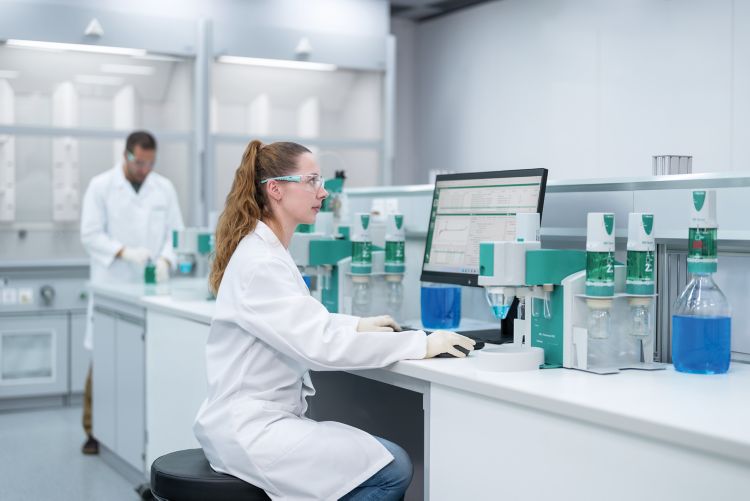
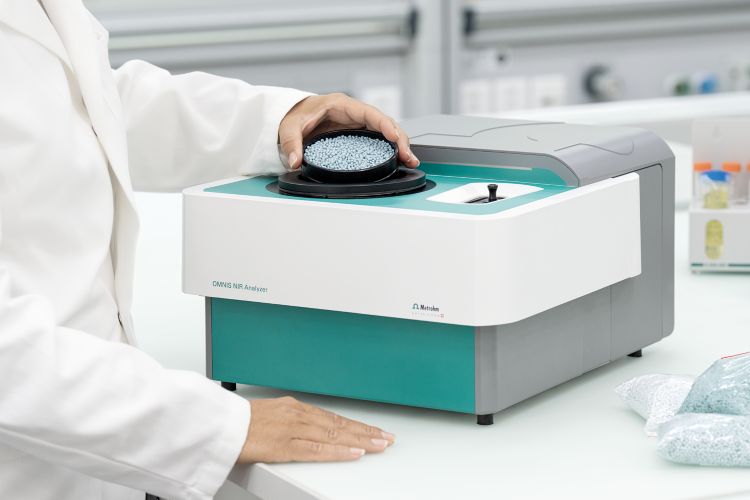
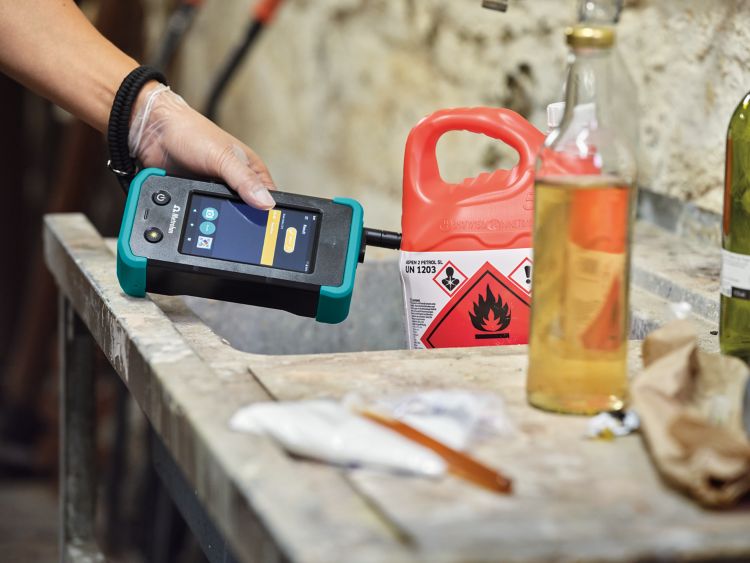
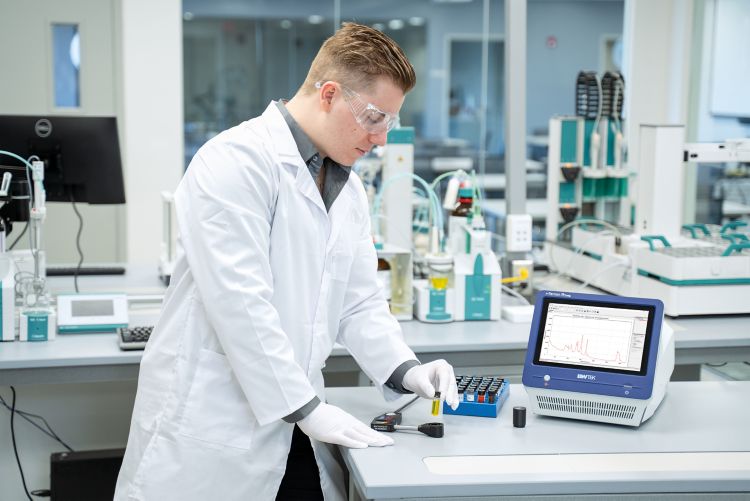
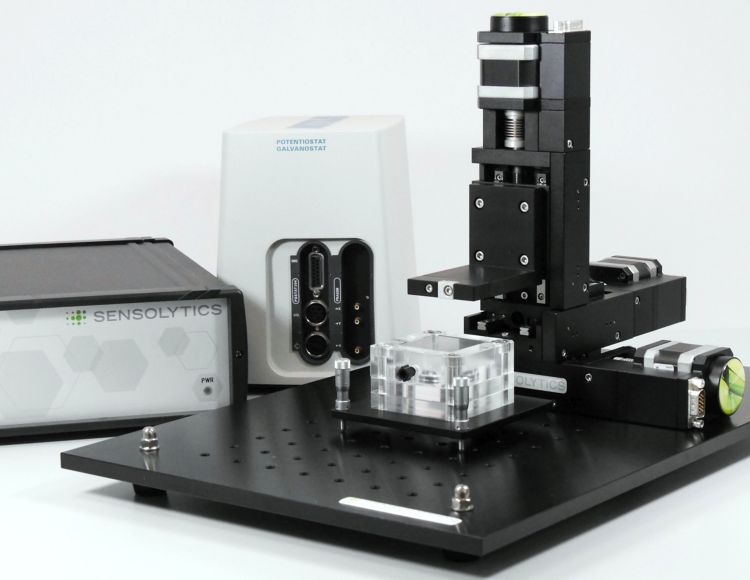
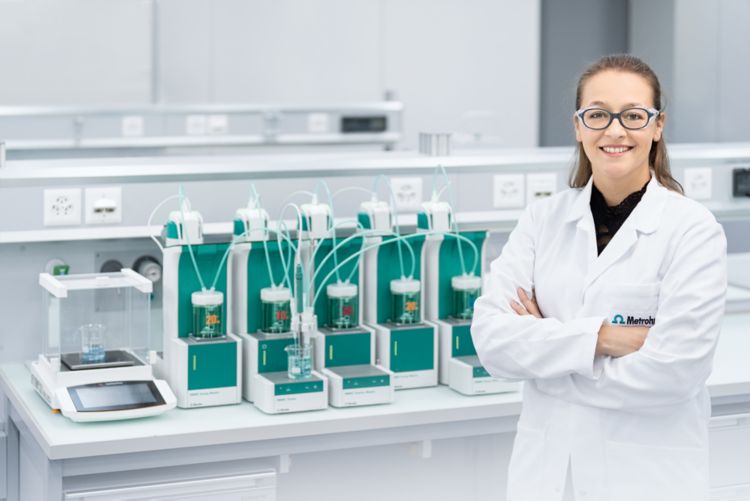

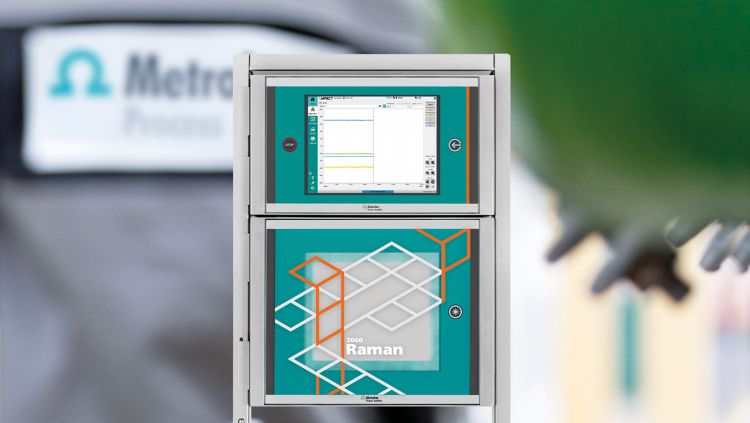

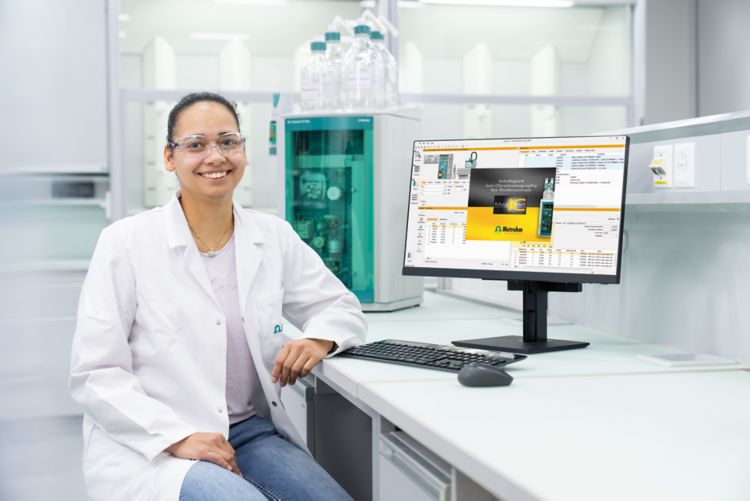
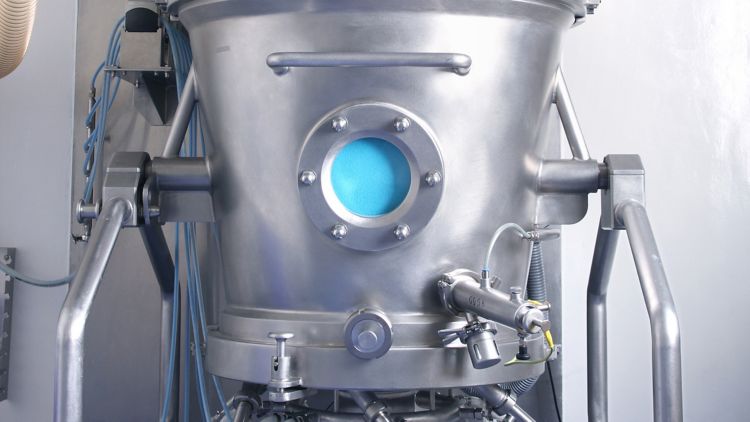
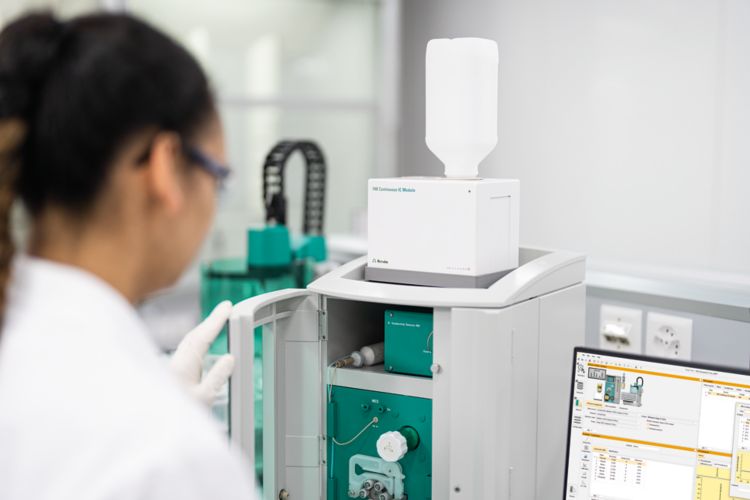
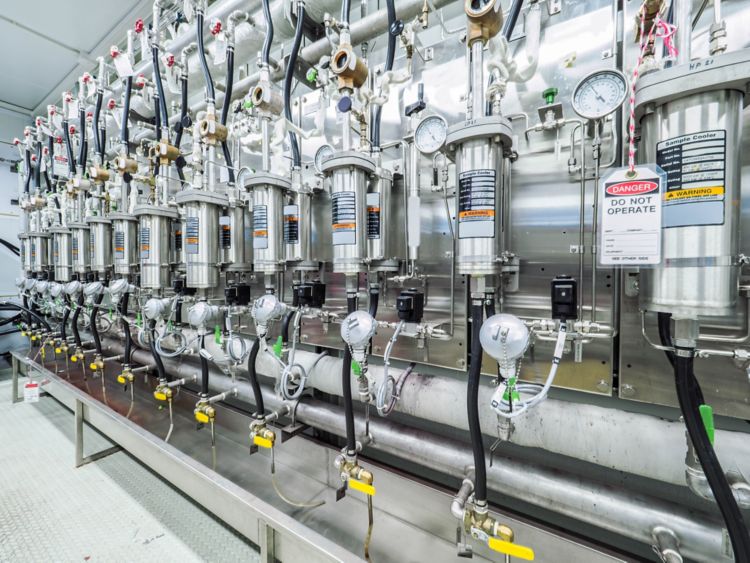
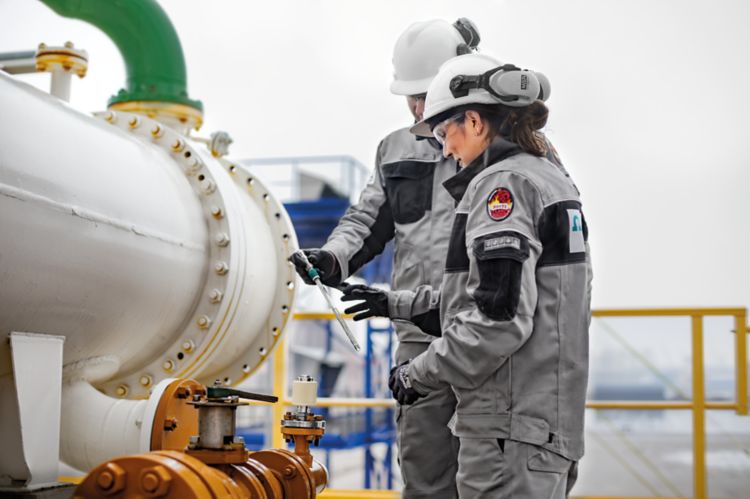

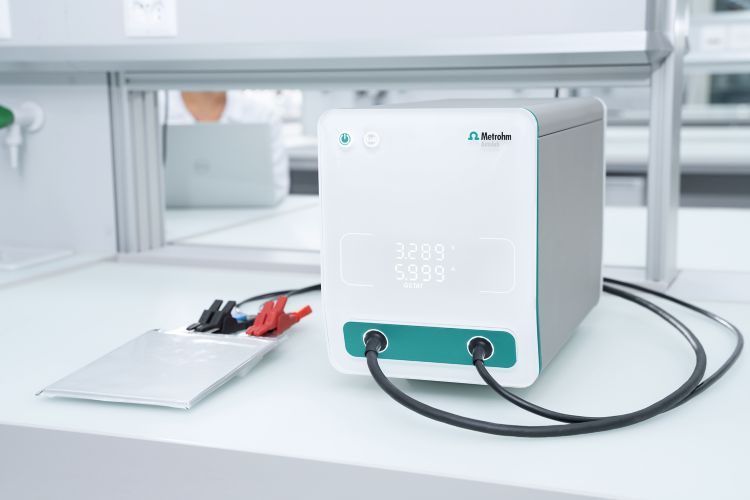

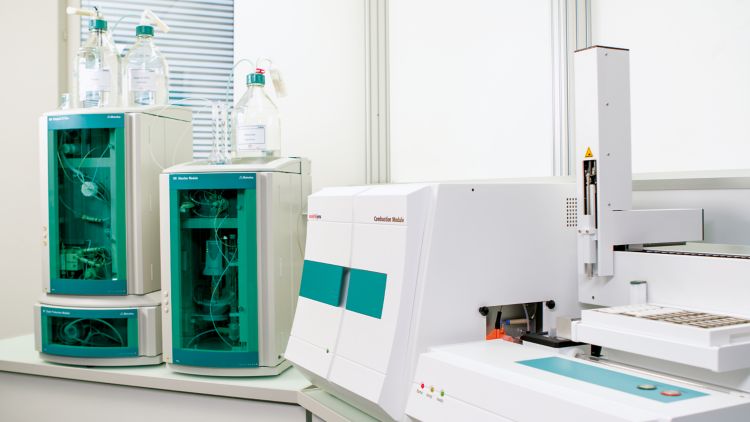


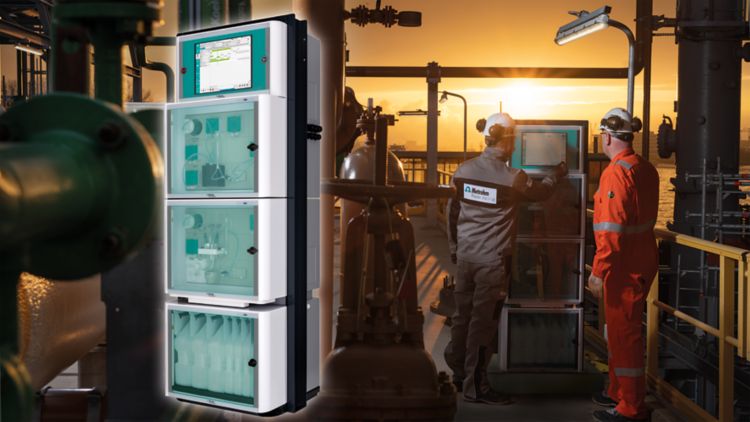

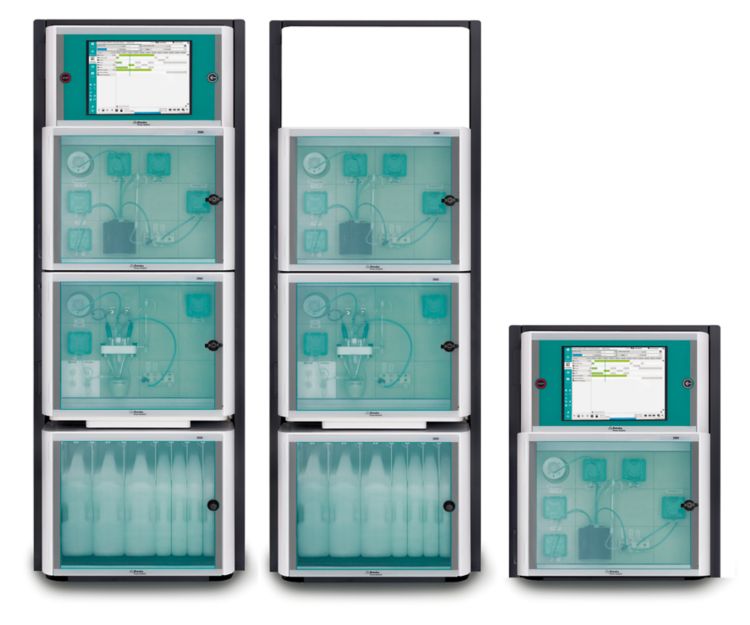
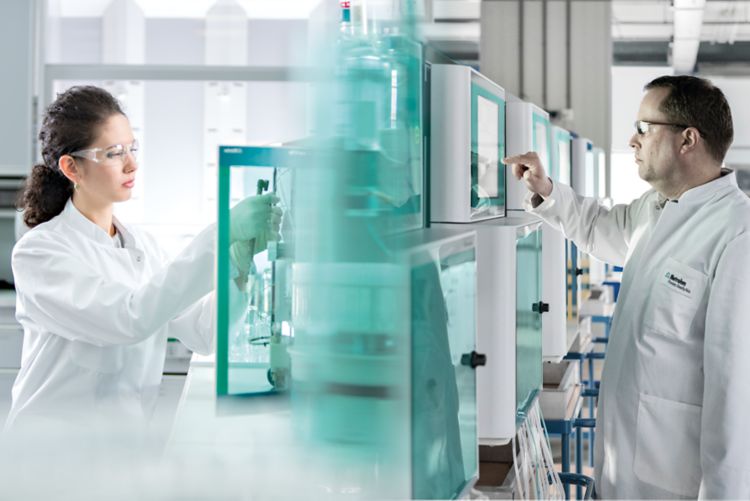

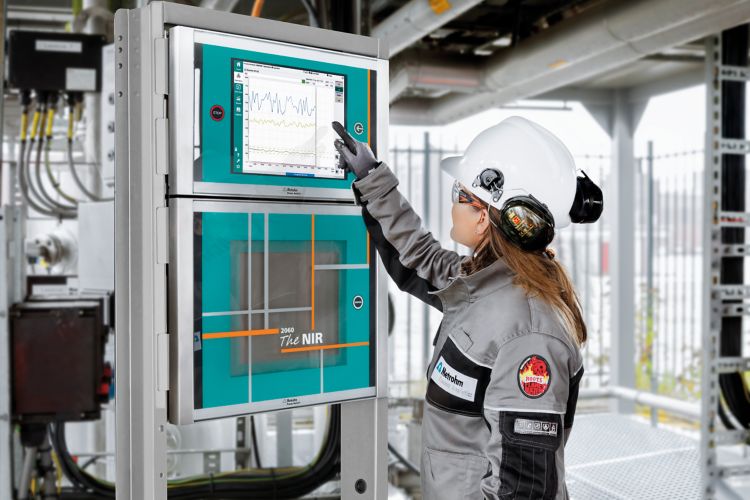

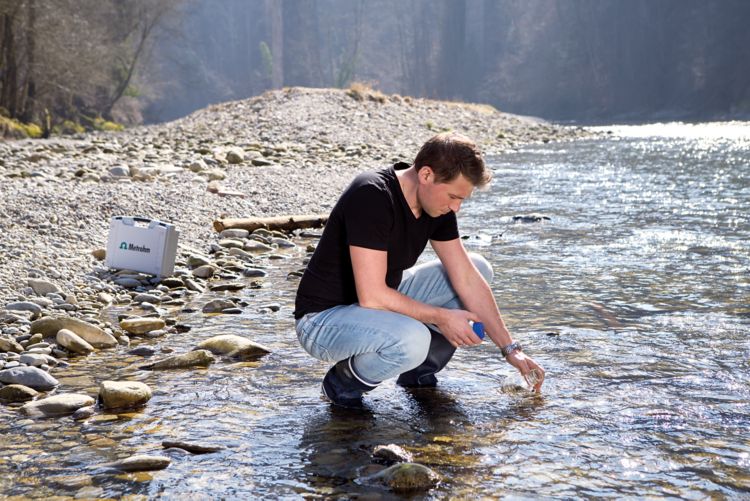

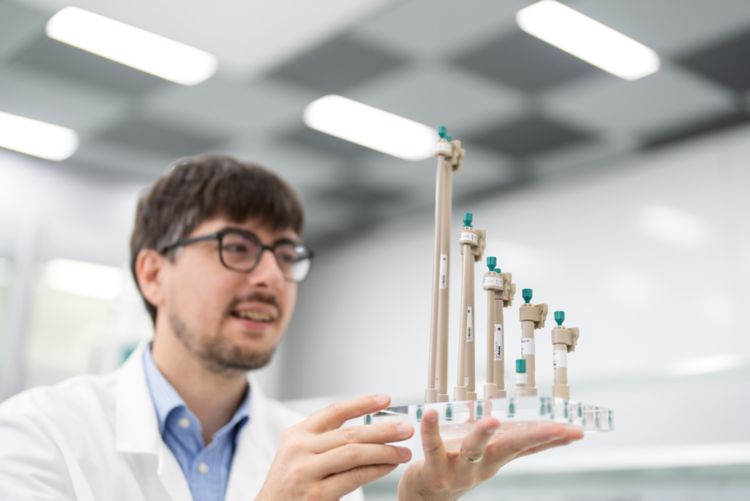

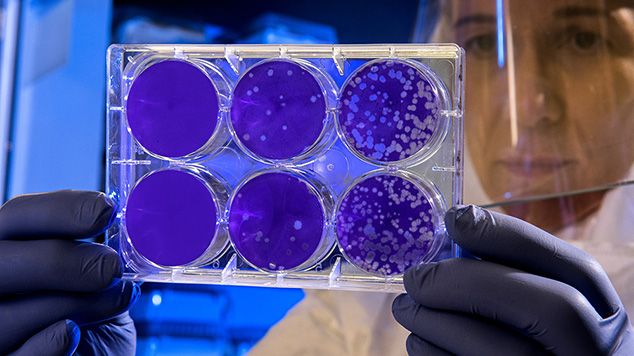
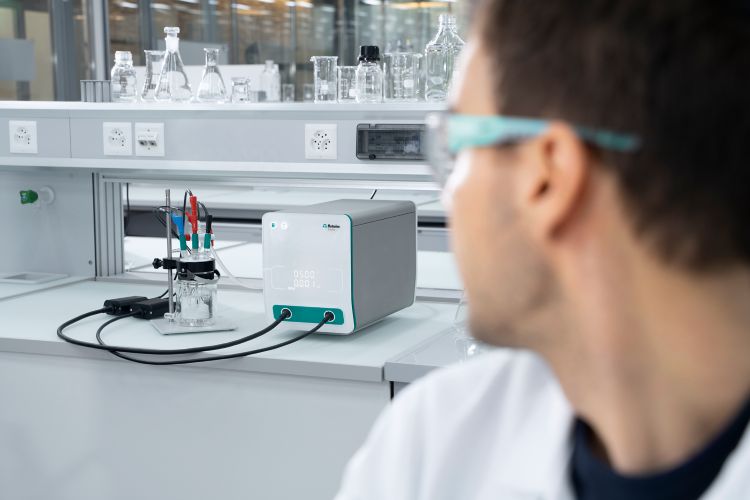

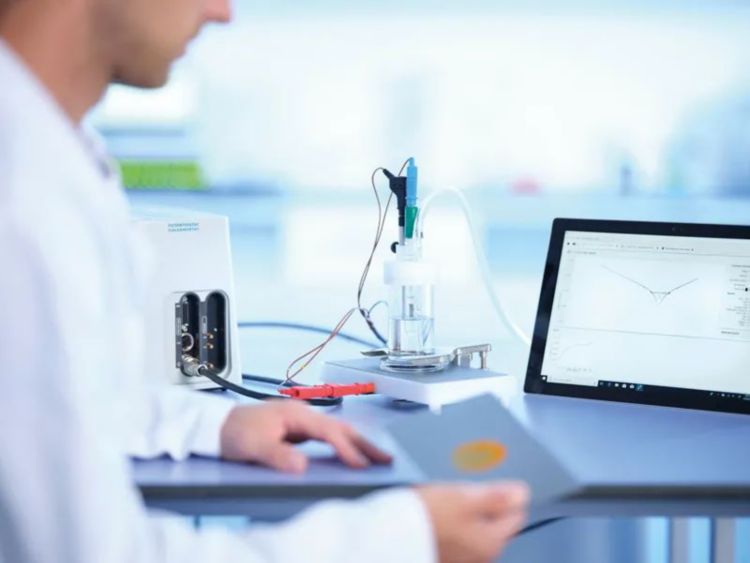
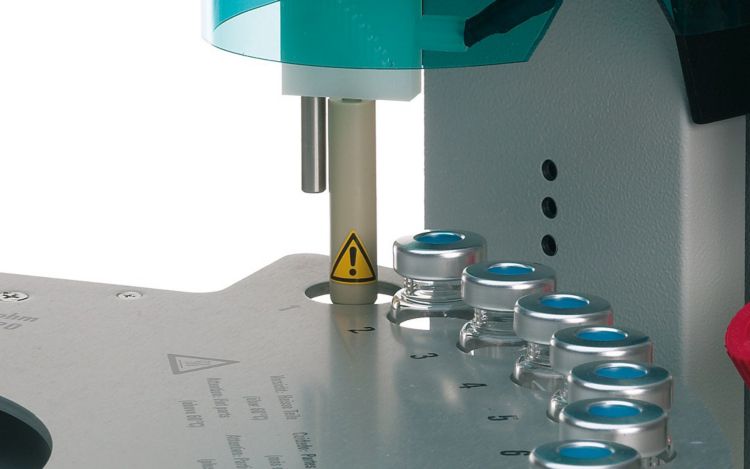
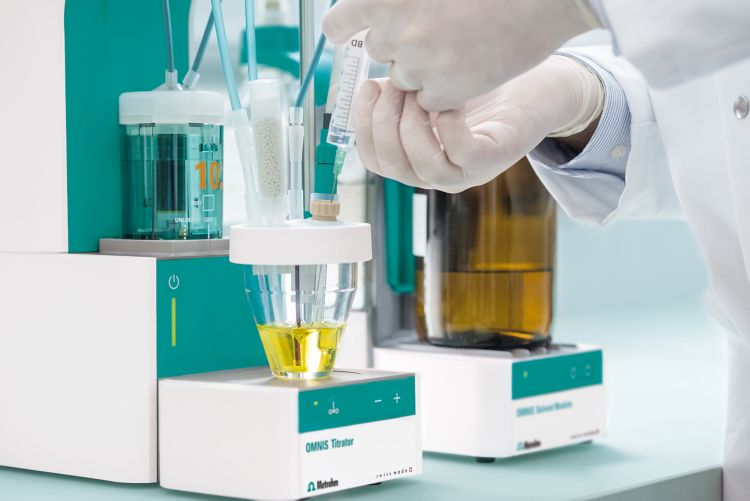
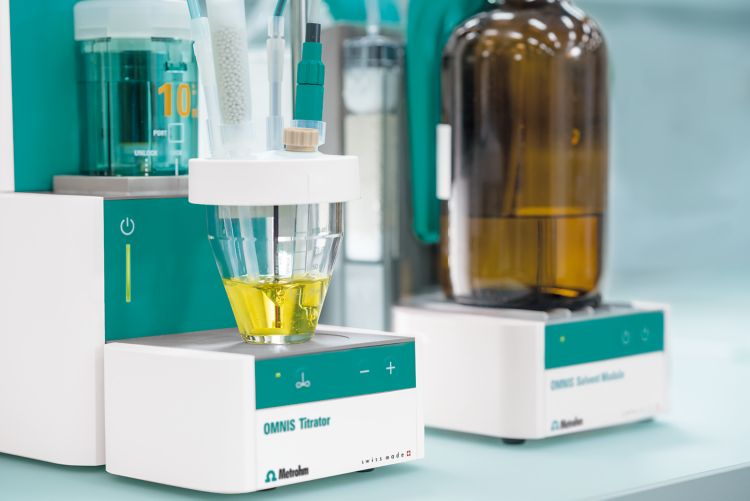
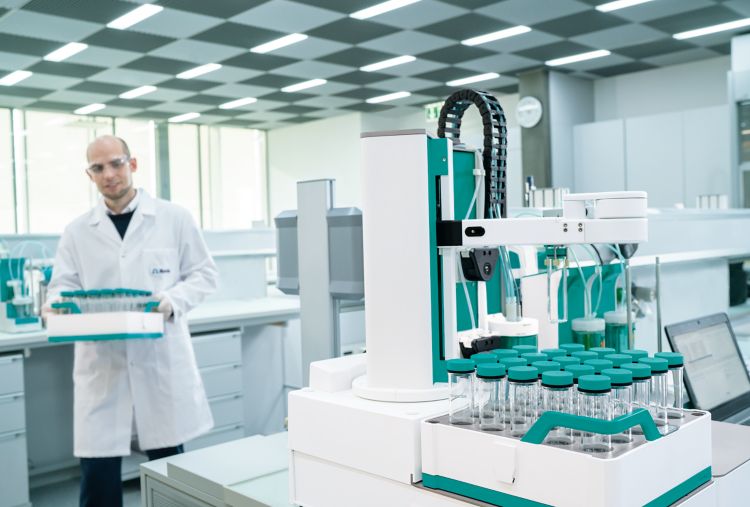
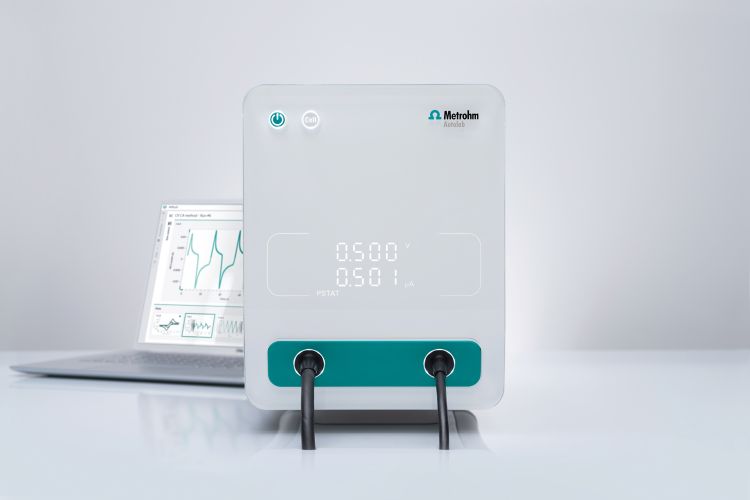
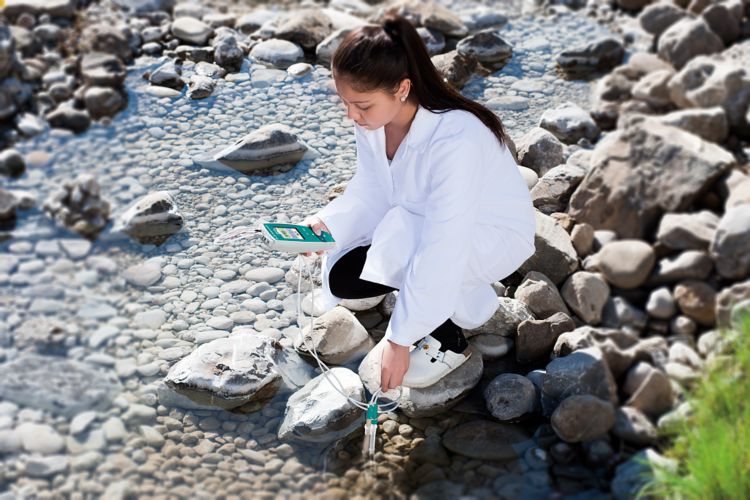
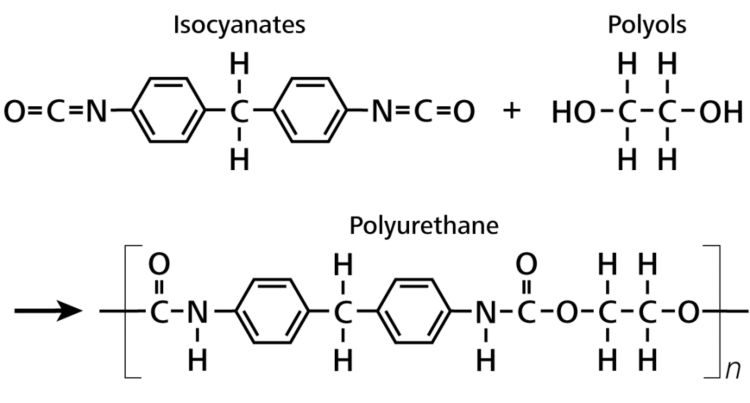
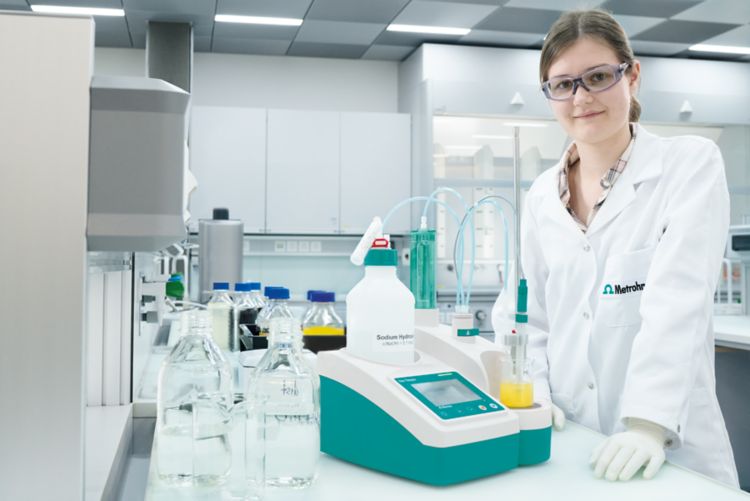

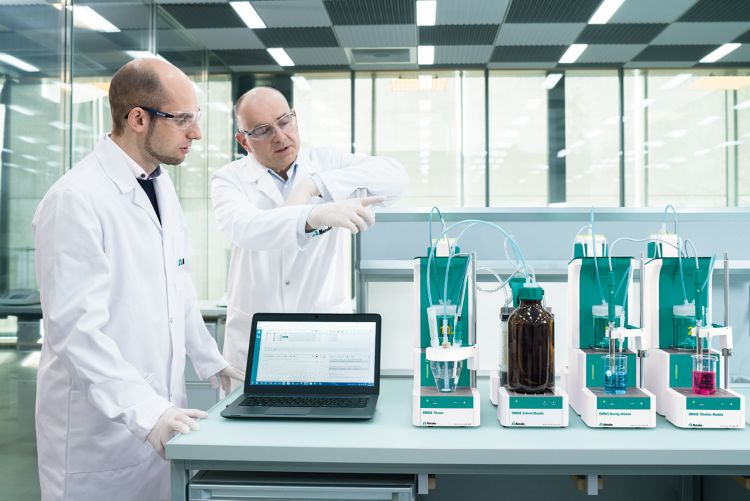
- Nov 23, 2020Trace metal analysis with solid-state electrodes – Part 5
The glassy carbon rotating disc electrode for heavy metal analysis.
- Aug 16, 2021Does counter electrode (CE) size matter?
Effect of counter electrode size and cell configuration in electrochemical measurements.
- Aug 22, 2022Electrochemistry in laminar and turbulent flow conditions using rotating electrodes
Electrochemical studies requiring hydrodynamic conditions can be performed with rotating working electrodes to create forced convection in the measurement cell. Both laminar flow and turbulent flow conditions are able to be created in laboratory settings in order for researchers to perform different studies.
- Dec 16, 2024Introduction to Cyclic Voltammetric Stripping (CVS)
This article highlights Cyclic Voltammetric Stripping (CVS) for monitoring organic additives in Cu electroplating baths, crucial for achieving optimal deposition.
- Apr 1, 2024Lab of the future: Automated robotic analysis of petroleum products
Completely automated analysis of the total acid number and total base number in petrochemical products is possible using a robotic titration system using OMNIS software.
- Jan 15, 2024Pulp and paper QC and product screening with NIR spectroscopy
Paper products are primarily made from treated wood fibers processed through pulp and paper mills. This involves significant chemical use and energy consumption. Ensuring quality control throughout the production chain, from timber to the final paper product, is crucial. This blog article shows how near-infrared spectroscopy (NIRS) effectively monitors multiple key quality control parameters simultaneously during pulp and paper manufacturing.
- Nov 27, 2023QC and product screening of ink and paint with NIRS
Ink and paint are part of everyday life. Quality control and screening of ink and paint is important along the entire production process as well as for the final products. Manufacturers can save time and money by using near-infrared spectroscopy (NIRS) to check multiple quality parameters in raw materials and finished ink and paint products. NIRS is an environmentally friendly, cost-effective, and easy-to-use analytical technique.
- Oct 3, 2022QC and product screening of hair, skin, and dentalcare products with NIRS
This article shows how utilizing near-infrared spectroscopy (NIRS) for quality control (QC) and product screening is the ideal choice for producers of hair, skin, and dentalcare products. Not only is the technique fast and non-destructive, it is also easy to use and does not require any chemicals.
- Sep 5, 2022QC and product screening of medicinal cannabis with NIR spectroscopy
Near-infrared spectroscopy (NIRS) is a fast analytical technique with low running costs used to perform quality control (QC) and product screening on various cannabis products, including hemp. NIRS can determine the cannabinoid profile or even the potency of dried cannabis flowers, as well as for cannabis oils, waxes, tinctures, and other formulations.
- Jun 13, 2022Automation beyond the lab – Integrating the most precise lab pH measurements into production processes
Blog about pH sensors for process analysis with highly accurate results and low measurement uncertainty.
- May 2, 2022Ion-selective electrodes: Standard addition and direct measurement – Part 2
How to do standard addition and direct measurements with ion-selective electrodes.
- Mar 7, 2022NIR spectroscopy: a 21 CFR Part 11 compliant tool for QC and product screening
Learn more about near-infrared spectroscopy as a 21 CFR Part 11 compliant tool to assess the quality of pharmaceuticals.
- Feb 21, 2022Ion-selective electrodes: General tips - Part 1
Theory of ion measurement, types of ion-selective electrodes, why using TISAB or ISA solution for measuring ions, and more on our blog.
- Nov 15, 2021NIR spectroscopy in the petrochemical and refinery industry: The ASTM compliant tool for QC and product screening – Part 3
Quality control of pyrolysis gasoline, pygas, and other petrochemical products according to ASTM standards using near-infrared spectroscopy.
- Oct 11, 2021Best practice for electrodes in Karl Fischer titration
Cleaning, maintenance, storage, and checking indicator and generator electrodes in Karl Fischer titration.
- Jun 21, 2021Green hydrogen, future fuel: Using potentiostats to develop new catalysts for hydrogen production
Producing green hydrogen with electrolysis. New catalysts for hydrogen production using potentiostats.
- Jun 14, 2021NIR spectroscopy in the polymer industry: The ideal tool for QC and product screening – Part 3
How to improve polyethylene terephthalate and PET analysis along the production cycle in the polymer industry with NIR spectroscopy.
- Mar 1, 2021Supercharge your battery research and production
Learn more about key analytical parameters in the production of lithium batteries and in battery research and how to determine them using Metrohm technology.
- Feb 8, 2021ASTM D6304: Easier determination of moisture in petroleum products
Blog article about ASTM D6304 on moisture determination in petroleum products presenting the three procedures (direct sample injection, oven method, and using water evaporator).
- Oct 19, 2020Trace metal analysis with solid-state electrodes – Part 4
Screen-printed electrodes for heavy metal analysis.
- Sep 7, 2020Trace metal analysis with solid-state electrodes – Part 3
Application examples for heavy metal analysis using stripping voltammetry and scTRACE Gold electrode.
- Aug 10, 2020Trace metal analysis with solid-state electrodes – Part 2
Learn more about heavy metal analysis using stripping voltammetry and the scTRACE Gold electrode.
- Jul 6, 2020Best practice for electrodes in titration
Blog on how to select the right electrode, and how to maintain, clean, and store your electrode.
- Jun 22, 2020Trace metal analysis with solid-state electrodes – Part 1
Learn more about heavy metal analysis using stripping voltammetry and the Bi drop electrode.
- Jun 8, 2020Virus detection using screen-printed electrodes
Rapid testing for infectious diseases using screen-printed electrodes.
- Jan 10, 2022USP <645> – simple automated analysis of ultrapure water
Blog post on automated analysis and quality control of ultrapure water used for injections and other medical and pharmaceutical applications.
- Oct 7, 2024Why control temperature for more accurate and reproducible NIRS results
Temperature variations affect NIRS predictions by over 1 % per degree change. Monitoring the sample temperature, especially for liquids, is especially critical.
- May 20, 2024Automated liquid handling – The key to accurate and reproducible results
Accurate liquid handling is critical in labs. Automation reduces errors, ensuring precise results. Learn more advantages of automated liquid handling in this blog.
- Jun 12, 2023The future of ammonia production is electrochemistry
Ammonia is the most common and widely used nitrogen-based fertilizer. It is also viable as a safer hydrogen carrier in large quantities. Traditional ammonia manufacturing uses fossil fuel as a hydrogen source needed for the reaction. Commonly termed «green ammonia», electrochemically synthesized ammonia with the use of electricity from renewable sources is an interesting zero-carbon emission alternative.
- Nov 14, 2022How to utilize grounding modes in electrochemical experiments
The ability to ground different electrodes may offer electrochemists some advantages over the typical working electrode setup. For example, the grounded counter electrode can be used in non-conventional systems where the solutions or the working electrodes are not isolated electrically. The selectable floating feature of VIONIC gives users the flexibility to choose the ground state of the cell setup, offering even greater experimental possibilities.
- Jun 27, 2022NIR spectroscopy in the personal care and cosmetics industry: The ideal tool for QC and product screening – Part 1
Near-infrared spectroscopy in the personal care and cosmetic industry: basics, benefits, and applications.
- Jan 24, 2022NIR spectroscopy in the petrochemical and refinery industry: The ASTM compliant tool for QC and product screening – Part 5
Near-infrared spectroscopy and ASTM. Learn more about method development, method validation, and results validation.
- Dec 13, 2021NIR spectroscopy in the petrochemical and refinery industry: The ASTM compliant tool for QC and product screening – Part 4
Quality control of lubricants based on mineral oils and synthetic oils according to ASTM standards using near-infrared spectroscopy.
- Oct 4, 2021NIR spectroscopy in the petrochemical and refinery industry: The ASTM compliant tool for QC and product screening – Part 2
Near-infrared spectroscopy for assessing the quality of gasoline, diesel, and jet fuel. Benefits, pre-calibrations, and application examples.
- Aug 30, 2021NIR spectroscopy in the petrochemical and refinery industry: The ASTM compliant tool for QC and product screening – Part 1
Nea-infrared spectroscopy NIRS applications and parameters for the petrochemical, oil, and refinery industry.
- Jul 26, 2021NIR spectroscopy in the polymer industry: The ideal tool for QC and product screening – Part 5
Near-infrared spectroscopy for assessing the quality of polyurethanes: basics, benefits, and applications.
- Jul 5, 2021NIR spectroscopy in the polymer industry: The ideal tool for QC and product screening – Part 4
Quality control of polyamides, PA66, or Nylon 66, and polymers using near-infrared spectroscopy.
- May 25, 2021NIR spectroscopy in the polymer industry: The ideal tool for QC and product screening – Part 2
Near-infrared spectroscopy for assessing the quality of polypropylene and polyethylene.
- May 3, 2021NIR spectroscopy in the polymer industry: The ideal tool for QC and product screening – Part 1
Overview of near-infrared spectroscopy and how polymer manufacturers can benefit from using the NIR technology.
- Dec 7, 2020Introduction to Analytical Instrument Qualification – Part 1
Learn more about Analytical Instrument Qualification (AIQ) for instruments in regulated environments.
- May 26, 2026Thermometric titration – the missing piece of the puzzle
Thermometric titration (TET) is a fast, versatile method based on enthalpy change. Learn more about how it works and its advantages in this blog article. Application examples are also presented.
- Jan 11, 2021Introduction to Analytical Instrument Qualification – Part 2
Metrohm IQ/OQ documentation provides you with the required documentation in strict accordance to the major regulations from the USP, FDA, GAMP, and PIC/S.
- May 26, 2026Fast determination of acid and base number by thermometric titration
Acid number (AN) and base number (BN) determinations are essential for quality control of petroleum products, with thermometric titration (TET) providing a fast, maintenance-free alternative to conventional methods. TET quantifies endpoints from reaction enthalpy (ΔH), detecting inflection points in the temperature profile as analyte is consumed. This enables rapid, robust analysis of nonaqueous and otherwise challenging samples.
- Mar 23, 2026How the updated GMP regulations and EU Cyber Resilience Act will affect laboratories
Discover how the updated GMP regulations and the EU Cyber Resilience Act (CRA) will impact laboratories. Learn what changes are coming, how to prepare your equipment and software, and how Metrohm supports labs in staying compliant.
- Mar 31, 2025How does X-ray fluorescence work?
X-ray fluorescence (XRF) is a nondestructive technique for identifying and quantifying elements in solids, liquids, and powders. Learn about XRF and how it works in this blog article.
- Nov 18, 2024Ion chromatography for the pharmaceutical industry
The principles of ion chromatography are introduced, then some applications and benefits of using IC for pharma analysis according to USP General Chapter <1065>.
- Sep 23, 2024Quality control of cathode materials
This article highlights several key parameters crucial for Li-ion battery cathode production quality and efficient recycling and the methods to analyze them.
- Sep 9, 2024Better waste incineration compliance with online process analysis
Waste incineration plants generate energy and reduce landfill volume. Online process analyzers can provide real-time monitoring data about the plant operations.
- Jul 1, 2024Increased efficiency of CVS routine analysis with Dosino sample transfer
This article highlights using Dosinos for automated sample handling in cyclic voltammetric stripping (CVS) applications to enhance PCB and semiconductor analysis.
- Jun 3, 2024Conservation of art using electrochemistry
Non-destructive methods like electrochemistry aid in analyzing and preserving artifacts. This blog outlines three examples of electrochemistry in art conservation.
- Nov 13, 2023Solid-state batteries: A promising technology thriving under pressure
Solid-state batteries (SSBs) have the potential to revolutionize energy storage. They are safer than traditional lithium-ion batteries, boast a high energy density, and have extended lifespans and fast-charging capabilities. This article discusses the general differences between SSBs and Li-ion batteries, challenges that remain to be overcome for commercial production of SSBs, and the use of Electrochemical Impedance Spectroscopy (EIS) for testing different battery parameters.
- Oct 30, 2023A thermal rollercoaster: Unraveling temperature dependence in CVS determinations
Precision in PCB manufacturing demands accurate control of organic additives during copper plating. Cyclic Voltammetric Stripping (CVS) is used to quantify these additives, but temperature differences impact accuracy of the results. This article outlines the method for assessing organic additives in copper plating baths and explores temperature's influence on CVS measurements.
- Sep 4, 2023Streamline material inspection in regulated industries with new Raman USP library
Metrohm’s Raman systems and Comprehensive USP Raman Library support regulated industries such as pharmaceutical manufacturing: Streamline inspection of deliveries, reduce inspection resources, get the final product to the market faster.
- Aug 21, 2023How do iridium-based nanomaterials contribute to a greener future?
Mitigating climate change is vital due to the severe impacts of excessive CO2 emissions. The transport sector, largely dependent on fossil fuels, contributed to 37% of total carbon dioxide emissions in 2021. While electric cars have become more popular, other solutions like hydrogen-powered vehicles are gaining attention. Electrochemical water splitting via polymer electrolyte membrane (PEM) water electrolyzers is proposed to produce green hydrogen, with iridium-based catalysts showing promise. This research is focused on iridium oxide materials for enhanced durability and metal-like conductivity in H2 production.
- Jul 24, 2023The world of surfactants from the perspective of titration
Accurately determining surfactant content in samples through potentiometric titration can be challenging, requiring the consideration of multiple factors. However, by selecting the appropriate pH, using a suitable electrode, and implementing helpful tips and tricks, the titration method becomes a reliable and precise means of surfactant content determination.
- Jun 26, 2023Frequently Asked Questions (FAQ) about Raman spectroscopy: Applications
Raman spectroscopy is a ubiquitous tool that can be used for many different purposes. This blog article answers some frequently asked questions about the suitability of Raman spectroscopy for various applications.
- May 15, 2023Process control of electroless nickel plating baths with Hg-free sensors
Electroless nickel (EN) plating processes use various stabilizers like Pb, Bi, and Sb(III) to control the plating rate and prevent uncontrolled bath decomposition. As the stabilizer concentration must be kept at a constant level, monitoring the stabilizer concentration is therefore essential for an optimal plating process. One of the best ways to do so is by using voltammetric analysis (VA).
- May 1, 2023Easily measuring ORP values in real-life applications
The ORP kit from Metrohm DropSens is handy, reliable, and easy to use for reproducible measurement of oxidation-reduction potential in various situations. The multitude of requirements from several industries that must measure ORP fit perfectly with the advantages gained when using screen-printed electrodes and miniaturized instruments, including portability, accessibility, disposability, small sample sizes, and reliability.
- Apr 17, 2023Easy quality control of detergents and hand sanitizers with NIRS
This blog article explains the uses of detergents and hand sanitizers as well as how to perform quality control of these products with near-infrared spectroscopy (NIRS).
- Apr 3, 2023History and analysis of vitamin C (ascorbic acid)
This article covers the history of vitamin C (ascorbic acid) and some of the different analytical methods used to determine it in various products (e.g., by titration, polarography, and ion chromatography).
- Mar 20, 2023Building a Smart(er) Factory by implementing Process Analytics 4.0 solutions
By implementing Industry 4.0 solutions, manufacturers can increase their efficiency, productivity, and profitability while remaining competitive and improving the customer experience. Process Analytics 4.0 focuses on the evolution of process analytics. This article covers how to successfully implement a Process Analytics 4.0 solution, including choosing the right PAT, ensuring proper sample preconditioning, and acquiring reliable data.
- Dec 12, 2022Quality control of semiconductor wafer pretreatment processes with online NIRS
Cleanliness is crucial inside of semiconductor fabrication facilities. Manufacturers implement extremely strict production control procedures, especially during wafer surface treatment with etching and cleaning baths. This article highlights the benefits for semicon manufacturers to implement near-infrared spectroscopy (NIRS) in wafer pretreatment processes for real-time analysis.
- Nov 28, 2022Save time and money with Metrohm Inline Sample Preparation solutions
When using ion chromatography (IC) as an analytical technique, samples often cannot be injected directly onto the separation column. Metrohm Inline Sample Preparation (MISP) techniques offer a broad spectrum of straightforward, cost- and time-saving solutions for these kinds of situations. This article gives an overview and some insights about MISP techniques—our solutions for automated inline sample preparation of various matrices for IC analysis.
- Oct 31, 2022Raman spectroelectrochemistry from India to Spain: History and applications
One of the most interesting spectroelectrochemical techniques combines the fields of electrochemistry and Raman spectroscopy. Raman spectroelectrochemistry provides users with two different signals from the same experiment, acting as a powerful tool to collect even more knowledge about the analyzed system. Raman spectroelectrochemistry experiments are easily performed using SPELEC RAMAN, the only instrument on the market dedicated to performing such experiments.
- Nov 29, 2021Ph. Eur. 2.2.48 Raman Spectroscopy: How Raman instruments from Metrohm comply with the 2022 update
Compliance of handheld and portable Raman spectrometers with Ph. Eur. 2.2.48 for pharmaceutical quality control.
- Nov 22, 2021Green hydrogen generation: A cross-disciplinary challenge rooted in electrochemistry
Basics about green hydrogen technology: performance indicators, reference electrodes, reversible hydrogen electrodes, and more.
- Nov 8, 2021Guide to online and inline surface finishing analysis
Online and inline surface finishing analysis for construction, automotive, semiconductor, and aerospace industries.
- Nov 1, 2021The evolution of handheld 785 nm Raman spectroscopy: Raman extraction from fluorescence interference
Handheld 785 nm Raman spectroscopy offers excitation with shorter wavelengths, strong Raman scattering with short acquisition times, and high signal-to-noise ratio and with excellent spectral resolution.
- Oct 25, 2021Cyclic voltammetry (CV) – the essential analytical technique for catalyst research
Catalyst research using cyclic voltammetry to analyze the stability window of the electrolyte, the electrode surface, the electrocatalyst material’s redox behavior, and the electrocatalyst’s stability.
- Aug 9, 2021From corn to ethanol: improving the fermentation process with NIRS
Improved fermentation in bioethanol production with near-infrared spectroscopy analysis.
- May 17, 2021How much do pipes rust in a year?
Learn more about corrosion and electrochemistry taking pipeline corrosion as an example.
- Apr 26, 2021Developing the electrochemical sensors of your dreams
Customized options and mass production of electrochemical sensors.
- Mar 8, 2021Unmatched flexibility in online ion analysis: The 2060 IC Process Analyzer
Blog post on the new 2060 IC Process Analyzer for real-time industrial monitoring.
- Jan 25, 2021Fast determination of acid and base number by thermometric titration
Determine the acid number and base number in petroleum products quickly and reliably with thermometric titration.
- Nov 30, 2020Electrochemistry in orbit
Screen-printed electrodes by Metrohm DropSens used in space.
- Sep 14, 2020History of Metrohm IC – Part 3
Blog post on Metrohm ion chromatography and the introduction of sequential suppression for increased sensitivity in ion chromatographic analysis.
- Jul 20, 2020Frequently asked questions in Karl Fischer titration – Part 1
How to check if Karl Fischer electrode is working correctly, how to store KF electrodes, how to clean Karl Fischer equipment, and more.
- Jun 15, 2020Comprehensive water analysis: combining titration, IC, and direct measurement in one setup
Drinking water analysis using direct measurement, ion chromatography, titration, and voltammetry.
- Apr 20, 2020Moisture Analysis – Karl Fischer Titration, NIRS, or both?
Water content, moisture analysis, and moisture quantification with Karl Fischer titration and near-infrared spectroscopy.
- Apr 1, 2020To automate or not to automate? Advantages of PAT – Part 1
Introduction and benefits of process analytical technology (PAT).
- Jan 27, 2020Avoiding the most common mistakes in pH measurement
Blog about tips for pH measurements, such as electrode selection, preparation, calibration, correct storage, and more.
- May 26, 2026Multiparameter analysis in fertilizers by thermometric titration
Fertilizer composition must be accurately characterized to quantify key nutrients for optimal crop growth and regulatory compliance requirements. Thermometric titration provides a rapid, cost-effective alternative to conventional gravimetric or ICP‑OES methods, which require extensive sample preparation and/or costly instrumentation. Thermometric titration (TET) enables multiparameter determination in fertilizers without time‑consuming steps or sensor maintenance.
- May 11, 2026How to transfer manual titration to autotitration
There are many considerations when transferring from manual titration to autotitration. This blog article discusses how to choose a titrator and sensor, the titration setup, and even method optimization.
- Jul 14, 2025Simplified spectroelectrochemistry setups with intuitive, user-friendly cells
Spectroelectrochemistry is now more accessible thanks to SPELEC instruments and user-friendly cells, simplifying setup and data handling for broader adoption.
- Jun 4, 2025Understanding the role of eluent in ion chromatography
This article explores the importance of eluent selection and preparation, highlighting key considerations that ensure reliable and robust ion chromatography measurements.
- May 12, 2025Understanding linear sweep voltammetry and cyclic voltammetry
This blog post explains the principles, key parameters, and applications of two popular electrochemical techniques: linear sweep voltammetry and cyclic voltammetry.
- Apr 28, 2025Basics of spectroelectrochemistry
Spectroelectrochemistry (SEC) combines electrochemistry and spectroscopy to simultaneously record optical and electrochemical signals. This article defines SEC and highlights its advantages.
- Feb 24, 2025Continuous air quality monitoring for harmful particulate matter and aerosols
Continuously monitoring ambient air quality is simple with the Metrohm AeRosol Sampler (MARS) and the 2060 Monitor for AeRosols and Gases in ambient Air (MARGA).
- Jan 20, 2025Understanding potentiometric titration: A vital technique in pharmaceutical analysis
Pharmaceutical quality control heavily relies on titration, a method highlighted in pharmacopeias like USP-NF General Chapter <541> for its accuracy and simplicity.
- Aug 26, 2024Raman spectroscopy: The easy way to analyze polymers
This article describes how versatile Raman spectroscopy can be for the identification, classification, and quality control of various plastics and polymers.
- Aug 12, 2024Optimizing lab efficiency with MiPT for versatile, high-precision sample handling
The Metrohm intelligent Partial-Loop Injection Technique (MiPT) allows variable sample volumes and enhances precision with automated handling via a Dosino.
- Jul 29, 2024Edible oil analysis: A guide for beginners
Learn what edible oils are, how they are made, how to test their quality with different analytical techniques, and about the most important analysis parameters.
- Jul 15, 2024How to avoid titration errors in your lab
This blog post explores common random and systematic errors in titration, offering guidance to identify and minimize these issues and enhance experimental accuracy.
- Jun 17, 2024How to calibrate a pH meter
Learn how to calibrate a pH meter and get answers to other frequent questions about pH calibrations.
- May 6, 2024Advancing precision and efficiency in ion chromatography with automated inline dilution
Fully automated solutions for ion chromatography like the Metrohm Inline Dilution Technique (MIDT) streamline sample preparation and ensure precise results.
- Apr 22, 2024Titration – definition and principles
Titration is one of the oldest and well-established analytical methods. This blog covers the titration principle, its process, and presents different titration types.
- Apr 8, 2024Improved detection of fentanyl using Raman spectroelectrochemistry
Rapid, reliable drug screening methods are crucial for forensic science investigations. This article explores fentanyl detection using Raman spectroelectrochemistry.
- Mar 25, 2024Point-of-Care with Raman: Detection of cancer, infection, and more
Raman spectroscopy expands into new medical frontiers: detecting cancer, biomarkers, and pathogens. This blog covers exciting research involving Point-of-Care applications.
- Mar 11, 2024High-frequency EIS: a powerful tool for the future of mobility
Electrochemical characterization of solid-state batteries can be difficult. Using electrochemical impedance spectroscopy (EIS) at high frequencies helps capture rapid processes.
- Feb 26, 2024Ensuring and certifying quality and compliance in regulated environments
Metrohm's AOAC Installation & Operational Qualification (Q2)-certified instruments provide peace of mind by simplifying the process of meeting regulatory requirements.
- Feb 12, 2024Conductometric titration works where other methods struggle
Conductometric titration is based on the change of conductivity while adding a titrant. Principles, advantages, and examples of conductivity titration are discussed here.
- Jan 29, 2024Laboratory vs. process analysis: Key factors for informed decision-making
Several factors should be considered when choosing between purchasing a laboratory instrument or a process analyzer. In many situations, one solution is clearly preferable over the other. This article discusses five major topics that need consideration before the decision is made: data traceability and communication, analysis frequency, safety, location, and implementation.
- Jan 8, 2024NIR vs IR: What is the difference?
Near-infrared and infrared spectroscopy use different spectral ranges of light, which results in a difference of the required sample size, penetration of the light into the sample, and spectral information. Learn why NIR spectroscopy has many advantages over IR with regards to speed and versatility.
- Jan 8, 2024What is NIR spectroscopy?
Near-infrared spectroscopy is an established analysis technique to determine both chemical and physical parameters in solid and liquid samples.
- Jan 8, 2024NIR spectroscopy pre-calibrations: Immediate results
Pre-calibrations are prediction models that can be used immediately for NIR analysis and provide satisfying results right from the beginning. Simply press one button and start the measurement.
- Jan 8, 2024How to implement NIR spectroscopy in your laboratory workflow
The steps needed to implement near-infrared spectroscopy in your laboratory: creating a calibration set, creating and validating prediction models, and routine analysis.
- Dec 11, 2023Karl Fischer titration: When to use volumetry or coulometry
This blog article explains the most important factors to consider in order to choose the optimal Karl Fischer titration technique: coulometry or volumetry. Coulometric Karl Fischer titration (KFC) is generally used for samples with a low moisture content between 0.001% to 1%. Volumetric Karl Fischer titration (KFT) is used for samples with higher levels of moisture between 0.1% to 100%.
- Oct 16, 2023Applying USP validated methods for separation column equivalency
The modernization of USP Monographs now permits a broader selection of separation columns for pharmaceutical analysis using ion chromatography (IC). Column equivalency studies enable the use of alternative analytical columns without needing complicated method validation procedures. This benefits pharma researchers by saving time and effort while maintaining the accuracy and reliability of analytical results in accordance with validated methods.
- Oct 2, 2023Screening and quality control of palm oil with NIR spectroscopy
Near-infrared spectroscopy (NIRS) is an excellent fit for the analysis of several key quality parameters in crude palm oil (CPO), crude palm kernel oil (CPKO), and refined, bleached, and deodorized (RBD) palm oil. Just one NIRS instrument can measure multiple QC parameters including water (moisture) content, free fatty acids (FFA), iodine value (IV), and deterioration of bleachability index (DOBI) in a fraction of the time of other analytical techniques.
- Aug 7, 2023Is having a service agreement important?
If analytical instrumentation is neglected, it may become unreliable and fall into disrepair. Non-compliance with regulatory requirements is also a concern in such situations. However, regular preventive maintenance as a part of a service agreement can help avoid these situations. Metrohm Service Agreements give you peace of mind with various maintenance plans suitable for any budget.
- May 29, 2023Converting emitted carbon dioxide into chemical feedstocks by electrochemical routes
Many researchers focus on electrochemical applications like electrocatalysis, energy storage, and energy conversion due to the need for action concerning climate change. The common thread linking these together is the electrochemical instrumentation needed for their work. Metrohm manufactures high-quality equipment for such pioneering research. In particular, the high-end potentiostat VIONIC powered by INTELLO is a versatile instrument for most research topics in this research area due to its outstanding specifications.
- Mar 6, 2023Protecting IC systems with Metrohm Inline Ultrafiltration and Inline Dialysis
An efficient way to prepare samples for IC analysis is by using Metrohm Inline Sample Preparation (MISP) techniques to automate the process. Either Metrohm Inline Ultrafiltration (UF) or Inline Dialysis can be used to safeguard the IC system from harmful matrix components while simultaneously reducing manual labor and increasing sample throughput.
- Feb 20, 2023How temperature influences the pH value
The temperature affects a pH measurement in several ways. This blog article will cover the reasons why and discuss how to handle the different effects from temperature on pH measurements.
- Feb 6, 2023Monitoring antioxidant content of in-service industrial lubricants with voltammetry
Testing of in-service lubricants for their remaining antioxidant content is critical for prolonging the uptime of capital equipment as well as reducing running costs and repair expenses. Voltammetry (VA) is a fast and established method for testing the remaining antioxidant content in industrial lubricants.
- Oct 17, 2022Analyzing halogenated organic compounds with CIC according to DIN 38409-59
This blog article explains how per- and polyfluorinated alkyl substances (PFASs) and other halogenated organic compounds have been used over the past several decades, their effects on our health and the environment, and how to monitor and analyze these substances with combustion ion chromatography (CIC) according to the new DIN 38409-59 standard.
- Sep 19, 2022Frequently Asked Questions (FAQ) about Raman spectroscopy: Theory and usage
Raman spectroscopy is a non-destructive analytical technique based on the inelastic scattering of photons related to the different vibrational modes of molecules. This article covers some of the most frequently asked questions about Raman spectroscopy regarding the theory behind it and how it can be used in practice.
- Aug 8, 2022Near-infrared spectroscopy (NIRS): The perfect solution to monitor purity of recovered solvents
Monitoring solvent purity can be done quick and safely without any sample preparation using near-infrared spectroscopy (NIRS). Within one minute NIRS can determine the quality of recovered solvents.
- Jul 25, 2022Transform your routine electrochemical research – Go Multi!
A new multichannel instrument for electrochemical analysis makes multitasking possible for laboratories – μStat-i MultiX from Metrohm DropSens. Perform analyses automatically, run multiple experiments simultaneously, and control individual channels independently.
- Jul 11, 2022Coping with the daily challenges of routine water analysis
Automation is the key to cope with high sample throughput in water analysis. A setup is presented with which multiple parameters such as pH, alkalinity, and water hardness can be analyzed on a single workstation.
- May 30, 2022Handheld 785 nm Raman applications: Cutting edge material ID capabilities in your pocket
New capabilities for handheld 785 nm Raman spectroscopy, such as SERS for trace detection and XTR for fluorescence-free analyses.
- May 23, 2022Providing the Next Level of Safety with Hydranal™ NEXTGEN Reagents and OMNIS
Safe and accurate Karl Fischer titration with Metrohm OMNIS KF titrator and Hydranal™ NEXTGEN reagents.
- May 16, 2022History of Metrohm IC – Part 6
Blog post on the history of combustion ion chromatography from Metrohm for sulfur and halogen determination.
- Apr 4, 2022Five myths about online dispersive NIR spectroscopy, FT-NIR, and FT-IR – Part 2
The benefits of near-infrared spectrometers over IR photometers in process analytical technology.
- Mar 21, 2022Best practice for separation columns in ion chromatography (IC) – Part 3
Assessment of ion chromatography column performance and troubleshooting tips to fix issues with IC columns.
- Feb 7, 2022Five myths about online dispersive NIR spectroscopy, FT-NIR, and FT-IR – Part 1
Learn more about near-infrared and infrared spectroscopy and the differences.
- Dec 6, 2021Side reactions in Karl Fischer titration
How to recognize and avoid side reactions in Karl Fischer titration that falsify results.
- Sep 27, 2021Staircase or linear scans: two options for reliable electrochemical experiments
Learn more about the basics and applications of linear and staircase scans for performing different electrochemical experiments.
- Sep 20, 2021Coffee: serving up chemistry in every cup
The origins of coffee and how to determine the key quality parameters.
- Sep 13, 2021Frequently asked questions for beverage analysis with ion chromatography
Blog post on beverage analysis, e.g., water, milk, coffee, juice, soft drinks, beer, and wine, with ion chromatography.
- Aug 23, 2021Best practice for separation columns in ion chromatography (IC) – Part 1
Blog on how to handle IC separation columns: standard operating conditions, equilibration, operating limits, and more.
- Aug 2, 2021Chemical analysis of sourdough: pH and total titratable acidity (TTA)
The history of sourdough and how to achieve the best quality sourdough.
- Jul 19, 2021Fast and fundamental: influences on reliable electrochemical measurements
Learn more about the factors that have a direct influence on fast and ultra-fast electrochemical measurements.
- Jul 12, 2021Nonaqueous acid-base titrations – Common mistakes and how to avoid them
Basics and tips and tricks for nonaqueous acid-base titrations.
- Jun 28, 2021Chemistry of Fireworks
Components of fireworks, how colors are formed, and more about safety and quality control.
- Jun 7, 2021Supercharge your battery research – Part 2
Battery research with electrochemistry. Learn more about electrochemical characterization techniques for lithium ion batteries.
- May 31, 2021Validation of titration methods
Learn more about titration method validation and USP 1225.
- Apr 22, 2021Decarbonizing chemical processes with Thor
Decarbonization of the chemical industry with a hydrogenation reactor using water as a hydrogen source.
- Apr 12, 2021Recognition of endpoints (EP)
Learn more about potentiometric and photometric endpoint recognition in titrations.
- Apr 6, 2021Easy moisture determination in fertilizers by near-infrared spectroscopy
Analyze the moisture content of fertilizers with near-infrared spectroscopy.
- Mar 29, 2021Real World Raman: Simplifying Incoming Raw Material Inspection
Reliable and fast raw material identification and verification with handheld Raman spectrometers.
- Mar 22, 2021Analysis of prebiotics with IC-PAD: Improving AOAC 2001.02
Blog article about the advantages of determining the total GOS contents in food and supplements using an improvement to AOAX Method 2001.02 using ion chromatography with amperometric detection.
- Mar 15, 2021Multiparameter analysis in fertilizers by thermometric titration
Why analyze fertilizer composition and determine potassium, phosphorus, sulfur, ammoniacal nitrogen, and urea on our blog.
- Feb 22, 2021Recipes with Raman
Analysis of phenolic compounds, fungicides, the fruit ripening process, synthetic dyes, the freshness of meat, the purity of edible oils, and the heat stability of oils with Raman spectroscopy.
- Feb 13, 2021Chemistry of Chocolate
Components of a chocolate bar and applications for chocolate quality analysis.
- Feb 1, 2021Raman vs SERS… What’s the Difference?
Learn more about the difference between Raman spectroscopy and Surface-Enhanced Raman Scattering (SERS).
- Nov 16, 2020Real World Raman: MIRA DS in Action – Detecting drugs safely in the field
Detect drugs such as methamphetamine safely in the field with the handheld Raman spectrometer MIRA DS.
- Nov 9, 2020History of Metrohm IC – Part 4
Metrohm IC: combing titration, direct measurement, and IC in one with TitrIC and voltammetry and IC with VoltIC.
- Nov 2, 2020Frequently asked questions in near-infrared spectroscopy analysis – Part 2
Learn about detection limits, accuracy, instrument calibration, and maintenance of near-infrared spectroscopy and near-infrared spectrometers.
- Oct 26, 2020Thermometric titration – the missing piece of the puzzle
Blog post on thermometric titration measuring the enthalpy change of the reaction and the temperature change of the titration reaction.
- Oct 12, 2020Oven method for sample preparation in Karl Fischer titration
Water and moisture content in insoluble samples and samples that contaminate the titration cell or react with the Karl Fischer reagent on our blog.
- Sep 28, 2020Frequently asked questions in near-infrared spectroscopy analysis – Part 1
Learn more about the difference of IR and NIR, prediction models, norms using NIRS in regulated and non-regulated environments, and more in this FAQ blog post.
- Aug 31, 2020Forewarned is Forearmed: Error and risk minimization in process analysis – Part 3
Minimize the risks and increase the functional safety of your process analysis system.
- Aug 24, 2020History of Metrohm IC – Part 2
Metrohm IC: Metrohm Suppressor Module, modular IC systems, amperometric detection, UV/VIS detection.
- Aug 17, 2020Frequently asked questions in Karl Fischer titration – Part 2
Karl Fischer titration FAQ, tips, tricks, and troubleshooting for KF titration.
- Aug 3, 2020Making a better beer with chemistry
Improving the quality of beer with ion chromatography, titration, near-infrared spectroscopy, and other techniques.
- Jul 27, 2020History of Metrohm IC – Part 1
Metrohm IC: The development of the conductivity detector and separation columns.
- Jul 13, 2020The role of process automation in an interconnected world – Part 2
Process Analytical Technology to minimize the risk of breakdowns and downtimes.
- Jun 29, 2020Combat food fraud: Meet MISA
MISA is a fast, smart, and portable spectrometer designed to detect illicit drugs and food additives in complex matrices.
- Jun 2, 2020Save money by using automated titration systems
Learn how you can save money by using automated titration systems.
- May 27, 2020Measuring herbicides in drinking water
How to measure glyphosate in drinking water using ion chromatography.
- May 25, 2020Photometric complexometric titration
What is photometric complexometric titration and how does it work, read our chemistry blog.
- May 20, 2020A History of Chemistry – Part 4
Blog about the industrialization of electrochemistry, the periodic table of elements, the discovery of aspirin, and chemistry in the First World War.
- May 13, 2020A History of Chemistry – Part 3
Blog about the chemistry of living organisms and discoveries from the 19th century onward.
- May 11, 2020Titer determination in Karl Fischer titration
How to determine the titer in Karl Fischer titration with water standard, solid water standard, or pure water.
- May 6, 2020A History of Chemistry – Part 2
Blog about the return to atomism and the rise of modern chemistry, covering names such as John Dalton, Amedeo Avogadro, Antoine Laurent de Lavoisier, and more.
- Apr 29, 2020A History of Chemistry – Part 1
Blog article about the beginnings of chemistry, the transition from alchemy to chemistry.
- Apr 27, 2020Why consider automation – even for simple titrations
Blog about the advantages of automated titrations.
- Apr 14, 2020Dissolved oxygen measurement – easier than ever
Learn more about the effects oxygen has when dissolved in liquids, which parameters affect the dissolved oxygen (DO) content, as well as how to accurately assess the DO concentration.
- Apr 6, 2020Improving your conductivity measurements
Tips and tricks on improving your conductivity measurements: choosing the right sensor, measuring the cell constant, standards, and more.
- Mar 30, 2020Tips and Tricks for IC Columns
Blog post on proper ion chromatography separation columns maintenance.
- Mar 16, 2020Boost your environmental analysis with Metrohm automated ion chromatography
Learn more about environmental analysis using ion chromatography.
- Mar 9, 2020How MIRA Became Mobile
Learn more about Raman spectroscopy, the Raman spectrum, and handheld spectrometers.
- Mar 2, 2020How to determine if your edible oils are rancid
Practical tips and tricks to determine the oxidation stability of natural fats and oils.
- Feb 17, 2020Determining the total sulfite in food and beverages: faster and easier than ever
Fast and easy determination of total sulfite in food and beverages using ion chromatography.
- Feb 3, 2020We are pioneers: Metrohm Process Analytics
Blog about Metrohm Process Analytics and their portfolio of process analyzers.


6.01034.410
Metrosep A Supp 19 - 100/4.0Outstanding separation properties and high-capacity – these are the things which clearly distinguish the Metrosep A Supp 19 product family from the rest of the column portfolio. It features best peak symmetries and selectivities as well as high thermal, mechanical and chemical stability, which makes it extremely robust and stable in the presence of higher flow rates and pressures.The shortest anion separation column of the Metrosep A Supp 19 product family is the 100 mm version – outstandingly suitable for simple applications that require rapid and robust analytics. With elevated flow, reliable determination of the standard anions is possible in less than 7 minutes. Even at these higher flow rates, the separation between fluoride and the injection peak is guaranteed. Short elution times permit a high sample throughput, which is particularly important for contract laboratories and in routine analysis.A further application area of the Metrosep A Supp 19 - 100/4.0 is the determination of analytes which usually have very late elution, e.g. perchlorate or citrate. Due to high flow rates and strong eluents, even analytes such as these can be determined in a very short time, thus rendering the entire analysis time-saving and efficient.
6.01034.420
Metrosep A Supp 19 - 150/4.0Outstanding separation properties and high-capacity – these are the things which clearly distinguish the Metrosep A Supp 19 product family from the rest of the column portfolio. It features best peak symmetries and selectivities as well as high thermal, mechanical and chemical stability, which makes it extremely robust and stable in the presence of higher flow rates and pressures.The 150 mm version is considered the standard column for anion chromatography, as it reliably solves the lion's share of applications and is very versatile in its use. Thanks to its high capacity, the Metrosep A Supp 19 - 150/4.0 separation column is particularly well suited even for complex applications with sophisticated matrices. The range of applications of the Metrosep A Supp 19 - 150/4.0 is very versatile, thanks to its outstanding separation properties and comprises the following applications, for example:Determination of standard anions (fluoride, chloride, nitrite, bromide, nitrate, phosphate and sulfate) in a wide variety of water samples;; Determination of standard anions and organic acids in complex sample matrices, e.g. environmental or food samples;; Determination of standard anions and organic acids in boiler feed water to ensure the safe operation of power plants;; Determination of standard anions in pharmaceutical samples.;
6.01034.430
Metrosep A Supp 19 - 250/4.0Outstanding separation properties and high-capacity – these are the things which clearly distinguish the Metrosep A Supp 19 product family from the rest of the column portfolio. It features best peak symmetries and selectivities as well as high thermal, mechanical and chemical stability, which makes it extremely robust and stable in the presence of higher flow rates and pressures.With the longest of the columns, i.e. the 250 mm version, the portfolio of the Metrosep A Supp 19 product family is rounded out to include a high-performance separation column. The exceptionally stable packaging ensures that the separation column will enjoy a long service life. With its unsurpassed separating efficiency, it is suitable for even the most complex application challenges. This means that the possible usages of this anion separation column greatly exceed the standard applications.Thanks to the extremely high capacity of this separation column, combined with its outstanding plate counts, even the most demanding sample matrices are easily mastered with the Metrosep A Supp 19 - 250/4.0.The separation column can also be readily used for gradient applications to further optimize the separation, as for example for the determination of organic acids of low molecular weight.
6.01034.450
Metrosep A Supp 19 - 50/4.0Outstanding separation properties and high capacity are the defining characteristics of the Metrosep A Supp 19 product family. The shortest member of the series, the Metrosep A Supp 19 - 50/4.0, takes these strengths to the next level for applications requiring ultra‑fast analysis. With exceptionally short elution times and excellent peak shapes, this separation column is engineered for laboratories that depend on maximum throughput without compromising reliability.Despite the short column length, the Metrosep A Supp 19 - 50/4.0 delivers highly stable performance under elevated flow rates and pressures, ensuring the same mechanical, thermal, and chemical robustness found across the entire Metrosep A Supp 19 line. This makes it the ideal choice for rapid routine analysis where speed, stability, and reproducibility are essential.Thanks to its optimized packing material and high anion‑exchange capacity, the Metrosep A Supp 19 - 50/4.0 enables the reliable determination of standard anions in just 4 minutes. Its exceptionally short run times support very high sample throughput, providing a significant advantage for contract laboratories, screening workflows, and any environment where time‑efficient ion chromatography is key.
6.01034.600
Metrosep A Supp 19 Guard/2.0The Metrosep A Supp 19 Guard/2.0 reliably protects the anion separation columns of the microbore Metrosep A Supp 19 product family against contaminations from the sample or eluent and thus prolongs their service life significantly. The guard columns and separation columns of the Metrosep A Supp 19 product family are made of PEEK and filled with the same material. This ensures that the chromatographic separating efficiency is not restricted in any way.
6.01034.500
Metrosep A Supp 19 Guard/4.0The Metrosep A Supp 19 Guard/4.0 reliably protects the anion separation columns of the Metrosep A Supp 19 product family against contaminations from the sample or eluent and thus prolong their service life significantly. The guard columns and separation columns of the Metrosep A Supp 19 product family are made of PEEK and filled with the same material. This ensures that the chromatographic separating efficiency is not restricted in any way. The "On Column Guard System" makes it possible to screw the guard column onto the anion separation column directly and conveniently. The economical price and simple handling make the Metrosep A Supp 19 Guard/4.0 the ideal protection for the separation column.
6.1050.450
Metrosep C 4 - 50/4.0The Metrosep C 4 - 50/4.0 is the shortest separation column in the Metrosep C 4 product range. With a capacity of 5 µmol (K+), it is particularly suitable for very rapid separations. The low capacity makes it possible to quickly analyze the earth alkaline metals with their delayed elution. Thanks to the short retention times, applications that, in terms of analysis duration, were previously possible only with an FIA system (Flow Injection Analysis system) can now be transferred over to ion chromatography.
6.1010.410
Metrosep C 3 - 100/4.0The innovative substrate on a polyvinyl alcohol base increases selectivity for monovalent and divalent cations significantly. The peak forms on this cation column are highly symmetrical.The shortest separation column of the Metrosep-C-3 product range is particularly suitable for rapid separations of standard cations and for separating larger organic amines.
6.1010.420
Metrosep C 3 - 150/4.0The innovative substrate on a polyvinyl alcohol base increases selectivity for monovalent and divalent cations significantly. The peak forms on this cation column are highly symmetrical.The middle separation column of the Metrosep-C-3 product range is particularly suitable for rapid separations of standard cations and certain transition metal cations as well as for separating mid-sized organic amines.
6.01053.410
Metrosep C Supp 2 - 100/4.0The Metrosep C Supp 2 separation material is based on a polystyrene-divinylbenzene copolymer with carboxyl groups. It is suitable for the separation and determination of monovalent and divalent cations. The Metrosep C Supp 2 - 100/4.0 column is the shortest separation column in the Metrosep C Supp 2 product range. It is especially suitable for trace analysis of standard cations. Limits of quantification below the µg/L range are achieved thanks to the extremely low baseline noise following sequential suppression.
6.01053.420
Metrosep C Supp 2 - 150/4.0The Metrosep C Supp 2 - 150/4.0 column is the standard separation column of the Metrosep C Supp 2 product range. It is suitable for the separation and determination of monovalent and divalent cations with an excellent sodium/ammonium separation. The Metrosep C Supp 2 separation material is based on a polystyrene-divinylbenzene copolymer with carboxyl groups. The column is used with sequential suppression. So it is particularly suitable for determining concentrations in the middle µg/L range and lower.
6.01053.430
Metrosep C Supp 2 - 250/4.0The longest separation column in the Metrosep C Supp 2 product range is the Metrosep C Supp 2 - 250/4.0. The Metrosep C Supp 2 separation material is based on a polystyrene-divinylbenzene copolymer with carboxyl groups. Thanks to the optimized sodium/ammonium separation of this separation material, this column is perfectly suitable for determination of the smallest concentrations of ammonium in addition to a large amount of sodium. The column is used with sequential suppression. So it is particularly suitable for determining concentrations in the middle µg/L range and lower.
6.1006.550
Metrosep A Supp 5 - 50/4.0The Metrosep A Supp 5 - 50/4.0 separates the seven standard anions in less than 6 minutes. Even fluoride is still separated from the injection peak and can be integrated perfectly. Like all columns in the A Supp 5 product range, the column based on a polyvinyl alcohol polymer is characterized by high plate numbers and therefore by outstanding separating efficiency. The Metrosep A Supp 5 - 50/4.0 is the column of choice when simple separation tasks need to be solved in a short time – and that without having to sacrifice very low limits of detection.
6.1006.530
Metrosep A Supp 5 - 250/4.0The high-performance separation column from Metrohm with an extremely high number of plates for the most demanding separation tasks. Even complex separation problems can be solved easily and reproducibly with the Metrosep A Supp 5 - 250/4.0. The high capacity of the column allows, for example, the detection of 1 µg/L bromate along with 150 mg/L chloride without sample preparation. The range of applications possible with this column far exceeds the detection of standard anions. The Metrosep A Supp 5 - 250/4.0 is the column of choice when it comes to reliable monitoring of the high purity standards in the semiconductor industry or of the boiler feed water of power plants.
6.1006.230
Metrosep A Supp 5 - 250/2.0The Metrosep A Supp 5 - 250/2.0 is the microbore high-performance separation column with which even complex separation problems can be solved easily and reproducibly. The range of applications possible with this column far exceeds the detection of standard anions. The Metrosep A Supp 5 - 250/2.0 is used wherever maximum separating efficiency must be combined with both the lowest of detection limits and low eluent consumption.With its low eluent flow, this column is particularly suitable for IC-MS coupling.
6.1006.630
Metrosep A Supp 7 - 250/4.0Disinfection byproducts from water treatment are suspected not only of being health hazards but even of being carcinogenic. Oxyhalides have therefore become the subject of many investigations and standards (e.g., EPA 300.1 Part B, EPA 317.0, EPA 326.0). Of primary concern is bromate, which forms from bromide during the ozonization of drinking water. The Metrosep A Supp 7 - 250/4.0 is a high-performance separation column for the parallel determination of standard anions, oxohalides and dichloroacetic acid. With this column, these ions are determined with certainty and precision down to the lower µg/L range. The high detection sensitivity is achieved through the use of the 5 µm polyvinyl alcohol polymer, with which extremely high plate numbers and thus outstanding separation and detection properties are achieved. In addition, the separation can be adapted to the specific requirements of the application by modifying the temperature.
6.1006.650
Metrosep A Supp 7 - 250/2.0Disinfection byproducts from water treatment are suspected not only of being health hazards but even of being carcinogenic. Oxyhalides have therefore become the subject of many investigations and standards (e.g., EPA 300.1 Part B, EPA 317.0, EPA 326.0). Of primary concern is bromate, which forms from bromide during the ozonization of drinking water.The microbore version of the Metrosep A Supp 7 - 250/4.0 is a high-performance separation column for the parallel determination of standard anions, oxyhalides and dichloroacetic acid. With this column, these ions are determined with certainty and precision down to the lower µg/L range. The high detection sensitivity is achieved through the use of the 5 µm polyvinyl alcohol polymer, with which extremely high plate numbers and thus outstanding separation and detection properties are achieved. In addition, the separation can be adapted to the specific requirements of the application by modifying the temperature.This microbore column is particularly suitable for use with an MS detector.
6.1020.030
Metrosep A Supp 10 - 250/4.0The Metrosep A Supp 10 - 250/4.0 separation column is based on a high-capacity polystyrene-divinylbenzene copolymer with a particle size of only 4.6 µm. The longest column of the A Supp 10 product range offers the greatest selectivity and flexibility. Utilization of the MSM-HC is particularly recommended with longer chromatogram duration. Changes in temperature, flow and composition of the eluent also enable a wide variety of separations of anions on this separation column.The Metrosep A Supp 10 - 250/4.0 has a very high capacity. It is suitable for samples with high ionic strength, for complex separation tasks and for analyzing samples in which great differences in concentration between the individual components are present.
6.01036.420
Metrosep A Supp 21 - 150/4.0The Metrosep A Supp 21 columns are designed for operation with hydroxide-based eluents and provide excellent separating efficiency, coupled with a very high capacity. The small particles (4.6 μm) based on hydrophilized polystyrene/divinylbenzene guarantee sharp peaks. The stationary phase exhibits high stability with respect to temperature, pressure, and pH value, and is therefore suitable for extreme working conditions.The shorter version, Metrosep A Supp 21 - 150/4.0, is suitable for the determination of standard anions (fluoride, chloride, nitrite, bromide, nitrate, sulfate and phosphate) in all types of water samples at room temperature. With its separating efficiency, it exceeds the requirements of the US EPA method 300.1 A and of the DIN EN ISO 10304-1 standard. The high capacity of the column enables the quantification of anions in low μg/L concentrations with excellent reproducibility, even in the most challenging sample matrices.
6.01036.430
Metrosep A Supp 21 - 250/4.0The Metrosep A Supp 21 columns are designed for operation with hydroxide-based eluents and provide excellent separating efficiency, coupled with a very high capacity. The small particles (4.6 μm) based on hydrophilized polystyrene/divinylbenzene guarantee sharp peaks. The stationary phase exhibits high stability with respect to temperature, pressure, and pH value, and is therefore suitable for extreme working conditions.The longer Metrosep A Supp 21 - 250/4.0 column version was specially developed for the determination of oxohalides (chlorite, bromate, chlorate), standard anions (fluoride, chloride, nitrite, bromide, nitrate, sulfate, and phosphate), und DCAA (dichloracetate). With its separating efficiency, it exceeds the requirements of the US EPA method 300.1 A+B and of the DIN EN ISO 10304-1&4 standard. The high column capacity enables the quantification of anions and oxohalides in low μg/L concentrations with excellent reproducibility, even in the most challenging sample matrices. With the wide range of elution conditions available, it is also possible to determine other anionic components, e.g. low-molecular-weight organic acids.

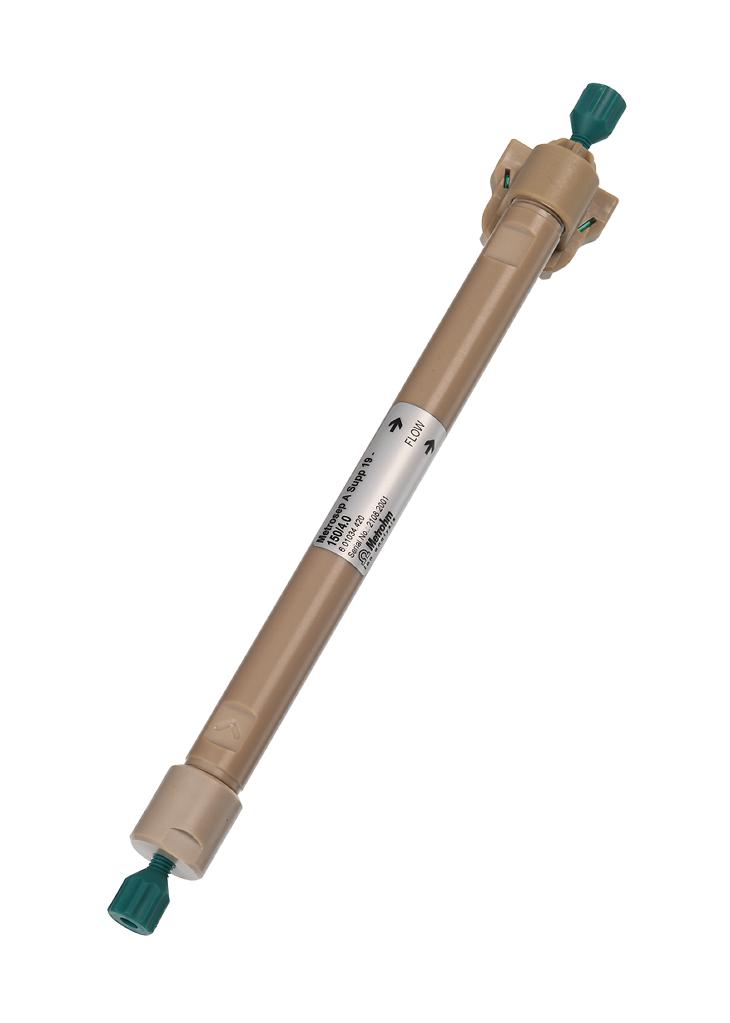


6.2048.030
Guidance rodGuidance rod for 860 KF Thermoprep.
6.01201.000
Rod stirrer SGJ sleeve for 6.01403.050Rod stirrer SGJ sleeve for when using a rod stirrer instead of an homogenizer in the 6.01403.050 titration head
6.9013.000
Ionisation rod for ionizerThe ionisation rod is mounted with the holder (6.2057.160) to the 864 Robotic Balance Sample Processor.
6.2026.010
Support stand with support rodComplete, with stand rod, total length 42 cm. Used with 649, 728 Magnetic Swing-out Stirrer alone (without Dosimat)
6.2042.030
Buret tip clip (rod stirrer)Clip for proper alignment of buret tips, dosing or aspiration tubings using a rod stirrer in the titration beaker of a sample changer
6.2016.030
Support rod / 250 mm6.2016.050
Support rod / 300 mm6.2016.060
Support rod / 480 mm6.2016.070
Support rod / 400 mm6.2001.010
Support stand with support rodFor Dosimats and Titrinos
6.2001.050
Support stand without support rodUsed with 756, 831 KF Coulometer and 728 Magnetic Swing-out Stirrer
6.2001.060
Support stand without support rodTo attach an 801, 804, 803 Stirrer to a Titrando, Titrino plus, Dosimat plus or 856 and 867.
6.2057.160
Holder for ionization rod for 864 Robotic Balance Sample Processor002RDX
Gas Diffusion Electrode X-Ray diffraction electrochemical flow cell setupThis is a horizontally mounted, multi-purpose electrochemical cell for Gas Diffusion Electrode (GDE), designed to be used with X-Ray Diffractometry.The cell consists of two individual compartments: the liquid flow chamber and the gas chamber, which are placed on opposing faces of a GDE. Both compartments are held in place by magnetic/screw mount, providing a leakage-free O-Ring seal.The liquid chamber can be filled with an electrolyte using a syringe or an electrolyte can continuously flow through it using an external reservoir and peristaltic pump (reservoir and pump not included).The dry chamber is gas-tight enabling continuous flow of a gas carrier and evacuation of the gas products for sampling using standard analytical instruments such as a residual gas analyzer. Both compartments are made of a polyether ether ketone (PEEK) material. The cell is meant to be used with standard reference electrode having 6 mm in diameter and counter electrode in the form of a rod/helix with 6 mm in diameter and 15 mm active.Please note: this product is not available from Metrohm Germany.
6.2769.100
EMPTY sensor for level sensor for 1 L bottlesThis sensor, mounted in the 6.1626.000 bottle attachment, results in the level sensor EMPTY for 1 L bottles. Included are two sensor rods, one aspiration tubing and two holders for fixing the tubing to one of the sensor rods.
6.2769.110
EMPTY sensor for level sensor for 2 L bottlesThis sensor, mounted in the 6.1626.000 bottle attachment, results in the level sensor EMPTY for 2 L bottles. Included are two sensor rods, one aspiration tubing and two holders for fixing the tubing to one of the sensor rods.
6.2769.120
EMPTY sensor for level sensor for 10 L canistersThis sensor, mounted in the 6.1626.000 bottle attachment, results in the level sensor EMPTY for 10 L canisters. Included are two sensor rods, one aspiration tubing and two holders for fixing the tubing to one of the sensor rods.
6.2769.000
FULL sensor for level sensorThis sensor, mounted in the 6.1626.000 bottle attachment, results in the level sensor FULL for 1 L and 2 L bottles and for canisters. Included are two sensor rods, one inlet tubing and one holder for fixing the tubing to one of the sensor rods.
DRP-FLWCL
Flow Cell for Screen-Printed ElectrodesMethacrylate wall-jet Flow-Cell for FIA. Suitable to be used with standard format Screen-Printed Electrodes with the electrochemical cell in the middle of the strip. Closing system with powerful magnets Fittings included.
6.2013.010
Clamping ringFor support rods with a diameter of 10 mm.
6.01900.030
Stirring propeller 20 mm ETFEStirring propeller, 20 mm, with adjustable height for use with Rod Stirrer "Titrator" or Rod Stirrer "Sample Robot"
6.01900.010
Stirring propeller 30 mm ETFEStirring propeller 30 mm ETFE with adjustable height for use with Rod Stirrer "Titrator" or Rod Stirrer "Sample Robot"
6.01900.020
Stirring propeller 13 mm ETFEStirring propeller 13 mm ETFE with adjustable height for use with Rod Stirrer "Titrator" or Rod Stirrer "Sample Robot"
6.2047.110
Holder for PolytronHolder to fix the Polytron at the stand rod.
6.2137.000
Controller for 722/727Used with 722 Rod Stirrer or 727 Ti Stand
008RDX
Basic electrochemical cell set upThis is a stationary solution basic electrochemical cell for measurements of electrodes in a form of:rod/disc (6 mm dia.); thin film deposited on flat substrate (using a wireclip) ; membrane (using a wire clip); The working, counter and reference electrodes are mounted in a top casing either in 2-, or 3-electrode setup. The cell elements are constructed with materials that are inert to the sample (glass and PEEK). It well fits aqueous(EPDM O-Rings) and organic solvent (FFKM O-Rings) electrolyte requirements.The construction is gas-tight and can be used when the removal and exclusion of contaminants such as oxygen and water is required by bubbling of an inert gas through the electrolyte.Please note: this product is not available from Metrohm Germany.
6.1909.010
Stirring propeller / 87 mmPropeller stirrer, length from lower edge of SGJ: 96 mm. For use with beakers with 722, 802 Rod Stirrer
6.1909.020
Stirring propeller / 95 mmPropeller stirrer, length from lower edge of SGJ: 104 mm. For use with beakers with 722, 802 Rod Stirrer
DRP-BIASTIR
Stirrer for BIASPEStirrer for batch injection analysis cells. The stirring rod in Teflon allows a precise control of the rotation rate
6.1910.000
Control ringFor 6.2137.000 Controller of 722, 803 Rod Stirrer or 727 Ti Stand if used with other than 6.2021.030 Electrode holder
6.1909.030
Stirring propeller / 95 mmPropeller stirrer with PP shaft, PVDF tip. Length from the SGJ: 104 mm. For KF applications with 722, 802 Rod Stirrer
6.1909.040
Stirring propeller / 93 mmPropeller stirrer, length from lower edge of SGJ: 102 mm. For titration vessels with SGJ 14/15 and 722, 802 Rod Stirrer
DRP-CAST
μStat Cable connector for Screen-Printed ElectrodesConnects any DropSens equipment with DropSens Screen-Printed Electrodes
DRP-FLWCL-PEEK
Flow Cell in PEEK for Screen-Printed ElectrodesPEEK wall-jet Flow-Cell for FIA. Suitable to be used with standard format Screen-Printed Electrodes with the electrochemical cell in the middle of the strip. Closing system with powerful magnets. Fittings included.
001RDX
Optical fiber spectro-electrochemical flow cell setupThis is a horizontally mounted, multi-purpose spectroelectrochemical cell designed to be coupled with light sources and spectrometers (UV-Vis, NIR, IR) via optical fibers. It enables obtaining electrochemical and spectroscopic information from liquid sample or thin films in systems where variations in applied potential induce changes in observed spectra.Applied collimating lenses are curved optical lenses that enables parallel irradiation of the sample. Each lens is 5 mm in diameter, has focal length of 10 mm and wavelength range of 200-2000 nm. The cell consists of a polyether ether ketone (PEEK) flow chamber equipped with magnetic mount sample holder (a screw version is available on request), screw mount quartz window holder and two different mini tripods.The cell is meant to be used with standard reference electrode having 6 mm in diameter and counter electrode either in the form of a rod or helix with 6 mm in diameter and 15 mm active length.Please note: this product is not available from Metrohm Germany.
6.01403.050
Titration head for KFT with reinforced tips (P&P)Titration head for Karl Fischer titration in Pick&Place modules of the OMNIS Sample Robot Pick&Place. In addition to 2 reinforced antidiffusion tips, the titration head offers an opening for using an homogenizer (Polytron 1300D) or rod stirrer.
DRP-FLWCL-P
Flow Cell in Polypropylene for Screen-Printed ElectrodesPolypropylene wall-jet Flow-Cell for FIA. Suitable to be used with standard format Screen-Printed Electrodes with the electrochemical cell in the middle of the strip. Closing system with powerful magnets. Fittings included.
DRP-FLWCL-SC
Flow Cell with screws for Screen-Printed ElectrodesMethacrylate (top part) wall-jet Flow-Cell for FIA. Suitable to be used with standard format Screen-Printed Electrodes with the electrochemical cell in the middle of the strip. Closing system with screws. Fittings included.
DRP-FLWCL-IDE
Flow Cell for Interdigitated ElectrodesMethacrylate wall-jet Flow-Cell for FIA. Suitable to be used with IDE electrodes ref. G-IDEAU10, G-IDEAU5, G-IDEPT10, G-IDEPT5, G-IDECONAU10 and G-IDECONPT10. Closing system with powerful magnets. Fittings included.
DRP-FLWCL-IDE-TEF
Flow Cell in Teflon for Interdigitated ElectrodesTeflon wall-jet Flow-Cell for FIA. Suitable to be used with IDE electrodes ref. G-IDEAU10, G-IDEAU5, G-IDEPT10, G-IDEPT5, G-IDECONAU10 and G-IDECONPT10. Closing system with powerful magnets. Fittings included.
DRP-FLWCL-WS
Flow Cell for Work in Solution Screen-Printed ElectrodesMethacrylate wall-jet Flow-Cell for FIA. Suitable to be used with work in solution format Screen-Printed Electrodes with the electrochemical cell at the end of the strip. Closing system with powerful magnets. Fittings included.
DRP-CFLWCL-WE
Flow Cell - Only Working ElectrodeMethacrylate wall-jet Flow-Cell for FIA.Its o-ring entraps only the working electrode. Suitable to be used with standard Screen-Printed Electrodes with the electrochemical cell in the center of the strip. Closing system with powerful magnets. Fittings included.
DRP-CFLWCL-WE-TEF
Flow Cell in Teflon - Only Working ElectrodeTeflon wall-jet Flow-Cell for FIA.Its o-ring entraps only the working electrode. Suitable to be used with standard Screen-Printed Electrodes with the electrochemical cell in the center of the strip. Closing system with powerful magnets. Fittings included.
DRP-CFLWCL-MAGN
Flow Cell for magnetic assays with Screen-Printed ElectrodesMethacrylate wall-jet Flow-Cell associated with a powered magnet designed to do FIA with magnetic beads. Suitable to be used with standard format Screen-Printed Electrodes with the electrochemical cell in the middle of the strip. Fittings included.
DRP-FLWCL8X
Flow Cell for 8X format Screen-Printed ElectrodesMethacrylate wall-jet Flow-Cell for performing simultaneus measuements in FIA. Suitable to be used with 8X format Screen-Printed Electrodes. Closing system with screws. Fittings included.
DRP-FLWCL8X1C
Flow Cell for 8X format Screen-Printed Electrodes 1 ChannelMethacrylate thin-layer Flow-Cell for performing simultaneus measuements in FIA. Suitable to be used with 8X format Screen-Printed Electrodes. Closing system with screws. Fittings included.
DRP-CFLWCL-CONIC
Cell for Screen-Printed Electrodes - Conical WellMethacrylate conic cell suitable to be used with standard format Screen-Printed Electrodes with the electrochemical cell in the middle of the strip. Closing system with powerful magnets.
DRP-CFLWCL-CONIC-TEF
Cell in Teflon for Screen-Printed Electrodes - Conical WellTeflon conic cell suitable to be used with standard format Screen-Printed Electrodes with the electrochemical cell in the middle of the strip. Closing system with powerful magnets.
DRP-HPLCELL
HPLC Cell for Screen-Printed ElectrodesCell in PEEK designed for working in High-Performance Liquid Chromatography systems. Suitable to be used with standard format Screen-Printed Electrodes with the electrochemical cell in the middle of the strip.
DRP-CELL
Cell for Screen-Printed ElectrodesCell in methacrylatel for batch analysis which allows optional stirring and it's recommended for deaerated samples and for standard additions mode. Suitable for working with all catalogue Screen-Printed Electrodes but recommended to be used with work in solution format SPEs.
DRP-TCELL
Thermostatic Cell for Screen-Printed ElectrodesMethacrylate Cell designed to perform batch analysis allowing temperature control through a thermostatic jacket. Suitable for working with all catalogue Screen-Printed Electrodes but recommended to be used with work in solution format SPEs.
DRP-TRANSCELL
Transmission Cell for Transparent Screen-Printed ElectrodesCell in Teflon suitable to perform transmission experiments with transparent Screen-Printed Electrodes in combination with a collimator lens (ref. CLENS).
DRP-REFLECELL
Reflection Cell for Screen-Printed ElectrodesCell in Teflon suitable to perform reflection experiments with standard format Screen-Printed Electrodes with the electrochemical cell in the middle of the strip. Closing system with powerful magnets.
DRP-BIASPE02
Batch Injection Analysis Cell for Screen-Printed Electrodes (Micropipette P200M)Batch Injection Analysis (BIA) cell made in ABS designed to obtain reproducible flow rate and electronically control the injection volume with a programmable electronic micropipette of 20-200 µL. Suitable to be used with standard format Screen-Printed Electrodes with the electrochemical cell in the middle of the strip. Closing system with powerful magnets.
DRP-BIASPE10
Batch Injection Analysis Cell for Screen-Printed Electrodes (Micropipette P1000M) in ABSBatch Injection Analysis (BIA) cell made in ABS designed to obtain reproducible flow rate and electronically control the injection volume with a programmable electronic micropipette of 100-1000 µL. Suitable to be used with standard format Screen-Printed Electrodes with the electrochemical cell in the middle of the strip. Closing system with powerful magnets.
DRP-RAMANCELL
Raman Cell for Screen-Printed ElectrodesBlack teflon reflection cell for performing Raman Spectroelectrochemistry with screen-printed electrodes in combination with ref. RAMANPROBE.
DRP-TLFCL-REFLECELL
Spectroelectrochemical Reflection Cell for Thin-Layer Flow-Cell Screen-Printed ElectrodesCell for performing spectroelectrochemical measurements in flow conditions in combination with the TLFCL-CIR format Screen-Printed Electrodes, the suitable fittings and ref. RPROBE-VIS-UV.
DRP-CELL-PEEK
Cell for Screen-Printed Electrodes in PEEKCell in PEEK for batch analysis which allows optional stirring and it's recommended for deaerated samples and for standard additions mode. Suitable for working with all catalogue Screen-Printed Electrodes but recommended to be used with work in solution format SPEs.
AUT.RCE
Rotating Cylinder Electrode (RCE)Autolab Rotating Cylinder Electrode (RCE) with a non-carbon liquid contact provides superior noise-free corrosion measurements. The RCE’s Hg contact produces smooth and accurate data that requires no special handling or tools for use in your lab.With the highest rotation rate among commercially available systems, the Autolab Rotating Cylinder Electrode allows you to simulate the widest variety of pipe flow conditions in your lab. The RCE has double the rotation rate of any other 12 mm rotating cylinder electrode making achievable flow rates are 50% higher than any other commercially available RCE.Maximum simulated turbulent flow rates: 1 inch/2.66 cm pipe with schedule 40 is 365 cm/s24 inch/57.48 cm pipe with schedule 40 is 566 cm/sThe Autolab RCE is very compact, only a tenth of the size of other commercially available RCEs. You can access the full rotation rate of the Autolab RCE (100-5000 rpms) with a 12 mm cylinder. Operating temperature range: max 40 C°Exposed sample surface: 3 cm2Image shows RCE and controller, RRDE cell, PGSTAT204 and NOVA software. Keywords: Rotating Cylinder Electrode, Corrosion, RCE, pipe flow, turbulent flow, corrosion in pipes, pipes, Reynolds number, cylindrical sample.
AUT.RDE.M3
Rotating disk electrode with M3 threadThe Autolab RDE with an M3 thread is a high-end rotating disk electrode for measurements on systems where high rotation speed and low noise are required. The unit can go up to 10,000 rpm, a liquid Hg contact guarantees low noise. The PCTFE shaft has been designed to fit in Metrohm cell vessels, but also fits on most other electrochemical cells. The tip diameter is 8 mm with a glass shaft and an active surface diameter of 2 mm.The rotation speed of the RDE is controlled manually with the button on the front of the motor control unit. The RDE can also be controlled remotely with the Autolab software. The rotation speed can be varied continuously between 100 and 10,000 rpm with a resolution of 1 rpm.
AUT.RDE.S
Rotating disk electrodeThe Autolab RDE is a high-end rotating disk electrode for measurements on systems where high rotation speed and low noise are required. The unit can go up to 10,000 rpm, a liquid Hg contact guarantees low noise. The PCTFE shaft has been designed to fit in Metrohm cell vessels, but also fits on most other electrochemical cells. The tip diameter is 10 mm, with an active surface diameter of 3 mm or 5 mm.The rotation speed of the RDE is controlled manually with the button on the front of the motor control unit. The RDE can also be controlled remotely with the Autolab software. The rotation speed can be varied continuously between 100 and 10,000 rpm with a resolution of 1 rpm.
AUT.RRDE.S
Rotating Ring Disk ElectrodeThe Autolab RRDE is a low-noise rotating ring disk electrode that can be used to perform electrochemical measurements under controlled hydrodynamic conditions. The ring and disk electrode assembly provides the means to detect reaction intermediates in situ through collection experiments.The Autolab RRDE uses 2 identical friction-less mercury contacts for low noise measurements and can be used with any Autolab potentiostat/galvanostat fitted with the BA, dual-mode bipotentiostat module.The rotation speed of the RRDE is controlled manually with the button on the front of the motor control unit. The RRDE can also be controlled remotely with the Autolab software. The rotation speed can be varied continuously between 100 and 10,000 rpm with a resolution of 1 rpm.
RHD.CAP.GC3
Cap with exchangeable electrode Electrode Tips (ET)Exchangeable electrode pressed in PEEK made of various materials with diverging diameters and lengths.
DRP-BICAST
μStat Cable connector for Dual Screen-Printed ElectrodesConnects any DropSens equipment with DropSens Dual Screen-Printed Electrodes
DRP-CABSTAT1
μStat 8000(P)/4000(P) one node cable connector for conventional electrodesConnects individual nodes of the μStat 8000(P)/4000(P) to conventional electrodes
DRP-CAST8X
μStat 8000(P) cable connector for format 8X Screen-Printed ElectrodesConnects μStat 8000(P) equipment to 8X format Screen-Printed Electrodes
DRP-CAST1X8
μStat 8000(P) cable connector for individual Screen-Printed ElectrodesConnects μStat 8000(P) equipment with individual Screen-Printed Electrodes
DRP-CAC
Cable connector for Screen-Printed ElectrodesConnects DropSens Screen-Printed Electrodes to any kind of potentiostat. Recommended when working in batch or flow analysis.
DRP-BICAC
Cable connector for Dual Screen-Printed ElectrodesConnects DropSens Dual Screen-Printed Electrodes to any kind of potentiostat. Recommended when working in batch or flow analysis.
DRP-CAC-P
Cable connector for Screen-Printed Electrodes/Plastic SubstrateConnects DropSens Screen-Printed Electrodes over Plastic Substrate with any kind of potentiostat
DRP-CACIDE
Cable connector for Interdigitated Electrodes/Glass SubstrateConnects DropSens Interdigitated Electrodes over Glass Substrate with any kind of potentiostat
DRP-CACIDE-P
Cable connector for Interdigitated Electrodes/Plastic SubstrateConnects DropSens Interdigitated Electrodes over Plastic Substrate with any kind of potentiostat
DRP-CAC8X
Cable connector for format 8X Screen-Printed ElectrodesConnects DropSens 8X format Screen-Printed Electrodes with any kind of (multi) potentiostat
DRP-DSC
Connector for Screen-Printed ElectrodesConnector suitable to connect DropSens SPEs to any kind of potentiostat. Recommended when working by placing a drop over the electrode
DRP-BIDSC
Connector for Dual Screen-Printed ElectrodesConnector suitable to connect DropSens Dual SPEs to any kind of potentiostat. Recommended when working by placing a drop over the electrode
DRP-DSC-P
Connector for plastic substrate Screen-Printed ElectrodesConnector suitable to connect DropSens plastic substrate SPEs to any kind of potentiostat. Recommended when working by placing a drop over the electrode
DRP-CONNECT4W
Connector for 4W format Screen-Printed ElectrodesSuitable to connect 4W format Screen-Printed Electrodes to any kind of potentiostat
DRP-CONNECT8W
Connector for 8W format Screen-Printed ElectrodeSuitable to connect 8W format Screen-Printed Electrodes to any kind of potentiostat
DRP-CONNECTOR96X
Connects 96X format Screen-Printed Electrodes with any kind of (multi) potentiostat.Connects 96X format Screen-Printed Electrodes with any kind of (multi) potentiostat. Two manual rotating selectors allow to select the row letter (from A to H) and the column number (from 1 to 12) identifiers of the wells to be analysed.
DRP-CAC-TLFCL
Cable connector for Thin-Layer Flow-Cell integrated Screen-Printed ElectrodesConnects DropSens Thin-Layer Flow-Cell integrated Screen-Printed Electrodes with any kind of potentiostat
DRP-FIAEC
Complete FIA System for Electrochemical detection with Screen-Printed ElectrodesComplete FIA System for Electrochemical detection with Screen-Printed Electrodes. Includes: VALVE, PPUMP, FLWCL, PVCTUBE, FLOWFITTINGS, Tubes and Containers
DRP-TLFCL-HOLDER
Holder for Thin-Layer Flow-Cell integrated Screen-Printed ElectrodesHolder for Thin-Layer Flow-Cell integrated Screen-Printed Electrodes
DRP-MAGNET
Magnetic support for Screen-Printed ElectrodesMagnetic support for Screen-Printed Electrodes. Recommended to perform analysis with magnetic beads
DRP-MAGNET8X
Magnetic support for format 8X Screen-Printed ElectrodesMagnetic support for format 8X Screen-Printed Electrodes. Recommended to perform analysis with magnetic beads
DRP-MAGNET96X
Magnetic support for format 96X Screen-Printed ElectrodesMagnetic support for format 96X Screen-Printed Electrodes. Recommended to perform analysis with magnetic beads
DRP-MEMB-U100
Membrane for Screen-Printed ElectrodesMembrane for Screen-Printed Electrodes. Useful to perform analysis with small volumes of solution or sample (7,5-15 µL), allowing a good covering of the 3 electrodes system
6.02005.000
OMNIS electrode holderElectrode holder for one OMNIS titration system.
6.02005.010
Electrode Parking StationElectrode Parking Station for electrode storage on an OMNIS titration system.
6.02104.000
Electrode cable plug-in head G / plug P, 0.55 mCable for connecting an analog electrode (plug-in head G) to an analog measuring module from OMNIS.
6.02104.010
Electrode cable plug-in head G / plug P, 1.5 mCable for connecting an analog electrode (plug-in head G) to an analog measuring module from OMNIS.
6.02104.040
Electrode cable plug-in head G (pol.) / plug P, 0.55 mCable for connecting an analog polarizable electrode (plug-in head G) to an analog measuring module from OMNIS.
6.02104.050
Electrode cable plug-in head G (pol.) / plug P, 1.5 mCable for connecting an analog polarizable electrode (plug-in head G) to an analog measuring module from OMNIS.
6.02104.300
Electrode cable plug-in head Q / plug P, 0.55 mCable for connecting a dTrode (plug-in head Q) to the digital measuring module from OMNIS.
6.02104.310
Electrode cable plug-in head Q / plug P, 1.5 mCable for connecting a dTrode (plug-in head Q) to the digital measuring module from OMNIS.
6.02104.600
Electrode cable plug-in head U / plug P, 0.55 mCable for connecting an electrode with plug-in head U to an analog measuring module from OMNIS.
6.02104.610
Electrode cable plug-in head U / plug P, 1.5 mCable for connecting an electrode with plug-in head U to an analog measuring module from OMNIS.
6.02850.200
Eluent producer cartridge AThe eluent producer cartridge A (EPC A) produces the high-purity hydroxide eluent from the 4 mol/L hydroxide concentrate, based on water electrolysis. The cation exchanger diaphragm enables the selective migration of cations into the eluent. The EPC A is fed ultrapure water, which can be operated fully automatically in connection with a water processing system.
6.05406.060
KFC equipment with generator electrode with diaphragm for OMNIS Oven ModuleComplete accessory set for coulometric Karl Fischer titrations with a generator electrode with diaphragm on an OMNIS Oven Module
6.05406.070
KFC equipment with generator electrode without diaphragm for OMNIS Oven ModuleComplete accessory set for coulometric Karl Fischer titrations with a generator electrode without diaphragm on an OMNIS Oven Module
6.07311.010
Boat Introduction Module, quartzBoat Introduction Module for the Combustion IC for use with the quartz combustion tube. This module uses a sample boat to transfer samples into the oven for combustion.It also includes a pair of tweezers and a petri dish for handling the sample boat.
6.07311.020
Boat Introduction Module, ceramicBoat Introduction Module for the Combustion IC for use with the ceramic combustion tube. This module uses a sample boat to transfer samples into the oven for combustion.It also includes a pair of tweezers and a petri dish for handling the sample boat.
6.07311.030
Liquid Introduction Module, manual (TEI)The Liquid Introduction Module enables the combustion of liquid samples by using an automatic syringe to inject the sample directly. The module can be used for samples with a boiling point 420 °C.This module can also guide gaseous or LPG samples into the oven from the GLS Sampler CIC.
6.07311.040
Liquid Introduction Module, automated (TEI)The Liquid Introduction Module enables the combustion of liquid samples by using the Liquid Autosampler CIC to inject the sample directly. The module can be used for samples with a boiling point < 420 °C.This module can also guide gaseous or LPG samples from the GLS Sampler CIC into the oven.
6.07311.290
Septum for Introduction Module (TEI)Septum for liquid injection port of the Introduction Modules (TEI) 6.07311.010, 6.07311.020, 6.07311.030, 6.07311.040.
6.07311.300
Septum cap Liquid Introduction ModuleLid for fastening the 6.07311.290 septum in place in the Liquid Introduction Module.
6.1241.200
Nut for SPE electrode shaftNut for SPE electrode shaft 6.1241.090 and measuring head (SPE) 6.01256.020.
6.1241.210
Supporting ring for SPE electrode shaftSupporting ring made of PTFE for SPE electrode shaft 6.1241.090 and measuring head (SPE) 6.01256.020.
6.1244.060
Silicone seal for SPE electrode shaft (10 pieces)Seal made of silicone for SPE electrode shaft 6.1241.090 and measuring head (SPE) 6.01256.020, 10 pieces.
6.1257.900
Replacement seal for Pd reference electrode, 3 pcs.Dichtungsringe zur Pd-Referenzelektrode.
6.2001.140
Electrode holder with stand baseElectrode holder for 949 pH Meter
6.2008.060
Holder for electrode storage vesselPractical holder for fastening the electrode storage vessels to the 912, 913 or 914 pH/Conductometers.
6.2021.020
Electrode holderElectrode holder for 4 electrodes and 2 buret tips
6.2021.030
Electrode holder with rinsing deviceElectrode holder with rinsing device for 4 electrodes and 2 buret tipsConnection for rinsing water, integrated magnetic switch for 722, 802 Stirrer. Used with 727 Ti Stand
6.2104.020
Electrode cable / 1 m / FFor connecting electrodes with Metrohm plug-in head G to Metrohm instruments (socket F).
6.2104.030
Electrode Cable 2 m / FFor connecting electrodes with Metrohm plug-in head G to Metrohm instruments (socket F).
6.2104.040
Electrode cable / 3 m / FFor connecting electrodes with Metrohm plug-in head G to Metrohm instruments (socket F)
6.2104.050
Electrode cable 1 m, EWith E plug. For connecting electrodes with plug-in head G - measuring instrument
6.2104.060
Electrode cable / 2 m / EWith plug E. For connecting electrodes with plug-in head G - measuring instrument
6.2104.070
Electrode cable / 3 m / EWith plug E. For connecting electrodes with plug-in head G - measuring instrument
6.2104.080
Electrode cable 1 m, 2xBWith banana plug 4 mm dia. For connecting electrodes with Metrohm plug-in head G to measuring instrument.
6.2104.090
Electrode cable 1 m, BNCWith BNC plug. For connecting electrodes with Metrohm plug-in head G with a measuring instrument.
6.2104.110
Electrode cable 2 m, 2xBWith banana plug 4 mm dia. For connecting electrodes with Metrohm plug-in head G to measuring instrument.
6.2104.120
Electrode cable / 1 m / HWith plug H. For connecting generator electrode - KF Coulometer.
6.2104.130
Electrode cable / 1 m / RMWith RM plug. For connecting electrodes with plug-in head G - Radiometer instruments
6.2104.160
Electrode cable plug M, 1 mFor connecting electrodes with head G to Mettler instruments with LEMO.
6.2104.510
Electrode cable / 1 m / S/FWith plug F. For connecting electrodes with plug-in head S - measuring instrument
6.2104.600
Electrode cable for plug in head U/plug F, 2x2 mm B, 1mFor connecting electrodes with Metrohm plug-in head U to Metrohm instruments (socket F).
6.2104.610
Electrode cable for plug in head U/plug F, 2x2 mm B, 2mFor connecting electrodes with Metrohm plug-in head U to Metrohm instruments (socket F).
6.2104.620
Electrode cable / 0.65 m / HWith plug H, for the generator electrode - coulometer connection
6.2104.630
Electrode cable / 1.5 m / HWith plug H, for the generator electrode - coulometer connection
6.2112.100
Electrode cable set for the measuring head of Professional VA/CVS instrumentsCable set comprised of 3 cables for connecting working, reference and auxiliary electrodes.
6.2120.020
Mini electrode cable / plug F - 2 mm1 mini socket for connection pins diameter 2 mm and 1 mini plug type F. For connection of the electrodes to IC VA Detector
6.2151.060
Cable for Level Control and Eluent Production ModuleConnecting cable for sensor and Level Control or Eluent Production Module.
6.2163.000
Electrode cable for 910 PSTAT miniConnecting cable for disposable screen-printed electrodes (SPE)
6.2316.030
Inner filling solution to 6.0506.100 electrodeMeasuring electrolyte for NH3-selective electrode (50 mL)
6.2319.000
Surfactrode refill pasteRefill paste for 6.0507.140 Surfactrode Refill
6.2615.030
Electrode stand for MMEElectrode stand for filling and storing the Multi-Mode Electrode.
6.2615.050
Electrode standElectrode stand for up to 11 electrodes and 3 x 6.1620.000 buffer bottles.
6.2615.130
Electrode stand for MME proElectrode stand for filling and storing the Multi-Mode Electrode pro.
6.2709.110
Stopper for the electrode opening on Professional VA/CVS instrumentsSet with 1 stopper for electrode opening (e.g. for pH electrode or Pt1000 temperature sensor), 6 stoppers for openings (auxiliary solutions and/or automatic sample addition).
6.2802.020
Polishing set for Ultra Trace Electrode TipPolishing set to renew the surface of the Ultra Trace Electrode tip 6.1204.180
6.2802.030
Polishing tape to Polishing Set for Ultra Trace ElectrodePolishing tape to Polishing Set for Ultra Trace Electrode. 12 µm particle size. used in the polishing cylinder. Set of 50
6.2802.200
Maintenance set for 6.1257.2XX working electrodesTool for removing protruding PEEK materials and for subsequent polishing of working electrodes including polishing disks.
6.5330.090
IC equipment: Additional eluent on the Eluent Production ModuleAccessory set for Eluent Production Module. Contains all parts necessary for expansion by one eluent. The level sensor must be ordered in accordance with the application.
6.5623.000
O2 Lumitrode replacement setReplacement set for the O2 Lumitrode. The set contains a certified O2 cap as replacement, a calibration vessel, and 5 x 30 mL oxygen standard, 0%.
BWT-840000307
NanoRam Product Manual SetNanoRam documentation set including Product Manual and NanoRam ID Installation Instructions.
DRP-BICASTDIR
µStat cable connector for dual screen-printed electrodesConnector that acts as an interface between our dual screen-printed electrodes and Metrohm DropSens instruments and some accessories.
DRP-BIDSC4MM
Boxed connector for dual screen-printed electrodesConnector that functions as an interface between DropSens dual screen-printed electrodes (SPEs) and interdigitated electrodes with any type of potentiostat.
DRP-BIDSC-FET
Connector for Field-effect transistor ElectrodesBoxed connector that acts as an interface between ref. AUFET30 electrodes and any kind of potentiostat
DRP-CABSTAT
mStat Cable connector (2WE) for conventional electrodesFlexible cable connector that acts as an interface between DropSens bipotentiostats and conventional electrodes
DRP-CACIDEMEA
Cable connector for interdigitated electrodes with AUX and REFFlexible cable that act as an interface between interdigitated electrodes in glass with CE and RE and any kind of potentiostat.Cable connector for interdigitated electrodes with CE and RE quantity
DRP-CELL-IDE
Cell for interdigitated electrodesCells for batch analysis with interdigitated electrodes (IDE). Suitable for working with volumes up to 3-8 ml and manufactured in different materials that will allow you to work even with organic solvents.
DRP-DSC4MM
Boxed connector for screen-printed electrodesConnector that functions as an interface between DropSens screen-printed electrodes (SPEs) and interdigitated electrodes with any type of potentiostat.
DRP-FLKITSPE
Fluorescence Kit for screen-printed electrodesKit designed for those researchers interested in performing fluorescence spectroscopy experiments with screen-printed electrodes (Includes 2 x optical fibers (600 um) ended in SMA 905 connections, 2 x optical filters 230-500 and 300-750 nm 2 x holders, 1 x RPROBE-VIS-UV and 1 x REFLECELL).
DRP-FLWCL-IDE-PEEK
Flow Cell in PEEK for Interdigitated ElectrodesDRP-I-BICAST
i-µStat cable connector for dual screen-printed electrodesConnector that acts as an interface between our dual screen-printed electrodes and Metrohm DropSens potentiostats.
DRP-I-CABSTAT
μStat Cable connector for μStat-i 400 and conventional electrodesμStat Cable connector for μStat-i 400 and conventional electrodes
DRP-I-CABSTAT1
μStat Cable connector for μStat-i 400s and conventional electrodesμStat Cable connector for μStat-i 400s and conventional electrodes
DRP-I-CAST
i-µStat Cable Connector for Screen-Printed ElectrodesConnector that act as an interface between our Screen-Printed Electrodes and Metrohm DropSens potentiostats.
DRP-PTGRID-TRANSCELL
Spectroelectrochemical cell with conventional electrodesThis cell allows mass electrolysis to be easily performed while transmission measurements (1 mm optical path) are acquired in the solution close to the electrode.
DRP-RAMANCELL-C
Raman spectroelectrochemical cell for conventional electrodesCell in PEEK for Raman spectroelectrochemical measurements. Designed be used with ref. RAMANPROBE and conventional Metrohm electrodes.
DRP-REFLECELL-C
UV-Vis/NIR spectroelectrochemical cell for conventional electrodesCell for UV-Vis/NIR spectroelectrochemical measurements with conventional electrodes.
DRP-SPECELL4W-U20
Disposable well cell for 4W format screen-printed electrodesElectrochemical cells for easy and fast handling of 4W format screen-printed electrodes. Take advantage of their disposable, lightweight and quick-assembly design to handle large droplets and ensure good surface coverage and sample sealing.
DRP-SPECELL8W-U20
Disposable well cell for 8W format screen-printed electrodesElectrochemical cells for easy and fast handling of 8W format screen-printed electrodes. Take advantage of their disposable, lightweight and quick-assembly design to handle large droplets and ensure good surface coverage and sample sealing.
DRP-SPECELL8X-U20
Disposable well cell for 8X format screen-printed electrodesElectrochemical cells for easy and fast handling of 8X format screen-printed electrodes. Take advantage of their disposable, lightweight and quick-assembly design to handle large droplets and ensure good surface coverage and sample sealing.
DRP-SPECELL-U75
Disposable well cell for screen-printed electrodesElectrochemical cells for easy and fast handling of screen-printed electrodes. Take advantage of their disposable, lightweight and quick-assembly design to handle large droplets and ensure good surface coverage and sample sealing.
DRP-TLCELL
Thin-layer cell for screen-printed electrodesThin-layer electrochemical cell for screen-printed electrodes with 2mm banana direct connections
DRP-TLFCLRAMANCELL
Raman flow-cell for Thin-layer flow-cell integrated screen-printed electrodesFLAT.COUNTER
Flat cell steel counter electrodeDRP-CNFSOL-1ML
Installation Instruction for ProfIC Vario 1 AnionCarbon Nanofibres Solution produced via the catalytic carbon vapour deposition process. The manufacturing processes provide a highly graphitized material without amorphous carbon – Available in 1.0 mL and 5.0 mL.
DRP-CABSTATMULTI
μStat 8000(P)/4000(P) multichannel cable connector for conventional electrodesConnects the multichannel option of the μStat 8000(P)/4000(P) to up to 8/4 conventional WE sharing one conventional AUX and one conventional REF
003RDX
Spectro-electrochemical flow cell setup with reduced optical pathThis is a horizontally mounted, multi-purpose spectroelectrochemical cell with 4 mm long optical path (i.e. electrolyte thickness) designed to be used with standard UV-Vis or IR spectrometers. It enables obtaining electrochemical and spectroscopic information from liquid sample or thin film in systems where variations in applied potential induce changes in observed spectra.It consists of a polyether ether ketone (PEEK) flow chamber equipped with magnetic mount sample holder (a screw version is available on request), screw mount quartz window holder and two different mini tripods. It well fits aqueous (EPDM O-Rings) and organic solvent (FFKM O-Rings) electrolyte requirements.Unlike Spectro-EFC 1.75 mL, this cell is meant to be used with pseudo-reference electrode (50 mm long) and counter electrode in the form of a metal wire (90 mm long), both with plug of 6 mm in diameter. Thanks to the application of pseudo-reference electrode, the thickness of an electrolyte is reduced from 12 mm down to 4 mm. Please note: this product is not available from Metrohm Germany.
004RDX
Photo-electrochemical single-sided cell setupThis is a horizontally mounted, single compartment photo-electrochemical cell. This cell allows several approaches to perform measurements in 2- or 3-electrode setups. It is designed to investigate performance of a thin film photo-anode (e.g.nanocrystalline material or conducting polymer) deposited on a rigid or flexible transparent substrate (typically fused quartz glass).The cathode (counter electrode) and reference electrode are mounted in a top casing. The cell elements are made of PEEK. It well fits aqueous (EPDM O-Rings) and organic solvent (FFKM O-Rings) electrolyte requirements. The construction is gas-tight having gas inlet and outlet, which can be used to bubble the solution and evacuate gases from the chamber.Please note: this product is not available from Metrohm Germany.
005RDX
Small etch cell setupOne of the most common application of an electrochemical etching cell is a preparation of Nanocrystalline Porous Silicon Layer on a single crystal Si wafer. It well fits aqueous (EPDM O-Rings) and organic solvent (FFKM O-Rings) electrolyte requirements.Please note: this product is not available from Metrohm Germany.
006RDX
Photo-electrochemical H-cell setupThis is a horizontally mounted, double compartment photo-electrochemical H-Cell used to simultaneously investigate thin film photo-anodes and cathodes. The cell elements are made of PEEK. It well fits aqueous (EPDM O-Rings) and organic solvent (FFKM O-Rings) electrolyte requirements.The construction is gas-tight having two separate chambers, each equipped with gas inlet and outlet. This allows bubbling the solution and evacuating gases. Chambers are separated with an ion-exchange membrane (e.g. DuPont’s Nafion® membrane), so the electrochemial products appearing at photo-anode and cathode do not affect the opposite electrode.Please note: this product is not available from Metrohm Germany.
007RDX
Bulk electrolysis basic cell set upThis is a standard bulk electrolysis cell with basic configuration (known also as potentiostatic coulometry cell or controlled potential coulometry cell). The cell consists of three electrodes: working electrode (reticulated glassy carbon electrode), counter electrodes (Platinum wire) and reference electrode (aqueous Ag/AgCl or non-aqueous Ag/AgCl). The working and counter electrode are installed in the same compartment, while the reference electrode is separated by a ceramic frit.Reticulated glassy (vitreous) carbon electrode provides a large surface area to solution volume ratio. Electrode arrangement and possibility to use magnetic stirring ensure very efficient mass transport conditions. The cell elements are constructed with materials that are inert to the sample (glass and PEEK). It well fits aqueous (EPDM O-Rings) and organic solvent (FFKM O-Rings) electrolyte requirements. The construction is gas-tight.Please note: this product is not available from Metrohm Germany.
009RDX
Bottom mount electrochemical cell set upThis is a stationary solution voltammetry cell for measurements of a thin film deposited on flat substrate. The sample is loaded from the bottom via magnetic (or screw) mount, while counter or/and reference electrodes are mounted in a top casing (either 2-, or 3-electrode setup).The cell elements are constructed with materials that are inert to the sample (glass and PEEK). It well fits aqueous (EPDM O-Rings) and organic solvent (FFKM O-Rings) electrolyte requirements. The construction is gas-tight and can be used when the removal and exclusion of contaminants such as oxygen and water is required by bubbling of an inert gas through the electrolyte. Please note: this product is not available from Metrohm Germany.
010RDX
Electrolyte-gated transistor bottom mounted electrochemical cell setupThis is a stationary solution electrochemical cell designed to measure characteristics of electrolyte-gated (or solution-gated) transistors using liquid or gel electrolyte. Measured transistor sample can be fabricated on a rigid or flexible flat substrate (not included in the setup) with conducting thin film source and drain, and a layer of conducting or semiconducting channel material.The sample is loaded from the bottom via magnetic (or screw) mount, while gate is mounted in a top casing. A reference electrode can also be mounted in the top casing in case it is needed to control the channel/electrolyte interfacial potential or perform an electrochemical pre-treatment on the channel material. Source and drain electrodes can be accessed through cut-outs in a cell bottom casing, using needle probes or toothless crocodile clips.The cell elements are constructed with materials that are inert to the sample (glass and PEEK). It well fits aqueous (EPDM O-Rings) and organic solvent (FFKM O-Rings) electrolyte requirements. The construction is gas-tight and can be used when the removal and exclusion of contaminants such as oxygen and water is required by bubbling of an inert gas through the electrolyte.Please note: this product is not available from Metrohm Germany.
011RDX
Corrosion cellThis is a stationary solution corrosion cell for EIS and conventional electrochemical measurements on: (a) thin metal film deposited on flat substrate(b) metal plate(c) metal mesh(d) metal wire(e) metal ribbonThe sample is installed from the bottom via magnetic (or screw) mount in between two chambers filled with electrolyte. In cases (a) and (b) bottom chamber is unused and stays dry.The counter or/and reference electrodes are mounted in a top casing (either 2-, or 3-electrode setup). The cell elements are constructed with materials that are inert to the sample (glass and PEEK). It well fits aqueous (EPDM O-Rings) and organic solvent (FFKM O-Rings) electrolyte requirements. The construction is gas-tight and can be used when the removal and exclusion of contaminants such as oxygen and water is required by bubbling of an inert gas through the electrolyte.Please note: this product is not available from Metrohm Germany.
012RDX
Multiport photo-electrochemical single-sided cell setupThis is a horizontally mounted, single compartment multiport photo-electrochemical cell. This cell allows several approaches to perform measurements in 2- or 3-electrode setups. It is designed to investigate performance of a thin film photo-anode (e.g. nanocrystalline material or conducting polymer) deposited on a rigid or flexible transparent substrate (typically fused quartz glass).The cathode (counter electrode) and reference electrode are typically mounted in a top lid, while both side lids can be used to mount up to 4 additional electrodes (e.g. pH meter, thermometer, Clark electrode, etc.). The tubing installed in side lids enables aliquot sample collection (liquid) and supply of gaseous and liquid reagents.The gas inlet and outlet in the top lid can be used to bubble the solution and evacuate gases from the chamber. It well fits aqueous (EPDM O-Rings) and )organic solvent (FFKM O-Rings) electrolyte requirements. The construction is gas-tight.Please note: this product is not available from Metrohm Germany.
014RDX
Double-tank etch cell setupThis is a horizontally mounted, double-tank cell typically used for anodization of Si-wafers with electrolyte backside contact. It consists of two polyether ether ketone (PEEK)gas-tight chambers each equipped with sapphire wafer serving as window for illumination allowing light-assisted porous Si formation.It well fits aqueous (EPDM O-Rings) and organic solvent (FFKM O-Rings) electrolyte requirements. The Si substrate is mounted in between these chambers and sealed with O-rings under magnetic/screw mount. The preparation of a whole porous Si substrate with this cell is possible at one simple etching step, assuring high reproducibility.Please note: this product is not available from Metrohm Germany.
015RDX
Photo-electrochemical double-sided cell setupThis is a horizontally mounted, single compartment photo-electrochemical cell used to simultaneously investigate thin film photo-anodes and (photo-) cathodes. This cell allows several approaches to perform measurements in 2- or 3-electrode setups.It is designed to investigate performance of a thin film photo-anode (e.g. nanocrystalline material or conducting polymer) deposited on a rigid or flexible transparent substrate (typically fused quartz glass). The cathode (counter electrode) is either mounted in a top casing or attached on the other side of the cell as a thin film deposited on rigid or flexible substrate. The reference electrode is mounted in a top casing.The cell elements are made of PEEK. It well fits aqueous (EPDM O-Rings) and organic solvent (FFKM O-Rings) electrolyte requirements. The construction is gas-tight having gas inlet and outlet, which can be used to bubble the solution and evacuate gases from the chamber.Please note: this product is not available from Metrohm Germany.
6.02104.020
Electrode cable plug-in head G (temp.) / plug P, 0.55 mCable for connecting a temperature sensor (head G) to an analog measuring module from OMNIS.
6.02104.030
Electrode cable plug-in head G (temp.) / plug P, 1.5 mCable for connecting a temperature sensor (head G) to an analog measuring module from OMNIS.
6.05406.000
KFC equipment for OMNIS Coulometer with generator electrode with diaphragmComplete accessory set for coulometric Karl Fischer titration.
6.05406.010
KFC equipment for OMNIS Coulometer with generator electrode without diaphragmComplete accessory set for coulometric Karl Fischer titration.
6.1244.050
Drive belts for rotating disk electrodesFor Professional VA/CVS instruments (3 pcs.).
6.2103.120
Contact pin M4 / 2 mmFor 6.1241.060 Electrode shaft and 6.1204.3XX Electrode tips. With M4 thread. Used with VA equipment sets.
6.2104.140
Electrode cable / 1 m / 2 x 2 mmFor connecting temperature sensors with Metrohm plug-in head G with 780, 781, 826, 827 pH/Ion meters and all Titrandos
6.2104.150
Electrode cable 2 m, 2 x 2 mmFor connecting temperature sensors with Metrohm plug-in head G with 780, 781, 826, 827 pH/Ion meters and all Titrandos
6.2150.000
Electrode cable with identification B / BCable with identification. Identical with 6.2106.020 Cable. Used with 767 Calibrated Reference for mV, pH, Ohm, µS, °C
6.2150.010
Electrode cable with identification 2xB / DINCable with identification. Used with 767 Calibrated Reference for mV, pH, Ohm, µS/cm, °C, 773 pH/mV Simulator
6.2802.000
Polishing set for solid-state electrodesPolishing set with 1 polishing cloth and about 2 g aluminum oxide powder (grain size 0.3 µm)
6.5406.000
Coulometric KF equipment, including generator electrode with diaphragmComplete accessory set for KF coulometer.
6.5406.010
Coulometric KF equipment, including generator electrode without diaphragmComplete accessory set for KF coulometer.
AUT.COIN2.HLD.S
Autolab DuoCoin Cell HolderThe Autolab DuoCoin Cell Holder has 4-point Kelvin gold-plated contacts to assure the highest precision measurements for your battery research. A versatile accessory that can accommodate all standard cells sizes with capacity for smaller and larger non-standard cells and two cells can be processed at one time.Autolab DuoCoin Cell Holder gold plated contacts and gold plated PCB provide protection from corrosion and damage to the accessory in your busy laboratory.Experimental set up is simplified with the Autolab DuoCoin Cell Holder with visible electrode labels and cable connections that correspond to the Autolab potentionstat/galvanostat cable colors. Autolab’s attention to detail is reflected in the silicon surface grippers on the bottom of the Autolab DuoCoin Cell Holder to provide stability in a complex experiment set up.
AUT.RDE.CTRL.S
AUT.RDE.CTRL.SMetrohm Autolab Motor controller unit used to control the rotation rate of the rotating disk, rotating cylinder and rotating ring-disk electrodes. It can be used manually or remotely from the NOVA ot INTELLO software
AUT.RDE.ELCBL
AUT.RDE.ELCBLElectrode cable to connect the Metrohm Autolab potentiostats/galvanostats to the rotating disk and rotating cylinder electrodes.
AUT.RDE.ROT.M3.S
Autolab RotatorAutolab rotator for the rotating disk electrode with M3 thread
AUT.RDE.ROT.S
AUT.RDE.ROT.SAutolab rotator for the rotating disk and rotating cylinder electrodes.


- How to maintain the ...How to maintain the auxiliary electrode
Maintenance of Pt rod auxiliary electrodes for Cyclic Voltammetric Stripping.
- Ag/AgCl reference electrode (6.0728.x20)
Learn everything about the installation and maintenance of your Ag/AgCl reference electrode.
- LL-Ag/AgCl reference electrode (6.0728.x30)
Learn everything about the installation and maintenance of your «Long Life» Ag/AgCl reference electrode.
- Pt rotating disk electrode (6.1204.170, 6.1204.190, 6.1204.610)
Learn how to install and maintain your platinum rotating disk electrode (Pt RDE).
- Multi-Mode Electrode pro (MME pro) for 884 Professional VA
Learn everything about the installation and maintenance of your Multi-Mode Electrode (MME) pro with the 884 Professional VA.
- Bi drop electrode: O...Bi drop electrode: Operation and maintenance
Step-by-step video instructions explain how to operate and maintain the Bi drop electrode (blank determination, sample preparation, long-term storage, and more).
- Maintenance and care...Maintenance and care of electrodes
How to clean, prepare, and maintain Metrohm electrodes, e.g., pH electrodes, metal and KF electrodes, surfactant electrodes.
- Product Help: Electrodes
Information on the maintenance of Metrohm pH, metal, Karl Fischer, surfactant, and voltammetry and cyclic voltammetric stripping electrodes.
- Maintenance of refer...Maintenance of reference electrode
How to perform maintenance of reference electrodes for Cyclic Voltammetric Stripping.
- Installation of the ...Installation of the auxiliary electrode
Information on installing the auxiliary electrode for Cyclic Voltammetric Stripping.
- Product Help: Cyclic Voltammetric Stripping
Information on operation, maintenance procedures, and troubleshooting for Metrohm Cyclic Voltammetric Stripping instruments.
- Product Help: Titration
Instructions and video tutorials on how to work with potentiometric titrators from Metrohm.
- Product Help: Near-infrared spectroscopy
Step-by-step instructions and videos for operating and maintaining near-infrared spectrometers from Metrohm.
- Product Help: pH and conductivity meters
Instructions and video tutorials on how to operate and maintain pH and conductivity meters from Metrohm.
- Product Help: Voltammetry
Operation and maintenance information of your instrument for voltammetric analyses. More information can be found in the FAQ section.
- Product Help Center
Find useful information on instrument installation, operation, maintenance, and troubleshooting.
- Product Help: Karl Fischer titration
Information on operation, maintenance procedures, and troubleshooting for Metrohm Karl Fischer titrators and KF equipment.
- Product Help: Ion chromatography
Maintenance and troubleshooting information for Metrohm ion chromatography instruments.
- Product Help: Stability measurement
Operation and maintenance information for your stability measurement instrument. More information can be found in the FAQ section.
- Operation and mainte...Operation and maintenance of pH meters
Learn how to handle and maintain your pH meter and pH electrode from Metrohm.
- Warranty
The uncompromising quality of our products allows us to offer warranty services that are much above the usual standards.
- Software Center
Find information, downloads, patches, and language packages for our software products.
- Voltammetry – FAQs...Voltammetry – FAQs
Find helpful FAQs regarding Multi-Mode Electrodes, Rotating Disk Electrodes, and reference electrodes.
- Titration – Frequent...Titration – Frequently Asked Questions
Find the answers to frequently asked questions about titration, e.g., how to find the correct electrode for your titration application.
- Operation and mainte...Operation and maintenance of conductivity meters
Learn how to handle and maintain your conductivity meter from Metrohm.
- CVS – Frequently Ask...CVS – Frequently Asked Questions
Frequently asked questions and troubleshooting for Cyclic Voltammetric Stripping instruments.
- Voltammetry – Mercur...Voltammetry – Mercury handling
Rules on how to handle mercury to protect yourself and the environment.
- Add-on Services
Metrohm offers a range of additional services that can be acquired either separatly or as an add-on to our Metrohm Service Agreements.
- Material Safety Datasheets (MSDS) Finder
Find and download Material Safety Datasheets (MSDS).
- Ion chromatography: ...Ion chromatography: Maintenance
Videos on maintaining Metrohm Ion Chromatography systems.
- IC Net (no longer supported)
Find information on compatibility and download the IC Net Service Release 6 version for your chromatograph.
- Cleaning after the d...Cleaning after the determination
Step-by-step instructions on how to clean the individual parts of your stability measurement instrument after a determination.
- Preparation of the m...Preparation of the measuring vessel
Information on how to prepare the measuring vessel for your stability measurements. FAQs address further questions with regards to your conductivity measuring cell.
- KF Titration – Condi...KF Titration – Conditioning the coulometric KF cell
Learn how to condition your coulometric Karl Fischer cell.
- KF Titration – Assem...KF Titration – Assembling coulometric KF titration cell
Step-by-step instructions on how to assemble your coulometric Karl Fischer cell.


- Apr 15, 2026New ISO 18127 for monitoring of adsorbable organically bound halogens (AOX and AOF) in waters using combustion ion chromatography (CIC)
New ISO 18127 enables reliable AOX and AOF monitoring for PFAS pre‑screening using CIC. Developed with Metrohm expertise for comprehensive water analysis.
- Jan 15, 2026Metrohm receives new SelectScience® Seal of Quality awards
Metrohm has been recognized by SelectScience® with two new Seals of Quality for the OMNIS platform and 930 Compact IC Flex. This honor is based on verified customer reviews from scientists and laboratory professionals worldwide.
- Nov 26, 2025Optrode M2 launched
The Optrode M2 is the latest photometric sensor from Metrohm, designed for fast, reliable titrations in any lab. With eight selectable wavelengths indicated by LEDs on the electrode shaft, it is compatible with a wide range of indicators and applications.
- Oct 8, 2025Introducing the Metrohm i-Raman NxG
Metrohm is proud to announce the launch of the i-Raman NxG, a next-generation laboratory Raman spectrometer designed to enhance precision and performance in routine quality control measurements, and SpecSuite, a versatile software platform designed to make research and routine analysis more accessible.
- Jul 17, 2025New Metrohm distributor in Israel
Metrohm International Headquarters is pleased to announce that with immediate effect, Israel Scientific Instruments Ltd. (ISI) becomes the official distributor of Metrohm products and services in Israel.
- Jun 10, 2025OMNIS sets new milestones
Client/server networks for up to 1000 clients, working offline for 96 hours with automatic synchronization of your data to the server, and the possibility to use the services of Amazon and Microsoft to host OMNIS in the cloud are the most important features of the latest version of OMNIS, the analytical data management system from Metrohm.
- Feb 14, 2025New Regional Support Center for West, Central, and East Africa
Metrohm Central Africa Ltd. provides application, technical, and service support for customers in West, Central, and East Africa.
- Jan 22, 2025New subsidiaries: Metrohm Korea and Metrohm Portugal
Metrohm is pleased to welcome two new members to the Metrohm family: Metrohm Korea and Metrohm Portugal. These new subsidiaries allow us to strengthen our presence in these two markets and provide the best possible service and support to our customers.
- Aug 6, 2024Updated m-oem website emphasizes Metrohm components and capabilities
m-oem, the OEM division of Metrohm, has completed a significant upgrade to their website. Composed of B&W Tek, DropSens, Innovative Photonic Solutions (IPS) and Metroglas, m-oem offers the components found in Metrohm’s world-class analytical instruments to customers for integration and customization projects.
- Jun 12, 2024Potassium analysis with ion chromatography according to USP testing methods
In 2010 the United States Pharmacopeia (USP) began modernizing their monographs. As a part of this effort, test methods for the quantification of potassium now include ion chromatography. Ion chromatography is a viable alternative method for the analysis of potassium. Compared to other potassium analysis methods, ion chromatography has the advantage of analyzing multiple cationic species concurrently.
- Jun 3, 2024Launch of 2060 VA/CVS Process Analyzer
Metrohm Process Analytics launches an online VA/CVS analyzer for trace metal and organic additives analysis.
- Apr 15, 2024Launch of 2060 XRF Process Analyzer
Metrohm Process Analytics introduces its first XRF spectrometer, specifically Energy-Dispersive X-ray Fluorescence (EDXRF), the 2060 XRF Process Analyzer. Reliable online x-ray fluorescence analysis for liquid process control.
- Mar 20, 2024Metrohm Comprehensive Raman Library update
Metrohm is pleased to introduce the first significant update to the Metrohm Comprehensive Raman Library (MCRL). With over 20,000 compounds, the MCRL is the largest library available on any handheld Raman instrument.
- Apr 9, 2024OMNIS NIRS launched
With OMNIS NIRS, the universal platform for chemical analysis from Metrohm grows more powerful: In addition to all variants of titration, near-infrared spectroscopy with all its advantages is now also available in OMNIS.
- Apr 9, 2024OMNIS Coulometer and Sample Robot Oven launched
With the launch of the OMNIS Coulometer, users of OMNIS have now the complete scope of titration methods at their disposal: pH measurement, potentiometric, photometric, and thermometric titration, volumetric Karl Fischer titration, and coulometry for water determination in the trace level range.
- Mar 18, 2024Launch of 2060 Raman Analyzer
Metrohm Process Analytics launches an online Raman analyzer for process monitoring and optimization.
- Jan 15, 2024Introducing the SAVANNAH Raman Module
SAVANNAH is a fully integrated Raman module consisting of a laser source and detection system. This cutting-edge technology empowers our customers to incorporate Raman as an analytical tool in a variety of applications across various industries.
- Nov 14, 2023Nitrite analysis in pharmaceuticals: monitoring a precursor to nitrosamine
Nitrosamines are carcinogenic and the FDA has issued guidance regarding monitoring nitrosamine impurities in drugs for human consumption. Nitrosamines can form when amines and nitrite are present. The free application notes show that ion chromatography (IC) is well suited for the analysis of trace amounts of nitrite.
- Oct 23, 2023Launch of updated 202X Process Analyzer versions
Metrohm Process Analytics launches an updated version of 202X Process Analyzers. In its continuous pursuit of excellence, Metrohm has introduced a heavy-duty (HD) variant, revolutionizing process analysis for diverse industries.
- Sep 25, 2023Launch of Metrohm Comprehensive Raman Library
Metrohm is pleased to introduce the new Metrohm Comprehensive Raman Library. This complete collection of over >16,200 substances simplifies material identification for customers in diverse industries and broadens applications for handheld and laboratory Raman.
- Sep 6, 2023Jun Zhao wins 2024 Williams-Wright Award from the Coblentz Society
Dr. Jun Zhao from Metrohm Spectro has been named the 2024 Williams-Wright Award recipient from the Coblentz Society. The Society presents the Williams-Wright Award annually to a spectroscopist who has made significant contributions to vibrational spectroscopy while working in industry.
- Aug 9, 2023Metrohm comprehensive USP Raman Library
Metrohm Spectro is delighted to announce the Comprehensive Metrohm USP Raman Library in support of our consolidated, compliant Raman product line. For MIRA P, NanoRam-1064, and i-Raman® systems with BWID software, it is the largest in-house USP library available.
- Jul 12, 2023SERS products available in m-oem store
m-oem, the OEM business of Metrohm, is pleased to announce that a new product line of surface-enhanced Raman scattering (SERS) materials has been added to the webshop (www.m-oem.com). These SERS materials greatly enhance the Raman signal from weak scatterers or materials that are present in trace amounts for consistent detection and quantification.
- Jun 22, 2023Water content determination in ketones using alcohol-free reagents
Alcohol-free KF reagents allow the water content to be determined in ketones via a different pathway and stoichiometric ratio with the Bunsen reaction. Honeywell’s Hydranal™ NEXTGEN FA reagents are alcohol free and contain a stabilizer to suppress the Bunsen reaction. The end result is a quick and reliable 1:1 reaction of water and iodine with fewer side reactions than other existing KF reagents for ketones on the market.
- Jun 16, 2023Efficient sample preparation and high-capacity columns for successful food and beverage analysis
Ion chromatography (IC) is a versatile and indispensable tool for the analysis of various regulated components in food and beverage samples simultaneously in a single run. When analyzing such highly loaded matrices with IC, sample preparation and column capacity are two of the most essential factors for success.
- Jul 3, 2023Water hardness by photometric titration as per new ASTM D8192
ASTM has published method D8192 describing the determination of water hardness by automatic photometric titration in domestic and industrial water samples. The new standard method uses a photometric sensor to detect the titration endpoint with superior reliability. Along with a digital titrator, this provides for always accurate and reproducible results, even in colored sample matrices. A free Metrohm white paper describes the new method and its application to determine water hardness.
- May 1, 2023Thermometric titration implemented in OMNIS
Highly aggressive media or heavily contaminated samples can quickly destroy a potentiometric sensor making it impossible to follow the chemical reaction in the sample solution and accurately determine the titration endpoint. Thermometric titration can often be the solution for measuring such samples; and this titration mode has now been implemented in OMNIS, the universal platform for titration by Metrohm.
- Apr 11, 2023Copper content in boiler feed water
Copper corrosion in boiler systems can lead to the loss of megawatts. Voltammetry is a sensitive and inexpensive method for measuring copper in boiler water.
- Jan 30, 2023Highly sensitive analysis of amines, organic acids, and other ionic substances
A series of free white papers investigates the unique benefits of hyphenating ion chromatography (IC) from Metrohm with sensitive mass spectrometers (MS) for the determination of carbohydrates, organic acids, as well as many other ionic substances.
- Jan 5, 2023Metrohm wins award from The National Institute on Drug Abuse (NIDA)
Metrohm’s SERS expert and inventor of P-SERS strips, Dr. Wei Yu, has been awarded a grant from the National Institute on Drug Abuse (NIDA) for a portable Raman-based postmortem toxicology screening method.
- Nov 28, 2022Chemical analyses for the production of lithium-ion batteries
Learn how to determine the water content, residual alkali content, ionic impurities, metal composition of cathode materials, and battery electrolyte composition.
- Nov 16, 2022EN plating bath monitoring with ion chromatography
Over time, orthophosphite builds up in the tank during EN plating. This can affect the appearance of the EN deposit and the corrosion protection it delivers. Other contaminants such as nitrate affect the EN deposit already at the trace level. Ion chromatography allows monitoring both trace level inorganic impurities and higher concentrated bath components like hypophosphite and orthophosphite.
- Jun 21, 2022m-oem – enabling solutions
Metrohm celebrates the debut of m-oem, the company’s new oem brand, at this year’s Analytica in Munich. m-oem represents the four companies Innovative Photonic Solutions (IPS), B&W Tek, DropSens, and Metroglas.
- Apr 26, 2022Metrohm DropSens presents a multi-channel instrument to boost user experience
Metrohm DropSens presents µStat-i MultiX for flexible, free, and advanced electrochemical analysis. This instrument is dedicated to multi-user and multi-disciplinary laboratory research teams who look for a solution that covers their current and future needs.
- Mar 31, 2022Simple analysis of thiomersal using voltammetry or polarography
Thiomersal is an organic molecule containing mercury, which has been widely used as preservative for vaccines and eye drops. To minimize the risk for consumers, authorities limit the mercury content. Voltammetry or polarography offers a simple and accurate determination of trace amounts of mercury without prior sample preparation.
- Apr 20, 2022Oxidation stability measurement in solids and aqueous liquids with low fat content
Metrohm has developed a new, innovative approach for oxidation stability measurements in samples with a low fat content using polyethylene glycol (PEG) as an indicator and carrier material. The oxidation stability of this indicator is increased as a function of the relative concentration of antioxidants within a sample allowing conclusions to be drawn about the antioxidant potential of the sample.
- Mar 15, 2022Sample preparation techniques for ion chromatography
Metrohm published the 2nd edition of their monograph "Sample Preparation Techniques for Ion Chromatography".
- Jan 10, 2022Quality control and optimization of coating processes in chrome plating
New application notes on main component and catalyst analysis of chrome plating baths, e.g., chloride, sulfate, chromate, sulfonic acids, fluoride, methlysulfonic, ethyldisulfonic and methyldisulfonic acid.
- Jan 5, 2022Quality control and optimization of coating processes using ion chromatography (IC)
Impurities can have detrimental effects for example on the electrical properties of integrated circuits and final products in the semiconductor industry. Ion chromatography (IC) is the ideal method for analyzing ionic impurities, even in the ng/L range.
- Feb 11, 2021tiamo 3.0 released
tiamo titration software version 3.0 released.
- Mar 15, 2021Battery research and production
Metrohm has compiled an overview of analytical methods and dedicated applications used to analyze crucial parameters in battery research and production.
- Apr 21, 2021New options emerge for the development of electrochemical sensors
Metrohm DropSens offers customizable and high-volume manufacturing solutions for electrochemical sensors.
- May 8, 2020Free white paper: Safer production practices for propylene oxide using online and inline process analysis technology
Metrohm has published a white paper focusing on the improvement of various propylene oxide (PO) production methods through automated online and inline measurements of critical parameters directly at the process.
- Sep 21, 2021Fluoride Ion Selective Electrode (ISE) launched
The new Fluoride ISE from Metrohm combines the measuring electrode, the reference electrode, and a temperature sensor in a space saving design. The fluoride electrode is ideal for measurements in small sample volumes.
- May 27, 2020Rapid point-of-care testing using screen-printed electrodes from Metrohm DropSens
New Metrohm white paper on the viability of electrochemical testing and studies on rapid point-of-care virus testing.


?$xh-730$&bfc=on)


- 8.1006.80028.1006.8002Manual OMNIS Rod Stirrer
English
Other languages
- 8.1006.30018.1006.3001Declaration of Conformity OMNIS Rod Stirrer
English
Other languages
- 8.722.10038.722.1003Instructions for Use 722 Rod Stirrer, english
English
- 8.722.10018.722.1001Instructions for Use 722 Rod Stirrer, german
Other languages
- 8.722.30038.722.3003EU declaration of conformity 722 Rod Stirrer
English
Other languages
- 8.848.50028.848.5002Brochure: 848 Titropackage plus
The system consists of 848 Titrino plus, 869 Compact Sample Changer, 802 Rod Stirrer, Ecotrode plus and additional accessories. The comprehensive accessories allow the easy and fast installation of the system, which is immediately ready for operation. A large number of predefined methods, combined with extremely easy operation, allow one to use the system without time-consuming configuration, user training or method optimization.
English
Other languages
- 8.108.50878.108.5087Monograph: Introduction to polarography and voltammetry
Textbooks about electrochemistry are indispensable tools for every scientist. However, Prof. Dr. G. Henze does not want to add yet another one to the extensive list. Instead, the basics are reduced to cover topics that are most relevant for polarographic and voltammetric trace analysis.In just 60 pages, the most important current measurement techniques are described in an illustrative matter with self-explanatory figures. The monograph is recommended for everyone who wants to know more about trace analysis using polarography and stripping voltammetry.Key highlights include:Direct current polarography: Learn about the simplest polarographic method, the components of the current flowing through the working electrode, and the Ilkovič equation that describes the relationship between diffusion current and analyte concentration.; Pulse methods like square-wave polarography, normal pulse polarography, and differential pulse polarography enhance sensitivity and reduce interference compared to direct polarography.; Stripping methods are the most efficient electrochemical techniques for trace analysis and species analysis. They can be divided into anodic stripping voltammetry (ASV), cathodic stripping voltammetry (CSV), and adsorptive stripping voltammetry (AdSV).; Chapters about instrumentation and sample preparation conclude the monograph.Download the monograph to learn more about trace analysis using polarography and stripping voltammetry.
English
Other languages
- 8.108.50888.108.5088Monograph: Electrodes in potentiometry
Potentiometry is an analytical method that allows for rapid and simple analyses by measuring the potential difference between an indicator electrode and a reference electrode. This monograph serves as a practical guide about the different electrodes used in potentiometry, such as titrations or ion-selective measurements. The first part explains the theory behind potentiometry. The second part presents different types of electrodes and provides practical tips for electrode handling.Key take-aways:Basics of potentiometry: Learn about the setup of a potentiometric measurement system and the Nernst equation, which provides the theoretical background for potentiometric measurements.; Ion-selective electrodes: Learn about the various ion-sensitive electrodes (ISEs) used in potentiometry, and the different membrane types (glass membranes, crystal membranes, or polymer membranes) used to measure various ions.; The pH-electrode is the most common ion-selective electrode. Learn about the working principle of a pH electrode and practical tips for calibration, troubleshooting, and maintenance.; Metal electrodes are used for redox measurements and precipitation titrations with silver. Get tips on how to store and clean these kinds of electrodes.; Reference electrodes: Learn about the important points to consider when selecting a reference electrode, like the diaphragm or double junction electrodes.; For more comprehensive and practical knowledge of potentiometry, download the monograph.
English
Other languages
- 400000068-M400000068-MBrochure: B&W Tek's Portable Raman Product Line
This brochure introduces B&W Tek's Portable Raman Product Line.
English
- 8.000.51008.000.5100Brochure: Metrohm Software Care – Security and productivity through regular maintenance
The present brochure describes the advantages of Metrohm Software Care. Metrohm Software Care is the perfect supplement to your Metrohm Care Contract. The fact that the hardware of your Metrohm analysis system requires regular maintenance is obvious: Signs of wear appear in the mechanics following continuous operation for years at a time, an electronic contact may become corroded or a motor may age. With Metrohm Software Care, you are on the safe side from the start – and remain there. You profit from the maximum performance of your analysis system, minimum downtimes and are optimally secured against the risk of data loss.
English
Other languages
- 8.000.52208.000.5220Brochure: Biogas production – reliable online, inline, and atline analyzers for waste recycling
Constant monitoring in biogas production is indispensable for reducing waste while at the same time increasing profits. Metrohm Process Analytics provides you with a variety of analyzers and methods for that purpose.
English
- 8.000.52878.000.5287Brochure: Polymer and plastics analysis – Quality control for polymer production
Industry brochure about customized polymer analysis for quality control of monomers, intermediate products, and finished polymers. Metrohm offers about 100 applications to help control the process of polymer production.
English
Other languages
- 8.000.53128.000.5312Electrode shaft for screen-printed electrodes – Screen-printed electrodes for VA Analysis
With the electrode shaft, you can now use screen-printed electrodes (SPE) in any Metrohm VA Stand. Whether you aredoing voltammetric trace analysis or you want to explore new application fields with your own modified sensor, the electrode shaft allows simple use of SPEs.
English
- 8.000.53288.000.5328Brochure: Corrosion Application Products – Compliance and convenience for your corrosion laboratory
No doubt you are concerned about data accuracy and reproducibility. You also want to maximize resources and create efficient, possibly automated workflows while measuring corrosion rates, investigating corrosion mechanisms, analyzing coating properties or screening for the best corrosion inhibitors. Metrohm Autolab’s reliable, high performing electrochemical instruments and accessories with dedicated measurement techniques brings the entire world of corrosion research in to your laboratory. You can recreate real world corrosion processes in the laboratory, save time and expand your research possibilities, improving the reproducibility and accuracy of the results.
English
- 8.000.53298.000.5329Brochure: Water content in petroleum products and additives – Oven method as per ASTM D6304 makes coulometric Karl Fischer titration easier than ever
ASTM has revised method D6304. The standard method now includes the oven method. The benefits of this method are considerable:No contamination of the KF titration cell; No matrix interferences; Less solvents needed; More reliable analysis and better reproducibility of results; Automation possible for serial, completely unattended determination of multiple samples;
English
- 8.000.53338.000.5333Multi-parameter analysis of polymers with near-infrared spectroscopy (NIRS) – Faster quality control along the production cycle of bulk material to final product
To this day, manufacturers of plastics and polymers rely for the most part on physical and wet chemical methods to monitor the quality of their product. Due to the time consuming nature of these methods and the infrastructure (laboratory) and costs (chemicals, consumables) involved, these methods can negatively impact the productivity of the polymer process. Metrohm offers NIR solutions for fast and reliable routine quality control of feedstock, intermediates, and final products in the polymer industry. Metrohm NIR solutions require no chemicals for analysis, can be directly applied in the quality control process by anyone. The reliable results of crucial chemical and physical properties are provided in a matter of seconds.
English
- 8.000.53868.000.5386Brochure: ProTrode pH sensors
By choosing an inline pH sensor from Metrohm Process Analytics, higher efficiency and optimization of your process control is guaranteed, as well as years of application knowledge and reliable expert support. «ProTrode sensors» are the next evolution of inline sensors in Metrohm Process Analytics.
English
Other languages
- 8.000.54058.000.5405Brochure: Product Highlights 2022
This booklet gives an overview of the product highights 2022 in the Metrohm portfolio.
English
Other languages
- 8.000.54228.000.5422Metrosensor electrodes
Metrohm offers a large selection of sensors for a wide range of applications. This catalog provides you with an overview of all Metrosensor electrodes.The main chapters include:Which electrode for which application?; Metrosensor electrodes - an overview; Accessories; How is a Metrosensor made?; Theoretical fundamentals; Technical specifications;
English
- 8.000.54548.000.5454Brochure: Semiconductor production
The production of semiconductors requires high quality standards, as contaminants can cause defective wafers. There are several steps involved in processing the raw material (monocrystalline silicon) into a finished integrated circuit. Each step requires a significant amount of attention to detail to ensure that the quality of the finished product is high. This brochure gives an overview of the different parameters of interest, which can be analyzed by methods such as titration, ion chromatography, voltammetry and CVS, or NIR and Raman spectroscopy in the lab or integrated in the production process. The overview is structured according to the different production steps.
English
- 8.000.54798.000.5479Brochure: Product Highlights 2024
This brochure presents the product highlights from the Metrohm 2024 portfolio.
English
Other languages
- 8.000.54858.000.5485Metrohm's Compliant Raman Product Line
From the laboratory to the loading dock, Metrohm has a range of compliant raw materials inspection solutions! Raman accomplishes fast, accurate, on-site verification of incoming chemicals, active ingredients and excipients to ensure smooth operations and uninterrupted production.
English
- 8.000.55248.000.5524Brochure: Product-Highlights 2026
This brochure gives an overview of the highlight in the Metrohm product portfolio for 2026.
English
Other languages
- 8.109.50018.109.5001Brochure: 6.0258.600 Unitrode with plug-in head U
The proven Unitrode with Pt 1000 temperature sensor now also comes with a removable electrode cable. The advantages at a glance:Cost advantage: Lower replacement cost than for an electrode with fixed cable.; Simple storage: The electrode is easy to store between measurement series. There is no cable in the way, as it can be stored separately or remains on the instrument.; Faster electrode changing - easy to assemble even in automated systems: The cable remains permanently installed in the titration system; only the sensor on the titration head has to be changed.; Metrohm‘s contribution to environmental protection: Reduction in cable waste.; Reliability: Thanks to gold-plated contacts, the unique multi-pin connector for lab electrodes offers a high level of signal reliability.;
English
Other languages
- 8.109.50028.109.5002Brochure: 6.0221.X00 Ecotrode Gel
The proven Ecotrode now available as a maintenancefree gel electrode with aging indicatorIdeal for routine measurements with similar types of samples; Maintenance-free gel electrolytes: Refilling or checking the electrolyte is not necessary; Reliability through aging indicator: The white gel loses its color with use.As long as the decolorized zone is below the marking, accurate results are guaranteed;
English
Other languages
- 8.109.50038.109.5003Brochure: Platinum electrode tip – in a glass shaft, for CVS applications
The present brochure contains interesting information on the platinum electrode tip.This electrode is characterized by an outstanding chemical resistance through the exclusive use of glass and platinum.
English
Other languages
- 8.109.50048.109.5004Brochure: 6.0730.000 Glass gel reference electrode for voltammetry
The new gel-filled VA reference electrode is absolutely maintenance-free. It maintains the reference potential over its entire lifetime without regular refilling of electrolytes. For this reason, it is ideal for use in systems which require great stability and reliability in addition to long maintenance intervals, for example at-line and on-line systems or other automated systems, and especially for CVS applications.
English
Other languages
- 8.109.50058.109.5005Brochure: Solvotrode easyClean – cleaning at the touch of a button
The present brochure introduces the Solvotrode easyClean. This electrode enables easy contact-free cleaning of the diaphragm.
English
Other languages
- 8.109.50088.109.5008Brochure: Combined Calcium ionselective electrode for direct measurement and titration
The present brochure contains interesting information on the Combined Calcium ion-selective electrode. This electrode is used for direct measurement and titration.
English
Other languages
- 8.109.50128.109.5012Brochure: Ammonia electrode with replaceable modules/membranes
The concentration of ammonium ions is an important parameter to determine the degree of contamination in all kinds of waters. Metrohm’s new ammonia electrode with exchangeable modules or membranes, respectively, is an affordable solution to perform this analysis.
English
Other languages
- 8.109.50138.109.5013Brochure: Titration even simpler with Titrodes
Maintenance-free metal electrodes for redox titration / precipitation titration
English
Other languages
- 8.109.50148.109.5014Brochure: Glassy Carbon Electrode Tip
The present brochure introduces the Glassy Carbon Electrode Tip. This electrode is characterized by outstanding chemical resistance due to exclusive use of glass and glassy carbon.
English
Other languages
- 8.109.50168.109.5016Brochure: Multi-Mode Electrode pro - Electrode for polarography and voltammetry
The present brochure introduces the Multi-Mode Electrode pro. A number of innovations and improvements makethis electrode even easier to use, easier to maintain, and increase its lifetime. Overall, the result is an even more reliable electrode for polarography and voltammetry.
English
Other languages
- 8.109.50228.109.5022Brochure: Silver/silver chloride reference electrode – the ecological alternative for calomel reference electrodes
This brochure provides further information on the silver/silver chloride reference electrode. The silver/silver chloride (Ag/AgCl) reference electrode is nowadays the most widely used reference electrode for potentiometric measurement and can be applied for the same applications as the SCE.
English
- 8.109.50238.109.5023Brochure: pHit kit – give your electrodes a treat!
This brochure provides you information about the pHit kit. The pHit kit allows easy and gentle cleaning of pH electrodes.
English
Other languages
- 8.109.50248.109.5024Brochure: pH and temperature with one measurement: Spearhead electrode with integrated Pt1000 temperature sensor
This brochure provides further information on the spearhead electrode with integrated Pt1000 temperature sensor.
English
Other languages
- 8.109.50258.109.5025Brochure: The proven Ag ring electrode now with ground-joint diaphragm – Robust and less prone to clogging
This brochure provides further information on the combined Ag ring electrode. The combined Ag ring electrode is both a measuring and reference electrode in one. It requires less space in the titration vessel, thus the total volume can be reduced, resulting in less waste, but still guaranteeing superior results.
English
Other languages
- 8.109.50268.109.5026Brochure: The proven Ag Titrode in a new design – Maintenance-free and robust
This brochure provides further information on the Ag Titrode.
English
Other languages
- 8.109.50278.109.5027Combined fluoride selective electrode – Compact and easy to clean
The combined fluoride ion selective electrode integrates both the measuring and reference electrode as well as a temperature sensor in a single housing. This design saves space, which makes this sensor ideal for measurements in small sample volumes.
English
- 8.109.50308.109.5030Bi drop electrode – A novel non-toxic alternative for metal analysis down to the ppt range
The Bi drop electrode from Metrohm is a novel non-toxic alternative for metal analysis down to the ppt range. This electrode provides straightforward determination of heavy metals in drinking water completely mercury-free. Since the Bi drop electrode does not require mechanical treatment, it is especially suitable for online applications.
English
- 8.109.50338.109.5033Brochure: Optrode – Titration in a new light
Titration with a photometric sensor is a widely used titration technique. In this brochure, we introduce you to the advantages of the Optrode and several application examples.
English
Other languages
- 8.875.50018.875.5001Brochure: Analysis of Process Baths in Solar Cell Production
ProcessLab - Monitoring wet-chemical Processes in Solar Cell ProductionYour advantages at a glance:Customized analyzer for comprehensive process control; Longer useful bath lives thanks to optimal use of the process window; Calibration-free, absolute determinations; Monitoring of several production lines; Traceability and compliant documentation thanks to integrated data management; Integration and control of external devices including data transfer; Export and import of data via Ethernet or 4...20-mA interfaces;
English
Other languages
- 8.941.50008.941.5000Brochure: 941 Eluent Production Module – Inline eluent production for ion chromatography
With the 941 Eluent Production Module, Metrohm integrates inline eluent production in the ion chromatographsof the 940 Professional IC Vario and 930 Compact IC Flex series, as well as in all of the other intelligent ion chromatographs from Metrohm. This brochure introduces you to the advantages of inline eluent production.
English
Other languages
- 8.000.51828.000.5182Flyer: Introductory Course on the Fundamentals of Titration
Join us at our Introductory Course on the Fundamentals of Titration on August 30 to September 1, 2016.The Metrohm Academy invites you to an Introductory Course on the theoretical and practical application of titration. If you always wanted to learn everything about titration from the ground up, then this is precisely the event for you.Reserve these dates on your calendar now! We look forward to seeing you in Herisau, Switzerland.
English
- 8.000.53878.000.5387Flyer: ProTrode 250/350 sensor
The ProTrode 250 and 350 are combined pH sensors with integrated temperature sensor (Pt1000) to perform inline pH measurements in chemical processes which require demanding sensor specifications. They both are pre-pressurized sensors, and thus they can measure on process conditions of up to 4 bar, without any complications.
English
Other languages
- 8.000.53888.000.5388Flyer: ProTrode 200/300 sensor pharma
The ProTrode 200 and 300 are combined pH sensors with integrated temperature sensor (Pt1000) designed to perform inline pH measurements in biotechnology and pharmaceutical processes. They have been designed with a silver scavenger to avoid silver ions entering the process sample.
English
Other languages
- 8.000.55298.000.5529Flyer: ProTrode 400 sensor – Electrode for inline pH measurements for the chemical industry
In this flyer, the ProTrode 400 sensor is presented as a robust, maintenance-free electrode for inline pH measurements in demanding industrial environments. Its open junction diaphragm, wide pH range, and integrated temperature sensor ensure accurate, real-time monitoring even in high-solid media like slurries and wastewater.
English
- 8.000.55308.000.5530Flyer: ProTrode pCO2 sensor – Inline dissolved carbon dioxide (pCO2) sensor
In this flyer, the ProTrode pCO₂ sensor is presented as a reliable solution for inline dissolved carbon dioxide measurement in pharmaceutical and biotechnology processes. Its corrosion-resistant titanium cap, hygienic design, and compatibility with CIP, SIP, and autoclaving ensure accurate, real-time monitoring and long service life.
English
- 8.000.55318.000.5531Flyer: ProTrode DO sensor – Inline dissolved oxygen (DO) sensor
In this flyer, the ProTrode dissolved oxygen (DO) sensor is presented as an optical solution for inline dissolved oxygen measurement in biotechnological processes.
English
- 8.107.50058.107.5005Flyer: Metrosep A Supp 7 – determination of disinfection byproducts
The production of drinking water requires purposeful water treatment. Byproducts such as chlorite, chlorate and carcinogenic bromate are generated during disinfection. The Metrosep A Supp 7 is the ideal column for drinking water conditioning.
English
Other languages
- 8.109.50118.109.5011Flyer: Aquatrode plus U
NEW: The proven Aquatrode plus for water analysis – now also with removable electrode cable incl. temperature sensor Pt1000.The advantages at a glance:Special membrane glass (very short response times); Fixed ground-joint diaphragm (fast, very accurate and reproducible pH measurement / titration); Double-junction design (enables adaptability of the bridge electrolyte to the measurement conditions); Screening of the inner tube (interference prevention); Easy storage, fast electrode replacement and complete flexibility;
English
Other languages
- 8.109.50288.109.5028Flyer: Double Pt ring electrode for volumetric KF titration
This flyer explains the benefits and advantages of switching to the robust Double Pt ring electrode for Karl Fischer titration.
English
Other languages
- 8.109.50298.109.5029Flyer: Metrohm Electrode Care
Is your electrode still upto its job?Be sure with the Metrohm Electrode CareHighlightsRecognize poor electrode quality before your analysis fails; Omit tedious error tracking; Get a replacement recommendation based on real data; Increase accuracy and the precision of your results; Reduce sample waste and tedious analysis repetition due to incorrect results; Reduce downtime of your system;
English
Other languages
- 8.109.50328.109.5032Flyer: Gelelectrode
Separate pH-Glaselektrode, ersetzt 6.123.100, 6.130.100, 6.133.100, 6.134.110
English
Other languages
- 8.109.50458.109.5045Flyer: Porotrode
Sensor for pH measurement in protein containing, highly contaminated, or viscous samples.HIGHLIGHTSVirtually insensitive to contamination; Special reference electrolyte Porolyte; Optional temperature sensor; Highly flexible due to detachable electrode cable;
English
Other languages
- 8.109.60048.109.6004Flyer: Electrodes for pH measurements - Which electrode for which application?
This flyer contains not only practical notes but also tips regarding the care and storage of the most important pH electrodes. In addition, it explains which electrode can be used for which application.
English
Other languages
- 8.109.60058.109.6005Flyer: Electrodes for titrations - Which electrode for which application?
This flyer contains not only practical notes but also tips regarding the care and storage of the most important titration electrodes. In addition, it explains which electrode can be used for which application.
English
Other languages
- 8.109.60068.109.6006Flyer: Electrodes for USP monographs
The selection of the correct electrode when converting manual titration methods to automated titrations can be challenging. The selection depends on the sample, solvent, and titrant. This poster contains information on which electrode to use for the different volumetric solutions encompassed in the US Pharmacopeia (USP) in dependence of the sample and solvent. In addition, it contains practical tips on electrode storage and electrode care.
English
- 8.0010.50328.0010.5032Check of Optrode with tiamoTM and OMNIS
Before starting a sample analysis, it is essential to know if the electrode is in a good state or not. A properly working electrode guarantees high quality measurements and ensures accurate and precise results. Furthermore, tedious error tracking can be omitted, and no sample is wasted due to a defect or an old electrode.Several procedures exist to check the health of an electrode. This Application Bulletin outlines the most convenient process by measuring the potential at different wavelengths in degassed deionized water.
English
- 400000093-B400000093-BProduct Overview: B&W Tek Instrument and Analysis Software
This brochure gives you an overview about B&W Tek Instrument and Analysis Software.
English
- 400000093-B400000093-BProduct Overview: B&W Tek Instrument and Analysis Software
This brochure gives you an overview about B&W Tek Instrument and Analysis Software.
- 400000375-A400000375-ANanoRam® Series Product Line Chart: Handheld Raman for Raw Material Identification and Verification
English
- 400000398-A400000398-AB&W Tek Portable Raman Product Comptability Chart
This chart gives an overview of the full i-Raman series portable Raman porduct line, and the sampling accssories that can be used with the systems. It includes the many options that can be configured with the systems to work with different samples and in different measurement environments.
English
- 8.000.52468.000.5246Brochure: Spectroscopy solutions for the personal care industry – Consolidate your quality control along the completeproduction chain
This brochure provides further information on the advantages and benefits of the Metrohm Vis-NIR Analyzers. With Metrohm Vis-NIR Analyzers, you can obtain accurate results for numerous quality parameters in a single measurement, without any sample preparation required at all!
English
- 8.000.52768.000.5276Brochure: Eco Dosimat – Your key to higher productivity and better reliability
In this brochure we present you the new Eco Dosimat. Compared to liquid handling and manual titrations with glass pipets and burets, the Eco Dosimat gives you so much more.
English
Other languages
- 8.000.54298.000.5429Brochure: Battery research and production
This brochure covers methods ranging from latest electrochemical techniques to well established methods such as titration, Karl Fischer titration, ion chromatography, and voltammetry. The overview is structured according to specific topics defining key fields areas of application:Raw materials (e.g., impurities in lithium salts, water content, eluated anions and cations, etc.); Anode and cathode materials (e.g., water content, residual alkali, etc.); Electrolytes, additives, and solvents (e.g., electrolyte composition, diffusion coefficient, ion transfer number, etc.); Separators (Water content, MacMullin number); Finished batteries (e.g., capacity and power, cyclic performance and coulombic efficiency, etc.);
English
- 8.109.50198.109.5019Brochure: Unitrode easyClean – High-performance pH sensor with diaphragm cleaning by pressing on the electrode head
NEW: The proven all-rounder with Pt1000 temperature sensor now also with easyClean diaphragm – truly a clean affair! The present brochure provides you with its benefits at a glance.
English
Other languages
- 8.109.50318.109.5031Brochure: Titration even simpler with Titrodes
English
- 8.0108.80078.0108.8007Product information OMNIS sample rack and rack base (OMNIS Sample Robot Pick&Place)
English
Other languages
- 8.0108.80118.0108.8011Product manual OMNIS Liquid Adapter
English
Other languages
- 8.0108.80128.0108.8012Product manual Measuring Module Analog
English
Other languages
- 8.0926.80058.0926.8005Product manual MIRA XTR
MIRA XTR, AFSO, MIRA PowerPack
English
Other languages
- 8.1012.80038.1012.8003Product Manual OMNIS Sample Robot WSM
English
Other languages
- 8.1030.80018.1030.8001Product Manual OMNIS Sample Robot Oven
English
Other languages
- 8.109.80668.109.8066Manual Optrode M2
English
Other languages
- 8.110.80388.110.8038Manual for IC equipment: Additional eluent on the Eluent Production Module (6.5330.090)
English
Other languages
- 8.714.80538.714.8053Short Instructions for Use 6.6027.153 Software «IC Metrodata for Windows», german
English
- 8.726.10238.726.1023Short introduction to 726 Titroprocessor, english
English
- 8.761.80278.761.8027Supplement to CD Metrodata 761 PC Software 1.1, german/english
English
Other languages
- 8.792.80178.792.8017Supplement to CD Metrodata 792 PC Software 1.0, german/english
English
Other languages
- 8.832.10138.832.1013Short introduction 832 KF Thermoprep, english
English
- 8.941.80018.941.8001Manual for 29410010 Eluent Production Module
English
Other languages
- 8.000.52678.000.5267Flyer: Conductivity measurement according to USP<645> – Automation increases reliability and productivity
Conductivity is an important quality parameter of ultrapure water. Metrohm offers a fully automated solution for this measurement according to USP<645>. This solution reduces the risk of human error increasing the reliability of results. More information about the method can be found in the brochure.
English
- 8.000.53788.000.5378Flyer: DropSens custom production
English
- 8.000.54868.000.5486Flyer: Handheld Raman Product Line for Material ID
Metrohm has an extensive portfolio of Raman material identification solutions. Whether you need extensive libraries, trace detection of a target analyte in a complex matrix, or flexible fluorescence mitigation- we have the system for you!
English
Other languages
- 8.000.54878.000.5487Flyer: Laboratory Raman Product Line
Metrohm's laboratory Raman systems offer the flexibility of broad spectral range, high resolution, and a wide variety of sampling capabilities including Raman microscopy, EC-Raman, and fiber-optic accessories. From the student lab to the research lab, we have a Raman solution.
English
- 8.000.54898.000.5489Flyer: Efficient Li-ion battery production with XRF – Online analysis of metals in cathode active material (CAM)
Experience unparalleled CAM quality control with the 2060 XRF Process Analyzer by Metrohm Process Analytics. Designed to ensure consistency, this analyzer employs fast and non-destructive XRF technology to monitor a diverse array of elements within CAM slurry simultaneously.
English
Other languages
- 8.000.55338.000.5533Flyer: i-Raman NxG Product Line Guide
This flyer shows the different i-Raman NxG models available and specifications for each. We also include software information and a list of optional accessories.
English
- 400000093-C400000093-CProduct Overview: B&W Tek Instrument and Analysis Software
This is an overview chart of the full line of software that are available for the B&W Tek poratble Raman systems. The various capabilities offered for data acquisition as well as data manipulation, data analysis and real-time analaysis are summarized. This supports using your portable Raman for different samples and varied applications from identifcaiton, to quanitification and routine analysis.
English
- 8.0010.50248.0010.5024Installation instructions for 884 Professional VA semiautomated MME: 884 Professional VA with the Multi-Mode electrode pro and 800 Dosinos for automatic dosing
This Application Bulletin contains the installation instructions for the 884 Professional VA semiautomated MME. This is a system for the determination of heavy metals and other voltammetrically active substances with automatic addition of auxiliary and standard solutions.Download Method file here
English
- 8.0108.80088.0108.8008Product Info Dosing Unit PCR 5 mL
English
- 8.0109.30018.0109.3001EU declaration of conformity OMNIS dTrodes
English
Other languages
- 8.0109.30028.0109.3002EU declaration of conformity O2 Lumitrode
English
Other languages
- 8.0109.80018.0109.8001Sensor leaflet for dUnitrode
English
Other languages
- 8.0109.80028.0109.8002Sensor leaflet for dEcotrode Plus
English
Other languages
- 8.0109.80038.0109.8003Sensor leaflet for dAquatrode Plus
English
Other languages
- 8.0109.80048.0109.8004Sensor leaflet for dSolvotrode
English
Other languages
- 8.0109.80058.0109.8005Sensor leaflet for dProfitrode
English
Other languages
- 8.0109.80078.0109.8007Sensor leaflets for dPt-Titrode
English
Other languages
- 8.0109.80088.0109.8008Sensor leaflet for dAg ring electrode
English
Other languages
- 8.0109.80098.0109.8009Sensor leaflet for dPt ring electrode
English
Other languages
- 8.0109.80138.0109.8013Sensor leaflet for dAg Titrode
English
Other languages
- 8.0109.80148.0109.8014Leaflet 6.1241.090 Electrode shaft for screen-printed electrodes (SPE)
English
- 8.0109.80158.0109.8015Sensor leaflet O2 Lumitrode
English
Other languages
- 8.1005.80028.1005.8002Product Information OMNIS Magnetic Stirrer
English
Other languages
- 8.1010.80018.1010.8001Product information Main module Pick&Place S, M, L
English
Other languages
- 8.1014.80018.1014.8001Product Information OMNIS Pick&Place Modul
English
Other languages
- 8.1016.80028.1016.8002Product information OMNIS Peristaltic pump module
English
Other languages
- 8.108.11768.108.1176Supplement – loosening a stuck electrode
English
Other languages
- 8.108.50388.108.5038Monograph: Introduction to Raman spectroscopy
Raman spectroscopy is an outstandingly simple analysis method which permits the non-destructive determination of liquids and solids within seconds. Every IR-active substance provides a characteristic spectrum that can be used to ensure its unambiguous determination.The monograph on Raman spectroscopy describes the theory, the spectrometer, the various Raman techniques (e.g., Orbital-Raster-Scan (ORS)), data processing and chemometrics. In addition, various applications from different branches of industry are presented. The monograph is rounded off with a glossary and a comprehensive bibliography.
English
- 8.108.50698.108.5069Monograph – Practical Ion Chromatography – An Introduction
This monograph provides detailed information on the principles, techniques, and applications of ion chromatography.
English
- 8.108.80228.108.8022Leaflet for "6.2325.100 Cleaning solution for pH glass electrodes with liquid electrolyte" (German, English)
English
Other languages
- 8.109.13568.109.1356Leaflet for 656 Reference electrode, german/english
English
Other languages
- 8.109.16568.109.1656Supplement for Biotrode with warning information, German/French/English
English
Other languages
- 8109300781093007EU declaration of conformity Optrode 61115000
English
Other languages
- 8.109.30108.109.3010Declaration of conformity Optrode M2
English
Other languages
- 8.109.80028.109.8002Leaflet for 6.1204.XXX Elektrode tips, german/french/english
English
Other languages
- 8.109.80038.109.8003Leaflet for Pt-Elektrode tips 6.1204.XXX german/french/english
English
Other languages
- 8.109.80048.109.8004Leaflet for 6.1204.180 Ultra Trace Graphie Elekcrode, german/french/english
English
Other languages
- 8.109.80058.109.8005Leaflet for 6.0728.x40 gel reference electrode, German, English, French
English
Other languages
- 8.109.80068.109.8006Leaflet for VA reference electrodes, German, French, English
English
Other languages
- 8.109.80078.109.8007Leaflet for 6.1204.XXX Elektrode tips, german/french/english
Version 1
English
Other languages
- 8.109.80168.109.8016Leaflet for Ag/AgCl Gel reference electrode 6.0730.x00 d/e/f
English
Other languages
- 8.109.80198.109.8019Leaflet for Pt-Elektrode tips 6.1204.XXX german/english
English
Other languages
- 8.109.80218.109.8021Leaflet: Electrode tips for RDE, German, English
English
Other languages
- 8.109.80228.109.8022Leaflet on 6.1257.720 Ag/AgCl reference electrode, German, English
English
Other languages
- 8.109.80238.109.8023Leaflet on 6.1257.740 Pd reference electrode, German, English
English
Other languages
- 8.109.80248.109.8024Leaflet on 6.1257.2x0 working electrodes for 6.1257.xx0, German, English
English
Other languages
- 8.109.80318.109.8031Manual NH3-selective electrodes
English
Other languages
- 8.109.80358.109.8035Leaflet for pH gel electrodes
English
Other languages
- 8.109.80368.109.8036Leaflet for Solitrode HF / antimony electrode, German
English
Other languages
- 8.109.80398.109.8039Leaflet 61241080 scTRACE Gold with electrode shaft, German/English
English
Other languages
- 8.109.80428.109.8042Leaflet: Manual for ion-selective electrodes
English
Other languages
- 8.109.80438.109.8043Leaflet for tenside electrodes
English
Other languages
- 8.109.80448.109.8044Leaflet for pH glass electrodes
English
Other languages
- 8.109.80458.109.8045Leaflet for Porotrode / Biotrode
English
Other languages
- 8.109.80468.109.8046Leaflet for LL Solvotrode
English
Other languages
- 8.109.80478.109.8047Leaflet for metal electrodes
English
Other languages
- 8.109.80488.109.8048Leaflet for Karl Fischer electrodes
English
Other languages
- 8.109.80508.109.8050Leaflet for reference electrodes
English
Other languages
- 8.109.80548.109.8054Leaflet: Manual for Optrode
English
Other languages
- 8.109.80598.109.8059Release Notes for 61115000 Optrode
English
Other languages
- 8.109.80608.109.8060Leaflet for gel electrodes, ML
English
Other languages
- 8.109.80618.109.8061Leaflet for pH gel electrodes
English
Other languages
- 8.109.80628.109.8062Leaflet Bismuth drop electrode (EN)
English
- 8.109.80638.109.8063Leaflet pH glass and gel electrodes
English
Other languages
- 8.109.80648.109.8064Electrode tips for rotating disk electrode (RDE)
English
- 8.110.80188.110.8018Manual to Multi-Mode Electrode pro
English
Other languages
- 8.110.80258.110.8025Leaflet on maintenance set for working electrodes 6.1257.2XX, German, English
English
Other languages
- 8.628.30038.628.3003Declaration of conformity for 628 Rotating Disk Electrode (English)
English
- 8.714.09038.714.0903Declaration of conformity 714 IC Metrodata, english
English
- 8.790.80178.790.8017Supplement to CD Metrodata 790 PC Software 1.0, german/english
English
Other languages
- 8.832.10118.832.1011Short introduction 832 KF Thermoprep, german
Other languages
- 8.832.10128.832.1012Short introduction 832 KF Thermoprep, french
Other languages
- 8.832.10158.832.1015Short introduction 832 KF Thermoprep, spanish
Other languages
- 8.941.30038.941.3003Declaration of Conformity for 941 Eluent Production Module
English
Other languages
- 8.108.50818.108.5081Monograph: pH measurement – Everything from A – Z
This monograph gives readers a complete overview of pH measurement from A – Z and offers useful tips and tricks for the handling of electrodes as well as devices.
English
Other languages
- 8.108.50828.108.5082Monograph: Sample preparation techniques in voltammetric trace analysis
Sampling and sample preparation are crucial for voltametric trace analysis, as they strongly influence the accuracy and reproducibility of the analysis. This monograph presents a collection of the lectures held at a seminar in 1990 on the topic of «Sample preparation techniques in voltammetric trace analysis». The following lectures are included:Overview of decomposition techniques in voltametric trace analysis; Decomposition of foods and biomatrices by “acid extraction”; Wet digestion (H2SO4/H2O2) in food analysis; Sample pretreatment technique for subsequent decomposition methods; Low-pressure plasma ashing in the trace analysis of voltammetrically relevant metals; Pressure decomposition in voltammetry – problems and solutions; Voltammetric analysis of heavy metals in biomatrices following pressure decomposition with after-treatment; Download the monograph to gain practical insights into sample preparation techniques for voltammetric trace analysis.
English
Other languages
- 8.108.50848.108.5084Monograph: Stripping voltammetry
Stripping voltammetry is a sensitive electroanalytical method used for trace metal analysis. The analyte is first preconcentrated on the surface of the working electrode. Next, the analyte is then stripped from the electrode by oxidation or reduction. This step generates the analytical signal, which is proportional to the amount of analyte in the sample.Key take-aways:Basic working principle of stripping voltammetry: Learn about the theoretical background and the different steps involved in the analysis.; Multi-element analysis: Learn which points need to be considered for multi-element analyses.; Influencing factors: Learn how salts, surfactants, organic solvents, and temperature affect stripping voltammetry.; For more comprehensive and practical knowledge of stripping voltammetry, download the monograph.
English
Other languages
- 8.108.50858.108.5085Monograph: Practical aspects of modern titration
Along with gravimetry, titration is one of the oldest analytical methods. It continues to hold significant relevance even with the introduction of numerous other analytical techniques. This sustained importance is attributed not only to the method's unique advantages but also to the significant advancements in instrumental titration. Innovations in sensor technology and high-resolution motorized burets have driven substantial progress in the methodology and automation of titrimetric determinations.This monograph provides a comprehensive overview of modern titration. Key points include:Sample preparation: For titration, samples must be in solution. Sample preparation not only includes digestion and decomposition methods, but also pretreatment methods to increase selectivity.; Basic principles of titrimetric analyses: Learn about the basic requirements for titration, common titrants, and the influence of the titration solvent.; Indication methods: The most common indication methods used in titration are discussed: potentiometric, amperometric and voltametric, conductometric, and photometric indication.; Performing titrations: Learn about the different titration modes offered by modern titrators to add titrants.; For more comprehensive and practical knowledge of modern titrimetric analysis, download the monograph.
English
Other languages
- 8.108.50868.108.5086Monograph: Non-aqueous titration of acids and bases with potentiometric endpoint indication
The non-aqueous titration of acids and bases is particularly useful for substances that are insoluble or unstable in water. This monograph is intended to help chemists decide which solvents, electrodes, titrants, and instruments are the most suitable for their particular application.Key points presented are:Solvents: A list of commonly used titration solvents is provided along with their field of use.; Example titration of acids: Comparison of different electrodes, solvents, and titrants for selected acids to see the influence of the different parameters.; Example titration of bases: Comparison of different electrodes, solvents, and titrants for selected bases to see the influence of the different parameters.; Download the monograph gain practical insights into non-aqueous titration of acids and bases.
English
Other languages
- 8.108.50898.108.5089Monograph: Water determination by Karl Fischer Titration
Measuring water content is an essential technique for most laboratories, on par with pH measurement, weighing, and acid-base titration. The main techniques for determining water content are drying methods (such as drying ovens or infrared balances) and the Karl Fischer (KF) titration, known for its specificity and speed. This monograph provides readers a comprehensive guide to the Karl Fischer titration method.Key points presented are:Learn about Karl Fischer reagents and the chemical reaction behind the Karl Fischer titration.; Volumetry and coulometry are the two methods used in Karl Fischer titration. Learn about their differences and when to use which method.; Side reactions can affect the accuracy of KF titrations. Learn about the different interfering substances and suitable measures to suppress the side reactions.; Sample preparation is essential for accurate water determination. Techniques presented include solvent extraction and homogenization.; Applications: KF titration is used for water determination in various samples, including raw materials, cosmetics, drugs, foodstuffs, biological samples, petrochemical products, plastics, paints, lacquers, solvents, and gaseous samples.; For a comprehensive overview of practical Karl Fischer titration knowledge, download the monograph.
English
Other languages
- 8.109.50218.109.5021Monograph: Conductometry – Conductivity measurement
This monograph provides a practical introduction to Conductometry – Conductivity measurements. It combines theoretical knowledge with practical advice to facilitate the effective use of conductometry in scientific and industrial settings.
English
- 8.922.50038.922.5003Brochure: NIRS DS2500 Polymer Analyzer
The NIRS DS2500 Polymer Analyzer allows you to measure key quality parameters of polymers such as Melt Flow Index (MFI), viscosity, density, or moisture in less than a minute, with no sample preparation at all. Due to its robust and compact design, the DS2500 can be used in the laboratory or right on the production floor.
English
Other languages
- 8.922.50048.922.5004Brochure: Quality control of polymers (PE, PP, PET, Polyamide) – Fast results with NIR pre-calibrations
Metrohm offers a turnkey solution for the determination of various quality parameters in polymers: the DS2500 Polymer Analyzer package. This complete setup comes with pre-calibration models based on a large collection of real product spectra. This solution enables polymer producers and polymer processors, such as compounders and injection molders, to save time and reduce the cost of their analyses while improving the quality of their product.
English
- 8.929.50048.929.5004Brochure: Quality control of polyols – Fast results with NIR pre-calibrations
Metrohm offers a turnkey solution for the determination of the hydroxyl value in polyols according to ASTM D6342-12 and ISO 15603:2011.The measurement device consists of a DS2500 Near-infrared Analyzer with a pre-calibration model based on a large collection of real product spectra. This solution enables polyol producers and polyol processors, such as polyurethane manufacturers, to save time and reduce the cost of their analyses while improving the quality of their product.
English
- 8.000.50498.000.5049Brochure: Analysis for the development and manufacture of solar cells
The present brochure contains interesting information on the analysis for development and production of solar cells. Metrohm offers different solutions for monitoring electroplating processes by voltammetry, titration, and ion chromatography.
English
Other languages
- 8.000.51018.000.5101Brochure: ADI 2045TI Ex proof process analyzer – Safe online process analysis in explosion hazard environments
In explosion-hazard environments in which concentrations of flammable gases, vapors or dusts occur, it is imperative that measuring instruments be safe to operate and that they trigger no explosions. Metrohm Applikon has developed the third generation of wet-chemistry process analyzers specially for these environments. This brochure introduces the ADI 2045TI Ex proof process analyzer.
English
Other languages
- 8.000.51198.000.5119Brochure: Metrohm Image Brochure
Metrohm AG is a worldwide leading manufacturer of precision instruments for chemical analysis. We have held the unchallenged Number 1 position for years in the area of electrochemical ion analysis, but we offer considerably more than just instruments. In our laboratories we develop tailored applications to help our customers ensure the quality of their products, comply with regulations and optimize processes.
English
Other languages
- 8.000.51328.000.5132Brochure: Metrohm Portfolio
This brochure provides an overview of the Metrohm product portfolio.
English
Other languages
- 8.000.51398.000.5139Brochure: Pharmaceutical analysis – Quality control of pharmaceuticals
Authorities around the globe hold the pharmaceutical industry to very high standards of drug quality and safety. The standards are documented in official collections of recognized pharmaceutical rules in pharmacopoeias. They provide a legal consumer protection framework for ensuring that drugs are used safely. Measurement and testing procedures used in the context of drug testing identify drugs and determine whether they can be released. Reliable instruments and methods are required in order to guarantee these strict quality and safety standards. As a leading manufacturer of instruments for chemical analysis, we are well aware of these challenges. On the following pages, discover the solutions Metrohm offers the pharmaceuticals industry in general, and you in particular, to ensure the quality and safety of your products.
English
Other languages
- 8.000.51678.000.5167Brochure: Upgrade from System II Analyzers to Metrohm NIRSystems Analyzers
In the present brochure, we introduce you to the latest features and advantages of the NIRS XDS and DS2500 Analyzers.
English
- 8.000.52108.000.5210Brochure: Electrochemical systems for corrosion measurements
Electrochemical analyses provide accurate and reproducible, quantitative results. This brochure describes the advantages of electrochemical analysis with Metrohm Autolab instruments.
English
- 8.000.52158.000.5215Brochure: Air Monitoring – Semi-continuous determination of ambient air quality
The combustion of fossil fuels for the production of energy pollutes the environment with large quantities of pollutants in the form of gases or aerosols. The Particle Into Liquid Sampler, or PILS for short, can convert aerosol particles from an air flow into the aqueous phase. This can then be analyzed afterwards using ion chromatographyor voltammetry. The 920 Absorber Module or a MARGA system is recommended for the analysis of the gaseous phase. The present brochure describes the benefits of these kinds of systems.
English
Other languages
- 8.000.52168.000.5216Brochure: Fast and cost-effective quality control for pulp and paper – Simultaneous multi-parameter analysis by near infrared spectroscopy (NIRS)
Providing consistent product quality is essential for pulp and paper producers. At the same time, in order to stay competitive, cost reduction and improved efficiency is key. Easier and faster quality control is possible with Metrohm NIR solutions. The present brochure describes the application possibilities of Metrohm NIR instruments in the pulp and paper industry.
English
- 8.000.52238.000.5223Brochure: Electrocatalysis – Complete solutions for electrocatalysis and forced convection measurements.
The present brochure presents products which are used either with electrocatalysis or for forced convection measurements.
English
Other languages
- 8.000.52388.000.5238Brochure: Cetane index, density, aromatics, saturates, and hydrogen in jet fuel – Fast and straightforward determination by near-infrared spectroscopy
Metrohm offers a turnkey solution for quality control of jet fuel by near-infrared spectroscopy (NIRS). Based on a dedicated spectral database and a pre-calibration model, this solution enables manufacturers of jet fuel to reduce the cost of their daily routine analysis while improving the quality of their product.
English
- 8.000.52398.000.5239Brochure: Free fatty acids, moisture and iodine value in palm oil – Fast and straightforward determination by near-infrared spectroscopy
Metrohm offers a turnkey solution the determination of various quality parameters in palm oil by nearinfrared spectroscopy (NIRS). Based on a dedicated spectral database and a pre-calibration model, this solution is enables manufacturers and processors of palm oil to reduce the cost of their daily quality control while improving their product quality.
English
- 8.000.52478.000.5247Brochure: 75 years of Metrohm – People you can trust.
This brochure provides further information on our 75 years anniversary. That’s 75 years of trust in the very specialpeople that are Metrohm. Trust in their loyalty and innovative ideas that have made us a global market leader. And, of course, the trust of our customers in the quality of the products and services we deliver.
English
Other languages
- 8.000.52528.000.5252Brochure: 75 Years Metrohm – Jubilee Magazine
This year we celebrate 75 years of Metrohm. That’s 75 years of trust in the very special people that are Metrohm. Trust in their loyalty and innovative ideas that have made us a global market leader. And, of course, the trust of our customers in the quality of the products and services we deliver. In this magazine we look back at 75 years of Metrohm. Important people and milestones are the main focus of this brochure.
English
Other languages
- 8.000.52868.000.5286Brochure: Corrosion potential of fuel ethanol
How to determine pHe according to ASTM D6423 and EN 15490. The following brochure provides information on the determination of pHe with Metrohm's EtOH Trode according to ASTM D6423 and EN 15490.
English
- 8.000.53148.000.5314Brochure: Instruments for electrochemical research
Metrohm Autolab sets the standard for electrochemistry instrumentation. The instruments are suitable for most application areas including: corrosion, energy, environmental, sensors, and solar. This brochure presents the Metrohm Autolab product portfolio.
English
- 8.000.53258.000.5325Brochure: Water Content Analysis
Metrohm is recognized as the global market leader in the field of titration. Karl Fischer titration is one of the most widely used analytical methods for moisture analysis in routine laboratory work, and it provides precise analytical results. To increase sample throughput, productivity, and product quality, water determination can be easily implemented directly inline thanks to near-infrared spectroscopy (NIRS). The results of the laboratory analysis are used to create an accurate prediction model for the NIR spectrometer. Inline moisture analysis with NIRS analytical results are generated in near real-time every second without sampling or using chemicals.
English
Other languages
- 8.000.53308.000.5330Brochure: Pulp and Paper Industry – Optimizing Chemical Recovery in Pulp Mills with online spectroscopy (NIR)
In a pulp mill, chemical recovery is a key process as it does not only allow the reuse of chemicals but also provides utilities (steam, power) throughout the pulping process. Optimizing this process can lead to significant cost reductions and product quality improvements. This can be realized by monitoring in real-time the composition of the white and green liquors. Near-Infrared spectroscopy (NIRS) guarantees process control in real-time and seamless integration to allindustrial environments.
English
Other languages
- 8.000.53378.000.53372029 Aluminum Analyzer – From Metrohm Process Analytics
Aluminum is the most abundant metallic element of the Earth’s crust (8%) and is a very reactive base metal. It has low density, high electrical and thermal conductivities and high corrosion resistance. Because of these remarkable characteristics, the metal is commonly used as a construction material for buildings, aircraft, and automobiles. It is also used in the production of metal alloys for semiconductors and as a coagulant in potable water plants. The 2029 Aluminum process analyzer from Metrohm Process Analytics is the most straightforward and easy-to-use tool to measure Al online. This brochure shows you the benefits of our 2029 Aluminum Analyzer.
English
- 8.000.53398.000.53392035 Hardness Process Analyzer
Different industrial electrolysis processes, such chlorine production and water desalination, require the use of costly electrolysis membranes. Therefore, purification of the brine has become an unavoidable step to preserve the membranes and to use less electricity during electrolysis. The level of impurities such as hardness (calcium and magnesium) is reduced in two treatment steps. After the secondary treatment with an ion exchange resin, impurity concentrations in brine can be reduced by a factor of 1000.The 2035 Hardness Process Analyzer from Metrohm Process Analytics is the ideal solution to measure hardness content online in ultrapure brine.
English
- 8.000.53678.000.5367Brochure: Petroleum and Petrochemicals Industry
Crude oil is a highly complex mixture of hydrocarbons and other compounds that through desalting, distillation, desulfurization, and conversion is transformed into higher quality hydrocarbons such as liquefied gas, gasoline, diesel, heating fuel, and lubricants, as well as a large variety of other products. The refinement process is demanding and requires precise and reliable analysis.This brochure gives an overview of the different parameters of interest, which can be analyzed by methods such as titration, ion chromatography, voltammetry and CVS, or NIR and Raman spectroscopy in the lab or integrated in the production process. The overview is structured according to the different production steps and final refined products.
English
- 8.000.54218.000.5421PTRam Analyzer - Monitor and optimize your process with Metrohm Process Raman Analyzers
The PTRam Analyzer by Metrohm Process Analytics is a 19” rack-mountable Raman analyzer designed for product and process development for the chemical, petrochemical, and pharmaceutical industries. It can be used in product and process development processes.
English
Other languages
- 8.000.54498.000.5449Brochure: Metrohm DropSens Porfolio Highlights
This brochure provides an overview of the most important Metrohm Dropsens products.
English
- 8.000.54598.000.5459Brochure: OMNIS NIRS - Quality control faster, easier, and more efficient
OMNIS NIRS is a powerful near-infrared spectroscopy product family on the OMNIS platform. In this brochure, you can find an overview of key functionalities that will help you make your laboratory work faster, easier, and more efficient.
English
Other languages
- 8.000.54748.000.5474Brochure: Quality control of fuels – Fast results with NIR pre-calibrations
Metrohm offers a turnkey solution for the determination of multiple key parameters in gasoline,diesel, kerosene and reformate according to ASTM 6122.The measurement device consists of a DS2500 Liquid Near-infrared Analyzer with pre-calibration models based on a large collection of real product spectra. This solution enables fuel producers and fuel storage facilities, such as refineries, tank farms and testing labs, to save time and reduce the cost of their analysis.
English
- 8.000.54828.000.5482Brochure: 2060 XRF Process Analyzer
Introducing 2060 XRF Process Analyzer, a reliable online x-ray fluorescence analyzer for liquid process control.
English
Other languages
- 8.000.54938.000.5493Brochure: Enterprise Services for OMNIS Client / Server
Metrohm is providing IT Services for the whole lifecycle of an OMNIS Client / Server installation. We can support our customers with professional services to closely accompany their global rollout projects. We provide services for all phases of a successful rollout project like IT infrastructure planning, concept work for secure operation and education, implementation of the server installation in the customer environment, global project management and enterprise application integration.If the OMNIS Client / Server system is in production, we can provide Gxp/GMP compliant operational services to ensure high availability of the OMNIS services for the customer.
English
- 8.000.55078.000.5507Brochure: 2060 RISE for real-time monitoring – A Raman Sensor for Constant Monitoring of Your Process and Assets
Discover how the 2060 RISE revolutionizes process analysis with constant monitoring of your process and assets. This brochure highlights the 2060 RISE applications, such as reaction monitoring, raw material identification (RMID), and quality control (QC), while emphasizing its ability to enhance efficiency, ensure compliance, and maintain product integrity.
English
Other languages
- 8.000.55198.000.5519Brochure: Biotechnology Industry – Comprehensive analytical instruments for bioprocess monitoring and control
Biopharmaceutical manufacturers depend on precise monitoring of their bioprocesses to ensure consistency, optimize production, and meet regulatory standards. Real-time insights into critical process parameters are essential to achieving these objectives.Metrohm’s advanced analytical solutions, including process Raman spectroscopy, pH sensors, and dissolved oxygen and CO₂ sensors, provide fast, accurate, and non-destructive monitoring for biotechnological processes. These tools enable seamless integration into existing systems, ensuring precise control over key bioprocess variables.This brochure provides an overview of the essential bioprocess parameters that can be monitored using Metrohm's instruments.
English
Other languages
- 8.000.55328.000.5532Brochure: Smarter Food Analysis with OMNIS NIR
NIR spectroscopy ensures confidence, consistency, and quality at every step of food production. Discover the new generation of NIR Analyzers with the OMNIS NIR Analyzer, delivering superior performance for all your food analysis needs.
English
- 8.000.55378.000.5537Brochure: 2060 TI Ex Proof Process Analyzer
In explosion-hazard environments in which concentrations of flammable gases, vapors, or dusts occur, it is imperative that measuring instruments be safe to operate and that they trigger no explosions. This brochure introduces the 2060 Ti Ex proof Process analyzer.
English
- 8.026.60038.026.6003Brochure: Vesuv 3.0
GLP and other guidelines oblige users to fully document their analysis data and results. However, the resulting volume of data very quickly shows the limitations of paper, the traditional filing medium. Electronic data processing is the only viable alternative. A software programme is required that collects and archives all measured values and results obtained in the laboratory. The program must run without supervision in the background while the user continues to work on the instrument itself and enters the respective parameters there. Our new Metrodata software "VESUV 3.0 for Windows" meets all these requirements in an ideal manner.
English
- 8.102.50078.102.5007Brochure: IC Driver for Agilent OpenLab CDS – A perfect combination: Metrohm Ion Chromatography and OpenLab CDS Software
This brochure introduces the IC Driver for Agilent OpenLab CDS.
English
- 8.109.50188.109.5018Brochure: scTRACE Gold – Simple and reliable determination of arsenic in water
Voltammetry using the scTRACE Gold offers a simple, low-cost alternative to the spectroscopic determination of arsenic. The electrode provides an easy and reliable means of monitoring the limit value for arsenic in drinking water of 10 µg/L. In fact, the detection limit with the scTRACE Gold is well below this concentration. The scTRACE Gold can be used with any Metrohm voltammetry measuring stand.
English
Other languages
Production
Metrohm supports production environments with reliable technologies for in-process testing, final product analysis, and validation.
Exploration and production
Metrohm provides top-quality analytical instruments, know-how, and first-class, on-site service to enable and support exploration and production.
Metal products, plating, and finishing
Metrohm offers analytical solutions that help manufacturers in the metal products, plating, and finishing industry ensure quality, consistency, and compliance.
Copper plating
Metrohm helps manufacturers maintain high-quality coatings, extend bath lifetimes, and achieve consistent, reproducible results in copper plating processes with reliable laboratory and process solutions.
Polymers
Metrohm provides robust analytical solutions for the polymer industry to ensure material quality, optimize production processes, and support research and development.
Refining and processing
Metrohm provides top-quality analytical instruments, know-how, and first-class, on-site service to enable and support your manufacturing and distribution of products.
Fuels and renewable fuels
From feedstock through distribution of finished products, rely on Metrohm for top-quality analytical instruments, know-how, and first-class, on-site service to support fuel production.
Personal care
Whether in R&D, manufacturing, or quality control, our instruments help personal care brands deliver trusted products that protect consumers and strengthen brand confidence.
Cosmetics
From R&D to large-scale production, our instruments support regulatory compliance and innovation – helping cosmetic brands create safe, high-quality products.
Paper and pulp
Whether optimizing fiber composition or monitoring chemical parameters, Metrohm empowers pulp and paper producers to maintain consistent quality, meet regulatory standards, and enhance operational efficiency.
Textile and leather
Whether you are producing synthetic fibers or processing natural leather, our solutions – ranging from automated titration and ion chromatography to near-infrared spectroscopy – enable fast, accurate, and cost-effective analysis.
Automotive and aerospace
Metrohm supports the automotive and aerospace industries with analytical solutions that ensure material quality, process reliability, and regulatory compliance.
Feed
Metrohm provides reliable solutions for determining key parameters such as moisture, protein content, minerals, additives, and contaminants to support consistent quality and regulatory compliance throughout feed production.
Edible oils and fats
Metrohm provides accurate, easy-to-use analytical solutions for monitoring key parameters such as oxidation stability, moisture, acidity, and contaminants – helping you ensure product consistency, shelf life, and regulatory compliance.
Alcoholic beverages
Metrohm provides robust solutions to measure alcohol content, acidity, sugar, sulfites, and more, supporting quality control from fermentation to final product.
Hydrogen
Metrohm delivers high-accuracy solutions for hydrogen production, storage, and fuel cell applications – helping you monitor water purity, catalyst performance, and trace contaminants at every stage.
Bulk and intermediate chemicals
Metrohm supports producers with reliable instruments for monitoring key parameters such as acidity, alkalinity, water content, conductivity, and impurities – whether in raw materials, in-process streams, or final products. Our proven technologies help streamline operations and minimize production risks in large-scale chemical manufacturing.
High-purity chemicals
Metrohm delivers the high-sensitivity analytical solutions you need to meet the most stringent purity requirements. With techniques like ion chromatography, voltammetry, Karl Fischer titration, and spectroscopy, we help you detect contaminants at the lowest levels – ensuring product integrity, regulatory compliance, and confidence in every batch.
Cement
Metrohm provides analytical solutions that help the cement industry monitor raw materials, optimize production, and ensure consistent product quality.
Cement, metals, and mining
Metrohm offers robust analytical solutions that help the cement, metals, and mining industry ensure product quality, optimize processes, and meet environmental regulations.
Paper and pulp, textile and leather
From monitoring dye baths to ensuring the quality of finished goods, Metrohm delivers robust solutions tailored to the unique challenges of each production stage. Our portfolio includes advanced titration systems, ion chromatography, and near-infrared spectroscopy, enabling fast, cost-effective, and environmentally friendly analysis.
Petroleum and renewable fuels
From exploration and processing to final product quality and distribution of petroleum and renewable fuels, Metrohm analytical instruments are used to ensure quality and performance throughout the global supply chain.
Chemical
From raw material verification to process control and final product quality, our instruments help ensure compliance, reduce downtime, and optimize workflows across a wide range of chemical processes.
Energy
Metrohm offers robust solutions for monitoring critical parameters in battery research and production, corrosion and water chemistry control in power generation, and quality assurance in renewable energy processes.
Personal care and cosmetics
Metrohm offers precise, reliable analytical solutions to support every stage of development and production of personal care and cosmetics products – from raw material verification to finished product quality control.
Polymers and plastics
Metrohm offers analytical instruments that help the polymers and plastics industry ensure product quality, process efficiency, and compliance with regulations.
Corrosion
Metrohm provides analytical solutions to help researchers and industries better understand, monitor, and prevent corrosion.
Archaeology
Our robust, easy-to-use instruments enable researchers to study cultural heritage objects non-destructively and contribute to conservation efforts with reliable, reproducible data.
Dyes, pigments, and inks
Metrohm provides precise analytical solutions to monitor key parameters like pH, conductivity, and purity, supporting efficient production and dependable performance.
Education and basic research
From entry-level titrators and electrochemistry instruments to spectroscopy and chromatography systems, Metrohm solutions support researchers in building fundamental skills while ensuring accurate, reproducible results.
Law enforcement
Our portfolio includes handheld Raman instruments for on-site chemical detection, complemented by laboratory techniques such as ion chromatography for detailed analysis of drugs, explosives, and unknown materials.
Biotechnology
Whether you are optimizing fermentation processes, monitoring nutrient levels, or ensuring batch consistency, our instruments deliver accurate, real-time insights.
Biotechnology (life sciences)
We support the innovation in biotechnology with a comprehensive portfolio of analytical instruments designed for process monitoring, quality control, and research.
Recycling
Metrohm supports the recycling industry with analytical solutions that ensure efficient material recovery, quality control, and regulatory compliance.
Formulation
Metrohm offers flexible, high-precision solutions for analyzing active ingredients, excipients, pH, moisture, and other critical parameters.
Raw materials
Metrohm provides precise, validated analytical solutions for rapid incoming goods inspection and compliant raw material testing in line with pharmacopeial standards.
Research and development
Metrohm provides high-quality analytical instruments, expertise, and excellent on-site service to support the entire API research and development process.
Dairy
Metrohm offers robust solutions for measuring key parameters such as acidity, salt, moisture, lactose, and trace contaminants to support efficient quality control across the entire dairy supply chain.
Drinking water
Metrohm offers reliable analytical solutions for detecting anions, heavy metals, disinfectants, and other critical components, helping you meet regulatory standards and protect public health.
Wine
Metrohm offers reliable, easy-to-use analytical tools for monitoring key parameters such as acidity, sulfur dioxide, alcohol content, and sugar levels. From fermentation to bottling, our solutions help ensure consistency, compliance, and the perfect balance in every bottle.
Nonalcoholic beverages
Metrohm provides precise, reliable instruments to analyze key components like sugars, acids, and preservatives, supporting quality control and regulatory compliance.
Adulteration and food safety
Metrohm offers advanced solutions for identifying contaminants, verifying authenticity, and detecting even trace levels of adulterants. Our technologies help you safeguard quality, meet global regulations, and maintain consumer trust.
Food additives
Metrohm provides precise analytical solutions for verifying composition, detecting impurities, and ensuring regulatory compliance across a wide range of additives.
Batteries
Our instruments enable researchers and manufacturers to optimize performance, ensure safety, and meet strict industry standards across lithium-ion, solid-state, and emerging energy storage technologies.
Photovoltaic
Our instruments help manufacturers, researchers, and quality teams ensure consistent performance, meet strict industry standards, and accelerate innovation in solar energy technologies..
Semiconductors
Metrohm supports every step of the semiconductor process with robust, high-accuracy analytical solutions for trace ion analysis, metallic contamination, etching baths, and more.
Fine and specialty chemicals
From trace-level impurity detection to precise titrations and material verification, our technologies – including ion chromatography, spectroscopy, and electrochemical methods – ensure consistent quality, regulatory compliance, and process efficiency at every step.
Fertilizers
Metrohm offers robust solutions for determining nitrogen, phosphate, potassium, trace elements, and contaminants in fertilizers.
Electronics and semiconductors
Metrohm delivers dependable analytical solutions tailored to the electronics and semiconductor industry.
Food and beverage
Metrohm supports your workflows with robust technologies for monitoring everything from acidity and salt content to sugars, preservatives, and contaminants.
Pharmaceutical
Metrohm offers robust analytical solutions to support quality control, method validation, and compliance with global pharmacopeias such as USP, EP, and JP.