You have been redirected to your local version of the requested page
Why titration methods behave differently across instruments

Why titration methods behave differently across instruments

Apr 29, 2026

Article

Understanding the variables that help explain why titration results change between instruments and why autotitration method transfer sometimes requires parameter adjustment.

In many laboratories, titration methods have been in place for years. A method may have been developed on an older instrument, transferred between systems over time, or adapted from published procedures. As long as the results appear reasonable, the method continues to run – often with little attention paid to how the instrument is executing the titration.

This approach works well until a laboratory needs to troubleshoot inconsistent results, reduce analysis time, or migrate the method to a new instrument platform. At that point, analysts often discover that a titration method is more than a simple list of parameters. Behind every successful titration is a combination of chemistry, sensor performance, dosing control, and even evaluation logic working together.

Understanding the anatomy of a titration method helps reveal why methods sometimes behave differently on different systems and how they can be optimized for better performance. This also explains why titration results can change when methods are transferred between instruments, even when the chemistry remains the same.

While titration chemistry may be straightforward, the instrument controlling the process must make dozens of decisions during the analysis. These decisions determine how titrant is added, how the reaction is monitored, and how the endpoint is interpreted.

Quick Answer | Why Titration Methods Behave Differently Across Instruments:

  1. Titration methods can yield different results across instruments because autotitration systems vary in how they control dosing, interpret sensor signals, and evaluate endpoints.
  2. Even with identical chemistry and parameters, differences in sensor response, dynamic dosing algorithms, and endpoint detection can alter how the titration progresses.
  3. Understanding these factors is crucial when troubleshooting titration performance or transferring methods between instrument platforms.

The key variables that control an autotitration method

Although titration methods may appear to be simple sets of parameters, modern autotitration systems rely on several interacting variables that determine analytical performance.

Click to go directly to a topic:

Understanding how these variables interact is essential when troubleshooting titration methods or transferring them between instrument platforms.

The chemistry defines the starting point

Every titration begins with the chemical reaction being measured. The characteristics of that reaction determine how the titration curve will develop and how easily the endpoint can be detected.

Some samples react quickly and produce a sharp equivalence point. Others are more challenging. Highly buffered samples, slow reaction kinetics, or complex matrices can produce flatter curves where the endpoint is less obvious.

Several aspects of the sample chemistry influence the titration behavior:

  • Reaction stoichiometry
  • Buffering capacity of the sample
  • Solvent system
  • Reaction speed
  • Expected equivalence point characteristics

These factors determine how the instrument must approach the titration. In some cases, the system can add titrant aggressively, while in others it must proceed cautiously to avoid overshooting the endpoint.


Titrant delivery shapes the titration curve

While the chemistry and sensor determine what the titration curve looks like, the way titrant is delivered determines how efficiently the curve is measured.

In automated titration, titrant is not simply added at a constant rate. Instead, modern systems adjust the dosing strategy throughout the analysis. Early in the titration, when the sample is far from the endpoint, larger additions of titrant can be made without affecting accuracy. As the reaction approaches the equivalence point, the system must reduce dosing increments to avoid overshooting the endpoint.

Several parameters influence how titrant is delivered:

  • Dosing rate
  • Minimum dosing increments
  • Maximum dosing increments
  • Stirring efficiency

Optimizing these parameters allows the titration to proceed quickly without sacrificing accuracy near the endpoint.
Dynamic dosing allows the system to adapt

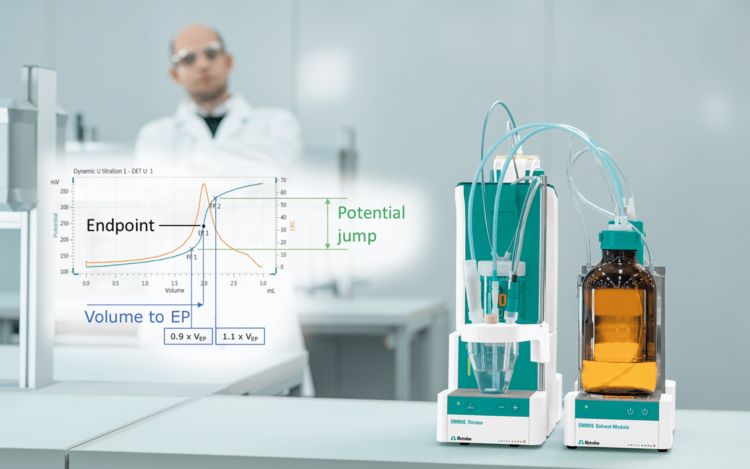
Many modern autotitrators go beyond simple fixed dosing parameters and use dynamic dosing algorithms. These algorithms continuously evaluate the sensor signal and adjust titrant additions based on how quickly the reaction is progressing.

When the signal changes slowly, the system can increase dosing speed to move efficiently through the early stages of the titration. As the signal begins to change more rapidly near the equivalence point, the system automatically reduces dosing increments to improve precision.

Dynamic dosing allows the titrator to balance two competing goals:

  1. Minimizing analysis time
  2. Maximizing endpoint accuracy

However, the way these algorithms are implemented can vary between instrument platforms. This is one reason titration methods may behave differently when transferred between systems.

Endpoint evaluation determines when the reaction is complete

At some point, the instrument must determine that the titration reaction has reached completion. This decision is made using the endpoint detection method.

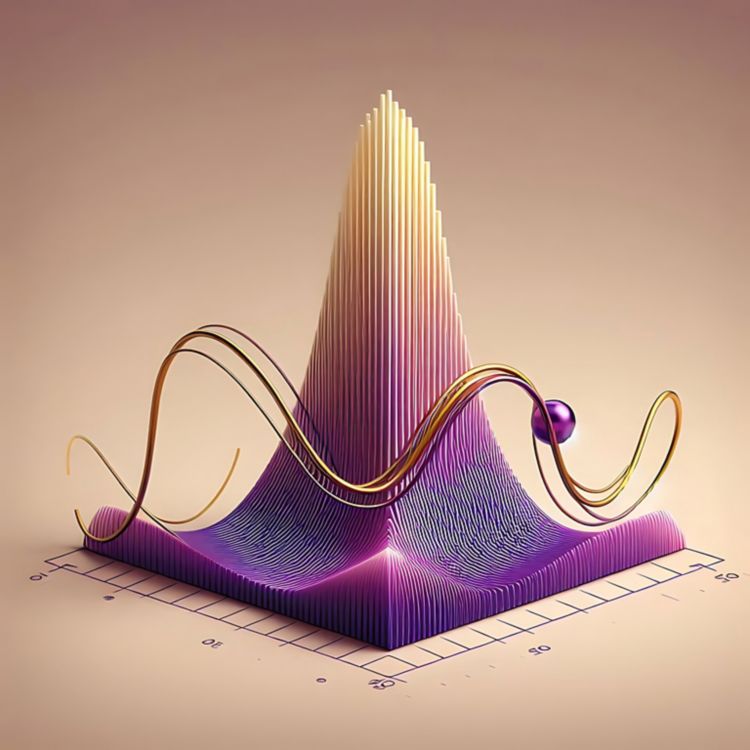
In many autotitrations, the equivalence point is identified mathematically by analyzing the slope of the titration curve. Techniques such as first-derivative or second-derivative analysis can identify subtle changes in the curve that correspond to the completion of the reaction.

Other methods rely on fixed endpoints, where the titration stops when the signal reaches a predefined value.

The evaluation strategy used can influence how the instrument interprets the titration curve and determines the final result.

Control parameters protect the method

In addition to the parameters that guide the titration, most methods include several safeguards designed to prevent abnormal runs.

These control parameters may include limits such as:

  • Maximum titrant volume
  • Maximum analysis time
  • Drift limits
  • Signal stability requirements

These safeguards ensure that the titration stops if the expected endpoint cannot be detected or if the sample behaves unexpectedly.

Calculations convert the endpoint into a result

Once the endpoint has been identified, the instrument converts the titration data into a final concentration value. This calculation incorporates the titrant concentration, sample size, and the stoichiometry of the chemical reaction.

Additional factors such as blank corrections or reporting units may also be applied to ensure the reported result accurately reflects the composition of the sample. Although this step occurs after the titration itself is complete, accurate calculations are essential to ensure that the reported result reflects the true composition of the sample.

When laboratories transfer titration methods between instruments, differences in dosing control, signal interpretation, and endpoint evaluation can influence how the titration proceeds.

As a result, a method originally developed on one system may benefit from small adjustments when implemented on another platform. In many cases these adjustments improve efficiency or precision by taking advantage of the capabilities of the newer system.

Understanding the underlying components of the titration method makes it much easier to perform these adjustments while maintaining analytical integrity.

Why method migration requires more than copying parameters

When laboratories replace legacy titration systems or adopt a new instrument platform, the instinct is often to replicate the existing method as closely as possible. While this may seem straightforward, autotitration systems interpret parameters differently depending on how dosing control, signal evaluation, and endpoint detection algorithms are implemented.

As a result, directly copying parameters from one instrument to another does not always produce identical behavior.

Successful method migration typically involves reviewing how the original method interacts with the instrument and then adjusting key variables to match the capabilities of the new system. In many cases, this process can lead to improved performance, including faster analysis times, more stable endpoint detection, and better repeatability.

Laboratories that understand the underlying structure of a titration method are often able to migrate methods efficiently while maintaining analytical continuity across instrument platforms.

Seeing the method as a system

A titration method is not simply a list of parameters stored inside an instrument. It is a coordinated analytical system in which chemistry, sensors, dosing control, and data evaluation work together to produce a reliable result.
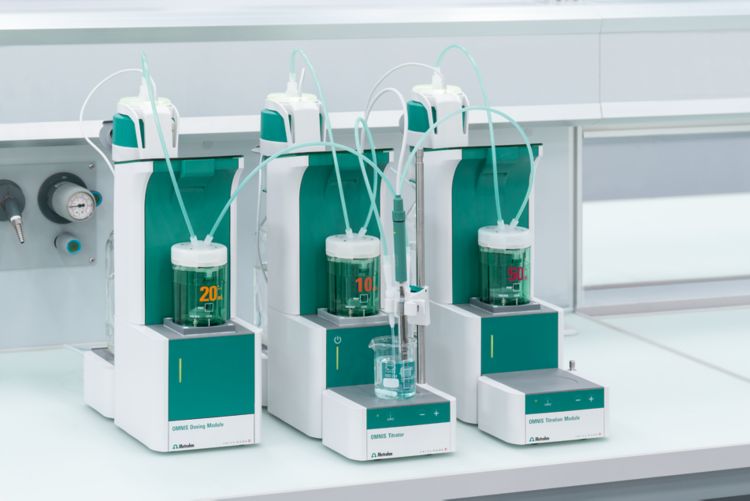

Understanding this structure makes it easier to troubleshoot inconsistent results, optimize analysis time, and migrate methods between instrument platforms.

For laboratories transitioning from legacy titrators or implementing new autotitration technology, recognizing these variables is often the key to maintaining data integrity while taking advantage of modern instrument capabilities.

In the end, successful titration is not just about the reaction taking place in a beaker – it is about how the instrument measures and interprets that reaction.

Learn more about titration

Download your copy

This free monograph summarizes the practical aspects of modern titration. It discusses sample preparation, the basic principles of titrimetric analysis, and outlines how to perform a titration.

Learn more about the various titration types

Download your copy

The free monograph "Practical titration" covers the theory of titration, explaining titration reactions, indication methods, electrodes, and titrants. In the practical part, acid-base, precipitation, redox, complexometric, and chelometric titrations are discussed.

Author
Blake

Dr. Kerri-Ann Blake

Product Manager, Titration
Metrohm USA

Contact