
- All (9645)
- Famílias de produtos (87)
- Modelos (752)
- Aplicações (2254)
- Eletrodos (513)
- Peças de reposição (2502)
- Colunas (162)
- Software (340)
- Documentos (2510)
- Perspectivas do setor (185)
- Notícias (28)
- Outro conteúdo (141)
- Industries (6)
- Webinars (65)
- Support & service (94)
- Eventos (6)
Famílias de produtos
Famílias de produtos (87)Modelos
Modelos (752)


Aplicações
Aplicações (2254)Treinamentos e webinares por especialistas
Eventos (6)Eletrodos
Eletrodos (513)Accessories
Peças de reposição (2502)Colunas
Colunas (162)Software
Software (340)Manuais & Folhetos
Documentos (2510)Inspirando insights do setor
Perspectivas do setor (185)Notícias
Notícias (28)Outro conteúdo
Conteúdo (141)Industries
Industries (6)Treinamentos e webinares por especialistas
Webinars (65)Suporte & Serviço incomparáveis
Support & service (94)OMNIS
Prepare-se para atender a nova referência em titulação: resultados mais rápidos, manuseio mais seguro de produtos químicos e adaptabilidade mais fácil às suas exigências.
OMNIS IC
O novo padrão de referência em cromatografia iônica
VIONIC powered by INTELLO
O futuro da eletroquímica é puro. VIONIC: um instrumento, pura descoberta.
940 Professional IC Vario
Um instrumento - flexibilidade máxima: Cromatógrafo de íons com praticamente nenhuma limitação para configuração e personalização de sistemas individuais.
Sistemas VA/CVS Professional
Analisadores de bancada flexíveis para Cyclic Voltammetric Stripping.
2060 Plataforma
A plataforma de analisador modular, robusta e confiável, oferece flexibilidade máxima no monitoramento personalizado de processos.
MIRA XTR
O principal sistema Raman portátil para identificação segura em campo de materiais desconhecidos: compacto, flexível, inteligente e robusto.
Titulador KF OMNIS
Solução totalmente integrada para determinação do teor de água por titulação Karl Fischer volumétrica e coulométrica.
Analisador OMNIS NIR
Espectroscopia NIR agora na plataforma OMNIS: seu laboratório mais rápido, mais fácil e mais eficiente!
Medidor de pH 949
Medidor de pH de bancada compacto e básico para medições simples e confiáveis de pH, mV e ORP.
2060 XRF – Raio-X Online
Análise on-line confiável de fluorescência de raios X para controle de processos líquidos
2060 VA/CVS – Voltametria Online
Análise precisa de traços de metais utilizando Voltametria e monitoramento eficiente de aditivos orgânicos em banhos galvânicos, através da técnica de CVS
MIRA P
O principal sistema Raman portátil para verificação rápida de matérias-primas no local: fácil, rápido, flexível e transparente.
Analisadores DS2500
Compacto e robusto: Espectrômetros de infravermelho próximo para controle de qualidade rápido e econômico e triagem de rotina de amostras líquidas ou sólidas.
930 Compact IC Flex
Cromatógrafo de íons de canal único para análise de rotina com sensibilidade superior para a análise de ânions, cátions e substâncias polares.
KF Titrando
Titulador Karl Fischer volumétrico e coulométrico para determinação precisa de qualquer teor de água, de 0,001 a 100%.
912/913/914 pHmetro/OD/Condutivímetro
Medidores de pH portáteis e robustos, medidores de condutividade e medidores de oxigênio combinados para uso no campo ou no laboratório.
Potenciostatos/galvanostatos compactos
Potenciostatos/galvanostatos que economizam espaço: leves, portáteis e econômicos.
Titrando
Desde Tituladores automáticos a uma solução totalmente automatizada em uma rede diversificada: um titulador Potenciométrico que pode ser adaptado às suas necessidades.
2060 O analisador NIR
Uma solução pronta para a Tecnologia Analítica de Processos (PAT)
VA profissional
Analisadores flexíveis de bancada para análise de traços com voltametria e polarografia.
2060 Raman Analyzer
Monitoramento óptico em seu processo com alta precisão analítica
IONIC Titrator
Titulador compacto e autônomo com conexão direta à nuvem.
KF Ti-Touch
Titulador Karl Fischer volumétrico ou coulométrico compacto para determinação de água na rotina.
Eco IC
Cromatógrafo iônico compacto de nível básico que oferece qualidade suíça a um preço acessível.
Analisador VA portátil
Analisadores voltamétricos portáteis para a determinação de níveis de traços de metais pesados em água no campo.
Medidores de pH e medidores de íons de laboratório
Medidor de pH 780 e Medidor de pH/íon 781: os instrumentos preferidos para medições de pH, ORP e concentração de íons
Potenciostatos/galvanostatos modulares
Crie um instrumento para pesquisas eletroquímicas que atenda aos seus requisitos exatos, apenas com as especificações e os recursos de que você precisa.
MISA
O principal sistema portátil de detecção de traços para a detecção rápida de contaminantes em matrizes alimentares no local: fácil, rápido, flexível e sensível.
Ti-Touch
Mínimo espaço em bancada, máxima performance: Um compacto titulador Potenciométrico para aplicações de rotina.
i-Raman
Sistemas Raman de laboratório que oferecem amostragem flexível e resultados de alta qualidade para suas necessidades de pesquisa e controle de qualidade.
Eco Titrator
Qualidade suíça a um preço acessível? Este titulador potenciométrico oferece ainda mais.
Técnicas combinadas
Ampliação do escopo da cromatografia de íons: amostragem sofisticada, detecção sensível ou análise multiparâmetro.
Potenciostatos/galvanostatos multicanal
Instrumentos multicanais: eletroquímica vezes doze.
2060 Analisador de processo TI
Solução integrada para monitoramento on-line 24 horas por dia, 7 dias por semana, de parâmetros químicos críticos em processos industriais e fluxos de águas residuais com métodos de titulação, pH, ISE, condutividade, coulometria ou fotometria.
Eco KF Titrator
Alta qualidade, preço baixo: solução suíça e acessível para a rotina de titulação Karl Fischer volumétrico.
2060 RISE
Um sensor de espectroscopia Raman em linha para elevar sua análise de processo
867/856 Módulos
Módulos de alta qualidade para medição personalizada de pH, íons e condutividade.
Potenciostato Portátil
Combinação de pesquisa eletroquímica em laboratório com testes em campo: Use técnicas eletroquímicas bem estabelecidas para manter os mais altos níveis de qualidade e precisão de medição.
Uma solução pronta para a Tecnologia Analítica de Processos (PAT)
TacticID
Raman portátil para identificação em campo de produtos químicos, explosivos, narcóticos e muitas outras substâncias ilícitas, perigosas e outras encontradas.
Preparação de amostras em linha da Metrohm
Técnicas de injeção inteligente e soluções de automação para preparação de amostras complexas em análises de cromatografia de íons.
Determinar baixo teor de umidade e água nas amostras não é um problema para esses coulômetros.
Titrotherm
Quando a titulação potenciométrica atinge suas limitações: titulador termométrico para a determinação de sódio, ácidos graxos livres, acidez/basicidade total em óleos, entre outras.
Analisadores de processo à prova de explosão
Proteção de última geração para análise de processos on-line.
2060 IC – Cromatografia Online
Sistema completo e flexível para monitoramento on-line de compostos iônicos em meios aquosos, de concentrações de ng/L a %.
NanoRam
Instrumento Raman portátil de 1064 nm de última geração para identificação e verificação não destrutiva de matérias-primas recebidas, como APIs, excipientes e intermediários.
Automação para IC
Seja qual for o número de amostras e o tratamento preparatório, fornecemos soluções automatizadas para cromatografia de íons para atender às suas necessidades.
Linha multicanal portátil
Obtenha mais resultados em menos tempo mantendo o tamanho reduzido e a simplicidade
Analisador de gás
Solução totalmente automatizada para a determinação de níveis traço de água em gases liquefeitos e permanentes.
SPELEC
As ferramentas de última geração para pesquisa espectroeletroquímica: bipotenciostato/galvanostato, espectrômetro e fonte de luz, tudo em um único instrumento, controlado por um único software. Conheça o SPELEC!
Detectors for IC
Flexibilidade superior: Compatibilidade com qualquer técnica de detecção
Columns for IC
A coluna é o coração da cromatografia de íons (IC). Sem uma coluna apropriada, mesmo o mais poderoso sistema de IC não fornecerá resultados precisos e confiáveis. É por isso que a Metrohm fornece uma ampla gama de colunas de IC que lhe permitem realizar precisamente a análise que você precisa.
Espectroeletroquímica hifenizada
Espectroeletroquímica EC-Raman e EC-UV/VIS usando espectrômetros e PGSTATs autônomos da Autolab
2035 Analisadores de processo
Analisadores de processo disponíveis nas versões potenciométrica, fotométrica e termométrica com medição adicional opcional de pH e condutividade.
Série 202X
Analisadores de processo de método único para monitoramento de produtos químicos, água e efluentes com métodos de titulação, pH, ISE ou fotometria.
Eletroquimioluminescência: o próximo nível em sensibilidade óptica
Versatilidade, simplicidade, sincronização e sensibilidade aprimoradas para a técnica analítica ECL.
Sensores de pH ProTrode
Aprimore suas percepções de processo com medições de pH em linha
Analisador PTRam
Desenvolvimento de processo de autocalibração em linha Raman.
846 Interface de dosagem: manuseio automatizado de líquidos
Sistema de manuseio de líquidos para uso como um instrumento autônomo ou como um complemento para sistemas Metrohm existentes.
Eco Dosimat
O novo padrão em manuseio de líquidos (LQH) e titulação manual.
Medição da oxidação e da estabilidade térmica com o método Rancimat
Teste de envelhecimento acelerado (índice de estabilidade de oxidação e tempo de estabilidade) para óleos e gorduras naturais, dobras e cosméticos que contêm gordura, biodiesel e polímeros que contêm cloro, como o PVC.
Dosimat plus
Sistema de manuseio de líquidos para uso como instrumentos independentes, controlados manualmente ou como dispositivos de dosagem automática para tituladores Titrino / Titrino plus.
Automação para KF Ti-Touch
Economize tempo e espaço: preparação automatizada de amostras térmicas para análise do teor de água
Preparação de amostras KF
Soluções para preparação de amostras com coulômetros KF Titrando quando as amostras não podem ser tituladas diretamente.
Automação para KF Titrando
Trocador de amostras do forno: Preparação automatizada de amostras para amostras que não podem ser tituladas diretamente.
Automação para Titrando
Opções de automação flexíveis e expansíveis desde manipulação de líquidos até a homogeneização e medidas diretas.
Automação OMNIS
A Automação nunca foi tão poderosa. Com a titulação OMNIS, você pode realizar até quatro análises totalmente automatizadas ao mesmo tempo. Em comparação com a execução da mesma aplicação em um sistema manual, a automação economizará até 60% do seu tempo.
OMNIS Software
Modern laboratory data management software for the regulated and non-regulated environment. Increase the efficiency and productivity of your lab with the OMNIS Software.
ICP-MS
Espectrómetro de massas ICP quadrupolo SPECTROGREEN MS: a solução ICP-MS fácil de utilizar para análises de rotina
Ecologia e fisiologia vegetal
Oferecemos a mais vasta gama de equipamentos para a medição da fotossíntese por troca gasosa e/ou fluorescência, medidores da respiração do solo e sondas para a medição da clorofila e das algas.
Extractores de fibras/gorduras
Oferecemos equipamento, instrumentos, produtos químicos e outros produtos auxiliares para apoiar estudos de fibras, extracções aceleradas com solventes, gordura bruta e total, investigações in vitro e in situ, digestão anaeróbia e muito mais.
XRF - Espectrómetro de fluorescência de raios X
O espectrómetro de fluorescência de raios X (XRF) fornece um dos métodos analíticos mais simples, precisos e económicos para a determinação da composição química de muitos tipos de materiais.
ICP-OES Espectrómetros
Os espectrómetros de emissão ótica com fontes de excitação de plasma indutivamente acoplado (plasma ICP) oferecem facilidade de utilização, elevada sensibilidade e precisão e relativa ausência de interferências.
Preparação de amostras para voltametria
Elimine a contaminação orgânica de uma amostra usando a digestão UV, garantindo determinações confiáveis em análises de voltametria.
Módulos de extensão
Aplicações complexas com o IC mais flexível - Atualize seu 940 Professional IC Vario com módulos de extensão e detectores adicionais.
Soluções confiáveis quando o teor de água das amostras não pode ser titulado diretamente.
Mistura/Pulverização/Dispersão
Misturador planetário centrífugo sem bolhas: Mistura, dispersa e desgaseifica materiais viscosos em minutos
Ensaios de permeabilidade ao oxigénio e ao vapor de água
Ensaios de permeabilidade ao oxigénio e ao vapor de água
Robô de estação piloto
Os diversos acessórios podem ser ligados de forma fácil e rápida através de acoplamento.
Testes físicos
Gama de produtos Erweka para testes físicos
Teste de dissolução
Os Aparelhos USP 1, 2, 5, 6 / 3, 7 / 4 de testes de dissolução da Erweka foram concebidos para satisfazer todas as necessidades da indústria farmacêutica. Podem ser equipados com 6 a 8 (12 a 14) estações de teste.
Selectiva multiparamétrica
O SmartChem® oferece uma solução fiável e conveniente para aumentar a produtividade do seu laboratório. Permite que o seu pessoal se concentre em actividades e tarefas de valor acrescentado, assegurando simultaneamente a repetibilidade, a rastreabilidade e a conformidade regulamentar.
Fluxo contínuo
Analisadores automáticos de química húmida de fluxo contínuo.
Microbiologia rápida
Os sistemas de testes rápidos SY-LAB poupam tempo e dinheiro e aumentam a produtividade do seu laboratório de microbiologia.
Microbiologia automatizada
Estação de trabalho de alta precisão com total variabilidade
μStat-i MultiX
Bipotenciostato multicanal, galvanostato e analisador de impedância (com tecnologia MultiplEIS®) para pesquisa eletroquímica multiusuário e multidisciplinar.
2.1001.0010
OMNIS Titrator without stirrer, without function licenseInnovative, modular potentiometric OMNIS Titrator. Thanks to 3S Liquid Adapter technology, handling chemicals is safer than ever before. The titrator can be freely configured with measuring modules and cylinder units and can have a stirrer added as needed. Thanks to various software function licenses, various measuring modes and functionalities are possible. Actuation via PC or local network; Connection option for up to four additional titration or dosing modules for additional applications or auxiliary solutions; Can be supplemented with magnetic stirrer and/or rod stirrer; Various cylinder sizes available: 5, 10, 20 or 50 mL; Liquid Adapter with 3S technology: Safe handling of chemicals and automatic transfer of the reagent dataMeasuring modes and software options:; Endpoint titration: "Basic" function license; Endpoint and equivalence point titration (monotonic/dynamic): "Advanced" function license; Endpoint and equivalence point titration (monotonic/dynamic) with parallel titration: "Professional" function license; Optional licenses for additional measuring, titration, and operating modes (e.g. volumetric Karl Fischer titration, conductometric or thermometric titration, coulometry, determination of the bromine index);
2.1008.0010
Eco TitratorThe compact Eco Titrator with integrated magnetic stirrer and touch-sensitive User Interface is ideal for routine analysis. It provides GLP-compliant results with minimum space requirements at all times (approx. DIN A4).Universally compatible with almost all potentiometric titrations, such as, for example, forFood products: Acid content, chloride, Vitamin C, iodine and peroxide number in fats; Water analysis: Carbonate and Ca/Mg hardness, chloride, sulfate, permanganate index; Petrochemistry: Acid/base number, sulfide & mercaptans, chloride, bromine number; Electroplating: Total acid, metal content, chloride; Surfactant analysis: Anionic, cationic and non-ionic surfactants; Photometry with the Optrode: p and m value, metals, water hardness;
2.1010.1120
OMNIS Sample Robot S – WSM (1T/2P)OMNIS Sample Robot S – WSM, equipped with an OMNIS Workstation Module with 2 pumps for cleaning and extraction of the sensors and sample vessels, a workstation, rod stirrers, and extensive accessories for getting started directly with fully automated titration. The system provides space in two sample racks for 32 sample beakers of 120 mL each. This modular system is supplied completely installed and can thus be put into operation in a very short time. The system can also be extended upon request to include 2 additional peristaltic pumps and another workstation, thus doubling the throughput. If additional workstations are required, then the Sample Robot S can be extended to become an L-sized OMNIS Sample Robot, thus enabling samples from 7 racks to be processed in parallel on up to 4 workstations to quadruple the sample throughput.
2.1030.0010
OMNIS Sample Robot OvenMain module for setting up an OMNIS Sample Robot Oven in size S. This module is equipped with the module and rack plate. It is already equipped with the main lift and a gripper. It must be equipped with sample racks and at least 1 oven module in order to use it to set up a functioning Sample Robot Oven.
2.1050.0010
OMNIS IC S ModuleThe OMNIS IC S Module is the start instrument in the OMNIS IC world and gives the entire flexibility for complete customization. It includes an OMNIS High-Pressure Pump Unit and an OMNIS Actuator Unit with a flexible choice of the injection valve, and features a transparent door for easy access.The additional 7 free units enable the creation of a fully personalized IC system. Tailored to meet individual application needs, the OMNIS IC S Module can be equipped with various units, such as the OMNIS Conductivity Detector Unit, the OMNIS MSM Unit, the OMNIS MCS Unit, the OMNIS Degasser Unit, the OMNIS Peristaltic Pump Unit, the OMNIS Column Holder Unit or the OMNIS Column Thermostat Unit, or even automatic eluent production or low-pressure gradient.Blind Cover Units are standard not provided and need to be added additionally.A baseplate or autosampler is required, along with a Reagent Organizer or Reagent Organizer Liquid Control. For full automation, there is the free choice to add an integrated OMNIS IC Autosampler or an OMNIS IC Autosampler COOL.At any time, the OMNIS IC S Module can be upgraded with freely configurable OMNIS Extension Modules to further improve the performance, for example, with sequential suppression or Metrohm Inline Sample Preparation options.The OMNIS IC instrument is compatible with the 947 Professional UV/VIS Detector Vario and the 945 Professional Detector Vario – Amperometry, expanding the options for detection.Reach out to your local IC specialist to configure your own fully customized ion chromatograph tailored to your specific application needs.
2.1050.0020
OMNIS IC S COND/MSM/PP/CHThe OMNIS IC S COND/MSM/PP/CH is the start instrument in the OMNIS IC world with basic sample introduction and chemical suppression. It is provided as a pre-installed, ready-to-use sales version with an OMNIS High-Pressure Pump Unit, an OMNIS Actuator Unit, an OMNIS Conductivity Detector Unit, an OMNIS MSM Unit, and an OMNIS Peristaltic Pump Unit with two channels. It features a transparent door for easy access and a Reagent Organizer.It is equipped with an OMNIS Column Holder Unit with intelligent column chip technology. For sample transport and injection, a peristaltic pump and a 6/2-port valve are integrated. The 3 empty unit spaces give flexibility to upgrade the system, for example, with an OMNIS Dosing Drive Unit, an OMNIS MISP Unit, an OMNIS Degasser Unit, or an OMNIS MCS Unit for sequential suppression.The OMNIS IC instrument is foreseen to be placed on an autosampler. There is the free choice to add an integrated OMNIS IC Autosampler or an OMNIS IC Autosampler COOL for full automation; alternatively, it can be placed on a baseplate, for example, in case of a double tower solution.The OMNIS IC S COND/MSM/PP/CH can be used for applications with chemical suppression. At any time, OMNIS Extension Modules can be added to upgrade the OMNIS IC S system, for example, to improve performance with sequential suppression or Metrohm Inline Sample Preparation options.The OMNIS IC instrument is compatible with the 947 Professional UV/VIS Detector Vario, and the 945 Professional Detector Vario – Amperometry, expanding the options for detection.The OMNIS IC S COND/MSM/PP/CH is an ideal choice for applications like standard anions in simple matrices such as surface or drinking water.
2.1050.0030
OMNIS IC S COND/MSM/MCS/PP/COL/DEGThe OMNIS IC S COND/MSM/MCS/PP/COL/DEG is the start instrument in the OMNIS IC world with basic sample introduction and sequential suppression. It is provided as a pre-installed, ready-to-use sales version with an OMNIS High-Pressure Pump Unit, an OMNIS Actuator Unit, an OMNIS Conductivity Detector Unit, an OMNIS MSM Unit, an OMNIS MCS Unit, an OMNIS Degasser Unit, and an OMNIS Peristaltic Pump Unit with two channels. It features a transparent door for easy access and a Reagent Organizer.The integrated OMNIS Column Thermostat Unit 1 features a removable column tray with intelligent column chip technology and regulates the column temperature (5–80 °C, depending on ambient conditions). The column thermostat is intended for single-column use but can be upgraded to support two columns at any time. For sample transport and injection, a peristaltic pump and a 6/2-port valve are integrated.The OMNIS IC instrument is foreseen to be placed on an autosampler. There is the free choice to add an integrated OMNIS IC Autosampler or an OMNIS IC Autosampler COOL for full automation; alternatively, it can be placed on a baseplate, for example, in case of a double tower solution.The system is easily upgradable with OMNIS Extension Modules. This gives unlimited flexibility to meet future demands, such as the addition of Metrohm Inline Sample Preparation Techniques, OMNIS Dosing Drive Units for enhanced liquid handling options, or automatic eluent production.The OMNIS IC instrument is compatible with the 947 Professional UV/VIS Detector Vario, and the 945 Professional Detector Vario – Amperometry, expanding the options for detection.The OMNIS IC S COND/MSM/MCS/PP/COL/DEG can be used for applications with sequential suppression, requiring temperature-controlled column conditions such as oxyhalide analysis.
2.1051.0010
OMNIS IC M ModuleThe OMNIS IC M Module is a high-class single-channel instrument in the OMNIS IC world and gives the entire flexibility for complete customization. It includes an OMNIS High-Pressure Pump Unit, an OMNIS Actuator Unit with a flexible choice of the injection valve, an OMNIS MISP Unit, and an OMNIS Column Thermostat Unit 1 (one channel, upgradeable), and features a transparent door for easy access.The OMNIS MISP Unit offers complete flexibility to add the Metrohm Inline Sample Preparation (MISP) options, which perfectly suit the application needs, such as Ultrafiltration, Metrohm intelligent Partial Loop Injection Technique (MiPT), or can be used as a holder for a trap column. The MISP techniques improve efficiency and accuracy while reducing the number of manual steps typically involved in sample preparation.The built-in Multi Flow Monitor Unit enables smart flow monitoring for up to four channels. It detects flow trend variations, for example, induced by worn tubings or fouled filtration membranes, and can trigger software actions to minimize disturbances.The additional 8 free units enable the creation of a fully personalized IC system. Tailored to meet the individual application needs, the OMNIS IC M Module can be equipped with various units, such as the OMNIS Conductivity Detector Unit, the OMNIS MSM Unit, the OMNIS MCS Unit, the OMNIS Degasser Unit, the OMNIS Peristaltic Pump Unit, or even with automatic eluent production, low-pressure gradient, or dual-column use.Blind Cover Units are standard not provided and need to be added additionally.A baseplate or autosampler is required, along with a Reagent Organizer or Reagent Organizer Liquid Control. For full automation, there is the free choice to add an integrated OMNIS IC Autosampler or an OMNIS IC Autosampler COOL.At any time, the OMNIS IC M Module can be upgraded with freely configurable OMNIS Extension Modules, to further improve the performance.The OMNIS IC instrument is compatible with the 947 Professional UV/VIS Detector Vario, and the 945 Professional Detector Vario – Amperometry, expanding the options for detection.Reach out to your local IC specialist to configure your own fully customized ion chromatograph tailored to your specific application needs.
2.1051.0020
OMNIS IC M COND/MSM/MCS/PP/DEG/DD/ROLCThe OMNIS IC M COND/MSM/MCS/PP/DEG/ DD/ROLC is the high-class single channel instrument in the OMNIS IC world. It is provided as a pre-installed, ready-to-use sales version with an OMNIS High-Pressure Pump Unit, an OMNIS Actuator Unit, an OMNIS Conductivity Detector Unit, an OMNIS MSM Unit, an OMNIS MCS Unit, an OMNIS Degasser Unit, an OMNIS Peristaltic Pump Unit with one channel, and OMNIS Dosing Drive Unit. It features a transparent door for easy access and a Reagent Organizer Liquid Control.The integrated OMNIS Column Thermostat Unit 1 features a removable column tray with intelligent column chip technology and regulates the column temperature (5–80 °C, depending on ambient temperature). The column thermostat is intended for single-column use, but can be upgraded to support two columns at any time. For sample transport and injection, a peristaltic pump and a 7/3-port valve are integrated.For high-throughput applications, the OMNIS IC M COND/MSM/MCS/PP/DEG/DD/ROLC comes with an OMNIS MISP Unit for integrated sample preparation. The OMNIS MISP Unit provides complete flexibility to add Metrohm Inline Sample Preparation (MISP) options, perfectly tailored to the application needs, such as Ultrafiltration, Metrohm intelligent Partial Loop Injection Technique (MiPT), or can be used as a holder for a trap column. These MISP techniques enhance efficiency and accuracy while reducing the manual steps usually involved in sample preparation.The built-in Multi Flow Monitor Unit enables smart flow monitoring for up to four channels. It detects flow trend variations, for example, induced by worn tubing or fouled filtration membranes, and can trigger software actions to minimize disturbances.The included Reagent Organizer Liquid Control functions not only as a holder for liquids and eluent bottles but also has an integrated light that illuminates the instrument's interior when at least one door is open. The integrated leak and level sensors are monitored by the OMNIS software and support automatic eluent production and liquid level control.The OMNIS IC instrument is foreseen to be placed on an autosampler. There is the free choice to add an integrated OMNIS IC Autosampler or an OMNIS IC Autosampler COOL for full automation; alternatively, it can be placed on a baseplate, for example, in case of a double tower solution.The OMNIS IC instrument is compatible with the 947 Professional UV/VIS Detector Vario and the 945 Professional Detector Vario – Amperometry, expanding the options for detection.The OMNIS IC M COND/MSM/MCS/PP/DEG/DD/ROLC serves as a flexible, high-throughput single-channel device. Additional upgradeability with OMNIS Extension Modules broadens its capabilities to meet future demands, such as dual-channel ion chromatography or extended liquid handling functions.The high-class OMNIS IC M instrument is the ideal choice for qualified or sophisticated applications requiring sequential suppression and temperature-controlled column conditions, such as oxyhalide analyses or suppressed cations analyses in various matrices. Due to integrated sample preparation, even complex matrices can be handled, while manual workload is minimized and accuracy is increased.
2.1052.0010
OMNIS IC L ModuleThe OMNIS IC L Module is the high-class dual-channel instrument in the OMNIS IC world and gives the entire flexibility for complete customization. It is equipped with two OMNIS High-Pressure Pumps, two OMNIS Actuator Units for dual operations with the flexible choice of the injection valve, an OMNIS MISP Unit, and an OMNIS Column Thermostat Unit 2 (two channel), and features a transparent door for easy access.The OMNIS MISP Unit offers complete flexibility to add the Metrohm Inline Sample Preparation (MISP) options, which perfectly suit the application needs, such as Ultrafiltration, Metrohm intelligent Partial Loop Injection Technique (MiPT), or can be used as a holder for a trap column. The MISP techniques improve efficiency and accuracy while reducing the number of manual steps typically involved in sample preparation.The built-in Multi Flow Monitor Unit enables smart flow monitoring for up to four channels. It detects flow trend variations, for example, induced by worn tubings or fouled filtration membranes, and can trigger software actions to minimize disturbances.The additional 10 free units enable the creation of a fully personalized IC system. Tailored to meet individual application needs, the OMNIS IC L Module can be equipped with various units, such as the OMNIS Conductivity Detector Unit, the OMNIS MSM Unit, the OMNIS MCS Unit, the OMNIS Degasser Unit, the OMNIS Peristaltic Pump Unit, or the OMNIS Dosing Drive Unit.Blind Cover Units are standard not provided and need to be added additionally.A baseplate or autosampler is required, along with a Reagent Organizer or Reagent Organizer Liquid Control. For full automation, there is the free choice to add an integrated OMNIS IC Autosampler or an OMNIS IC Autosampler COOL.At any time, the OMNIS IC L Module can be upgraded with freely configurable OMNIS Extension Modules, to further improve the performance.The OMNIS IC instrument is compatible with the 947 Professional UV/VIS Detector Vario, and the 945 Professional Detector Vario – Amperometry, expanding the options for detection.Reach out to your local IC specialist to configure your own fully customized ion chromatograph tailored to your specific application needs.
2.1052.0020
OMNIS IC L 2COND/MSM/MCS/PP/DEG/DD/ROLCThe OMNIS IC L 2COND/MSM/MCS/PP/DEG/ DD/ROLC is the high-class dual-channel instrument in the OMNIS IC world. It is provided as a pre-installed, ready-to-use sales version with two OMNIS Conductivity Detector Units, an OMNIS MSM Unit, an OMNIS MCS Unit, an OMNIS Degasser Unit, an OMNIS Peristaltic Pump Unit with one channel, and an OMNIS Dosing Drive Unit. It features a transparent door for easy access and a Reagent Organizer Liquid Control.The integrated OMNIS Column Thermostat Unit 2 features a removable column tray with intelligent column chip technology and regulates the column temperature (5–80 °C, depending on ambient conditions). For sample transport and injection, a peristaltic pump and a 7/3-port valve are integrated.For high-throughput applications, the OMNIS IC L 2COND/MSM/MCS/PP/DEG/ DD/ROLC comes with an OMNIS MISP Unit for integrated sample preparation. The OMNIS MISP Unit provides complete flexibility to add Metrohm Inline Sample Preparation (MISP) options, perfectly tailored to the application needs, such as Ultrafiltration, Metrohm intelligent Loop Technique (MiPT), or can be used as a holder for a trap column. These MISP techniques enhance efficiency and accuracy while reducing the manual steps usually involved in sample preparation.The built-in Multi Flow Monitor Unit enables smart flow monitoring for up to four channels. It detects flow trend variations, for example, induced by worn tubings or fouled filtration membranes, and can trigger software actions to minimize disturbances.The included Reagent Organizer Liquid Control functions not only as a holder for liquids and eluent bottles but also has an integrated light that illuminates the instrument's interior when at least one door is open. The integrated leak and level sensors are monitored by the OMNIS software and support automatic eluent production and liquid level control.The OMNIS IC instrument is foreseen to be placed on an autosampler. There is the free choice to add an integrated OMNIS IC Autosampler or an OMNIS IC Autosampler COOL for full automation; alternatively, it can be placed on a baseplate, for example, in case of a double tower solution.The OMNIS IC instrument is compatible with the 947 Professional UV/VIS Detector Vario and the 945 Professional Detector Vario – Amperometry, expanding the options for detection.Thanks to its upgradability, it serves as a flexible, high-throughput dual-channel device. Additional upgradeability with OMNIS Extension Modules opens the horizon to meet future demands, such as an additional channel or extended liquid handling functions.The high-class OMNIS IC L instrument is the perfect choice for high-throughput dual-channel applications, such as parallel analysis of anions and cations. Due to the integrated sample preparation, even complex matrices can be handled, while the manual workload is minimized and accuracy is increased.
2.1054.0010
OMNIS IC Autosampler ModuleThe OMNIS IC Autosampler automates the sample change in the OMNIS IC System and enables efficient processing of up to 160 vials of 5 mL each, depending on the selected rack. As the first fully integrated autosampler of the new OMNIS IC generation, it is installed directly below the OMNIS IC as standard. It is not a stand-alone device, but an integral part of the OMNIS IC System, which is conveniently controlled via the OMNIS Software.Key features:Compact footprint: Can be placed directly under the OMNIS IC; High sample throughput: 96 x 10 mL vials, 160 x 5 mL vials, 192 x (1500, 700, 300) µL HPLC vials, 384 x 2 mL well format (deep well plate); High speed (30 s/injection of 5 µL); Removable autosampler tray for easy loading and unloading; Interior lighting for easy loading and unloading; Fast and precise xyz needle drive with automatic vial detection; Follow-up light and status display for visual traceability of needle movement and autosampler status; High flexibility for different sample vessels and rack types (including customer-specific racks); Six integrated positions for 50 mL bottles, e.g., for standards or rinsing solutions; Integrated rinsing station and leak detection as standard for maximum safety; Fully integrated into the OMNIS Software; Optional upgrades: 3/2-way valves, dilution station, barcode reader;
2.1054.0020
OMNIS IC Autosampler Module COOLThe OMNIS IC Autosampler COOL automates the sample change in the OMNIS IC System and enables efficient processing of up to 160 vials of 5 mL each, depending on the selected rack. In addition, the OMNIS IC Autosampler COOL offers the option of precisely controlling the temperature in the range from 4 °C to 22 °C, enabling a large number of samples to be cooled. The cooling function is ideal for thermally unstable and biochemically relevant samples, for example in the analysis of organic acids, halogenated acetic acids, amino acids, and carbohydrates.Key features:Compact footprint: Can be placed directly under the OMNIS IC; Temperature control from 4 °C to 22 °C; High sample throughput, large quantity of coolable samples: (96 x 10 mL vials, 160 x 5 mL vials, 192 x (1500, 700, 300) µL HPLC vials, 384 x 2 mL well format (deep well plate); High speed (30 s/injection of 5 µL); Removable autosampler tray for easy loading and unloading; Interior lighting for easy loading and unloading; Fast and precise xyz needle drive with automatic vial detection; Follow-up light and status display for visual traceability of needle movement and autosampler status; High flexibility for different sample vessels and rack types (including customer-specific racks); Six integrated positions for 50 mL bottles, e.g., for standards or rinsing solutions; Integrated rinsing station and leak detection as standard for maximum safety; Fully integrated into the OMNIS Software; Optional upgrades: 3/2-way valves, dilution station, barcode reader;
2.1055.0020
OMNIS Extension ModuleThe OMNIS Extension Module serves as an extension module for an OMNIS IC and is always operated together with a main module. An OMNIS IC can thus be expanded to a maximum of 5 levels. An OMNIS Extension Module can accommodate up to 5 functional units, such as the OMNIS Degasser Unit, OMNIS High-Pressure Pump Unit or OMNIS Conductivity Detector Unit.Blind Cover Units are standard not provided with the extension module and need to be added additionally.
2.1056.0110
OMNIS Degasser Unit 1-ChannelThe OMNIS Degasser Unit 1-Channel is used for the automated removal of dissolved gases and air bubbles from eluents and samples in the OMNIS IC System. The degassing of the eluent ensures a stable baseline and thus enhances the precision of the chromatographic measurement. For samples with a high gas content, the integrated sample degasser ensures that a constant sample volume enters the sample loop with each injection. This improves the reproducibility of the analysis significantly, and manual degassing is omitted in its entirety. Thanks to the new technical Film Degassing Chamber concept, thee OMNIS Degasser Unit is considerably more efficient.The OMNIS Degasser Unit is integrated in space-saving fashion in the OMNIS Extension Module. The OMNIS Degasser Unit 1-Channel can be expanded to comprise 2, 3 or 4 chambers. The Degasser Unit can at this time be equipped with either up to 4 eluent degassers (4 chambers) or with 1 sample degasser and up to 3 eluent degassers.Specifications:Time to establish vacuum: 10 s; Degassing efficiency: > 150 µL air / min at 1 mL/min; Resistance against solvents: No restrictions (except PFC); Expandable: Yes, up to 4 channels; Flow path: Free of metal;
2.1056.0120
OMNIS Degasser Unit 2-ChannelThe OMNIS Degasser Unit 2-Channel is used for the automated removal of dissolved gases and air bubbles from eluents and samples in the OMNIS IC System. The degassing of the eluent ensures a stable baseline and thus enhances the precision of the chromatographic measurement. For samples with a high gas content, the integrated sample degasser ensures that a constant sample volume enters the sample loop with each injection. This improves the reproducibility of the analysis significantly, and manual degassing is omitted in its entirety.The OMNIS Degasser Unit is integrated in space-saving fashion in the OMNIS Extension Module. The OMNIS Degasser Unit 2-Channel can be expanded to comprise 3 or 4 chambers. The Degasser Unit can at this time be equipped with either up to 4 eluent degassers (4 chambers) or with 1 sample degasser and up to 3 eluent degassers.Specifications:Time to establish vacuum: 10 s; Degassing efficiency: > 150 µL air / min at 1 mL/min; Resistance against solvents: No restrictions (except PFC); Expandable: Yes, up to 4 channels; Flow path: Free of metal;
2.1056.0210
OMNIS High-Pressure Pump UnitThe OMNIS IC High-Pressure Pump Unit is an advanced, chemically resistant high-pressure pump specifically designed for ion chromatography.It features pulsation-controlled delivery of eluents, whereby the delivery volume is automatically compensated, eliminating the need for additional pulsation dampers. The stroke is dynamically optimized according to the operating conditions, ensuring optimal performance. Two synchronized individual drives enable precise control and consistent flow rates. The piston is connected to the drive rather than the pump head, which enhances stability and simplifies maintenance. The flow path is free of metal and chemically inert, guaranteeing maximum compatibility with aggressive media. Additionally, the pump is resistant to substances across a wide pH range from 0 to 14, making it suitable for a broad spectrum of applications.The OMNIS IC High-Pressure Pump Unit can optionally be equipped with a piston seal wash to prevent crystallization and minimize maintenance. The OMNIS High-Pressure Pump Unit includes a manual purge valve. If a 7/3 injector is installed in the OMNIS IC system, then the purging process can be fully automated.Specifications:Pressure range: 0–42 MPa; Flow range: 0.0001–10.000 mL/min; Flow accuracy: 0.1%; Flow reproducibility: 0.1%; Pulsation: 0.1%; Pump head material: PEEK;
2.1056.0310
OMNIS Dosing Drive UnitThe OMNIS Dosing Drive Unit functions as a dosing drive for attachable cylinder units used for the precise aspiration and dosing of liquid volumes.The OMNIS Dosing Drive Unit is compatible with various cylinder units (2 to 50 mL). Thanks to the new design, a higher resolution and accuracy can be achieved during dosing.Specifications:Resolution: 250,000 steps per cylinder volume; Dosing times/filling times: 10 seconds;
2.1056.0410
OMNIS Actuator UnitThe OMNIS Actuator Unit functions as a drive for various injectors, selectors, and the OMNIS MSM Unit in the OMNIS IC System:In combination with an injector valve, the OMNIS Actuator Unit is used for the injection of sample into the flow of the eluent.; Equipped with a selector valve, the OMNIS Actuator Unit serves as a toggle switch between multiple liquids.; Together with a suppressor rotor, the OMNIS MSM Unit forms a Metrohm Suppressor Module (MSM). The MSM serves as a chemical suppressor in the OMNIS IC System.;
2.1056.0510
OMNIS Column Holder UnitThe OMNIS Column Holder Unit functions as an intelligent column holder in the OMNIS IC System, upon which a separation column with guard column can be fastened. The OMNIS Column Holder Unit has a column holder with chip contacts to fasten the column. The other end of the column is supported on a clip on the fixation bar. The memory chip enables column recognition by the software and the reading of data, e.g., the number of injections, production data (product number, serial number), etc.Find here the matching column for your OMNIS IC application: Column Finder
2.1056.0520
OMNIS Column Thermostat Unit 1The OMNIS Column Thermostat Unit 1 functions as an intelligent column thermostat with removable column tray in the OMNIS IC System. With the aid of the installed Peltier technology, which functions without fans, the thermostat can cause heating as well as cooling, and ensures a stable baseline. The horizontal installation as column tray enables simple installation and removal of the column and thus facilitates column replacement. The column is fastened to and stowed on the column tray. The column is fastened to the intelligent memory chip which enables the reading of important column parameters, e.g., number of injections or production data (product number, serial number).The column thermostat regulates the temperature for the separation columns and the eluent, thereby providing stable measuring conditions. The eluent in the preheating cartridge is preheated or cooled to the defined temperature to avoid temperature fluctuations within the separation column. In the OMNIS Column Thermostat Unit, up to 2 columns can not only be heated but also cooled. The Column Thermostat Unit 1 is equipped for operation with 1 column. It can however be retrofitted with a second preheating capillary for a second column.For multiple temperature zones, additional OMNIS Column Thermostat Units can be installed in further OMNIS Extension Modules.The OMNIS Column Thermostat Unit 1 has a leak sensor and an external overflow. Leakages are thus detected immediately and the escaped liquid is discharged without damage to the OMNIS IC System. Find here the matching column for your OMNIS IC application: Column Finder.Specifications:Temperature range: 5 to 80 °C; Temperature resolution (adjustable): 1 °C; Minimum temperature: 5 °C; Maximum temperature: 80 °C; Heating time: 5 min (from 25 °C to 50 °C); Cooling time: 14 min (from 50 °C to 25 °C); Temperature stability: 0.05 °C; Temperature reproducibility: 0.2 °C;
2.1056.0530
OMNIS Column Thermostat Unit 2The OMNIS Column Thermostat Unit 2 functions as an intelligent column thermostat with removable column tray in the OMNIS IC System. With the aid of the installed Peltier technology, which functions without fans, the thermostat can cause heating as well as cooling, and ensures a stable baseline. The horizontal installation as column tray enables simple installation and removal of the column and thus facilitates column replacement.The column is fastened to and stowed on the column tray. The column is fastened to the intelligent memory chip which enables the reading of important column parameters, e.g., number of injections or production data (product number, serial number).The column thermostat regulates the temperature for the separation columns and the eluent, thereby providing stable measuring conditions. The eluent in the preheating cartridge is preheated or cooled to the defined temperature to avoid temperature fluctuations within the separation column. In the OMNIS Column Thermostat Unit, up to 2 columns can not only be heated but also cooled.The Column Thermostat Unit 2 is equipped for operation with 2 columns. For multiple temperature zones, additional OMNIS Column Thermostat Units can be installed in further OMNIS Extension Modules.The OMNIS Column Thermostat Unit 2 has a leak sensor and an external overflow. Leakages are thus detected immediately and the escaped liquid is discharged without damage to the OMNIS IC System. Find here the matching column for your OMNIS IC application: Column Finder.Specifications:Temperature range: 5 to 80 °C; Temperature resolution (adjustable): 1 °C; Minimum temperature: 5 °C; Maximum temperature: 80 °C; Heating time: 5 min (from 25 °C to 50 °C); Cooling time: 14 min (from 50 °C to 25 °C); Temperature stability: 0.05 °C; Temperature reproducibility: 0.2 °C;
2.1056.0610
OMNIS MSM UnitTogether with a suppressor rotor, the OMNIS MSM Unit forms the Metrohm Suppressor Module (MSM). The MSM serves as a chemical suppressor in the OMNIS IC System.In chemical suppression, conductive counterions from the eluent are replaced by ions of lower conductivity by means of ion exchange. Doing so greatly reduces background conductivity and considerably improves detection sensitivity. When used in combination with an OMNIS MCS Unit (Metrohm CO2 Suppressor), and with the aid of sequential suppression, background conductivity can be reduced to an absolute minimum and sensitivity can be further enhanced.Learn more about suppression: Monograph Ion Chromatography.In addition to the suppressor rotors, an SPM rotor (Sample Preparation Module rotor) can be mounted on the OMNIS MSM Unit. In combination with an SPM rotor, the OMNIS MSM Unit is used for Metrohm Inline Neutralization. The pH value of strongly alkaline or acidic samples is neutralized to a pH value of 5 to 7.If required, an injector or selector can be installed on the OMNIS MSM Unit instead of a suppressor rotor.
2.1056.0710
OMNIS MCS UnitThe OMNIS MCS Unit serves as a CO2 suppressor in the OMNIS IC System. The Metrohm CO2 Suppressor (MCS) removes CO2 from the eluent flow. Together with the MSM, the MCS acts as a sequential suppressor. This lowers the background conductivity and reduces the baseline noise, which improves detection sensitivity. The system peak is minimized.In the MCS, the eluent flows through a capillary that is permeable for gases. A vacuum pump is used to create a difference in pressure and concentration and the CO2 is diffused out of the capillary in the eluent flow. To remove the CO2 from the MCS, a constant CO2-free air flow is drawn through the air inlet. Learn more about sequential suppression: Monograph Ion Chromatography.Specifications:Time to establish vacuum: 10 s; Flow path: Free of metal;
2.1056.0720
OMNIS MCS MB UnitThe OMNIS MCS MB Unit serves as a CO2 suppressor in the OMNIS IC System and is specifically suited for microbore columns. The Metrohm CO2 Suppressor (MCS) removes CO2 from the eluent flow. Together with the MSM, the MCS acts as a sequential suppressor. This lowers the background conductivity and reduces the baseline noise, which improves detection sensitivity. The system peak is minimized.In the MCS, the eluent flows through a capillary that is permeable for gases. A vacuum pump is used to create a difference in pressure and concentration and the CO2 is diffused out of the capillary in the eluent flow. To remove the CO2 from the MCS, a constant CO2-free air flow is drawn through the air inlet.Learn more about sequential suppression: Monograph Ion Chromatography.Specifications:Time to establish vacuum: 10 s; Flow path: Free of metal;
2.1056.0810
OMNIS Conductivity Detector UnitThe OMNIS Conductivity Detector Unit functions as a conductivity detector in the OMNIS IC System.The conductivity detector continuously measures the conductivity of the pumped liquid. The sample is separated into its ionic components in the separation column. Afterwards, the separated ions generate a change in the measurement signal in the conductivity detector compared to the baseline. This manifests itself in the form of evaluable peaks in the chromatogram.The conductivity change depends on the type and concentration of the electrolyte and on the sample volume applied. Low baseline noise enables low limits of detection and therefore more precise measurements. The conductivity detector exhibits high thermal stability and thus guarantees reproducible measuring conditions.Specifications:- 0–35000 μS/cm without range switching- Cell volume: 0.3 μL- Ring-shaped electrodes made of stainless steel X2CrNiMo17-12-2 (316 L), compatible with MSA- Maximum operating pressure: 10.0 MPa (100 bar)- Peltier controlled cell temperature: 15–60 °C in increments of 1 °C- Temperature stability: 0.001 °C- Baseline noise: 0.1 nS/cm typical for sequential suppression- Capillaries: ID 0.18 mm
2.1056.0910
OMNIS Multi Flow Monitor UnitThe OMNIS Multi Flow Monitor Unit is used for flow monitoring in the OMNIS IC System. It can detect trend changes in the behavior of the flow. If corresponding measures have been defined in the OMNIS Software, then the OMNIS IC System will execute them.Constant monitoring of the flow rate helps to ensure the smooth operation of the entire OMNIS IC System. Changes in the flow rate indicate a functional disruption, caused for example by worn pump tubings or a dirty filtration membrane.The liquids drained by the OMNIS IC System flow through up to 4 channels into the waste collector of the OMNIS Multi Flow Monitor Unit. The flow rate of each channel can be monitored individually and independently of the other channels. If more than 4 channels are fed into the drainage system, then an additional waste collector can be installed on the reagent organizer (without flow monitoring).Specifications:Flow range: 0.1 ml/min to 8 ml/min for water; Number of measuring channels: 4;
2.1056.1010
OMNIS Peristaltic Pump Unit 1-ChannelThe OMNIS Peristaltic Pump Unit is used as the peristaltic pump in the OMNIS IC System to convey the samples and auxiliary solutions.It works according to the displacement principle, i.e., liquids are forced through the pump tubing by external mechanical deformation of the pump tubing. The pump tubing is deformed by pressing it against a rotating roller head. The 1-channel peristaltic pump can be expanded into a 2-channel peristaltic pump, after which the 2 channels can be operated at different rotational speeds.Specifications:Number of channels: 1 (can be expanded to 2); Rotational speed increment: 2.5 rpm; Minimum rotational speed: 2.5 rpm; Maximum rotational speed: 250 rpm; Rotation direction: Clockwise;
2.1056.1020
OMNIS Peristaltic Pump Unit 2-ChannelThe OMNIS Peristaltic Pump Unit is used as the peristaltic pump in the OMNIS IC System to convey the samples and auxiliary solutions.It works according to the displacement principle, i.e., liquids are forced through the pump tubing by external mechanical deformation of the pump tubing. The pump tubing is deformed by pressing it against a rotating roller head.The two channels can be operated independently of each other at different speeds, increasing flexibility for a wide range of applications.Specifications:Number of channels: 2; Rotational speed increment: 2.5 rpm; Minimum rotational speed: 2.5 rpm; Maximum rotational speed: 250 rpm; Rotation direction: Clockwise;
2.1056.1110
OMNIS MISP UnitThe OMNIS MISP Unit acts as a holder and pullout for the accessories of the various Metrohm inline sample preparation techniques (Metrohm Inline Sample Preparation "MISP") and liquid handling processes. The innovative pull-out design makes it easy to insert or change accessories. As a result, they are stored in an orderly and space-saving way and integrated in the flow path.With the corresponding accessories, the following Metrohm inline sample preparation techniques can be carried out with the OMNIS MISP Unit:Metrohm Inline Ultrafiltration (UF); Metrohm Inline Dilution (MIDT); Metrohm inline dilution in combination with Metrohm inline ultrafiltration (MIDT-UF); Metrohm Inline Dialysis; Metrohm intelligent Partial Loop injection Technique (MiPT); Metrohm inline ultrafiltration and Metrohm intelligent Partial Loop injection Technique in combination (UF-MiPT); Metrohm intelligent Preconcentration Technique (MiPCT); Metrohm intelligent Preconcentration Technique with matrix elimination (MiPCT-ME); Metrohm intelligent Pick-up injection Technique (MiPuT); Metrohm Inline Neutralization and Metrohm Inline Cation Removal; Metrohm intelligent Preconcentration Technique with inline neutralization (MiPCT-NE); Ultrafiltration or dialysis cell, transfer tubings or transfer capillaries can be used in the OMNIS MISP Unit. All trap columns available from Metrohm can be mounted with the optional MISP holder. Various connectors can be fastened to the optional MISP base plate and integrated into the flow path.
2.1056.1200
OMNIS Reagent Organizer Liquid ControlThe OMNIS Reagent Organizer Liquid Control serves as Reagent Organizer and provides the illumination of the interior in the OMNIS IC System. In addition, it offers a software-integrated leak detection.The OMNIS Reagent Organizer Liquid Control is always located on the topmost OMNIS Extension Module and also forms the lid of the OMNIS IC System. A leak sensor is installed at the drain of the OMNIS Reagent Organizer Liquid Control. The lighting integrated into the OMNIS Reagent Organizer Liquid Control illuminates the interior of the OMNIS IC System as soon as at least one door is opened.The OMNIS Reagent Organizer Liquid Control offers space for up to 6 bottles and can be equipped with additional accessories, as for example bottle holder, bottle fixation, volume sensor, magnetic stirrer or waste container with external canister sensor.
2.143.0200
TX-900MH impact printerCompact impact printer with USB and RS232 interface for 900 Touch Control (+); 915 KF Ti-Touch (+); 916 Ti-Touch (+); 917 Coulometer (+); 91X Meter (+)Eco Dosimat/Titrator (+); 877/848 Titrino plus (additional 6.2151.100 required); 865/876 Dosimat plus (additional 6.2151.100 required); 862 Compact Titrosampler (additional 6.2151.100 required); 870 KF Titrino plus (additional 6.2151.100 required); 899 Coulometer (additional 6.2151.100 required); (+) Cable included in scope of delivery
2.780.0010
780 pH MeterIn addition to pH, voltage and temperature measurement, the 780 pH Meter also offers an automatic stirrer control, a multi-point calibration with up to nine buffers, a method memory and various monitoring functions. The automatic pH electrode test in conformance with GLP permits objective assessment of the electrode. The large backlit multi-line display provides an overview and makes the individual settings easy. The bi-directional RS-232 interface enables data transfer to a printer or PC.
2.781.0010
781 pH/Ion MeterIn addition to pH, ion, voltage and temperature measurement, the combined 781 pH/Ion Meter also offers an automatic stirrer control, a multi-point calibration with up to nine buffers (pH mode), a method memory and various monitoring functions. The automatic pH electrode test in conformance with GLP permits objective assessment of the electrode. The large backlit multi-line display provides an overview and makes the individual settings easy. The bi-directional RS-232 interface enables data transfer to a printer or PC.Three different modes are available for ion measurement: direct measurement, standard or sample addition. In the case of fully automated standard addition with an optional Dosimat, only the concentration of the standard and the desired quantity of addition steps need to be entered, the pH/ion meter takes care of the rest. Up to 19 standards can be used for the calibration for direct measurement.
2.856.0010
856 Conductivity ModuleConductivity measuring module as supplement to an existing Titrando system or "stand-alone" in combination with a 900 Touch Control. With the 856 Conductivity Module, not only conductivity and temperature can be determined, but also TDS and salinity. It supports state-of-the-art conductivity measuring cells, i.e. 5-ring measuring cells. The Conductivity Module is equipped with two USB interfaces for connecting printers, barcode readers, or sample changers and four MSB interfaces for stirrers or Dosinos.For use with OMNIS Software, tiamo software, or Touch Control unit. Compliance with GMP/GLP and FDA regulations such as 21 CFR Part 11, if required.
2.856.0110
856 Conductivity Module with Touch Control, including 5-ring conductivity measuring cellHigh-end conductometer, based on the 856 Conductivity Module, including 900 Touch Control, 5-ring conductivity measuring cell and calibration standards. With the 856 Conductivity Module, not only conductivity and temperature can be determined, but also TDS and salinity. It supports state-of-the-art conductivity measuring cells, i.e. 5-ring measuring cells.The Conductivity Module has two USB interfaces for connecting printers, barcode readers or sample changers and four MSB interfaces for stirrers or Dosinos. In combination with the 900 Touch Control, the 856 Conductivity Module is in compliance with GLP and FDA 21 CFR part 11 requirements.
2.867.0010
867 pH ModuleModule for pH/ion measurement as supplement to a Titrando or "stand-alone" in combination with a 900 Touch Control.In addition to measurements of pH, temperature, mV, Ipol, Upol and concentration, the pH Module can perform standard additions (manual, dos, autodos) and Liquid Handling (add, prep, empty). It enables the use of both conventional and intelligent sensors for measuring. Also integrated in the software is an automatic GLP-compliant pH electrode test.The pH Module has two USB interfaces for connecting printers, barcode readers or sample changers and four MSB interfaces for stirrers or Dosinos (for the addition of auxiliary solutions or for standard addition).For use with OMNIS Software, tiamo software, or Touch Control unit. Compliance with GMP/GLP and FDA regulations such as 21 CFR Part 11, if required.
2.867.0110
867 pH Module with Touch ControlHigh-end pH/ion meter based on the 867 pH Module, including 900 Touch Control, 854 iConnect and intelligent "iUnitrode" pH glass electrode.In addition to measurements of pH, temperature, mV, Ipol, Upol and concentration, the pH Module can perform standard additions (manual, dos, autodos) and Liquid Handling (add, prep, empty). It enables the use of both conventional and intelligent sensors for measuring. Also integrated in the software is an automatic GLP-compliant pH electrode test.The pH Module has two USB interfaces for connecting printers, barcode readers or sample changers and four MSB interfaces for stirrers or Dosinos (for the addition of auxiliary solutions or for standard addition).In combination with the Touch Control, it is in compliance with GLP and FDA 21 CFR part 11 requirements.
2.892.0010
892 Professional RancimatThe 892 Professional Rancimat is an analysis system for the simple and safe determination of the oxidation stability of natural fats and oils with the well-established Rancimat method. With eight measuring positions in two heating blocks. The built-in display shows the status of the instrument and each individual measuring position. Start buttons for every measuring position enable the measurement start on the instrument. Cleaning effort can be reduced to a minimum through the use of practical disposable reaction vessels and dishwasher-safe accessories. This saves time and costs and significantly improves accuracy and reproducibility.All accessories necessary for carrying out determinations are included in the scope of delivery. The StabNet software is required for instrument control, data recording and evaluation and for data storage.
2.893.0010
893 Professional Biodiesel RancimatThe 893 Professional Biodiesel Rancimat is an analysis system for easy and safe determination of the oxidation stability of biodiesel (fatty acid methyl ester, FAME) and biodiesel blends in accordance with EN 14112, EN 15751 and EN 16568 standards. With eight measuring positions in two heating blocks. The built-in display shows the status of the instrument and each individual measuring position. Start buttons for every measuring position enable the measurement start on the instrument. Cleaning effort can be reduced to a minimum through the use of practical disposable reaction vessels and dishwasher-safe accessories. This saves time and costs and significantly improves accuracy and reproducibility.All accessories necessary for carrying out determinations are included in the scope of delivery. The StabNet software is required for instrument control, data recording and evaluation and for data storage.
2.895.0010
895 Professional PVC ThermomatThe 895 Professional PVC Thermomat is an analysis system for the automatic determination of the thermostability of polyvinyl chloride (PVC) and related copolymers. With eight measuring positions in two heating blocks. The built-in display shows the status of the instrument and each individual measuring position. Start buttons for every measuring position enable the measurement start on the instrument. Cleaning effort can be reduced to a minimum through the use of practical disposable reaction vessels and dishwasher-safe accessories. This saves time and costs and significantly improves accuracy and reproducibility.All accessories necessary for carrying out determinations are included in the scope of delivery. The StabNet software is required for instrument control, data recording and evaluation and for data storage.
2.912.0010
912 ConductometerPortable single-channel conductivity measuring instrument for measuring conductivity/TDS/salinity and temperature. You will be optimally equipped for measurements in the field with this battery-operated measuring instrument. Portable conductivity measuring instrument with built-in battery pack; Analog conductivity measuring input for the 4-wire conductivity measuring cells from Metrohm; Robust, water-tight and dust-tight housing (IP67) for hard outdoor and laboratory use; LCD color display with background illumination for simple legibility of the results; USB interface for simple data export to PC or printer; Large internal memory (10,000 data sets); Pin-protected User and Expert modes, prevents unwanted parameter changes; GLP-compliant printout and data export with User ID and timestamp;
2.912.0110
912 Conductometer with accessories casePortable single-channel conductivity measuring instrument for measuring conductivity/TDS/salinity and temperature. You will be optimally equipped for measurements outdoors with this battery-operated measuring instrument. Portable conductivity measuring instrument with built-in battery pack; Analog conductivity measuring input for the 4-conductor conductivity measuring cells from Metrohm; Robust, water-tight, and dust-tight housing (IP67) for tough outdoor and laboratory use; LCD color display with background illumination making results easy to read; USB interface for simple data export to PC or printer; Large internal memory (10,000 data sets); Pin-protected User mode and Expert mode, prevents unwanted parameter changes; GLP-compliant printout and data export with User ID and timestamp; Robust transport case for routine measurements in the field;
2.912.0210
912 Conductometer, laboratory versionPortable single-channel conductivity measuring instrument for measuring conductivity/TDS/salinity and temperature. You will be optimally equipped for measurements in the field and in the laboratory with this battery-operated measuring instrument with a stand plate. Portable conductivity measuring instrument with built-in battery pack; Analog conductivity measuring input for the 4-conductor conductivity measuring cells from Metrohm; Robust, water-tight, and dust-tight housing (IP67) for tough outdoor and laboratory use; LCD color display with background illumination making results easy to read; USB interface for simple data export to PC or printer; Large internal memory (10,000 data sets); Pin-protected User mode and Expert mode, prevents unwanted parameter changes; GLP-compliant printout and data export with User ID and timestamp;
2.913.0010
913 pH MeterPortable two-channel pH measuring instrument for measuring pH/mV and temperature. You will be optimally equipped for measurements in the field with this battery-operated measuring instrument. Portable pH meter with built-in battery pack and two galvanically isolated pH measuring inputs; Analog pH measuring input for Metrohm standard pH electrodes; Digital pH measuring input for the intelligent pH electrodes from Metrohm; Robust, water-tight and dust-tight housing (IP67) for hard outdoor and laboratory use; LCD color display with background illumination for simple legibility of the results; USB interface for simple data export to PC or printer; Large internal memory (10,000 data sets); Pin-protected User and Expert modes, prevents unwanted parameter changes; GLP-compliant printout and data export with User ID and timestamp;
2.913.0020
913 pH/DO MeterThe 913 pH/DO Meter offers two measuring inputs for determining the pH value and dissolved oxygen in water.Portable meter with built-in battery pack and two galvanically isolated measuring inputs.; Analog pH measuring input for standard pH electrodes; Digital measuring input for O2 measurement using O2 Lumitrode or intelligent pH electrodes; Robust, water-tight, and dust-tight housing (IP67) for tough outdoor and laboratory use; LCD color display with background illumination making results easy to read; USB interface for simple data export to PC or printer; Large internal memory (10,000 data sets); Pin-protected User and Expert modes, prevents unwanted parameter changes; GLP-compliant printout and data export with User ID and timestamp;
2.913.0110
913 pH Meter with accessories casePortable two-channel pH measuring instrument for measuring pH/mV and temperature. You will be optimally equipped for measurements outdoors with this battery-operated measuring instrument. Portable pH meter with built-in battery pack and two galvanically isolated pH measuring inputs.; Analog pH measuring input for Metrohm standard pH electrodes; Digital pH measuring input for the intelligent pH electrodes from Metrohm; Robust, water-tight, and dust-tight housing (IP67) for tough outdoor and laboratory use; LCD color display with background illumination making results easy to read; USB interface for simple data export to PC or printer; Large internal memory (10,000 data sets); Pin-protected User mode and Expert mode, prevents unwanted parameter changes; GLP-compliant printout and data export with User ID and timestamp; Robust transport case for routine measurements in the field;
2.913.0120
913 pH/DO Meter with accessories casePortable two-channel measuring instrument for measuring pH/mV and dissolved oxygen. This package includes everything needed to get started at once: measuring instrument, sensors, calibration solutions – and all packaged in a robust transport case.Portable pH meter with built-in battery pack and two galvanically isolated pH measuring inputs.; Analog pH measuring input for standard pH electrodes; Digital measuring input for the intelligent pH electrodes or the O2 Lumitrode; Robust, water-tight, and dust-tight housing (IP67) for tough outdoor and laboratory use; LCD color display with background illumination making results easy to read; USB interface for simple data export to PC or printer; Large internal memory (10,000 data sets); Pin-protected User mode and Expert mode, prevents unwanted parameter changes; GLP-compliant printout and data export with User ID and timestamp; Robust transport case for routine measurements in the field;
2.913.0210
913 pH Meter, laboratory versionPortable two-channel pH measuring instrument for measuring pH/mV and temperature. You will be optimally equipped for measurements in the field and in the laboratory with this battery-operated measuring instrument with a stand plate. Portable pH meter with built-in battery pack and two galvanically isolated pH measuring inputs.; Analog pH measuring input for Metrohm standard pH electrodes; Digital pH measuring input for the intelligent pH electrodes from Metrohm; Robust, water-tight, and dust-tight housing (IP67) for tough outdoor and laboratory use; LCD color display with background illumination making results easy to read; USB interface for simple data export to PC or printer; Large internal memory (10,000 data sets); Pin-protected User mode and Expert mode, prevents unwanted parameter changes; GLP-compliant printout and data export with User ID and timestamp;
2.913.0220
913 pH/DO Meter, laboratory versionPortable two-channel measuring instrument for measuring pH/mV and for measuring the amount of dissolved oxygen in water. You will be optimally equipped for measurements in the field and in the laboratory with this battery-operated measuring instrument with a stand plate.Measuring instrument with built-in battery pack and two galvanically isolated measuring inputs.; Analog pH measuring input for standard pH electrodes; Digital pH measuring input for the intelligent pH electrodes or O2 Lumitrode; Robust, water-tight, and dust-tight housing (IP67) for tough outdoor and laboratory use; LCD color display with background illumination making results easy to read; USB interface for simple data export to PC or printer; Large internal memory (10,000 data sets); Pin-protected User mode and Expert mode, prevents unwanted parameter changes; GLP-compliant printout and data export with User ID and timestamp; With stand plate and electrode holder;
2.914.0020
914 pH/ConductometerTwo-channel pH/conductivity measuring instrument for measuring pH/mV/conductivity/TDS/salinity and temperature. You will be optimally equipped for measurements in the field with this battery-operated measuring instrument. Portable pH/conductivity measuring instrument with built-in battery pack; Parallel measurement of pH value and conductivity; Analog pH measuring input for Metrohm standard pH electrodes; Analog conductivity measuring input for the 4-conductor conductivity measuring cells from Metrohm; Robust, water-tight, and dust-tight housing (IP67) for tough outdoor and laboratory use; LCD color display with background illumination making results easy to read; USB interface for simple data export to PC or printer; Large internal memory (10,000 data sets); Pin-protected User mode and Expert mode, prevents unwanted parameter changes; GLP-compliant printout and data export with User ID and timestamp;
2.914.0030
914 pH/DO/ConductometerPortable two-channel pH/DO/conductivity measuring instrument with intelligent measuring input for the parallel measurement of pH/mV and conductivity or dissolved oxygen and conductivity in water.Parallel measurement of pH value and conductivity or of dissolved oxygen and conductivity; Analog conductivity measuring input for the 4-conductor conductivity measuring cells; Digital measuring input for the intelligent pH electrodes or the intelligent O2 Lumitrode; Robust, water-tight, and dust-tight housing (IP67) for tough outdoor and laboratory use; LCD color display with background illumination for simple legibility of the results; USB interface for simple data export to the PC or the printer; Large internal memory (10,000 data sets); Pin-protected User mode and Expert mode, prevents unwanted parameter changes; GLP-compatible printout and data export with User ID and timestamp;
2.914.0120
914 pH/Conductometer with accessories casePortable two-channel pH/conductivity measuring instrument for parallel measurement of pH/mV/conductivity/TDS/salinity and temperature. You will be optimally equipped for measurements outdoors with this battery-operated measuring instrument. Parallel measurement of pH value and conductivity; Analog pH measuring input for Metrohm standard pH electrodes; Analog conductivity measuring input for the 4-conductor conductivity measuring cells from Metrohm; Robust, water-tight, and dust-tight housing (IP67) for tough outdoor and laboratory use; LCD color display with background illumination making results easy to read; USB interface for simple data export to PC or printer; Large internal memory (10,000 data sets); Pin-protected User mode and Expert mode, prevents unwanted parameter changes; GLP-compliant printout and data export with User ID and timestamp; Robust transport case for routine measurements in the field;
2.914.0130
914 pH/DO/Conductometer with accessories casePortable 2-channel pH/DO/conductivity measuring instrument with analog and digital measuring input for parallel measurements of pH/mV/conductivity or dissolved oxygen and conductivity. You will be optimally equipped for measurements outdoors with this battery-operated measuring instrument in a transport case.Parallel measurement of pH value and conductivity; Parallel measurement of dissolved oxygen and conductivity; Analog conductivity measuring input for the 4-conductor conductivity measuring cells from Metrohm; Digital measuring input for the intelligent pH electrodes and O2 Lumitrode; Robust, water-tight, and dust-tight housing (IP67) for hard outdoor and laboratory use; LCD color display with background illumination making results easy to read; USB interface for simple data export to PC or printer; Large internal memory (10,000 data sets); Pin-protected User mode and Expert mode, prevents unwanted parameter changes; GLP-compliant printout and data export with User ID and timestamp; Robust transport case for routine measurements in the field;
2.914.0220
914 pH/Conductometer, laboratory versionPortable two-channel pH/conductivity measuring instrument for measuring pH/mV/conductivity/TDS/salinity and temperature. You will be optimally equipped for measurements in the field and in the laboratory with this battery-operated measuring instrument with a stand plate. Analog pH measuring input for Metrohm standard pH electrodes; Analog conductivity measuring input for the 4-conductor conductivity measuring cells from Metrohm; Laboratory pH and conductivity measuring instrument with built-in battery pack; Parallel measurement of pH value and conductivity; Robust, water-tight, and dust-tight housing (IP67) for tough outdoor and laboratory use; LCD color display with background illumination making results easy to read; USB interface for simple data export to PC or printer; Large internal memory (10,000 data sets); Pin-protected User mode and Expert mode, prevents unwanted parameter changes; GLP-compliant printout and data export with User ID and timestamp;
2.914.0230
914 pH/DO/Conductometer, laboratory versionPortable two-channel pH/DO/conductivity measuring instrument with intelligent measuring input for measuring dissolved oxygen/pH/mV and analog measuring input for conductivity/TDS/salinity and temperature. You will be optimally equipped for measurements in the field and in the laboratory with this battery-operated measuring instrument with a stand plate.Digital measuring input for the O2 Lumitrode or the intelligent pH electrodes; Analog conductivity measuring input for the 4-conductor conductivity measuring cells; Laboratory pH/DO and conductivity measuring instrument with built-in battery pack; Parallel measurement of pH value and conductivity; Parallel measurement of oxygen and conductivity; Robust, water-tight, and dust-tight housing (IP67) for tough outdoor and laboratory use; LCD color display with background illumination making results easy to read; USB interface for simple data export to PC or printer; Large internal memory (10,000 data sets); Pin-protected User mode and Expert mode, prevents unwanted parameter changes; GLP-compliant printout and data export with User ID and timestamp;
2.919.0020
919 IC Autosampler plusThe 919 IC Autosampler plus fulfills the requirements of laboratories with medium sample numbers. It enables automation of the full range of Metrohm IC instruments.
2.947.0010
947 Professional UV/VIS Detector Vario SWAs an intelligent, single-wavelength detector, the 947 Professional UV/VIS Detector Vario SW permits a secure and reliable quantification of substances active in the ultraviolet or visible range. One wavelength can be selected.
2.949.0210
949 pH Meter without electrodeDiscover the 949 pH Tabletop Meter – Your compact pH measuring instrument for quick and reliable laboratory measurements.Complete pH measuring instrument with color display; Precise pH, mV and ORP measurements with integrated temperature display; Simple calibration with Metrohm, USA, and NIST buffers up to 3 points or by 2-point calibration with in-house buffers; Clearly structured display of the calibrated values using symbols for simple read-off; 3 stability criteria for measured value recognition for reliable results; GLP conformity of the measured values with embedded date and time; Overview of calibration data with monitoring function; RS232 port enables connection of a printer.; Included in the package are the 949 pH Meter, the electrode holder, and the power supply unit for immediate use in the laboratory.
2.949.0220
949 pH Meter with SolitrodeThe 949 pH Meter is the perfect tabletop pH meter for quick and precise pH measurements. Ideal for laboratories, research institutes and industrial environments where pH analyses are performed regularly.Complete tabletop pH measuring instrument with color display; Measures pH, mV, and ORP with temperature display for comprehensive analyses; Simple pH calibration with Metrohm, USA, and NIST buffers up to 3 points or by user-defined 2-point calibration; Display of the calibrated values with symbols for clear readability; Signals measurement stability and offers the option of selecting between 3 stability criteria for reliable results; In conformance with GLP with embedded date and time; Display of calibration data and setting of the calibration deadline; Solitrode with stable plastic shaft for long-lasting use; Included in the package are the 949 pH Meter, the electrode holder, the power supply unit, and the Solitrode with Pt1000 with fixed cable for simple and immediate use.
A062026010C
2026 TitrolyzerThe 2026 Titrolyzer performs potentiometric titrations by means of a high precision burette system and high performance electrodes. Different titration types include acid/base, redox and precipitation titrations. A self-finding inflection point technique can be applied for most applications. It is also possible to use the analyzer to measure pH in situations where inline sensors would otherwise fail.Additionally, the 2026 Titrolyzer can perform the dynamic standard addition method by means of the high precision burette and high performance Ion Selective Electrodes (ISE). This method adapts the standard addition volume to the actual sample concentration by means of a dynamic differential approach. Moreover it takes into account ISE slope values over several ranges. This means that ISEs can be used to their ultimate low or high measuring ranges. An accompanying temperature measurement eliminates possible temperature effects on the analysis results.Several markets are a perfect fit for the 2026 Titrolyzer such as chemical, petrochemical, semiconductor, environmental, mining, steel/metal, and potable water.Selected applications include:Acidic or alkaline solutions; Chloride; Hydrogen peroxide; Hardness; Cyanide; Copper; Hydrogen fluoride; pH; and more;
AUT302N.S
Autolab PGSTAT302NThis high end, high current potentiostat/galvanostat, with a compliance voltage of 30 V and a bandwidth of 1 MHz, combined with our FRA32M module, is specially designed for electrochemical impedance spectroscopy.The PGSTAT302N is the successor of the popular PGSTAT30. The maximum current is 2 A, the current range can be extended to 20 A with the BOOSTER20A, the current resolution is 30 fA at a current range of 10 nA.
BWT-840000340
i-Raman Plus 785S Portable Raman SpectrometerThe i-Raman® Plus 785S is part of our award-winning series of i-Raman portable Raman spectrometers powered by our innovative intelligent spectrometer technology. Using a high-quantum-efficiency CCD array detector with TE cooling and high dynamic range, this portable Raman spectrometer delivers excellent performance with low noise, even at integration times of up to 30 minutes, making it possible to measure weak Raman signals. The i-Raman Plus 785S features the unique combination of wide spectral range and high resolution with configurations which allow measurements from 65 cm-1 to 3,350 cm-1. The system’s small footprint, lightweight design, and low power consumption ensure research-grade Raman analysis capabilities at any location. The i-Raman Plus is equipped with a fiber probe for easy sampling, and can be used with a cuvette holder, a video microscope, an XYZ positioning stage with a probe holder, as well as our proprietary BWIQ® multivariate analysis software and BWID® identification software. With the i-Raman Plus, you always have a high precision Raman solution for qualitative and quantitative analysis.
BWT-840000953
NanoRam-1064 Handheld Raman SpectrometerThe NanoRam-1064 is a high-performance handheld Raman Spectrometer for nondestructive identification and verification of incoming raw materials, such as APIs, excipients, and intermediates, regardless of their color. Compact and agile, the NanoRam-1064 can be used by non-technical users to rapidly identify samples in the warehouse, on the loading ramp, in the field or in the laboratory, minimizing quarantine areas and expediting materials through the manufacturing lifecycle. Utilizing Raman technology, the NanoRam-1064 minimizes fluorescence and can identify a large range of samples by distinguishing between different grades of cellulose, polysorbate and Opadry®. Rapid incoming material testing with the NanoRam-1064 can be performed through transparent containers, all the while maintaining sample volume and integrity. The unit also offers full onboard library and method validation, making a compliant workflow for methods and library development.The NanoRam is fully compliant with the US FDA 21 CFR Part 11 and Part 1040.10, and can play an integral role in cGMP-compliant facilities. The NanoRam-1064 meets the requirements of Raman spectroscopy methods, including the US Pharmacopeia 858>, European Pharmacopeia 2.2.48, Japanese Pharmacopeia 2.26, as well as the People’s Republic of China Pharmacopeia Directives on Raman Spectroscopy. Raman is a recognized method for complying with the PIC/S & GMP directives regarding 100% identity assurance for starting materials. A complete range of training courses and support services is available, including IQ/OQ/PQ/DQ implementation services, as well as method and/or new library development support.
DRP-STATECL
µStat ECL Electrochemiluminescence InstrumentμStat ECL is a portable BiPotentiostat/Galvanostat combined with a specific ElectroChemiLuminescence (ECL) Cell that performs Electrochemiluminescence studies with DropSens Screen-Printed Electrodes (SPEs). Electrochemical and Chemiluminescence responses are perfectly synchronized and shown in real time. The equipment can also be used independently as a Bipotentiostat/Galvanostat.
2.1001.0020
OMNIS Titrator with magnetic stirrer, without function licenseInnovative, modular potentiometric OMNIS Titrator for stand-alone operation or as the core of an OMNIS titration system. Thanks to 3S Liquid Adapter technology, handling chemicals is more secure than ever before. The titrator can be freely configured with measuring modules and cylinder units and can have a stirrer added as needed. Thanks to various software function licenses, various measuring modes and functionalities are possible. Control via PC or local network; Connection option for up to four additional titration or dosing modules for additional applications or auxiliary solutions; Connection option for one rod stirrer; Various cylinder sizes available: 5, 10, 20 or 50 mL; Liquid Adapter with 3S technology: Secure handling of chemicals, automatic transfer of the original reagent data of the manufacturerMeasuring modes and software options:; Endpoint titration: "Basic" function license; Endpoint and equivalence point titration (monotonic/dynamic): "Advanced" function license; Endpoint and equivalence point titration (monotonic/dynamic) with parallel titration: "Professional" function license;
2.1008.1010
Eco Titrator Acid/BaseThe compact Eco Titrator with integrated magnetic stirrer and touch-sensitive user interface is ideal for routine analysis. It provides GLP-compliant results with minimum space requirements at all times (approx. DIN A4).The Eco Titrator Acid/Base offers you the complete package for acid-base titration in aqueous solutions. Included in the package are titrators, a 20 mL cylinder unit, and a combined Ecotrode plus pH electrode.
2.858.0010
858 Professional Sample ProcessorThe 858 Professional Sample Processor processes samples from 500 µL to 500 mL. The sample transfer takes place either by means of a peristaltic pump on the 850 Professional IC system or with an 800 Dosino.
2.930.9010
930 Combustion IC PP (AJ)The 930 Combustion IC PP (AJ) enables the analysis of halogens and sulfur in flammable samples of all types using inline combustion digestion (pyrohydrolysis) with subsequent ion chromatography determination (Combustion IC). It comprises all required components, e.g., the Combustion Module from Analytik Jena (2.136.0700), the 920 Absorber Module, the 930 Compact IC Flex Oven/SeS/PP/Deg, and the MagIC Net software. If necessary, the 930 Metrohm Combustion IC package can be supplemented with an Autosampler for solid or liquid samples (MMS 5000 Autosampler). The entire analysis, including sample input and sample digestion, is completely automated and is completely controlled by MagIC Net.
2.930.9020
930 Combustion IC DR (AJ)The 930 Metrohm Combustion IC enables the analysis of halogens and sulfur in flammable samples of all types using inline combustion digestion (pyrohydrolysis) with subsequent ion chromatography determination (Combustion IC). It comprises all required components, e.g., the Combustion Module from Analytik Jena (2.136.0700), the 920 Absorber Module, the 930 Compact IC Flex Oven/SeS/Deg, the 800 Dosino for suppressor regeneration and the MagIC Net software.If necessary, the 930 Metrohm Combustion IC package can be supplemented with an Autosampler for solid or liquid samples (MMS 5000 Autosampler). The entire analysis, including sample input and sample digestion, is completely automated and is completely controlled by MagIC Net.
2.947.0020
947 Professional UV/VIS Detector Vario MWAs an intelligent. multi-wavelength detector, the 947 Professional UV/VIS Detector Vario MW permits a secure and reliable quantification of substances active in the ultraviolet or visible range. Up to eight wavelengths can be freely selected. A diode array is used for detection.
A062026020C
2026 pH AnalyzerThe 2026 Titrolyzer configured for pH measurements is the perfect instrument for situations where inline pH measurements fail.Temperature, pressure changes, streaming potential effects and more have no influence on the measurement. The electrode condition is continuously monitored, and calibration and cleaning is done automatically. This results in less maintenance, longer lifetime of the pH electrode, and more reliable measurements.Potential hazards and safety concerns regarding critical pipeline sample points are removed as the electrode does not need to be retracted for tasks like cleaning. You never have to worry about the membrane drying out since the electrode is always immersed in liquid.Several markets are a perfect fit for the 2026 Titrolyzer such as chemical, petrochemical, semiconductor, environmental, mining, steel/metal, and potable water.
BWT-840000920
TacticID 1064 Handheld Raman SpectrometerThe TacticID®-1064 is a field-ready, handheld Raman Spectrometer designed for fast and accurate non-contact screening by security staff and emergency services (e.g. law enforcement personnel, customs and border guards, as well as bomb disposal squads). The TacticID-1064 utilizes proven Raman spectroscopy, allowing users to obtain real-time identification of a wide variety of unknown chemicals, narcotics, pharmaceutical drugs, explosives, and other substances in less than one minute. Accordingly, operational uncertainty and response time are significantly reduced. By utilizing the 1064 nm wavelength, the TacticID-1064 avoids fluorescence, allowing users to even work with difficult street samples.
DRP-SPELEC
SPELEC UV-VIS Instrument (200-900 nm)SPELEC is an instrument for performing spectroelectrochemical measurements. It combines in only one box a Lightsource, a Bipotentiostat/Galvanostat and a Spectrometer (UV-VIS wavelength range: 200-900 nm) and includes a dedicated spectroelectrochemical software that allows optical and electrochemical experiments synchronization.
DRP-SPELEC1050
SPELEC VIS-NIR Instrument (350-1050 nm)SPELEC1050 is an instrument for performing spectroelectrochemical measurements. It combines in only one box a Lightsource, a Bipotentiostat/Galvanostat and a Spectrometer (VIS-NIR wavelength range: 350-1050 nm) and includes a dedicated spectroelectrochemical software that allows optical and electrochemical experiments synchronization.
DRP-STAT8000
µStat 8000 Multi Potentiostat/GalvanostatμStat 8000 is a portable Multi Potentiostat/Galvanostat that can be applied for Voltammetric, Amperometric or Potentiometric measurements, being able to perform up to 8 different independent measurements at the same time, including also a multichannel mode that allows you to work with up to 8 working electrodes sharing auxiliary and reference electrode. Li-ion Battery powered, it can be easily connected to a PC via USB or wireless.
2.1001.0110
OMNIS Basic Titrator without stirrerInnovative, modular potentiometric OMNIS Titrator for endpoint titration. Thanks to 3S Liquid Adapter technology, handling chemicals is safer than ever before. The titrator can be freely configured with measuring modules and cylinder units and can have a stirrer added as needed. If required, the range of functions of the OMNIS Basic Titrator can be extended with a corresponding software function license. Control via PC or local network; Can be supplemented with magnetic stirrer and/or rod stirrer; Various cylinder sizes available: 5, 10, 20 or 50 mL; Connection option for up to four additional titration or dosing modules for additional applications or auxiliary solutions; Liquid Adapter with 3S technology: Safe handling of chemicals, automatic transfer of the original reagent data from the manufacturerMeasuring modes and software options:; Endpoint titration: "Basic" function license; Endpoint and equivalence point titration (monotonic/dynamic): "Advanced" function license; Endpoint and equivalence point titration (monotonic/dynamic) with parallel titration: "Professional" function license;
2.1008.2010
Eco Titrator SaltThe compact Eco Titrator with integrated magnetic stirrer and touch-sensitive User Interface is ideal for routine analysis. It provides GLP-compliant results with minimum space requirements at all times (approx. DIN A4).The Eco Titrator Salt plus offers you the complete package for the analysis of chloride in a wide variety of samples. The package contains a titrator, a 10 mL cylinder unit and an Ag Titrode, a maintenance-free electrode for precipitation titration with silver nitrate.
2.858.0020
858 Professional Sample Processor – PumpThe 858 Professional Sample Processor – Pump processes samples from 500 µL to 500 mL. The sample transfer takes place either with the installed bidirectional two-channel peristaltic pump or with an 800 Dosino.
2.945.0010
945 Professional Detector Vario – ConductivityIntelligent stand-alone detector equipped with a high-performance IC Conductivity Detector. For use with intelligent IC instruments or as independent conductivity detector.
A062029010C
2029 Process PhotometerThe 2029 Process Photometer performs sensitive photometric absorption measurements in the visible light range. Detection limits in the low ppb range make this an attractive instrument for a variety of applications.At the heart of the analyzer is a high performance compact photometer module ready for 24/7 online measurement. It comprises a thermostated cuvette with 3 cm light path and LED technology, ensuring stable, accurate measurements no matter the environment. The color development stabilization is automatically detected by making use of differential absorbance measurements. Photometric laboratory methods can be easily transferred to the 2029 Process Photometer, eliminating any bias in results for improved process validation.Several markets are a perfect fit for the 2029 Process Photometer such as chemical, environmental, semiconductor, petrochemical, food and beverage, potable water, and energy/power.Selected applications include:Phosphate; Silica; Chlorine; Nickel; Zinc; Copper; Chromium; Ammonia; Nitrate; Nitrite; Hardness; and more;
BWT-840000341
NanoRam Handheld Raman SpectrometerThe NanoRam is a state-of-the-art, handheld Raman instrument for nondestructive identification and verification of incoming raw materials such as APIs, excipients, and intermediates. Compact and flexible, the NanoRam can be used by non-technical users to rapidly identify samples in the warehouse, on the loading dock, or in the lab, minimizing quarantine areas and expediting materials through the manufacturing lifecycle. Utilizing Raman technology, nondestructive analysis can be performed through transparent containers, maintaining the volume and integrity of the sample.The NanoRam meets the general requirements of Raman spectroscopy methods, including all the requirements of the US Pharmacopeia General Chapter 858>, European Pharmacopeia 2.2.48, Japanese Pharmacopeia 2.26, as well as the People’s Republic of China Pharmacopeia Guidelines on Raman Spectroscopy. Handheld Raman spectrometers support companies in compliance with the PIC/S & GMP guidelines regarding 100% identity assurance for starting materials. The NanoRam is fully compliant with the US FDA 21 CFR Part 11 and Part 1040.10, and can play an integral role in cGMP-compliant facilities. Full training and support services are available, including IQ/OQ/PQ/DQ implementation services as well as method and/or new library development support.
DRP-SPELEC-NIR
SPELEC NIR Instrument (900-2200 nm)SPELEC NIR is an instrument for performing spectroelectrochemical measurements. It combines in only one box a Lightsource, a Bipotentiostat/Galvanostat and a Spectrometer (NIR wavelength range: 900-2200 nm) and includes a dedicated spectroelectrochemical software that allows optical and electrochemical experiments synchronization.
DRP-STAT8000P
µStat 8000P Multi PotentiostatμStat 8000P is a portable Multi Potentiostat that can be applied for Voltammetric or Amperometric measurements, being able to perform up to 8 different independent measurements at the same time, including also a multichannel mode that allows you to work with up to 8 working electrodes sharing auxiliary and reference electrode. Li-ion Battery powered, it can be easily connected to a PC via USB or wireless.
PGSTAT100N
Autolab PGSTAT100NThis product is no longer available to purchase, but it is under warranty. Should you have a service requirement please contact your Metrohm distributor. The PGSTAT100N is a high voltage potentiostat/galvanostat with a compliance voltage of 100 V and a maximum current of 250 mA (and a maximum of 10 A / 20 V when combined with BOOSTER10A). This instrument is designed to address the needs of scientists doing electrochemical measurements in extreme conditions such as organic electrolytes, soil, concrete etc.
2.1001.0210
OMNIS Advanced Titrator without stirrerInnovative, modular potentiometric OMNIS Titrator for endpoint titration and equivalence point titration (monotonic/dynamic). Thanks to 3S Liquid Adapter technology, handling chemicals is safer than ever before. The titrator can be freely configured with measuring modules and cylinder units and can have a stirrer added as needed. If required, the OMNIS Advanced Titrator can be additionally equipped for parallel titration with a corresponding software function license. Control via PC or local network; Connection option for up to four additional titration or dosing modules for additional applications or auxiliary solutions; Can be supplemented with magnetic stirrer and/or rod stirrer; Various cylinder sizes available: 5, 10, 20 or 50 mL; Liquid Adapter with 3S technology: Safe handling of chemicals, automatic transfer of the original reagent data from the manufacturerMeasuring modes and software options:; Endpoint titration: "Basic" function license; Endpoint and equivalence point titration (monotonic/dynamic): "Advanced" function license; Endpoint and equivalence point titration (monotonic/dynamic) with parallel titration: "Professional" function license;
2.1008.3010
Eco Titrator OilThe compact Eco Titrator with integrated magnetic stirrer and touch-sensitive User Interface is ideal for routine analysis. It provides GLP-compliant results with minimum space requirements at all times.The Eco Titrator Oil offers you the complete package for the determination of the acid or base number in petrochemical products. Included in the package are titrators and a 20 mL cylinder unit as well as a Solvotrode EasyClean, a robust, combined pH electrode specially developed for nonaqueous acid-base titration.
2.858.0030
858 Professional Sample Processor – Pump – InjectorThe 858 Professional Sample Processor – Pump – Injector processes samples from 500 µL to 500 mL. The sample transfer takes place either with the installed bidirectional two-channel peristaltic pump or by means of an 800 Dosino. In addition, a six-way injection valve is available for the sample preparation.
2.945.0020
945 Professional Detector Vario – AmperometryIntelligent stand-alone detector equipped with the IC Amperometric Detector. Outstanding selectivity due to the four measuring modes: DC, PAD, flexIPAD, CV. The excellent signal/noise ratio and the very fast start-up guarantee the highest in measurement precision. For use with intelligent IC instruments or as independent detector.
BWT-840000675
i-Raman Prime 785S Portable Raman SpectrometerThe i-Raman® Prime 785S is a low-noise, high-throughput, and fully integrated Raman system with an embedded tablet computer and a fiber-optic sampling probe. Using a high-quantum-efficiency CCD array detector with TE deep cooling (-25 °C) and high dynamic range, this portable Raman spectrometer delivers research-grade Raman analysis capabilities, including real-time quantitation and identification. The high throughput gives Raman spectra with excellent signal-to-noise ratio, making it possible to measure rapid processes and to measure even the slightest Raman signals, detecting subtle sample differences.In addition to its portable construction, the i-Raman Prime 785S features the unique combination of wide spectral coverage and high resolution, thus enabling measurements from 150 cm-1 to 3,350 cm-1. The i-Raman Prime can be battery-operated for easy portability, providing research-grade Raman analysis capabilities for high-precision qualitative and quantitative work wherever needed. The system is optimized for use with our STRaman® technology for analyses through non-transparent packaging.
BWT-840000972
TacticID GP Plus Handheld Raman SpectrometerThe TacticID-GP Plus is a field-ready, handheld spectral analyzer designed for rapid, nondestructive chemical identification. This allows the reduction of operational uncertainty and response time. Featuring an intuitive workflow and touch screen, samples can be nondestructively analyzed through opaque and transparent packaging. The sample threat level is displayed prominently to the users, e.g. security staff, emergency services (such as law enforcement authorities), customs and border guards as well as bomb disposal squads, and hazmat teams, allowing them to act quickly with minimal sample contact. The TacticID-GP Plus utilizes proven Raman spectroscopy, allowing users to obtain real-time identification of samples with threat level and GHS and NFPA704 safety information clearly displayed.
DRP-STAT4000
µStat 4000 Multi Potentiostat/GalvanostatμStat 4000 is a portable Multi Potentiostat/Galvanostat that can be applied for Voltammetric, Amperometric or Potentiometric measurements, being able to perform up to 4 different independent measurements at the same time and including also a multichannel mode that allows you to work with up to 4 working electrodes sharing auxiliary and reference electrode. Li-ion Battery powered, it can be easily connected to a PC via USB or wireless.
2.1001.0310
OMNIS Professional Titrator without stirrerInnovative, modular potentiometric OMNIS Titrator for endpoint titration and equivalence point titration (monotonic/dynamic). Thanks to 3S Liquid Adapter technology, handling chemicals is safer than ever before. The titrator can be freely configured with measuring modules and cylinder units and can have a stirrer added as needed. Including "Professional" function license for parallel titration with additional titration or dosing modules. Actuation via PC or local network; Connection option for up to four additional titration or dosing modules for additional applications or auxiliary solutions; Can be supplemented with magnetic stirrer and/or rod stirrer; Various cylinder sizes available: 5, 10, 20 or 50 mL; Liquid Adapter with 3S technology: Safe handling of chemicals, automatic transfer of the original reagent data from the manufacturerMeasuring modes and software options:; Endpoint titration: "Basic" function license; Endpoint and equivalence point titration (monotonic/dynamic): "Advanced" function license; Endpoint and equivalence point titration (monotonic/dynamic) with 5-way parallel titration: "Professional" function license;
2.1008.4010
Eco Titrator RedoxThe compact Eco Titrator with integrated magnetic stirrer and touch-sensitive User Interface is ideal for routine analysis. It provides GLP-compliant results with minimum space requirements at all times (DIN A4).The Eco Titrator Redox plus offers you the complete package for redox titrations (e.g. iodometry, cerimetry, bromatometry, manganometry) in a wide variety of samples. The package contains a titrator, a 20 mL cylinder unit and a Pt Titrode, a maintenance-free electrode specially for redox titrations.
2.889.0010
889 IC Sample CenterThe 889 IC Sample Center is a robust Autosampler for high sample throughput, optimized for the challenges of the modern analytic laboratory. It works in accordance with the x-y-z principle and a syringe control with high resolution for precise sample injection. A double needle system enables the penetration of vessel caps and septa. A PEEK injection valve completes the automation system of the 889 IC Sample Center. It is the appropriate automation solution when you have only a very small amount of sample.
2.945.0030
945 Professional Detector Vario – Conductivity & AmperometryIntelligent stand-alone detector equipped with the high performance IC Conductivity Detector and the IC Amperometric Detector, with the four measuring modes DC, PAD, flexIPAD and CV. For use with intelligent IC instruments or as independent detector for conductivity and amperometric detection.
BWT-840000994
TacticID-N Plus Handheld Raman SpectrometerThe TacticID®-N Plus is a field-ready handheld Raman Spectrometer specifically designed for non-contact forensic analysis of narcotics, pharmaceutical drugs, cutting agents, and their precursors by law enforcement personnel.Featuring an intuitive workflow and touch screen, samples can be nondestructively analyzed through opaque and transparent packaging. The sample threat level is displayed prominently to the users, e.g. security staff, emergency services (such as law enforcement authorities), customs and border guards as well as bomb disposal squads, and hazmat teams, allowing them to act quickly with minimal sample contact. The TacticID-N Plus utilizes laboratory-proven Raman spectroscopy, which allows users to obtain identification of illicit substances in real time without ever compromising the integrity of the sample or the chain of evidence.TacticID-N Plus users have access to regular library updates in order to continuously maintain up-to-date identification capabilities and stay ahead of emerging narcotics.
DRP-STAT4000P
µStat 4000P Multi PotentiostatμStat 4000P is a portable Multi Potentiostat that can be applied for Voltammetric or Amperometric measurements, being able to perform up to 4 different independent measurements at the same time and including also a multichannel mode that allows you to work with up to 4 working electrodes sharing auxiliary and reference electrode. Li-ion Battery powered, it can be easily connected to a PC via USB or wireless.
2.1001.0120
OMNIS Basic Titrator with magnetic stirrerInnovative, modular potentiometric OMNIS Titrator for stand-alone operation or as the core of an OMNIS titration system for endpoint titration. Thanks to 3S Liquid Adapter technology, handling chemicals is more secure than ever before. The titrator can be freely configured with measuring modules and cylinder units and can have a rod stirrer added as needed. If required, the range of functions of the OMNIS Basic Titrator can be supplemented with a corresponding software function license. Control via PC or local network; Connection option for up to four additional titration or dosing modules for additional applications or auxiliary solutions; Connection option for one rod stirrer; Various cylinder sizes available: 5, 10, 20 or 50 mL; Liquid Adapter with 3S technology: Secure handling of chemicals, automatic transfer of the original reagent data of the manufacturerMeasuring modes and software options:; Endpoint titration: "Basic" function license; Endpoint and equivalence point titration (monotonic/dynamic): "Advanced" function license; Endpoint and equivalence point titration (monotonic/dynamic) with parallel titration: "Professional" function license;
2.1008.5010
Eco Titrator BiogasThe compact Eco Titrator with integrated magnetic stirrer and touch-sensitive user interface is ideal for routine analysis. It provides GLP-compliant results with minimum space requirements at all times (approx. DIN A4). The Eco Titrator Biogas offers you the complete package for determining the FOS/TAC value for monitoring your biogas reactor. The package contains the titrator, a 20 mL cylinder unit, a maintenance-free pH electrode with temperature sensor, and all buffer solutions and electrolytes for calibration and storage of the electrodes.
2.889.0020
889 IC Sample Center – coolThe 889 IC Sample Center – cool is the appropriate automation solution when you have only a very small amount of sample. In comparison with the 889 IC Sample Center, it possesses in addition a cooling function and is thus the ideal sample changer for biochemically relevant or thermally unstable samples.
AUT.UVVIS.KIT.S
Autolab spectrophotometer kit UV/VISThe Autolab spectrophotometer kit UV/VIS consist of: UB spectrophotometer, light source, fiber cables and two type of DIO trigger cables.
DRP-STAT400
µStat 400 Bipotentiostat/GalvanostatμStat 400 is a portable BiPotentiostat/Galvanostat that can be applied for Voltammetric, Amperometric or Potentiometric measurements and can be used with one- or two-working electrodes configuration. Li-ion Battery powered, it can be easily connected to a PC via USB and wireless.
2.1001.0220
OMNIS Advanced Titrator with magnetic stirrerInnovative, modular potentiometric OMNIS Titrator for stand-alone operation or as the core of an OMNIS titration system for endpoint titration and equivalence point titration (monotonic/dynamic). Thanks to 3S Liquid Adapter technology, handling chemicals is more secure than ever before. The titrator can be freely configured with measuring modules and cylinder units and can have a rod stirrer added as needed. If required, the OMNIS Advanced Titrator can be equipped for parallel titration via a corresponding software function license. Control via PC or local network; Connection option for up to four additional titration or dosing modules for additional applications or auxiliary solutions; Connection option for one rod stirrer; Various cylinder sizes available: 5, 10, 20 or 50 mL; Liquid Adapter with 3S technology: Secure handling of chemicals, automatic transfer of the original reagent data from the manufacturerMeasuring modes and software options:; Endpoint titration: "Basic" function license; Endpoint and equivalence point titration (monotonic/dynamic): "Advanced" function license; Endpoint and equivalence point titration (monotonic/dynamic) with parallel titration: "Professional" function license;
2.1014.0010
Pick&Place moduleModule for installation in the module plate of the Pick&Place of the OMNIS Sample Robot. This workstation takes up the sample beaker for the analysis. Used sensors are cleaned or parked in the storage beaker of the Pick&Place module between analyses. If stirring is required during the analysis, then a separate rod stirrer must be used for this workstation.
2.850.9010
IC Conductivity DetectorCompact and intelligent high performance conductivity detector for intelligent IC instruments. Outstanding temperature stability, the complete signal processing within the protected detector block and the latest generation of DSP – Digital Signal Processing – guarantee the highest precision of the measurement. No change of measuring ranges (not even automatic ones) is required, due to the dynamic working range.
2.863.0010
863 Compact IC AutosamplerThe 863 Compact IC Autosampler is the ideal help for routine analysis. It enables automation of the full range of Metrohm IC instruments.
AUT.UVIR.KIT.S
Autolab spectrophotometer kit UV/VIS/NIRThe Autolab spectrophotometer kit UV/VIS/NIR consist of: UA spectrophotometer, light source, fiber cables and two type of DIO trigger cables
BWT-840000358
i-Raman Plus 785H Portable Raman SpectrometerThe i-Raman® Plus 785H is part of our award-winning series of i-Raman portable Raman spectrometers powered by our innovative intelligent spectrometer technology. Using a high-quantum-efficiency CCD array detector with TE cooling and high dynamic range, this portable Raman spectrometer delivers excellent performance with low noise, even at integration times of up to 30 minutes, making it possible to measure weak Raman signals. The i-Raman Plus 785H features the unique combination of wide spectral range and high resolution with configurations which allow measurements from 65 cm-1 to 2,800 cm-1. The system’s small footprint, lightweight design, and low power consumption ensure research-grade Raman analysis capabilities at any location. The i-Raman Plus is equipped with a fiber probe for easy sampling, and can be used with a cuvette holder, a video microscope, an XYZ positioning stage with a probe holder, as well as our proprietary BWIQ® multivariate analysis software and BWID® identification software. With the i-Raman Plus, you always have a high precision Raman solution for qualitative and quantitative analysis.
DRP-STAT300
µStat 300 BipotentiostatμStat 300 is a portable BiPotentiostat that can be applied for Voltammetric or Amperometric measurements and can be used with one- or two-working electrodes configuration. Li-ion Battery powered, it can be easily connected to a PC via USB and wireless.
2.1001.0320
OMNIS Professional Titrator with magnetic stirrerInnovative, modular potentiometric OMNIS Titrator for stand-alone operation or as the core of an OMNIS titration system for endpoint titration and equivalence point titration (monotonic/dynamic). Thanks to 3S Liquid Adapter technology, handling chemicals is more secure than ever before. The titrator can be freely configured with measuring modules and cylinder units and can have a rod stirrer added as needed. Including "Professional" function license for parallel titration with additional titration or dosing modules. Actuation via PC or local network; Connection option for up to four additional titration or dosing modules for additional applications or auxiliary solutions; Connection option for one rod stirrer; Various cylinder sizes available: 5, 10, 20 or 50 mL; Liquid Adapter with 3S technology: Safe handling of chemicals, automatic transfer of the original reagent data from the manufacturerMeasuring modes and software options:; Endpoint titration: "Basic" function license; Endpoint and equivalence point titration (monotonic/dynamic): "Advanced" function license; Endpoint and equivalence point titration (monotonic/dynamic) with 5-way parallel titration: "Professional" function license;
2.1014.0110
Pick&Place module with stirrerModule for installation in the module plate of the Pick&Place of the OMNIS Sample Robot. This workstation takes up the sample beaker for the analysis. The built-in magnetic stirrer makes it possible to analyze samples that were prepared externally on a magnetic agitator directly in the Sample Robot without having to remove the magnetic stirring bar beforehand. Used sensors are cleaned or parked in the storage beaker of the Pick&Place module between analyses.
2.850.9110
IC Amperometric DetectorCompact and intelligent amperometric detector for intelligent IC instruments. Outstanding selectivity due to the four measuring modes: DC, PAD, flexIPAD and CV, as well as the excellent signal/noise ratio and the very fast stabilization of the measuring signal guarantee the highest in measurement precision.
AUT.SPECT.UA.S
Autolab Spectrophotometer UAThe Autolab Spectrophotometer UA is a compact device for applications in the UV/VIS/NIR wavelenght range (from 200 nm to 1100 nm). This instrument is designed to work in combination with all Autolab potentiostat/galvanostat instruments and is supported by the NOVA software.The spectrophotometer can be manually controlled or can be synchronized with electrochemical measurements. This ensures accurate timing during the measurements and allows a direct correlation between the electrochemical and spectroscopic data.
2.1002.0010
OMNIS Titration Module without stirrerTitration module for connection to an OMNIS Titrator for extending the system to include an additional buret for titration/dosing and up to two measuring modules (analog or digital). Can be supplemented with one magnetic stirrer or rod stirrer for use as separate titration stand. Freely selectable cylinder unit with 5, 10, 20 or 50 mL.
2.1016.0010
Peristaltic (2-channel) pump moduleModule for installation in the module plate of the Pick&Place of the OMNIS Sample Robot. This workstation is equipped with both a rinsing pump and an aspiration pump. They are used to clean the sensors in a Pick&Place module and to empty the sample beaker after the analysis before it is returned to the rack once again.
AUT.SPECT.UB.S
Autolab Spectrophotometer UBThe Autolab Spectrophotometer UB is a compact device for applications in the UV/VIS wavelenght range (from 200 nm to 850 nm). This instrument is designed to work in combination with all Autolab potentiostat/galvanostat instruments and is supported by the NOVA software. The spectrophotometer can be manually controlled or can be synchronized with electrochemical measurements. This ensures accurate timing during the measurements and allows a direct correlation between the electrochemical and spectroscopic data.
BWT-840000360
i-Raman Plus 532H Portable Raman SpectrometerThe i-Raman® Plus 532H is part of our award-winning series of i-Raman portable Raman spectrometers powered by our innovative intelligent spectrometer technology. Using a high-quantum-efficiency CCD array detector with TE cooling and high dynamic range, this portable Raman spectrometer delivers excellent performance with low noise, even at integration times of up to 30 minutes, making it possible to measure weak Raman signals.The i-Raman Plus 532H features the unique combination of wide spectral range and high resolution with configurations which allow measurements from 65 cm-1 to 3,400 cm-1. The system’s small footprint, lightweight design, and low power consumption ensure research-grade Raman analysis capabilities at any location. The i-Raman Plus is equipped with a fiber probe for easy sampling, and can be used with a cuvette holder, a video microscope, an XYZ positioning stage with a probe holder, as well as our proprietary BWIQ® multivariate analysis software and BWID® identification software. With the i-Raman Plus, you always have a high precision Raman solution for qualitative and quantitative analysis.
DRP-DROPSTAT
DropStat Portable Electrochemical ReaderDropStat is a hand-held, single-technique, potentiostat-based custom Electrochemical Reader that is configured attending to customer’s needs, allowing the researcher to have a unique instrument able to show in a LCD screen the concentration of the analyte for which an electrochemical sensor has been developed.
2.1002.0110
OMNIS Titration Module with magnetic stirrerTitration module with magnetic stirrer for connection to an OMNIS Titrator for extending the system to include an additional titration stand, a buret for titration/dosing and up to two measuring modules (analog or digital). Freely selectable cylinder unit with 5, 10, 20 or 50 mL.
2.1016.0110
Peristaltic (4-channel) pump moduleModule for installation in the module plate of the Pick&Place of the OMNIS Sample Robot. This workstation is equipped with two rinsing pumps and two aspiration pumps each. They are used to clean the sensors in two Pick&Place modules and to empty the sample beaker after the analysis before it is placed back in the rack once again.
AUT.LIGHT.DHC.S
Autolab D/HAL Light SourceThe Autolab D/HAL Light Source is a compact deuterium/halogen light source. It provides a good light output between 200 and 2500 nm for nearly all absorbance chemistry applications. The light source is equipped with a software-controlled shutter enable or disable light output.
BWT-840000674
i-Raman Prime 785H Portable Raman SpectrometerThe i-Raman® Prime 785H is a low-noise, high-throughput, and fully integrated Raman system with an embedded tablet computer and a fiber-optic sampling probe. Using a high-quantum-efficiency CCD array detector with TE deep cooling (-25 °C) and high dynamic range, this portable Raman spectrometer delivers research-grade Raman analysis capabilities, including real-time quantitation and identification. The high throughput gives Raman spectra with excellent signal-to-noise ratio, making it possible to measure rapid processes and to measure even the slightest Raman signals, detecting subtle sample differences.In addition to its portable construction, the i-Raman Prime 785H features the unique combination of wide spectral coverage and high resolution, thus enabling measurements from 150 cm-1 to 2,800 cm-1. The i-Raman Prime can be battery-operated for easy portability, providing research-grade Raman analysis capabilities for high-precision qualitative and quantitative work wherever needed. The system is optimized for use with our STRaman® technology for analyses through non-transparent packaging.
DRP-SPECTROECL
SpectroElectrochemiluminescence instrument for Screen-Printed ElectrodesSpectroECL combines in one equipment a biopotentiostat/galvanostat and a microspectrometer integrated in an innovative cell for Screen-Printed Electrodes. This miniaturized and portable alternative is perfect for performing Electrogenerated ChemiLuminescence (ECL) measurements
2.1003.0010
OMNIS Dosing Module without stirrerDosing module for connection to an OMNIS Titrator for extending the system to include an additional buret for titration/dosing. Can be supplemented with one magnetic stirrer or rod stirrer for use as separate titration stand. Freely selectable cylinder unit with 5, 10, 20 or 50 mL.
2.1006.0010
OMNIS Rod Stirrer Sample RobotRod stirrer with permanently mounted cable (2.5 m) for direct connection to the OMNIS Sample Robot.
BWT-840000673
i-Raman Prime 532H Portable Raman SpectrometerThe i-Raman® Prime 532H is a low-noise, high-throughput, and fully integrated Raman system with an embedded tablet computer and a fiber-optic sampling probe. Using a high-quantum-efficiency CCD array detector with TE deep cooling (-25 °C) and high dynamic range, this portable Raman spectrometer delivers research-grade Raman analysis capabilities, including real-time quantitation and identification. The high throughput gives Raman spectra with excellent signal-to-noise ratio, making it possible to measure rapid processes and to measure even the slightest Raman signals, detecting subtle sample differences.In addition to its portable construction, the i-Raman Prime 532H features the unique combination of wide spectral coverage and high resolution, thus enabling measurements from 150 cm-1 to 3400 cm-1. The i-Raman Prime can be battery-operated for easy portability, providing research-grade Raman analysis capabilities for high-precision qualitative and quantitative work wherever needed. The system is optimized for use with our STRaman® technology for analyses through non-transparent packaging.BWS475-532H-HT
2.1003.0110
OMNIS Dosing Module with magnetic stirrerDosing module with magnetic stirrer for connection to an OMNIS Titrator for extending the system to include an additional titration stand and a buret for titration/dosing. Freely selectable cylinder unit with 5, 10, 20 or 50 mL.
2.1006.0020
OMNIS Rod Stirrer TitrationRod stirrer for connection to one OMNIS Titrator (cable length 1.1 m).
2.925.0020
Eco ICIon chromatography for everyone! The Eco IC is the entry into ion chromatography at a very affordable price. The instrument is particularly suitable for water analysis in routine operations and for training purposes at schools and universities. Included in the scope of delivery are the conductivity detector, the Metrohm Suppressor Module ("MSM") and the software. Later automation for up to 36 samples and the use of Inline Ultrafiltration are possible at any time.
2.925.1020
Eco IC PackageThe automated introductory model for water analysis and teaching. The IC Eco Package can be retrofitted with Inline Ultrafiltration at any time. The scope of delivery includes the Eco IC, the 863 Compact IC Autosampler, the conductivity detector, the Metrohm Suppressor Module ("MSM") and the MagIC Net Basic software.
2.0136.0600
Combustion Oven (TEI)The Combustion Oven (TEI) is the central unit for pyrohydrolytic combustion of samples as preparation for subsequent analysis with ion chromatography.
2.0136.0610
Liquid Autosampler CIC (TEI), 30 positionsThe Liquid Autosampler CIC (TEI) is used for automated analysis of liquid samples using Combustion IC. It can be used in combination with the Boat Introduction Modules (6.07311.010 or 6.07311.020) and the Liquid Introduction Module (6.07311.040).
2.0136.0620
Solid Autosampler CIC (TEI)The Solid Autosampler CIC (TEI) is used for automated analysis of solid samples using Combustion IC. It can be used in combination with the Boat Introduction Modules (6.07311.010 or 6.07311.020). The sample rack for solids no. 1 (6.07312.010) and a cover for the sample rack are already included.
2.0136.0630
GLS Sampler CIC (TEI)The GLS Sampler CIC (TEI) is used to analyze liquid gas or gases under increased pressure using Combustion IC. It can be used in combination with either the manual or the automated Liquid Introduction Module for the Combustion Oven (TEI).
2.1001.1220
OMNIS Titrator SaltThe OMNIS Titrator Salt offers you the complete package for argentometric titration. The package contains the OMNIS Advanced Titrator with magnetic stirrer, a 10 mL cylinder unit, a d-AgTitrode for titration with silver nitrate and one stand-alone OMNIS Software license.
2.1001.2220
OMNIS Titrator FoodThe OMNIS Titrator Food offers you the complete package for aqueous acid-base titration. The package contains the OMNIS Advanced Titrator with magnetic stirrer, a 20 mL cylinder unit, a d-Ecotrode plus for aqueous acid-base titration and one stand-alone OMNIS Software license.
2.1001.3220
OMNIS Titrator OilThe OMNIS Titrator Oil offers you the complete package for all conventional analyses of petrochemical products. The package contains the OMNIS Advanced Titrator with magnetic and rod stirrer, a 20 mL cylinder unit, a d-Solvotrode for nonaqueous acid-base titration and one stand-alone OMNIS Software license.
2.1001.4220
OMNIS Titrator KFThe OMNIS Titrator KF offers you the complete package for volumetric Karl Fischer titration. Included in the package is the OMNIS Basic Titrator with magnetic stirrer for potentiometric end point titration, the function license for KFT with conditioning, the OMNIS Solvent Module and the complete accessories for volumetric Karl Fischer titration.Benefit from the unique user-friendliness of an automatic start of titration after sample addition and maximum safety thanks to contact-free reagent handling with the 3S-Liquid Adapter and OMNIS Solvent Module.
2.1001.6220
OMNIS Titrator Basic KFTThe OMNIS Titrator Basic KFT offers you the complete package for volumetric Karl Fischer titration. The package contains the OMNIS Titrator with magnetic stirrer for volumetric Karl Fischer titration, the Solvent Pump for manual reagent replacement, all necessary accessories for volumetric Karl Fischer titration, and one stand-alone OMNIS Software license. Titration can be carried out only with the internal buret of the OMNIS Titrator.
2.1001.7220
OMNIS Titrator AlkalinityThe OMNIS Titrator Alkalinity offers you the complete package for alkalinity determination in aqueous media via endpoint titration. The package contains the OMNIS Titrator with magnetic stirrer for endpoint titration, a 20 mL cylinder unit, a d-Ecotrode plus, and one stand-alone OMNIS Software license. Titration is possible only with internal buret of the OMNIS Titrator.
2.1001.8220
OMNIS Titrator Acid/BaseThe OMNIS Titrator Acid/Base offers you the complete package for aqueous acid-base titration via dynamic equivalence point titration. The package contains the OMNIS Titrator with magnetic stirrer for dynamic equivalence point titration, a 20 mL cylinder unit, a dEcotrode Plus, and one stand-alone OMNIS Software license. Titration can be carried out only with the internal buret of the OMNIS Titrator.
2.1007.0010
Eco DosimatThe Eco Dosimat is a dispensing unit with built-in magnetic stirrer and touch display for universal use.Increase your efficiency and precision for classic laboratory tasks such as the precise dosing of any volume.; manual titrations.; the preparation of ion standards.; controlled dosing with specified dosing rate.; A report in accordance with GLP can be stored as a PDF or printed out for all of the activities listed.Including push-button cable for manual titration and dispensing control.Freely selectable cylinder unit with 5, 10, 20, and 50 mL.
2.1009.0010
OMNIS Solvent ModuleOMNIS Solvent Module for reliable addition of solvent and aspirating off titration vessel content without contact with the reagents. New, improved version resistant against chloroform, chlorobenzene, xylene, and glacial acetic acid (requires OMNIS 4.4.1 or higher). Manual control or actuation via OMNIS Software for maximum user-friendliness. Including accessories, solvent, and waste bottle.
2.1010.0010
Main module Pick&Place SMain module for setting up an OMNIS Sample Robot Pick&Place in size S. This module is comprised of module and rack plates. It is already equipped with the main lift and one gripper. In addition to sample racks and gripper fingers, workstations such as Pick&Place module or a pump module are required for using it to set up a functioning Sample Robot. The selection of these components proceeds in accordance with the application.
2.1010.0120
OMNIS Main Module S – WSMMain module for setting up an OMNIS Sample Robot WSM in size S. This module is equipped with the module and rack plate for up to 2 racks and an OMNIS Workstation Module. It is already equipped with the main lift and a gripper. It must be equipped with sample racks, gripper fingers, and an OMNIS Workstation Module for sample processing in order to use it to set up a functioning Sample Robot. The selection of these components proceeds in accordance with the application.
2.1010.1010
OMNIS Sample Robot S Pick&PlaceOMNIS Sample Robot S with a "Peristaltic" (2-channel) pump module and a Pick&Place module in addition to extensive accessories for the direct transition to fully automatic titration. The system provides space in two sample racks for 32 sample beakers of 120 mL each. This modular system is supplied completely installed and can thus be put into operation in a very short time.The system can also be extended upon request to include two additional peristaltic pumps and another Pick&Place module, thus doubling the throughput. If additional workstations are required, then this Sample Robot is already able to be expanded to become an L-sized OMNIS Sample Robot, thus enabling samples from seven racks to be processed in parallel on up to four Pick&Place modules and quadrupling the sample throughput.
2.1011.0010
Main module Pick&Place MMain module for setting up an OMNIS Sample Robot Pick&Place in size M. This module is equipped with the main lift and one gripper. One M/L module base and one rack base are each required to complete the setup. It must be equipped with sample racks, gripper fingers and workstations, e.g., Pick&Place module or a pump module in order to use it to set up a functioning Sample Robot. The selection of these components proceeds in accordance with the application.
2.1011.0120
OMNIS Main Module M – WSMMain module for setting up an OMNIS Sample Robot WSM in size M. This module is equipped with the module and rack plate for up to 5 racks and 4 workstations. It is already equipped with the main lift and a gripper. Sample racks, gripper fingers, and up to 2 OMNIS Workstation Modules for sample processing can also be attached in order to use it to set up a functioning Sample Robot. The selection of these components proceeds in accordance with the application.
2.1011.1010
OMNIS Sample Robot M Pick&PlaceOMNIS Sample Robot M with a "Peristaltic" (4-channel) pump module and a Pick&Place module in addition to extensive accessories for the direct transition to fully automatic titration. The system provides space in five sample racks for 80 sample beakers of 120 mL each.The system can be extended upon request to include up to four peristaltic pumps and three additional Pick&Place modules, thus quadrupling the throughput. If even more samples are to be placed on the Sample Robot, then this Sample Robot can be expanded to become an L-sized OMNIS Sample Robot, thus enabling 112 samples to be processed in parallel on up to four Pick&Place modules and thus guaranteeing long and interruption-free operation.
2.1012.0010
Main module Pick&Place LMain module for setting up an OMNIS Sample Robot Pick&Place in size L. This module is equipped with the main lift and one gripper. One module base and two rack bases are required to complete the setup. It must be equipped with sample racks, gripper fingers and clients, e.g., Pick&Place module or a pump module in order to use it to set up a functioning Sample Robot. The selection of these components proceeds in accordance with the application.
2.1012.0120
OMNIS Main Module L – WSMMain module for setting up an OMNIS Sample Robot WSM in size L. This module is equipped with the module and rack plate for up to 7 racks and 4 workstations. It is already equipped with the main lift and a gripper. Sample racks, gripper fingers, and up to 2 OMNIS Workstation Modules for sample processing can also be attached in order to use it to set up a functioning Sample Robot. The selection of these components proceeds in accordance with the application.
2.1012.1010
OMNIS Sample Robot L Pick&PlaceOMNIS Sample Robot L with a "Peristaltic" (4-channel) pump module and a Pick&Place module in addition to extensive accessories for the direct transition to fully automatic titration. The system provides space in seven sample racks for 112 sample beakers of 120 mL each.The system can be extended upon request to include up to four peristaltic pumps and three additional Pick&Place modules, thus quadrupling the throughput while at the same time also guaranteeing long and interruption-free operation.
2.1017.0010
OMNIS Oven Module 2RModule for installation in the module plate of the OMNIS Sample Robot Oven. This workstation picks up the 2R sample vial and transports it from the handover position into the oven and then back again after the analysis is completed.
2.1017.1000
OMNIS Oven Module 6 mLModule for installation in the module plate of the OMNIS Sample Robot Oven. This workstation picks up the 6 mL sample vial and transports it from the handover position into the oven and then back again after the analysis is completed.
2.1017.1010
OMNIS Oven Module 8 mLModule for installation in the module plate of the OMNIS Sample Robot Oven. This workstation picks up the 8 mL sample vial and transports it from the handover position into the oven and then back again after the analysis is completed.
2.1018.0010
OMNIS Coulometer without stirrerOMNIS Coulometer without magnetic stirrer for stand-alone operation or as the heart of an OMNIS titration system. The coulometer can be enhanced with additional titration, dosing or coulometer modules.Coulometry is the ideal method for water content determination in the trace range (10 μg to 10 mg absolute water content) in liquids, solids and gases. In addition, coulometric Karl Fischer titration is an absolute method making titer determination unnecessary.
2.1018.0020
OMNIS Coulometer with stirrerOMNIS Coulometer with magnetic stirrer for stand-alone operation or as the heart of an OMNIS titration system. The coulometer can be enhanced with additional titration, dosing or coulometer modules.Coulometry is the ideal method for water content determination in the trace range (10 μg to 10 mg absolute water content) in liquids, solids and gases. In addition, coulometric Karl Fischer titration is an absolute method making titer determination unnecessary.
2.1019.0010
OMNIS Coulometer Module without stirrerCoulometer module without magnetic stirrer for connection to an OMNIS Titrator or to an OMNIS Coulometer as enhancement to include a measuring interface.
2.1019.0110
OMNIS Coulometer Module with stirrerCoulometer module with magnetic stirrer for connection to an OMNIS Titrator or to an OMNIS Coulometer as enhancement to include a measuring interface.
2.1024.0010
OMNIS Workstation Module (1T/0P)Module for installation in the OMNIS Sample Robot WSM. This module contains a workstation for the automatic processing of sample vessels without pumps. The workstation takes up the sample beaker for the analysis. Used sensors can be cleaned or parked in the storage beaker of the workstation between analyses. If stirring is required during the analysis, then a separate rod stirrer or a magnetic stirrer can be attached for this workstation.
2.1024.0020
OMNIS Workstation Module (1T/2P)Module for installation in the OMNIS Sample Robot WSM. This module contains a workstation for the automatic processing of sample vessels and two pumps for the automatic cleaning (rinsing and extraction) of sample vessels and sensors. The workstation takes up the sample beaker for the analysis. Used sensors can be cleaned or parked in the storage beaker of the workstation between analyses. If stirring is required during the analysis, then a separate rod stirrer or a magnetic stirrer can be installed for this workstation.
2.1024.0030
OMNIS Workstation Module (2T/4P)Module for installation in the OMNIS Sample Robot WSM. This module contains 2 workstations for the automatic processing of sample vessels and 4 pumps for the automatic cleaning of sample vessels and sensors (rinsing and extraction) at both workstations. The workstations take up the sample beaker for the analysis. Used sensors can be cleaned or parked in the storage beakers of the workstations between analyses. If stirring is required during the analysis, then a separate rod stirrer or a magnetic stirrer can be installed for each workstation.
2.1027.0010
Eco KF TitratorThe new Eco KF Titrator with integrated magnetic stirrer und touch-sensitive display is ideal for routine water content determination. Predefined methods enable a smooth and easy instrument start-up. In addition to GLP-compliant printouts on paper or as PDFs, the Eco KF Titrator also offers the option of connecting balances or of sending the determination data to a PC via PC / LIMS reports.
2.1027.0100
Eco KF Titrator assemblyThe new Eco KF Titrator with integrated magnetic stirrer and touch-sensitive display is ideal for routine water content determination. Predefined methods enable a smooth and easy instrument start-up. In addition to GLP-compliant printouts on paper or as PDFs, the Eco KF Titrator also offers the option of connecting balances or of sending the determination data to a PC via PC / LIMS reports.Complete package including Solvent Pump for rapid reagent replacement without chemical contact.
2.1028.0010
Eco Coulometer with generator electrode with diaphragmThe Eco Coulometer with integrated magnetic stirrer and touch-sensitive display is ideal for water content determination in the 10 µg to 200 mg absolute water range. Predefined methods enable a smooth and easy instrument start-up. In addition to GLP-compliant printouts on paper or as PDFs, the Eco Coulometer also offers the option of being able to connect balances or send determination data to a PC via PC / LIMS reports. Indicator electrode and generator electrode with diaphragm are included in the scope of delivery.Coulometry is the ideal method for water content determination in the trace range in liquids, solids and gases. In addition, coulometry is an absolute method making titer determination unnecessary.
2.1028.0110
Eco Coulometer with generator electrode without diaphragmThe Eco Coulometer with integrated magnetic stirrer and touch-sensitive display is ideal for water content determination in the 10 µg to 200 mg absolute water range. Predefined methods enable a smooth and easy instrument start-up. In addition to GLP-compliant printouts on paper or as PDFs, the Eco Coulometer also offers the option of being able to connect balances or send determination data to a PC via PC / LIMS reports. Indicator electrode and generator electrode without diaphragm are included in the scope of delivery.Coulometry is the ideal method for water content determination in the trace range in liquids, solids and gases. In addition, coulometry is an absolute method making titer determination unnecessary.
2.1029.0010
Solvent PumpSolvent Pump is used with an Eco Titrator / Eco KF Titrator / Eco Coulometer for reliably adding solvent and aspirating off titration vessel content without contact with the reagents.Device-independent use is also possible with optional 6.2164.010 power supply unit.
2.1030.1010
OMNIS Sample Robot Oven 1 x 6 mLOMNIS Sample Robot Oven with 1 oven module 6 mL and extensive accessories for the direct transition to fully automated thermal sample preparation with subsequent water determination in accordance with Karl Fischer. The system provides space in 2 sample racks for 100 sample beakers of 6 mL each. This modular system is supplied completely installed and can thus be put into operation in a very short time. The system can also be extended upon request to include an additional oven module, thus doubling the throughput.
2.1030.1020
OMNIS Sample Robot Oven 2 x 6 mLOMNIS Sample Robot Oven with 2 oven modules 6 mL and extensive accessories for the direct transition to fully automated thermal sample preparation with subsequent water determination in accordance with Karl Fischer. The system provides space in 2 sample racks for 100 sample beakers of 6 mL each. This modular system is supplied completely installed and can thus be put into operation in a very short time.
2.1030.1030
OMNIS Sample Robot Oven 1 x 8 mLOMNIS Sample Robot Oven with 1 oven module 8 mL and extensive accessories for the direct transition to fully automated thermal sample preparation with subsequent water determination in accordance with Karl Fischer. The system provides space in 2 sample racks for 100 sample beakers of 8 mL each. This modular system is supplied completely installed and can thus be put into operation in a very short time. The system can also be extended upon request to include an additional oven module, thus doubling the throughput.
2.1040.0120
IONIC Titrator with 1 magnetic stirrerAs powerful as a computer! With its 10-inch display and its large internal database, the IONIC Titrator provides full convenience with respect to user-friendliness and data handling. Operate it like your mobile telephone or tablet and save thousands of determinations directly to the instrument.Thanks to the installed mobile communications module, you can upload your determination data directly into Metrohm Data Service, the new cloud data storage from Metrohm – without integration in your local network. This means that the data is available at all times and everywhere.pH, voltage, and temperature measurement; Endpoint titration; Monotonic equivalence point titration; Dynamic equivalence point titration; Over 30 method templates included for the most common potentiometric titrations in the areas of food, nonaqueous titration, and redox and surfactant titrations; Titration/dosing with up to 4 Dosino Modules (250,000 dosing steps) ; Report output on compact or network printers; Optional titration modes and additional functional enhancements:Volumetric Karl Fischer titration; Compliance with statutory regulations: 21 CFR Part 11; EudraLex, Volume 4, Annex 11; Option for second titration stand with magnetic or rod stirrer; Use of up to three analog or digital electrodes; Basic unit for potentiometric titration, version with one digital measuring input and one magnetic stirrer (left).
2.1040.0220
IONIC Titrator with 2 magnetic stirrersAs powerful as a computer! With its 10-inch display and its large internal database, the IONIC Titrator provides full convenience with respect to user-friendliness and data handling. Operate it like your mobile telephone or tablet and save thousands of determinations directly to the instrument.Thanks to the installed mobile communications module, you can upload your determination data directly into Metrohm Data Service, the new cloud data storage from Metrohm – without integration in your local network. This means that the data is available at all times and everywhere.pH, voltage, and temperature measurement; Endpoint titration; Monotonic equivalence point titration; Dynamic equivalence point titration; Over 30 method templates included for the most common potentiometric titrations in the areas of food, nonaqueous titration, and redox and surfactant titrations; Titration/dosing with up to 4 Dosino Modules (250,000 dosing steps) ; Report output on compact or network printers; Optional titration modes and additional functional enhancements:Volumetric Karl Fischer titration; Compliance with statutory regulations: 21 CFR Part 11; EudraLex, Volume 4, Annex 11; Option for second titration stand with magnetic or rod stirrer; Use of up to three analog or digital electrodes; Basic unit for potentiometric titration, version with one digital measuring input and two magnetic stirrers.
2.1040.2010
IONIC Titrator SaltAs powerful as a computer! With its 10-inch display and its large internal database, the IONIC Titrator provides full convenience with respect to user-friendliness and data handling. Operate it like your mobile telephone or tablet and save thousands of determinations directly to the instrument.Thanks to the installed mobile communications module, you can upload your determination data directly into Metrohm Data Service, the new cloud data storage from Metrohm – without integration in your local network. This means that the data is available at all times and everywhere.pH, voltage, and temperature measurement; Endpoint titration; Monotonic equivalence point titration; Dynamic equivalence point titration; Over 30 method templates included for the most common potentiometric titrations in the areas of aqueous titration, nonaqueous titration, and redox and surfactant titrations; Titration/dosing with up to 4 Dosino Modules (250,000 dosing steps); Report output on compact or network printers; Optional titration modes and additional functional enhancements:Volumetric Karl Fischer titration; Compliance with statutory regulations: 21 CFR Part 11; EudraLex, Volume 4, Annex 11; Option for second titration stand with magnetic or rod stirrer; Use of up to three analog or digital electrodes; Version with one digital measuring input and one magnetic stirrer (left). Complete package for argentometric titration, including Dosino Module, 10 mL dosing unit, and dAg Titrode.
2.1040.3010
IONIC Titrator OilAs powerful as a computer! With its 10-inch display and its large internal database, the IONIC Titrator provides full convenience with respect to user-friendliness and data handling. Operate it like your mobile telephone or tablet and save thousands of determinations directly to the instrument.Thanks to the installed mobile communications module, you can upload your determination data directly into Metrohm Data Service, the new cloud data storage from Metrohm – without integration in your local network. This means that the data is available at all times and everywhere.pH, voltage, and temperature measurement; Endpoint titration; Monotonic equivalence point titration; Dynamic equivalence point titration; Over 30 method templates included for the most common potentiometric titrations in the areas of aqueous titration, nonaqueous titration, and redox and surfactant titrations; Titration/dosing with up to 4 Dosino Modules (250,000 dosing steps); Report output on compact or network printers; Optional titration modes and additional functional enhancements:Volumetric Karl Fischer titration; Compliance with statutory regulations: 21 CFR Part 11; EudraLex, Volume 4, Annex 11; Option for second titration stand with magnetic or rod stirrer; Use of up to three analog or digital electrodes; Version with one digital measuring input and one magnetic stirrer (left). Complete package for nonaqueous acid-base titration, including Dosino Module, 20 mL dosing unit, and dSolvotrode.
2.1040.4010
IONIC Titrator Acid/BaseAs powerful as a computer! With its 10-inch display and its large internal database, the IONIC Titrator provides full convenience with respect to user-friendliness and data handling. Operate it like your mobile telephone or tablet and save thousands of determinations directly to the instrument.Thanks to the installed mobile communications module, you can upload your determination data directly into Metrohm Data Service, the new cloud data storage from Metrohm – without integration in your local network. This means that the data is available at all times and everywhere.pH, voltage, and temperature measurement; Endpoint titration; Monotonic equivalence point titration; Dynamic equivalence point titration; Over 30 method templates included for the most common potentiometric titrations in the areas of aqueous titration, nonaqueous titration, and redox and surfactant titrations; Titration/dosing with up to 4 Dosino Modules (250,000 dosing steps); Report output on compact or network printers; Optional titration modes and additional functional enhancements:Volumetric Karl Fischer titration; Compliance with statutory regulations: 21 CFR Part 11; EudraLex, Volume 4, Annex 11; Option for second titration stand with magnetic or rod stirrer; Use of up to three analog or digital electrodes; Version with one digital measuring input and one magnetic stirrer (left). Complete package for aqueous acid-base titration, including Dosino Module, 20 mL dosing unit, and dEcotrode Plus.
2.1040.5010
IONIC Titrator RedoxAs powerful as a computer! With its 10-inch display and its large internal database, the IONIC Titrator provides full convenience with respect to user-friendliness and data handling. Operate it like your mobile telephone or tablet and save thousands of determinations directly to the instrument.Thanks to the installed mobile communications module, you can upload your determination data directly into Metrohm Data Service, the new cloud data storage from Metrohm – without integration in your local network. This means that the data is available at all times and everywhere.pH, voltage, and temperature measurement; Endpoint titration; Monotonic equivalence point titration; Dynamic equivalence point titration; Over 30 method templates included for the most common potentiometric titrations in the areas of aqueous titration, nonaqueous titration, and redox and surfactant titrations; Titration/dosing with up to 4 Dosino Modules (250,000 dosing steps); Report output on compact or network printers; Optional titration modes and additional functional enhancements:Volumetric Karl Fischer titration; Compliance with statutory regulations: 21 CFR Part 11; EudraLex, Volume 4, Annex 11; Option for second titration stand with magnetic or rod stirrer; Use of up to three analog or digital electrodes; Version with one digital measuring input and one magnetic stirrer (left). Complete package for redox titrations, including Dosino Module, 20 mL dosing unit, and dPt Titrode.
2.1040.6010
IONIC Titrator KFAs powerful as a computer! With its 10-inch display and its large internal database, the IONIC Titrator provides full convenience with respect to user-friendliness and data handling. Operate it like your mobile telephone or tablet and save thousands of determinations directly to the instrument.Thanks to the installed mobile communications module, you can upload your determination data directly into Metrohm Data Service, the new cloud data storage from Metrohm – without integration in your local network. This means that the data is available at all times and everywhere.pH, voltage, and temperature measurement; Volumetric Karl Fischer titration; Titration/dosing with up to 4 Dosino Modules (250,000 dosing steps); Report output on compact or network printers; Optional titration modes and additional functional enhancements:Function license for IONIC potentiometric titrator; Compliance with statutory regulations: 21 CFR Part 11; EudraLex, Volume 4, Annex 11; Option for second titration stand with magnetic or rod stirrer; Use of up to three analog or digital electrodes; Version with one digital and one measuring input each and with one magnetic stirrer (left). Complete package for volumetric Karl Fischer titration, including Dosino Module, 10 mL dosing unit, and double Pt ring electrode. Without pump.
2.1042.0010
Dosino Module (cable 0.75 m)The Dosino Module is a high-precision drive for the space-saving extension of an OMNIS titration system to include an additional intelligent buret for titrations, dosings, and other liquid handling tasks. With permanently attached cable (length 0.75 m).
2.1042.0020
Dosino Module (cable 2 m)The Dosino Module is a high-precision drive for the space-saving extension of an OMNIS titration system to include an additional intelligent buret for titrations, dosings, and other liquid handling tasks. With permanently attached cable (length 2 m).
2.1070.0010
OMNIS NIR Analyzer LiquidNear-infrared spectrometer for liquid samples. Developed and produced in accordance with Swiss quality standards, the OMNIS NIR Analyzer is the near-infrared spectroscopy (NIRS) solution for routine analysis along the entire production chain. Its application of the latest technologies and its integration in the modern OMNIS Software are reflected in its speed, operability, and flexible utilization of this NIR spectrometer.Overview of the advantages of the OMNIS NIR Analyzer Liquid:Measurements of liquid samples in less than 10 seconds; Temperature control on the sample from 25–80 °C; Automatic detection of the insertion and removal of the sample vessel; Simple integration in an automation system or link with additional analysis technologies (titration); Supports numerous sample vessels with different path lengths;
2.1071.0010
OMNIS NIR Analyzer SolidNear-infrared spectrometer for solid and viscous samples. Developed and produced in accordance with Swiss quality standards, the OMNIS NIR Analyzer is the near-infrared spectroscopy (NIRS) solution for routine analysis along the entire production chain. Its application of the latest technologies and its integration in the modern OMNIS Software are reflected in its speed, operability and flexible utilization of this NIR spectrometer.Overview of the advantages of the OMNIS NIR Analyzer Solid:Measurements of solids and viscous samples in less than 10 seconds; Automated multi-position measurements for reproducible results, even with nonhomogeneous samples; Simple integration in an automation system or link with additional analysis technologies (titration); Supports numerous sample vessels;
2.1072.0010
OMNIS NIR Analyzer Liquid/SolidNear-infrared spectrometer for liquid, solid, and viscous samples. Developed and produced in accordance with Swiss quality standards, the OMNIS NIR Analyzer is the near-infrared spectroscopy (NIRS) solution for routine analysis along the entire production chain. Its application of the latest technologies and its integration in the modern OMNIS Software are reflected in its speed, operability and flexible utilization of this NIR spectrometer.Overview of the advantages of the OMNIS NIR Analyzer Liquid/Solid:Measurements of fluid, solid, and viscous samples in less than 10 seconds; Fast sequential measurement of liquid and solid samples without conversion of the system; Simple integration in an automation system or link with additional analysis technologies (titration); Supports numerous sample vessels; Highlights of measurements of liquids:Temperature control on the sample from 25–80 °C; Automatic detection of the sample; Highlights of measurements of solids:Automated multi-position measurements for reproducible results, even with nonhomogeneous samples;
2.1073.0010
OMNIS Sample Robot S – NIROMNIS Sample Robot S – NIR for the direct transition to fully automated spectroscopy. The system provides space for 1 sample rack for up to 77 vials with diameters of 8–28 mm.The OMNIS Sample Robot S – NIR supports the analyses of both liquid and solid samples.
2.1074.0010
OMNIS Sample Robot M – NIROMNIS Sample Robot M – NIR for the direct transition to fully automated spectroscopy. The system provides space for 3 sample racks for up to 231 vials with diameters of 8–28 mm.The OMNIS Sample Robot M – NIR supports the analyses of both liquid and solid samples.
2.135.0205
Balance for 864 Robotic Balance Sample Processor, 115VThe balance (Precisa) has a special construction for usage below the sample rack 6.2068.010 of the 864 Robotic Balance Sample Processor. The power supply is for 115V.
2.135.0206
Balance for 864 Robotic Balance Sample Processor, 230VThe balance (Precisa) has a special construction for usage below the sample rack 6.2068.010 of the 864 Robotic Balance Sample Processor. The power supply is for 230V.
2.136.0100
Polytron PT 1300 DPolytron PT 1300 D - Metrohm versionHomogenizer that can be controlled directly by OMNIS Software, tiamo™ or Touch Control.The Polytron PT 1300 D is comprised of a control unit and a drive. The coupling system on the drive permits simple and rapid replacement of the aggregates without additional tools.Solid samples can be pulverized without difficulty. However the instrument is also highly suitable for ensuring thorough mixing in viscous samples.
2.136.0305
Ionizer for 864 Robotic Balance Sample Processor, 115VIonizer (HAUG) for 864 Robotic Balance Sample Processor with power supply for 115V.
2.136.0306
Ionizer for 864 Robotic Balance Sample Processor, 230VIonizer (HAUG) for 864 Robotic Balance Sample Processor with power supply for 230V.
2.136.0700
Combustion Module (Oven + ABD, AJ)The Combustion Module (Oven + ABD, AJ) enables sample digestion during pyrolysis and oxidation of all types of flammable samples. The Combustion Module consists of the combustion oven and the Auto Boat Driver (automatic sample introduction). Both are products made by Analytik Jena which have been optimized specially for coupling with ion chromatographs.
2.136.0710
Auto Boat Drive (AJ)The Auto Boat Drive (ABD) automatically guides the sample boats into the combustion oven. The sample can be put into the boat manually or using an appropriate sampler. This product made by Analytik Jena has been specially optimized for coupling with ion chromatographs.
2.136.0720
LPG/GSS Module (AJ)The LPG/GSS Module (AJ) is a sample injection system for either liquefied gases or gases under enhanced pressure. The module is controlled automatically and moves the respective amounts of gas to the combustion oven for combustion. The Analytik Jena product has been optimized specially for coupling with ion chromatographs.
2.136.0730
Combustion Module (Oven + LPG/GSS, AJ)The Combustion Module (Oven + LPG/GSS, AJ) enables sample digestion during the pyrolysis of liquefied gases and gases under pressure. The Combustion Module (Oven + LPG/GSS, AJ) is comprised of the combustion oven and the LPG/GSS module. Both are products of Analytik Jena which have been optimized specially for coupling with ion chromatographs.
2.136.0740
LPG Module (AJ)The LPG Module (AJ) is a sample injection system for liquefied gases. The module is controlled automatically and moves the respective quantities of gas to the combustion oven for combustion. This product from Analytik Jena has been specially optimized for coupling with ion chromatographs.
2.136.0750
Combustion Oven (AJ)The Combustion Oven (AJ) is part of the Metrohm Combustion IC system. It is part of the two Combustion Modules 2.136.0700 and 2.136.0730.
2.136.0800
MMS 5000 Autosampler (AJ)Autosampler MMS 5000 (AJ) made by Analytik Jena for use with the Metrohm Combustion IC for fully automatic analysis of liquid and solid samples. To adapt the modular Multi-Matrix sampler to the correct sample type, either the liquids kit (6.7303.000) of the solids kit (6.7302.000) must be used.
2.140.0200
Impact printer CUSTOM DP40-S4NNormal paper printer, paper width 58 mm (40 columns), serial interface RS 232C (DB9). U = 100...240 V, 50/60 Hz.
2.141.0100
USB thermal printer Neo'sCompact printer with USB interface for the Ti-Touch, the Titrino plus and Dosimat plus and the 91X Meter instruments.Paper width 60 mm (40 characters). Including 6.2151.120 USB cable.
2.142.0100
Custom Q3X thermal printerCompact printer with USB interface for 900 Touch Control; 915 KF Ti-Touch; 916 Ti-Touch; 917 Coulometer; 877 / 848 Titrino plus; 865 / 876 Dosimat plus; 91X Meter (cable 6.2151.140); Eco Dosimat / Titrator; 862 Compact Titrosampler; 870 KF Titrino plus; 899 Coulometer; Paper width 60 mm (40 characters). Including 6.2151.120 USB cable.


- AN-C-151AN-C-151Fast IC: Separation of standard cations in five minutes
Fast IC means short run times on separation columns with a relatively high flow rate. Separation with the Metrosep C 4 - 150/2.0 is even quicker than that in the AN-C-150 at 1.1 mL/min. Here, the standard cations are separated within five minutes. Under the selected conditions, sodium and ammonium are no longer completely separated.
- AN-C-152AN-C-152Fast IC: Separation of ethanolamines in 2.5 minutes
Fast IC means short run times and a high sample throughput on columns with a relatively high flow rate and the standard eluent. Mono-, di- and tri-ethanolamine are separated with the Metrosep C 4 - 150/2.0 within 2.5 minutes.
- AN-C-153AN-C-153Fast IC: Separation of methylamines in four minutes
Fast IC means short run times and a high sample throughput on columns with a relatively high flow rate and the standard eluent. Mono-, di- and trimethylamine are separated with the Metrosep C 4 - 150/2.0 within four minutes.
- AN-C-154AN-C-154Fast IC: Cations in drinking water on a high-capacity column in eleven minutes
Fast and handsome IC! Outstanding peak shapes on columns with the standard flow rate and a strong eluent. When the high-capacity Metrosep C 6 - 250/4.0 is used, this usually means long retention times. A strong eluent allows however the determination of the cations in drinking water in a short run time with very symmetrical peaks.
- AN-C-155AN-C-155Selectivity of the high-capacity Metrosep C 6 - 150/4.0 cation column
The high-capacity Metrosep C 6 - 150/4.0 cation column convinces with outstanding separations, narrow peaks, and a multitude of available eluents. In this Note, the selectivity for alkali, earth alkali, and certain transition metals, in addition to methyl and ethanol amines, is shown using a nitric acid eluent and direct conductivity detection.
- AN-C-156AN-C-156Temperature dependency of the cation separation on the Metrosep C 6 - 150/4.0 column
The column temperature influences the duration of the cation separation on the high-performance Metrosep C 6 - 150/4.0 column. The retention times of lithium, sodium, ammonium, magnesium, and calcium remain practically constant with increasing column temperature, whereas those of potassium, strontium, and barium are considerably shortened. This means that the temperature can be used to reduce analysis time considerably on the Metrosep C 6 - 150/4.0.
- AN-C-157AN-C-157Sodium and potassium in polyol using IC following inline matrix elimination
Polyols are important raw materials in polyurethane production. Contamination in the raw materials have a great influence on reactions and impair the quality of the end product. Alkali metals are particularly strong catalysts for linear or branched reactions. A rapid and precise method for their simultaneous determination is ion chromatography following Inline Matrix Elimination.
- AN-C-158AN-C-158Column stability of the Metrosep C 6 - 250/4.0 with Inline Ultrafiltration and Inline Eluent Preparation
The column stability of the Metrosep C 6 - 250/4.0 was determined in long-term laboratory tests. Two injection series per day were run on each of six days in a row. Each series was comprised of nine tap water injections, three check standard injections and six tap water injections. The IC system was shut down on the seventh day of each series. As a whole, the system ran over 10 weeks and counted a total of 2,150 injections. The results show an outstanding reproducibility and verify the high column stability.
- AN-C-159AN-C-159Cation traces on the Metrosep C 4 - 250/2.0 column after Inline Preconcentration with matrix elimination
Intelligent Inline Preconcentration with Inline Matrix Elimination (MiPCT-ME) is used for trace determination of the six standard cations in addition to zinc and diethylamine. The analysis is completed within 24 minutes on the Metrosep C 4 - 250/2.0 Microbore column. The recovery rates are in excess of 95%. The detection limits calculated with the MagIC Net software are in the lower ng/L range for a preconcentration volume of 4 mL.
- AN-C-160AN-C-160Calcium in Bayer caustic soda
In order to extract aluminum from bauxite, the aluminum ore is exposed with a caustic soda solution under pressure in the temperature range of 150 to 200 °C. Dilution and pH value setting are implemented by the addition of 170 mmol/L citric acid prior to calcium determination with ion chromatography in the Bayer caustic soda. Doing so establishes a pH value of 4.5 and prevents precipitation of aluminum hydroxide. The IC separation takes place on the Metrosep C 4 - 150/4.0 column with a citric acid eluent.
- AN-C-161AN-C-161Trimethylamine N-oxide and biogenic amines in addition to standard cations in white wine
Biogenic amines and trimethylamine N-oxide (TMAO) are indicators for the quality of grape fermentation. The consumption of amine-rich wines often leads to headaches, which is why the amine concentrations in wine must be monitored. This Application Note describes the determination of trimethylamine N-oxide, putrescine, cadaverine and histamine, in addition to various standard cations, with the aid of the Metrosep C 6 - 100/4.0 column and subsequent direct conductivity detection.
- AN-C-162AN-C-162Cationic components in developer solution applying a flow gradient
This Application Note describes the determination of N,N-diethylhydroxylamine (DEHA), triisopropanolamine (TIPA) and a cationic color developing component (CDC) in a developer solution. The analysis is performed on a high-capacity column such as Metrosep C - 250/4.0 with subsequent direct conductivity detection. To reduce the residence time of the strongly retained color developer components, the column flow rate is increased after the elution of the amines.
- AN-C-163AN-C-163Cations in brine with minimal dilution and sub-µL injection
As a rule, brine samples are diluted extremely in order to avoid overloading the column. Manual dilution is very error-prone, which is why this application relies on injection with a 0.25 µL internal loop, thus saving an additional dilution step. Sodium, potassium, magnesium and calcium in brine are determined on a Metrosep C 6 - 150/4.0 column with subsequent direct conductivity detection.
- AN-C-164AN-C-164Amine analysis in gas scrubber solutions from refineries with direct conductivity detection
In natural gas production, the removal of contaminants, and in particular acidic gases such as H2S and CO2, is exceptionally important. These acidic gases are removed in the amine wash through chemical treatment with amines or alkanol amines. This application shows a convenient and precise analysis with the separation of various amines and standard cations on a column of the Metrosep C 6 - 250/4.0 type with subsequent direct conductivity detection.
- AN-C-165AN-C-165Triethylamine in aqueous 1,3,5-trioxane solution with direct conductivity detection
1,3,5-trioxane is a heterocyclic compound formed by trimerization of formaldehyde. Trioxane is used for the production of polyformaldehyde plastics such as poly(oxymethylene) (POM) and solid fuels. Aqueous 1,3,5-trioxane solutions frequently contain trace triethylamine that requires quantification. This is performed on the Metrosep C 3 - 250/4.0 column with subsequent direct conductivity detection.
- AN-C-166AN-C-166Parallel cation (and anion) analysis applying the Metrohm IC Driver 2.0 for Empower
Parallel anion and cation analysis is typically used when both anions and cation have to be analyzed in a sample. Here, the cation part of such an analysis is given. The sample is injected to the cation channel by the injector of the IC instrument bypassing the injector on the 889 IC Sample Center. The whole system is controlled by Empower applying the Metrohm IC Driver 2.0. For anion analysis, see AN-S-350.
- AN-C-167AN-C-167Quality test of an automatic and direct 1:2000 dilution applying Inline Dilution Techique
Automatic dilution reduces manual work and improves the reproducibility and accuracy of the results. So far, the Inline Dilution Technique (MIDT) has been tested in a range of max. 1:100. Using a dedicated sample needle this range is enlarged significantly. This AN shows the performance of an Inline Dilution with a factor of 1:2000 as well as a comparison of manual and inline dilution for a dilution factor of 1:1000.
- AN-C-168AN-C-168Determination of ammonium in tobacco after sulfuric acid extraction
Ammonia is present in tobacco – either naturally or added – and is realesed during smoking. Ammonia increases the appeal of smoking, and is therefore considered to increase the addictive potential. The determination of ammonium in tobacco is performed by acid extraction and ion chromatographic separation followed by non-suppressed conductivity detection.
- AN-C-169AN-C-169Determination of cations in tobacco additives
Tobacco additives may contain cations like ammonium (see AN-C-168) as well as other cations as counter ions of organic acids. These additives include components to retain moisture and flavor of the tobacco. Ammonium is added to increase the appeal of smoking, and is therefore considered to increase the addictive potential. The determination of cations in tobacco additives is performed by ion chromatographic separation followed by non-suppressed conductivity detection.
- AN-C-170AN-C-170N-methyldiethanolamine, piper-azine and standard cations in scrubber solutions
N-methyldiethanolamine and piperazine are used in scrubber solutions, e.g., in the natural gas process. Testing this type of samples by ion chromatography requires a good resolution and the separation of amines from standard cations. The separation is achieved on a Metrosep C 4 - 150/4.0 column applying direct conductivity detection.
- AN-C-171AN-C-171N-methyldiethanolamine and piperazine in scrubber solution
Before the liquefaction process of the natural gas, carbonate and hydrogen sulfide need to be removed through a scrubber solution containing piperazine and N-methyl diethanolamine (MDEA). The concentration ratio of the two components is determined by ion chromatography on a Metrosep C 4 - 150/4.0 column applying direct conductivity detection.
- AN-C-172AN-C-172Cations in snow from an open field
Cation content in snow is greatly dependent on sampling site. Samples from remote areas are expected to exhibit lower cation concentrations. This application shows the analysis of a snow sample from an open field in an agricultural zone. Separation is performed on a microbore Metrosep C 6 - 100/2.0 column with direct conductivity detection. The relatively high ammonia content can be explained by animal husbandry in the vicinity of the sampling site.
- AN-C-173AN-C-173Cations in roadside snow
Cation content in snow is greatly dependent on sampling site. Roadside samples are likely to exhibit a high sodium content caused by the use of road salt. This application shows the analysis of a snow sample from a roadside. Separation is performed on a microbore Metrosep C 6 - 250/2.0 column with direct conductivity detection. The 250 mm column was selected due to the large difference in concentrations between sodium and ammonia. This condition enables a baseline separation of the two cations.
- AN-C-174AN-C-174Rapid determination of cations in drinking water on a microbore separation column
Cation analysis in drinking water is a routine task in ion chromatography and can be achieved with a variety of separating columns. The use of a microbore Metrosep C 6 - 250/2.0 column with a high eluent concentration makes it possible to reduce analysis time to less than 12 minutes. Very symmetrical peaks with high sensitivity for the divalent cations are also achieved. Direct conductivity detection is applied.
- AN-C-175AN-C-175Purity of 2-amino-N-(2,2,2-trifluoroethyl)-acetamide by ion chromatography
2-amino-N-(2,2,2-trifluoroethyl)-acetamide is a organic building block for synthesis of pharmaceutical products. Its purity is crucial for the success of the respective synthesis step. 2,2,2-trifluoroethylamine, glycine, and inorganic cations are of interest. Their total peak area is required to be < 2 % of the peak area of all peaks above the reporting level. Separation and quantification is achieved on a Metrosep C 4 - 250/4.0 cation column.
- AN-C-176AN-C-176Melamine in sawdust for animal feed by UV/VIS detection after cation chromatography
Chipped wood and sawdust may be used in production of feed e.g., for ruminants. Melamine, a raw material for resins in wood adhesives, is limited to be used in feed. Therefore, the melamine concentration in sawdust has to be analyzed. Melamine determined after ion chromatographic separation with UV/VIS detection.
- AN-C-177AN-C-177Dicyclohexylamine (DCHA) and methyldicyclohexylamine (MDCHA) in cooling lubricant applying Inline Dialysis
Abrasive machining of e.g., metal parts requires a cooling lubricant. Their purpose besides cooling and lubrication is to inhibit corrosion. Amines are added to the emulsion to keep the pH high. In the actual application, DCHA and MDCHA have to be analyzed besides other amine components and inorganic cations. To avoid oil contamination on the IC system, Inline Dialysis is applied. The detection is performed by direct conductivity detection.
- AN-C-178AN-C-178Aspartic acid, glutamic acid, TRIS, sodium, and potassium in cardioplegic solution
A cardioplegic solution protects the ischemic myocardium from cell death. It is applied together with hypothermia e.g. in open heart surgery. Here the simultaneous determination of aspartic acid, glutamic acid, tris(aminomethyl)aminomethane (TRIS), sodium and potassium in such a solution is given. The two amino acids can be determined as they are partially in the triple protonated ammonium form at the eluent pH. Determination is achieved by direct conductivity detection.
- AN-C-179AN-C-179Cations and lactic acid in whey powder applying two separation mechanisms in the same analysis
Whey is the remaining liquid after cheese production. It is mainly used as feed. It is also used as dietary supplement as a beverage or in powder form. This application determines lactic acid as well as cations in one determination. The Metrosep C 6 - 250/4.0 column separates sodium, potassium, magnesium, and calcium by ion exchange. It also acts as an ion-exclusion column, which separates lactic acid. Both lactic acid and the cations can be determined in the same run applying direct conductivity detection. While cations typically elute as negative peaks, lactic acid elutes as an early positive peak. MagIC Net shows both in the usual positive direction.
- AN-C-180AN-C-180Bicine in gas sweetening solvent by cation chromatography
Bicine (2-(Bis(2-hydroxyethyl)amino)acetic acid) is a corrosive component. It has to be avoided in acidic gas sweetening solvents. These solvents are based on organic amines. Bicine is amphoteric, holding a carboxylic and an amine group. Under the applied conditions, the amine groups are at least partially protonated and therefore may be separated by cation chromatography. The detection mode is direct conductivity detection.
- AN-C-181AN-C-181Potassium in potassium bitartrate as per USP
Within the scope of the USP monograph modernization, potassium is determined in potassium bitartrate applying cation chromatography with direct conductivity detection. The USP41 monograph for “Potassium bitartrate” does not yet mention an assay for potassium. The separation is performed on a Metrosep C 6 - 150/4.0 column (L76). The assay of potassium is performed with two commercially available products according to USP definitions. All acceptance criteria are fulfilled.
- AN-C-182AN-C-182Potassium in potassium sodium tartrate as per USP
Within the scope of the USP monograph modernization, potassium is determined in potassium sodium tartrate applying cation chromatography with direct conductivity detection. The USP41 monograph for “Potassium sodium tartrate” does not yet mention an assay for potassium. The separation is performed on a Metrosep C 6 - 150/4.0 column (L76). The assay of potassium is performed with two commercially available products according to USP definitions. All acceptance criteria are fulfilled.
- AN-C-183Potassium in potassium bicarbonate effervescent tablets for oral suspension as per USP
Within the scope of the USP monograph modernization, potassium is determined in potassium bicarbonate effervescent tablets for oral suspension applying cation chromatography with direct conductivity detection. The separation is performed on a Metrosep C 6 - 150/4.0 column (L76). All acceptance criteria are fulfilled.
- AN-C-184Potassium and sodium in bicarbonates and citric acid effervescent tablets for oral solution as per USP
Within the scope of the USP monograph modernization, potassium and sodium are determined in bicarbonates and citric acid effervescent tablets for oral solution applying cation chromatography with direct conductivity detection. The separation is performed on a Metrosep C 6 - 150/4.0 column (L76). All acceptance criteria are fulfilled. The USP41 monograph for “Potassium and sodium bicarbonates and citric acid effervescent tablets for oral solution” performs the assay of potassium by flame photometry.
- AN-C-185Potassium in potassium bicarbonate and potassium chloride effervescent tablets for oral suspension as per USP
As an alternative to flame photometry, ion chromatography with non-suppressed conductivity detection has been approved by the USP as a validated method to quantify potassium content in potassium bicarbonate and potassium chloride effervescent tablets for oral solution. The Metrosep C 6 - 150/4.0 column (L76) provides the required separation of potassium and magnesium. The present IC method has been validated according to USP General Chapter <621>.
- AN-C-186AN-C-186Sodium in potassium sodium tartrate as per USP
Within the scope of the USP monograph modernization, sodium is determined in potassium sodium tartrate applying cation chromatography with direct conductivity detection. The USP41 monograph for «Potassium sodium tartrate» does not yet mention an assay for sodium. The separation is performed on a Metrosep C 6 - 150/4.0 column (L76). The assay of potassium is performed with two commercially available products according to USP definitions. All acceptance criteria are fulfilled. See AN-C-182 for the respective determination of potassium. Apllying this method allows to determine sodium and potassium simultaneously according to USP.
- AN-C-187AN-C-187UOP 939-96: Basic Nitrogen in LPG by Ion Chromatography
Natural liquefied petroleum gas (LPG) is a mixture of hydrocarbon gases (e.g. propane and butane), but it also contains acidic contaminants (e.g. carbon dioxide or hydrogen sulfide). These gases need to be scrubbed from the petroleum gas as they are highly corrosive. This purification step, referred to as «sweetening», is often performed by using alkaline amine solutions. Thereby the amine solution absorbs the acidic gases, while the raw LPG is neutralized. To guarantee that amine residues in the sweetened gas do not influence the gas quality, the amines in the final LPG are determined by scrubbing the gas with acetic acid as described in UOP 936-96. The recent method enables the quantification of the amines dimethylamine (DMA), diethylamine (DEA), dipropylamine (DPA), and dibutylamine (DBA) by separation from standard cations.
- AN-C-188AN-C-188Ammonium impurities in potassium bitartrate
Potassium bitartrate for pharmaceutical use must comply with USP requirements. The actual monograph (USP 42) uses a colorimetric method for the determination of ammonium impurities. Ion chromatography allows the measurement in a single determination under the same conditions used for the potassium assay (see AN-C-181). In the course of the USP monograph modernization, this ion chromatographic approach makes this type of analysis even easier.
- AN-C-189AN-C-189Cations in lithium ore
The exploration and processing of lithium ores is gaining importance with the growing demand for lithium hydroxide. Lithium hydroxide is a key component in the manufacturing of rechargeable batteries for use in various applications including electric vehicles, home storage systems, power tools and consumer electronics. To ensure the efficiency for advanced processing of high purity lithium hydroxide, a fast and reliable quantitative detection technique is required. This application has been developed to monitor the lithium, sodium, and calcium content in the lithium processing samples and mineral concentrates.
- AN-C-190AN-C-190Analysis of amine emulsifiers besides standard cations
Isopropylamine and dicyclohexylamine are used as emulsifiers and need to be determined in emulsions along with standard cations. However, emulsions must not be injected directly into the ion chromatograph as the organic components may damage the ion exchanger stationary phase in the separation column. Inline Dialysis as sample preparation is the perfect tool for such samples. The ions of interest are separated from the organic phase by diffusion through the hydrophilic membrane, thus protecting the column. Full automation makes the analyses even easier and more efficient for the user.
- AN-C-191AN-C-191Sodium in lanthanum acetate
Lanthanum (La) is a transition metal which oxidizes easily in air to lanthanum(III) oxide. This oxide, as well as salts resulting from its dissolution in acid and recrystallization, is a component of different catalysts. Here, a lanthanum(III) acetate solution prepared by dissolution of lanthanum(III) oxide in acetic acid, has to be tested for a sodium contamination. The high concentration of La3+ is complexed by the dipicolinic acid in the eluent and forms anionic complexes. These complexes are eluted in the front and therefore do not interfere with the sodium impurity as well as other cations such as ammonium and calcium.
- AN-C-192AN-C-192Cations in sodium rich wastewater
Wastewaters often contain high loads of sodium, making the determination of minor cations quite a challenge. In the present wastewater study, the determination of lithium, ammonium, zinc, strontium, and barium is requested. If the sodium concentration exceeds 2 g/L, this negatively influences the peak shape of closely eluting peaks. Applying a appropriate dilution factor to the sample enables the quantification of minor cations. Therefore zinc and barium can be properly quantified with a dilution ratio of 1:2, while lithium and ammonium require minimum dilution factors of at least 1:10 and 1:100, respectively.
- AN-C-193Alkyl amines in scrubber solutions
Harmful industrial flue gases like H2S and CO2 cause corrosion of pipes and damage the environment. Adding the correct amount of amines in scrubber solutions, e.g. ethanolamines and methylamines, will neutralize these gases («gas sweetening»). Non-suppressed cation analysis with direct conductivity detection is a straightforward and robust technique for the quantification of monoethanolamine (MEA), diethanolamine (DEA), triethanolamine (TEA), monomethylamine (MMA), dimethylamine (DMA), and trimethylamine (TMA) via ion chromatography. Thanks to the high capacity of the Metrosep C 6 column, large volumes can be injected without compromising the peak shapes. The analytical technique can be used at laboratory scale but also for process analysis.
- AN-C-194IC Assays for Calcium and Magnesium according to USP
Calcium carbonate has a wide applicability in the pharmaceutical industry as an excipient and also as an active ingredient, and in the food industry as a major dietary supplement. The U.S. Pharmacopoeia (USP) monographs for calcium and magnesium carbonates tablets as well as calcium carbonate and magnesia chewable tablets currently describe manual titration as the assay procedure for calcium and magnesium. The USP has embarked on a global initiative to modernize many of the existing monographs across all compendia. In response to this initiative, two alternative analytical methods were developed to determine the analytes calcium and magnesium. This Application Note presents ion chromatography (IC) procedures using conductivity detection that provide better accuracy and specificity and are suitable for the intended purpose. These validated IC methods (according to USP General Chapter <1225>) offer a significant improvement to the existing assays because they can simultaneously determine both analytes calcium and magnesium, saving both time and effort.
- AN-C-195Cation quantification with increased performance using microbore IC
Microbore ion chromatography offers better sensitivity, shorter retention times, and consumes less eluent, increasing sample throughput and reducing running costs.
- AN-C-196Purity quantification of tris(hydroxymethyl)aminomethane (TRIS) with IC
Tris(hydroxymethyl)aminomethane (TRIS) is often used in life science applications and its purity must be monitored. This analysis is possible with ion chromatography.
- AN-C-197Potassium assay in potassium citrate and citric acid oral solution
Potassium citrate and citric acid oral solutions act as systemic alkalizers. Potassium assays, validated per USP <621> and <1225>, use IC with L76 cation-exchange columns.
- AN-C-198Calcium acetate assay in calcium acetate capsules
The assay of calcium acetate, often used as a phosphate binder for dialysis patients, can be performed with ion chromatography (IC) as per USP <621> and <1225>.
- AN-CIC-001AN-CIC-001Halogênios em óleos de alta viscosidade usando CI de combustão
Determinação de cloreto e sulfato (não quantificado) em uma amostra de óleo de alta viscosidade usando digestão por combustão e subsequente cromatografia aniônica com detecção de condutividade após supressão sequencial. Palavra-chave: pirohidrólise
- AN-CIC-002AN-CIC-002Halogens and sulfur in residual solvent using Combustion IC
Determination of fluoride, chloride, bromide and sulfate in residual solvent using combustion digestion as sample preparation and subsequent anion chromatography with conductivity detection following sequential suppression. The analysis is significant for use in dividing waste products into non-halogenated and halogenated solvents. Keyword: pyrohydrolysis
- AN-CIC-003AN-CIC-003Chlorine, bromine and sulfur in low-density polyethylene (ERM®-EC680k) using Combustion IC
The determination of halogens and sulfur in waste products is important. The inline combination of the Mitsubishi Combustion Module with the Metrohm IC is a suitable method for this type of samples. The recovery rates are analyzed with a certified reference material, e.g., a low-density polyethylene (LDPE). Keyword: pyrohydrolysis
- AN-CIC-004AN-CIC-004Concentração total e lixiviável de halogênios e enxofre em luvas de látex usando cromatografia de íons de combustão e um teste de lixiviação
Luvas de látex são usadas em ambientes de salas limpas para evitar contaminações. O uso de luvas que liberem halogenetos ou sulfatos corrosivos é proibido em usinas nucleares. O teor total de halogênio e enxofre é determinado por meio de cromatografia de íons de combustão. Um teste de eluato é realizado para verificar a porcentagem eluível de halogênios e sulfato das luvas. A preparação da amostra é composta de pré-concentração e eliminação da matriz (MiPCT-ME), conforme descrito em AN-S-304. Palavra-chave: pirohidrólise
- AN-CIC-005AN-CIC-005Iodine in a pharmaceutical product using Combustion Ion Chromatography with Inline Matrix Elimination
The iodine content in numerous iodized X-ray contrast media (ICM) is around 50% and is determined with great accuracy using Combustion Ion Chromatography. Large quantities of H2O2 (1,000 mg/L) are required for complete absorption of the iodine. Similarly, the concentration of the internal standard should be 50 mg/L. The water content of the X-ray contrast media is determined by means of Metrohm's Karl Fischer oven method and incorporated in the final calculation. Keyword: pyrohydrolysis
- AN-CIC-006AN-CIC-006Recovery rates of chloride, bromide and sulfate in certified reference materials using Metrohm Combustion Ion Chromatography
Combustion Ion Chromatography combines pro-hydrolytic sample combustion and the absorption of emerging combustion gases in an oxidizing, aqueous solution that is then channeled to an ion chromatograph for the analysis of halogenides and sulfur (as sulfate). The combustion and analysis of the certified reference materials (ZRM) makes clear the reliability of Metrohm Combustion Ion Chromatography. Keyword: pyrohydrolysis
- AN-CIC-007AN-CIC-007Analysis of a standard mixed in liquid using Metrohm Combustion IC
This application describes the determination of fluoride, chloride, bromide and sulfur (as sulfate) in an ethanol standard solution with halo organic (4-halogen benzoic acids; F, Cl and Br) and sulfur organic compounds (3-(Cyclohexylamino)-1-propanesulfonic acid) by means of Metrohm Combustion Ion Chromatography with flame sensor and Inline Matrix Elimination. Keyword: pyrohydrolysis
- AN-CIC-008AN-CIC-008Flúor em poliisobuteno usando Metrohm Combustion IC
O poliisobuteno (PIB) é uma matéria-prima importante para uma grande variedade de produtos. O controle de qualidade requer a determinação do teor de flúor. Essa tarefa é facilmente realizada pelo Metrohm Combustion IC aplicando tecnologia de sensor de chama e Eliminação de Matriz em Linha. Palavra-chave: pirohidrólise
- AN-CIC-009AN-CIC-009Chloride and sulfur in cyclohexane using Metrohm Combustion IC
Cyclohexane is an important organic solvent. Recycled cyclohexane must be tested for trace substances, e.g., chloride and sulfate. Metrohm Combustion Ion Chromatography with flame sensor and Inline Matrix Elimination is the method of choice. Keyword: pyrohydrolysis
- AN-CIC-010AN-CIC-010Halogens in a polymer sample applying Metrohm Combustion IC according to IEC 60754
The Restriction of Hazardous Substances Directive (RoHS) requires to reduce the halogen content in several organic materials used in electrical and electronic equipment. In this context, there is a huge interest for using halogen-free polymers. To check for halogens in polymers according to standard IEC 60754, Metrohm Combustion IC applying flame sensor technology and Inline Matrix Elimination is an indispensable method. The examined polymeric material contains halogens at a level of up to 1%.
- AN-CIC-011AN-CIC-011Analysis of an ion exchanger using Metrohm Combustion IC
The manufacture of ultrapure water for the pharmaceuticals industry or the semiconductor industry requires high-quality ion exchangers. Metrohm Combustion Ion Chromatography is an indispensable tool in this connection for testing the purity of anion exchange material. The output sample was wet and had to be dried at 105 °C in a special oven with waste air evacuation. Keyword: pyrohydrolysis
- AN-CIC-012AN-CIC-012Halogênios e enxofre em argila usando Metrohm Combustion IC
A argila é usada para a fabricação de telhas. Os controles de qualidade durante esse processo exigem a determinação do teor de halogênio e enxofre. Isso é idealmente realizado usando o circuito integrado de combustão Metrohm. Com este método, o enxofre é determinado como sulfato e os halogênios como halogenetos. Como a argila geralmente contém altos teores de íons de metais alcalinos e alcalino-terrosos que atacam o tubo de pirólise, o óxido de tungstênio é adicionado antes da combustão. Palavra-chave: pirohidrólise
- AN-CIC-013AN-CIC-013Analysis of certified liquefied gas using Metrohm Combustion IC
This Application Note looks at the determination of fluorine and sulfur in certified liquefied gas using Metrohm Combustion IC. Sequential determinations proceed in parallel to a certain extent: While the absorption solution of a sample that has already been combusted is being analyzed with IC, the combustion of the next sample is already underway. Keyword: pyrohydrolysis
- AN-CIC-014AN-CIC-014Chloride traces in the wax fraction of raw oil distillation using Metrohm Combustion IC
Paraffin and lubricating oils are yielded from the wax fraction of raw oil distillation. The chloride content of both should be low. This Application Note describes chloride determination after inline combustion. Although it does not happen in this application, this method can also be used to quantify the sulfur content. Keyword: pyrohydrolysis
- AN-CIC-015AN-CIC-015Test of basic material for printed circuit boards for absence of halogens using Metrohm Combustion IC
The EU directive for limiting the use of certain hazardous substances in electrical and electronic devices and IEC 61249-2-21 define limit values for halogen contents in materials that are used in electronics. Metrohm Combustion IC with ion chromatography determination permits precise, rapid and automated halogen determination in raw materials that are used in printed circuit boards according to IEC 61189-2. Keyword: pyrohydrolysis
- AN-CIC-016AN-CIC-016Traços de halogênio em carvão com o IC de combustão Metrohm
A queima de carvão contamina a atmosfera com halogênios. Flúor e cloro são componentes naturais do carvão, enquanto o brometo encontrado neles é frequentemente adulterado como brometo de cálcio para reduzir as emissões de mercúrio. Esta Nota de Aplicação mostra os resultados da digestão por combustão com o Combustion IC para três amostras de carvão, cada uma com um teor de brometo diferente. Palavra-chave: pirohidrólise
- AN-CIC-017AN-CIC-017Fluorine in copper concentrates using Metrohm Combustion IC
Copper concentrate is an important raw material for copper mills. The concentrate is often contaminated with corrosive fluorine, which is why the fluorine concentration must be checked at regular intervals. A convenient and reliable determination method is Combustion IC in combination with sacrificing vial technology. The sample is placed inside the quartz combustion pipe in a horizontally positioned quartz vial, both ends of which are sealed with glass wool. During combustion, the quartz-destroying components (e.g., fluoride, alkali and earth alkali metals) that are released are captured by the quartz vial and the quartz wool, ensuring that they are thus unable to reach the quartz combustion pipe at all. Keyword: pyrohydrolysis
- AN-CIC-018AN-CIC-018Halogens in liquefied gas with Metrohm Combustion IC and LPG/GSS module for sampling
This Note addresses the determination of the fluorine and chlorine content of a liquefied gas sample (LPG, Liquid Petroleum Gas), i.e. halogens in a mixture of propane and butane. Fluorine originates from perfluorobutane and chlorine from methyl chloride. LPG/GSS modules are used to introduce 50 µL of sample into the combustion system. The halogens released during combustion are determined using ion chromatography with intelligent partial loop injection technique following Inline Matrix Elimination. Keyword: pyrohydrolysis
- AN-CIC-019AN-CIC-019Halogens in palm oil with Metrohm Combustion IC
Palm oil is a vegetable oil that is used not only in the food industry but also for the manufacture of soaps and body care products. It is furthermore an important raw material for the generation of biodiesel. Depending on the degree of refinement, palm oil can be red, reddish or even colorless in appearance. The carotenes responsible for the color are removed during refinement and the oil becomes increasingly clear. In this Note, the chlorine and sulfur content of various palm oils are determined using Combustion IC. Keyword: pyrohydrolysis
- AN-CIC-020AN-CIC-020Flúor em amostra de carvão aplicando Metrohm Combustion IC
O carvão contém uma certa quantidade de compostos de flúor, cloro e enxofre. Durante a combustão do carvão, esses componentes liberam ácidos corrosivos (por exemplo, compostos de flúor formam ácido fluorídrico). As usinas termelétricas, portanto, requerem carvão com baixo teor de flúor para evitar a produção maciça de ácido fluorídrico. Nesta nota de aplicação, o teor de flúor no carvão é determinado por cromatografia iônica após piroidrólise.
- AN-CIC-021AN-CIC-021Halogen and sulfur in chlorinated and brominated halobutyl rubber applying Combustion IC
Halobutyl rubber is frequently used in the production of pharmaceutical stoppers. It is ideal for this application due to its low permeability to gases and its chemical resistance. Chlorinated and brominated butyl rubber stoppers are analyzed for their halogen and sulfur content. Halogen and sulfur compounds are released by pyrohydrolysis and analyzed by subsequent ion chromatography (IC).
- AN-CIC-022AN-CIC-022Bromine content in polystyrene – optimization of the absorption solution for Combustion IC
Polystyrol is brominated to increase flame retardation. The brominated polystyrene finally consists of 25 to 35% of bromine. The determination of bromine by combustion ion chromatography (CIC) requires a specially optimized absorption solution to trap all bromide. This work shows the optimization of the absorption solution for high-bromine samples.
- AN-CIC-023AN-CIC-023Halogens and sulfur in LPG according to ASTM D7994
ASTM D7994 - 17 describes the determination of fluorine, chlorine, and sulfur in liquefied petroleum gas (LPG) by oxidative pyrohydrolytic combustion followed by ion chromatography. A synthetic butane sample is analyzed. 50 µL of the sample is injected into the combustion system using the LPG Module. The combustion products are analyzed by IC applying intelligent Partial Loop Injection Technique after Inline Matrix Elimination.
- AN-CIC-024AN-CIC-024Cloreto orgânico na fração de nafta da destilação de petróleo bruto de acordo com ASTM D8150
O teor de cloreto orgânico no petróleo bruto é determinado de acordo com a norma ASTM D8150 na fração nafta após a destilação. A fração de nafta é lavada com soda cáustica e água, respectivamente, para remover sulfeto de hidrogênio e haletos inorgânicos. Aqui, é apresentada a determinação de cloreto orgânico após combustão em linha. Embora o teor de enxofre não tenha interesse nesta aplicação, a mesma configuração permite a quantificação de enxofre.
- AN-CIC-026AN-CIC-026Organic bound fluorine in Ezetimibe by Combustion Ion Chromatography
Ezetimibe is a cholesterol-reducing drug. It reduces the cholesterol resorption in the small intestine. The molecule holds two fluorophenyl groups. Applying Combustion IC the amount of fluorine in the drug is determined. To avoid an excessive introduction of fluoride into the system, Ezetimibe is dissolved in ethanol prior to the combustion.
- AN-CIC-027AN-CIC-027Halogens in polymer by Combustion Ion Chromatography
Polymer materials that are used for building and decoration purposes need to be flame resistant. To reach the required level of resistance flame-retardants are added to the plain polymer. Flame-retardants are often haloorganic compounds. The use of such components and the respective concentration of introduced halogens can be determined by Combustion IC. The recovery over the full system is tested with a certified reference material (CRM).
- AN-CIC-028AN-CIC-028Flúor e cloro em minério de ferro por cromatografia de íons de combustão
O minério de ferro é um recurso importante para a produção de aço. Seu conteúdo natural de halogênios é uma característica de qualidade devido à corrosividade dos respectivos halogenetos. O CI de combustão que aplica a tecnologia de frasco de sacrifício é usado para a análise de flúor e cloro no minério. OS3 geralmente é adicionado para melhorar a liberação de SO2 e, portanto, recuperação de enxofre. Nesta aplicação, também melhora significativamente a recuperação de flúor.
- AN-CIC-029AN-CIC-029Organic halides in crude oil
Crude oil typically contains no organic halides. These are introduced at production sites, in pipelines, or in storage tanks. These components produce HF, HCl, and other acids in reforming and hydro-treating processes, leading to corrosion and catalyst poisoning. Speciation of the halides is an important parameter to measure in order to trace the contamination source. The current specifications expect to find less than 2 mg/kg organic chlorine in crude oil. Sulfur in crude oil could be quantified on the fly. Due to the specific request in this application, only the halogens are determined.
- AN-CIC-030AN-CIC-030Fluorine determination from fluorochemicals in fabrics applying Combustion IC
In textiles, the water-repelling effect may be introduced by different treatments, such as the application of fluorochemicals. These compounds, especially perfluoroorganic substances, are extremely persistent in the environment and are therefore listed as emergent contaminants. Combustion IC with pyrohydrolysis and subsequent ion chromatographic determination is applied to analyze the fluorine content in fabrics.
- AN-CIC-031AN-CIC-031Sulfur determination in ammonia gas applying Combustion IC
Sulfur species are critical contaminants in ammonia gas. They can cause high-temperature sulfidation of metals, form aggressive complexes with other elements, or react subsequently in processes where the ammonia gas is used. The concentration of such impurities tends to be very low, but they may not exceed critical levels of 0.5 mg/L. Although this level is very close to the system blank of the Combustion IC system, the setup can be used to prove that such critical limits are not exceeded.
- AN-CIC-032AN-CIC-032Cloreto como indicador da presença de solvente residual em folhas à base de éster de celulose
As folhas de éster de celulose são produzidas usando solventes clorados. A quantidade residual do solvente usado na produção evapora em poucos dias em condições ambientais. O solvente residual é determinado pela combustão IC, através da conversão de cloro organicamente ligado em cloreto por piroidrólise. O produto final precisa estar livre de solventes clorados. Portanto, conteúdos críticos de tais compostos podem ser detectados na análise de controle de qualidade. A aplicação do MiPT neste estudo permitiu uma calibração automatizada e precisa a partir de um único padrão.
- AN-CIC-033Monitoramento de PFASs em fontes de água
Substâncias alquílicas per e polifluoradas (PFASs) são milhares de moléculas orgânicas nas quais todos os átomos de hidrogênio em pelo menos um carbono são substituídos por flúor. Os PFASs são amplamente utilizados em diferentes indústrias, por exemplo, como surfactantes para espumas formadoras de filme ou como agentes de impregnação para embalagens. Devido à sua extrema persistência, eles são chamados de «produtos químicos eternos», pois compostos de cadeia mais longa se acumulam no ambiente e se biomagnificam.
- AN-CIC-034Análise rápida de AOX em águas por CIC
A cromatografia de íons por combustão (CIC) mede AOX (halogênios organicamente ligados adsorvíveis, ou seja, AOCl, AOBr, AOI) e AOF, além do CIC AOX(Cl), de acordo com a ISO 18127.
- AN-CIC-035Halogens and sulfur in solid samples according to EN 17813
Organic halides must be monitored in the environment. Combustion ion chromatography (CIC) is used for accurate halogen analysis in solids following EN 17813:2023.
- AN-COR-001AN-COR-001Corrosion part 1 – basic concepts
Corrosion refers to a process that involves deterioration or degradation of metal. The most common example of corrosion is the formation of rust on steel. Most corrosion phenomena are of electrochemical nature and consist of at least two reactions on the surface of the corroding metal.
- AN-COR-002AN-COR-002Corrosion Part 2 – Calculation of Corrosion Parameters with NOVA
Electrochemical methods provide an alternative to traditional methods used to determine the rate of corrosion. For example, corrosion rates, the rates at which a specimen corrodes, can be calculated from simple electrochemical measurements like a linear sweep voltammetry (LSV).
- AN-COR-003Measurement of polarization resistance
Polarization resistance (Rp) can quantify the corrosion resistance of metals as an alternative to Tafel analysis. Its methodology and practical use as described in ASTM G59 are discussed.
- AN-COR-004AN-COR-004Corrosion part 4 – equivalent circuit models
Electrochemical impedance spectroscopy or EIS has been used effectively to measure the polarization resistance for corrosion systems and for the determination of corrosion mechanisms.
- AN-COR-005AN-COR-005Corrosion part 5 – corrosion Inhibitors
A corrosion inhibitor is a substance that reduces the corrosion rate of a metal. A corrosion inhibitor is usually added in a small concentration to the corrosive environment. This application note shows how Metrohm Autolab instruments can be used to check the quality of inhibitors.
- AN-COR-006AN-COR-006Critical Pitting Temperature (CPT) as per ASTM G150
This Application Note is based on the ASTM standard G150, developed to test the resistance of stainless steel, and other alloys related to stainless steel, on pitting formation at elevated temperature. This is achieved by determining the potential-independent critical pitting temperature (CPT), defined as the lowest temperature at which pitting evolution occurs. The CPT experiment consists of applying a potential to the specimen while the cell temperature is raised and recording the current.
- AN-COR-008AN-COR-008Stepwise dissolution measurement
In this Application Note, stepwise dissolution measurement (SDM) is applied to aluminum samples coated with different materials, in order to gain insights in corrosion protection. The combination of the Autolab PGSTAT204 with the 1 L Autolab corrosion cell and the NOVA software provides the suitable setup to perform SDM and other corrosion experiments.
- AN-COR-009AN-COR-009Electrochemical impedance spectroscopy of three coated aluminum samples
In this Application Note, EIS is applied on three coated aluminium samples, before and after the stepwise dissolution measurement (SDM). This technique has been reviewed in the Application Note AN-COR-08.
- AN-COR-010AN-COR-010Electrochemical Corrosion Studies of Various Metals
Corrosion of metals is a problem seriously affecting not only many industrial sectors, but also private life, resulting in enormous costs. In this application note, the results gained during electrochemical corrosion studies on different metals are compared to literature data.
- AN-COR-011AN-COR-011ASTM G100: Cyclic Galvanostaircase Polarization
The ASTM standard G100 is an electrochemical method to test localized corrosion of aluminum 3003-H14 and other alloys. A cyclic galvanostatic staircase polarization (galvanostaircase) is composed of an upward and a downward scan. The potential values at the end of each step are collected and linearly fitted, and the potential values at zero current are found.
- AN-COR-012ASTM G5: Potentiodynamic anodic polarization measurements
This Application Note evaluates corrosion in Type 430 stainless steel according to ASTM G5 with VIONIC powered by INTELLO and an ASTM-compliant corrosion cell setup.
- AN-COR-014AN-COR-014Corrosion Inhibitor Efficiency Measurement in Turbulent Flow Conditions with the Autolab Rotating Cylinder Electrode (RCE), According to ASTM G185
The rotating cylinder electrode (RCE) is a technique used in corrosion research to simulate in a laboratory environment the turbulent flow which usually occurs when liquids are transported through pipelines. The RCE is used to generate a turbulent flow at the surface of a sample, simulating the pipe flow conditions. Experiments that involve an RCE are regulated by the ASTM G185 standard. In this application note, The RCE with a 1018 carbon steel cylinder sample was used with the linear polarization (LP) measurement technique.
- AN-COR-015AN-COR-015Corrosion Rates Measurements in Quiescent and Turbulent Flow conditions by using Rotating Cylinder Electrode (RCE)
The rotating cylinder electrode (RCE) is successfully used in a laboratory environment to generate a turbulent flow at the surface of a sample, simulating realistic pipe flow conditions. In this application note, the corrosion rate is measured and compared between quiescent and turbulent flow conditions, while keeping all the other experimental conditions unchanged. The linear polarization (LP) technique was used together with the RCE (with and without rotation).
- AN-COR-016ASTM G61: Standard test method for conducting cyclic potentiodynamic polarization
This Application Note details ASTM G61-compliant corrosion measurements performed with VIONIC powered by INTELLO using Metrohm’s ASTM-compliant corrosion cells.
- AN-COR-017AN-COR-017Coulometric Reduction as per ASTM B825
The ASTM B825 is used to determine the corrosion and tarnish film on metal surfaces. This is achieved by using the so-called cathodic reduction method. With the help of a Metrohm Autolab PGSTAT302N and a Metrohm Autolab 1 L corrosion cell, a procedure to replicate the ASTM B825 is shown.
- AN-COR-018AN-COR-018Evaluation of organic coatings on metals using Autolab PGSTAT based on ISO 17463 – Paints and Varnishes
The International Standard ISO 17463 describes the determination of the anticorrosive properties of high impedance organic protective coatings on metals. This technique uses cycles composed of electrochemical impedance spectroscopy (EIS) measurements, cathodic polarizations and potential relaxation. This application note shows the compliance of the Metrohm Autolab PGSTAT M204 and flat cell with the standard ISO 17463.
- AN-COR-019Determining the corrosion rate with INTELLO
Tafel analysis is an important electrochemical technique used to understand reaction kinetics. By studying the Tafel slope, it reveals the rate-determining steps in electrode reactions, aiding fields like corrosion and fuel cell research. This method helps industries optimize processes and improve device performance by tailoring materials and conditions for greater efficiency.
- AN-CS-001AN-CS-001Reproducibility of 10 µg/L injections after cation suppression
Cation chromatography with sequential suppression enables the determination of cations in their hydrogen carbonate form. The eluent – usually nitric acid – is converted into carbonic acid. Following its decomposition into carbon dioxide and water, the former is continuously removed by the CO2 suppressor. The reduction of baseline noise thus achieved permits the lowering of the detection limits and improves reproducibility, even at very low cation concentrations. This Note shows the reproducibilities determined for cation concentrations of 10 µg/L.
- AN-CS-002AN-CS-002Ammonium – Sequential suppression with linear calibration
Ammonium determination after sequential suppression frequently exhibits non-linear calibration curves. The reason for this is the ammonium hydroxide that arises and that is present in a form characterized by low dissociation. The sequential cation suppression forms the more highly dissociated ammonium hydrogen carbonate. Ammonium and the other standard cations exhibit linear calibration curves (R > 0.9997).
- AN-CS-003AN-CS-003Biogenic amines in addition to standard cations with conductivity detection following sequential suppression and Dose-in Gradient
The concentrations of toxic, biogenic amines in foods, particularly in fish and wine, are an important quality characteristic. The present Application Note shows the separation of putrescine, cadaverine and histamine in addition to the standard cations. Separation takes place on a Metrosep C Supp 1 - 250/4.0 with Dose-in Gradient; quantification via conductivity detection following sequential suppression.
- AN-CS-004AN-CS-004Determination of choline in baby milk powder
Choline is important for the biosynthesis of numerous molecules, e.g., the neurotransmitter acetylcholine, and exists as an intermediate product in the human metabolism. Concentration determination takes place after microwave digestion. Separation is performed on the Metrosep C Supp 1 - 250/4.0 column following sequential suppression. Separation from the standard cations is outstanding.
- AN-CS-005AN-CS-005Determination of tetrabutylammonium in atorvastatin using sequential suppression
Atorvastatin is a medication that is used for reducing cholesterol levels. A sensitive and reliable method for TBA detection is required, given that trace amounts of tetrabutylammonium (TBA) are to be found in the presence of atorvastatin and its derivatives. One such method is ion chromatographic separation on the Metrosep C Supp 1 - 250/4.0 with subsequent conductivity detection and sequential suppression.
- AN-CS-006AN-CS-006Aliphatic amines and ethanol amines in addition to standard cations by sequential suppression
This Application Note shows the selectivity of the Metrosep C Supp 1 - 250/4.0 column for alkyl and ethanol amines in addition to standard cations under isocratic conditions. Quantification takes place using conductivity detection following sequential suppression.
- AN-CS-007AN-CS-007Lithium in addition to other cations in seepage water from minerals through sequential suppression
With the advent of electric automobiles, the demand for lithium batteries and with it the demand for lithium material will increase sharply. Brine lakes and hard silicate minerals are numbered among the most important sources of lithium. This Application Note addresses cation determination in seepage water from lithium minerals. Alkali and earth alkali metals are separated in the lithium digestions on the Metrosep C Supp 1 - 250/4.0 column, with subsequent conductivity detection after sequential suppression.
- AN-CS-008AN-CS-008Determination of dimethylamine in meropenem using sequential suppression
Meropenem is a beta-lactam antibiotic that is classed among the carbapenems; it suppresses murein biosynthesis and thus the buildup of the bacterial cell wall. Dimethylamine is an important precursor in meropenem synthesis and must therefore be monitored as an impurity. Detection is performed on the Metrosep C Supp 1 - 250/4 column with subsequent conductivity detection after sequential suppression.
- AN-CS-009AN-CS-009Leaching tests for sample vials in cation trace analysis with sequential suppression
Sequential suppression in cation chromatography significantly improves detection limits. The determination of the blank value of the sample vial being used is thus essential for being able to achieve such low detection limits. The leaching tests of various sample vials proceed with the intelligent Preconcentration Technique with Matrix Elimination on the Metrosep C Supp 1 - 250/4.0 column with conductivity detection following sequential suppression. The 50 mL Corning® Cell Culture Flasks from Sigma-Aldrich (CLS430168) exhibit the lowest blank values.
- AN-CS-010AN-CS-010Traces of lithium and sodium besides monoethanolamine in water-steam circuits of thermal power plants
Boiler feed water is a working medium in thermal power plant. To keep corrosion low, the pH value should be in the slightly alkali range, which is why amines are added to the feed water. This addition must be monitored regularly. Also important is the monitoring of the sodium concentration, because an increase of this indicates that cooling water is seeping into the condenser. Ion chromatography with conductivity detection following sequential suppression is the optimum system for monitoring, particularly in combination with intelligent Sample Preconcentration and Matrix Elimination.
- AN-CS-011AN-CS-011Cation traces in lithium hexafluorophosphate
Lithium hexafluorophosphate (LiPF6) is used as an electrolyte in rechargeable batteries. Its high solubility in non-polar solvents and its non-coordinating character in particular make lithium hexafluorophosphate the ideal salt for use in lithium-ion cells. This Application describes the determination of cation traces in LiPF6 with conductivity detection following sequential suppression.
- AN-CS-012AN-CS-012Determination of trimenthylamine and standard cations in 30% hydrogen peroxide (H2O2)
Hydrogen peroxide is available in different purity grades depending on its use. High purity H2O2 (electronic grade) requires very low contamination levels, e.g., less than 1 μg/L of trimethylamine (TMA). This application describes the determination of trimethylamine in a high-purity H2O2 solution (30%). Analysis is performed using Inline Preconcentration with Matrix Elimination (MiPCT-ME) applying conductivity detection after sequential cation suppression.
- AN-CS-013AN-CS-013Cations in deionized water and calculation of LOD and MDL of MiPCT
Trace cation analysis in high purity water (sub-μg/L range) requires cation chromatography after sequential suppression and intelligent Preconcentration Technique (MiPCT). Trace cations in deionized water (DI) are determined and the method detection limit (MDL according to US EPA) as well as the limit of detection (LOD = 3 x S/N) is calculated. MDL and LOD are very similar in the lowest ng/L range for this setup with 6 mL preconcentration volume.
- AN-CS-014AN-CS-014Biogenic amines besides other cations in red wine applying a high-pressure gradient
Biogenic amines are released during the winemaking process. In wine, they are present as odorless salts. However, in the mouth their flavor is partially liberated, influencing the appearance for the wine taste. Besides this, biogenic amines have been related to lack of hygiene or poor manufacturing practices. The biogenic amines are determined applying suppressed cation chromatography.
- AN-CS-015AN-CS-015Limit of choline in succinylcholine on a Metrosep C Supp 1 - 150/4.0 closely following USP
Succinylcholine is a short-term paralyzing agent used e.g., for tracheal intubation. Choline is a building block of the drug and needs to be determined as an impurity. USP applies cation chromatography with conductivity detection after suppression. Eluent composition and column type do not exactly comply with the USP method. However, the results fulfill the respective requirements. The choline concentration of the sample is out of USP specifications.
- AN-CS-016AN-CS-016Metrosep C Supp 2 - 150/4.0: Amines applying suppressed cation chromatography
The Metrosep C Supp 2 column family is polystyrene/divinylbenzene based and therefore sequential cation suppression may be applied. This AN shows the separation and detection of different amines on the 150 mm version of the column with subsequent conductivity detection after sequential cation suppression.
- AN-CS-017AN-CS-017Metrosep C Supp 2 - 250/4.0: Ammonium in acidic absorption solution – proof of concept
Acidic solutions used as scrubber solutions for ammonium typically have a pH of 2 or lower. This pH value is too low for silica based IC columns typically applied in direct conductivity detection of cations. The Metrosep C Supp 2 - 250/4.0 is polymer based and allows injecting low pH samples. An acidified drinking water sample spiked with ammonium is analyzed. The results indicate that such acidic solutions can be analyzed with conductivity detection after sequential cation suppression.
- AN-CS-018AN-CS-018Metrosep C Supp 2 - 250/4.0: Cations in wastewater applying a Dose-in gradient
Cation analysis by IC in wastewater is a proven method. Limiting factor is often the Na/NH4 separation. High sodium concentrations may make ammonium determination impossible due to peak overlapping. The use of sequential suppression and a Dose-in gradient improve the Na/NH4 separation and enables determination of low ammonium concentrations.
- AN-CS-019AN-CS-019Trace ammonium and trimethyl-amine in 30% hydrogen peroxide applying sequential suppression
Determination of trace levels of cations and amines in hydrogen peroxide is important in quality determination of high-grade semiconductor chemicals. In particular, some manufactures look for 1 ppb trimethylamine or less in hydrogen peroxide samples. Ion chromatography after MiPCT-ME* with conductivity detection after sequential cation suppression is applied.
- AN-CS-020AN-CS-020Fast IC with Metrosep C Supp 2 - 100/4.0: Four cations in five minutes
The short Metrosep C Supp 2 - 100/4.0 allows applying a higher eluent flow. Together with a more concentrated eluent (7.0 instead of 5.0 mmol/L nitric acid) the run time of the four cations, sodium, potassium, magnesium, and calcium can be reduced to 5 minutes. Conductivity detection after sequential suppression is applied.
- AN-CS-021Sodium in sodium bicarbonate and sodium phosphates compounded injections
Compounded injections of sodium bicarbonate are sterile solutions for correcting metabolic acidosis and other conditions requiring systemic alkalinization. Compounded injections of sodium phosphates serve as a phosphate source to either prevent or correct hypophosphatemia in patients with restricted oral intake. Ion chromatography (IC) with suppressed conductivity detection is the standardized way to accurately quantify sodium in these solutions.
- AN-D-001Metrohm IC Driver for OpenLab CDS
This application focuses on the simultaneous analysis of cations and suppressed anions with a dual channel Metrohm IC operated by OpenLab CDS.
- AN-D-002Anions and cations in beer
This Application Note presents ion chromatography as a precise method to analyze anions in beer as well as cations with non-suppressed conductivity. Automation with Inline Ultrafiltration is also discussed.
- AN-D-003Quality control of dialysis concentrates
Ion chromatography (IC) provides an automated, fast, and sensitive solution to accurately quantify cationic and anionic components including acetate simultaneously. This comprehensive approach makes IC an economic alternative to traditional techniques for the quality control of pharmaceutical solutions like haemodialysis concentrates. Ease-of use, accuracy, and the high-throughput of IC increase productivity and comply with the demands of modern routine and research labs.
- AN-DV-001DropView solutions for treatment of electrochemical and optical results
Electrochemistry, spectroscopy, and spectroelectrochemistry (SEC) are widely used techniques in many fields. However, the data curves obtained from these analyses are quite varied, and not all electrochemical peaks and spectroscopic bands can be measured with the same procedures. This Application Note examines four tools included in the DropView 8400 and DropView SPELEC softwares to facilitate the measurement and analysis of the collected curves and data. The following measurement options are explained in detail: automeasurement, set on curve measurement, set free measurement, and set step measurement.
- AN-EC-001AN-EC-001Study of the mass transport characteristics of K3[Fe(CN)6]/ K4[Fe(CN)6] oxidation and reduction reaction using AUTOLAB RDE
The mass transport characteristics of the diffusion controlled oxidation and reduction of the ferri/ferro cyanide couple was studied using the Autolab RDE with a low noise liquid Hg contact.
- AN-EC-002AN-EC-002Reference electrodes and their usage
A reference electrode has a stable and well-defined electrochemical potential (at constant temperature), against which the applied or measured potentials in an electrochemical cell are referred. A good reference electrode is therefore stable and non-polarizable. In other words, the potential of such an electrode will remain stable in the used environment and also upon the passage of a small current. This application note lists the most used reference electrodes, together with their range of use.
- AN-EC-003AN-EC-003Ohmic Drop Part 1 – Basic Principles
When current flows through an electrochemical cell, a potential drop between the RE and the WE occurs. This voltage drop is influenced by the electrolyte conductivity, the distance between the reference and the working electrodes, and the magnitude of the current. This application note gives a basic explanation of the Ohmic drop, its causes and the impact on measurements.
- AN-EC-004Ohmic iR Drop Part 2 – Measurement: Current Interrupt and Positive Feedback
This application introduces two tools (current interrupt and positive feedback) that measure and compensate for up to 90% of the ohmic iR drop, a common error in electrochemistry.
- AN-EC-005AN-EC-005EQCM study of underpotentially-deposited (UPD) lead adlayer on gold
The Autolab Electrochemical Quartz Crystal Microbalance (EQCM) is an optional module for the Autolab PGSTAT which can be used to control a 6 MHz crystal oscillator. This technique can be used to perform electrogravimetric measurements with detection limits in the sub μg range.
- AN-EC-006AN-EC-006Displacement Deposition of Platinum on Gold Electrodes
This document describes a very simple procedure that can be used to produce small deposits of platinum on a gold substrate. This simple procedure is based on an electrochemical process known as displacement deposition, during which the deposition of a noble metal occurs by the oxidation of a precursor metal adlayer deposited on the substrate, at open circuit potential (OCP).
- AN-EC-007AN-EC-007Differences between digital scans, analog scans, and signal integration
In this Application Note, analog and digital staircase potential signals are applied to a platinum working electrode in an acidic solution. The differences in measured currents are highlighted and compared with a similar experiment where the current is being calculated from the measured charge.
- AN-EC-008AN-EC-008Basic overview of the working principle of a potentiostat/galvanostat (PGSTAT) – electrochemical cell setup
A basic overview of the working principle of a potentiostat/galvanostat is presented. Depending on the application, the connections of the instrument to the electrochemical cell can be (or must be) set up in different ways. Below, the three commonly used electrochemical cell setups are discussed together with the role of the electrodes used in electrochemical measurements.
- AN-EC-009AN-EC-009Spectroelectrochemical measurements
In this application note, the combination between electrochemistry and spectroscopy is shown, with the oxidation of ferrocyanide to ferricyanide monitored with IR spectra taken at defined potential steps. The increase in absorbance at 425 nm corresponding to the formation ferricyanide.
- AN-EC-010AN-EC-010In-temperature ionic conductivity measurements with the Autolab Microcell HC setup
To improve the performance of electrochemical energy storage devices like batteries and supercapacitors, one can focus on enhancing the ion conductivity (ƠDC) of the electrolyte. It is a common method for obtaining ƠDC values of different electrolyte systems, to carry out electrochemical impedance spectroscopy (EIS) experiments, at different temperatures, in a 2-electrode setup.
- AN-EC-011AN-EC-011Investigation of intermediates in the electrodeposition of copper using the Autolab rotating ring disc electrode (RRDE)
Copper is arguably one of the most technologically relevant metals, especially for the semiconductor industry. The deposition process used in this industry is known as the dual-damascene process and it involves the electrodeposition of copper from an acidic cupric compound, in the presence of additives. This Application Note illustrates the use of the Autolab rotating ring disc electrode (RRDE) for the study of electrodeposition of copper and the detection of the Cu+ intermediate.
- AN-EC-012AN-EC-012Different approaches for capacitance measurements
The relative permittivity εr, also known as dielectric constant, is of great importance in materials characterization. It can be defined as the ratio between the amount of electrical energy stored in a material and the amount of electrical energy stored in a vacuum. One of the easiest way to obtain the relative permittivity is to calculate it from capacitance values. In this Application Note, five techniques to retrieve capacity values have been compared.
- AN-EC-013AN-EC-013The importance of using four-terminal sensing for EIS measurements on low-impedance systems
In this application note, electrochemical impedance spectroscopy (EIS) is used to test a commercial battery connected in two different ways. In the first EIS measurement, the battery is connected in a two-terminal sensing configuration. In the second EIS measurement, the battery is connected in a four-terminal sensing (Kelvin sensing) configuration. The difference in how the leads are connected results in different measured impedance values for the battery.
- AN-EC-014AN-EC-014Oxygen Reduction Reaction with the Rotating Ring Disk Electrode
The oxygen reduction reaction (ORR) is important to the functional readiness of a fuel cell. Rotating ring disk electrode (RRDE) experiments allow the reaction to be studied in hydrodynamic conditions to determine kinetic properties via the Levich and Koutecký-Levich equations. Mechanistic information is simultaneously obtained from the reaction of intermediates at the secondary (ring) electrode. This application note describes how the RRDE from Metrohm Autolab can be used to study the ORR.
- AN-EC-015AN-EC-015Metrohm 663 VA stand for Heavy Metal Ions detection in Water Sample
The determination of heavy metal ions in a solution is one of the most successful application of electrochemistry. In this application note, anodic stripping voltammetry is used to measure the presence of two analytes, in a sample of tap water.
- AN-EC-017AN-EC-017Cyclic Voltammetry and Electrochemical Impedance Spectroscopy measurements carried out with the Microcell HCsetup – the TSC SW Closed and the TSC Battery cells
The TSC SW Closed and TSC Battery cells are compact systems designed for measurements on air or moisture-sensitive materials, such as those used in batteries. In this document, two testing procedures are explained. The first procedure is withpotentiostatic cyclic voltammetry (CV), while the second is via electrochemical impedance spectroscopy (EIS).
- AN-EC-018AN-EC-018Electrochemical Impedance Spectroscopy of a Commercial Battery with different Types of Connections
The way low-impedance devices, like fuel cells and battery, are connected to a load influences their performances. In this document, a comparison of EIS results on a commercial Li-ion battery is shown. Different EIS measurements have been performed, changing the way the battery has been connected to the potentiostat.
- AN-EC-019AN-EC-019How to use a convolution method in voltammetric analysis
Convolution voltammetry consists essentially of a voltammetric, chronoamperometric, or chronocoulometric experiment followed by a mathematical transformation - convolution. Using a convolution method, the effect of the decrease of the concentration gradient can be eliminated from the total response of the electrode. This application note explains how the convolution in NOVA works.
- AN-EC-020AN-EC-020Calculation of Cell Constants using the Autolab Microcell HC TSC70 and TSC1600
In order to calculate the conductivity of an electrolyte, the cell constant of the cell must be known. The combination of the Metrohm Autolab PGSTAT204 equipped with the FRA32M module in combination with the Autolab Microcell HC setup was used for the determination of the conductivity cell constants of TSC1600 temperature controlled electrochemical cell.
- AN-EC-023AN-EC-023Determination of the T-dependent conductivity of a solid proton conductor
The proton conductivity of membranes made of a proton conductive material is an essential quantity to be determined. In this application note, we present the results of an exemplary study of σDC(T) determined by impedance spectroscopy for a novel solid proton conductor in its dry state.
- AN-EC-024AN-EC-024Study of electrochemical kinetics of a classical redox couple using the Autolab Microcell HC
The kinetic and mass transfer parameters of the electro-oxidation reaction of TEMPO were measured using the TSC Surface measuring cell for the Autolab Microcell HC system. The cell allows the study of electrochemical processes in liquid electrolytes in a three electrode configuration under temperature control.
- AN-EC-025Study of the hydrogen region at platinum electrodes with linear scan cyclic voltammetry
The study of the electrochemical behavior of platinum in acidic media is of crucial importance in fundamental electrochemistry and electrocatalysis. Most electrocatalytic processes occurring at Pt electrodes are highly sensitive to the structure of the platinum surface. Cyclic voltammetry (CV) is a widely used rapid measurement technique that provides both a qualitative and quantitative fingerprint of platinum surfaces. A comparison of results given by linear and staircase CVs is presented in this Application Note.
- AN-EC-026Comparison between linear and staircase cyclic voltammetry on a commercial capacitor
Capacitors are electronic components necessary for the success of the electronics industry. They have also become essential components of both electric and hybrid vehicles. Electrochemical tests, such as potentiostatic cyclic voltammetry, are used to check the performance of capacitors. VIONIC powered by INTELLO can perform both staircase and linear cyclic voltammetries (CV). This Application Note gives a comparison between the linear and the staircase potentiostatic cyclic voltammetries and highlights the necessity of using the linear CV to best study the performance of capacitors.
- AN-EC-027Measuring the potential at the counter electrode with VIONIC powered by INTELLO
Many different configurations are made possible when using two-, three-, or four-electrode cell setups in research. Depending on the experimental requirements, one setup may be preferred over another. Therefore, the proper electrode arrangements for these three situations are defined in this Application Note. As an example, the potential at the counter electrode is measured during the platinum oxidation in acidic media, with the second sense (S2) of VIONIC powered by INTELLO. Since dissolved Pt in solution could bias the results, it is important to be able to monitor the potential of the counter electrode.
- AN-EC-028Measuring hydrogen permeation according to ASTM G148
In this Application Note, hydrogen permeation experiments are conducted following the procedure described in the ASTM standard G148.
- AN-EC-028Measuring hydrogen permeation according to ASTM G148
In this Application Note, hydrogen permeation experiments are conducted following the procedure described in the ASTM standard G148.
- AN-EC-030Electrochemistry of microelectrodes: a comparison with common-size electrodes
In this Application Note, the electrochemical properties of electrodes with a micrometer-size surface area are compared with the electrochemical properties of electrodes with millimeter-size surface area. The comparison is made through cyclic voltammetry in a Fe3+/Fe2+ (ferro/ferri) solution, and the differences in the voltammograms are explained with the different diffusion profiles at the electrode-electrolyte interface.
- AN-EC-031Monitoring ferrocyanide oxidation using hyphenated EC-Raman
This Application Note highlights the use of Metrohm Hyphenated EC-Raman Solutions to monitor the reversible oxidation of ferrocyanide at a gold electrode. Variations of the band intensities with the potential can be used to track relative changes in the concentration profile of ferrocyanide and ferricyanide at the surface of the electrode during cyclic voltammetry (CV).
- AN-EC-031Monitoring ferrocyanide oxidation using hyphenated EC-Raman
This Application Note highlights the use of Metrohm Hyphenated EC-Raman Solutions to monitor the reversible oxidation of ferrocyanide at a gold electrode.
- AN-EC-032Hydrogen permeation with a single instrument according to ASTM G148
The Devanathan-Stachurski cell (or «H cell») is successfully used to evaluate the permeation of hydrogen through sheets or membranes. As small amounts of hydrogen pass through the sheet or membrane, a very sensitive potentiostat is required for its detection. A study of the hydrogen permeation properties of different iron sheets is discussed in this Application Note while taking the instrumental requirements into account.
- AN-EC-033Utilizing hyphenated EC-Raman to study a model system
This Application Note presents a walkthrough of an experiment on 4-nitrothiophenol using hyphenated EC-Raman, a combination of Raman spectroscopy and electrochemistry.
- AN-EC-034Ion-selective electrodes based on screen-printed technology
Advances in polymeric membranes and screen-printed technologies have enabled miniaturized, portable potentiometric sensors ideal for point-of-care analysis.
- AN-EC-035Using a portable standalone system for easy fermentation monitoring
By using an enzymatic sensor with a screen-printed electrode, producers can measure lactic acid production, thereby monitoring fermentation processes.
- AN-EC-036Ohmic iR drop Part 3 – Measurement with EIS
This Application Note explains manual and automated iR drop correction with electrochemical impedance spectroscopy and cautions against using less accurate methods.
- AN-EC-037Differential electrochemical mass spectrometry
Differential electrochemical mass spectrometry (DEMS) is used to monitor gaseous and volatile species during electrochemical reactions in situ.
- AN-EC-038Medição de condutividade iônica utilizando tecnologia de serigrafia
Usando eletrodos serigrafados descartáveis 11COND e espectroscopia de impedância eletroquímica, a condutividade em água potável pode ser medida utilizando apenas 100 μL de amostra.
- AN-EC-039Estudo de espectro-eletroquimiluminescência da emissão simultânea de dois luminóforos
Experimentos de espectro-eletroquimiluminescência comparando os detectores fotodiodo e microespectrômetro, mostrando como cada sensor captura os sinais de ECL para a análise de sistemas com um ou dois luminóforos.
- AN-EC-040Detecção de fentanil por ECL
Esta Nota de Aplicação apresenta um método de eletroquimioluminescência (ECL) para uma alternativa rápida, acessível e de baixo custo para detectar fentanil.
- AN-EC-041Estudo da deposição de níquel com EQCM-D e EC-Raman
Esta nota de aplicação demonstra o uso da EQCM D para análise simultânea de massa e dissipação na eletrodeposição de Ni(OH)₂.
- AN-EC-042Estudando revestimentos de zinco com EQCM-D e EIS
Os revestimentos de zinco são amplamente aplicados em dispositivos médicos e para proteger o aço contra a corrosão. A eletrodeposição, modulada por parâmetros eletroquímicos e aditivos específicos como o polietilenoglicol (PEG), permite o controle sobre a morfologia do revestimento, sendo demonstrado que o PEG retarda a deposição e favorece superfícies mais lisas. Esta Nota de Aplicação demonstra que o EQCM-D, integrado a métodos eletroquímicos, oferece uma visão detalhada da deposição de Zn e dos efeitos dos aditivos, apoiando a otimização do processo para o desempenho do revestimento.
- AN-EC-043Estudando revestimentos de PEDOT:PSS com EQCM-D e espectroscopia Raman
O PEDOT:PSS é um revestimento condutor ajustável, cujas propriedades dependem de parâmetros como a seleção do contraíon, a dopagem secundária e as condições de polimerização. Esta Nota de Aplicação demonstra o uso combinado de EQCM-D, espectroscopia Raman e métodos eletroquímicos para monitorar o crescimento do filme, correlacionando as variações de frequência e dissipação entre os harmônicos com sinais espectroscópicos e eletroquímicos in situ. A plataforma de EQCM-D baseada em sonda apresentada permite a aquisição simultânea de Raman, oferecendo uma ferramenta poderosa para projetar e otimizar revestimentos de PEDOT:PSS.
- AN-EIS-001Electrochemical impedance Spectroscopy (EIS) Part 1 – Basic Principles
Electrochemical impedance spectroscopy (EIS) is a widely used multidisciplinary technique for characterizing the behavior of complex electrochemical systems. EIS is employed in the study of a range of complex systems including batteries, catalysis, and corrosion processes. This Application Note focuses on the basic principles of EIS measurements.
- AN-EIS-002Electrochemical Impedance Spectroscopy (EIS) Part 2 – Experimental Setup
A typical electrochemical impedance spectroscopy (EIS) experimental setup consists of an electrochemical cell, a potentiostat/galvanostat, and a frequency response analyzer (FRA). This Application Note introduces common EIS experimental setups as well as details of the main experimental parameters.
- AN-EIS-003Electrochemical Impedance Spectroscopy (EIS) Part 3 – Data Analysis
Here, the most common circuit elements for EIS are introduced which may be assembled in different configurations to obtain equivalent circuits used for data analysis.
- AN-EIS-004Electrochemical Impedance Spectroscopy (EIS) Part 4 – Equivalent Circuit Models
Explore how to construct simple and complex equivalent circuit models for fitting EIS data in this Application Note. Nyquist plots are shown for each example.
- AN-EIS-005AN-EIS-005Electrochemical Impedance Spectroscopy (EIS) Part 5 – Parameter Estimation
In the application note AN-EIS-004 on equivalent circuit models, an overview of the different circuit elements that are used to build an equivalent circuit model was given. After identifying a suitable model for the system under investigation, the next step in the data analysis is estimation of the model parameters. This is done by the non-linear regression of the model to the data. Most impedance systems come with a data-fitting program. In this application note, the way NOVA is uses to fit the data is shown.
- AN-EIS-006AN-EIS-006Electrochemical Impedance Spectroscopy (EIS) Part 6 – Measuring raw signals in EIS
In this application note, the advantage of recording the raw time domain data for each individual frequency during an electrochemical impedance measurement is described.
- AN-EIS-007AN-EIS-007EIS Data fitting – How to obtain good starting values of equivalent circuit elements
Electrochemical impedance spectroscopy (EIS) is a powerful technique which provides information about the processes occurring at the electrode-electrolyte interface. The data collected with EIS are modeled with a suitable electrical equivalent circuit. The fitting procedure will change the values of the parameters until the mathematical function matches the experimental data within a certain margin of error. In this Application Note, some suggestions are given in order to get acceptable initial parameters and to perform an accurate fitting.
- AN-EIS-009Mott-Schottky Analysis
This Application Note presents the Mott-Schottky measurement, an extension of electrochemical impedance spectroscopy (EIS), on a popular semiconducting material.
- AN-FC-001AN-FC-001Fuel cells part 1 – what is a fuel cell?
A fuel cell is an electrochemical energy conversion device that produces electricity and heat by electrochemically combining a fuel (typically hydrogen) and an oxidant (typically oxygen). The higher efficiency also results in much lower carbon dioxide emissions and negligible amounts of SOx and NOx (when reformed fuel is used) compared with fossil fuel-based technologies for the same power output.
- AN-FC-002AN-FC-002Fuel cells part 2 – types of fuel cells
To overcome the various technical problems, many different fuel cell types have been developed. In this Application Note, proton exchange membrane, direct methanol and solid oxide fuel cells are discussed in more detail.
- AN-FC-003AN-FC-003Fuel cells part 3 – characterization using EIS
In this Application Note the use of Electrochemical Impedance Spectroscopy (EIS) for the characterisation of PEM fuel will be demonstrated. It will be shown that EIS is a powerful diagnostic tool for the determination of the following factors that can influence the performance of a PEM fuel cell.
- AN-FC-004AN-FC-004Impedance Measurements on Fuel Cells and Fuel Cell Stacks at High Currents: Part 1 – Autolab in combination with an electronic load
In this application note, a combination of PGSTAT and electronic load is use to perform electrochemical impedance spectroscopy in a fuel cell operating at high currents.
- AN-FC-005AN-FC-005Impedance measurements on fuel cells and fuel cell stacks at high currents: Part 2 – Autolab in combination with an electronic load
The use of impedance measurements on fuel cells under load makes it possible to study the influence of the different fuel cell elements on the behavior and (if detectable) on the ageing of the fuel cell. To perform high current density measurements, the Autolab systems can be connected to a third party electronic load. This extends the measurable range of the instrument by several current decades.
- AN-FC-006AN-FC-006i/V characterization of a fuel cell stack, DC measurements at high current densities
The operational behavior of a fuel cell stack is usually evaluated by determining the polarization and power density curves of the cell. These curves provide a quick characterization of the stack performance and an assessment of its optimal operating conditions (temperature, humidity, electrocatalyst, ion-exchange membrane).
- AN-FET-001Characterization and performance studies of field-effect transistors (FETs) using μStat-i 400
In recent years, field-effect transistors (FETs) have become more commonly used as a sensing platform for a multitude of electrochemical and biological applications. These devices are promising bioelectronic transducers that allow both low-potential operation and stable potentiometric measurements. FETs are now seen as an attractive alternative to using conventional electrochemical detection systems in the scientific community. This Application Note gives in-depth guidance about how to operate Metrohm DropSens bipotentiostat devices for the characterization of FETs and their use as transducers. A single μStat-i 400 device, a small and portable bipotentiostat and galvanostat, is used to demonstrate the experiments.
- AN-FLU-001AN-FLU-001Fluorescence spectroelectrochemistry of [Ru(bpy)3]2+/3+ in semi-infinite diffusion regime
In this Application Note, the Metrohm DropSens SPELEC instrument is used with the FLUORESCENCE KIT for time-resolved monitoring of electrochemical reactions in a semi-infinite diffusion regime by performing fluorescence spectroelectrochemistry of the [Ru(bpy)3]2+/3+ redox couple.
- AN-FLU-002Understanding the mechanism of a bioassay indicator by fluorescence
Alamar Blue is monitored with fluorescence spectroelectrochemistry during its irreversible reduction to resorufin and further reversible reduction to dihydroresorufin.
- AN-H-003AN-H-003Determinação de sulfato em ácido fosfórico
Determinação do teor de sulfato do ácido fosfórico de processo úmido.
- AN-H-004AN-H-004Determination of fluoride by boric acid titration
This Application Note explains how fluoride determination in acid etching baths can be performed with thermometric titration.
- AN-H-005AN-H-005Determinação de íons cuprosos na presença de íons ferrosos
Determinação de íons cuprosos na presença de íons ferrosos em soluções eletroquímicas de lixiviação de cobre.
- AN-H-006AN-H-006Determination of nonionic surfactants
Determination of a nonionic surfactant of the alkyl propylene oxide derivative type in commercial mixtures containing anionic surfactants.
- AN-H-007AN-H-007Padronização da solução de tetrafenilborato de sódio
Padronização de solução de tetrafenilborato de sódio (NaTPB) para determinação de potássio e de tensoativos não iônicos.
- AN-H-008AN-H-008Determination of phosphate by magnesium titration
Determination of soluble orthophosphate ions, for example soluble phosphate in fertilizers such as DAP.
- AN-H-009AN-H-009Determinação de sulfato em salmouras
Determinação do teor de sulfatos em salmouras.
- AN-H-010AN-H-010Determinação de cálcio em fluidos de perfuração
A titulação termométrica avalia com rapidez e precisão o conteúdo total de sólidos dos fluidos empregados na perfuração de poços de petróleo e gás em poucos minutos.
- AN-H-011AN-H-011Determinação do teor total de sólidos de fluidos de perfuração
A titulação termométrica apresenta-se como um método simples, rápido e confiável para determinar o teor de cálcio em diversos fluidos de perfuração.
- AN-H-012AN-H-012Determination of ferrous ion content of heat exchanger wash solutions
Determination of ferrous ions in heat exchanger and vessel acid wash solutions, for measuring the effectiveness of acid inhibitors used in the solutions. Depending on the condition of the sample, the lower practical limit for the determination will vary from approximately 20-100mg/Kg Fe2+. Samples with high silicic acid contents require relatively large amounts of dilution water to render them mobile, and this limits the aliquot size and hence the amount of Fe2+ which can be analyzed.
- AN-H-013AN-H-013Determinação do teor de umidade de sólidos ultrafinos
Determinação de água em sólidos particulados úmidos, como oxihidróxido de cobalto.
- AN-H-014AN-H-014Determination of free acid content of solutions containing Fe(III)
Determination of free acid in solutions containing metal ions, particularly Fe(III).
- AN-H-015AN-H-015Determinação de anidrido acético em misturas de acilação
Determinação de anidrido acético na presença de ácido acético em misturas de acilação.
- AN-H-016AN-H-016Determination of acetic, phosphoric, and nitric acid mixtures
Determination of mixtures of phosphoric, nitric, and acetic acids used in etching aluminum in the manufacture of semiconductor devices.
- AN-H-017AN-H-017Determinação de brometo e cloreto em soluções reveladoras fotográficas
Determinação de brometo e cloreto em soluções reveladoras fotográficas.
- AN-H-018AN-H-018Determinação de cloreto em fluidos de perfuração
Determinação de cloreto em fluidos de perfuração de poços de petróleo.
- AN-H-019AN-H-019Determinação de cloro em alvejantes domésticos
Determinação de cloro em alvejantes domésticos.
- AN-H-020AN-H-020Determination of chromium in leather waste solutions
Determination of chromium in leather waste solutions in the range between 1000 and 30,000 ppm.


Data protection for 3rd party tools
Overview of data protection for third party services or service providers.
Pessoas em quem pode confiar
Na #TeamMetrohm, a confiança é fundamental, servindo de base para a colaboração, a inovação e o desenvolvimento pessoal. Acreditamos que o verdadeiro impacto só pode ser criado onde as pessoas confiam umas nas outras. Descubra um ambiente de trabalho onde o seu contributo importa, as suas ideias são ouvidas e constrói o futuro connosco.
Conheça-nos
A Metrohm é um dos fabricantes mais fiáveis do mundo de instrumentos de alta precisão para análise química. Saiba mais sobre a empresa, como nos encontrar, eventos e formações.
Mais produtos
Automação e robótica de laboratório
Obtenha análises eficientes, confiáveis e reprodutíveis com nossa automação de laboratório flexível, desde robôs de amostra de bancada até sistemas robóticos totalmente personalizados.
Manuseio de Líquidos
Liquid handlers for advanced liquid handling tasks in laboratories: dosing, pipetting, diluting, and dispensing.
Estabilidade Oxidativa
Com os instrumentos de medição de estabilidade da Metrohm, você pode avaliar o comportamento de envelhecimento de óleos e gorduras, biodiesel e suas misturas, e PVC em conformidade com as normas internacionais.
Voltametria/CVS
A Metrohm oferece sistemas para a análise voltamétrica de traços de, por exemplo, metais pesados e muitos compostos orgânicos. Isso combina alta sensibilidade e eficiência de custo com baixos requisitos de espaço.
pH/íons, OD & condutividade
Instrumentos de alta precisão para medição de pH, ORP, íons, condutividade, TDS, salinidade, oxigênio dissolvido (OD) e temperatura no laboratório ou no campo.
Potenciostatos & Galvanostatos
Instrumentos Potenciostato/galvanostato para pesquisa e testes eletroquímicos.
Analisadores de Processo
Analisadores de processo avançados para análise industrial em linha, on-line e em linha: aplicações petroquímicas, de energia, semicondutores, metais, papel, mineração e água (residual).
Teste da indústria farmacêutica
Dispomos das soluções mais avançadas para a indústria farmacêutica. Banhos de ensaio de dissolução, desde o equipamento mais simples ao mais complexo, uma gama completa de equipamentos de ensaio físico de alta qualidade para a indústria farmacêutica e uma unidade piloto robotizada polivalente ideal para investigação e desenvolvimento e produção em pequena escala.
Microbiologia
Aplicações excepcionais da microbiologia rápida: Esterilidade alimentar, Deteção e confirmação de agentes patogénicos em 24 horas: BacTrac/RiboFlow, Microbiologia em lacticínios e queijo, Microbiologia em cosméticos, Microbiologia em produtos cárneos, Esterilidade em produtos farmacêuticos...
ICP-OES/MS, XRF, fluxo contínuo e multiparamétricos selectivos
Conheça a nossa vasta gama de espectrómetros.
Espectroscopia Raman
Instrumentos Raman portáteis e de laboratório, bem como analisadores SERS (Surface Enhanced Raman Scattering) para identificação e verificação de materiais.
NIR - Infravermelho Próximo
Espectrômetros quase infravermelhos como técnica complementar para analisar uma grande variedade de amostras no laboratório e no processo, desde líquidos, sólidos e pastas até slurries, comprimidos e cápsulas.
Cromatografia Iônica
Instrumentos de cromatografia Iônica para uso rotineiro e aplicações de pesquisa: flexíveis, confiáveis e fáceis de usar.
Titulação Karl Fischer
Soluções completas para a determinação do conteúdo volumétrico e coulométrico da água com titulação de Karl Fischer: Tituladores, acessórios e know-how do fornecedor líder mundial.
Automação para Titrando: Sistemas
Titulação
Tituladores inovadores, sistemas de titulação, acessórios e expertise do fornecedor líder mundial de soluções de titulação
Metrohm offers precise analytical instrumentation for various industries.
O Software OMNIS Metrohm é o mais intuitivo e moderno para gerenciamento de dados laboratoriais. Aumente a eficiência e a produtividade de seu laboratório com o software OMNIS.
Verificação da identificação do polímero em menos de dois minutos
A Hauff-Technik conta com o espectrômetro Raman portátil MIRA XTR da Metrohm para a verificação rápida e confiável da identificação dos pellets de polímero recebidos.
A maior fazenda de camarões da Europa - na Suíça!
A SwissShrimp monitora a qualidade da água do mar usando um sistema automatizado de cromatografia de íons da Metrohm.
Eletrodos
Find electrodes for pH/conductivity measurement, titration, electrochemistry, and voltammetry/CVS.
Localizador de Software
Find Metrohm software for titration, IC, VA/CVS, stability measurement, electrochemistry, spectroscopy, and more.
Localizador de acessórios
Localizador de Colunas
Find analytical, trap, and guard columns for the determination of anions and cations.
Monografias de medicamentos, ensaios e avaliações de impurezas usando cromatografia iônica Metrohm
A Metrohm IC oferece soluções robustas para suas análises farmacêuticas padronizadas pela USP. Conformidade com os Capítulos Gerais da USP, como <1225> Validação de Procedimentos Compendiais, <621> Cromatografia, <1065> Cromatografia Iônica, <191> Testes de Identificação – Geral.
Determinação simplificada de sulfito em alimentos e bebidas com cromatografia iônica
A Metrohm desenvolveu dois métodos otimizados para determinar sulfito em matrizes de alimentos e bebidas com cromatografia de íons usando detecção amperométrica e de condutividade.
Easy hyphenation
Metrohm Autolab and B&W Tek have created specific application packages that combine electrochemistry with Raman, giving you simultaneous structural and functional information about your materials.
Nova ASTM D8045: Determinação termométrica do índice de acidez em petróleo bruto
Determine o número de acidez em petróleo bruto e produtos petrolíferos por meio de titulação termométrica, de acordo com a norma ASTM D8045.
Disso.NET 4
Identificação do fentanil
Dispositivos portáteis para identificação rápida, segura e confiável de fentanil. Vamos começar a luta contra o fentanil.
Soluções de detecção de traços SERS
Descubra nossos materiais SERS. O espalhamento Raman aprimorado por superfície (SERS) pode detectar analitos em níveis vestigiais, superar a fluorescência, detectar múltiplos analitos em amostras complexas e permitir a quantificação usando quimiometria.
Contagem de esporos butíricos no leite às 48h
Microbiologia rápida e segura em cosméticos
Esterilidade alimentar em tempo real
Ainda utiliza placas? Mude para Microbiogia Rápida!
SPECTRO xSORT - El XRF portátil
O analisador portátil por XRF SPECTRO xSORT incorpora várias novas características e designs concebidos para melhorar a velocidade, a facilidade e a conveniência de utilização, ao mesmo tempo que oferece um desempenho analítico avançado. Fornece resultados de análises rápidas, com qualidade de laboratório no local.
Plataforma OMNIS
OMNIS permite combinar todas as suas análises em uma plataforma universal com apenas um software para controlar tudo. Titulação, espectroscopia no infravermelho próximo e automação em uma única plataforma.
Defesa e Segurança: Segurança em primeiro lugar
Metrohm é seu fornecedor confiável de instrumentação robusta, confiável e precisa para Defesa e Segurança: analisa ar, água e agentes de guerra química, mede corrosão, verifica explosivos e controla a qualidade de óleos, combustíveis e produtos farmacêuticos.
Acessórios
Sensores, eletrodos, colunas IC, vidros, tubulações e todos os outros acessórios para instrumentos Metrohm.
Controlo de PFAS em Águas Residuais Urbanas: Nova Diretiva Europeia
Metrohm oferece soluções avançadas para a análise total de PFAS, facilitando o cumprimento da Diretiva (UE) 2024/3019 Metrohm fornece sistemas de Cromatografia Iónica de Combustão (CIC) que são flexíveis, rápidos e de confiança para medir o valor total de PFAS. Esta técnica é ideal para a deteção rápida e precisa dovalor total de PFAS em diversas matrizes, incluindo águas residuais urbanas.
PFAS Analysis
Metrohm CIC system enable the analysis of PFAS in water samples via the determination of the sum parameter adsorbable organic fluorine (AOF) this may be a better choice to monitor the full scope of synthetic organic fluorine compounds present. AOF measurement can be especially helpful to monitor the efficiency of water treatment processes for removing harmful synthetic organofluorine chemicals and prevent their release into the environment or to the general water supply.
Soluções de robótica de laboratório totalmente personalizadas para projetos complexos que envolvem alto rendimento de amostras, várias tarefas de preparação de amostras e muito mais.
Bibliotecas Raman
Identificação precisa de materiais
Analisadores Raman de Processo
Pré-calibrações para espectroscopia NIR
Pré-calibrações de espectroscopia NIR para o analisador OMNIS NIR e o analisador DS2500 adaptadas para diferentes setores: polímeros e plásticos, óleo de palma, diesel, gasolina e muito mais.
Amostrador Metrohm AeRosol "MARS"
O MARS é um dispositivo de preparação de amostras que transfere partículas de aerossol de um fluxo de ar para a fase aquosa. Posteriormente, a fração iônica solúvel em água (ânions e cátions) pode ser analisada por diferentes técnicas de análise, de acordo com as suas necessidades.
ASTM D8192: Determinação automatizada da dureza da água
A norma ASTM D8192 apresenta a titulação fotométrica automatizada para a determinação da dureza da água. Um white paper gratuito descreve a determinação da dureza total, de cálcio e de magnésio usando o sensor óptico Optrode da Metrohm para medições mais confiáveis, exatas e precisas em comparação com as titulações manuais.
Produtos
Portfólio de produtos Metrohm: tituladores, tituladores Karl Fischer, cromatógrafos de íons, medidores de pH e íons, espectrômetros Raman e NIR, equipamentos de eletroquímica e analisadores de processos.
Fique por dentro dos eventos, informações e notícias do mercado
Geradores de eluentes
Produção automatizada de eluentes de hidróxido e eluentes à base de carbonato e ácido nítrico para medições mais rápidas, seguras e confiáveis.
Ouça o que nossos clientes têm a dizer sobre sua experiência com os equipamentos Metrohm.
Serviços empresariais da Metrohm
Os especialistas em TI da Metrohm Enterprise Services cuidam de todos os aspectos durante a implementação dos sistemas Cliente/Servidor OMNIS e o apoiam durante todo o ciclo de vida do seu projeto.
A política de privacidade da Metrohm apresenta informações detalhadas sobre o assunto de proteção de dados e fornece uma visão geral do que acontece com suas informações pessoais quando você visita nossos sites.
Este pôster foi criado como um guia de solução de problemas passo a passo, ajudando usuários de potenciostatos ou galvanostatos a identificar e corrigir problemas em seus sistemas eletroquímicos.
Automação para OMNIS
Automatize seu sistema OMNIS para obter mais eficiência em seu laboratório. As opções de automação do OMNIS são simples e podem ser adaptadas às suas necessidades.
Arqueologia subaquática e detecção de metais
A equipe da Hublot usa instrumentos de voltametria da Metrohm para detecção de metais subaquáticos.
Triunfo tecnológico: o impacto da Metrohm na indústria siderúrgica
A ArcelorMittal utiliza um analisador de processos da Metrohm Process Analytics para monitorar a qualidade do tratamento com fosfato e melhorar a eficiência geral do processo.
Voices from Analytica 2024
Various customers wanted to share their experience with Metrohm instruments at Analytica 2024. Hear how our instruments are used for various applications in different industries.
Controle de qualidade e RMID com um dispositivo portátil
A Iris Biotech consolidou seus testes regulares de controle de qualidade em um único espectrômetro Raman portátil – MIRA P. Este dispositivo permite à empresa identificar e verificar a qualidade dos materiais em apenas alguns segundos.
Análise automatizada de água
O Laboratório do Cantão Suíço de Zurique utiliza o OMNIS e o TitrIC da Metrohm para análises rápidas, confiáveis e reprodutíveis de água potável.
Espectroeletroquímica com um único instrumento
A Universidade de Burgos fez uma parceria com a Metrohm para criar o primeiro instrumento integrado de espectroeletroquímica do mercado.
Controle de qualidade da cerveja
A Feldschloesschen AG utiliza um sistema combinado de instrumentos de titulação e cromatografia de íons da Metrohm para realizar suas análises de controle de qualidade de cervejas.
Análise de fezes em menos de um minuto
Um laboratório universitário na França usa o espectrômetro de infravermelho próximo DS2500 Solid Analyzer para análise rápida, fácil e higiênica de fezes.
Analitica 2023
Medicação dos gases de fermentação
White paper: Teste Rancimat: Controle de qualidade de gorduras e óleos naturais em cosméticos
Com o teste Rancimat, os produtores de óleos e gorduras vegetais podem medir a estabilidade à oxidação de seus produtos e garantir sua qualidade aos clientes da indústria cosmética.
Medição de oxigênio dissolvido com o novo sensor óptico O2 Lumitrode
O O2-Lumitrode pode ser usado com nosso medidor portátil para determinar o teor de oxigênio na água (oxigênio dissolvido).
White paper: Versatilidade experimental e sem limites para sua escolha de celular com a VIONIC powered by INTELLO
Este white paper gratuito demonstra as várias configurações possíveis com o VIONIC equipado com o recurso Selectable Floating da INTELLO.
Entre em contato conosco para uma demonstração
O VIONIC powered by INTELLO é o novo galvanostato/potenciostato para eletroquímica pura. Solicite uma demonstração agora!
Células eletroquímicas
Acessórios para eletroquímica
Nanomateriais e reagentes
A Metrohm oferece uma variedade de nanomateriais e reagentes para pesquisas eletroquímicas de ponta: nanomateriais de carbono, nanofios e nanopartículas metálicas, pontos quânticos, compostos enzimáticos eletroativos.
Sensores eletroquímicos personalizados
A Metrohm DropSens desenvolve sensores eletroquímicos personalizados com um processo de fabricação escalável e econômico.
2060 MARGA - Monitoramento de aerossóis e gases no ar ambiente
O 2060 MARGA é um sistema de amostragem e medição totalmente autônomo que mede continuamente os componentes de gás e aerossol solúveis em água que têm um efeito direto na qualidade do ar. Esses resultados podem então ser usados para estudar a formação de aerossóis a partir de seus gases precursores e como sua concentração e composição variam com os ciclos diurnos e sazonais.
Software IMPACT
O software IMPACT foi projetado especificamente para análises inline, online e atline 24 horas por dia, 7 dias por semana, de vários parâmetros em toda a fábrica, desde o controle de qualidade até a fabricação.
2060 Interface humana
Controlador de processo industrial robusto para controle automatizado e confiável dos seus processos, 24 horas por dia, 7 dias por semana.
Metrohm Process Analyzers
Metrohm Process Analytics has a long expertise in providing solutions for process analysis, process control, and process monitoring for any requirements and in all industries.
Serviços de qualidade de análise de processos Metrohm
Serviços de qualidade para seus analisadores de processo Metrohm.
Sistemas de condicionamento de amostragem
Detecção e quantificação de metais pesados em cosméticos por meio de ED-XRF
O ICP-OES de alto desempenho e alto valor para análise elementar de rotina
White paper: Raman portátil para RMID em indústrias farmacêuticas e outros setores regulamentados
Faça o download de nossos tutoriais gratuitos para saber como a identificação e verificação de matéria-prima (RMID) pode ser simples com o MIRA P, mesmo para profissionais não técnicos.
Robô de avaliação de local IBEX
O IBEX Site Assessment Robot e o MIRA XTR DS mantêm suas equipes de Hazmat e CBRNE seguras.
White paper: Controle de qualidade de polióis e isocianatos de forma rápida e econômica
Solução para garantia de qualidade de polióis e isocianatos usando espectroscopia de infravermelho próximo (NIRS).
Controle de qualidade de polímeros de forma rápida e econômica
Soluções para garantia de qualidade na produção de polímeros e plásticos usando a espectroscopia de infravermelho próximo (NIRS).
White paper: Controle de qualidade de produtos petrolíferos de forma rápida e econômica
Garantia de qualidade e controle de gasolina, querosene e diesel usando a espectroscopia de infravermelho próximo (NIRS).
White paper: Controle de qualidade mais rápido com custos operacionais mais baixos com a espectroscopia de infravermelho próximo
O controle de qualidade e os procedimentos de garantia de qualidade com espectrômetros de infravermelho próximo podem ser mais rápidos e econômicos.
Monografia: Técnicas de preparação de amostras para IC
Faça o download desta monografia abrangente para saber como as técnicas de preparação de amostras melhoram a confiabilidade e a reprodutibilidade da sua cromatografia de íons.
Espectrometria de massa por cromatografia iônica
A hifenização da cromatografia iônica e da espectrometria de massa melhora a sensibilidade e a seletividade da sua análise de CI.
Determinação de halogênios adsorvíveis organicamente ligados por cromatografia de íons de combustão (DIN 38409-59)
A cromatografia iônica de combustão é um método rápido e robusto para avaliar o conteúdo de AOCl, AOBr, AOI e AOF em amostras de água de acordo com a norma DIN 38409.59.
White Paper: AOF - um parâmetro de soma para triagem não direcionada de PFASs em águas
Analise o flúor orgânico adsorvível (AOF) em águas de forma mais rápida e fácil com a cromatografia de íons de combustão.
Quando a HPLC falha: liberando o potencial da cromatografia iônica
O escopo da HPLC é muito limitado para análises de ânions, cátions, ácidos orgânicos e açúcares padrão na água e em vários alimentos, por exemplo. Para essas análises, a cromatografia de íons (IC) é a melhor solução.
Cromatografia iônica com microbore
O Microbore IC da Metrohm apresenta colunas de 2 mm, capilares microbore e um novo detector de condutividade. Essa configuração reduz o consumo de eluente e aumenta a sensibilidade do sinal, o que leva à redução de custos, economia de tempo e melhor eficiência para suas medições de IC.
As colunas de cromatografia iônica da Metrohm incluem colunas de separação, colunas de guarda, pré-colunas, colunas de armadilha, acessórios para colunas e muito mais.
Detector de condutividade, detector UV/VIS, detector amperométrico e espectrômetros de massa hifenizados para o seu instrumento de cromatografia de íons.
A Família Eco está completa! O novo Eco Coulometer é uma solução robusta, confiável e acessível para a determinação de baixos teores de umidade.
White paper: Water content in petroleum products, lubricants, additives according to ASTM D6304
Determine water and moisture in difficult samples of petroleum products with Karl Fischer titration and the oven method.
Artigo técnico: Análise multiparâmetro em fertilizantes - rápida e fácil por meio de titulação termométrica
Aprenda a determinar os principais componentes dos fertilizantes com a titulação termométrica (por exemplo, fosfato, potássio, sulfato, nitrogênio ou ureia).
Quociente FOS/TAC para a otimização da produção de metano a partir da biomassa
Aprenda a monintorizar o fermentador de biogás na produção de metano utilizando biomassa como fonte renovável de energia.
Faça o download do nosso White Paper para saber mais sobre os benefícios dos tituladores automáticos em comparação com as configurações de titulação manual.
Recomendações da USP: Superando a titulação manual
A USP publicou recomendações sobre como converter métodos de titulação manual em métodos de titulação automática para testes de ensaios farmacêuticos. Faça o download gratuito do nosso White Paper e saiba como converter seus métodos de titulação manual e modernizar seus testes de ensaios farmacêuticos.
6.06004.200
OMNIS Stand-Alone Segmented CalibrationOMNIS license to perform segmented calibration for OMNIS IC for stand-alone OMNIS software installations.
6.06007.210
Function license upgrade IC S-MFunction license for upgrading an OMNIS IC S to an OMNIS IC M.
6.06007.220
IC S-L function license upgradeFunction license for upgrading an OMNIS IC S to an OMNIS IC L.
6.06007.230
Function license upgrade IC M-LFunction license for upgrading an OMNIS IC M to an OMNIS IC L.
6.06007.340
Function license Dose-in GradientFunction license for running a Dose-in Gradient in OMNIS.
6.06007.390
Function license custom rackFunction license for running customized racks for ion chromatographs in OMNIS.
6.6069.412
Vision 4.1Vision is the Metrohm software solution for method development and for controlling Metrohm XDS process instruments and B&W Tek instruments The user-friendly graphics analysis interface makes it easy to apply chemometric algorithms for creating identification, qualification, and quantification methods.
6.6072.208
Vision Air 2.0 CompleteVision Air - Universal spectroscopy software. Vision Air Complete is a modern and simple-to-operate software solution for use in a regulated environment.Overview of the advantages of Vision Air: Individual software applications with adapted user interfaces ensure intuitive and simple operation; Simple creation and maintenance of operating procedures; SQL database for secure and simple data management; The Vision Air Complete version (66072208) includes all applications for quality assurance using Vis-NIR spectroscopy: Application for instrument and data management; Application for method development; Application for routine analysis; Additional Vision Air Complete solutions: 66072207 (Vision Air Network Complete); 66072209 (Vision Air Pharma Complete); 66072210 (Vision Air Pharma Network Complete);
DropView 8400M
DropView 8400M SoftwareDropView 8400M is the advanced software for all electrochemical Metrohm DropSens instruments allowing you to perform electrochemical experiments easily and intuitively. It detects the instrument connected automatically and adjusts the menus. Thanks to shortcut buttons and drop-down menus, performing electrochemical instruments is as easy as can be. Key Features:Depending on the specific features of each of the equipments:Easy-to-use and intuitive; Advanced electrochemistry software; Features all main potentiostatic and galvanostatic techniques (including EIS); Includes advanced features for data treatment in corrosion, impedance analysis or hydrogen permeation experiments; Software capabilities for remote connection allowing a multiuser experience; Independent channel configuration or multichannel configuration allowing measurements with several WEs sharing AUX and REF electrodes; Export to any format, save and load in one click your method, curves and measurements; Treat and design the view of your experiment with different options including 3D plot; Use the script command to program routine experiments and the manual script command to create your own electrochemical technique; Automatic control of external devices/systems via PIO configuration; Computer requirements for running DropView 8400M:Compatible with Windows 8, 8.1, 10 or 11. Compatible with Mac OS X , “Mountain Lion” or later (under request).; 8 GB of free RAM space is required; 64-bit (x64) processor. - 16 GB RAM minimum and 32 GB advised.; Screen resolution of 1024 x 768 minimum and 1280 x 1024 advised;
6.6068.114
StabNet 1.x Update 2.x fullUpgrade of StabNet 1.0 or 1.1 (Full) to Stabnet 2.X Full.
6.6069.414
Vision Multi 4.1Vision is the Metrohm software solution for method development and for controlling Metrohm XDS process instruments and B&W Tek instruments.The user-friendly graphics analysis interface makes it easy to apply chemometric algorithms for creating identification, qualification, and quantification methods.Vision Multi contains 5 multi-user licenses and is the ideal solution for setting up a server-client network.
6.6072.207
Vision Air 2.0 Network CompleteVision Air - Universal spectroscopy software. Vision Air Network is a modern and simple-to-operate software solution. The network version enables the structuring of a global server-client network with a central database.Overview of the advantages of Vision Air: Individual software applications with adapted user interfaces ensure intuitive and simple operation; Centralized data and instrument management; Simple configuration and updating of several devices in just a few steps ; The Vision Air Network Complete version (66072207) contains all applications for quality assurance using Vis-NIR spectroscopy: Application for a global instrument and data management; Application for method development; Application for routine analysis;
DropView SPELEC
DropView SPELEC SoftwareDropView SPELEC is a Spectroelectrochemical software that controls SPELEC instrument, offering a perfect synchronization of the optical and electrochemical measurements, as well as advanced tools for data treatment.
6.6068.921
StabNet 2.x full DemoDemo version for StabNet. Test version for 30 days.
6.6069.413
Vision Pharma 4.1Vision is the Metrohm software solution for method development and for controlling Metrohm XDS process instruments and B&W Tek instruments in a regulated environment. The user-friendly graphics analysis interface makes it easy to apply chemometric algorithms for creating identification, qualification, and quantification methods.
6.6072.209
Vision Air 2.0 Pharma CompleteVision Air - Universal spectroscopy software. Vision Air Pharma Complete is a modern and simple-to-operate software solution for use in regulated environments.Overview of the advantages of Vision Air: Individual software applications with adapted user interfaces ensure intuitive and simple operation; Simple creation and maintenance of operating procedures; SQL database for safe and simple data management; In compliance with all requirements pursuant to Title 21 CFR Part 11; The Vision Air Pharma Complete version (66072209) contains all applications for quality assurance using Vis-NIR spectroscopy: Application for instrument and data management; Application for method development; Application for routine analysis;
DropView 200
DropView 200 SoftwareA simple and functional interface that controls µStat 200 hand-held USB powered Bipotentiostat
6.6069.415
Vision Multi Pharma 4.1Vision Multi Pharma is the Metrohm software solution for method development and for controlling Metrohm XDS process instruments in regulated environments.The user-friendly graphic analysis interface enables simple application of chemometric algorithms for creating identification, qualification and quantification methods.Vision Multi contains 5 multi-user licenses and is the ideal solution for structuring a server-client network.
6.6072.210
Vision Air 2.0 Pharma Network CompleteVision Air - Universal spectroscopy software. Vision Air Pharma Network Complete is a modern and simple-to-operate software solution. The network version enables the setup of a global server-client network with a central database.Overview of the advantages of Vision Air: Individual software applications with adapted user interfaces ensure intuitive and simple operation; Centralized data and instrument management; Simple configuration and updating of several instruments in just a few steps; In compliance with all requirements pursuant to Title 21 CFR Part 11; The Vision Air Pharma Network Complete version (66072210) contains all applications for quality assurance using Vis-NIR spectroscopy: Application for a global instrument and data management; Application for method development; Application for routine analysis ;
6.6069.013
Vision Upgrade to Vision MultiUpgrading from Vision to Vision Multi enables you to profit from the advantages of a client/server installation. This version enables the editing of the data from different spectrometers from a central server computer.Vision Multi contains 5 multi-user licenses.
6.6069.012
Vision Upgrade to Vision PharmaThe upgrade from Vision to Vision Pharma enables the use of Vision in regulated environments.Vision Pharma fulfils the requirements of the FDA and other supervisory agencies.
6.6069.014
Vision Multi Upgrade to Multi PharmaThe upgrade from Vision Multi to Vision Multi Pharma enables the use of the client/server version of Vision in regulated environments.Vision Multi Pharma fulfils the requirements of the FDA and other supervisory agencies.
6.6069.016
Vision Pharma Upgrade to Multi PharmaUpgrading from Vision Pharma to Vision Multi Pharma enables you to profit from the advantages of a client/server installation.This version enables the editing of the data from different spectrometers from a central server computer.Vision Multi Pharma fulfils the requirements of the FDA and other supervisory agencies.Vision Multi contains 5 multi-user licenses.
6.06000.000
OMNIS Software storage deviceLicense-based PC program for controlling complex OMNIS analysis systems. Sample-oriented operating procedures with numerous templates; Graphical method editor with numerous templates; Clearly organized and professional sample lists; Management of instruments, work systems, sensors, solutions; Dialog languages: German, English, Chinese;
6.06001.000
Funktionslizenz MEAS U/T/pH/ConcFunktionslizenz MEAS U/pH/T/Conc für ein OMNIS Titrationssystem.
6.06001.002
Function license MEAS U/T/pHFunction license for pH, potential and temperature measurement with one OMNIS Titrator
6.06001.060
Function license Tandem DosingFunction license for interruption-free dosing with two burets for one OMNIS titration system.
6.06001.085
Function license liquid handlingFor special liquid handling activities, e.g., pipetting with an OMNIS burette
6.06001.100
Function license DET"Dynamic equivalence point titration" function license for one OMNIS titration system.
6.06001.110
Function license MET"Monotonic equivalence point titration" function license for one OMNIS titration system.
6.06001.130
Function license TETFunction license TET for expanding an OMNIS titration system to include the TET titration mode for thermometric titration.
6.06001.140
Function license STATFunction license for STAT titration (without monitoring) for one OMNIS titration system.
6.06001.150
Function license SET with conditioningFunction license "SET with conditioning" for expanding an OMNIS titration system to include the "SET with conditioning" titration mode
6.06001.160
Function license KFT with conditioningFunction license for volumetric Karl Fischer titration with conditioning for an OMNIS titration system.
6.06001.170
Function license KFCFunction license for coulometric Karl Fischer titration for one OMNIS Titrator
6.06001.180
Function license BRCFunction license for coulometric determination of the bromine index for one OMNIS Titrator
6.06001.190
Function license titration with external dosing drive and piston buretFunction license for titration with an OMNIS Titration Module or OMNIS Dosing Module for one OMNIS Titrator.
6.06001.200
Function license MATFunction license "Manual Titration" for one OMNIS Titrator with the "Manual Dosing" command.
6.06001.245
Function license for ion measurementFunction license for ion measurement (direct measurement and standard addition) with one OMNIS Titrator.
6.06001.265
Function license MEAS CONDFunction license "conductivity measurement" for one OMNIS Titrator.
6.06001.290
Function license for 2 parallel titrationsFunction license for a maximum of two parallel titrations using one OMNIS Titrator with an additional titration module or dosing module.
6.06001.320
Function license for 5 parallel titrationsFunction license for a maximum of five parallel titrations using one OMNIS Titrator with additional Titration Modules or Dosing Modules.
6.06001.330
Function license titration with tandem modeFunction license for uninterrupted titration with two burets.
6.06001.900
Function license BasicFunction license "Basic" for one OMNIS Titrator Liquid Handling (LQH); MEAS U/T/pH; MEAS CONC (direct measurement and standard addition); Calibration (Cal); Endpoint titration without conditioning (SET); Titration with OMNIS Titration Module or OMNIS Dosing Module; Parallel dosing;
6.06001.910
Function license AdvancedFunction license "Advanced" for one OMNIS Titrator Liquid Handling (LQH); MEAS U/T/pH; MEAS CONC (direct measurement and standard addition); Calibration (Cal); Endpoint titration without conditioning (SET); Monotonic equivalence point titration (MET); Dynamic equivalence point titration (DET); Titration with OMNIS Titration Module or OMNIS Dosing Module; Parallel dosing;
6.06001.920
Function license ProfessionalFunction license "Professional" for one OMNIS Titrator Liquid Handling (LQH); MEAS U/T/pH; MEAS CONC (direct measurement and standard addition); Calibration (Cal); Endpoint titration without conditioning (SET); Monotonic equivalence point titration (MET); Dynamic equivalence point titration (DET); Titration with OMNIS Titration Module or OMNIS Dosing Module; Parallel dosing; Parallel titration;
6.06001.930
Function license Thermometric TitratorFunction license "Thermometric Titrator" for the OMNIS TitratorContains the function modesThermometric Titration (TET); MEAS U/T/pH; Liquid Handling; Titration only with internal buret of an OMNIS Titrator;
6.06001.940
Function license Conductometric titratorFunction license "Conductometric titrator" for the OMNIS TitratorContains the function modesMET COND; MEAS U/T/pH/COND; Liquid Handling; Titration only with internal buret of an OMNIS Titrator;
6.06001.960
Function license for potentiometric titratorFunction license "Potentiometric Titrator" for one OMNIS Titrator. MEAS U/T/pH; Calibration (Cal); Liquid Handling; Endpoint titration without conditioning (SET); Monotonic equivalence point titration (MET); Dynamic equivalence point titration (DET); Titration only with internal buret of an OMNIS Titrator ;
6.06001.970
Function license CoulometerFunction license for OMNIS Coulometer, includes- Liquid Handling (LQH)- Coulometric Karl Fischer titration (KFC)- Coulometric determination of the bromine index according to ASTM D1492 (BRC)- MEAS U/T/pH/CONC
6.06002.000
Portable VA Analyzer Software 1.0PC program for the 946 Portable VA Analyzer. The range of functions of the software include instrument and measuring stand control, data acquisition and evaluation, calculation of results and generation of reports. Easy-to-operate method editor; Method templates for all important applications; Display of measurement and calibration curves and analysis result; Dialog languages: English, Chinese; Supplied on USB memory stick;
6.06002.010
OMNIS Stand-Alone: 1 instrument license1 instrument license for operating one additional OMNIS instrument in OMNIS Stand-Alone.The following instruments are supported:OMNIS instruments; Metrohm USB devices; RS-232 instruments (e.g., balance);
6.06002.012
OMNIS Stand-Alone: 5 instrument licenses5 instrument licenses for operating 5 additional OMNIS instruments for OMNIS Stand-Alone.The following instruments are supported:OMNIS instruments; Metrohm USB devices; RS-232 instruments (e.g., balance);
6.06002.013
OMNIS Stand-Alone: 10 instrument licenses10 instrument licenses for operating 10 additional OMNIS instruments for OMNIS Stand-Alone.The following instruments are supported:OMNIS instruments; Metrohm USB devices; RS-232 instruments (e.g., balance);
6.06002.110
OMNIS Client/Server: 1 instrument license1 instrument license for operating one additional OMNIS instrument in the OMNIS Client/Server system.The following instruments are supported:OMNIS instruments; Metrohm USB devices; RS-232 instruments (e.g. balance);
6.06002.111
OMNIS Client/Server: 5 instrument licenses5 instrument licenses for operating up to 5 OMNIS instruments in the same OMNIS Client/Server system.The following instruments are supported:OMNIS instruments; Metrohm USB instruments; RS-232 instruments (e.g., balance);
6.06002.113
OMNIS Client/Server: 10 instrument licenses10 instrument licenses for operating 10 additional OMNIS instruments in the OMNIS Client/Server system.The following instruments are supported:OMNIS instruments; Metrohm USB devices; RS-232 instruments (e.g., balance) ;
6.06002.114
OMNIS Client/Server: 25 instrument licenses25 instrument licenses for operating 25 additional OMNIS instruments in the OMNIS Client/Server system.The following instruments are supported:OMNIS instruments; Metrohm USB devices; RS-232 instruments (e.g., balance);
6.06003.010
OMNIS Stand-Alone licenseEnables stand-alone operation of the OMNIS software on a Windows™ computer.Features:The license already includes one OMNIS instrument license.; Must be activated via the Metrohm licensing portal.;
6.06003.012
OMNIS stand-alone license with 2 instrument licensesEnables stand-alone operation of the OMNIS Software on a Windows™ computer.Features:The license already includes two OMNIS instrument licenses.; Must be activated via the Metrohm licensing portal.;
6.06003.110
OMNIS Client/Server license with 1 instrument licenseEnables client/server operation of the OMNIS software.Features:The software license already contains one instrument license.; Permits operation of up to 1000 OMNIS Clients on one OMNIS Server.; Must be activated via the Metrohm licensing portal.;
6.06004.010
Software License Compliance/Regulation Stand-AloneSoftware license for the use of the compliance functions in connection with a Software Stand-Alone License.
6.06004.011
Software License Compliance/Regulation Client/ServerSoftware license for the use of the compliance functionalities in connection with an OMNIS Client/Server Software License. The compliance functionalities are available to all OMNIS Clients.
6.06004.020
Software license 3rd Party Data Integration Stand-AloneThe software license enables data exchange between the OMNIS Software and third party software (e.g., LIMS).This software license requires a valid software license for OMNIS Stand-Alone.
6.06004.120
Software license 3rd Party Data Integration Client/ServerThe software license enables data exchange between the OMNIS Software and third party software (e.g., LIMS).This software license requires a valid software license for OMNIS Client/Server. This functionality is available to all OMNIS Clients.
6.06004.300
OMNIS Client/Server Segmented CalibrationOMNIS license to perform segmented calibration for OMNIS IC for Client/Server OMNIS software installations.
6.06006.000
Function license Upgrade Basic-AdvancedFunction license for the upgrade of one OMNIS Titrator: Basic to Advanced.
6.06006.010
Function license Upgrade Basic-ProfessionalFunction license for the upgrade of one OMNIS Titrator: Basic to Professional.
6.06006.020
Function license Upgrade Advanced-ProfessionalFunction license for the upgrade of one OMNIS Titrator: Advanced to Professional.
6.06008.001
Function license OMNIS NIR AnalyzerFunction license for the measurement and evaluation of NIR spectra with an OMNIS NIR Analyzer.
6.06008.002
Software license Quant DevelopmentSoftware license for the creation and editing of quantification models in a stand-alone OMNIS Software installation.
6.06008.003
Software license Ident DevelopmentSoftware license for the creation and editing of identification models in a stand-alone OMNIS Software installation.
6.06008.005
Pre-calibration, isocyanate, liquidOMNIS pre-calibration for determination of the NCO number in isocyanates using NIR spectroscopy.
6.06008.006
Pre-calibration, polyol, liquidOMNIS Pre-calibration for determination of the hydroxyl number in polyols by means of NIR spectroscopy.
6.06008.007
Pre-calibration, CPO, liquidOMNIS pre-calibration for determination of iodine number, moisture, and free fatty acids in crude palm oil using NIR spectroscopy.
6.06008.008
Pre-calibration, gasoline, liquidOMNIS pre-calibration for determination of octane number, AKI, and density, along with the benzene, aromatic compounds, olefins, and oxygenates content in gasoline using NIR spectroscopy.
6.06008.009
Pre-calibration, diesel, liquidOMNIS pre-calibration for determination of the cetane index, cetane number, density, flash point, T95 and viscosity in diesel oil using NIR spectroscopy.
6.06008.011
Pre-calibration, RBD palm oil, liquidOMNIS pre-calibration for determination of iodine number, moisture, free fatty acids and peroxide value in RBD palm oil using NIR spectroscopy.
6.06008.012
Pre-calibration, CPKO, liquidOMNIS pre-calibration for determination of iodine number, moisture, and free fatty acids in crude palm kernel oil using NIR spectroscopy.
6.06008.013
Pre-calibration, PET, solidOMNIS pre-calibration for determination of intrinsic viscosity, diethylene glycol content, and isophthalic acid content in poly(ethylene terephthalate) (PET) using NIR spectroscopy.
6.06008.014
Pre-calibration, PE, solidOMNIS pre-calibration for determination of intrinsic viscosity and density in polyethylene using NIR spectroscopy.
6.06008.015
Pre-calibration, PP, solidOMNIS pre-calibration for determination of the melt flow index in polypropylene using NIR spectroscopy.
6.06008.016
Pre-calibration, PA6, solidOMNIS pre-calibration for determination of relative viscosity, carboxyl end-group content, and amine end-group content in polyamides (PA 6) using NIR spectroscopy.
6.06008.017
Pre-calibration, coffee, solidOMNIS pre-calibration for determination of moisture and caffeine content in roasted coffee using NIR spectroscopy.
6.06008.018
Pre-calibration, edible oil, liquidOMNIS pre-calibration for determination of the iodine value, refractive index, free fatty acid content, and fatty acid content of C16:0, C18:0, C18:1, C18:2, C18:3, induction time and peroxide value in soy oil, sesame oil, sunflower oil, and rapeseed oil using NIR spectroscopy.
6.06008.019
Pre-calibration, wheat flour, solidOMNIS pre-calibration for determination of moisture and of protein and ash content in wheat flour using NIR spectroscopy.
6.06008.020
Pre-calibration, cannabis, solidOMNIS pre-calibration for determination of moisture and the THC, CBD, and CBG content in cannabis using NIR spectroscopy.
6.06008.021
Pre-calibration, milk powder, solidOMNIS pre-calibration for determination of moisture, protein, fat, and lactose content in milk powder using NIR spectroscopy.
6.06008.022
Pre-calibration, hops, solidOMNIS pre-calibration for determination of moisture, the Hop Storage Index HSITHC, and the alpha acid and beta acid content in hops using NIR spectroscopy.
6.06008.025
Pre-calibration, pulp and paper, solidOMNIS pre-calibration for the determination of the kappa number, the density, the pulp freeness, and the breaking, tensile, and buckling strength in wood pulp by means of NIR spectroscopy.
6.06008.026
Pre-calibration, olive oil, liquidOMNIS pre-calibration for determination of iodine number, FFA, peroxide and K232 values, fatty acid distribution, refractivity, and induction time in olive oil using NIR spectroscopy.
6.06008.027
Pre-calibration, dry food for household pets, solidOMNIS pre-calibration for determination of moisture, protein, fat, and ash content in dry food for household pets using NIR spectroscopy.
6.06008.028
Pre-calibration, fish meal, solidOMNIS pre‑calibration for the determination of protein, fat, moisture, fiber, and ash content in fishmeal using NIR spectroscopy.
6.06008.029
Pre-calibration, stool samples, solidOMNIS pre-calibration for determination of calories, dry matter, fat, moisture, and nitrogen in human stool samples using NIR spectroscopy.
6.06008.030
Pre-calibration, nuts, solidOMNIS pre‑calibration for the determination of moisture, fat, protein, PV and FFA content in nuts using NIR spectroscopy.
6.06008.031
Pre-calibration, whey powder, solidOMNIS pre‑calibration for the determination of water, protein, and fat content in whey powder using NIR spectroscopy.
6.06008.032
Pre-calibration, rapeseeds, solidOMNIS pre‑calibration for the determination of the fatty acid content of C18:1, C18:2, and C18:3, as well as the oil and moisture content in rapeseeds using NIR spectroscopy.
6.06008.102
Software license Quant Development C/SSoftware license for the creation and editing of quantification models in a client/server OMNIS Software installation.
6.06008.103
Software license Ident Development C/SSoftware license for the creation and editing of identification models in a client/server OMNIS Software installation.
6.06008.201
Function license for OMNIS Sample Robot S – NIRFunction license for utilization of the command parameters for the OMNIS Sample Robot S – NIR.
6.06008.202
Function license for OMNIS Sample Robot M – NIRFunction license for utilization of the command parameters for the OMNIS Sample Robot M – NIR.
6.06009.016
Function license IONIC instrument license (1x)1 instrument license for the operation of an additional instrumentThe following instruments are supported:– RS-232 instruments (e.g., balance)
6.06009.028
Function license IONIC magnetic stirrer (1x)Function license for the operation of the magnetic stirrers. One function license enables the operation of one magnetic stirrer. If two magnetic stirrers are to be operated with the IONIC Titrator, then two licenses must be activated.
6.06009.100
Function license for IONIC potentiometric titratorFunction license for one potentiometric IONIC Titrator. This contains the following modes:MEAS U/T/pH; Calibration (Cal); Liquid Handling; Endpoint titration without conditioning (SET); Monotonic equivalence point titration (MET); Dynamic equivalence point titration (DET);
6.06009.110
Function license IONIC KF TitratorFunction license for one IONIC Karl Fischer titrator. Contains the following measurement modes:MEAS T/U/pH/pol/Upol; Karl Fischer titration (KFT);
6.06009.280
Function license IONIC Compliance/RegulationFunction license for the use of the compliance functionalities in connection with the IONIC Titrator.
6.06071.020
MIRACal DS USB StickUser-friendly software developed primarily for downloading and printing reports, analyzing data, creating spectral libraries, collecting data and managing users.
6.06073.000
Raman Spectral USP LibraryThe USP library for the MIRA M-3/P contains more than 500 certified secondary USP standards for pharmaceutical API's and excipients.
60607310
MIRA P Comprehensive USP Raman LibraryMetrohm Comprehensive USP Raman Library for MIRA P containing ~ 900 traceable certified items.
6.6053.030
797 VA Computrace Software CD 1.3Control and evaluation software for 797 VA Computrace. For the following operating systems: Windows ® 2000, Windows ® XP Professional, Windows ® Vista (32-bit) and Windows ® 7 (32-bit).
6.6056.021
tiamo™ 2.X multi: 1 additional licenseOptional license for tiamo™ multi. For ordering the serial number of tiamo™ multi is required!
6.6056.022
tiamo™2.X multi: 5 additional licensesOptional license for tiamo™ multi. For ordering the serial number of tiamo™ multi is required!
6.6056.023
tiamo™ 2.X multi: 10 additional licensesOptional license for tiamo™ multi. For ordering the serial number of tiamo™ multi is required!
6.6056.026
Upgrade to additional tiamo™ 2.X-3.X license (1 lic.)Upgrade of an additional license from tiamo™ 2.X multi to tiamo™ 3.X
6.6056.027
Upgrade to additional tiamo™ 2.X-3.X license (5 lic.)Upgrade of 5 additional licenses of tiamo™ 2.X multi to tiamo™ 3.X
6.6056.028
Upgrade to additional tiamo™ 2.X-3.X license (10 lic.)Upgrade of 10 additional licenses of tiamo™ 2.X multi to tiamo™ 3.X.
6.6056.031
tiamo™ 3.X multi: 1 additional licenseOptional license for tiamo™ multi. The licence code of tiamo™ multi is required for ordering!
6.6056.032
tiamo™ 3.X multi: 5 additional licensesOptional licenses for tiamo™ multi. The licence code of tiamo™ multi is required for ordering!
6.6056.033
tiamo™ 3.X multi: 10 additional licensesOptional licenses for tiamo™ multi. The licence code of tiamo™ multi is required for ordering!
6.6056.206
tiamo™ 2.X light upgrade full: 1 LicenseAdds the functions of tiamo™ full version to tiamo™ light.
6.6056.207
tiamo™ 2.X light upgrade multi: 3 LicensesAdds the functions of tiamo™ multi version to tiamo™ light.
6.6056.208
tiamo™ 2.X full upgrade multi: 3 LicensesAdds the functions of tiamo™ multi version to tiamo™ full.
6.6056.251
Tiamo 2.5 Light CD: 1 licensetiamo™ 2.5 Light computer program for controlling a titration system.Up to two Metrohm instruments (Titrino, Titrando, etc.) can be connected; balances and other generic (i.e. non-Metrohm) instruments can be included without limitation; Graphical method editor with numerous templates; Layout manager for individual monitor interface; Professional database with reevaluation; High-performance report generator; Data export as PDF file, CSV, SLK; No parallel titration; No data export in XML format for LIMS; Dialog languages: German, English, French, Italian, Spanish, Czech, Portuguese, Polish, Russian, Slovakian, Japanese, Chinese, Traditional Chinese;
6.6056.252
Tiamo 2.5 Full CD: 1 licenseComputer program for controlling complex titration systems.Graphical method editor with numerous templates; Layout manager for individual monitor interface; Professional database with reevaluation; Export to LIMS, NuGenesis, Cyberlab, etc.; High-performance report generator; In compliance with the directives according to FDA 21 CFR Part 11; Parallel titration; Dialog languages: German, English, French, Italian, Spanish, Portuguese, Polish, Russian, Slovakian, Czech, Japanese, Chinese and Traditional Chinese;
6.6056.253
tiamo 2.5 Multi CD: 3 licensesClient/server-compatible computer program for controlling complex titration systems.Graphical method editor with numerous templates; Layout manager for individual monitor interface; Client/server database; Professional database with reevaluation; Export to LIMS, NuGenesis, Cyberlab, etc.; High-performance report generator; In compliance with the directives according to FDA 21 CFR Part 11; Parallel titration; Dialog languages: German, English, French, Italian, Spanish, Czech, Portuguese, Polish, Russian, Slovakian, Japanese, Chinese and Traditional Chinese;
6.6056.255
tiamo™ 2.X upgrade to 3.X light: 1 LicenceUpgrade of tiamo™ 2.0, 2.1, 2.2, 2.3, 2.4, or 2.5 (light) to tiamo™ 3.X light.
6.6056.256
tiamo™ 2.X upgrade to 3.X full: 1 LicenceUpgrade of tiamo™ 2.0, 2.1, 2.2, 2.3, 2.4, or 2.5 (full) to tiamo™ 3.X full.
6.6056.259
tiamo™ 2.X upgrade to 3.X multi: 3 LicencesUpgrade of tiamo™ 2.0, 2.1, 2.2, 2.3, 2.4, or 2.5 (multi) to tiamo™ 3.X multi.
6.6056.301
tiamo™ 3.0 light USB: 1 licensetiamo™ 3.0 light computer program for controlling a titration system.Up to two Metrohm instruments (Titrino, Titrando, etc.) can be connected; balances and other generic (i.e. non-Metrohm) instruments can be included without limitation Graphical method editor with numerous templates Layout manager for individual monitor interface Professional database with reevaluation High-performance report generator Data export as PDF file, CSV, SLK No parallel titration No data export in XML format for LIMS Dialog languages: German, English, French, Italian, Spanish, Czech, Portuguese, Polish, Russian, Slovakian, Japanese, Chinese, Traditional Chinese
6.6056.302
tiamo™ 3.0 full USB: 1 licenseComputer program for controlling complex titration systems.Graphical method editor with numerous templatesLayout manager for individual monitor interfaceProfessional database with reevaluationExport to LIMS, NuGenesis, Cyberlab, etc.High-performance Report GeneratorIn compliance with the directives according to FDA 21 CFR Part 11Parallel titrationDialog languages: German, English, French, Italian, Spanish, Portuguese, Polish, Russian, Slovakian, Czech, Japanese, Chinese and Traditional Chinese
6.6056.304
tiamo™ 3.X light upgrade to full: 1 licenseAdds the functions of tiamo™ full version to tiamo™ light.
6.6056.305
tiamo™ 3.X light upgrade to multi: 3 licensesAdds the functions of tiamo™ multi version to tiamo™ light.
6.6056.306
tiamo™ 3.X full upgrade to multi: 3 licensesAdds the functions of tiamo™ multi version to tiamo™ full.
6.6056.830
tiamo™ 3.x full licence for ProcessLabComputer program for controlling complex titration systems.Graphical method editor with numerous templates Layout manager for individual monitor interface Professional database with reevaluation Export to LIMS, NuGenesis, Cyberlab, etc. High-performance report generator In compliance with the directives according to FDA 21 CFR Part 11 Parallel titration Dialog languages: German, English, French, Italian, Spanish, Portuguese, Polish, Russian, Slovakian, Japanese, Chinese and Traditional Chinese
6.6056.835
tiamo™ 2.x update to 3.x licence for ProcessLabUpgrade of tiamo™ 2.0, 2.1, 2.2, 2.3, 2.4, or 1.3 (full) to tiamo™ 3.X for ProcessLab.
6.6056.925
tiamo update 2.5 CDCD ROM and documentation for updating all tiamo™ versions to 2.5.
6.6056.930
tiamo™ update 3.0 USB flash driveUSB flash drive and documentation for updating all tiamo™ 2.X versions to 3.0 (does not include a license).
6.6059.021
MagIC Net 2.x and 3.x Multi: 1 additional license1 additional license
6.6059.022
MagIC Net 2.x and 3.x Multi: 5 additional licenses5 additional licenses
6.6059.023
MagIC Net 2.x and 3.x Multi: 10 additional licenses10 additional licenses
6.6059.036
MagIC Net Multi - 1 additional licenseUpgrade from Version 2.x/3.x to Version 4.xUpgrade from MagIC Net Multi 2.x/3.x - 1 additional license to MagIC Net Multi 4.x.
6.6059.037
MagIC Net Multi - 5 additional licenses Upgrade from Version 2.x/3.x to Version 4.xUpgrade from MagIC Net Multi 2.x/3.x - 5 additional licenses to MagIC Net Multi 4.x.
6.6059.038
MagIC Net Multi - 10 additional licenses Upgrade from Version 2.x/3.x to Version 4.xUpgrade from MagIC Net Multi 2.x/3.x - 10 additional licenses to MagIC Net Multi 4.x.
6.6059.041
MagIC Net 4.X Multi: 1 additional licenseAdditional license for MagIC Net 4.x Multi. The license code of MagIC Net Multi is required for ordering
6.6059.042
MagIC Net 4.x Multi: 5 additional licensesAdditional licenses for MagIC Net 4.x Multi. The license code of MagIC Net 4.x Multi is required for ordering
6.6059.043
MagIC Net 4.x Multi: 10 additional licensesAdditional licenses for MagIC Net 4.x Multi. The license code of MagIC Net 4.x Multi is required for ordering
6.6059.393
MagIC Net 2.x/3.x Basic Update to MagIC Net 4.x Basic: 1 licenseUpdate from MagIC Net 2.x/3.x Basic to MagIC Net 4.x Basic.
6.6059.394
MagIC Net 2.x/3.x Compact Update to MagIC Net 4.x Compact: 1 licenseUpdate from MagIC Net 2.x/3.x Compact to MagIC Net 4.x Compact.
6.6059.395
MagIC Net 2.x/3.x Professional Update to MagIC Net 4.x Professional: 1 licenseUpdate from MagIC Net 2.x/3.x Professional to MagIC Net 4.x Professional.
6.6059.399
MagIC Net 2.x/3.x Multi Update to MagIC Net 4.x Multi: 3 licensesUpdate from MagIC Net 2.x/3.x Multi Update to MagIC Net 4.x Multi.
6.6059.406
MagIC Net 4.x Compact Upgrade to MagIC Net 4.x Professional: 1 licenseProgram upgrade from MagIC Net Compact to MagIC Net Professional
6.6059.407
MagIC Net 4.x Compact Upgrade to MagIC Net 4.x Multi: 3 licensesProgram upgrade from MagIC Net Compact to MagIC Net Multi
6.6059.408
MagIC Net 4.x Professional Upgrade to MagIC Net 4.x Multi: 3 licensesProgram upgrade from MagIC Net Professional to MagIC Net Multi
6.6059.421
MagIC Net 4.2 Compact: 1 licenseProfessional chromatography software from Metrohm for controlling one intelligent Compact IC instrument, one detector and one Autosampler, or one 771 Compact Interface. The software permits checks, data acquisition, data evaluation and data monitoring as well as report generation of ion chromatographic analyses.Graphical user interface for routine operations, extensive database programs, method development, configuration and manual control panel; very flexible user management, efficient database operations, extensive data export functions, individually configurable report generator, control and monitoring of all system components and the chromatography results.MagIC Net Compact complies fully with FDA Regulation 21 CFR Part 11 as well as GLP.MagIC Net is available in 15 dialog languages: German, English, Chinese, Traditional Chinese, French, Italian, Spanish, Portuguese, Bulgarian, Czech, Hungarian, Japanese, Korean, Russian, SlovakianWith this version, the graphic user interface has been modernized, which improves, among other things, the scaling and sharpness of the user interface on 4K monitors.1 license.The installation and documents are supplied on a USB flash drive.
6.6059.422
MagIC Net 4.2 Professional: 1 licenseProfessional chromatography software from Metrohm for controlling all intelligent Professional IC systems, Compact IC systems and their peripherals, all detectors and the various Auto samplers, 800 Dosino, 771 Compact Interface, etc. The software permits checks, data acquisition, data evaluation and data monitoring as well as report generation of ion chromatographic analyses.Graphical user interface for routine operations, extensive database programs, method development, configuration and manual control panel; very flexible user management, efficient database operations, extensive data export functions, individually configurable report generator, control and monitoring of all system components and the chromatography results.MagIC Net Professional complies fully with FDA Regulation 21 CFR Part 11 as well as GLP.MagIC Net is available in 15 dialog languages: German, English, Chinese, Traditional Chinese, French, Italian, Spanish, Portuguese, Bulgarian, Czech, Hungarian, Japanese, Korean, Russian, SlovakianWith this version, the graphic user interface has been modernized, which improves, among other things, the scaling and sharpness of the user interface on 4K monitors.1 licenseThe installation and documents are supplied on a USB flash drive.
6.6059.423
MagIC Net 4.2 Multi: 3 licensesClient/server-compatible chromatography software from Metrohm for controlling all intelligent Professional IC systems, Compact IC systems and their peripherals, all detectors and the various Autosamplers, 800 Dosino, 771 Compact Interface, etc. The software permits checks, data acquisition, data evaluation and data monitoring as well as report generation of ion chromatographic analyses.Data and method are centrally stored on a Server.Graphical user interface for routine operations, extensive database programs, method development, configuration and manual control panel; very flexible user management, efficient database operations, extensive data export functions, individually configurable report generator, control and monitoring of all system components and the chromatography results.MagIC Net Multi complies fully with FDA Regulation 21 CFR Part 11 as well as with GLP.MagIC Net is available in 15 dialog languages: German, English, Chinese, Traditional Chinese, French, Italian, Spanish, Portuguese, Bulgarian, Czech, Hungarian, Japanese, Korean, Russian, SlovakianWith this version, the graphic user interface has been modernized, which improves, among other things, the scaling and sharpness of the user interface on 4K monitors.Performance for client/server systems with servers outside the in-house company network has been improved.Client/server version with 3 licenses
6.6059.942
MagIC Net 4.2 Update without licenseUSB flash drive with the installation and documentation for updating to MagIC Net 4.2 (without license)
6.6061.010
Titrino plus methods USB StickContains the FOOD PAC, WINE PAC and OIL PAC methods for direct import into the Titrino plus.
6.6063.002
tiBase multi: 5 additional licensesFive additional licenses for tiBase multi.
6.6063.003
tiBase multi: 10 additional licensesTen additional licenses for tiBase multi.
6.6064.010
USB Memory Stick for 900 Touch Control6.6065.001
viva Multi 1.x/2.x: 1 additional licenseOptional license for viva Multi. The serial number of viva Multi is required when ordering this item!
6.6065.002
viva Multi 1.x/2.x: 5 additional licensesOptional licenses for viva Multi. The serial number of viva Multi is required when ordering this item!
6.6065.003
viva Multi 1.x/2.x: 10 additional licensesOptional licenses for viva Multi. The serial number of viva Multi is required when ordering this item!
6.6065.006
Additional license update, viva 1.x/2.x–3.x/4.x: 1 licenseUpdate of an additional license for viva 1.x/2.x to viva 3.x or viva 4.x.
6.6065.007
Additional licenses update viva 1.x/2.x–3.x/4.x: 5 licensesUpdate of 5 additional licenses for viva 1.x/2.x to viva 3.x or viva 4.x.
6.6065.008
Additional licenses update viva 1.x/2.x–3.x/4.x: 10 licensesUpdate of 10 additional licenses for viva 1.x/2.x to viva 3.x or viva 4.x.
6.6065.031
viva 3.x/4.x Multi: 1 additional licenseOptional license for viva Multi 3.x/4.x. The serial number of viva Multi 3.x/4.x is required for ordering!
6.6065.032
viva 3.x/4.x Multi: 5 additional licensesOptional licenses for viva Multi 3.x/4.x. The serial number of viva Multi 3.x/4.x is required for ordering!
6.6065.033
viva 3.x/4.x Multi: 10 additional licensesOptional licenses for viva Multi 3.x/4.x. The serial number of viva Multi 3.x/4.x is required for ordering!
6.6065.108
viva 1.x/2.x Full upgrade Multi: 3 licensesExtends viva Full with the functions of viva Multi version.
6.6065.216
viva 1.x/2.x Update 3.x/4.x Full: 1 licenseUpdate of viva 1.x Full or viva 2.x Full to viva 3.x Full or viva 4.x Full. Contains USB flash drive and update documentation.
6.6065.219
viva 1.x/2.x Update 3.x/4.x Multi: 3 licenses.Update of viva 1.x Multi or viva 2.x Multi to viva 3.x Multi or viva 4.x Multi. Contains USB flash drive and update documentation.
6.6065.308
viva 3.x/4.x Full Upgrade Multi: 3 licensesExtends viva Full 3.x or viva Full 4.x with the functions of the viva Multi version. Includes 3 licenses for 3 computers with a max. of 4 Professional VA/CVS instruments per computer.
6.6065.402
viva 4.0 Full: 1 licenseComputer program for control and data management of Professional VA/CVS instruments. The software permits checks, data acquisition, evaluation, and monitoring, as well as generation of reports.Graphic user interface for routine operations, extensive database programs with reevaluation, graphic method editor with numerous templates, system configuration, very flexible user management, extensive data export functions, individually configurable report generator.Includes the "Differential Pulse" (DP), "Square Wave" (SQW), "Linear Sweep Voltammetry" (LSV), "Cyclic Voltammetry" (CV), "Cyclic Voltametric Stripping" (CVS), "Cyclic Pulse Voltammetric Stripping" (CPVS), and Chronopotentiometry (CP) measuring modes. The following calibration techniques are supported: Standard addition, external calibration, DT (Dilution Titration), LAT (Linear Approximation Technique), MLAT (Modified Linear Approximation Technique), RC (Response Curve).Dialog languages: German, English, Chinese, Japanese.The following instruments are supported: 884 Professional VA, 894 Professional CVS1 license for a maximum of 4 Professional VA/CVS instruments on a single computer. Contains USB flash drive and installation documentation.
6.6065.403
viva 4.0 Multi: 3 licensesClient/server-compatible computer program for control and data management of Professional VA/CVS instruments. The software permits checks, data acquisition, evaluation, and monitoring, as well as report generation.Graphic user interface for routine operations, extensive database programs with reevaluation, graphic method editor with numerous templates, system configuration, very flexible user management, extensive data export functions, individually configurable report generator.Includes the "Differential Pulse" (DP), "Square Wave" (SQW), "Linear Sweep Voltammetry" (LSV), "Cyclic Voltammetry" (CV), "Cyclic Voltametric Stripping" (CVS), "Cyclic Pulse Voltammetric Stripping" (CPVS), and Chronopotentiometry (CP) measuring modes. The following calibration techniques are supported: Standard addition, external calibration, DT (Dilution Titration), LAT (Linear Approximation Technique), MLAT (Modified Linear Approximation Technique), RC (Response Curve).Dialog languages: German, English, Chinese, Japanese.The following instruments are supported: 884 Professional VA, 894 Professional CVSClient/server version with 3 licenses for 3 computers with a max. of 4 Professional VA/CVS instruments per computer. Contains USB flash drive and installation documentation.
6.6065.940
viva Update 4.0 USBUSB flash drive and documentation for updating all viva versions to 4.0. Licenses for viva 1.x and viva 2.x versions are not valid for viva 4.0. The software may be used as a test version for 30 days without the purchase of a license.
6.6066.000
USB flash drive for Ti-TouchUSB flash drive for 915 KF Ti-Touch and 916 Ti-Touch.
6.6067.000
USB Stick for 898 XYZ Sample Changer6.6068.202
StabNet 2.x fullPC program for data handling and instrument control of stability measuring instruments. The software permits checks, data acquisition, evaluation and monitoring, as well as generating reports on stability measurements.Graphical user interface for routine operations, extensive database programs, method development, system configuration, very flexible user administration, extensive data export functions, individually configurable report generator.StabNet Full complies with the directives according to FDA 21 CFR Part 11.Dialog languages: German, EnglishThe following instruments are supported:892 Professional Rancimat; 893 Professional Biodiesel Rancimat; 895 Professional PVC Thermomat; 1 license for max. 4 stability measuring instruments on one PC.
6.6070.010
Empower™ Instrument Control LicenseWaters license number for the integration of Metrohm IC instruments in Empower™ 3 CDS software
6.6070.220
Metrohm IC Driver 2.2 for Empower™Software drivers for integrating Metrohm IC instruments in "Empower™ 3 CDS" from Waters™. One license per computer authorizes the operation of IC systems under "Empower™ 3 CDS".Learn more about the coupling of IC and mass spectrometers
6.6070.922
Upgrade Metrohm IC Driver 2.2 for Empower™Software-Upgrade of Metrohm IC Driver 2.x for Empower™ to Metrohm IC Driver 2.2 for Empower™.Learn more about the coupling of IC and mass spectrometers
6.6071.000
Mira Cal softwareThe user-friendly Mira Cal software is used primarily for saving data, data transfer and the activation/deactivation of spectral libraries. In addition, Mira Cal is ideal for using the "open library" principle. This means that libraries can be created that are tailored to the solving of a very specific problem.
66071634
MIRA Illicit and General Chemicals LibraryMIRA (Metrohm Instant Raman Analyzer) library of illicit materials including drugs, TICs, TIMs, precursors, and general chemicals.
6.6071.640
HazMasterG3® SoftwareHazMasterG3® delivers key insights and critical guidance for 167,000+ chemical agents (toxic industrial chemicals (TICs), toxic industrial materials (TIMs), chemical warfare agents (CWAs), precursors, trade names, etc.).
6.6071.660
Mira DS Raman Spectral Library – Chemical Warfare AgentIncludes common chemical warfare agents and precursors.
SERS Library - Illicit Materials
SERS spectral library of illicit materials commonly encountered by law enforcement in street samples, including heroin, cocaine, methamphetamine, MDMA and more.
SERS Library - Illicit Materials, Demo Version
SERS spectral library of illicit materials commonly encountered by law enforcement in street samples, including heroin, cocaine, methamphetamine, MDMA and more.
SERS spectral library of illegal additives and adulterants commonly found in food.
SERS spectral library of illegal additives and adulterants commonly found in food.
SERS spectral library of natural and artificial dyes commonly found in food.
SERS spectral library of natural and artificial dyes commonly found in food.
SERS spectral library of pesticides commonly found in food.
SERS spectral library of pesticides commonly found in food.
66071700
MIRA Comprehensive Raman LibraryMIRA Metrohm Comprehensive Raman Library - More than 29,000 spectral entries of chemicals, organic chemicals, solvents, polymers, dyes and pigments, TICs, TIMs, inorganics and organometallics, personal care products, and illicit materials. CWA, explosives and minerals are optional libraries.
66071710
MIRA MCRL - Polymers and Polymer AdditivesMetrohm Comprehensive Raman Library (MCRL) Polymers and Polymer Additives for MIRA.
66071720
MIRA MCRL - Inorganics and OrganometallicsMetrohm Comprehensive Raman Library (MCRL) Inorganics and Organometallics for MIRA.
66071730
MIRA MCRL - Dyes, Pigments, and StainsMetrohm Comprehensive Raman Library (MCRL) Dyes, Pigments, and Stains for MIRA.
66071740
MIRA MCRL - Personal Care ProductsMetrohm Comprehensive Raman Library (MCRL) Personal Care Products for MIRA.


6.00350.100
Separate Ag ring electrodeThis silver electrode must be used in combination with a reference electrode (c(KNO3) = 1 mol/L as reference electrolyte) and is suitable for precipitation titrations (titrant silver nitrate), e.g. of: chloride, bromide, iodide; sulfides; hydrogen sulfide; mercaptans; cyanides; The permanently fused-in silver ring is resistant to highly concentrated acids and saline solutions.
6.00430.100
Ag TitrodeCombined silver ring electrode with a pH glass membrane as reference electrode.This maintenance-free electrode is suitable for precipitation titrations when the pH value remains constant (titrant silver nitrate), for example of: chloride, bromide, iodide; sulfides; hydrogen sulfide; mercaptans; cyanides ; This electrode is stored in distilled water.Depending on the application, we recommend using an Ag Titrode with a coating (AgBr, AgCl or Ag2S coating), which can be ordered accordingly.
6.00450.100
Combined Ag ring electrodeCombined silver ring electrode with fixed ground-joint diaphragm.This electrode is suitable for precipitation titrations when the pH value varies (titrant silver nitrate) of, e.g.: Chloride, bromide, iodide; Sulfides; Hydrogen sulfide; Mercaptans; Cyanides; The fixed ground-joint diaphragm is insensitive to contamination and the permanently fused-in silver ring is resistant to more highly concentrated acids and saline solutions.c(KNO3) = 1 mol/L is used as reference electrolyte and storage solution. Depending on the application, we recommend using an Ag ring electrode with a coating (AgBr, AgCl or Ag2S coating), which can be ordered accordingly.
6.00450.300
Combined iAg-ring electrodeIntelligent, combined silver ring electrode with integrated memory chip for storing sensor data.This electrode is suitable for precipitation titrations when the pH value varies (titrant silver nitrate) of, e.g.: chloride, bromide, iodide; sulfides; hydrogen sulfide; mercaptans; cyanides; The fixed ground-joint diaphragm is insensitive to contamination and the permanently fused-in silver ring is resistant to more highly concentrated acids and saline solutions.c(KNO3) = 1 mol/L is used as reference electrolyte and storage solution.
DRP-110-U75
Screen-Printed Carbon ElectrodeScreen-Printed Carbon Electrode (Aux.:C; Ref.:Ag). Suitable for working with microvolumes, for decentralized assays or to develop specific sensors.
DRP-C110-U75
Screen-Printed Carbon Electrode / Work in SolutionScreen-Printed Carbon Electrode (Aux.:C; Ref.:Ag) / Work in Solution. Recommended for working in batch analysis.
DRP-150-U75
Screen-Printed Carbon Electrode (Aux.:Pt; Ref.:Ag)Screen-Printed Carbon Electrode (Aux.:Pt; Ref.:Ag). Suitable for working with microvolumes, for decentralized assays or to develop specific sensors.
DRP-220AT-U75
Screen-Printed Gold Electrode (Aux.:Au; Ref.:Ag) / Ink ATScreen-Printed Gold Electrode (Aux.:Au; Ref.:Ag) / Ink AT. Suitable for working with microvolumes, for decentralized assays or to develop specific sensors.
DRP-220BT-U75
Screen-Printed Gold Electrode (Aux.:Au; Ref.:Ag) / Ink BTScreen-Printed Gold Electrode (Aux.:Au; Ref.:Ag) / Ink BT. Suitable for working with microvolumes, for decentralized assays or to develop specific sensors.
DRP-C220AT-U75
Screen-Printed Gold Electrode (Aux.:Au; Ref.:Ag) / Ink AT / Work in SolutionScreen-Printed Gold Electrode (Aux.:Au; Ref.:Ag) / Ink AT / Work in Solution. Recommended for working in batch analysis.
DRP-C220BT-U75
Screen-Printed Gold Electrode (Aux.:Au; Ref.:Ag) / Ink BT / Work in SolutionScreen-Printed Gold Electrode (Aux.:Au; Ref.:Ag) / Ink BT / Work in Solution. Recommended for working in batch analysis.
DRP-C223AT-U75
Screen-Printed Gold Electrode (Aux.:Au; Ref.:Ag) d. 1.6 / Ink ATScreen-Printed Gold Electrode (Aux.:Au; Ref.:Ag) / Ink AT. Working Electrode of 1.6 mm diameter.
DRP-C223BT-U75
Screen-Printed Gold Electrode (Aux.:Au; Ref.:Ag) d. 1.6 / Ink BTScreen-Printed Gold Electrode (Aux.:Au; Ref.:Ag) / Ink BT. Working Electrode of 1.6 mm diameter.
DRP-250AT-U75
Screen-Printed Gold Electrode (Aux.:Pt; Ref.:Ag) / Ink ATScreen-Printed Gold Electrode (Aux.:Pt; Ref.:Ag) / Ink AT. Suitable for working with microvolumes, for decentralized assays or to develop specific sensors.
DRP-250BT-U75
Screen-Printed Gold Electrode (Aux.:Pt; Ref.:Ag) / Ink BTScreen-Printed Gold Electrode (Aux.:Pt; Ref.:Ag) / Ink BT. Suitable for working with microvolumes, for decentralized assays or to develop specific sensors.
DRP-410-U75
Screen-Printed Co-phthalocyanine/Carbon ElectrodeScreen-Printed Co-phthalocyanine/Carbon Electrode. Ideal for the determination of hydrogen peroxide at a low detection potential. These electrodes are recommended for the development of enzymatic biosensors based on oxidases.
DRP-550-U75
Screen-Printed Platinum Electrode (Aux.:Pt; Ref.:Ag)Screen-Printed Platinum Electrode (Aux.:Pt; Ref.:Ag). Suitable for working with microvolumes, for decentralized assays or to develop specific sensors.
DRP-610-U75
Screen-Printed Meldola's Blue/Carbon ElectrodeScreen-Printed Meldola's Blue / Carbon Electrode. Ideal for the determination of NADH at a low detection potential. These electrodes are recommended for the development of enzymatic biosensors based on dehydrogenases.
DRP-710-U75
Screen-Printed Prussian Blue/Carbon ElectrodeScreen-Printed Prussian Blue/Carbon Electrode. Ideal for the determination of hydrogen peroxide at a low detection potential.
DRP-F10-U75
Screen-Printed Ferrocyanide/Carbon ElectrodeScreen-Printed Ferrocyanide/Carbon Electrode. Ideal for the determination of hydrogen peroxide at a low detection potential.
DRP-810-U50
Screen-Printed Ruthenium Oxide ElectrodeScreen-Printed Ruthenium Oxide Electrode. Suitable for working with microvolumes, for decentralized assays or to develop specific sensors.
DRP-C013-U75
Screen-Printed Silver Electrode (Aux.:C; Ref.:Ag)Screen-Printed Silver Electrode (Aux.:C; Ref.:Ag). Working Electrode of 1.6 mm diameter.
DRP-110AGNP-U50
Silver Nanoparticles modified Screen-Printed Carbon ElectrodeSilver Nanoparticles modified Screen-Printed Carbon Electrode. Designed for the development of (bio) sensors with an enhanced electrochemical active area.
DRP-110BI-U50
Bismuth Oxide modified Screen-Printed Carbon ElectrodeBismuth Oxide modified Screen-Printed Carbon Electrode. Ideal for the environmental friendly determination of heavy metals at ppb levels.
DRP-110CNF-U50
Carbon Nanofibres modified Screen-Printed Carbon ElectrodeCarbon Nanofibres modified Screen-Printed Carbon Electrode designed for the development of (bio) sensors with an enhanced electrochemical active area.
DRP-110CNF-GNP-U50
Carbon Nanofibres-Gold Nanoparticles modified Screen-Printed Carbon ElectrodeCarbon Nanofibres-Gold Nanoparticles modified Screen-Printed Carbon Electrode designed for the development of (bio) sensors with an enhanced electrochemical active area.
DRP-110CNT-U50
Multi-Walled Carbon Nanotubes modified Screen-Printed Carbon ElectrodeMulti-Walled Carbon Nanotubes modified Screen-Printed Carbon Electrode designed for the development of (bio) sensors with an enhanced electrochemical active area.
DRP-110CNT-GNP-U50
Multi-Walled Carbon Nanotubes-Gold Nanoparticles modified Screen-Printed Carbon ElectrodeMulti-Walled Carbon Nanotubes-Gold Nanoparticles modified Screen-Printed Carbon Electrode designed for the development of (bio) sensors with an enhanced electrochemical active area.
DRP-110CSQD-U50
Core-shell Quantum Dots ZnS/CdSe modified Screen-Printed Carbon ElectrodeCore-shell Quantum Dots ZnS/CdSe modified Screen-Printed Carbon Electrode designed for the development of sensors with a different electrochemical active area. Also suitable to perform electrochemiluminescence experiments.
DRP-110GNP-U50
Gold Nanoparticles modified Screen-Printed Carbon ElectrodeGold Nanoparticles modified Screen-Printed Carbon Electrode designed for the development of (bio) sensors with an enhanced electrochemical active area.
DRP-110GNP-STR-U50
Streptavidin modified Gold Nanostructured Screen-Printed Carbon ElectrodeStreptavidin modified Gold Nanostructured Screen-Printed Carbon Electrode
DRP-110GPH-U50
Graphene modified Screen-Printed Carbon ElectrodeGraphene modified Screen-Printed Carbon Electrode designed for the development of (bio) sensors with an enhanced electrochemical active area.
DRP-110GPH-GNP-U50
Graphene-Gold Nanoparticles modified Screen-Printed Carbon ElectrodeGraphene-Gold Nanoparticles modified Screen-Printed Carbon Electrode designed for the development of (bio) sensors with an enhanced electrochemical active area.
DRP-110GPHOX-U50
Graphene Oxide modified Screen-Printed Carbon ElectrodeGraphene Oxide modified Screen-Printed Carbon Electrode designed for the development of (bio) sensors with an enhanced electrochemical active area.
DRP-110MC-U50
Mesoporous Carbon modified Screen-Printed Carbon ElectrodeMesoporous Carbon modified Screen-Printed Carbon Electrode designed for the development of (bio) sensors with an enhanced electrochemical active area.
DRP-110NI-U50
Nickel Oxide modified Screen-Printed Carbon ElectrodeNickel Oxide modified Screen-Printed Carbon Electrode designed for the electrocatalytic oxidation of small organic molecules such as carbohydrates and alcohols.
DRP-110OMC-U50
Ordered Mesoporous Carbon modified Screen-Printed Carbon ElectrodeOrdered Mesoporous Carbon modified Screen-Printed Carbon Electrode designed for the development of (bio) sensors with an enhanced electrochemical active area.
DRP-110PANI-U50
Polyaniline modified Screen-Printed Carbon ElectrodePolyaniline modified Screen-Printed Carbon Electrode designed for the development of (bio) sensors with an enhanced electrochemical active area.
DRP-110QD-U50
Core Quantum Dots CdSe modified Screen-Printed Carbon ElectrodeCore Quantum Dots CdSe modified Screen-Printed Carbon Electrode designed for the development of sensors with a different electrochemical active area. Also suitable to perform electrochemiluminescence experiments.
DRP-110RGPHOX-U50
Reduced Graphene Oxide modified Screen-Printed Carbon ElectrodeReduced Graphene Oxide modified Screen-Printed Carbon Electrode designed for the development of (bio) sensors with an enhanced electrochemical active area.
DRP-110STR-U50
Streptavidin modified Screen-Printed Carbon ElectrodeStreptavidin modified Screen-Printed Carbon Electrodes provide a stable high affinity surface for a large amount of biotinylated molecules.
DRP-110SWCNT-U50
Single-Walled Carbon Nanotubes modified Screen-Printed Carbon ElectrodeSingle-Walled Carbon Nanotubes modified Screen-Printed Carbon Electrode designed for the development of (bio) sensors with an enhanced electrochemical active area.
DRP-110XTR-U50
Extravidin modified Screen-Printed Carbon ElectrodeExtravidin modified Screen-Printed Carbon Electrode. ExtrAvidin combines Avidin high specificity with low non-specific adsorption of Streptavidin. These SPCEs are designed for the development of (bio) sensors with an enhanced electrochemical active area.
DRP-4W110-U20
4 WEs Screen-Printed Carbon Electrode4 WEs Screen-Printed Carbon Electrode (1 Aux.: C; 1 Ref.:Ag). Aimed at detecting four signals simultaneously, allowing (differential) measurement of up to four analytes in the solution.
DRP-8W110-U20
8 WEs Screen-Printed Carbon Electrode8 WEs Screen-Printed Carbon Electrode (1 Aux.: C; 1 Ref.:Ag) Aimed at detecting eight signals simultaneously, allowing (differential) measurement of up to eight analytes in the solution.
DRP-8X110-U20
8X Screen-Printed Carbon Electrode8X Screen-Printed Carbon Electrode (Aux.: Carbon; Ref.:Ag) Screen-printed electrochemical array formed by eight 3-electrode electrochemical cells. Specially designed for the development of multiple simultaneous analysis.
DRP-96X110-U4
96X Screen-Printed Carbon Electrode96X Screen-Printed Carbon Electrode. Formed by 96 three-electrode electrochemical cells. Gold plated contact paths are printed in the backside of the plate
DRP-96X110CNT-U2
96X Multi-Walled Carbon Nanotubes modified Screen-Printed Carbon Electrode96X Multi-Walled Carbon Nanotubes modified Screen-Printed Carbon Electrode. Formed by 96 three-electrode electrochemical cells. Gold plated contact paths are printed in the backside of the plate
DRP-96X110CNT-GNP-U2
96X Multi-Walled Carbon Nanotubes-Gold Nanoparticles modified Screen-Printed Carbon Electrode96X Multi-Walled Carbon Nanotubes-Gold Nanoparticles modified Screen-Printed Carbon Electrode. Formed by 96 three-electrode electrochemical cells. Gold plated contact paths are printed in the backside of the plate
DRP-96X110GNP-U2
96X Gold Nanoparticles modified Screen-Printed Carbon Electrode96X Gold Nanoparticles modified Screen-Printed Carbon Electrode. Formed by 96 three-electrode electrochemical cells. Gold plated contact paths are printed in the backside of the plate
DRP-96X110GNP-STR-U2
96X Streptavidin modified Gold Nanostructured modified Screen-Printed Carbon Electrode96X Streptavidin modified Gold Nanostructured modified Screen-Printed Carbon Electrode. Formed by 96 three-electrode electrochemical cells. Gold plated contact paths are printed in the backside of the plate. The Streptavidin modification provides a stable high affinity surface for a large amount of biotinylated molecules.
DRP-96X110STR-U2
96X Streptavidin modified Screen-Printed Carbon Electrode96X Streptavidin modified Screen-Printed Carbon Electrode. Formed by 96 three-electrode electrochemical cells. Gold plated contact paths are printed in the backside of the plate. Streptavidin provides a stable high affinity surface for a large amount of biotinylated molecules
DRP-96X110SWCNT-U2
96X Single-Walled Carbon Nanotubes modified Screen-Printed Carbon Electrode96X Single-Walled Carbon Nanotubes modified Screen-Printed Carbon Electrode. Formed by 96 three-electrode electrochemical cells. Gold plated contact paths are printed in the backside of the plate
DRP-96X110XTR-U2
96X Extravidin modified Screen-Printed Carbon Electrode96X Extravidin modified Screen-Printed Carbon Electrode. Formed by 96 three-electrode electrochemical cells. Gold plated contact paths are printed in the backside of the plate
DRP-96X220-U4
96X Screen-Printed Gold Electrode96X Screen-Printed Gold Electrode. Formed by 96 three-electrode electrochemical cells. Gold plated contact paths are printed in the backside of the plate
DRP-96X550-U4
96X Screen-Printed Platinum Electrode96X Screen-Printed Platinum Electrode. Formed by 96 three-electrode electrochemical cells. Gold plated contact paths are printed in the backside of the plate
DRP-X1110-U75
Dual Screen-Printed Carbon ElectrodeDual Screen-Printed Carbon Electrode (1 Aux.: C; 1 Ref.:Ag). Aimed at detecting two signals simultaneously, allowing (differential) measurement of up to two analytes in the solution.
DRP-X1110AGNP-U50
Silver Nanoparticles modified Dual Screen-Printed Carbon ElectrodeSilver Nanoparticles modified Dual Screen-Printed Carbon Electrode
DRP-X1110BI-U50
Bismuth Oxide modified Dual Screen-Printed Carbon ElectrodeBismuth Oxide modified Dual Screen-Printed Carbon Electrode. Ideal for the environmental friendly determination of heavy metals at ppb levels.
DRP-X1110CNF-U50
Carbon Nanofibres modified Dual Screen-Printed Carbon ElectrodeCarbon Nanofibres modified Dual Screen-Printed Carbon Electrode.Designed for the development of (bio) sensors with an enhanced electrochemical active area.
DRP-X1110CNF-GNP-U50
Carbon Nanofibres-Gold Nanoparticles modified Dual Screen-Printed Carbon ElectrodeCarbon Nanofibres-Gold Nanoparticles modified Dual Screen-Printed Carbon Electrode. Designed for the development of (bio) sensors with an enhanced electrochemical active area.
DRP-X1110CNT-U50
Carbon Nanotubes modified Dual Screen-Printed Carbon ElectrodeCarbon Nanotubes modified Dual Screen-Printed Carbon Electrode. Designed for the development of (bio) sensors with an enhanced electrochemical active area.
DRP-X1110CNT-GNP-U50
Multi-Walled Carbon Nanotubes-Gold Nanoparticles modified Dual Screen-Printed Carbon ElectrodeMulti-Walled Carbon Nanotubes-Gold Nanoparticles modified Dual Screen-Printed Carbon Electrode. Designed for the development of (bio) sensors with an enhanced electrochemical active area.
DRP-X1110CSQD-U50
Core-shell Quantum Dots ZnS/CdSe modified Dual Screen-Printed Carbon ElectrodeCore-shell Quantum Dots ZnS/CdSe modified Dual Screen-Printed Carbon Electrode. Designed for the development of sensors with a different electrochemical active area. Also suitable to perform electrochemiluminescence experiments.
DRP-X1110GNP-U50
Gold Nanoparticles modified Dual Screen-Printed Carbon ElectrodeGold Nanoparticles modified Dual Screen-Printed Carbon Electrode.Designed for the development of (bio) sensors with an enhanced electrochemical active area.
DRP-X1110GNP-STR-U50
Streptavidin modified Gold Nanostructured Dual Screen-Printed Carbon ElectrodeStreptavidin modified Gold Nanostructured Dual Screen-Printed Carbon Electrode. Designed for the development of (bio) sensors with an enhanced electrochemical active area.
DRP-X1110GPH-U50
Graphene modified Dual Screen-Printed Carbon ElectrodeGraphene modified Dual Screen-Printed Carbon Electrode. Designed for the development of (bio) sensors with an enhanced electrochemical active area.
DRP-X1110GPH-GNP-U50
Graphene-Gold Nanoparticles modified Dual Screen-Printed Carbon ElectrodeGraphene-Gold Nanoparticles modified Dual Screen-Printed Carbon Electrode. Designed for the development of (bio) sensors with an enhanced electrochemical active area.
DRP-X1110GPHOX-U50
Graphene Oxide modified Dual Screen-Printed Carbon ElectrodeGraphene Oxide modified Dual Screen-Printed Carbon Electrode. Designed for the development of (bio) sensors with an enhanced electrochemical active area.
DRP-X1110MC-U50
Mesoporous Carbon modified Dual Screen-Printed Carbon ElectrodeMesoporous Carbon modified Dual Screen-Printed Carbon Electrode. Designed for the development of (bio) sensors with an enhanced electrochemical active area.
DRP-X1110NI-U50
Nickel Oxide modified Dual Screen-Printed Carbon ElectrodeNickel Oxide modified Dual Screen-Printed Carbon Electrode. Designed for the electrocatalytic oxidation of small organic molecules such as carbohydrates and alcohols.
DRP-X1110OMC-U50
Ordered Mesoporous Carbon modified Dual Screen-Printed Carbon ElectrodeOrdered Mesoporous Carbon modified Dual Screen-Printed Carbon Electrode designed for the development of (bio) sensors with an enhanced electrochemical active area.
DRP-X1110PANI-U50
Polyaniline modified Dual Screen-Printed Carbon ElectrodePolyaniline modified Dual Screen-Printed Carbon Electrode designed for the development of (bio) sensors with an enhanced electrochemical active area.
DRP-X1110QD -U50
Core Quantum Dots CdSe modified Dual Screen-Printed Carbon ElectrodeCore Quantum Dots CdSe modified Dual Screen-Printed Carbon Electrode designed for the development of sensors with a different electrochemical active area. Also suitable to perform electrochemiluminescence experiments.
DRP-X1110RGPHOX-U50
Reduced Graphene Oxide modified Dual Screen-Printed Carbon ElectrodeReduced Graphene Oxide modified Dual Screen-Printed Carbon Electrode. Designed for the development of (bio) sensors with an enhanced electrochemical active area.
DRP-X1110STR-U50
Streptavidin modified Dual Screen-Printed Carbon ElectrodeStreptavidin modified Dual Screen-Printed Carbon Electrode provides a stable high affinity surface for a large amount of biotinylated molecules.
DRP-X1110SWCNT-U50
Single-Walled Carbon Nanotubes modified Dual Screen-Printed Carbon ElectrodeSingle-Walled Carbon Nanotubes modified Dual Screen-Printed Carbon Electrode designed for the development of (bio) sensors with an enhanced electrochemical active area.
DRP-X1110XTR-U50
Extravidin modified Dual Screen-Printed Carbon ElectrodeExtravidin modified Dual Screen-Printed Carbon Electrode. ExtrAvidin combines Avidin high specificity with low non-specific adsorption of Streptavidin. These SPCEs are designed for the development of (bio) sensors with an enhanced electrochemical active area.
DRP-GLU10-U50
Glucose SensorGlucose Sensor. Suitable for the determination of Glucose in liquid samples
DRP-ITO10-U20
Optically Transparent ITO Screen-Printed ElectrodeOptically Transparent ITO Screen-Printed Electrode. Specially designed for Spectroelectrochemical applications.
DRP-P10-U75
Optically Transparent PEDOT Screen-Printed ElectrodeOptically Transparent PEDOT Screen-Printed Electrode. Specially designed for ElectroChemiLuminiscence or Spectroelectrochemical applications.
DRP-AUTR10-U20
Optically Transparent Gold ElectrodeOptically Transparent Gold Electrode. Specially designed for Spectroelectrochemical applications.
DRP-AL10-U20
Thick Film Aluminium Electrode (Aux.:C; Ref.:Ag) / Individually packagedThick Film Aluminium Electrode (Aux.:C; Ref.:Ag) / Individually packaged
DRP-CR10-U20
Thick Film Chromium Electrode (Aux.:C; Ref.:Ag) / Individually packagedThick Film Chromium Electrode (Aux.:C; Ref.:Ag) / Individually packaged
DRP-MO10-U20
Thick Film Molybdenum Electrode (Aux.:C; Ref.:Ag) / Individually packagedThick Film Molybdenum Electrode (Aux.:C; Ref.:Ag) / Individually packaged
DRP-PB10-U20
Thick Film Lead Electrode (Aux.:C; Ref.:Ag) / Individually packagedThick Film Lead Electrode (Aux.:C; Ref.:Ag) / Individually packaged
DRP-SB10-U20
Thick Film Antimony Electrode (Aux.:C; Ref.:Ag) / Individually packagedThick Film Antimony Electrode (Aux.:C; Ref.:Ag) / Individually packaged
DRP-SN10-U20
Thick Film Tin Electrode (Aux.:C; Ref.:Ag) / Individually packagedThick Film Tin Electrode (Aux.:C; Ref.:Ag) / Individually packaged
DRP-TA10-U20
Thick Film Tantalum Electrode (Aux.:C; Ref.:Ag) / Individually packagedThick Film Tantalum Electrode (Aux.:C; Ref.:Ag) / Individually packaged
DRP-PW-AU10-U20
Thick Film Gold Electrode (Aux.:C; Ref.:Ag) / Plastic SubstrateThick Film Gold Electrode (Aux.:C; Ref.:Ag) / Plastic Substrate
DRP-TLFCL110-U10
Thin-Layer Flow-Cell Integrated Screen-Printed Carbon ElectrodeThin-Layer Flow-Cell Integrated Screen-Printed Carbon Electrode (Aux.: C; Ref.:Ag)
DRP-TLFCL110-CIR-U10
Thin-Layer Flow-Cell Integrated Screen-Printed Circular Carbon ElectrodeThin-Layer Flow-Cell Integrated Screen-Printed Circular Carbon Electrode (Aux.:C; Ref.:Ag)
DRP-TLFCL110S-U10
Thin-Layer Flow-Cell Integrated Screen-Printed Carbon Electrode 2X1 mmThin-Layer Flow-Cell Integrated Screen-Printed Carbon Electrode 2X1 mm (Aux.:C; Ref.:Ag)
DRP-TLFCL1110-U10
Thin-Layer Flow-Cell Integrated Dual Screen-Printed Carbon ElectrodeThin-Layer Flow-Cell Integrated Dual Screen-Printed Carbon Electrode (Aux.:C; Ref.:Ag)
DRP-TLFCL210ATCIRU10
Thin-Layer Flow-Cell Integrated Screen-Printed Circular Gold ElectrodeThin-Layer Flow-Cell Integrated Screen-Printed Circular Gold Electrode (Aux.:C; Ref.:Ag)
DRP-TLFCL2222AT-U10
Thin-Layer Flow-Cell Integrated Dual Screen-Printed Gold ElectrodeThin-Layer Flow-Cell Integrated Dual Screen-Printed Gold Electrode (Aux.:Au; Ref.:Au)
DRP-TLFCL510-CIR-U10
Thin-Layer Flow-Cell Integrated Screen-Printed Circular Platinum ElectrodeThin-Layer Flow-Cell Integrated Screen-Printed Circular Platinum Electrode
DRP-SPESMIX-U100
Mix of different working electrode material Screen-Printed ElectrodesMix of different working electrode material Screen-Printed Electrodes 110, 220AT, 220BT and 550 (25 units/model). Recommended for testing purposes.
DRP-AUMIX-U100
Mix of Gold working Screen-Printed ElectrodesMix of different gold working electrode material Screen-Printed Electrodes 220AT, 220BT, C223AT and C223BT (25 units/model). Recommended for testing purposes
DRP-G-IDE222-U20
Interdigitated Gold electrode (Aux.:Au; Ref.:Au) / 10 microns lines and gaps/ Glass substrateInterdigitated Gold electrode (Aux.:Au; Ref.:Au) / 10 microns lines and gaps/ Glass substrate
DRP-PL1
Laboratory Practice - Ascorbic Acid in JuiceThese practical kits allow students with or without electrochemical experience to complement their academicprograms by an inquiry-based learning on research experiences. They are also useful for those researchers that are starting in the biosensing field.Most of the methods described for ascorbic acid determination are based on the ascorbic acid oxidation, therefore Cyclic Voltammetry (CV) is used to identify the oxidation process over screen-printed electrodes. CV is a powerful technique also to determine if the process is controlled by adsorption or diffusion and study the effect of pH variation on the ascorbic acid electrochemical behaviour. On a second step, Differential Pulse Voltammetry (DPV) is used for developing an electrochemical method for ascorbic acid detection. Its analytical characteristics are determined and measurement of the analyte in a real sample is carried out in batch and in flow-injection analysis.The kit contains:• The professor outline• The student outline• A box of suitable screen-printed electrodes (50 units)• The needed analyte
DRP-C11L-U75
Screen-Printed Carbon Electrode (Aux.:C;Ref.:Ag/AgCl) / Work in SolutionScreen-Printed Carbon Electrode (Aux.:C; Ref.:Ag/Cl). Suitable for working with microvolumes, for decentralized assays or to develop specific sensors. Recommended for working in batch analysis.
DRP-G-IDE555-U20
Interdigitated Platinum electrode (Aux.:Pt; Ref.:Pt) / 10 microns lines and gaps/ Glass substrateInterdigitated Platinum electrode (Aux.:Pt; Ref.:Pt) / 10 microns lines and gaps/ Glass substrate
DRP-PL2
Laboratory Practice - Uric Acid in UrineThese practical kits allow students with or without electrochemical experience to complement their academicprograms by an inquiry-based learning on research experiences. They are also useful for those researchers that are starting in the biosensing field.Characterization of uric acid oxidation process is done by Cyclic Voltammetry, including if the process is adsorption or diffusion controlled and if the accumulation time could affect the electrochemical signal. Once a calibration curve is defined, the quantification of uric acid in urine can be easily done by direct quantification or bystandard additions methods. Real samples can be analyzed in a simple and easy way.The kit contains:• The professor outline• The student outline• A box of suitable screen-printed electrodes (50 units)• The needed analyte
DRP-G-IDEAU10-U20
Interdigitated Gold Electrode / 10 microns lines and gaps / Glass SubstrateInterdigitated Gold Electrode / 10 microns lines and gaps / Glass Substrate
DRP-PL3
Laboratory Practice - Paracetamol in DrugsThese practical kits allow students with or without electrochemical experience to complement their academicprograms by an inquiry-based learning on research experiences. They are also useful for those researchers that are starting in the biosensing field.The determination method is based in the electrochemical oxidation of acetaminophen to N-acetyl-p-benzoquinone imine. The identification of the reduction-oxidation process is done by CV that also allows to define if the process is controlled by adsorption or by diffusion. After process characterization, Cyclic Voltammetry and Square Wave Voltammetry parameters and analytical characteristics of both methods are studied and defined. Comparison of the results obtained with both electrochemical methods can be done by determination of paracetamol in pharmaceutical preparations by direct quantification or standard aditions. Also, Amperometric Detection (AD) is optimized in a flow-injection analysis system, defining the hydrodynamic curve and allowing the measurement of different samples under flow conditions.The kit contains:• The professor outline• The student outline• A box of suitable screen-printed electrodes (50 units)• The needed analyte
DRP-G-IDEAU5-U20
Interdigitated Gold Electrode / 5 microns lines and gaps / Glass SubstrateInterdigitated Gold Electrode / 5 microns lines and gaps / Glass Substrate
DRP-PL4
Laboratory Practice - Copper in tap waterThese practical kits allow students with or without electrochemical experience to complement their academicprograms by an inquiry-based learning on research experiences. They are also useful for those researchers that are starting in the biosensing field. Stripping analysis is widely used in metal analysis. This technique incorporates an electrolytic pre-concentration step before stripping performed by a voltammetry technique. Cyclic Voltammetry allows to characterize and define the oxidation and reducction processes on screen-printed electrodes, as well as the possibility of applying this electrolytic pre-concentration step. Square Wave Voltammetry is used for an enhancement of the electrochemical signal once frequency, amplitude, potential and time of deposition are optimized. Analytical characteristics are determined and measurement of copper in tap water can be easily carried out.The kit contains:• The professor outline• The student outline• A box of suitable screen-printed electrodes (50 units)• The needed analyte
DRP-G-IDEPT10-U20
Interdigitated Platinum Electrode / 10 microns lines and gaps / Glass SubstrateInterdigitated Platinum Electrode / 10 microns lines and gaps / Glass Substrate
DRP-PL5
Laboratory Practice - Glucose in drinks for babies and in honeyThese practical kits allow students with or without electrochemical experience to complement their academicprograms by an inquiry-based learning on research experiences. They are also useful for those researchers that are starting in the biosensing field.In amperometric biosensors the analytical signal is a faradaic current generated when a fixed potential is applied. This current isrelated to analyte concentration. Glucose sensor is one of the more studied a amperometric enzymatic biosensor.This practice is focused on working with glucose biosensors: Defining the detection potential in Amperometric Detection, the posible re-usuability of sensors through sampling and definition of the analytical characteristics of the biosensor such as generating a calibration plot, concentration range of analysis and interelectrode reproducibility. Finally, glucose determination in sugar water for babies and honey is easily carried out.The kit contains:• The professor outline• The student outline• A box of suitable screen-printed electrodes shipped in an isulated kit (50 units)
DRP-G-IDEPT5-U20
Interdigitated Platinum Electrode / 5 microns lines and gaps / Glass SubstrateInterdigitated Platinum Electrode / 5 microns lines and gaps / Glass Substrate
DRP-G-IDECONAU10-U20
Interdigitated Gold Concentric Electrode / 10 microns lines and gaps / Glass SubstrateInterdigitated Gold Concentric Electrode / 10 microns lines and gaps / Glass Substrate
DRP-G-IDECONPT10-U20
Interdigitated Platinum Concentric Electrode / 10 microns lines and gaps / Glass SubstrateInterdigitated Platinum Concentric Electrode / 10 microns lines and gaps / Glass Substrate
DRP-IDEAU200-U50
Interdigitated Gold Electrode / 200 microns lines and gapsInterdigitated Gold Electrode / 200 microns lines and gaps
DRP-P-IDEAU100-U50
Interdigitated Gold Electrode / 100 microns lines and gaps / Transparent Plastic SubstrateInterdigitated Gold Electrode / 100 microns lines and gaps / Transparent Plastic Substrate
DRP-PW-IDEPD100-U50
Interdigitated Palladium Electrode / 100 microns lines and gaps / Plastic SubstrateInterdigitated Palladium Electrode / 100 microns lines and gaps / Plastic Substrate
DRP-PW-IDEAU100-U50
Interdigitated Gold Electrode / 100 microns lines and gaps / Plastic SubstrateInterdigitated Gold Electrode / 100 microns lines and gaps / Plastic Substrate
010
Screen-printed silver electrode (Aux.: C; Ref.: Ag)Screen-Printed Silver Electrode (Aux.:C; Ref.:Ag). Suitable for working with microvolumes, for decentralized assays or to develop specific sensors
110ALI
Alizarin modified Screen-Printed Carbon ElectrodeScreen-printed electrodes suitable for pH monitoring via the detection of protons since the voltammetric oxidation peak potential can be easily correlated with the pH of the solution. Also,this electrochemical platform is useful for developing other (bio)sensing applications in multiple sectors and fields.
2.854.0010
854 iConnectThe 854 iConnect – Electrode cable and measuring amplifier for intelligent "iTrodes" electrodes (cable length 150 cm).
3500003870
Blank (empty) working electrode 5mmEmpty working electrode for samples with a disk diameter of 5 mm.
3500003880
Copper working electrode 5 mmCopper working electrode with a disk diameter of 5 mm.
3500003900
Glassy Carbon working electrode 5mmGlassy Carbon working electrode with a disk diameter of 5 mm.For the 5 mm glassy carbon PTFE sleeve RDE electrode, please use item number 3500003890.
3500003910
Platinum working electrode 5 mm diskPlatinum working electrode with a disk diameter of 5 mm.
3500003930
Carbon steel working electrode 5 mmCarbon steel working electrode with a disk diameter of 5 mm.
6.00200.300
dUnitrode with Pt1000Digital, combined pH electrode for OMNIS with integrated Pt1000 temperature sensor. This electrode is particularly suitable for :- pH measurements and titrations in difficult, viscous, or alkaline samples- at elevated temperatures- long-term measurementsThe fixed ground-joint diaphragm is insensitive to contamination.Reference electrolyte: c(KCl) = 3 mol/L, storage in storage solution.Alternatively: Reference electrolyte for measurements at T>80°C: Idrolyte, storage in Idrolyte.dTrodes can be used on OMNIS Titrators.
6.00201.300
dEcotrode PlusDigital, combined pH electrode for OMNIS.The electrode is suitable for aqueous acid/base titrations. The fixed ground-joint diaphragm is insensitive to contamination.Reference electrolyte: c(KCl) = 3 mol/L, storage in storage solution.dTrodes can be used on OMNIS Titrators.
6.00202.300
dAquatrode Plus with Pt1000Digital, combined pH electrode for OMNIS, with integrated Pt1000 temperature sensor, for pH measurements/titrations in ion-deficient aqueous media (e.g., drinking water, process water). This electrode shows a very short response time in these samples. The fixed ground-joint diaphragm is insensitive to contamination. When c(KCl) = 3 mol/L is used as bridge electrolyte, storage in storage solution is recommended.The bridge electrolyte can be easily replaced with a chloride-free electrolyte (e.g., potassium nitrate c(KNO3) = 1 mol/L (6.2310.010)). Storage in the bridge electrolyte used.dTrodes can be used on OMNIS Titrators.
6.00203.300
dSolvotrodeDigital, combined pH electrode for OMNIS for all non-aqueous acid/base titrations. The glass membrane is optimized for poorly conducting solutions and thanks to the flexible ground-joint diaphragm, the electrode is suitable for contaminated samples.This electrode can be used with non-aqueous reference electrolytes (lithium chloride or tetraethylammonium bromide).Storage in corresponding reference electrolyte.dTrodes can be used on OMNIS Titrators.
6.00204.300
dProfitrodeDigital, combined pH electrode for OMNIS with double-junction system. This electrode is suitable for pH measurements/titrations of samplesthat contaminate the reference system of the electrode (e.g., galvanic baths, samples containing sulfides); for which potassium chloride c(KCl) = 3 mol/L cannot be used as reference electrolyte (e.g., reaction of potassium or chloride with sample); The electrode is equipped with a flexible ground-joint diaphragm which is insensitive to contamination and which can be exchanged when needed.When c(KCl) = 3 mol/L is used as bridge electrolyte, storage in storage solution is recommended.The bridge electrolyte can be easily replaced with a suitable electrolyte (e.g., potassium nitrate c(KNO3) = 1 mol/L (6.2310.010)). Storage in the bridge electrolyte used.dTrodes can be used on OMNIS Titrators.
6.00221.600
Ecotrode Gel with Pt1000Maintenance-free pH electrode (gel electrolyte) with integrated temperature sensor (Pt1000) for routine pH measurements in identical samples. This electrode is stored in c(KCl) = sat. (6.2308.000) and is not suitable for ion-deficient solutions.Thanks to the lifetime indicator, you always know early on when the electrode needs to be replaced.
6.00226.600
Spearhead electrode with Pt1000Maintenance-free combined pH electrode (gel electrolyte) for piercing measurements of all types (e.g., with cheese, meat, dough) with integrated Pt1000 temperature sensor. The electrode is stored in saturated potassium chloride solution c(KCl) = sat. (6.2308.000) and is not suitable for low-ion solutions. The ageing indicator gives early indication of when the electrode needs to be replaced.
6.00235.600
Porotrode with Pt1000 (connector U)Combined pH electrode with integrated Pt1000 temperature sensor for pH measurements/titrations in:samples containing protein (food, biological samples)extremely contaminated samplesviscous samplesThe specially developed capillary diaphragm and the reference electrolyte porolyte (6.2318.010) enable an optimum performance in samples containing protein. Storage in storage solution.
6.00249.540
Syntrode with plug-in head S (length 58.0 cm)Combined pH electrode, installation length 50.0 cm with plug-in head S. This electrode is well suited: for use in synthesis and bioreactors, e.g. for STAT titrations; at elevated temperatures; for long-term measurements; Thanks to the fixed ground-joint diaphragm, the electrode is insensitive to contamination, and is equipped with a storage vessel for the reference electrolyte.Reference electrolyte: c(KCl) = 3 mol/L, storage in storage solution.Alternatively: reference electrolyte for measurements at T > 80 °C: Idrolyte, storage in Idrolyte.
6.00249.600
Syntrode with Pt1000 (length 51.8 cm)Combined pH electrode with integrated Pt1000 temperature sensor, installation length 43.8 cm.This electrode is well suited:for use in synthesis and bioreactors, e.g., STAT titrations; at elevated temperatures; for long-term measurements; Thanks to the fixed ground-joint diaphragm, the electrode is insensitive to contamination, and it is equipped a storage vessel for the reference electrolyte.Reference electrolyte: c(KCl) = 3 mol/L, storage in storage solution.Alternatively: reference electrolyte for measurements at T>80°C: Idrolyte, storage in Idrolyte.
6.00257.000
Aquatrode Plus with Pt1000 (fixed cable)Combined pH electrode with integrated Pt1000 temperature sensor and fixed cable (2.0 m, banana plug 2 mm) for pH measurement/titration in low-ion aqueous media (e.g., drinking water, process water), and also exhibits an exceptionally rapid response time in these samples. The fixed ground-joint diaphragm is insensitive to contamination. Storage in storage solution is recommended when c(KCl) = 3 mol/L is used as bridge electrolyte.The bridge electrolyte can be replaced with a chloride-free electrolyte (e.g., potassium nitrate c(KNO3) = 1 mol/L (6.2310.010)), storage in used electrolyte.
6.00346.100
Double Pt ring electrode for volumetryIndicator electrode for Karl Fischer titration which, thanks to its two fused platinum rings, is more robust and easier to clean than the conventional platinum pin electrode (6.0338.100).
6.00348.100
Generator electrode with diaphragmGenerator electrode with diaphragm for coulometric Karl Fischer titrations, SGJ 29/22. This electrode has a cable connection angled upwards, which simplifies cable guiding and operation when used with the OMNIS Sample Robot Oven. This generator electrode is well-suited for:Samples with very low absolute water content 50 ppm; Coulometric water content determination in oil samples; Applications where ketone reagents are used; Applications where low-conducting reagents are used (addition of chloroform, xylene >10%);
6.00349.100
Generator electrode without diaphragmGenerator electrode without diaphragm for coulometric Karl Fischer titrations, SGJ 29/22. This generator electrode is well-suited for most applications where the sample is highly soluble in alcohol.This electrode has a cable connection angled upwards.
6.00353.100
Double Au ring electrodeGlass shaft electrode with two gold rings which are polarized for redox titrations (bivoltammetric titration).This electrode is well suited for vitamin C determination and can be easily cleaned even from very sticky samples.
6.00401.300
dPt TitrodeDigital, combined platinum ring electrode for OMNIS with a pH glass membrane as reference electrode.This maintenance-free electrode is suitable for redox titrations when the pH value remains constant, e.g.: Iodometry; Chromatometry; Cerimetry; Permanganometry; This electrode is stored in distilled water.dTrodes can be used on OMNIS Titrators.
6.00402.300
dAg ring electrodeDigital, combined silver ring electrode for OMNIS with fixed ground-joint diaphragm.This electrode is suitable for precipitation titrations where the pH value varies (titrant silver nitrate) of, e.g. Chloride, Bromide, Iodide; Sulfides; Hydrogen sulfide; Mercaptans; Cyanides; The fixed ground-joint diaphragm is insensitive to contamination. c(KNO3) = 1 mol/ L is used as reference electrolyte and for storage.dTrodes can be used on OMNIS Titrators.
6.00402.300S
dAg ring electrode with Ag2S coatingDigital, combined silver ring electrode for OMNIS with fixed ground-joint diaphragm. The permanently fused-in silver ring is coated with sulfide (Ag2S) for higher sensitivity and a better limit of detection. This electrode is suitable for precipitation titrations where the pH value varies (titrant silver nitrate) of, e.g.:Chloride, Bromide, Iodide; Sulfides; Hydrogen sulfide; Mercaptans; Cyanides; The fixed ground-joint diaphragm is insensitive to contamination. c(KNO3) = 1 mol/ L is used as reference electrolyte and for storage.dTrodes can be used on OMNIS Titrators.
6.00403.300
dPt ring electrodeDigital, combined platinum ring electrode for OMNIS with fixed ground-joint diaphragm.This electrode is suitable for redox titrations when the pH value varies, e.g.: Oxygen content according to Winkler; Determination of hydrogen peroxide with KMnO4; Diazotization titrations; The fixed ground-joint diaphragm is insensitive to contamination. c(KCl) = 3 mol/ L is used as reference electrolyte and for storage.dTrodes can be used on OMNIS Titrators.
6.00404.300
dAg TitrodeDigital, combined silver ring electrode for OMNIS with a pH glass membrane as reference electrode.This maintenance-free electrode is suitable for precipitation titrations where the pH value remains constant (titrant silver nitrate), e.g. of Chloride, Bromide, Iodide; Sulfides; Hydrogen sulfide; Mercaptans; Cyanides; This electrode is stored in distilled water.dTrodes can be used on OMNIS Titrators.
6.00404.300S
dAg Titrode with Ag2S-coatingDigital, combined silver ring electrode for OMNIS with a pH glass membrane as reference electrode. The silver ring is coated with sulfide (Ag2S) to increase the sensitivity and result in a better limit of determination.The maintenance-free electrode is suitable for precipitation titration with a constant pH value (titrant: silver nitrate), e.g.Chloride, Bromide, Iodide; Sulfide; Dihydrogen sulfide; Mercaptane; Cyanide; This electrode is stored in deionized water.dTrodes can only be used with OMNIS titrators and titration modules with digital measuring interface.
6.00430.100BR
Ag Titrode with AgBr coatingCombined silver ring electrode with a pH glass membrane as reference electrode.The silver ring is coated with bromide (AgBr) for a higher sensitivity and a better limit of detection.This maintenance-free electrode is suitable for precipitation titrations when the pH value remains constant (titrant silver nitrate), for example of: chloride, bromide, iodide; sulfides; hydrogen sulfide; mercaptans; cyanides; This electrode is stored in distilled water.
6.00430.100CL
Ag Titrode with AgCl coatingCombined silver ring electrode with a pH glass membrane as reference electrode.The silver ring is coated with chloride (AgCl) for a higher sensitivity and a better limit of detection.This maintenance-free electrode is suitable for precipitation titrations when the pH value remains constant (titrant silver nitrate), for example of: chloride, bromide, iodide; sulfides; hydrogen sulfide; mercaptans; cyanides; This electrode is stored in distilled water.
6.00430.100S
Ag Titrode with Ag2S coatingCombined silver ring electrode with a pH glass membrane as reference electrode.The silver ring is coated with sulfide (Ag2S) for higher sensitivity and a better limit of detection.This maintenance-free electrode is suitable for precipitation titrations when the pH value remains constant (titrant silver nitrate), for example of: chloride, bromide, iodide; sulfides; hydrogen sulfide; mercaptans; cyanides; This electrode is stored in distilled water.
6.00435.120
Micro Au Titrode (installation length 30.8 cm)Combined gold ring electrode with a pH glass membrane as reference electrode, installation length = 30.8 cm, narrowed to a diameter of 6.4 mm.This maintenance-free electrode is well suited for redox titrations when the pH value remains constant, e.g.: determination of the chemical oxygen demand (COD, ferrometry); determination of penicillin and ampicillin; for titrations using Hg(NO3)2; for titrations in presence of chromium or iron; This electrode is stored in deion. water.
6.00450.100BR
Combined Ag-ring electrode with AgBr coatingCombined silver ring electrode with fixed ground-joint diaphragm.The permanently fused-in silver ring is resistant to more highly concentrated acids and saline solutions and is coated with bromide (AgBr) for increased sensitivity and a better limit of detection.This electrode is suitable for precipitation titrations when the pH value varies (titrant silver nitrate) of, e.g.: chloride, bromide, iodide; sulfides; hydrogen sulfide; mercaptans; cyanides; The fixed ground-joint diaphragm is insensitive to contamination.c(KNO3) = 1 mol/L is used as reference electrolyte and storage solution.
6.00450.100CL
Combined Ag-ring electrode with AgCl coatingCombined silver ring electrode with fixed ground-joint diaphragm.The permanently fused-in silver ring is resistant to more highly concentrated acids and saline solutions and is coated with chloride (AgCl) for increased sensitivity and a better limit of detection.This electrode is suitable for precipitation titrations when the pH value varies (titrant silver nitrate) of, e.g.: chloride, bromide, iodide; sulfides; hydrogen sulfide; mercaptans; cyanides; The fixed ground-joint diaphragm is insensitive to contamination.c(KNO3) = 1 mol/L is used as reference electrolyte and storage solution.
6.00450.100S
Combined Ag-ring electrode with Ag2S coatingCombined silver ring electrode with fixed ground-joint diaphragm.The permanently fused-in silver ring is resistant to more highly concentrated acids and saline solutions and is coated with sulfide (Ag2S) for increased sensitivity and a better limit of detection.This electrode is suitable for precipitation titrations when the pH value varies (titrant silver nitrate) of, e.g.: chloride, bromide, iodide; sulfides; hydrogen sulfide; mercaptans; cyanides; The fixed ground-joint diaphragm is insensitive to contamination.c(KNO3) = 1 mol/L is used as reference electrolyte and storage solution.
6.00470.300
iAg TitrodeIntelligent, combined silver ring electrode with a pH glass membrane as reference electrode and integrated memory chip for storing sensor data.This maintenance-free electrode is suitable for precipitation titrations when the pH value remains constant (titrant silver nitrate), for example of: Chloride, Bromide, Iodide; Sulfides; Hydrogen sulfide; Mercaptans; Cyanides; This electrode is stored in distilled water.Depending on the application, we recommend using an Ag Titrode with Ag2S coating, which can be ordered accordingly.iTrodes can be used on Titrando, Ti-Touch or 913/914 meters.
6.00470.300BR
iAg Titrode with AgBr coatingIntelligent, combined silver ring electrode with a pH glass membrane as reference electrode and integrated memory chip for storing sensor data.The silver ring is coated with bromide (AgBr) for a higher sensitivity and a better limit of detection.This maintenance-free electrode is suitable for precipitation titrations when the pH value remains constant (titrant silver nitrate), for example of: Chloride, Bromide, Iodide; Sulfides; Hydrogen sulfide; Mercaptans; Cyanides; This electrode is stored in distilled water.iTrodes can be used on Titrando, Ti-Touch oder 913/914 meters.
6.00470.300S
iAg Titrode with Ag2S coatingIntelligent, combined silver ring electrode with a pH glass membrane as reference electrode and integrated memory chip for storing sensor data.The silver ring is coated with sulfide (Ag2S) for higher sensitivity and a better limit of detection.This maintenance-free electrode is suitable for precipitation titrations when the pH value remains constant (titrant silver nitrate), for example of: Chloride, Bromide, Iodide; Sulfides; Hydrogen sulfide; Mercaptans; Cyanides; This electrode is stored in distilled water.iTrodes can be used on Titrando, Ti-Touch oder 913/914 meters.
6.00500.300
Combined dF-ISE with Pt1000Combined digital fluoride-selective electrode with crystal membrane for OMNIS Software with integrated Pt1000 temperature sensor. This ISE is suitable for: Ion measurements of F-; Automated ion measurements; Titrations; Reference electrolyte: c(KCl) = 3 mol/LThe electrode is stored in the reference electrolyte. dTrodes can be used on OMNIS Titrators.
6.00500.600
Combined F-ISE with Pt1000Combined fluoride-selective electrode with crystal membrane with integrated Pt1000 temperature sensor.This ISE is suitable for: Ion measurements of F- ; Automated ion measurements; Titrations; Reference electrolyte: c(KCl) = 3 mol/LThe electrode is stored in the reference electrolyte.
6.00502.300
Combined dCa ISEDigital, combined calcium-selective electrode for OMNIS. This ISE is suitable for: Ion measurements of Ca2+ in aqueous solutions; Complexometric (back) titrations (e.g., determination of water hardness); Thanks to a robust/break-proof plastic shaft made of propylene and an impact protection for the polymer membrane, this sensor is mechanically very resistant.The reference electrolyte used is c(KCl) = 3 mol/L.dTrodes can be used on OMNIS Titrators.
6.00510.120
Combined polymer membrane electrode, NO3Combined nitrate-selective electrode with polymer membrane.This ISE is suitable for: ion measurements of NO3- in aqueous solutions; titrations in aqueous solutions; Thanks to a robust/break-proof plastic shaft made of propylene and an impact protection for the polymer membrane, this sensor is mechanically very resistant.The reference electrolyte used is c(KCl) = 3 mol/L.
6.00921.040
Conductivity measuring cell c = 0.1 cm-1 with Pt1000 (fixed cable, 0.65 m)Conductivity measuring cell made of stainless steel with cell constant c = 0.1 cm-1 (guide value), with integrated Pt1000 temperature sensor and with fixed cable (0.65 m) for connecting to the OMNIS Measuring Module Conductivity.This sensor is suitable for measurements of low conductivities, e.g. in deion. water or for measurements in accordance with USP 645>.
6.00922.040
Conductivity measuring cell c = 0.1 cm-1 with Pt1000 (fixed cable, 2.0 m)Conductivity measuring cell made of stainless steel with cell constant c = 0.1 cm-1 (guide value), with integrated Pt1000 temperature sensor and with fixed cable (2.0 m) for connecting to the OMNIS Measuring Module Conductivity. This sensor is suitable for automated measurements of low conductivities, e.g. in deion. water or for measurements in accordance with USP 645>.
6.00923.080
Conductivity measuring cell c = 0.5 cm-1 with Pt1000 (fixed cable, 0.65 m)4-conductor conductivity measuring cell with cell constant c = 0.5 cm-1 (guide value), with integrated Pt1000 temperature sensor and with fixed cable (0.65 m) for connecting to the OMNIS Measuring Module Conductivity.Thanks to the robust/break-proof plastic shaft made of PEEK, this sensor is mechanically very resistant and is suitable for measurements of medium conductivities, e.g., in:Drinking water; Surface water; Waste water;
6.00924.080
Conductivity measuring cell c = 0.5 cm-1 with Pt1000 (fixed cable, 2.0 m)4-conductor conductivity measuring cell with cell constant c = 0.5 cm-1 (guide value), with integrated Pt1000 temperature sensor and with fixed cable (2.0 m) for connecting to the OMNIS Measuring Module Conductivity.Thanks to the robust/break-proof plastic shaft made of PEEK, this sensor is mechanically very resistant and is suitable for automated measurements of medium conductivities, e.g., in:Drinking water; Surface water; Waste water;
6.00925.100
5-ring conductivity measuring cell c = 0.7 cm-1 with Pt1000 (fixed cable 0.65 m)5-ring conductivity measuring cell with cell constant c = 0.7 cm-1 (guide value), with integrated Pt1000 temperature sensor and with fixed cable (0.65 m) for connecting to the OMNIS Measuring Module Conductivity.This sensor is suitable for measurements of medium conductivities, e.g., in:Drinking water; Surface water; Waste water;
6.00929.140
Conductivity measuring cell c = 1.6 cm-1 with Pt1000 (fixed cable, 0.65 m)3-conductor conductivity measuring cell with cell constant c = 1.6 cm-1 (guide value), with integrated Pt1000 temperature sensor and with fixed cable (0.65 m) for connecting to the OMNIS Measuring Module Conductivity.This sensor is suitable for measurements of high conductivities, e.g., in:Sea water; Flush water; Physiological solutions;
6.00930.140
Conductivity measuring cell c = 1.6 cm-1 with Pt1000 (fixed cable, 2.0 m)3-conductor conductivity measuring cell with cell constant c = 1.6 cm-1 (guide value), with integrated Pt1000 temperature sensor and with fixed cable (2.0 m) for connecting to the OMNIS Measuring Module Conductivity.This sensor is suitable for automated measurements of high conductivities, e.g., in:Sea water; Flush water; Physiological solutions;
6.00931.100
Micro-conductivity measuring cell c = 1 cm-1 with Pt1000 (fixed cable, 2.0 m)Micro-conductivity measuring cell with integrated Pt1000 temperature sensor and with fixed cable (2.0 m) for connecting to the OMNIS Measuring Module Conductivity and to the 856 Conductivity Module. Only 4 mm outer diameter for measurement in small sample volumes or small measuring vessels.
6.01117.300
dThermoprobeHigh-sensitivity digital temperature sensor for thermometric titration with OMNIS.The Thermoprobe has a short response time and a high resolution, which enables precise recording of even the smallest temperature changes.This sensor can be used in aqueous and nonaqueous solutions which do not contain any HF, for determinations such as:Acid number (TAN) in accordance with ASTM D8045; Total base number (TBN); Free fatty acids; Ca/Mg determination; Phosphate;
6.01118.300
dThermoprobe HFHigh-sensitivity digital temperature sensor for thermometric titration with OMNIS in HF-containing media.The Thermoprobe has a short response time and a high resolution, which enables precise recording of even the smallest temperature changes.This sensor can be used in acidic, fluoride-containing solutions. It is suitable for:Determination of sodium; Titration of etching baths;
6.0150.100
Separate pH glass electrodepH glass electrode for aqueous pH measurements or differential potentiometry in non-aqueous media. This pH electrode has to be used in combination with a reference electrode.- Optimized length for sample changer applications- Electrically shielded- Blue T-glass for reliable resultsStorage in deion. water.
6.0210.100
Combined pH glass electrodeCombined pH glass electrode for sampler changers, SGJ, Metrohm plug-in head G
6.0220.100
SolitrodeCombined pH electrode for routine titrations in solutions that do not contain precipitates, proteins, or sulfides. This electrode is mechanically resistant thanks to the robust/unbreakable plastic shaft made of polypropylene and impact protection for the glass membrane.Reference electrolyte: c(KCl) = 3 mol/L, storage in storage solution.
6.0221.100
Ecotrode GelMaintenance-free pH electrode (gel electrolyte) for titrations in identical samples. This electrode is stored in c(KCl) = sat. (6.2308.000) and not suitable for ion-deficient solutions.Thanks to the lifetime indicator, you always know early on when the electrode needs to be replaced.
6.0223.100
Solitrode HFCombined pH electrode for titrations/measurements in HF-containing samples. This electrode is mechanically resistant thanks to the robust/unbreakable plastic shaft made of polypropylene and impact protection for the glass membrane.Reference electrolyte: c(KCl) = 3 mol/L, storage in storage solution.
6.0224.100
BiotrodeCombined pH electrode for measurements in very small sample volumes (>50 uL) and biological samples.Idrolyte (6.2308.040) is used as reference electrolyte and storage solution.
6.0226.100
Spearhead electrodeMaintenance-free pH electrode (gel electrolyte) for measurements in semisolid samples such as cheese, meat, or dough. This electrode is stored in c(KCl) = sat. (6.2308.000) and not suitable for ion-deficient solutions.Thanks to the lifetime indicator, you always know early on when the electrode needs to be replaced.
6.0228.000
Solitrode with Pt1000 (fixed cable 1.2 m)Combined pH electrode with integrated Pt1000 temperature sensor and fixed cable (1.2 m). This electrode is suitable for routine pH measurements in solutions that do not contain precipitates, proteins, or sulfides. This electrode is mechanically resistant thanks to the robust/unbreakable plastic shaft made of polypropylene and impact protection for the glass membrane.Reference electrolyte: c(KCl) = 3 mol/L, storage in storage solution.
6.0228.030
Solitrode with Pt1000 (IP67, fixed cable 1.2 m)Combined pH electrode with integrated temperature sensor (Pt1000) and fixed cable conforming to IP67 (1.2 m).This electrode is suitable for an introduction to GLP-compliant pH measurements in solutions that do not contain precipitates, proteins, or sulfides. This electrode is mechanically resistant thanks to the robust/unbreakable plastic shaft made of polypropylene and impact protection for the glass membrane.Additionally, this electrode offers a waterproof plug in accordance with IP67 for mobile use with Metrohm pH meters.Reference electrolyte: c(KCl) = 3 mol/L, storage in storage solution.
6.0229.010
Solvotrode easyClean (fixed cable 1.2 m)Combined pH electrode with flexible easyClean diaphragm and fixed cable (1.2 m) for all non-aqueous acid/base titrations. The glass membrane is optimized for poorly conducting solutions, and thanks to the easy-to-clean easyClean diaphragm, the electrode is also well suited for heavily contaminated samples, such as used oil. This electrode can be used with non-aqueous reference electrolytes (lithium chloride or tetraethylammonium bromide). Storage in the respective reference electrolyte.The Solvotrode easyClean is also available under the article number 6.0229.020 with a fixed cable length of 2.0 m.
6.0229.020
Solvotrode easyClean (fixed cable 2.0 m)Combined pH electrode with flexible easyClean diaphragm and fixed cable (2.0 m) for all automated, non-aqueous acid/base titrations. The glass membrane is optimized for poorly conducting solutions, and thanks to the easy-to-clean easyClean diaphragm, the electrode is well suited for heavily contaminated samples, such as used oil. This electrode can be used with non-aqueous reference electrolytes (lithium chloride or tetraethylammonium bromide). Storage in the respective reference electrolyte.
6.0229.100
SolvotrodeCombined pH electrode for all non-aqueous acid/base titrations. The glass membrane is optimized for poorly conducting solutions, and thanks to the flexible ground-joint diaphragm, the electrode is well suited for contaminated samples. This electrode can be used with non-aqueous reference electrolytes (lithium chloride or tetraethylammonium bromide). Storage in the respective reference electrolyte.
6.0232.100
EcotrodeCombined pH electrode for aqueous acid/base titrations. Reference electrolyte: c(KCl) = 3 mol/L, storage in storage solution.
6.0233.100
Combined pH glass electrodeCombined pH electrode with SGJ 14/15 for aqueous acid/base titrations. Reference electrolyte: c(KCl) = 3 mol/L, storage in storage solution.
6.0234.100
Micro electrode (length 12.5 cm)Slim, combined pH electrode, diameter 6 mm, installation length 11.3 cm, for aqueous acid/base titrations.Reference electrolyte: c(KCl) = 3 mol/L, storage in storage solution. The microelectrode is also available under the article number 6.0234.110 with a length of 17.8 cm.
6.0234.110
Micro electrode (length 17.8 cm)Slim, combined pH electrode, diameter 6 mm, installation length 16.8 cm, for aqueous acid/base titrations.Reference electrolyte: c(KCl) = 3 mol/L, storage in storage solution.
6.0235.200
PorotrodeCombined pH electrode for pH measurement / titration of:protein-containing samples (foodstuffs, biological samples); heavily contaminated samples; viscous samples; The specially developed capillary diaphragm and the reference electrolyte porolyte (6.2318.000) enable an optimum performance in samples containing protein. Storage in storage solution.
6.0239.100
ViscotrodeCombined pH electrode for pH measurement / titration of:viscous samples (e.g., nutrient solutions, emulsions); protein- or sulfide-containing media; The flexible ground-joint diaphragm is insensitive to contamination and easy to clean.Reference electrolyte: c(KCl) = 3 mol/L, storage in storage solution.
6.0248.600
Syntrode with Pt1000 (length 36.8 cm)Combined pH electrode with integrated Pt1000 temperature sensor, installation length 28.8 cm. This electrode is well suited:for use in synthesis and bioreactors, e.g., STAT titrations; at elevated temperatures; for long-term measurements; Thanks to the fixed ground-joint diaphragm, the electrode is insensitive to contamination, and it is equipped with a storage vessel for the reference electrolyte.Reference electrolyte: c(KCl) = 3 mol/L, storage in storage solution.Alternatively: reference electrolyte for measurements at T>80°C: Idrolyte, storage in Idrolyte.
6.0253.100
Aquatrode PlusCombined pH electrode for pH titrations in ion-deficient aqueous media (e.g., drinking water, process water). This electrode shows a very short response time in these samples. The fixed ground-joint diaphragm is insensitive to contamination. When c(KCl) = 3 mol/L is used as bridge electrolyte, storage in storage solution is recommended.The bridge electrolyte can be easily replaced with a chloride-free electrolyte (e.g., potassium nitrate c(KNO3) = 1 mol/L (6.2310.010)). Storage in the used bridge electrolyte.
6.0255.100
Profitrode (length 12.5 cm)Combined pH electrode with double-junction construction, installation length 11.3 cm. This electrode is suitable for pH measurements/titrations of samples:that contaminate the reference system of the electrode (e.g., galvanic baths, samples containing sulfides); for which potassium chloride c(KCl) = 3 mol/L cannot be used as reference electrolyte (e.g., reaction of potassium or chloride with sample); The electrode is equipped with a flexible ground-joint diaphragm which is insensitive to contamination and which can be replaced when needed.When c(KCl) = 3 mol/L is used as bridge electrolyte, storage in storage solution is recommended.The bridge electrolyte can be easily replaced with a suitable electrolyte (e.g., potassium nitrate c(KNO3) = 1 mol/L (6.2310.010)), storage in the used bridge electrolyte.The Profitrode is available in other lengths under the following article numbers: - 6.0255.110: Length 17.8 cm- 6.0255.120: Length 31.0 cm
6.0255.110
Profitrode (length 17.8 cm)Combined pH electrode with double-junction construction, installation length 17.0 cm. This electrode is suitable for pH measurements / titrations of samples:that contaminate the reference system of the electrode (e.g., galvanic baths, samples containing sulfides); for which potassium chloride c(KCl) = 3 mol/L cannot be used as reference electrolyte (e.g., reaction of potassium or chloride with sample); The electrode is equipped with a flexible ground-joint diaphragm which is insensitive to contamination and which can be exchanged when needed.When c(KCl) = 3 mol/L is used as bridge electrolyte, storage in storage solution is recommended.The bridge electrolyte can be easily replaced with a suitable electrolyte (e.g., potassium nitrate c(KNO3) = 1 mol/L (6.2310.010)). Storage in the used bridge electrolyte.
6.0255.120
Profitrode (length 31 cm)Combined pH electrode with double-junction construction, installation length 31.0 cm. This electrode is suitable for pH measurements/titrations of samples:that contaminate the reference system of the electrode (e.g., galvanic baths, samples containing sulfides); for which potassium chloride c(KCl) = 3 mol/L cannot be used as reference electrolyte (e.g., reaction of potassium or chloride with sample); The electrode is equipped with a flexible ground-joint diaphragm which is insensitive to contamination and which can be exchanged when needed.When c(KCl) = 3 mol/L is used as bridge electrolyte, storage in storage solution is recommended.The bridge electrolyte can be easily replaced with a suitable electrolyte (e.g., potassium nitrate c(KNO3) = 1 mol/L (6.2310.010)). Storage in the used bridge electrolyte.
6.0256.100
Flat membrane electrodeThis combined pH electrode is well suited for:pH measurements on surfaces, such as paper, textiles, leather; pH measurement/titration in small sample volumes (min. immersion depth = 1 mm); pH measurement/titration of aqueous suspension; Reference electrolyte: c(KCl) = 3 mol/L, storage in storage solution.
6.0257.600
Aquatrode Plus with Pt1000Combined pH electrode with integrated Pt1000 temperature sensor for pH measurements/titrations in ion-deficient aqueous media (e.g., drinking water, process water). This electrode shows a very short response time in these samples. The fixed ground-joint diaphragm is insensitive to contamination. When c(KCl) = 3 mol/L is used as bridge electrolyte, storage in storage solution is recommended.The bridge electrolyte can be easily replaced with a chloride-free electrolyte (e.g., potassium nitrate c(KNO3) = 1 mol/L (6.2310.010)), storage in the used bridge electrolyte.
6.0258.010
Unitrode with Pt1000 (fixed cable 1.2 m, 2 mm)Combined pH electrode with integrated Pt1000 temperature sensor and fixed cable (1.2 m, diameter banana plug 2 mm). This electrode is particularly suitablefor pH measurements and titrations in difficult, viscous, or alkaline samples; at elevated temperatures; for long-term measurements; The fixed ground-joint diaphragm is insensitive to contamination.Reference electrolyte: c(KCl) = 3 mol/L, storage in storage solution.Alternatively: reference electrolyte for measurements at T>80°C: Idrolyte, storage in Idrolyte.
6.0258.600
Unitrode with Pt1000Combined pH electrode with integrated Pt1000 temperature sensor for pH measurements/titrations. This electrode is particularly suitable:for pH measurements and titrations in difficult, viscous, or alkaline samples; at elevated temperatures; for long-term measurements; The fixed ground-joint diaphragm is insensitive to contamination.Reference electrolyte: c(KCl) = 3 mol/L, storage in storage solution.Alternatively: reference electrolyte for measurements at T>80°C: Idrolyte, storage in Idrolyte.
6.0259.100
UnitrodeCombined pH electrode for pH titrations. This electrode is particularly suitable:for pH titrations in difficult, viscous, or alkaline samples; at elevated temperatures; The fixed ground-joint diaphragm is insensitive to contamination.Reference electrolyte: c(KCl) = 3 mol/L, storage in storage solution.Alternatively: reference electrolyte for measurements at T>80°C: Idrolyte, storage in Idrolyte.
6.0260.010
Unitrode easyClean mit Pt1000 (fixed cable 1.2 m)Combined pH electrode with easyClean diaphragm, integrated Pt1000 temperature sensor, and fixed cable (1.2 m). It is particularly suitable:for pH measurements and titrations in difficult, viscous, or alkaline samples; at elevated temperatures; for long-term measurements; The easyClean diaphragm can be easily cleaned even in the case of heavily contaminating samples.Reference electrolyte: c(KCl) = 3 mol/L, storage in storage solution.Alternatively: reference electrolyte for measurements at T>80 °C: Idrolyte, storage in Idrolyte.The Unitrode easyClean with Pt1000 is also available under the article number 6.0260.020 with a fixed cable length of 2.0 m.
6.0260.020
Unitrode easyClean with Pt1000 (fixed cable 2 m)Combined pH electrode with easyClean diaphragm, integrated Pt1000 temperature sensor, and fixed cable (2.0 m). This electrode is particularly suitable: for automated pH measurements and titrations in difficult, viscous, or alkaline samples; at elevated temperatures; for long-term measurements; The easyClean diaphragm can be easily cleaned even in the case of heavily contaminating samples.Reference electrolyte: c(KCl) = 3 mol/L, storage in storage solution.Alternatively: reference electrolyte for measurements at T>80°C: Idrolyte, storage in Idrolyte.


- já disponível -
- já disponível -
- já disponível -60 minPreparação automática de eluente de hidróxido: superando ineficiências na análise de ânionsVer agora
- já disponível -
- já disponível -
- já disponível -
- já disponível -45 minPróximo nível de automação do CVS - como aumentar a eficiência de sua análise de rotinaVer agora
- já disponível -
- já disponível -54 minDe APIs a impurezas e excipientes – Cromatografia de íons para análises farmacêuticasVer agora
- já disponível -57 minMonitoramento de águas residuais de forma mais eficaz com análise colorimétrica onlineVer agora
- já disponível -
- já disponível -69 minAnálise de corrosão online: uma abordagem multiparâmetro para monitoramento de corrosãoVer agora
- já disponível -
- já disponível -
- já disponível -
- já disponível -30 minDo laboratório ao processo: Processos eficientes através de moderna tecnologia de análise de processos inline/onlineVer agora
- já disponível -
- já disponível -
- já disponível -39 min2060 O analisador NIR: uma solução pronta para uso para tecnologia analítica de processos (PAT)Ver agora
- já disponível -
- já disponível -36 minEspectroscopia NIR – O aumento de eficiência para seu laboratório de controle de qualidade e controle de qualidadeVer agora
- já disponível -33 minEspectroscopia NIR na indústria de cuidados pessoais: a ferramenta ideal para controle de qualidade e triagem de produtosVer agora
- já disponível -28 minCQ de cannabis medicinal em menos de um minuto – Quantificação de canabinóides pelo NIRSVer agora
- já disponível -34 minVoltametria torna-se verde: uma nova geração de sensores para determinação de metais pesados sem mercúrioVer agora
- já disponível -
- já disponível -
- já disponível -50 minCQ de alimentos infantis: Análise robusta e eficiente de nutrientes, aditivos e contaminantesVer agora
- já disponível -
- já disponível -
- já disponível -56 minCompreender e interpretar dados EIS para pesquisa e desenvolvimento de materiais de bateriaVer agora
- já disponível -
- já disponível -56 minBiosensor eletroquímico usando eletrodos serigrafados: uma solução de alto rendimentoVer agora
- já disponível -
- já disponível -
- já disponível -
- já disponível -
- já disponível -
- já disponível -
- já disponível -
- já disponível -
- já disponível -
- já disponível -40 minTitulação e Laboratório 4.0: Rastreabilidade total e integridade de dados em um novo nívelVer agora
- já disponível -
- já disponível -
- já disponível -
- já disponível -
- já disponível -
- já disponível -
- já disponível -
- já disponível -
- já disponível -
- já disponível -
- já disponível -
- já disponível -
- já disponível -
- já disponível -
- já disponível -
- já disponível -41 minSimplifique sua análise de especiação: A cromatografia de íons da Metrohm encontra o ICP-MS da AgilentVer agora
- já disponível -60 minEspectroscopia NIR: As últimas inovações e como elas podem mudar o jogo de sua análise de rotinaVer agora
- já disponível -
- já disponível -
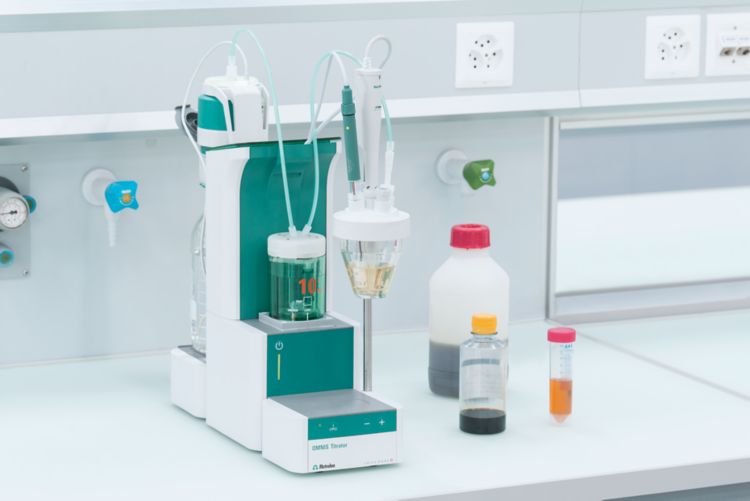
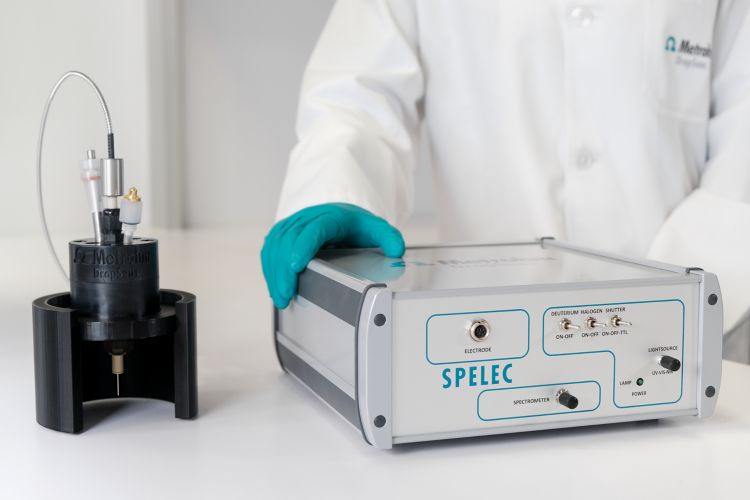
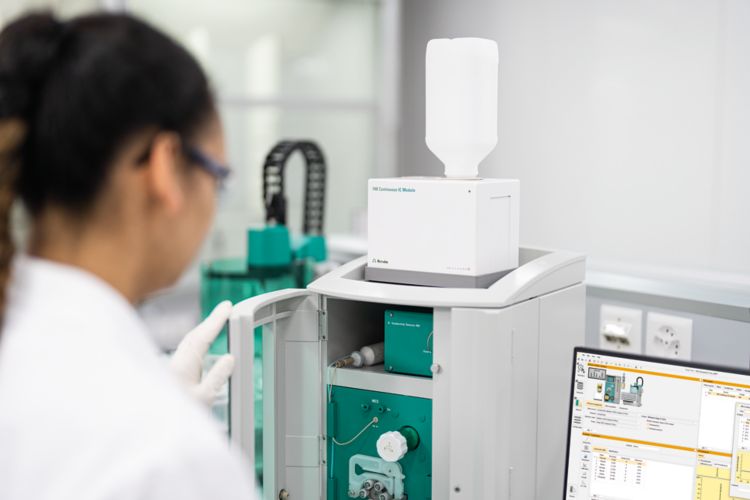
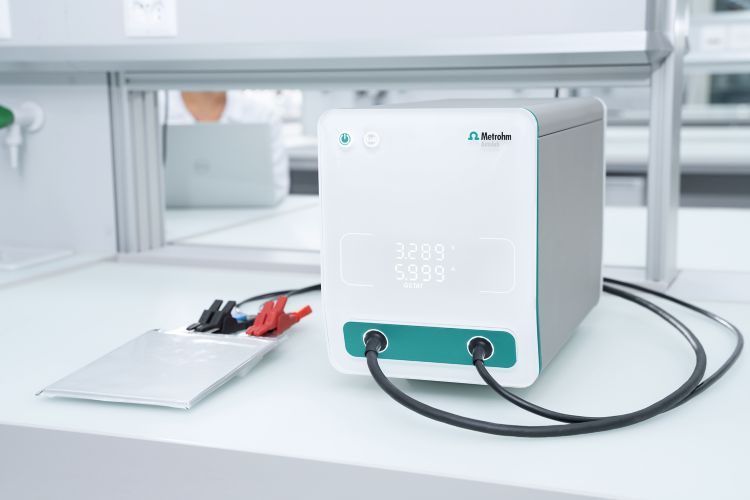


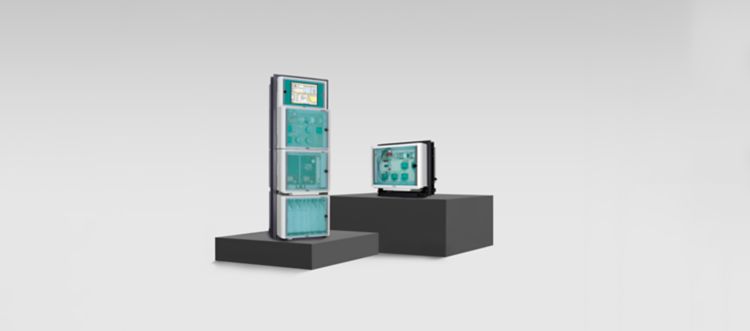



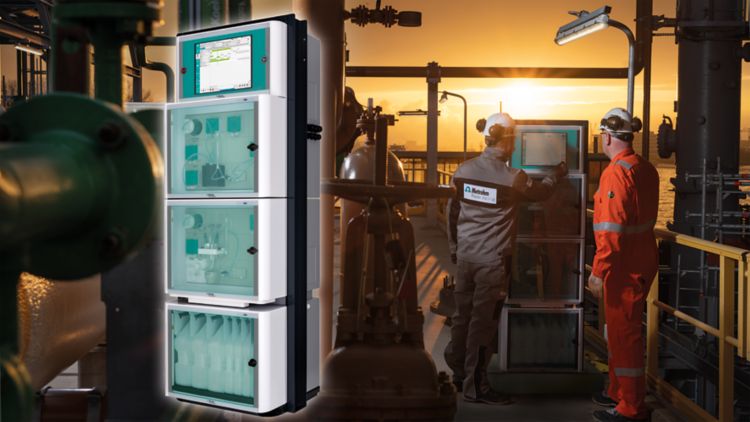

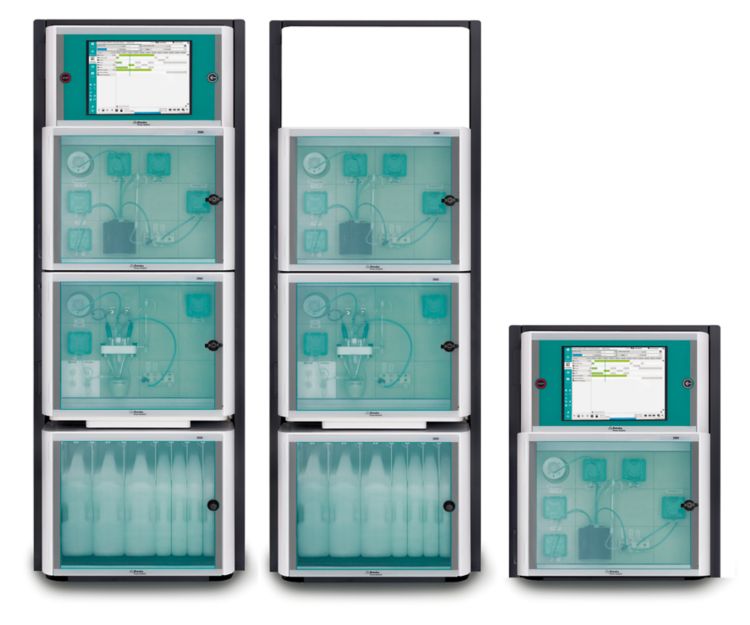
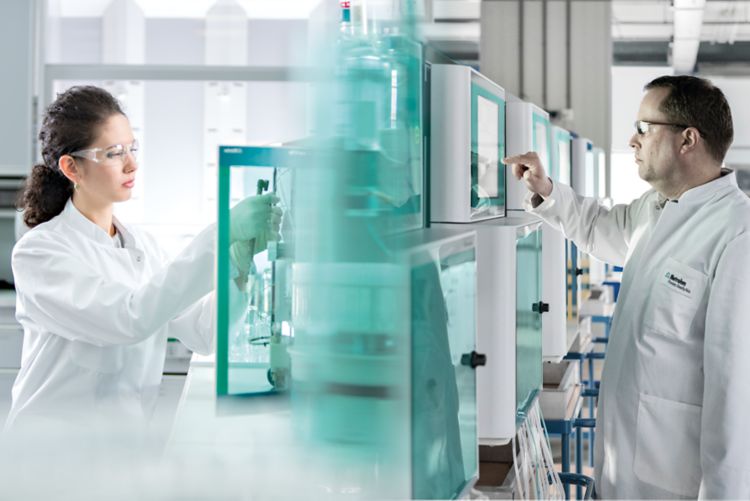

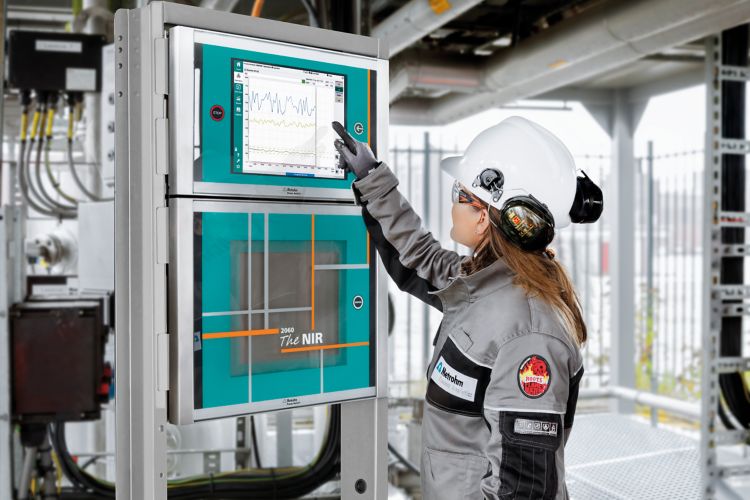
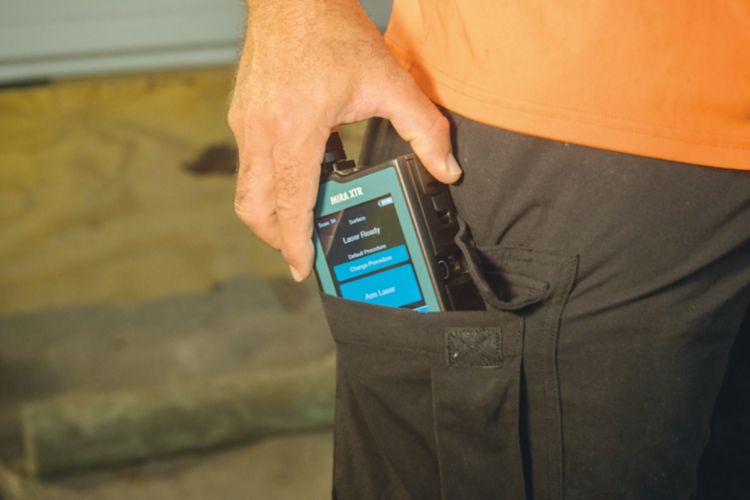




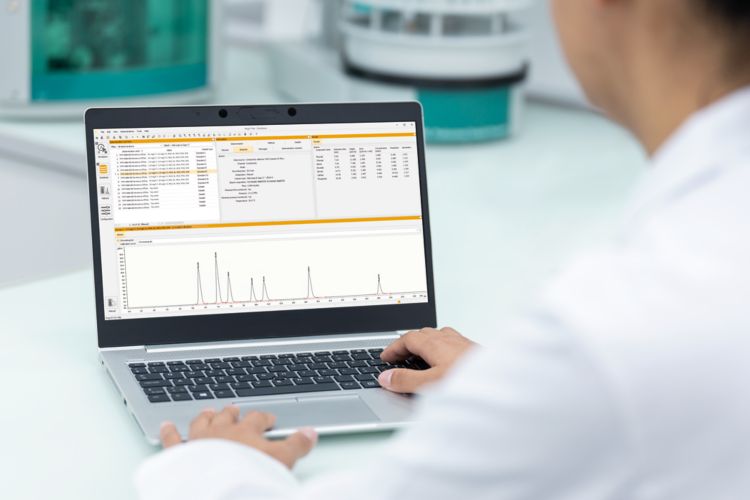
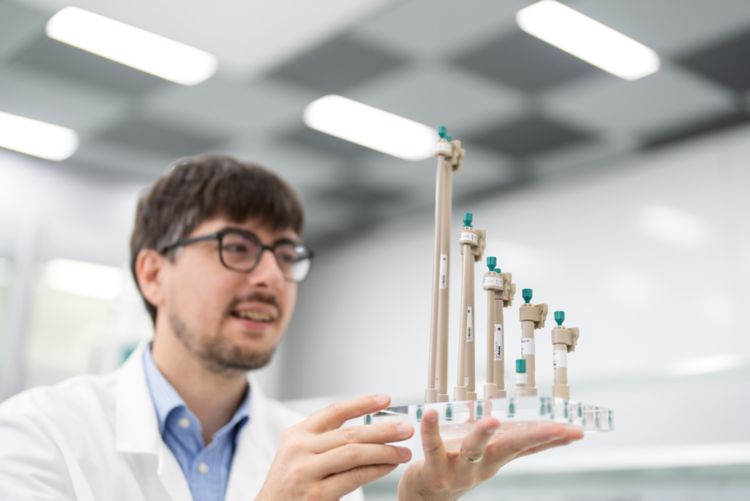


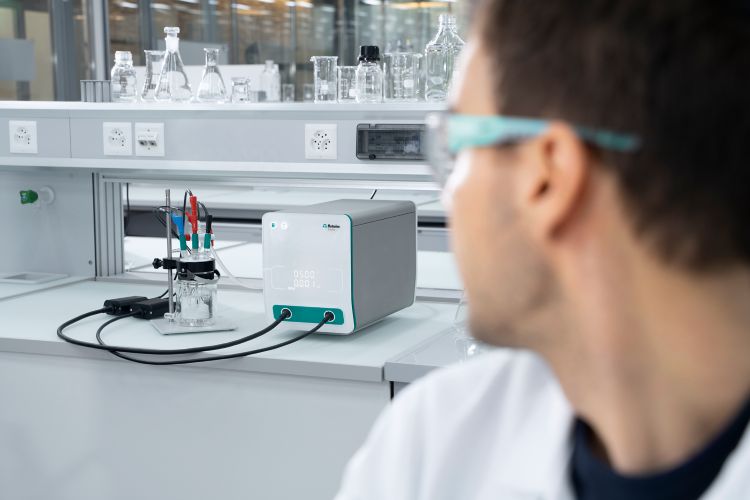

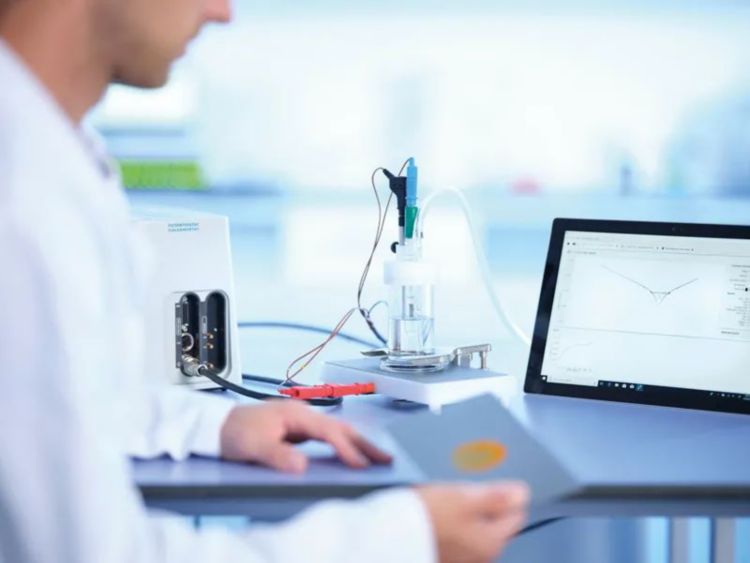
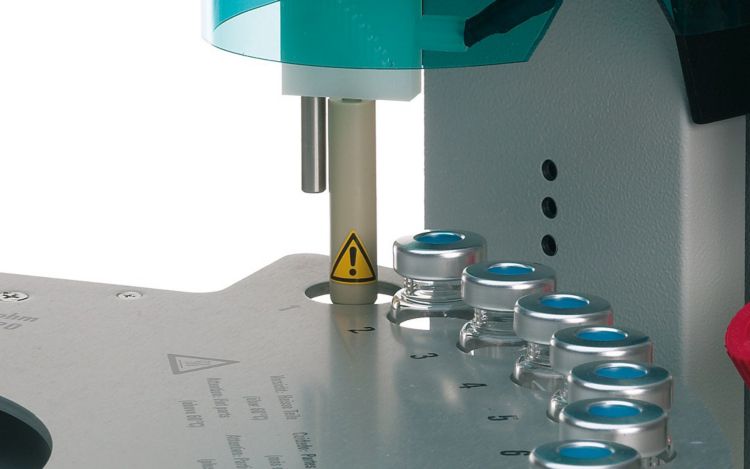
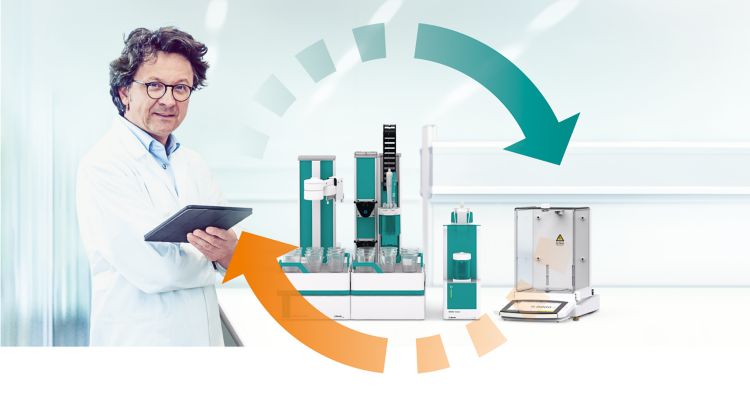
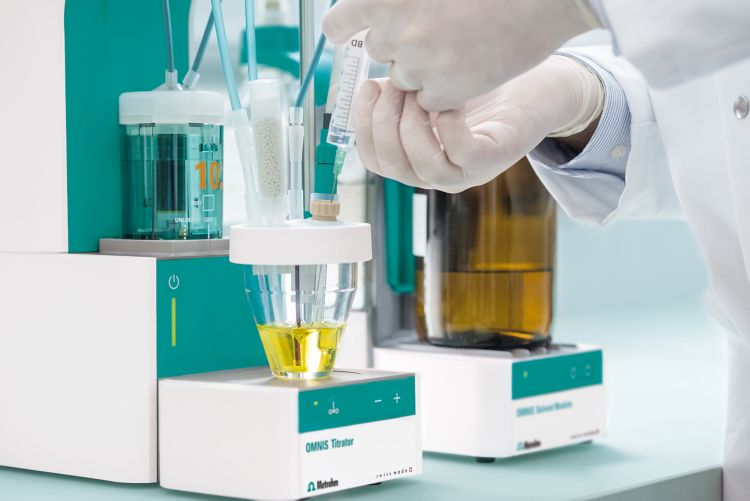
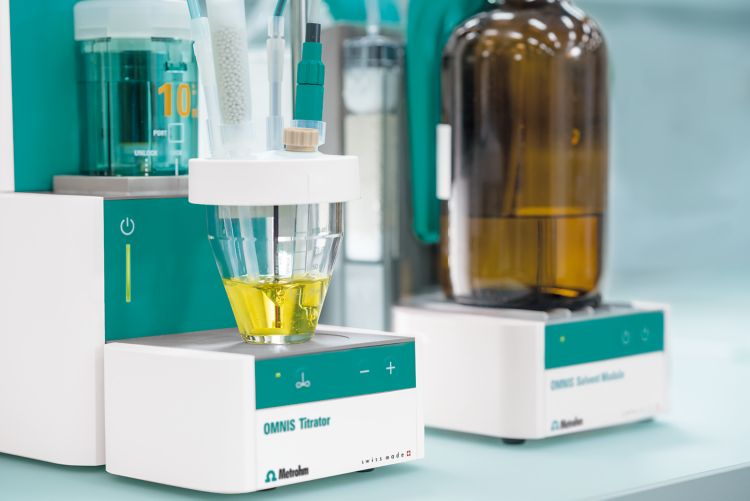
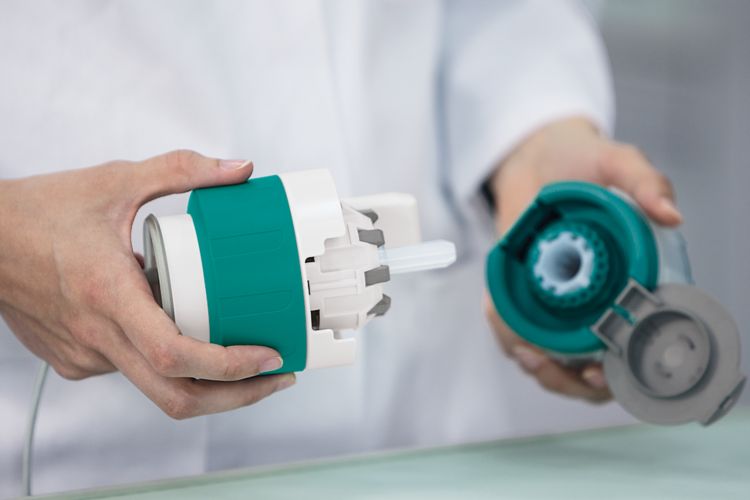
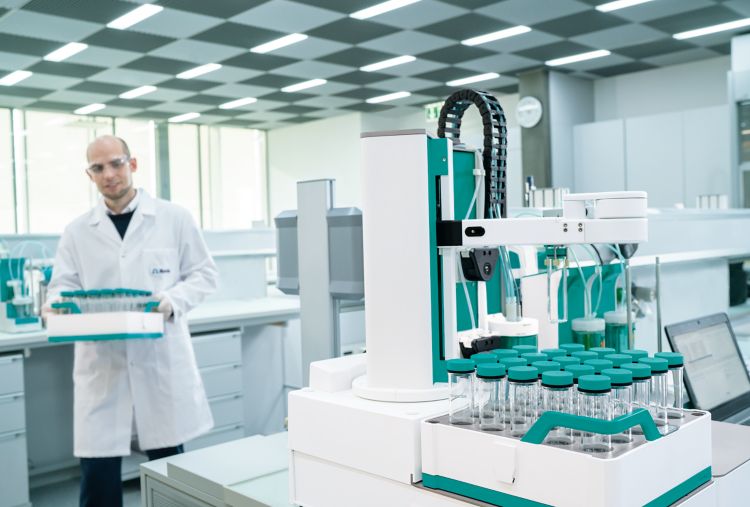
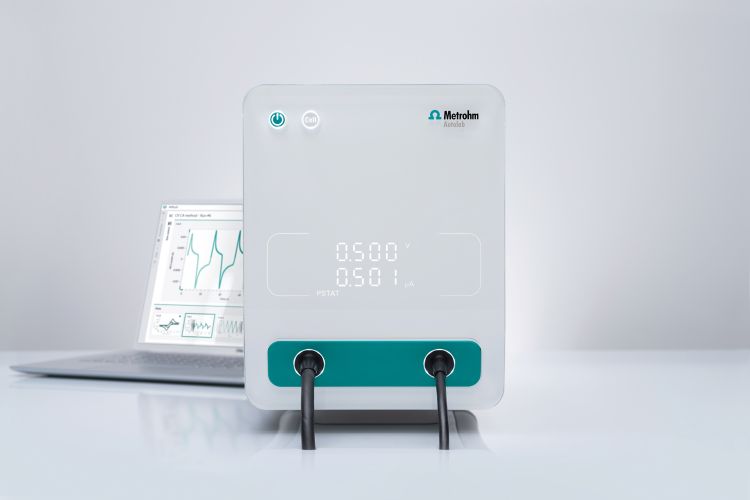
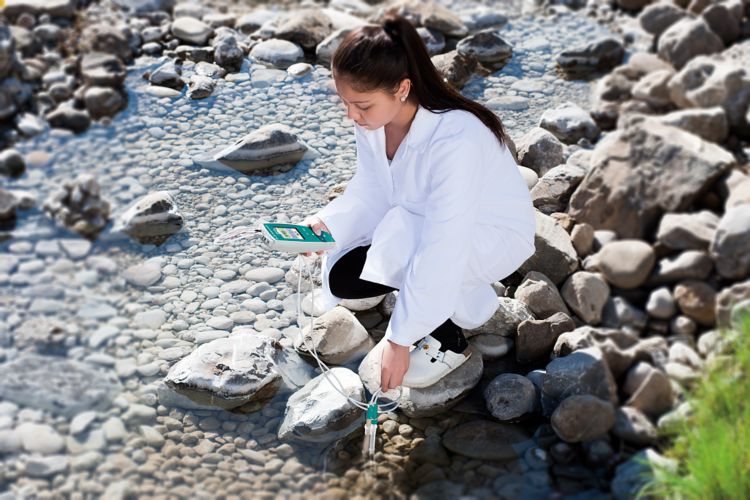
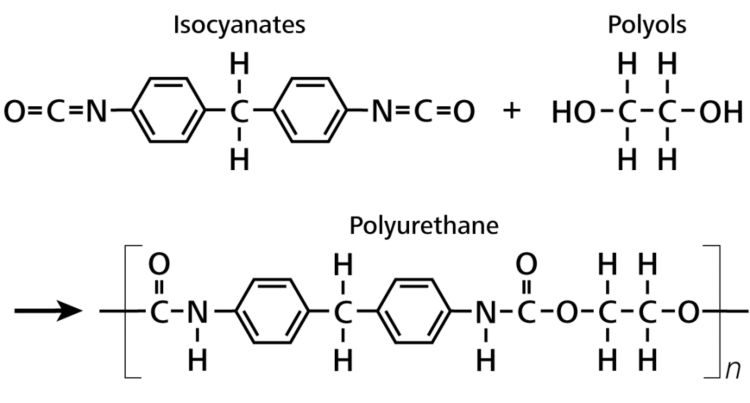

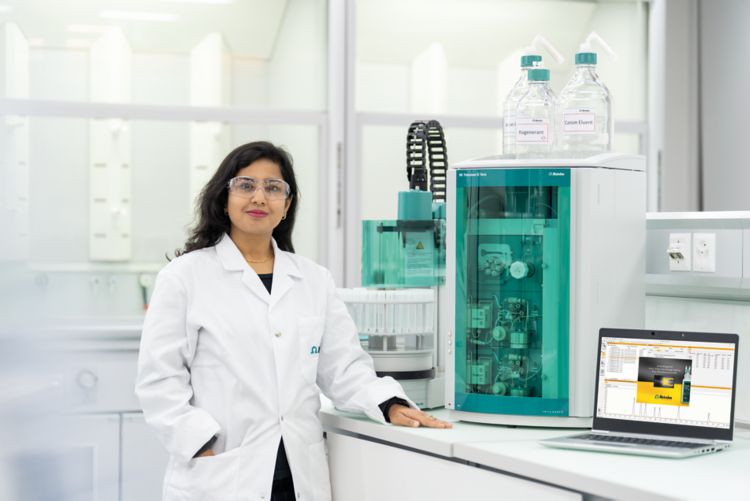


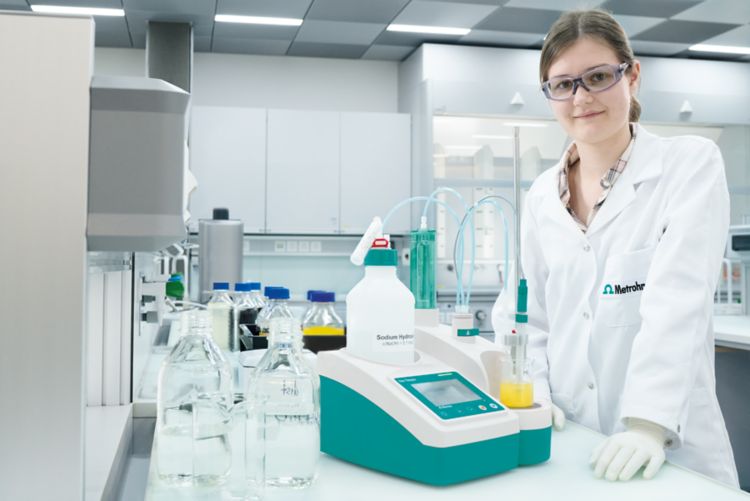

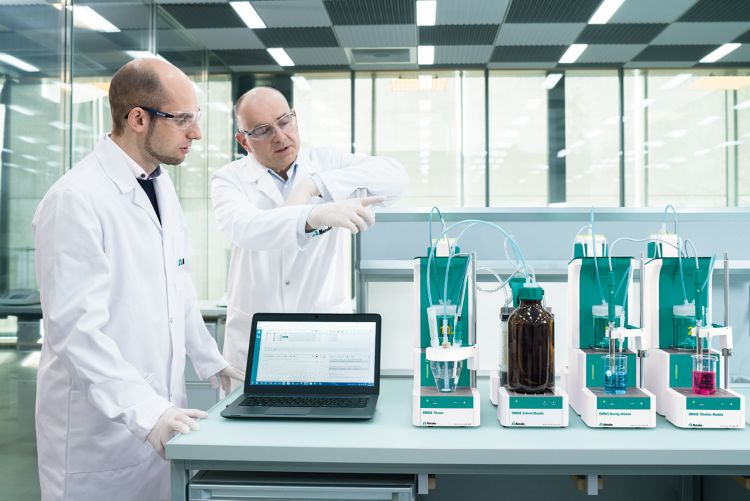


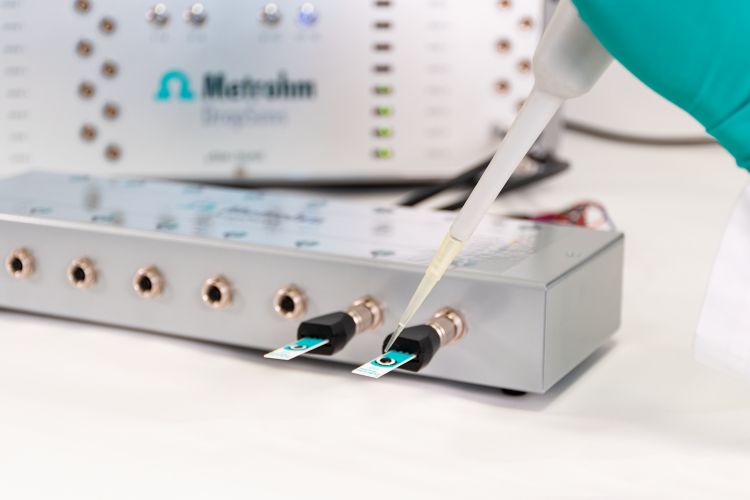
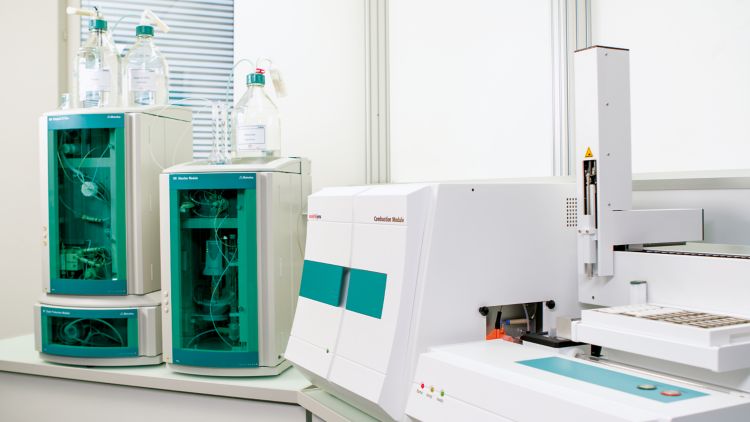
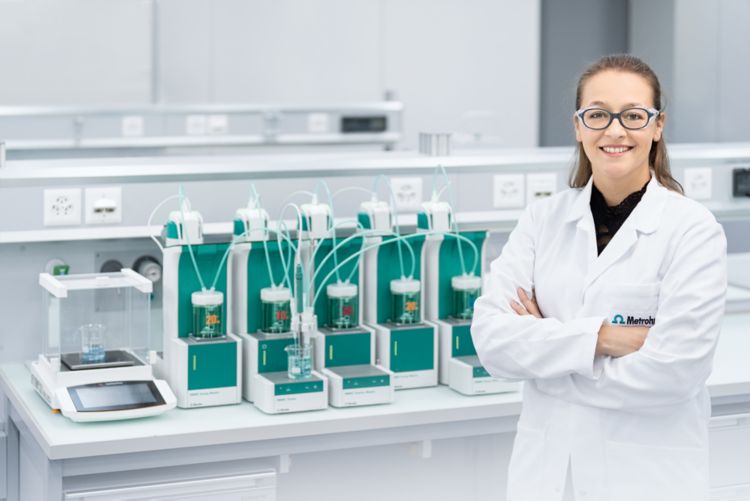
- 14 de jul. de 2025Configurações simplificadas de espectroeletroquímica com células intuitivas e fáceis de usar
A espectroeletroquímica agora está mais acessível graças aos instrumentos SPELEC e às células fáceis de usar, simplificando a configuração e o manuseio de dados para uma adoção mais ampla.
- 4 de jun. de 2025Compreendendo o papel do eluente na cromatografia iônica
Este artigo explora a importância da seleção e preparação do eluente, destacando as principais considerações que garantem medições de cromatografia iônica confiáveis e robustas.
- 12 de mai. de 2025Compreendendo a voltametria de varredura linear e a voltametria cíclica
Esta postagem do blog explica os princípios, os principais parâmetros e as aplicações de duas técnicas eletroquímicas populares: voltametria de varredura linear e voltametria cíclica.
- 28 de abr. de 2025Noções básicas de espectroeletroquímica
A espectroeletroquímica (SEC) combina eletroquímica e espectroscopia para registrar simultaneamente sinais ópticos e eletroquímicos. Este artigo define SEC e destaca suas vantagens.
- 31 de mar. de 2025Como funciona a fluorescência de raios X?
A fluorescência de raios X (FRX) é uma técnica não destrutiva para identificar e quantificar elementos em sólidos, líquidos e pós. Saiba mais sobre XRF e como ele funciona neste artigo do blog.
- 24 de fev. de 2025Monitoramento contínuo da qualidade do ar para material particulado nocivo e aerosóis
O monitoramento contínuo da qualidade do ar ambiente é simples com o Metrohm AeRosol Sampler (MARS) e o 2060 Monitor para AeRosols e Gases no Ar Ambiente (MARGA).
- 20 de jan. de 2025Entendendo a titulação potenciométrica: Uma técnica vital na análise farmacêutica
O controle de qualidade farmacêutico depende muito da titulação, um método destacado em farmacopeias como o Capítulo Geral da USP-NF <541> por sua precisão e simplicidade.
- 16 de dez. de 2024Introdução à decapagem voltamétrica cíclica (CVS)
Este artigo destaca a decapagem voltamétrica cíclica (CVS) para monitorar aditivos orgânicos em banhos de galvanoplastia de Cu, cruciais para atingir a deposição ideal.
- 18 de nov. de 2024Cromatografia iônica para a indústria farmacêutica
Os princípios da cromatografia iônica são introduzidos, depois algumas aplicações e benefícios do uso de CI para análise farmacêutica de acordo com o Capítulo Geral da USP <1065>.
- 7 de out. de 2024Por que controlar a temperatura para resultados NIRS mais precisos e reprodutíveis
As variações de temperatura afetam as previsões do NIRS em mais de 1% por mudança de grau. Monitorar a temperatura da amostra, especialmente para líquidos, é especialmente crítico.
- 23 de set. de 2024Controle de qualidade de materiais catódicos
Este artigo destaca vários parâmetros essenciais para a qualidade da produção de cátodos de baterias de íons de lítio e sua reciclagem eficiente, além dos métodos para analisá-los.
- 9 de set. de 2024Melhor conformidade com a incineração de resíduos com análise de processo online
Usinas de incineração de resíduos geram energia e reduzem o volume de aterros sanitários. Analisadores de processos on-line podem fornecer dados de monitoramento em tempo real sobre as operações da planta.
- 26 de ago. de 2024Espectroscopia Raman: A maneira fácil de analisar polímeros
Este artigo descreve o quão versátil a espectroscopia Raman pode ser para a identificação, classificação e controle de qualidade de vários plásticos e polímeros.
- 12 de ago. de 2024Otimizando a eficiência do laboratório com MiPT para manuseio de amostras versátil e de alta precisão
A técnica de injeção de loop parcial inteligente (MiPT) da Metrohm permite volumes de amostra variáveis e aumenta a precisão com manuseio automatizado por meio de um Dosino.
- 29 de jul. de 2024Análise de óleo comestível: um guia para iniciantes
Aprenda o que são óleos comestíveis, como são produzidos, como testar sua qualidade com diferentes técnicas analíticas e quais são os parâmetros de análise mais importantes.
- 15 de jul. de 2024Como evitar erros de titulação em seu laboratório
Esta postagem do blog explora erros aleatórios e sistemáticos comuns na titulação, oferecendo orientação para identificar e minimizar esses problemas e melhorar a precisão experimental.
- 1 de jul. de 2024Maior eficiência da análise de rotina CVS com transferência de amostras Dosino
Este artigo destaca o uso de Dosinos para manuseio automatizado de amostras em aplicações de decapagem voltamétrica cíclica (CVS) para aprimorar a análise de PCB e semicondutores.
- 17 de jun. de 2024Como calibrar um medidor de pH
Aprenda como calibrar um medidor de pH e obtenha respostas para outras perguntas frequentes sobre calibrações de pH.
- 3 de jun. de 2024Conservação de arte usando eletroquímica
Métodos não destrutivos, como a eletroquímica, auxiliam na análise e preservação de artefatos. Este blog descreve três exemplos de eletroquímica na conservação de arte.
- 20 de mai. de 2024Manuseio automatizado de líquidos: a chave para resultados precisos e reprodutíveis
O manuseio preciso de líquidos é fundamental em laboratórios. A automação reduz erros, garantindo resultados precisos. Saiba mais vantagens do manuseio automatizado de líquidos neste blog.
- 6 de mai. de 2024Avanço na precisão e eficiência na cromatografia de íons com diluição em linha automatizada
Soluções totalmente automatizadas para cromatografia de íons, como a Metrohm Inline Dilution Technique (MIDT), agilizam a preparação de amostras e garantem resultados precisos.
- 22 de abr. de 2024Titulação – definição e princípios
A titulação é um dos métodos analíticos mais antigos e bem estabelecidos. Este blog aborda o princípio da titulação, seu processo e apresenta diferentes tipos de titulação.
- 8 de abr. de 2024Detecção aprimorada de fentanil usando espectroeletroquímica Raman
Métodos rápidos e confiáveis de triagem de drogas são cruciais para investigações científicas forenses. Este artigo explora a detecção de fentanil usando espectroeletroquímica Raman.
- 1 de abr. de 2024Laboratório do futuro: análise robótica automatizada de produtos petrolíferos
A análise totalmente automatizada do número total de ácidos e bases totais em produtos petroquímicos é possível usando um sistema de titulação robótico usando o software OMNIS.
- 25 de mar. de 2024Point-of-Care com Raman: Detecção de câncer, infecção e muito mais
A espectroscopia Raman se expande para novas fronteiras médicas: detecção de câncer, biomarcadores e patógenos. Este blog cobre pesquisas interessantes envolvendo aplicações Point-of-Care.
- 11 de mar. de 2024EIS de alta frequência: uma ferramenta poderosa para o futuro da mobilidade
A caracterização eletroquímica de baterias de estado sólido pode ser difícil. O uso de espectroscopia de impedância eletroquímica (EIS) em altas frequências ajuda a capturar processos rápidos.
- 26 de fev. de 2024Garantir e certificar a qualidade e a conformidade em ambientes regulamentados
Os instrumentos certificados pela AOAC Installation & Operational Qualification (Q2) da Metrohm proporcionam tranquilidade ao simplificar o processo de atendimento aos requisitos regulatórios.
- 12 de fev. de 2024A titulação condutométrica funciona onde outros métodos têm dificuldade
A titulação condutométrica é baseada na mudança de condutividade durante a adição de um titulante. Princípios, vantagens e exemplos de titulação de condutividade são discutidos aqui.
- 29 de jan. de 2024Análise de laboratório vs. análise de processo: Fatores-chave para uma tomada de decisão informada
Vários fatores devem ser considerados ao escolher entre comprar um instrumento de laboratório ou um analisador de processos. Em muitas situações, uma solução é claramente preferível à outra. Este artigo discute cinco tópicos principais que precisam ser considerados antes da tomada de decisão: rastreabilidade e comunicação de dados, frequência de análise, segurança, localização e implementação.
- 15 de jan. de 2024Controle de qualidade de papel e celulose e triagem de produtos com espectroscopia NIR
Os produtos de papel são feitos principalmente de fibras de madeira tratadas e processadas em fábricas de papel e celulose. Isso envolve o uso significativo de produtos químicos e o consumo de energia. É fundamental garantir o controle de qualidade em toda a cadeia de produção, desde a madeira até o produto final de papel. Este artigo do blog mostra como a espectroscopia no infravermelho próximo (NIRS) monitora com eficácia vários parâmetros-chave de controle de qualidade simultaneamente durante a fabricação de papel e celulose.
- 8 de jan. de 2024Série NIR Parte 1 - O que é espectroscopia NIR?
A espectroscopia no infravermelho próximo é uma técnica de análise estabelecida para determinar parâmetros químicos e físicos em amostras sólidas e líquidas.
- 8 de jan. de 2024Série NIR Parte 2 - NIR vs IR: Qual é a diferença?
A espectroscopia de infravermelho próximo e a espectroscopia de infravermelho usam diferentes faixas espectrais de luz, o que resulta em uma diferença no tamanho da amostra necessária, na penetração da luz na amostra e nas informações espectrais. Saiba por que a espectroscopia NIR tem muitas vantagens sobre a IR com relação à velocidade e à versatilidade.
- 8 de jan. de 2024Série NIR Parte 3 - Como implementar a espectroscopia NIR no fluxo de trabalho de seu laboratório
As etapas necessárias para implementar a espectroscopia no infravermelho próximo em seu laboratório: criação de um conjunto de calibração, criação e validação de modelos de previsão e análise de rotina.
- 8 de jan. de 2024Série NIR Parte 4 - Pré-calibrações de espectroscopia NIR: Resultados imediatos
As pré-calibrações são modelos de previsão que podem ser usados imediatamente para análise NIR e fornecem resultados satisfatórios desde o início. Basta pressionar um botão e iniciar a medição.
- 11 de dez. de 2023Titulação Karl Fischer: Quando usar a volumetria ou a coulometria
Este artigo do blog explica os fatores mais importantes a serem considerados para escolher a melhor técnica de titulação Karl Fischer: coulometria ou volumetria. A titulação coulométrica Karl Fischer (KFC) é geralmente usada para amostras com baixo teor de umidade, entre 0,001% e 1%. A titulação volumétrica Karl Fischer (KFT) é usada para amostras com níveis mais altos de umidade, entre 0,1% e 100%.
- 27 de nov. de 2023Controle de qualidade e triagem de produtos de tinta e pintura com NIRS
A tinta e a pintura fazem parte da vida cotidiana. O controle de qualidade e o rastreamento de tinta e pintura são importantes ao longo de todo o processo de produção, bem como para os produtos finais. Os fabricantes podem economizar tempo e dinheiro usando a espectroscopia no infravermelho próximo (NIRS) para verificar vários parâmetros de qualidade em materiais-primas e produtos acabados de tinta e pintura. A NIRS é uma técnica analítica ecologicamente correta, econômica e fácil de usar.
- 13 de nov. de 2023Baterias de estado sólido: uma tecnologia promissora que prospera sob pressão
As baterias de estado sólido (SSBs) têm o potencial de revolucionar o armazenamento de energia. Elas são mais seguras do que as baterias tradicionais de íons de lítio, possuem alta densidade de energia e têm vida útil estendida e capacidade de carregamento rápido. Este artigo discute as diferenças gerais entre SSBs e baterias de íon-lítio, desafios que ainda precisam ser superados para a produção comercial de SSBs e o uso de espectroscopia de impedância eletroquímica (EIS) para testar diferentes parâmetros de baterias.
- 30 de out. de 2023Uma montanha-russa térmica: desvendando a dependência da temperatura nas determinações do CVS
A precisão na fabricação de PCB exige controle preciso de aditivos orgânicos durante o revestimento de cobre. A Decapagem Voltamétrica Cíclica (CVS) é usada para quantificar esses aditivos, mas as diferenças de temperatura afetam a precisão dos resultados. Este artigo descreve o método para avaliar aditivos orgânicos em banhos de cobre e explora a influência da temperatura nas medições de CVS.
- 16 de out. de 2023Aplicação de métodos validados pela USP para equivalência de colunas de separação
A modernização das Monografias da USP permite agora uma seleção mais ampla de colunas de separação para análises farmacêuticas utilizando cromatografia iônica (CI). Os estudos de equivalência de colunas permitem o uso de colunas analíticas alternativas sem a necessidade de procedimentos complicados de validação de métodos. Isto beneficia os pesquisadores farmacêuticos, economizando tempo e esforço, mantendo a precisão e a confiabilidade dos resultados analíticos de acordo com métodos validados.
- 2 de out. de 2023Triagem e controle de qualidade de óleo de palma com espectroscopia NIR
A espectroscopia no infravermelho próximo (NIRS) é uma excelente opção para a análise de vários parâmetros-chave de qualidade em óleo de palma bruto (CPO), óleo de palmiste bruto (CPKO) e óleo de palma refinado, branqueado e desodorizado (RBD). Apenas um instrumento NIRS pode medir vários parâmetros de CQ, incluindo conteúdo de água (umidade), ácidos graxos livres (AGL), valor de iodo (IV) e índice de deterioração do branqueamento (DOBI) em uma fração do tempo de outras técnicas analíticas.
- 18 de set. de 2023Espectroeletroquímica intuitiva: como células fáceis de usar tornam a análise ainda mais fácil
A espectroeletroquímica (SEC) é uma técnica analítica emergente com grande potencial. Embora configurações complexas e processamento de dados desencorajassem alguns pesquisadores, a linha de instrumentos SPELEC, controlada por um único software, tornou o SEC mais acessível. O desenvolvimento de células fáceis de usar para diferentes configurações de SEC simplifica ainda mais as medições, tornando a espectroeletroquímica acessível a um público mais amplo.
- 4 de set. de 2023Simplifique a inspeção de materiais em indústrias regulamentadas com a nova biblioteca Raman USP
Os sistemas Raman da Metrohm e a Biblioteca Abrangente USP Raman oferecem suporte a setores regulamentados, como a fabricação farmacêutica: agilize a inspeção de entregas, reduza os recursos de inspeção e leve o produto final ao mercado com mais rapidez.
- 21 de ago. de 2023Como os nanomateriais à base de irídio contribuem para um futuro mais verde?
A mitigação das alterações climáticas é vital devido aos graves impactos das emissões excessivas de CO2. O setor dos transportes, em grande parte dependente dos combustíveis fósseis, contribuiu para 37% do total das emissões de dióxido de carbono em 2021. Embora os carros eléctricos se tenham tornado mais populares, outras soluções, como os veículos movidos a hidrogénio, estão a ganhar atenção. A divisão eletroquímica da água por meio de eletrolisadores de água com membrana eletrolítica polimérica (PEM) é proposta para produzir hidrogênio verde, com catalisadores à base de irídio mostrando-se promissores. Esta pesquisa está focada em materiais de óxido de irídio para maior durabilidade e condutividade semelhante à metálica na produção de H2.
- 7 de ago. de 2023Ter um contrato de serviço é importante?
Se a instrumentação analítica for negligenciada, ela pode se tornar pouco confiável e cair em mau estado. O não cumprimento dos requisitos regulamentares também é uma preocupação em tais situações. No entanto, a manutenção preventiva regular como parte de um contrato de serviço pode ajudar a evitar estas situações. Os Contratos de Serviço Metrohm proporcionam tranquilidade com vários planos de manutenção adequados para qualquer orçamento.
- 24 de jul. de 2023O mundo dos surfactantes na perspectiva da titulação
Determinar com precisão o conteúdo de surfactante em amostras por meio de titulação potenciométrica pode ser um desafio, exigindo a consideração de múltiplos fatores. Entretanto, selecionando o pH apropriado, usando um eletrodo adequado e implementando dicas e truques úteis, o método de titulação se torna um meio confiável e preciso de determinação do teor de surfactante.
- 26 de jun. de 2023Perguntas frequentes (FAQ) sobre espectroscopia Raman: aplicações
A espectroscopia Raman é uma ferramenta onipresente que pode ser usada para diversos fins. Este artigo do blog responde a algumas perguntas frequentes sobre a adequação da espectroscopia Raman para diversas aplicações.
- 12 de jun. de 2023O futuro da produção de amônia é a eletroquímica
A amônia é o fertilizante à base de nitrogênio mais comum e amplamente utilizado. Também é viável como transportador de hidrogênio mais seguro em grandes quantidades. A fabricação tradicional de amônia utiliza combustível fóssil como fonte de hidrogênio necessária para a reação. Comumente chamada de “amônia verde”, a amônia sintetizada eletroquimicamente com o uso de eletricidade de fontes renováveis é uma alternativa interessante com emissão zero de carbono.
- 29 de mai. de 2023Conversão de dióxido de carbono emitido em matérias-primas químicas por rotas eletroquímicas
Muitos pesquisadores se concentram em aplicações eletroquímicas, como eletrocatálise, armazenamento de energia e conversão de energia, devido à necessidade de ação em relação às mudanças climáticas. O ponto em comum que essas aplicações é a instrumentação eletroquímica necessária para seu trabalho. A Metrohm fabrica equipamentos de alta qualidade para essas pesquisas pioneiras. Em particular, o potenciômetro de alta qualidade VIONIC alimentado pela INTELLO é um instrumento versátil para a maioria dos tópicos de pesquisa nessa área de pesquisa devido às suas especificações de excelentes.
- 15 de mai. de 2023Controle de processo de banhos de niquelagem eletrolíticos com sensores livres de Hg
Os processos de revestimento de níquel (EN) sem eletrólito usam vários estabilizadores como Pb, Bi e Sb(III) para controlar a taxa de revestimento e evitar a decomposição descontrolada do banho. Como a concentração do estabilizador deve ser mantida em um nível constante, o monitoramento da concentração do estabilizador é, portanto, essencial para um processo de galvanização ideal. Uma das melhores maneiras de fazer isso é usando a análise voltamétrica (VA).
- 1 de mai. de 2023Medindo facilmente valores de ORP em aplicações da vida real
O kit ORP da Metrohm DropSens é prático, confiável e fácil de usar para medição reproduzível do potencial de oxidação-redução em diversas situações. A multiplicidade de requisitos de diversas indústrias que devem medir o ORP se ajusta perfeitamente às vantagens obtidas ao usar eletrodos serigrafados e instrumentos miniaturizados, incluindo portabilidade, acessibilidade, descartabilidade, amostras pequenas e confiabilidade.
- 17 de abr. de 2023Fácil controle de qualidade de detergentes e desinfetantes para as mãos com NIRS
Este artigo do blog explica os usos de detergentes e desinfetantes para as mãos e como realizar o controle de qualidade desses produtos com a espectroscopia de infravermelho próximo (NIRS).
- 3 de abr. de 2023História e análise de vitamina C (ácido ascórbico)
Este artigo aborda a história da vitamina C (ácido ascórbico) e alguns dos diferentes métodos analíticos utilizados para determiná-la em vários produtos (por exemplo, por titulação, polarografia e cromatografia iônica).
- 20 de mar. de 2023Construindo uma Fábrica Inteligente (mais) implementando soluções de Process Analytics 4.0
Ao implementar soluções da Indústria 4.0, os fabricantes podem aumentar a sua eficiência, produtividade e rentabilidade, mantendo-se competitivos e melhorando a experiência do cliente. Process Analytics 4.0 concentra-se na evolução da análise de processos. Este artigo aborda como implementar com sucesso uma solução Process Analytics 4.0, incluindo a escolha do PAT certo, garantindo o pré-condicionamento adequado da amostra e a aquisição de dados confiáveis.
- 6 de mar. de 2023Protegendo sistemas IC com ultrafiltração e diálise em linha Metrohm
Uma maneira eficiente de preparar amostras para análise de IC é usar técnicas de preparação de amostras em linha da Metrohm (MISP) para automatizar o processo. Tanto a ultrafiltração em linha (UF) quanto a diálise em linha da Metrohm podem ser usadas para proteger o sistema IC de componentes de matriz prejudiciais e, ao mesmo tempo, reduzir o trabalho manual e aumentar o rendimento da amostra.
- 20 de fev. de 2023Como a temperatura influencia o valor do pH
A temperatura afeta a medição do pH de várias maneiras. Este artigo do blog abordará os motivos e discutirá como lidar com os diferentes efeitos da temperatura nas medições de pH.
- 6 de fev. de 2023Monitoramento do conteúdo antioxidante de lubrificantes industriais em serviço com voltametria
Testar lubrificantes em serviço quanto ao seu conteúdo antioxidante restante é fundamental para prolongar o tempo de atividade de equipamentos essenciais, bem como para reduzir custos de operação e despesas de reparo. A voltametria (VA) é um método rápido e estabelecido para testar o conteúdo antioxidante remanescente em lubrificantes industriais.
- 23 de jan. de 2023MIRA e IBEX: Fora do laboratório e rumo ao desconhecido
Proteger sites perigosos é o objetivo final de qualquer diretiva de exploração de sites sensíveis (SSE). O pessoal militar, os socorristas e os especialistas em materiais perigosos devem estar preparados para encontrar qualquer coisa enquanto trabalham e necessitam de ferramentas que os informem e os protejam dos perigos no terreno. A Metrohm tem a solução definitiva – IBEX, um robô quadrúpede equipado com um espectrômetro Raman independente (MIRA XTR DS) e um conjunto de sensores ambientais.
- 12 de dez. de 2022Controle de qualidade de processos de pré-tratamento de wafers semicondutores com NIRS online
A limpeza é crucial dentro das instalações de fabricação de semicondutores. Os fabricantes implementam procedimentos de controle de produção extremamente rigorosos, especialmente durante o tratamento de superfície do wafer com banhos de ataque e limpeza. Este artigo destaca os benefícios para os fabricantes de semicondutores implementarem espectroscopia no infravermelho próximo (NIRS) em processos de pré-tratamento de wafer para análise em tempo real.
- 28 de nov. de 2022Economize tempo e dinheiro com as soluções de preparação de amostras em linha da Metrohm
Ao usar a cromatografia iônica (CI) como técnica analítica, as amostras muitas vezes não podem ser injetadas diretamente na coluna de separação. As técnicas de preparação de amostras em linha (MISP) da Metrohm oferecem um amplo espectro de soluções simples, econômicas e que economizam tempo para esses tipos de situações. Este artigo fornece uma visão geral e alguns insights sobre as técnicas MISP – nossas soluções para preparação automatizada de amostras em linha de várias matrizes para análise de IC.
- 14 de nov. de 2022Como utilizar modos de aterramento em experimentos eletroquímicos
A capacidade de aterrar diferentes eletrodos pode oferecer aos eletroquímicos algumas vantagens em relação à configuração típica de eletrodo de trabalho. Por exemplo, o contra-eletrodo aterrado pode ser usado em sistemas não convencionais onde as soluções ou os eletrodos de trabalho não são isolados eletricamente. O recurso flutuante selecionável do VIONIC oferece aos usuários a flexibilidade de escolher o estado fundamental da configuração da célula, oferecendo possibilidades experimentais ainda maiores.
- 31 de out. de 2022Espectroeletroquímica Raman da Índia à Espanha: História e aplicações
Uma das técnicas espectroeletroquímicas mais interessantes combina os campos da eletroquímica e da espectroscopia Raman. A espectroeletroquímica Raman fornece aos usuários dois sinais diferentes do mesmo experimento, atuando como uma ferramenta poderosa para coletar ainda mais conhecimento sobre o sistema analisado. Experimentos de espectroeletroquímica Raman são facilmente realizados usando SPELEC RAMAN, o único instrumento no mercado dedicado a realizar tais experimentos.
- 17 de out. de 2022Análise de compostos orgânicos halogenados com CIC de acordo com DIN 38409-59
Este artigo do blog explica como as substâncias alquílicas per e polifluoradas (PFASs) e outros compostos orgânicos halogenados têm sido usadas nas últimas décadas, seus efeitos na saúde e no meio ambiente e como monitorar e analisar essas substâncias com cromatografia de íons de combustão ( CIC) de acordo com a nova norma DIN 38409-59.
- 3 de out. de 2022CQ e triagem de produtos para cabelo, pele e produtos odontológicos com NIRS
Este artigo mostra como a utilização da espectroscopia no infravermelho próximo (NIRS) para controle de qualidade (CQ) e triagem de produtos é a escolha ideal para produtores de produtos para cabelo, pele e cuidados dentários. A técnica não é apenas rápida e não destrutiva, mas também fácil de usar e não requer produtos químicos.
- 19 de set. de 2022Perguntas frequentes (FAQ) sobre espectroscopia Raman: teoria e uso
A espectroscopia Raman é uma técnica analítica não destrutiva baseada no espalhamento inelástico de fótons relacionado aos diferentes modos vibracionais das moléculas. Este artigo aborda algumas das perguntas mais frequentes sobre a espectroscopia Raman em relação à teoria por trás dela e como ela pode ser usada na prática.
- 5 de set. de 2022CQ e triagem de produtos de cannabis medicinal com espectroscopia NIR
A espectroscopia no infravermelho próximo (NIRS) é uma técnica analítica rápida com baixos custos operacionais usada para realizar controle de qualidade (CQ) e triagem de produtos em vários produtos de cannabis, incluindo cânhamo. O NIRS pode determinar o perfil canabinóide ou mesmo a potência das flores secas de cannabis, bem como dos óleos, ceras, tinturas e outras formulações de cannabis.
- 22 de ago. de 2022Eletroquímica em condições de fluxo laminar e turbulento usando eletrodos rotativos
Estudos eletroquímicos que requerem condições hidrodinâmicas podem ser realizados com eletrodos de trabalho rotativos para criar convecção forçada na célula de medição. Tanto condições de fluxo laminar quanto de fluxo turbulento podem ser criadas em laboratório para que os pesquisadores realizem diferentes estudos.
- 8 de ago. de 2022Espectroscopia no infravermelho próximo (NIRS): a solução perfeita para monitorar a pureza de solventes recuperados
O monitoramento da pureza do solvente pode ser feito de forma rápida e segura, sem qualquer preparação de amostra, usando espectroscopia no infravermelho próximo (NIRS). Dentro de um minuto, o NIRS pode determinar a qualidade dos solventes recuperados.
- 25 de jul. de 2022Transforme sua rotina de pesquisas eletroquímicas – Go Multi!
Um novo instrumento multicanal para análise eletroquímica torna possível a multitarefa para laboratórios – μStat-i MultiX da Metrohm DropSens. Execute análises automaticamente, execute vários experimentos simultaneamente e controle canais individuais de forma independente.
- 11 de jul. de 2022Lidando com os desafios diários da análise rotineira da água
A automação é a chave para lidar com o alto rendimento de amostras na análise de água. É apresentada uma configuração com a qual vários parâmetros como pH, alcalinidade e dureza da água podem ser analisados em uma única estação de trabalho.
- 27 de jun. de 2022Espectroscopia NIR na indústria de cuidados pessoais e cosméticos: a ferramenta ideal para controle de qualidade e triagem de produtos – Parte 1
Espectroscopia no infravermelho próximo na indústria de cuidados pessoais e cosméticos: princípios básicos, benefícios e aplicações.
- 13 de jun. de 2022Automação além do laboratório – Integrando as medições de pH laboratoriais mais precisas aos processos de produção
- 30 de mai. de 2022Aplicações Raman portáteis de 785 nm: recursos de identificação de materiais de última geração no seu bolso
- 23 de mai. de 2022Fornecendo o próximo nível de segurança com reagentes Hydranal™ NEXTGEN e OMNIS
- 16 de mai. de 2022História do Metrohm IC – Parte 6
Postagem no blog sobre a história da cromatografia de íons de combustão da Metrohm para determinação de enxofre e halogênio.
- 2 de mai. de 2022Eletrodos íon-seletivos: adição padrão e medição direta – Parte 2
- 4 de abr. de 2022Cinco mitos sobre espectroscopia NIR dispersiva online, FT-NIR e FT-IR – Parte 2
Os benefícios dos espectrômetros de infravermelho próximo em relação aos fotômetros IR na tecnologia analítica de processos.
- 21 de mar. de 2022Melhores práticas para colunas de separação em cromatografia iônica (IC) – Parte 3
Avaliação do desempenho da coluna de cromatografia iônica e dicas de solução de problemas para corrigir problemas com colunas IC.
- 7 de mar. de 2022Espectroscopia NIR: uma ferramenta compatível com 21 CFR Parte 11 para controle de qualidade e triagem de produtos
- 21 de fev. de 2022Dicas gerais sobre eletrodos seletivos de íons Parte 1
Teoria da medição de íons, tipos de eletrodos seletivos de íons, por que usar a solução TISAB ou ISA para medição de íons e muito mais em nosso blog.
- 7 de fev. de 2022Cinco mitos sobre espectroscopia NIR dispersiva online, FT-NIR e FT-IR – Parte 1
Saiba mais sobre espectroscopia de infravermelho próximo e infravermelho e as diferenças.
- 24 de jan. de 2022Espectroscopia NIR na indústria petroquímica e de refinaria: a ferramenta compatível com ASTM para controle de qualidade e triagem de produtos – Parte 5
Espectroscopia no infravermelho próximo e ASTM. Saiba mais sobre desenvolvimento de métodos, validação de métodos e validação de resultados.
- 10 de jan. de 2022USP <645> – análise automatizada simples de água ultrapura
Postagem no blog sobre análise automatizada e controle de qualidade de água ultrapura usada para injeções e outras aplicações médicas e farmacêuticas.
- 13 de dez. de 2021Espectroscopia NIR na indústria petroquímica e de refinaria: a ferramenta compatível com ASTM para controle de qualidade e triagem de produtos – Parte 4
Controle de qualidade de lubrificantes à base de óleos minerais e óleos sintéticos de acordo com as normas ASTM utilizando espectroscopia no infravermelho próximo.
- 6 de dez. de 2021Reações colaterais na titulação de Karl Fischer
- 29 de nov. de 2021Ph. EUR. 2.2.48 Espectroscopia Raman: Como os instrumentos Raman da Metrohm estão em conformidade com a atualização de 2022
Conformidade de espectrômetros Raman portáteis e portáteis com Ph. EUR. 2.2.48 para controle de qualidade farmacêutica.
- 22 de nov. de 2021Geração de hidrogênio verde: um desafio interdisciplinar enraizado na eletroquímica
- 15 de nov. de 2021Espectroscopia NIR na indústria petroquímica e de refinaria: a ferramenta compatível com ASTM para controle de qualidade e triagem de produtos – Parte 3
- 8 de nov. de 2021Guia para análise de acabamento de superfície online e inline
Análise de acabamento de superfície online e inline para indústrias de construção, automotiva, de semicondutores e aeroespacial.
- 1 de nov. de 2021A evolução da espectroscopia Raman portátil de 785 nm: extração Raman da interferência de fluorescência
A espectroscopia Raman portátil de 785 nm oferece excitação com comprimentos de onda mais curtos, forte espalhamento Raman com tempos de aquisição curtos e alta relação sinal-ruído e com excelente resolução espectral.
- 25 de out. de 2021Voltametria cíclica (CV) – a técnica analítica essencial para pesquisa de catalisadores
- 18 de out. de 2021Melhores práticas para colunas de separação em cromatografia iônica (IC) – Parte 2
- 11 de out. de 2021Melhores práticas para eletrodos na titulação Karl Fischer
- 4 de out. de 2021Espectroscopia NIR na indústria petroquímica e de refinaria: a ferramenta compatível com ASTM para controle de qualidade e triagem de produtos – Parte 2
Espectroscopia no infravermelho próximo para avaliar a qualidade da gasolina, diesel e combustível de aviação. Benefícios, pré-calibrações e exemplos de aplicação.
- 27 de set. de 2021Varreduras em escada ou lineares: duas opções para experimentos eletroquímicos confiáveis
Saiba mais sobre os fundamentos e aplicações de varreduras lineares e em escada para a realização de diferentes experimentos eletroquímicos.
- 20 de set. de 2021Café: servindo química em cada xícara
- 13 de set. de 2021Perguntas frequentes para análise de bebidas com cromatografia iônica
Postagem de blog sobre análise de bebidas, por exemplo, água, leite, café, suco, refrigerantes, cerveja e vinho, com cromatografia iônica.
- 6 de set. de 2021Espectroeletroquímica: lançando luz sobre o desconhecido
Eletroquímica e espectroscopia combinadas para informações moleculares, cinéticas e termodinâmicas dos reagentes, intermediários e produtos envolvidos nos processos de transferência de elétrons.
- 30 de ago. de 2021Espectroscopia NIR na indústria petroquímica e de refinaria: a ferramenta compatível com ASTM para controle de qualidade e triagem de produtos – Parte 1
Aplicações e parâmetros de espectroscopia de infravermelho Nea NIRS para a indústria petroquímica, de petróleo e de refinaria.
- 23 de ago. de 2021Best practice for separation columns in ion chromatography (IC) – Part 1
Blog on how to handle IC separation columns: standard operating conditions, equilibration, operating limits, and more.
- 16 de ago. de 2021O tamanho do contraeletrodo (CE) é importante?
- 9 de ago. de 2021Do milho ao etanol: melhorando o processo de fermentação com NIRS
Fermentação melhorada na produção de bioetanol com análise de espectroscopia no infravermelho próximo.
- 2 de ago. de 2021Análise química da massa fermentada: pH e acidez total titulável (TTA)
- 26 de jul. de 2021Espectroscopia NIR na indústria de polímeros: A ferramenta ideal para controle de qualidade e triagem de produtos – Parte 5
Espectroscopia no infravermelho próximo para avaliação da qualidade de poliuretanos: princípios básicos, benefícios e aplicações.
- 19 de jul. de 2021Rápido e fundamental: influências em medições eletroquímicas confiáveis
- 12 de jul. de 2021Titulações ácido-base não aquosas – Erros comuns e como evitá-los
- 5 de jul. de 2021Espectroscopia NIR na indústria de polímeros: A ferramenta ideal para controle de qualidade e triagem de produtos – Parte 4
Controle de qualidade de poliamidas, PA66 ou Nylon 66 e polímeros usando espectroscopia no infravermelho próximo.
- 28 de jun. de 2021Química dos Fogos de Artifício
Componentes dos fogos de artifício, como as cores são formadas e muito mais sobre segurança e controle de qualidade.
- 21 de jun. de 2021Hidrogénio verde, combustível do futuro: utilização de potenciostatos para desenvolver novos catalisadores para a produção de hidrogénio
- 14 de jun. de 2021Espectroscopia NIR na indústria de polímeros: A ferramenta ideal para controle de qualidade e triagem de produtos – Parte 3
- 7 de jun. de 2021Turbine sua pesquisa sobre baterias – Parte 2
Pesquisa de baterias com eletroquímica. Saiba mais sobre técnicas de caracterização eletroquímica para baterias de íon de lítio.
- 31 de mai. de 2021Validação de métodos de titulação
- 25 de mai. de 2021Espectroscopia NIR na indústria de polímeros: a ferramenta ideal para controle de qualidade e triagem de produtos – Parte 2
Espectroscopia no infravermelho próximo para avaliação da qualidade de polipropileno e polietileno.
- 17 de mai. de 2021Quanto os canos enferrujam em um ano?
Saiba mais sobre corrosão e eletroquímica tomando como exemplo a corrosão de tubulações.
- 9 de mai. de 2021A importância das titulações na análise farmacêutica
- 3 de mai. de 2021Espectroscopia NIR na indústria de polímeros: a ferramenta ideal para controle de qualidade e triagem de produtos – Parte 1
- 26 de abr. de 2021Desenvolvendo os sensores eletroquímicos dos seus sonhos
Opções customizadas e produção em massa de sensores eletroquímicos.
- 22 de abr. de 2021Descarbonizando processos químicos com Thor
- 19 de abr. de 2021Fogo e gelo: descobrindo erupções vulcânicas com cromatografia iônica
- 12 de abr. de 2021Reconhecimento de endpoints (EP)
Saiba mais sobre o reconhecimento de pontos finais potenciométricos e fotométricos em titulações.
- 6 de abr. de 2021Fácil determinação de umidade em fertilizantes por espectroscopia no infravermelho próximo
- 29 de mar. de 2021Raman do mundo real: simplificando a inspeção de matérias-primas recebidas
Identificação e verificação confiável e rápida de matérias-primas com espectrômetros Raman portáteis.
- 22 de mar. de 2021Análise de prebióticos com IC-PAD: Melhorando AOAC 2001.02
- 15 de mar. de 2021Análise multiparâmetro em fertilizantes por titulação termométrica
Por que analisar a composição de fertilizantes e determinar potássio, fósforo, enxofre, nitrogênio amoniacal e uréia em nosso blog.
- 8 de mar. de 2021Flexibilidade incomparável na análise de íons on-line: O 2060 IC Process Analyzer
- 1 de mar. de 2021Turbine sua pesquisa sobre baterias – Parte 1
Saiba mais sobre os principais parâmetros analíticos na produção de baterias de lítio e na pesquisa de baterias e como determiná-los usando a tecnologia Metrohm.
- 22 de fev. de 2021Receitas com Raman
Análise de compostos fenólicos, fungicidas, processo de amadurecimento de frutas, corantes sintéticos, frescor da carne, pureza de óleos comestíveis e estabilidade térmica de óleos com espectroscopia Raman.
- 13 de fev. de 2021Química do Chocolate
- 8 de fev. de 2021ASTM D6304: Determinação mais fácil de umidade em produtos petrolíferos
- 1 de fev. de 2021Raman vs SERS… Qual é a diferença?
- 25 de jan. de 2021Determinação rápida do número de ácidos e bases por titulação termométrica
Determine o número de ácido e o número de base em produtos petrolíferos de forma rápida e confiável com titulação termométrica.
- 11 de jan. de 2021Introdução à qualificação de instrumentos analíticos – Parte 2
- 7 de dez. de 2020Introdução à qualificação de instrumentos analíticos – Parte 1
Saiba mais sobre a Qualificação de Instrumentos Analíticos (AIQ) para instrumentos em ambientes regulamentados.
- 30 de nov. de 2020Eletroquímica em órbita
- 23 de nov. de 2020Análise de vestígios de metais com eletrodos de estado sólido – Parte 5
O eletrodo de disco rotativo de carbono vítreo para análise de metais pesados.
- 16 de nov. de 2020Raman do mundo real: Mira DS em ação – Detectando drogas com segurança no campo
- 9 de nov. de 2020História do Metrohm IC – Parte 4
Metrohm IC: combinação de titulação, medição direta e IC em um com TitrIC e voltametria e IC com VoltIC.
- 2 de nov. de 2020Perguntas frequentes na análise de espectroscopia no infravermelho próximo – Parte 2
Aprenda sobre limites de detecção, precisão, calibração de instrumentos e manutenção de espectroscopia de infravermelho próximo e espectrômetros de infravermelho próximo.
- 26 de out. de 2020Titulação termométrica – a peça que faltava no quebra-cabeça
- 19 de out. de 2020Análise de vestígios de metais com eletrodos de estado sólido – Parte 4
- 12 de out. de 2020Método de forno para preparação de amostras na titulação Karl Fischer
- 28 de set. de 2020Perguntas frequentes na análise de espectroscopia no infravermelho próximo – Parte 1
Saiba mais sobre a diferença entre IR e NIR, modelos de previsão, normas que usam NIRS em ambientes regulamentados e não regulamentados e muito mais nesta postagem do blog de perguntas frequentes.
- 14 de set. de 2020História do Metrohm IC – Parte 3
Postagem no blog sobre cromatografia iônica Metrohm e a introdução da supressão sequencial para aumentar a sensibilidade na análise cromatográfica iônica.
- 7 de set. de 2020Análise de traços de metais com eletrodos de estado sólido – Parte 3
- 31 de ago. de 2020Prevenido é Prevenido: Minimização de erros e riscos na análise de processos – Parte 3
Minimize os riscos e aumente a segurança funcional do seu sistema de análise de processos.
- 24 de ago. de 2020História do Metrohm IC – Parte 2
- 17 de ago. de 2020Perguntas frequentes na titulação Karl Fischer – Parte 2
- 10 de ago. de 2020Análise de traços de metais com eletrodos de estado sólido – Parte 2
- 3 de ago. de 2020Fazendo uma cerveja melhor com química
- 27 de jul. de 2020História do Metrohm IC – Parte 1
- 20 de jul. de 2020Perguntas frequentes na titulação Karl Fischer – Parte 1
- 13 de jul. de 2020O papel da automação de processos em um mundo interconectado – Parte 2
- 6 de jul. de 2020Melhores práticas para eletrodos em titulação
- 29 de jun. de 2020Combate à fraude alimentar: Conheça Misa
- 22 de jun. de 2020Análise de traços de metais com eletrodos de estado sólido – Parte 1
- 15 de jun. de 2020Análise abrangente de água: combinando titulação, IC e medição direta em uma única configuração
- 8 de jun. de 2020Detecção de vírus usando eletrodos impressos em tela
- 2 de jun. de 2020Economize dinheiro usando sistemas de titulação automatizados
Saiba como você pode economizar dinheiro usando sistemas de titulação automatizados.
- 27 de mai. de 2020Medindo herbicidas em água potável
Como medir o glifosato em água potável usando cromatografia iônica.
- 25 de mai. de 2020Titulação complexométrica fotométrica
- 20 de mai. de 2020Uma História da Química – Parte 4
- 18 de mai. de 2020O que considerar durante a retrotitulação
- 13 de mai. de 2020Uma História da Química – Parte 3
- 11 de mai. de 2020Determinação do título na titulação Karl Fischer
- 6 de mai. de 2020Uma História da Química – Parte 2
- 29 de abr. de 2020Uma História da Química – Parte 1
- 27 de abr. de 2020Por que considerar a automação – mesmo para titulações simples
Blog sobre as vantagens das titulações automatizadas.
- 20 de abr. de 2020Análise de Umidade – Titulação Karl Fischer, NIRS ou ambos?
Conteúdo de água, análise de umidade e quantificação de umidade com titulação Karl Fischer e espectroscopia no infravermelho próximo.
- 16 de abr. de 2020O que considerar ao padronizar o titulante
Blog sobre por que a padronização do titulante é importante e como determinar o título.
- 14 de abr. de 2020Medição de oxigênio dissolvido – mais fácil do que nunca
- 8 de abr. de 2020Benefícios da espectroscopia NIR: Parte 4
- 6 de abr. de 2020Melhorando suas medições de condutividade
- 1 de abr. de 2020Automatizar ou não automatizar? Vantagens do PAT - Parte 1
Introdução e benefícios da tecnologia analítica de processo (PAT).
- 30 de mar. de 2020Dicas e truques para colunas IC
- 25 de mar. de 2020Como transferir a titulação manual para a titulação automática
Dicas e truques sobre como converter de titulação manual para titulação automática.
- 23 de mar. de 2020Benefícios da espectroscopia NIR: Parte 3
Blog sobre como implementar a espectroscopia NIR no fluxo de trabalho do seu laboratório.
- 16 de mar. de 2020Aumente a produtividade e a lucratividade em análises ambientais com IC
Saiba mais sobre análise ambiental usando cromatografia iônica.
- 9 de mar. de 2020Como Mira se tornou móvel
- 2 de mar. de 2020Como determinar se seus óleos comestíveis estão rançosos
- 24 de fev. de 2020Benefícios da espectroscopia NIR: Parte 2
Blog sobre as diferenças entre espectroscopia infravermelha e espectroscopia infravermelha próxima.
- 17 de fev. de 2020Determinação do sulfito total em alimentos e bebidas: mais rápido e fácil do que nunca
- 10 de fev. de 2020O homem por trás do Metrohm: Bertold Suhner
- 3 de fev. de 2020Somos pioneiros: Metrohm Process Analytics
- 27 de jan. de 2020Evitando os erros mais comuns na medição de pH
- 20 de jan. de 2020Benefícios da espectroscopia NIR: Parte 1
- 13 de dez. de 2019Quando devo trocar a membrana de filtração pela Ultrafiltração Inline?


6.01034.220
Metrosep A Supp 19 - 150/2.0The Metrosep A Supp 19 - 150/2.0 combines the outstanding separation performance of the Metrosep A Supp 19 stationary phase with the efficiency advantages of a 2 mm microbore format. It delivers excellent selectivity, sharp peak shapes, and high capacity, enabling precise quantification of both standard anions and organic acids, even in demanding sample matrices. Owing to its reduced eluent consumption and inherently low flow rates, the 150/2.0 version is particularly well suited for IC–MS coupling, offering enhanced sensitivity and reduced background noise in mass‑spectrometric detection.Built on the proven mechanical, thermal, and chemical stability of the Metrosep A Supp 19 packing material, this column maintains outstanding robustness even at elevated pressures and varying eluent conditions. Its narrow‑bore design ensures highly efficient separations, while still providing the high anion‑exchange capacity required for accurate analyses across a wide concentration range.In addition to its suitability for classical water and environmental analysis, the Metrosep A Supp 19 - 150/2.0 is an excellent choice for air‑monitoring applications, including fully automated systems such as MARGA (Monitor for Aerosols and Gases in Ambient Air) and MARS (Metrohm AeRosol Sampler). The combination of high separation efficiency, low flow requirements, and stable baseline performance makes this column ideal for continuous, high‑precision monitoring of atmospheric anions.
6.01034.230
Metrosep A Supp 19 - 250/2.0The Metrosep A Supp 19 - 250/2.0 is the high‑capacity variant of the Metrosep A Supp 19 microbore family. Building on the excellent selectivity and peak symmetry that characterize the Metrosep A Supp 19 stationary phase, this extended‑length 2 mm column provides substantially increased capacity, enabling reliable separation and quantification in highly complex sample matrices. Its narrow‑bore design ensures efficient separations with low eluent consumption, while the longer format delivers enhanced resolution for challenging analyte combinations.Thanks to its increased capacity, the Metrosep A Supp 19 - 250/2.0 excels in applications where the 150/2.0 version reaches its limits, such as environmental samples with substantial matrix loads, industrial wastewaters, or samples containing both standard anions and organic acids across broad concentration ranges. The extended column length ensures superior separation power and reliable performance, even when confronted with heavy matrix interferences.With inherently low flow rates, the Metrosep A Supp 19 - 250/2.0 is also particularly well suited for IC-MS coupling. The microbore format reduces background noise and enhances sensitivity in mass‑spectrometric detection, making this column a strong choice for laboratories requiring trace‑level quantification, high selectivity, and stable baselines.
6.01034.410
Metrosep A Supp 19 - 100/4.0Outstanding separation properties and high-capacity – these are the things which clearly distinguish the Metrosep A Supp 19 product family from the rest of the column portfolio. It features best peak symmetries and selectivities as well as high thermal, mechanical and chemical stability, which makes it extremely robust and stable in the presence of higher flow rates and pressures.The shortest anion separation column of the Metrosep A Supp 19 product family is the 100 mm version – outstandingly suitable for simple applications that require rapid and robust analytics. With elevated flow, reliable determination of the standard anions is possible in less than 7 minutes. Even at these higher flow rates, the separation between fluoride and the injection peak is guaranteed. Short elution times permit a high sample throughput, which is particularly important for contract laboratories and in routine analysis.A further application area of the Metrosep A Supp 19 - 100/4.0 is the determination of analytes which usually have very late elution, e.g. perchlorate or citrate. Due to high flow rates and strong eluents, even analytes such as these can be determined in a very short time, thus rendering the entire analysis time-saving and efficient.
6.01034.420
Metrosep A Supp 19 - 150/4.0Outstanding separation properties and high-capacity – these are the things which clearly distinguish the Metrosep A Supp 19 product family from the rest of the column portfolio. It features best peak symmetries and selectivities as well as high thermal, mechanical and chemical stability, which makes it extremely robust and stable in the presence of higher flow rates and pressures.The 150 mm version is considered the standard column for anion chromatography, as it reliably solves the lion's share of applications and is very versatile in its use. Thanks to its high capacity, the Metrosep A Supp 19 - 150/4.0 separation column is particularly well suited even for complex applications with sophisticated matrices. The range of applications of the Metrosep A Supp 19 - 150/4.0 is very versatile, thanks to its outstanding separation properties and comprises the following applications, for example:Determination of standard anions (fluoride, chloride, nitrite, bromide, nitrate, phosphate and sulfate) in a wide variety of water samples;; Determination of standard anions and organic acids in complex sample matrices, e.g. environmental or food samples;; Determination of standard anions and organic acids in boiler feed water to ensure the safe operation of power plants;; Determination of standard anions in pharmaceutical samples.;
6.01034.430
Metrosep A Supp 19 - 250/4.0Outstanding separation properties and high-capacity – these are the things which clearly distinguish the Metrosep A Supp 19 product family from the rest of the column portfolio. It features best peak symmetries and selectivities as well as high thermal, mechanical and chemical stability, which makes it extremely robust and stable in the presence of higher flow rates and pressures.With the longest of the columns, i.e. the 250 mm version, the portfolio of the Metrosep A Supp 19 product family is rounded out to include a high-performance separation column. The exceptionally stable packaging ensures that the separation column will enjoy a long service life. With its unsurpassed separating efficiency, it is suitable for even the most complex application challenges. This means that the possible usages of this anion separation column greatly exceed the standard applications.Thanks to the extremely high capacity of this separation column, combined with its outstanding plate counts, even the most demanding sample matrices are easily mastered with the Metrosep A Supp 19 - 250/4.0.The separation column can also be readily used for gradient applications to further optimize the separation, as for example for the determination of organic acids of low molecular weight.
6.01034.450
Metrosep A Supp 19 - 50/4.0Outstanding separation properties and high capacity are the defining characteristics of the Metrosep A Supp 19 product family. The shortest member of the series, the Metrosep A Supp 19 - 50/4.0, takes these strengths to the next level for applications requiring ultra‑fast analysis. With exceptionally short elution times and excellent peak shapes, this separation column is engineered for laboratories that depend on maximum throughput without compromising reliability.Despite the short column length, the Metrosep A Supp 19 - 50/4.0 delivers highly stable performance under elevated flow rates and pressures, ensuring the same mechanical, thermal, and chemical robustness found across the entire Metrosep A Supp 19 line. This makes it the ideal choice for rapid routine analysis where speed, stability, and reproducibility are essential.Thanks to its optimized packing material and high anion‑exchange capacity, the Metrosep A Supp 19 - 50/4.0 enables the reliable determination of standard anions in just 4 minutes. Its exceptionally short run times support very high sample throughput, providing a significant advantage for contract laboratories, screening workflows, and any environment where time‑efficient ion chromatography is key.
6.01034.600
Metrosep A Supp 19 Guard/2.0The Metrosep A Supp 19 Guard/2.0 reliably protects the anion separation columns of the microbore Metrosep A Supp 19 product family against contaminations from the sample or eluent and thus prolongs their service life significantly. The guard columns and separation columns of the Metrosep A Supp 19 product family are made of PEEK and filled with the same material. This ensures that the chromatographic separating efficiency is not restricted in any way.
6.01035.420
Metrosep A Supp 20 - 150/4.0The Metrosep A Supp 20 - 150/4.0 is an advanced anion chromatography column designed to deliver high‑quality separations for regulatory and advanced applications. Its excellent separation efficiency makes it ideally suited for methods requiring precise determination of standard anions and oxyhalides, including US EPA 300.1 Parts A and B and ISO 10304 Parts 1 and 4. With reliable performance across different sample types, it offers laboratories a stable solution for both routine and compliance‑driven anion analysis.Built on a durable polystyrene/divinylbenzene substrate, the selectivity of the Metrosep A Supp 20 - 150/4.0 is optimized for operation with isocratic carbonate eluents, offering a particularly robust and user‑friendly solution for daily anion chromatography workflows. This ensures excellent long‑term stability, and full compatibility with widely established IC methods.Thanks to its high anion exchange capacity, the Metrosep A Supp 20 - 150/4.0 supports the full application range typically handled by high‑capacity anion columns, including the determination of oxyhalides, standard anions and dichloroacetate. The shorter version of the Metrosep A Supp 20 series, the 150/4.0 version, provides a fast and accurate analysis across diverse sample types and is suitable for most determinations.
6.01035.430
Metrosep A Supp 20 - 250/4.0The Metrosep A Supp 20 - 250/4.0 is an advanced anion chromatography column designed for high‑quality separations in regulatory and method‑driven applications. With its extended column length and exceptional separation efficiency, it is ideally suited for the precise determination of standard anions and oxyhalides in accordance with US EPA 300.1 Parts A and B and ISO 10304 Parts 1 and 4. Its performance across a wide range of water and matrix types makes it a reliable choice for laboratories requiring consistent and compliant anion analysis.Built on a durable polystyrene/divinylbenzene substrate, the selectivity of the Metrosep A Supp 20 - 250/4.0 is optimized for operation with isocratic carbonate eluents, offering a particularly robust and user‑friendly solution for long‑term IC operation. The long version of the Metrosep A Supp 20 delivers enhanced resolution, providing improved separation power and enhanced compatibility with complex sample matrices.The Metrosep A Supp 20 - 250/4.0 is well suited for demanding applications involving environmental samples, industrial wastewaters, and other challenging sample matrices. It supports the full application range typically handled by high‑capacity anion columns, thereby focusing on the determination of oxyhalides, standard anions, and dichloroacetate, and offering superior method robustness and analytical flexibility.
6.01035.500
Metrosep A Supp 20 Guard/4.0The Metrosep A Supp 20 Guard/4.0 offers reliable protection for Metrosep A Supp 20 analytical columns by preventing contaminants from the sample or eluent from entering the separation column. Packed with the same stationary phase as the corresponding analytical columns and housed in a chemically stable PEEK body, this guard column safeguards column performance and extends the service life of the main analytical column without compromising chromatographic quality.
6.1006.520
Metrosep A Supp 5 - 150/4.0The 150 mm version of the Metrosep A Supp 5 is distinguished by its very good separation properties. High plate numbers and excellent peak symmetries facilitate working in the lower µg/L range. The particle size of 5 µm makes a decisive contribution to the separating efficiency of this column. The Metrosep A Supp 5 - 150/4.0 offers the optimum combination of selectivity and capacity, with which even complex separation tasks can be solved within a short time. This property makes the Metrosep A Supp 5 - 150/4.0 one of the best universally applicable standard IC columns.
6.01034.500
Metrosep A Supp 19 Guard/4.0The Metrosep A Supp 19 Guard/4.0 reliably protects the anion separation columns of the Metrosep A Supp 19 product family against contaminations from the sample or eluent and thus prolong their service life significantly. The guard columns and separation columns of the Metrosep A Supp 19 product family are made of PEEK and filled with the same material. This ensures that the chromatographic separating efficiency is not restricted in any way. The "On Column Guard System" makes it possible to screw the guard column onto the anion separation column directly and conveniently. The economical price and simple handling make the Metrosep A Supp 19 Guard/4.0 the ideal protection for the separation column.
6.1050.450
Metrosep C 4 - 50/4.0The Metrosep C 4 - 50/4.0 is the shortest separation column in the Metrosep C 4 product range. With a capacity of 5 µmol (K+), it is particularly suitable for very rapid separations. The low capacity makes it possible to quickly analyze the earth alkaline metals with their delayed elution. Thanks to the short retention times, applications that, in terms of analysis duration, were previously possible only with an FIA system (Flow Injection Analysis system) can now be transferred over to ion chromatography.
6.1010.410
Metrosep C 3 - 100/4.0The innovative substrate on a polyvinyl alcohol base increases selectivity for monovalent and divalent cations significantly. The peak forms on this cation column are highly symmetrical.The shortest separation column of the Metrosep-C-3 product range is particularly suitable for rapid separations of standard cations and for separating larger organic amines.
6.1010.420
Metrosep C 3 - 150/4.0The innovative substrate on a polyvinyl alcohol base increases selectivity for monovalent and divalent cations significantly. The peak forms on this cation column are highly symmetrical.The middle separation column of the Metrosep-C-3 product range is particularly suitable for rapid separations of standard cations and certain transition metal cations as well as for separating mid-sized organic amines.
6.01053.410
Metrosep C Supp 2 - 100/4.0The Metrosep C Supp 2 separation material is based on a polystyrene-divinylbenzene copolymer with carboxyl groups. It is suitable for the separation and determination of monovalent and divalent cations. The Metrosep C Supp 2 - 100/4.0 column is the shortest separation column in the Metrosep C Supp 2 product range. It is especially suitable for trace analysis of standard cations. Limits of quantification below the µg/L range are achieved thanks to the extremely low baseline noise following sequential suppression.
6.01053.420
Metrosep C Supp 2 - 150/4.0The Metrosep C Supp 2 - 150/4.0 column is the standard separation column of the Metrosep C Supp 2 product range. It is suitable for the separation and determination of monovalent and divalent cations with an excellent sodium/ammonium separation. The Metrosep C Supp 2 separation material is based on a polystyrene-divinylbenzene copolymer with carboxyl groups. The column is used with sequential suppression. So it is particularly suitable for determining concentrations in the middle µg/L range and lower.
6.01053.430
Metrosep C Supp 2 - 250/4.0The longest separation column in the Metrosep C Supp 2 product range is the Metrosep C Supp 2 - 250/4.0. The Metrosep C Supp 2 separation material is based on a polystyrene-divinylbenzene copolymer with carboxyl groups. Thanks to the optimized sodium/ammonium separation of this separation material, this column is perfectly suitable for determination of the smallest concentrations of ammonium in addition to a large amount of sodium. The column is used with sequential suppression. So it is particularly suitable for determining concentrations in the middle µg/L range and lower.
6.01021.500
Metrosep A Supp 4 Guard/4.0The Metrosep A Supp 4 Guard/4.0 reliably protects the Metrosep A Supp 4 - 250/4.0 anion columns against contamination from the sample or eluent.
6.01021.510
Metrosep A Supp 4 S-Guard/4.0The Metrosep A Supp 4 S-Guard/4.0 reliably protects the Metrosep A Supp 4 IC anion columns against contamination from the sample or eluent.
6.01021.600
Metrosep A Supp 4 Guard/2.0The Metrosep A Supp 4 Guard/2.0 reliably protects the Metrosep A Supp 4 - 250/2.0 anion columns against contamination from the sample or eluent.
6.01032.500
Metrosep A Supp 17 Guard/4.0The Metrosep A Supp 17 Guard/4.0 reliably protects the Metrosep A Supp 17 analytical separation columns against contamination. Thanks to the "On Column Guard System", the guard column is very easy to handle. The guard column screws easily onto the analytical column. No tools are required.
6.01032.510
Metrosep A Supp 17 S-Guard/4.0The Metrosep A Supp 17 S-Guard/4.0 reliably protects the Metrosep A Supp 17 analytical separation columns against contamination. The guard column is simply connected to the separation column using capillary connections. No tools are required.
6.01032.530
Metrosep A Supp 17 S-Guard - 50/4.0The Metrosep A Supp 17 S-Guard 50/4.0 reliably protects the Metrosep A Supp 17 analytical separation columns against contamination. The guard column is simply connected to the separation column using capillary connections. No tools are required.
6.01051.600
Metrosep C 6 Guard/2.0The Metrosep C 6 Guard/2.0 contains the C 6 column material and is used to protect against particles and contamination. This considerably lengthens the service life of the analytical separation column. The Metrosep C 6 Guard/2.0 works according to the "On Column Guard System" and is screwed directly onto the respective separation column with virtually no dead volume.
6.01053.500
Metrosep C Supp 2 Guard/4.0The Metrosep C Supp 2 Guard/4.0 contains the C Supp 2 column material and is used to protect Metrosep C Supp 2 cation columns. Particles and contamination are reliably retained, considerably prolonging the service life of the analytical separation column. The Metrosep C Supp 2 Guard/4.0 also works based on the "On Column Guard System" and is screwed directly onto the separation column with virtually no dead volume.
6.01070.500
MetroSil RP 3 Guard/4.0The MetroSil RP 3 Guard/4.0 is used to protect the MetroSil RP 3 - 150/4.0 against contaminations from particles and bacteria.
6.01090.600
Metrosep Carb 2 Guard/2.0The Metrosep Carb 2 Guard/2.0 microbore guard column effectively removes contaminations, thus protecting the analytical separation column. The design of the guard column has been selected in such a way that its influence on the chromatographic separation can be ignored.
6.1005.020
PRP-X100 guard column cartridge/4.0For protecting Hamilton PRP-X100 columns.The cartridge efficiently removes contamination in the form of particles due, for example, to the growth of bacteria or algae.
6.1005.250
Metrosep Organic Acids Guard/4.6The Metrosep Organic Acids Guard/4.6 effectively removes contamination, thus protecting the analytical separation column.
6.1005.340
Metrosep A Supp 1 Guard/4.6The Metrosep A Supp 1 Guard/4.6 protects the Metrosep A Supp 1 - 250/4.6 separation column securely against contaminations from particles and bacteria.
6.1006.500
Metrosep A Supp 5 Guard/4.0The Metrosep A Supp 5 Guard/4.0 reliably protects the Metrosep A Supp 5 and 7 IC anion columns against contamination from the sample or the eluent.It contains the same separation material as the Metrosep A Supp 5, is also made of PEEK, and is screwed directly onto the respective separation column with virtually no dead volume ("On Column Guard System"). The guard column prolongs the service life of the analytical column, with practically no influence on its chromatographic separating efficiency. The economical price and simple handling make using the A Supp 5 Guard/4.0 highly recommended.
6.1006.540
Metrosep A Supp 5 S-Guard/4.0The Metrosep A Supp 5 S-Guard/4.0 reliably protects the Metrosep A Supp 5 and 7 IC anion columns against contaminations from the sample or eluent.
6.1006.600
Metrosep A Supp 5 Guard/2.0The Metrosep A Supp 5 Guard/2.0 reliably protects the 2 mm versions of the Metrosep A Supp 5 and Metrosep A Supp 7 IC anion columns against contamination from the sample or eluent.It contains the same separation material as the Metrosep A Supp 5, is also made of PEEK, and is screwed directly onto the respective separation column with virtually no dead volume ("On Column Guard System"). The guard column prolongs the service life of the analytical column, with practically no influence on its chromatographic separating efficiency. The economical price and simple handling make using the A Supp 5 Guard/2.0 highly recommended.
6.1006.610
Metrosep A Supp 5 S-Guard/2.0The Metrosep A Supp 5 S-Guard/2.0 reliably protects the 2 mm versions of the Metrosep A Supp 5 and Metrosep A Supp 7 IC anion columns against contamination from the sample or eluent.It contains the same separation material as the Metrosep A Supp 5, is also made of PEEK, and is connected directly onto the respective separation column via capillary connection. The guard column prolongs the service life of the analytical column, with practically no influence on its chromatographic separating efficiency. The economical price and simple handling make using the A Supp 5 S-Guard/2.0 highly recommended.
6.1007.110
Nucleosil 5SA 2 Guard cartridge/4.0For the protection of the Nucleosil 5SA - 125/4.0 analytic separation column. Requires the 6.2821.140 holder for connection to the analytic column.
6.1010.450
Metrosep C 3 Guard/4.0The Metrosep C 3 S-Guard/4.0 contains the C-3 column material and is used to protect Metrosep C-3 cation columns. Particles and contamination are reliably retained, considerably prolonging the service life of the analytical separation column. The Metrosep C 3 Guard/4.0 also works based on the "On Column Guard System" and is screwed directly onto the separation column with virtually no dead volume.
6.1010.460
Metrosep C 3 S-Guard/4.0The Metrosep C 3 S-Guard/4.0 contains the C-3 column material and is used to protect Metrosep C-3 cation columns. Particles and contamination are reliably retained, considerably prolonging the service life of the analytical separation column.
6.1011.030
Metrosep RP 2 Guard/3.5The Metrosep RP 2 Guard/3.5 is a guard column for universal use. It reliably protects the analytical separation column against contaminations. It reliably protects the analytical separation column against contamination, removing the smallest particles, traces of iron oxide and bacteria. The Metrosep RP 2 Guard/3.5 helps to reduce costs; its filter disk can be replaced very easily.
6.1011.040
Metrosep RP 3 Guard HC/4,0The Metrosep RP 3 Guard HC/4.0 is a guard column for universal use. It reliably protects the analytical separation column against contamination, securely removing lipophilic organic contamination, the smallest particles, traces of iron oxide and bacteria. The guard column is based on a polymer material and thanks to its larger pack volume, has a significantly higher capacity that the Metrosep RP 2Guard/3.5. It can be used throughout the entire pH range.
6.1016.500
Metrosep Dual 4 Guard Column Kit/4.6Even if the Dual-4 columns based on monolithic silica gel are very durable, the use of the Dual 4 guard column is advised in order to further increase the safety of the analytical separation column. The Dual 4 guard column is a PEEK cartridge which is also filled with monolithic silica gel. This cartridge is easy to replace and is screwed directly onto the analytical column in an aluminum holder. The proven "On Column Guard System" is simple to use and also offers the advantage of minimal dead volume.
6.1016.510
Metrosep Dual 4 Guard Column Cartridge/4.6Set with three guard column cartridges
6.1020.500
Metrosep A Supp 10 Guard/4.0The Metrosep A Supp 10 Guard/4.0 reliably protects the Metrosep A Supp 10 analytical separation columns against contamination. Thanks to the "On Column Guard System", the guard column is very easy to handle. The guard column screws easily and directly onto the analytical column. No tools are required.
6.1020.510
Metrosep A Supp 10 S-Guard/4.0The Metrosep A Supp 10 S-Guard/4.0 reliably protects the Metrosep A Supp 10 analytical separation columns against contamination. The guard column is simply connected to the separation column using capillary connections. No tools are required.
6.1020.520
Metrosep A Supp 10 Guard HC/4.0The Metrosep A Supp 10 Guard HC/4.0 is the high-capacity version of the Metrosep A Supp 10 Guard/4.0.
6.1020.600
Metrosep A Supp 10 Guard/2.0The Metrosep A Supp 10 Guard/2.0 column reliably protects the A Supp 10 analytical microbore separation columns against contamination. Thanks to the "On Column Guard System", the guard column is very easy to handle. The guard column screws easily and directly onto the analytical column without tools
6.1031.500
Metrosep A Supp 16 Guard/4.0The Metrosep A Supp 16 Guard/4.0 reliably protects the Metrosep A Supp 16 analytical separation columns against contamination. Thanks to the "On Column Guard System", the guard column is very easy to handle. The guard column screws easily onto the analytical column. No tools are required.
6.1031.510
Metrosep A Supp 16 S-Guard/4.0The Metrosep A Supp 16 S-Guard/4.0 reliably protects the Metrosep A Supp 16 analytical separation columns against contamination. The guard column is connected to the separation column simply using capillary connections. No tools are required.
6.1031.600
Metrosep A Supp 16 Guard/2.0The Metrosep A Supp 16 Guard/2.0 reliably protects the Metrosep A Supp 16 analytical separation columns with 2 mm inner diameter against contamination. Thanks to the "On Column Guard System", the guard column is very easy to handle. The guard column screws easily onto the analytical column. No tools are required.
6.1031.610
Metrosep A Supp 16 S-Guard/2.0The Metrosep A Supp 16 S-Guard/2.0 reliably protects the Metrosep A Supp 16 analytical separation columns with 2 mm inner diameter against contamination. The guard column is connected to the separation column simply using capillary connections. No tools are required.
6.1050.500
Metrosep C 4 Guard/4.0The Metrosep C 4 Guard/4.0 contains the C-4 column material and is used to protect all Metrosep cation columns that have a substrate based on silica gel. Particles and contamination are reliably retained, considerably prolonging the service life of the analytical separation column. The economical price is an additional plus. The Metrosep C 4 Guard/4.0 also works based on the "On Column Guard System" and is screwed directly onto the separation column with virtually no dead volume.
6.1050.510
Metrosep C 4 S-Guard/4.0The Metrosep C 4 S-Guard/4.0 contains the C-4 column material and is used to protect all Metrosep cation columns that have a substrate based on silica gel. Particles and contamination are reliably retained, considerably prolonging the service life of the analytical separation column. The economical price is an additional plus.
6.1050.530
Metrosep C 4 S-Guard - 50/4.0The Metrosep C 4 S-Guard - 50/4.0 contains the C 4 column material and is used to protect all Metrosep cation columns that have a substrate based on silica gel. Particles and contamination are reliably retained, considerably prolonging the service life of the analytical separation column. In comparison with Standard C 4 guard columns, the Metrosep C 4 S-Guard - 50/4.0 has a greater capacity and therefore an even longer service life.
6.1050.600
Metrosep C 4 Guard/2.0The Metrosep C 4 Guard/2.0 contains the C-4 column material and is used to protect all Metrosep cation columns with 2 mm inner diameters which have a substrate based on silica gel. Particles and contamination are reliably retained, considerably prolonging the service life of the analytical separation column. The economical price is an additional plus. The Metrosep C 4 Guard/2.0 also works based on the "On Column Guard System" and is screwed directly onto the separation column with virtually no dead volume.
6.1050.610
Metrosep C 4 S-Guard/2.0The Metrosep C 4 Guard/2.0 contains the C-4 column material and is used to protect all Metrosep cation columns with 2 mm inner diameters which have a substrate based on silica gel. Particles and contamination are reliably retained, considerably prolonging the service life of the analytical separation column. The economical price is an additional plus.
6.1051.500
Metrosep C 6 Guard/4.0The Metrosep C 6 Guard/4.0 contains the C 6 column material and is used to protect against particles and contamination. This considerably lengthens the service life of the analytical separation column. The Metrosep C 6 Guard/4.0 works according to the "On Column Guard System" and is screwed directly onto the respective separation column with virtually no dead volume.
6.1051.510
Metrosep C 6 S-Guard/4.0The Metrosep C 6 S-Guard/4.0 contains the C 6 column material and is used to protect it against particles and contamination. This considerably lengthens the service life of the analytical separation column.
6.1052.500
Metrosep C Supp 1 Guard/4.0The Metrosep C Supp 1 Guard/4.0 contains the C-Supp-1 column material and is used to protect Metrosep C-Supp-1 cation columns. Particles and contamination are reliably retained, considerably prolonging the service life of the analytical separation column. The Metrosep C Supp 1 Guard/4.0 also works based on the "On Column Guard System" and is screwed directly onto the separation column with virtually no dead volume.
6.1090.500
Metrosep Carb 2 Guard/4.0The Metrosep Carb 2 Guard/4.0 effectively removes contamination, thus protecting the analytical separation column. The design of the guard column has been selected in such a way that its influence on the chromatographic separation can be ignored.
6.1090.510
Metrosep Carb 2 S-Guard/4.0The Metrosep Carb 2 S-Guard/4.0 effectively removes contaminations, thus protecting the analytical separation column. The design of the guard column has been selected in such a way that its influence on the chromatographic separation can be ignored.
6.01010.350
Metrosep Chel PCC 1 VHC/4.0Preconcentration column for polyvalent cations. Monovalent cations are removed by matrix elimination prior to injection.
6.1006.330
Metrosep A PCC 2/4.0For anion preconcentration. For the preconcentration of anions in smaller sample volumes. This anion preconcentration column has a low capacity and is made of PEEK.
6.1006.340
Metrosep A PCC 2 HC/4.0For anion preconcentration and matrix elimination. The enlargement of the packing bed increases the capacity of the two preconcentration columns completely made of PEEK. The high capacity is required primarily when matrix effects might cause an overloading of the preconcentration column or when samples with high ionic strength are to be analyzed.
6.1006.350
Metrosep A PCC 2 VHC/4.0For anion preconcentration and matrix elimination. The very high capacity is required primarily when matrix effects might cause an overloading of the preconcentration column or when samples with high ionic strength are to be analyzed.
6.1010.300
Metrosep C PCC 1/4.0For cation preconcentration
6.1010.310
Metrosep C PCC 1 HC/4.0For cation preconcentration and matrix elimination
6.1010.320
Metrosep C PCC 1 VHC/4.0Cation preconcentration column with very high capacity
6.1014.000
Metrosep A Trap 1 - 100/4.0High-capacity anion column, which is used to purify the eluent flow. Even chemicals of the highest quality level, e.g. "Ultrapur" or "puriss", can still contain minimal anion contaminations. These are reliably held back by the Metrosep A Trap 1 - 100/4.0.This column is primarily used with gradient applications.
6.1014.100
Metrosep RP Trap 1 - 50/4.0The Metrosep RP Trap 1 - 50/4.0 column is used to eliminate organic contaminants from the eluent. The Metrosep RP Trap 1 - 50/4.0 column helps avoid eluent-related interference at the baseline, especially with gradient systems. Its use is also recommended for the purification of the p-cyanophenol eluent of the Metrosep Dual 4 separation columns.
6.1014.150
Metrosep RP Trap 2 - 100/4.0The Metrosep RP Trap 2 - 100/4.0 column is used to eliminate organic contaminants from the eluent. The Metrosep RP Trap 2 - 100/4.0 column helps avoid eluent-related interference at the baseline, especially with gradient systems. It is based on a polymer material. This means the Metrosep RP Trap 2 - 100/4.0 can be used in both the acidic and alkali pH range.
6.1014.200
Metrosep I Trap 1 - 100/4.0The Metrosep I Trap 1 - 100/4.0 column is used to eliminate ionic, i.e. cationic and anionic, contaminants from aqueous solutions. Its use is especially recommended for the purification of the transfer water in combination with "MISP" or "Metrohm Inline Sample Preparation". Using the Metrosep I Trap 1 - 100/4.0 column can significantly reduce the influence of the transfer water on the system blank.
6.1015.000
Metrosep C Trap 1 - 100/4.0High-capacity cation column, which is used to purify the eluent flow. Even reagents of the highest quality level, e.g. "Ultrapur" or "puriss", can still contain minimal amounts of cation contamination. These are reliably held back by the Metrosep C Trap 1 - 100/4.0.
6.1015.100
Metrosep BP 1 Guard/2.0The Metrosep BP 1 Guard/2.0 is used to generate a sufficiently high working pressure in the flow path of post-column reagents. They are used in combination with a high-pressure pump for conveying the post-column reagent in the Professional Reactor.
6.1015.200
Metrosep BO3 Trap 1 - 100/4.0Trap column for the removal of borate contaminants from the eluent. The Metrosep BO3 Trap 1 - 100/4.0 is used mainly in carbohydrate analysis with hydroxide eluents.
6.1015.300
Metrosep CO3 Trap 1 - 100/4.0Trap column for the removal of carbonate traces in hydroxide eluents.
6.1011.120
Spare filters for RP Guard, 10 pcs.Do not use for 6.1011.030.
6.1011.130
Spare filter for RP 2 Guard/3.5, 10 pieces6.1012.000
IC-RP sample preparation cartridge, 50 piecesFor manual sample preparation in ion chromatography: removal of lipophilic components.
6.1012.010
IC-H sample preparation cartridge, 50 piecesFor manual sample preparation in ion chromatography: removal of sample cations
6.1012.020
IC-Ag sample preparation cartridge, 50 piecesFor manual sample preparation in ion chromatography: removal of halides.
6.1012.030
IC-OH sample preparation cartridge, 50 piecesFor manual sample preparation in ion chromatography: removal of anions
6.1012.040
IC-Na sample preparation cartridge, 0.5 mL, 50 piecesFor manual sample preparation in ion chromatography: replacement of sample cations with sodium.
6.1012.050
IC-C18 sample preparation cartridge, 0.5 mL, 50 piecesFor manual sample preparation in ion chromatography: removal of lipophilic components
6.1012.100
IC-RP sample preparation cartridge, 10 piecesFor manual sample preparation in ion chromatography: removal of lipophilic components
6.1012.110
IC-H sample preparation cartridge, 10 piecesFor manual sample preparation in ion chromatography: removal of cations
6.1012.120
IC-Ag sample preparation cartridge, 10 piecesFor manual sample preparation in ion chromatography: removal of halides.
6.1012.130
IC-OH sample preparation cartridge, 10 piecesFor manual sample preparation in ion chromatography: removal of anions
6.1012.210
IC-H sample preparation cartridge, 1.5 mL, 25 piecesFor manual sample preparation in ion chromatography: removal of cations
6.1012.220
IC-Ag sample preparation cartridge, 1.5 mL, 25 piecesFor manual sample preparation in ion chromatography: removal of halides.
6.1006.550
Metrosep A Supp 5 - 50/4.0The Metrosep A Supp 5 - 50/4.0 separates the seven standard anions in less than 6 minutes. Even fluoride is still separated from the injection peak and can be integrated perfectly. Like all columns in the A Supp 5 product range, the column based on a polyvinyl alcohol polymer is characterized by high plate numbers and therefore by outstanding separating efficiency. The Metrosep A Supp 5 - 50/4.0 is the column of choice when simple separation tasks need to be solved in a short time – and that without having to sacrifice very low limits of detection.
6.1006.510
Metrosep A Supp 5 - 100/4.0The Metrosep A Supp 5 - 100/4.0 allows highly efficient, rapid separations. This property makes the Metrosep A Supp 5 - 100/4.0 the standard column for short analysis times and the determination of anions which elute late (e.g., perchlorate).
6.1006.530
Metrosep A Supp 5 - 250/4.0The high-performance separation column from Metrohm with an extremely high number of plates for the most demanding separation tasks. Even complex separation problems can be solved easily and reproducibly with the Metrosep A Supp 5 - 250/4.0. The high capacity of the column allows, for example, the detection of 1 µg/L bromate along with 150 mg/L chloride without sample preparation. The range of applications possible with this column far exceeds the detection of standard anions. The Metrosep A Supp 5 - 250/4.0 is the column of choice when it comes to reliable monitoring of the high purity standards in the semiconductor industry or of the boiler feed water of power plants.
6.1006.220
Metrosep A Supp 5 - 150/2.0The Metrosep A Supp 5 - 150 in the Microbore version is distinguished for its excellent separation properties. The particle size of 5 µm makes a decisive contribution to the separating efficiency of this column. The Metrosep A Supp 5 - 150/2.0 offers the optimum combination of selectivity and capacity, with which even complex separation tasks can be solved within a short time. The 2 mm Metrosep A Supp 5 separation columns are packed with the same material as the corresponding 4 mm separation columns. The 150 mm version of this column type is used for universal applications at low eluent consumption.With its low eluent flow, this column is particularly suitable for IC-MS coupling.
6.1006.230
Metrosep A Supp 5 - 250/2.0The Metrosep A Supp 5 - 250/2.0 is the microbore high-performance separation column with which even complex separation problems can be solved easily and reproducibly. The range of applications possible with this column far exceeds the detection of standard anions. The Metrosep A Supp 5 - 250/2.0 is used wherever maximum separating efficiency must be combined with both the lowest of detection limits and low eluent consumption.With its low eluent flow, this column is particularly suitable for IC-MS coupling.
6.1006.620
Metrosep A Supp 7 - 150/4.0The Metrosep A Supp 7 - 150/4.0 is the shorter A Supp 7 column. It allows similarly complex separation tasks to be solved the same way as with the 250 mm version, with no significant loss in separating efficiency. Chlorite and bromate can thus be easily separated from standard anions with this separation column. With the Metrosep A Supp 7 - 150/4.0, these ions are determined with certainty and precision down to the lower µg/L range. The high detection sensitivity is achieved through the use of the 5 µm polyvinyl alcohol polymer, with which extremely high plate numbers and thus outstanding separation and detection properties are achieved. In addition, the separation can be adapted to the specific requirements of the application by modifying the temperature.
6.1006.630
Metrosep A Supp 7 - 250/4.0Disinfection byproducts from water treatment are suspected not only of being health hazards but even of being carcinogenic. Oxyhalides have therefore become the subject of many investigations and standards (e.g., EPA 300.1 Part B, EPA 317.0, EPA 326.0). Of primary concern is bromate, which forms from bromide during the ozonization of drinking water. The Metrosep A Supp 7 - 250/4.0 is a high-performance separation column for the parallel determination of standard anions, oxohalides and dichloroacetic acid. With this column, these ions are determined with certainty and precision down to the lower µg/L range. The high detection sensitivity is achieved through the use of the 5 µm polyvinyl alcohol polymer, with which extremely high plate numbers and thus outstanding separation and detection properties are achieved. In addition, the separation can be adapted to the specific requirements of the application by modifying the temperature.
6.1006.640
Metrosep A Supp 7 - 150/2.0The Metrosep A Supp 7 - 150/2.0 is the shorter of the two A Supp 7 columns in the microbore version. With the Metrosep A Supp 7 - 150/2.0, these ions are determined with certainty and precision down to the lower µg/L range. The high detection sensitivity is achieved through the use of the 5 µm polyvinyl alcohol polymer, with which extremely high plate numbers and thus outstanding separation and detection properties are achieved. In addition, the separation can be adapted to the specific requirements of the application by modifying the temperature. This microbore column is particularly suitable for use with an MS detector.
6.1006.650
Metrosep A Supp 7 - 250/2.0Disinfection byproducts from water treatment are suspected not only of being health hazards but even of being carcinogenic. Oxyhalides have therefore become the subject of many investigations and standards (e.g., EPA 300.1 Part B, EPA 317.0, EPA 326.0). Of primary concern is bromate, which forms from bromide during the ozonization of drinking water.The microbore version of the Metrosep A Supp 7 - 250/4.0 is a high-performance separation column for the parallel determination of standard anions, oxyhalides and dichloroacetic acid. With this column, these ions are determined with certainty and precision down to the lower µg/L range. The high detection sensitivity is achieved through the use of the 5 µm polyvinyl alcohol polymer, with which extremely high plate numbers and thus outstanding separation and detection properties are achieved. In addition, the separation can be adapted to the specific requirements of the application by modifying the temperature.This microbore column is particularly suitable for use with an MS detector.
6.1006.430
Metrosep A Supp 4 - 250/4.0The Metrosep A Supp 4 - 250/4.0 is an extremely robust column with very good separation properties. The separation phase is comprised of polyvinyl alcohol particles with quaternary ammonium groups and a diameter of 9 µm. This structure guarantees great stability and a greater tolerance to very small particles that could pass through the integrated filter pad. The Metrosep A Supp 4 - 250/4.0 has a medium ion exchange capacity; sulfate elutes after 12.5 minutes. The plate numbers that can be achieved with this separation column is higher than those for the Metrosep Anion Dual 2 - 75/4.6. The A Supp 4 - 250/4.0 is particularly suitable for all routine tasks in water analysis.
6.01021.230
Metrosep A Supp 4 - 250/2.0The Metrosep A Supp 4 - 250/2.0 microbore column is an extremely robust column with very good separation properties. The separation phase is comprised of polyvinyl alcohol particles with quaternary ammonium groups and a diameter of 9 µm. This structure guarantees great stability and a greater tolerance to very small particles that could pass through the integrated filter pad. The Metrosep A Supp 4 - 250/2.0 has a medium ion exchange capacity and is particularly suitable for all routine tasks in water analysis.
6.1020.050
Metrosep A Supp 10 - 50/4.0The Metrosep A Supp 10 - 50/4.0 separation column is based on a high-capacity polystyrene-divinylbenzene copolymer with a particle size of only 4.6 µm. This proven column concept optimized by Metrohm is characterized by its robust construction, high selectivity and outstanding separating efficiencies. High plate numbers and the favorable position of the system peak between fluoride and chloride supplement its properties. Temperature, flow and eluent composition can be used to modify the properties of the column to accommodate current applications directly.The short length in conjunction with the relatively low overall capacity of this 50 mm column enable rapid separations of standard anions. They can be determined in less than 9 minutes at a flow of 1.0 mL/min. The Metrosep A Supp 10 - 50/4.0 is well-suited to simple separation problems and uncomplicated matrices.
6.1020.010
Metrosep A Supp 10 - 100/4.0The Metrosep A Supp 10 - 100/4.0 separation column is based on a high-capacity polystyrene-divinylbenzene copolymer with a particle size of only 4.6 µm. This column is characterized by high plate numbers and high selectivity. Sulfite and sulfate thus can be reliably separated in the eluent without the addition of organic modifiers. These characteristics are supplemented by great flexibility with respect to column temperature, flow and the composition of the eluent.Its robust construction, excellent price-performance ratio and very good separating efficiencies, in conjunction with moderate chromatography times, make the Metrosep A Supp 10 - 100/4.0 a universally applicable anion separation column.
6.1020.030
Metrosep A Supp 10 - 250/4.0The Metrosep A Supp 10 - 250/4.0 separation column is based on a high-capacity polystyrene-divinylbenzene copolymer with a particle size of only 4.6 µm. The longest column of the A Supp 10 product range offers the greatest selectivity and flexibility. Utilization of the MSM-HC is particularly recommended with longer chromatogram duration. Changes in temperature, flow and composition of the eluent also enable a wide variety of separations of anions on this separation column.The Metrosep A Supp 10 - 250/4.0 has a very high capacity. It is suitable for samples with high ionic strength, for complex separation tasks and for analyzing samples in which great differences in concentration between the individual components are present.
6.1020.070
Metrosep A Supp 10 - 75/4.0The Metrosep A Supp 10 - 75/4.0 separation column is based on a high-capacity polystyrene-divinylbenzene copolymer with a particle size of only 4.6 µm. Under standard conditions, phosphate elutes between nitrite and bromide. Currently, applications can be optimized by modifying temperature, composition of the eluent and flow.The capacity of the A Supp 10 - 75/4.0 has been optimized with respect to two aspects: matrix and speed. Baseline separation is achieved in samples with high ionic strength, e.g., for phosphate in cola beverages. Even in the presence of large quantities of nitrate and sulfate, the analysis time remains less than 7.5 minutes. High sample throughput is also of great importance in air analytics.
6.1020.250
Metrosep A Supp 10 - 50/2.0The Metrosep A Supp 10 - 50/2.0 separation column is based on a high-capacity polystyrene-divinylbenzene copolymer with a particle size of only 4.6 µm. Temperature, flow and eluent composition can be used to modify the properties of the column to accommodate the current application directly. The 2 mm Metrosep A Supp 10 separation columns are packed with the same material as the corresponding 4 mm separation columns. The short length and associated relatively low overall capacity of this 50 mm column enable very rapid separations of standard anions.The Metrosep A Supp 10 - 50/2.0 is well-suited to simple separation problems and uncomplicated matrices. Thanks to its low flow, this microbore separation column is ideally suitable for IC-MS applications.
6.1020.270
Metrosep A Supp 10 - 75/2.0The Metrosep A Supp 10 - 75/2.0 separation column is based on a high-capacity polystyrene-divinylbenzene copolymer with a particle size of only 4.6 µm. This proven column concept optimized by Metrohm is characterized by its robust construction, great selectivity and outstanding separating efficiencies. The 2 mm Metrosep A Supp 10 separation columns are packed with the same material as the corresponding 4 mm separation columns. Temperature, flow and eluent composition can be used to modify the properties of the column to accommodate the current application directly.The capacity of the Metrosep A Supp 10 - 75/2.0 has been optimized with respect to two aspects: matrix and speed. A rapid baseline separation of the standard anions can also be achieved in samples of high ionic strength. Particularly suitable for IC-MS applications.
6.1020.210
Metrosep A Supp 10 - 100/2.0The Metrosep A Supp 10 - 100/2.0 separation column is based on a high-capacity polystyrene-divinylbenzene copolymer with a particle size of only 4.6 µm. The 2 mm Metrosep A Supp 10 separation columns are packed with the same material as the corresponding 4 mm separation columns. Temperature, flow and eluent composition can be used to modify the properties of the column to accommodate the current application directly.The A Supp 10 - 100/2.0 is the microbore column of choice for routine applications. Thanks to the high flow and pressure stability of this separation column, very rapid chromatograms with good separation of the ions can be achieved. The standard anions can thus be separated within less than three minutes. Particularly suitable for IC-MS applications.
6.1020.220
Metrosep A Supp 10 - 150/2.0The Metrosep A Supp 10 - 150/2.0 separation column is based on a high-capacity polystyrene-divinylbenzene copolymer with a particle size of only 4.6 µm. This proven column concept optimized by Metrohm is characterized by its robust construction, great selectivity and outstanding separating efficiencies. The 2 mm Metrosep A Supp 10 separation columns are packed with the same material as the corresponding 4 mm separation columns. Temperature, flow and eluent composition can be used to modify the properties of the column to accommodate the current application directly.The Metrosep A Supp 10 - 150/2.0 separation column is suitable for complex separation tasks with wide differences in concentrations. The Microbore version exhibits low eluent consumption and is therefore particularly suitable for IC-MS applications.
6.1020.230
Metrosep A Supp 10 - 250/2.0The Metrosep A Supp 10 - 250/2.0 separation column is based on a high-capacity polystyrene-divinylbenzene copolymer with a particle size of only 4.6 µm. This proven column concept optimized by Metrohm is characterized by its robust construction, great selectivity and outstanding separating efficiencies. The 2 mm Metrosep A Supp 10 separation columns are packed with the same material as the corresponding 4 mm separation columns. Temperature, flow and eluent composition can be used to modify the properties of the column to accommodate the current application directly.The Metrosep A Supp 10 - 250/2.0, as a microbore column, has a very high capacity. It is suitable for samples with high ionic strength, for complex separation tasks and for analyses in which great differences in concentration between the individual components are present. Thanks to its low flow, this microbore separation column is ideally suitable for IC-MS applications.
6.01032.410
Metrosep A Supp 17 - 100/4.0The Metrosep A Supp 17 columns are anion separation columns for use at room temperature with a very good price-performance ratio. The Metrosep A Supp 17 - 100/4.0 enables rapid separation of the standard anions. Thanks to its great flexibility with respect to flow rates (up to 1.8 mL/min), very short analysis times can be achieved, depending on the separation problem.
6.01032.420
Metrosep A Supp 17 - 150/4.0The Metrosep A Supp 17 - 150/4.0 separation column is the column of choice for anion determinations that require good separating efficiency and short separation times at room temperature. The maximum flow rate of 1.4 mL/min then also makes it possible to optimize the determination. The Metrosep A-Supp-17 columns convince with their good price-performance ratio.
6.01032.430
Metrosep A Supp 17 - 250/4.0The Metrosep A Supp 17 - 250/4.0 combines high separating efficiency with a good price-performance ratio without requiring the use of a column oven. The polystyrene-divinylbenzene basic material used guarantees a long service life for the column. Complex separation tasks can be solved on this column.
6.1031.410
Metrosep A Supp 16 - 100/4.0The Metrosep A Supp 16 is a high capacity separation column based on a surface-functionalized polystyrene-divinylbenzene copolymer. The functional groups are bonded covalently. The morphology of the anion exchanger results in unique selectivity. In addition, this column type is noteworthy for its high mechanical and chemical resilience.The column is well-suited to applications with a high ionic load but which require only relatively low resolution. Using the Metrosep A Supp 16 - 100/4.0 to determine bromate in water by means of the triiodide method (EPA 326, DIN EN ISO 11206) is another of its numerous applications.
6.1031.420
Metrosep A Supp 16 - 150/4.0The Metrosep A Supp 16 is ideal for high-capacity separation problems and distinguishes itself with its outstanding resolution. The Metrosep A Supp 16 - 150/4.0 is based on a surface-functionalized polystyrene-divinylbenzene copolymer. The functional groups are bonded covalently.The Metrosep A Supp 16 - 150/4.0 is characterized by outstanding resolution and solves the most difficult separation problems. The column is very well-suited to applications that have a high ionic load but that do not require the highest resolution. It is one of the standard columns in anion chromatography.
6.1031.430
Metrosep A Supp 16 - 250/4.0The Metrosep A Supp 16 is ideal for high-capacity separation problems and distinguishes itself with its outstanding resolution, even with complex separation problems. The Metrosep A Supp 16 separation column is based on a surface-functionalized polystyrene-divinylbenzene copolymer. The functional groups are bonded covalently. This and the surface structure of the anion exchanger results in unique selectivity. The high-capacity Metrosep A Supp 16 is used for solving complex problems.The Metrosep A Supp 16 - 250/4.0 is characterized by outstanding resolution and solves the most difficult separation problems. The column is very well-suited for monitoring electroplating baths. Traces of anions can be determined in concentrated acids. Utilization in food analysis for the determination of maltose derivatives is just one more of the numerous applications of the high-capacity Metrosep A Supp 16 - 250/4.0.
6.1031.210
Metrosep A Supp 16 - 100/2.0In the case of the Microbore version of the Metrosep A Supp 16 - 100, lower flows are applied through the smaller inner diameter. Eluent consumption is reduced drastically as a result. The dwell time of the ions in the detector becomes longer and the sensitivity or the peak area (with the same sample quantity) is increased accordingly. The Microbore separation columns are used together with the MSM-LC. The 2 mm Metrosep A Supp 16 separation columns are packed with the same material as the corresponding 4 mm separation columns. The short version of this column type enables extremely rapid separations.The column is well-suited to applications with a high ionic load but which require only relatively low resolution. With its low eluent flow, this column is particularly suitable for IC-MS coupling.
6.1031.220
Metrosep A Supp 16 - 150/2.0The Microbore version of the Metrosep A Supp 16 - 150 is well-suited to medium-capacity separation problems. Eluent consumption is drastically reduced as a result of the smaller inner diameter of this column type and the correspondingly lower flows. As a result of the lower flows, the dwell time of the anions in the detector, and thus also the peak areas with identical sample quantities, are increased. The Microbore separation columns are used together with the MSM-LC. The 2 mm Metrosep A Supp 16 separation columns are packed with the same material as the corresponding 4 mm separation columns. The medium version of this column type is used for universal applications.The column is very well-suited to applications that have a high ionic load but that do not require the highest resolution. With its low eluent flow, this column is particularly suitable for IC-MS coupling.
6.1031.230
Metrosep A Supp 16 - 250/2.0The Microbore version of the Metrosep A Supp 16 - 250/2.0 is well-suited to high-capacity separation problems. Lower flows are applied due to the smaller inner diameter of this column type. Eluent consumption is reduced drastically as a result. The dwell time of the ions in the detector becomes longer and the sensitivity or the peak area (with the same sample quantity) is increased accordingly. The Microbore separation columns are used together with the MSM-LC. The 2 mm Metrosep A Supp 16 separation columns are packed with the same material as the corresponding 4 mm separation columns. It is based on a surface-functionalized polystyrene-divinylbenzene copolymer. The functional groups are bonded covalently. The morphology of the anion exchanger results in unique selectivity. The high-capacity Metrosep A Supp 16 - 250/2.0 is used for solving complex problems.The Metrosep A Supp 16 - 250/2.0 is characterized by outstanding resolution and solves the most difficult separation problems. With its low eluent flow, this column is particularly suitable for IC-MS coupling.
6.1005.000
Hamilton PRP-X100 - 125/4.0The Hamilton PRP-X100 - 125/4.0 IC anion column is a robust separation column based on a polystyrene-divinylbenzene copolymer. It is especially suited for separation of chloride, nitrate, and sulfate without chemical suppression. Fluoride can also be determined if the cations are removed first with an H+ cartridge. The Hamilton PRP-X100 - 125/4.0 is also the separation column of choice for the determination of silicate. The column excels with a very good price-performance ratio.
6.1005.010
Hamilton PRP-X100 - 250/4.0The Hamilton PRP-X100 - 250/4.0 IC anion column is a robust separation column based on a polystyrene-divinylbenzene copolymer. It is mainly used with difficult matrices, e.g., dyes.
6.1009.000
Super-Sep - 100/4.6In addition to the analysis of standard anions without chemical suppression, this column can be used for a variety of special applications. The Super-Sep - 100/4.6 IC anion column can be used for successful phosphate detection with alkaline eluent. Formate, acetate and fluoride can be separated with suitable eluents. Overall, it is a column with very good separating efficiency.
6.1016.030
Metrosep Dual 4 - 100/4.6The Metrosep Dual 4 separation columns are based on a functionalized Monolith based on silica gel. The Monolith permits an eluent flow of up to 5 mL/min. Despite the high flow, the column is characterized by low backpressure. In contrast to traditional materials, the Monolith has a much larger surface due to its structure of macropores and mesopores. This contributes to the high column capacity with simultaneously very low dead volume.The Metrosep Dual 4 - 100/4.6 is suitable for a great number of applications. All standard anions can thus be separated in less than nine minutes. The high column capacity makes it largely insensitive to matrix influences. Even in a matrix of 3 g/L chloride, carbonate and sulfate, 0.5 µg/L perchlorate can be detected. The column is therefore used in perchlorate analysis in accordance with EPA standard 314.
6.1005.300
Metrosep A Supp 1 - 250/4.6The Metrosep A Supp 1 - 250/4.6 is a universal anion column that is characterized by medium capacity and special selectivity. With this column it is possible to process samples with great differences in concentrations. For example, 4 µg/L of sulfate can be determined in a solution containing 150 g/L sodium chloride. An additional advantage is that bromide does not elute until after the nitrate. Particularly in the area of oxohalide analysis, the A Supp 1 - 250/4.6 impresses with its outstanding separation properties. Pressure fluctuations, constantly changing eluents and large sample throughput do not influence the separating efficiency of this column, even after very long periods. It is the "workhorse" for development and routine laboratories.
6.1005.320
Metrosep A Supp 3 - 250/4.6The Metrosep A Supp 3 - 250/4.6 solves separation problems in aqueous and organic media. It can be used reliably with a wide range of eluents – even those with high proportions of organic solvents. With the Metrosep A Supp 3 - 250/4.6, samples which present a great analytical challenge can be analyzed in routine operation, for example the measurement of biological samples or the determination of inorganic anions in organic matrices. With the help of a sodium hydroxide gradient, polyphosphates can be reliably separated on the Metrosep A Supp 3 - 250/4.6. In isocratic operation, the column is also suitable for separating sulfite, sulfate and thiosulfate in less than 20 minutes.
6.1005.350
Metrosep A Supp 1 HS - 50/4.6The Metrosep A Supp 1 HS - 50/4.6 permits the separation of standard anions in a very short time. The Metrosep A Supp 1 HS - 50/4.6 is the column of choice for the determination of a few ions in an uncomplicated sample matrix. For example, the analysis of phosphate as well as chloride and sulfate in cola beverages can be carried out in less than three minutes.
6.1090.410
Metrosep Carb 2 - 100/4.0The Metrosep Carb 2 - 100/4.0 IC column is particularly suitable for the determination of carbohydrates using alkaline eluents and pulsed amperometric detection. The high-capacity anion exchanger column is based on a styrene-divinylbenzene copolymer. It is stable in the range of pH = 0 - 14 and provides separation of glucose, fructose, and sucrose. It is also suitable for the analysis of some sugar alcohols and oligosaccharides. Short analysis times can be achieved on the 100 mm version of the Metrosep Carb 2 separation column.
6.1090.420
Metrosep Carb 2 - 150/4.0The Metrosep Carb 2 - 150/4.0 IC column is particularly suitable for the determination of carbohydrates using alkaline eluents and pulsed amperometric detection. The anion exchanger column is based on a styrene-divinylbenzene copolymer. It is stable in the range of pH = 0 to pH = 14 and separates monosaccharides and disaccharides. It is also suitable for the analysis of sugar alcohols, anhydrous sugars, oligosaccharides, etc. The column capacity has been optimized to enable the combination of rapid separations and excellent separation properties.
6.1090.430
Metrosep Carb 2 - 250/4.0The Metrosep Carb 2 - 250/4.0 IC column is particularly suitable for the determination of carbohydrates using alkaline eluents and pulsed amperometric detection. The high-capacity anion exchanger column is based on a styrene-divinylbenzene copolymer. It is stable in the range of pH = 0 - 14 and separates monosaccharides and disaccharides. It is also suitable for the analysis of sugar alcohols, anhydrous sugars, amino sugars, etc. The 250 mm version of the Metrosep Carb 2 separation column is optimized for complex separations.
6.01090.210
Metrosep Carb 2 - 100/2.0The Metrosep Carb 2 - 100/2.0 IC column is the short Microbore version of the Metrosep Carb 2 columns and is particularly suitable for the determination of carbohydrates using alkaline eluents and pulsed amperometric detection. The high-capacity anion exchanger column is based on a styrene-divinylbenzene copolymer. It is stable in the range of pH = 0 - 14 and provides separation of glucose, fructose, and sucrose. It is also suitable for the analysis of some sugar alcohols and oligosaccharides. Short analysis times can be achieved on the 100 mm version of the Metrosep Carb 2 separation column.With its low eluent flow, this column is particularly suitable for IC-MS coupling.
6.01090.220
Metrosep Carb 2 - 150/2.0The Microbore version of the Metrosep Carb 2 - 150/2.0 IC column is particularly suitable for the determination of carbohydrates using alkaline eluents and pulsed amperometric detection. The anion exchanger column is based on a styrene-divinylbenzene copolymer. It is stable in the range of pH = 0 to pH = 14 and separates monosaccharides and disaccharides. It is also suitable for the analysis of sugar alcohols, anhydrous sugars, oligosaccharides, etc. The column capacity has been optimized to enable the combination of rapid separations and excellent separation properties.Thanks to its low eluent consumption, it is particularly suitable for IC-MS coupling.
6.01090.230
Metrosep Carb 2 - 250/2.0The Metrosep Carb 2 - 250/2.0 IC column is particularly suitable for the determination of carbohydrates using alkaline eluents and pulsed amperometric detection. The high-capacity anion exchanger column is based on a styrene-divinylbenzene copolymer. It is stable in the range of pH = 0 - 14 and separates monosaccharides and disaccharides. It is also suitable for the analysis of sugar alcohols, anhydrous sugars, amino sugars, etc. The 250 mm Microbore version of the Metrosep Carb 2 separation column is optimized for complex separations.Thanks to its low eluent consumption, it is particularly suitable for IC-MS coupling.
6.1018.000
Hamilton RCX-30 - 250/4.6The Hamilton RCX-30 - 250/4.6 is a column for separating monosaccharides, disaccharides and sugar alcohols. It is an anion exchange column based on polystyrene-divinylbenzene resin. The RCX-30 - 250/4.6 can be used for universal applications.The Hamilton RCX-30 - 250/4.6 separation column exhibits an outstanding separation of fructose and lactose. The column also offers the advantage that flows of up to 2 mL/min can be used in order to accelerate the chromatography. The long version of the column (250 mm) is preferred for the determination of small carbohydrates (monosaccharides, disaccharides and sugar alcohols).
6.1005.210
Metrosep Organic Acids - 100/7.8The exclusion separation column for the determination of organic acids and weak mineral acids. The low capacity in comparison with the Metrosep Organic Acids - 250/7.8 (6.1005.200) allows the rapid separation of organic acids. This column is suitable primarily for small and medium concentrations in uncomplicated sample matrices.
6.1005.200
Metrosep Organic Acids - 250/7.8The Metrosep Organic Acids - 250/7.8 is a polymer-based cation exchanger column. It is the high-performance column for the determination of organic acids and for the solution of difficult and complex separation problems. In addition, carbonate (with inverse suppression), fluoride (hydrofluoric acid) and phosphate (phosphoric acid) can be determined along with organic acids. In comparison with the Hamilton PRP-X300 - 250/4.0, the Metrosep Organic Acids - 250/7.8 has greater capacity and enhanced selectivity.
6.1005.030
Hamilton PRP-X300 - 250/4.0The Hamilton-PRP-X300 ion exclusion column is a cation exchanger column with low capacity. The combination of a polystyrene-divinylbenzene copolymer with sulfonic acid groups as ion exchanger is ideal for the solution of simple separation problems. This column features the possibility of determining the salts of organic acids, in particular the very sensitive determination of formate.
6.1050.410
Metrosep C 4 - 100/4.0The 100 mm version of the Metrosep C 4 column is intended for rapid determinations of standard cations. Very short retention times are achieved; however the elution times of sodium and ammonium still differ by 25 s. When a special eluent is used, the six cations lithium, ammonium, sodium, calcium, magnesium and potassium can be determined in less than 5 minutes with the Metrosep C 4 - 100/4.0.
6.1050.420
Metrosep C 4 - 150/4.0The Metrosep C 4 - 150/4.0 is the universal standard column in cation analysis for accomplishing high separating efficiency in a short time. The Metrosep C 4 - 150/4.0 is the ideal separation column for the analysis of alkaline and earth alkaline metals in aqueous media.
6.1050.430
Metrosep C 4 - 250/4.0The Metrosep C 4 - 250/4.0 is the cation column with the greatest capacity in the C 4 series. It is predestined for applications which require the highest separating efficiency. Samples with extreme differences in concentrations can be analyzed reliably with this column. The performance capability of the column is demonstrated, for example, when analyzing feed water for which the requirement is the perfect quantification of 7 µg/L sodium in addition to 7 mg/L monoethanolamine (MEA). With the C 4 - 250/4.0, not only amines and transition metals, but also alkaline and alkaline earth metals can be determined in a single run.
6.1050.210
Metrosep C 4 - 100/2.0The short version of the Metrosep C 4 "Microbore" cation separation column with a 2 mm inner diameter is intended for rapid determinations of the standard cations. Very short retention times are achieved; however the elution times of sodium and ammonium still differ by 25 s. When a special eluent is used, the six cations lithium, ammonium, sodium, calcium, magnesium and potassium can be determined in less than 5 minutes with the Metrosep C 4 - 100/2.0. With its low eluent flow, this column is particularly suitable for IC-MS coupling.
6.1050.220
Metrosep C 4 - 150/2.0The Metrosep C 4 - 150/2.0 "Microbore" cation separation column is the universal standard column in cation analysis of "Microbore" separating columns. High separating efficiency in a short time. The Metrosep C 4 - 150/2.0 is the ideal separation column for the analysis of alkaline and earth alkaline metals in aqueous media. With its low eluent flow, this column is particularly suitable for IC-MS coupling.
6.1050.230
Metrosep C 4 - 250/2.0The Metrosep C 4 - 250/2.0 "Microbore" cation separation column is the cation column with the greatest capacity in the C 4 series with a 2 mm inner diameter. It is predestined for applications which require high separating efficiency. Samples with extreme differences in concentrations can be analyzed reliably with this column. The performance capability of the column is demonstrated, for example, when analyzing sodium traces in addition to monoethanolamine (MEA). With the C 4 - 250/2.0, not only amines and transition metals but also alkaline and alkaline earth metals can be determined in a single run. With its low eluent flow, this column is particularly suitable for IC-MS coupling.
6.1051.410
Metrosep C 6 - 100/4.0The 100 mm version of the Metrosep C 6 column is designed to determine standard cations, e.g. in drinking water. Excellent separation of sodium and ammonium is still achieved, despite the very short retention times. The higher capacity of the C 6 material permits larger sample volumes.
6.1051.420
Metrosep C 6 - 150/4.0The high-capacity C 6 material makes the Metrosep C 6 - 150/4.0 separation column the optimum solution for separating standard cations with high differences in concentration in conjunction with reasonable retention times. Drinking water with low ammonium contents can be determined with this column.
6.1051.430
Metrosep C 6 - 250/4.0The Metrosep C 6 - 250/4.0 is the cation column with the greatest capacity in the C 6 series. It is predestined for applications which require the highest separating efficiency. Samples with extreme differences in concentrations can be analyzed reliably with this column. The separation of sodium and ammonium is particularly outstanding here.
6.01051.210
Metrosep C 6 - 100/2.0The 100 mm version of the microbore Metrosep C 6 column is designed to determine standard cations, for example in drinking water. Short retention times are attained with a relatively good sodium/ammonium separation. The high capacity of the C 6 material permits larger sample volumes.The column is suitable for use in IC-MS coupling.
6.01051.220
Metrosep C 6 - 150/2.0The high-capacity C 6 material makes the microbore version of the Metrosep C 6 - 150/4.0 column the optimum solution for separating standard cations with high differences in concentration with reasonable retention times. Drinking water with low ammonium contents can be determined with this column.The column is suitable for use in IC-MS coupling.
6.01051.230
Metrosep C 6 - 250/2.0The Metrosep C 6 - 250/2.0 is the microbore cation column with the greatest capacity in the C 6 series. It is predestined for applications which require the highest separating efficiency. Samples with extreme differences in concentrations can be analyzed reliably with this column. The separation of sodium and ammonium is particularly outstanding here.The column is suitable for use in IC-MS coupling.
6.1010.430
Metrosep C 3 - 250/4.0The innovative substrate on a polyvinyl alcohol base increases selectivity for monovalent and divalent cations significantly. A characteristic of this is the number of "theoretical plates per meter". On the Metrosep C 3 - 250/4.0, for example, 42,000 plates are achieved for sodium, 51,000 for ammonium, and 31,000 for barium with its delayed elution. The peak forms on this cation column are highly symmetrical.The selectivity of the Metrosep C 3 - 250/4.0 also permits the separation of transition metals. Because Metrohm ion chromatographs generally determine the cations without chemical suppression, the transition metals can be analyzed on the Metrosep C 3 - 250/4.0 together with the alkaline and earth alkaline metals.
6.1007.000
Nucleosil 5SA - 125/4.0The Nucleosil 5SA - 125/4.0 IC cation column uses sulfonic acid groups for separating cations. With eluents containing organic acids and ethylenediamine, this column separates divalent cations such as magnesium and calcium as well as several transition metal elements (e.g., nickel, zinc, cobalt, manganese). The Nucleosil 5SA - 125/4.0 is therefore the inexpensive and robust separation column for the determination of transition metals by direct conductivity measurement without post-column reaction. In addition to high concentrations of alkaline metals, calcium and magnesium can be determined reliably. The column is suitable only for divalent cations. Monovalent cations elute practically simultaneously with the injection peak.
6.1052.410
Metrosep C Supp 1 - 100/4.0The short version of the Metrosep C Supp 1 is used for the rapid determination of cations in the µg/L range with conductivity detection following sequential suppression.The baseline noise in cation analysis is improved by the suppression. This results in lower detection limits for the cations to be determined.
6.1052.420
Metrosep C Supp 1 - 150/4.0The Metrosep C Supp 1 - 150/4.0 separation column is the column of choice for the determination of low concentrations of standard cations. Detection limits below a µg/L range are achieved due to low baseline noise after sequential suppression.
6.1052.430
Metrosep C Supp 1 - 250/4.0The Metrosep C Supp 1 - 250/4.0 separation column is used for difficult separations of standard cations, some transition cations and amines in the low concentration range. Conductivity detection after sequential suppression allows low detection limits thanks to low baseline noise.
6.01070.420
MetroSil RP 3 - 150/4.0The MetroSil RP 3 - 150/4.0 is a medium-capacity "Reversed Phase" column for universal applications that can be used not only with aqueous eluents, but also with aqueous samples. This property is especially important for applications in ion chromatography. The MetroSil RP 3 - 150/4.0 can be used to solve application problems that lie in the transition area between high-performance liquid chromatography and ion chromatography. The MetroSil RP 3 material is an "endcapped" C18 silica gel with a pore width of 120 angstroms.
6.4001.410
Metrosep Amino Acids 1 - 100/4.0Separation column for the determination of amino acids by means of UV/VIS detection following PCR with ninhydrin at 120 °C. The Metrosep Amino Acids 1 - 100/4.0 is the standard separation column for amino acids. The column is based on a sulfonated polystyrene-divinylbenzene material. The determination of amino acids is accomplished by means of photometric detection following a post-column reaction with ninhydrin.The Metrosep Amino Acids 1 - 100/4.0 permits the separation of up to 44 amino acids in research and practice, including all naturally occurring amino acids.
6.01015.030
Metrosep C Trap 1 - 30/4.0Short, high-capacity cation column, which is used to purify the eluent flow. Even reagents of the highest quality level, e.g. "Ultrapur" or "puriss", can still contain minimum amounts of cation contamination. These are reliably held back by the Metrosep C Trap 1 - 30/4.0.
6.01033.420
Metrosep A Supp 18 - 150/4.0The selectivity of the Metrosep A Supp 18 column is designed specifically for work with hydroxide eluents. The Metrosep A Supp 18 - 150/4.0 is the shorter column version of the A Supp 18. High separating efficiencies are achieved with the small particle size of 3.5 µm. The symmetrical peaks enable simple determination of anions, including in low µg/L concentration ranges. The Metrosep A Supp 18 - 150/4.0 is particularly suitable for the separation of standard anions under isocratic conditions at room temperature.
6.01033.430
Metrosep A Supp 18 - 250/4.0The selectivity of the Metrosep A Supp 18 columns is designed specifically for work with hydroxide eluents. The Metrosep A Supp 18 - 250/4.0 is the longer column version of the A Supp 18. High separating efficiencies are achieved with the small particle size of 3.5 µm. The symmetrical peaks enable simple determination of anions, including in low µg/L concentration ranges. In addition to the standard anions, the Metrosep A Supp 18 - 250/4.0 is particularly suitable for the separation of the halides chlorite, bro mate and chlorate at room temperature.
6.01033.500
Metrosep A Supp 18 Guard/4.0The Metrosep A Supp 18 Guard/4.0 reliably protects the Metrosep A Supp 18 analytical separation column against contamination from sample or eluent. It contains the same separation material as the Metrosep A Supp 18 IC Columns, is also made of PEEK, and is screwed directly onto the respective separating column with virtually no dead volume ("On Column Guard System"). The guard column prolongs the service life of the analytical column, without influencing chromatographic separating efficiency.
6.01036.420
Metrosep A Supp 21 - 150/4.0The Metrosep A Supp 21 columns are designed for operation with hydroxide-based eluents and provide excellent separating efficiency, coupled with a very high capacity. The small particles (4.6 μm) based on hydrophilized polystyrene/divinylbenzene guarantee sharp peaks. The stationary phase exhibits high stability with respect to temperature, pressure, and pH value, and is therefore suitable for extreme working conditions.The shorter version, Metrosep A Supp 21 - 150/4.0, is suitable for the determination of standard anions (fluoride, chloride, nitrite, bromide, nitrate, sulfate and phosphate) in all types of water samples at room temperature. With its separating efficiency, it exceeds the requirements of the US EPA method 300.1 A and of the DIN EN ISO 10304-1 standard. The high capacity of the column enables the quantification of anions in low μg/L concentrations with excellent reproducibility, even in the most challenging sample matrices.
6.01036.430
Metrosep A Supp 21 - 250/4.0The Metrosep A Supp 21 columns are designed for operation with hydroxide-based eluents and provide excellent separating efficiency, coupled with a very high capacity. The small particles (4.6 μm) based on hydrophilized polystyrene/divinylbenzene guarantee sharp peaks. The stationary phase exhibits high stability with respect to temperature, pressure, and pH value, and is therefore suitable for extreme working conditions.The longer Metrosep A Supp 21 - 250/4.0 column version was specially developed for the determination of oxohalides (chlorite, bromate, chlorate), standard anions (fluoride, chloride, nitrite, bromide, nitrate, sulfate, and phosphate), und DCAA (dichloracetate). With its separating efficiency, it exceeds the requirements of the US EPA method 300.1 A+B and of the DIN EN ISO 10304-1&4 standard. The high column capacity enables the quantification of anions and oxohalides in low μg/L concentrations with excellent reproducibility, even in the most challenging sample matrices. With the wide range of elution conditions available, it is also possible to determine other anionic components, e.g. low-molecular-weight organic acids.
6.01036.500
Metrosep A Supp 21 Guard/4.0The Metrosep A Supp 21 Guard/4.0 reliably protects the analytic Metrosep A Supp 21 IC Columns against contamination from the sample or eluent. It contains the same stationary phase as the Metrosep A Supp 21 IC Columns, which is packed in a PEEK guard column housing. As it is screwed directly onto the respective separation column, practically no dead volume is created ("On Column Guard System"). The guard column prolongs the service life of the analytical column, without influencing chromatographic separating efficiency.
6.1009.010
Super-Sep Guard/4.6For the protection of the Super-Sep - 100/4.6 analytic separation column


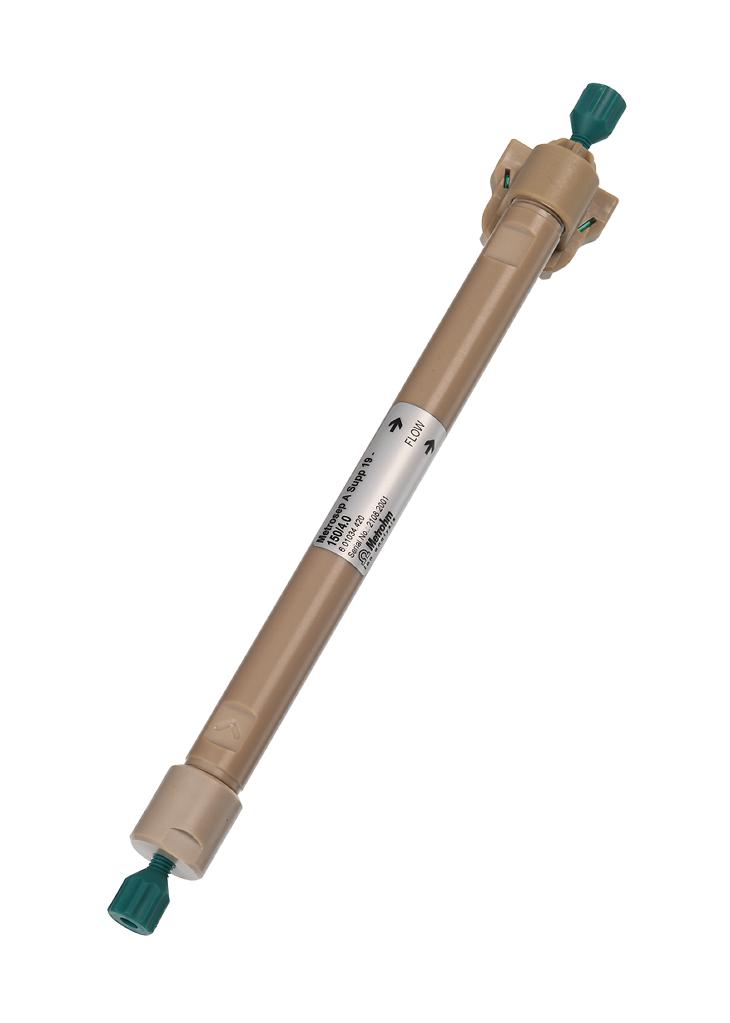


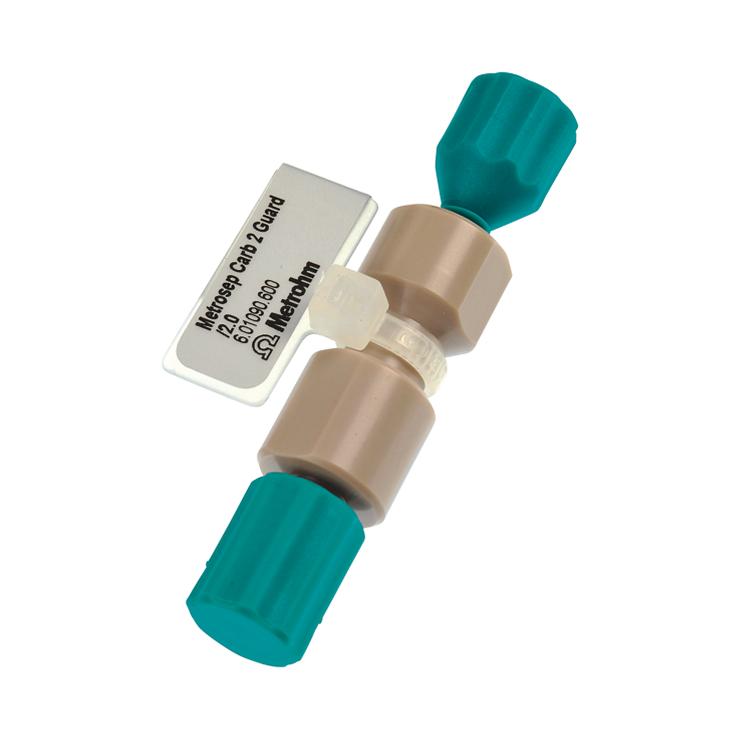



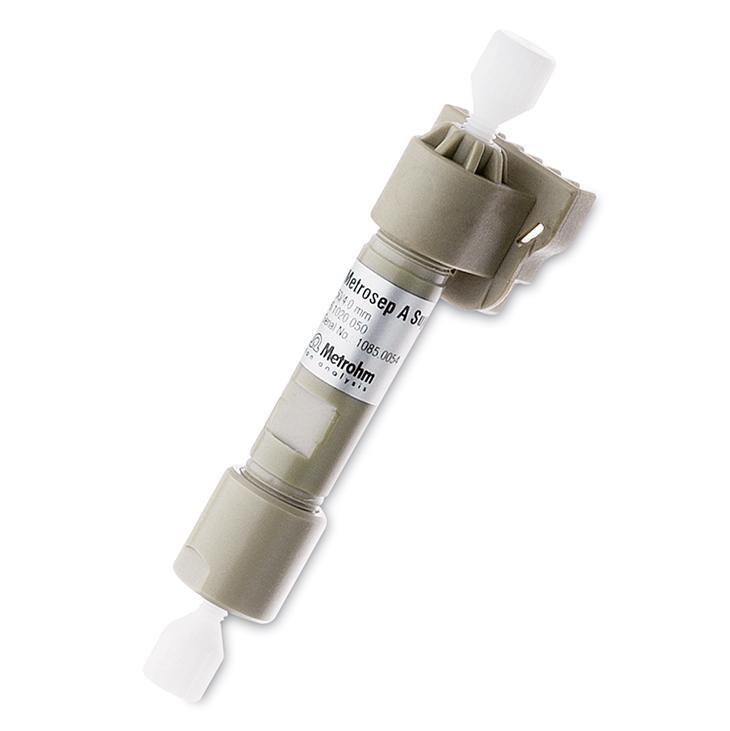


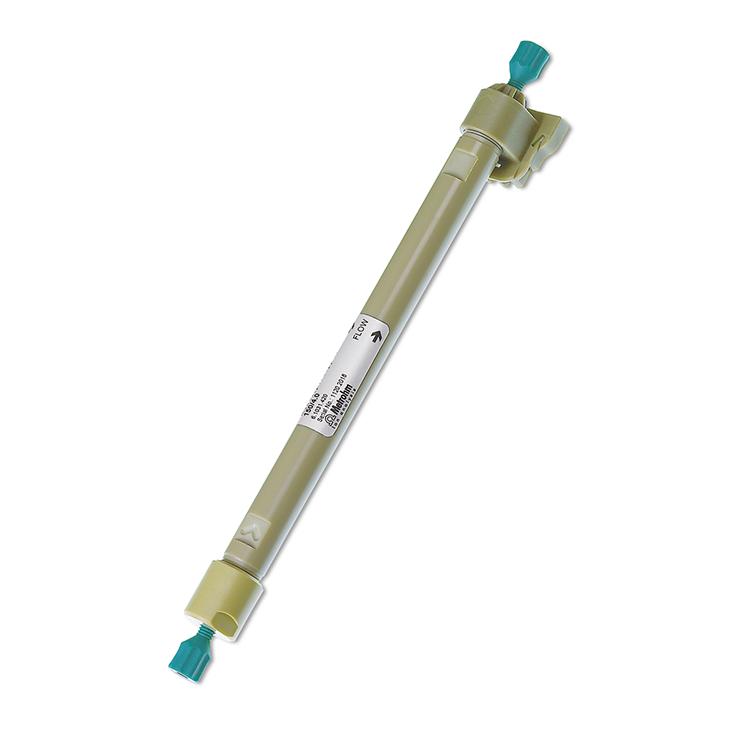


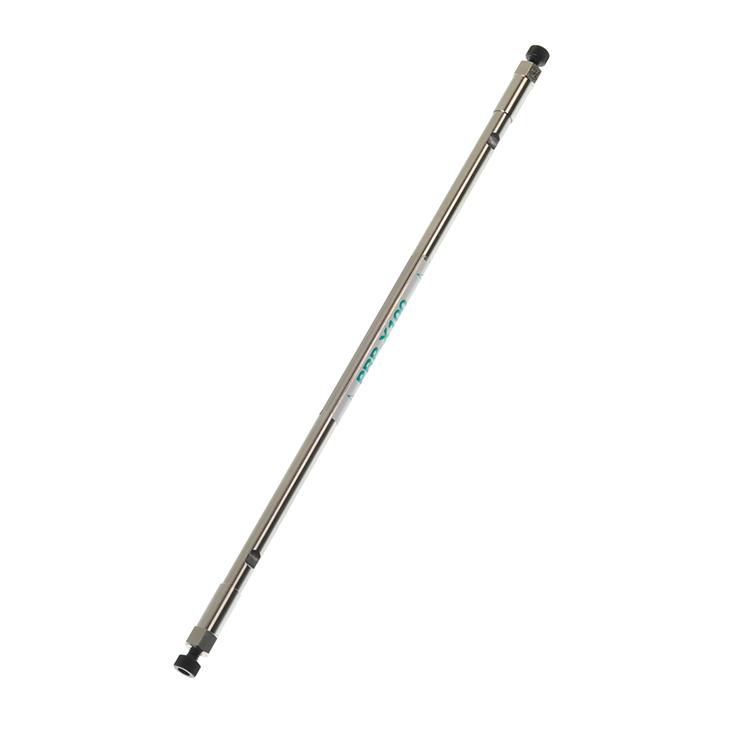

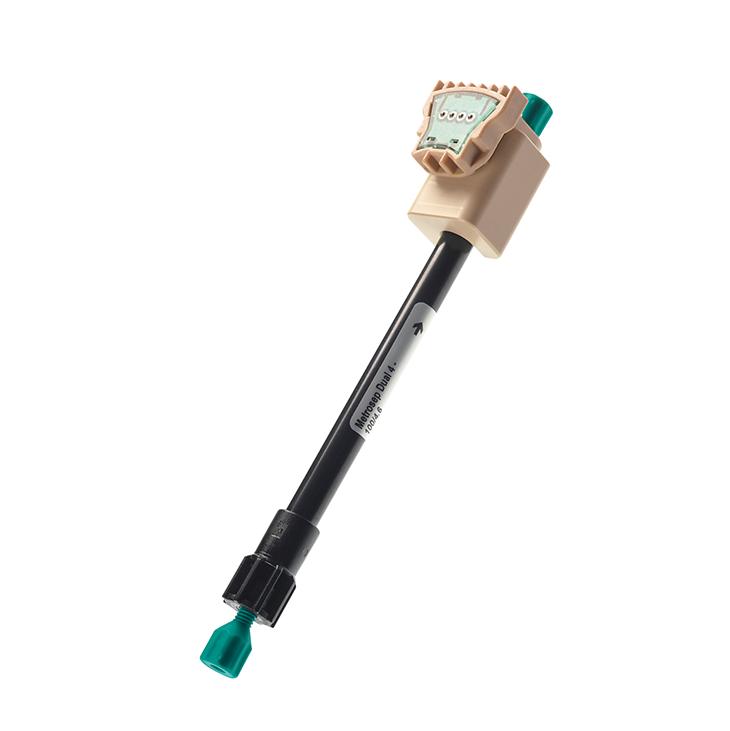


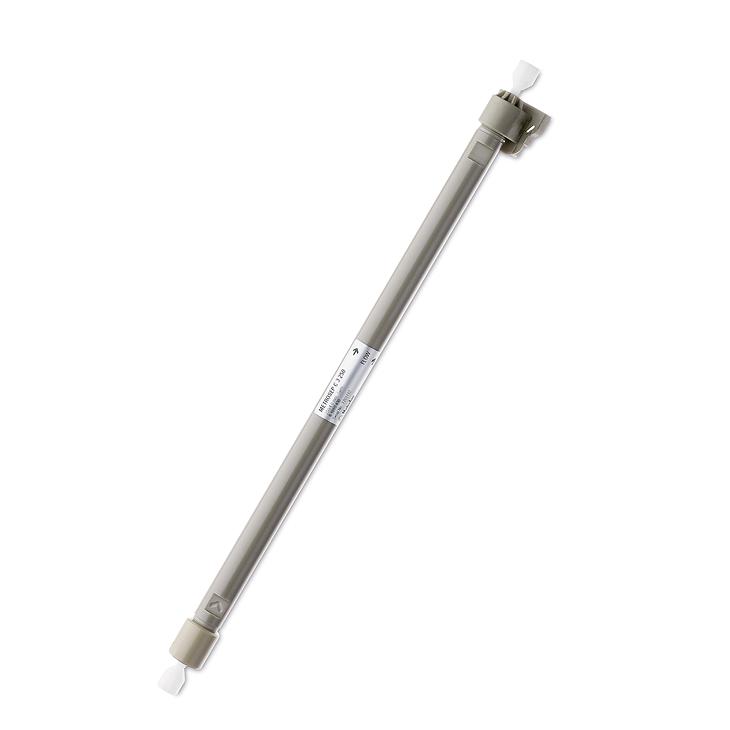


2.1056.0930
OMNIS Waste Collector UnitThe OMNIS Waste Collector Unit is used to collect the liquid streams entering the waste. The collector's transparent housing allows for visual flow verification of up to 4 liquid streams. If more than 4 channels are fed into the drainage system, then an additional waste collector can be installed on the reagent organizer.Specifications:- Number of channels: 4- Transparent design for visual flow verification
6.01532.110
Transfer tubing 10 mL, FEP, M6Transfer tubing 10 mL, FEP, M6 for installation in the MISP unit for the transfer or short-term storage of liquids. Prevents contamination of the dosing unit.FEP tubing is chemically inert and flexible. It has a larger inner diameter than capillaries, which means that larger liquid volumes can be conveyed faster.Typical application:Preconcentration technique (MiPCT)Dilution technique (MIDT)
6.01532.120
Transfer tubing 10 mL, PEEK, OD 1/8"Transfer tubing 10 mL, PEEK, OD ⅛" for installation in the MISP unit for the transfer or short-term storage of liquids. Prevents contamination of the dosing unit.PEEK tubing is chemically inert and serves as an alternative to PTFE (FEP/PFA) tubing in order to prevent possible fluoride contamination. It has a larger inner diameter than capillaries, which means that larger liquid volumes can be conveyed faster.Typical application:Preconcentration technique (MiPCT)
6.01532.130
Transfer tubing 5 mL, FEP, OD 1/8"Transfer tubing 5 mL, OD 1/8" for installation in the MISP unit for the transfer or short-term storage of liquids. Prevents contamination of the dosing unit.FEP tubing is chemically inert and flexible. It has a larger inner diameter than capillaries, which means that larger liquid volumes can be conveyed faster.Typical application:Preconcentration technique (MiPCT and MiPCT-ME)Dilution technique (MIDT)
6.01532.140
Transfer tubing LQH, FEP, OD 1/8"Transfer tubing LQH, FEP, OD 1/8" for installation in the MISP unit for the transfer or short-term storage of liquids. Prevents contamination of the dosing unit.FEP tubing is chemically inert and flexible. It has a larger inner diameter than capillaries, which means that larger liquid volumes can be conveyed faster.Typical application:Dilution technique (MIDT)
6.01562.100
Transfer capillary 2 mL, PEEKTransfer capillary, 2 ml, PEEK for installation in the MISP unit for the transfer or short-term storage of liquids. Prevents contamination of the dosing unit.PEEK tubing is chemically inert and serves as an alternative to PTFE (FEP/PFA) tubing in order to prevent possible fluoride contamination. It has a larger inner diameter than capillaries, which means that larger liquid volumes can be conveyed faster.Typical application:Partial Loop injection Technique (MiPT)Preconcentration technique (MiPCT)
6.01602.100
Bottle cap GL 45, 2 x M6, UNF 10/32Bottle cap GL 45 for eluent, regenerant, reagent, and rinsing bottles, with connectors for the adsorber tube and the aspiration tubing.
6.01602.110
Bottle cap S 40, 2x M6, UNF 10/32Cap S 40 for 10 L containers.
6.01608.000
Bottle PP, 2 L, GL 45Bottle 2 L (PP) designed for OMNIS Reagent Organizer, with volume indication for eluent, regenerant, reagent, and rinsing solutions.
6.01803.110
PTFE capillary RO – PP, 900/0.5 mmPre-cut PTFE capillary with identification label for OMNIS IC
6.01803.120
PEEK capillary INJ – MFM/WC, 950/0.75 mmPre-cut PEEK capillary with identification label for OMNIS IC
6.01805.400
FEP tubing M6, 1/8" x 1.59 mm, 3 m6.01805.500
FEP tubing 1/8" RO – DEG, 1,́200 mmPre-cut FEP tubing with identification label for OMNIS IC
6.01808.000
Drain tubing connector, PP, 2 x 7-8 mmConnector for drain tubing.
6.01808.010
Y tubing connector, PP, 3 x 7-8 mmConnector for drain tubing.
6.01808.020
L tubing connector, PP, 2 x 7-8 mmConnector for drain tubing.
6.01808.030
T tubing connector, PP, 3 x 7–8 mmConnector for drain tubing.
6.01808.100
Drain tubing fixation, 7-8 mmPractical tubing fixation for the reagent organizer, providing secure guidance of the drain tubing through the IC instrument.
6.01810.000
Knurled nut M3, PC/PBTMounting fixture for the installation of the preheating cartridge and PCR cartridge on the OMNIS IC column tray. Provides secure and organized integration of the cartridges within the system setup.
6.01815.000
Spiral-band, 3-15 mm, 0.5 mSpiral band for holding together different tubings or cables.
6.01816.000
Drain tube, 7/9 mm, 1 mSilicone drain tube
6.01826.010
Pump tubing, ID 0.5 mm, orange - yellowPump tubing with an inner diameter of 0.5 mm for use with the Peristaltic Pump Unit in the OMNIS IC system. The tubing enables controlled and reliable transport of liquids for examples for dialysis, suppressor regeneration, or PCR solutions. It is designed for consistent flow performance during operation. Its material properties support stable functioning under routine analytical conditions.
6.01826.020
Pump tubing, ID 1.0 mm, white - whitePump tubing with an inner diameter of 1.0 mm for use with the Peristaltic Pump Unit in the OMNIS IC system. The tubing enables controlled and reliable transport of liquids for examples for sample solutions. It is designed for consistent flow performance during operation. Its material properties support stable functioning under routine analytical conditions.
6.01831.100
PEEK capillary DEG – HPP, 250/0.75 mmPre-cut PEEK capillary with identification label for OMNIS IC
6.01831.110
PEEK capillary HPP – INJ, 160/0.5 mmPre-cut PEEK capillary with identification label for OMNIS IC
6.01831.140
PEEK capillary INJ – COL, 180/0.18 mmPre-cut PEEK capillary with identification label for OMNIS IC
6.01831.150
PEEK capillary MCS – COND, 120/0.18 mmPre-cut PEEK capillary with identification label for OMNIS IC
6.01831.160
PEEK capillary PA – INJ, 180/0.5 mmPre-cut PEEK capillary with identification label for OMNIS IC
6.01831.170
PEEK capillary INJ – COL, 540/0.18 mmPre-cut PEEK capillary with identification label for OMNIS IC
6.01831.180
PEEK capillary INJ – COL, 280/0.18 mmPre-cut PEEK capillary with identification label for OMNIS IC
6.01831.190
PEEK capillary COND – MFM/WC, 400/0.18 mmPre-cut PEEK capillary with identification label for OMNIS IC
6.01831.200
PEEK capillary COL - COND, 350/0.18 mmPre-cut PEEK capillary with identification label for OMNIS IC
6.01831.210
PEEK capillary PP – SAMPLE IN, 400/0.5 mmPre-cut PEEK capillary with identification label for OMNIS IC
6.01831.220
PEEK capillary FILTRATE OUT – INJ, 400/0.5 mmPre-cut PEEK capillary with identification label for OMNIS IC
6.01831.230
PEEK capillary, 1000/0.75 mmPre-cut PEEK capillary for OMNIS IC
6.01831.240
PEEK capillary, 1400/0.75 mmPre-cut PEEK capillary for OMNIS IC
6.01831.250
PEEK capillary INJ – INJ, 250/0.18 mmPre-cut PEEK capillary with identification label for OMNIS IC
6.01831.260
PEEK capillary INJ – INJ, 250/0.5 mmPre-cut PEEK capillary with identification label for OMNIS IC
6.01831.270
PEEK capillary PP – SAMPLE IN, 600/0.5 mmPre-cut PEEK capillary with identification label for OMNIS IC
6.01831.280
PEEK capillary SAMPLE OUT – PP, 600/0.5 mmPre-cut PEEK capillary with identification label for OMNIS IC
6.01831.290
PEEK capillary DD/PP – DIAL. IN, 750/0.5 mmPre-cut PEEK capillary with identification label for OMNIS IC
6.01831.300
PEEK capillary DIALYSATE OUT – INJ, 400/0.25 mmPre-cut PEEK capillary with identification label for OMNIS IC
6.01831.310
PEEK capillary PLVL – HPP, 140/0.75 mmPre-cut PEEK capillary with identification label for OMNIS IC
6.01831.320
PEEK capillary DEG – PLVL, 140/0.75 mmPre-cut PEEK capillary with identification label for OMNIS IC
6.01834.010
FEP tubing M6 with filter, 0.27 mFEP aspiration tubing with pre-installed particle filter (pore size 27 µm) for the 6.01608.000 bottle PP, 2 L, GL 45.
6.01903.100
Stirring bar, elliptical, 32 mmMagnetic stirrer in tablet form to reduce possible abrasion on the supply bottle (6.01608.000 bottle PP, 2 L, GL 45).
6.02006.100
MISP base plateBase plate for fastening T connectors in the OMNIS MISP Unit.
6.02006.110
MISP holder, trap columnHolder for fastening trap columns in the OMNIS MISP Unit.
6.02006.120
Holder, fixation barHolder for fastening T connectors on the fixation bar in the OMNIS IC.
6.02009.000
Volume sensor holder, container 10 LHolder for 10 L container with integrated volume sensor.
6.02027.000
Clip cover, side panel, 2 pcsClip for vertical fastening of capillaries and tubing in the OMNIS IC.Quantity: 2 pieces
6.02027.010
Clip COL, 3 x OD 1/16"Clip for fastening PEEK capillaries in the OMNIS Column Thermostat Unit.
6.02027.020
Clip COL, OD 1/16"Clip for fastening PEEK capillaries in the OMNIS Column Thermostat Unit.
6.02027.030
Clip fixation bar, 2 x OD 1/16"Clip for fastening the inlet capillary to the column when using the OMNIS Column Holder Unit.
6.02027.040
Clip cover, fixation bar, 2 pcsClip for horizontal fastening of capillaries and tubing in the OMNIS IC.Quantity: 2 pieces
6.02027.050
Clip 10 mm, fixation bar, 2 pcsClip for horizontal fastening of accessories in the OMNIS IC.Quantity: 2 pieces
6.02040.000
OMNIS IC AS TrayTray for accommodating sample racks in the OMNIS IC Autosampler. The tray provides a stable base for secure placement and precise positioning of sample racks during automated sampling. Its geometry is designed to ensure stable handling and reliable operation within routine analytical workflows. The tray can be seamlessly integrated into the autosampler system and easily removed to allow convenient loading and preparation of sample racks directly on the laboratory bench before placement in the autosampler.
6.02040.010
OMNIS IC AS COOL TrayCooled tray for accommodating sample racks in the OMNIS IC Autosampler. The tray maintains samples at a controlled low temperature, supporting the analysis of temperature-sensitive compounds. Rack positioning and handling correspond to the standard AS Tray, ensuring reliable and precise operation during automated sampling. The tray can be seamlessly integrated into the autosampler system and can be easily removed to allow convenient loading and preparation of sample racks directly on the laboratory bench before placing in the autosampler.
6.02041.500
OMNIS sample rack 24 x 10 mLSample rack for holding 24 x 10 mL vials in the OMNIS IC Autosampler. Rack geometry is matched to vial dimensions to ensure precise positioning and stable handling during automated sampling. The racks can be seamlessly mounted on the AS/ASCOOL Tray.
6.02041.510
OMNIS sample rack 40 x 5 mLSample rack for holding 40 x 5 mL vials in the OMNIS IC Autosampler. Rack geometry is matched to vial dimensions to ensure precise positioning and stable handling during automated sampling. The racks can be seamlessly mounted on the AS/ASCOOL Tray.
6.02041.520
OMNIS sample rack 48 x 11 mmSample rack for holding 48 x 11 mm OD vials in the OMNIS IC Autosampler. Rack geometry is matched to vial dimensions to ensure precise positioning and stable handling during automated sampling. The racks can be seamlessly mounted on the AS/ASCOOL Tray.
6.02041.530
OMNIS sample rack 6 x 50 mLSample rack for holding 6 x 50 mL bottles in the OMNIS IC Autosampler. Rack geometry is matched to vial dimensions to ensure precise positioning and stable handling during automated sampling. The racks can be seamlessly mounted on the AS/ASCOOL Tray.
6.02041.540
OMNIS sample rack 12 x 22 mmSample rack for holding 12 x 22mm OD vials in the OMNIS IC Autosampler. Rack geometry is matched to vial dimensions to ensure precise positioning and stable handling during automated sampling. The racks can be seamlessly mounted on the AS/ASCOOL Tray.
6.02041.550
OMNIS sample rack, 2 x 200 mLSample rack for holding 2 x 200 mL bottles in the OMNIS IC Autosampler. Rack geometry is matched to vial dimensions to ensure precise positioning and stable handling during automated sampling. The racks can be seamlessly mounted on the AS/ASCOOL Tray
6.02050.000
Bottle holder, ROBottle holder for Eluent bottle PP 2 L on OMNIS IC Reagent Organizer.
6.02050.010
Bottle fixation ROBottle fixation for Eluent bottle PP 2 L on OMNIS IC Reagent Organizer.
6.02050.100
Bottle holder RO, universalBottle holder for glass bottles 1 L or 2 L on OMNIS Reagent Organizer.
6.02050.200
Bottle retainer, ROLCBottle retainer for Eluent bottle PP 2 L on OMNIS IC Reagent Organizer Liquid Control.
6.02050.210
Container 10 L fixationContainer Fixation onto Volume Sensor Holder, Container 10 L.
6.02061.000
Reagent OrganizerOrganizer for reagent and eluent bottles for OMNIS IC instruments.
6.02061.100
Base plateBase plate for OMNIS IC modules and preconfigured instruments (OMNIS IC S, M, L).
6.02061.110
Drip collector, Base plateIntelligent drip collector for Base plate.
6.02061.120
Drip collector, ExtensionIntelligent drip collector for Extension.
6.02061.130
Drip collector, UnitDrip collector for Unit, mounted on fixation bar, Extension.
6.02061.200
End plate, Extension/ASEndplate between Extension or Autosampler and Reagent Organizer or Reagent Organiser Liquid Control.
6.02102.100
Remote cable, PL/open, 2mRemote cable to connect the OMNIS with third party instruments, e.g., mass spectrometers.
6.02104.100
Sensor cable plug/plug, 3 mSensor cable to connect the Volume Sensor Holder, Container 10 L to the OMNIS IC.
6.02107.000
Network cable, 1 mNetwork cable (1 m) for connecting one OMNIS instrument to an Ethernet Router, Ethernet Switch or local network
6.02107.010
Network cable, 2 mNetwork cable (2 m) for connecting one OMNIS instrument to an Ethernet Router, Ethernet Switch or local network
6.02107.040
Network cable, 0.3 mNetwork cable (0.3 m) for connecting one OMNIS instrument to an Ethernet Router, Ethernet Switch or local network
6.02122.120
Power cord, C13/14, 0.35 mPower cord (0.35 m) for connecting OMNIS Extension Modules
6.02122.130
Power cord, C13/14, 1 mPower cord (1 m) for connecting OMNIS Extension Modules
6.02601.060
Fixation bar, ExtensionFixation bar for OMNIS IC Extention Module.
6.02603.000
Fall prevention fixture, base plateFall prevention fixture for fastening the OMNIS IC on the table. Useful for the installation, e.g., on an oil platform, on a ship, in an airplane, in a bus or in earthquake-prone areas.
6.02621.010
Multitool, HPPMulti-function tool for performing maintenance on the OMNIS High-Pressure Pump Unit.
6.02624.100
Sample needle, MF, ID 0.5 mmSample needle for OMNIS IC Autosampler and OMNIS IC Autosampler COOL, metal-free.
6.02705.100
Guide clip, CMClip for guiding capillaries and tubing in the 948 Continuous IC Module, CEP.
6.02741.000
Piston seal, PE, orangePiston seal for OMNIS IC High-Pressure Pump Unit.
6.02741.030
Maintenance set, piston wash seal, 2 pcsMaintenance set for piston seal wash of the OMNIS IC High-Pressure Pump Unit.
6.02743.017
Vial PS, 10 mL, 200 piecesDisposable sample vials with volume indication produced from high-quality polystyrene (PS), specifically designed for use with the OMNIS IC Autosamplers. With a volume of 10 mL and an optimized geometry (flat-bottom), these vials ensure seamless integration, secure handling, and reliable automation.Produced and packed under cleanroom conditions (cleanroom class 7 according to DIN ISO 14644), Metrohm sample vials are engineered for high-purity applications. They are validated to meet minimal contamination levels, making them ideal for trace analysis in ion chromatography, where even small impurities can affect results.Quantity: 200 pieces
6.02743.020
Vial PS, 5 mL, 2000 piecesDisposable sample vials with volume indication produced from high-quality polystyrene (PS), specifically designed for use with the OMNIS IC Autosamplers. With a volume of 5 mL and an optimized geometry (flat-bottom), these vials ensure seamless integration, secure handling, and reliable automation.Produced and packed under cleanroom conditions (cleanroom class 7 according to DIN ISO 14644), Metrohm sample vials are engineered for high-purity applications. They are validated to meet minimal contamination levels, making them ideal for trace analysis in ion chromatography, where even small impurities can affect results.Quantity: 2000 pieces
6.02743.027
Vial PS, 5 mL, 200 piecesDisposable sample vials with volume indication produced from high-quality polystyrene (PS), specifically designed for use with the OMNIS IC Autosamplers. With a volume of 5 mL and an optimized geometry (flat-bottom), these vials ensure seamless integration, secure handling, and reliable automation.Produced and packed under cleanroom conditions (cleanroom class 7 according to DIN ISO 14644), Metrohm sample vials are engineered for high-purity applications. They are validated to meet minimal contamination levels, making them ideal for trace analysis in ion chromatography, where even small impurities can affect results.Quantity: 200 pieces
6.02743.040
Bottle PP, 200 mLHigh-quality polystyrene (PS) sample vial designed for seamless use with the OMNIS IC Autosampler and for the safe handling and analysis of samples, reagents, and standards. Manufactured and packaged under controlled cleanroom conditions (ISO Class 7 according to DIN EN ISO 14644-1), the vial ensures low contamination levels and dependable performance in routine laboratory workflows.Quantity: 1 piece
6.02743.070
Cap PP, OD 16.6 mm, 2000 piecesCaps for polystyrene sample vials 10 mL made from polypropylene. The caps are produced and packed under cleanroom conditions (cleanroom class 7 according to DIN ISO 14644) and are suitable for high-purity IC applications.Quantity: 2000 pieces
6.02743.077
Cap PP, OD 16.6 mm, 200 piecesCaps for polystyrene sample vials 10 mL made from polypropylene. The caps are produced and packed under cleanroom conditions (cleanroom class 7 according to DIN ISO 14644) and ensure high-purity IC applications.Quantity: 200 pieces
6.02743.080
Cap PP, OD 11.5 mm, 2000 piecesCaps for polystyrene sample vials 5 mL made from polypropylene. The caps are produced and packed under cleanroom conditions (cleanroom class 7 according to DIN ISO 14644) and ensure high-purity IC applications.Quantity: 2000 pieces
6.02743.087
Cap PP, OD 11.5 mm, 200 piecesCaps for polystyrene sample vials 5 mL made from polypropylene. The caps are produced and packed under cleanroom conditions (cleanroom class 7 according to DIN ISO 14644) and ensure high-purity IC applications.Quantity: 200 pieces
6.02743.097
Screw cap with septum, 12 piecesScrew cap with integrated septum designed for the secure storage and handling of samples, standards, and reagents. The septum enables automated sample access while minimizing contamination and evaporation, making it ideal for automated laboratory workflows. Its robust design ensures reliable sealing and dependable performance during sample preparation and analysis.Quantity: 12 pieces
6.02744.000
Needle fixation connectorFixation for sample needle onto the needle drive of the OMNIS IC Autosampler and OMNIS IC Autosampler COOL.
6.02744.010
Flangeless fitting M6, 1/8", 2 pcsFlangeless fitting for 1/8'' tubing.Quantity: 2 pcs
6.02744.020
T connector, M6T connector for 3 M6 tubings.
6.02744.030
T connector, 2 x UNF 10/32, M6T connector for 2 capillaries and 1 M6 tubing.
6.02744.060
Adapter M6 inner / Luer inner, PEEKAdapter for purging the aspiration tube with solution
6.02744.110
Flangeless ferrule for 1/8", PVDF, 4 pcsFlangeless ferrule for 1/8'' tubing.Quantity: 4 pieces
6.02762.100
Dilution vesselMixing vessel for inline dilution for the OMNIS IC Autosampler and OMNIS IC Autosampler COOL.
6.02762.110
Dilution vessel lidLid for the dilution vessel of the OMNIS IC Autosampler or OMNIS IC Autosampler COOL.
6.02765.000
Waste collector, 4 x UNF 10/32Waste collector for up to four waste capillaries.
6.02800.000
Blind Cover UnitBlind cover for an empty unit spot.
6.02816.000
Syringe 20 mL, Luer20 mL syringe made of PP, with luer connector.
6.02824.000
Pump piston, ZrO2, 3.8 mmPump piston for OMNIS IC High Pressure Pump.
6.02824.010
Check valve inlet, PEEKMetal-free check valve for the outlet side of the OMNIS IC High Pressure Pump Unit.
6.02824.020
Check valve outlet, PEEKMetal-free check valve for the outlet side of the OMNIS High-Pressure Pump Unit.
6.02837.030
CO2 Absorber (Tube)CO2 Absorber (Tube) with a Luer adapter; protects reagents and eluents from particles and ensures consistent retention times for CO2-sensitive eluents.
6.02837.040
Filter tubeFilter tube with Luer adapter, protects eluents and reagents from particles.
6.02837.110
CO2 Absorber (Cartridge)Absorber cartridge for removing CO₂ from the air drawn in by the OMNIS MCS unit ensures that the baseline remains stable and consistent.
6.02841.120
Rinse stationRinse station for needle rinsing for the OMNIS IC Autosampler and OMNIS IC Autosampler COOL.
6.02842.010
Coupling nut, Actuator UnitCoupling nut for OMNIS Actuator Unit.
6.02842.020
Connecting piece, OMNIS MSM/SPMConnecting piece with inlets and outlets for OMNIS MSM and SPM.
6.02842.030
Coupling nut, connecting pieceCoupling nut for OMNIS MSM Unit.
6.02842.040
Rotor housingRotor housing to upgrade an OMNIS Actuator Unit into an OMNIS MSM Unit.
6.02845.000
Preheating cartridge ID 0.18 mmCartridge containing the eluent preheating capillary to be mounted in the OMNIS Column Thermostat Unit.
6.02845.100
PCR cartridge, PTFE, ID 0.5 mmCartridge containing the PCR capillary to be mounted in the OMNIS IC Thermostate Unit.
6.02860.000
MFM sensor barSensor bar for OMNIS IC MFM Unit.
6.05000.000
Accessory kit: OMNIS ICOMNIS IC accessory set required for installation, daily work, and maintenance.The set contains the most necessary tools and accessories for simple tasks related to the OMNIS IC device.
6.05000.030
Accessory kit: OMNIS IC M ModuleAccessory set to complete the installation of the OMNIS IC M module.
6.05000.120
Installation kit: OMNIS IC M, cable6.05000.130
Installation kit: OMNIS IC L, cable6.05000.140
Installation kit: AS/AS COOL6.05000.150
Installation kit: AS cable6.05000.160
Installation kit: AS COOL cable6.05331.030
OMNIS IC equip.: UF, PP/DDAccessory set for Ultrafiltration in OMNIS IC: Inline ultrafiltration allows the sample to be separated from contained particles. The main component of the Metrohm Inline Ultrafiltration system is the ultrafiltration cell. The ultrafiltration cell is suitable for sample filtration with high demands on filtration efficiency and sample throughput. This equipment is for the setup with a combination of the Peristaltic Pump Unit and the Dosing Drive Unit.Prerequisites:OMNIS IC S/M/L with OMNIS IC AS/ASCOOL, including:available OMNIS Dosing Drive Unit; available OMNIS Peristaltic Pump Unit channel; available OMNIS MISP Unit; AS/ASCOOL equipped with a switching valve 3/2, UNF;
6.05331.040
OMNIS IC equip.: MIDTAccessory set for dilution in OMNIS IC: This technique allows samples with excessively high ion concentrations or highly concentrated sample matrices to be diluted. The required sample volume is precisely aspirated by the OMNIS Dosing Drive Unit.The sample and the dilution solution are mixed in the dilution station, ensuring the sample is diluted and completely homogenized. Additionally, with the Inline Dilution technique, calibration using a single standard solution is possible.Specifications:Maximum dilution factor: 2000; Accuracy: <1.5% up to DF 100, <2.5% up to DF 1000; Reproducibility (n=9): <1% up to DF 1000; Carry over: < 0.003%; Prerequisites:OMNIS IC S/M/L, including:available OMNIS Dosing Drive Unit; available OMNIS MISP Unit; AS/ASCOOL equipped with:dilution station and; switching valve 3/2, M6;
6.05331.050
OMNIS IC equip.: UF, PP/PPAccessory set for Ultrafiltration in OMNIS IC: Inline ultrafiltration allows the sample to be separated from contained particles. The main component of the Metrohm inline ultrafiltration system is the ultrafiltration cell. The ultrafiltration cell is suitable for sample filtration with high demands on filtration efficiency and sample throughput. This equipment is for the setup with a Peristaltic Pump Unit only.Prerequisites:OMNIS IC S/M/L with OMNIS IC AS/ASCOOL, including:2 available OMNIS Peristaltic Pump Unit channels; available OMNIS MISP Unit;
6.05331.060
OMNIS IC equip.: MIDT-UF, PP/DDAccessory set for the combination of dilution with Ultrafiltration in OMNIS IC: This technique allows samples with excessively high ion concentrations or highly concentrated sample matrices to be diluted. The required sample volume is precisely aspirated by the OMNIS Dosing Drive Unit.Additionally, inline ultrafiltration allows the sample to be separated from the particles it contains. This combined technique allows calibration with only one standard solution.Prerequisites:OMNIS IC S/M/L with OMNIS IC AS/ASCOOL, including:available OMNIS Dosing Drive Unit; available OMNIS Peristaltic Pump Unit channel; available OMNIS MISP Unit; AS/ASCOOL equipped with dilution station and switching valve 3/2, M6;
6.05331.070
OMNIS IC equip.: MiPTAccessory set for Partial Loop Injection in OMNIS IC: With this technique, the 250 μL sample loop can be filled with a defined volume. The OMNIS Dosing Drive Unit, with the attached OMNIS cylinder unit, performs precise dosing steps. The intelligent partial-loop injection technique allows calibration using a single standard solution because the injection volume can be freely selected. The same applies to sample injection: a small injection volume can be chosen for a highly concentrated sample, or a larger one for low-concentration samples.Prerequisites:OMNIS IC S/M/L with OMNIS IC AS/ASCOOL, including:available OMNIS Dosing Drive Unit; available OMNIS MISP Unit;
6.05331.080
OMNIS IC equip.: UF-MiPT, PP/DDAccessory set for the combination of Partial Loop Injection Technique with Ultrafiltration in OMNIS IC: The inline ultrafiltration allows the sample to be separated from contained particles. Additionally, with the partial loop injection, the 250 μL sample loop can be filled with a defined volume of the filtered sample. The OMNIS Dosing Drive Unit, with the attached OMNIS cylinder unit, performs precise dosing steps. This combined technique allows calibration using a single standard solution.Prerequisites:OMNIS IC S/M/L with OMNIS IC AS/ASCOOL, including:available OMNIS Dosing Drive Unit; available OMNIS Peristaltic Pump Unit channel; available OMNIS MISP Unit; AS/ASCOOL equipped with a switching valve 3/2, UNF;
6.05331.090
OMNIS IC equip.: D-INJ, manuallyAccessory set for manual Full Loop Injection in OMNIS IC: With this technique, the sample loop can be filled manually.Prerequisites:OMNIS IC S/M/L
6.05331.120
OMNIS IC equip.: MiPCTAccessory set for Preconcentration Injection in OMNIS IC: With this technique, samples at the ng/L level can be analyzed on the OMNIS IC. Inline Preconcentration uses a preconcentration column instead of a sample loop. When a precise sample volume is transferred to the preconcentration column, the respective ions will be retained. With the injection, the bound ions flow with the eluent onto the separation column. The OMNIS Dosing Drive Unit allows calibration with only one standard solution, as the injection volume can be freely selected. The same applies to sample injection. Prerequisites: OMNIS IC S/M/L with OMNIS IC AS/ASCOOL, including: available OMNIS Dosing Drive Unit ; available OMNIS MISP Unit;
6.05331.130
OMNIS IC equip.: MiPCT-MEAccessory set for Preconcentration Injection with Matrix Elimination in OMNIS IC: With this technique, samples at the ng/L level can be analyzed on the OMNIS IC. Inline Preconcentration uses a preconcentration column instead of a sample loop. When a precise sample volume is transferred to the preconcentration column, the respective ions will be retained. After enrichment of the analytes, the non-ionic components of the sample can be rinsed off the enrichment column with ultrapure water. The non-ionic sample components do not interfere with the detection of the analytes. The OMNIS Dosing Drive Unit allows calibration with only one standard solution, as the injection volume can be freely selected. The same applies to sample injection. Prerequisites: OMNIS IC S/M/L with OMNIS IC AS/ASCOOL, including: available OMNIS Dosing Drive Unit ; available OMNIS MISP Unit;
6.05332.000
OMNIS IC equip.: Container 10 L, LCAccessory set for automatic monitoring of 10 L container.Prerequisites:OMNIS IC with ROLC
6.05332.010
OMNIS IC equip.: Container 10 L, drainAccessory set for connecting drain to 10 L container.Prerequisites:OMNIS IC S/M/L
6.05332.020
OMNIS IC equip.: HPP piston seal wash, DDAccessory set for HPP piston seal wash: The HPP piston seal wash for the OMNIS IC HPP is standard foreseen with a free port on a dosing system on the OMNIS Cylinder Unit. After each sample analysis, the piston is rinsed with a small portion of UPW.When no free Cylinder Unit channel is available, the UPW can alternatively be transferred via a peristaltic pump channel equipped with 601826010 peristaltic pump tubing.Prerequisites:OMNIS IC S/M/L, including:available OMNIS Cylinder Unit port (with UPW as working medium) or; available OMNIS Peristaltic Pump Unit channel;
6.05332.040
OMNIS IC equip.: PP Reg.Accessory set for MSM regeneration with Peristaltic Pump Unit.Prerequisites:OMNIS IC S/M/L, including:available OMNIS Peristaltic Pump Unit channel;
6.05332.050
OMNIS IC equip.: DD Reg.Accessory set for MSM regeneration with Dosing Drive Unit with STREAM setup.Prerequisites:OMNIS IC S/M/L, including:available OMNIS Dosing Drive Unit;
6.05332.060
OMNIS IC equip.: Base plateAccessory set for an OMNIS IC without OMNIS IC AS or ASCOOL: With this equipment, the OMNIS IC (S/M/L) can be provided as a standalone solution without automation below the IC. This equipment is also required when the OMNIS IC is used in combination with an 858 Professional Sample Processor or a 919 IC Autosampler plus.Prerequisites:OMNIS IC S/M/L without AS/ASCOOL automation
6.05332.070
OMNIS IC equip.: PCR, DDAccessory set for PCR in OMNIS IC: PCR-UV/VIS detection is used to photometrically detect analytes through a chemical reaction following chromatographic separation. In the PCR cartridge, the eluent is mixed with a reagent behind the separation column, thereby enabling a specific reaction with the analyte. The eluent-reagent mixture, along with the reacted analytes, is then transported to the UV detector. This set is specific for the PCR application in combination with the dosing drive unit, including an additional bottle for rinsing purposes.Prerequisites:OMNIS IC S/M/L, including:available OMNIS Dosing Drive Unit; available OMNIS Column Thermostat Unit;
6.05332.080
OMNIS IC equip.: EPODAccessory set for automatic eluent production in OMNIS IC.Prerequisites:OMNIS IC S/M/L including:available OMNIS Dosing Drive Unit; OMNIS Reagent Organizer Liquid Control with 2 volume sensors ( 1 for eluent bottle, 1 for concentrate bottle);
6.05332.090
OMNIS IC equip.: Dose-in GradientAccessory set for Dose-in Gradient in OMNIS IC: A gradient is created by mixing different eluents in a mixing ratio that varies over the analysis duration.An OMNIS Cylinder Unit doses a concentrated or diluted eluent into the main eluent stream in a defined ratio. This changes the overall concentration of the mobile phase. The result is optimal separation of all ions within an acceptable analysis time.Prerequisites:OMNIS IC S/M/L, including:available OMNIS Dosing Drive Unit;
6.05332.100
OMNIS IC equip.: DD Reg., RinseAccessory set for MSM regeneration with Dosing Drive Unit without STREAM setup.Prerequisites:OMNIS IC S/M/L, including:available OMNIS Dosing Drive Unit;
6.05332.110
OMNIS IC equip.: PCR, PPAccessory set for PCR in OMNIS IC: PCR-UV/VIS detection is used to photometrically detect analytes through a chemical reaction following chromatographic separation. In the PCR cartridge, the eluent is mixed with a reagent behind the separation column, thereby specifically reacting with the analyte. The eluent-reagent mixture, along with the reacted analytes, is then transported to the UV detector. This set is specific for the PCR application in combination with the peristaltic pump unit.Prerequisites:OMNIS IC S/M/L, including:available OMNIS Peristaltic Pump Unit channel; available OMNIS Column Thermostat Unit;
6.05332.120
OMNIS IC equip.: Two tower setupAccessory set for an OMNIS IC without OMNIS IC AS or ASCOOL: If the OMNIS IC system is to be set up in 2 stacks (two-tower setup), the OMNIS IC must be equipped with a base plate, and the AS/ASCOOL with a reagent organizer.Prerequisites:OMNIS IC S/M/L
6.05332.130
OMNIS IC equip.: AutoSwitchAccessory set for AutoSwitch in OMNIS IC: Many samples require analysis of multiple analytes, such as anions and cations. The OMNIS IC M can be easily upgraded to perform AutoSwitch analysis. This enables automated serial execution, for example, of anion and cation analyses. Automatic switching between different analyses is possible with an additional injector and two 3/2-way valves.Prerequisites:OMNIS IC M, including:available OMNIS Actuator Unit equipped with 6/2 or 7/3 injector (minimum 1 x 7/3 injector is required); available position on the OMNIS Column Thermostat Unit; AS/ASCOOL equipped with 1x switching valve 3/2, M6 and 1x switching valve 3/2, UNF;
6.05801.000
Peristaltic pump channel kitUpgrade kit to extend the OMNIS Peristaltic Pump Unit 1-Channel with an additional pump channel.Prerequisites:2.1056.0010 OMNIS Peristaltic Pump Unit 1-Channel; Info: This upgrade must be installed by an authorized Metrohm service technician.
6.05801.010
Piston wash kitUpgrade kit to extend the OMNIS High-Pressure Pump Unit with piston wash. Piston wash seals are included.Prerequisites:2.1056.0210 OMNIS High-Pressure Pump Unit; 6.02621.010 Multitool, HPP;
6.05801.020
Degasser channel kitUpgrade kit to extend the OMNIS IC Degasser Unit with an additional degasser channel.Prerequisites:OMNIS IC S/M/L, including:2.1056.0010 OMNIS Degasser Unit 1-Channel or; 2.1056.0020 OMNIS Degasser Unit 2-Channel; Info: This upgrade must be installed by an authorized Metrohm service technician.
6.05801.040
Volume sensor, ROLC kitUpgrade kit to extend the OMNIS Reagent Organizer Liquid Control with an additional volume sensor.Prerequisites:2.1056.1200 OMNIS Reagent Organizer Liquid Control; Info: This upgrade must be installed by an authorized Metrohm service technician.
6.05801.050
Door 1 kitSpare part: OMNIS IC Door 1. The necessary hinges are included.
6.05801.060
Door 2 kitSpare part: OMNIS IC Door 2. The necessary hinges are included.
6.05801.070
Door 3 kitSpare part: OMNIS IC Door 3. The necessary hinges are included.
6.05801.080
Door 4 kitSpare part: OMNIS IC Door 4. The necessary hinges are included.
6.05801.090
Magnetic stirrer, ROLC kitUpgrade kit to extend the OMNIS Reagent Organizer Liquid Control with a magnetic stirrer. Prerequisites: 2.1056.1200 OMNIS Reagent Organizer Liquid Control; Info: This upgrade must be installed by an authorized Metrohm service technician.
6.05801.110
Switching valve 3/2, UNF kitThe switching valve 3/2 is a valve with 3 connectors and 2 switching positions. The switching valve 3/2 is available with either a valve attachment with UNF 10/32 connectors or one with M6 connectors.It can be used for the following applications, for example:Anion/cation system: Control as to the channel into which the sample is injected.; Rinsing with 2 different solutions: Control as to which rinsing solution is used.; A maximum of 3 switching valves 3/2 can be installed per sample changer.Note: This upgrade must be installed by an authorized Metrohm service engineer.
6.05801.120
Switching valve 3/2, M6 kitThe switching valve 3/2 is a valve with 3 connectors and 2 switching positions. The switching valve 3/2 is available with either a valve attachment with UNF 10/32 connectors or one with M6 connectors.It can be used for the following applications, for example:Anion/cation system: Control as to the channel into which the sample is injected.; Rinsing with 2 different solutions: Control as to which rinsing solution is used.; A maximum of 3 switching valves 3/2 can be installed per sample changer.Note: This upgrade must be installed by an authorized Metrohm service engineer.
6.05801.130
Barcode scanner kitThe individual sample racks and the AS tray are each identified with a barcode. The barcode reader scans the barcodes. This way, the sample changer detects the number, the position, and the type of the sample racks currently present. In addition, the barcode reader detects empty rack positions.Note: This upgrade must be installed by an authorized Metrohm service engineer.
6.05801.170
Injector 6/2 kitUpgrade kit to extend the OMNIS Actuator Unit with a metal-free 6/2 injector with UNF 10/32 connections. Injector specifications: Bore ID: 0.4 mm; Rotor material: Valcon E; Stator material: PAEK/Carbon Fiber; Maximum pressure: 35 MPa; Prerequisites:210560410 OMNIS Actuator Unit Info: This upgrade must be installed by an authorized Metrohm service technician.
6.05801.180
Injector 7/3 kitUpgrade kit to extend the OMNIS Actuator Unit with a metal-free 7/3 injector with UNF 10/32 connections. Injector specifications: Bore ID: 0.4 mm; Rotor material: Valcon E; Stator material: PAEK/Carbon Fiber; Maximum pressure: 35 Mpa; Prerequisites: 2.10560.410 OMNIS Actuator Unit Info: This upgrade must be installed by an authorized Metrohm service technician.
6.05801.190
Injector 4/2, 0.25 µl kitUpgrade kit to extend the OMNIS Actuator Unit with a metal-free 4/2, 0.25µL internal loop injector with UNF 10/32 connections.Injector specifications:Bore ID: 0.4 mm; Rotor material: Valcon E; Stator material: PAEK/Carbon Fiber; Maximum pressure: 24 MPa; Prerequisites:210560410 OMNIS Actuator UnitInfo: This upgrade must be installed by an authorized Metrohm service technician.
6.05801.200
Injector 4/2, 1.0 µl kitUpgrade kit to extend the OMNIS Actuator Unit with a metal-free 4/2, 1.0 µL internal loop injector with UNF 10/32 connections. Injector specifications: Bore ID: 0.4 mm; Rotor material: Valcon E; Stator material: PAEK/Carbon Fiber; Maximum pressure: 24 MPa; Prerequisites: 210560410 OMNIS Actuator Unit Info: This upgrade must be installed by an authorized Metrohm service technician.
6.05801.210
Injector 8/2 kitUpgrade kit to extend the OMNIS Actuator Unit with a metal-free 8/2 injector with UNF 10/32 connections. Injector specifications: Bore ID: 0.4 mm; Rotor material: Valcon E; Stator material: PAEK/Carbon Fiber; Maximum pressure: 35 Mpa; Prerequisites: 210560410 OMNIS Actuator Unit Info: This upgrade must be installed by an authorized Metrohm service technician.
6.05801.220
Injector 10/2 kitUpgrade kit to extend the OMNIS Actuator Unit with a metal-free 10/2 injector with UNF 10/32 connections.Injector specifications:Bore ID: 0.4 mm; Rotor material: Valcon E; Stator material: PAEK/Carbon Fiber; Maximum pressure: 35 Mpa; Prerequisites:210560410 OMNIS Actuator UnitInfo: This upgrade must be installed by an authorized Metrohm service technician.
6.05801.230
Selector 10/1, LP kitUpgrade kit to extend the OMNIS Actuator Unit with a metal-free 10/1 Selector, low-pressure with UNF 10/32 connections. Injector specifications: Bore ID: 0.75 mm; Rotor material: Valcon E; Stator material: PPS; Maximum pressure: 2 Mpa; Prerequisites: 210560410 OMNIS Actuator Unit Info: This upgrade must be installed by an authorized Metrohm service technician.
6.05801.240
Selector 10/1, HP kitUpgrade kit to extend the OMNIS Actuator Unit with a metal-free 10/1 Selector, low-pressure with UNF 10/32 connections.Injector specifications: Bore ID: 0.4 mm; Rotor material: Valcon E; Stator material: PAEK/Carbon Fiber; Maximum pressure: 35 Mpa; Prerequisites:210560410 OMNIS Actuator UnitInfo: This upgrade must be installed by an authorized Metrohm service technician.
6.05801.250
Dilution station kitThe dilution station is used for automatic dilution of samples. A defined amount of the concentrated sample is precisely measured by an OMNIS Dosing Drive Unit. The concentrated sample is conveyed to the dilution vessel with the required volume of the dilution solution. The built-in magnetic stirrer mixes the concentrated sample and the dilution solution evenly. The diluted sample is then transferred through the sample outlet into the sample path.Metrohm recommends using the following stirring bar:Stirring bar / 8 x 3 mm (6.1903.000); The dilution station is equipped with an overflow. The liquid in the overflow is collected in the drip collector, runs from there to the leak sensor, and is then fed into the drainage tubing system.A maximum of 1 dilution station can be installed per sample changer. If contaminated, the dilution vessel can be cleaned or replaced.Note: This upgrade must be installed by an authorized Metrohm service engineer.
6.05801.260
Drain kit, ASDrain kit to replace the drain tubing and connections in the OMNIS IC Autosampler Module.Prerequisites: 2.1054.0010 OMNIS IC Autosampler Module
6.05801.270
Drain kit, AS COOLDrain kit to replace the drain tubing and connections in the OMNIS IC Autosampler COOL.Prerequisites:2.1054.0020 OMNIS IC Autosampler Module COOL
6.05801.280
Drain kit, SDrain kit to replace the drain tubing and connections in the OMNIS IC S. Prerequisites: 2.1050.00x0 OMNIS IC S
6.05801.290
Drain kit, MDrain kit to replace the drain tubing and connections in the OMNIS IC M.Prerequisites:2105100x0 OMNIS IC M
6.05801.310
Drain kit, LDrain kit to replace the drain tubing and connections in the OMNIS IC L.Prerequisites:2105200x0 OMNIS IC L
6.05801.330
Mobile device holder kitUpgrade kit to extend the OMNIS IC S/M/L with a mobile device holder.Prerequisites:OMNIS IC S/M/LInfo: This upgrade must be installed by an authorized Metrohm service technician.
6.2743.100
Vials PP, 0.7 ml, U-shape, 1000 piecesMaximize sample recovery with this 0.7 mL vial designed for low-volume analytical applications. The vial features a low-dead-volume insert design that enables efficient sample extraction while minimizing waste. Quantity: 1000 pieces
6.2743.107
Vials PP, 0.7 ml, U-shape, 100 piecesMaximize sample recovery with this 0.7 mL vial designed for low-volume analytical applications. The vial features a low-dead-volume insert design that enables efficient sample extraction while minimizing waste. Quantity: 100 pieces
6.2743.110
Vials PP, 0.3 ml, V-shape, 1000 piecesMaximize sample recovery with this 0.3 mL vial designed for low-volume analytical applications. The vial features a low-dead-volume insert design that enables efficient sample extraction while minimizing waste. Quantity: 1000 pieces
6.2743.117
Vials PP, 0.3 ml, V-shape, 100 piecesMaximize sample recovery with this 0.3 mL vial designed for low-volume analytical applications. The vial features a low-dead-volume insert design that enables efficient sample extraction while minimizing waste. Quantity: 100 pieces
6.2743.120
Snap cap with red/white septum, 1000 piecesSnap cap with septum for 11 mm vials. Provides reliable sealing and broad chemical compatibility for routine laboratory analysis Quantity: 1000 pieces
6.2743.127
Snap cap with blue septum, 100 piecesSnap cap with septum for 11 mm vials. Provides reliable sealing and broad chemical compatibility for routine laboratory analysis Quantity: 100 pieces
6.7303.100
Vials glass, 1.8 ml, U-shape, 100 piecesMaximize sample recovery with this universal 1.8 mL snap ring vial designed for low-volume analytical applications. Quantity: 100 pieces
6.7303.110
Snap cap with red septum, 100 piecesSnap cap with septum for 11 mm vials. Provides reliable sealing and broad chemical compatibility for routine laboratory analysis. Quantity: 100 pieces
BWT-840000961
Raman Video Micro-Sampling System (785 nm)Video microscope sampling system for use with B&W Tek's lab and industrial Raman probes. Includes a 20x objective at a working distance of 16 mm. Offers manual rough and fine adjustment on the X, Y, and Z-axes, coaxial LED illuminator for target alignment, video camera for sample observation, and is compatible with standard microscope objectives. Probe not included, available separately. 785 nm configuration.BAC151C-785
DRP-CAST
μStat Cable connector for Screen-Printed ElectrodesConnects any DropSens equipment with DropSens Screen-Printed Electrodes
DRP-CNFSOL-1ML
Installation Instruction for ProfIC Vario 1 AnionCarbon Nanofibres Solution produced via the catalytic carbon vapour deposition process. The manufacturing processes provide a highly graphitized material without amorphous carbon – Available in 1.0 mL and 5.0 mL.
DRP-FLWCL
Flow Cell for Screen-Printed ElectrodesMethacrylate wall-jet Flow-Cell for FIA. Suitable to be used with standard format Screen-Printed Electrodes with the electrochemical cell in the middle of the strip. Closing system with powerful magnets Fittings included.
EC.Raman.Battery
Metrohm Hyphenated EC-Raman Battery SolutionAn Autolab modular PGSTAT302N with an Electrochemical Impedance Spectroscopy (EIS) module installed and a B&W Tek i-Raman Plus 532 H System are the foundation of this system. Depending on your cell size and design you can add either a B&W Tek Raman Video Micro-Sampling System (532 nm), or the B&W Tek Raman Probe Holder.Get ready to track age-induced structural changes, electrolyte decomposition, and solid electrolyte interphase (SEI) formation with your EC-Raman Battery Solution.It is easy to get started, see instant results, all with an instrument you can upgrade as your research progresses.• Two editable hyphenated EC-Raman procedures for the NOVA software as well as the BWSpec software for extended data analysis.• An electrochemical workstation with high accuracy EIS.• Future-proof your research with the ability to add up to 7 additional modules post-installation.Choose, depending on your cell size, either a B&W Tek Raman Video Microsampling System (532 nm), or the B&W Tek Raman Probe Holder.B&W Tek Raman Video Microsampling System (532 nm) can accommodate cells up 30 mm high.B&W Tek Raman Probe Holder can accommodate large battery-dedicated EC-Raman cells.
DRP-BICAST
μStat Cable connector for Dual Screen-Printed ElectrodesConnects any DropSens equipment with DropSens Dual Screen-Printed Electrodes
DRP-CNTSOL-0.5ML
-COOH funcionalized Multi-Walled Carbon Nanotubes SolutionCarbon nanotubes are produced via CVD and purified to remove free amorphous carbon deposits and catalyst metallic particles. They are functionalized with -COOH groups - Available in 1.0 mL and 5.0 mL.
EC.Raman.Corrosion.Explorer
Metrohm Hyphenated EC-Raman Explorer Corrosion SolutionIncludes an Autolab modular PGSTAT302N with an Electrochemical Impedance Spectroscopy (EIS) module installed, a B&W Tek i-Raman Plus 532 H System, a B&W Tek Raman Video Microsampling System (532 nm) and an Autolab Trigger cable.Ready when you are, the EC-Raman Explorer Corrosion Solution is easy to use. Get started quickly with a versatile potentiostat/galvanostat that can be expanded as your research develops.• Two editable hyphenated EC-Raman procedures for the NOVA software as well as the BWSpec software for extended data analysis.• An electrochemical workstation with high accuracy EIS.• Future-proof your research with the ability to add up to 7 additional modules post-installation.• 532 nm laser excitation for higher Raman signal• Visual surface inspection with the microsampling system
DRP-CABSTAT1
μStat 8000(P)/4000(P) one node cable connector for conventional electrodesConnects individual nodes of the μStat 8000(P)/4000(P) to conventional electrodes
DRP-FLWCL-PEEK
Flow Cell in PEEK for Screen-Printed ElectrodesPEEK wall-jet Flow-Cell for FIA. Suitable to be used with standard format Screen-Printed Electrodes with the electrochemical cell in the middle of the strip. Closing system with powerful magnets. Fittings included.
DRP-GPHSOL-1ML
Graphene SolutionGraphene Solution - Available in 1.0 mL and 5.0 mL.
EC.Raman.ECAT.Explorer
Metrohm Hyphenated EC-Raman Explorer Electrocatalysis SolutionIncludes an Autolab modular PGSTAT302N with an Electrochemical Impedance Spectroscopy (EIS) module installed, a B&W Tek i-Raman Plus 532 H System, a B&W Tek Raman Video Microsampling System (532 nm) and an Autolab Trigger cable.Synchronize your electrochemical measurements with in situ Raman spectroscopy providing:• Simultaneous structural and functional information about your catalysts• Operando measurements allow for tracking changes of the catalyst structure, identifying adsorbed products or intermediates• A powerful modular potentiostat/galvanostat with current ranges from 10 nA to 1 A.• An electrochemical workstation with high accuracy EIS.• Two editable hyphenated EC-Raman procedures for the NOVA software as well as the BWSpec software for extended data analysis.• Future-proof your research with the ability to add up to 7 additional modules post-installation.• 532 nm laser excitation for higher Raman signalAll without complicated setups or complex training.
DRP-CAST8X
μStat 8000(P) cable connector for format 8X Screen-Printed ElectrodesConnects μStat 8000(P) equipment to 8X format Screen-Printed Electrodes


- Vulnerability reporting
Metrohm’s product vulnerability disclosure program provides a channel to report any security vulnerabilities in Metrohm products.
- Técnicas MISP (Metro...Técnicas MISP (Metrohm Inline Sample Preparation)
Frequently asked questions and answers on Metrohm Inline Sample Preparation techniques (MISP).
- Processamento de amo...Processamento de amostras
- Central de Webinars
Encontre webinars sobre titulação Karl Fischer, titulação potenciométrica, cromatografia iônica, espectroscopia de infravermelho próximo, medição de pH, e muito mais.
- Vision Air
Vision Air é a nova solução de software de espectroscopia Vis-NIR de laboratório da Metrohm para análise de rotina, bem como gerenciamento de dados e instrumentos. O Vision Air oferece uma gama completa de funcionalidades, mas sua estrutura intuitiva torna a operação o mais simples possível.
- Especialistas sempre ao seu lado
O Serviço de Qualidade Metrohm simplifica seu trabalho diário no laboratório, tornando-o mais seguro e, acima de tudo, mais previsível.
- Treinamentos
Oferecemos treinamento básico e avançado em nossos escritórios locais, na Metrohm Academy em Herisau ou em suas instalações. Confira os benefícios.
- Todos os nossos Serviços
A Metrohm oferece uma variedade de Serviços que podem ser adquiridos separadamente ou através da inclusão em nossos Acordos de Serviços.
- Acordos de Serviços Metrohm
A Metrohm oferece acordos padrão e prime para manutenção preventiva em ambientes regulados e não regulados. Confie no desempenho do seu instrumento Metrohm durante muitos anos!
- Warranty
The uncompromising quality of our products allows us to offer warranty services that are much above the usual standards.
- Ficha de Segurança de Padrões Químicos
Encontre e baixe as fichas técnicas de segurança do material (MSDS).
- Localizador de certificados
Encontre e baixe certificados para seus instrumentos.
- Localizador de documentos
Encontre e faça o download do folheto, do manual ou das especificações técnicas de seus instrumentos.
- Centro de Suportes a Software
Encontre informações, downloads, patches e pacotes de idiomas para nossos produtos de software.
- Localizador de FAQ
Encontre informações sobre solução de problemas de instrumentos em nossas FAQs.
- Centro de Suporte ao Produto
Encontre informações úteis sobre instalação, operação, manutenção e solução de problemas de instrumentos.
- Serviço de Qualidade Metrohm
Nossa gama de serviços: desde consultoria, suporte de aplicação e treinamento até manutenção preventiva, serviço de reparo, e muito mais.
 Software MIRA Cal
Faça o download do software MIRA Cal e das notas de versão, certificados e relatórios para analisadores Raman portáteis.
- Handheld Raman software
Download the latest software versions of TacticID, MIRA P, MIRA XTR, or NanoRam-1064.
- Software Raman de laboratório
Faça o download das versões mais recentes dos softwares BWSpec, BWID, MISA Cal e Vision.
- NOVA
Faça o download do software de controle NOVA para os equipamentos eletroquímicos Metrohm Autolab.
- Autolab SDK
O Autolab Software Development Kit (Autolab SDK) foi projetado para controlar o instrumento Autolab a partir de diferentes aplicativos externos, como LabVIEW, Visual Basic for Applications (VBA), scripts etc.
- Voltametria
- Voltametria Cíclica
Informações sobre operação, procedimentos de manutenção e solução de problemas para os instrumentos Cyclic Voltammetric Stripping da Metrohm.
- Cromatografia de Íons
- Medição de Estabilidade
- Suporte e Serviços...Suporte e Serviços
página contendo os tipos de serviços oferecidos pela Metrohm Brasil
- tiamo
Encontre informações sobre compatibilidade e faça o download do software de titulação tiamo, bem como dos pacotes de idiomas.
- viva
- Visor de trilha de auditoria para 900 Touch Control
Software visualizador de trilha de auditoria da Metrohm para gerenciamento de arquivos de trilha de auditoria para dispositivos 900 Touch Control e Ti-Touch.
- Metrohm IC Driver 1.0 para OpenLab CDS
O Metrohm IC Driver 1.0 para OpenLab CDS permite a integração de instrumentos Metrohm IC no software OpenLab CDS da Agilent. Saiba mais sobre a compatibilidade com o sistema operacional Windows e baixe a versão mais recente.
- IC Net (não possui mais suporte)
- Metrohm IC Driver 2.2 para Empower
O Metrohm IC Driver 2.2 para Empower 3 permite a integração de instrumentos Metrohm IC no software Empower 3 da Waters. Saiba mais sobre a compatibilidade com o sistema operacional Windows e encontre mais informações nas notas de aplicativos.
- Misa & Misa Cal M
- Vision
Faça o download do software Vision para desenvolvimento de métodos de espectroscopia e encontre informações, certificados e notas de versão.
- Calculadora IP para dispositivos 900 Touch Control e Ti-Touch
- tiBase - Descontinuada
- Software VA Analyzer portátil
Encontre informações sobre compatibilidade e faça o download da versão mais recente do software Portable VA Analyzer.
- Driver IC Metrohm 1.0 para Agilent ICP-MS MassHunter
O driver Metrohm IC para ICP-MS MassHunter permite a integração de instrumentos Metrohm IC no software Agilent ICP-MS MassHunter. Saiba mais sobre a compatibilidade com o Windows OP e encontre mais informações.
- MagIC Net
Encontre informações sobre compatibilidade e faça o download do software de cromatografia de íons MagIC Net, bem como dos pacotes de idiomas.
- StabNet
Encontre informações sobre compatibilidade e faça o download do software StabNet para os instrumentos de medição de estabilidade Rancimat e Thermomat, além de pacotes de idiomas.
- Preparação do recipi...Preparação do recipiente de reação
- Medição de Estabilid...Medição de Estabilidade - FAQs
- Determining the cell...Determining the cell constant
Video tutorial on how to determine the cell constant for measuring the thermostability of PVC.
- Iniciando uma mediçã...Iniciando uma medição de estabilidade de oxidação
Tutorial em vídeo sobre como iniciar uma medição de estabilidade à oxidação usando o Rancimat profissional.
- Limpeza após a deter...Limpeza após a determinação
- Preparação do recipi...Preparação do recipiente de medição
- Manutenção regular...Manutenção regular
- 884 VA profissional:...884 VA profissional: Manutenção de agitadores
- Maintenance of the B...Maintenance of the Bi drop electrode
Step-by-step video instructions on how to maintain your Bi drop electrode (cleaning of the electrode, regeneration of the electrode, and more).
- How to operate the B...How to operate the Bi drop electrode
Step-by-step video instructions explain how to operate the Bi drop electrode (blank determination, sample preparation, long-term storage, and more).
- How to operate viva...How to operate viva
Video tutorials explain how to operate viva, the control and database software for voltammetry and cyclic voltammetric stripping instruments.
- 946 Analisador VA Po...946 Analisador VA Portátil: Configuração e operação
- 884 VA profissional:...884 VA profissional: Instalação do agitador
- Voltametria - FAQs...Voltametria - FAQs
- Manuseio de Mercúrio...Manuseio de Mercúrio
Regras sobre como manusear o mercúrio para proteger a si mesmo e o meio ambiente.
- Como manter o eletro...Como manter o eletrodo auxiliar
- Instalação do eletro...Instalação do eletrodo auxiliar
- Manutenção do eletro...Manutenção do eletrodo de referência
- CVS: Perguntas mais ...CVS: Perguntas mais freqüentes
- DS2500 Analyzer: Mai...DS2500 Analyzer: Maintenance
- DS2500 Analyzer: Ope...DS2500 Analyzer: Operation
- OMNIS NIR Analyzer: Maintenance
Learn how to maintain your OMNIS NIR Analyzer to ensure reliable results.
- IC: Perguntas Freque...IC: Perguntas Frequentes
- MagIC Net - FAQs...MagIC Net - FAQs
- Guia de Cromatografi...Guia de Cromatografia Íons
Videos on maintaining Metrohm Ion Chromatography systems.
- Cromatografia iônica: Intervalos de manutenção
Intervalos de manutenção para instrumentos de cromatografia iônica Metrohm com base no tempo, amostra usada ou tópico.
- Eletrodos: Manutençã...Eletrodos: Manutenção e cuidado
How to clean, prepare, and maintain Metrohm electrodes, e.g., pH electrodes, metal and KF electrodes, surfactant electrodes.
- Condicionando a célu...Condicionando a célula coulométrica
- Titulação Karl Fisch...Titulação Karl Fischer - FAQs
- Condicionando a célu...Condicionando a célula volumétrica
- Determinação do títu...Determinação do título
- Guia Eco Titulador K...Guia Eco Titulador KF : Determinação do fator e da amostra
- Célula de Titulação ...Célula de Titulação Coulométrica
- Como limpar a unidad...Como limpar a unidade de dosagem
- Titulação: Perguntas...Titulação: Perguntas frequentes
- Guia Eco Titrator: I...Guia Eco Titrator: Instalação, calibração e titulação
- Tiamo: Perguntas fre...Tiamo: Perguntas frequentes
- Titulação
- Eletrodos
- Espectroscopia no infravermelho próximo
Step-by-step instructions and videos for operating and maintaining near-infrared spectrometers from Metrohm.
- Titulação Karl Fischer
- Tabela dos Serviços ...Tabela dos Serviços Acreditados
- Consultoria
Nossos especialistas estão disponíveis para responder a qualquer questão que possa surgir durante a vida útil de seu sistema Metrohm – desde o processo de tomada de decisões para aquisição de um novo sistema ou para substituir um sistema que esteja fora de linha de fabricação e com o tempo de suporte encerrado.
- Serviço de reparo
Serviço de Reparo - ajuda rápida quando e onde você precisa de nós
- Serviços Acreditados NBR ISO 17025
Metrohm Brasil, uma empresa Certificada ISO 9001 e Acreditada 17025. Sinônimo de Qualidade e Confiabilidade de Operação.
- Rastreabilidade
Visando assegurar nossa total transparência e confiabilidade dos serviços prestados, a Metrohm Brasil mantem disponíveis os Certificados de Calibração de todos os seus padrões utilizados nos serviço de calibração.
- Manutenção Preventiva - Laboratório e Processos
Manutenção preventiva é a chave para a precisão e longevidade de seu sistema. Escolha o nível de serviço que melhor se adapte às suas necessidades.
- Suporte Remoto
O Suporte Remoto Metrohm está disponível para todos os sistemas Metrohm que são controlados por PC-software. Tudo que você precisa para se beneficiar de nosso novo serviço é uma conexão de internet. Entre em contato com o nosso suporte técnico - 011 3868-6581.
- Serviços em Pipetas marca SOCOREX
Nossa área de Serviços atua com pessoal altamente qualificado na manutenção, ajuste e calibração de equipamentos Socorex e de outros fabricantes de micropipetas e dosadores tanto para modelos atuais quanto para os modelos de gerações anteriores.
- menu teste...menu teste
- Instalação
A instalação adequada e comissionamento de um novo instrumento é fundamental para garantir a qualidade dos resultados analíticos. Aproveite a nossa experiência e selecione o grau do serviço de instalação incluindo a documentação que se adapta às suas necessidades.
- Suporte Técnico
O know-how em Aplicações é o ingrediente chave para utilizar o instrumento em todo seu potencial. Na Metrohm nós ficamos felizes em compartilhar nosso conhecimento com você e oferecer-lhe uma ampla gama de literatura e serviços.
- Garantia
A qualidade intransigente dos nossos produtos nos permite oferecer serviços de garantia que são muito acima dos padrões habituais. Oferecemos os seguintes períodos de garantia para os equipamentos Metrohm, peças sobressalentes, supressores e produtos de software.


- 28 de set.Converting from manual to automatic titration
Free webinar gives best practice guidelines on how to convert from manual to automatic titration. Laboratories can achieve higher accuracy and better reproducibility.
- 10 - 14 jun.Frankfurt, GermanyThe laboratory of the future on display at ACHEMA 2024
Metrohm presents the state-of-the-art in collaborative laboratory robotics: Completely unattended sample preparation and analysis of multiple wet chemistry parameters 24/7!
- 17 de mar.Webinar sobre espectroelectroquímica "Live experiments with real users"
Na terça-feira, 8 de abril, junte-se a nós neste webinar online gratuito, onde utilizadores experientes do SPELEC demonstrarão as suas experiências em tempo real, cada uma centrada numa aplicação espectroelectroquímica diferente. Se alguma vez se perguntou por que razão a espectroelectroquímica é tão amplamente utilizada, este webinar é a sua oportunidade de ver a técnica em ação e interagir com utilizadores reais.
- 24 - 25 mar.Porto (Portugal)5th European Conference on Pharmaceutics
- 17 de jun.PCI · Creative Science Park Aveiro RegionArmy Innovation Day – Inovar com o Exército em Aveiro
- 25 de nov.PCI – Creative Science Park, AveiroWorkshop: Análise rápida e eficiente com o OMNIS NIR da Metrohm
- 9 de jun. de 2025OMNIS estabelece novos marcos
OMNIS estabelece novos marcosRedes cliente/servidor para até 1.000 clientes, trabalho off-line por 96 horas com sincronização automática de seus dados para o servidor e a possibilidade de usar os serviços da Amazon e da Microsoft para hospedar o OMNIS na nuvem são os recursos mais importantes da versão mais recente do OMNIS, o sistema de gerenciamento de dados analíticos da Metrohm.
- 17 de mar. de 2025Digitalize sua titulação!
- 14 de fev. de 2025Novo Centro de Suporte Regional para a África Ocidental, Central e Oriental
A Metrohm Central Africa Ltd. fornece suporte técnico, de aplicação e de serviços para clientes na África Ocidental, Central e Oriental.
- 6 de ago. de 2024O site m-oem atualizado enfatiza os componentes e recursos da Metrohm
A m-oem, divisão OEM da Metrohm, concluiu uma atualização significativa em seu site. Composta pela B&W Tek, DropSens, Innovative Photonic Solutions (IPS) e Metroglas, a m-oem oferece aos clientes os componentes encontrados nos instrumentos analíticos de classe mundial da Metrohm para projetos de integração e personalização.
- 12 de jun. de 2024Análise de potássio com cromatografia iônica de acordo com métodos de teste da USP
Em 2010 a Farmacopeia dos Estados Unidos (USP) iniciou a modernização de suas monografias. Como parte deste esforço, os métodos de teste para a quantificação de potássio incluem agora a cromatografia iónica. A cromatografia iônica é um método alternativo viável para a análise de potássio. Em comparação com outros métodos de análise de potássio, a cromatografia iônica tem a vantagem de analisar múltiplas espécies catiônicas simultaneamente.
- 3 de jun. de 2024Lançamento do Analisador de Processo 2060 VA/CVS
Metrohm Process Analytics lança um analisador VA/CVS on-line para análise de vestígios de metais e aditivos orgânicos.
- 15 de abr. de 2024Lançamento do Analisador de Processo XRF 2060
Metrohm Process Analytics apresenta seu primeiro espectrômetro XRF, especificamente Fluorescência de Raios X Dispersiva em Energia (EDXRF), o Analisador de Processo XRF 2060. Análise on-line confiável de fluorescência de raios X para controle de processos líquidos.
- 20 de mar. de 2024Atualização da biblioteca Raman abrangente da Metrohm
A Metrohm tem o prazer de apresentar a primeira atualização significativa da Biblioteca Raman Abrangente da Metrohm (MCRL). Com mais de 20.000 compostos, a MCRL é a maior biblioteca disponível em qualquer instrumento Raman portátil.
- 9 de abr. de 2024Lançamento OMNIS NIRS
Com o OMNIS NIRS, a plataforma universal para análise química da Metrohm fica mais poderosa: além de todas as variantes de titulação, a espectroscopia no infravermelho próximo, com todas as suas vantagens, agora também está disponível no OMNIS.
- 9 de abr. de 2024Lançamento: OMNIS Coulometer and Sample Robot Oven
Com o lançamento do OMNIS Coulometer, os usuários do OMNIS têm agora à sua disposição o escopo completo de métodos de titulação: titulação potenciométrica, fotométrica e termométrica, titulação Karl Fischer volumétrica e agora também o Karl Fischer coulométrico para determinação de traços de água .
- 18 de mar. de 2024Lançamento do Analisador Raman 2060
A Metrohm Process Analytics lança um analisador Raman on-line para monitoramento e otimização de processos.
- 15 de jan. de 2024Apresentando o Módulo SAVANNAH Raman
SAVANNAH é um módulo Raman totalmente integrado que consiste em uma fonte de laser e um sistema de detecção. Essa tecnologia de ponta permite que nossos clientes incorporem o Raman como uma ferramenta analítica em uma variedade de aplicações em vários setores.
- 14 de nov. de 2023Análise de nitrito em produtos farmacêuticos: monitoramento de um precursor da nitrosamina
As nitrosaminas são cancerígenas e o FDA emitiu orientações sobre o monitoramento de impurezas de nitrosaminas em medicamentos para consumo humano. As nitrosaminas podem se formar quando aminas e nitritos estão presentes. As notas de aplicação gratuitas mostram que a cromatografia iônica (CI) é adequada para a análise de vestígios de nitrito.
- 23 de out. de 2023Lançamento de versões atualizadas do 202X Process Analyzer
Metrohm Process Analytics lança uma versão atualizada do 202X Process Analyzers. Em sua busca contínua pela excelência, a Metrohm introduziu uma variante para serviços pesados (HD), revolucionando a análise de processos para diversos setores.
- 6 de set. de 2023Jun Zhao ganha o Prêmio Williams-Wright 2024 da Coblentz Society
Jun Zhao, da Metrohm Spectro, foi nomeado ganhador do Prêmio Williams-Wright de 2024 da Coblentz Society. A Sociedade concede anualmente o Prêmio Williams-Wright a um espectroscopista que fez contribuições significativas à espectroscopia vibracional enquanto trabalhava na indústria.
- 9 de ago. de 2023Biblioteca abrangente da Metrohm USP Raman
A Metrohm Spectro tem o prazer de anunciar a Biblioteca Comprehensive Metrohm USP Raman em apoio à nossa linha de produtos Raman consolidada e compatível. Para sistemas MIRA P, NanoRam-1064 e i-Raman® com software BWID, é a maior biblioteca interna da USP disponível.
- 12 de jul. de 2023Produtos SERS disponíveis na loja m-oem
m-oem, o negócio OEM da Metrohm, tem o prazer de anunciar que uma nova linha de produtos de materiais de espalhamento Raman aprimorado por superfície (SERS) foi adicionada à loja virtual (www.m-oem.com). Esses materiais SERS melhoram bastante o sinal Raman de dispersores fracos ou materiais que estão presentes em pequenas quantidades para detecção e quantificação consistentes.
- 22 de jun. de 2023Determinação do teor de água em cetonas usando reagentes sem álcool
Os reagentes KF sem álcool permitem que o teor de água seja determinado em cetonas através de uma via diferente e proporção estequiométrica com a reação de Bunsen. Os reagentes Hydranal™ NEXTGEN FA da Honeywell não contêm álcool e contêm um estabilizador para suprimir a reação de Bunsen. O resultado final é uma reação 1:1 rápida e confiável de água e iodo com menos reações colaterais do que outros reagentes KF para cetonas existentes no mercado.
- 16 de jun. de 2023Preparação eficiente de amostras e colunas de alta capacidade para análises bem-sucedidas de alimentos e bebidas
A cromatografia iônica (CI) é uma ferramenta versátil e indispensável para a análise de vários componentes regulados em amostras de alimentos e bebidas simultaneamente em uma única execução. Ao analisar essas matrizes altamente carregadas com IC, a preparação da amostra e a capacidade da coluna são dois dos fatores mais essenciais para o sucesso.
- 15 de jun. de 2023Metrohm Spectro incluído no Prêmio Regional de Desenvolvimento de Motores de Inovação da National Science Foundation
A Metrohm Spectro tem o orgulho de anunciar que é uma das onze empresas e doze universidades que recebem o Prêmio Regional de Desenvolvimento de Motores de Inovação da National Science Foundation (NSF) como parte de seu envolvimento com a colaboração Advancing Photonics Technologies (APT) de NJ, PA, NY e DE
- 7 de jun. de 2023Metrohm emitiu a primeira certificação de instalação e qualificação operacional AOAC
O AOAC Research Institute concedeu as primeiras certificações de instalação e qualificação operacional (Q2) da AOAC para documentação de instrumentos de fornecedores de tecnologia em apoio ao credenciamento de laboratório ISO 17025:2017 e atendimento ao cliente. Metrohm foi o primeiro fornecedor de tecnologia a obter a certificação Q2 da AOAC Research.
- 1 de mai. de 2023Produção de semicondutores
A Metrohm tem o prazer de apresentar uma visão geral gratuita dos métodos analíticos usados para monitorar parâmetros críticos de CQ na produção de semicondutores.
- 11 de abr. de 2023Teor de cobre na água de alimentação da caldeira
A corrosão do cobre em sistemas de caldeiras pode levar à perda de megawatts. A voltametria é um método sensível e barato para medir cobre em água de caldeira.
- 5 de jan. de 2023Metrohm ganha prêmio do Instituto Nacional sobre Abuso de Drogas (NIDA)
O especialista em SERS da Metrohm e inventor das tiras P-SERS, Dr. Wei Yu, recebeu uma bolsa do Instituto Nacional sobre Abuso de Drogas (NIDA) para um método portátil de triagem toxicológica post-mortem baseado em Raman.
- 25 de set. de 2023Lançamento da Biblioteca Raman Compreensiva Metrohm
A Metrohm tem o prazer de apresentar a nova Biblioteca Metrohm Comprehensive Raman. Esta coleção completa de mais de 16.200 substâncias simplifica a identificação de materiais para clientes em diversos setores e amplia as aplicações para Raman portátil e de laboratório.
- 3 de jul. de 2023Dureza da água por titulação fotométrica conforme nova ASTM D8192
A ASTM publicou o método D8192 que descreve a determinação da dureza da água por titulação fotométrica automática em amostras de água doméstica e industrial. O novo método padrão utiliza um sensor fotométrico para detectar o ponto final da titulação com confiabilidade superior. Juntamente com um titulador digital, proporciona resultados sempre precisos e reproduzíveis, mesmo em matrizes de amostras coloridas. Um white paper gratuito da Metrohm descreve o novo método e sua aplicação para determinar a dureza da água.
- 1 de mai. de 2023Titulação termométrica implementada no OMNIS
Meios altamente agressivos ou amostras altamente contaminadas podem destruir rapidamente um sensor potenciométrico, impossibilitando o acompanhamento da reação química na solução da amostra e a determinação precisa do ponto final da titulação. A titulação termométrica muitas vezes pode ser a solução para medir tais amostras; e este modo de titulação foi agora implementado no OMNIS, a plataforma universal para titulação da Metrohm.
- 30 de jan. de 2023Análise altamente sensível de aminas, ácidos orgânicos e outras substâncias iônicas
Uma série de white papers gratuitos investiga os benefícios exclusivos da cromatografia de íons hifenizados (IC) da Metrohm com espectrômetros de massa (MS) sensíveis para a determinação de carboidratos, ácidos orgânicos, bem como muitas outras substâncias iônicas.


?$xh-730$&bfc=on)


- 8.874.50028.874.5002Brochure: 874 USB Oven Sample Processor
Automatic thermal sample preparation for Karl Fischer titration. User benefits of the 874 USB Oven Sample Processor:The 874 USB Oven Sample Processor is simply connected to the USB port of a computer and is automatically recognized.; Use your own sample vessels. The oven and the rack can be adjusted to different sample vials.; An 800 Dosino can be connected directly to the MSB port of the 874 USB Oven Sample Processorand used with a Dosing Unit for automatic replacement of the reagent.; The optimum oven temperature for every sample can be determined with the temperature gradient.; A heated transfer tube ensures that the moisture is completely transferred to the titration cell.;
English
- 8.105.80448.105.8044Release Notes – Vision 4.1
English
- 8.000.52568.000.5256Poster: Overview – OMNIS platform
OMNIS – The titration platform for more performance in your laboratory. OMNIS is the answer to the increasing requirements in everyday laboratory operations. This brochure provides an overview of the OMNIS analyzers.
English
- 8.922.50058.922.5005Brochure: DS2500 Solid Analyzer – Near-infrared spectroscopy system for solid samples
Near-infrared spectroscopy system for solid samples
English
Outros idiomas
- 8.929.50008.929.5000Brochure: DS2500 Liquid Analyzer – Near-infrared spectroscopy system for liquid samples
Near-infrared spectroscopy system for liquid samples
English
Outros idiomas
- 8.929.50058.929.5005Brochure: DS2500 Analyzer – Boosting efficiency in the QC laboratory with Near-Infrared Spectroscopy (NIRS)
English
Outros idiomas
- 8.922.50038.922.5003Brochure: NIRS DS2500 Polymer Analyzer
The NIRS DS2500 Polymer Analyzer allows you to measure key quality parameters of polymers such as Melt Flow Index (MFI), viscosity, density, or moisture in less than a minute, with no sample preparation at all. Due to its robust and compact design, the DS2500 can be used in the laboratory or right on the production floor.
English
Outros idiomas
- 8.929.50028.929.5002Brochure: NIRS DS2500 Polyol Analyzer
They easy way to measure key quality parameters in polyols
English
- 8.929.50048.929.5004Brochure: Quality control of polyols – Fast results with NIR pre-calibrations
Metrohm offers a turnkey solution for the determination of the hydroxyl value in polyols according to ASTM D6342-12 and ISO 15603:2011.The measurement device consists of a DS2500 Near-infrared Analyzer with a pre-calibration model based on a large collection of real product spectra. This solution enables polyol producers and polyol processors, such as polyurethane manufacturers, to save time and reduce the cost of their analyses while improving the quality of their product.
English
- 8.929.50018.929.5001Brochure: NIRS DS2500 Petro Analyzer
They easy way to measure key quality parameters in fuels
English
- 8.0929.80018.0929.8001Manual DS2500 Liquid Analyzer
English
Outros idiomas
- 8.922.80018.922.8001Manual for DS2500 Solid Analyzer
English
Outros idiomas
- 8.0929.80028.0929.8002EU declaration of conformity DS2500 Liquid Analyzer
English
- 8.922.30038.922.3003EU declaration of Conformity for DS2500 Solid Analyzer
English
- 400000068-M400000068-MBrochure: B&W Tek's Portable Raman Product Line
This brochure introduces B&W Tek's Portable Raman Product Line.
English
- 400000093-B400000093-BProduct Overview: B&W Tek Instrument and Analysis Software
This brochure gives you an overview about B&W Tek Instrument and Analysis Software.
English
- 400000243-B400000243-BDatasheet: Carbon Raman Analyzer
English
- 400000375-A400000375-ANanoRam® Series Product Line Chart: Handheld Raman for Raw Material Identification and Verification
English
- 400000398-A400000398-AB&W Tek Portable Raman Product Comptability Chart
This chart gives an overview of the full i-Raman series portable Raman porduct line, and the sampling accssories that can be used with the systems. It includes the many options that can be configured with the systems to work with different samples and in different measurement environments.
English
- 400000425-A400000425-ABrochure: B&W Tek Portable Raman Probes
B&W Tek Raman Probes are designed and tested to work with B&W Tek portable Raman spectrometers systems to get the best signal and result for sample measurements. Probe shafts are designed to meet demanding working environments and specialized interfaces. See the full range of options to select your optimal solution.
English
- 8.000.50198.000.5019Brochure: Temperature probe Pt 1000
The lower part of the new Pt 1000 temperature probe made of stainless steel has a shaft diameter of just 3 mm. It is nevertheless very robust. It has been designed especially for semi-solid foodstuffs, such as cheese or fruit or for all other samples for which the risk of glass breakage has to be excluded.The temperature range extends from -50 °C to +100 °C and the sensor is suitable for non-oxidizing solutions with pH values from 1 to 13.
English
Outros idiomas
- 8.000.50228.000.5022Brochure: RoHS analysis
Determination of hazardous substances in electrical and electronic equipment
English
Outros idiomas
- 8.000.50498.000.5049Brochure: Analysis for the development and manufacture of solar cells
The present brochure contains interesting information on the analysis for development and production of solar cells. Metrohm offers different solutions for monitoring electroplating processes by voltammetry, titration, and ion chromatography.
English
Outros idiomas
- 8.000.50548.000.5054Brochure: Mercury Handling Guidelines
This brochure describes several safety rules that must be observed in the handling of mercury due to its toxicity.
English
Outros idiomas
- 8.000.50658.000.5065Brochure: Permanganate index - an important parameter in drinking water analysis
The present brochure contains interesting topics on permanganate index. Permanganate index is an important parameter in drinking water analysis. Metrohm offers the fully automated determination of permanganate index according to DIN EN ISO 8467 (DIN 38409-5).
English
Outros idiomas
- 8.000.50728.000.5072Brochure: The Metrohm Academy - Trainings, seminars, conferences, and more
The present brochure contains interesting information on the Metrohm Academy. The Metrohm Academy is the place tolearn everything there is to know about the Metrohm systems and their applications. We offer training on Metrohm hardware and software, application courses, sepcial trainings, symposia, and conferences.
English
Outros idiomas
- 8.000.50878.000.5087Brochure: Mineral Extraction
Chemical analysis for the mining industry
English
- 8.000.50988.000.5098Brochure: Metrohm Remote Support
The advantages of Metrohm Remote Support are obvious: With Metrohm Remote Support, you will get help directly and precisely when you need it. You can use your valuable time more efficiently and reduce downtime on your analysis system to a minimum. Problems are solved quickly and inexpensively with Metrohm Remote Support.
English
Outros idiomas
- 8.000.51008.000.5100Brochure: Metrohm Software Care – Security and productivity through regular maintenance
The present brochure describes the advantages of Metrohm Software Care. Metrohm Software Care is the perfect supplement to your Metrohm Care Contract. The fact that the hardware of your Metrohm analysis system requires regular maintenance is obvious: Signs of wear appear in the mechanics following continuous operation for years at a time, an electronic contact may become corroded or a motor may age. With Metrohm Software Care, you are on the safe side from the start – and remain there. You profit from the maximum performance of your analysis system, minimum downtimes and are optimally secured against the risk of data loss.
English
Outros idiomas
- 8.000.51018.000.5101Brochure: ADI 2045TI Ex proof process analyzer – Safe online process analysis in explosion hazard environments
In explosion-hazard environments in which concentrations of flammable gases, vapors or dusts occur, it is imperative that measuring instruments be safe to operate and that they trigger no explosions. Metrohm Applikon has developed the third generation of wet-chemistry process analyzers specially for these environments. This brochure introduces the ADI 2045TI Ex proof process analyzer.
English
Outros idiomas
- 8.000.51078.000.5107Brochure: Environmental analysis – quality monitoring of water, soil and air
The effects of human activity on the environment are complex and require sensitive analysis procedures and powerful analytic instruments. As a leading manufacturer of instruments for chemical analysis, we are quite aware of these challenges. We offer you the most up-to-date of instruments and systems with which you can monitor the composition of your water, soil and air samples.
English
Outros idiomas
- 8.000.51118.000.5111Brochure: Metrohm NIRSystems
Near-infrared spectroscopy is a versatile analysis procedure that has been applied successfully in the pharmaceutical and chemical industries for more than 25 years. This simple, rapid and non-destructive physical measurement method offers, for practically every sample matrix, an accurate and precise analysis of chemical and physical parameters comparable to reference methods.
English
Outros idiomas
- 8.000.51148.000.5114Brochure: Dosing Package, pH Meter Package, Conductivity Package
The present brochure describes complete packages for professional Liquid Handling and pH and conductivity measurement for the pharmaceuticals industry.
English
Outros idiomas
- 8.000.51198.000.5119Brochure: Metrohm Image Brochure
Metrohm AG is a worldwide leading manufacturer of precision instruments for chemical analysis. We have held the unchallenged Number 1 position for years in the area of electrochemical ion analysis, but we offer considerably more than just instruments. In our laboratories we develop tailored applications to help our customers ensure the quality of their products, comply with regulations and optimize processes.
English
Outros idiomas
- 8.000.51228.000.5122Brochure: Metrohm Quality Service – Experts by your side
Under the name Metrohm Quality Service we provide you with services that make your everyday laboratory work simpler. Safer. And above all more predictable. Get in touch and let us know what we can do for you.
English
Outros idiomas
- 8.000.51318.000.5131Brochure: Gradients in ion chromatography – Optimum separation with shorter duration of the analyses
The present brochure describes the advantages of gradients. The goal of ion chromatography reads: optimum separation of the analytes within an acceptable total duration of the analysis. It is not always possible to have both of these at once. Gradients provide an elegant solution to this problem: depending on the elution behavior of the individual ions, gradients alter the strength of the eluent, thus shortening retention times.
English
Outros idiomas
- 8.000.51348.000.5134Brochure: Suppression in anion chromatography – More sensitive analysis of anions and organic acids
Suppression plays a key role in the analysis of anions and organic acids using ion-exchange chromatography and conductivity detection. The patented Metrohm Suppressor Module (MSM) is a suppression solution that is just as reliable as it is sophisticated. Suppression with the MSM is optimized and simplified even further thanks to STREAM (Suppressor Treatment Reusing Eluent After Measurement).
English
Outros idiomas
- 8.000.51358.000.5135Brochure: Short instructions for the maintenance of your Metrohm ion chromatograph
This flyer describes the basic conditions for a perfect operation of your Metrohm ion chromatograph. The most important maintenance steps are listed in the form of a guideline that answers the following questions:Which components require maintenance?; Which maintenance steps are required for this?; How often should maintenance be performed?;
English
Outros idiomas
- 8.000.51398.000.5139Brochure: Pharmaceutical analysis – Quality control of pharmaceuticals
Authorities around the globe hold the pharmaceutical industry to very high standards of drug quality and safety. The standards are documented in official collections of recognized pharmaceutical rules in pharmacopoeias. They provide a legal consumer protection framework for ensuring that drugs are used safely. Measurement and testing procedures used in the context of drug testing identify drugs and determine whether they can be released. Reliable instruments and methods are required in order to guarantee these strict quality and safety standards. As a leading manufacturer of instruments for chemical analysis, we are well aware of these challenges. On the following pages, discover the solutions Metrohm offers the pharmaceuticals industry in general, and you in particular, to ensure the quality and safety of your products.
English
Outros idiomas
- 8.000.51418.000.5141Brochure: Water analysis – Quality assurance of water
Water is the source and basis for all life. In the context of quality control and risk evaluation, effective and inexpensive instruments and methods are in demand in the water laboratory that are suited to the ever more complex array of contaminants, the increasing sample throughput and the decreasing detection limits. On the following pages, discover the analytic solutions Metrohm offers for water analysis in general, and you in particular, for ensuring the quality and safety of your work.
English
Outros idiomas
- 8.000.51428.000.5142Brochure: Wastewater analysis in treatment plants
Metrohm offers you professional support for wastewater analysis in treatment plants. Our systems save you time and money.Chemical oxygen demand (COD) by titration:automatic addition of all necessary reagents; up to 40 samples can be analyzed fully automatically; Anions and cations by ion chromatography:simultaneous determination of anions and cations; flexible sample changer; Inline Ultrafiltration or Inline Dialysis;
English
Outros idiomas
- 8.000.51568.000.5156Brochure: Metrohm Process Analytics
The brand "Metrohm Process Analytics" offers several analytical instruments for online, inline, or atline intregration of titration, spectroscopy, electrochemistry, ion chromatography, photometry, and ion-selective measurements.
English
- 8.000.51588.000.5158Brochure: 2035 Process Analyzer – Multi-purpose analyzer for the online monitoring of industrial processes and waste waters
Metrohm Process Analytics presents the 2035 Process Analyzer, a complete system for the monitoring ofindustrial processes, water and waste water. With the 2035 Process Analyzer, you keep critical chemical parameters for your process in view, around the clock, 365 days a year. It makes no difference here whether it is just one or more than one sample flows that need to be monitored, the 2035 Process Analyzer enables both.
English
Outros idiomas
- 8.000.51608.000.5160Brochure: Water determination according to Karl Fischer with MATi 10 – Complete system for fully automated,volumetric Karl Fischer titration
The present brochure contains interesting information on MATi 10. MATi 10 (MATi = Metrohm Automated Titration) is a fully automated complete system for water content determination using volumetric Karl Fischer titration. The advantages of the MATi 10 can be found in this brochure.
English
Outros idiomas
- 8.000.51618.000.5161Water determination according to Karl Fischer with MATi 4 – Complete system for fully automated, coulometric Karl Fischer titration
The present brochure contains interesting information on MATi 4. MATi 4 (MATi = Metrohm Automated Titration) is a fully automated titration system for water content determination using coulometric Karl Fischer titration. This brochure describes the advantages of MATi 4.
English
Outros idiomas
- 8.000.51628.000.5162Water determination according to Karl Fischer with MATi 11 – Complete system for fully automated, volumetric Karl Fischer titration, including sample preparation
The present brochure contains information on MATi 11. MATi 11 (MATi = Metrohm Automated Titration) is a fully automated titration system for water content determination using volumetric Karl Fischer titration.This brochure describes the advantages of MATi 11.
English
Outros idiomas
- 8.000.51638.000.5163Brochure: Cation suppression in ion chromatography – Cation determination in the trace range
Trace analyses of cations, amines, and transition metals can be run with or withoutsuppression. The version with suppression offers advantages, particularly in the case of applications that require exceptionally high detection sensitivity, because it considerably lowers the detection limits for the analytes in question. The present brochure presents advantages, typical applications and application examples for cation suppression in IC.
English
Outros idiomas
- 8.000.51658.000.5165Brochure: Metrohm Preventive Maintenance – The key to reliability, durability and accuracy for your Metrohm analyzers
With the purchase of your Metrohm analyzer, you have made the choice for first-class quality. To ensure you will be able to rely fully on this quality and continue to trust your measurement results for years to come, we recommend that regular maintenance be performed. In the present brochure, we explain to you the basic elements of a preventive maintenance.
English
Outros idiomas
- 8.000.51678.000.5167Brochure: Upgrade from System II Analyzers to Metrohm NIRSystems Analyzers
In the present brochure, we introduce you to the latest features and advantages of the NIRS XDS and DS2500 Analyzers.
English
- 8.000.52008.000.5200Brochure: Metrohm Certified Installation – Confidence in Quality with Certified Installation
In this brochure, you will find the advantages of the Metrohm Certified Installation Package.
English
- 8.000.52018.000.5201Brochure: Metrohm Installation Services – Confidence in Quality with Metrohm Installation Services
This brochure explains the advantages of Metrohm Installation Services.
English
- 8.000.52038.000.5203Brochure: Metrohm Process IC System – reliable, multi-component analysis for online process controls
The present brochure describes the advantages of the Metrohm Process IC System.
English
Outros idiomas
- 8.000.52078.000.5207Brochure: VoltIC Professional – The flexible solution for combined trace analysis.
This brochure shows you the advantages of VoltIC Professional. VoltIC Professional integrates voltammetry and ion chromatography in a single, fully automatic system that is controlled via a common software and that provides the user with the strengths of both analysis techniques.
English
Outros idiomas
- 8.000.52108.000.5210Brochure: Electrochemical systems for corrosion measurements
Electrochemical analyses provide accurate and reproducible, quantitative results. This brochure describes the advantages of electrochemical analysis with Metrohm Autolab instruments.
English
- 8.000.52158.000.5215Brochure: Air Monitoring – Semi-continuous determination of ambient air quality
The combustion of fossil fuels for the production of energy pollutes the environment with large quantities of pollutants in the form of gases or aerosols. The Particle Into Liquid Sampler, or PILS for short, can convert aerosol particles from an air flow into the aqueous phase. This can then be analyzed afterwards using ion chromatographyor voltammetry. The 920 Absorber Module or a MARGA system is recommended for the analysis of the gaseous phase. The present brochure describes the benefits of these kinds of systems.
English
Outros idiomas
- 8.000.52168.000.5216Brochure: Fast and cost-effective quality control for pulp and paper – Simultaneous multi-parameter analysis by near infrared spectroscopy (NIRS)
Providing consistent product quality is essential for pulp and paper producers. At the same time, in order to stay competitive, cost reduction and improved efficiency is key. Easier and faster quality control is possible with Metrohm NIR solutions. The present brochure describes the application possibilities of Metrohm NIR instruments in the pulp and paper industry.
English
- 8.000.52198.000.5219Brochure: Fishery & Aquaculture – reliable online, inline, and atline analysis systems for optimizing aquaculture plants.
Process analyzers reduce the costs of fish farming operation through precise monitoring of water quality. The processes are optimized to ensure that the fish remain healthy and exhibit good growth. Metrohm Process Analytics provides you with different methods and analyzers for that purpose.
English
- 8.000.52208.000.5220Brochure: Biogas production – reliable online, inline, and atline analyzers for waste recycling
Constant monitoring in biogas production is indispensable for reducing waste while at the same time increasing profits. Metrohm Process Analytics provides you with a variety of analyzers and methods for that purpose.
English
- 8.000.52228.000.5222Brochure: Online measuring instruments for power plant analysis – Monitoring and protection against corrosion
In power plants, corrosion is the primary factor leading to costly and critical outages. The water steam cycles in fossil and nuclear power plants are inherently prone to corrosion, as metal components are constantly in contact with water. Measures to monitor or prevent corrosion are crucial in this context. Metrohm offers a range of instruments and methods for measuring parameters related to corrosion.
English
- 8.000.52238.000.5223Brochure: Electrocatalysis – Complete solutions for electrocatalysis and forced convection measurements.
The present brochure presents products which are used either with electrocatalysis or for forced convection measurements.
English
Outros idiomas
- 8.000.52248.000.5224Brochure: Vision Air – Universal Vis-NIR spectroscopy software
This brochure gives you an insight into Metrohm's "Vision Air" Vis-NIR spectroscopy software. Vision Air is a modern, intuitive and simple to operate software solution for practically universal application in quality assurance.
English
Outros idiomas
- 8.000.52258.000.5225Brochure: The kappa number, the density and the strength parameter in wood pulps – Rapid and simple determination with near-infrared spectroscopy
Paper quality is largely dependent on the physical and chemical properties of the wood pulp. The kappa number, the density and other parameters were often determined in the past using time-intensive analyses. The solution described here offers you a number of advantages over the conventional method. The present brochure describes the application possibilities of NIR instruments in the paper and wood pulp industry.
English
- 8.000.52278.000.5227Brochure: Semiconductor industry – Reliable online, inline and atline solutions for your process requirements.
Integrated connections are an essential part of modern electronic devices. The present brochure describes the application possibilities and advantages of Metrohm process analysis instruments in the semiconductor industry.
English
- 8.000.52288.000.5228Datasheet: Mira M-3 portable Raman spectrometer
The Mira M-3 Raman spectrometer is a robust and reliable, portable spectrometer for material identification and verification. The present datasheet shows the different specifications of the Mira M-3 Raman spectrometer.
English
- 8.000.52298.000.5229Brochure: Textile industry – Reliable online, inline, and atline solutions for your process analytics requirements.
An enormous array of clothing and other articles made of textiles are available on the market, manufactured from either natural or synthetic fibers. These fibers are later dyed and, depending on the material, specific dyeing techniques are used. Continuous quality tests and analyses are required for optimum performance of these techniques. This brochure provides you with insights into the different analyses.
English
- 8.000.52318.000.5231Brochure: One-stop-shop for spectroelectrochemistry
This brochure provides further information about the Autolab Spectrophotometer. Autolab supplies the complete spectroscopy setup as well as the electrochemical instruments with total flexibility in choice of potentiostat, all controlled from the NOVA software package.
English
- 8.000.52328.000.5232Brochure: Total solutions for electrocatalysis research
This brochure provides further information about solutions for electrocatalysis research. Two options, ECAT-Compact and ECAT-Complete, are now available.
English
- 8.000.52388.000.5238Brochure: Cetane index, density, aromatics, saturates, and hydrogen in jet fuel – Fast and straightforward determination by near-infrared spectroscopy
Metrohm offers a turnkey solution for quality control of jet fuel by near-infrared spectroscopy (NIRS). Based on a dedicated spectral database and a pre-calibration model, this solution enables manufacturers of jet fuel to reduce the cost of their daily routine analysis while improving the quality of their product.
English
- 8.000.52398.000.5239Brochure: Free fatty acids, moisture and iodine value in palm oil – Fast and straightforward determination by near-infrared spectroscopy
Metrohm offers a turnkey solution the determination of various quality parameters in palm oil by nearinfrared spectroscopy (NIRS). Based on a dedicated spectral database and a pre-calibration model, this solution is enables manufacturers and processors of palm oil to reduce the cost of their daily quality control while improving their product quality.
English
- 8.000.52408.000.5240Brochure: Enlighten Your Quality Control – A sustainable and cost effective approach for the coating, paint, and ink industry
This brochure provides further information on the advantages and benefits of the Metrohm Vis-NIR spectroscopy for the coating, paint, and ink industry.
English
- 8.000.52468.000.5246Brochure: Spectroscopy solutions for the personal care industry – Consolidate your quality control along the completeproduction chain
This brochure provides further information on the advantages and benefits of the Metrohm Vis-NIR Analyzers. With Metrohm Vis-NIR Analyzers, you can obtain accurate results for numerous quality parameters in a single measurement, without any sample preparation required at all!
English
- 8.000.52478.000.5247Brochure: 75 years of Metrohm – People you can trust.
This brochure provides further information on our 75 years anniversary. That’s 75 years of trust in the very specialpeople that are Metrohm. Trust in their loyalty and innovative ideas that have made us a global market leader. And, of course, the trust of our customers in the quality of the products and services we deliver.
English
Outros idiomas
- 8.000.52508.000.5250Brochure: A strong combination – Coupling of Metrohm ion chromatography and mass spectrometry
What's really in a sample and in what concentration? The coupling of ion chromatography and mass spectrometrygives the answer. The following brochure provides benefits about IC-MS with Metrohm instruments.
English
Outros idiomas
- 8.000.52518.000.5251Brochure: Chlor-Alkali Industry – Dependable online, inline, and atline solutions for your process needs
This brochure provides further information on chlor-alkali analysis. Metrohm Applikon, with the brand of Metrohm Process Analytics instruments, is able to offer several application solutions for the chlor-alkali industry. Depending on your process needs online, inline, and atline solutions are possible.
English
- 8.000.52528.000.5252Brochure: 75 Years Metrohm – Jubilee Magazine
This year we celebrate 75 years of Metrohm. That’s 75 years of trust in the very special people that are Metrohm. Trust in their loyalty and innovative ideas that have made us a global market leader. And, of course, the trust of our customers in the quality of the products and services we deliver. In this magazine we look back at 75 years of Metrohm. Important people and milestones are the main focus of this brochure.
English
Outros idiomas
- 8.000.52588.000.5258Brochure: Contact Ball Probe – The simplicity of use allows non-specialists to collect high-quality data
This brochure provides further information on the Contact Ball Probe.
English
- 8.000.52698.000.5269Brochure: 2026 Hydrogen Peroxide Analyzer
The present brochure shows the benefits of the 2026 Hydrogen Peroxide Analyzer.
English
Outros idiomas
- 8.000.52718.000.5271Brochure: Metrohm Repair Service
In this brochure you can find further information about the Metrohm Repair Service.
English
Outros idiomas
- 8.000.52768.000.5276Brochure: Eco Dosimat – Your key to higher productivity and better reliability
In this brochure we present you the new Eco Dosimat. Compared to liquid handling and manual titrations with glass pipets and burets, the Eco Dosimat gives you so much more.
English
Outros idiomas
- 8.000.52798.000.5279Brochure: Protect, steer, control – Precision analytics for defense and security
Maximum reliability of materials and equipment. Dependable performance of sophisticated technology under extreme conditions. Effective defense against immediate threats. These requirements demand precise analytics. Metrohm is a leading supplier of technical solutions and application know-how for chemical analysis. Using our instruments, you can analyze the elemental composition of all kinds of substances in any condition – quickly, reliably and with the highest precision.
English
Outros idiomas
- 8.000.52828.000.5282Brochure: 2060 MARGA Monitor for AeRosols and Gases in ambient Air – Continuous Measurements of Aerosols and Gases
According to the World Health Organization 91% of the world population lives in places where the WHO air qualityguidelines levels are not met. Ambient air (outdoor air pollution) in both cities and rural areas was estimated to cause 4.2 million premature deaths worldwide in 2016. This brochure describes the monitoring of air quality through the simultaneous quantification of aerosols and gases with our new 2060 MARGA.
English
Outros idiomas
- 8.000.52868.000.5286Brochure: Corrosion potential of fuel ethanol
How to determine pHe according to ASTM D6423 and EN 15490. The following brochure provides information on the determination of pHe with Metrohm's EtOH Trode according to ASTM D6423 and EN 15490.
English
- 8.000.52988.000.5298Brochure: Pushing the limits together – Customized online monitoring solutions for the process industry
Metrohm Process Analytics is the brand name of the well-known Applikon wet chemistry analyzers for the process industry. This brochure presents customized online monitoring solutions for the process industry.
English
Outros idiomas
- 8.000.52998.000.5299Brochure: Metrohm Autolab Microcell HC – Integrated system for conductivity measurements
Are you studying the conductivity of liquid, polymer or solid electrolytes? Metrohm Autolab and our partner rhd haveaccessories that allow you to create the right workstation. Whatever your requirement is, we have the accessories to meet your need for efficient and accurate conductivity measurements.
English
- 8.000.53008.000.5300Brochure: TitrIC flex – All you need for comprehensive water analysis
TitrIC flex is the most flexible, reliable and easy to use system for water analysis ever. Combining titration, directmeasurement, and ion chromatography (IC), TitrIC flex allows you to determine the complete range of ions typically present in water. The present brochure gives you an overview about Metrohm's new TitrIC flex system.
English
- 8.000.53128.000.5312Electrode shaft for screen-printed electrodes – Screen-printed electrodes for VA Analysis
With the electrode shaft, you can now use screen-printed electrodes (SPE) in any Metrohm VA Stand. Whether you aredoing voltammetric trace analysis or you want to explore new application fields with your own modified sensor, the electrode shaft allows simple use of SPEs.
English
- 8.000.53138.000.5313Brochure: Wastewater Analysis – Expertise in water and wastewater analysis
If the concentration of organic contaminants is too high, they may interfere with many industrial processes, leadingto problems. As a leading manufacturer of instruments for chemical analysis, Metrohm Process Analytics offers state-of-the art systems and complete solutions that allow easy and cost-saving monitoring of your water samples.
English
Outros idiomas
- 8.000.53148.000.5314Brochure: Instruments for electrochemical research
Metrohm Autolab sets the standard for electrochemistry instrumentation. The instruments are suitable for most application areas including: corrosion, energy, environmental, sensors, and solar. This brochure presents the Metrohm Autolab product portfolio.
English
- 8.000.53158.000.5315Brochure: Metrohm Process Analytics Quality Service
Metrohm Quality Service encompasses more than just analyzer service. Metrohm Quality Service is primarily about trust. Trust that someone will be there for you when you need advice, service or support. Trust that you can rely on the service and maintenance work performed on your analyzers. Trust in the application support offered by experts who take their time to address your requirements. Metrohm Quality Service stands for service that simplifies your daily work in a 24/7 process environment, makes it safer, and, above all, more predictable.
English
Outros idiomas
- 8.000.53238.000.5323Brochure: Spectroelectrochemistry within everyone’s reach – When combining two techniques became the perfect solution for your research
Advanced instruments for getting the most of your experiments through a dedicated and easy to use software. A completesolution for obtaining synchronized optical and electrochemical data. Spectra are obtained while electrochemical processes are taken place in the system under study. Find more information about typical applications and key benefits in this brochure.
English
- 8.000.53258.000.5325Brochure: Water Content Analysis
Metrohm is recognized as the global market leader in the field of titration. Karl Fischer titration is one of the most widely used analytical methods for moisture analysis in routine laboratory work, and it provides precise analytical results. To increase sample throughput, productivity, and product quality, water determination can be easily implemented directly inline thanks to near-infrared spectroscopy (NIRS). The results of the laboratory analysis are used to create an accurate prediction model for the NIR spectrometer. Inline moisture analysis with NIRS analytical results are generated in near real-time every second without sampling or using chemicals.
English
Outros idiomas
- 8.000.53268.000.5326Brochure: Metrohm Autolab Impedance Station for Battery Applications – Versatility and efficiency for your battery research
The Autolab Impedance Station expands your research capability without complicating it. Easy to integrate into your existing lab setup, with the Autolab Impedance Station you can improve your battery characterization with more in-depth and accurate data. This brochure provides insight into benefits, applications, and specifications of the Autolab Impedance Station.
English
- 8.000.53278.000.5327Brochure: Higher methane yield, more profit – Simple, fast, and inexpensive FOS/TAC determination in biogas plants
The FOS/TAC ratio is widely accepted as a key parameter for monitoring and controlling biogas plants. If the value does not lie between 0.3 and 0.4, the methane yield and thus the profitability of your business will decrease. To ensure optimum methane yield and maximum profitability, you can monitor the FOS/TAC ratio very easily with an Eco Titrator from Metrohm.
English
Outros idiomas
- 8.000.53288.000.5328Brochure: Corrosion Application Products – Compliance and convenience for your corrosion laboratory
No doubt you are concerned about data accuracy and reproducibility. You also want to maximize resources and create efficient, possibly automated workflows while measuring corrosion rates, investigating corrosion mechanisms, analyzing coating properties or screening for the best corrosion inhibitors. Metrohm Autolab’s reliable, high performing electrochemical instruments and accessories with dedicated measurement techniques brings the entire world of corrosion research in to your laboratory. You can recreate real world corrosion processes in the laboratory, save time and expand your research possibilities, improving the reproducibility and accuracy of the results.
English
- 8.000.53298.000.5329Brochure: Water content in petroleum products and additives – Oven method as per ASTM D6304 makes coulometric Karl Fischer titration easier than ever
ASTM has revised method D6304. The standard method now includes the oven method. The benefits of this method are considerable:No contamination of the KF titration cell; No matrix interferences; Less solvents needed; More reliable analysis and better reproducibility of results; Automation possible for serial, completely unattended determination of multiple samples;
English
- 8.000.53308.000.5330Brochure: Pulp and Paper Industry – Optimizing Chemical Recovery in Pulp Mills with online spectroscopy (NIR)
In a pulp mill, chemical recovery is a key process as it does not only allow the reuse of chemicals but also provides utilities (steam, power) throughout the pulping process. Optimizing this process can lead to significant cost reductions and product quality improvements. This can be realized by monitoring in real-time the composition of the white and green liquors. Near-Infrared spectroscopy (NIRS) guarantees process control in real-time and seamless integration to allindustrial environments.
English
Outros idiomas
- 8.000.53318.000.5331Brochure: Industrial Process Analyzers – Multipurpose online, inline, and atline chemical analysis
The Metrohm Process Analyzers take the famous Metrohm laboratory solutions a step further. Fully automated, online, and customizable analyzers facilitate process monitoring across a wide array of industries. Drawing on our core competencies in titration, spectroscopy, ion chromatography, and electrochemistry, we leverage our applications knowledge to create reliable solutions for process analysis that optimize efficiency, decrease chemical consumption and create a safer work environment.
English
Outros idiomas
- 8.000.53338.000.5333Multi-parameter analysis of polymers with near-infrared spectroscopy (NIRS) – Faster quality control along the production cycle of bulk material to final product
To this day, manufacturers of plastics and polymers rely for the most part on physical and wet chemical methods to monitor the quality of their product. Due to the time consuming nature of these methods and the infrastructure (laboratory) and costs (chemicals, consumables) involved, these methods can negatively impact the productivity of the polymer process. Metrohm offers NIR solutions for fast and reliable routine quality control of feedstock, intermediates, and final products in the polymer industry. Metrohm NIR solutions require no chemicals for analysis, can be directly applied in the quality control process by anyone. The reliable results of crucial chemical and physical properties are provided in a matter of seconds.
English
- 8.000.53348.000.53342026 Preventive Maintenance
Preventive Maintenance can be part of Metrohm maintenance agreement and puts the focus on what is important toyou – performance. Critical components become worn and contaminated over time which leads to component failureand inconsistent performance. Metrohm Process Analytics recommends having a Preventive Maintenance service at leastonce a year.
English
Outros idiomas
- 8.000.53358.000.53352029 Preventive Maintenance
Preventive Maintenance can be part of Metrohm maintenance agreement and puts the focus on what is important to you – performance. Critical components become worn and contaminated over time which leads to component failure and inconsistent performance. Metrohm Process Analytics recommends having a Preventive Maintenance service at least once a year.
English
Outros idiomas
- 8.000.53368.000.5336OMNIS meets CUBIS® – Seamless integration of the laboratory balance from Sartorius
The CUBIS® high-end laboratory balance from Sartorius has now become a fully integrated member of the OMNIS platform. Be it compliance with regulatory requirements, process design, or network integration – the integration of the CUBIS® in OMNIS meets superior standards regarding performance and usability.
English
Outros idiomas
- 8.000.53378.000.53372029 Aluminum Analyzer – From Metrohm Process Analytics
Aluminum is the most abundant metallic element of the Earth’s crust (8%) and is a very reactive base metal. It has low density, high electrical and thermal conductivities and high corrosion resistance. Because of these remarkable characteristics, the metal is commonly used as a construction material for buildings, aircraft, and automobiles. It is also used in the production of metal alloys for semiconductors and as a coagulant in potable water plants. The 2029 Aluminum process analyzer from Metrohm Process Analytics is the most straightforward and easy-to-use tool to measure Al online. This brochure shows you the benefits of our 2029 Aluminum Analyzer.
English
- 8.000.53398.000.53392035 Hardness Process Analyzer
Different industrial electrolysis processes, such chlorine production and water desalination, require the use of costly electrolysis membranes. Therefore, purification of the brine has become an unavoidable step to preserve the membranes and to use less electricity during electrolysis. The level of impurities such as hardness (calcium and magnesium) is reduced in two treatment steps. After the secondary treatment with an ion exchange resin, impurity concentrations in brine can be reduced by a factor of 1000.The 2035 Hardness Process Analyzer from Metrohm Process Analytics is the ideal solution to measure hardness content online in ultrapure brine.
English
- 8.000.53408.000.5340Metrohm Process Analytics – Solution provider for online, inline, and atline process analysis.
Process analyzers designed and manufactured by Metrohm Process Analytics are the preferred solution for process monitoring in a wide range of industries. Whatever your project requirements and budget, Metrohm Process Analytics has the right solution for you. We offer analytical systems for electrochemistry, ion chromatography, ion selective measurements, photometry, spectroscopy, and titration. The four primary ways to implement analysis techniques in process analysis are outlined in this brochure (online, inline, atline, and offline), and depending on which one you implement, you can receive several benefits in return.
English
Outros idiomas
- 8.000.53428.000.5342Brochure: Eco KF Titrator
The Eco Titrator is an affordable solution for determination of the water content in matrices ranging from foodstuffs, chemicals, paints, inks and more.
English
Outros idiomas
- 8.000.53448.000.5344Brochure: Safe Operations
English
Outros idiomas
- 8.000.53478.000.5347The column program 2025
Metrohm offers the right separation columns for all disciplines in ion chromatography. This catalog provides you with an overview of all of Metrohm's separation columns.
English
- 8.000.53488.000.5348Brochure: VIONIC powered by INTELLO
English
Outros idiomas
- 8.000.53498.000.53492060 MARGA
English
Outros idiomas
- 8.000.53508.000.5350Brochure: 2060 IC Process Analyzer
English
Outros idiomas
- 8.000.53518.000.5351Brochure: Pulp & Paper Industry
English
- 8.000.53528.000.5352Metrohm Low Volume Inline Dialysis
English
Outros idiomas
- 8.000.53538.000.5353Brochure: 2029 Manganese Analyzer
English
Outros idiomas
- 8.000.53558.000.5355Brochure: 2026 Alkalinity Analyzer
English
Outros idiomas
- 8.000.53568.000.53562026 Ammonia Analyzer
English
Outros idiomas
- 8.000.53578.000.5357Brochure: 2026 Fluoride Analyzer
English
Outros idiomas
- 8.000.53588.000.5358Environmental Testing Industry I - Online Analyzers for Municipal Wastewater Analysis
English
Outros idiomas
- 8.000.53598.000.5359Environmental Testing Industry II - Online Analyzers for Potable Water Processing
English
Outros idiomas
- 8.000.53618.000.5361Online Corrosion Monitoring in Steam Circuits
English
- 8.000.53648.000.5364Sampling solutions for NIRS Process Analyzers
English
Outros idiomas
- 8.000.53678.000.5367Brochure: Petroleum and Petrochemicals Industry
Crude oil is a highly complex mixture of hydrocarbons and other compounds that through desalting, distillation, desulfurization, and conversion is transformed into higher quality hydrocarbons such as liquefied gas, gasoline, diesel, heating fuel, and lubricants, as well as a large variety of other products. The refinement process is demanding and requires precise and reliable analysis.This brochure gives an overview of the different parameters of interest, which can be analyzed by methods such as titration, ion chromatography, voltammetry and CVS, or NIR and Raman spectroscopy in the lab or integrated in the production process. The overview is structured according to the different production steps and final refined products.
English
- 8.000.53688.000.5368Brochure: 2060 Human Interface
The 2060 Human Interface (HI) is a reliable industrial process controller with a rugged enclosure and high-definition touch screen. It is part of the 2060 process platform, which means that it is highly versatile and flexible in accordance to Metrohm Process Analytics design philosophy.
English
Outros idiomas
- 8.000.53708.000.5370Brochure: 2045 TAN Analyzer
English
- 8.000.53718.000.5371Brochure: Eco Coulometer
The Eco Coulometer is an affordable solution to determine micro amounts of water in matrixes like oil, pharmaceuticals and plastics. For non-soluble substances an 860 KF Thermoprep or a 885 Compact Oven Sample Changer can be connected which heats the sample up and transfers the water directly into the coulometric KF cell.
English
Outros idiomas
- 8.000.53738.000.5373Settler with Blow-Back Filter – avoid interference in your analysis
Sampling Conditioning Systems (SCS) from Metrohm Process Analytics
English
- 8.000.53748.000.5374Blow-back filter – self-clean any sample stream
Sampling Conditioning Systems (SCS) from Metrohm Process Analytics
English
- 8.000.53758.000.5375Pressure reduction unit – constant flow rates for your process analyzer
Sampling Conditioning Systems (SCS) from Metrohm Process Analytics
English
- 8.000.53768.000.5376Brochure: Autofocus Standoff-Attachment
English
- 8.000.53798.000.5379Brochure: Compliance Management
This brochure describes the mission of Metrohm, our quality policy, our code of conduct, our corporate social responsibility, and more.
English
Outros idiomas
- 8.000.53808.000.5380Brochure: Combustion IC TEI
The CIC solution from Metrohm combines a combustion module (oven unit) from Trace Elemental Instruments (TEI) with an absorption module and an IC system from Metrohm.
English
Outros idiomas
- 8.000.53818.000.5381Brochure: Degassing unit
English
- 8.000.53868.000.5386Brochure: ProTrode pH sensors
By choosing an inline pH sensor from Metrohm Process Analytics, higher efficiency and optimization of your process control is guaranteed, as well as years of application knowledge and reliable expert support. «ProTrode sensors» are the next evolution of inline sensors in Metrohm Process Analytics.
English
Outros idiomas
- 8.000.53898.000.5389Brochure: Combustion IC, Analytik Jena
The CIC solution from Metrohm combines a combustion module from Analytik Jena (AJ) with an absorption module and an IC system from Metrohm.
English
Outros idiomas
- 8.000.53918.000.5391Brochure: OMNIS Client/Server
This brochure provides further information on OMNIS Client/Server.OMNIS Client/Server enables companies to collaborate and manage data, instruments, and SOPs globally. With OMNIS Client/Server, any client can access analyses and results generated by any other client. Data can be exchanged between clients of at a single mouse click.
English
Outros idiomas
- 8.000.53938.000.5393NIRS Explosion Proof Analyzers – Safe operation in hazardous areas: good practice with Metrohm Process Analytics expertise
Where high concentrations of flammable gases, harmful vapors, or dust occur, it is vital that instruments be safe to operate and do not initiate an explosion. Explosion-proof process analyzers are configured to comply with explosion-proof electrical area classifications. (ATEX, ClassI Div2/ ClassI Div1…). For such environments, Metrohm Process Analytics offers fully automated (online or inline) solutions for wet chemistry (e.g. titration) and spectroscopy (e.g. near-infrared spectroscopy, «NIRS»). This brochure presents how Metrohm Process Analytics successfully implements NIRS process projects in hazardous environments.
English
Outros idiomas
- 8.000.54018.000.5401Brochure: Safety First
This catalogue collects and presents the Metrohm application know-how for the defense & security sector.
English
Outros idiomas
- 8.000.54068.000.5406Brochure: µStat-i MultiX
This brochure is an informative material about the μStat-i MultiX bipotentiostat, galvanostat and multichannel impedance analyzer (with MultiplEIS® technology) for multiuser and multidisciplinary electrochemical research. It provides information on: main features, key benefits, configuration options, software and technical specifications.
English
Outros idiomas
- 8.000.54078.000.5407Brochure: OMNIS Software Technical Specifications
This technical specification provides detailed information about the system requirements of OMNIS Software (Client/Server and Stand-Alone) and the associated software licenses.
English
- 8.000.54128.000.5412Brochure: m-oem
English
- 8.000.54138.000.5413Brochure: Raman concatenation
English
- 8.000.54148.000.5414Brochure: VIONIC Hardware Discovery
English
- 8.000.54158.000.5415Brochure: 2060 The NIR Analyzer
2060 The NIR Analyzer – The perfect solution for 24/7 in-plant automation and online monitoring of chemical parameters through advanced spectroscopy.
English
Outros idiomas
- 8.000.54168.000.5416Metrohm AeRosol Sampler «MARS»
With the intensification of air pollution, the monitoring of the chemical composition of aerosols is becoming more and more important. The Metrohm AeRosol Sampler, or MARS for short, is a simple solution for the determination of ions in aerosols.
English
Outros idiomas
- 8.000.54178.000.5417Brochure: OMNIS Compliance Package
Data integrity requires data to be complete, consistent, and accurate throughout their complete lifecycle, thus providing full transparency and traceability. Industry guidelines about data integrity, used by the FDA, WHO, PIC/S and GAMP, are described within the acronym ALCOA and ALCOA+, respectively. Our OMNIS software gives you peace of mind, as it ensures all data to have the following qualities stipulated by ALCOA and ALCOA+.
English
- 8.000.54208.000.5420Brochure: IBEX CBRNE Robot
English
- 8.000.54218.000.5421PTRam Analyzer - Monitor and optimize your process with Metrohm Process Raman Analyzers
The PTRam Analyzer by Metrohm Process Analytics is a 19” rack-mountable Raman analyzer designed for product and process development for the chemical, petrochemical, and pharmaceutical industries. It can be used in product and process development processes.
English
Outros idiomas
- 8.000.54228.000.5422Metrosensor electrodes
Metrohm offers a large selection of sensors for a wide range of applications. This catalog provides you with an overview of all Metrosensor electrodes.The main chapters include:Which electrode for which application?; Metrosensor electrodes - an overview; Accessories; How is a Metrosensor made?; Theoretical fundamentals; Technical specifications;
English
- 8.000.54238.000.5423Brochure: Intelligent Metrohm Process Analytics Control Technology «IMPACT» software
This brochure provides an overview and further information about the IMPACT software by Metrohm Process Analytics
English
- 8.000.54298.000.5429Brochure: Battery research and production
This brochure covers methods ranging from latest electrochemical techniques to well established methods such as titration, Karl Fischer titration, ion chromatography, and voltammetry. The overview is structured according to specific topics defining key fields areas of application:Raw materials (e.g., impurities in lithium salts, water content, eluated anions and cations, etc.); Anode and cathode materials (e.g., water content, residual alkali, etc.); Electrolytes, additives, and solvents (e.g., electrolyte composition, diffusion coefficient, ion transfer number, etc.); Separators (Water content, MacMullin number); Finished batteries (e.g., capacity and power, cyclic performance and coulombic efficiency, etc.);
English
- 8.000.54308.000.5430Brochure: Analysis of carbon materials
The small brochure covers methods ranging from Raman spectroscopy to the latest electrochemical techniques and well-established methods such as titration, Karl Fischer titration, and ion chromatography. The overview is structured according to specific carbon materials defining key analysis parameters including relevant norms and standards:Graphene (e.g., structural properties, oxygen content (Boehm titration), electrochemical evaluation, etc.); Carbon nanotubes (e.g., disorder of crystal structure, characterization in dependence of the applied potential, etc.); Graphite (e.g., characterization, intercalation and de-intercalation of lithium, water content, etc.); Carbon black (e.g., electrochemical characterization, iodine adsorption number, water content, etc.); Hard carbon (Insertion and de-insertion of sodium ions, water content;
English
- 8.000.54318.000.5431Spectroelectrochemistry Application Book
Shedding light, in the literal sense of the phrase, on electrochemical knowledge and procedures. Spectroelectrochemistry offers analysts more information by being able to record both an optical and an electrochemical signal at the same time to obtain new data.
English
- 8.000.54338.000.5433Brochure: OMNIS Software
This brochure provides an overview and further information about the whole OMNIS Software.
English
Outros idiomas
- 8.000.54388.000.5438Brochure: Microbore ion chromatography
2-millimeter columns, microbore capillaries, and a new detector with reduced cell volume are at the heart of the Metrohm system for microbore ion chromatography. Microbore ion chromatography above all means reduced eluent consumption resulting in cost reductions of up to 75% compared to standard bore systems. Our new microbore detector tolerates even challenging eluents such as methanesulfonic acid (MSA). With its outstanding features the new Metrohm microbore IC systems qualify for new application fields and are ideally suited for hyphenation with high-end mass detectors.
English
- 8.000.54448.000.5444Brochure: Autolab IMP
Autolab IMP. Level up your electrochemistry teaching and research lab with a compact Autolab potentiostat/galvanostat with EIS functionality and NOVA software.
English
- 8.000.54458.000.5445Autolab IMP. Full Specifications
Autolab IMP. Compact Autolab potentiostat/galvanostat with EIS functionality. Full specifications
English
- 8.000.54468.000.5446Brochure: Thermometric Titration with OMNIS
Thermometric titration is especially useful when potentiometric titration cannot be applied, e.g. when no suitable potentiometric sensor is available. The sensors, the dThermoprobe and dThermoprobe HF, are maintenance-free and suitable for many different applications, such as the determination of the total acid number (TAN) in edible oils, sodium determination in foodstuff or analysis of acid mixtures in electroplating baths. The sensors contain a highly sensitive thermistor, which measures the enthalpy changes during the titration.Thermometric titration is integrated in OMNIS, so no additional hardware components are required. It is possible to run several potentiometric and thermometric titration analyses in parallel on your OMNIS system. If a higher throughput is required, the OMNIS Sample Robot can be used.
English
Outros idiomas
- 8.000.54488.000.5448Brochure: OMNIS Titrator
The OMNIS Titrator is a modular titration platform. Increase comfort & safety of your titration application and expand with the applications whenever you need it. In this brochure you can find more information about the new OMNIS Titrator.
English
Outros idiomas
- 8.000.54498.000.5449Brochure: Metrohm DropSens Porfolio Highlights
This brochure provides an overview of the most important Metrohm Dropsens products.
English
- 8.000.54508.000.5450Brochure: OMNIS Sample Robot
The OMNIS Sample Robot allows you to increase sample throughput to new levels, expanding a modular platform. Save bench space, enjoy unique flexibility, and benefit from unmatched performance! In this brochure you can find more information about the new OMNIS Sample Robot.
English
Outros idiomas
- 8.000.54518.000.5451Brochure: Eco Titrator – Don’t take risks in your quality control
The new Eco Titrator makes titration so simple, safe, and reliable that everybody can perform titrations – and get the results right! This brochure gives you an overview about Metrohm's new Eco Titrator.
English
Outros idiomas
- 8.000.54548.000.5454Brochure: Semiconductor production
The production of semiconductors requires high quality standards, as contaminants can cause defective wafers. There are several steps involved in processing the raw material (monocrystalline silicon) into a finished integrated circuit. Each step requires a significant amount of attention to detail to ensure that the quality of the finished product is high. This brochure gives an overview of the different parameters of interest, which can be analyzed by methods such as titration, ion chromatography, voltammetry and CVS, or NIR and Raman spectroscopy in the lab or integrated in the production process. The overview is structured according to the different production steps.
English
- 8.000.54568.000.5456Brochure: OMNIS Titration
This brochure provides further information about OMNIS - the new analytical system by Metrohm. The system is based on a modular platform that puts the user first – always and on all levels. What does that mean, and what advantages does OMNIS offer? Find out on the following pages!
English
Outros idiomas
- 8.000.54598.000.5459Brochure: OMNIS NIRS - Quality control faster, easier, and more efficient
OMNIS NIRS is a powerful near-infrared spectroscopy product family on the OMNIS platform. In this brochure, you can find an overview of key functionalities that will help you make your laboratory work faster, easier, and more efficient.
English
Outros idiomas
- 8.000.54618.000.5461Water hardness by photometric titration as per ASTM D8192
This flyer describes the determination of total and Ca/Mg Hardness by automatic photometric titration according to ASTM D8192-23. This method is an alternative to manual visual endpoint titration.
English
Outros idiomas
- 8.000.54638.000.5463Brochure: Simple and Effective Trace Analysis
This is a brochure describing all of Metrohm's SERS substrates. It describes the role of substrates in SERS analysis. Metrohm-specific benefits to the customer, and applications that are supported with SERS substrates.
English
- 8.000.54658.000.54652060 TI Process Analyzer – Maximum flexibility for the toughest challenges in process analysis
The 2060 TI Process Analyzer is a versatile wet-chemical analyzer which is capable of performing titration, dynamic standard addition, differential absorbance colorimetry, and direct measurements (e.g., pH, conductivity, and temperature). This combination and analysis flexibility allow you to analyze several parameters simultaneously and meet most online analytical needs.
English
Outros idiomas
- 8.000.54678.000.5467Brochure: 202X Process Analyzers - Powerful and compact single method online analyzers
The 202X Process Analyzers are designed with a plug-and-play approach, allowing for quick and effortless setup. These versatile process analyzers are capable of measuring different analytes with either titration or photometric measurements in up to 2 sample streams.
English
Outros idiomas
- 8.000.54728.000.5472Brochure: A new Era of Near-Infrared Spectroscopy
OMNIS NIRS Brochure - After the XDS and DS2500 comes OMNIS NIRS.
English
- 8.000.54748.000.5474Brochure: Quality control of fuels – Fast results with NIR pre-calibrations
Metrohm offers a turnkey solution for the determination of multiple key parameters in gasoline,diesel, kerosene and reformate according to ASTM 6122.The measurement device consists of a DS2500 Liquid Near-infrared Analyzer with pre-calibration models based on a large collection of real product spectra. This solution enables fuel producers and fuel storage facilities, such as refineries, tank farms and testing labs, to save time and reduce the cost of their analysis.
English
- 8.000.54758.000.5475Brochure: OMNIS Coulometer and OMNIS Sample Robot Oven
Brochure for new OMNIS Coulometer and OMNIS Sample Robot Oven
English
Outros idiomas
- 8.000.54768.000.5476Datasheet: Compatibility of tiamo™ versions with Metrohm devices
In this document you can find which tiamo software version is in minumum required to control the approriate Metrohm device with tiamo titration software.
English
- 8.000.54778.000.5477Brochure: 2060 Raman Analyzer
2060 Raman Analyzer – Unleashing Analytical Precision for Comprehensive Process Monitoring
English
Outros idiomas
- 8.000.54828.000.5482Brochure: 2060 XRF Process Analyzer
Introducing 2060 XRF Process Analyzer, a reliable online x-ray fluorescence analyzer for liquid process control.
English
Outros idiomas
- 8.000.54838.000.5483Datasheet: MIRA P Technical Specifications
MIRA P excels at instant, on-site raw materials identification and verification (RMID). When you need lab-quality results in non-traditional testing scenarios, like materials inspection at the loading dock, MIRA P is the solution! This summary of Benefits, Operating Specifications and Sampling Accessories can help you get to know MIRA P better.
English
- 8.000.54848.000.5484Datasheet: MIRA XTR Technical Specifications
SAFER, SIMPLER, SMALLER RAMAN.MIRA XTR is the best solution for fast and easy, non-destructive, fluorescence-free identification of materials at the point of contact. Learn more about the Benefits, Operating Specifications, and Accessories that MIRA XTR offers.
English
- 8.000.54858.000.5485Metrohm's Compliant Raman Product Line
From the laboratory to the loading dock, Metrohm has a range of compliant raw materials inspection solutions! Raman accomplishes fast, accurate, on-site verification of incoming chemicals, active ingredients and excipients to ensure smooth operations and uninterrupted production.
English
- 8.000.54908.000.5490Brochure: 2060 VA Process Analyzer – Reliable trace metal analysis for online process control
Explore the tailored benefits and features of the 2060 VA Process Analyzer for trace metal analysis.
English
- 8.000.54918.000.5491Brochure: 2060 CVS Process Analyzer – Reliable organic additive analysis for online process control
Discover the tailored benefits and features of the 2060 CVS Process Analyzer for the PCB and semiconductor industries
English
Outros idiomas
- 8.000.54928.000.5492Brochure: Improving human lives
This is mainly a PR-Brochure to provide our social footprint and our impact on the society.
English
- 8.000.54938.000.5493Brochure: Enterprise Services for OMNIS Client / Server
Metrohm is providing IT Services for the whole lifecycle of an OMNIS Client / Server installation. We can support our customers with professional services to closely accompany their global rollout projects. We provide services for all phases of a successful rollout project like IT infrastructure planning, concept work for secure operation and education, implementation of the server installation in the customer environment, global project management and enterprise application integration.If the OMNIS Client / Server system is in production, we can provide Gxp/GMP compliant operational services to ensure high availability of the OMNIS services for the customer.
English
- 8.000.54968.000.5496Brochure: IC Driver for ICP-MS MassHunter Software - Your fully integrated solution for trace elemental speciation analysis
The Metrohm IC Driver for Agilent’s ICP-MS MassHunter Software provides the seamless integration of Metrohm ion chromatography systems with the ICP-MS instruments from Agilent Technologies. It combines superior technologies from two industry-leading brands to provide you with a premium solution for your analysis and speciation of trace elements such as chromium, arsenic, selenium, and mercury.
English
- 8000549880005498Brochure: Metrohm TacticID-1064 ST: Transforming On-Site Chemical Identification with Precision and Speed
Tools that provide answers swiftly and accurately in critical moments provide peace of mind and situational control. The TacticID-1064 ST ensures that users can efficiently and accurately identify materials by leveraging the power of 1064 nm excitation, an ergonomic design, a comprehensive Raman library, onboard guides, and groundbreaking "see through" analysis. Trust in TacticID-1064 ST to deliver precise results when they matter most.
English
Outros idiomas
- 8.000.55008.000.5500Brochure: OMNIS NIR Automation
Discover how OMNIS NIRS automation solutions can enhance your lab’s efficiency. This brochure showcases the powerful combination of NIR spectroscopy and the OMNIS Sample Robot NIR, offering high-throughput analysis for both liquid and solid samples. Scalable and flexible, these solutions can also be integrated with OMNIS titration to optimize your lab workflows.
English
Outros idiomas
- 8.000.55018.000.5501Metrohm TacticID-1064 ST Technical Specifications
The TacticID-1064 ST is an invaluable tool for identification of thousands of illicit and hazardous chemicals at the point of contact.
English
Outros idiomas
- 8.000.55058.000.5505Brochure: OEM pH Sensors for Process Analytics
This brochure provides an overview of the OEM pH sensor portfolio from Metroglas for process analytics.
English
- 8.000.55068.000.5506Brochure: 2060 RISE for Safety – A Raman Sensor to Safeguard Your Assets
This brochure highlights the 2060 RISE as a Raman Intelligent SEnsor designed to enhance safety and efficiency in modern industrial plants. It emphasizes real-time monitoring, proactive detection, and adaptability to minimize risks, reduce costs, and streamline chemical unloading processes.
English
Outros idiomas
- 8.000.55078.000.5507Brochure: 2060 RISE for real-time monitoring – A Raman Sensor for Constant Monitoring of Your Process and Assets
Discover how the 2060 RISE revolutionizes process analysis with constant monitoring of your process and assets. This brochure highlights the 2060 RISE applications, such as reaction monitoring, raw material identification (RMID), and quality control (QC), while emphasizing its ability to enhance efficiency, ensure compliance, and maintain product integrity.
English
Outros idiomas
- 8.000.55088.000.5508Brochure: 2060 Raman Intelligent SEnsor «RISE» – Unveiling Insights, Amplifying Precision
Discover how the 2060 RISE revolutionizes process analysis with cutting-edge Raman spectroscopy technology. This intelligent Raman sensor delivers real-time, non-invasive measurements, ensuring precise chemical analysis for liquids, gases, and slurries. Engineered for versatility, the 2060 RISE seamlessly integrates into diverse industries, from biotech manufacturing and fuel quality monitoring to food compliance and chemical handling.
English
Outros idiomas
- 8.000.55098.000.5509Metrohm Autolab Instruments Specification Sheet
This document presents the specifications of all Autolab instruments in a single table, enabling readers to easily compare the specifications of each instrument in the Autolab portfolio.
English
- 8.000.55138.000.5513Catalog: SPELEC line portfolio
In this catalogue you will find a brief description of all technical specifications of the SPELEC instruments, spectroelectrochemical accessories and main advantages of DropView SPELEC software.
English
- 8.000.55158.000.5515Brochure: OMNIS IC - The new benchmark in ion chromatography
OMNIS IC is a new, powerful ion chromatography product family on the OMNIS platform. In this brochure, you can find an overview of key functionalities that will help you make your laboratory work easier and more reliable. Benefit from the enormous flexibility and the superior performance of the new OMNIS IC.
English
Outros idiomas
- 8.000.55168.000.5516Brochure: Metrohm Qualification Services
Your benefitsExperts you can trust: Our certified engineers ensure compliance with IQ/OQ procedures and regulatory standards.; Ensured Data Integrity: Traceable, digital documentation from day one.; Audit-ready documentation: Well-organized records for smooth audits and faster reviews.; Minimal Downtime: Automated tests ensure faster and error-free execution.; Remote Validation: Upon request, the automated software validation can be performed remotely.; Tailored Services: Expert consultation before purchase and continuous support throughout the system's lifecycle.;
English
Outros idiomas
- 8.000.55178.000.5517Brochure: OMNIS NIR Pharma
This brochure shows the benefits of the Swiss-made OMNIS NIR Analyzer for the pharmaceutical market. It covers the topics Applications, Compliance, Automation and Client/Server.
English
Outros idiomas
- 8.000.55188.000.5518Brochure: Pre-calibrations for OMNIS NIR Analyzer
OMNIS pre-calibrations are turnkey, ready-to-use solutions that enable fast and reliable quality control using near‑infrared (NIR) spectroscopy. This brochure provides an overview of all currently available pre-calibrations for the OMNIS NIR Analyzer covering a wide range of food, feed, and non‑food applications.
English
- 8.000.55198.000.5519Brochure: Biotechnology Industry – Comprehensive analytical instruments for bioprocess monitoring and control
Biopharmaceutical manufacturers depend on precise monitoring of their bioprocesses to ensure consistency, optimize production, and meet regulatory standards. Real-time insights into critical process parameters are essential to achieving these objectives.Metrohm’s advanced analytical solutions, including process Raman spectroscopy, pH sensors, and dissolved oxygen and CO₂ sensors, provide fast, accurate, and non-destructive monitoring for biotechnological processes. These tools enable seamless integration into existing systems, ensuring precise control over key bioprocess variables.This brochure provides an overview of the essential bioprocess parameters that can be monitored using Metrohm's instruments.
English
Outros idiomas
- 8.000.55208.000.5520Brochure: Metrohm Lab Robotics
This brochure gives you an insight into Metrohm Lab Robotics solutions. In addition to reasons for laboratory automation in general, you will receive an overview of our project approach for your customized robot system, including a brief presentation of projects that have already been implemented.
English
- 8.000.55218.000.5521Brochure: i-Raman NxG- Unlock next-generation quality control
Need to take control of your quality control measurements? Learn how integrating the i-Raman NxG alongside primary methods enables fast and simple routine measurements, enhancing lab capabilities by allowing more samples to be measured in less time.
English
Outros idiomas
- 8.000.55228.000.5522Brochure: Metrohm Autolab portfolio overview
Metrohm Autolab portfolio brochure: a general, all-in-one brochure covering the entire Metrohm Autolab portfolio, including VIONIC and all NOVA-compatible instruments, with hyphenation for EC-Raman, UV-VIS, and SECM, and accessories.
English
- 8.000.55248.000.5524Brochure: Product-Highlights 2026/27
This brochure gives an overview of the highlight in the Metrohm product portfolio for 2026/27.
English
Outros idiomas
- 8.000.55328.000.5532Brochure: Smarter Food Analysis with OMNIS NIR
NIR spectroscopy ensures confidence, consistency, and quality at every step of food production. Discover the new generation of NIR Analyzers with the OMNIS NIR Analyzer, delivering superior performance for all your food analysis needs.
English
Químico
Da verificação da matéria-prima ao controle do processo e à qualidade do produto final, nossos instrumentos ajudam a garantir a conformidade, reduzir o tempo de inatividade e otimizar os fluxos de trabalho em uma ampla gama de processos químicos.
Produtos químicos de alta pureza
A Metrohm fornece soluções analíticas de alta sensibilidade que você precisa para atender aos mais rigorosos requisitos de pureza. Com técnicas como cromatografia iônica, voltametria, titulação de Karl Fischer e espectroscopia, ajudamos você a detectar contaminantes nos níveis mais baixos, garantindo a integridade do produto, a conformidade regulatória e a confiança em cada lote.
Fertilizantes
A Metrohm oferece soluções robustas para determinar nitrogênio, fosfato, potássio, oligoelementos e contaminantes em fertilizantes.
Produtos químicos finos e especiais
Da detecção de impurezas em nível de traços até titulações precisas e verificação de materiais, nossas tecnologias — incluindo cromatografia iônica, espectroscopia e métodos eletroquímicos — garantem qualidade consistente, conformidade regulatória e eficiência de processo em cada etapa.
Produtos químicos a granel e intermediários
A Metrohm oferece suporte aos produtores com instrumentos confiáveis para monitorar parâmetros importantes, como acidez, alcalinidade, teor de água, condutividade e impurezas, seja em matérias-primas, fluxos em processo ou produtos finais. Nossas tecnologias comprovadas ajudam a otimizar as operações e minimizar os riscos de produção na fabricação de produtos químicos em larga escala.
Corantes, pigmentos e tintas
A Metrohm fornece soluções analíticas precisas para monitorar parâmetros importantes como pH, condutividade e pureza, apoiando a produção eficiente e o desempenho confiável.