


You have been redirected to your local version of the requested page
Измерение окислительной и термической стабильности методом Rancimat

Измерение окислительной и термической стабильности методом Rancimat

Испытания на ускоренное старение (индекс устойчивости к окислению и время стабильности) натуральных жиров и масел, как в чистом виде, так и в жиросодержащих продуктах.

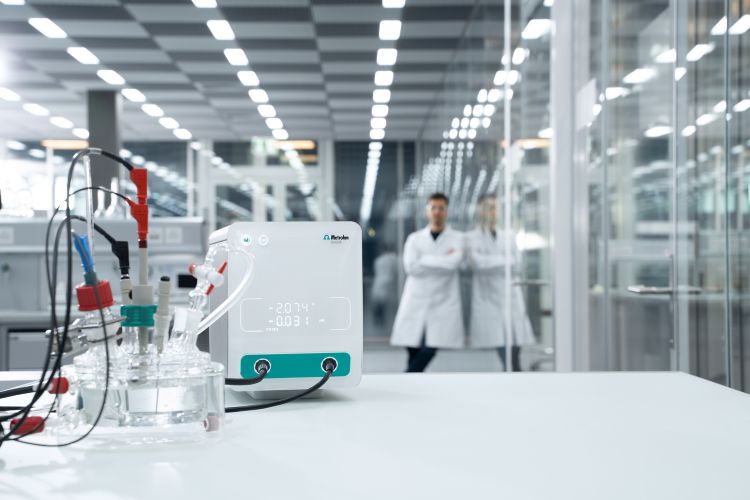
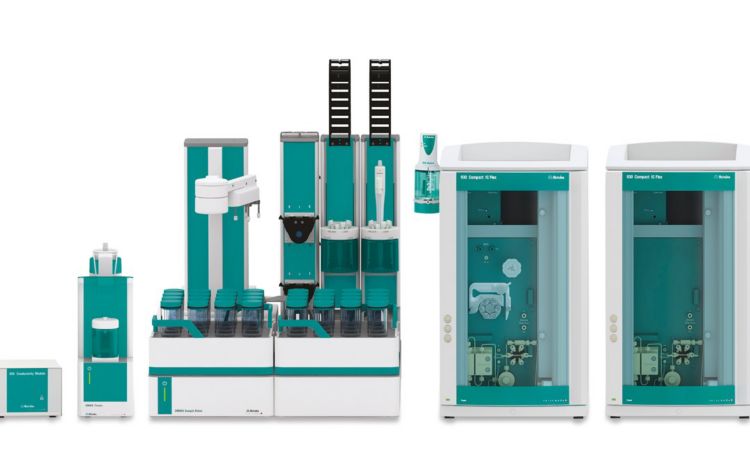
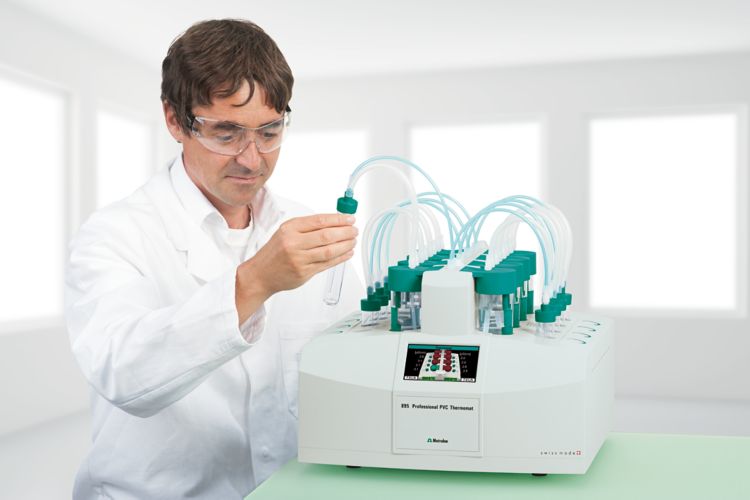
Мы предлагаем три специальный прибора для измерения стабильности: Rancimat для оценки времени индукции или индекса окислительной стабильности (OSI) жиросодержащих пищевых продуктов, косметики, а также натуральных жиров и масел; Biodiesel Rancimat для испытания биодизеля на устойчивость к окислению; и PVC Thermomat для испытания термостабильности поливинилхлорида (ПВХ) и других хлорсодержащих полимеров с помощью теста на дегидрохлорирование (DHC).

  • Специальные приборы для измерения устойчивости к окислению и термическую стабильность натуральных масел и жиров, биодизеля и ПВХ
  • Соответствие международным стандартам: AOCS Cd 12b-92, ISO 6886, EN 14112, EN 15751, EN 16568, ISO 182, Часть 3 
  • Удобно и эффективно: анализ отдельных проб или одновременный анализ 8 проб 
  • Мощное программное обеспечение для управления приборами, данными и для оценки результатов

Брошюра: 892 Professional Rancimat (8.892.5001, PDF, 2.1 MB)

Брошюра: 893 Professional Biodiesel Rancimat (8.893.5001, PDF, 1.5 MB) 

Брошюра: 895 Professional PVC Thermomat (8.895.5001, PDF, 4 MB)

Измерение устойчивости к окислению: Как это работает?

Метод Rancimat основан на ускорении процесса старения образца за счет повышения температуры и подачи потока воздуха. Из измерительной ячейки воздушный поток переносит летучие продукты окисления в ячейку с дистиллированной водой, электропроводность которой постоянно измеряется. Повышение значения электропроводности характеризует время индукции.

Время индукции является стандартным параметром проверки качества масел и жиров в пищевой промышленности.

Определение термостойкости полимеров: Как это работает?

Метод основан на разрушении образцов при повышенной температуре и измерением времени стабильности. В результате разложения выделяется газообразный гидрохлорид (HCl). С помощью непрерывного потока азота он переносится из измерительной ячейки в ячейку с дистиллированной водой. В измерительной ячейке непрерывно измеряется электропроводность. После образования HCl электропроводность увеличивается. Время, при котором достигается увеличение на 50 мкСм/см по сравнению с началом измерения, является временем стабильности, мерой термостабильности.

На ваш выбор: индивидуальные измерения или массовый анализ

Приборы для измерения стабильности имеют восемь позиций измерения, это позволяет индивидуально анализировать каждую отдельную ячейку.

Если вам необходимо проанализировать целую серию образцов, вы можете использовать до четырех приборов и проанализировать до 32 образцов за один раз.

Оценка данных, управление и хранение: все в программном обеспечении StabNet

StabNet − полноценное программное обеспечение для измерения стабильности. StabNet обеспечивает контроль приборов и обработку данных, от расчета результатов до управления базой данных и создания отчетов.

При необходимости программное обеспечение можно настроить как сеть клиент-сервер, с дополнительным функционалом управления правами пользователей и доступа к данным.

Какой прибор выбрать под ваши задачи?

Поговорите с нашим специалистом Metrohm и узнайте лучшее решение для ваших задач!

Экспертный доклад: Контроль качества жиров и масел в косметологии

Скачать экспертный доклад

Узнайте, как Rancimat можно использовать для оценки устойчивости к окислению натуральных жиров и масел в качестве показателя качества. Язык: английский.

Найти методики для измерения стабильности

Stability measurement – FAQs

Our established Rancimat method is based on accelerating the oxidation process of the sample by raising its temperature and passing a continuous stream of air through it. The air flow transports volatile oxidation products from the sample vessel into a vessel containing distilled water. The oxidative stability instrument measures the conductivity of the water. A sudden, strong increase in conductivity marks the induction time.

The induction time is a standard parameter in quality testing of oils and fats in the food industry and gives indications about the remaining shelf life of a product.

The dehydrochlorination test is done by heating the polymer sample to induce decomposition. As a result of the decomposition, gaseous hydrochloride (HCl) is released. The HCl that is released is transported from the sample vessel into a vessel containing distilled water by means of a continuous stream of nitrogen. In the sample vessel, the conductivity is continuously measured. Once HCl is formed, the conductivity increases. The time at which a 50 µS/cm increase is reached compared to the beginning of the measurement is the stability time, a measure of thermostability.

The Rancimat method is widely recognized by international standards for determining the oxidation stability of fats, oils, and biodiesel. It is included in several standards, including:

  • ISO 6886 Animal and vegetable fats and oils – Determination of oxidative stability (accelerated oxidation test)
  • AOCS Cd 12b-92 Oil stability index. Sampling and analysis of commercial fats and oils
  • EN 14112 Fat and oil derivatives – Fatty Acid Methyl Esters (FAME) – Determination of oxidation stability (accelerated oxidation test) (also referenced in DIN EN 14214)
  • ASTM D6751 Standard Specification for Biodiesel Fuel Blend Stock (B100) for Middle Distillate Fuels

Yes, the OSI is a synonym for the induction period, which is the time at a specific temperature and gas flow until the oil turns rancid. This is exactly what the Rancimat determines.

There are different norms available to determine the oxidation stability index. Each norm has slightly different parameters. Find out more about the parameters of the norms in this application note:

Application Note: Oxidation stability comparison of AOCS Cd 12b-92 and EN ISO 6886

The Rancimat method is the most common method to determine the oxidation stability of edible oils. It provides reliable and rapid results suitable for both research and industrial quality control purposes.

Learn more in our blog:

Blog: How to determine if your edible oils are rancid

You can determine the oxidation resistance of biodiesel with the 893 Professional Biodiesel Rancimat.

During measurement, a stream of air is passed through the fatty acid methyl ester sample (Biodiesel) contained in a closed and heated reaction vessel. This treatment results in oxidation of the alkyl ester molecules in the sample, with peroxides initially being formed as the primary oxidation products. After some time, the fatty acid methyl esters begin to decompose, and the secondary oxidation products thus formed include low-molecular organic acids such as acetic acid and formic acid in addition to other volatile organic compounds. These are transported by the airstream to a second vessel containing distilled water, where the conductivity is measured continuously. The organic acids can be detected by the increase in conductivity. The time that elapses until these secondary reaction products appear is called induction time or induction period and characterizes the quality of the sample.
Application Note: Oxidation stability of diesel, biodiesel, and blends

Application Note: Oxidation stability of fatty acid methyl esters (FAME, biodiesel)

The shelf life of materials is influenced by various factors including:

  • temperature
  • oxygen exposure
  • UV light
  • microbial growth

The Rancimat method exclusively measures oxidation stability at elevated temperatures, making it unsuitable for direct shelf-life determination. However, the induction time provides an indication of oil stability when other influencing factors are excluded. Our software allows extrapolation to room temperature using the Arrhenius equation, offering a rough shelf-life estimate.

For accurate shelf-life determination, samples must be stored under defined conditions, and test results should then be correlated with the induction time.

The sample size varies depending on the norm and the sample type.

  • For edible oil samples, the sample size is typically 3 g
  • For solid food samples, e.g., grinded nuts, the sample size is 0.5 g.
  • For Biodiesel samples, the size varies between 3.5 g and 7.5 g.
  • For PVC samples, the sample size is typically 0.5 g.

Find more information about the recommended sample sizes in our application documents:

Applications for stability measurements

Emulsions cannot be measured directly with the Rancimat. However, we developed two methods to make it possible.

The first method is a cold extraction. For this, the fat of the emulsion is extracted with a non-polar solvent like low boiling petrol ether. The solvent which contains the oil is then separated from the matrix and evaporated in a rotavapor. The left-over oil is measured as a normal oil.

As the extraction process includes some labor-intensive steps, we developed an alternative method. In this second method, we measure the antioxidation capacity of the emulsion on a material that normally decomposes very quickly at elevated temperatures. We use PEG3000 as carrier material and we call the method PEG Method.

Find out more about the PEG method