


重新導向訊息
使用 Rancimat 方法測量氧化和熱安定性

使用 Rancimat 方法測量氧化和熱安定性

天然油脂、含脂肪食品和化妝品、生質柴油、PVC 等含氯聚合物的加速老化測試 ( 氧化穩定性指數和穩定時間 )。

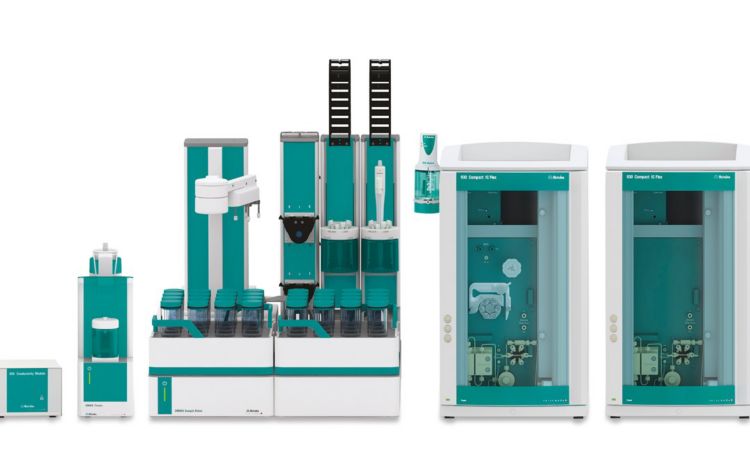
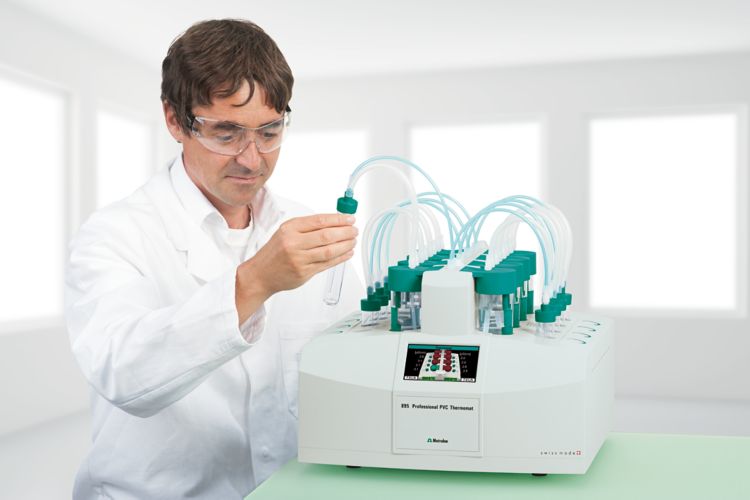
我們提供三種用於安定性測量的專用安定性測量儀器:用於評估含脂肪食品、化妝品和天然油脂的誘導時間或氧化安定性指數 (OSI) 的 Rancimat;用於生質柴油氧化安定性測試的 Biodiesel Rancimat;以及通過脫氯化氫試驗 (DHC) 對聚氯乙烯 (PVC) 和其他含氯聚合物進行熱穩定性測試的 PVC Thermomat

  • 用於天然油脂、生質柴油和 PVC 的專用氧化和熱安定性測試儀器
  • 符合的國際標準包含 : AOCS Cd 12b-92, ISO 6886, EN 14112, EN 15751, EN 16568, ISO 182, Part 3
  • 方便與高效率 : 單個樣品分析或 8 個樣品同時分析
  • 用於儀器控制、數據管理和結果評估的功能強大軟體

產品資訊 : 892 Professional Rancimat (8.892.5000, PDF, 5.2 MB)

產品資訊 : 893 Professional Biodiesel Rancimat (8.893.5001, PDF, 4 MB)

產品資訊 : 895 Professional PVC Thermomat (8.895.5000, PDF, 4 MB)

氧化安定性測量 : 它是如何運作的 ?

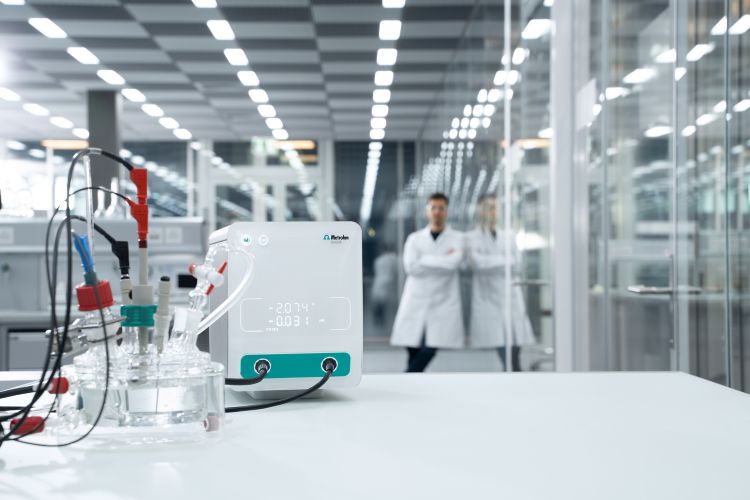
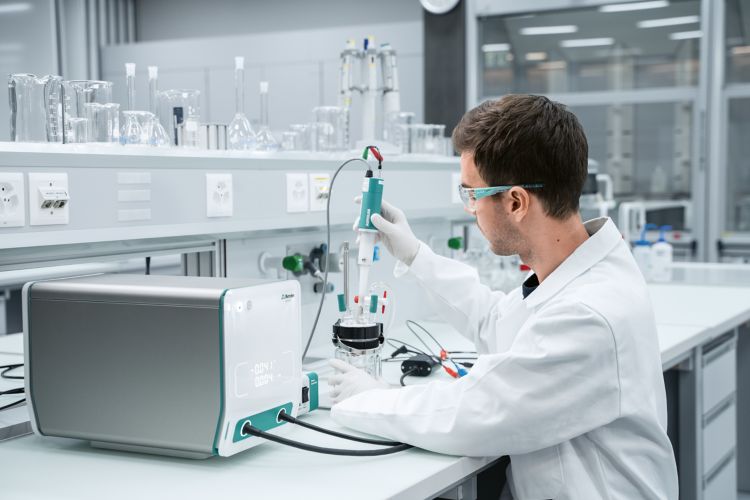
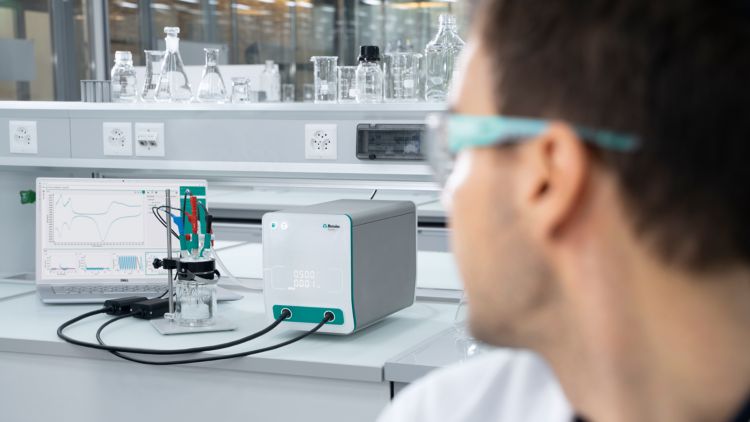
我們建立的 Rancimat 方法基於通過提高樣品溫度並讓連續的空氣流通過樣品來加速樣品的老化過程。氣流將揮發性氧化產物從樣品容器輸送到裝有蒸餾水的容器中。該儀器測量水的電導度。電導度的突然強烈增加標記著反應時間。

誘導時間是食品工業中油脂品質檢測的標準參數。

聚合物的熱安定性測試 : 它是如何運作的?

脫氯化氫試驗通過加熱聚合物樣品以誘導分解來進行。作為分解的結果,釋放出氣態鹽酸鹽 ( HCl )。釋放的 HCl 通過連續的氮氣流從樣品容器輸送到裝有蒸餾水的容器中。在樣品容器中,連續測量電導度。一旦形成 HCl,電導度就會增加。與測量開始相比,達到 50 µS/cm 增加的時間是穩定時間,即熱穩定性的測量。

您的選擇 : 單獨測量或批次分析

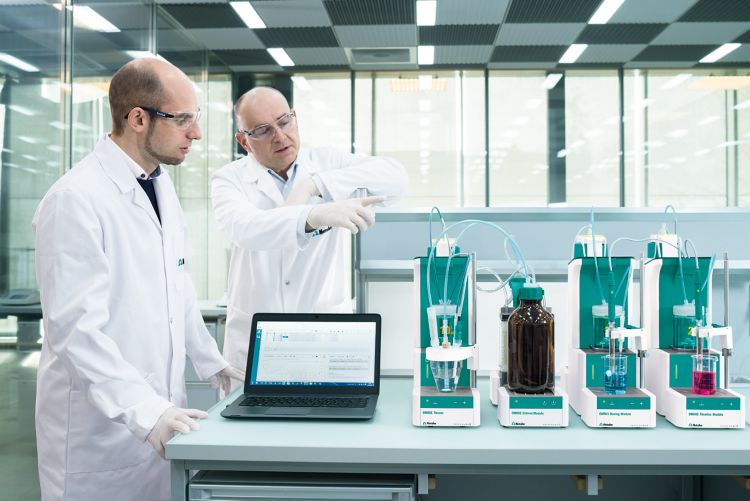
穩定性儀器有八個測量位置,允許您單獨開始每個測量。

但是,如果您必須分析大量樣品系列,您可以連接多達四台儀器,一次分析多達 32 個樣品。

儀器控制、數據評估、管理和存儲 : 全部在 StabNet 軟體中

StabNet 是一款成熟的穩定性測量軟體。 該軟體負責儀器控制和數據處理,從結果計算到數據庫管理和報告生成。

如果需要,該軟體可以設置為客戶端-服務器網絡,為您提供數據存取和管理以及用戶權限管理方面的附加功能。

我們的客戶怎麼說

哪種氧化穩定性解決方案符合您的要求 ?

與您的 Metrohm 代表交談並了解最佳解決方案以符合您的需求 !

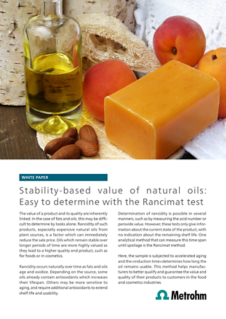
白皮書 : 化妝品中油脂的品質控制

下載白皮書

了解 Rancimat 測試如何用於評估天然油脂的氧化穩定性作為品質指標。

尋找氧化穩定性量測的應用

Stability measurement – FAQs

Our established Rancimat method is based on accelerating the oxidation process of the sample by raising its temperature and passing a continuous stream of air through it. The air flow transports volatile oxidation products from the sample vessel into a vessel containing distilled water. The oxidative stability instrument measures the conductivity of the water. A sudden, strong increase in conductivity marks the induction time.

The induction time is a standard parameter in quality testing of oils and fats in the food industry and gives indications about the remaining shelf life of a product.

The dehydrochlorination test is done by heating the polymer sample to induce decomposition. As a result of the decomposition, gaseous hydrochloride (HCl) is released. The HCl that is released is transported from the sample vessel into a vessel containing distilled water by means of a continuous stream of nitrogen. In the sample vessel, the conductivity is continuously measured. Once HCl is formed, the conductivity increases. The time at which a 50 µS/cm increase is reached compared to the beginning of the measurement is the stability time, a measure of thermostability.

The Rancimat method is widely recognized by international standards for determining the oxidation stability of fats, oils, and biodiesel. It is included in several standards, including:

  • ISO 6886 Animal and vegetable fats and oils – Determination of oxidative stability (accelerated oxidation test)
  • AOCS Cd 12b-92 Oil stability index. Sampling and analysis of commercial fats and oils
  • EN 14112 Fat and oil derivatives – Fatty Acid Methyl Esters (FAME) – Determination of oxidation stability (accelerated oxidation test) (also referenced in DIN EN 14214)
  • ASTM D6751 Standard Specification for Biodiesel Fuel Blend Stock (B100) for Middle Distillate Fuels

Yes, the OSI is a synonym for the induction period, which is the time at a specific temperature and gas flow until the oil turns rancid. This is exactly what the Rancimat determines.

There are different norms available to determine the oxidation stability index. Each norm has slightly different parameters. Find out more about the parameters of the norms in this application note:

Application Note: Oxidation stability comparison of AOCS Cd 12b-92 and EN ISO 6886

The Rancimat method is the most common method to determine the oxidation stability of edible oils. It provides reliable and rapid results suitable for both research and industrial quality control purposes.

Learn more in our blog:

Blog: How to determine if your edible oils are rancid

You can determine the oxidation resistance of biodiesel with the 893 Professional Biodiesel Rancimat.

During measurement, a stream of air is passed through the fatty acid methyl ester sample (Biodiesel) contained in a closed and heated reaction vessel. This treatment results in oxidation of the alkyl ester molecules in the sample, with peroxides initially being formed as the primary oxidation products. After some time, the fatty acid methyl esters begin to decompose, and the secondary oxidation products thus formed include low-molecular organic acids such as acetic acid and formic acid in addition to other volatile organic compounds. These are transported by the airstream to a second vessel containing distilled water, where the conductivity is measured continuously. The organic acids can be detected by the increase in conductivity. The time that elapses until these secondary reaction products appear is called induction time or induction period and characterizes the quality of the sample.

Application Note: Oxidation stability of diesel, biodiesel, and blends

Application Note: Oxidation stability of fatty acid methyl esters (FAME, biodiesel)

The shelf life of materials is influenced by various factors including:
  • temperature
  • oxygen exposure
  • UV light
  • microbial growth

The Rancimat method exclusively measures oxidation stability at elevated temperatures, making it unsuitable for direct shelf-life determination. However, the induction time provides an indication of oil stability when other influencing factors are excluded. Our software allows extrapolation to room temperature using the Arrhenius equation, offering a rough shelf-life estimate.

For accurate shelf-life determination, samples must be stored under defined conditions, and test results should then be correlated with the induction time.

The sample size varies depending on the norm and the sample type.

  • For edible oil samples, the sample size is typically 3 g
  • For solid food samples, e.g., grinded nuts, the sample size is 0.5 g.
  • For Biodiesel samples, the size varies between 3.5 g and 7.5 g.
  • For PVC samples, the sample size is typically 0.5 g.

Find more information about the recommended sample sizes in our application documents:

Applications for stability measurements

Emulsions cannot be measured directly with the Rancimat. However, we developed two methods to make it possible.

The first method is a cold extraction. For this, the fat of the emulsion is extracted with a non-polar solvent like low boiling petrol ether. The solvent which contains the oil is then separated from the matrix and evaporated in a rotavapor. The left-over oil is measured as a normal oil.

As the extraction process includes some labor-intensive steps, we developed an alternative method. In this second method, we measure the antioxidation capacity of the emulsion on a material that normally decomposes very quickly at elevated temperatures. We use PEG3000 as carrier material and we call the method PEG Method.

Find out more about the PEG method