


Boli ste presmerovaní na lokálnu verziu požadovanej stránky
Meranie oxidačnej a termickej stability rancimatovou metódou

Meranie oxidačnej a termickej stability rancimatovou metódou

Zrýchlené testovanie starnutia (index oxidačnej stability a čas stability) pre prírodné oleje, tuky, potraviny obsahujúce tuky a kozmetiku, bionaftu a polyméry obsahujúce chlór, ako je PVC.

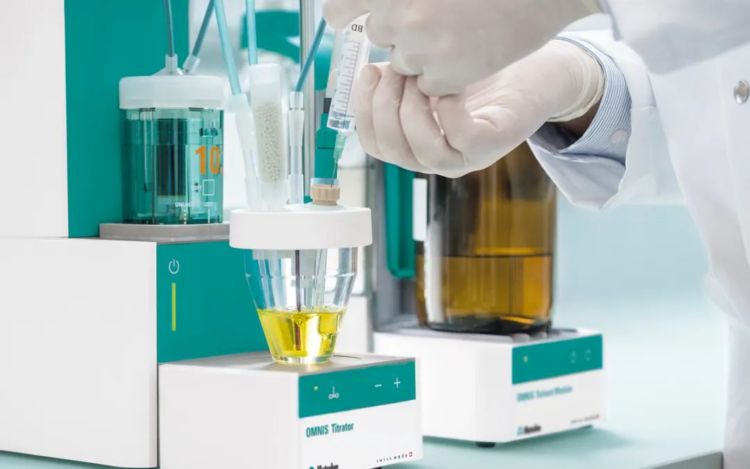
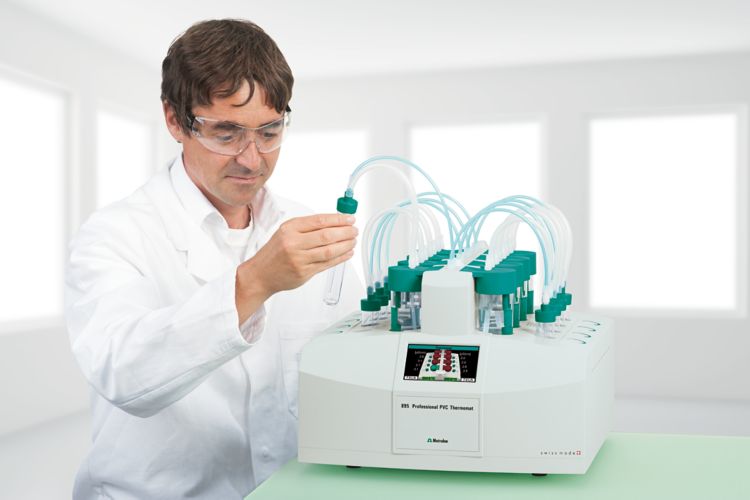
Ponúkame tri špeciálne prístroje na meranie stability: Rancimat na hodnotenie indukčného času alebo indexu oxidačnej stability (OSI) potravín obsahujúcich tuk, kozmetiky a prírodných tukov a olejov; Biodiesel Rancimat na testovanie oxidačnej stability bionafty; a PVC Thermomat na testovanie tepelnej stability polyvinylchloridu (PVC) a iných polymérov obsahujúcich chlór pomocou dehydrochloračného testu (DHC).

  • Špeciálne prístroje na testovanie oxidačnej a tepelnej stability pre prírodné oleje a tuky, bionaftu a PVC
  • Súlad s medzinárodnými normami: AOCS Cd 12b-92, ISO 6886, EN 14112, EN 15751, EN 16568, ISO 182, časť 3
  • Pohodlné a efektívne: individuálna analýza vzorky alebo simultánna analýza 8 vzoriek
  • Výkonný softvér na ovládanie prístroja, správu údajov a vyhodnocovanie výsledkov

Brožúra: 892 Professional Rancimat (8.892.5000, PDF, 5.2 MB) 

Brožúra: 893 Professional Biodiesel Rancimat (8.893.5000, PDF, 4 MB)

Brožúra: 895 Professional PVC Thermomat (8.895.5000, PDF, 4 MB)

Meranie oxidačnej stability: Ako to funguje?

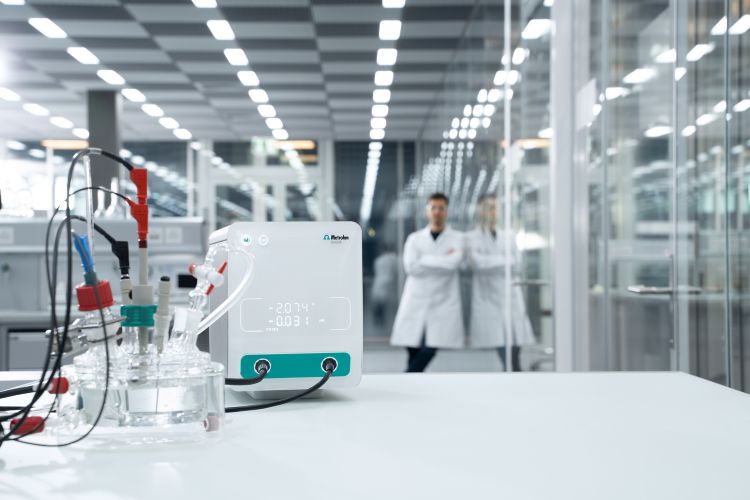
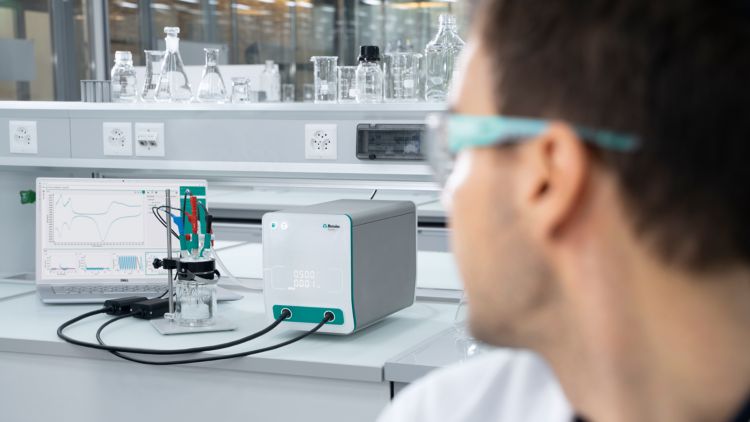
Naša zavedená metóda Rancimat je založená na urýchlení procesu starnutia vzorky zvýšením jej teploty a prechodom nepretržitého prúdu vzduchu cez ňu. Prúd vzduchu transportuje prchavé produkty oxidácie zo vzorkovej nádoby do nádoby obsahujúcej destilovanú vodu. Prístroj meria vodivosť vody. Náhle, vysoké zvýšenie vodivosti označuje indukčný čas.

Indukčný čas je štandardným parametrom pri testovaní kvality olejov a tukov v potravinárskom priemysle.

Testovanie tepelnej stability polymérov: Ako to funguje?

Dehydrochloračný test sa vykonáva zahrievaním vzorky polyméru, aby sa vyvolal rozklad. V dôsledku rozkladu sa uvoľňuje plynný chlorovodík (HCl). Uvoľnený HCl sa transportuje zo vzorkovej nádoby do nádoby s destilovanou vodou pomocou kontinuálneho prúdu dusíka. Vo vzorkovej nádobe sa meria vodivosť. Akonáhle sa objaví HCl, vodivosť sa zvýši. Čas, v ktorom sa dosiahne zvýšenie o 50 µS/cm v porovnaní so začiatkom merania, je čas stability, miera tepelnej stability.

Vaša voľba: individuálne merania alebo hromadná analýza

Prístroje na meranie stability majú osem meracích polôh, čo umožňuje spustiť každé jednotlivé meranie samostatne.

Ak však potrebujete analyzovať veľké série vzoriek, môžete pripojiť až štyri prístroje a analyzovať až 32 vzoriek naraz.

Ovládanie prístroja, vyhodnocovanie údajov, správa a ukladanie: všetko v softvéri StabNet

StabNet je plnohodnotný softvér na meranie stability. Softvér sa stará o ovládanie prístroja a manipuláciu s údajmi, od výpočtu výsledkov až po správu databázy a generovanie protokolov.

V prípade potreby je možné softvér nastaviť ako sieť klient-server, ktorá vám ponúka ďalšie funkcie v oblasti prístupu a správy údajov, ako aj správy používateľských práv.

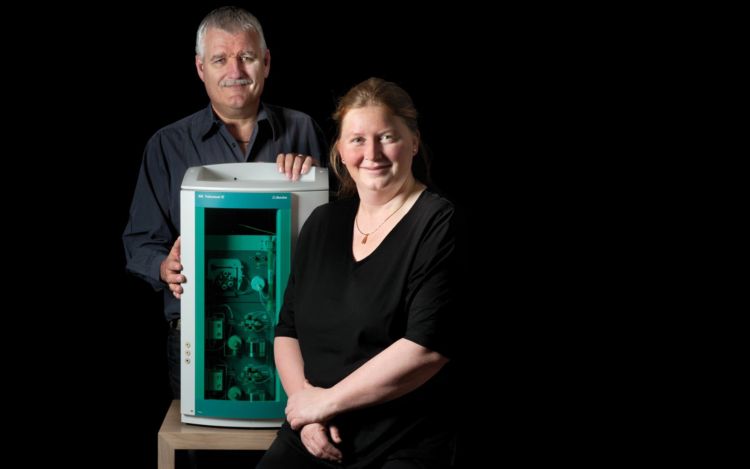
Čo hovoria naši zákazníci

Ktorý zariadenie na meranie stability vyhovuje vašim požiadavkám?

Porozprávajte sa so svojím zástupcom Metrohm a získajte informácie o najvhodnejšom riešení pre vaše potreby!

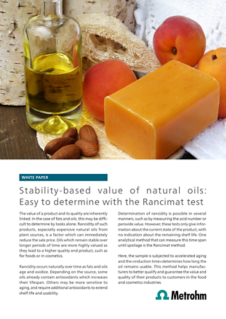
Biela kniha: Kontrola kvality tukov a olejov v kozmetike

Stiahnite si bielu knihu

Zistite, ako sa dá Rancimat test použiť na posúdenie oxidačnej stability prírodných tukov a olejov ako indikátora kvality.

Nájdite aplikácie na meranie stability

Stability measurement – FAQs

Our established Rancimat method is based on accelerating the oxidation process of the sample by raising its temperature and passing a continuous stream of air through it. The air flow transports volatile oxidation products from the sample vessel into a vessel containing distilled water. The oxidative stability instrument measures the conductivity of the water. A sudden, strong increase in conductivity marks the induction time.

The induction time is a standard parameter in quality testing of oils and fats in the food industry and gives indications about the remaining shelf life of a product.

The dehydrochlorination test is done by heating the polymer sample to induce decomposition. As a result of the decomposition, gaseous hydrochloride (HCl) is released. The HCl that is released is transported from the sample vessel into a vessel containing distilled water by means of a continuous stream of nitrogen. In the sample vessel, the conductivity is continuously measured. Once HCl is formed, the conductivity increases. The time at which a 50 µS/cm increase is reached compared to the beginning of the measurement is the stability time, a measure of thermostability.

The Rancimat method is widely recognized by international standards for determining the oxidation stability of fats, oils, and biodiesel. It is included in several standards, including:

  • ISO 6886 Animal and vegetable fats and oils – Determination of oxidative stability (accelerated oxidation test)
  • AOCS Cd 12b-92 Oil stability index. Sampling and analysis of commercial fats and oils
  • EN 14112 Fat and oil derivatives – Fatty Acid Methyl Esters (FAME) – Determination of oxidation stability (accelerated oxidation test) (also referenced in DIN EN 14214)
  • ASTM D6751 Standard Specification for Biodiesel Fuel Blend Stock (B100) for Middle Distillate Fuels

Yes, the OSI is a synonym for the induction period, which is the time at a specific temperature and gas flow until the oil turns rancid. This is exactly what the Rancimat determines.

There are different norms available to determine the oxidation stability index. Each norm has slightly different parameters. Find out more about the parameters of the norms in this application note:

Application Note: Oxidation stability comparison of AOCS Cd 12b-92 and EN ISO 6886

The Rancimat method is the most common method to determine the oxidation stability of edible oils. It provides reliable and rapid results suitable for both research and industrial quality control purposes.

Learn more in our blog:

Blog: How to determine if your edible oils are rancid

You can determine the oxidation resistance of biodiesel with the 893 Professional Biodiesel Rancimat.

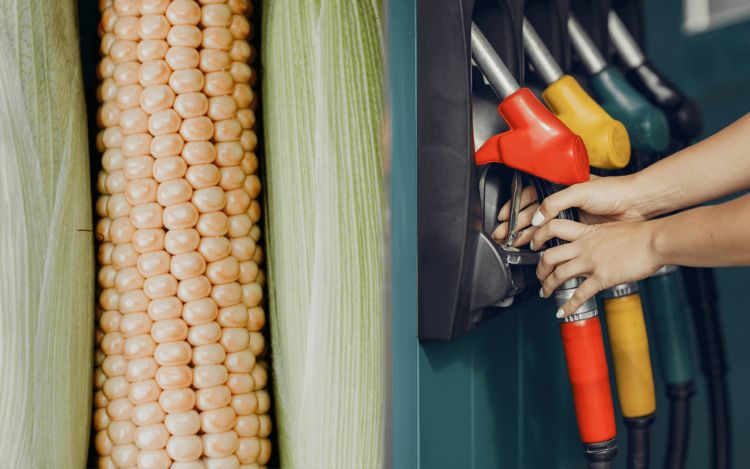
During measurement, a stream of air is passed through the fatty acid methyl ester sample (Biodiesel) contained in a closed and heated reaction vessel. This treatment results in oxidation of the alkyl ester molecules in the sample, with peroxides initially being formed as the primary oxidation products. After some time, the fatty acid methyl esters begin to decompose, and the secondary oxidation products thus formed include low-molecular organic acids such as acetic acid and formic acid in addition to other volatile organic compounds. These are transported by the airstream to a second vessel containing distilled water, where the conductivity is measured continuously. The organic acids can be detected by the increase in conductivity. The time that elapses until these secondary reaction products appear is called induction time or induction period and characterizes the quality of the sample.
Application Note: Oxidation stability of diesel, biodiesel, and blends

Application Note: Oxidation stability of fatty acid methyl esters (FAME, biodiesel)

The shelf life of materials is influenced by various factors including:

  • temperature
  • oxygen exposure
  • UV light
  • microbial growth

The Rancimat method exclusively measures oxidation stability at elevated temperatures, making it unsuitable for direct shelf-life determination. However, the induction time provides an indication of oil stability when other influencing factors are excluded. Our software allows extrapolation to room temperature using the Arrhenius equation, offering a rough shelf-life estimate.

For accurate shelf-life determination, samples must be stored under defined conditions, and test results should then be correlated with the induction time.

The sample size varies depending on the norm and the sample type.

  • For edible oil samples, the sample size is typically 3 g
  • For solid food samples, e.g., grinded nuts, the sample size is 0.5 g.
  • For Biodiesel samples, the size varies between 3.5 g and 7.5 g.
  • For PVC samples, the sample size is typically 0.5 g.

Find more information about the recommended sample sizes in our application documents:

Applications for stability measurements

Emulsions cannot be measured directly with the Rancimat. However, we developed two methods to make it possible.

The first method is a cold extraction. For this, the fat of the emulsion is extracted with a non-polar solvent like low boiling petrol ether. The solvent which contains the oil is then separated from the matrix and evaporated in a rotavapor. The left-over oil is measured as a normal oil.

As the extraction process includes some labor-intensive steps, we developed an alternative method. In this second method, we measure the antioxidation capacity of the emulsion on a material that normally decomposes very quickly at elevated temperatures. We use PEG3000 as carrier material and we call the method PEG Method.

Find out more about the PEG method