


重定向消息
电化学工作站

电化学工作站

使用 电化学分析仪器进行电化学研究和测试。

电化学工作站

zh_CN

使用 电化学分析仪器进行电化学研究和测试。

无论您有什么需求--我们都有适合您的电化学工作站/恒电位仪

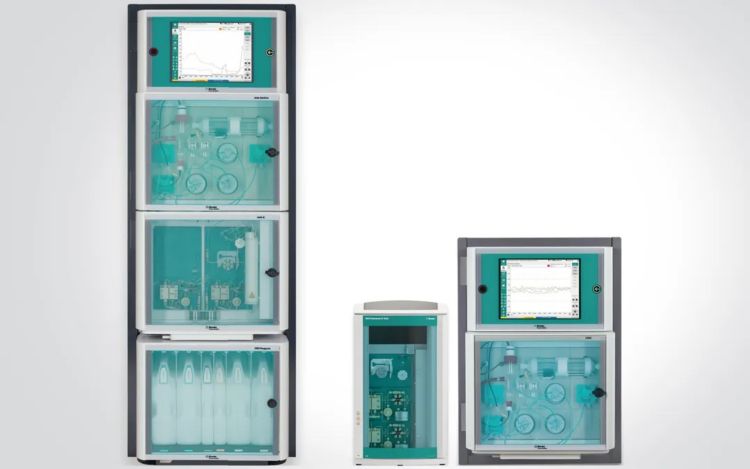
我们的电化学工作站包括紧凑型到模块化,单通道到多通道电化学工作站/恒电位仪。使用搜索来找到适合您的理想仪器。

查询电化学工作站相关应用

多样化恒电位仪组件,只为可靠和准确的测量

为什么选择瑞士万通恒电位仪?我们是环球市场遥领者

瑞士万通制定了电化学仪器的标准。30多年前,我们先推出了头台全由计算机控制的商用数字化恒电位/恒电流仪。我们对创新的执着推动我们持续前进。如今,我们提供各种各样的电化学仪器,从紧凑型到模块化,从单通道到多通道,从台式到便携式。

  • 可靠性:我们所有的仪器在制造过程中都要经过数百次质量检查,99%的仪器可保障自安装起的五年内无故障运行。

  • 出色的服务:我们为所有仪器1年保修,并在环球120多个国家或地区提供当地支持,为客户提供快速响应。
为了帮助客户充分使用和理解我们的仪器,我们准备了多种资源,其中包括 100 余份应用报告、白皮书和博客文章。这些资料涵盖了广泛的科学学科,如电化学、电池研究、生命科学和腐蚀研究等。

如果您正在探索循环伏安法和电化学阻抗谱 (EIS) 等电化学技术,我们的实用案例都可以给予您帮助,可根据您的需求提供支持。

深入了解我们的电化学应用报告

恒电位仪和恒电流仪./电化学工作站 - 常见问题

potentiostat is an electrochemical instrument that controls the potential difference (voltage) between the working electrode and the reference electrode while measuring the resulting current flow between the working and counter electrodes. It maintains a constant potential, making it ideal for studying redox reactions, corrosion, and processes where precise potential control is critical.

galvanostat, on the other hand, controls the cell current rather than the voltage. This makes it suitable for applications where maintaining a constant current is required, such as electrolysis, electrodeposition, or battery charge-discharge testing.

All Metrohm Autolab and Metrohm Dropsens instruments combine both potentiostatic and galvanostatic capabilities in a single device, allowing users to select the most suitable mode based on their experimental needs.

  Potentiostat (Potentiostatic Mode) Galvanostat (Galvanostatic Mode)

Columns

Voltage (potential)

Current

Measures

Current

Voltage (potential)

When to use

When maintaining constant voltage is crucial

When maintaining constant current is crucial

Typical applications
  • Redox reactions
  • Corrosion testing
  • Voltage sweeps measurements
  • Investigating electrochemical behaviour, kinetics and electrode surface properties
  • electrochemical sensors
  • Battery cycling
  • Electrolysis
  • Electrodeposition
  • Fuel cell testing
Example techniques

Cyclic voltammetry, chronoamperometry, potentiodynamic polarization

Charge/discharge cycles, galvanostatic plating, chronopotentiometry, GITT

Electrochemical impedance spectroscopy (EIS)

Characterizing high-impedance systems (materials with coatings or corrosion protection)

Studying impedance in low-impedance systems (batteries, supercapacitors)

Consider the following criteria to select a suitable potentiostat:

  1. Voltage and current range
  2. Workload
  3. Portability
  4. Hyphenation or all-in-one solution

Voltage and current range

Consider the range of potentials and currents you expect to work with.

  • Basic requirement: Compliance voltage up to ± 10 V, max. current up to ± 100 mA: PGSTAT101, Autolab IMP, μStat-i 400Small, lightweight, and affordable
  • Moderate requirement: Compliance voltage ± 20 V, max. current ± 400 mA: PGSTAT204Small and able to add one more module (e.g. EIS)
  • Advanced requirement: Compliance voltage ± 30 V, max. current ±2 A (upgradeable) : PGSTAT302NCustomizable with a range of modules
  • Stringent requirement: Compliance voltage ± 50 V, max. current ± 6 A: VIONIC powered by INTELLO Highest specification and multi-modules in one instrument

Workload

If you plan to run multiple experiments simultaneously, you might need a potentiostat with multiple channels.

Go to Mulitchannel Line

Go to Portable Multichannel Line

Portability

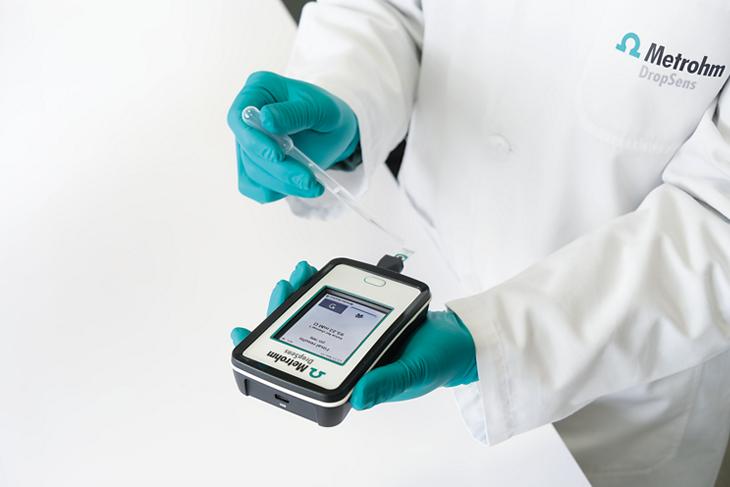
A portable potentiostat can be beneficial in various scenarios where mobility, fieldwork, or on-site measurements are necessary. Metrohm can provide both single-channel and multi-channel portable potentiostats.

Go to Portable Singlechannel Line

Go to Portable Multichannel Line

Hyphenated Electrochemistry with third-party instruments or Spectroelectrochemistry integrated into one instrument

lf your research requires synchronization of electrochemistry with optical measurements (or other complementary techniques), and you would like to have two independent instruments for electrochemistry and spectroscopy (or the instrument used in the complementary technique) as hyphenated or stand-alone solutions, you can consider our hyphenated solution.

The hyphenated solution includes a UV-Vis or Raman spectroscopy instrument and a Metrohm potentiostat. The Metrohm potentiostats/galvanostats can be purchased separately and used in specific hyphenated setups together with third party instruments. Please contact your local Metrohm support office for further details. With our hyphenated solution, you can enjoy the highest performance and  flexibility in both hardware and software selection.

Go to hyphenated spectroelectrochemistry instruments


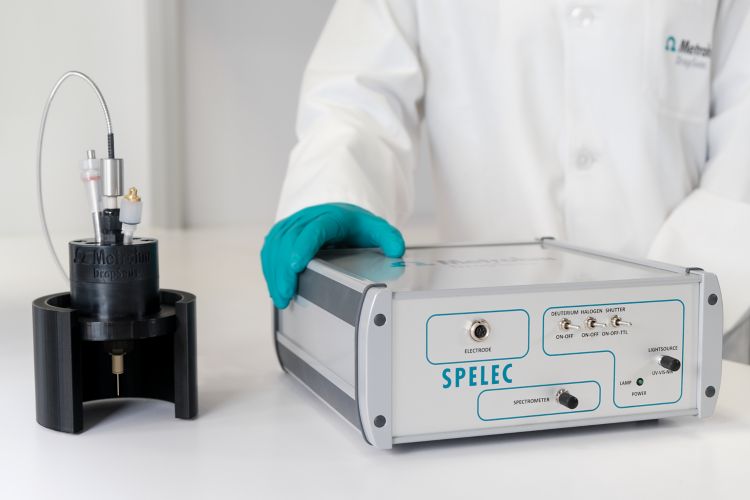
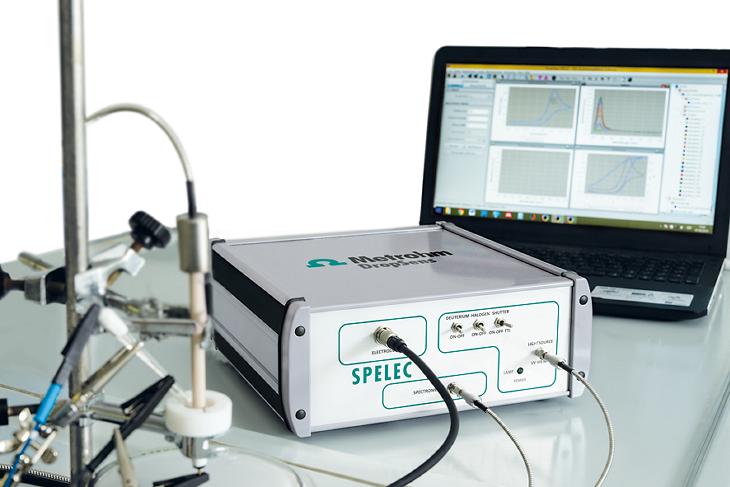
You can also opt for the integrated product line. All components of spectroelectrochemical devices, i.e., potentiostat, spectrometer, and light source, are integrated in only one instrument with a dedicated software including all specific tools for spectroelectrochemical experiments, such as UV-Vis, NIR and Raman spectroscopy. With the integrated instruments, you benefit from the simplicity of the hardware set up and of working with a single software.

Go to integrated spectroelectrochemistry instruments

In a potentiostat, the grounded mode is used when none of the electrodes nor the cell vessel have a direct connection with the ground. This is the most commonly used mode for electrochemical experiments performed in laboratories (i.e., wet electrochemistry research, battery research, corrosion test in lab, etc.). If other devices are used during the electrochemical experiments, you can use the faraday cage to ground them.

The schematics of a VIONIC PGSTAT in non-floating mode. Please note the EARTH connection (always connected to the metallic chassis of the instrument) and the analog ground (AGND) connection and switch.

The floating mode must be used in the following three main cases:

  1. When the working electrode is directly connected to the Earth ground (grounded WE): Corrosion tests in open air, hydrogen permeation, in-situ electronic microscopy
  2. When the counter electrode is directly connected to the Earth ground (grounded CE): Bioreactors, autoclave
  3. When the entire cell is directly connected to the Earth ground (grounded Cell): Tribocorrosion, autoclave

For any of the above-mentioned cases, the correct measurement of the current is only possible if the potentiostat is used with the correct floating mode.

The schematics of a VIONIC PGSTAT in floating mode. Please note that the analog ground (AGND) is disconnected from the instrument chassis.

Selectable floating refers to the feature of potentiostats/galvanostats to choose the ground state of the cell setup. Due to the wide variation of experimental requirements and kinds of electrochemical cells, the use of an electrochemical instrument with a floating feature (such as VIONIC or µStat-i multiX among others) brings additional versatility to the user.

To perform an electrochemical hydrodynamic measurement and induce controlled hydrodynamic flow or convection, you need:

At Metrohm, we offer different models of potentiostats that can be used with our RDEs and RRDEs through dedicated software.

To simulate turbulent pipe-flow conditions in the lab for electrochemical corrosion research, the most common and practical approach is to use a Rotating Cylinder Electrode (RCE). The RCE setup recreates realistic turbulent flow conditions found inside pipes by rotating the electrode, which enhances mass transport and mimics the turbulent fluid flow experienced in real pipelines.

In addition, a potentiostat with dedicated software capable of controlling the rotating speed of the RCE is also essential.

White Paper: Corrosion Best Practice – Creating Pipe-flow Conditions Using a Rotating Cylinder Electrode

Yes, it is possible to perform electrochemical measurements with two or more working electrodes in the same cell. You can choose among different experimental setups based on your research needs.

If your research involves working with a Rotating Ring-Disk Electrode (RRDE) or a single screen-printed electrode that integrates two working electrodes, you will need a Bipotentiostat. At Metrohm, we offer different potentiostat models with Bipotentiostat functionality, such as the AUT302N and PGSTAT204 or portable models such as STAT-I-400.

If your research requires more than two working electrodes in the same electrochemical cell, other solutions are available:

  • Potentiostat with multiBA: for simultaneous measurements on up to six working electrodes or STAT-I MULTI16 for simultaneous measurements up to 16 working electrodes.
  • Potentiostat with Multiplexer Module (MUX-SCNR16): for sequential measurements on up to 128 working electrodes

To analyze EIS results, specialized software with data fitting tools is typically required. This process involves constructing an equivalent circuit in a flexible manner and fitting the calculated equivalent data to the measured results. Through this fitting process, the software determines and displays the quantitative values of each element in the circuit, allowing for a clear interpretation of the system’s electrochemical behavior.

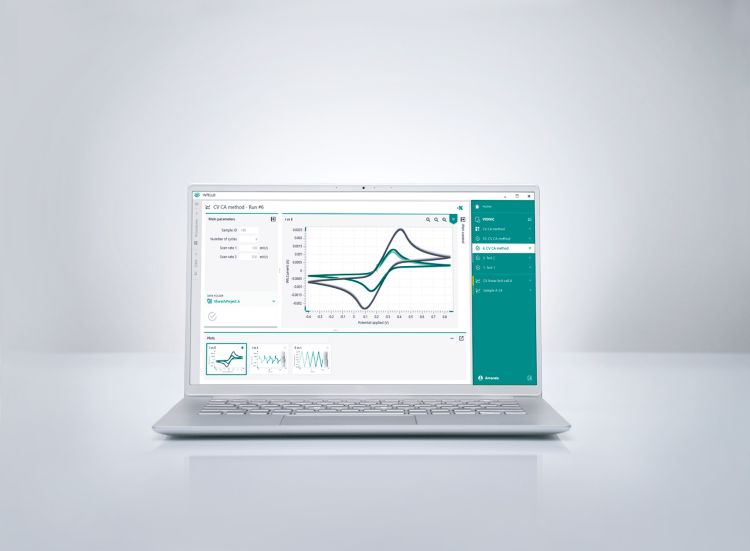
At Metrohm, our potentiostat software, INTELLO, NOVA, and DropView 8400, provide all these features to ensure precise and reliable EIS data analysis.

什么是恒电位仪?恒电位仪和恒电流仪有什么区别?

恒电位仪是一种电化学仪器,用于控制工作电极和参比电极之间的电位差(电压),同时测量工作电极和对电极(也称为辅助电极)之间产生的电流。恒电位仪可以保持恒定的电位,从而精确控制和测量腐蚀研究、电镀、电池测试和传感器开发中的电化学反应。

恒电流仪是一种控制电池电流而非电池电压的电化学仪器。

所有瑞士万通电化学仪器都将恒电位仪和恒电流仪整合到一个设备中(电化学工作站)。用户可根据实验要求选择适当的模式(恒电位或恒电流)。

进一步了解恒电位仪的工作原理以及电化学测量中所用电极的作用:

应用报告:恒电位/恒电流仪 (PGSTAT) 工作原理基本概述 - 电化学电解池设置

恒电位模式与恒电流模式

何时选择恒电位模式:

  • 研究氧化还原反应、腐蚀、电镀或需要保持恒定电位的过程。
  • 进行循环伏安法或其他涉及在定范围内扫描电位的技术。
  • 研究电化学行为、动力学和电极表面特性。

应用报告:恒电位间歇滴定技术 (PITT)

应用报告:ASTM G5 - 电位阳极极化测量法

应用报告:根据 ASTM G61 进行循环电位极化测量 

何时选择恒电流模式:

  • 研究电解、电沉积或需要保持恒定电流的过程。
  • 进行涉及燃料电池、电池或任何需要特定电流输入的电化学电池的实验。
  • 使用电化学阻抗谱或其他分析电响应的技术。

应用报告:使用 Autolab 对锂离子电池进行恒电流充放电试验

应用报告:ASTM G100 - 循环恒电流阶梯波极化测量

应用报告:恒电流间歇滴定技术 (GITT)

何时在恒电位仪中使用接地模式和浮地模式?什么是可选浮地?

在恒电位仪中,当所有电极或电解池都不与地直接连接时,就会使用接地模式。这是实验室中绝大多数电化学实验(如湿电化学研究、电池研究、腐蚀测试等)常用的模式。如果在电化学实验过程中使用了其他设备,可以使用法拉第屏蔽箱将其接地。

非浮地模式下的 VIONIC 威欧原理图。请注意 EARTH 连接(始终连接至仪器的金属底座)以及模拟接地 (AGND) 连接和开关。

非浮动模式下的 VIONIC PGSTAT 原理图。请注意接地(始终连接至仪器的金属底座)以及模拟接地 (AGND) 连接和开关。

在以下三种主要情况下必须使用浮地模式:

  1. 当工作电极直接与大地(接地 WE)相连时: 露天的腐蚀试验、氢渗透、原位电子显微镜
  2. 对电极直接接地(接地 CE):生物反应器、高压灭菌器: 生物反应器、高压灭菌器
  3. 当整个电解池直接与大地相连时(接地电解池): 摩擦腐蚀,高压釜

对于上述任何一种情况,只有在恒电位仪采用正确的浮地模式时才能正确测量电流。

浮地模式下的 VIONIC 威欧原理图。请注意,模拟接地 (AGND) 与仪器底盘断开。

由于实验要求和电化学电池的种类千差万别,使用具有浮动功能的电化学仪器(如 VIONIC 或 µStat-i multiX 等)可为用户带来额外的多功能性。

接地还是浮地?

下载免费白皮书

本白皮书给出了非浮地和浮地的定义,概述了每种模式的典型应用,并介绍了用于进一步定制的补充附件。

如何选择合适的恒电位仪?

标准 1:电压和电流范围

考虑您期望工作的电位和电流范围。

  • 基本要求: 槽压 ± 10 V,最大电流 ± 100 mA:PGSTAT101,、μStat-i 400 - 体积小、重量轻、价格低
  • 要求适中: 槽压 ± 20 V,最大电流 ± 400 mA:PGSTAT204 - 体积小,可增加一个模块(如 EIS)
  • 高级要求: 槽压 ± 30 V,最大电流 ± 2 A(可升级) : PGSTAT302N 可定制一系列模块
  • 严格要求: 槽压 ± 50 V,最大电流 ± 6 A:VIONIC 威欧 – 高的规格的全面型仪器

标准 2:是否需要高通量或多通道?

如果您计划同时进行多项实验,您可能需要一台具有多通道的恒电位仪。

查看多通道产品

查看便携式多通道产品

标准 3:便携性

便携式恒电位仪适用于各种需要移动、现场工作或现场测量的场合。瑞士万通可提供单通道和多通道便携式恒电位仪。

查看便携式单通道产品

查看便携式多通道产品

标准 4:与第三方仪器联用的电化学仪器或集成在一台仪器中的光谱电化学仪器

如果您的研究需要电化学与光学测量(或其他补充技术)同步进行,而您又希望拥有两台独立的电化学和光谱分析仪器(或用于补充技术的仪器)作为联用或独立解决方案,您可以考虑我们的联用解决方案。

联用解决方案包括一台紫外可见光谱仪或拉曼光谱仪和一台瑞士万通恒电位仪。瑞士万通恒电位/恒电流仪可以单独购买,并与第三方仪器联用。详情请联系当地的瑞士万通办事处。使用我们的联用解决方案,您可以在硬件和软件方面拥有更高的性能和灵活性。

查看电化学光谱联用产品


您也可以选择集成产品。光谱电化学装置的所有组件,即恒电位仪、光谱仪和光源,都集成在一台仪器中,并配有专用软件,其中包括光谱电化学实验的所有特定工具,如紫外可见光、近红外和拉曼光谱。使用集成式仪器,硬件安装简单,只需使用一个软件即可工作。

查看集成式光谱电化学产品