How PAT can strengthen plant safety
Blog article
 Share via email
From measurement to prevention: how PAT can strengthen plant safety
Most industrial incidents do not begin with a catastrophic failure. More often, they start with a small and seemingly insignificant change: a raw material that differs slightly from specification, an unexpected impurity entering the process, a reaction progressing differently than anticipated, or a process parameter gradually drifting beyond its intended operating range.
On their own, these events may appear minor. However, industrial plants operate within carefully controlled boundaries, and small deviations can develop into larger operational, quality, or safety concerns if they are not recognised early enough.
For operators and engineers, this creates a fundamental challenge. Maintaining control is not simply about responding to problems when they occur - it is about recognising developing issues while there is still time to act.
This is where Process Analytical Technology (PAT) can make a meaningful contribution.
PAT is often associated with product quality, process optimisation, and manufacturing efficiency. Yet the same real-time analytical insight that helps a plant produce a better product can also strengthen plant safety. By moving analytical measurements closer to the process, PAT provides continuous visibility into process conditions, allowing operators to detect changes as they occur rather than waiting for laboratory results.
In many applications, that earlier visibility can provide an additional layer of information for recognising deviations, supporting process control, and reducing the need for personnel to interact directly with hazardous processes.

Every incident has a beginning
Industrial facilities are designed to handle some of the most demanding processes in manufacturing. High temperatures and pressures, reactive chemistries, flammable gases, corrosive substances, and combustible dusts can all form part of routine operations. While dedicated safety systems are designed to protect both people and assets, safe operation ultimately depends on understanding what is happening inside the process itself.
The challenge is that incidents rarely announce themselves from the outset.
Long before an alarm sounds or a protective system intervenes, there is often a chain of much smaller events. A feedstock may contain an unexpected impurity. A reaction may begin to follow a different pathway. Material may be transferred into the wrong vessel. A critical process variable may slowly drift away from its intended operating window.
Each of these changes generates information. The question is whether that information becomes available quickly enough for someone to act on it.
Traditional laboratory analysis remains essential for many applications and will continue to play a critical role in industrial operations. However, laboratory testing naturally introduces a delay between taking a sample and receiving a result. During that time, the process continues to run.
PAT changes the conversation from asking "What was happening when we took the sample?" to asking "What is happening inside the process right now?"
That distinction can be valuable whenever process deviations have the potential to affect not only product quality, but also process stability and plant safety.

Seeing deviations before they become incidents
Imagine a reactor operating exactly as intended.
Feed rates are stable, temperatures are within specification, and production is proceeding according to plan. Then, somewhere within the process, a change begins to develop. Perhaps a raw material contains an unexpected contaminant. Perhaps a feed pump starts to drift. Perhaps the reaction itself begins behaving differently due to a subtle variation in operating conditions.
From the outside, very little may appear unusual. Yet inside the vessel, the chemistry is already moving away from its intended path.
While conventional laboratory analysis may eventually reveal the issue, PAT can provide visibility into these developments while they are occurring. That earlier awareness creates an opportunity to investigate, adjust operating conditions, verify raw materials, or if necessary safely stop a process before the deviation progresses further.
This is one of the fundamental strengths of PAT. The analyser does not need to solve the problem. Its purpose is to provide reliable information soon enough for operators, engineers, and control systems to make effective decisions.
In this sense, PAT transforms process chemistry into actionable process information.
Depending on the application, analytical measurements can also be integrated directly with plant control systems, allowing process conditions to be monitored continuously and generating alarms when predefined limits are approached or exceeded.

Reducing exposure to hazardous processes
There is another important connection between PAT and plant safety that is often overlooked: reducing the need for routine interaction with hazardous processes.
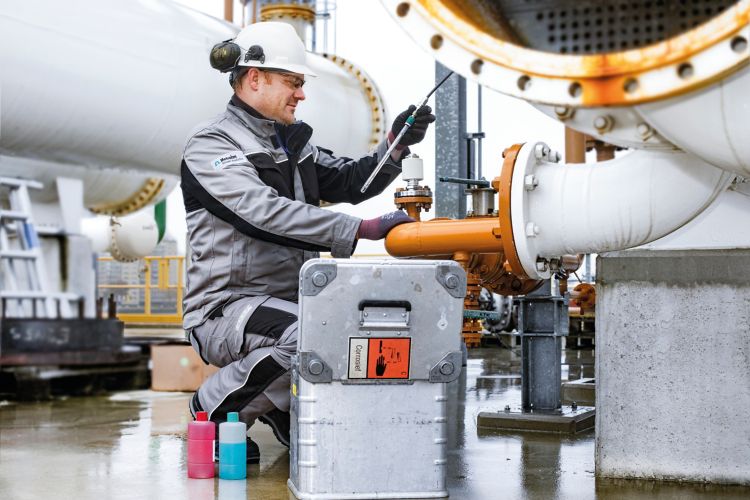
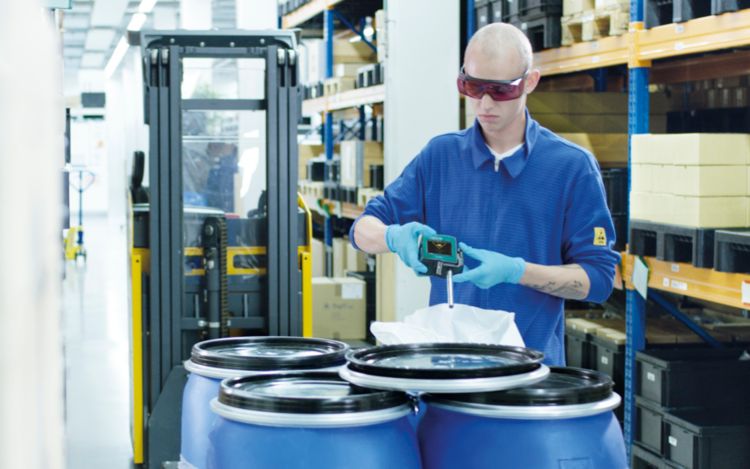
Many industrial sampling procedures require operators to approach equipment containing hot, pressurised, toxic, corrosive, or flammable materials. Even when robust procedures are in place, every manual sampling event introduces some degree of exposure.
Online and inline analysis help reduce this requirement by moving the measurement closer to the process itself.
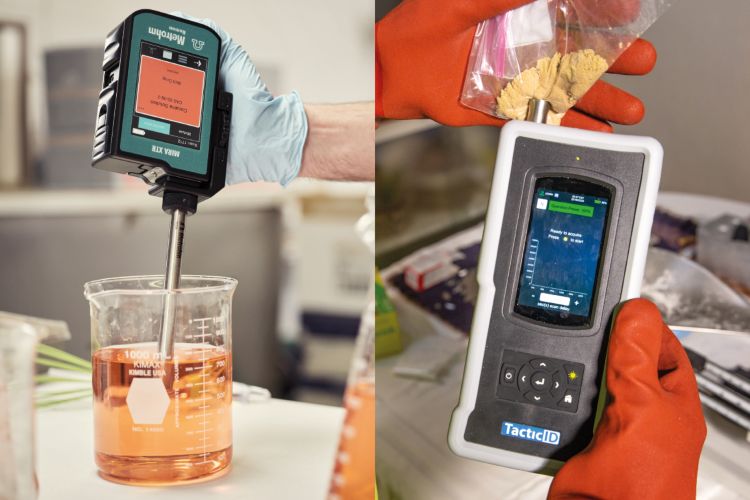
Rather than regularly opening process connections, withdrawing samples, and transporting them to a laboratory, an inline analyser can gather information directly from the process stream. Operators still retain oversight and control, but many measurements can be acquired without repeated intervention.
The objective is not to remove people from the process entirely. Experienced operators, engineers, and technicians remain critical to safe and efficient plant operation. Instead, PAT enables those individuals to make decisions based on richer information while reducing unnecessary physical interaction with potentially hazardous equipment.
A practical example: avoiding the wrong chemistry
Consider a process designed around a specific combination of raw materials and a carefully controlled reaction pathway.
Under normal circumstances, the chemistry behaves as expected and the process remains within its intended operating envelope. However, if the wrong material enters the system or an impurity is introduced, the consequences may extend beyond product quality alone.
Depending on the chemistry involved, the reaction could generate unexpected heat, produce unwanted gases, alter reactions, or create process conditions the system was never intended to handle.
An analytical measurement positioned at the right point in the process provides another opportunity to identify that problem before it develops into something more serious.
This illustrates why PAT should not be viewed solely as a “quality-control tool”. Its real value lies in improving process awareness and enhancing understanding of what is happening inside the system while there is still time to respond.

PAT in hazardous areas
Bringing analytical measurements closer to hazardous processes inevitably raises another question: is the measurement system itself suitable for the environment?
Many industrial plants contain classified areas where flammable gases, vapours, or combustible dusts may create potentially explosive atmospheres. Equipment installed in these environments must therefore be designed and certified appropriately for the conditions in which it will operate.
For example, Metrohm's 2060 RISE is an inline Raman spectroscopy platform developed for real-time process monitoring. Available in configurations suitable for hazardous environments, the system can provide rapid chemical information directly from the process while supporting integration with existing plant infrastructure.
This does not mean a process analyser replaces dedicated safety equipment such as Safety Instrumented Systems (SIS), emergency shutdown systems, gas detection systems, or pressure-relief devices. Rather, it contributes another source of process insight, helping operators understand developing process conditions and identify deviations earlier.
What Raman brings to PAT
Raman spectroscopy is particularly well suited to PAT applications because it can provide rapid, non-destructive chemical information without requiring reagents or extensive sample preparation.
Every material produces a characteristic Raman spectrum, effectively creating a chemical fingerprint. When appropriate measurement methods and calibrations are applied, that information can be used to identify materials, monitor reaction progress, track compositional changes, and detect unexpected substances within a process.
This capability is valuable because it provides direct visibility into chemistry rather than relying solely on indirect process indicators.
For systems such as the 2060 RISE, applications may include reaction monitoring, raw-material verification, fermentation monitoring, mixing operations, impurity detection, and polymer processing. Across all of these applications, the underlying principle remains the same: obtain chemical information directly from the process and make that information available while the process is still running.

From measurement to action
The greatest value of PAT emerges when measurement is connected directly to decision-making.
A modern process analyser can communicate information to operators, control systems, alarm platforms, and process historians. Analytical data then becomes part of a broader operational strategy rather than existing as an isolated measurement.
In simple terms, the sequence looks like this:
Process → Measurement → Information → Decision → Action
Imagine a Raman measurement identifies a gradual change in process composition. Software recognises that the result is moving outside the expected operating range and notifies an operator or control system. An adjustment is made, operating conditions are corrected, and the process is returned to its intended state.
The earlier a developing deviation can be recognised within this chain, the better.
This is also why PAT should not be viewed simply as placing an analyser on a pipe. Measurement technology, sampling interfaces, calibration models, alarm management, data handling, process integration, and operating procedures all play important roles in determining how useful the analytical information ultimately becomes.
The 2060 RISE: bringing analysis closer to the process

The 2060 RISE reflects a broader shift towards real-time process understanding.
It can be installed directly into the process, allowing measurements to be performed without relying entirely on conventional laboratory sampling. Depending on the configuration, multiple measurement points can also be connected through a single interface, enabling visibility across different stages of a process.
For safety-critical applications, the most important consideration is not simply how quickly the system can generate a Raman spectrum…what matters is how effectively that information supports the wider operating strategy of the plant.
The availability of hazardous-area configurations, direct process integration, and options for demanding operating environments illustrates an important principle of modern PAT: process analysis must be designed around the process environment rather than treated as a separate activity taking place on the sidelines.
Where PAT can have the greatest safety impact
Not every process requires continuous analytical measurement. PAT is most valuable where timely chemical information can meaningfully influence how a process is operated.
Examples include:
Reaction monitoring
Following chemical changes in real time can help identify unexpected reaction behaviour before it develops into a larger issue.
Raw-material verification
Confirming the identity or composition of incoming materials can help prevent incorrect materials entering a process.
Tank and storage monitoring
Analytical measurements can identify degradation, contamination, or unexpected changes in stored materials before they affect downstream operations.
Blending and mixing operations
Real-time compositional information provides visibility into whether a mixture is developing as intended, rather than relying solely on a final quality-control sample.
Processes involving hazardous materials
Inline measurements can reduce the need for personnel to repeatedly access difficult or potentially hazardous locations.
Automated process control
Analytical information can be integrated into control strategies, enabling faster identification and response to developing deviations.
Towards a more informed plant

The future of plant safety is not simply about adding more alarms, more instrumentation, or more protective hardware. It is also about improving the quality and timeliness of information available to the people and systems responsible for operating increasingly complex processes.
PAT supports this objective by moving analytical measurements from the laboratory into the process environment itself. The result is a transition from periodic snapshots of process behaviour to continuous insight.
For operators, that means earlier awareness of developing deviations. For engineers and maintenance teams, it means better visibility into process performance. For the plant as a whole, it can mean fewer unnecessary interventions, improved operational control and a greater ability to recognise small problems before they become larger ones.
The 2060 RISE demonstrates how Raman spectroscopy can contribute to this approach by providing rapid chemical information directly from the process, including in demanding and hazardous operating environments.
Ultimately, plant safety depends on maintaining control, and maintaining control depends on understanding what is happening inside the process. PAT cannot eliminate every hazard, nor should it be expected to replace established safety systems. What it can do is provide earlier visibility into process behaviour, helping plants identify deviations sooner, reduce unnecessary exposure, and maintain safer, more informed operation of critical processes.