Du har blitt omdirigert til din lokale versjon av den forespurte siden
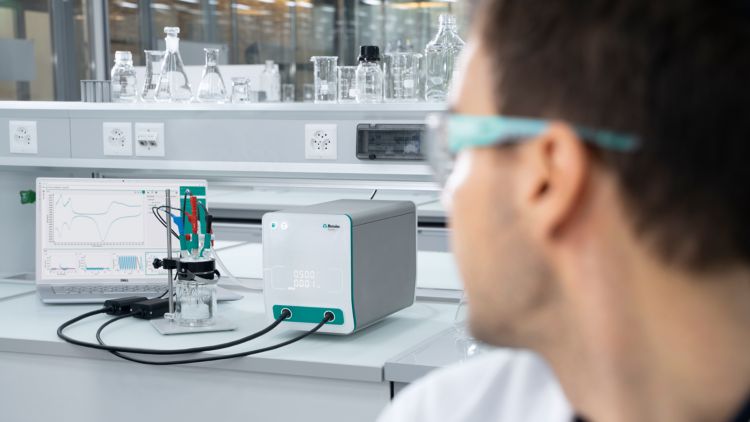
Autolab PGSTAT204

Autolab PGSTAT204

AUT204.S

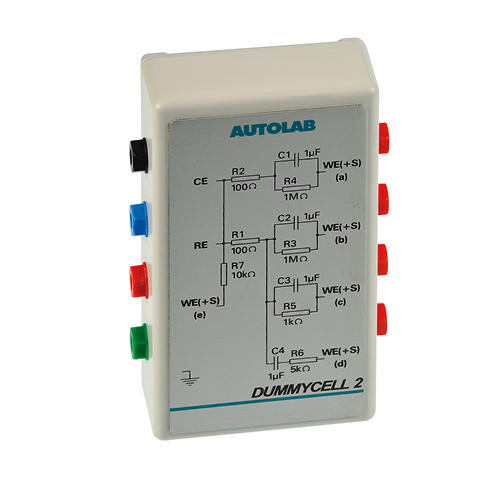
    • Autolab dummy cell
    • AUT.DUMCELL.S
    • Dummy cell for instrument testing.
    • <p>Dummy cell for instrument testing.</p>
    • PCS
    • 1
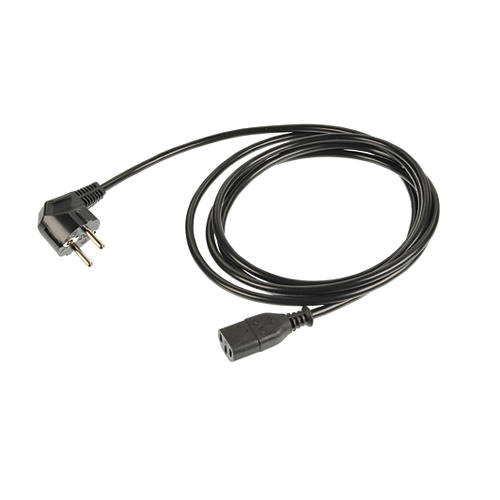
    • Power cable

    • CABLE.PWR
    • Standard power cable for Autolab instruments and accessories.

    • <p>Standard power cable for Autolab instruments and accessories.</p>

    • PCS
    • 1
    • Standard USB cable
    • CBL.USB
    • Standard USB cable for Autolab instruments.
    • <p>Standard USB cable for Autolab instruments.</p>
    • PCS
    • 1
    • Cell cable
    • CELLCBL.M101.204
    • Standard cell cable, 1.5 m, with connection for counter electrode (CE), reference electrode (RE), sense electrode (S), working electrode (WE) and ground for M101/M204/PGSTAT204.
    • <p>Standard cell cable, 1.5 m, with connection for counter electrode (CE), reference electrode (RE), sense electrode (S), working electrode (WE) and ground for M101/M204/PGSTAT204.</p>
    • PCS
    • 1
    • Advanced software for electrochemical research
    • NOVA
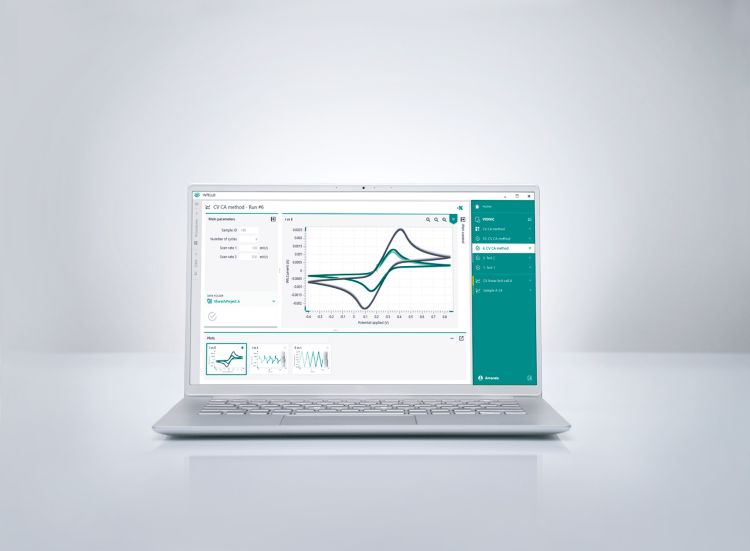
    • NOVA is the package designed to control all the Autolab instruments with USB interface.Designed by electrochemists for electrochemists and integrating over two decades of user experience and the latest .NET software technology, NOVA brings more power and more flexibility to your Autolab potentiostat/galvanostat.NOVA offers the following unique features:Powerful and flexible procedure editor; Clear overview of relevant real-time data; Powerful data analysis and plotting tools; Integrated control for external devices like Metrohm Liquid Handling devices; Download the latest version of NOVA
    • <p>NOVA is the package designed to control all the Autolab instruments with USB interface.<br /><br />Designed by electrochemists for electrochemists and integrating over two decades of user experience and the latest .NET software technology, NOVA brings more power and more flexibility to your Autolab potentiostat/galvanostat.<br /><br />NOVA offers the following unique features:</p><ul><li>Powerful and flexible procedure editor</li><li>Clear overview of relevant real-time data</li><li>Powerful data analysis and plotting tools</li><li>Integrated control for external devices like Metrohm Liquid Handling devices</li></ul><p><a href="https://www.metrohm.com/en/service/software-center/nova.html">Download the latest version of NOVA</a></p>
    • PCS
    • 1
    • Autolab dummy cell
    • AUT.DUMCELL.S
    • Dummy cell for instrument testing.
    • <p>Dummy cell for instrument testing.</p>
    • PCS
    • 1
    • Power cable
    • CABLE.PWR
    • Standard power cable for Autolab instruments and accessories.
    • <p>Standard power cable for Autolab instruments and accessories.</p>
    • PCS
    • 1
    • Standard USB cable
    • CBL.USB
    • Standard USB cable for Autolab instruments.
    • <p>Standard USB cable for Autolab instruments.</p>
    • PCS
    • 1
    • Cell cable
    • CELLCBL.M101.204
    • Standard cell cable, 1.5 m, with connection for counter electrode (CE), reference electrode (RE), sense electrode (S), working electrode (WE) and ground for M101/M204/PGSTAT204.
    • <p>Standard cell cable, 1.5 m, with connection for counter electrode (CE), reference electrode (RE), sense electrode (S), working electrode (WE) and ground for M101/M204/PGSTAT204.</p>
    • PCS
    • 1
    • Advanced software for electrochemical research
    • NOVA
    • NOVA is the package designed to control all the Autolab instruments with USB interface.Designed by electrochemists for electrochemists and integrating over two decades of user experience and the latest .NET software technology, NOVA brings more power and more flexibility to your Autolab potentiostat/galvanostat.NOVA offers the following unique features:Powerful and flexible procedure editor; Clear overview of relevant real-time data; Powerful data analysis and plotting tools; Integrated control for external devices like Metrohm Liquid Handling devices; Download the latest version of NOVA
    • <p>NOVA is the package designed to control all the Autolab instruments with USB interface.<br /><br />Designed by electrochemists for electrochemists and integrating over two decades of user experience and the latest .NET software technology, NOVA brings more power and more flexibility to your Autolab potentiostat/galvanostat.<br /><br />NOVA offers the following unique features:</p><ul><li>Powerful and flexible procedure editor</li><li>Clear overview of relevant real-time data</li><li>Powerful data analysis and plotting tools</li><li>Integrated control for external devices like Metrohm Liquid Handling devices</li></ul><p><a href="https://www.metrohm.com/en/service/software-center/nova.html">Download the latest version of NOVA</a></p>
    • PCS
    • 1
    • Black Alligator Clamp
    • ALL.CLIP.BLACK
    • Black alligator clamp for connections to electrodes in the electrochemical cell.  
    • <p><br />Black alligator clamp for connections to electrodes in the electrochemical cell. <br />&nbsp;</p>
    • PCS
    • 1
    • Red Alligator Clamp 
    • ALL.CLIP.RED
    • Red alligator clamp for connections to electrodes in the electrochemical cell.  
    • <p><br />Red alligator clamp for connections to electrodes in the electrochemical cell. <br />&nbsp;</p>
    • PCS
    • 1
    • Field case for PGSTAT204
    • AUT204.CASE
    • The PGSTAT204 field case is designed to conveniently store or carry the Autolab PGSTAT204 and its components. The field case for PGSTAT204 provides room for the PGSTAT204, power cable, dummy cell, cell cable, monitor cable, NOVA Getting Started Manual and NOVA installation CD.
    • <p>The PGSTAT204 field case is designed to conveniently store or carry the Autolab PGSTAT204 and its components. The field case for PGSTAT204 provides room for the PGSTAT204, power cable, dummy cell, cell cable, monitor cable, NOVA Getting Started Manual and NOVA installation CD.</p>
    • PCS
    • 1
    • Dual mode bipotentiostat module
    • BA.MAC.204
    • The BA is a dual-mode bipotentiostat module that converts the Autolab into a double channel potentiostat with which measurements on 2 working electrodes can be performed sharing the same counter and reference electrode.In the Bipotentiostat mode, a fixed potential is applied to the second channel (second Working Electrode) while applying a potential step or a sweep to the first channel (first Working Electrode). In the Scanning Bipotentiostat mode, a potential offset with respect to the first channel is applied to the second channel.
    • <p>The BA is a dual-mode bipotentiostat module that converts the Autolab into a double channel potentiostat with which measurements on 2 working electrodes can be performed sharing the same counter and reference electrode.<br /><br />In the Bipotentiostat mode, a fixed potential is applied to the second channel (second Working Electrode) while applying a potential step or a sweep to the first channel (first Working Electrode). In the Scanning Bipotentiostat mode, a potential offset with respect to the first channel is applied to the second channel.</p>
    • PCS
    • 1
    • Booster 10A
    • BSTR10A.PG204.M204.S
    • The Booster 10A module increases the maximum current of the PGSTAT204 or M204 to 10 Ampere. The compliance voltage of the system is 20 V in combination with the Booster10A.With its fast response time, the Autolab Booster 10A has been optimized to perform electrochemical impedance measurements, in combination with the FRA32M module, on fuel cells, batteries and super-capacitors. The booster is able to handle active as well as passive cells. The Booster 10A can be used to measure the charge and discharge characteristics of super-capacitors, perform measurements on fuel cells or perform DC or AC measurements on large area electrodes.
    • <p><span style="background-color: rgb(255, 255, 255); font-family: &quot;Neue Frutiger World&quot;, Arial, sans-serif; font-size: 16px;">The Booster 10A module increases the maximum current of the PGSTAT204 or M204 to 10 Ampere. The compliance voltage of the system is 20 V in combination with the Booster10A.</span></p><p style="font-size: 16px; line-height: 23px; font-family: &quot;Neue Frutiger World&quot;, Arial, sans-serif; background-color: rgb(255, 255, 255);">With its fast response time, the Autolab Booster 10A has been optimized to perform electrochemical impedance measurements, in combination with the FRA32M module, on fuel cells, batteries and super-capacitors. The booster is able to handle active as well as passive cells. The Booster 10A can be used to measure the charge and discharge characteristics of super-capacitors, perform measurements on fuel cells or perform DC or AC measurements on large area electrodes.</p>
    • PCS
    • 1
    • Monitor cable for M101/M204/PGSTAT204
    • CBL.MONIT.MAC.204.S
    • Monitor cable for M101/M204/PGSTAT204, providing connections for analog outputs (Eout, iout and Vout) and input (Vin).
    • <p>Monitor cable for M101/M204/PGSTAT204, providing connections for analog outputs (E<sub>out</sub>, i<sub>out</sub> and V<sub>out</sub>) and input (V<sub>in</sub>).</p>
    • PCS
    • 1
    • Electrochemical Quartz Crystal Microbalance module
    • EQCM.MAC.204.S
    • The EQCM module provides the means to perform Electrochemical Quartz Crystal Microbalance experiments. The EQCM module measures a mass change per unit area by recording the change in resonant frequency of a quartz crystal oscillator.Measurements in the sub μg/cm2 are possible. The EQCM can be fitted with 6 MHz, AT-cut crystals.The EQCM module is supplied with a suitable electrochemical cell, reference and counter electrode and two 6 MHz gold-coated crystals. 
    • <p>The EQCM module provides the means to perform Electrochemical Quartz Crystal Microbalance experiments. The EQCM module measures a mass change per unit area by recording the change in resonant frequency of a quartz crystal oscillator.</p><p><br />Measurements in the sub &mu;g/cm2 are possible. The EQCM can be fitted with 6 MHz, AT-cut crystals.<br />The EQCM module is supplied with a suitable electrochemical cell, reference and counter electrode and two 6 MHz gold-coated crystals.<br />&nbsp;</p>
    • PCS
    • 1
    • Electrochemical Impedance Spectroscopy Module
    • FRA32M.MAC.204.S
    • The FRA32M provides the means to perform impedance and electrochemical impedance measurements in combination with the Autolab. This module allows one to perform both potentiostatic and galvanostatic impedance measurements over a wide frequency range of 10 µHz to 32 MHz (limited to 1 MHz in combination with the Autolab PGSTAT). In addition to the classical EIS, the NOVA software also allows the users to modulate other outside signals such as rotation speed of a rotating disk electrode or the frequency of a light source to perform Electro-hydrodynamic or Photo-modulated impedance spectroscopy.The FRA32M module comes with a powerful fit and simulation software for the analysis of impedance data. 
    • <p>The FRA32M provides the means to perform impedance and electrochemical impedance measurements in combination with the Autolab. This module allows one to perform both potentiostatic and galvanostatic impedance measurements over a wide frequency range of 10 &micro;Hz to 32 MHz (limited to 1 MHz in combination with the Autolab PGSTAT). In addition to the classical EIS, the NOVA software also allows the users to modulate other outside signals such as rotation speed of a rotating disk electrode or the frequency of a light source to perform Electro-hydrodynamic or Photo-modulated impedance spectroscopy.</p><p><br />The FRA32M module comes with a powerful fit and simulation software for the analysis of impedance data.<br />&nbsp;</p>
    • PCS
    • 1
    • Multiplexer module
    • MUX.MAC.204.S
    • The MUX module series allows you to perform electrochemical experiments on multiple cells or multiple working electrodes, sequentially. The cell to perform measurement on can be selected either manually or automatically using the sequencing option of NOVA. Metrohm Autolab offers two types of MUX modules.• MUX.MULTI4 - Used to multiplex all four connections from the Autolab. This allows sequential measurements on complete electrochemical cells, up to 64 cells with increments of 4.• MUX.SCNR16 - Used to multiplex the working electrode connection of the Autolab. This allows sequential measurements on cells that share the same counter, reference and sense electrode but different working electrode, up to 255 different working electrodes with increments of 16.• MUX.SCNR8 - Used to multiplex the reference and sense electrode connections of the Autolab. This allows sequential voltage sensing across different electrochemical cells, up to 128 cells with increments of 8. 
    • <p>The MUX module series allows you to perform electrochemical experiments on multiple cells or multiple working electrodes, sequentially. The cell to perform measurement on can be selected either manually or automatically using the sequencing option of NOVA. Metrohm Autolab offers two types of MUX modules.</p><p>&bull; MUX.MULTI4 - Used to multiplex all four connections from the Autolab. This allows sequential measurements on complete electrochemical cells, up to 64 cells with increments of 4.</p><p>&bull; MUX.SCNR16 - Used to multiplex the working electrode connection of the Autolab. This allows sequential measurements on cells that share the same counter, reference and sense electrode but different working electrode, up to 255 different working electrodes with increments of 16.</p><p>&bull; MUX.SCNR8 - Used to multiplex the reference and sense electrode connections of the Autolab. This allows sequential voltage sensing across different electrochemical cells, up to 128 cells with increments of 8.<br />&nbsp;</p>
    • PCS
    • 1
    • Software development kit
    • SDK
    • The Autolab Software Development Kit (Autolab SDK) is designed to control the Autolab instrument from different external applications such as LabVIEW, Visual Basic for Applications (VBA), scripting etc. With the Autolab SDK the external application can be used to measure complete procedures or control individual Autolab modules.In order to use the Autolab SDK from other applications, these applications must have the possibility to use .NET assemblies or in the case of 'older' applications to use COM assemblies. How to integrate these assemblies is explained in the manual of the application.The Autolab SDK is compatible with Autolab NOVA however it does not require NOVA to be installed.
    • <p>The Autolab Software Development Kit (Autolab SDK) is designed to control the Autolab instrument from different external applications such as LabVIEW, Visual Basic for Applications (VBA), scripting etc. With the Autolab SDK the external application can be used to measure complete procedures or control individual Autolab modules.<br /><br />In order to use the Autolab SDK from other applications, these applications must have the possibility to use .NET assemblies or in the case of 'older' applications to use COM assemblies. How to integrate these assemblies is explained in the manual of the application.<br /><br />The Autolab SDK is compatible with Autolab NOVA however it does not require NOVA to be installed.</p>
    • PCS
    • 1
    • Voltage and pH measurement module
    • pX1000.MAC.204.S
    • The pX1000 allows the measurements of pH or pX values during electrochemical experiments. This module also provides an additional Pt1000 input which allows recording of the temperature during the experiments, either through a Pt1000 sensor or through a combined pH/Pt1000 sensor. The temperature measurement allows automatic pH corrections.The pX1000 module can also be used as an additional differential electrometer, with the same specifications as the main Autolab electrometer. The pX1000 module is compatible with the Metrohm pH and temperature sensors. The user can connect any pH, pX or ‘double’ electrode to the pX1000 module. In case an electrode other than a pH electrode is used, the output is given as the voltage difference that is measured between the electrodes making it possible to connect a detection electrode to perform coulometric titration. The pX1000 module also works as an independent pH meter. 
    • <p>The pX1000 allows the measurements of pH or pX values during electrochemical experiments. This module also provides an additional Pt1000 input which allows recording of the temperature during the experiments, either through a Pt1000 sensor or through a combined pH/Pt1000 sensor. The temperature measurement allows automatic pH corrections.</p><p><br />The pX1000 module can also be used as an additional differential electrometer, with the same specifications as the main Autolab electrometer. The pX1000 module is compatible with the Metrohm pH and temperature sensors.<br />&nbsp;</p><p>The user can connect any pH, pX or &lsquo;double&rsquo; electrode to the pX1000 module. In case an electrode other than a pH electrode is used, the output is given as the voltage difference that is measured between the electrodes making it possible to connect a detection electrode to perform coulometric titration. The pX1000 module also works as an independent pH meter.<br />&nbsp;</p>
    • PCS
    • 1