
- All (1213)
- Rodziny produktów (9)
- Modele produktów (123)
- Aplikacje (805)
- Elektrody (64)
- Części zamienne (23)
- Kolumny (17)
- Oprogramowanie (5)
- Informacje z różnych gałęzi przemysłu (81)
- Dokumenty (57)
- Aktualności (5)
- Industries (3)
- Inne treści (16)
- Support & service (5)
Rodziny produktów
Rodziny produktów (9)Modele produktów
Modele produktów (123)


Aplikacje
Aplikacje (805)

Elektrody do water
Elektrody (64)Accessories do water
Części zamienne (23)Kolumny do water
Kolumny (17)Oprogramowanie do water
Oprogramowanie (5)Inspirujące spostrzeżenia branżowe do water
Informacje z różnych gałęzi przemysłu (81)Instrukcje & broszury do water
Dokumenty (57)Aktualności do water
Aktualności (5)Industries do water
Industries (3)Inne treści
Zawartość (16)Bezkonkurencyjny serwis i wsparcie do water
Support & service (5)940 Professional IC Vario
Jedno urządzenie – szeroka elstyczność: Chromatografia jonowa z wieloma możliwościami konfiguracji, aby dostosować system do potrzeb klienta.
Kulometry Karla Fischera - oznaczanie zawartości wody
Miareczkowanie kulometryczne Karla Fischera jest idealną metodą do oznaczania niskiej zawartości wilgoci oraz wody w różnych próbkach. Najłatwiej przeprowadzić je z wykorzystaniem kulometru KF.
Eco KF Titrator
Miareczkowanie wolumetryczne Karla Fischera jest standardową analizą w laboratoriach kontroli jakości, jeśli chodzi o oznaczenie wody w próbkach, takich jak produkty petrochemiczne lub farby.
Automatyzacja dla KF Titrando
Automatyczne przygotowanie próbki w sytuacjach, kiedy nie można miareczkować bezpośrednio.
930 Compact IC Flex
930 Compact IC Flex - jednokanałowy, wysokociśnieniowy chromatograf jonowy do rutynowych analiz laboratoryjnych. Pozwala na czułe oznaczanie anionów, kationów i substancji polarnych.
Przygotowanie próbki dla KF Ti-Touch
Niezawodne rozwiązania dla próbek, których nie można bezpośrednio zmiareczkować.
Analizator procesowy 2060 IC Process Analyzer
Kompletny i elastyczny system do monitorowania online związków jonowych w mediach wodnych dla stężeń od ng/L do %.
Rancimat - stabilność oksydacyjna, ocena czasu indukcji
Metoda Rancimat - to test przyśpieszonego starzenia produktów takich jak naturalnych olejów, tłuszczów, kosmetyków, biodiesla, a także polimerów zawierających chlor np. PVC. Parametrem opisującym to zjawisko jest "czas indukcji", "okres indukcji", "indeks stabilności produktu", określający czas, jaki upływa do momentu pojawienia się wtórnych produktów reakcji. Im dłuższy czas indukcji, tym próbka jest bardziej stabilna. Rancimat stosuje się do oceny czasu indukcji lub wskaźnika stabilności oksydacyjnej (OSI) żywności zawierającej tłuszcz, kosmetyków oraz naturalnych tłuszczów i olejów.
Analizator procesowy 2035 Process Analyzers
Analizatory procesowe dostępne w wersjach potencjometrycznych, fotometrycznych i termometrycznych z opcjonalnym dodatkowym pomiarem pH i przewodności.
MATi 14
Fully automatic measurement of waters with low conductivity in accordance with USP 645Automated system for the determination of conductivity in sterile waters in accordance with USP 645. Up to 28 samples can be placed on the rack and processed within one series. The sample is transferred from the sample beaker into the external titration cell and analyzed completely automatically in accordance with the 3-stage USP Standard procedure. The system is controlled by the OMNIS software.The thermostat for controlling the temperature of the external titration vessel must be ordered separately.
MATi 01
Fully automated water analysisPC-controlled, fully automatic water analysis system with a rapid measurement system for the precise sample transfer of 100 mL samples. After the conductivity measurement, pH value, alkalinity and Ca/Mg content are determined in an external cell. A maximum of 59 samples can be placed on the rack. The control of this system is handled by the proven OMNIS software.
2.852.0150
852 Titrando with generator electrode without diaphragmCoulometer including generator electrode without diaphragm and complete volumetric titration cellCoulometry is the ideal method for water content determination in liquids, solids, and gases when it comes to water content determination in the trace range (10 µg to 10 mg absolute water). In addition, coulometry is an absolute method and thus no titer determination is necessary.Recommended coulometry measuring range: 10 µg - 200 mg absolute water.The 852 Titrando controls not only coulometric, but also volumetric Karl Fischer titration.For use with OMNIS Software, tiamo software, or Touch Control unit. Compliance with GMP/GLP and FDA regulations such as 21 CFR Part 11, if required.
2.852.0050
852 Titrando with generator electrode with diaphragmCoulometer including generator electrode with diaphragm, 801 Magnetic Stirrer, and complete volumetric titration cell.Coulometry is the ideal method for water content determination in liquids, solids, and gases when it comes to water content determination in the trace range (10 µg to 10 mg absolute water). In addition, coulometry is an absolute method and thus no titer determination is necessary.Recommended coulometry measuring range: 10 µg - 200 mg absolute waterThe 852 Titrando controls not only coulometric, but also volumetric Karl Fischer titration.For use with OMNIS Software, tiamo software, or Touch Control unit. Compliance with GMP/GLP and FDA regulations such as 21 CFR Part 11, if required.
2.851.0110
851 Titrando with generator electrode without diaphragmCoulometer including generator electrode without diaphragm.Coulometry is the ideal method for water content determination in liquids, solids, and gases when it comes to water content determination in the trace range (10 µg to 10 mg absolute water). In addition, coulometry is an absolute method and thus no titer determination is necessary.Coulometric titrations are carried out easily and quickly with the 851 Titrando.Recommended measuring range: 10 µg - 200 mg absolute water.For use with OMNIS Software, tiamo software, or Touch Control unit. Compliance with GMP/GLP and FDA regulations such as 21 CFR Part 11, if required.
2.851.0010
851 Titrando with generator electrode with diaphragmCoulometer including generator electrode with diaphragm and 801 Magnetic Stirrer.Coulometry is the ideal method for water content determination in liquids, solids, and gases when it comes to water content determination in the trace range (10 µg to 10 mg absolute water). In addition, coulometry is an absolute method and thus no titer determination is necessary.Coulometric titrations are carried out easily and quickly with the 851 Titrando.Recommended measuring range: 10 µg - 200 mg absolute waterFor use with OMNIS Software, tiamo software, or Touch Control unit. Compliance with GMP/GLP and FDA regulations such as 21 CFR Part 11, if required
2.917.0010
917 Coulometer with generator electrode with diaphragmThe 917 Coulometer is a compact titrator for coulometric water determination in accordance with Karl Fischer. ''Reduced to the max'' – operating module, stirrer and pump are integrated in the 917 Coulometer for rapid reagent replacement. This saves a great deal of space on the laboratory table.Recommended measuring range: 10 µg…200 mg absolute waterCoulometry is the ideal method for water content determination in liquids, solids and gases in the trace range. In addition, coulometry is an absolute method and thus no titer determination is necessary.The 917 Coulometer now also fulfills FDA Regulation 21 CFR, Part 11. This means you are always on the safe side when it comes to audits.
2.917.0110
917 Coulometer with generator electrode without diaphragmThe 917 Coulometer is a compact titrator for coulometric water determination in accordance with Karl Fischer. ''Reduced to the max'' – operating module, stirrer and pump are integrated in the 917 Coulometer for rapid reagent replacement. This saves a great deal of space on the laboratory table.Recommended measuring range: 10 µg…200 mg absolute waterCoulometry is the ideal method for water content determination in liquids, solids and gases in the trace range. In addition, coulometry is an absolute method and thus no titer determination is necessary.The 917 Coulometer now also fulfills FDA Regulation 21 CFR, Part 11. This means you are always on the safe side when it comes to audits.
2.1018.0010
OMNIS Coulometer without stirrerOMNIS Coulometer without magnetic stirrer for stand-alone operation or as the heart of an OMNIS titration system. The coulometer can be enhanced with additional titration, dosing or coulometer modules.Coulometry is the ideal method for water content determination in the trace range (10 μg to 10 mg absolute water content) in liquids, solids and gases. In addition, coulometric Karl Fischer titration is an absolute method making titer determination unnecessary.
2.1018.0020
OMNIS Coulometer with stirrerOMNIS Coulometer with magnetic stirrer for stand-alone operation or as the heart of an OMNIS titration system. The coulometer can be enhanced with additional titration, dosing or coulometer modules.Coulometry is the ideal method for water content determination in the trace range (10 μg to 10 mg absolute water content) in liquids, solids and gases. In addition, coulometric Karl Fischer titration is an absolute method making titer determination unnecessary.
MATi 10
Automated volumetric KF titrationsFully automated system for volumetric Karl Fischer water content determination in up to 24 samples. The system is controlled with OMNIS software and consists of an 814 USB Sample Processor, a 901 Titrando and extensive accessories.The samples are weighed out into the beakers, sealed to protect against humidity and placed on the rack. Before the actual titration, they are dissolved in a defined volume of KF working medium, after which the water content is titrated.This method is particularly suitable for samples that dissolve readily in the KF working medium. In addition, solubility can be improved by using suitable solubility promoters.
MATi-11
Automated volumetric KF titration including sample preparationFully automated system for volumetric Karl Fischer water content determination in up to 53 samples. This system is controlled with OMNIS software and consists of an 815 Robotic USB Sample Processor XL, a 901 Titrando, a Polytron PT 1300 D and extensive accessories.The samples are weighed out into beakers, sealed to protect against humidity and placed on the rack. Before the actual titration, a defined volume of KF reagent is added and the sample is pulverized with the help of a Polytron. The water that is released is titrated afterwards. Even samples of poor solubility, e.g., tablets, can be analyzed without difficulty with this method. The use of solubility promoters can be avoided in this way.
2.913.0020
913 pH/DO MeterThe 913 pH/DO Meter offers two measuring inputs for determining the pH value and dissolved oxygen in water.Portable meter with built-in battery pack and two galvanically isolated measuring inputs.; Analog pH measuring input for standard pH electrodes; Digital measuring input for O2 measurement using O2 Lumitrode or intelligent pH electrodes; Robust, water-tight, and dust-tight housing (IP67) for tough outdoor and laboratory use; LCD color display with background illumination making results easy to read; USB interface for simple data export to PC or printer; Large internal memory (10,000 data sets); Pin-protected User and Expert modes, prevents unwanted parameter changes; GLP-compliant printout and data export with User ID and timestamp;
2.1008.0010
Eco TitratorThe compact Eco Titrator with integrated magnetic stirrer and touch-sensitive User Interface is ideal for routine analysis. It provides GLP-compliant results with minimum space requirements at all times (approx. DIN A4).Universally compatible with almost all potentiometric titrations, such as, for example, forFood products: Acid content, chloride, Vitamin C, iodine and peroxide number in fats; Water analysis: Carbonate and Ca/Mg hardness, chloride, sulfate, permanganate index; Petrochemistry: Acid/base number, sulfide & mercaptans, chloride, bromine number; Electroplating: Total acid, metal content, chloride; Surfactant analysis: Anionic, cationic and non-ionic surfactants; Photometry with the Optrode: p and m value, metals, water hardness;
2.914.0030
914 pH/DO/ConductometerPortable two-channel pH/DO/conductivity measuring instrument with intelligent measuring input for the parallel measurement of pH/mV and conductivity or dissolved oxygen and conductivity in water.Parallel measurement of pH value and conductivity or of dissolved oxygen and conductivity; Analog conductivity measuring input for the 4-conductor conductivity measuring cells; Digital measuring input for the intelligent pH electrodes or the intelligent O2 Lumitrode; Robust, water-tight, and dust-tight housing (IP67) for tough outdoor and laboratory use; LCD color display with background illumination for simple legibility of the results; USB interface for simple data export to the PC or the printer; Large internal memory (10,000 data sets); Pin-protected User mode and Expert mode, prevents unwanted parameter changes; GLP-compatible printout and data export with User ID and timestamp;
2.913.0220
913 pH/DO Meter, laboratory versionPortable two-channel measuring instrument for measuring pH/mV and for measuring the amount of dissolved oxygen in water. You will be optimally equipped for measurements in the field and in the laboratory with this battery-operated measuring instrument with a stand plate.Measuring instrument with built-in battery pack and two galvanically isolated measuring inputs.; Analog pH measuring input for standard pH electrodes; Digital pH measuring input for the intelligent pH electrodes or O2 Lumitrode; Robust, water-tight, and dust-tight housing (IP67) for tough outdoor and laboratory use; LCD color display with background illumination making results easy to read; USB interface for simple data export to PC or printer; Large internal memory (10,000 data sets); Pin-protected User mode and Expert mode, prevents unwanted parameter changes; GLP-compliant printout and data export with User ID and timestamp; With stand plate and electrode holder;
A062026010C
2026 TitrolyzerThe 2026 Titrolyzer performs potentiometric titrations by means of a high precision burette system and high performance electrodes. Different titration types include acid/base, redox and precipitation titrations. A self-finding inflection point technique can be applied for most applications. It is also possible to use the analyzer to measure pH in situations where inline sensors would otherwise fail.Additionally, the 2026 Titrolyzer can perform the dynamic standard addition method by means of the high precision burette and high performance Ion Selective Electrodes (ISE). This method adapts the standard addition volume to the actual sample concentration by means of a dynamic differential approach. Moreover it takes into account ISE slope values over several ranges. This means that ISEs can be used to their ultimate low or high measuring ranges. An accompanying temperature measurement eliminates possible temperature effects on the analysis results.Several markets are a perfect fit for the 2026 Titrolyzer such as chemical, petrochemical, semiconductor, environmental, mining, steel/metal, and potable water.Selected applications include:Acidic or alkaline solutions; Chloride; Hydrogen peroxide; Hardness; Cyanide; Copper; Hydrogen fluoride; pH; and more;
2.912.0010
912 ConductometerPortable single-channel conductivity measuring instrument for measuring conductivity/TDS/salinity and temperature. You will be optimally equipped for measurements in the field with this battery-operated measuring instrument. Portable conductivity measuring instrument with built-in battery pack; Analog conductivity measuring input for the 4-wire conductivity measuring cells from Metrohm; Robust, water-tight and dust-tight housing (IP67) for hard outdoor and laboratory use; LCD color display with background illumination for simple legibility of the results; USB interface for simple data export to PC or printer; Large internal memory (10,000 data sets); Pin-protected User and Expert modes, prevents unwanted parameter changes; GLP-compliant printout and data export with User ID and timestamp;
2.912.0110
912 Conductometer with accessories casePortable single-channel conductivity measuring instrument for measuring conductivity/TDS/salinity and temperature. You will be optimally equipped for measurements outdoors with this battery-operated measuring instrument. Portable conductivity measuring instrument with built-in battery pack; Analog conductivity measuring input for the 4-conductor conductivity measuring cells from Metrohm; Robust, water-tight, and dust-tight housing (IP67) for tough outdoor and laboratory use; LCD color display with background illumination making results easy to read; USB interface for simple data export to PC or printer; Large internal memory (10,000 data sets); Pin-protected User mode and Expert mode, prevents unwanted parameter changes; GLP-compliant printout and data export with User ID and timestamp; Robust transport case for routine measurements in the field;
2.912.0210
912 Conductometer, laboratory versionPortable single-channel conductivity measuring instrument for measuring conductivity/TDS/salinity and temperature. You will be optimally equipped for measurements in the field and in the laboratory with this battery-operated measuring instrument with a stand plate. Portable conductivity measuring instrument with built-in battery pack; Analog conductivity measuring input for the 4-conductor conductivity measuring cells from Metrohm; Robust, water-tight, and dust-tight housing (IP67) for tough outdoor and laboratory use; LCD color display with background illumination making results easy to read; USB interface for simple data export to PC or printer; Large internal memory (10,000 data sets); Pin-protected User mode and Expert mode, prevents unwanted parameter changes; GLP-compliant printout and data export with User ID and timestamp;
2.913.0010
913 pH MeterPortable two-channel pH measuring instrument for measuring pH/mV and temperature. You will be optimally equipped for measurements in the field with this battery-operated measuring instrument. Portable pH meter with built-in battery pack and two galvanically isolated pH measuring inputs; Analog pH measuring input for Metrohm standard pH electrodes; Digital pH measuring input for the intelligent pH electrodes from Metrohm; Robust, water-tight and dust-tight housing (IP67) for hard outdoor and laboratory use; LCD color display with background illumination for simple legibility of the results; USB interface for simple data export to PC or printer; Large internal memory (10,000 data sets); Pin-protected User and Expert modes, prevents unwanted parameter changes; GLP-compliant printout and data export with User ID and timestamp;
2.913.0110
913 pH Meter with accessories casePortable two-channel pH measuring instrument for measuring pH/mV and temperature. You will be optimally equipped for measurements outdoors with this battery-operated measuring instrument. Portable pH meter with built-in battery pack and two galvanically isolated pH measuring inputs.; Analog pH measuring input for Metrohm standard pH electrodes; Digital pH measuring input for the intelligent pH electrodes from Metrohm; Robust, water-tight, and dust-tight housing (IP67) for tough outdoor and laboratory use; LCD color display with background illumination making results easy to read; USB interface for simple data export to PC or printer; Large internal memory (10,000 data sets); Pin-protected User mode and Expert mode, prevents unwanted parameter changes; GLP-compliant printout and data export with User ID and timestamp; Robust transport case for routine measurements in the field;
2.913.0210
913 pH Meter, laboratory versionPortable two-channel pH measuring instrument for measuring pH/mV and temperature. You will be optimally equipped for measurements in the field and in the laboratory with this battery-operated measuring instrument with a stand plate. Portable pH meter with built-in battery pack and two galvanically isolated pH measuring inputs.; Analog pH measuring input for Metrohm standard pH electrodes; Digital pH measuring input for the intelligent pH electrodes from Metrohm; Robust, water-tight, and dust-tight housing (IP67) for tough outdoor and laboratory use; LCD color display with background illumination making results easy to read; USB interface for simple data export to PC or printer; Large internal memory (10,000 data sets); Pin-protected User mode and Expert mode, prevents unwanted parameter changes; GLP-compliant printout and data export with User ID and timestamp;
2.914.0020
914 pH/ConductometerTwo-channel pH/conductivity measuring instrument for measuring pH/mV/conductivity/TDS/salinity and temperature. You will be optimally equipped for measurements in the field with this battery-operated measuring instrument. Portable pH/conductivity measuring instrument with built-in battery pack; Parallel measurement of pH value and conductivity; Analog pH measuring input for Metrohm standard pH electrodes; Analog conductivity measuring input for the 4-conductor conductivity measuring cells from Metrohm; Robust, water-tight, and dust-tight housing (IP67) for tough outdoor and laboratory use; LCD color display with background illumination making results easy to read; USB interface for simple data export to PC or printer; Large internal memory (10,000 data sets); Pin-protected User mode and Expert mode, prevents unwanted parameter changes; GLP-compliant printout and data export with User ID and timestamp;
2.914.0120
914 pH/Conductometer with accessories casePortable two-channel pH/conductivity measuring instrument for parallel measurement of pH/mV/conductivity/TDS/salinity and temperature. You will be optimally equipped for measurements outdoors with this battery-operated measuring instrument. Parallel measurement of pH value and conductivity; Analog pH measuring input for Metrohm standard pH electrodes; Analog conductivity measuring input for the 4-conductor conductivity measuring cells from Metrohm; Robust, water-tight, and dust-tight housing (IP67) for tough outdoor and laboratory use; LCD color display with background illumination making results easy to read; USB interface for simple data export to PC or printer; Large internal memory (10,000 data sets); Pin-protected User mode and Expert mode, prevents unwanted parameter changes; GLP-compliant printout and data export with User ID and timestamp; Robust transport case for routine measurements in the field;
2.913.0120
913 pH/DO Meter with accessories casePortable two-channel measuring instrument for measuring pH/mV and dissolved oxygen. This package includes everything needed to get started at once: measuring instrument, sensors, calibration solutions – and all packaged in a robust transport case.Portable pH meter with built-in battery pack and two galvanically isolated pH measuring inputs.; Analog pH measuring input for standard pH electrodes; Digital measuring input for the intelligent pH electrodes or the O2 Lumitrode; Robust, water-tight, and dust-tight housing (IP67) for tough outdoor and laboratory use; LCD color display with background illumination making results easy to read; USB interface for simple data export to PC or printer; Large internal memory (10,000 data sets); Pin-protected User mode and Expert mode, prevents unwanted parameter changes; GLP-compliant printout and data export with User ID and timestamp; Robust transport case for routine measurements in the field;
2.914.0220
914 pH/Conductometer, laboratory versionPortable two-channel pH/conductivity measuring instrument for measuring pH/mV/conductivity/TDS/salinity and temperature. You will be optimally equipped for measurements in the field and in the laboratory with this battery-operated measuring instrument with a stand plate. Analog pH measuring input for Metrohm standard pH electrodes; Analog conductivity measuring input for the 4-conductor conductivity measuring cells from Metrohm; Laboratory pH and conductivity measuring instrument with built-in battery pack; Parallel measurement of pH value and conductivity; Robust, water-tight, and dust-tight housing (IP67) for tough outdoor and laboratory use; LCD color display with background illumination making results easy to read; USB interface for simple data export to PC or printer; Large internal memory (10,000 data sets); Pin-protected User mode and Expert mode, prevents unwanted parameter changes; GLP-compliant printout and data export with User ID and timestamp;
2.914.0130
914 pH/DO/Conductometer with accessories casePortable 2-channel pH/DO/conductivity measuring instrument with analog and digital measuring input for parallel measurements of pH/mV/conductivity or dissolved oxygen and conductivity. You will be optimally equipped for measurements outdoors with this battery-operated measuring instrument in a transport case.Parallel measurement of pH value and conductivity; Parallel measurement of dissolved oxygen and conductivity; Analog conductivity measuring input for the 4-conductor conductivity measuring cells from Metrohm; Digital measuring input for the intelligent pH electrodes and O2 Lumitrode; Robust, water-tight, and dust-tight housing (IP67) for hard outdoor and laboratory use; LCD color display with background illumination making results easy to read; USB interface for simple data export to PC or printer; Large internal memory (10,000 data sets); Pin-protected User mode and Expert mode, prevents unwanted parameter changes; GLP-compliant printout and data export with User ID and timestamp; Robust transport case for routine measurements in the field;
2.1056.0910
OMNIS Multi Flow Monitor UnitThe OMNIS Multi Flow Monitor Unit is used for flow monitoring in the OMNIS IC System. It can detect trend changes in the behavior of the flow. If corresponding measures have been defined in the OMNIS Software, then the OMNIS IC System will execute them.Constant monitoring of the flow rate helps to ensure the smooth operation of the entire OMNIS IC System. Changes in the flow rate indicate a functional disruption, caused for example by worn pump tubings or a dirty filtration membrane.The liquids drained by the OMNIS IC System flow through up to 4 channels into the waste collector of the OMNIS Multi Flow Monitor Unit. The flow rate of each channel can be monitored individually and independently of the other channels. If more than 4 channels are fed into the drainage system, then an additional waste collector can be installed on the reagent organizer (without flow monitoring).Specifications:Flow range: 0.1 ml/min to 8 ml/min for water; Number of measuring channels: 4;
2.914.0230
914 pH/DO/Conductometer, laboratory versionPortable two-channel pH/DO/conductivity measuring instrument with intelligent measuring input for measuring dissolved oxygen/pH/mV and analog measuring input for conductivity/TDS/salinity and temperature. You will be optimally equipped for measurements in the field and in the laboratory with this battery-operated measuring instrument with a stand plate.Digital measuring input for the O2 Lumitrode or the intelligent pH electrodes; Analog conductivity measuring input for the 4-conductor conductivity measuring cells; Laboratory pH/DO and conductivity measuring instrument with built-in battery pack; Parallel measurement of pH value and conductivity; Parallel measurement of oxygen and conductivity; Robust, water-tight, and dust-tight housing (IP67) for tough outdoor and laboratory use; LCD color display with background illumination making results easy to read; USB interface for simple data export to PC or printer; Large internal memory (10,000 data sets); Pin-protected User mode and Expert mode, prevents unwanted parameter changes; GLP-compliant printout and data export with User ID and timestamp;
2.1050.0020
OMNIS IC S COND/MSM/PP/CHThe OMNIS IC S COND/MSM/PP/CH is the start instrument in the OMNIS IC world with basic sample introduction and chemical suppression. It is provided as a pre-installed, ready-to-use sales version with an OMNIS High-Pressure Pump Unit, an OMNIS Actuator Unit, an OMNIS Conductivity Detector Unit, an OMNIS MSM Unit, and an OMNIS Peristaltic Pump Unit with two channels. It features a transparent door for easy access and a Reagent Organizer.It is equipped with an OMNIS Column Holder Unit with intelligent column chip technology. For sample transport and injection, a peristaltic pump and a 6/2-port valve are integrated. The 3 empty unit spaces give flexibility to upgrade the system, for example, with an OMNIS Dosing Drive Unit, an OMNIS MISP Unit, an OMNIS Degasser Unit, or an OMNIS MCS Unit for sequential suppression.The OMNIS IC instrument is foreseen to be placed on an autosampler. There is the free choice to add an integrated OMNIS IC Autosampler or an OMNIS IC Autosampler COOL for full automation; alternatively, it can be placed on a baseplate, for example, in case of a double tower solution.The OMNIS IC S COND/MSM/PP/CH can be used for applications with chemical suppression. At any time, OMNIS Extension Modules can be added to upgrade the OMNIS IC S system, for example, to improve performance with sequential suppression or Metrohm Inline Sample Preparation options.The OMNIS IC instrument is compatible with the 947 Professional UV/VIS Detector Vario, and the 945 Professional Detector Vario – Amperometry, expanding the options for detection.The OMNIS IC S COND/MSM/PP/CH is an ideal choice for applications like standard anions in simple matrices such as surface or drinking water.
2.1019.0010
OMNIS Coulometer Module without stirrerCoulometer module without magnetic stirrer for connection to an OMNIS Titrator or to an OMNIS Coulometer as enhancement to include a measuring interface.
2.1019.0110
OMNIS Coulometer Module with stirrerCoulometer module with magnetic stirrer for connection to an OMNIS Titrator or to an OMNIS Coulometer as enhancement to include a measuring interface.
2.875.9050
875 KF Gas Analyzer without monitorThe 875 KF Gas Analyzer is a completely configured analysis system. The instrument contains a computer with tiamo™ full titration software installed in addition to an 851 Titrando for automatic coulometric water content determination. Predefined methods for water content determination in liquefied and permanent gases facilitate work with the 875 KF Gas Analyzer.In addition to determining water content in gases, the system can also be used for determining water content in liquid and solid samples.Complies entirely with the requirements of the standard: ASTM D7995 - 19: Standard Test Method for Total Water in Liquid Butane by Liquefied Gas Sampler and Coulometric Karl Fischer Titration
2.852.0060
852 Titrando with Touch Control and generator electrode with diaphragmCoulometer including generator electrode with diaphragm, Touch Control, 801 Magnetic Stirrer, and complete volumetric titration cell.Coulometry is the ideal method for water content determination in liquids, solids, and gases when it comes to water content determination in the trace range (10 µg to 10 mg absolute water). In addition, coulometry is an absolute method and thus no titer determination is necessary.Recommended coulometry measuring range: 10 µg - 200 mg absolute waterThe 852 Titrando controls not only coulometric, but also volumetric Karl Fischer titration.For use with OMNIS Software, tiamo software, or Touch Control unit. Compliance with GMP/GLP and FDA regulations such as 21 CFR Part 11, if required.
2.852.0160
852 Titrando with Touch Control and generator electrode without diaphragmCoulometer including generator electrode without diaphragm, complete volumetric titration cell, and Touch Control.Coulometry is the ideal method for water content determination in liquids, solids, and gases when it comes to water content determination in the trace range (10 µg to 10 mg absolute water). In addition, coulometry is an absolute method and thus no titer determination is necessary.Recommended coulometry measuring range: 10 µg - 200 mg absolute waterThe 852 Titrando controls not only coulometric, but also volumetric Karl Fischer titration.For use with OMNIS Software, tiamo software, or Touch Control unit. Compliance with GMP/GLP and FDA regulations such as 21 CFR Part 11, if required.
2.875.9020
KF Gas Analyzer with TFT monitorThe 875 KF Gas Analyzer is a completely configured analysis system. The instrument contains a computer with tiamo™ full titration software installed, a monitor with integrated keyboard and a mouse pad, in addition to an 851 Titrando for automatic coulometric water content determination. Predefined methods for water content determination in liquefied and permanent gases facilitates work with the 875 KF Gas Analyzer. In addition to the determination of water content in gases, the system can also be used for the determination of water content in liquid and solid samples.
2.851.0020
851 Titrando with Touch Control and generator electrode with diaphragmCoulometer including generator electrode with diaphragm, Touch Control, and 801 Magnetic Stirrer.Coulometry is the ideal method for water content determination in liquids, solids, and gases when it comes to water content determination in the trace range (10 µg to 10 mg absolute water). In addition, coulometry is an absolute method and thus no titer determination is necessary.Coulometric titrations are carried out easily and quickly with the 851 Titrando.Recommended measuring range: 10 µg - 200 mg absolute waterFor use with OMNIS Software, tiamo software, or Touch Control unit. Compliance with GMP/GLP and FDA regulations such as 21 CFR Part 11, if required
2.851.0120
851 Titrando with Touch Control and generator electrode without diaphragmCoulometer including generator electrode without diaphragm and Touch Control.Coulometry is the ideal method for water content determination in liquids, solids, and gases when it comes to water content determination in the trace range (10 µg to 10 mg absolute water). In addition, coulometry is an absolute method and thus no titer determination is necessary.Coulometric titrations are carried out easily and quickly with the 851 Titrando.Recommended measuring range: 10 µg - 200 mg absolute water.For use with OMNIS Software, tiamo software, or Touch Control unit. Compliance with GMP/GLP and FDA regulations such as 21 CFR Part 11, if required
2.899.0010
899 Coulometer with generator electrode with diaphragmThanks to the integrated stirrer, the 899 Coulometer takes up less space on the laboratory table than a sheet of DIN A4 paper. Although small and compact, the coulometer does not compromise on performance. Water contents can be determined with precision down to trace levels. Indicator electrode and generator electrode with diaphragm are included in the scope of delivery.Recommended measuring range: 10 µg - 200 mg absolute waterCoulometry is the ideal method for water content determination in liquids, solids and gases in the trace range. In addition, coulometry is an absolute method and thus no titer determination is necessary.
2.899.0110
899 Coulometer with generator electrode without diaphragmThanks to the integrated stirrer, the 899 Coulometer takes up less space on the laboratory table than a sheet of DIN A4 paper. Although small and compact, the coulometer does not compromise on performance. Water contents can be determined with precision down to trace levels. Indicator electrode and generator electrode without diaphragm are included in the scope of delivery.Recommended measuring range: 10 µg - 200 mg absolute waterCoulometry is the ideal method for water content determination in liquids, solids and gases in the trace range. In addition, coulometry is an absolute method and thus no titer determination is necessary.
2.899.1010
899 Coulometer with generator electrode with diaphragm and Q3X USB thermal printerThanks to the integrated stirrer, the 899 Coulometer takes up less space on the laboratory table than a sheet of DIN A4 paper. Although small and compact, the coulometer does not compromise on performance. Water contents can be determined with precision down to trace levels. Indicator electrode, generator electrode with diaphragm and a Q3X USB thermal printer are included in the scope of delivery.Recommended measuring range: 10 µg - 200 mg absolute waterCoulometry is the ideal method for water content determination in liquids, solids and gases in the trace range. In addition, coulometry is an absolute method and thus no titer determination is necessary.
2.899.1110
899 Coulometer with generator electrode without diaphragm and Neo's USB thermal printerThanks to the integrated stirrer, the 899 Coulometer takes up less space on the laboratory table than a sheet of DIN A4 paper. Although small and compact, the coulometer does not compromise on performance. Low water contents can be determined with precision down to trace levels. Indicator electrode, generator electrode without diaphragm and a Q3X USB thermal printer are included in the scope of delivery.Recommended measuring range: 10 µg - 200 mg absolute waterCoulometry is the ideal method for water content determination in liquids, solids and gases in the trace range. In addition, coulometry is an absolute method and thus no titer determination is necessary.
A062026020C
2026 pH AnalyzerThe 2026 Titrolyzer configured for pH measurements is the perfect instrument for situations where inline pH measurements fail.Temperature, pressure changes, streaming potential effects and more have no influence on the measurement. The electrode condition is continuously monitored, and calibration and cleaning is done automatically. This results in less maintenance, longer lifetime of the pH electrode, and more reliable measurements.Potential hazards and safety concerns regarding critical pipeline sample points are removed as the electrode does not need to be retracted for tasks like cleaning. You never have to worry about the membrane drying out since the electrode is always immersed in liquid.Several markets are a perfect fit for the 2026 Titrolyzer such as chemical, petrochemical, semiconductor, environmental, mining, steel/metal, and potable water.
ZBADI20162
Titrolyzer ADI2016 KF SS316The ADI 2016 Titrolyzer performs Volumetric Karl Fischer moisture/water determinations over a wide measurement range. Online closed loop sampling eliminates atmospheric moisture contamination when samples are taken manually and transported to the laboratory. Each step in analyzing the water content remains fixed and the same resulting in high repeatability. The analyzer is suitable for low ppm to percentage ranges of water content and equipped with all the features needed for 24/7 operation.
2.831.0010
831 KF Coulometer with generator electrode with diaphragmInexpensive coulometer including titration cell and generator electrode with diaphragm for water content determination down to trace levels.This coulometer has become indispensable in many laboratories, thanks to its reliability, its backlit graphical display, the multi-language dialog and the simplicity of its operation. The clear display provides information regarding the relevant titration parameters and unambiguous indication of the progress of the titration in the form of a curve showing µg water over time.Recommended measuring range: 10 µg - 200 mg absolute water
2.831.0110
831 KF Coulometer with generator electrode without diaphragmInexpensive coulometer including titration cell with generator electrode without diaphragm for water content determination down to the trace range.This coulometer has become indispensable in many laboratories, thanks to its reliability, its backlit graphical display, the multi-language dialog and the simplicity of its operation. The clear display provides information regarding the relevant titration parameters and unambiguous indication of the progress of the titration in the form of a curve showing µg water over time.Recommended measuring range: 10 µg - 200 mg absolute water
2.756.0010
756 KF Coulometer with generator electrode with diaphragmKF coulometer with built-in printer and titration cell with generator electrode with diaphragm for water content determination down to trace levels.This coulometer has become indispensable in many laboratories thanks to its reliability, its backlit graphical display, the multi-language dialog and the simplicity of its operation. The clear display provides information regarding the relevant titration parameters and unambiguous indication of the progress of the titration in the form of a curve showing µg water over time.Recommended measuring range: 10 µg - 200 mg absolute water
2.756.0110
756 KF Coulometer with generator electrode without diaphragmKF coulometer with built-in printer and titration cell with generator electrode without diaphragm for water content determination down to trace levels.This coulometer has become indispensable in many laboratories thanks to its reliability, its backlit graphical display, the multi-language dialog and the simplicity of its operation. The clear display provides information regarding the relevant titration parameters and unambiguous indication of the progress of the titration in the form of a curve showing µg water over time.Recommended measuring range: 10 µg - 200 mg absolute water
2.899.3110
899 Coulometer with generator electrode without diaphragm and 885 Compact Oven SCThis titration system is comprised of an 899 Coulometer and an 885 Compact Oven Sample Changer. It offers automated thermal sample preparation with subsequent water content determination in the smallest of spaces.This means that samples unsuitable for direct Karl Fischer titration can be analyzed. With the aid of tightly sealed sample vials, the samples are moved into the oven of the 885 Compact Oven Sample Changer. The sample is heated up, the water it contains is vaporized and channeled into the titration cell. The water content of the sample is then determined with the 899 Coulometer.
ProfIC-Vario-02-AnCat
"ProfIC Vario 2 AnCat" – Professional IC Vario system with inline ultrafiltrationThe Professional IC Vario system with Metrohm inline ultrafiltration, sequential suppression and conductivity detection enables fully automatic determination of anions and cations.Typical areas of application:Samples with slight to moderate contamination with particles, algae, or bacteria; Drinking and surface water; Process and waste water; Schematic representation
ProfIC-Vario-02-Anion
"ProfIC Vario 2 Anion" – Professional IC Vario system with Inline UltrafiltrationThe Professional IC Vario system with Metrohm Inline Ultrafiltration, sequential suppression, and conductivity detection enables fully automatic determination of anions or cations.Typical areas of application:Samples with slight to moderate contamination with particles, algae, or bacteria; Drinking and surface water; Process and waste water; Schematic representation
ProfIC-Vario-02-Cation
"ProfIC Vario 2 Cation" – Professional IC Vario system with inline ultrafiltrationThe Professional IC Vario system with Metrohm inline ultrafiltration and conductivity detection enables fully automatic determination of cations or anions (non-suppressed).Typical areas of application:Samples with slight to moderate contamination with particles, algae, or bacteria; Drinking and surface water; Process and waste water; Schematic representation
2.890.0110
890 Titrando with Touch ControlThe 890 Titrando is a high-end titrator for volumetric Karl Fischer titrations. The instrument is equipped with a built-in buret drive, four MSB connectors, a galvanically separated measuring interface and a USB connector. The Touch Control operating unit with touch-sensitive screen for controlling the Titrando, the 803 Ti Stand and a 10 mL exchange unit are included in the scope of delivery.
2.901.0010
901 TitrandoThe Karl Fischer Titrando for the modern titration laboratoryIn addition to the Karl Fischer mode (KFT), the high-end titrator is also equipped with the SET mode and can thus perform titrations to a predefined endpoint."iTrode ready": As a result of the high-resolution, galvanic measuring interface – now also for the first time with additional digital measuring input for the intelligent "iTrodes" electrodes – it is additionally possible to perform pH measurements with a maximum of precision.Thanks to the four MSB connectors, up to four Dosinos can be connected to the 901 Titrando. These can be used not only for titration, but also for the automated addition of sample, standard and auxiliary solutions such as solubility promoters. Furthermore, you have all of the Liquid Handling commands at your disposal, which means that the aspiration of exhausted reagent and the addition of fresh solvent can also be automated.For use with OMNIS Software, tiamo software, or Touch Control unit. Compliance with GMP/GLP and FDA regulations such as 21 CFR Part 11, if required
2.1028.0010
Eco Coulometer with generator electrode with diaphragmThe Eco Coulometer with integrated magnetic stirrer and touch-sensitive display is ideal for water content determination in the 10 µg to 200 mg absolute water range. Predefined methods enable a smooth and easy instrument start-up. In addition to GLP-compliant printouts on paper or as PDFs, the Eco Coulometer also offers the option of being able to connect balances or send determination data to a PC via PC / LIMS reports. Indicator electrode and generator electrode with diaphragm are included in the scope of delivery.Coulometry is the ideal method for water content determination in the trace range in liquids, solids and gases. In addition, coulometry is an absolute method making titer determination unnecessary.
2.1028.0110
Eco Coulometer with generator electrode without diaphragmThe Eco Coulometer with integrated magnetic stirrer and touch-sensitive display is ideal for water content determination in the 10 µg to 200 mg absolute water range. Predefined methods enable a smooth and easy instrument start-up. In addition to GLP-compliant printouts on paper or as PDFs, the Eco Coulometer also offers the option of being able to connect balances or send determination data to a PC via PC / LIMS reports. Indicator electrode and generator electrode without diaphragm are included in the scope of delivery.Coulometry is the ideal method for water content determination in the trace range in liquids, solids and gases. In addition, coulometry is an absolute method making titer determination unnecessary.
ProfIC-Vario-12-Anion
"ProfIC Vario 12 Anion" – Professional IC Vario System for online monitoringThe Professional IC Vario system with automatic calibration, Dosino Regeneration,automatic eluent production, sequential suppression and conductivity detection enables the online determination of anions or cations from various sample flows. The system is optimized for uninterrupted use (24/7).Typical areas of application:Continuous analysis of processes; Monitoring of drinking and surface water; Monitoring of cooling water; Trace analysis; Schematic representation
ProfIC-Vario-05-Anion
"ProfIC Vario 5 Anion" – Professional IC Vario system with Metrohm's intelligent preconcentration technique (MiPCT)The Professional IC Vario system with Metrohm's intelligent inline sample preconcentration, sequential suppression, and conductivity detection enables fully automatic determination of anions or cations in solutions with low ion concentration.Typical areas of application:Numerous applications, ranging from ultrapure water analysis to drinking water analysis; Analyses of different samples from power plants; Process control and monitoring of rinsing solutions, e.g., in the semiconductor industry; Schematic representationInstallation instructions
ProfIC-Vario-05-Cation
"ProfIC Vario 5 Cation" – Professional IC Vario system with Metrohm's intelligent preconcentration technique (MiPCT)The Professional IC Vario system with Metrohm's intelligent inline sample preconcentration and conductivity detection enables fully automatic determination of cations or anions (non-suppressed) in solutions with low ion concentration.Typical areas of application:Numerous applications, ranging from ultrapure water analysis to drinking water analysis; Analyses of different samples from power plants; Process control and monitoring of rinsing solutions, e.g., in the semiconductor industry; Schematic representationInstallation instructions
MATi 04
Automated coulometric KF titrationsMATi 4 is a fully automated system for coulometric KF titrations with high sample throughput. Up to 160 samples in 6 mL vials can be placed on the sample rack of the Sample Processor. The sample is pipetted into an external coulometric cell and then titrated there. The system is controlled with the OMNIS software.
ProfIC-07-Anion
"ProfIC 7 – Anion" – Professional IC System with Inline Dilution and DialysisThe professional IC system with conductivity detection enables the fully automatic determination of anions that are present in very high concentrations and in a problematic matrix. Emulsions, samples containing fats and proteins or heavily contaminated waste waters are not always compatible with ion chromatography, even after upstream filtration. That is why "ProfIC 7" is equipped with the Metrohm-patented Inline Dialysis (European Patent 0 820 804, US Patent 5,861,097). Schematic diagram
2.917.1010
917 Coulometer with generator electrode with diaphragm and 860 KF ThermoprepThe 917 Coulometer is a compact titrator for coulometric water determination in accordance with Karl Fischer. ''Reduced to the max'' – operating module, stirrer, and pump are integrated in the 917 Coulometer for rapid reagent replacement. This saves a great deal of space on the laboratory table.The 917 Coulometer now also fulfills FDA Regulation 21 CFR, Part 11. This means you are always on the safe side when it comes to audits.The 860 KF Thermoprep is used for thermal sample preparation. Many substances are not suitable for direct Karl Fischer titration because they are not soluble, react with the KF reagent, or because they only release their water content very slowly or only at high temperatures. Each of the samples is introduced into the oven in tightly sealed sample vessels and their water content is determined with the 917 Coulometer.
2.917.1110
917 Coulometer with generator electrode without diaphragm and 860 KF ThermoprepThe 917 Coulometer is a compact titrator for coulometric water determination in accordance with Karl Fischer. ''Reduced to the max'' – operating module, stirrer and pump are integrated in the 917 Coulometer for rapid reagent replacement. This saves a great deal of space on the laboratory table.The 917 Coulometer now also fulfills FDA Regulation 21 CFR, Part 11. This means you are always on the safe side when it comes to audits.The 860 KF Thermoprep is used for thermal sample preparation. Many substances are not suitable for direct Karl Fischer titration because they are not soluble, react with the KF reagent or because they release their water content only very slowly or only at high temperatures. Each of the samples is introduced into the oven in tightly sealed sample vessels and their water content is determined with the 917 Coulometer.
2.884.0010
884 Professional VA884 Professional VA is the universal entry-level instrument in the Professional VA/CVS instrument series. In conjunction with the compatible measuring head and compatible electrode set, you can perform trace analysis determinations with voltammetry and polarography using the Multi-Mode Electrode pro, the scTRACE Gold, the Bismuth drop electrode or determinations of organic additives in electroplating baths, with "Cyclic Voltammetric Stripping" (CVS), "Cyclic Pulse Voltammetric Stripping" (CPVS), and chronopotentiometry (CP). The proven Metrohm electrode methods combined with a high-performance potentiostat/galvanostat and the extremely flexible viva software open up new perspectives. The potentiostat with a certified calibrator readjusts itself automatically before each measurement, thus guaranteeing maximum precision. The replaceable measuring head enables rapid changes between the various applications with different electrodes.The viva software is required for control, data collection, and evaluation.The 884 Professional VA is supplied with reduced accessories, without measuring head and electrodes. Electrode set and viva license need to be ordered separately.
2.884.0110
884 Professional VA manual for Multi-Mode Electrode (MME)884 Professional VA manual for Multi-Mode Electrode (MME) is the entry-level instrument for high-end trace analysis with voltammetry and polarography with the Multi-Mode Electrode pro or the scTRACE Gold or the Bismuth drop electrode. The proven Metrohm electrode methods in combination with a high-performance potentiostat/galvanostat and the extremely flexible viva software open up new perspectives for the determination of heavy metals. The potentiostat with a certified calibrator readjusts itself automatically before each measurement, thus guaranteeing maximum precision.Determinations with rotating disc electrodes can also be performed with the instrument, e.g. determinations of organic additives in electroplating baths with "Cyclic Voltammetric Stripping" (CVS), "Cyclic Pulse Voltammetric Stripping" (CPVS), and chronopotentiometry (CP). The replaceable measuring head enables rapid changes between the various applications with different electrodes.The viva software is required for control, data collection, and evaluation.The 884 Professional VA manual for MME is supplied with extensive accessories and a measuring head for the Multi-Mode Electrode pro. Electrode set and viva license need to be ordered separately.
MVA-22
884 Professional VA fully automated for VAAutomated analysis system for high-performance, flexible trace determinations with voltammetry and polarography with the Multi-Mode Electrode pro or the scTRACE Gold. Comprising 884 Professional VA for MME, 919 IC Autosampler plus for VA, two 800 Dosinos, 843 Pump Station, measuring head for rotating disk electrodes, and extensive accessories. For sample series of up to 28 samples.Determinations with rotating disc electrodes can also be performed with the MVA-22, e.g. determinations of organic additives in electroplating baths with "Cyclic Voltammetric Stripping" (CVS), "Cyclic Pulse Voltammetric Stripping" (CPVS), and chronopotentiometry (CP).The viva software is required for control, data acquisition, and evaluation. PC, electrode set, and viva license need to be ordered separately.
MVA-25
884 Professional VA fully automated for the determination of antioxidantsAutomated analysis system for the voltammetric determination of antioxidants in lubricants, including automatic sample preparation on the sample changer. Comprising 884 Professional VA, 858 Professional Sample Processor for antioxidants, 2x 800 Dosinos, 843 Pump Station, measuring head for rotating disk electrodes, and extensive accessories. For sample series of up to 24 samples.The viva software is required for control, data collection, and evaluation. PC, electrode set, and viva license need to be ordered separately.
ProfIC-Vario-05-AnCat
"ProfIC Vario 5 AnCat" – Professional IC Vario system with Metrohm's intelligent preconcentration technique (MiPCT)The Professional IC Vario system with Metrohm's intelligent inline sample preconcentration, sequential suppression and conductivity detection enables fully automatic determination of anions and cations in solutions with low ion concentration.Typical areas of application:Numerous applications, ranging from ultrapure water analysis to drinking water analysis; Analyses of different samples from power plants; Process control and monitoring of rinsing solutions, e.g., in the semiconductor industry; Trace analysis in snow and ice; Schematic representationInstallation instructions
2.831.2110
831 KF Coulometer and 860 KF ThermoprepThis titration system is comprised of an 831 Coulometer and an 860 KF Thermoprep.This means that samples unsuitable for direct Karl Fischer titration can be analyzed. With the aid of tightly sealed sample vials, the samples are moved into the oven of the 860 KF Thermoprep. The sample is heated up, the water it contains is vaporized and channeled into the titration cell. The water content of the sample is then determined with the 831 Coulometer.
2.899.2110
899 Coulometer with generator electrode without diaphragm and 860 KF ThermoprepThis titration system is comprised of an 899 Coulometer and an 860 KF Thermoprep.This means that samples unsuitable for direct Karl Fischer titration can be analyzed. With the aid of tightly sealed sample vials, the samples are moved into the oven of the 860 KF Thermoprep. The sample is heated up, the water it contains is vaporized and channeled into the titration cell. The water content of the sample is then determined with the 899 Coulometer.
ProfIC-07-Cation
"ProfIC 7 – Cation" – Professional IC System with Inline Dilution and DialysisThe professional IC system with conductivity detection enables the fully automatic determination of cations and anions (non-suppressed) that are present in high concentrations and are also loaded with a very critical matrix. Emulsions, samples containing fats and proteins or heavily contaminated waste waters are not always compatible with ion chromatography, even after upstream filtration. That is why the "ProfIC 7" is equipped with the Metrohm-patented Inline Dialysis (European Patent 0 820 804, US Patent 5,861,097). Schematic diagram
2.884.1110
884 Professional VA semiautomated für Multi-Mode Electrode (MME) with 2 Dosinos884 Professional VA semiautomated for Multi-Mode Electrode (MME) is a convenient high-end routine analyzer for trace determinations with voltammetry and polarography with the Multi-Mode Electrode pro or the scTRACE Gold. The proven Metrohm electrode methods in combination with a high-performance potentiostat/galvanostat and the extremely flexible viva software open up new perspectives for the determination of heavy metals. The potentiostat with a certified calibrator readjusts itself automatically before each measurement, thus guaranteeing maximum precision.Determinations with rotating disc electrodes can also be performed with the instrument, e.g. determinations of organic additives in electroplating baths with "Cyclic Voltammetric Stripping" (CVS), "Cyclic Pulse Voltammetric Stripping" (CPVS), and chronopotentiometry (CP). The replaceable measuring head enables rapid changes between the various applications with different electrodes.2x 800 Dosinos (supplied) permit the automatic addition of auxiliary solutions during the determination, e.g., electrolyte, buffer or standard solutions.The viva software is required for control, data collection, and evaluation.The 884 Professional VA semiautomated for Multi-Mode Electrode (MME) is supplied with extensive accessories and a measuring head for the Multi-Mode Electrode pro. Electrode set and viva license need to be ordered separately.
2.946.0010
946 Portable VA Analyzer (scTRACE Gold)Portable metal analyzer for the determination of heavy metals such as arsenic, mercury, copper, lead, zinc, nickel, cobalt, iron, bismuth or antimony in the trace range. Instrument version for the scTRACE Gold. The system is comprised of potentiostat and separate measuring stand with integrated stirrer and replaceable electrode. The instrument is operated with the Portable VA Analyzer software. The power is supplied via the USB connector and via the integrated rechargeable battery. The instrument is supplied with all required accessories in a carrying case.
2.831.2010
831 KF Coulometer and 860 KF ThermoprepThis titration system is comprised of an 831 Coulometer (with generator electrode with diaphragm) and an 860 KF Thermoprep.This means that samples unsuitable for direct Karl Fischer titration can be analyzed. With the aid of tightly sealed sample vials, the samples are moved into the oven of the 860 KF Thermoprep. The sample is heated up, the water it contains is vaporized and channeled into the titration cell. The water content of the sample is then determined with the 831 Coulometer.
2.870.2010
870 KF Titrino plus and 860 KF ThermoprepThis titration system is comprised of an 870 KF Titrino plus and an 860 KF Thermoprep. This means that samples unsuitable for direct Karl Fischer titration can be analyzed. With the aid of tightly sealed sample vials, the samples are moved into the oven of the 860 KF Thermoprep. The sample is heated up, the water it contains is vaporized and channeled into the titration cell. The water content of the sample is then determined with the 870 KF Titrino plus.
2.870.0010
870 KF Titrino plusThe inexpensive 870 KF Titrino plus is a KF titrator for volumetric water content determination. With it, water contents from a few ppm to 100% can be determined reliably and precisely in solid, liquid and gaseous samples.With its user interface, which is tailored to routine users, the 870 KF Titrino plus is so simple to operate that only brief orientation periods are required. It is the ideal titrator for routine determinations, also because of its robustness.Titration vessel and electrode are included in the scope of delivery.
A402060111C
2060 MARGA M – Continuous air monitoringThe 2060 Monitor for AeRosols and Gases in ambient Air (MARGA) uses ion chromatography to monitor air quality by measuring the concentration of water-soluble gases and aerosols in air containing different sizes of particulate matter. Air is drawn in to the instrument by a vacuum pump at a constant flow rate. Before entering the instrument, the maximum size of particulate matter (PM) can be limited by utilizing a size-selective inlet (e.g. PM 1.0, PM 2.5 or PM 10). The water-soluble gases are absorbed in a Wet Rotating Denuder (WRD) device and then the water-soluble ions in the aerosols are extracted in a Steam-Jet Aerosol Collector (SJAC).A dual-channel ion chromatograph (IC) quantifies anions and cations in aerosols and water-soluble gases simultaneously with high accuracies to reach detection limits as low as 0.001 µg/m3.The analyzer’s performance can be remotely observed by using a direct internet connection to make adjustments when necessary and to access stored results. The 2060 MARGA M version is ideal for 24/7 continuous monitoring at a permanent site.; Data collection with a time resolution of 1h to study e.g. diurnal variation or trajectory models for pollution events.; Remote control or touch screen to easily access results, trend graphs, and more.; Gases measured: Hydrochloric Acid (HCl), Nitric acid (HNO3), Nitrous acid (HONO), Sulfur dioxide (SO2), Ammonia (NH3); Aerosol ions measured: Chloride (Cl-), Nitrate (NO3-), Sulfate (SO42-), Ammonium (NH4+), Potassium (K+), Calcium (Ca2+), Magnesium (Mg2+);
2.870.1010
870 KF Titrino plus completeThe inexpensive 870 KF Titrino plus is a KF titrator for volumetric water content determination. With it, water contents from a few ppm to 100% can be determined reliably and precisely in solid, liquid and gaseous samples.With its user interface, which is tailored to routine users, the 870 Titrino plus is so simple to operate that only brief orientation periods are required. It is the ideal titrator for routine determinations, also because of its robustness. Stirrer, titration vessel, 10 mL exchange unit and electrode are included in the scope of delivery.
2.870.1020
870 KF Titrino plus with printerThe inexpensive 870 KF Titrino plus is a KF titrator for volumetric water content determination. With it, water contents from a few ppm to 100% can be determined reliably and precisely in solid, liquid and gaseous samples.With its user interface, which is tailored to routine users, the 870 Titrino plus is so simple to operate that only brief orientation periods are required. It is the ideal titrator for routine determinations, also because of its robustness.Stirrer, titration vessel, 10 mL exchange unit, Q3X USB thermal printer and electrode are included in the scope of delivery
A402060121C
2060 MARGA R – Air monitoring for research campaignsThe 2060 Monitor for AeRosols and Gases in ambient Air (MARGA) uses ion chromatography to monitor air quality by measuring the concentration of water-soluble gases and aerosols in air containing different sizes of particulate matter. Air is drawn in to the instrument by a vacuum pump at a constant flow rate. Before entering the instrument, the maximum size of particulate matter (PM) can be limited by utilizing a size-selective inlet (e.g. PM 1.0, PM 2.5 or PM 10). The water-soluble gases are absorbed in a Wet Rotating Denuder (WRD) device and then the water-soluble ions in the aerosols are extracted in a Steam-Jet Aerosol Collector (SJAC).A dual-channel ion chromatograph (IC) quantifies anions and cations in aerosols and water-soluble gases simultaneously with high accuracies to reach detection limits as low as 0.001 µg/m3.The analyzer’s performance can be remotely observed by using a direct internet connection to make adjustments when necessary and to access stored results. The 2060 MARGA R version is ideal for research campaigns: the IC can be used as a standalone lab instrument for other projects when not in use for 24/7 air quality monitoring.; Data collection with a time resolution of 1h to study e.g. diurnal variation or trajectory models for pollution events.; Remote control or touch screen to easily access results, trend graphs, and more.; Gases measured: Hydrochloric Acid (HCl), Nitric acid (HNO3), Nitrous acid (HONO), Sulfur dioxide (SO2), Ammonia (NH3); Aerosol ions measured: Chloride (Cl-), Nitrate (NO3-), Sulfate (SO42-), Ammonium (NH4+), Potassium (K+), Calcium (Ca2+), Magnesium (Mg2+);
2.917.2010
917 Coulometer with generator electrode with diaphragm and 885 Compact Oven SCThe 917 Coulometer is a compact titrator for coulometric water determination in accordance with Karl Fischer. ''Reduced to the max'' – operating module, stirrer, and pump are integrated in the 917 Coulometer for rapid reagent replacement. This saves a great deal of space on the laboratory table.The 885 Compact Oven SC is used for automatic thermal sample preparation. The samples are heated in the oven to a temperature of up to 250 °C. This causes the water to vaporize and then be transported with a dry carrier gas into the 917 Coulometer titration cell in which the analysis takes place.
2.917.2110
917 Coulometer with generator electrode without diaphragm and 885 Compact Oven SCThe 917 Coulometer is a compact titrator for coulometric water determination in accordance with Karl Fischer. ''Reduced to the max'' – operating module, stirrer and pump are integrated in the 917 Coulometer for rapid reagent replacement. This saves a great deal of space on the laboratory table.The 885 Compact Oven SC is used for automatic thermal sample preparation. The samples are heated in the oven to a temperature of up to 250 °C. This causes the water to vaporize and then be transported with a dry carrier gas into the 917 Coulometer titration cell in which the analysis takes place.
A062029010C
2029 Process PhotometerThe 2029 Process Photometer performs sensitive photometric absorption measurements in the visible light range. Detection limits in the low ppb range make this an attractive instrument for a variety of applications.At the heart of the analyzer is a high performance compact photometer module ready for 24/7 online measurement. It comprises a thermostated cuvette with 3 cm light path and LED technology, ensuring stable, accurate measurements no matter the environment. The color development stabilization is automatically detected by making use of differential absorbance measurements. Photometric laboratory methods can be easily transferred to the 2029 Process Photometer, eliminating any bias in results for improved process validation.Several markets are a perfect fit for the 2029 Process Photometer such as chemical, environmental, semiconductor, petrochemical, food and beverage, potable water, and energy/power.Selected applications include:Phosphate; Silica; Chlorine; Nickel; Zinc; Copper; Chromium; Ammonia; Nitrate; Nitrite; Hardness; and more;
2.925.1020
Eco IC PackageThe automated introductory model for water analysis and teaching. The IC Eco Package can be retrofitted with Inline Ultrafiltration at any time. The scope of delivery includes the Eco IC, the 863 Compact IC Autosampler, the conductivity detector, the Metrohm Suppressor Module ("MSM") and the MagIC Net Basic software.
2.848.1010
Food/Beverage Titrino plusThe Food/Beverage Titrino plus offers you the complete package for all conventional analyses of foods, beverages and wine. You receive an all-inclusive care package comprised of titrator, magnetic stirrer, electrode, electrolyte and storage solution for the Ecotrode Plus, the optimum pH glass electrode for aqueous acid-base titrations. Buffers for calibration are also included.Profit from our more than 60 years of application know-how. Almost 100 tried and tested methods are waiting to be used by you. Programming the titrator can be dispensed with. Simply load the method from the USB Memory Stick supplied in the scope of delivery. The methods were formulated in the light of the following publications:Official Methods of Analysis of the Association of Official Analytical Chemists (AOAC, USA); U.S. Environmental Protection Agency (EPA); Swiss Food Manual; German standard methods for the examination of water, waste water and sludge;
2.845.0010
845 Eluent Synthesizer with one DosinoThe 845 Eluent Synthesizer eliminates the time-consuming manual preparation of the eluents and standards used in ion chromatography. The 845 Eluent Synthesizer facilitates work in research, analysis and quality assurance. Automation helps to reduce costs. It allows using one main component, for example ultrapure water, and four concentrates.
2.845.0020
845 Eluent Synthesizer with two DosinosThe 845 Eluent Synthesizer eliminates the time-consuming manual preparation of the eluents and standards used in ion chromatography. The 845 Eluent Synthesizer facilitates work in research, analysis and quality assurance. Automation helps to reduce costs. It allows using one main component, for example ultrapure water, and four concentrates.
2.874.0120
874 Oven Sample ProcessorThe 874 Oven Sample Processor is used for automatic thermal sample preparation in Karl Fischer titration. The oven method is particularly suitable for samples that do not release their water until higher temperatures have been reached, for sparingly soluble samples, or those that react with the KF reagent.
2.925.1040
Eco IC Package with 919The automated introductory model for water analysis and teaching. The IC Eco Package can be retrofitted with Inline Ultrafiltration at any time. The scope of delivery includes the Eco IC, the 919 IC Autosampler plus, the conductivity detector, the Metrohm Suppressor Module ("MSM") and the MagIC Net Professional software.
ProfIC-Vario-07-Anion
"ProfIC Vario 7 Anion" – Professional IC Vario system with Inline Dilution and Inline DialysisThe Professional IC Vario system with Metrohm Inline Dilution, Inline Dialysis, sequential suppression and conductivity detection enables the fully automatic determination of anions or cations that are present in high concentrations and in difficult matrices.Typical areas of application:Process, wash and waste water; Samples containing oil; Inline Extraction for biodiesel analysis; Schematic representation
ProfIC-Vario-07-Cation
"ProfIC Vario 7 Cation" – Professional IC Vario system with Inline Dilution and Inline DialysisThe Professional IC Vario system with Metrohm Inline Dilution, Inline Dialysis and conductivity detection enables the fully automated determination of cations or anions (non-suppressed) that are present in high concentrations and in difficult matrices.Typical areas of application:Process, wash and waste water; Samples containing oil; Inline Extraction for biodiesel analysis; Schematic representation
ProfIC-Vario-06-AnCat
"ProfIC Vario 6 AnCat" – Professional IC Vario system with Inline Dilution and Inline UltrafiltrationThe Professional IC Vario system with Metrohm Inline Dilution, Metrohm Inline Ultrafiltration, sequential suppression, and conductivity detection enables fully automatic determination of anions and cations that are present in very high concentrations and that have matrices containing particles.Typical areas of application:Rinse, process, and waste water; Extractions and digestion solutions; Food samples; Schematic representation
ProfIC-Vario-06-Anion
"ProfIC Vario 6 Anion" – Professional IC Vario system with Inline Dilution and Inline UltrafiltrationThe Professional IC Vario system with Metrohm Inline Dilution, Metrohm Inline Ultrafiltration, sequential suppression and conductivity detection enables fully automatic determination of anions or cations that are present in very high concentrations and that have matrices containing particles.Typical areas of application:Rinse, process, and waste water; Extractions and digestion solutions; Food samples; Schematic representation
ProfIC-Vario-06-Cation
"ProfIC Vario 6 Cation" – Professional IC Vario system with Inline Dilution and Inline UltrafiltrationThe Professional IC Vario system with Metrohm Inline Dilution, Metrohm Inline Ultrafiltration and conductivity detection enables fully automatic determination of cations or anions (non-suppressed) that are present in very high concentrations and that have matrices containing particles.Typical areas of application:Rinse, process, and waste water; Extractions and digestion solutions; Food samples; Schematic representation
ProfIC-Vario-03-Anion
"ProfIC Vario 3 Anion" – Professional IC Vario system with Inline DialysisThe Professional IC Vario system with Metrohm Inline Ultrafiltration, sequential suppression, and conductivity detection enables fully automatic determination of anions or cations.Typical areas of application:Samples heavily contaminated with particles, algae or bacteria; Process, wash, and waste water; Emulsions, dispersions, cutting oils and samples containing petroleum; Milk products and other samples containing protein; Schematic representation
2.797.3110
Power Pack Heavy Metals (Automated)The ideal solution for the completely automated determination of the concentration of the critical heavy metals in all types of water-vapor circulation in thermal power generating stations by means of voltammetry in small sample series. The 797 VA Computrace in combination with the 863 Compact VA Autosampler permits the automatic processing of up to 18 samples. The addition of auxiliary and standard solutions for calibration is accomplished with the aid of three dosing systems of the 800 Dosino type. An 843 Pump Station ensures carry-over-free analysis results, thanks to which the measuring vessel is rinsed after each sample. The system is the optimum solution for water samples in which one or two analytes are to be determined.Our promotion offer for orders placed by June 30, 2014: During the promotion period, Metrohm will give you an 800 Dosino for free, which makes the addition of auxiliary or standard solutions even more flexible, as well as an 827 pH Lab for measuring the pH value in your sample or for setting the pH value of the measurement solution as needed.
ProfIC-Vario-03-Cation
"ProfIC Vario 3 Cation" – Professional IC Vario system with Inline DialysisThe Professional IC Vario system with Metrohm inline dialysis and conductivity detection enables fully automatic determination of cations or anions (non-suppressed).Typical areas of application:Samples heavily contaminated with particles, algae or bacteria; Process, wash, and waste water; Emulsions, dispersions, cutting oils and samples containing petroleum; Milk products and other samples containing protein; Schematic representationInstallation instructions
2.925.0020
Eco ICIon chromatography for everyone! The Eco IC is the entry into ion chromatography at a very affordable price. The instrument is particularly suitable for water analysis in routine operations and for training purposes at schools and universities. Included in the scope of delivery are the conductivity detector, the Metrohm Suppressor Module ("MSM") and the software. Later automation for up to 36 samples and the use of Inline Ultrafiltration are possible at any time.
2.1027.0010
Eco KF TitratorThe new Eco KF Titrator with integrated magnetic stirrer und touch-sensitive display is ideal for routine water content determination. Predefined methods enable a smooth and easy instrument start-up. In addition to GLP-compliant printouts on paper or as PDFs, the Eco KF Titrator also offers the option of connecting balances or of sending the determination data to a PC via PC / LIMS reports.
2.1030.1020
OMNIS Sample Robot Oven 2 x 6 mLOMNIS Sample Robot Oven with 2 oven modules 6 mL and extensive accessories for the direct transition to fully automated thermal sample preparation with subsequent water determination in accordance with Karl Fischer. The system provides space in 2 sample racks for 100 sample beakers of 6 mL each. This modular system is supplied completely installed and can thus be put into operation in a very short time.
2.705.0017
705 UV Digester (220 V, 50 Hz)Digestion instrument for UV photolysis of water samples with low to medium organic load. For sample preparation in voltammetry, ion chromatography and spectroscopy (AAS, ICP). Comprised of a control unit with built-in timer and a separate wet end with UV lamp, cooling device and a holder for 12 sample digestion tubes, each for max. 12 mL sample. Device for 220 V and 50 Hz.
2.874.0130
874 Oven Sample Processor special vialsThe 874 Oven Sample Processor is used for automatic thermal sample preparation in Karl Fischer titration. The oven method is particularly suitable for samples that do not release their water until higher temperatures have been reached, for sparingly soluble samples, or those that react with the KF reagent.This instrument can be modified to match customer-specific sample vessels. Please contact your Metrohm representative for further information.
ProfIC-Vario-15-AnCat
"ProfIC Vario 15 AnCat" – Professional IC Vario system with Metrohm's intelligent Partial Loop Injection Technique (MiPT)The Professional IC Vario system with Metrohm's intelligent Partial Loop Injection Technique, sequential suppression, and conductivity detection enables fully automated determination of anions and cations. "Partial Loop Injection" enables the injection of various sample volumes.Typical areas of application:Universal use for all types of samples; From trace analysis to waste water analysis; Great differences in concentration in a single sample series; Schematic representationInstallation instructions
ProfIC-Vario-15-Anion
"ProfIC Vario 15 Anion" – Professional IC Vario system with Metrohm's intelligent Partial Loop Injection Technique (MiPT)The Professional IC Vario system with Metrohm's intelligent Partial Loop Injection Technique, sequential suppression and conductivity detection enables fully automated determination of anions or cations. "Partial Loop Injection" enables the injection of various sample volumes.Typical areas of application:Universal use for all types of samples; From trace analysis to waste water analysis; Great differences in concentration in a single sample series; Schematic representationInstallation instructions
ProfIC-Vario-15-Cation
"ProfIC Vario 15 Cation" – Professional IC Vario system with Metrohm's intelligent Partial Loop Injection Technique (MiPT)The Professional IC Vario system with Metrohm's intelligent Partial Loop Injection Technique and conductivity detection enables fully automatic determination of cations or anions (non-suppressed). "Partial Loop Injection" enables the injection of various sample volumes.Typical areas of application:Universal use for all types of samples; From trace analysis to waste water analysis; Great differences in concentration in a single sample series; Schematic representationInstallation instructions
2.705.0016
705 UV Digester (220 V, 60 Hz)Digestion instrument for UV photolysis of water samples with low to medium organic load. For sample preparation in voltammetry, ion chromatography and spectroscopy (AAS, ICP). Comprised of a control unit with built-in timer and a separate wet end with UV lamp, cooling device and a holder for 12 sample digestion vials, each for a max. of 12 mL sample volume. Device for 220 V and 60 Hz.
2.909.0014
909 UV Digester (230 V)Digestion instrument for UV photolysis of water samples with low to medium organic load. For sample preparation in trace element determination by means of voltammetry, ion chromatography and spectroscopy (AAS, ICP). Integrated instrument with operating unit and wet end. With air cooling and automatic control of digestion temperature and time. For 12 samples with a maximum of 12 mL sample volume each. Instrument for 220 - 240 V and 50 - 60 Hz.
2.916.4010
916 Food Ti-Touch''Reduce to the max'' – this is the 916 Ti-Touch concept. The new compact titrator from Metrohm offers the maximum in the class of stand-alone systems for routine analysis.The 916 Ti-Touch now also fulfills FDA Regulation 21 CFR, Part 11. This means you are always on the safe side when it comes to audits.The 916 Food Ti-Touch offers you the complete package for aqueous acid-base titrations in the food industry. In addition to the determination methods described in detail, you also receive the complete accessories for your titrations. Included in the package are titrator with rod stirrer, 800 Dosino, 20 mL dosing unit und an iEcotrode Plus, an intelligent pH glass electrode specialized for aqueous acid-base titrations.Profit from our more than 60 years of application know-how. Almost 100 tried and tested methods are waiting to be used by you. Programming the titrator can be dispensed with. Simply load the method from the USB Memory Stick supplied in the scope of delivery. The methods were formulated in the light of the following publications:Official Methods of Analysis of the Association of Official Analytical Chemists (AOAC, USA); U.S. Environmental Protection Agency (EPA); Swiss Food Manual; German standard methods for the examination of water, waste water and sludge;
2.860.0010
860 KF ThermoprepThe 860 KF Thermoprep is designed for thermal sample preparation in Karl Fischer titration.Numerous substances cannot be analysed by direct Karl Fischer titration as they are not soluble, react with the Karl Fischer reagent or release their water only very slowly or not until heated to high temperatures. Using tightly sealed sample vials, the sample is inserted in the oven. The samples can be subsequently analysed by any volumetric or coulometric KF titrator.
2.1027.0100
Eco KF Titrator assemblyThe new Eco KF Titrator with integrated magnetic stirrer and touch-sensitive display is ideal for routine water content determination. Predefined methods enable a smooth and easy instrument start-up. In addition to GLP-compliant printouts on paper or as PDFs, the Eco KF Titrator also offers the option of connecting balances or of sending the determination data to a PC via PC / LIMS reports.Complete package including Solvent Pump for rapid reagent replacement without chemical contact.
2.797.3010
Power Pack Heavy Metals (Manual)Our basic package for the determination of the concentration of the critical heavy metals in all types of water-vapor circulation in thermal power generating stations by means of voltammetry. The system, comprised of a 797 VA Computrace and two 800 Dosinos, performs the determination of a single sample completely automatically. After preparing the sample manually, auxiliary solution and standard solution are added for calibration without user intervention with the aid of two dosing systems of the 800 Dosino type.
2.1030.1010
OMNIS Sample Robot Oven 1 x 6 mLOMNIS Sample Robot Oven with 1 oven module 6 mL and extensive accessories for the direct transition to fully automated thermal sample preparation with subsequent water determination in accordance with Karl Fischer. The system provides space in 2 sample racks for 100 sample beakers of 6 mL each. This modular system is supplied completely installed and can thus be put into operation in a very short time. The system can also be extended upon request to include an additional oven module, thus doubling the throughput.
2.1030.1030
OMNIS Sample Robot Oven 1 x 8 mLOMNIS Sample Robot Oven with 1 oven module 8 mL and extensive accessories for the direct transition to fully automated thermal sample preparation with subsequent water determination in accordance with Karl Fischer. The system provides space in 2 sample racks for 100 sample beakers of 8 mL each. This modular system is supplied completely installed and can thus be put into operation in a very short time. The system can also be extended upon request to include an additional oven module, thus doubling the throughput.
A062026110C
2026 HD TitrolyzerThe 2026 HD Titrolyzer is a robust iteration, classified as heavy-duty (HD), derived from the 2026 Titrolyzer within the 202X Process Analyzers series.This high-performance instrument conducts precise potentiometric titrations, utilizing an advanced burette system and top-tier electrodes. It can perform a variety of titrations, including acid/base, redox, and precipitation titrations. The self-finding inflection point technique can be applied across most applications. Additionally, the analyzer may be used to measure pH in situations when it is also required. Additionally, the 2026 HD Titrolyzer is capable of using the dynamic standard addition method. It is equipped with a precise burette and high-performance Ion Selective Electrodes (ISE).This approach dynamically adjusts the standard addition volume in response to the actual sample concentration through a differential methodology. It can handle ISE slope values in different ranges, allowing the use of ISEs at very high or low measuring ranges. An integrated temperature measurement mitigates potential temperature-induced effects on the analysis results.Featuring an impressive leap in chemical resistance, this upgraded version incorporates FEP (Fluorinated Ethylene-Propylene) tubing into the analyzer, significantly expanding its adaptability for corrosive environments across diverse industries, ultimately enhancing its versatility and overall value.Several markets are a perfect fit for the 2026 HD Titrolyzer such as chemical, petrochemical, semiconductor, environmental, mining, steel/metal, and potable water.Selected applications include:• Acidic or alkaline solutions• Chloride• Hydrogen peroxide• Hardness• Cyanide• Copper• Hydrogen fluoride• pH• and more
2.849.0030
849 Level Control metal-free (for bottles)Additional equipment for automatic "Inline Eluent Preparation" and for remotely monitoring the fill level in eluent or auxiliary solution bottles. The 849 Level Control prevents pump from running dry or prevents it from running over with the optionally available "FULL Sensor". The enclosed "EMPTY sensor" is suitable for use with aqueous solutions, solvents, and suspensions; the length of the rods is intended for the 2 L eluent bottle. The metal-free sensor works in solutions with very low conductivity. It is therefore suitable for use in ion chromatography, particularly for ultrapure water as well.
A402080120
MARGA-SystemThe MARGA system is a semi continuous Monitor for AeRosols and Gases in Ambient air. The analytical system is capable of quantifying anions and cations in aerosols and water soluble gases simultaneously. First the gases are absorbed in a Wet Rotating Denuder device and then separated from aerosols in a Steam-Jet Aerosol Collector.Two ion chromatographs detect and analyze the collected gas and aerosol samples with high accuracies to reach detection limits as low as 0.01 µg/m3.The analyzers performance can be remotely measured using a direct internet connection to make adjustments when necessary and to access stored results.MARGA's performance has been verified by the U.S. EPA Environmental Technology Verification (ETV) program.
2.914.0010
914 pH/Conductometer with iConnectPortable two-channel pH / conductivity measuring instrument with intelligent measuring input for measuring pH/mV / conductivity / TDS / salinity and temperature. You will be optimally equipped for measurements in the field with this battery-operated measuring instrument. Portable pH measuring instrument with built-in battery pack; Parallel measurement of pH value and conductivity; Analog conductivity measuring input for the 4-wire conductivity measuring cells from Metrohm; Digital pH measuring input for the intelligent pH electrodes from Metrohm; Robust, water-tight and dust-tight housing (IP67) for hard outdoor and laboratory use; LCD color display with background illumination for simple legibility of the results; USB interface for simple data export to PC or printer; Large internal memory (10,000 data sets); Pin-protected User and Expert modes, prevents unwanted parameter changes; GLP-compliant printout and data export with User ID and timestamp;
2.914.0110
914 pH/Conductometer with iConnect with accessories casePortable two-channel pH / conductivity measuring instrument with intelligent measuring input for parallel measurement of pH/mV / conductivity / TDS / salinity and temperature. You will be optimally equipped for measurements outdoors with this battery-operated measuring instrument. Parallel measurement of pH value and conductivity; Analog conductivity measuring input for the 4-wire conductivity measuring cells from Metrohm; Digital pH measuring input for the intelligent pH electrodes from Metrohm; Robust, water-tight and dust-tight housing (IP67) for hard outdoor and laboratory use; LCD color display with background illumination for simple legibility of the results; USB interface for simple data export to PC or printer; Large internal memory (10,000 data sets); Pin-protected User and Expert modes, prevents unwanted parameter changes; GLP-compliant printout and data export with User ID and timestamp; Robust field case for routine measurements in the field;
2.914.0210
914 pH/Conductometer with iConnect, laboratory versionPortable two-channel pH / conductivity measuring instrument with intelligent measuring input for measuring pH/mV / conductivity / TDS / salinity and temperature. You will be optimally equipped for measurements in the field and in the laboratory with this battery-operated measuring instrument with stand plate. Digital pH measuring input for the intelligent pH electrodes from Metrohm; Analog conductivity measuring input for the 4-wire conductivity measuring cells from Metrohm; Laboratory pH and conductivity measuring instrument with built-in battery pack; Parallel measurement of pH value and conductivity; Robust, water-tight and dust-tight housing (IP67) for hard outdoor and laboratory use; LCD color display with background illumination for simple legibility of the results; USB interface for simple data export to PC or printer; Large internal memory (10,000 data sets); Pin-protected User and Expert modes, prevents unwanted parameter changes; GLP-compliant printout and data export with User ID and timestamp;
A252035021C
2035 Process Analyzer - PhotometricThe 2035 Process Analyzer for Photometric Measurements includes a compact photometer module which is stable over a large concentration range, and is thermostated with stirrer capabilities. This analyzer is offered with two options: a cuvette system or a fiber optic dipping probe. The cuvette system is compact in order to reduce reagent consumption, yet it offers a long optical path length for high sensitivity. The fiber optic immersion probe broadens our application range substantially by making the accurate measurement of high concentration samples simpler through the use of internal sample dilution steps and a smaller light path than the cuvette system.Photometric analysis is a common, widely-used technique which can determine ions such as ammonia, manganese, and iron in drinking water or even calcium and magnesium in brine solutions. Undesired sample matrix effects such as sample color or turbidity can be removed with differential measurements, taken before and after the addition of a color reagent.
ZB20450010C
ADI2045VA Process AnalyzerThe ADI 2045VA analyzer is based on the principle of Voltammetric Analysis. The analytical heart of the analyzer is the Metrohm 797 Computrace with Multi Mode Electrode (MME) or Rotating Disk Electrode (RDE) sensor options depending on the application. For online control of water and wastewater quality and industrial mining processes the analyzer is used to determine low concentrations of multiple heavy metals e.g. Cu, Zn, Cd, Pb, Ni and Co. The concentration range can vary from ppm down to ppb/ppt trace detection.The 2045VA can be equipped with a UV or thermal digester module to release metals if they are bound in (organic) compounds. In electroplating baths for the production of PCBs and semiconductors the analyzer utilizes CVS/CPVS voltammetric stripping methods.Typical applications are for organic additives such as brighteners, levelers and suppressors. Quantification of these bath additives require different calibration methods and have all been implemented in the analyzer software.
A062029110C
2029 HD Process PhotometerThe 2029 HD Process Photometer is a robust iteration, classified as heavy-duty (HD), derived from the 2029 Process Photometer within the 202X Process Analyzers series.This cutting-edge device specializes in sensitive photometric absorption measurements within the visible light range. With detection limits reaching the low ppb range, it proves invaluable across diverse applications.Central to this analyzer is a high-performance, compact photometer module, engineered for seamless 24/7 online measurement. Equipped with a thermostated cuvette with 3 cm light path and LED technology, it guarantees consistent and precise readings, regardless of environmental conditions. The system employs automated detection of color development stabilization through differential absorbance measurements. This feature ensures smooth transition of photometric laboratory techniques to the 2029 HD Process Photometer, eliminating any potential bias and enhancing process validation.This enhanced version showcases a remarkable advancement in chemical resistance by integrating FEP (Fluorinated Ethylene-Propylene) tubing into this analyzer, substantially broadening their suitability for use in corrosive settings spanning various industries, thus elevating their versatility and overall value proposition.Several markets are a perfect fit for the 2029 HD Process Photometer such as chemical, environmental, semiconductor, petrochemical, food and beverage, potable water, and energy/power.Selected applications include:Phosphate; Silica; Chlorine; Nickel; Zinc; Copper; Chromium; Ammonia; Nitrate; Nitrite; Hardness; and more;


- AN-T-213Ozone in water
Water treatment with ozone (O3) is a common procedure for the disinfection of swimming pools. It is important that a sufficient but not excessive amount of O3 is produced to disinfect the water. Otherwise, the remaining ozone could enter the swimming water, which could irritate the respiratory system or the skin of bathers.Ozone is also used in drinking and waste water treatment because it is significantly more effective than chlorine at inactivating or killing viruses and bacteria. This application note describes a method to determine the ozone concentration in water by potentiometric titration according to DIN 38408-3.
- WP-078WP-078Adsorbable organic fluorine (AOF) for screening of PFAS in waters
Learn about PFAS, their impact on water quality, EU Directive 2020/2184, and the benefits of AOF measurement using combustion ion chromatography (CIC).
- AN-I-014Bromide in water
Bromide is ubiquitous in sea water, where it is present in concentrations of around 65 mg/L. By contrast, the maximum bromide concentration in drinking and ground water is usually less than 0.5 mg/L. A higher bromide content may indicate a contamination of the water caused by fertilizer, road salt or industrial waste water. This Application Note describes the determination of the bromide content in water via direct measurement with a Br ion-selective electrode in accordance with ASTM D1246.
- AN-V-216Iron in drinking water
Iron is an essential element in human nutrition. It can be present in drinking water as a result of water treatment or from corrosion in the water piping system. There is no guideline value for iron in the World Health Organization’s «Guidelines for Drinking-water Quality» because typical levels usually found in drinking water are of no concern. However, there are national limit values in various countries. The European Union has set a guideline indicator value for iron of 200 μg/L. Voltammetry is a viable, less sophisticated alternative to atomic absorption spectroscopy (AAS) for the determination of iron in drinking water. While AAS (and competing methods) can only be performed in a laboratory, anodic stripping voltammetric determinations can be done used conventionally in the laboratory or alternatively in the field using the with 946 Portable VA Analyzer. The determination is carried out with adsorptive stripping voltammetry (AdSV) using 2,3-dihydroxynaphthalene (DHN) on the scTRACE Gold electrode.
- AN-S-353Routine drinking water analysis
Ion chromatography (IC) is the method of choice to determine the concentration of common ions in water. This information is crucial as drinking water must meet certain standards to guarantee health (e.g., nitrite and nitrate), as well as technical suitability (e.g., corrosiveness of chloride and sulfate). The Eco IC is an ion chromatograph suitable for economical routine water analysis. Using an A Supp 17 anion column, the analysis of major anions in drinking waters is robust and can be performed at ambient temperatures without additional temperature conditioning.
- AN-I-030Dissolved oxygen in tap water
In municipal water supplies, higher dissolved oxygen (DO) content is desirable because it improves the taste of drinking water. However, high DO levels also speed up corrosion in water pipes. For this reason, industries utilize water with as little DO as possible, and add scavengers such as sodium sulfite to remove any oxygen from a water supply. Municipal water supply pipes are normally coated inside with polyphosphates to protect the metal from contact with oxygen, thus allowing higher DO contents. Therefore, monitoring the DO content online in a water supply is important to assess its DO content to either improve taste or minimize pipe corrosion. Using an optical sensor, such as the O2-Lumitrode, allows a fast and reliable determination according to ISO 17289.
- AN-T-204Permanganate index in water
The permanganate index (PMI) is a sum parameter that indicates the total load of oxidizable organic and inorganic matter in water. The substances concerned are mainly humic materials/acids that are primarily formed when dead organic material present in soil is further broken down and released into water sources. As it is an indicator of the water quality, testing of the PMI for drinking water is obligatory in many countries.For the determination, it is necessary to heat the stabilized water sample to 95 °C and higher for a stipulated time. Afterwards, the amount of permanganate that has remained after the reaction with the sample is determined titrimetrically. This sample preparation step requires considerable manual effort.In this Application Note, a fully automated procedure for the determination of the PMI according to GB/T 11892 is described, including all sample preparation steps. The gains in productivity because of a reduced manual workload are considerable.
- AN-C-140AN-C-140Lithium in borated water of a pressurized water reactor (PWR)
In pressurized water reactors (PWRs), light water is used as coolant in the primary side. Boron (as boric acid) is added to the coolant to absorb neutrons, thus controlling reactivity. Lithium hydroxide assures the alkaline pH value to prevent corrosion. This application allows to measure lithium content besides high boric acid concentrations. AN-C-138 shows the respective trace metal determination on the same system setup.
- AN-V-213Copper in drinking water
Higher levels of copper in drinking water are usually caused by corrosive action of water leaching copper from copper pipes. While copper is an essential nutrient for the human organism, ingestion of higher concentrations have an adverse effect on human health. The current World Health Organization’s «Guidelines for Drinking-water Quality» recommend a maximum concentration of 2000 μg/L. With a limit of detection (LOD) of 0.5 μg/L, anodic stripping voltammetry is a viable, less sophisticated alternative to atomic absorption spectroscopy (AAS) for the determination of copper in drinking water. While AAS (and competing methods) can only be performed in a laboratory, anodic stripping voltammetry can be used conventionally in the laboratory or alternatively in the field with the 946 Portable VA Analyzer. The determination is carried out on the scTRACE Gold electrode.
- 8.000.60218.000.6021Water analysis
A complete tap water analysis includes the determination of the pH value, the alkalinity and the total water hardness. Both the pH measurement and the pH titration by means of a standard pH electrode suffer from several drawbacks. First, the response time of several minutes is too long and, above all, the stirring rate significantly influences the measured pH value. Unlike these standard pH electrodes, the Aquatrode Plus with its special glass membrane guarantees rapid, correct and very precise pH measurements and pH titrations in solutions that have a low ionic strength or are weakly buffered. Total water hardness is ideally determined by a calcium ion-selective electrode (Ca ISE). In a complexometric titration, calcium and magnesium can be simultaneously determined up to a calcium/magnesium ratio of 10:1. Detection limits for both ions are in the range of 0.01 mmol/L.
- AN-V-218Bismuth in drinking water
Bismuth is considered as a metal with a very low toxicity. In high concentrations toxic effects have been described, however. There is no guideline value for bismuth in the World Health Organization’s «Guidelines for Drinking-water Quality» because typical levels usually found in drinking water are of no concern. Anodic stripping voltammetry is a viable, less sophisticated alternative to atomic absorption spectroscopy (AAS) for the determination of bismuth in drinking water. While AAS (and competing methods) can only be performed in a laboratory, anodic stripping voltammetry can be used in the laboratory or alternatively in the field with the 946 Portable VA Analyzer. The determination is carried out on the scTRACE Gold electrode.
- AN-V-222Iron determination in drinking water
The presence of iron in drinking water can lead to an unpleasant taste, stains, or even growth of «iron bacteria» that can clog plumbing and cause an offensive odor. Over a longer period, the formation of insoluble iron deposits is problematic in many industrial and agricultural applications. To avoid these problems, the U.S. Environmental Protection Agency (EPA) defines the Secondary Maximum Contaminant Level (SMCL) for water treatment and processing plants as 0.3 mg/L Fe in drinking water.The voltammetric determination of the iron triethanolamine complex on the non-toxic Bi drop electrode allows both the detection at very low levels (limit of detection of 0.005 mg/L) and measurements in a wide range of concentrations up to 0.5 mg/L.
- AN-S-306AN-S-306Trace anions including chromate in water-steam cycle of a boiling water reactor (BWR)
Water of the water-steam cycle of boiling water reactors (BWR) needs to be free of corrosive anions. Analyzing these trace anions allows the parallel determination of chromate, which is a potential corrosion product. Automated sample preparation includes variable Inline Preconcentration (MiPCT) and automatic calibration with a single multi-ion calibration standard.
- AN-I-028Dissolved oxygen in surface water
Oxygen diffuses into water sources from the air via aeration, however several factors can reduce the dissolved oxygen (DO) content in water. First, as water warms up, oxygen is released into the atmosphere. Secondly, oxygen is consumed by bacteria and other microorganisms which feed on organic material. Finally, plants can also consume oxygen in certain situations.Human-induced alterations can have a negative influence on surface water when DO values fall below crucial limits for maintaining the life supporting capacity of freshwater ecosystems. Therefore, monitoring the DO content in surface water by an optical sensor to assess its quality is important.
- AN-V-234Tellurium(IV) in drinking water
Tellurium is one of the elements recently identified as technologically critical for photovoltaic conversion, quantum dots, as well as in thermoelectric technology, and has the potential to become a new emergent contaminant. Until now there is no guideline value in the World Health Organization’s «Guidelines for Drinking-water Quality» and in the European Drinking Water Directive for tellurium(IV) concentration in drinking water.To monitor the tellurium(IV) levels in drinking water, anodic stripping voltammetry (ASV) performed on the unmodified scTRACE Gold is recommended. This method allows determination of tellurium(IV) in the concentration range between 1 µg/L and 60 µg/L when using a 90 s deposition time. The scTRACE Gold electrode does not need extensive maintenance such as mechanical polishing. Measurements can be performed in the laboratory with the 884 Professional VA or alternatively in the field with the 946 Portable VA Analyzer.
- AN-I-013Sulfide in ground and waste water
Even in low concentration, sulfide ions cause odor and corrosion problems in ground water and waste water. They can release hydrogen sulfide in acidified water, which is toxic in even minuscule amounts. This Application Note describes the determination of sulfide concentration in water via direct measurement with the Ag/S-ISE in accordance with ASTM D4658.
- AN-V-214Lead in drinking water
Lead is known to be highly toxic to humans as it interferes with enzyme reactions. Chronic lead poisoning can be caused by lead leaching into drinking water from piping systems. The current provisional guideline value in the World Health Organization’s «Guidelines for Drinking-water Quality» sets a maximum concentration of 10 μg/L. With a limit of detection (LOD) of 0.2 μg/L, anodic stripping voltammetry is a viable, less sophisticated alternative to atomic absorption spectroscopy (AAS) to determine lead in drinking water. While AAS (and competing methods) can only be performed in a laboratory, anodic stripping voltammetry can be used conventionally in the laboratory or alternatively in the field with the 946 Portable VA Analyzer. The determination is carried out on a silver film applied to the scTRACE Gold electrode.
- AN-M-016Resolving haloacetic acids in water
During drinking water disinfection with chlorine, chloramine, or ozone, potentially toxic halogenated byproducts can be formed. The disinfectants can react with naturally occurring bromide and/or organic matter in the source water and form one of the most common and highly toxic disinfection byproducts (DBPs): haloacetic acids (HAAs). To protect human health, maximum tolerable levels of HAA in drinking waters are regulated (EPA 816-F-09-004). The EPA Method 557 specifies the analysis of HAAs beside bromate and dalapon by ion chromatography coupled to tandem mass spectroscopy (IC-MS/MS) with LODs varying from 0.02–0.11 µg/L. However, even with single MS, a high sensitivity is achieved to determine the current MCLs within an adequate accuracy. This Application Note describes the analysis of bromate, chlorite, monochloroacetic acid (MCAA), monobromoacetic acid (MBAA), bromochloroacetic acid (BCAA), bromodichloroacetic acid (BDCAA), dibromoacetic acid (DBAA), dichloroacetic acid (DCAA), tribromoacetic acid (TBAA), chlorodibromoacetic acid (CDBAA), and trichloroacetic acid (TCAA) with IC/MS. The Metrohm Driver 2.1 for EmpowerTM offers the analysis as a single software solution with EmpowerTM.
- AN-N-005AN-N-005Traces of silica (SiO2) in water (e.g., boiler water) after preconcentration
Determination of silica (as silicate) in pure water with preconcentration using anion chromatography with direct conductivity detection (without any post-column reaction).
- AN-V-217Nickel, cobalt in drinking water
Nickel is widely used in stainless steel production. At high enough concentrations, it is known to cause allergic reactions when in contact with skin. Drinking water may be contaminated by taps which are made from metals containing nickel. The guideline value for nickel in the World Health Organization’s «Guidelines for Drinking-water Quality» is set to 70 μg/L. National limit values of typically lower at e. g. 20 μg/L. Cobalt usually occurs associated with nickel and can be found in smaller concentrations besides nickel. Adsorptive stripping voltammetry is a viable, less sophisticated alternative to atomic absorption spectroscopy (AAS) for the determination of nickel and cobalt in drinking water. While AAS (and competing methods) can only be performed in a laboratory, adsorptive stripping voltammetric determinations can be used in the laboratory or alternatively in the field with the 946 Portable VA Analyzer. The determination is carried out on a bismuth film applied to the scTRACE Gold electrode.
- AN-V-226Zinc in drinking water with a glassy carbon electrode
No health-based guideline value exists for zinc. However, to maintain good quality municipal drinking water, the United States Environmental Protection Agency (US-EPA) set a maximum concentration of 5 mg/L as the limit value. Typical concentrations in surface and ground waters are between 10–40 μg/L Zn, with values up to 1 mg/L in tap water. Anodic stripping voltammetry (ASV) on the ex-situ mercury film modified glassy carbon electrode provides a less complex alternative to atomic absorption spectroscopy (AAS) for zinc determination in drinking water.
- AN-C-138AN-C-138Zinc, nickel, calcium, and magnesium in borated water of a pressurized water reactor (PWR)
In pressurized water reactors (PWRs), light water is used as primary coolant. Boron (as boric acid) readily absorbs neutrons and is added to the coolant to control reactivity. Lithium hydroxide assures a pH value greater than 7 to prevent corrosion. This application allows to measure sub-ppb levels of zinc, nickel, calcium, and magnesium besides high boric acid and lithium hydroxide concentrations.
- AN-T-084Total, calcium, and magnesium hardness in water samples
ASTM D8192 describes the photometric titration of the total hardness, calcium hardness, and magnesium hardness in water with an optical sensor for objective endpoint indication, increasing precision and reliability. The method is suitable for both colored and colorless samples such as groundwater, surface water, wastewater, and drinking water. Using a fully automated OMNIS system equipped with an Optrode ensures that the sample preparation and analysis are repeatable.
- AN-Q-006AN-Q-006Online analysis of trace anions in borated water of a pressurized water reactor (PWR)
Water of the primary cycle of pressurized water reactors (PWR) contains boron for neutron absorption. The high borate content interferes with the direct analysis of trace anions. Inline Neutralization combined with variable preconcentration and Inline Matrix Elimination (MiPCT-ME) allows to remove boron as boric acid before injection.
- AB-221AB-221Standard methods in water analysis
This Bulletin gives a survey of standard methods from the field of water analysis. You will also find the analytical instruments required for the respective determinations and references to the corresponding Metrohm Application Bulletins and Application Notes. The following parameters are dealt with: electrical conductivity, pH value, fluoride, ammonium and Kjeldahl nitrogen, anions and cations by means of ion chromatography, heavy metals by means of voltammetry, chemical oxygen demand (COD), water hardness, free chlorine as well as a few other water constituents.
- WP-090WP-090Automated water hardness determination according to ASTM D8192
The ASTM D8192 standard allows analysts to determine water hardness in different water matrices by complexometry with automated photometric endpoint recognition, increasing the reproducibility and the precision of the results.
- AN-V-229Antimony(III) in drinking water
The toxicity of antimony depends on its oxidation state: antimony(III) is more toxic than antimony(V). Due to its carcinogenicity, EU legislation specifies 5 µg/L and the World Health Organization (WHO) sets a maximum concentration of 20 µg/L as the Sb(III) limit value in drinking water.Straightforward determination using anodic stripping voltammetry provides a fast (analysis time under 10 minutes) and an ultra-sensitive tool for monitoring the antimony(III) concentration in drinking water. Measurements can be performed in the laboratory with the 884 Professional VA, or alternatively in the field with the 946 Portable VA Analyzer.
- AN-N-037AN-N-037Perchlorate in process water
Determination of perchlorate in process water using anion chromatography with direct conductivity detection.
- AN-N-044AN-N-044Silicate in tap water
Determination of silicate in tap water using anion chromatography with direct conductivity detection.
- AN-S-168AN-S-168Bromate in mineral water
Determination of bromate in mineral water using anion chromatography with conductivity detection after chemical suppression.
- AN-S-346AN-S-346Perchlorate traces in drinking water
Perchlorate is a wide-spread contaminant in drinking water. In addition to a few natural sources, perchlorate is generally released into drinking water from propellants and from disinfecting and bleaching agents. Convenient separation from other ions is accomplished on a column of the Metrosep A Supp 7 - 250/4.0 type before it is quantified using sequential suppression and conductivity detection. In comparison to AN-S-324, this Application Note shows a considerably lower matrix influence.
- AN-C-137AN-C-137Copper, nickel, zinc, and common cations in the water-steam cycle of a boiling water reactor (BWR)
Water chemistry of the water-steam cycle is crucial for maintaining plant reliability and for ensuring optimal plant operational conditions. Impurities such as corrosion products in ionic, colloidal, or oxide forms are ubiquitous in feedwater, condensate, and reactor coolant. This application shows the determination of sub-ppb levels of Cu, Ni, Zn and standard cations (e.g., Na+, NH4+, Mg2+, Ca2+) in the water-steam cycle of a BWR.
- AN-I-006AN-I-006Chloride content of water samples
Determination of chloride in water by direct potentiometry using the Cl-ISE.
- AN-T-205AN-T-205Fully automated water analysis by OMNIS
The determination of the physical and chemical parameters as electrical conductivity, pH value, alkalinity, the calcium and magnesium hardness as well as the total hardness are necessary for evaluating the water quality. A fast and accurate determination in tap water is realized using an automated OMNIS System working in parallel on different workstations. An 856 Conductivity Module with Dosinos extends the system.
- WP-087WP-087Green alternative methods for voltammetric analysis in different water matrices
This White Paper presents four different «green» sensors: the scTRACE Gold, screen-printed electrodes, the glassy carbon electrode, and the Bi drop electrode from Metrohm that can be used to determine low concentrations of heavy metals in different sample matrices, such as boiler feed water, drinking water, and sea water.
- AN-V-179Iron in boiler feed water
The iron concentration in boiler feed water has to be monitored to ensure reliable and safe operation of the water-steam circuit. Various guidelines set limits for the maximum iron content.The concentration of total iron in boiler feed water can be determined with high sensitivity using adsorptive stripping voltammetry (AdSV) using 2,3- dihydroxynaphthalene (DHN) as complexing agent. Voltammetry is a viable, less sophisticated alternative to atomic absorption spectroscopy (AAS) or inductive couple plasma (ICP) for the determination of iron with only a moderate investment in hardware required and low running costs.
- AN-T-131Calcium, magnesium, and total hardness in water
Water hardness is often determined photometrically using two different indicators and while performing the determination at two different pH values. Additionally, the determination itself is subjective, as the color change is determined by the analyst and not by an analytical device.This application note introduces a more robust option to easily assess calcium, magnesium, and total hardness in water by using the Cu-ISE and two different titrants. Sample preparation is identical for both analyses and can therefore be automated without any issues.
- AN-T-032Sulfide and hydrogen sulfide in water
This Application Note presents a potentiometric titration method for trace H2S analysis in water on an OMNIS system using silver nitrate and an Ag Titrode.
- WP-081WP-081Fast determination of AOX in waters according to EN ISO 18127
Monitor adsorbable organic halogens (AOX) in water using combustion ion chromatography (CIC) for precise analysis of AOCl, AOBr, AOI, and total AOX.
- AN-V-045AN-V-045Uranium in drinking water
Uranium can be determined in drinking water by adsorptive stripping voltammetry (AdSV) at the hanging mercury drop electrode (HMDE). Chloranilic acid is used as complexing agent.
- AN-K-006AN-K-006Water in ointments
The water content of ointments is determined according to Karl Fischer. Because of their high water and fat content, the samples are prediluted with a 1:1 mixture of chloroform and methanol.
- AN-V-233Selenium(IV) in drinking water
The difference between the toxic and essential levels of selenium to human health are very slight. Therefore, the current provisional guideline value for selenium(IV) in the World Health Organization’s «Guidelines for Drinking-water Quality» and in the European Drinking Water Directive is set to a maximum concentration of 10 µg/L.The anodic stripping voltammetric (ASV) technique performed on the unmodified scTRACE Gold can be used to determine concentrations as low as 0.5 µg/L selenium with a 30 s deposition time. These limits can be lowered even further by increasing the deposition time. The linear range at 30 s deposition time ends at approximately 100 μg/L. The scTRACE Gold electrode does not need extensive maintenance such as mechanical polishing. Measurements can be performed in the laboratory with the 884 Professional VA or alternatively in the field with the 946 Portable VA Analyzer. This method is suited for manual or automated systems.
- AN-V-228Thallium in drinking water
Presence of thallium in surface water is an indicator of industrial effluents and poses a serious health hazard if imbibed. Monitoring of thallium concentration can easily be done with anodic stripping voltammetry on the silver film modified scTRACE Gold. This non-toxic method allows the determination of thallium concentrations between 10–250 µg/L and can be carried out with the 946 Portable VA Analyzer.
- AN-V-090AN-V-090Manganese in drinking water
Manganese in drinking water is determined by anodic stripping voltammetry (ASV) at the HMDE. The measurement is performed in an alkaline solution and zinc solution is added to prevent interference from intermetallic compounds.
- AN-I-009Cyanide in water
Cyanides are used in some industrial processes, but if not handled carefully, they could contaminate the wastewater. In an acidic or neutral environment, this contaminated wastewater can form highly toxic hydrogen cyanide gas. Furthermore, the cyanide salts could also poison the environment and enter the ground water system. Therefore, it is essential to monitor the content of cyanide in effluent water. Cyanides can be easily determined with a cyanide ion-selective electrode. This application note presents a method for cyanide analysis according to APHA Method 4500-CN and ASTM D2036.
- AN-V-215Zinc in drinking water with the scTRACE Gold
Zinc is an essential trace element for humans. Excessive intake of zinc in higher concentrations can be harmful, however. There is no guideline value for zinc in the World Health Organization’s «Guidelines for Drinking-water Quality» because typical levels usually found in drinking water are of no concern. Anodic stripping voltammetry is a viable, less sophisticated alternative to atomic absorption spectroscopy (AAS) for the determination of zinc in drinking water. While AAS (and competing methods) can only be performed in a laboratory, anodic stripping voltammetric determinations can be used conventionally in the laboratory or alternatively in the field using with 946 Portable VA Analyzer. The determination is carried out on the scTRACE Gold electrode.
- WP-010WP-010Glyphosate and AMPA in drinking water
For the first time, glyphosate determination and that of its primary metabolite AMPA in drinking water using IC with pulsed amperometric detection (flexIPAD) in the low µg/L range are shown. Compared to HPLC analysis with a mass-selective detector, it is a very cost-effective method for determining the glyphosate and AMPA content in water and foodstuffs. With a detection limit at approx. 1 µg/L, compliance with limit values for glyphosate can be monitored in the USA, Canada, and Australia, among others.
- AN-PAN-1040Ammonia in cooling water of thermal power plants
Thermal power plants require enormous amounts of water, using high purity steam at high pressure to rotate turbines. A separate cooling water circuit is implemented, which helps to form a vacuum when the steam condenses after the turbines. Maintaining this vacuum with optimal condensation parameters is critical for the power plant efficiency. The copper condensers are susceptible to corrosion by ammonia, leading to an upper limit of 2 mg/L NH3 set by EPRI in cooling water. Small cracks in the condenser combined with the large pressure differential between the steam circuit and the cooling water circuit will contaminate the high purity water in the boiler, causing major problems and necessitating a shutdown for plant maintenance. Monitoring NH3 online in cooling water with a process analyzer can signal early problems in a plant before significant intermediation is necessary.
- AN-C-115AN-C-115Five cations in tap water
Determination of lithium, sodium, potassium, calcium, and magnesium in tap water using cation chromatography with direct conductivity detection.
- AN-T-063AN-T-063Citrate in mineral water drinks
Determination of citrate in mineral water drinks by potentiometric titration with copper sulfate using the Cu-ISE. Before the determination, the sample is degassed and passed through a cation-exchange resin.
- AN-S-237AN-S-237Phosphor species in process water
Determination of hypophosphite, phosphite, and phosphate in the presence of fluoride, chloride, and sulfate in process water using anion chromatography with suppressed conductivity detection.
- AN-V-227Chromium(VI) in drinking water with a glassy carbon electrode
The guideline value for chromium in the World Health Organization’s (WHO) «Guidelines for Drinking-water Quality» is 50 µg/L. It should be noted here that chromium concentrations are often expressed as total chromium and not as chromium(III) or (VI). Chromium(VI) is responsible for changes in genetic material, and is found in significantly lower concentrations than Cr(III). Therefore an extremely sensitive method is required to monitor Cr(VI) in drinking water.The powerful adsorptive stripping voltammetry (AdSV) technique on the ex-situ mercury film modified glassy carbon electrode using DTPA as complexing agent can be used to determine such low concentrations.
- AN-V-223Nickel and cobalt in drinking water with a Bi drop electrode
The main sources of nickel pollution are electroplating, metallurgical operations, or leaching from pipes and fittings. Catalysts for the petroleum and chemical industries are major application fields for cobalt. In both cases, the metal is either released directly, or via the waste water-river pathway into the drinking water system. Therefore in the EU the legislation specifies 20 µg/L as the limit value for the Ni concentration in drinking water.The simultaneous and straightforward determination of nickel and cobalt is based on adsorptive stripping voltammetry (AdSV). The unique properties of the non-toxic Bi drop electrode combined with AdSV results in an excellent performance in terms of sensitivity.
- AN-S-015AN-S-015Chlorite and chlorate in tap water
Determination of chlorite and chlorate in tap water using anion chromatography with conductivity detection after chemical suppression.
- AN-K-010AN-K-010Water in coal dust
The water content of coal dust is determined according to Karl Fischer. Because of the low water content of the voluminous sample, the oven method (nitrogen, 270 °C) and coulometric titration have to be used.
- AN-I-024AN-I-024Nitrate in surface water – Fast and inexpensive determination by direct measurement
Nitrate is naturally present in the environment. However, excessive concentrations of nitrate in surface and ground water are problematic as such concentrations have a negative effect on the water quality. Usually, excessive levels of nitrate area direct result of extensive usage of fertilizers in agriculture. Nitrate is easily washed from soils and can end up in surface or ground water. As the nitrate content is regulated in many countries, a quick and inexpensive assessment of its concentration is required to monitor the water quality.The nitrate concentration can easily be obtained by direct measurement using a nitrate ion selective electrode. First, a calibration is performed, afterwards, the samples are measured in less than a minute.This is a fast, inexpensive and reliable method to determine the nitrate content in various water samples.
- AN-V-224Nickel and cobalt in drinking water with a glassy carbon electrode
Due to the toxicity and the detrimental effects of nickel and cobalt on human health, their concentrations in drinking water must be controlled. Therefore, EU the legislation specifies 20 µg/L as the limit value for nickel in drinking water. The current provisional guideline value for Ni in the World Health Organization’s «Guidelines for Drinking-water Quality» is set to a maximum concentration of 70 µg/L. To monitor the concentrations of Ni and Co with the 884 Professional VA, a method for simultaneous determination on the glassy carbon electrode (GC-RDE) modified with a Bi film is used.
- AN-S-236Drinking water quality by EPA 300.1
Fast and reliable analysis of drinking water by combining EPA method 300.1 Parts A and B in a single IC run.
- AB-439AB-439Voltammetric determination of iron in water samples with a Bi drop electrode
Iron is an essential element in the human diet and is found in many natural and treated waters. Therefore, the World Health Organization (WHO) does not issue a health-based guideline value for iron. Higher concentrations of iron in surface waters can indicate the presence of industrial effluents or outflow from other operations and sources of pollution. Because of this, precise, rapid, and accurate iron determination at low concentrations in environmental and industrial samples is of great importance. This can be achieved with the method described in this Application Bulletin.
- AN-K-008AN-K-008Water in plastic chips
The water content of plastic chips is determined according to Karl Fischer. Because of the low water content of the sample, the oven method (200 °C) and coulometric titration have to be used.
- AN-S-152AN-S-1522-Fluorobenzoate in water deposits
Determination of 2-fluorobenzoate in a water deposit from the oil production industry using anion chromatography with conductivity detection and chemical suppression.
- AN-K-007AN-K-007Water in yoghurt powder
The water content of yoghurt powder is determined according to Karl Fischer. Because of the relatively high water and fat content, the sample is prediluted with a 1:1 mixture of chloroform and methanol.
- AN-I-011AN-I-011Fluoride content in drinking water
Fluoride content in drinking water can be determined quickly and conveniently with the help of potentiometric titration and the ion-selective fluoride electrode (F-ISE). The F-ISE is calibrated with suitable standard solutions before the measurement.
- AN-V-230Chromium(VI) in drinking water with the scTRACE Gold
The guideline value for total chromium in the World Health Organization’s (WHO) «Guidelines for Drinking-water Quality» is 50 µg/L. Chromium(VI) is more toxic than its trivalent form (Cr(III)) and is also less abundant. Therefore a robust and sensitive method is required to monitor its concentration in drinking water. The mercury film modified scTRACE Gold can be used to monitor chromium(VI), offering easy handling and a high grade of stability.
- AN-V-071AN-V-071Rhodium and platinum in drinking water
Rhodium and platinum can be determined in water samples after UV digestion and complexation by adsorptive stripping voltammetry (AdSV) at the HMDE.
- AN-U-044AN-U-044Arsenite and arsenate in process water
Determination of arsenite and arsenate in process water using ion-exclusion chromatography with UV detection.
- AB-178AB-178Fully automated analysis of water samples
The determination of the physical and chemical parameters as electrical conductivity, pH value, p and m value (alkalinity), chloride content, the calcium and magnesium hardness, the total hardness, as well as fluoride content are necessary for evaluating the water quality. This bulletin describes how to determine the above mentioned parameters in a single analytical run.Further important parameters in water analysis are the permanganate index (PMI) and the chemical oxygen deman (COD). Therefore, this Bulletin additionally describes the fully automated determination of the PMI according to EN ISO 8467 as well as the determination of the COD according to DIN 38409-44.
- AN-S-404Water quality testing with EPA 300.1
The Metrosep A Supp 21 column and 948 Continuous IC Module, CEP enable efficient, automated single-run analysis of major anions and disinfection byproducts in water.
- AN-K-041AN-K-041Water in liquid ammonia
Determination of the water content of liquid ammonia according to Karl Fischer after absorption of the water in ethylene glycol.
- AN-K-012AN-K-012Water in turbine oil
The water content of turbine oil is determined according to Karl Fischer. Because of the low water content of the sample, coulometric titration is used.
- WP-021WP-021Water analysis in the field: Determining arsenic, mercury, and copper
Heavy metals such as arsenic and mercury find their way into the ground water in many regions of the world, either through natural processes or as the result of human activities. Limit values are exceeded many times over, particularly for arsenic in drinking water, in many areas. This calls for a rigorous monitoring of water quality. The present whitepaper focuses on field determinations of arsenic, mercury, and copper – directly at the sampling site.
- AN-PAN-1045Online monitoring of copper corrosion inhibitors in cooling water
Copper is used widely in industrial cooling water systems for its heat transfer properties, although it is susceptible to corrosion. Corrosion can cause a loss of efficiency and eventually a failure of equipment, leading to costly maintenance, replacement, and downtime. Corrosion inhibitors (triazoles) can be added to the water chemistry, which form sparingly soluble protective layers on the surface of the metal. Triazole concentrations must be maintained to protect the copper, which necessitates regular concentration determinations in cooling water. The 2060 IC Process Analyzer with UV/VIS detection is well-suited for this application, able to precisely and reliably measure multiple ionic and UV-active compounds simultaneously in cooling water.
- 8.000.60628.000.6062Water determination in various plastics
The presence of excessive water in plastics adversely affects the performance of polymeric goods which is why water determination is of crucial importance. This article describes the accurate and straightforward determination of the water content using the Karl Fischer Oven Method in ten different plastic types that are not amenable to direct Karl Fischer titration. The experiments revealed that besides the determination of the oven temperature, sample preparation is one of the most important steps of the analysis, especially in case of hygroscopic plastic samples.
- AN-I-002AN-I-002Low levels of ammonia in distilled water
Determination of ammonia (ammonium) in distilled water by direct potentiometry using the NH3-ISE.
- AN-S-261AN-S-261Chloride, nitrate, and sulfate in produced water
Determination of chloride, nitrate, and sulfate in produced water using anion chromatography with conductivity detection after chemical suppression.
- AN-O-030AN-O-030Carbonate in tap water using ion-exclusion chromatography
Determination of carbonate in tap water using ion-exclusion chromatography with suppressed conductivity detection.
- AN-O-018AN-O-018Boric acid and acetic acid in process water
Determination of boric acid and acetic acid in process water using ion-exclusion chromatography with conductivity detection after chemical suppression.
- AN-I-022AN-I-022Potassium in surface water – Fast and inexpensive determination by direct measurement
Potassium is naturally occurring in surface water caused by weathering of stones and soil. As potassium in drinking water is regulated and should not exceed a certain threshold value, it is necessary to assess the potassium concentration.This can easily be done by direct measurement using a potassium selective electrode. First, a calibration is performed, afterwards, the samples are measured within tens of seconds. This is a fast, inexpensive and reliable method to determine the potassium content in various water samples.
- AN-K-044AN-K-044Water in panthenol
The water content in panthenol is determined according to Karl Fischer.
- AN-O-031AN-O-031Carbonate in sparkling water using ion-exclusion chromatography
Determination of carbonate in sparkling water using ion-exclusion chromatography with suppressed conductivity detection.
- AN-K-040AN-K-040Water in margarine
The water content of margarine is determined according to Karl Fischer.
- AN-S-324AN-S-324Traces of perchlorate in drinking water
Perchlorate is a wide-spread contaminant in drinking water. Apart from a few natural sources, it usually comes from disinfectants and bleaches as well as rocket fuel. Perchlorate is detected after separation on the Metrosep A Supp 7 - 250/4.0 column using sequential suppression and conductivity detection.
- AN-K-005AN-K-005Water in ink
Determination of water content in ink is possible with Karl Fischer titration, as shown in this Application Note.
- AN-N-066AN-N-066Four phenols in tap water using amperometric detection
Determination of phenol, m-cresol, 2,6-dimethylphenol and 2,3,6-trimethylphenol in tap water with amperometric detection using a glassy carbon electrode.
- AN-P-035AN-P-035Four phenols in tap water by amperometric detection
Determination of phenol, m-cresol, 2,6-dimethylphenol, and 2,3,6-trimethylphenol in tap water using amperometric detection and a glassy carbon electrode.
- AN-K-045AN-K-045Water in methylcyclohexane
The water content in methylcyclohexane is determined by coulometric Karl Fischer titration.
- AN-K-029AN-K-029Water in spices (marjoram, nutmeg, pepper)
The water content of spices is determined according to Karl Fischer. To release the water from the cells, a high-frequency homogenizer has to be used.
- 8.000.60308.000.6030Automated water determination in chocolate
For a variety of reasons, the water content of chocolate is of crucial importance and has to be accurately determined. This poster compares an automated version of the Karl Fischer titration (KFT) using the sequential addition of various solvents with the widespread manual titration at elevated temperatures using a chloroform/methanol mixture. The water contents determined by the two procedures show excellent agreement. However, manual titration requires laborintensive sample preparation, the side reactions are difficult to quantify and hazardous halogenated solvents have to be used. In contrast, automated KFT is straightforward, uses non-hazardous solvents, allows to quantify the side reactions and is easily applicable to water determinations in sugar- and fat-containing matrices.
- AN-K-011AN-K-011Water in moisturizing creams (cosmetic products)
The water content of moisturising creams is determined according to Karl Fischer. Because of their high water content, the samples are first mixed and prediluted with dry methanol.
- AN-V-225Cadmium and lead in drinking water with a glassy carbon electrode
To reduce the toxic effects of cadmium on the kidneys, skeleton, and the respiratory system, as well as the neurotoxic effects of lead, the provisional guideline values in the World Health Organization’s (WHO) «Guidelines for Drinking-water Quality» are set to a maximum concentration of 3 µg/L for cadmium and 10 µg/L for lead.The powerful anodic stripping voltammetry (ASV) technique on the ex-situ mercury film modified glassy carbon electrode is more than sufficient to monitor the proposed WHO guidelines for Cd and Pb in drinking water.
- AN-S-003AN-S-003Fluoride, chloride, nitrate, and sulfate in drinking water
Determination of the anions in potable water using anion chromatography with conductivity detection after chemical suppression.
- AN-S-357AN-S-357Waste water from a waste water cleaning plant: Anion determination with a Metrosep A Supp 4 - 250/2.0
The microbore Metrosep A Supp 4 - 250/2.0 column is particularly suitable for the analysis of anions in critical samples. A waste water sample is being analyzed in the current application. The sample requires only one filtration prior to injection on the Metrosep A Supp 4 - 250/2.0. The anions are quantified with the application of conductivity detection following sequential suppression.
- AN-T-238Determination of the alkalinity (p-value and m-value) in water
Alkalinity defines the acid-binding capacity of natural water. A distinction is made between total alkalinity (m-value) and carbonate alkalinity (p-value). This Application Note presents the determination of pH and alkalinity in water with a titration method conforming to EPA 310.1, Standard Methods 2320 B (Titration Method), ASTM D1067, EN ISO 9963-1, and EN ISO 9963-2.
- AN-U-022AN-U-022Traces of nitrite in mineral water with UV detection
Determination of nitrite in mineral water using anion chromatography with UV detection.
- AN-S-161AN-S-161Detection limits of bromate in drinking water
Determination of the method detection limit (MDL) and method quantification limit (MQL) of bromate in drinking water using anion chromatography with conductivity detection after chemical suppression.
- AN-S-005AN-S-005Six anions in cooling water
Determination of fluoride, chloride, nitrite, nitrate, phosphate, and sulfate in cooling water using anion chromatography with conductivity detection after chemical suppression.
- AN-K-070Water in petroleum products
Moisture in petroleum products causes several issues: corrosion and wear in pipelines and storage tanks, an increase in debris load resulting in diminished lubrication, blocked filters, or even harmful bacterial growth. As a result, increased water content can lead to infrastructure damage, higher maintenance costs, or even unwanted downtimes.Coulometric Karl Fischer titration is the method of choice for low water content in petroleum products. Using a Karl Fischer oven to vaporize the water present in the sample prior to titration not only greatly reduces matrix interferences, it can also be fully automated. This allows a reliable and cost-efficient analysis of the water content according to ASTM D6304 (Procedure B) in products such as diesel, hydraulic oil, lubricant, additive, turbine oil, and base oil.
- AN-V-212Mercury in mineral water
Mercury and its compounds are toxic. The highest risk is posed by chronic poisoning with mercury compounds ingested with food. A significant part of the mercury present in the environment is of anthropogenic origin. Considerable sources are coal-fired power plants, steel, and nonferrous metal production, waste incineration plants, the chemical industry, or artisanal gold mining where the use of elemental mercury for the extraction of gold from the ore is still common. The guideline value for inorganic mercury in the World Health Organization’s «Guidelines for Drinking-water Quality» is set to 6 μg/L.With a limit of detection (LOD) of 0.5 μg/L, anodic stripping voltammetry is a viable, less sophisticated alternative to atomic absorption spectroscopy (AAS).While AAS (and competing methods) can only be performed in a laboratory, anodic stripping voltammetry can be used conventionally in the laboratory or alternatively in the field with the 946 Portable VA Analyzer. The determination is carried out on the scTRACE Gold electrode.
- AN-K-034AN-K-034Water in melamine
The water content of melamine is determined according to Karl Fischer in a buffered solvent mixture at 50 °C.
- AN-PAN-1038Power generation: Analysis of the m value (Alkalinity) in cooling water
One way to maximize heat transfer efficiency and reduce costs in a power plant is by controlling the water chemistry in the cooling circuit. This cooling water is kept alkaline to maintain the protective oxide layer on the metal piping throughout the water circuit. However alkalinity above the recommended range increases the probability of scale formation (deposition), so it is buffered with carbonate (CO32-) and bicarbonate ions (HCO3-). Titration of the cooling water to pH 4.5 gives the so-called "M-Alkalinity" (methyl orange alkalinity), a measure of total alkalinity. Below this pH, there is no more alkalinity present, only free acid (H+), carbonic acid (H2CO3), and CO2.
- AN-N-054AN-N-054Borate and silicate in ultrapure water
Determination of borate and silicate in ultrapure water using anion chromatography with direct conductivity detection.
- AN-K-037AN-K-037Water in 2-methyl-5-mercaptothiadiazole
The water content of 2-methyl-5-mercaptothiadiazole is determined according to Karl Fischer using a special solvent mixture to prevent unwanted side reactions.
- AN-K-014AN-K-014Water in diesel fuel and gasoline
The water content of diesel fuel and petrol (gasoline) is determined according to Karl Fischer. Because of the low water content, the determinations are carried out by coulometric titration.
- AN-K-022AN-K-022Water in pesticide formulations
This Application Note describes the determination of water content in pesticides using Karl Fischer titration.
- AN-U-079AN-U-079Dissolved chromium(VI) in water according to EN ISO 18724
This Application Note demonstrates the analysis of Cr(VI) in drinking water samples using IC-PCR in accordance with the procedure outlined in Appendix C, Section C.4 of EN ISO 18724.
- AB-422AB-422Determination of mercury in water using scTRACE Gold
This Application Bulletin describes the determination of inorganic mercury in water samples by anodic stripping voltammetry using the scTRACE Gold sensor. With a deposition time of 90 s, calibration is linear up to a concentration of 30 µg/L; the limit of detection lies at 0.5 µg/L.
- AN-K-043AN-K-043Water in aniline
The water content of aniline is determined according to Karl Fischer in buffered solvent.
- AN-I-036Sodium content in water using an ion-selective electrode
Groundwater contains many minerals, but can be contaminated by sodium-rich leachate from landfills. Accurate Na determination in water is possible following AOAC 976.25 using the Na-ISE.
- AN-K-035AN-K-035Water in beta-caprolactam
The water content of beta-caprolactam is determined according to Karl Fischer.
- AN-K-019AN-K-019Water in urea
In this application note, Karl Fischer titration is used to determine the water content of urea.
- AN-S-301AN-S-301Comprehensive water analysis with VoltIC pro I
VoltIC pro I is the perfect combination of voltammetry and ion chromatography for the fully automated analysis of anions, cations, and heavy metals (e.g., Zn, Cd, Pb, Cu): comprehensive water analysis on a single system.
- AN-S-320AN-S-320Fast IC: Drinking water analysis in three minutes
Fast IC means a high sample throughput. This is attained with short columns, relatively high flows and strong eluents. Applied to drinking water analysis this means: determining chloride, nitrate and sulfate within 3 minutes.
- AN-S-135AN-S-135Eight anions in river water
Determination of fluoride, chloride, nitrite, bromide, nitrate, phosphate, sulfite, and sulfate in river water using anion chromatography with conductivity detection after chemical suppression.
- AN-PAN-1036Online determination of alkalinity and hardness in process and make up water for beer production
Beer is a popular beverage consumed by millions of people for enjoyment, despite its humble beginnings as a water purification technique in pre-modern times. Brewing beer requires large amounts of water which must adhere to strict alkalinity, hardness, and pH parameters to ensure uniformity in flavor and appearance between each batch. Alkalinity is introduced by carbonates and hydroxides in water which raise and buffer the pH. Hardness, balanced to a large degree by the alkalinity, comes from Ca and Mg ions, mainly present as hydrogen carbonates. Depending on the concentration ranges, the 2035 Process Analyzer or the 2060 Process Analyzer are ideally suited for the fully automatic execution of these important analyses, as well as additional parameters like pH or conductivity. These process analyzers can signal the plant’s distribution system to correct the water chemistry, ensuring consistent product quality. In addition to alkalinity and water hardness, numerous other parameters can also be determined (pH, conductivity, etc.).
- AN-T-101AN-T-101Fully automated determination of chloride in tap water
This Application Note describes an automated system with which the chloride content in various water samples can be determined. The high degree of automation (e.g., automated addition of acid and titer determination) reduces errors to a minimum and ensures outstanding reproducibility.
- AN-V-232Nickel and cobalt in drinking water with screen-printed carbon electrodes
EU legislation specifies 20 µg/L as the limit value for nickel in drinking water. The current provisional guideline value for Ni in the World Health Organization’s «Guidelines for Drinking-water Quality» is set to a maximum concentration of 70 µg/L. The adsorptive stripping voltammetry (AdSV) technique performed on the ex-situ bismuth film modified Metrohm DropSens 11L screen-printed electrode (SPE) can be used to simultaneously detect concentrations as low as 0.4 µg/L for nickel and 0.2 µg/L for cobalt with a 30 s deposition time.The disposable, maintenance-free sensor can be used conventionally in the laboratory with the 884 Professional VA, or alternatively in the field with the 946 Portable VA Analyzer. This method is best suited for manual systems.
- AN-S-008AN-S-008Six standard anions in surface water
Determination of fluoride, chloride, nitrite, bromide, nitrate, and sulfate in surface water using anion chromatography with conductivity detection after chemical suppression.
- AB-123AB-123Determination of manganese in water samples by anodic stripping voltammetry
"A sensitive methods to determine manganese is described. It is primarily suitable for the investigation of ground, drinking and surface waters, in which the concentration of manganese is important. The method can naturally also be used for trace analysis in other matrices.Manganese is determined in an alkaline borate buffer by the anodic stripping voltammetry (ASV). Interference by intermetallic compounds is prevented by the addition of zinc ions in the sample. The limit of determination lies at b(Mn) = 2 µg/L."
- AN-M-015Trace haloacetic acids, dalapon, and bromate measurement in drinking water
Chlorinating drinking water can form carcinogenic byproducts. EPA Method 557 enables µg/L-level quantification of haloacetic acids using Metrohm IC-MS/MS technology.
- AN-V-210Total arsenic in mineral water
Arsenic is ubiquitous in the earth’s crust in low concentrations. Elevated levels can be found in mineral deposits and ores. Arsenic from such deposits leaches into the groundwater in the form of arsenite (AsO33–) and arsenate (AsO43–), causing its contamination. In addition to the arsenic originating from natural sources, industry and agriculture contribute to the contamination to a lower extent. The guideline value for inorganic total arsenic in the World Health Organization’s «Guidelines for Drinking-water Quality» is set to 10 μg/L. With a limit of detection (LOD) of 0.9 μg/L, anodic stripping voltammetry is a viable, less sophisticated alternative to atomic absorption spectroscopy (AAS) for the determination of arsenic. While AAS (and competing methods) can only be performed in a laboratory, anodic stripping voltammetry can be used conventionally in the laboratory or alternatively in the field using the 946 Portable VA Analyzer. The determination is carried out on the scTRACE Gold electrode.
- AN-K-025AN-K-025Water in potato chips
The water content of potato chips is determined according to Karl Fischer using the oven method (140 °C).
- AN-K-028AN-K-028Water in color paste
The water content of color paste is determined according to Karl Fischer.
- AN-V-221Cadmium and lead in drinking water with a Bi drop electrode
To reduce the toxic effects of cadmium on the human body, as well as to limit the neurotoxic effects of lead, the provisional guideline values in the World Health Organization’s «Guidelines for Drinking-water Quality» are set to a maximum concentration of 3 µg/L for cadmium and 10 µg/L for lead. The completely mercury-free Bi drop electrode takes the next step towards converting voltammetric analysis into a non-toxic approach for heavy metal detection. Using this environmentally friendly sensor for anodic stripping voltammetry (ASV) allows the simultaneous determination of Cd and Pb in drinking water. The outstanding sensitivity is more than sufficient to monitor the provisional WHO guideline values.
- AN-S-387AN-S-387Comprehensive water analysis with TitrIC flex II
The TitrIC flex II system is the perfect combination of titration, direct measurement, and ion chromatography for fully automated analysis of all key parameters. These include pH, conductivity, hardness, anions, cations, as well as the calculation of the ion balance: comprehensive water analysis from one system.
- AN-U-060AN-U-060Corrosion inhibitors in cooling water
In industrial cooling water systems, copper and its alloys are widely used because of their superior heat transfer properties. These materials are, however, susceptible to corrosion. Azoles are commonly used to protect copper and its alloys from corrosion. These corrosion inhibitors are quantified by ion chromatography with UV/VIS detection.
- AN-K-038AN-K-038Water in N-acetyl-L-cysteine
Karl Fischer titration can be used to determine the water content in N-acetyl-L-cysteine. Special solvent mixtures can be used to prevent unwanted side reactions in the Karl Fischer titration. The water content of N-acetyl-L-cysteine can thus be determined quickly and accurately, as is shown in this Application Note.
- AN-S-249AN-S-24914 anions in an industrial process water
Determination of fluoride, acetate, propionate, formate, butyrate, chloride, nitrite, bromide, nitrate, benzoate, phosphate, sulfate, malonate, and oxalate in an industrial process water using anion chromatography with conductivity detection after sequential suppression.
- AN-K-030AN-K-030Water in bismuth subnitrate (BiONO3)
The water content of bismuth subnitrate is determined according to Karl Fischer.
- AN-K-036AN-K-036Water in vinyl chloride (chloroethylene)
The water content of vinyl chloride is determined according to Karl Fischer.
- AN-S-196AN-S-196Anions in water from an agricultural irrigation systems
Determination of fluoride, chloride, nitrite, bromide, nitrate, phosphate, and sulfate in water from an agricultural irrigation system using anion chromatography with conductivity detection after chemical suppression.
- AN-K-009AN-K-009Water in explosive pellets
The water content of explosive pellets is determined according to Karl Fischer after extraction with methanol.
- AN-S-342AN-S-342Trace perchlorate in drinking water according to ISO 19340 applying Annex B
Perchlorate in water is mainly due to anthropogenic sources such as fertilizers, fireworks, rocket fuel, etc. Trace analysis of perchlorate in water samples is a critical task. The high content of standard anions leads to large peaks that interfere with the very small perchlorate peak. In the heart-cut technique, the perchlorate fraction – widely freed of interfering anions – is re-injected onto the column thus providing a sharp peak.
- AN-S-105AN-S-105Traces of chlorite and bromate in tap water without preconcentration
Determination of traces of chlorite and bromate in Herisau tap water with direct injection using anion chromatography with conductivity detection after chemical suppression.
- AN-K-020AN-K-020Water in flour (meal)
The water content of flour is determined according to Karl Fischer. To shorten the analysis times and to obtain more precise results, the determinations are carried out at 50 °C.
- AN-K-023AN-K-023Water in ethylene dichloride
The water content of ethylene dichloride is determined according to Karl Fischer. As the sample may contain free chlorine, which interferes with the determination, separate KF reagents have to be used.
- AN-K-015AN-K-015Water in sweet liquorice
The water content of sweet liquorice is determined according to Karl Fischer. To dissolve the sample, a mixture of methanol and formamide is used as solvent and a high-frequency homogenizer as stirring device.
- AN-K-042AN-K-042Water in silicone oil
The water content of silicone oil is determined according to Karl Fischer by coulometric titration.
- AN-PAN-1001Online analysis of hydrogen sulfide and ammonia in sour water stripper
This Process Application Note details the simultaneous online analysis of H2S and NH3 in sour water which was previously treated in the sour water stripper (SWS). The method includes automatic cleaning and calibration. Fast and accurate results are continuously supplied for process control.
- AB-433AB-433Determination of lead in water with the scTRACE Gold modified with a silver film
Lead is known to be highly toxic and lead salts are easily absorbed by creatures. By interfering with enzyme reactions,lead can affect all parts of the human body. It can cause severe damage to brain and kidneys and can cross the bloodbrain barrier. Cases of chronic lead poisoning caused by lead metal used in the water piping system are well known. Therefore, the control of drinking water for lead content is of utmost importance. In many countries (e.g., EU, USA), the limit for lead in drinking water is between 10 and 15 μg/L. These concentrations can reliably be determined with the method described in this Application Bulletin. The determination is carried out by anodic stripping voltammetry at a silver film applied to the scTRACE Gold electrode.
- WP-056WP-056Determining dissolved oxygen in water – Titration or direct measurement?
«Dissolved oxygen» describes the amount of oxygen molecules (O2) which are dissolved in a liquid phase under certain conditions. In this white paper, two different methods for the analysis of dissolved oxygen, titration and direct measurement, are compared and contrasted to help analysts determine which method is more suitable for their specific applications. Here, we primarily focus on the determination of dissolved O2 in water. However, the same principle applies for other liquid phases such as non-alcoholic or alcoholic beverages.
- AB-142AB-142Karl Fischer water determination in gases
This Application Bulletin describes the determination of water in non-explosive and non-flammable gaseous samples using the coulometric Karl Fischer method. This method is ideal for very low water contents.
- 8.000.60538.000.6053Trace-level determination of perfluorinated compounds in water by suppressed ion chromatography with inline matrix elimination
This poster describes a simple and sensitive method for the determination of perfluorooctanoate (PFOA) and perfluorooctane sulfonate (PFOS) in water samples by suppressed conductivity detection. Separation was achieved by isocratic elution on a reversed-phase column thermostated at 35 °C using an aqueous mobile phase containing boric acid and acetonitrile. The PFOA and PFOS content in the water matrix was quantified by direct injection applying a 1000 μL loop. For the concentration range of 2 to 50 μg/mL and 10 to 250 μg/mL, the linear calibration curve for PFOA and PFOS yielded correlation coefficients (R) of 0.99990 and 0.9991, respectively. The relative standard deviations were smaller than 5.8%.The presence of high concentrations of mono and divalent anions such as chloride and sulfate has no significant influence on the determination of the perfluorinated alkyl substances (PFAS). In contrast, the presence of divalent cations, such as calcium and magnesium, which are normally present in water matrices, impairs PFOS recovery. This drawback was overcome by applying Metrohm`s Inline Cation Removal. While the interfering divalent cations are exchanged for non-interfering sodium cations, PFOA and PFOS are directly transferred to the sample loop. After inline cation removal, PFAS recovery in water samples containing 350 mg/mL of Ca2+ and Mg2+ improved from 90…115% to 93…107%.While PFAS determination of low salt-containing water samples is best performed by straightforward direct-injection IC, water rich in alkaline-earth metals are best analyzed using Metrohm`s Inline Cation Removal.
- AN-K-039AN-K-039Water in penicillin-G-potassium
This application note describes the water content determination in penicillin by using volumetric Karl Fischer titration. Unwanted side reactions can be avoided by using special solvent mixtures.
- AB-416AB-416Determination of arsenic in water with the scTRACE Gold
This Application Bulletin describes the determination of arsenic in water samples by anodic stripping voltammetry using the scTRACE Gold sensor. This method makes it possible to distinguish between As(total) and As(III). With a deposition time of 60 s, the limit of detection for As(total) is 0.9 µg/L, for As(III) it is 0.3 µg/L.
- AN-K-027AN-K-027Water in lime (CaCO3)
The water content of lime is determined according to Karl Fischer using the oven method (150 °C).
- AN-K-001AN-K-001Water in potassium chlorate (KClO3)
The water content of potassium chlorate is determined according to Karl Fischer using the oven method (300 °C).
- AN-V-087AN-V-087Nickel and cobalt in drinking water using adsorptive stripping voltammetry
Nickel and cobalt can be determined in drinking water in one run by adsorptive stripping voltammetry (AdSV). Dimethylglyoxime (DMG) is used as complexing agent at a pH value of 9.3.
- AN-NIR-096Water in diesel with NIRS
This Application Note highlights near-infrared spectroscopy as a faster, cost-effective alternative to KF titration for predicting water content in diesel fuel.
- AN-T-214Kjeldahl nitrogen in waste water
Nitrogen-based compounds are widely distributed in the environment and are essential growth nutrients for photosynthetic organisms. Therefore, it is important to monitor and control the amount of nitrogen compounds which are released into the environment.In this Application Note, a method to determine the nitrogen content in water by Kjeldahl digestion and distillation followed by a photometric or potentiometric titration according to ASTM D3590 is presented. The universality, precision, and reproducibility of the Kjeldahl method have made it the internationally recognized method for e.g. estimating the protein content in many matrices and it is the standard method to which all other methods are judged against.
- AN-V-122AN-V-122Iron (total) in deionized water (triethanolamine-bromate-method)
The concentration of Fe(total) is determined in deionized water. The method is suitable for iron concentrations down to the mid µg/L range. Electrochemical deposition is not applicable for this method. A subtraction of the reagent blank is recommended. Fe(II) and Fe(III) give signals with the same sensitivity.
- TA-057TA-057Chromate in toys, leather and drinking water
Chromate is allergenic, carcinogenic and extremely toxic. It is therefore subject to strict monitoring. It is present in different concentrations in drinking water, toys, textiles, leather and many other materials. Metrohm has developed various methods for ion chromatographic determination of chromium(VI) which, thanks to Inline Sample Preparation, are suitable for a variety of matrices and concentration ranges – from ng/L to mg/L.
- AN-K-021AN-K-021Water in animal fat extract
The water content of animal fat extract is determined according to Karl Fischer.
- AN-O-021AN-O-021Six organic acids in paper industry process water
Determination of glycolic acid, formic acid, glutaric acid, acetic acid, propionic acid, and butyric acid in paper industry process water using ion-exclusion chromatography with suppressed conductivity detection.
- AN-H-101AN-H-101Determination of the water content of mineral acids
A sample of concentrated mineral acid is dissolved in anhydrous acetonitrile, and the water content titrated with a solution of TEOF in acetonitrile. The TEOF reacts exothermically with water in the presence of a strong acid (acting as a catalyst).
- TA-044TA-044pH value, conductivity and titration in water and soil analysis
The rapid growth of the Earth's population has led to massive increases in the consumption of energy and resources and in the production of consumer products and chemicals. It is estimated that 17 million chemical compounds are currently on the market, of which 100,000 are produced on a large industrial scale. Many of these enter the environment. This leads to a demand for sensitive analytical procedures and high-performance analytical instruments.pH value, conductivity and oxygen requirement are important characteristics in water and soil analysis. The first two of these can be determined rapidly; for the third, the titration that is used is also the one used in numerous single determinations. This article describes several important standard-compliant determinations in water and soil analysis.
- AN-K-004AN-K-004Water in lyophilizates (e.g., vaccines in sample vials)
The water content of lyophilisates contained in vials is determined by Karl Fischer titration. Conditioned solvent (methanol) is injected into the vial to dissolve the sample and extract the water (ultrasonic bath). Afterwards the contents of the vial are transferred to the titration vessel to carry out the automatic determination.
- AN-K-018AN-K-018Water in cyclopropyl methyl ketone
The water content of cyclopropyl methyl ketone is determined according to Karl Fischer by coulometric titration using special reagents for aldehydes and ketones.
- AN-K-016AN-K-016Water in lemongrass oil
The water content of lemongrass oil is determined according to Karl Fischer. To prevent unwanted side reactions, special KF reagents for aldehydes and ketones are used and the determination is carried out at 0 ... 4 °C.
- AN-M-008AN-M-008Determination of chromate in water using IC-ICP/MS detection
Hexavalent chromium, also referred to as chromate or Cr(VI), is considered toxic and potentially carcinogenic, which is why its concentrations in drinking water should be kept as low as possible. Determination of Cr(VI) is performed by combining ion chromatography with ICP/MS. Separation takes place on the Metrosep A Supp 1 Guard/4.6.
- AN-U-012AN-U-012Trace iodide in bottled water using anion chromatography with UV/VIS detection
Determination of traces of iodide in bottled water using anion chromatography with UV/VIS detection.
- AB-186AB-186Determination of aluminum in water samples by adsorptive voltammetry
This Bulletin describes the voltammetric determination of aluminum in water samples down to a concentration of 1 μg/L. An aluminum complex is formed with alizarin red S (DASA) and enriched at the HMDE. The following determination employs differential pulse adsorptive stripping voltammetry (DP-AdSV). Disturbing Zn ions are eliminated by addition of CaEDTA.
- AN-K-024AN-K-024Water in smoked fish (salmon, trout)
The water content of smoked salmon and smoked trout is determined according to Karl Fischer.
- AN-K-032AN-K-032Water in acetophenone and benzophenone
The water content of acetophenone and benzophenone is determined according to Karl Fischer using special KF reagents for ketones/aldehydes to prevent unwanted side reactions.
- AN-S-218AN-S-218Common anions in a closed cooling water system
Determination of fluoride, chloride, nitrite, nitrate, and sulfate in a closed cooling water system using anion chromatography with conductivity detection after chemical suppression.
- AN-K-033AN-K-033Water in piperidine and piperazine
The water content of piperidine and piperazine is determined according to Karl Fischer using a buffered solvent mixture.
- AN-K-026AN-K-026Water in used lubricating oil
The water content of used lubricating oil is determined according to Karl Fischer by coulometric titration. To prevent unwanted side reactions special KF reagents are used.
- AN-C-060AN-C-060Magnesium, strontium, and barium in produced water (11 g/L sodium)
Determination of magnesium, strontium, and barium in produced water using cation chromatography with direct conductivity detection.
- AN-K-013AN-K-013Water in organic peroxides
The water content of organic peroxides is determined according to Karl Fischer using two-component reagents. To prevent any unwanted side reactions, the determinations are carried out at -20 °C.
- AN-S-187AN-S-187Iodide in the presence of the standard anions in mineral water
Determination of fluoride, chloride, nitrite, bromide, nitrate, phosphate, sulfate, and iodide in a mineral water using anion chromatography with conductivity detection after chemical suppression.
- 8.000.60288.000.6028Ultratrace determination of uranium(VI) in drinking water by adsorptive stripping voltammetry according to DIN 38406-17
A convenient adsorptive cathodic stripping voltammetric (AdCSV) method has been developed for trace determination of uranium(VI) in drinking water samples using chloranilic acid (CAA). The presence of various matrix components (KNO3, Cl-, Cu2+, organics) can impair the determination of the uranium-CAA complex. The interferences can be mitigated, however, by appropriate selection of the voltammetric parameters. While problematic water samples still allow uranium determination in the lower µg/L range, in slightly polluted tap water samples uranium can be determined down to the ng/L range, comparable to the determination by current ICP-MS methods.
- AN-S-033AN-S-033Five anions in surface water (nitrite with ELCD)
Determination of fluoride, chloride, nitrate, phosphate, and sulfate in surface water using anion chromatography with conductivity detection after chemical suppression; nitrite with electrochemical detection (conductivity and ELCD detectors in series).
- AN-PAN-1049Online determination of bromate and other disinfection byproducts in drinking & bottled water with IC
Drinking water which has been disinfected via the ozonation process can contain undesirable levels of bromate, a carcinogen, via oxidation of bromide in the raw water. Already several agencies including the World Health Organization have recommended concentration limits for bromate set in place to limit its risks to our health. Ion chromatography is mentioned in several analytical standards for the determination of disinfection byproducts (DBP) including bromate, such as EPA 300.1, 317.0, 321.8, 326.0, ASTM D6581, ISO 11206, and ISO 15061. Monitoring trace levels of bromate online means higher throughput and less time spent performing manual laboratory tests, and ensures quality drinking water is produced.
- 8.000.60938.000.6093Determination of arsenic in water with the gold electrode (scTRACE Gold)
Because of its toxicity, the World Health Organization recommends a maximum arsenic content in drinking water of 10 μg/L. Anodic stripping voltammetry with the scTRACE Gold offers a straightforward, highly affordable alternative to spectroscopic determination.
- WP-075WP-075Simple determination of haloacetic acids (HAAs) in potable water with ion chromatography hyphenated to mass spectrometry
Haloacetic acids (HAAs) are commonly produced as disinfection byproducts (DBPs) from water treatment processes. Some HAAs are regulated by the authorities and have been classified as potentially carcinogenic. They have traditionally been analyzed by gas chromatography (GC), a technique that requires time-consuming sample extraction and derivatization, leading to higher costs per analysis. Ion chromatography hyphenated to mass spectrometry (e.g., single or triple quadrupole MS systems) is a powerful tool that can handle many challenging analytical tasks such as measuring μg/L levels of HAAs in potable water samples. This White Paper explains the benefits of using this hyphenated technique for the accurate measurement of HAAs in potable water.
- AN-K-046AN-K-046Water in calcium carbonate (chalk, lime)
The water content in Ca carbonate is determined by volumetric Karl Fischer titration.
- AN-EC-015AN-EC-015Metrohm 663 VA stand for Heavy Metal Ions detection in Water Sample
The determination of heavy metal ions in a solution is one of the most successful application of electrochemistry. In this application note, anodic stripping voltammetry is used to measure the presence of two analytes, in a sample of tap water.
- AN-K-017AN-K-017Water in expandable polystyrene – Oven system with closed sample vials simplifies analysis
The presence of water in expandable polystyrene (EPS) can have a negative impact on the thermal insulation properties, as it increases thermal conductivity. If EPS is exposed to a high moisture environment, additional water may be absorbed, which can further affect thermal insulation.Direct analysis of the moisture content by Karl Fischer titration requires the water to be extracted from the EPS, which involves several time-consuming steps. Therefore, determination of the water content with an oven system is preferred. As EPS expands when heated, the use of sample boats, as required by ASTM D6869, is not possible, as the EPS will contaminate the oven system. This Application Note describes the determination of water content in EPS using an oven system with closed sample vials. A determination takes about 7 to 14 min depending on the water content of the sample and the sample size.
- AN-T-073AN-T-073Fully automated determination of conductivity, pH value, and alkalinity in tap water including sample preparation
The automated system Basic water analysis determines conductivity, pH value, and alkalinity in all kind of water samples. The high degree of automation (e.g., automated sample addition, automated calibration as well as automated titer and cell constant determination) minimizes errors and guarantees an outstanding reproducibility.
- AN-NIR-020AN-NIR-020Determination of the water content of soft contact lenses
The determination of the water content of soft contact lenses using NIR spectroscopy is described in this Application. A liquid sample kit with gold diffuse reflector was used for measuring the lenses in transflexion mode. A PLS model was developed for predicting the water content.
- AN-K-031AN-K-031Water in 2-methyl-1,3-butadiene and 2,5-norbornadiene
The water content of 2-methyl-1,3-butadiene and 2,5-norbornadiene is determined according to Karl Fischer using a special solvent mixture to prevent unwanted side reactions.
- AN-S-206AN-S-206Online monitoring of trace anions in boiler feed water
Determination of trace levels of chloride, nitrate, phosphate, and sulfate in a boiler feed water using anion chromatography with conductivity detection after chemical suppression.
- AN-K-049AN-K-049Water in plastic pellets – Interference-free determination based on ASTM D6869
The water content, also called moisture content, of plastics is an important quality parameter, as it affects the properties and processability of some plastics. A high water content can lead to degradation of the plastic by hydrolysis or cause surface imperfections. Additionally, it can affect the physical properties of some plastics.For this analysis, the oven technique is used, as volatile compounds present in plastics will interfere, if the water content is directly determined by coulometric Karl Fischer titration. The water content determination in polycarbonate pellets, performed with the 885 Compact Oven Sample Changer and 899 Coulometer, is described in this Application Note.
- AN-S-333AN-S-333Chlorite and bromate in drinking water on a Microbore column
The determination of disinfection byproducts is essential for drinking water manufacturers. This Application Note shows the determination of chlorite and bromate in addition to the standard anions. In order to reduce eluent consumption, separation takes place on a Metrosep A Supp 5 - 250/2.0 Microbore column, followed by conductivity detection after sequential suppression.
- AN-K-068Water content determination and acid-base titration in parallel
The water content determination by volumetric Karl Fischer titration is one of the most important analyses worldwide. Using an OMNIS system consisting of an OMNIS Titrator and an OMNIS Sample Robot, the fully automatic analysis of water content is possible in various products and matrices. The OMNIS Sample Robot is capable of running several different titrations in parallel. In this Application Note, we present the results of a volumetric Karl Fischer titration run in parallel to an aqueous acid-base titration on the same system. The water content is not influenced by the parallel running aqueous titration, allowing the combination of potentiometric titrations and Karl Fischer titrations on the same automated system.
- AN-S-390AN-S-390Sulfur species besides standard anions in process water
Process water from flue gas desulfurization mainly contains sulfite and sulfate. Besides these two main components, other sulfur species may be formed in the process. This application describes the determination of such late-eluting sulfur species with ion chromatography applying a Dose-in gradient. The applied gradient profile enables the resolution of amidosulfonate, dithionate, and imidodisulfonate besides thiosulfate, thiocyanate, major anions, and acetate.
- AN-S-072AN-S-072Acetate, propionate, and formate in the presence of chloride in water
Determination of acetate, propionate, formate, and chloride in water using anion chromatography with conductivity detection after chemical suppression.
- AN-NIR-121Water content in propylene glycol monomethyl ether (PGME)
Near-infrared spectroscopy (NIRS) can determine water content in PGME (propylene glycol monomethyl ether) within seconds as shown in this Application Note.
- AN-K-054AN-K-054Determination of the water content in tablets
This Application Note describes the determination of the water content in tablets using automated volumetric titration including sample preparation (MATi 11).
- AB-146AB-146Determination of trace amounts of molybdenum (or tungsten) in water by polarography
"Molybdenum is an essential trace element for plant growth. Since it occurs in natural waters only in trace amount, a very sensitive method of determination is needed. Using the following polarographic method, it is possible to determine 5·10-10 mol/L resp. 50 ng/L.The principle of the method is based on the reaction between the molybdate ion MoO42- and the complexing agent 8-hydroxy-7-iodo-quinoline-5-sulfonic acid (H2L) to form a MoO2L22- complex, which is adsorbed on the mercury electrode. The adsorbed Mo(VI) is reduced electrochemically to the Mo(V) complex. The hydrogen ions present in the solution oxidize Mo(V) again spontaneously to form the Mo(VI) complex, which is thus newly available for electrochemical reduction. This catalytic reaction is the reason for the high sensitivity of the method.Tungsten W(VI) exhibits practically the same electrochemical behavior as molybdenum, but is not described in detail in this Application Bulletin."
- AN-V-231Cadmium and lead in drinking water with screen-printed carbon electrodes
The provisional guideline values in the World Health Organization’s (WHO) «Guidelines for Drinking-water Quality» are set to 3 µg/L for cadmium and 10 µg/L for lead. The anodic stripping voltammetry (ASV) technique performed on the ex-situ mercury film modified Metrohm DropSens screen-printed electrode (SPE) can be used to simultaneously detect concentrations as low as 0.3 µg/L for both elements. This is suitable to monitor the WHO guideline values. The main advantage of this method lies in the innovative and cost-effective screen-printed electrode.
- AN-M-007AN-M-007Determination of urea in ultrapure water using IC-MS
Urea is not a typical analyte for ion chromatography. In combination with MS, however, IC is the method of choice for the trace analysis of urea in ultrapure water. This Application Note shows the determination of urea concentrations in the ppb range using the Metrosep C 6 - 250/4.0 column.
- AN-M-014AN-M-014Trace perchlorate in drinking water – Determination as per US EPA 332.0 applying IC-MS/MS
Perchlorate contamination in drinking water may have different sources. Besides natural deposits, anthropogenic sources like fertilizers and rocket fuel residue add to hazardous water contamination. Perchlorate interferes with iodine uptake into the thyroid gland. Newborns and children are particularly vulnerable, affected as thyroid hormones are essential for growth. Besides ion chromatography (IC) followed conductivity detection, IC hyphenated with an MS detector can be used to measure perchlorate down to sub-µg/L levels. In this application IC is hyphenated with a triple-quadrupole MS (IC-MS/MS) for perchlorate determination in order to meet the requirements of EPA 332.0. This IC-MS/MS setup avoids the possible interference of sulfate.
- 8.000.61128.000.6112Technical Poster: Haloacetic acids in water
LC-MS/MS quantification methods are commonly used to determine trace levels of organic compounds. However, highly polar reversed phases (RPs) lack sufficient retention for very polar compounds, or they fail for charged organics. Separation using ion chromatography (IC) and subsequent MS/MS detection is an innovative alternative approach that combines the fast elution and flexibility of the IC system with the excellent resolution and high sensitivity of the MS/MS detector. This poster presents a fast, robust and reliable IC-MS/MS method for the detection of HAAs and other ionic analytes using the high-end MS/MS system QTRAP 6500+ from SCIEX coupled to a the 940 Professional IC Vario One SeS/PP/HPG instrument. This analytical setup is able to identify and quantify the presence of HAAs at trace levels with LLODs between 0.02 μg/mL and 0.2 μg/L on a single HAA. This capability easily fulfills the sensitivity requirements specified in EU Drinking Water Directive, which specifies a maximum residue level (MRL) of 60 mg/mL for the sum of monochloroacetic acid, dichloroacetic acid, trichloroacetic acid, monobromoacetic acid and dibromoacetic acid present in the representative sample.
- AN-M-001AN-M-001Aliphatic monocarboxylic acids in produced water using IC/MS coupling
Determination of acetic, propionic, butyric, valeric, and caproic acid in produced water using anion chromatography with conductivity and MS detection after post-column addition of ammonia for MS detection and inline sample preparation by dialysis.
- AB-438AB-438Determination of cadmium and lead in water samples by anodic stripping voltammetry with a Bi drop electrode
Heavy metals, particularly cadmium and lead, are known to be highly toxic to humans. Therefore, controlling the cadmium and lead content in drinking water is of utmost importance. In many countries, the limit in drinking water for cadmium is between 3–5 µg/L, and for lead it is between 5–15 µg/L. These trace concentrations can reliably be determined with the method described in this Application Bulletin. The determination is carried out by anodic stripping voltammetry (ASV) using the non-toxic Bi drop electrode in a slightly acidic electrolyte.
- AN-CS-013AN-CS-013Cations in deionized water and calculation of LOD and MDL of MiPCT
Trace cation analysis in high purity water (sub-μg/L range) requires cation chromatography after sequential suppression and intelligent Preconcentration Technique (MiPCT). Trace cations in deionized water (DI) are determined and the method detection limit (MDL according to US EPA) as well as the limit of detection (LOD = 3 x S/N) is calculated. MDL and LOD are very similar in the lowest ng/L range for this setup with 6 mL preconcentration volume.
- AB-428AB-428Automatic conductometry in water samples with low electrical conductivity in accordance with USP<645>
This Bulletin describes the automatic measurement of conductivity in water samples with low electrical conductivity in accordance with USP<645>. Conductivity measurement is demonstrated on the example of ultrapure water, which is used, among other things, to produce injection solutions in the pharmaceutical sector.
- AN-S-323AN-S-323Fast IC: Drinking water analysis including fluoride in less than seven minutes
Fast IC means short run times and a high sample throughput. This is attained using short columns and strong eluents. Drinking water (including fluoride) is analyzed on the Metrosep A Supp 5 - 100/4.0 under the same conditions as in AN-S-322.
- AN-Q-003AN-Q-003Online monitoring of trace levels of anions in boiler feed water
Determination of trace levels of chloride, nitrate, phosphate, and sulfate in boiler feed water using anion chromatography with conductivity detection after chemical suppression.
- AN-Q-008AN-Q-008Trace monitoring in distilled water using ion chromatography
The combination of 940 Professional IC Vario, 942 Extension Module Vario LQH and 941 Eluent Preparation Module enables process monitoring with the aid of ion chromatography. Assigned the designation ProfIC Vario 12 Anion, this combination is the anion variant of Metrohm Process IC. Intelligent preconcentration technology with matrix elimination is used for sample preparation. The use of an ELGA PURELAB® Flex 6 guarantees the supply of ultrapure water of the highest quality, particularly in cases of high numbers of samples.


referencje-purinova-915-kf-ti-touch
Firma Purinova posiada na wyposażeniu laboratorium titrator 915 KF Ti-Touch, który jest wykorzystywany do analizy próbek polioli poliestrowych, sytemów poliuretanowych i surowców.
referencje-ziololek-titrator-917
Ziołolek- firma, która jest zadowolona z użytkowania instrumenty 917 Coulometer od 2019 roku. Doceniają szkolenie instalacyjne i wsparcie aplikacyjne.
referencje-serpol-888Titrando-915KFTi-Touch
Firma Serpol- Cosmetics Patrycja Serwatka Sp. k jest wiodącym producentem i dostawcą produktów kontraktowych i marek własnych dla kategorii kosmetyków myjących i pielęgnacyjnych oraz wyrobów chemii gospodarczej oraz opakowań PET/PE/HDPE/PP. Na wyposażeniu swojego laboratorium posiadają 2 zestawy 888 Titrando oraz od 2018 roku aparat 916 Ti-touch
Woltamperometry/CVS
Metrohm oferuje systemy do woltamperometrycznej analizy śladowej np. metali ciężkich i wielu związków organicznych. Łączy to wysoką czułość i opłacalność z małymi wymaganiami przestrzennymi.
Chromatografy jonowe - chromatografia jonowymienna
Instrumenty do chromatografii jonowej do rutynowego użytku i zastosowań badawczych: elastyczne, niezawodne i łatwe w obsłudze.
Tlen rozpuszczony - pomiar tlenu z wykorzystaniem czujnika optycznego O2 Lumitrode
Optyczny czujnik O2-Lumitrode można używać z naszym przenośnym miernikiem do określania zawartości tlenu w wodzie (tlen rozpuszczony).
Metrohm AeRosol Sampler «MARS»
The MARS is a sample preparation device that transfers aerosol particles from an air stream to the aqueous phase.
Generatory eluentu
Zautomatyzowana produkcja eluentów wodorotlenkowych oraz eluentów na bazie węglanów i kwasu azotowego w celu szybszych, bezpieczniejszych i bardziej niezawodnych pomiarów.
Kontrola jakości piwa
Feldschloesschen AG wykorzystuje połączony system urządzeń do miareczkowania i chromatografii jonowej firmy Metrohm do wykonywania analiz kontroli jakości piw.
Metrohm Process Analyzers
Metrohm Process Analytics posiada wieloletnie doświadczenie w dostarczaniu rozwiązań do analizy procesowej sterowaniu procesami i monitorowaniu procesów dla dowolnych wymagań i we wszystkich branżach.
Nanomaterials and reagents
Metrohm offers a variety of nanomaterials and reagents for leading-edge electrochemical research: carbon nanomaterials, metal nanowires and nanoparticles, quantum dots, electroactive enzymatic compounds.
Automatyzacja OMNIS
Zautomatyzuj system OMNIS, aby zwiększyć wydajność laboratorium. Opcje automatyzacji systemu OMNIS są proste i można je dostosować do własnych potrzeb.
Sampling conditioning systems
pH/DO/jonometry i konduktometry
Tutaj znajdziesz mierniki pH, jonometry, przyrządy do pomiaru stężenia rozpuszczonego tlenu (DO) oraz konduktometry do Twoich aplikacji. Nasze portfilio zawiera wszystko, tzn. od podstawowych aparatów po wysokiej klasy moduły pomiarowe do niestandardowych systemów.
Chromatografia jonowa ze spektrometrią mas
Połączenie chromatografii jonowej ze spektrometrią mas poprawia czułość i selektywność jonowych analizy chromatograficznych.
Idealne, przenośne urządzenia Ramana
Przenośne spektrometry Ramana firmy Metrohm oferują łatwość obsługi, kompaktową wytrzymałość, szybkość i dokładność zarówno w przypadku zgodnej, jak i niezgodnej identyfikacji i weryfikacji materiałów.
6.6070.010
Empower™ Instrument Control LicenseWaters license number for the integration of Metrohm IC instruments in Empower™ 3 CDS software
6.6070.220
Metrohm IC Driver 2.2 for Empower™Software drivers for integrating Metrohm IC instruments in "Empower™ 3 CDS" from Waters™. One license per computer authorizes the operation of IC systems under "Empower™ 3 CDS".Learn more about the coupling of IC and mass spectrometers
6.06008.031
Pre-calibration, whey powder, solidOMNIS pre‑calibration for the determination of water, protein, and fat content in whey powder using NIR spectroscopy.
6.6072.313
Pre-calibration for cannabisPre-calibration for the determination of the THC, CBD, CBG and water content of mortared and dried cannabis flowers using NIR spectroscopy.
6.6072.314
Pre-calibration for human fecesPre-calibration for the determination of the dry mass of the fat content, the nitrogen content, the water content, and the calorie content using NIR spectroscopy


DRP-PL4
Laboratory Practice - Copper in tap waterThese practical kits allow students with or without electrochemical experience to complement their academicprograms by an inquiry-based learning on research experiences. They are also useful for those researchers that are starting in the biosensing field. Stripping analysis is widely used in metal analysis. This technique incorporates an electrolytic pre-concentration step before stripping performed by a voltammetry technique. Cyclic Voltammetry allows to characterize and define the oxidation and reducction processes on screen-printed electrodes, as well as the possibility of applying this electrolytic pre-concentration step. Square Wave Voltammetry is used for an enhancement of the electrochemical signal once frequency, amplitude, potential and time of deposition are optimized. Analytical characteristics are determined and measurement of copper in tap water can be easily carried out.The kit contains:• The professor outline• The student outline• A box of suitable screen-printed electrodes (50 units)• The needed analyte
CORR.TB
Water bath tube connection6.0257.600
Aquatrode Plus with Pt1000Combined pH electrode with integrated Pt1000 temperature sensor for pH measurements/titrations in ion-deficient aqueous media (e.g., drinking water, process water). This electrode shows a very short response time in these samples. The fixed ground-joint diaphragm is insensitive to contamination. When c(KCl) = 3 mol/L is used as bridge electrolyte, storage in storage solution is recommended.The bridge electrolyte can be easily replaced with a chloride-free electrolyte (e.g., potassium nitrate c(KNO3) = 1 mol/L (6.2310.010)), storage in the used bridge electrolyte.
6.00257.000
Aquatrode Plus with Pt1000 (fixed cable)Combined pH electrode with integrated Pt1000 temperature sensor and fixed cable (2.0 m, banana plug 2 mm) for pH measurement/titration in low-ion aqueous media (e.g., drinking water, process water), and also exhibits an exceptionally rapid response time in these samples. The fixed ground-joint diaphragm is insensitive to contamination. Storage in storage solution is recommended when c(KCl) = 3 mol/L is used as bridge electrolyte.The bridge electrolyte can be replaced with a chloride-free electrolyte (e.g., potassium nitrate c(KNO3) = 1 mol/L (6.2310.010)), storage in used electrolyte.
6.0253.100
Aquatrode PlusCombined pH electrode for pH titrations in ion-deficient aqueous media (e.g., drinking water, process water). This electrode shows a very short response time in these samples. The fixed ground-joint diaphragm is insensitive to contamination. When c(KCl) = 3 mol/L is used as bridge electrolyte, storage in storage solution is recommended.The bridge electrolyte can be easily replaced with a chloride-free electrolyte (e.g., potassium nitrate c(KNO3) = 1 mol/L (6.2310.010)). Storage in the used bridge electrolyte.
6.00202.300
dAquatrode Plus with Pt1000Digital, combined pH electrode for OMNIS, with integrated Pt1000 temperature sensor, for pH measurements/titrations in ion-deficient aqueous media (e.g., drinking water, process water). This electrode shows a very short response time in these samples. The fixed ground-joint diaphragm is insensitive to contamination. When c(KCl) = 3 mol/L is used as bridge electrolyte, storage in storage solution is recommended.The bridge electrolyte can be easily replaced with a chloride-free electrolyte (e.g., potassium nitrate c(KNO3) = 1 mol/L (6.2310.010)). Storage in the bridge electrolyte used.dTrodes can be used on OMNIS Titrators.
6.0277.300
iAquatrode Plus with Pt1000Intelligent, combined pH electrode with integrated memory chip for storing sensor data and with Pt1000 temperature sensor for pH measurements/titrations in ion-deficient aqueous media (e.g., drinking water, process water). This electrode shows a very short response time in these samples. The fixed ground-joint diaphragm is insensitive to contamination. When c(KCl) = 3 mol/L is used as bridge electrolyte, storage in storage solution is recommended.The bridge electrolyte can be easily replaced with a chloride-free electrolyte (e.g., potassium nitrate c(KNO3) = 1 mol/L (6.2310.010)). Storage in the used bridge electrolyte.iTrodes can be connected to Titrando, Ti-Touch, or 913/914 meters.
6.00925.100
5-ring conductivity measuring cell c = 0.7 cm-1 with Pt1000 (fixed cable 0.65 m)5-ring conductivity measuring cell with cell constant c = 0.7 cm-1 (guide value), with integrated Pt1000 temperature sensor and with fixed cable (0.65 m) for connecting to the OMNIS Measuring Module Conductivity.This sensor is suitable for measurements of medium conductivities, e.g., in:Drinking water; Surface water; Waste water;
6.00923.080
Conductivity measuring cell c = 0.5 cm-1 with Pt1000 (fixed cable, 0.65 m)4-conductor conductivity measuring cell with cell constant c = 0.5 cm-1 (guide value), with integrated Pt1000 temperature sensor and with fixed cable (0.65 m) for connecting to the OMNIS Measuring Module Conductivity.Thanks to the robust/break-proof plastic shaft made of PEEK, this sensor is mechanically very resistant and is suitable for measurements of medium conductivities, e.g., in:Drinking water; Surface water; Waste water;
6.00924.080
Conductivity measuring cell c = 0.5 cm-1 with Pt1000 (fixed cable, 2.0 m)4-conductor conductivity measuring cell with cell constant c = 0.5 cm-1 (guide value), with integrated Pt1000 temperature sensor and with fixed cable (2.0 m) for connecting to the OMNIS Measuring Module Conductivity.Thanks to the robust/break-proof plastic shaft made of PEEK, this sensor is mechanically very resistant and is suitable for automated measurements of medium conductivities, e.g., in:Drinking water; Surface water; Waste water;
6.00929.140
Conductivity measuring cell c = 1.6 cm-1 with Pt1000 (fixed cable, 0.65 m)3-conductor conductivity measuring cell with cell constant c = 1.6 cm-1 (guide value), with integrated Pt1000 temperature sensor and with fixed cable (0.65 m) for connecting to the OMNIS Measuring Module Conductivity.This sensor is suitable for measurements of high conductivities, e.g., in:Sea water; Flush water; Physiological solutions;
6.00930.140
Conductivity measuring cell c = 1.6 cm-1 with Pt1000 (fixed cable, 2.0 m)3-conductor conductivity measuring cell with cell constant c = 1.6 cm-1 (guide value), with integrated Pt1000 temperature sensor and with fixed cable (2.0 m) for connecting to the OMNIS Measuring Module Conductivity.This sensor is suitable for automated measurements of high conductivities, e.g., in:Sea water; Flush water; Physiological solutions;
6.0915.100
5-ring conductivity measuring cell c = 0.7 cm-1 with Pt1000 (fixed cable)5-ring conductivity measuring cell with cell constant c = 0.7 cm-1 (guide value), with integrated Pt1000 temperature sensor and with fixed cable (1.2 m) for connecting to an 856 Conductivity Module.This sensor is suitable for measurements of medium conductivities, e.g., in:drinking water; surface water; wastewater;
6.0919.140
Conductivity measuring cell c = 1.6 cm-1 with Pt1000 (fixed cable)3-ring conductivity measuring cell with cell constant c = 1.6 cm-1, with integrated Pt1000 temperature sensor and fixed cable for connecting to 912/914 Meters.This sensor is suitable for measurements of high conductivities, e.g., in:sea water; flush water; physiological solutions;
6.0920.100
5-ring conductivity measuring cell c = 0.7 cm-1 with Pt1000 (fixed cable 2 m)5-ring conductivity measuring cell with cell constant c = 0.7 cm-1 (guide value), with integrated Pt1000 temperature sensor and fixed cable (2.0 m) for connecting to an 856 Conductivity Module in combination with a sample changer.This sensor is suitable for automated measurements of medium conductivities, e.g., in:drinking water; surface water; wastewater;
6.0915.130
5-ring conductivity measuring cell c = 1.0 cm-1 with Pt1000 (fixed cable)5-ring conductivity measuring cell with cell constant c = 1.0 cm-1 (guide value), with integrated Pt1000 temperature sensor and with fixed cable (1.2 m) for connecting to an 856 Conductivity Module in combination with a sample changer.This sensor is suitable for automated measurements of medium conductivities, e.g., in:drinking water; surface water; wastewater;
6.0920.130
5-ring conductivity measuring cell c = 1.0 cm-1 with Pt1000 (fixed cable 2 m)5-ring conductivity measuring cell with cell constant c = 1.0 cm-1 (guide value), with integrated Pt1000 temperature sensor and fixed cable (2.0 m) for connecting to an 856 Conductivity Module in combination with a sample changer. This sensor is suitable for automated measurements of medium conductivities, e.g., in:drinking water; surface water; wastewater;
6.0917.080
Conductivity measuring cell c = 0.5 cm-1 with Pt1000 (fixed cable)4-wire conductivity measuring cell with cell constant c = 0.5 cm-1 (guide value), with integrated Pt1000 temperature sensor and fixed cable for connecting to 912/914 Meters.Thanks to the robust/break-proof plastic shaft made of PEEK, this sensor is mechanically very resistant. The sensor is suitable for measurements of medium conductivities, e.g., in:drinking water; surface water; wastewater;
6.00435.120
Micro Au Titrode (installation length 30.8 cm)Combined gold ring electrode with a pH glass membrane as reference electrode, installation length = 30.8 cm, narrowed to a diameter of 6.4 mm.This maintenance-free electrode is well suited for redox titrations when the pH value remains constant, e.g.: determination of the chemical oxygen demand (COD, ferrometry); determination of penicillin and ampicillin; for titrations using Hg(NO3)2; for titrations in presence of chromium or iron; This electrode is stored in deion. water.
6.0435.110
Micro Au Titrode (installation length 17.8 cm)Combined gold ring electrode with a pH glass membrane as reference electrode, installation length = 17.8 cm, narrowed to a diameter of 6.4 mm.This maintenance-free electrode is well suited for redox titrations when the pH value remains constant, e.g.: determination of the chemical oxygen demand (COD, ferrometry); determination of penicillin and ampicillin; for titrations using Hg(NO3)2; for titrations in presence of chromium or iron; This electrode is stored in deion. water.
6.1116.000
O2 LumitrodeThe optical sensor for measuring dissolved oxygen (DO) can be used with a 913 pH/DO meter or with a 914 pH/DO conductometer. The measuring principle of the sensor is based on luminescence quenching. The space-saving and maintenance-free sensor is suitable for DO measurement, for example in: Water quality control; Wastewater industry; Beverage production; Fish farming; This sensor is supplied with a calibration vessel. Where necessary, it is easy to replace the measurement cap (O2 cap) that contains the oxygen-intensive luminophore.
6.0918.040
Conductivity measuring cell c = 0.1 cm-1 with Pt1000 (fixed cable)Conductivity measuring cell made of stainless steel with cell constant c = 0.1 cm-1 (guide value), with integrated Pt1000 temperature sensor and fixed cable for connecting to 912/914 Meters.This sensor is suitable for measurements of low conductivities in, e.g. deion. water.
6.00921.040
Conductivity measuring cell c = 0.1 cm-1 with Pt1000 (fixed cable, 0.65 m)Conductivity measuring cell made of stainless steel with cell constant c = 0.1 cm-1 (guide value), with integrated Pt1000 temperature sensor and with fixed cable (0.65 m) for connecting to the OMNIS Measuring Module Conductivity.This sensor is suitable for measurements of low conductivities, e.g. in deion. water or for measurements in accordance with USP 645>.
6.00922.040
Conductivity measuring cell c = 0.1 cm-1 with Pt1000 (fixed cable, 2.0 m)Conductivity measuring cell made of stainless steel with cell constant c = 0.1 cm-1 (guide value), with integrated Pt1000 temperature sensor and with fixed cable (2.0 m) for connecting to the OMNIS Measuring Module Conductivity. This sensor is suitable for automated measurements of low conductivities, e.g. in deion. water or for measurements in accordance with USP 645>.
6.0916.040
Conductivity measuring cell c = 0.1 cm-1 with Pt1000 (fixed cable)Conductivity measuring cell made of stainless steel with cell constant c = 0.1 cm-1 (guide value), with integrated Pt1000 temperature sensor and fixed cable (1.2 m) for connecting to an 856 Conductivity Module.This sensor is suitable for measurements of low conductivities in e.g., deion. water or for measurements in accordance with USP 645>.
6.00430.100
Ag TitrodeCombined silver ring electrode with a pH glass membrane as reference electrode.This maintenance-free electrode is suitable for precipitation titrations when the pH value remains constant (titrant silver nitrate), for example of: chloride, bromide, iodide; sulfides; hydrogen sulfide; mercaptans; cyanides ; This electrode is stored in distilled water.Depending on the application, we recommend using an Ag Titrode with a coating (AgBr, AgCl or Ag2S coating), which can be ordered accordingly.
6.0452.100
Combined Au ring electrodeCombined gold ring electrode with a ceramic pin diaphragm.This is well suited for redox titrations when the pH value varies, e.g.: for titrations using Hg(NO3)2; for titrations in presence of chromium or iron; c(KCl) = 3 mol/L is used as reference electrolyte and storage solution.
6.0506.100
NH3-selective gas membrane electrode (low conc.)Combined ammonia-selective gas membrane electrode for low concentrations, e.g.: in drinking water; in boiler feed water; in mineral water; If necessary, the complete membrane module can be easily exchanged. They are individually tested and certified.
6.1258.000
scTRACE Gold (set with 4 pieces)Gold micro-wire electrode on thick film basis for the determination of arsenic in waters. The scTRACE Gold is a combined voltammetric sensor for voltammetry. Gold micro-wire working electrode, Ag/AgCl reference electrode and carbon auxiliary electrode are located on a sensor. Simple in its handling and practically maintenance-free, the scTRACE Gold can for example be used to determine arsenic in water in the trace range. Together with the 6.1241.080 electrode shaft, it can be used with any Metrohm voltammetry measuring stand.
6.0910.120
Conductivity measuring cell c = 0.9 cm-1Conductivity measuring cell with cell constant c = 0.9 cm-1, without integrated temperature sensor. This sensor is suitable for measurements of medium conductivities, e.g., in: drinking water; surface water; wastewater; This sensor is suitable for automated applications (includes an SGJ 14/15).
6.00401.300
dPt TitrodeDigital, combined platinum ring electrode for OMNIS with a pH glass membrane as reference electrode.This maintenance-free electrode is suitable for redox titrations when the pH value remains constant, e.g.: Iodometry; Chromatometry; Cerimetry; Permanganometry; This electrode is stored in distilled water.dTrodes can be used on OMNIS Titrators.
6.0344.100
Generator electrode with diaphragmGenerator electrode with diaphragm for coulometric Karl Fischer titrations, SGJ 29/22.This generator electrode is well suited for: samples with very low absolute water contents 50 ppm; coulometric water content determination in oil samples; applications where ketone reagents are used; applications where low-conducting reagents are used (addition of chloroform, xylene >10%);
6.00404.300
dAg TitrodeDigital, combined silver ring electrode for OMNIS with a pH glass membrane as reference electrode.This maintenance-free electrode is suitable for precipitation titrations where the pH value remains constant (titrant silver nitrate), e.g. of Chloride, Bromide, Iodide; Sulfides; Hydrogen sulfide; Mercaptans; Cyanides; This electrode is stored in distilled water.dTrodes can be used on OMNIS Titrators.
6.0471.300
iPt TitrodeCombined platinum ring electrode with a pH glass membrane as reference electrode and integrated memory chip for storing sensor data.This maintenance-free electrode is suitable for redox titrations when the pH value remains constant, e.g.: Iodometry; Chromatometry; Cerimetry; Permanganometry; This electrode is stored in distilled water.iTrodes can be used on Titrando, Ti-Touch oder 913/914 meters.
6.00931.100
Micro-conductivity measuring cell c = 1 cm-1 with Pt1000 (fixed cable, 2.0 m)Micro-conductivity measuring cell with integrated Pt1000 temperature sensor and with fixed cable (2.0 m) for connecting to the OMNIS Measuring Module Conductivity and to the 856 Conductivity Module. Only 4 mm outer diameter for measurement in small sample volumes or small measuring vessels.
6.00348.100
Generator electrode with diaphragmGenerator electrode with diaphragm for coulometric Karl Fischer titrations, SGJ 29/22. This electrode has a cable connection angled upwards, which simplifies cable guiding and operation when used with the OMNIS Sample Robot Oven. This generator electrode is well-suited for:Samples with very low absolute water content 50 ppm; Coulometric water content determination in oil samples; Applications where ketone reagents are used; Applications where low-conducting reagents are used (addition of chloroform, xylene >10%);
6.0433.110
Micro Ag TitrodeCombined silver ring electrode with a pH glass membrane as reference electrode, narrowed to a diameter of 6.4 mm.This maintenance-free electrode is well suited for precipitation titrations when the pH value remains constant (titrant silver nitrate) of, e.g.: chloride, bromide, iodide; sulfides; hydrogen sulfide; mercaptans; cyanides ; This electrode is stored in deion. water.Depending on the application, we recommend using an Ag Titrode with an Ag2S coating, which can be ordered accordingly.
6.0912.110
Conductivity measuring cell c = 0.8 cm-1 with Pt1000 (fixed cable)Conductivity measuring cell with cell constant c = 0.8 cm-1, with integrated Pt1000 temperature sensor and with fixed cable (4 x B (4 mm)). Thanks to the robust/break-proof plastic shaft made of polypropylene and an impact protection, this sensor is mechanically very resistant. This sensor is suitable for measurements of medium conductivities, e.g., in: drinking water; surface water; wastewater; The sensor can be connected to an 856 Conductivity Module with the adapter box (6.2103.160).
6.00404.300S
dAg Titrode with Ag2S-coatingDigital, combined silver ring electrode for OMNIS with a pH glass membrane as reference electrode. The silver ring is coated with sulfide (Ag2S) to increase the sensitivity and result in a better limit of determination.The maintenance-free electrode is suitable for precipitation titration with a constant pH value (titrant: silver nitrate), e.g.Chloride, Bromide, Iodide; Sulfide; Dihydrogen sulfide; Mercaptane; Cyanide; This electrode is stored in deionized water.dTrodes can only be used with OMNIS titrators and titration modules with digital measuring interface.
6.00470.300
iAg TitrodeIntelligent, combined silver ring electrode with a pH glass membrane as reference electrode and integrated memory chip for storing sensor data.This maintenance-free electrode is suitable for precipitation titrations when the pH value remains constant (titrant silver nitrate), for example of: Chloride, Bromide, Iodide; Sulfides; Hydrogen sulfide; Mercaptans; Cyanides; This electrode is stored in distilled water.Depending on the application, we recommend using an Ag Titrode with Ag2S coating, which can be ordered accordingly.iTrodes can be used on Titrando, Ti-Touch or 913/914 meters.
6.00470.300BR
iAg Titrode with AgBr coatingIntelligent, combined silver ring electrode with a pH glass membrane as reference electrode and integrated memory chip for storing sensor data.The silver ring is coated with bromide (AgBr) for a higher sensitivity and a better limit of detection.This maintenance-free electrode is suitable for precipitation titrations when the pH value remains constant (titrant silver nitrate), for example of: Chloride, Bromide, Iodide; Sulfides; Hydrogen sulfide; Mercaptans; Cyanides; This electrode is stored in distilled water.iTrodes can be used on Titrando, Ti-Touch oder 913/914 meters.
6.00470.300S
iAg Titrode with Ag2S coatingIntelligent, combined silver ring electrode with a pH glass membrane as reference electrode and integrated memory chip for storing sensor data.The silver ring is coated with sulfide (Ag2S) for higher sensitivity and a better limit of detection.This maintenance-free electrode is suitable for precipitation titrations when the pH value remains constant (titrant silver nitrate), for example of: Chloride, Bromide, Iodide; Sulfides; Hydrogen sulfide; Mercaptans; Cyanides; This electrode is stored in distilled water.iTrodes can be used on Titrando, Ti-Touch oder 913/914 meters.
6.0346.000
Bismuth drop electrodeBismuth drop electrode for the voltammetric determination of traces of metal ions in water samples. It can be used as a working electrode in the 884 Professional VA.
6.0506.150
NH3-selective gas membrane electrode (high conc.)Combined ammonia-selective gas membrane electrode for higher concentrations (compared to 6.0506.100), e.g.: in waste water; in samples containing oil; for long-term measurements; An individual contaminated membrane can easily be cost-effectively replaced.
6.0431.100
Pt TitrodeCombined platinum ring electrode with a pH glass membrane as reference electrode.This maintenance free electrode is well suited for redox titrations when the pH value remains constant, e.g.: iodometry; chromatometry; cerimetry; permanganometry; This electrode is stored in deion. water.
6.0150.100
Separate pH glass electrodepH glass electrode for aqueous pH measurements or differential potentiometry in non-aqueous media. This pH electrode has to be used in combination with a reference electrode.- Optimized length for sample changer applications- Electrically shielded- Blue T-glass for reliable resultsStorage in deion. water.
6.00221.600
Ecotrode Gel with Pt1000Maintenance-free pH electrode (gel electrolyte) with integrated temperature sensor (Pt1000) for routine pH measurements in identical samples. This electrode is stored in c(KCl) = sat. (6.2308.000) and is not suitable for ion-deficient solutions.Thanks to the lifetime indicator, you always know early on when the electrode needs to be replaced.
6.0434.110
Micro Pt Titrode (installation length 17.8 cm)Combined platinum ring electrode with a pH glass membrane as reference electrode, installation length = 17.8 cm, narrowed to a diameter of 6.4 mm.This maintenance-free electrode is well suited for redox titrations when the pH value remains constant of, e.g.: iodometry; chromatometry; cerimetry; permanganometry; This electrode is stored in deion. water.
6.00430.100S
Ag Titrode with Ag2S coatingCombined silver ring electrode with a pH glass membrane as reference electrode.The silver ring is coated with sulfide (Ag2S) for higher sensitivity and a better limit of detection.This maintenance-free electrode is suitable for precipitation titrations when the pH value remains constant (titrant silver nitrate), for example of: chloride, bromide, iodide; sulfides; hydrogen sulfide; mercaptans; cyanides; This electrode is stored in distilled water.
6.0510.100
Combined polymer membrane electrode, CaCombined calcium-selective electrode with polymer membrane.This ISE is suitable for: ion measurements of Ca2+ in aqueous solutions; complexometric (back) titrations (e.g., determination of water hardness) ; Thanks to a robust/break-proof plastic shaft made of propylene and an impact protection for the polymer membrane, this sensor is mechanically very resistant.The reference electrolyte used is c(NH4NO3) = 1 mol/L.
6.0914.040
Conductivity measuring cell c = 0.1 cm-1 with Pt1000 (fixed cable)Conductivity measuring cell made of stainless steel with cell constant c = 0.1 cm-1, with integrated Pt1000 temperature sensor and with fixed cable (4 x B (4 mm)).This sensor is suitable for measurements of low conductivities, e.g., in deion. water or for measurements in accordance with USP 645>.The sensor can be connected to an 856 Conductivity Module with the adapter box (6.2103.160).
6.00430.100BR
Ag Titrode with AgBr coatingCombined silver ring electrode with a pH glass membrane as reference electrode.The silver ring is coated with bromide (AgBr) for a higher sensitivity and a better limit of detection.This maintenance-free electrode is suitable for precipitation titrations when the pH value remains constant (titrant silver nitrate), for example of: chloride, bromide, iodide; sulfides; hydrogen sulfide; mercaptans; cyanides; This electrode is stored in distilled water.
6.00430.100CL
Ag Titrode with AgCl coatingCombined silver ring electrode with a pH glass membrane as reference electrode.The silver ring is coated with chloride (AgCl) for a higher sensitivity and a better limit of detection.This maintenance-free electrode is suitable for precipitation titrations when the pH value remains constant (titrant silver nitrate), for example of: chloride, bromide, iodide; sulfides; hydrogen sulfide; mercaptans; cyanides; This electrode is stored in distilled water.
6.00502.300
Combined dCa ISEDigital, combined calcium-selective electrode for OMNIS. This ISE is suitable for: Ion measurements of Ca2+ in aqueous solutions; Complexometric (back) titrations (e.g., determination of water hardness); Thanks to a robust/break-proof plastic shaft made of propylene and an impact protection for the polymer membrane, this sensor is mechanically very resistant.The reference electrolyte used is c(KCl) = 3 mol/L.dTrodes can be used on OMNIS Titrators.
6.0508.110
Separate polymer membrane electrode, CaCalcium-selective electrode with polymer membrane.This ISE has to be used in combination with a reference electrode and is suitable for: ion measurements of Ca2+ in aqueous solutions; ion measurements in small sample volumes (minimum immersion depth 1 mm); complexometric (back) titrations (e.g., determination of water hardness); Thanks to a robust/break-proof plastic shaft made of PVC, this sensor is mechanically very resistant.
6.00204.300
dProfitrodeDigital, combined pH electrode for OMNIS with double-junction system. This electrode is suitable for pH measurements/titrations of samplesthat contaminate the reference system of the electrode (e.g., galvanic baths, samples containing sulfides); for which potassium chloride c(KCl) = 3 mol/L cannot be used as reference electrolyte (e.g., reaction of potassium or chloride with sample); The electrode is equipped with a flexible ground-joint diaphragm which is insensitive to contamination and which can be exchanged when needed.When c(KCl) = 3 mol/L is used as bridge electrolyte, storage in storage solution is recommended.The bridge electrolyte can be easily replaced with a suitable electrolyte (e.g., potassium nitrate c(KNO3) = 1 mol/L (6.2310.010)). Storage in the bridge electrolyte used.dTrodes can be used on OMNIS Titrators.
6.0255.100
Profitrode (length 12.5 cm)Combined pH electrode with double-junction construction, installation length 11.3 cm. This electrode is suitable for pH measurements/titrations of samples:that contaminate the reference system of the electrode (e.g., galvanic baths, samples containing sulfides); for which potassium chloride c(KCl) = 3 mol/L cannot be used as reference electrolyte (e.g., reaction of potassium or chloride with sample); The electrode is equipped with a flexible ground-joint diaphragm which is insensitive to contamination and which can be replaced when needed.When c(KCl) = 3 mol/L is used as bridge electrolyte, storage in storage solution is recommended.The bridge electrolyte can be easily replaced with a suitable electrolyte (e.g., potassium nitrate c(KNO3) = 1 mol/L (6.2310.010)), storage in the used bridge electrolyte.The Profitrode is available in other lengths under the following article numbers: - 6.0255.110: Length 17.8 cm- 6.0255.120: Length 31.0 cm
6.0228.030
Solitrode with Pt1000 (IP67, fixed cable 1.2 m)Combined pH electrode with integrated temperature sensor (Pt1000) and fixed cable conforming to IP67 (1.2 m).This electrode is suitable for an introduction to GLP-compliant pH measurements in solutions that do not contain precipitates, proteins, or sulfides. This electrode is mechanically resistant thanks to the robust/unbreakable plastic shaft made of polypropylene and impact protection for the glass membrane.Additionally, this electrode offers a waterproof plug in accordance with IP67 for mobile use with Metrohm pH meters.Reference electrolyte: c(KCl) = 3 mol/L, storage in storage solution.
6.1115.000
OptrodeOptical sensor for photometric titrations offering 8 different wavelengths. The wavelength can be switched using the software (tiamo 2.5 or higher) or with a magnet. The glass shaft is completely solvent-resistant and easy to clean. For example, this space-saving sensor is suitable for:Non-aqueous titrations in accordance with USP or EP; Determinations of carboxyl end groups; TAN/TBN in accordance with ASTM D974; Sulfate determination; Fe, Al, Ca in cement; Water hardness; Chondroitin sulfate in accordance with USP; The sensor is not suitable for determinations of concentrations via measurement of color intensity (colorimetry).
6.1125.000
Optrode M2Optical sensor for photometric titrations offering 8 different wavelengths. The wavelength can be switched using the software (tiamo 2.5 or higher) or with a magnet. The glass shaft is completely solvent-resistant and easy to clean. For example, this space-saving sensor is suitable for:Non-aqueous titrations in accordance with USP or EP; Determinations of carboxyl end groups; TAN/TBN in accordance with ASTM D974; Sulfate determination; Fe, Al, Ca in cement; Water hardness; Chondroitin sulfate in accordance with USP; The sensor is not suitable for determinations of concentrations via measurement of color intensity (colorimetry).
6.0278.300
iUnitrode with Pt1000Intelligent, combined pH electrode with integrated memory chip for storing sensor data and Pt1000 temperature sensor. This electrode is particularly suitable:for pH measurements and titrations in difficult, viscous, or alkaline samples; at elevated temperatures; for long-term measurements; The fixed ground-joint diaphragm is insensitive to contamination.Reference electrolyte: c(KCl) = 3 mol/L, storage in storage solution.Alternatively: reference electrolyte for measurements at T>80°C: Idrolyte, storage in Idrolyte.iTrodes can be connected to Titrando, Ti-Touch or 913/914 meters.
6.0258.600
Unitrode with Pt1000Combined pH electrode with integrated Pt1000 temperature sensor for pH measurements/titrations. This electrode is particularly suitable:for pH measurements and titrations in difficult, viscous, or alkaline samples; at elevated temperatures; for long-term measurements; The fixed ground-joint diaphragm is insensitive to contamination.Reference electrolyte: c(KCl) = 3 mol/L, storage in storage solution.Alternatively: reference electrolyte for measurements at T>80°C: Idrolyte, storage in Idrolyte.
DRP-PL5
Laboratory Practice - Glucose in drinks for babies and in honeyThese practical kits allow students with or without electrochemical experience to complement their academicprograms by an inquiry-based learning on research experiences. They are also useful for those researchers that are starting in the biosensing field.In amperometric biosensors the analytical signal is a faradaic current generated when a fixed potential is applied. This current isrelated to analyte concentration. Glucose sensor is one of the more studied a amperometric enzymatic biosensor.This practice is focused on working with glucose biosensors: Defining the detection potential in Amperometric Detection, the posible re-usuability of sensors through sampling and definition of the analytical characteristics of the biosensor such as generating a calibration plot, concentration range of analysis and interelectrode reproducibility. Finally, glucose determination in sugar water for babies and honey is easily carried out.The kit contains:• The professor outline• The student outline• A box of suitable screen-printed electrodes shipped in an isulated kit (50 units)
6.00200.300
dUnitrode with Pt1000Digital, combined pH electrode for OMNIS with integrated Pt1000 temperature sensor. This electrode is particularly suitable for :- pH measurements and titrations in difficult, viscous, or alkaline samples- at elevated temperatures- long-term measurementsThe fixed ground-joint diaphragm is insensitive to contamination.Reference electrolyte: c(KCl) = 3 mol/L, storage in storage solution.Alternatively: Reference electrolyte for measurements at T>80°C: Idrolyte, storage in Idrolyte.dTrodes can be used on OMNIS Titrators.


- 27 maj 2020Measuring herbicides in drinking water
How to measure glyphosate in drinking water using ion chromatography.
- 10 sty 2022USP <645> – simple automated analysis of ultrapure water
Blog post on automated analysis and quality control of ultrapure water used for injections and other medical and pharmaceutical applications.
- 11 lip 2022Coping with the daily challenges of routine water analysis
Automatyzacja jest kluczem do poradzenia sobie z dużą ilością analizowanych próbek wody. Przedstawiono konfigurację, za pomocą której można analizować wiele parametrów, takich jak pH, zasadowość i twardość wody, na jednej stacji roboczej.
- 13 wrz 2021Frequently asked questions for beverage analysis with ion chromatography
Blog post on beverage analysis, e.g., water, milk, coffee, juice, soft drinks, beer, and wine, with ion chromatography.
- 20 kwi 2020Moisture Analysis – Karl Fischer Titration, NIRS, or both?
Water content, moisture analysis, and moisture quantification with Karl Fischer titration and near-infrared spectroscopy.
- 10 sie 2020Trace metal analysis with solid-state electrodes – Part 2
- 16 mar 2020Increase productivity and profitability in environmental analysis with IC
Learn more about environmental analysis using ion chromatography.
- 19 paź 2020Trace metal analysis with solid-state electrodes – Part 4
Screen-printed electrodes for heavy metal analysis.
- 14 kwi 2020Dissolved oxygen measurement – easier than ever
Learn more about the effects oxygen has when dissolved in liquids, which parameters affect the dissolved oxygen (DO) content, as well as how to accurately assess the DO concentration.
- 7 wrz 2020Trace metal analysis with solid-state electrodes – Part 3
Application examples for heavy metal analysis using stripping voltammetry and scTRACE Gold electrode.
- 22 cze 2020Trace metal analysis with solid-state electrodes – Part 1
- 23 lis 2020Trace metal analysis with solid-state electrodes – Part 5
The glassy carbon rotating disc electrode for heavy metal analysis.
- 17 paź 2022Analiza chlorowcowanych związków organicznych za pomocą CIC zgodnie z DIN 38409-59
Ten artykuł na blogu wyjaśnia, w jaki sposób per- i polifluorowane substancje alkilowe (PFAS) i inne chlorowcowane związki organiczne były stosowane w ciągu ostatnich kilku dekad, ich wpływ na nasze zdrowie i środowisko oraz jak monitorować i analizować te substancje za pomocą chromatografii jonowej ze spalaniem (CIC) zgodnie z nową normą DIN 38409-59.
- 8 mar 2021Unmatched flexibility in online ion analysis: The 2060 IC Process Analyzer
Blog post on the new 2060 IC Process Analyzer for real-time industrial monitoring.
- 16 maj 2022History of Metrohm IC – Part 6
Blog post on the history of combustion ion chromatography from Metrohm for sulfur and halogen determination.
- 6 mar 2023Ochrona systemów IC za pomocą technologii Metrohm Inline Ultrafiltration i Inline Dialisis
Skutecznym sposobem przygotowania próbek do analizy IC jest zastosowanie technik Metrohm Inline Sample Preparation (MISP) w celu zautomatyzowania procesu. Ultrafiltracja Inline (UF) lub Dializa Inline firmy Metrohm mogą być stosowane do ochrony systemu IC przed szkodliwymi składnikami matrycy, przy jednoczesnym ograniczeniu pracy ręcznej i zwiększeniu przepustowości próbek.
- 15 cze 2020Kompleksowa analiza wody: połączenie miareczkowania, chromatografii jonowej i pomiarów bezpośrednich w jednym zestawie
Jeśli regularnie wykonujesz analizy wody, wiesz, że analizowanie różnych parametrów wody pitnej może być dość czasochłonne, kosztowne i wymaga wykonania wielu czynności manualnych . W tym artykule chciałabym pokazać Państwu przykład szerszych możliwości automatycznej analizy próbek, jeśli chodzi o łączenie różnych technik analitycznych, szczególnie w przypadku analizy wody pitnej.
- 13 lip 2020The role of process automation in an interconnected world – Part 2
Process Analytical Technology to minimize the risk of breakdowns and downtimes.
- 17 sie 2020Frequently asked questions in Karl Fischer titration – Part 2
- 8 lut 2021ASTM D6304: Easier determination of moisture in petroleum products
- 11 paź 2021Best practice for electrodes in Karl Fischer titration
Czyszczenie, konserwacja, przechowywanie i sprawdzanie elektrod wskaźnikowych i generatorowych w miareczkowaniu Karla Fischera służącym do oznaczania zawartości wody.
- 9 lis 2020History of Metrohm IC – Part 4
Metrohm IC: combing titration, direct measurement, and IC in one with TitrIC and voltammetry and IC with VoltIC.
- 20 lip 2020Frequently asked questions in Karl Fischer titration – Part 1
- 1 mar 2021Supercharge your battery research – Part 1
Learn more about key analytical parameters in the production of lithium batteries and in battery research and how to determine them using Metrohm technology.
- 8 sie 2022Near-infrared spectroscopy (NIRS): The perfect solution to monitor purity of recovered solvents
Monitoring solvent purity can be done quick and safely without any sample preparation using near-infrared spectroscopy (NIRS). Within one minute NIRS can determine the quality of recovered solvents.
- 13 lut 2021Chemistry of Chocolate
Components of a chocolate bar and applications for chocolate quality analysis.
- 30 lis 2020Electrochemistry in orbit
Screen-printed electrodes by Metrohm DropSens used in space.
- 3 sie 2020Making a better beer with chemistry
Improving the quality of beer with ion chromatography, titration, near-infrared spectroscopy, and other techniques.
- 22 lis 2021Green hydrogen generation: A cross-disciplinary challenge rooted in electrochemistry
- 20 wrz 2021Coffee: serving up chemistry in every cup
The origins of coffee and how to determine the key quality parameters.
- 21 cze 2021Green hydrogen, future fuel: Using potentiostats to develop new catalysts for hydrogen production
- 22 kwi 2021Decarbonizing chemical processes with Thor
- 28 wrz 2020Frequently asked questions in near-infrared spectroscopy analysis – Part 1
Dowiedz się więcej o różnicach między IR i NIR, modelach prognostycznych, normach wykorzystujących NIRS w środowiskach regulowanych i nieregulowanych, a także więcej w tym poście na blogu z często zadawanymi pytaniami.
- 26 maj 2026Multiparameter analysis in fertilizers by thermometric titration
Fertilizer composition must be accurately characterized to quantify key nutrients for optimal crop growth and regulatory compliance requirements. Thermometric titration provides a rapid, cost-effective alternative to conventional gravimetric or ICP‑OES methods, which require extensive sample preparation and/or costly instrumentation. Thermometric titration (TET) enables multiparameter determination in fertilizers without time‑consuming steps or sensor maintenance.
- 24 lut 2025Continuous air quality monitoring for harmful particulate matter and aerosols
Continuously monitoring ambient air quality is simple with the Metrohm AeRosol Sampler (MARS) and the 2060 Monitor for AeRosols and Gases in ambient Air (MARGA).
- 23 sie 2021Best practice for separation columns in ion chromatography (IC) – Part 1
- 5 lip 2021NIR spectroscopy in the polymer industry: The ideal tool for QC and product screening – Part 4
Quality control of polyamides, PA66, or Nylon 66, and polymers using near-infrared spectroscopy.
- 15 mar 2021Multiparameter analysis in fertilizers by thermometric titration
Why analyze fertilizer composition and determine potassium, phosphorus, sulfur, ammoniacal nitrogen, and urea on our blog.
- 6 maj 2020A History of Chemistry – Part 2
- 14 wrz 2020History of Metrohm IC – Part 3
Blog post on Metrohm ion chromatography and the introduction of sequential suppression for increased sensitivity in ion chromatographic analysis.
- 8 sty 2024Co to jest spektroskopia NIR?
Spektroskopia w bliskiej podczerwieni to uznana technika analityczna służąca do określania parametrów chemicznych i fizycznych próbek stałych i płynnych.
- 21 lut 2022Ion selective electrodes general tips Part 1
Theory of ion measurement, types of ion-selective electrodes, why using TISAB or ISA solution for measuring ions, and more on our blog.
- 2 sie 2021Chemical analysis of sourdough: pH and total titratable acidity (TTA)
The history of sourdough and how to achieve the best quality sourdough.
- 2 mar 2020How to determine if your edible oils are rancid
Practical tips and tricks to determine the oxidation stability of natural fats and oils.
- 24 sie 2020History of Metrohm IC – Part 2
Metrohm IC: Metrohm Suppressor Module, modular IC systems, amperometric detection, UV/VIS detection.
- 4 kwi 2022Five myths about online dispersive NIR spectroscopy, FT-NIR, and FT-IR – Part 2
The benefits of near-infrared spectrometers over IR photometers in process analytical technology.
- 28 cze 2021Chemistry of Fireworks
Components of fireworks, how colors are formed, and more about safety and quality control.
- 13 gru 2019When do I have to exchange the filtration membrane with Inline Ultrafiltration?
- 22 mar 2021Analysis of prebiotics with IC-PAD: Improving AOAC 2001.02
- 19 wrz 2022Frequently Asked Questions (FAQ) about Raman spectroscopy: Theory and usage
Raman spectroscopy is a non-destructive analytical technique based on the inelastic scattering of photons related to the different vibrational modes of molecules. This article covers some of the most frequently asked questions about Raman spectroscopy regarding the theory behind it and how it can be used in practice.
- 2 maj 2022Ion-selective electrodes: Standard addition and direct measurement – Part 2
- 31 paź 2022Raman spectroelectrochemistry from India to Spain: History and applications
One of the most interesting spectroelectrochemical techniques combines the fields of electrochemistry and Raman spectroscopy. Raman spectroelectrochemistry provides users with two different signals from the same experiment, acting as a powerful tool to collect even more knowledge about the analyzed system. Raman spectroelectrochemistry experiments are easily performed using SPELEC RAMAN, the only instrument on the market dedicated to performing such experiments.
- 7 mar 2022NIR spectroscopy: a 21 CFR Part 11 compliant tool for QC and product screening
Learn more about near-infrared spectroscopy as a 21 CFR Part 11 compliant tool to assess the quality of pharmaceuticals.
- 20 sty 2020Benefits of NIR spectroscopy: Part 1
- 7 lut 2022Five myths about online dispersive NIR spectroscopy, FT-NIR, and FT-IR – Part 1
Learn more about near-infrared and infrared spectroscopy and the differences.
- 9 sie 2021From corn to ethanol: improving the fermentation process with NIRS
Improved fermentation in bioethanol production with near-infrared spectroscopy analysis.
- 29 kwi 2020A History of Chemistry – Part 1
- 6 kwi 2020Improving your conductivity measurements
Tips and tricks on improving your conductivity measurements: choosing the right sensor, measuring the cell constant, standards, and more.
- 26 maj 2026Fast determination of acid and base number by thermometric titration
Acid number (AN) and base number (BN) determinations are essential for quality control of petroleum products, with thermometric titration (TET) providing a fast, maintenance-free alternative to conventional methods. TET quantifies endpoints from reaction enthalpy (ΔH), detecting inflection points in the temperature profile as analyte is consumed. This enables rapid, robust analysis of nonaqueous and otherwise challenging samples.
- 14 lis 2022How to utilize grounding modes in electrochemical experiments
The ability to ground different electrodes may offer electrochemists some advantages over the typical working electrode setup. For example, the grounded counter electrode can be used in non-conventional systems where the solutions or the working electrodes are not isolated electrically. The selectable floating feature of VIONIC gives users the flexibility to choose the ground state of the cell setup, offering even greater experimental possibilities.
- 27 cze 2022NIR spectroscopy in the personal care and cosmetics industry: The ideal tool for QC and product screening – Part 1
Near-infrared spectroscopy in the personal care and cosmetic industry: basics, benefits, and applications.
- 7 cze 2021Supercharge your battery research – Part 2
Battery research with electrochemistry. Learn more about electrochemical characterization techniques for lithium ion batteries.
- 17 maj 2021How much do pipes rust in a year?
Learn more about corrosion and electrochemistry taking pipeline corrosion as an example.
- 1 lut 2021Raman vs SERS… What’s the Difference?
Learn more about the difference between Raman spectroscopy and Surface-Enhanced Raman Scattering (SERS).
- 2 lis 2020Frequently asked questions in near-infrared spectroscopy analysis – Part 2
- 27 kwi 2020Why consider automation – even for simple titrations
Blog about the advantages of automated titrations.
- 9 mar 2020How Mira Became Mobile
- 25 paź 2021Cyclic voltammetry (CV) – the essential analytical technique for catalyst research
- 3 maj 2021NIR spectroscopy in the polymer industry: The ideal tool for QC and product screening – Part 1
Overview of near-infrared spectroscopy and how polymer manufacturers can benefit from using the NIR technology.
- 20 maj 2020A History of Chemistry – Part 4
- 13 gru 2021NIR spectroscopy in the petrochemical and refinery industry: The ASTM compliant tool for QC and product screening – Part 4
Quality control of lubricants based on mineral oils and synthetic oils according to ASTM standards using near-infrared spectroscopy.
- 26 kwi 2021Developing the electrochemical sensors of your dreams
Customized options and mass production of electrochemical sensors.
- 30 sie 2021NIR spectroscopy in the petrochemical and refinery industry: The ASTM compliant tool for QC and product screening – Part 1
Nea-infrared spectroscopy NIRS applications and parameters for the petrochemical, oil, and refinery industry.
- 19 kwi 2021Fire and ice: discovering volcanic eruptions with ion chromatography
- 22 lut 2021Recipes with Raman
Analysis of phenolic compounds, fungicides, the fruit ripening process, synthetic dyes, the freshness of meat, the purity of edible oils, and the heat stability of oils with Raman spectroscopy.
- 25 maj 2020Photometric complexometric titration
What is photometric complexometric titration and how does it work, read our chemistry blog.
- 11 maj 2026How to transfer manual titration to autotitration
There are many considerations when transferring from manual titration to autotitration. This blog article discusses how to choose a titrator and sensor, the titration setup, and even method optimization.
- 4 cze 2025Znaczenie roli eluentu w chromatografii jonowej
W artykule tym omówiono znaczenie wyboru i przygotowania eluentu, podkreślając kluczowe kwestie zapewniające wiarygodne i rzetelne pomiary chromatografii jonowej.
- 3 paź 2022KJ i badania przesiewowe produktów do pielęgnacji włosów, skóry i zębów za pomocą NIRS.
W tym artykule pokazano, w jaki sposób wykorzystanie spektroskopii w bliskiej podczerwieni (NIRS) do kontroli jakości (QC) i badań przesiewowych produktów jest idealnym wyborem dla producentów preparatów do pielęgnacji włosów, skóry i zębów. Ta technika jest nie tylko szybka i nieniszcząca próbkę, ale także łatwa w użyciu i nie wymaga użycia dodatkowych odczynników chemciznych.
- 1 kwi 2020To automate or not to automate? Advantages of PAT – Part 1
Introduction and benefits of process analytical technology (PAT).
- 17 lut 2020Determining the total sulfite in food and beverages: faster and easier than ever
Fast and easy determination of total sulfite in food and beverages using ion chromatography.


6.01034.420
Metrosep A Supp 19 - 150/4.0Outstanding separation properties and high-capacity – these are the things which clearly distinguish the Metrosep A Supp 19 product family from the rest of the column portfolio. It features best peak symmetries and selectivities as well as high thermal, mechanical and chemical stability, which makes it extremely robust and stable in the presence of higher flow rates and pressures.The 150 mm version is considered the standard column for anion chromatography, as it reliably solves the lion's share of applications and is very versatile in its use. Thanks to its high capacity, the Metrosep A Supp 19 - 150/4.0 separation column is particularly well suited even for complex applications with sophisticated matrices. The range of applications of the Metrosep A Supp 19 - 150/4.0 is very versatile, thanks to its outstanding separation properties and comprises the following applications, for example:Determination of standard anions (fluoride, chloride, nitrite, bromide, nitrate, phosphate and sulfate) in a wide variety of water samples;; Determination of standard anions and organic acids in complex sample matrices, e.g. environmental or food samples;; Determination of standard anions and organic acids in boiler feed water to ensure the safe operation of power plants;; Determination of standard anions in pharmaceutical samples.;
6.01035.430
Metrosep A Supp 20 - 250/4.0The Metrosep A Supp 20 - 250/4.0 is an advanced anion chromatography column designed for high‑quality separations in regulatory and method‑driven applications. With its extended column length and exceptional separation efficiency, it is ideally suited for the precise determination of standard anions and oxyhalides in accordance with US EPA 300.1 Parts A and B and ISO 10304 Parts 1 and 4. Its performance across a wide range of water and matrix types makes it a reliable choice for laboratories requiring consistent and compliant anion analysis.Built on a durable polystyrene/divinylbenzene substrate, the selectivity of the Metrosep A Supp 20 - 250/4.0 is optimized for operation with isocratic carbonate eluents, offering a particularly robust and user‑friendly solution for long‑term IC operation. The long version of the Metrosep A Supp 20 delivers enhanced resolution, providing improved separation power and enhanced compatibility with complex sample matrices.The Metrosep A Supp 20 - 250/4.0 is well suited for demanding applications involving environmental samples, industrial wastewaters, and other challenging sample matrices. It supports the full application range typically handled by high‑capacity anion columns, thereby focusing on the determination of oxyhalides, standard anions, and dichloroacetate, and offering superior method robustness and analytical flexibility.
6.01034.220
Metrosep A Supp 19 - 150/2.0The Metrosep A Supp 19 - 150/2.0 combines the outstanding separation performance of the Metrosep A Supp 19 stationary phase with the efficiency advantages of a 2 mm microbore format. It delivers excellent selectivity, sharp peak shapes, and high capacity, enabling precise quantification of both standard anions and organic acids, even in demanding sample matrices. Owing to its reduced eluent consumption and inherently low flow rates, the 150/2.0 version is particularly well suited for IC–MS coupling, offering enhanced sensitivity and reduced background noise in mass‑spectrometric detection.Built on the proven mechanical, thermal, and chemical stability of the Metrosep A Supp 19 packing material, this column maintains outstanding robustness even at elevated pressures and varying eluent conditions. Its narrow‑bore design ensures highly efficient separations, while still providing the high anion‑exchange capacity required for accurate analyses across a wide concentration range.In addition to its suitability for classical water and environmental analysis, the Metrosep A Supp 19 - 150/2.0 is an excellent choice for air‑monitoring applications, including fully automated systems such as MARGA (Monitor for Aerosols and Gases in Ambient Air) and MARS (Metrohm AeRosol Sampler). The combination of high separation efficiency, low flow requirements, and stable baseline performance makes this column ideal for continuous, high‑precision monitoring of atmospheric anions.
6.1014.200
Metrosep I Trap 1 - 100/4.0The Metrosep I Trap 1 - 100/4.0 column is used to eliminate ionic, i.e. cationic and anionic, contaminants from aqueous solutions. Its use is especially recommended for the purification of the transfer water in combination with "MISP" or "Metrohm Inline Sample Preparation". Using the Metrosep I Trap 1 - 100/4.0 column can significantly reduce the influence of the transfer water on the system blank.
6.1006.650
Metrosep A Supp 7 - 250/2.0Disinfection byproducts from water treatment are suspected not only of being health hazards but even of being carcinogenic. Oxyhalides have therefore become the subject of many investigations and standards (e.g., EPA 300.1 Part B, EPA 317.0, EPA 326.0). Of primary concern is bromate, which forms from bromide during the ozonization of drinking water.The microbore version of the Metrosep A Supp 7 - 250/4.0 is a high-performance separation column for the parallel determination of standard anions, oxyhalides and dichloroacetic acid. With this column, these ions are determined with certainty and precision down to the lower µg/L range. The high detection sensitivity is achieved through the use of the 5 µm polyvinyl alcohol polymer, with which extremely high plate numbers and thus outstanding separation and detection properties are achieved. In addition, the separation can be adapted to the specific requirements of the application by modifying the temperature.This microbore column is particularly suitable for use with an MS detector.
6.1006.630
Metrosep A Supp 7 - 250/4.0Disinfection byproducts from water treatment are suspected not only of being health hazards but even of being carcinogenic. Oxyhalides have therefore become the subject of many investigations and standards (e.g., EPA 300.1 Part B, EPA 317.0, EPA 326.0). Of primary concern is bromate, which forms from bromide during the ozonization of drinking water. The Metrosep A Supp 7 - 250/4.0 is a high-performance separation column for the parallel determination of standard anions, oxohalides and dichloroacetic acid. With this column, these ions are determined with certainty and precision down to the lower µg/L range. The high detection sensitivity is achieved through the use of the 5 µm polyvinyl alcohol polymer, with which extremely high plate numbers and thus outstanding separation and detection properties are achieved. In addition, the separation can be adapted to the specific requirements of the application by modifying the temperature.
6.1051.420
Metrosep C 6 - 150/4.0The high-capacity C 6 material makes the Metrosep C 6 - 150/4.0 separation column the optimum solution for separating standard cations with high differences in concentration in conjunction with reasonable retention times. Drinking water with low ammonium contents can be determined with this column.
6.1051.410
Metrosep C 6 - 100/4.0The 100 mm version of the Metrosep C 6 column is designed to determine standard cations, e.g. in drinking water. Excellent separation of sodium and ammonium is still achieved, despite the very short retention times. The higher capacity of the C 6 material permits larger sample volumes.
6.01051.210
Metrosep C 6 - 100/2.0The 100 mm version of the microbore Metrosep C 6 column is designed to determine standard cations, for example in drinking water. Short retention times are attained with a relatively good sodium/ammonium separation. The high capacity of the C 6 material permits larger sample volumes.The column is suitable for use in IC-MS coupling.
6.01051.220
Metrosep C 6 - 150/2.0The high-capacity C 6 material makes the microbore version of the Metrosep C 6 - 150/4.0 column the optimum solution for separating standard cations with high differences in concentration with reasonable retention times. Drinking water with low ammonium contents can be determined with this column.The column is suitable for use in IC-MS coupling.
6.01034.230
Metrosep A Supp 19 - 250/2.0The Metrosep A Supp 19 - 250/2.0 is the high‑capacity variant of the Metrosep A Supp 19 microbore family. Building on the excellent selectivity and peak symmetry that characterize the Metrosep A Supp 19 stationary phase, this extended‑length 2 mm column provides substantially increased capacity, enabling reliable separation and quantification in highly complex sample matrices. Its narrow‑bore design ensures efficient separations with low eluent consumption, while the longer format delivers enhanced resolution for challenging analyte combinations.Thanks to its increased capacity, the Metrosep A Supp 19 - 250/2.0 excels in applications where the 150/2.0 version reaches its limits, such as environmental samples with substantial matrix loads, industrial wastewaters, or samples containing both standard anions and organic acids across broad concentration ranges. The extended column length ensures superior separation power and reliable performance, even when confronted with heavy matrix interferences.With inherently low flow rates, the Metrosep A Supp 19 - 250/2.0 is also particularly well suited for IC-MS coupling. The microbore format reduces background noise and enhances sensitivity in mass‑spectrometric detection, making this column a strong choice for laboratories requiring trace‑level quantification, high selectivity, and stable baselines.
6.01021.230
Metrosep A Supp 4 - 250/2.0The Metrosep A Supp 4 - 250/2.0 microbore column is an extremely robust column with very good separation properties. The separation phase is comprised of polyvinyl alcohol particles with quaternary ammonium groups and a diameter of 9 µm. This structure guarantees great stability and a greater tolerance to very small particles that could pass through the integrated filter pad. The Metrosep A Supp 4 - 250/2.0 has a medium ion exchange capacity and is particularly suitable for all routine tasks in water analysis.
6.1031.410
Metrosep A Supp 16 - 100/4.0The Metrosep A Supp 16 is a high capacity separation column based on a surface-functionalized polystyrene-divinylbenzene copolymer. The functional groups are bonded covalently. The morphology of the anion exchanger results in unique selectivity. In addition, this column type is noteworthy for its high mechanical and chemical resilience.The column is well-suited to applications with a high ionic load but which require only relatively low resolution. Using the Metrosep A Supp 16 - 100/4.0 to determine bromate in water by means of the triiodide method (EPA 326, DIN EN ISO 11206) is another of its numerous applications.
6.1050.430
Metrosep C 4 - 250/4.0The Metrosep C 4 - 250/4.0 is the cation column with the greatest capacity in the C 4 series. It is predestined for applications which require the highest separating efficiency. Samples with extreme differences in concentrations can be analyzed reliably with this column. The performance capability of the column is demonstrated, for example, when analyzing feed water for which the requirement is the perfect quantification of 7 µg/L sodium in addition to 7 mg/L monoethanolamine (MEA). With the C 4 - 250/4.0, not only amines and transition metals, but also alkaline and alkaline earth metals can be determined in a single run.
6.1006.430
Metrosep A Supp 4 - 250/4.0The Metrosep A Supp 4 - 250/4.0 is an extremely robust column with very good separation properties. The separation phase is comprised of polyvinyl alcohol particles with quaternary ammonium groups and a diameter of 9 µm. This structure guarantees great stability and a greater tolerance to very small particles that could pass through the integrated filter pad. The Metrosep A Supp 4 - 250/4.0 has a medium ion exchange capacity; sulfate elutes after 12.5 minutes. The plate numbers that can be achieved with this separation column is higher than those for the Metrosep Anion Dual 2 - 75/4.6. The A Supp 4 - 250/4.0 is particularly suitable for all routine tasks in water analysis.
6.1006.530
Metrosep A Supp 5 - 250/4.0The high-performance separation column from Metrohm with an extremely high number of plates for the most demanding separation tasks. Even complex separation problems can be solved easily and reproducibly with the Metrosep A Supp 5 - 250/4.0. The high capacity of the column allows, for example, the detection of 1 µg/L bromate along with 150 mg/L chloride without sample preparation. The range of applications possible with this column far exceeds the detection of standard anions. The Metrosep A Supp 5 - 250/4.0 is the column of choice when it comes to reliable monitoring of the high purity standards in the semiconductor industry or of the boiler feed water of power plants.
6.01036.420
Metrosep A Supp 21 - 150/4.0The Metrosep A Supp 21 columns are designed for operation with hydroxide-based eluents and provide excellent separating efficiency, coupled with a very high capacity. The small particles (4.6 μm) based on hydrophilized polystyrene/divinylbenzene guarantee sharp peaks. The stationary phase exhibits high stability with respect to temperature, pressure, and pH value, and is therefore suitable for extreme working conditions.The shorter version, Metrosep A Supp 21 - 150/4.0, is suitable for the determination of standard anions (fluoride, chloride, nitrite, bromide, nitrate, sulfate and phosphate) in all types of water samples at room temperature. With its separating efficiency, it exceeds the requirements of the US EPA method 300.1 A and of the DIN EN ISO 10304-1 standard. The high capacity of the column enables the quantification of anions in low μg/L concentrations with excellent reproducibility, even in the most challenging sample matrices.
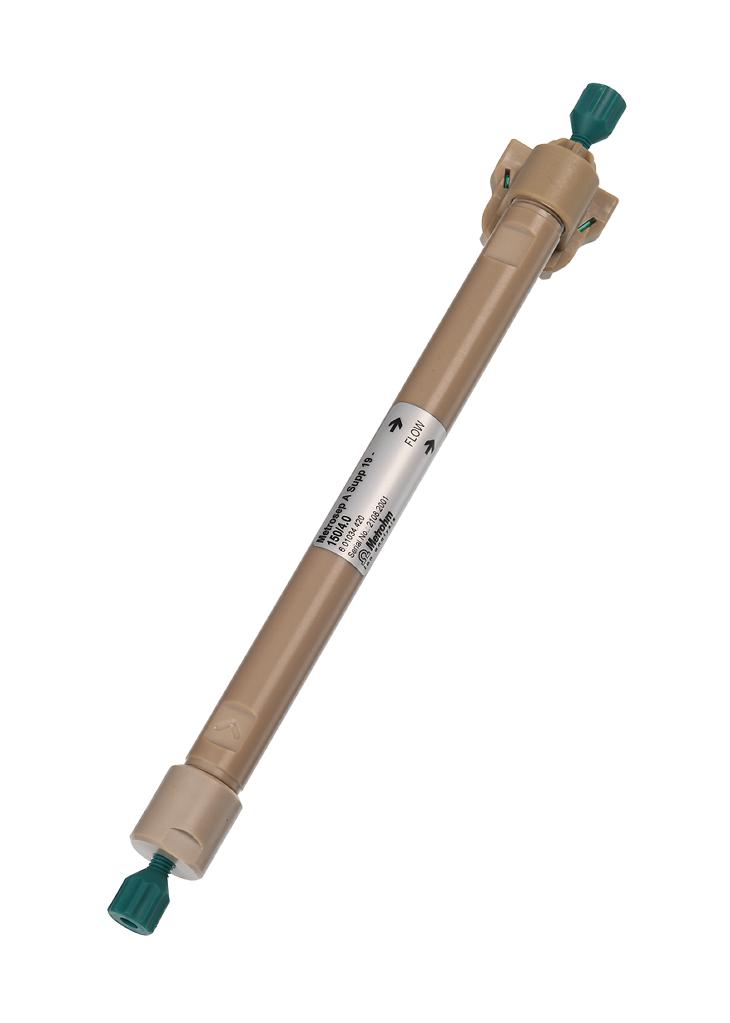




6.2840.000
Water bath for Robotic Sample Processors and Robotic TitrosamplerWater bath rack for Robotic Sample Processors and Titrosampler.
6.2041.900
Sample rack insert, 54 x 75 mL, for water bath, (AI)Sample rack insert for 815 Robotic USB Sample Processor XL, 855 Robotic Titrosampler "Basic", suitable for 54 sample beakers. The following sample beakers can be used: 6.1432.210, 6.1459.400.Material: Aluminum (AI)
6.05331.130
OMNIS IC equip.: MiPCT-MEAccessory set for Preconcentration Injection with Matrix Elimination in OMNIS IC: With this technique, samples at the ng/L level can be analyzed on the OMNIS IC. Inline Preconcentration uses a preconcentration column instead of a sample loop. When a precise sample volume is transferred to the preconcentration column, the respective ions will be retained. After enrichment of the analytes, the non-ionic components of the sample can be rinsed off the enrichment column with ultrapure water. The non-ionic sample components do not interfere with the detection of the analytes. The OMNIS Dosing Drive Unit allows calibration with only one standard solution, as the injection volume can be freely selected. The same applies to sample injection. Prerequisites: OMNIS IC S/M/L with OMNIS IC AS/ASCOOL, including: available OMNIS Dosing Drive Unit ; available OMNIS MISP Unit;
6.02850.200
Eluent producer cartridge AThe eluent producer cartridge A (EPC A) produces the high-purity hydroxide eluent from the 4 mol/L hydroxide concentrate, based on water electrolysis. The cation exchanger diaphragm enables the selective migration of cations into the eluent. The EPC A is fed ultrapure water, which can be operated fully automatically in connection with a water processing system.
6.1403.010
KF drying tube / SGJ 14 and straightUsed for Karl Fischer water determination
6.2058.030
Head extension 10 mm for Sample ProcessorsHead extension for use with the waterbath rack.
6.2702.000
Weighing spoon with protective tubeFor 6.1421.250 titration vessel. For KF water determination.
6.1421.250
KF titration vessel with lateral opening / 50-90 mLFor Karl Fischer water determinationUsed together with spoon for solid substances 6.2702.000.
6.5609.000
KF equipmentKarl Fischer equipment for volumetry, complete set of accessories for Karl Fischer water determination
6.07311.310
Oxygen and UPW supply tubing (TEI)Tubing for oxygen and ultrapure water supply at the inlet to the combustion tube (TEI).
RRDE.HOSE.CONN
RRDE cell hose connectorSet of adapters for connecting an external waterbath to the Autolab RRDE Cell for temperature control.
BWT-840001153
QT-Sampler carrying caseLightweight black polycarbonate carrying case for QT-Sampler module. Watertight, crushproof, and dustproof with cube foam fitting.CCRM QT-Sampler
6.2412.000
Weighing boatsWeighing boat made of glass for the 6.1414.030 titration vessel lid or the 6.1455.31X, 6.1464.32X, 6.1465.320 titration vessel. For KF water determinations. Including protective tube.
6.2021.030
Electrode holder with rinsing deviceElectrode holder with rinsing device for 4 electrodes and 2 buret tipsConnection for rinsing water, integrated magnetic switch for 722, 802 Stirrer. Used with 727 Ti Stand
6.5330.130
IC equipment: Liquid Handling Station, leftAccessory set for assembling the Liquid Handling Station on the Professional Sample Processor. The rinsing water supply can be accomplished by means of a peristaltic pump or a Dosino.
6.02744.050
Adapter Luer inner / M6 outerAdapter for syringe for pre-rinsing the aspiration filter (6.2821.090). The adapter can be screwed onto the aspiration filter. A syringe can be used to rinse the aspiration filter with ultrapure water or eluent.
BWT-840001202
Hastelloy immersion shaft for 785nm Raman probeRIS100-HS-785-08: Hastelloy immersion shaft for BAC102/BAC100B Raman probes with excitation wavelength 785nm. Features a 0.5" (12.7 mm) O.D. x 8" (203.2 mm) L Hastelloy C-276 shaft and a gold- sealed sapphire ball lens. Working distance 0.4 mm in air, 0.6 mm in water. Shaft operating temperature is up to 250 degrees C, pressure up to 4000 psi. Shaft must be purchased with B&W Tek Raman probe.RIS100-HS-785-08
BWT-840001204
Hastelloy immersion shaft for 532nm Raman probeRIS100-HS-532-08: Hastelloy immersion shaft for BAC102/BAC100B Raman probes with excitation wavelength 532 nm. Features a 0.5" (12.7 mm) O.D. x 8" (203.2 mm) L Hastelloy C-276 shaft and a gold- sealed sapphire ball lens. Working distance 0.4 mm in air, 0.6 mm in water. Shaft operating temperature is up to 250 degrees C, pressure up to 4000 psi. Shaft must be purchased with B&W Tek Raman probe.RIS100-HS-532-08
6.02711.000
Spoon for pasteSuitable for use in Karl Fischer water content determinations of pasty substances such as honey, cosmetics, greases or various dairy products.The spoon for paste facilitates the addition of viscous samples. It is handled like any other spatula and enables convenient, rapid, and loss-free addition of pastes into the Karl Fischer titration vessel.We furthermore recommend the use of a homogenizer for dissolving viscous samples quickly and completely.Compatible with 6014050X0 titration vessel lids.
009RDX
Bottom mount electrochemical cell set upThis is a stationary solution voltammetry cell for measurements of a thin film deposited on flat substrate. The sample is loaded from the bottom via magnetic (or screw) mount, while counter or/and reference electrodes are mounted in a top casing (either 2-, or 3-electrode setup).The cell elements are constructed with materials that are inert to the sample (glass and PEEK). It well fits aqueous (EPDM O-Rings) and organic solvent (FFKM O-Rings) electrolyte requirements. The construction is gas-tight and can be used when the removal and exclusion of contaminants such as oxygen and water is required by bubbling of an inert gas through the electrolyte. Please note: this product is not available from Metrohm Germany.
008RDX
Basic electrochemical cell set upThis is a stationary solution basic electrochemical cell for measurements of electrodes in a form of:rod/disc (6 mm dia.); thin film deposited on flat substrate (using a wireclip) ; membrane (using a wire clip); The working, counter and reference electrodes are mounted in a top casing either in 2-, or 3-electrode setup. The cell elements are constructed with materials that are inert to the sample (glass and PEEK). It well fits aqueous(EPDM O-Rings) and organic solvent (FFKM O-Rings) electrolyte requirements.The construction is gas-tight and can be used when the removal and exclusion of contaminants such as oxygen and water is required by bubbling of an inert gas through the electrolyte.Please note: this product is not available from Metrohm Germany.
011RDX
Corrosion cellThis is a stationary solution corrosion cell for EIS and conventional electrochemical measurements on: (a) thin metal film deposited on flat substrate(b) metal plate(c) metal mesh(d) metal wire(e) metal ribbonThe sample is installed from the bottom via magnetic (or screw) mount in between two chambers filled with electrolyte. In cases (a) and (b) bottom chamber is unused and stays dry.The counter or/and reference electrodes are mounted in a top casing (either 2-, or 3-electrode setup). The cell elements are constructed with materials that are inert to the sample (glass and PEEK). It well fits aqueous (EPDM O-Rings) and organic solvent (FFKM O-Rings) electrolyte requirements. The construction is gas-tight and can be used when the removal and exclusion of contaminants such as oxygen and water is required by bubbling of an inert gas through the electrolyte.Please note: this product is not available from Metrohm Germany.
010RDX
Electrolyte-gated transistor bottom mounted electrochemical cell setupThis is a stationary solution electrochemical cell designed to measure characteristics of electrolyte-gated (or solution-gated) transistors using liquid or gel electrolyte. Measured transistor sample can be fabricated on a rigid or flexible flat substrate (not included in the setup) with conducting thin film source and drain, and a layer of conducting or semiconducting channel material.The sample is loaded from the bottom via magnetic (or screw) mount, while gate is mounted in a top casing. A reference electrode can also be mounted in the top casing in case it is needed to control the channel/electrolyte interfacial potential or perform an electrochemical pre-treatment on the channel material. Source and drain electrodes can be accessed through cut-outs in a cell bottom casing, using needle probes or toothless crocodile clips.The cell elements are constructed with materials that are inert to the sample (glass and PEEK). It well fits aqueous (EPDM O-Rings) and organic solvent (FFKM O-Rings) electrolyte requirements. The construction is gas-tight and can be used when the removal and exclusion of contaminants such as oxygen and water is required by bubbling of an inert gas through the electrolyte.Please note: this product is not available from Metrohm Germany.


- Metrohm IC Driver 2.2 dla Empower
Sterownik Metrohm IC Driver 2.2 dla Empower 3 umożliwia integrację instrumentów Metrohm IC z oprogramowaniem Empower 3 firmy Waters. Dowiedz się o kompatybilności z systemem operacyjnym Windows i więcej informacji znajdziesz w uwagach do aplikacji
- LL-Ag/AgCl reference electrode (6.0728.x30)
Learn everything about the installation and maintenance of your «Long Life» Ag/AgCl reference electrode.
- Miareczkowanie Karla Fischera
Obejrzyj nagrane seminaria internetowe na temat miareczkowania Karla Fischera , od podstaw po rozwiązywanie problemów, odczynniki KF i automatyzację. Technika służy do oznaczania zawartości wody.
- Ag/AgCl reference electrode (6.0728.x20)
Learn everything about the installation and maintenance of your Ag/AgCl reference electrode.
- Przewodnik po chroma...Przewodnik po chromatografii jonowej
Dowiedz się z tego, co po chromatografii jonowej i przekonaj się, jak intuicyjne może być analiza jonów i kationów.


- 25 maj 2023Automatyczne wyznaczanie miana odczynnika Karla Fischer'a
Zapoznaj się z naszym unikatowym rozwiązaniem, dzięki któremu oznaczenia miana odczynnika Karla Fischer'a przeprowadzisz w całkowicie automatycznie!
- 11 kwi 2023Zawartość miedzi w wodzie zasilającej kotły
Korozja miedzi w systemach kotłowych może prowadzić do utraty megawatów. Woltamperometria to czuła i niedroga metoda pomiaru zawartości miedzi w wodzie kotłowej.
- 30 sty 2023Wysoce czuła analiza amin, kwasów organicznych i innych substancji jonowych
Seria bezpłatnych biuletynów poświęconych jest unikalnym zaletom chromatografii jonowej z łączeniem wyrazów (IC) firmy Metrohm za pomocą czułych spektrometrów mas (MS) do oznaczania węglowodanów, kwasów organicznych, a także wielu innych substancji jonowych.
- 18 paź 2022Launch of Metrohm AeRosol Sampler "MARS"
The Metrohm AeRosol Sampler «MARS» is a device used to capture particles in an air flow and dissolve the soluble constituents in a steam jet for further analysis.
- 24 sie 2026New options emerge for the development of electrochemical sensors


- 8.108.50718.108.5071Monograph: Analysis of water samples and water constituents with Metrohm instruments
We all need pure, healthy and clean water. The most diverse regulations and guideline have been developed worldwide and given rise to an independent branch of analytical science. The aim of this monograph is to show you which parameters and water constituents can be analyzed with Metrohm instruments.
English
- 8.107.50068.107.5006Flyer: Metrosep A Supp 4 – Robust analysis of process waters and waste waters
The Metrosep A Supp 4 is the ideal column for waste water analysis. The present flyer describes the advantages and application possibilities of the Metrosep A Supp 4.
English
Inne języki
- 8.000.51418.000.5141Brochure: Water analysis – Quality assurance of water
Water is the source and basis for all life. In the context of quality control and risk evaluation, effective and inexpensive instruments and methods are in demand in the water laboratory that are suited to the ever more complex array of contaminants, the increasing sample throughput and the decreasing detection limits. On the following pages, discover the analytic solutions Metrohm offers for water analysis in general, and you in particular, for ensuring the quality and safety of your work.
English
Inne języki
- 8.108.50898.108.5089Monograph: Water determination by Karl Fischer Titration
Measuring water content is an essential technique for most laboratories, on par with pH measurement, weighing, and acid-base titration. The main techniques for determining water content are drying methods (such as drying ovens or infrared balances) and the Karl Fischer (KF) titration, known for its specificity and speed. This monograph provides readers a comprehensive guide to the Karl Fischer titration method.Key points presented are:Learn about Karl Fischer reagents and the chemical reaction behind the Karl Fischer titration.; Volumetry and coulometry are the two methods used in Karl Fischer titration. Learn about their differences and when to use which method.; Side reactions can affect the accuracy of KF titrations. Learn about the different interfering substances and suitable measures to suppress the side reactions.; Sample preparation is essential for accurate water determination. Techniques presented include solvent extraction and homogenization.; Applications: KF titration is used for water determination in various samples, including raw materials, cosmetics, drugs, foodstuffs, biological samples, petrochemical products, plastics, paints, lacquers, solvents, and gaseous samples.; For a comprehensive overview of practical Karl Fischer titration knowledge, download the monograph.
English
Inne języki
- 8.107.50078.107.5007Flyer: Metrosep C 6 – Analysis of seawater, brackish water and brine water made easy
Seawater, brackish water and brine water matrices are a challenge for chromatography due to the extremely high salt loads. With the Metrosep C 6, Metrohm offers a high-capacity column which can handle this challenge without difficulty. The present flyer describes the advantages of the Metrosep C 6 column.
English
Inne języki
- 8.000.51588.000.5158Brochure: 2035 Process Analyzer – Multi-purpose analyzer for the online monitoring of industrial processes and waste waters
Metrohm Process Analytics presents the 2035 Process Analyzer, a complete system for the monitoring ofindustrial processes, water and waste water. With the 2035 Process Analyzer, you keep critical chemical parameters for your process in view, around the clock, 365 days a year. It makes no difference here whether it is just one or more than one sample flows that need to be monitored, the 2035 Process Analyzer enables both.
English
Inne języki
- 8.000.53008.000.5300Brochure: TitrIC flex – All you need for comprehensive water analysis
TitrIC flex is the most flexible, reliable and easy to use system for water analysis ever. Combining titration, directmeasurement, and ion chromatography (IC), TitrIC flex allows you to determine the complete range of ions typically present in water. The present brochure gives you an overview about Metrohm's new TitrIC flex system.
English
- 8.000.53258.000.5325Brochure: Water Content Analysis
Metrohm is recognized as the global market leader in the field of titration. Karl Fischer titration is one of the most widely used analytical methods for moisture analysis in routine laboratory work, and it provides precise analytical results. To increase sample throughput, productivity, and product quality, water determination can be easily implemented directly inline thanks to near-infrared spectroscopy (NIRS). The results of the laboratory analysis are used to create an accurate prediction model for the NIR spectrometer. Inline moisture analysis with NIRS analytical results are generated in near real-time every second without sampling or using chemicals.
English
Inne języki
- 8.000.53138.000.5313Brochure: Wastewater Analysis – Expertise in water and wastewater analysis
If the concentration of organic contaminants is too high, they may interfere with many industrial processes, leadingto problems. As a leading manufacturer of instruments for chemical analysis, Metrohm Process Analytics offers state-of-the art systems and complete solutions that allow easy and cost-saving monitoring of your water samples.
English
Inne języki
- 8.000.50658.000.5065Brochure: Permanganate index - an important parameter in drinking water analysis
The present brochure contains interesting topics on permanganate index. Permanganate index is an important parameter in drinking water analysis. Metrohm offers the fully automated determination of permanganate index according to DIN EN ISO 8467 (DIN 38409-5).
English
Inne języki
- 8.899.50008.899.5000Brochure: 899 Coulometer - Mobile coulometer for water determination anywhere you want
Although small and compact, the 899 Coulometer does not compromise on performance. Water contents can be determined with utmost precision down to trace levels. Extremely small & compact; Maximum flexibility due to independent power supply; Automatic titration start; Built-in magnetic stirrer; Integrated titration cell holder ;
English
Inne języki
- 8.000.51078.000.5107Brochure: Environmental analysis – quality monitoring of water, soil and air
The effects of human activity on the environment are complex and require sensitive analysis procedures and powerful analytic instruments. As a leading manufacturer of instruments for chemical analysis, we are quite aware of these challenges. We offer you the most up-to-date of instruments and systems with which you can monitor the composition of your water, soil and air samples.
English
Inne języki
- 8.756.50008.756.5000Brochure: 756/831 Coulometer - Water determination down to trace levels
The 756 and 831 Coulometers continue Metrohm’s established line of Karl Fischer instruments for the determination of low-level water contents. Traces right down to the lower micro range can be determined with guaranteed precision and accuracy. Main features: Standard dialogue languages: English, French, German, Spanish, Portuguese, Swedish and Italian ; Backlit screen with graphic capabilities (live curve) ; Change of KF solution at the touch of a button ; Flexible but easy to operate ; Cell with or without diaphragm ; Methods memory ; Thermal sample preparation with KF oven ; Stand-alone or software-controlled ;
English
Inne języki
- 8.870.50028.870.5002Brochure: 870 KF Titrino plus - Karl-Fischer water determination easy, safe and precise.
The present brochure introduces the 870 KF Titrino plus. The favorably priced 870 KF Titrino plus is Metrohm’s Karl Fischer titrator for volumetric water determinations.
English
Inne języki
- 8.109.50188.109.5018Brochure: scTRACE Gold – Simple and reliable determination of arsenic in water
Voltammetry using the scTRACE Gold offers a simple, low-cost alternative to the spectroscopic determination of arsenic. The electrode provides an easy and reliable means of monitoring the limit value for arsenic in drinking water of 10 µg/L. In fact, the detection limit with the scTRACE Gold is well below this concentration. The scTRACE Gold can be used with any Metrohm voltammetry measuring stand.
English
Inne języki
- 8.107.50088.107.5008Flyer: Metrosep C Supp 2 Cations in Power Plants – Ultratrace level cation analysis in power plant water
The monitoring of sodium ions indicates leakages in the condenser where sodium-enriched cooling water infiltrates the high-purity process water. IC with suppression is the method of choice for trace sodium determination beside other cations. The Metrosep C Supp 2 column is ideally suited for cation chromatography at ultratrace levels of sodium and further cations, transition metals, and amines.
English
- 8.875.50058.875.5005Brochure: 875 KF Gas Analyzer – Straightforward determination of water content in liquefied and permanent gases
Accurate, reproducible results at the touch of a screen: The 875 Karl Fischer Gas Analyzer is a fully automated solution for reliable water determination in liquefied and permanent gases. Have a look at our brochure to get more information about the 875 Karl Fischer Gas Analyzer.
English
- 8.000.51618.000.5161Water determination according to Karl Fischer with MATi 4 – Complete system for fully automated, coulometric Karl Fischer titration
The present brochure contains interesting information on MATi 4. MATi 4 (MATi = Metrohm Automated Titration) is a fully automated titration system for water content determination using coulometric Karl Fischer titration. This brochure describes the advantages of MATi 4.
English
Inne języki
- 8.000.51608.000.5160Brochure: Water determination according to Karl Fischer with MATi 10 – Complete system for fully automated,volumetric Karl Fischer titration
The present brochure contains interesting information on MATi 10. MATi 10 (MATi = Metrohm Automated Titration) is a fully automated complete system for water content determination using volumetric Karl Fischer titration. The advantages of the MATi 10 can be found in this brochure.
English
Inne języki
- 8.000.51628.000.5162Water determination according to Karl Fischer with MATi 11 – Complete system for fully automated, volumetric Karl Fischer titration, including sample preparation
The present brochure contains information on MATi 11. MATi 11 (MATi = Metrohm Automated Titration) is a fully automated titration system for water content determination using volumetric Karl Fischer titration.This brochure describes the advantages of MATi 11.
English
Inne języki
- 8.102.50048.102.5004Brochure: Metrohm meets Empower 3 – Ion chromatography with the Chromatography Data Software (CDS) from Waters
Metrohm ion chromatographs can now also be controlled by Empower 3 Software, enabling the comfortable analysis of anions and cations in almost any matrix. The following brochure describes the advantages of Empower 3 Software.
English
Inne języki
- 8.108.00088.108.0008Leaflet for 6.2840.000 Water bath, german/french/english
English
Inne języki
- 8.000.54618.000.5461Water hardness by photometric titration as per ASTM D8192
This flyer describes the determination of total and Ca/Mg Hardness by automatic photometric titration according to ASTM D8192-23. This method is an alternative to manual visual endpoint titration.
English
Inne języki
- 8.000.53598.000.5359Environmental Testing Industry II - Online Analyzers for Potable Water Processing
English
Inne języki
- 8.000.53298.000.5329Brochure: Water content in petroleum products and additives – Oven method as per ASTM D6304 makes coulometric Karl Fischer titration easier than ever
ASTM has revised method D6304. The standard method now includes the oven method. The benefits of this method are considerable:No contamination of the KF titration cell; No matrix interferences; Less solvents needed; More reliable analysis and better reproducibility of results; Automation possible for serial, completely unattended determination of multiple samples;
English
- 8.108.50868.108.5086Monograph: Non-aqueous titration of acids and bases with potentiometric endpoint indication
The non-aqueous titration of acids and bases is particularly useful for substances that are insoluble or unstable in water. This monograph is intended to help chemists decide which solvents, electrodes, titrants, and instruments are the most suitable for their particular application.Key points presented are:Solvents: A list of commonly used titration solvents is provided along with their field of use.; Example titration of acids: Comparison of different electrodes, solvents, and titrants for selected acids to see the influence of the different parameters.; Example titration of bases: Comparison of different electrodes, solvents, and titrants for selected bases to see the influence of the different parameters.; Download the monograph gain practical insights into non-aqueous titration of acids and bases.
English
Inne języki
- 8.107.50058.107.5005Flyer: Metrosep A Supp 7 – determination of disinfection byproducts
The production of drinking water requires purposeful water treatment. Byproducts such as chlorite, chlorate and carcinogenic bromate are generated during disinfection. The Metrosep A Supp 7 is the ideal column for drinking water conditioning.
English
Inne języki
- 8.000.51428.000.5142Brochure: Wastewater analysis in treatment plants
Metrohm offers you professional support for wastewater analysis in treatment plants. Our systems save you time and money.Chemical oxygen demand (COD) by titration:automatic addition of all necessary reagents; up to 40 samples can be analyzed fully automatically; Anions and cations by ion chromatography:simultaneous determination of anions and cations; flexible sample changer; Inline Ultrafiltration or Inline Dialysis;
English
Inne języki
- 8.000.54298.000.5429Brochure: Battery research and production
This brochure covers methods ranging from latest electrochemical techniques to well established methods such as titration, Karl Fischer titration, ion chromatography, and voltammetry. The overview is structured according to specific topics defining key fields areas of application:Raw materials (e.g., impurities in lithium salts, water content, eluated anions and cations, etc.); Anode and cathode materials (e.g., water content, residual alkali, etc.); Electrolytes, additives, and solvents (e.g., electrolyte composition, diffusion coefficient, ion transfer number, etc.); Separators (Water content, MacMullin number); Finished batteries (e.g., capacity and power, cyclic performance and coulombic efficiency, etc.);
English
- 8.109.50128.109.5012Brochure: Ammonia electrode with replaceable modules/membranes
The concentration of ammonium ions is an important parameter to determine the degree of contamination in all kinds of waters. Metrohm’s new ammonia electrode with exchangeable modules or membranes, respectively, is an affordable solution to perform this analysis.
English
Inne języki
- 8.000.52938.000.5293Flyer: 2029 Chromium Process Analyzer
Because of health concerns, the analysis of chromate is of vital importance to measure accurately in the water inlet and waste water effluent. The 2029 Chromium process analyzer from Metrohm Process Analytics is the most straightforward and easy-to-use tool to do so online.
English
Inne języki
- 8.000.54308.000.5430Brochure: Analysis of carbon materials
The small brochure covers methods ranging from Raman spectroscopy to the latest electrochemical techniques and well-established methods such as titration, Karl Fischer titration, and ion chromatography. The overview is structured according to specific carbon materials defining key analysis parameters including relevant norms and standards:Graphene (e.g., structural properties, oxygen content (Boehm titration), electrochemical evaluation, etc.); Carbon nanotubes (e.g., disorder of crystal structure, characterization in dependence of the applied potential, etc.); Graphite (e.g., characterization, intercalation and de-intercalation of lithium, water content, etc.); Carbon black (e.g., electrochemical characterization, iodine adsorption number, water content, etc.); Hard carbon (Insertion and de-insertion of sodium ions, water content;
English
- 8.000.53718.000.5371Brochure: Eco Coulometer
The Eco Coulometer is an affordable solution to determine micro amounts of water in matrixes like oil, pharmaceuticals and plastics. For non-soluble substances an 860 KF Thermoprep or a 885 Compact Oven Sample Changer can be connected which heats the sample up and transfers the water directly into the coulometric KF cell.
English
Inne języki
- 8.000.52228.000.5222Brochure: Online measuring instruments for power plant analysis – Monitoring and protection against corrosion
In power plants, corrosion is the primary factor leading to costly and critical outages. The water steam cycles in fossil and nuclear power plants are inherently prone to corrosion, as metal components are constantly in contact with water. Measures to monitor or prevent corrosion are crucial in this context. Metrohm offers a range of instruments and methods for measuring parameters related to corrosion.
English
- 8.000.53428.000.5342Brochure: Eco KF Titrator
The Eco Titrator is an affordable solution for determination of the water content in matrices ranging from foodstuffs, chemicals, paints, inks and more.
English
Inne języki
- 8.000.52198.000.5219Brochure: Fishery & Aquaculture – reliable online, inline, and atline analysis systems for optimizing aquaculture plants.
Process analyzers reduce the costs of fish farming operation through precise monitoring of water quality. The processes are optimized to ensure that the fish remain healthy and exhibit good growth. Metrohm Process Analytics provides you with different methods and analyzers for that purpose.
English
- 8.000.52888.000.5288Flyer: 2026 Hardness Process Analyzer
To measure the hardness content in drinking or potable water, the ideal instrument is the 2026 Hardness process analyzer from Metrohm Process Analytics. This process analyzer is compact enough to fit in tight spaces and relies on the well-known and proven analytical titration method.
English
Inne języki
- 8.000.52968.000.5296Flyer: 2029 Zinc Process Analyzer
To ensure that the concentrations of zinc do not exceed the limits, constant monitoring of the waste water is important for many industries. The 2029 Zinc process analyzer from Metrohm Process Analytics is the most straightforward and easy-to-use tool to do so online.
English
Inne języki
- 8.000.52678.000.5267Flyer: Conductivity measurement according to USP<645> – Automation increases reliability and productivity
Conductivity is an important quality parameter of ultrapure water. Metrohm offers a fully automated solution for this measurement according to USP<645>. This solution reduces the risk of human error increasing the reliability of results. More information about the method can be found in the brochure.
English
- 8.000.53188.000.5318Flyer: 2029 Hardness Process Analyzer
Hardness levels have to be constantly measured on feed and wastewater streams to avoid scaling of pipes and corrosion of water heaters for power generation. The 2029 Hardness Process Analyzer from Metrohm Process Analytics is the most straightforward and easy-to-use tool to do so online.
English
Inne języki
- 8.000.53208.000.5320Flyer: 2029 Nitrate/Nitrite Analyzer
To ensure that the concentrations of nitrate/nitrite do not exceed the limits, constant monitoring of the waste water is important for many industries. The 2029 Nitrate/Nitrite Process Analyzer from Metrohm Process Analytics is the most straightforward and easy-to-use tool to do so online.
English
Inne języki
- 8.109.50308.109.5030Bi drop electrode – A novel non-toxic alternative for metal analysis down to the ppt range
The Bi drop electrode from Metrohm is a novel non-toxic alternative for metal analysis down to the ppt range. This electrode provides straightforward determination of heavy metals in drinking water completely mercury-free. Since the Bi drop electrode does not require mechanical treatment, it is especially suitable for online applications.
English
- 8.946.50028.946.5002Brochure: 946 Portable VA Analyzer
The Portable VA Analyzer is a dedicated solution for water analysis. Such measurements have been routinely performed in the laboratory – mostly for lack of viable alternatives for field use. With the 946 Portable VA Analyzer from Metrohm, there is now such an alternative. This brochure describes the advantages of the 946 Portable VA Analyzer.
English
- 8.000.52948.000.5294Flyer: 2029 Iron Process Analyzer
Iron concentrations which are too high or low can have negative effects, and have to be measured in several types of water (surface, boiler, potable). One of the most commonly used methods to measure iron is photometric detection. The 2029 Iron process analyzer from Metrohm Process Analytics is the most straightforward and easy-to-use tool to do so online.
English
Inne języki
- 8.109.50118.109.5011Flyer: Aquatrode plus U
NEW: The proven Aquatrode plus for water analysis – now also with removable electrode cable incl. temperature sensor Pt1000.The advantages at a glance:Special membrane glass (very short response times); Fixed ground-joint diaphragm (fast, very accurate and reproducible pH measurement / titration); Double-junction design (enables adaptability of the bridge electrolyte to the measurement conditions); Screening of the inner tube (interference prevention); Easy storage, fast electrode replacement and complete flexibility;
English
Inne języki
- 8.0010.50278.0010.5027Installation instructions TitrIC flex I
The TitrIC flex I system is used for the fully automatic analysis of water samples using direct measurement, titration, and ion chromatography (IC). The following parameters are determined within a very short time: temperature, conductivity, pH, alkalinity, water hardness, and in parallel, the concentrations of individual anions. Additional Metrohm instruments can be incorporated in the existing system at any time and used to measure other parameters.Analytical sequenceThe sample is transferred from the first Pick&Place Module to the 930 Compact IC Flex for the anion analysis. At the same time, the conductivity is measured. Following this measurement, the exact sample volume is transferred into the sample beaker of the second Pick&Place. Afterwards the temperature, pH, acid capacity (p and m value), and the hardness of the sample are determined.The entire procedure is controlled by the MagIC Net software. The user only enters the sample position and sample identification into MagIC Net. All liquid handling steps as well as the titration part are done by OMNIS. MagIC Net triggers the individual sequences in OMNIS and receives the titration results via RS-232.All data is summarized in a joint database containing all results by MagIC Net as well as the numerical values from OMNIS.
English
- 8.0010.50288.0010.5028Installation instructions TitrIC flex II
The TitrIC flex II system is used for the fully automatic analysis of water samples using direct measurement, titration, and ion chromatography (IC). The following parameters are determined within a very short time: temperature, conductivity, pH, acid capacity, and in parallel, the concentrations of individual anions and cations with the resulting water hardness and ion balance. Other Metrohm instruments can be incorporated in the existing system at any time and used to measure additional parameters.Analytical sequenceThe sample is transferred from the first Pick&Place Module to two 930 Compact IC Flex instruments for the anion and cation analysis. The conductivity is measured at the same time. Following this measurement, the exact sample volume is transferred into the sample beaker of the second Pick&Place. Afterwards the temperature, pH, and acid capacity (p and m values) of the sample are determined.The entire procedure is controlled by the MagIC Net software. The user enters the sample position and sample identification only into MagIC Net. All liquid handling steps as well as the titration part are done by OMNIS. MagIC Net triggers the individual sequences in OMNIS and receives the titration results via RS-232.All data is summarized in a joint database containing all results by MagIC Net as well as the numerical values from OMNIS.
English
- 8.000.52738.000.5273Flyer: 2029 Copper(I & II) Analyzer
Due to the physical properties of copper, it is mainly utilized for electrical applications. The amount of Cu(I & II) in wastewater is restricted and many industries measure the concentration before disposing the water or treating it. The 2029 Copper(I & II) process analyzer from Metrohm Process Analytics is the most straightforward and easy-to-use tool to do so online. The following brochure describes the benefits of the 2029 Copper(I & II) Analyzer.
English
Inne języki
- 8.000.52748.000.5274Flyer: 2029 Phosphate Analyzer
Phosphates in water sources can come from minerals, detergents, agricultural (fertilizer) runoff, and other anthropogenic influents. Environmental agencies have strict regulations regarding industrial phosphate emissions. Because of its role in many different production and environmental processes, it is of vital importance to closely monitor the concentration of phosphate. The 2029 Phosphate process analyzer from Metrohm Process Analytics is the most straightforward and easy-to-use tool to do so online. This brochure describes the benefits of our 2029 Phosphate Analyzer.
English
Inne języki
- 8.000.52928.000.5292Flyer: 2026 Copper Process Analyzer
Copper is one of the top 3 recycled metals globally, and is mostly mined or extracted in the form of copper sulfides. There are many economic and ecological reasons to remove copper from waste water streams after different production processes. Because of its role in many different (production) processes, it is of vital importance to closely monitor the concentration. The 2026 Copper process analyzer from Metrohm Process Analytics is the most straightforward and easy-to-use tool to do so online.
English
Inne języki
- 8.0010.50328.0010.5032Check of Optrode with tiamoTM and OMNIS
Before starting a sample analysis, it is essential to know if the electrode is in a good state or not. A properly working electrode guarantees high quality measurements and ensures accurate and precise results. Furthermore, tedious error tracking can be omitted, and no sample is wasted due to a defect or an old electrode.Several procedures exist to check the health of an electrode. This Application Bulletin outlines the most convenient process by measuring the potential at different wavelengths in degassed deionized water.
English
- 8.000.53398.000.53392035 Hardness Process Analyzer
Different industrial electrolysis processes, such chlorine production and water desalination, require the use of costly electrolysis membranes. Therefore, purification of the brine has become an unavoidable step to preserve the membranes and to use less electricity during electrolysis. The level of impurities such as hardness (calcium and magnesium) is reduced in two treatment steps. After the secondary treatment with an ion exchange resin, impurity concentrations in brine can be reduced by a factor of 1000.The 2035 Hardness Process Analyzer from Metrohm Process Analytics is the ideal solution to measure hardness content online in ultrapure brine.
English
- 8.000.53378.000.53372029 Aluminum Analyzer – From Metrohm Process Analytics
Aluminum is the most abundant metallic element of the Earth’s crust (8%) and is a very reactive base metal. It has low density, high electrical and thermal conductivities and high corrosion resistance. Because of these remarkable characteristics, the metal is commonly used as a construction material for buildings, aircraft, and automobiles. It is also used in the production of metal alloys for semiconductors and as a coagulant in potable water plants. The 2029 Aluminum process analyzer from Metrohm Process Analytics is the most straightforward and easy-to-use tool to measure Al online. This brochure shows you the benefits of our 2029 Aluminum Analyzer.
English
- 8.0010.50208.0010.5020Installation instructions for VoltIC Professional 1
The VoltIC Professional 1 system is used for the fully automated analysis of water samples using voltammetry and ion chromatography. Anions, cations, and heavy metals are determined within a short analysis time over a wide concentration range. Other Metrohm instruments can be incorporated in the existing system at any time and used to determine additional parameters.Analytical sequenceThe sample is transferred from the 858 Professional Sample Processor to the 940 Professional IC Vario TWO/SeS/PP for the anion and cation analysis. Consequently, the sample is transferred into the measuring vessel of the 884 Professional VA where the voltammetric determination of heavy metals is carried out.The whole procedure is controlled by the MagIC Net software. The user only enters the sample position and sample identification into MagIC Net where all sample liquid handling is done. The communication, such as starting the voltammetric analysis or transfer of the results from viva to MagIC Net, is done via RS-232.All data is summarized in a joint report containing all results by MagIC Net.Download Method file here
English
- 8.000.53588.000.5358Environmental Testing Industry I - Online Analyzers for Municipal Wastewater Analysis
English
Inne języki
- 8.000.55298.000.5529Flyer: ProTrode 400 sensor – Electrode for inline pH measurements for the chemical industry
In this flyer, the ProTrode 400 sensor is presented as a robust, maintenance-free electrode for inline pH measurements in demanding industrial environments. Its open junction diaphragm, wide pH range, and integrated temperature sensor ensure accurate, real-time monitoring even in high-solid media like slurries and wastewater.
English
- 8.109.50218.109.5021Monograph: Conductometry – Conductivity measurement
This monograph provides a practical introduction to Conductometry – Conductivity measurements. It combines theoretical knowledge with practical advice to facilitate the effective use of conductometry in scientific and industrial settings.
English
Woda (powierzchniowa, morska itp.)
Od analizy wód morskich o wysokim zasoleniu po monitorowanie składników odżywczych w wodach powierzchniowych – nasze urządzenia zapewniają precyzję i niezawodność niezbędną do rzetelnego monitoringu środowiska.
Woda pitna
Metrohm oferuje niezawodne rozwiązania analityczne do wykrywania anionów, metali ciężkich, środków dezynfekcyjnych i innych kluczowych składników, pomagając sprostać wymaganiom określonym w normach i tym samym chronić zdrowie publiczne.
Ścieki
Nasze urządzenia dostarczają dokładne wyniki nawet w trudnych matrycach, wspierając oczyszczalnie ścieków, organy regulacyjne oraz przemysł w zapewnieniu bezpiecznego odprowadzania ścieków, odzysku zasobów i zrównoważonego zarządzania wodą.