
FAQs – Karl Fischer Titration
In the list of frequently asked questions you will find information pertaining to all areas of volumetric and coulometric Karl Fischer titration.
Installation
FAQ
When are the septum and the O-rings/PTFE sleeves to be changed?// Installation
FAQ
What are the order numbers for the consumables?

// Installation
FAQ
How to service the Dosing and the Exchange Unit? (for volumetric KF titration)// Installation
FAQ
What to do if the pump is not working correctly?// Installation
FAQ
How often is the molecular sieve to be changed?// Installation// Installation of coulometric cell
FAQ
How often is the Dosing/Exchange Unit to be prepared (Preparing/«Prep» function)? (for volumetric KF titration)// Installation
FAQ
How to regenerate the molecular sieve?// Installation// Installation of coulometric cell
FAQ
Which resolution should my balance have?// Installation
FAQ
What measures are recommended when the volumetric Karl Fischer titrator will not be used or has not been used for a prolonged period?// Installation
FAQ
How to clean the indicator electrode?// Installation
Titer determination
FAQ
What is the optimal substance weight for titer determination?// Titer determination
FAQ
Poor reproducibility of the titer determination with water// Titer determination
FAQ
How often should the titer be determined?// Titer determination
FAQ
Poor reproducibility of the titer determination with disodium tartrate dihydrate// Titer determination
FAQ
Rise in the values during titer determination with disodium tartrate dihydrate// Titer determination
FAQ
How to carry out the titer determination?// Titer determination
Sample handling
FAQ
How much sample to weigh in?// Sample handling, Sample processing
FAQ
What to do if the drift is too high?// Sample handling, Sample processing// Conditioning the volumetric cell// Conditioning the coulometric cell
FAQ
What to do to improve the release of water?// Sample handling, Sample processing
FAQ
The titration does not finish. What could be the cause?// Sample handling, Sample processing
FAQ
Poor reproducibility of the results// Sample handling, Sample processing
FAQ
How to recognize a side reaction?
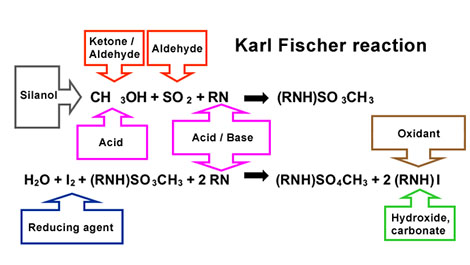
// Sample handling, Sample processing
FAQ
How often is the KF working medium to be changed?// Sample handling, Sample processing
FAQ
Why are the values found too low?// Sample handling, Sample processing
FAQ
The volumetric Karl Fischer titration is very slow// Sample handling, Sample processing
FAQ
How to prevent side reactions?// Sample handling, Sample processing
FAQ
Overtitration took place, i.e., the titrated solution is dark yellow to brown instead of light yellow. How to prevent this?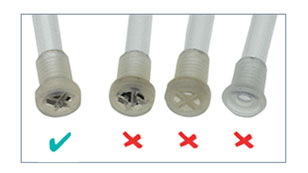
// Sample handling, Sample processing
FAQ
Why are the values found too high?// Sample handling, Sample processing
Reagents
FAQ
Where to buy KF reagents?// Reagents
FAQ
Which reagents are used for KF titration?// Reagents
Validation
FAQ
How often should my KF titrator be validated?// Validation
FAQ
How to validate my KF titrator?// Validation