
Chuyển hướng tin nhắn
Chuẩn độ điện thế

Chuẩn độ điện thế

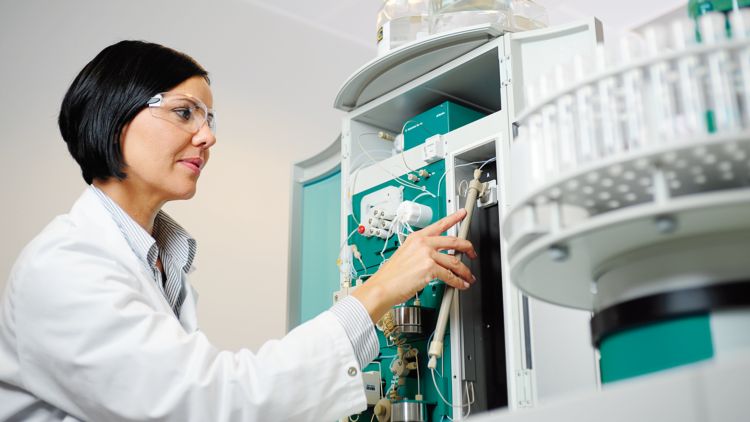
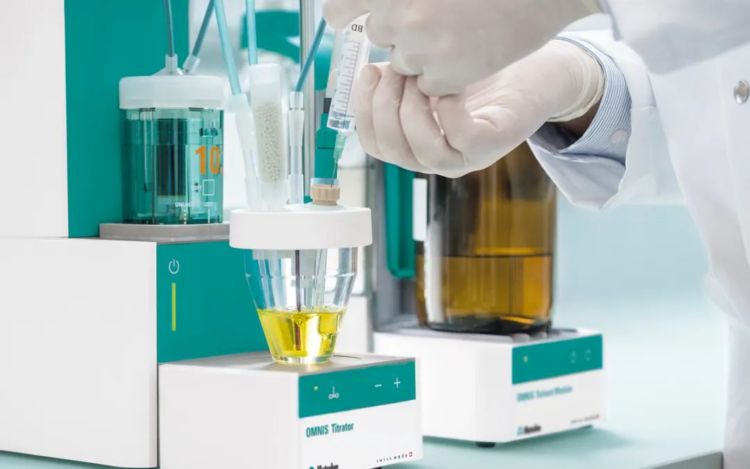
Các thiết bị, hệ thống và phụ kiện tiên tiến đáp ứng mọi yêu cầu trong chuẩn độ điện thế.

Bất kỳ yêu cầu của bạn là gì - Chúng tôi đều có hệ thống Chuẩn độ điện thế phù hợp với bạn

Danh mục chuẩn độ của chúng tôi bao gồm các tùy chọn hợp lý, nhỏ gọn, hiện đại và hoàn toàn tự động. Sử dụng các bộ lọc để tối ưu hóa tìm kiếm của bạn và tìm hệ thống chuẩn độ hoàn hảo cho bạn.

Tìm ứng dụng về Chuẩn độ

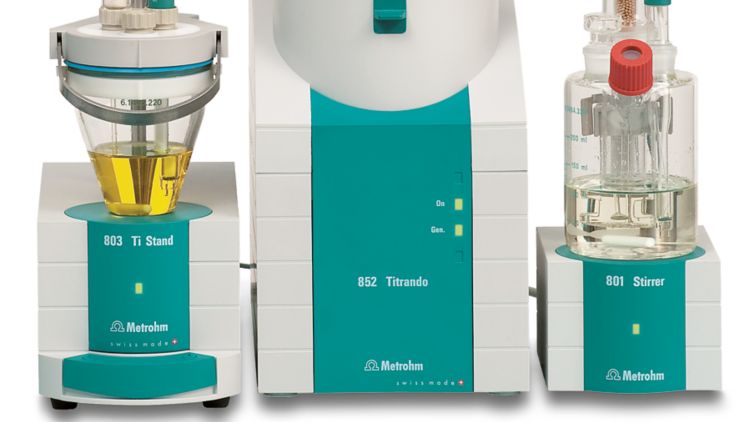
Các phép đo chính xác và đáng tin cậy  Các thành phần của thiết bị chuẩn độ

Tại sao lại là thiết bị chuẩn độ Metrohm? - Chúng tôi là người đi đầu thị trường toàn cầu

Được thành lập năm 1943, Metrohm đã phát triển trở thành nhà cung cấp hàng đầu thế giới về các giải pháp và thiết bị tiên tiến cho phương pháp chuẩn độ.

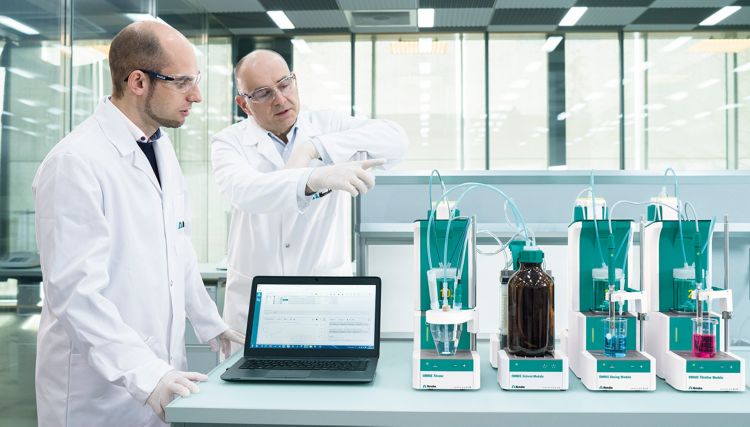
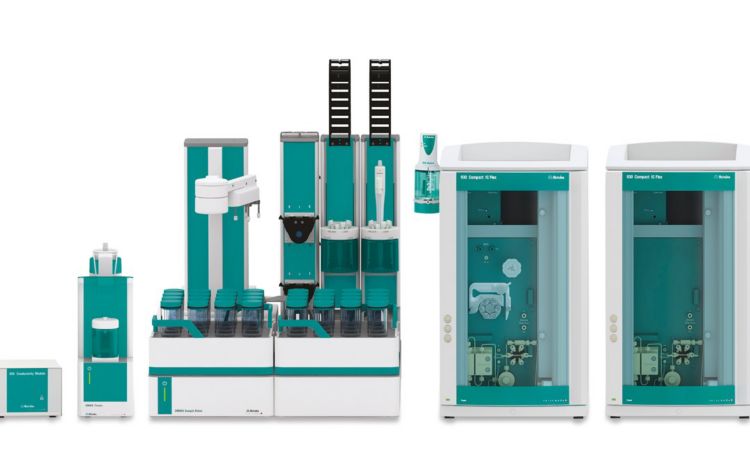
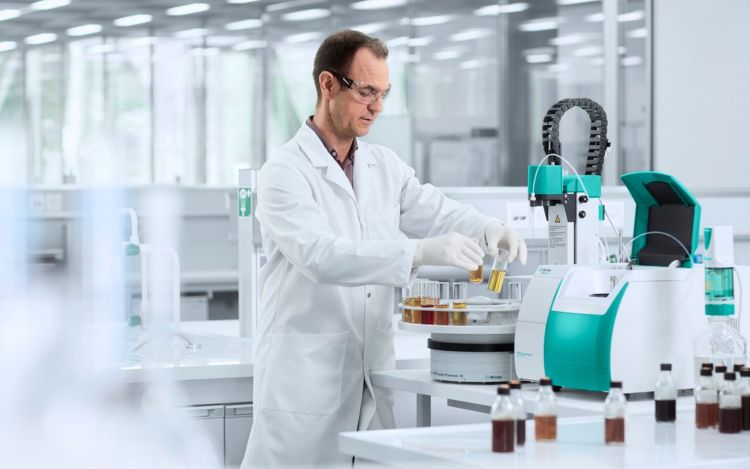
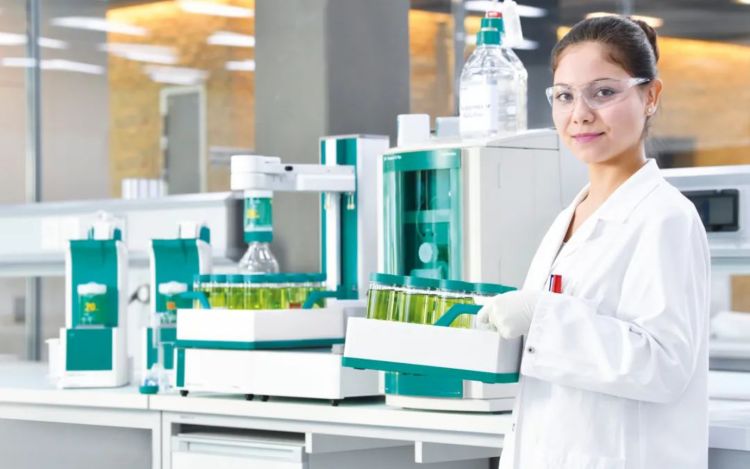
  • Sở hữu đầy đủ các loại thiết bị chuẩn độ, từ giải pháp nhỏ gọn để bàn đến hệ thống chuẩn độ tự động dạng mô đun bao gồm các phụ kiện và phần mềm dùng cho chuẩn độ điện thế, chuẩn độ Karl Fischer thể tích và điện lượng hoặc phân tích trong quy trình từ một nhà cung cấp duy nhất.
  • Chất lượng sản xuất tại Thụy Sĩ
  • Hưởng lợi từ sự hiện diện toàn cầu với trên 80 quốc gia giúp hỗ trợ tại chỗ và được thực hiện bởi các chuyên gia ứng dụng và kỹ sư dịch vụ của chúng tôi.

Trên 450 bản ứng dụng chuẩn độ được viết bởi các chuyên gia ứng dụng của chúng tôi đang chờ các bạn đọc qua:

Go to Application Finder

Đi đến các giải pháp chuẩn độ Karl Fischer và phân tích trong quy trình của chúng tôi:

Karl Fischer titrators from Metrohm

Titration process analyzer from Metrohm

Thiết bị chuẩn độ - Câu hỏi thường gặp

Titrators are used to determine the concentration of a substance (analyte), which is dissolved in a sample. A reagent (titrant) is added gradually in a known volume to the sample until a chemical reaction reaches its endpoint, which is detected by a sensor.

How titrators work step-by-step:

  1. Sample addition: The sample is added to a vessel, often with a stirrer to ensure homogeneity.
  2. Titrant addition: The titrant is added manually or automatically in controlled volumes.
  3. Measurement & monitoring: Sensors continuously monitor the reaction. The titrator tracks changes in solution properties (e.g., voltage, color, conductivity) to detect the equivalence point.
  4. Endpoint detection: The endpoint is the moment when the reaction is complete.
  5. Result calculation & reporting: The titrator calculates the concentration of the analyte based on the volume of titrant used and generates a digital report.


Various sensors are available to monitor the reaction depending on the type of titration you are performing. Metrohm offers sensors for photometric, thermometric, redox, precipitation, complexometric, surfactant, aqueous or non-aqueous acid-base titration.

Check out our Webinar Center and our blog to learn more about titration:

Webinar: Basics of titration

Blog: Titration – definition and principles

Blog: Best practices for electrodes in titration

An automatic titrator is a laboratory instrument that performs titration procedures automatically, including sample and titrant addition, endpoint detection, and results calculation. Auto titrators have many advantages over manual titrators, such as faster analysis, reproducible measurements, and more.

Learn more about the fully automatic titrator from Metrohm:

Go to OMNIS titrators

Learn more about automatic titration and the advantages over manual titration in our blog:

Blog: Save money by using automated titration systems

Blog: Why consider automation – even for simple titrations

Titration is one of the oldest analytical techniques and is usually performed manually. However, manual titration presents many challenges. An autotitrator automates the titration process, delivering faster, more accurate, and safer results compared to manual titration. The video summarizes the 5 top reasons to switch from manual to automated titration.

  1. Easier preparation of the buret: An autotitrator fills the buret automatically.
  2. Step-by-step guidance: An autotitrator automatically transfers the sample size from the balance to the software or instrument, adjusts the stirring speed, and more.
  3. More reliable and reproducible endpoint evaluation: Automatic titrators ensure objective endpoint detection.
  4. Complete documentation according to GxP: Autotitrators ensure compliance with FDA CFR Part 11 and EudraLex Vol. 4, Annex 11.
  5. Safer handling of chemicals: Autotitrators reduce the exposure to hazardous chemicals.

In summary, the main benefits of an autotitrator are:

  • Speed and throughput: Faster analysis and higher sample throughput
  • Accuracy and reproducibility: Automated dosing and endpoint detection minimize human error
  • Efficiency: Frees lab personnel from repetitive tasks
  • Safety: Minimizes chemical exposure
  • Data management: Digital reports and integration with LIMS/ERP systems
  • Scalability: Modular accessories and automation options adapt to changing workloads

Choosing the right titrator depends on your sample type, analytical goals, and lab environment. Here are the key factors to consider:

Factors Tips
Type of titration
  • Potentiometric titration: Ideal for acid-base, redox, complexometric, and precipitation reactions.

  • Photometric: Suitable for colored, opaque, or non-aqueous samples.
  • Thermometric titration: Best for samples where traditional sensors may not work.
  • Conductometric titration: Useful for reactions involving ionic changes.

Sample characteristics
  • Consider whether your samples are liquids, solids, slurries, or gases.
  • Some titrators offer accessories like homogenizers or sample preparation modules to handle complex matrices.
Throughput & automation
  • For high sample volumes, look for titrators with autosamplers or robotic automation (e.g., Metrohm’s OMNIS Sample Robot).
  • Parallel titration capabilities can significantly boost lab efficiency.
Accuracy & reliability
  • Choose systems with precise dosing, sensitive sensors, and robust endpoint detection.
  • Look for instruments that support method validation and reproducibility.
Compliance & data management
  • Ensure compatibility with GLP/GMP, 21 CFR Part 11, and other regulatory standards.
  • Check for integration with LIMS, ERP, or ELN systems for traceability and audit readiness.
Modularity & scalability
  • Opt for a platform that grows with your lab. Metrohm’s OMNIS titrators allow expansion with additional modules and titration modes.
Support & service
  • Consider availability of training, application support, and service contracts.
  • Ask about software updates, warranty coverage, and repair turnaround times.

Our titration experts are happy to assist you with your questions:

Contact us

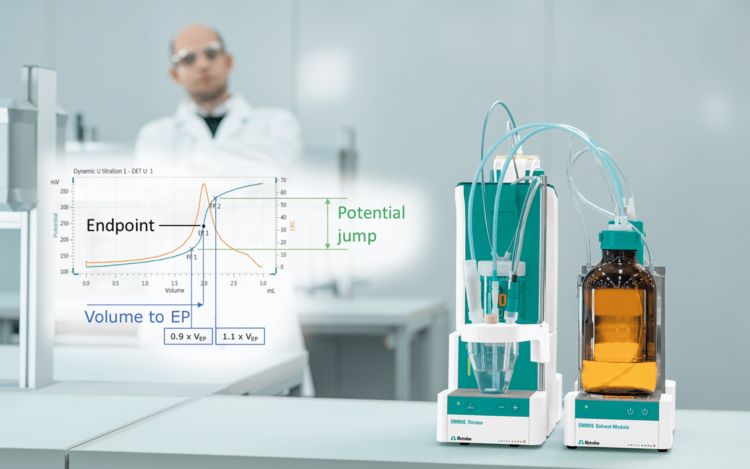
The most common indication methods for automated titrations are potentiometric and photometric endpoint (EP) determination.

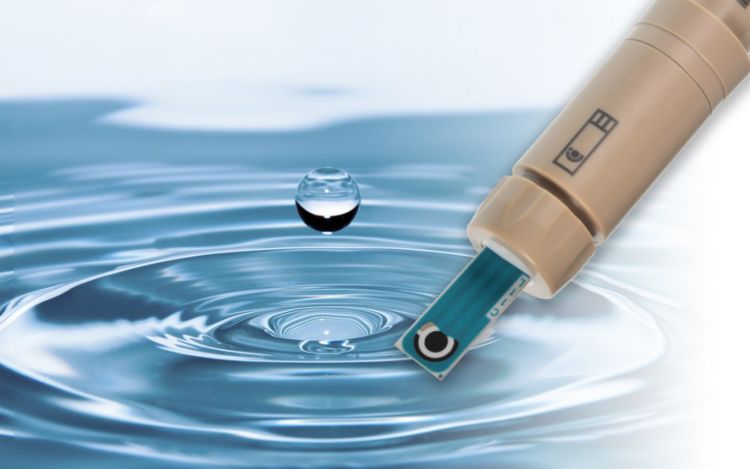
In potentiometric EP determination, the difference in potential is measured: The concentration-dependent potential of a solution is measured using an indicator electrode against a reference potential, which is measured using a reference electrode. Combined sensors including both indicator and reference electrode are also available.

In photometric EP determination, a photometric sensor, such as the Optrode from Metrohm, is used to determine the change in intensity at a particular wavelength of a light beam passing through a solution.

Another kind of titration that is less well known is thermometric titration. Thermometric EP determination relies on detecting temperature changes during the titration reaction. A highly sensitive temperature sensor monitors the solution, and the endpoint is identified by a sudden change in temperature, which occurs due to the exothermic or endothermic nature of the reaction. This method is especially useful for titrations where no suitable electrode or photometric indicator is available.

Learn more about potentiometric, photometric, and thermometric endpoint determination in our blog:

Blog: Recognition of endpoints (EP)

Blog: Thermometric titration – the missing piece of the puzzle

Webinar: Thermometric titration

Fully automated titration systems increase efficiency, accuracy, safety, and reliability of your titrations. Automated systems are ideal for high-throughput labs, routine analysis, and when minimizing manual labor is critical.

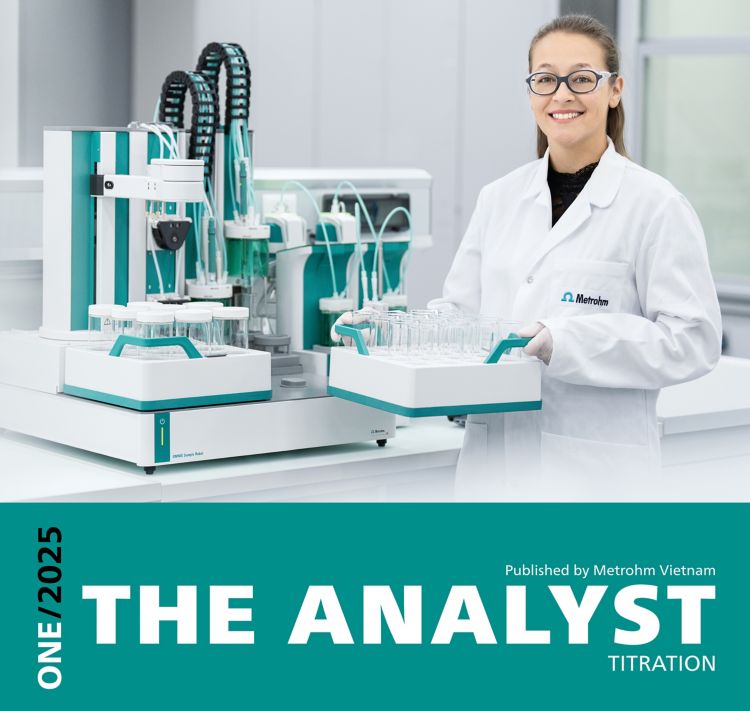
The OMNIS Sample Robot from Metrohm, for instance, allows you to fully automate the analysis of up to 175 samples.

Learn more about automated titration:

Webinar: The benefits of automating your titration applications

High-throughput labs not only need instruments with a large sample capacity, they also look for a system which offers flexibility and modularity to adapt to changing applications or peaks in workload.

OMNIS titrators and the OMNIS Sample Robot form the perfect titration system for high-throughput laboratories. OMNIS offers parallel titration, modular expansion, and automated sample handling. Watch the video to learn more.

Yes, entry-level Metrohm titrators (i.e., Eco Titrators) deliver reliable accuracy when paired with proper electrodes and validated methods.

The accuracy of titrations does not only depend on the instrument, it is the sum of several factors that contribute to it:

  • Choice of a suitable electrode or indication method
  • Choice of a suitable cylinder volume
  • Choice of a suitable titration mode
  • Accuracy of sample size (weighing/pipetting)
  • Homogenization of the sample
  • Electrode cleaning and maintenance
  • Burette maintenance
  • Other factors, depending on the specific titration method


An overview on how to get correct and accurate titration results can be found here:

Blog: How to avoid titration errors in your lab

Blog: Validation of  titration methods

Webinar: Avoid titration mistakes through best practice sensor handling

Webinar: Troubleshooting titration: essential know-how for quality results

Metrohm’s Ti-Touch and OMNIS titrators offer audit trails, user management, and secure data handling for full regulatory compliance to 21 CFR Part 11.

Stand-alone titrators (without PC software): Ti-Touch

Software-controlled titrators: OMNIS

Validating a titration method ensures that the procedure delivers accurate, reproducible, and reliable results – especially when transitioning from manual to automated titration. Metrohm recommends following the validation framework outlined in USP General Chapter <1225> Validation of Compendial Procedures and ICH Guidance Q2(R1) Validation of Analytical Procedures: Text and Methodology, which includes the following key steps:

  • Perform standardization of the titrant using a primary standard or a pre-standardized solution
  • Assess the accuracy and precision of the titration results by performing reference measurements
  • Verify the linearity of your results, i.e., that the titration results are proportional to the analyte concentration across the expected range
  • Demonstrate specificity, i.e., that the method can accurately measure the analyte without interference from impurities, excipients, or degradation products.

Find more information:

Blog: Validation of titration methods
White paper: Recommendations for titration methods validation
 

Modern titration systems offer various data formats for transferring titration data to an external software (LIMS / ERP / ELN). The most common formats are:

  • PC/LIMS report
  • XML report
  • PDF
  • CSV

Any Metrohm titrator offers at least one of these options, either by transferring the corresponding data in a corresponding file to a USB memory stick or directly to a computer/network directory.

The OMNIS Software offers a convenient and secure data exchange between OMNIS and any 3rd party software (e.g., LIMS, ERP, ELN) by direct transfer based on the REST software architecture.

Thiết bị chuẩn độ hoạt động như thế nào?

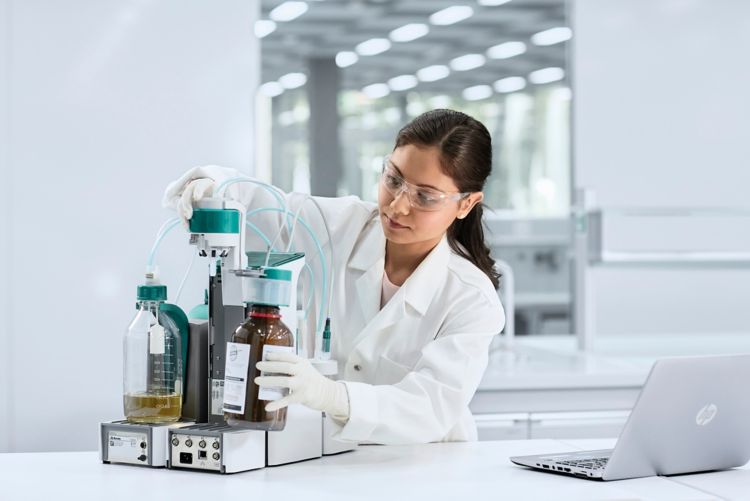
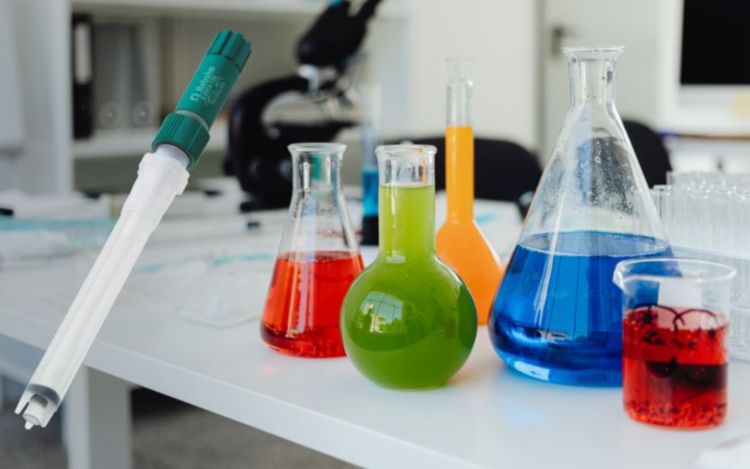
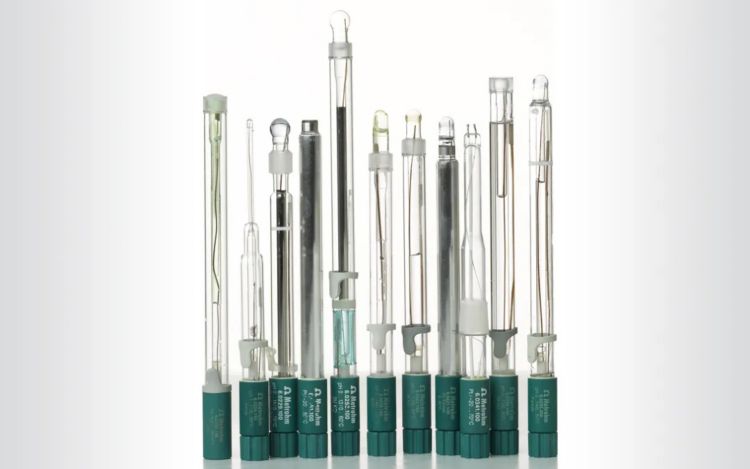
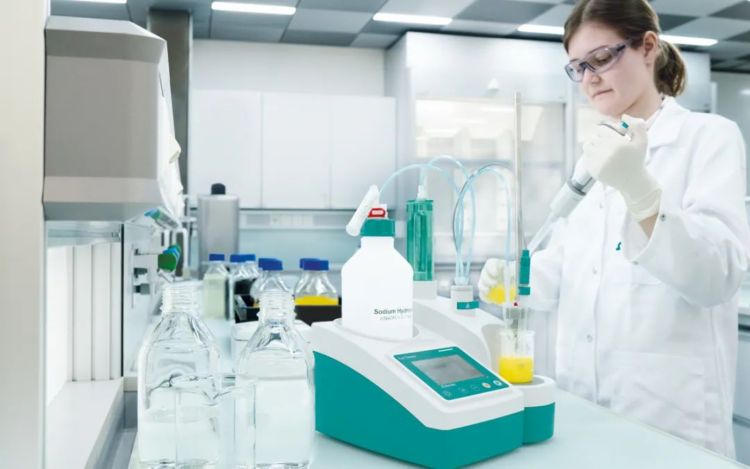
Thiết bị chuẩn độ được dùng để xác định nồng độ của các hợp chất (chất phân tích) được hòa tan trong mẫu. Một loại thuốc thử (dung dịch chuẩn độ) được thêm thủ công hoặc tự động với thể tích đã được biết và phản ứng hóa học được giám sát. Có nhiều loại điện cực được dùng để giám sát phản ứng tùy thuộc vào loại chuẩn độ bạn thực hiện. Metrohm cung cấp các điện cực cho chuẩn độ đo quang, oxy hóa khử, kết tủa, phức chất, chất hoạt động bề mặt, acid-base môi trường nước và acid-base môi trường khan.

Hãy xem Trung tâm hội thảo trực tuyến và blog của chúng tôi để tìm hiểu thêm về chuẩn độ:

Go to Webinar Center

Blog: Best practices for electrodes in titration

Thiết bị chuẩn độ tự động là gì?

Hệ thống chuẩn độ tự động thực hiện quy trình chuẩn độ một cách tự động, bao gồm tính toán kết quả, chuẩn bị mẫu và phân tích hàng loạt mẫu. Thiết bị chuẩn độ tự động có nhiều ưu điểm hơn chuẩn độ thủ công, như là phân tích nhanh hơn, số lượng mẫu nhiều hơn, phép đo lặp lại hơn và nhiều hơn nữa.

Tìm hiểu thêm về thiết bị chuẩn độ hoàn toàn tự động từ Metrohm:

Go to OMNIS titrators

Tìm hiểu thêm về chuẩn độ tự động và những ưu điểm so với chuẩn độ thủ công trong blog của chúng tôi:

Blog: Save money by using automated titration systems

Blog: Why consider automation – even for simple titrations

Có những phương pháp chỉ thị nào?

Hai phương pháp chỉ thị thường dùng nhất cho chuẩn độ tự động là xác định điểm kết thúc (EP) bằng cách đo điện thế và đo quang. 

Sự chênh lệch điện thế được đo đạc trong phương pháp xác định điểm kết thúc bằng điện thế: Điện thế phụ thuộc vào nồng độ của dung dịch được đo bằng cách dùng điện cực chỉ thị so với điện thế so sánh được đo bởi điện cực so sánh. Hiện có loại điện cực kết hợp tích hợp điện cực chỉ thị và điện cực so sánh trên một điện cực.

Trong phương pháp xác định EP bằng cách đo quang, một điện cực quang, ví dụ Optrode từ Metrohm, được dùng để xác định sự thay đổi cường độ tại một bước sóng cụ thể của chùm ánh sáng đi xuyên qua dung dịch.

Tìm hiểu thêm về xác định điểm kết thúc bằng đo điện thế và đo quang trong bài blog của chúng tôi:

Blog: Recognition of endpoints (EP)

Do you want to learn more about titration?

Download your free copy here

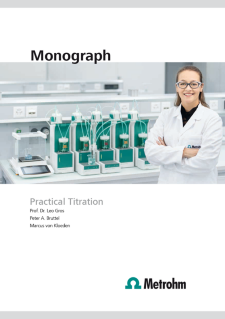
The free monograph "Practical titration" covers the theory of titration explaining titration reactions, indication methods, electrodes, and titrants. In the practical part, acid-base, precipitation, redox, complexometric, and chelometric titrations are discussed.