You have been redirected to your local version of the requested page
Rotating Ring Disk Electrode

Rotating Ring Disk Electrode

AUT.RRDE.S

Rotating Ring Disk Electrode

en

AUT.RRDE.S

Prezentare generală a caracteristicilor

The Autolab RRDE is a low-noise rotating ring disk electrode that can be used to perform electrochemical measurements under controlled hydrodynamic conditions. The ring and disk electrode assembly provides the means to detect reaction intermediates in situ through collection experiments.


The Autolab RRDE uses 2 identical friction-less mercury contacts for low noise measurements and can be used with any Autolab potentiostat/galvanostat fitted with the BA, dual-mode bipotentiostat module.


The rotation speed of the RRDE is controlled manually with the button on the front of the motor control unit. The RRDE can also be controlled remotely with the Autolab software.  The rotation speed can be varied continuously between 100 and 10,000 rpm with a resolution of 1 rpm.
 

Specificații tehnice

Maximum current in ampère0.5
Rotation rate range100 - 10000 RPM
Acceleration and deceleration rate (RPM/s)4.000
Number of electrodes2
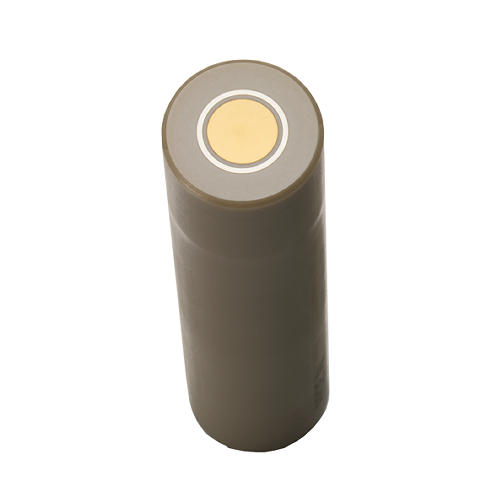
    • Rotating ring disk electrode, Gold disk Platinum ring
    • RRDE.AUPT.S
    • The RRDE electrode tip consist of a 5 mm disc of gold with a concentric platinum ring at a distance of 375µm, leading to a theoretical collection efficiency of 24.9%.
    • <p>The RRDE electrode tip consist of a 5 mm disc of gold with a concentric platinum ring at a distance of 375&micro;m, leading to a theoretical collection efficiency of 24.9%.</p>
    • PCS
    • 1
    • Rotating ring disk electrode, Glassy Carbon disk Platinum ring
    • RRDE.GCPT.S
    • The RRDE electrode tip consist of a 5 mm disc of Glassy Carbon with a concentric platinum ring at a distance of 375µm, leading to a theoretical collection efficiency of 24.9%.
    • <p>The RRDE electrode tip consist of a 5 mm disc of Glassy Carbon with a concentric platinum ring at a distance of 375&micro;m, leading to a theoretical collection efficiency of 24.9%.</p>
    • PCS
    • 1