
CVS – Frequently Asked Questions
Problems with Dilution Titration (suppressor determination)
FAQ
The curve obtained from the sample looks different to that from the calibration.// Problems with Dilution Titration (suppressor determination)
FAQ
Conditioning is taking a long time and a standard deviation < 0.5% cannot be achieved.// Problems with Dilution Titration (suppressor determination)
FAQ
The evaluation criterion has been reached. However, no results are being displayed.// Problems with Dilution Titration (suppressor determination)
Problems with MLAT/LAT (brightener determination)
FAQ
The measurement of the intercept value is taking a long time or is not completed.// Problems with MLAT LAT (brightener determination)
FAQ
I am getting non-reproducible measurement curves (cyclic voltammogram).// Problems with MLAT LAT (brightener determination)
FAQ
The reproducibility of results is worse than expected.// Problems with MLAT LAT (brightener determination)
FAQ
I am getting negative or no results.// Problems with MLAT LAT (brightener determination)
Problems with Response Curve (leveler determination)
FAQ
Measuring the electrolyte value is taking a long time or is not completed.// Problems with Response Curve (leveler determination)
Problems with the measurement
FAQ
The measured values are widely scattered.// Problems with the measurement
FAQ
The electrode test is failing.// Problems with the measurement
FAQ
The peak is no longer recognized.// Problems with the measurement
FAQ
The signal is not decreasing despite suppressor addition.// Problems with the measurement
FAQ
The measurement curves are noisy.// Problems with the measurement
FAQ
The measuring signal for the VMS is fluctuating.// Problems with the measurement
FAQ
Conditioning is taking a long time.// Problems with the measurement
FAQ
Are CVS measurements temperature-dependent?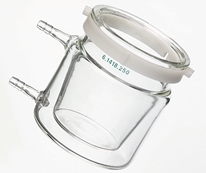
// Problems with the measurement
FAQ
Is it possible to repair a defective driving axle (6.1204.x010 or 6.1204.x20)?// Problems with the measurement
Problems with the hardware
FAQ
I am getting an error message. The 800 Dosino cannot be actuated by the 894 Professional CVS.// Problems with the hardware
FAQ
An electrode connector on the electrode cable is broken.// Problems with the hardware
FAQ
The membrane pumps of the 843 Pump Station are not operating at full pump capacity.// Problems with the hardware
FAQ
Solution is leaking between the 894 Professional CVS and the measuring head.// Problems with the hardware
FAQ
The peristaltic pump on the sample changer is not transferring the entire sample to the measuring vessel.// Problems with the hardware
FAQ
The status LED of the 800 Dosino is flashing quickly and the dosing unit is not being recognized.// Problems with the hardware
FAQ
I am getting an error message that the dosing unit data cannot be read.// Problems with the hardware
FAQ
The dosing unit is blocked and/or leaking.// Problems with the hardware
General problems
FAQ
Can measurements made using other software be used in viva?// General problems
FAQ
How should the additives be stored?// General problems
FAQ
Preparing the Dosinos is taking a long time. Is it possible to speed up this step?// General problems
FAQ
The measuring signal in VMS is exceptionally small and conditioning in VMS is taking a long time. What is the reason for that?// General problems
FAQ
How frequently do the electrodes need to be conditioned?// General problems
FAQ
How should the electrodes be stored?// General problems
FAQ
What preparatory steps need to be taken before shutting down the measuring system?// General problems
FAQ
At what intervals should a dosing unit be cleaned?// General problems
FAQ
The measurement curves are noisy. What is the reason for that?// General problems
FAQ
How often should the dosing units be prepared?// General problems
Rotating disk electrode
FAQ
How do I clean my platinum electrode tip?// Maintenance of Rotating Disk Electrodes// Rotating disk electrode
FAQ
How temperature-resistant is the platinum electrode tip?// Rotating disk electrode
FAQ
The electrode surface of the platinum electrode tip is coated with a foreign metal (Cu, Sn, etc.). What can I do?// Maintenance of Rotating Disk Electrodes// Rotating disk electrode
FAQ
Can platinum electrode tips be polished
// Maintenance of Rotating Disk Electrodes// Rotating disk electrode
FAQ
Can Metrohm polish platinum electrode tips?// Maintenance of Rotating Disk Electrodes// Rotating disk electrode
FAQ
Can the platinum electrode tip be treated in an ultrasonic bath?// Maintenance of Rotating Disk Electrodes// Rotating disk electrode
FAQ
Does the Pt RDE diameter affect my analysis results?// Rotating disk electrode
Reference electrode
FAQ
Until now, I have always used diluted H2SO4 as a bridge electrolyte. Can I use another electrolyte instead of KNO3?// Maintenance of reference electrodes// Reference electrode
FAQ
How often do I need to change the reference electrolyte?// Maintenance of reference electrodes// Reference electrode
FAQ
How often does the bridge electrolyte need changing?// Maintenance of reference electrodes// Reference electrode
FAQ
My reference electrode has dried out. Can I regenerate it again?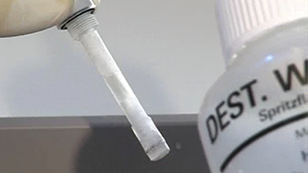
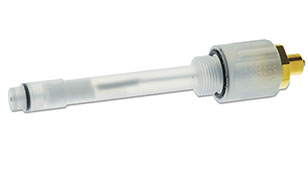
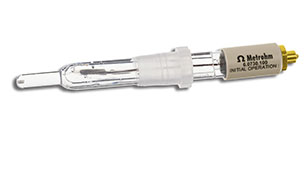
// Maintenance of reference electrodes// Reference electrode// Reference electrode// Maintenance of the reference electrode
Auxiliary electrode
FAQ
Is polishing the platinum pin of the auxiliary electrode allowed?// Maintenance of auxiliary electrodes// Auxiliary electrode
FAQ
The electrode surface of the auxiliary electrode is coated with a foreign metal (Cu, Sn, etc.). What can I do?// Maintenance of auxiliary electrodes// Auxiliary electrode