

重新導向訊息
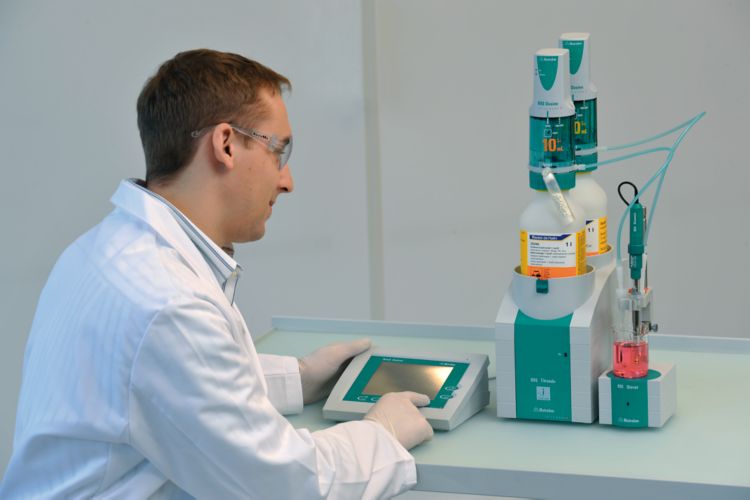
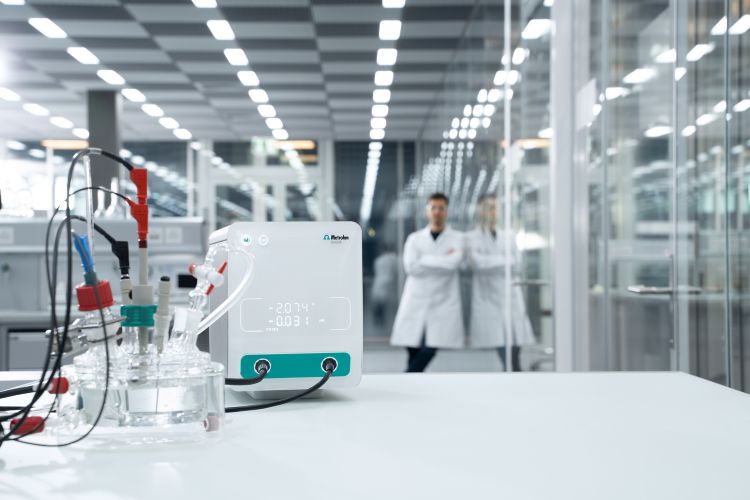
電位滴定儀

電位滴定儀

來自世界領先的滴定解決方案供應商的創新滴定儀、滴定系統、配件和專業知識。

無論您有什麼需求 – 我們都有適合您的電位滴定儀

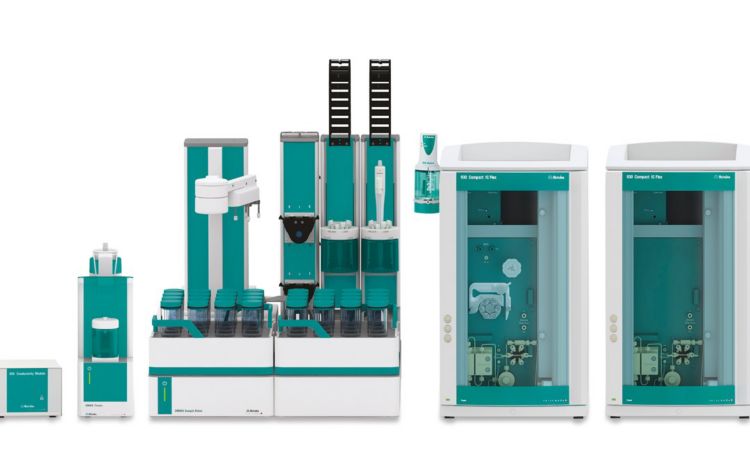
我們的滴定儀產品系列包括經濟實惠、精巧和獨立運作的選擇,以及用於電位滴定和溫度滴定的現代化全自動滴定系統。使用篩選來選擇您的搜尋並找到最適合您的電位滴定儀。您在尋找容量法或庫侖式 Karl Fischer 卡爾費雪水份測定儀嗎?前往我們的 Karl Fischer 卡爾費雪水份測定儀

尋找電位滴定儀的應用

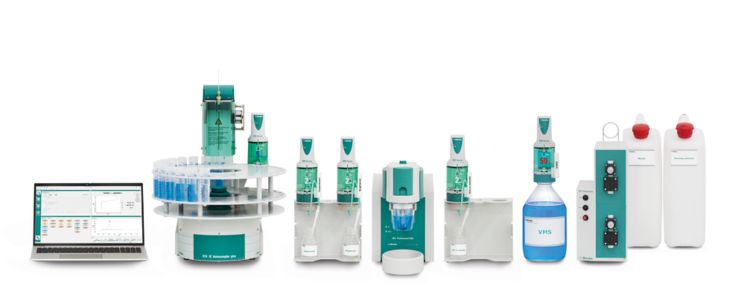
可靠、準確的測量  滴定儀的組成

為什麼選擇 Metrohm 電位滴定儀 ? – 我們是全球市場的領導者

Metrohm 成立於 1943 年,現已發展成為全球領先的滴定分析尖端儀器和解決方案供應商。

  • 從一家供應商獲得全系列的滴定儀,從精巧桌上型解決方案到模組化自動滴定儀系統,包括用於電位滴定、卡爾費雪容量法滴定和庫倫法滴定或製程分析的配件和軟體
  • 值得信賴的瑞士製造品質
  • 憑藉我們遍佈全球超過 80 個國家的業務網絡,我們的客服工程師和應用專家將為您提供專業的在地支援

由我們的應用專家撰寫的超過 450 份滴定應用說明等您閱覽:

前往搜尋應用

前往我們的 Karl Fischer 卡爾費雪滴定和線上製程濃度分析解決方案:

Metrohm Karl Fischer 卡爾費雪水份測定儀

Metrohm TI 線上濃度分析儀

電位滴定儀 – 常見問答

Titrators are used to determine the concentration of a substance (analyte), which is dissolved in a sample. A reagent (titrant) is added gradually in a known volume to the sample until a chemical reaction reaches its endpoint, which is detected by a sensor.

How titrators work step-by-step:

  1. Sample addition: The sample is added to a vessel, often with a stirrer to ensure homogeneity.
  2. Titrant addition: The titrant is added manually or automatically in controlled volumes.
  3. Measurement & monitoring: Sensors continuously monitor the reaction. The titrator tracks changes in solution properties (e.g., voltage, color, conductivity) to detect the equivalence point.
  4. Endpoint detection: The endpoint is the moment when the reaction is complete.
  5. Result calculation & reporting: The titrator calculates the concentration of the analyte based on the volume of titrant used and generates a digital report.


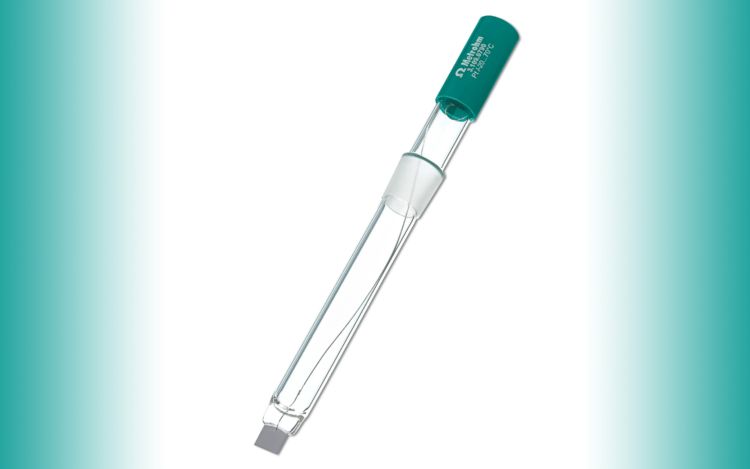
Various sensors are available to monitor the reaction depending on the type of titration you are performing. Metrohm offers sensors for photometric, thermometric, redox, precipitation, complexometric, surfactant, aqueous or non-aqueous acid-base titration.

Check out our Webinar Center and our blog to learn more about titration:

Webinar: Basics of titration

Blog: Titration – definition and principles

Blog: Best practices for electrodes in titration

An automatic titrator is a laboratory instrument that performs titration procedures automatically, including sample and titrant addition, endpoint detection, and results calculation. Auto titrators have many advantages over manual titrators, such as faster analysis, reproducible measurements, and more.

Learn more about the fully automatic titrator from Metrohm:

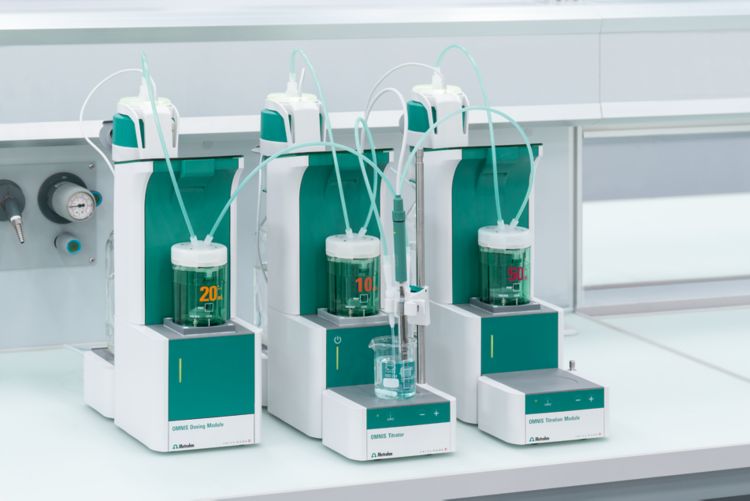
Go to OMNIS titrators

Learn more about automatic titration and the advantages over manual titration in our blog:

Blog: Save money by using automated titration systems

Blog: Why consider automation – even for simple titrations

Titration is one of the oldest analytical techniques and is usually performed manually. However, manual titration presents many challenges. An autotitrator automates the titration process, delivering faster, more accurate, and safer results compared to manual titration. The video summarizes the 5 top reasons to switch from manual to automated titration.

  1. Easier preparation of the buret: An autotitrator fills the buret automatically.
  2. Step-by-step guidance: An autotitrator automatically transfers the sample size from the balance to the software or instrument, adjusts the stirring speed, and more.
  3. More reliable and reproducible endpoint evaluation: Automatic titrators ensure objective endpoint detection.
  4. Complete documentation according to GxP: Autotitrators ensure compliance with FDA CFR Part 11 and EudraLex Vol. 4, Annex 11.
  5. Safer handling of chemicals: Autotitrators reduce the exposure to hazardous chemicals.

In summary, the main benefits of an autotitrator are:

  • Speed and throughput: Faster analysis and higher sample throughput
  • Accuracy and reproducibility: Automated dosing and endpoint detection minimize human error
  • Efficiency: Frees lab personnel from repetitive tasks
  • Safety: Minimizes chemical exposure
  • Data management: Digital reports and integration with LIMS/ERP systems
  • Scalability: Modular accessories and automation options adapt to changing workloads

Choosing the right titrator depends on your sample type, analytical goals, and lab environment. Here are the key factors to consider:

Factors Tips
Type of titration
  • Potentiometric titration: Ideal for acid-base, redox, complexometric, and precipitation reactions.
  • Photometric: Suitable for colored, opaque, or non-aqueous samples.
  • Thermometric titration: Best for samples where traditional sensors may not work.
  • Conductometric titration: Useful for reactions involving ionic changes.
Sample characteristics
  • Consider whether your samples are liquids, solids, slurries, or gases.
  • Some titrators offer accessories like homogenizers or sample preparation modules to handle complex matrices.
Throughput & automation
  • For high sample volumes, look for titrators with autosamplers or robotic automation (e.g., Metrohm’s OMNIS Sample Robot).
  • Parallel titration capabilities can significantly boost lab efficiency.
Accuracy & reliability
  • Choose systems with precise dosing, sensitive sensors, and robust endpoint detection.
  • Look for instruments that support method validation and reproducibility.
Compliance & data management
  • Ensure compatibility with GLP/GMP, 21 CFR Part 11, and other regulatory standards.
  • Check for integration with LIMS, ERP, or ELN systems for traceability and audit readiness.
Modularity & scalability
  • Opt for a platform that grows with your lab. Metrohm’s OMNIS titrators allow expansion with additional modules and titration modes.
Support & service
  • Consider availability of training, application support, and service contracts.
  • Ask about software updates, warranty coverage, and repair turnaround times.

Our titration experts are happy to assist you with your questions:

Contact us

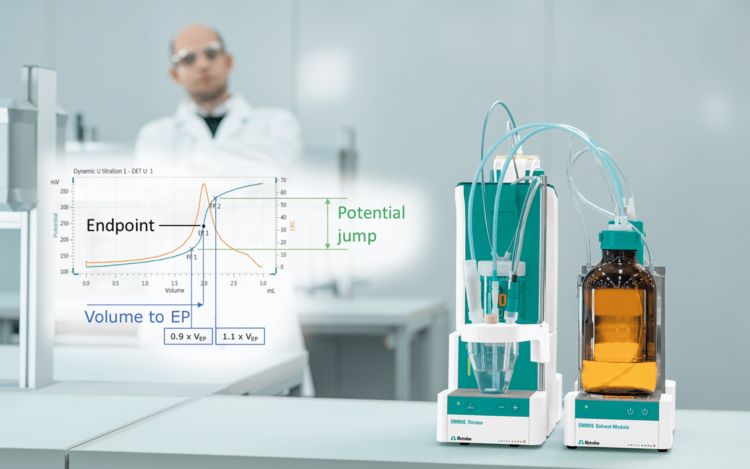
The most common indication methods for automated titrations are potentiometric and photometric endpoint (EP) determination.

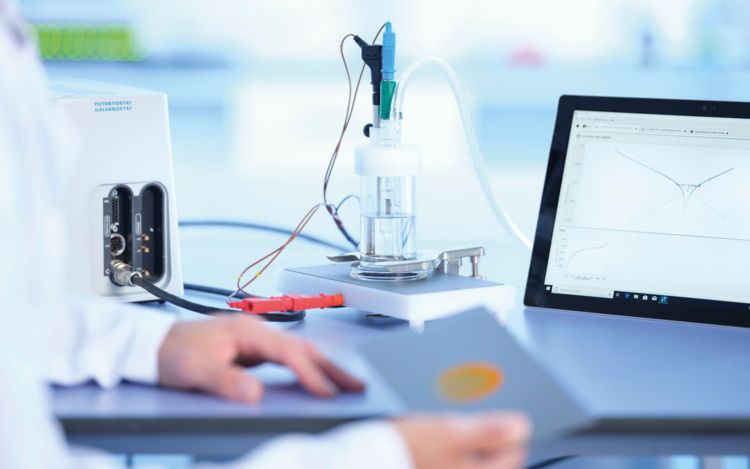
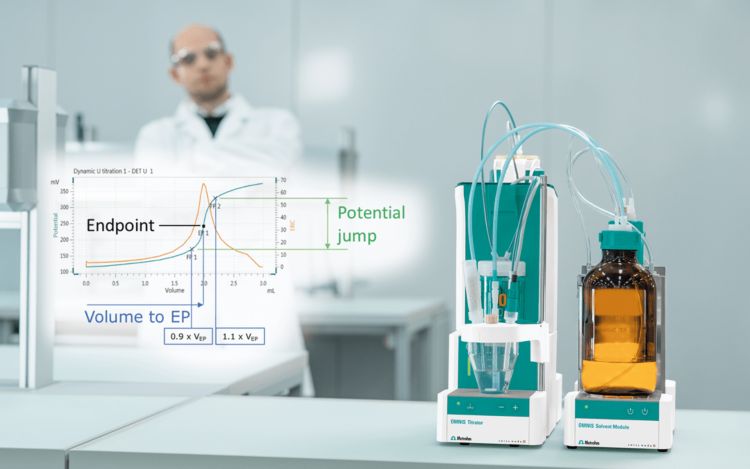
In potentiometric EP determination, the difference in potential is measured: The concentration-dependent potential of a solution is measured using an indicator electrode against a reference potential, which is measured using a reference electrode. Combined sensors including both indicator and reference electrode are also available.

In photometric EP determination, a photometric sensor, such as the Optrode from Metrohm, is used to determine the change in intensity at a particular wavelength of a light beam passing through a solution.

Another kind of titration that is less well known is thermometric titration. Thermometric EP determination relies on detecting temperature changes during the titration reaction. A highly sensitive temperature sensor monitors the solution, and the endpoint is identified by a sudden change in temperature, which occurs due to the exothermic or endothermic nature of the reaction. This method is especially useful for titrations where no suitable electrode or photometric indicator is available.

Learn more about potentiometric, photometric, and thermometric endpoint determination in our blog:

Blog: Recognition of endpoints (EP)

Blog: Thermometric titration – the missing piece of the puzzle

Webinar: Thermometric titration

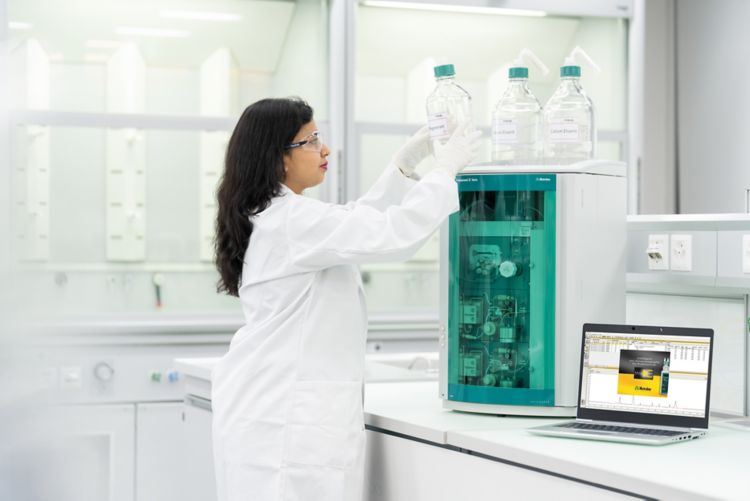
Fully automated titration systems increase efficiency, accuracy, safety, and reliability of your titrations. Automated systems are ideal for high-throughput labs, routine analysis, and when minimizing manual labor is critical.

The OMNIS Sample Robot from Metrohm, for instance, allows you to fully automate the analysis of up to 175 samples.

Learn more about automated titration:

Webinar: The benefits of automating your titration applications

High-throughput labs not only need instruments with a large sample capacity, they also look for a system which offers flexibility and modularity to adapt to changing applications or peaks in workload.

OMNIS titrators and the OMNIS Sample Robot form the perfect titration system for high-throughput laboratories. OMNIS offers parallel titration, modular expansion, and automated sample handling. Watch the video to learn more.

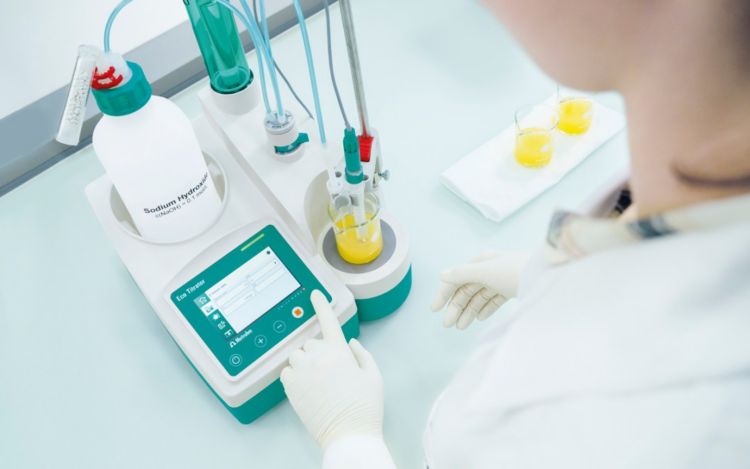
Yes, entry-level Metrohm titrators (i.e., Eco Titrators) deliver reliable accuracy when paired with proper electrodes and validated methods.

The accuracy of titrations does not only depend on the instrument, it is the sum of several factors that contribute to it:

  • Choice of a suitable electrode or indication method
  • Choice of a suitable cylinder volume
  • Choice of a suitable titration mode
  • Accuracy of sample size (weighing/pipetting)
  • Homogenization of the sample
  • Electrode cleaning and maintenance
  • Burette maintenance
  • Other factors, depending on the specific titration method


An overview on how to get correct and accurate titration results can be found here:

Blog: How to avoid titration errors in your lab

Blog: Validation of  titration methods

Webinar: Avoid titration mistakes through best practice sensor handling

Webinar: Troubleshooting titration: essential know-how for quality results

Metrohm’s Ti-Touch and OMNIS titrators offer audit trails, user management, and secure data handling for full regulatory compliance to 21 CFR Part 11.

Stand-alone titrators (without PC software): Ti-Touch

Software-controlled titrators: OMNIS

Validating a titration method ensures that the procedure delivers accurate, reproducible, and reliable results – especially when transitioning from manual to automated titration. Metrohm recommends following the validation framework outlined in USP General Chapter <1225> Validation of Compendial Procedures and ICH Guidance Q2(R1) Validation of Analytical Procedures: Text and Methodology, which includes the following key steps:

  • Perform standardization of the titrant using a primary standard or a pre-standardized solution
  • Assess the accuracy and precision of the titration results by performing reference measurements
  • Verify the linearity of your results, i.e., that the titration results are proportional to the analyte concentration across the expected range
  • Demonstrate specificity, i.e., that the method can accurately measure the analyte without interference from impurities, excipients, or degradation products.

Find more information:

Blog: Validation of titration methods

White paper: Recommendations for titration methods validation


Modern titration systems offer various data formats for transferring titration data to an external software (LIMS / ERP / ELN). The most common formats are:

  • PC/LIMS report
  • XML report
  • PDF
  • CSV

Any Metrohm titrator offers at least one of these options, either by transferring the corresponding data in a corresponding file to a USB memory stick or directly to a computer/network directory.

The OMNIS Software offers a convenient and secure data exchange between OMNIS and any 3rd party software (e.g., LIMS, ERP, ELN) by direct transfer based on the REST software architecture.

滴定儀如何運作?

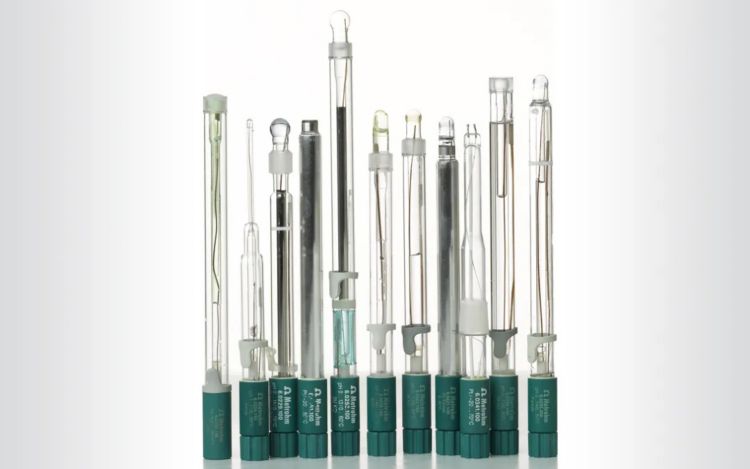
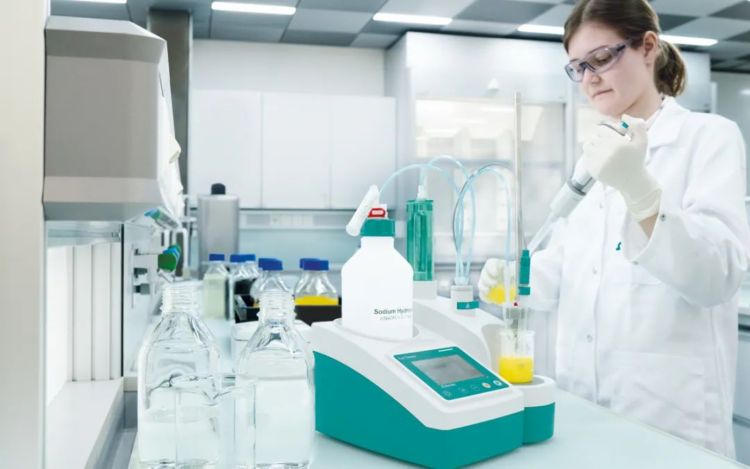
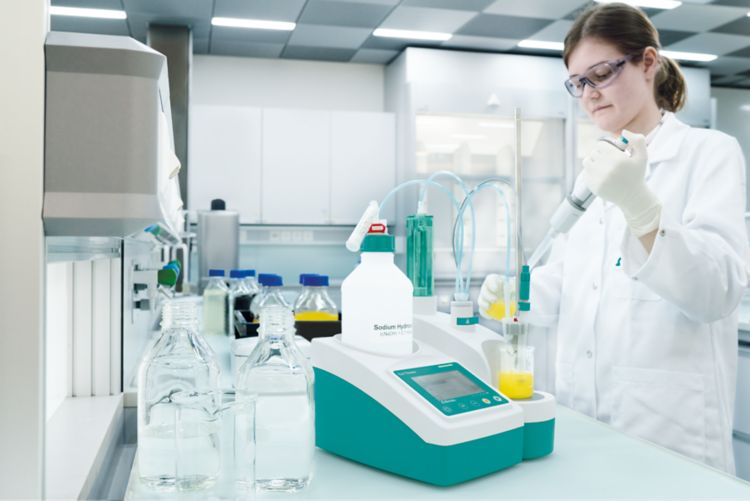
滴定儀用於測定溶解在樣品中的物質(即分析物)的濃度。手動或自動添加已知體積的試劑(滴定劑)並監測化學反應。根據您執行的滴定類型,可以使用各種電極來監測反應。Metrohm 提供用於光度、氧化還原、沉澱、絡合、界面活性劑、水相酸鹼和非水相酸鹼滴定的電極。

查看我們的線上研討會中心和部落格,來了解更多有關滴定的資訊:

前往線上研討會中心

部落格 : Best practices for electrodes in titration

什麼是自動滴定儀?

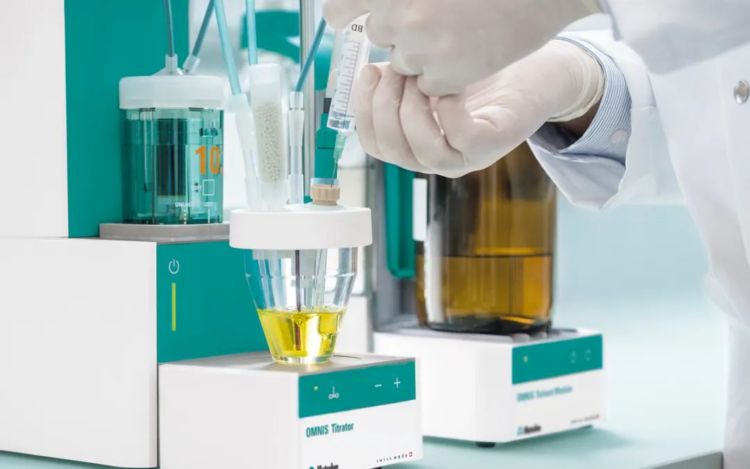
自動滴定系統會自動執行滴定程序,包括結果計算、樣品製備和樣品系列分析。與手動滴定相比,自動滴定儀具有許多優點,例如更快的分析、更高的樣品處理量、可再現的測量等等。

了解更多有關 Metrohm 自動滴定儀的資訊:

前往 OMNIS 電位自動滴定儀

在我們的部落格中了解更多有關自動滴定以及相對於手動滴定的優點的資訊:

部落格 : Save money by using automated titration systems
部落格 : Why consider automation – even for simple titrations
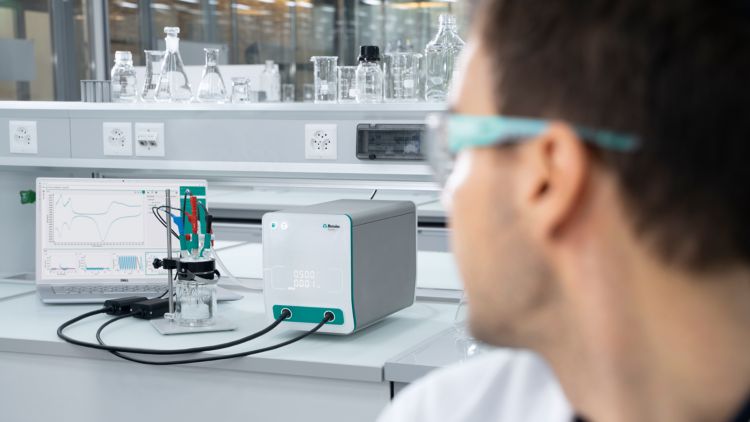
有哪些類型的指標性方法?

自動滴定最常見的指標性方法是電位和光度終點 (EP) 測定。

在電位法 EP 測定中,測量電位差:使用指示電極相對於參考電極的電位差測量離子濃度不同的變化。還有包括指示電極和參考電極的組合電極。

在光度 EP 測定中,光度感測器(例如 Metrohm 的 Optrode)用於測定穿過溶液的光束在特定波長下的強度變化。

在我們的部落格中了解更多有關電位和光度終點測定的資訊:

部落格 : Recognition of endpoints (EP)

您想了解更多關於滴定的知識嗎?

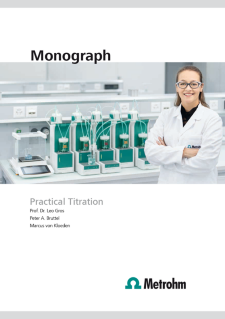
點此下載

免費專題文章《實用滴定》涵蓋了滴定理論,解釋了滴定反應、指示方法、電極和滴定劑。在實行部分,討論了酸鹼滴定、沉澱滴定、氧化還原滴定、絡合滴定和螯合滴定。