情報共有
情報共有
選択性および高感度な検出、多種多様な分析対象物(アナライト)の迅速な定量、診断ツール、新しい手法やセンサーの開発など[3]。

【コラム】分光電気化学の基本
2025/04/28
記事
よく知られた2つの分析技術、電気化学と分光法の組み合わせによって生まれたのが、分光電気化学(SEC)という科学的手法です。このハイブリッド技術は、光学信号と電気化学的信号の両方を同時に記録できるため、研究者にとって両分野の利点を活かして新たなデータを得ることができます[1]。本稿ではまず分光電気化学の定義を紹介し、研究におけるその利点を示した上で、さまざまな分光電気化学アプリケーションに取り組む際の利便性を高める新しいシステムやソリューションについて紹介します。
分光電気化学とは?
分光電気化学的手法は、マルチレスポンス手法に分類されます。これは、電気化学反応のプロセスを、光学的なモニタリングを同時に行いながら研究する方法です。分光電気化学は、1回の実験から2つの独立した信号を得ることができるため、対象とする系について重要な情報を得るための非常に強力な手法です。さらに、分光電気化学は自己検証的な性質を持ち、2つの異なる手段によって得られた結果の正当性を確認できます。
このトピックの詳細は、弊社のアプリケーションノートをご覧ください。
分光電気化学:自己検証型の分析手法 – 一つの実験で二つの異なる方法によって結果を確認
分光電気化学の原理は、電気化学反応に関与する化合物と電磁波のビームとの相互作用を解析することに基づいています。光学的および電気化学的信号の変化を通じて、電極反応の進行状況についての洞察が得られます。
この分析手法は、1960年代にセオドア・クワナ教授が、光を透過する電極を用いて、光ビームが電極を通過する際に同時に電荷と吸光度を測定するという手法で、同時進行するプロセスを研究したことにより開発されました[2]。このような電極は「光学的に透明な電極(optically transparent electrodes, OTEs)」と呼ばれ、光学的および電気化学的な実験を同時に行うために開発されました。ただし、すべての分光電気化学の構成が透明電極を必要とするわけではありません。
1964年に最初の分光電気化学に関する論文が発表されて以来[2]、この技術に基づく研究と論文の数は着実に増加しています(図1)。

図1.
分光電気化学法が1960年代に開発されて以来、この手法に関する論文の発表数は大幅に増加している(2025年1月時点で「Spectroelectrochem*」をScopusで検索した結果に基づく)。
分光電気化学法は、電子移動反応に関与する反応物、中間体、あるいは生成物から、分子的、速度論的、熱力学的な情報を収集することを可能にする手法です。そのため、生体複合体、重合反応、ナノ材料の特性評価、分析物の検出、腐食機構、電気触媒反応、環境プロセス、メモリデバイスの特性評価など、さまざまな分子や多様なプロセスに対して分光電気化学的研究を行うことが可能です。
選べる多様な分光電気化学的手法:SECの種類
使用するスペクトル領域によって得られる情報の種類は異なります。以下の図(図2)は、さまざまな電気化学法と分光法の組み合わせに基づいて分類されています。一般的な分類は分光法の種類に基づいており、紫外(UV)、可視(Vis)、フォトルミネッセンス(PL)、赤外(IR)、ラマン、X線、核磁気共鳴(NMR)、および電子スピン共鳴(EPR)が含まれます。

図2.
分光電気化学法(SEC)とは、分光法と電気化学法を組み合わせたものであり、ここではこの2つの手法が重なり合う部分として示されています。
たとえば、UV/VIS分光法は分子の電子準位に関する分子情報を取得し、近赤外(NIR)領域は振動準位に関連するデータを取得します。また、ラマン分光は、この手法のフィンガープリント特性により、試料の構造や組成に関する非常に特異的な情報を取得します(図3)。

図3.
電磁スペクトルの図
分光電気化学的手法の主な利点は、以下のようにまとめられます:
- 単一の実験で、2つの異なる手法(電気化学および分光法)から得られる情報を同時に提供できる
- 定性的研究および定量分析の両方が実施可能である
- 高い選択性および感度を有する
- 分光電気化学は、その汎用性の高さからさまざまな分野で利用されている
- 新しい構成により分光電気化学実験の実施が容易になり、時間、試料、コストなどの削減が可能となる
近年、分光電気化学的手法に用いられる装置の設計・開発およびその応用可能性に関して、大きな進展が見られています。また、本装置の使用を容易にするための製品およびアクセサリー間の組み立てや接続方法も改良されており、この分野における研究や実験をより簡便かつ低コストで実施できるようになっています。
分光電気化学装置の進化
従来、分光電気化学分析の構成は、2つの装置から成り立っています。すなわち、1つは分光分析装置、もう1つは電気化学分析装置です(図4)。これら2つの装置は、それぞれ独立して同一の分光電気化学セルに接続されますが、通常は同期されていません。さらに、各装置はそれぞれ異なる(専用の)ソフトウェアによって制御されるため、各信号を解釈するために2つのプログラムが必要となり、加えて、それら2つのプログラムで得られたデータを処理・解析するための別の外部ソフトウェアも必要になります。最後に、この構成では同期が保証されないことも考慮する必要があり、その結果、実験や試験の実施は時間がかかり、複雑でコストのかかるものとなります。

図4.
この分離型の分光電気化学セットアップは、使用されるソフトウェアやプログラムの複雑さを示しており、異なるシステムでは電気化学測定およびデータの真の同期取得ができないことを表しています。
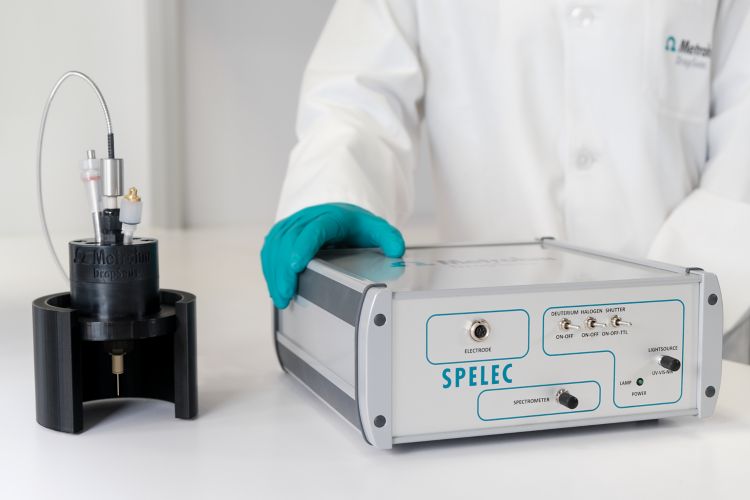
メトローム ドロップセンス (DropSens) は、この機会を捉えて、これまでになかった新しいソリューションを創出し、最先端の分光電気化学に革新をもたらしました。それが SPELEC シリーズ (図5)です。これらは完全に統合され、同期されたシステムであり、研究者にこれまで以上の高い汎用性を提供します。
この装置には、分光電気化学的手法をシンプルに実施するために必要なすべての構成要素が単一システム内に組み込まれており、(バイ)ポテンショスタット/ガルバノスタット、光源、そして分光器(選択したスペクトル範囲に応じて)が含まれています。

図5.
Metrohm DropSensのSPELECシステムは、1台の装置と1つのソフトウェアで構成されており、研究者にとって完全に統合された、使いやすく実用的な分光電気化学(SEC)セットアップを提供します。
これらの設計および構成により、単一のシステムと単一のソフトウェアのみで運用できるため、作業、プロセス、さらには分光電気化学測定も簡素化されます。
SPELECソリューションの場合、その高度な専用ソフトウェア(DropView SPELEC)は、装置の制御、電気化学および分光の信号の同時取得、さらに取得データの処理および解析を単一のステップで実行できる専用プログラムです。
まさに非常にシンプルな仕組みです。
分光電気化学の未来:SPELECシステムとソフトウェア
1台の装置と1つのソフトウェア:メトローム ドロップセンス (Metrohm DropSens) のSPELECは、分光電気化学実験に必要なすべてを備えており、貴重な時間と実験室スペースの節約を可能にします。SPELEC装置は、電気化学とUV-Vis、Vis-NIR、さらにはラマン分光法を単一測定で組み合わせて実施でき、複数の装置オプションが用意されています(以下参照)。
すべてが統合されているため、より短時間で多くの試験を実施でき、複数スペクトルの取得、豊富なアクセサリーの利用、さらに提供されるさまざまな構成による研究の柔軟性が実現されます。
必要とされるスペクトル範囲に応じて、複数のオプションが用意されています:
SPELEC: 200–900 nm (UV-VIS)
SPELEC 1050: 350–1050 nm (VIS-NIR)
SPELEC NIR: 900–2200 nm (NIR)
SPELEC RAMAN: 785 nm, 638 nm, or 532 nm laser
DropView SPELECは、測定、データ処理、加工を容易にする専用の直感的なソフトウェアです。このプログラムを使用することで、電気化学曲線とスペクトルをリアルタイムで表示し、カウント、カウントマイナスダーク、吸光度、透過率、反射率、またはRamanシフトにて実験を追跡することができます。データ処理に関しては、DropView SPELECはグラフオーバーレイ、ピーク積分と測定、3Dプロット、スペクトルムービーなど、幅広い機能を提供します。
お客様の声:ブルゴス大学(スペイン)でのSPELECを使用した研究紹介(日本語字幕版)
SPELEC装置は非常に汎用性が高く、分光電気化学専用の装置でありながら、電気化学実験および分光実験にも使用することができます。これらはあらゆる種類の電極(例:スクリーン印刷電極、従来型電極など)や、さまざまな分光電気化学セルと組み合わせて使用可能です。
また、光学的情報と電気化学的情報は、リアルタイム/オペランド/動的な構成で取得されます。
詳しくは下記コラムをご覧ください。
Simplifying spectroelectrochemistry setups with intuitive and user-friendly cells
分光電気化学の多様な応用
分光電気化学の特性により、さまざまな分野において新たな応用が継続的に開発されています。以下をご覧いただき、この技術の可能性をご確認ください(各セクションをクリックすると詳細が表示されます)。

分光電気化学の応用可能性について、無料のアプリケーションブックをダウンロードして、さらに詳しくご覧ください
お役立ち情報
Catalog: SPELEC line portfolio
Blog post: Simplifying spectroelectrochemistry setups with intuitive and user-friendly cells
Spectroelectrochemistry Application Book
On-demand webinar: Spectroelectrochemistry in action: Live experiments
参考文献
[1] Kaim, W.; Fiedler, J. Spectroelectrochemistry: The Best of Two Worlds. Chem. Soc. Rev. 2009, 38 (12), 3373. DOI:10.1039/b504286k
[2] Kuwana, T.; Darlington, R. K.; Leedy, D. W. Electrochemical Studies Using Conducting Glass Indicator Electrodes. Anal. Chem. 1964, 36 (10), 2023–2025. DOI:10.1021/ac60216a003
[3] Martín-Yerga, D.; Pérez-Junquera, A.; González-García, M. B.; et al. Quantitative Raman Spectroelectrochemistry Using Silver Screen-Printed Electrodes. Electrochimica Acta 2018, 264, 183–190. DOI:10.1016/j.electacta.2018.01.060
[4] Perez-Estebanez, M.; Cheuquepan, W.; Cuevas-Vicario, J. V.; et al. Double Fingerprint Characterization of Uracil and 5-Fluorouracil. Electrochimica Acta 2021, 388, 138615. DOI:10.1016/j.electacta.2021.138615
[5] Rivera-Gavidia, L. M.; Luis-Sunga, M.; Bousa, M.; et al. S- and N-Doped Graphene-Based Catalysts for the Oxygen Evolution Reaction. Electrochimica Acta 2020, 340, 135975. DOI:10.1016/j.electacta.2020.135975
[6] Ibáñez, D.; González-García, M. B.; Hernández-Santos, D.; Fanjul-Bolado, P. Detection of Dithiocarbamate, Chloronicotinyl and Organophosphate Pesticides by Electrochemical Activation of SERS Features of Screen-Printed Electrodes. Spectrochim. Acta. A. Mol. Biomol. Spectrosc. 2021, 248, 119174. DOI:10.1016/j.saa.2020.119174
作成者