
Market-leading solutions
Product families (49)Product configurations for any application
Product models (304)

Tried-and-tested applications
Applications (428)Electrodes for Automation
Electrodes (19)Accessories for Automation
Accessories (54)Columns for Automation
Columns (1)Software for Automation
Software (2)Other content
Items (33)On-demand webinars for Automation
Webinars (33)Industries for Automation
Industries (3)Manuals & brochures for Automation
Documents (72)Inspiring industry insights for Automation
Blog (100)News for Automation
News (16)Unmatched support & service for Automation
Support & service (9)Automation for Titrando
Flexible and expandable automation options ranging from liquid handling to homogenization and direct measurement.
Automation for IC
Whatever the number of samples and whatever preparatory treatment, we provide automated solutions for ion chromatography to meet your requirements.
Automation for KF Titrando
Oven sample changer: Automated sample preparation for samples that cannot be titrated directly.
Automation for KF Ti-Touch
Save time and space: automated thermal sample preparation for water content analysis
Omnis KF Titration
Fully integrated solution for water content determination with volumetric and coulometric Karl Fischer titration.
OMNIS titrators
All-in-one potentiometric autotitrator platform: faster results, safer handling of chemicals, and maximum modularity for easier adaptability to your requirements.
Metrohm Inline Sample Preparation
Intelligent injection techniques and automation solutions for complex sample preparation in ion chromatography analysis.
KF Titrando
Volumetric and coulometric Karl Fischer titrator for accurate determination of any water content, from 0.001 to 100%.
846 Dosing Interface
Liquid handling device that controls up to four dosing drives, offering flexibility for different liquid handling tasks in the lab. The device can be used as a standalone instrument or as an add-on for existing Metrohm systems to increase the degree of automation.
Titrando
From stand-alone titrator to a fully automated solution in an overarching network: a potentiometric titrator that can be tailored to your specific requirements.
Dosimat plus
Liquid handling system for use as independent, manually controlled instrument or as automatic dosing device for Titrino plus titrators.
940 Professional IC Vario
One instrument – ultimate flexibility: Ion chromatograph with virtually no limitations to individual system configuration and customization.
Professional CVS
Flexible benchtop analyzers for Cyclic Voltammetric Stripping.
OMNIS NIR Analyzer
Good vibes in your lab: State-of-the-art near-infrared spectrometer for easier, faster, and more efficient quality control and routine screening.
2060 Platform
The robust and reliable modular analyzer platform for ultimate flexibility in customized process monitoring.
MIRA DS / MIRA XTR DS
The premier handheld Raman system for safe in-field identification of unknown materials: compact, flexible, smart, and rugged.
949 pH Meter
Compact, entry-level benchtop pH meter for simple and reliable pH, mV, and ORP measurements.
VIONIC powered by INTELLO
The future of electrochemistry is pure. VIONIC: one instrument, pure discovery.
930 Compact IC Flex
Single-channel ion chromatograph for routine analysis with superior sensitivity for the analysis of anions, cations, and polar substances.
Professional VA
Flexible benchtop analyzers for trace analysis with voltammetry and polarography.
2060 VA/CVS Process Analyzer
Precise trace metal analysis with Voltammetry or organic additives monitoring with CVS (Cyclic Voltammetric Stripping).
Compact Line
Space-saving potentiostats/galvanostats: lightweight, portable, and economical.
Eco IC
Compact entry-level ion chromatograph offering Swiss quality at an affordable price.
Ti-Touch
Minimum bench space, maximum performance: A compact all-in-one potentiometric titrator for routine applications.
KF Ti-Touch
Compact all-in-one volumetric or coulometric Karl Fischer titrator for routine water content determination.
Modular Line
Build an instrument for electrochemical research that meets your exact requirements with only specifications and features you need.
2060 TI Process Analyzer
Integrated solution for 24/7 online monitoring of critical chemical parameters in industrial processes and wastewater streams with titration, pH, ISE, conductivity, coulometry, or photometry methods.
Multichannel Line
Multichannel instruments: electrochemistry times twelve.
Coulometric Karl Fischer titrators
Stand-alone or computer-controlled coulometers for the determination of low water content or moisture content (0.001 to 1%) by coulometric titration.
MIRA P
The premier handheld Raman system for rapid onsite raw material verification: easy, fast, flexible, and transparent.
Detectors for IC
Superior flexibility: Metrohm IC systems can be used with any detection method.
2035 Process Analyzers
Process analyzers available in potentiometric, photometric, and thermometric versions with optional additional pH and conductivity measurement.
Hyphenated spectroelectrochemistry
EC-Raman and EC-UV/VIS spectroelectrochemistry using stand-alone Autolab PGSTATs and spectrometers
PTRam Analyzer
Inline self-calibrating process development Raman.
Sample preparation for KF Titrando coulometers
Solutions for sample preparation with KF Titrando coulometers when samples cannot be titrated directly.
780/781 pH/ion meters
The instruments of choice for pH, ORP, and ion concentration measurements.
Extension Modules
Complex applications with the most flexible IC – Upgrade your 940 Professional IC Vario with Extension Modules and additional detectors.
OMNIS meets Titrando
Seamless integration of Titrando instruments with Tiamo into the new OMNIS software
2060 XRF Process Analyzer
Reliable online x-ray fluorescence analysis for liquid process control
Hyphenated techniques
Extending the scope of ion chromatography: sophisticated sampling, sensitive detection, or multi-parameter analysis.
Eco KF Titrator
High in quality, low in price: Swiss-made, affordable solution for routine volumetric Karl Fischer titration.
2060 Raman Analyzer
Unleashing analytical precision for comprehensive process monitoring
867/856 Modules
High-end modules for customized pH, ion, and conductivity measurement.
2060 RISE
An inline Raman spectroscopy sensor to elevate your process analysis
2060 The NIR Analyzer
A turnkey solution for Process Analytical Technology (PAT)
2060 IC Process Analyzer
Complete and flexible system for online monitoring of ionic compounds in aqueous media from ng/L to % concentrations.
Sample preparation for voltammetry
Get rid of organic contamination of a sample using UV digestion, ensuring reliable determinations in voltammetry analyses.
Reliable solutions when the water content of samples cannot be titrated directly.
μStat-i MultiX
Multichannel bipotentiostat, galvanostat, and impedance analyzer (with MultiplEIS® technology) for multi-user and multidisciplinary electrochemical research.
MATi-12
Automated COD determinationAutomatic system for potentiometric titration of COD samples in series up to 21 samples. The titration is carried out directly in the reaction vessel on the rack. Afterwards, the electrode is cleaned automatically by means of the membrane pumps built into the sample changer and the reaction vessel is emptied. The control of this system is handled by the user-friendly OMNIS software.
MATi 01
Fully automated water analysisPC-controlled, fully automatic water analysis system with a rapid measurement system for the precise sample transfer of 100 mL samples. After the conductivity measurement, pH value, alkalinity and Ca/Mg content are determined in an external cell. A maximum of 59 samples can be placed on the rack. The control of this system is handled by the proven OMNIS software.
MATi 08
Automated pipetting and titration system for up to 100 samplesAutomated system for the performance of potentiometric titrations on acids and bases. Up to 100 samples can be placed on the sample rack. The sample is pipetted out of the beaker into the external titration vessel, after which a completely automatic determination is carried out. The volume to be pipetted can vary between 0.5 and 9.0 mL. After the titration, the external vessel is cleaned thoroughly using the membrane pumps built into the Sample Processor. The control of this completely automatic analysis system takes place using the proven OMNIS software.
MATi 02
Automated TAN/TBN analysisPC-controlled, fully automatic analysis system for the direct determination of TAN or TBN values in mineral oil products in series of up to 59 samples. The analysis is carried out in accordance with ASTM standards D664 and D2896. The system is noteworthy for its special resistance to the solvents used in this application. The data acquisition and the complete control of the system takes place via the proven OMNIS software.
MATi 07
Automated titration system for up to 28 samplesFully automated system for the performance of potentiometric titrations such as acid/base, Redox and classic halogenide titration in series of up to 28 samples. The system is controlled with the OMNIS software. At the end of the determination, the electrode and buret tips are cleaned automatically using the Pump Station and the beaker is emptied.The electrode must be selected separately, depending on the application.
MATi 06
Automatic titration of acids and bases for up to 12 samplesFully automatic system for potentiometric titration of acids and bases in series of up to 12 samples. The titration is carried out directly in the beaker on the rack. Afterwards, the electrode is cleaned automatically using the membrane pumps built into the sample changer and the titration beaker is emptied. The control of this system is handled by the user-friendlyOMNIS software.
MATi 14
Fully automatic measurement of waters with low conductivity in accordance with USP 645Automated system for the determination of conductivity in sterile waters in accordance with USP 645. Up to 28 samples can be placed on the rack and processed within one series. The sample is transferred from the sample beaker into the external titration cell and analyzed completely automatically in accordance with the 3-stage USP Standard procedure. The system is controlled by the OMNIS software.The thermostat for controlling the temperature of the external titration vessel must be ordered separately.
MATi 13
Fully automated determination of the permanganate index in accordance with DIN EN ISO 8467Automated system for the determination of the permanganate index in accordance with DIN EN ISO 8467. Up to 24 samples can be placed on the rack and processed within one series. The sample is pipetted from the sample beaker into the external titration cell and analyzed completely automatically in accordance with the requirements of the DIN standard. After the titration, the external cell is cleaned thoroughly using the membrane pumps built into the sample changer. The system is controlled by the OMNIS software.The thermostat for heating the external titration vessel must be ordered separately.
ProfIC-Vario-01-Cation
"ProfIC Vario 1 Cation" – Professional IC Vario system for automated ion chromatographyThe Professional IC Vario system with direct conductivity detection enables fully automated determination of cations or anions (non-suppressed).Typical areas of application:Universal use for cation analysis; Routine analysis with large numbers of samples without additional sample preparation; Coupling with MS or ICP/MS instruments for research and development tasks; Schematic representation
ProfIC-Vario-01-Anion
"ProfIC Vario 1 Anion" – Professional IC Vario system for automated ion chromatographyThe Professional IC Vario system with sequential suppression and conductivity detection enables fully automatic determination of anions or cations.Typical areas of application:Anion or cation analysis for universal use; Routine analysis with large numbers of samples without additional sample preparation; Coupling with MS or ICP/MS instruments for research and development tasks; Schematic representation
ProfIC-Vario-01-AnCat
"ProfIC Vario 1 AnCat" – Professional IC Vario system for automated ion chromatographyThe Professional IC Vario system with sequential suppression,conductivity detection, and two analysis channels enables fully automatic determination of anions and cations, both in parallel and also completely independently of one another as a time-saving feature.Typical areas of application:Universal anion and cation analysis; Routine analysis with large numbers of samples without additional sample preparation; Schematic representation
ProfIC-Vario-01-UV-VIS
"ProfIC Vario 1 UV/VIS" – Professional IC Vario system for automated ion chromatography with UV/VIS detectionThe Professional IC Vario system with UV/VIS detection enables fully automated determination of anions, cations, and organic compounds with optical absorption.Typical areas of application:Universal use for analysis of components that absorb UV or VIS light, respectively.; Routine analysis with large numbers of samples without additional sample preparation; Schematic representation
ProfIC-Vario-01-Amperometry
"ProfIC Vario 1 Amperometry" – Professional IC Vario system for automated ion chromatography with amperometric detectionThe Professional IC Vario system with amperometric detection enables fully automatic determination of sugar, oxidizable anions and additional oxidizable and reducible components.Typical areas of application:Universal use for analysis of oxidizable or reducible components; Routine analysis with large numbers of samples without additional sample preparation; Sugar analysis with pulsed amperometric detection (PAD); Trace analysis of cyanide and sulfide with direct amperometric detection (DC); Analysis of additional oxidizable or reducible anions; Determination of organic components with different potential forms (flexIPAD); Schematic representation
ProfIC-Vario-01-Anion-DR
"ProfIC Vario 1 Anion DR" – Professional IC Vario system for automated ion chromatography with Dosino regeneration of the suppressorThe Professional IC Vario system with sequential suppression with Dosino regeneration of the suppressor and conductivity detection enables the fully automatic determination of anions or cations.Typical areas of application:Anion or cation analysis for universal application; Routine analysis with large numbers of samples without additional sample preparation; Coupling with MS or ICP/MS instruments for research and development tasks;
MATi 04
Automated coulometric KF titrationsMATi 4 is a fully automated system for coulometric KF titrations with high sample throughput. Up to 160 samples in 6 mL vials can be placed on the sample rack of the Sample Processor. The sample is pipetted into an external coulometric cell and then titrated there. The system is controlled with the OMNIS software.
ProfIC-Vario-01-PCR-UV-VIS
"ProfIC Vario 1 PCR-UV/VIS" – Professional IC Vario system for automated ion chromatography with post-column derivatization and UV/VIS detectionThe Professional IC Vario system with post-column derivatization and UV/VIS detection enables fully automated determination of anions, cations, and additional components that can be converted using post-column derivatization into products with optical absorption.Typical areas of application:Universal analysis with post-column derivatization and UV/VIS detection; Analysis with large numbers of samples without additional sample preparation; Trace analysis, e.g., of chromate, bromate, transition metals, etc.; Schematic representation
MATi 10
Automated volumetric KF titrationsFully automated system for volumetric Karl Fischer water content determination in up to 24 samples. The system is controlled with OMNIS software and consists of an 814 USB Sample Processor, a 901 Titrando and extensive accessories.The samples are weighed out into the beakers, sealed to protect against humidity and placed on the rack. Before the actual titration, they are dissolved in a defined volume of KF working medium, after which the water content is titrated.This method is particularly suitable for samples that dissolve readily in the KF working medium. In addition, solubility can be improved by using suitable solubility promoters.
MVA-25
884 Professional VA fully automated for the determination of antioxidantsAutomated analysis system for the voltammetric determination of antioxidants in lubricants, including automatic sample preparation on the sample changer. Comprising 884 Professional VA, 858 Professional Sample Processor for antioxidants, 2x 800 Dosinos, 843 Pump Station, measuring head for rotating disk electrodes, and extensive accessories. For sample series of up to 24 samples.The viva software is required for control, data collection, and evaluation. PC, electrode set, and viva license need to be ordered separately.
MVA-20
894 Professional CVS fully automated for small sample seriesAutomated analysis system for the determination of organic additives in electroplating baths using CVS ("Cyclic Voltammetric Stripping"), CPVS ("Cyclic Pulse Voltammetric Stripping") and CP ("Chronopotentiometry"). Comprising 894 Professional CVS, 919 IC Autosampler plus, four 800 Dosinos, 843 Pump Station, measuring head for rotating disk electrodes and extensive accessories. For small sample series of up to 14 samples.The viva software is required for control, data recording and evaluation. PC, electrode set and viva license are to be ordered separately.
MATi-11
Automated volumetric KF titration including sample preparationFully automated system for volumetric Karl Fischer water content determination in up to 53 samples. This system is controlled with OMNIS software and consists of an 815 Robotic USB Sample Processor XL, a 901 Titrando, a Polytron PT 1300 D and extensive accessories.The samples are weighed out into beakers, sealed to protect against humidity and placed on the rack. Before the actual titration, a defined volume of KF reagent is added and the sample is pulverized with the help of a Polytron. The water that is released is titrated afterwards. Even samples of poor solubility, e.g., tablets, can be analyzed without difficulty with this method. The use of solubility promoters can be avoided in this way.
MVA-22
884 Professional VA fully automated for VAAutomated analysis system for high-performance, flexible trace determinations with voltammetry and polarography with the Multi-Mode Electrode pro or the scTRACE Gold. Comprising 884 Professional VA for MME, 919 IC Autosampler plus for VA, two 800 Dosinos, 843 Pump Station, measuring head for rotating disk electrodes, and extensive accessories. For sample series of up to 28 samples.Determinations with rotating disc electrodes can also be performed with the MVA-22, e.g. determinations of organic additives in electroplating baths with "Cyclic Voltammetric Stripping" (CVS), "Cyclic Pulse Voltammetric Stripping" (CPVS), and chronopotentiometry (CP).The viva software is required for control, data acquisition, and evaluation. PC, electrode set, and viva license need to be ordered separately.
MVA-21
894 Professional CVS fully and flexibly automated for large sample seriesAutomated analysis system for high-performance, flexible determination of organic additives in electroplating baths using "Cyclic Voltammetric Stripping" (CVS), "Cyclic Pulse Voltammetric Stripping" (CPVS) and chronopotentiometry (CP). Comprising 894 Professional CVS, 858 Professional Sample Processor, four 800 Dosinos, 843 Pump Station, measuring head for rotating disk electrodes and extensive accessories. For sample series of up to 56 samples.The viva software is required for control, data recording and evaluation. PC, electrode set and viva license are to be ordered separately.
MVA-23
884 Professional VA fully automated for CVS and large sample seriesAutomated analysis system for the high-performance, flexible determination of organic additives in electroplating baths using CVS ("Cyclic Voltammetric Stripping"), CPVS ("Cyclic Pulse Voltammetric Stripping"), and chronopotentiometry (CP), or voltammetric heavy metal determinations with rotating disk electrodes. Comprising 884 Professional VA for CVS, 858 Professional Sample Processor, four 800 Dosinos, 843 Pump Station, measuring head for rotating disk electrodes. and extensive accessories. For sample series of up to 56 samples.The MVA-23 can also be used to perform voltammetric determinations with the Multi-Mode Electrode or the scTRACE Gold.The viva software is required for control, data acquisition, and evaluation. PC, electrode set, and viva license need to be ordered separately.
MVA-24
884 Professional VA fully automated for CVS with Dosino for sample transferAutomated analysis system for the high-performance, flexible determination of organic additives in electroplating baths using CVS ("Cyclic Voltammetric Stripping"), CPVS ("Cyclic Pulse Voltammetric Stripping"), and CP ("Chronopotentiometry"). Comprising 884 Professional VA for CVS, 858 Professional Sample Processor with Dosino for sample transfer, 4x additional 800 Dosinos for auxiliary solutions, 843 Pump Station, measuring head for rotating disk electrodes, and extensive accessories. For sample series of up to 112 samples.The viva software is required for control, data collection, and evaluation. PC, electrode set, and viva license need to be ordered separately.
2.919.0020
919 IC Autosampler plusThe 919 IC Autosampler plus fulfills the requirements of laboratories with medium sample numbers. It enables automation of the full range of Metrohm IC instruments.
MVA-03
797 VA Computrace fully automated for trace analysisMVA-03 is a fully automated analysis system for voltammetric trace analysis and education. This system is the optimum solution for the automatic investigation of small sample series that must be analyzed for one or two analytes in a single analysis run. The system is comprised of 797 VA Computrace, 863 Compact VA Autosampler and two 800 Dosinos for the automatic addition of standard solution and supporting electrolyte. Up to 18 samples can be investigated automatically, precisely and reproducibly.The system is supplied with extensive accessories for a complete measuring site setup, including VA Computrace software and electrodes: Multi-Mode Electrode pro (MME pro), Ag/AgCl reference electrode and Pt auxiliary electrode.
2.797.3110
Power Pack Heavy Metals (Automated)The ideal solution for the completely automated determination of the concentration of the critical heavy metals in all types of water-vapor circulation in thermal power generating stations by means of voltammetry in small sample series. The 797 VA Computrace in combination with the 863 Compact VA Autosampler permits the automatic processing of up to 18 samples. The addition of auxiliary and standard solutions for calibration is accomplished with the aid of three dosing systems of the 800 Dosino type. An 843 Pump Station ensures carry-over-free analysis results, thanks to which the measuring vessel is rinsed after each sample. The system is the optimum solution for water samples in which one or two analytes are to be determined.Our promotion offer for orders placed by June 30, 2014: During the promotion period, Metrohm will give you an 800 Dosino for free, which makes the addition of auxiliary or standard solutions even more flexible, as well as an 827 pH Lab for measuring the pH value in your sample or for setting the pH value of the measurement solution as needed.
MVA-13
797 VA Computrace fully automated for CVSMVA-13 is an analysis system for the fully automated determination of organic additives in sample series of electroplating baths in routine laboratory work using the CVS technique ("Cyclic Voltammetric Stripping"). Up to 56 samples can be investigated with respect to suppressor content with the 838 Advanced VA Sample Processor. Up to 28 samples can be analyzed automatically during brightener determination. The possibility of recalibrating methods during a sample series guarantees the highest of accuracy. Comprised of 797 VA Computrace for CVS, 838 Advanced VA Sample Processor, three 800 Dosinos and rinsing equipment. The system is supplied with extensive accessories for a complete measuring site setup, including VA Computrace software and electrodes: rotating Pt disk electrode (RDE), Ag/AgCl reference electrode and Pt auxiliary electrode.
MVA-02
797 VA Computrace with automatic standard addition for trace analysisMVA-02 is a simple to operate, partially automated analysis system for voltammetric trace analysis and for education. For example, heavy metals can be conveniently determined in single samples without a sample changer. The system is comprised of the 797 VA Computrace with two 800 Dosinos for the automatic addition of standard solution and supporting electrolyte.The system is supplied with extensive accessories for a complete measuring site setup, including VA Computrace software and electrodes: Multi-Mode Electrode pro (MME pro), Ag/AgCl reference electrode and Pt auxiliary electrode.
MVA-12
797 VA Computrace for CVS with automatic addition of solutionMVA-12 is a partly automated analysis system for the manual determination of organic additives in single samples of electroplating baths in routine laboratory work using the CVS technique ("Cyclic Voltammetric Stripping"). Without a sample changer, it enables the convenient performance of determinations with a minimum of intervention on the part of the operating personnel. Comprised of 797 VA Computrace for CVS with three 800 Dosinos for the automatic addition of auxiliary solutions and sample.The system is supplied with extensive accessories for a complete measuring site setup, including VA Computrace software and electrodes: rotating Pt disk electrode (RDE), Ag/AgCl reference electrode and Pt auxiliary electrode.
ProfIC-01-Anion
"ProfIC 1 – Anion" – Professional IC System for automated ion chromatographyThe Professional IC system with sequential suppression and conductivity detection enables the fully automatic determination of anions. "ProfIC 1" enables the safe management of all routine tasks in ion chromatography. It is simple to use and exceptionally reliable. Schematic diagram
ProfIC-01-Cation
"ProfIC 1 – Cation" – Professional IC System for automated ion chromatographyProfessional IC system with conductivity detection enables the fully automatic determination of cations and anions (non-suppressed). "ProfIC 1" enables the safe management of all routine tasks in ion chromatography. It is simple to use and exceptionally reliable. Schematic diagram
ProfIC-01-AnCat
"ProfIC 1 – AnCat" – Professional IC System for automated ion chromatographyThe very compact Professional IC system with conductivity detection enables the fully automatic determination of anions and cations. With "ProfIC 1 – AnCat", anions and cations can be determined not only in parallel but also in time-saving fashion completely independently of one another. Both of the systems integrated in "ProfIC 1 – AnCat" use the same 858 Professional Sample Processor with pump that is subjected to intelligent management by the MagIC Net™ software. Schematic diagram
2.889.0010
889 IC Sample CenterThe 889 IC Sample Center is a robust Autosampler for high sample throughput, optimized for the challenges of the modern analytic laboratory. It works in accordance with the x-y-z principle and a syringe control with high resolution for precise sample injection. A double needle system enables the penetration of vessel caps and septa. A PEEK injection valve completes the automation system of the 889 IC Sample Center. It is the appropriate automation solution when you have only a very small amount of sample.
2.1012.1010
OMNIS Sample Robot L Pick&PlaceOMNIS Sample Robot L with a "Peristaltic" (4-channel) pump module and a Pick&Place module in addition to extensive accessories for the direct transition to fully automatic titration. The system provides space in seven sample racks for 112 sample beakers of 120 mL each.The system can be extended upon request to include up to four peristaltic pumps and three additional Pick&Place modules, thus quadrupling the throughput while at the same time also guaranteeing long and interruption-free operation.
2.863.0010
863 Compact IC AutosamplerThe 863 Compact IC Autosampler is the ideal help for routine analysis. It enables automation of the full range of Metrohm IC instruments.
2.889.0020
889 IC Sample Center – coolThe 889 IC Sample Center – cool is the appropriate automation solution when you have only a very small amount of sample. In comparison with the 889 IC Sample Center, it possesses in addition a cooling function and is thus the ideal sample changer for biochemically relevant or thermally unstable samples.
2.855.0020
855 Robotic Titrosampler "Basic" (1T/2P)Basic model for setting up customer-specific automation in the titration. Space-saving Robotic Sample Processor XL with integrated Titrando, one workstation including Swing Head and two built-in membrane pumps. The programming of the methods is accomplished by means of the handy Touch Control or with the tiamo™ titration software or OMNIS Software.
2.855.0010
855 Robotic Titrosampler "Basic" (1T/1P)Basic model for setting up customer-specific automation in the titration. Space-saving Robotic Sample Processor XL with integrated Titrando, one workstation including Swing Head and one built-in membrane pump. Either an external peristaltic pump or membrane pump can be connected for aspiration of the titrated solution (optional). The programming of the methods is accomplished by means of the handy Touch Control or with the tiamo™ titration software or OMNIS Software.
2.855.0040
Robotic Titrosampler "Light" (1T/2P)Entry-level model of the Robotic Titrosampler for medium sample throughput. The space-saving Robotic Sample Processor XL with integrated Titrando, one workstation and two built-in membrane pumps is expanded for application-specific automation in titration through the selection of sample rack and electrode. The programming of the methods is accomplished by means of the handy Touch Control or with the tiamo™ titration software or OMNIS Software.With increasing sample throughputs, the Robotic Titrosampler "Light" can be expanded simply and inexpensively to become the "Basic" model with which many times the original sample quantity can be managed.
2.889.0040
889 IC Sample Center Basic - coolThe 889 IC Sample Center Basic – cool is the appropriate automation solution when you have only a very small amount of sample. In comparison with the 889 IC Sample Center Basic, it possesses in addition a cooling function and is thus the ideal sample changer for biochemically relevant or thermally unstable samples.The sample transfer takes place either with a peristaltic pump in the IC system or with an 800 Dosino, e.g. when applying the intelligent Partial Loop Injection Technique.Supported with MagIC Net 4.1 and higher.
2.855.0030
Robotic Titrosampler "Light" (1T/1P)Entry-level model of the Robotic Titrosampler for medium sample throughput. The space-saving Robotic Sample Processor XL with integrated Titrando, one workstation, and one built-in membrane pump is expanded for application-specific automation in titration through the selection of sample rack and electrode. Either an external peristaltic pump or membrane pump can be connected for aspiration of the titrated solution (optional). The programming of the methods is accomplished by means of the handy Touch Control or with the tiamo™ titration software or OMNIS Software. With increasing sample throughputs, the Robotic Titrosampler "Light" can be expanded simply and inexpensively to become the "Basic" model with which many times the original sample quantity can be managed.
2.843.0240
843 Membrane Pump Station for Professional VA/CVS systemsThe 843 Membrane Pump Station enables the automatic rinsing and emptying of the measuring vessel in partly automated and fully automated Professional VA and CVS systems. It has two built-in membrane pumps that can be controlled via the remote signal.The versions for VA and CVS are equipped with the complete accessories for the automatic rinsing and emptying of the measuring vessel.
2.843.0230
843 Peristaltic Pump Station for Professional VA/CVS systemsThe 843 Peristaltic Pump Station enables the automatic rinsing and emptying of the measuring vessel in partly automated and fully automated Professional VA and CVS systems. It has 2 built-in peristaltic pumps that can be controlled via the remote signal.The versions for VA and CVS are equipped with the complete accessories for the automatic rinsing and emptying of the measuring vessel. The connection cable must be ordered separately.
2.848.0010
848 Titrino plusCompact titrator for dynamic (DET) titrations with automatic equivalence point finding; monotonic (MET) titrations with automatic equivalence point finding; endpoint titrations (SET);
2.862.0010
862 Compact TitrosamplerThe 862 Compact Titrosampler – titrator and sample changer in one – is a completely automated titration station with the support surface of a commercially available analytical balance.Compact and economical instrument for the automatic performance of dynamic (DET) and monotonic (MET) titrations with automatic equivalence point finding and endpoint titrations (SET) in a very small space. Various titrations can be performed fully automatically and the electrodes can be cleaned and stored in a total of 12 positions. The titration curve is directly in view thanks to the large, clearly organized Live Display and the current status of the sample series is recognizable at once. Pressing samples can be given priority analysis at any time.
2.1010.1010
OMNIS Sample Robot S Pick&PlaceOMNIS Sample Robot S with a "Peristaltic" (2-channel) pump module and a Pick&Place module in addition to extensive accessories for the direct transition to fully automatic titration. The system provides space in two sample racks for 32 sample beakers of 120 mL each. This modular system is supplied completely installed and can thus be put into operation in a very short time.The system can also be extended upon request to include two additional peristaltic pumps and another Pick&Place module, thus doubling the throughput. If additional workstations are required, then this Sample Robot is already able to be expanded to become an L-sized OMNIS Sample Robot, thus enabling samples from seven racks to be processed in parallel on up to four Pick&Place modules and quadrupling the sample throughput.
2.862.2010
862 Salt Compact TitrosamplerThe 862 Salt Compact Titrosampler is just the right choice for the automatic performance of potentiometric chloride analyses in a wide variety of samples.The combination of titrator and sample changer in a single instrument that offers the automatic performance of dynamic (DET) and monotonic (MET) titrations with automatic equivalence point finding and endpoint titrations (SET) in a very small space. Equipped with extensive accessories, the 862 Salt Compact Titrosampler is ready for immediate use.Various titrations can be performed fully automatically and the electrodes can be cleaned and stored in a total of 12 positions. The titration curve is directly in view thanks to the large, clearly organized Live Display and the current status of the sample series is recognizable at once. Pressing samples can be given priority analysis at any time.
2.862.1010
862 Food/Beverage Compact TitrosamplerThe 862 Food/Beverage Compact Titrosampler is just the right choice for the automatic performance of potentiometric analyses required in the food industry.The combination of titrator and sample changer in a single instrument that offers the automatic performance of dynamic (DET) and monotonic (MET) titrations with automatic equivalence point finding and endpoint titrations (SET) in a very small space. Equipped with extensive accessories, the 862 Food/Beverage Compact Titrosampler is ready for immediate use.Various titrations can be performed fully automatically and the electrodes can be cleaned and stored in a total of 12 positions. The titration curve is directly in view thanks to the large, clearly organized Live Display and the current status of the sample series is recognizable at once. Pressing samples can be given priority analysis at any time.
2.1024.0020
OMNIS Workstation Module (1T/2P)Module for installation in the OMNIS Sample Robot WSM. This module contains a workstation for the automatic processing of sample vessels and two pumps for the automatic cleaning (rinsing and extraction) of sample vessels and sensors. The workstation takes up the sample beaker for the analysis. Used sensors can be cleaned or parked in the storage beaker of the workstation between analyses. If stirring is required during the analysis, then a separate rod stirrer or a magnetic stirrer can be installed for this workstation.
2.1024.0030
OMNIS Workstation Module (2T/4P)Module for installation in the OMNIS Sample Robot WSM. This module contains 2 workstations for the automatic processing of sample vessels and 4 pumps for the automatic cleaning of sample vessels and sensors (rinsing and extraction) at both workstations. The workstations take up the sample beaker for the analysis. Used sensors can be cleaned or parked in the storage beakers of the workstations between analyses. If stirring is required during the analysis, then a separate rod stirrer or a magnetic stirrer can be installed for each workstation.
2.858.0120
858 Professional Sample Processor CVS with Dosino for sample transferThe 858 Professional Sample Processor CVS with Dosino for sample transfer, in conjunction with Professional VA/CVS instruments and viva, enables the fully automatic processing of large sample series of organic additives in electroplating baths, e.g. brighteners, and suppressors, using "Cyclic Voltammetric Stripping" (CVS). The system is controlled directly by the viva software and permits automatic changes of method between different determination types. The sample rack (supplied) holds 56 samples of a maximum of 11 mL for suppressor determination and 28 samples of a maximum of 50 mL for brightener determination. A Dosino is used for sample transfer into the measuring vessel. This enables reduction and automatic measurement of the sample amount required.The 858 Professional Sample Processor CVS with Dosino for sample transfer is supplied with built-in robotic arm, together with accessories, Dosino, sample rack, and connection cable for setting up a complete workplace, although it does not come with rinsing equipment.
2.874.0120
874 Oven Sample ProcessorThe 874 Oven Sample Processor is used for automatic thermal sample preparation in Karl Fischer titration. The oven method is particularly suitable for samples that do not release their water until higher temperatures have been reached, for sparingly soluble samples, or those that react with the KF reagent.
2.855.3020
Robotic Transfer AnalyzerThe complete package for the determination of acids and/or bases for very high sample numbers contains all the components for a fully automatic acid-base titration in the smallest possible space in a minimum of time. Instruments, accessories, software, and application know-how – simply everything is included.
2.810.0010
810 Sample ProcessorSample Processor for the automated analysis of routine samples using 916 Ti-Touch or 915 KF Ti-Touch.Sample Processor with one workstation and one built-in membrane pump for the automatic processing of potentiometric as well as Karl Fischer titrations, in series with small to medium quantities. In addition to the built-in pump, an additional one (membrane or peristaltic) and up to three dosing devices for Liquid Handling tasks can be connected.Because of the multitude of application variants, rack, stirrer, titration head, Swing Head and sample vessels must be tailored to the application and ordered separately.
2.855.1010
Robotic Chloride AnalyzerThe complete package for the determination of chloride contains all the components for a fully automatic chloride titration in the smallest possible space in a minimum of time. Instruments, accessories, software, and application know-how – simply everything is included.
2.855.2020
Robotic Fluoride AnalyzerThe complete package for the determination of fluoride contains all the components for a fully automatic fluoride determination in the smallest possible space in a minimum of time. Instruments, accessories, software, and application know-how – simply everything is included.
2.858.0130
858 Professional Sample Processor VA for antioxidantsThe 858 Professional Sample Processor VA for antioxidants enables the fully automatic processing of sample series of lubricants for determining the concentration of antioxidants in combination with Professional VA instruments and viva. The system is controlled directly with the viva software. The sample rack (supplied) holds 24 samples, which are extracted automatically on the sample changer for sample preparation prior to determination.The 858 Professional CVS Sample Processor VA for antioxidants is supplied with built-in robotic arm, together with accessories, sample rack, magnetic stirrer, and connection cable for setting up a complete workplace, although it does not come with rinsing equipment.
2.919.0130
919 IC Autosampler plus for VAThe 919 IC Autosampler plus for VA is suitable for small sample series of fully automatic trace determinations of heavy metals using polarography and voltammetry together with Professional VA instruments and viva. The system is controlled directly by the viva software and permits automatic changes of method between different types of determinations. The sample rack supplied holds 28 samples with a maximum size of 10 mL.The 919 IC Autosampler plus for VA is supplied with accessories, sample rack, and connection cable so you can set up a complete workplace, although it does not come with rinsing equipment.
2.855.1020
Robotic Acid-Base AnalyzerThe complete package for the determination of acids and/or bases contains all the components for a fully automatic acid-base titration in the smallest possible space in a minimum of time. Instruments, accessories, software, and application know-how – simply everything is included.
2.855.2010
Robotic TAN/TBN AnalyzerThe complete package for the determination of TAN and/or TBN contains all the components for a fully automatic TAN/TBN titration in the smallest possible space in a minimum of time. Instruments, accessories, software, and application know-how – simply everything is included.
2.919.0120
919 IC Autosampler plus for CVSThe 919 IC Autosampler plus for CVS, in conjunction with Professional VA/CVS instruments and viva, is suitable for small sample series of fully automatic determinations of organic additives in electroplating bath, e.g. "brighteners" and "suppressors" using "Cyclic Voltammetric Stripping" (CVS). The system is controlled directly by the viva software and permits automatic changes of method between different types of determinations. The sample rack supplied holds 14 samples with a maximum size of 50 mL.The 919 IC Autosampler plus for CVS is supplied with accessories, sample rack, and connection cable so you can set up a complete workplace, although it does not come with rinsing equipment.
2.877.0010
877 Titrino plusCompact titrator for potentiometric endpoint titrations (SET); monotonic titrations with automatic equivalence point finding (MET);
ProfIC-Vario-12-Anion
"ProfIC Vario 12 Anion" – Professional IC Vario System for online monitoringThe Professional IC Vario system with automatic calibration, Dosino Regeneration,automatic eluent production, sequential suppression and conductivity detection enables the online determination of anions or cations from various sample flows. The system is optimized for uninterrupted use (24/7).Typical areas of application:Continuous analysis of processes; Monitoring of drinking and surface water; Monitoring of cooling water; Trace analysis; Schematic representation
2.858.0110
858 Professional Sample Processor for VA and CVSThe 858 Professional Sample Processor for VA and CVS, in conjunction with Professional VA/CVS instruments and viva, enables the fully automatic processing of large sample series of organic additives in electroplating baths, e.g. "brighteners" and "suppressors" using "Cyclic Voltammetric Stripping" (CVS). The system is controlled directly by the viva software and permits automatic changes of method between different types of determinations. The sample rack supplied holds 56 samples of a maximum of 11 mL and 28 samples of a maximum of 50 mL for brightener determination. The 858 Professional Sample Processor for VA and CVS is supplied with built-in robotic arm, together with accessories, sample rack and connection cable for setting up a complete workplace, although it does not come with rinsing equipment.
2.874.0130
874 Oven Sample Processor special vialsThe 874 Oven Sample Processor is used for automatic thermal sample preparation in Karl Fischer titration. The oven method is particularly suitable for samples that do not release their water until higher temperatures have been reached, for sparingly soluble samples, or those that react with the KF reagent.This instrument can be modified to match customer-specific sample vessels. Please contact your Metrohm representative for further information.
2.941.0010
941 Eluent Production ModuleThe 941 Eluent Production Module enables the automatic production of an eluent. It enables continuous working without manual intervention and guarantees stable retention times. It can be combined with all Metrohm IC instruments and is monitored by MagIC Net.
2.814.0030
814 USB Sample Processor (1T/0P)USB Sample Processor with one workstation for the automatic processing of routine samples in series with small to medium quantities. Up to two pumps (membrane or peristaltic) and three dosing devices for Liquid Handling tasks can be connected.Because of the multitude of application variants, rack, stirrer, titration head, Swing Head and sample vessels must be tailored to the application and ordered separately.The control is "stand alone" using Touch Control. The following software products can be selected for the PC control: tiamo™ titration software, MagIC Net chromatography software, viva voltammetry software, or OMNIS.
2.1073.0010
OMNIS Sample Robot S – NIROMNIS Sample Robot S – NIR for the direct transition to fully automated spectroscopy. The system provides space for 1 sample rack for up to 77 vials with diameters of 8–28 mm.The OMNIS Sample Robot S – NIR supports the analyses of both liquid and solid samples.
2.1074.0010
OMNIS Sample Robot M – NIROMNIS Sample Robot M – NIR for the direct transition to fully automated spectroscopy. The system provides space for 3 sample racks for up to 231 vials with diameters of 8–28 mm.The OMNIS Sample Robot M – NIR supports the analyses of both liquid and solid samples.
2.814.0020
814 USB Sample Processor (1T/2P)USB Sample Processor with one workstation and two built-in membrane pumps for the automatic processing of routine samples in series with small to medium quantities. In addition to the built-in pumps, up to three dosing devices for Liquid Handling tasks can be connected.Because of the multitude of application variants, rack, stirrer, titration head, Swing Head and sample vessels must be tailored to the application and ordered separately. The control is "stand alone" using Touch Control. The following software products can be selected for the PC control: tiamo™ titration software, MagIC Net chromatography software, viva voltammetry software, or OMNIS.
2.815.0020
815 Robotic USB Sample Processor XL (1T/2P)Robotic USB Sample Processor XL with one workstation and two built-in membrane pumps for the automatic processing of routine samples in series with large quantities and for complex sample preparation or parallel runs. Up to three dosing devices for Liquid Handling tasks can be connected.Because of the multitude of application variants, rack, stirrer, titration head, robotic arm, Swing Head and sample vessels must be tailored to the application and ordered separately.The control is "stand alone" using Touch Control. The following software products can be selected for the PC control: tiamo™ titration software, MagIC Net chromatography software, viva voltammetry software, or OMNIS.
2.815.0030
815 Robotic USB Sample Processor XL (1T/0P)Robotic USB Sample Processor XL with one workstation for the automatic processing of routine samples in series with large quantities and for complex sample preparation or parallel runs. Up to two pumps (membrane or peristaltic) and three dosing devices for Liquid Handling tasks can be connected.Because of the multitude of application variants, rack, stirrer, titration head, robotic arm, Swing Head and sample vessels must be tailored to the application and ordered separately.The control is "stand alone" using Touch Control. The following software products can be selected for the PC control: tiamo™ titration software, MagIC Net chromatography software, viva voltammetry software, or OMNIS.
ProfIC-Vario-04-Cation
"ProfIC Vario 4 Cation" – Professional IC Vario system with Inline DilutionThe Professional IC Vario system with Metrohm's intelligent Inline Dilution and conductivity detection enables fully automatic determination of cations or anions (non-suppressed) in concentrated solutions.Typical areas of application:Samples with high ion concentration; Samples from all industries; Schematic representation
ProfIC-Vario-02-Cation
"ProfIC Vario 2 Cation" – Professional IC Vario system with inline ultrafiltrationThe Professional IC Vario system with Metrohm inline ultrafiltration and conductivity detection enables fully automatic determination of cations or anions (non-suppressed).Typical areas of application:Samples with slight to moderate contamination with particles, algae, or bacteria; Drinking and surface water; Process and waste water; Schematic representation
2.814.0010
814 USB Sample Processor (1T/1P)USB Sample Processor with one workstation and one built-in membrane pump for the automatic processing of routine samples in series with small to medium quantities. In addition to the built-in pump, an additional one (membrane or peristaltic) and up to three dosing devices for Liquid Handling tasks can be connected.Because of the multitude of application variants, rack, stirrer, titration head, Swing Head and sample vessels must be tailored to the application and ordered separately.The control is "stand alone" using Touch Control. The following software products can be selected for the PC control: tiamo™ titration software, MagIC Net chromatography software, viva voltammetry software, or OMNIS.
ProfIC-Vario-04-Anion
"ProfIC Vario 4 Anion" – Professional IC Vario system with Inline DilutionThe Professional IC Vario system with Metrohm's intelligent Inline Dilution, sequential suppression, and conductivity detection enables fully automatic determination of anions or cations in concentrated solutions.Typical areas of application:Samples with high ion concentration; Samples from all industries; Schematic representation
2.948.0010
948 Continuous IC Module, CEPAutomated hydroxide eluent production takes place with the 948 Continuous IC Module. Isocratic eluents can be produced and gradients can be run.The 948 Continuous IC Module, CEP is comprised of the following parts:948 Continuous IC Module; Eluent Producer Cartridge (EPC, 6.02850.200); Continuous anion trap (CT, 6.02850.100); High-pressure degasser (H-DEG, 6.02850.000); Example methods according to 948 Continuous IC Module manual.
ProfIC-Vario-02-Anion
"ProfIC Vario 2 Anion" – Professional IC Vario system with Inline UltrafiltrationThe Professional IC Vario system with Metrohm Inline Ultrafiltration, sequential suppression, and conductivity detection enables fully automatic determination of anions or cations.Typical areas of application:Samples with slight to moderate contamination with particles, algae, or bacteria; Drinking and surface water; Process and waste water; Schematic representation
2.1030.1020
OMNIS Sample Robot Oven 2 x 6 mLOMNIS Sample Robot Oven with 2 oven modules 6 mL and extensive accessories for the direct transition to fully automated thermal sample preparation with subsequent water determination in accordance with Karl Fischer. The system provides space in 2 sample racks for 100 sample beakers of 6 mL each. This modular system is supplied completely installed and can thus be put into operation in a very short time.
ProfIC-Vario-04-AnCat
"ProfIC Vario 4 AnCat" – Professional IC Vario system with Inline DilutionThe Professional IC Vario system with Metrohm's intelligent Inline Dilution, sequential suppression, and conductivity detection enables fully automatic determination of anions and cations in concentrated solutions.Typical areas of application:Samples with high ion concentration; Samples from all industries; Schematic representation
2.815.1110
815 Robotic Titration SoliprepThe 815 Robotic Titration is a system for the completely automatic preparation of solid samples that need to be reduced and placed in solution prior to titration.The system consists of:1 x 815 Robotic USB Sample Processor XL1 x 136 Polytron with power supply unit2 x 772 Pump Unit2 x 786 Swing Head1 x 802 Rod stirrer
2.815.0010
815 Robotic USB Sample Processor XL (1T/1P)Robotic USB Sample Processor XL with one workstation and one built-in membrane pump for the automatic processing of routine samples in series with large quantities and for complex sample preparation or parallel runs. In addition to the built-in pump, an additional one (membrane or peristaltic) and up to three dosing devices for Liquid Handling tasks can be connected.Because of the multitude of application variants, rack, stirrer, titration head, robotic arm, Swing Head and sample vessels must be tailored to the application and ordered separately.The control is "stand alone" using Touch Control. The following software products can be selected for the PC control: tiamo™ titration software, MagIC Net chromatography software, viva voltammetry software, or OMNIS.
2.815.3110
815 Robotic Filtration SoliprepThe 815 Robotic Filtration Soliprep is a complete system for the completely automatic preparation of samples which need to be homogenized and filtered prior to their determination.The system consists of:1 x 815 Robotic USB Sample Processor XL1 x 136 Polytron with power supply unit1 x 772 Pump Unit1 x 786 Swing Head1 x reinforced 786 Swing Head1 x 800 Dosino
ProfIC-Vario-02-AnCat
"ProfIC Vario 2 AnCat" – Professional IC Vario system with inline ultrafiltrationThe Professional IC Vario system with Metrohm inline ultrafiltration, sequential suppression and conductivity detection enables fully automatic determination of anions and cations.Typical areas of application:Samples with slight to moderate contamination with particles, algae, or bacteria; Drinking and surface water; Process and waste water; Schematic representation
2.1024.0010
OMNIS Workstation Module (1T/0P)Module for installation in the OMNIS Sample Robot WSM. This module contains a workstation for the automatic processing of sample vessels without pumps. The workstation takes up the sample beaker for the analysis. Used sensors can be cleaned or parked in the storage beaker of the workstation between analyses. If stirring is required during the analysis, then a separate rod stirrer or a magnetic stirrer can be attached for this workstation.
ProfIC-Vario-06-Cation
"ProfIC Vario 6 Cation" – Professional IC Vario system with Inline Dilution and Inline UltrafiltrationThe Professional IC Vario system with Metrohm Inline Dilution, Metrohm Inline Ultrafiltration and conductivity detection enables fully automatic determination of cations or anions (non-suppressed) that are present in very high concentrations and that have matrices containing particles.Typical areas of application:Rinse, process, and waste water; Extractions and digestion solutions; Food samples; Schematic representation
ProfIC-Vario-03-Cation
"ProfIC Vario 3 Cation" – Professional IC Vario system with Inline DialysisThe Professional IC Vario system with Metrohm inline dialysis and conductivity detection enables fully automatic determination of cations or anions (non-suppressed).Typical areas of application:Samples heavily contaminated with particles, algae or bacteria; Process, wash, and waste water; Emulsions, dispersions, cutting oils and samples containing petroleum; Milk products and other samples containing protein; Schematic representationInstallation instructions
ProfIC-Vario-07-Cation
"ProfIC Vario 7 Cation" – Professional IC Vario system with Inline Dilution and Inline DialysisThe Professional IC Vario system with Metrohm Inline Dilution, Inline Dialysis and conductivity detection enables the fully automated determination of cations or anions (non-suppressed) that are present in high concentrations and in difficult matrices.Typical areas of application:Process, wash and waste water; Samples containing oil; Inline Extraction for biodiesel analysis; Schematic representation
2.864.1130
864 Robotic Balance Sample Processor TAN/TBNThe Robotic Balance Sample Processor TAN/TBN offers the rapid and convenient preparation and analysis of petrochemical products in a single system.An aliquot of the sample is fully automatically weighed into the titration beaker and diluted with solvent, after which titration is used to determine the TAN and/or TBN value. After analysis, the titration beaker is emptied and the electrode is cleaned and conditioned. Traceability is ensured by the direct preparation on the Balance Sample Processor and the danger of mixing up externally prepared samples is eliminated.The entire system is monitored with the proven titration and control software tiamo™, the database of which documents each preparation step (including sample size) and the titration results, clearly and separately for each sample.
2.814.0120
814 USB Sample Processor (2T/4P)USB Sample Processor with two workstations and four built-in membrane pumps for the automatic processing of routine samples in series with small to medium quantities. In addition to the built-in pumps, up to three dosing devices for Liquid Handling tasks can be connected.Because of the multitude of application variants, rack, stirrer, titration head, Swing Head and sample vessels must be tailored to the application and ordered separately.The control is "stand alone" using Touch Control. The following software products can be selected for the PC control: tiamo™ titration software, MagIC Net chromatography software, viva voltammetry software, or OMNIS.
2.815.0120
815 Robotic USB Sample Processor XL (2T/4P)Robotic USB Sample Processor XL with two workstations and four built-in membrane pumps for the automatic processing of routine samples in series with large quantities and for complex sample preparation or parallel runs. Up to three dosing devices for Liquid Handling tasks can be connected.Because of the multitude of application variants, rack, stirrer, titration head, robotic arm, Swing Head, and sample vessels must be tailored to the application and ordered separately.The control is "stand alone" using Touch Control. The following software products can be selected for the PC control: tiamo™ titration software, MagIC Net chromatography software, viva voltammetry software, or OMNIS.
ProfIC-Vario-06-Anion
"ProfIC Vario 6 Anion" – Professional IC Vario system with Inline Dilution and Inline UltrafiltrationThe Professional IC Vario system with Metrohm Inline Dilution, Metrohm Inline Ultrafiltration, sequential suppression and conductivity detection enables fully automatic determination of anions or cations that are present in very high concentrations and that have matrices containing particles.Typical areas of application:Rinse, process, and waste water; Extractions and digestion solutions; Food samples; Schematic representation
ProfIC-Vario-03-Anion
"ProfIC Vario 3 Anion" – Professional IC Vario system with Inline DialysisThe Professional IC Vario system with Metrohm Inline Ultrafiltration, sequential suppression, and conductivity detection enables fully automatic determination of anions or cations.Typical areas of application:Samples heavily contaminated with particles, algae or bacteria; Process, wash, and waste water; Emulsions, dispersions, cutting oils and samples containing petroleum; Milk products and other samples containing protein; Schematic representation
2.814.0110
814 USB Sample Processor (2T/2P)USB Sample Processor with two workstations and two built-in membrane pumps for the automatic processing of routine samples in series with small to medium quantities. In addition to the built-in pumps, two additional pumps (membrane or peristaltic) and up to three dosing devices for Liquid Handling tasks can be connected.Because of the multitude of application variants, rack, stirrer, titration head, Swing Head and sample vessels must be tailored to the application and ordered separately.The control is "stand alone" using Touch Control. The following software products can be selected for the PC control: tiamo™ titration software, MagIC Net chromatography software, viva voltammetry software, or OMNIS.
ProfIC-Vario-07-Anion
"ProfIC Vario 7 Anion" – Professional IC Vario system with Inline Dilution and Inline DialysisThe Professional IC Vario system with Metrohm Inline Dilution, Inline Dialysis, sequential suppression and conductivity detection enables the fully automatic determination of anions or cations that are present in high concentrations and in difficult matrices.Typical areas of application:Process, wash and waste water; Samples containing oil; Inline Extraction for biodiesel analysis; Schematic representation
2.814.0130
814 USB Sample Processor (2T/0P)USB Sample Processor with two workstations for the automatic processing of routine samples in series with small to medium quantities. Up to four pumps (membrane or peristaltic) and three dosing devices for Liquid Handling tasks can be connected.Because of the multitude of application variants, rack, stirrer, titration head, Swing Head and sample vessels must be tailored to the application and ordered separately.The control is "stand alone" using Touch Control. The following software products can be selected for the PC control: tiamo™ titration software, MagIC Net chromatography software, viva voltammetry software, or OMNIS.
ProfIC-Vario-06-AnCat
"ProfIC Vario 6 AnCat" – Professional IC Vario system with Inline Dilution and Inline UltrafiltrationThe Professional IC Vario system with Metrohm Inline Dilution, Metrohm Inline Ultrafiltration, sequential suppression, and conductivity detection enables fully automatic determination of anions and cations that are present in very high concentrations and that have matrices containing particles.Typical areas of application:Rinse, process, and waste water; Extractions and digestion solutions; Food samples; Schematic representation
ProfIC-Vario-05-Cation
"ProfIC Vario 5 Cation" – Professional IC Vario system with Metrohm's intelligent preconcentration technique (MiPCT)The Professional IC Vario system with Metrohm's intelligent inline sample preconcentration and conductivity detection enables fully automatic determination of cations or anions (non-suppressed) in solutions with low ion concentration.Typical areas of application:Numerous applications, ranging from ultrapure water analysis to drinking water analysis; Analyses of different samples from power plants; Process control and monitoring of rinsing solutions, e.g., in the semiconductor industry; Schematic representationInstallation instructions
2.1030.1010
OMNIS Sample Robot Oven 1 x 6 mLOMNIS Sample Robot Oven with 1 oven module 6 mL and extensive accessories for the direct transition to fully automated thermal sample preparation with subsequent water determination in accordance with Karl Fischer. The system provides space in 2 sample racks for 100 sample beakers of 6 mL each. This modular system is supplied completely installed and can thus be put into operation in a very short time. The system can also be extended upon request to include an additional oven module, thus doubling the throughput.
2.1030.1030
OMNIS Sample Robot Oven 1 x 8 mLOMNIS Sample Robot Oven with 1 oven module 8 mL and extensive accessories for the direct transition to fully automated thermal sample preparation with subsequent water determination in accordance with Karl Fischer. The system provides space in 2 sample racks for 100 sample beakers of 8 mL each. This modular system is supplied completely installed and can thus be put into operation in a very short time. The system can also be extended upon request to include an additional oven module, thus doubling the throughput.
ProfIC-Vario-15-Cation
"ProfIC Vario 15 Cation" – Professional IC Vario system with Metrohm's intelligent Partial Loop Injection Technique (MiPT)The Professional IC Vario system with Metrohm's intelligent Partial Loop Injection Technique and conductivity detection enables fully automatic determination of cations or anions (non-suppressed). "Partial Loop Injection" enables the injection of various sample volumes.Typical areas of application:Universal use for all types of samples; From trace analysis to waste water analysis; Great differences in concentration in a single sample series; Schematic representationInstallation instructions
ProfIC-Vario-05-Anion
"ProfIC Vario 5 Anion" – Professional IC Vario system with Metrohm's intelligent preconcentration technique (MiPCT)The Professional IC Vario system with Metrohm's intelligent inline sample preconcentration, sequential suppression, and conductivity detection enables fully automatic determination of anions or cations in solutions with low ion concentration.Typical areas of application:Numerous applications, ranging from ultrapure water analysis to drinking water analysis; Analyses of different samples from power plants; Process control and monitoring of rinsing solutions, e.g., in the semiconductor industry; Schematic representationInstallation instructions
ProfIC-Vario-15-Anion
"ProfIC Vario 15 Anion" – Professional IC Vario system with Metrohm's intelligent Partial Loop Injection Technique (MiPT)The Professional IC Vario system with Metrohm's intelligent Partial Loop Injection Technique, sequential suppression and conductivity detection enables fully automated determination of anions or cations. "Partial Loop Injection" enables the injection of various sample volumes.Typical areas of application:Universal use for all types of samples; From trace analysis to waste water analysis; Great differences in concentration in a single sample series; Schematic representationInstallation instructions
2.815.0110
815 Robotic USB Sample Processor XL (2T/2P)Robotic USB Sample Processor XL with two workstations and two built-in membrane pumps for the automatic processing of routine samples in series with large quantities and for complex sample preparation or parallel runs. In addition to the built-in pumps, up to two additional pumps (membrane or peristaltic) and three dosing devices for Liquid Handling tasks can be connected.Because of the multitude of application variants, rack, stirrer, titration head, robotic arm, Swing Head and sample vessels must be tailored to the application and ordered separately.The control is "stand alone" using Touch Control. The following software products can be selected for the PC control: tiamo™ titration software, MagIC Net chromatography software, viva voltammetry software, or OMNIS.
2.815.4110
815 Robotic Soliprep for LCThe 815 Robotic Soliprep for LC is a complete system for the completely automatic preparation of samples which need to be dissolved, homogenized, diluted or filtered prior to their determination. The samples are conveyed directly into the injector of the chromatograph after preparation.Comprised of:1 x 815 Robotic USB Sample Processor XL1 x 136 Polytron with power supply1 x 772 Pump Unit 2 x 786 Swing Head2 x 800 Dosino
ProfIC-Vario-15-AnCat
"ProfIC Vario 15 AnCat" – Professional IC Vario system with Metrohm's intelligent Partial Loop Injection Technique (MiPT)The Professional IC Vario system with Metrohm's intelligent Partial Loop Injection Technique, sequential suppression, and conductivity detection enables fully automated determination of anions and cations. "Partial Loop Injection" enables the injection of various sample volumes.Typical areas of application:Universal use for all types of samples; From trace analysis to waste water analysis; Great differences in concentration in a single sample series; Schematic representationInstallation instructions
2.815.0130
815 Robotic USB Sample Processor XL (2T/0P)Robotic USB Sample Processor XL for the automatic processing of routine samples in series with large quantities and for complex sample preparation or parallel runs. Up to four pumps (membrane or peristaltic) and three dosing devices for Liquid Handling tasks can be connected.Because of the multitude of application variants, rack, stirrer, titration head, robotic arm, Swing Head, and sample vessels must be tailored to the application and ordered separately.The control is "stand alone" using Touch Control. The following software products can be selected for the PC control: tiamo™ titration software, MagIC Net chromatography software, viva voltammetry software, or OMNIS.
ProfIC-Vario-05-AnCat
"ProfIC Vario 5 AnCat" – Professional IC Vario system with Metrohm's intelligent preconcentration technique (MiPCT)The Professional IC Vario system with Metrohm's intelligent inline sample preconcentration, sequential suppression and conductivity detection enables fully automatic determination of anions and cations in solutions with low ion concentration.Typical areas of application:Numerous applications, ranging from ultrapure water analysis to drinking water analysis; Analyses of different samples from power plants; Process control and monitoring of rinsing solutions, e.g., in the semiconductor industry; Trace analysis in snow and ice; Schematic representationInstallation instructions
2.1011.1010
OMNIS Sample Robot M Pick&PlaceOMNIS Sample Robot M with a "Peristaltic" (4-channel) pump module and a Pick&Place module in addition to extensive accessories for the direct transition to fully automatic titration. The system provides space in five sample racks for 80 sample beakers of 120 mL each.The system can be extended upon request to include up to four peristaltic pumps and three additional Pick&Place modules, thus quadrupling the throughput. If even more samples are to be placed on the Sample Robot, then this Sample Robot can be expanded to become an L-sized OMNIS Sample Robot, thus enabling 112 samples to be processed in parallel on up to four Pick&Place modules and thus guaranteeing long and interruption-free operation.
2.855.1030
Robotic Analyzer Light with OMNIS SoftwareThe Robotic Analyzer Light package contains all the components for a fully automated titration or measurement in the smallest possible space in a minimum of time.In addition to the Robotic Titrosampler Basic with a rack for 22 samples in 120 mL PP beakers, the package also includes a rod stirrer, a peristaltic pump and a Dosino with 20 mL dosing unit and the OMNIS control software.Only electrode cables, sensors and additional dosing devices as needed must be added, so that it will be available for flexible use as Acid-Base, TAN/TBN, Chloride or Fluoride Analyzer.Should the number of samples increase, then the option also exists of expanding the system to the Robotic Analyzer Basic.
2.1030.0010
OMNIS Sample Robot OvenMain module for setting up an OMNIS Sample Robot Oven in size S. This module is equipped with the module and rack plate. It is already equipped with the main lift and a gripper. It must be equipped with sample racks and at least 1 oven module in order to use it to set up a functioning Sample Robot Oven.
2.894.1210
894 Professional CVS semiautomated with 2 Dosinos894 Professional CVS semiautomated is a convenient, high-end routine analyzer for the determination of organic additives in electroplating baths using "Cyclic Voltammetric Stripping" (CVS), "Cyclic Pulse Voltammetric Stripping" (CPVS) and Chronopotentiometry (CP). The proven Metrohm electrode methods combined with a high-performance potentiostat/galvanostat and the extremely flexible viva software open up new perspectives in CVS. The replaceable measuring head enables rapid changes between various applications with different electrodes. The potentiostat with a certified calibrator readjusts itself automatically before each measurement, thus guaranteeing maximum precision. The integrated temperature measurement input allows you to monitor the solution temperature during the measurement.2x 800 Dosinos (supplied) permit the automatic addition of auxiliary solutions during the determination, e.g., VMS, standard solutions or samples for the Dilution Titration technique (DT). The viva software is required for control, data collection, and evaluation.The 894 Professional CVS semiautomated is supplied with extensive accessories and measuring head for rotating disk electrodes. Electrode set and viva license need to be ordered separately.
2.894.1310
894 Professional CVS semiautomated with 3 Dosinos894 Professional CVS semiautomated is a convenient, high-end routine analyzer for the determination of organic additives in electroplating baths using "Cyclic Voltammetric Stripping" (CVS), "Cyclic Pulse Voltammetric Stripping" (CPVS) and Chronopotentiometry (CP). The proven Metrohm electrode methods combined with a high-performance potentiostat/galvanostat and the extremely flexible viva software open up new perspectives in CVS. The replaceable measuring head enables rapid changes between various applications with different electrodes. The potentiostat with a certified calibrator readjusts itself automatically before each measurement, thus guaranteeing maximum precision. The integrated temperature measurement input allows you to monitor the solution temperature during the measurement.3x 800 Dosinos (supplied) permit the automatic addition of auxiliary solutions during the determination, e.g., VMS, standard solutions or samples for the Dilution Titration technique (DT).The viva software is required for control, data collection, and evaluation.The 894 Professional CVS semiautomated is supplied with extensive accessories and measuring head for rotating disk electrodes. Electrode set and viva license need to be ordered separately.
2.884.1210
884 Professional VA semiautomated for CVS with 2 Dosinos884 Professional VA semiautomated for CVS applications is a convenient high-end routine analyzer for determinations of organic additives in electroplating baths with "Cyclic Voltammetric Stripping" (CVS), "Cyclic Pulse Voltammetric Stripping" (CPVS), and chronopotentiometry (CP), or voltammetric heavy metal determinations with rotating disk electrodes. The proven Metrohm electrode methods combined with a high-performance potentiostat/galvanostat and the extremely flexible viva software open up new perspectives in CVS. The potentiostat with a certified calibrator readjusts itself automatically before each measurement, thus guaranteeing maximum precision. The integrated temperature measurement input allows you to monitor the solution temperature during the measurement.The instrument can also be used to perform voltammetric determinations. The replaceable measuring head enables rapid changes between the various applications with different electrodes.2x 800 Dosinos (supplied) permit the automatic addition of auxiliary solutions during the determination, e.g., VMS, standard solutions or samples for the Dilution Titration technique (DT).The viva software is required for control, data collection, and evaluation.The 884 Professional VA semiautomated for CVS applications is supplied with extensive accessories and a measuring head for rotating disk electrodes. Electrode set and viva license need to be ordered separately.
2.884.1310
884 Professional VA semiautomated for CVS with 3 Dosinos884 Professional VA semiautomated for CVS applications is a convenient high-end routine analyzer for determinations of organic additives in electroplating baths with "Cyclic Voltammetric Stripping" (CVS), "Cyclic Pulse Voltammetric Stripping" (CPVS), and chronopotentiometry (CP), or voltammetric heavy metal determinations with rotating disk electrodes. The proven Metrohm electrode methods combined with a high-performance potentiostat/galvanostat and the extremely flexible viva software open up new perspectives in CVS. The potentiostat with a certified calibrator readjusts itself automatically before each measurement, thus guaranteeing maximum precision. The integrated temperature measurement input allows you to monitor the solution temperature during the measurement.The instrument can also be used to perform voltammetric determinations. The replaceable measuring head enables rapid changes between the various applications with different electrodes.3x 800 Dosinos (supplied) permit the automatic addition of auxiliary solutions during the determination, e.g., VMS, standard solutions or samples for the Dilution Titration technique (DT).The viva software is required for control, data collection, and evaluation.The 884 Professional VA semiautomated for CVS applications is supplied with extensive accessories and a measuring head for rotating disk electrodes. Electrode set and viva license need to be ordered separately.
2.884.1110
884 Professional VA semiautomated für Multi-Mode Electrode (MME) with 2 Dosinos884 Professional VA semiautomated for Multi-Mode Electrode (MME) is a convenient high-end routine analyzer for trace determinations with voltammetry and polarography with the Multi-Mode Electrode pro or the scTRACE Gold. The proven Metrohm electrode methods in combination with a high-performance potentiostat/galvanostat and the extremely flexible viva software open up new perspectives for the determination of heavy metals. The potentiostat with a certified calibrator readjusts itself automatically before each measurement, thus guaranteeing maximum precision.Determinations with rotating disc electrodes can also be performed with the instrument, e.g. determinations of organic additives in electroplating baths with "Cyclic Voltammetric Stripping" (CVS), "Cyclic Pulse Voltammetric Stripping" (CPVS), and chronopotentiometry (CP). The replaceable measuring head enables rapid changes between the various applications with different electrodes.2x 800 Dosinos (supplied) permit the automatic addition of auxiliary solutions during the determination, e.g., electrolyte, buffer or standard solutions.The viva software is required for control, data collection, and evaluation.The 884 Professional VA semiautomated for Multi-Mode Electrode (MME) is supplied with extensive accessories and a measuring head for the Multi-Mode Electrode pro. Electrode set and viva license need to be ordered separately.
2.858.0010
858 Professional Sample ProcessorThe 858 Professional Sample Processor processes samples from 500 µL to 500 mL. The sample transfer takes place either by means of a peristaltic pump on the 850 Professional IC system or with an 800 Dosino.
2.922.1000
NIRS DS2500 Polymer AnalyzerRobust near-infrared spectroscopy for quality control of polymers, not only in laboratories, but also in production environments.The NIRS DS2500 Polymer Analyzer is the tried and tested, flexible solution for quality control and routine analysis of PE, PP, PET, polyamide, and other polymers in solid form along the entire production chain. Resistant to dust, moisture, vibrations, and temperature fluctuations, the NIRS DS2500 Polymer Analyzer is not only suitable for laboratory use, but also use in harsh production environments.The NIRS DS2500 Polymer Analyzer covers the full spectral range from 400 to 2,500 nm and delivers accurate results in less than one minute. The NIRS DS2500 Polymer Analyzer is ready for immediate use through pre-calibrations for PE, PP, PET, and polyamide (PA 6) and, thanks to its simple operation, supports users in their day-to-day routine tasks.
2.921.1310
NIRS XDS MasterLab AnalyzerRapid, nondestructive analyses of tablets, capsules and other solid-state dosage forms.The NIRS XDS MasterLab Analyzer enables the rapid, nondestructive analyses of solid-state dosage forms such as tablets, capsules, film-coated tablets, gel tablets and gel capsules for manufacturers in the pharmaceuticals industry. Solids in vials can also be analyzed with the NIRS XDS MasterLab Analyzer. The analysis takes place in reflection or transmission mode. The sample input proceeds via a sample slide that can be moved in x and y direction and that is designed for trays with several tablets and/or vials. Analyses of individual samples are optimized with an iris. An optionally available coarse granular sample cell for coarse granular substances extends analysis to include practically all solid forms ranging from fine powders to coarse granular materials, e.g., pellets and flakes.
2.1010.0010
Main module Pick&Place SMain module for setting up an OMNIS Sample Robot Pick&Place in size S. This module is comprised of module and rack plates. It is already equipped with the main lift and one gripper. In addition to sample racks and gripper fingers, workstations such as Pick&Place module or a pump module are required for using it to set up a functioning Sample Robot. The selection of these components proceeds in accordance with the application.
2.1011.0010
Main module Pick&Place MMain module for setting up an OMNIS Sample Robot Pick&Place in size M. This module is equipped with the main lift and one gripper. One M/L module base and one rack base are each required to complete the setup. It must be equipped with sample racks, gripper fingers and workstations, e.g., Pick&Place module or a pump module in order to use it to set up a functioning Sample Robot. The selection of these components proceeds in accordance with the application.
2.1012.0010
Main module Pick&Place LMain module for setting up an OMNIS Sample Robot Pick&Place in size L. This module is equipped with the main lift and one gripper. One module base and two rack bases are required to complete the setup. It must be equipped with sample racks, gripper fingers and clients, e.g., Pick&Place module or a pump module in order to use it to set up a functioning Sample Robot. The selection of these components proceeds in accordance with the application.
2.1014.0010
Pick&Place moduleModule for installation in the module plate of the Pick&Place of the OMNIS Sample Robot. This workstation takes up the sample beaker for the analysis. Used sensors are cleaned or parked in the storage beaker of the Pick&Place module between analyses. If stirring is required during the analysis, then a separate rod stirrer must be used for this workstation.
2.858.0020
858 Professional Sample Processor – PumpThe 858 Professional Sample Processor – Pump processes samples from 500 µL to 500 mL. The sample transfer takes place either with the installed bidirectional two-channel peristaltic pump or with an 800 Dosino.
2.1014.0110
Pick&Place module with stirrerModule for installation in the module plate of the Pick&Place of the OMNIS Sample Robot. This workstation takes up the sample beaker for the analysis. The built-in magnetic stirrer makes it possible to analyze samples that were prepared externally on a magnetic agitator directly in the Sample Robot without having to remove the magnetic stirring bar beforehand. Used sensors are cleaned or parked in the storage beaker of the Pick&Place module between analyses.
2.1016.0010
Peristaltic (2-channel) pump moduleModule for installation in the module plate of the Pick&Place of the OMNIS Sample Robot. This workstation is equipped with both a rinsing pump and an aspiration pump. They are used to clean the sensors in a Pick&Place module and to empty the sample beaker after the analysis before it is returned to the rack once again.
2.885.0010
885 Compact Oven Sample ChangerThe 885 Compact Oven Sample Changer is used for thermal sample preparation in Karl Fischer titration. In the oven the samples can be heated up to 250°C. The moisture contained in the sample evaporates and is transported by a dry carrier gas into the titration cell, where the analysis takes place.
2.1016.0110
Peristaltic (4-channel) pump moduleModule for installation in the module plate of the Pick&Place of the OMNIS Sample Robot. This workstation is equipped with two rinsing pumps and two aspiration pumps each. They are used to clean the sensors in two Pick&Place modules and to empty the sample beaker after the analysis before it is placed back in the rack once again.
2.800.0020
800 DosinoDrive with write/read hardware for intelligent dosing units. With permanently attached cable (length 0.65 m).
2.1006.0010
OMNIS Rod Stirrer Sample RobotRod stirrer with permanently mounted cable (2.5 m) for direct connection to the OMNIS Sample Robot.
2.858.0030
858 Professional Sample Processor – Pump – InjectorThe 858 Professional Sample Processor – Pump – Injector processes samples from 500 µL to 500 mL. The sample transfer takes place either with the installed bidirectional two-channel peristaltic pump or by means of an 800 Dosino. In addition, a six-way injection valve is available for the sample preparation.
2.800.0010
800 DosinoThe 800 Dosino is a drive with write/read hardware for intelligent Dosing Units. With fixed cable (length 150 cm).
2.1010.0120
OMNIS Main Module S – WSMMain module for setting up an OMNIS Sample Robot WSM in size S. This module is equipped with the module and rack plate for up to 2 racks and an OMNIS Workstation Module. It is already equipped with the main lift and a gripper. It must be equipped with sample racks, gripper fingers, and an OMNIS Workstation Module for sample processing in order to use it to set up a functioning Sample Robot. The selection of these components proceeds in accordance with the application.
2.1011.0120
OMNIS Main Module M – WSMMain module for setting up an OMNIS Sample Robot WSM in size M. This module is equipped with the module and rack plate for up to 5 racks and 4 workstations. It is already equipped with the main lift and a gripper. Sample racks, gripper fingers, and up to 2 OMNIS Workstation Modules for sample processing can also be attached in order to use it to set up a functioning Sample Robot. The selection of these components proceeds in accordance with the application.
2.1012.0120
OMNIS Main Module L – WSMMain module for setting up an OMNIS Sample Robot WSM in size L. This module is equipped with the module and rack plate for up to 7 racks and 4 workstations. It is already equipped with the main lift and a gripper. Sample racks, gripper fingers, and up to 2 OMNIS Workstation Modules for sample processing can also be attached in order to use it to set up a functioning Sample Robot. The selection of these components proceeds in accordance with the application.
2.1017.0010
OMNIS Oven Module 2RModule for installation in the module plate of the OMNIS Sample Robot Oven. This workstation picks up the 2R sample vial and transports it from the handover position into the oven and then back again after the analysis is completed.
2.1017.1000
OMNIS Oven Module 6 mLModule for installation in the module plate of the OMNIS Sample Robot Oven. This workstation picks up the 6 mL sample vial and transports it from the handover position into the oven and then back again after the analysis is completed.
2.1017.1010
OMNIS Oven Module 8 mLModule for installation in the module plate of the OMNIS Sample Robot Oven. This workstation picks up the 8 mL sample vial and transports it from the handover position into the oven and then back again after the analysis is completed.
2.815.2110
815 Robotic Flexible SoliprepThe preparation system for solid samples that need to be homogenized, filtered and decanted in closed vials.The system consists of:1 x 815 Robotic USB Sample Processor XL1 x 136 Polytron with power supply unit1 x 772 Pump Unit1 x 786 Swing Head1 x reinforced 786 Swing Head1 x 800 Dosino
2.940.1100
940 Professional IC Vario ONEThe 940 Professional IC Vario ONE is the intelligent IC instrument for applications without suppression. The instrument can be used with any separation and detection methods.Typical areas of application:Anion and cation determinations without suppression; Analyses with UV/VIS detection with or without post-column derivatization; Applications with amperometric detection (e.g., sugar analysis); Trace analysis for cations with MiPCT;
2.940.1530
940 Professional IC Vario ONE/SeS/PP/Prep 3The 940 Professional IC Vario ONE/SeS/PP/Prep 3 is the intelligent IC instrument with sequential suppression with a peristaltic pump for suppressor regeneration in combination with Metrohm Inline Sample Preparation, e.g., Inline Neutralization or Inline Cation Removal. The instrument can be used with any separation and detection methods.Typical areas of application:Anion determinations with sequential suppression after Inline Neutralization; Online trace analysis with Inline Neutralization and subsequent MiPCT-ME; Anion analysis after cation removal in samples with high transition metal concentrations, e.g., electroplating baths;
2.848.2010
Salt Titrino plusThe Salt Titrino plus offers you the complete package for the analysis of chloride in a wide variety of samples. In addition to the determination methods described in detail, you also receive the complete accessories for your titrations. The package contains a titrator, a magnetic stirrer and an Ag Titrode, a maintenance-free electrode for precipitation titration with silver nitrate.
2.940.1140
940 Professional IC Vario ONE/HPGThe 940 Professional IC Vario ONE/HPG is the intelligent IC instrument without suppression with binary high-pressure gradient. It can be extended with the 942 Extension Modules to up to a quaternary gradient system. The instrument can be used with any separation and detection methods.Typical areas of application:Carbohydrate analysis with pulsed amperometric detection (PAD) after gradient elution; Gradient applications with UV/VIS detection with or without post-column derivatization;
2.940.1150
940 Professional IC Vario ONE/LPGThe 940 Professional IC Vario ONE/LPG is the intelligent IC instrument without suppression with low-pressure gradient. The instrument can be used with any separation and detection methods.Typical areas of application:Carbohydrate analysis with pulsed amperometric detection (PAD) after gradient elution; Gradient applications with UV/VIS detection with or without post-column derivatization;
2.940.1200
940 Professional IC Vario ONE/ChSThe 940 Professional IC Vario ONE/ChS is the intelligent IC instrument with chemical suppression. An 800 Dosino can be used for the regeneration of the suppressor. The instrument can be used with any separation and detection methods.Typical areas of application:Anion determinations with chemical suppression and conductivity detection; Organic acids with ion-exclusion chromatography and inverse suppression;
2.940.1300
940 Professional IC Vario ONE/ChS/PPThe 940 Professional IC Vario ONE/ChS/PP is the intelligent IC instrument with chemical suppression and a peristaltic pump for suppressor regeneration. The instrument can be used with any separation and detection methods.Typical areas of application:Anion determinations with chemical suppression and conductivity detection; Organic acids with inverse suppression and conductivity detection;
2.940.1400
940 Professional IC Vario ONE/SeSThe 940 Professional IC Vario ONE/SeS is the intelligent IC instrument for applications with sequential suppression. An 800 Dosino can be used for the regeneration of the suppressor. The instrument can be used with any separation and detection methods.Typical areas of application:Anion or cation determinations with sequential suppression; Trace analysis for anions or cations; Online monitoring for anions or cations;
2.940.1430
940 Professional IC Vario ONE/SeS/Prep 3The 940 Professional IC Vario ONE/SeS/Prep 3 is the intelligent IC instrument with sequential suppression in combination with Metrohm Inline Sample Preparation, e.g., Inline Neutralization or Inline Cation Removal. An 800 Dosino can be used for the regeneration of the suppressor. The instrument can be used with any separation and detection methods.Typical areas of application:Anion determinations with sequential suppression after Inline Neutralization; Online trace analysis with Inline Neutralization and subsequent MiPCT-ME; Anion analysis after cation removal in samples with high transition metal concentrations, e.g., electroplating baths;
2.940.1500
940 Professional IC Vario ONE/SeS/PPThe 940 Professional IC Vario ONE/SeS/PP is the intelligent IC instrument with sequential suppression and a peristaltic pump for suppressor regeneration. The instrument can be used with any separation and detection methods.Typical areas of application:Anion or cation determinations with sequential suppression and conductivity detection; Trace analysis for anions or cations; Online monitoring for anions or cations;
2.940.2100
940 Professional IC Vario TWOThe 940 Professional IC Vario TWO is the intelligent two-channel IC instrument without suppression. The instrument can be used with any separation and detection methods.Typical areas of application:Two-channel applications without suppression for the determination of anions, cations, carbohydrates or polar, organic compounds; Combinations with conductivity, UV/VIS or amperometric detection;
MATi 03
Nonaqueous titrationsDirect nonaqueous titration of pharmaceutical active ingredients and other substances in series of up to 59 samples. The system is noteworthy for its special resistance to organic solvents. The control of this system is handled by the proven OMNIS software, that can also be provided in an FDA-compliant version upon request.
2.848.1010
Food/Beverage Titrino plusThe Food/Beverage Titrino plus offers you the complete package for all conventional analyses of foods, beverages and wine. You receive an all-inclusive care package comprised of titrator, magnetic stirrer, electrode, electrolyte and storage solution for the Ecotrode Plus, the optimum pH glass electrode for aqueous acid-base titrations. Buffers for calibration are also included.Profit from our more than 60 years of application know-how. Almost 100 tried and tested methods are waiting to be used by you. Programming the titrator can be dispensed with. Simply load the method from the USB Memory Stick supplied in the scope of delivery. The methods were formulated in the light of the following publications:Official Methods of Analysis of the Association of Official Analytical Chemists (AOAC, USA); U.S. Environmental Protection Agency (EPA); Swiss Food Manual; German standard methods for the examination of water, waste water and sludge;
2.848.3010
Oil Titrino plusThe Oil Titrino plus offers you the complete package for the determination of the acid and base numbers of oil products. In addition to the determination methods described in detail, you also receive the complete accessories for your titrations. The package contains titrator, propeller stirrer and a Solvotrode easyClean, a pH glass electrode that is specialized for nonaqueous titrations.
ProfIC-Vario-08-Cation
"ProfIC Vario 8 Cation" – Professional IC Vario system with Inline Matrix EliminationThe Professional IC Vario system with Metrohm Inline Matrix Elimination and conductivity detection enables the determination of cations or anions (non-suppressed) in difficult matrices.Typical areas of application:Trace analysis in polar solvents; Quality control in fuels, fuel mixtures, and biofuels; Quality management of chemicals; Schematic representation
ProfIC-Vario-14-Cation
"ProfIC Vario 14 Cation" – Professional IC Vario system with Metrohm's intelligent Pick-up Injection Technique (MiPuT)The Professional IC Vario system with Metrohm's intelligent Pick-up Injection Technique (MiPuT) and conductivity detection enables the determination of cations or anions (non-suppressed) from the smallest of sample volumes.Typical areas of application:Universal use for all types of samples when only small sample amounts are available; Investigation of biochemical processes; Environmental sample extracts; Schematic representationInstallation instructions
2.940.1110
940 Professional IC Vario ONE/Prep 1The 940 Professional IC Vario ONE/Prep 1 is the intelligent IC instrument without suppression in combination with MetrohmInline Sample Preparation, e.g., Inline Ultrafiltration or Inline Dialysis. The instrument can be used with any separation and detection methods.Typical areas of application:Anion and cation determinations without suppression after Inline Ultrafiltration or Inline Dialysis; UV/VIS applications after Inline Ultrafiltration or Inline Dialysis; Applications with amperometric detection after Inline Ultrafiltration or Inline Dialysis;
2.940.1240
940 Professional IC Vario ONE/ChS/HPGThe 940 Professional IC Vario ONE/ChS/HPG is the intelligent IC instrument with chemical suppression and binary high-pressure gradient. It can be extended with the 942 Extension Modules to up to a quaternary gradient system. An 800 Dosino can be used for the regeneration of the suppressor. The instrument can be used with any separation and detection methods.Typical areas of application:Gradient applications for anion determinations with chemical suppression;
2.940.1250
940 Professional IC Vario ONE/ChS/LPGThe 940 Professional IC Vario ONE/ChS/LPG is the intelligent IC instrument with chemical suppression and low-pressure gradient. An 800 Dosino can be used for the regeneration of the suppressor. The instrument can be used with any separation and detection methods.Typical areas of application:Gradient applications for anion determinations with chemical suppression;
2.940.1340
940 Professional IC Vario ONE/ChS/PP/HPGThe 940 Professional IC Vario ONE/ChS/PP/HPG is the intelligent IC instrument with chemical suppression, a peristaltic pump for suppressor regeneration and binary high-pressure gradient. It can be extended with the 942 Extension Modules to up to a quaternary gradient system. The instrument can be used with any separation and detection methods.Typical areas of application:Gradient applications for anion determinations with chemical suppression;
2.940.1350
940 Professional IC Vario ONE/ChS/PP/LPGThe 940 Professional IC Vario ONE/ChS/PP/LPG is the intelligent IC instrument with chemical suppression, a peristaltic pump for suppressor regeneration and low-pressure gradient. The instrument can be used with any separation and detection methods.Typical areas of application:Gradient applications for anion determinations with chemical suppression;
2.940.1440
940 Professional IC Vario ONE/SeS/HPGThe 940 Professional IC Vario ONE/SeS/HPG is the intelligent IC instrument with sequential suppression and binary high-pressure gradient. It can be extended with the 942 Extension Modules to up to a quaternary gradient system. An 800 Dosino can be used for the regeneration of the suppressor. The instrument can be used with any separation and detection methods.Typical areas of application:Gradient applications for anion or cation determinations with sequential suppression;
2.940.1450
940 Professional IC Vario ONE/SeS/LPGThe 940 Professional IC Vario ONE/SeS/LPG is the intelligent IC instrument with sequential suppression and low-pressure gradient. An 800 Dosino can be used for the regeneration of the suppressor. The instrument can be used with any separation and detection methods.Typical areas of application:Gradient applications for anion or cation determinations with sequential suppression;
2.940.1540
940 Professional IC Vario ONE/SeS/PP/HPGThe 940 Professional IC Vario ONE/SeS/PP/HPG is the intelligent IC instrument with sequential suppression, a peristaltic pump for suppressor regeneration and binary high-pressure gradient. It can be extended with the 942 Extension Modules to up to a quaternary gradient system. The instrument can be used with any separation and detection methods.Typical areas of application:Gradient applications for anion or cation determinations with sequential suppression;
2.940.1550
940 Professional IC Vario ONE/SeS/PP/LPGThe 940 Professional IC Vario ONE/SeS/PP/LPG is the intelligent IC instrument with sequential suppression, a peristaltic pump for suppressor regeneration and low-pressure gradient. The instrument can be used with any separation and detection methods.Typical areas of application:Gradient applications for anion or cation determinations with sequential suppression;
2.940.2200
940 Professional IC Vario TWO/ChSThe 940 Professional IC Vario TWO/ChS is the intelligent two-channel IC instrument with a chemical suppressor. An 800 Dosino can be used for the regeneration of the suppressor. The instrument can be used with any separation and detection methods.Typical areas of application:Parallel anion and cation determinations; Two-channel applications with various detectors;
2.940.2300
940 Professional IC Vario TWO/ChS/PPThe 940 Professional IC Vario TWO/ChS/PP is the intelligent two-channel IC instrument with a chemical suppressor and a peristaltic pump for suppressor regeneration. The instrument can be used with any separation and detection methods.Typical areas of application:Parallel anion and cation determinations; Two-channel applications with various detectors;
2.940.2400
940 Professional IC Vario TWO/SeSThe 940 Professional IC Vario TWO/SeS is the intelligent two-channel IC instrument with sequential suppression (one channel). An 800 Dosino can be used for the regeneration of the suppressor. The instrument can be used with any separation and detection methods.Typical areas of application:Standard instrument for parallel anion and cation determinations; Trace analysis for anions and cations; Online monitoring for anions and cations;
2.940.2500
940 Professional IC Vario TWO/SeS/PPThe 940 Professional IC Vario TWO/SeS/PP is the intelligent two-channel IC instrument with sequential suppression (one channel) and a peristaltic pump for suppressor regeneration. The instrument can be used with any separation and detection methods.Typical areas of application:Standard instrument for parallel anion and cation determinations; Trace analysis for anions and cations; Online monitoring for anions and cations;
ProfIC-Vario-10-Anion
"ProfIC Vario 10 Anion" – Professional IC Vario system with Inline NeutralizationThe Professional IC Vario system with Metrohm Inline Neutralization, sequential suppression and conductivity detection enables the determination of anions in matrices with extreme alkali, acid, or metal contamination.Typical areas of application:Trace analysis in bases and acids; Starter substances from the electroplating industry; Contamination in electroplating baths; Schematic representation
2.940.1120
940 Professional IC Vario ONE/Prep 2The 940 Professional IC Vario ONE/Prep 2 is the intelligent IC instrument without suppression in combination with Metrohm Inline Sample Preparation, e.g., Inline Matrix Elimination or Inline Calibration. The instrument can be used with any separation and detection methods.Typical areas of application:Anion and cation determinations without suppression after Inline Matrix Elimination; Ultratrace analysis for cations with Inline Calibration;
ProfIC-Vario-08-Anion
"ProfIC Vario 8 Anion" – Professional IC Vario system with Inline Matrix EliminationThe Professional IC Vario system with Metrohm Inline Matrix Elimination, sequential suppression and conductivity detection enables the determination of anions or cations in difficult matrices.Typical areas of application:Trace analysis in polar solvents; Quality control in fuels, fuel mixtures, and biofuels; Quality management of chemicals; Schematic representation
ProfIC-Vario-09-Cation
"ProfIC Vario 9 Cation" – Professional IC Vario system with Metrohm's intelligent preconcentration technique and Inline Matrix Elimination (MiPCT-ME)The Professional IC Vario system with Metrohm's intelligent inline preconcentration technique, Inline Matrix Elimination and conductivity detection enables ultratrace analysis down to the lowest ppt range (ng/L) of cations in complex matrices.Typical areas of application:Ultratrace analysis in samples from nuclear power plants and conventional power plants; Trace and ultratrace analysis in extraction agents and organics; Trace analysis in snow and ice; Schematic representationInstallation instructions
ProfIC-Vario-14-Anion
"ProfIC Vario 14 Anion" – Professional IC Vario system with Metrohm's intelligent Pick-up Injection Technique (MiPuT)The Professional IC Vario system with Metrohm's intelligent Pick-up Injection Technique (MiPuT), sequential suppression and conductivity detection enables the determination of anions or cations from the smallest of sample volumes.Typical areas of application:Universal use for all types of samples when only small sample amounts are available; Investigation of biochemical processes; Environmental sample extracts; Schematic representationInstallation instructions
2.940.1410
940 Professional IC Vario ONE/SeS/Prep 1The 940 Professional IC Vario ONE/SeS/Prep 1 is the intelligent IC instrument with sequential suppression in combination with Metrohm Inline Sample Preparation, e.g., Inline Ultrafiltration or Inline Dialysis. An 800 Dosino can be used for the regeneration of the suppressor. The instrument can be used with any separation and detection methods.Typical areas of application:Anion or cation determinations with sequential suppression after Inline Ultrafiltration or Inline Dialysis;
2.940.1510
940 Professional IC Vario ONE/SeS/PP/Prep 1The 940 Professional IC Vario ONE/SeS/PP/Prep 1 is the intelligent IC instrument with sequential suppression and peristaltic pump for suppressor regeneration in combination with Metrohm Inline Sample Preparation, e.g., Inline Ultrafiltration or Inline Dialysis. The instrument can be used with any separation and detection methods.Typical areas of application:Anion or cation determinations with sequential suppression after Inline Ultrafiltration or Inline Dialysis;
2.889.0030
889 IC Sample Center BasicThe 889 IC Sample Center Basic – is a robust Autosampler for high sample throughput, optimized for the challenges of the modern analytic laboratory. It uses the x-y-z principle. A double needle system enables the penetration of vessel caps and septa.The sample transfer takes place either with a peristaltic pump in the IC system or with an 800 Dosino, e.g. when applying the intelligent Partial Loop Injection Technique.Supported with MagIC Net 4.1 and higher.
2.940.1420
940 Professional IC Vario ONE/SeS/Prep 2The 940 Professional IC Vario ONE/SeS/Prep 2 is the intelligent IC instrument with sequential suppression in combination with Metrohm Inline Sample Preparation, e.g., Inline Matrix Elimination or Inline Calibration. An 800 Dosino can be used for the regeneration of the suppressor. The instrument can be used with any separation and detection methods.Typical areas of application:Anion or cation determinations with sequential suppression after Inline Matrix Elimination; Ultratrace analysis for anions or cations with Inline Calibration;
2.940.1520
940 Professional IC Vario ONE/SeS/PP/Prep 2The 940 Professional IC Vario ONE/SeS/PP/Prep 2 is the intelligent IC instrument with sequential suppression and a peristaltic pump for suppressor regeneration in combination with Metrohm Inline Sample Preparation, e.g., Inline Matrix Elimination or Inline Calibration. The instrument can be used with any separation and detection methods.Typical areas of application:Anion or cation determinations with sequential suppression after Inline Matrix Elimination; Ultratrace analysis for anions or cations with sequential suppression and Inline Calibration;
ProfIC-Vario-09-Anion
"ProfIC Vario 9 Anion" – Professional IC Vario system with Metrohm's intelligent preconcentration technique and Inline Matrix Elimination (MiPCT-ME)The Professional IC Vario system with Metrohm's intelligent inline preconcentration technique, Inline Matrix Elimination, sequential suppression, and conductivity detection enables ultratrace analysis down to the lowest ppt range (ng/L) of anions or cations in complex matrices.Typical areas of application:Ultratrace analysis in samples from nuclear power plants and conventional power plants; Trace and ultratrace analysis in extraction agents and organics; Trace analysis in snow and ice; Schematic representation
ProfIC-Vario-14-AnCat
"ProfIC Vario 14 AnCat" – Professional IC Vario system with Metrohm's intelligent Pick-up Injection Technique (MiPuT)The Professional IC Vario system with Metrohm's intelligent Pick-up Injection Technique (MiPuT), sequential suppression and conductivity detection enables the determination of anions and cations from the smallest of sample volumes.Typical areas of application:For universal application for all types of samples when only small sample amounts are available; Investigation of biochemical processes; Environmental sample extracts; Schematic representation
2.888.0110
888 Titrando with Touch ControlHigh-end titrator with built-in buret driveincluding 900 Touch Control, 801 Stirrer magnetic stirrer, exchange unit (20 mL) and combined "Ecotrode plus" pH glass electrode; dynamic (DET), monotonic (MET) and endpoint titration (SET); four MSB connectors; one galvanically isolated measuring interface (also for intelligent "iTrodes" electrodes); USB connector;
ProfIC-Vario-09-AnCat
"ProfIC Vario 9 AnCat" – Professional IC Vario system with Metrohm's intelligent preconcentration technique and Inline Matrix Elimination (MiPCT-ME)The Professional IC Vario system with Metrohm's intelligent inline preconcentration technique, Inline Matrix Elimination, sequential suppression and conductivity detection enables ultratrace analysis down to the lowest ppt range (ng/L) of anions and cations in complex matrices.Typical areas of application:Ultratrace analysis in samples from nuclear power plants and conventional power plants; Trace and ultratrace analysis in extraction agents and organics; Schematic representationInstallation instructions
ProfIC-Vario-11-Anion
"ProfIC Vario 11 Anion" – Professional IC Vario system with Inline Neutralization, intelligent preconcentration technique and Inline Matrix EliminationThe Professional IC Vario system with Metrohm Inline Neutralization, Metrohm's intelligent inline preconcentration technique and Inline Matrix Elimination and sequential suppression and conductivity detection enables the analysis of anions in complex matrices from the ultratrace down to the mg/L range.Typical areas of application:Trace analysis in concentrated bases and acids; Ultratrace analysis for nuclear power plants in matrices, such as lithium hydroxide/boric acid; Schematic representation
2.904.0010
904 TitrandoHigh-end titrator for potentiometric titration with one measuring interface and internal buret drive. internal buret drive; dynamic (DET), monotonic (MET), and endpoint titration (SET); Measurement with ion-selective electrodes (MEAS CONC); Dosing functions with monitoring, Liquid Handling; four MSB connectors for additional stirrers or dosing systems; "iTrode" intelligent electrodes; USB connector; For use with OMNIS Software, tiamo software, or Touch Control unit; Compliance with GMP/GLP and FDA regulations such as 21 CFR Part 11, if required;
2.905.0010
905 TitrandoHigh-end titrator for potentiometric titration with one measuring interface for use with Dosino dosing systems. up to four dosing systems of the 800 Dosino type; dynamic (DET), monotonic (MET), and endpoint titration (SET); Measurement with ion-selective electrodes (MEAS CONC); Dosing functions with monitoring, Liquid Handling; four MSB connectors for additional stirrers or dosing systems; "iTrode" intelligent electrodes; USB connector; For use with OMNIS Software, tiamo software, or Touch Control unit; Compliance with GMP/GLP and FDA regulations such as 21 CFR Part 11, if required;
2.902.0010
902 TitrandoHigh-end potentiometric titrator for endpoint titration (SET), as well as enzymatic and pH-STAT titrations (STAT) with one measuring interface. up to four dosing device systems of the 800 Dosino type; Dosing functions with monitoring, liquid handling and tandem dosing; four MSB connectors for additional stirrers or dosing device systems; can be supplemented with one additional measuring interface; USB connector; For use with OMNIS Software, tiamo software, or Touch Control; Complies with GMP/GLP and FDA regulations such as 21 CFR Part 11, if required;
2.904.0020
904 TitrandoHigh-end titrator for potentiometric titration with two measuring interfaces and internal buret drive. internal buret drive; dynamic (DET), monotonic (MET), and endpoint titration (SET); Measurement with ion-selective electrodes (MEAS CONC); Dosing functions with monitoring, Liquid Handling; four MSB connectors for additional stirrers or dosing systems; "iTrode" intelligent electrodes; USB connector; For use with OMNIS Software, tiamo software, or Touch Control unit; Compliance with GMP/GLP and FDA regulations such as 21 CFR Part 11, if required;
2.905.0020
905 TitrandoHigh-end titrator for potentiometric titration with two measuring interfaces for use with Dosino dosing systems. up to four dosing systems of the 800 Dosino type; dynamic (DET), monotonic (MET), and endpoint titration (SET); Measurement with ion-selective electrodes (MEAS CONC); Dosing functions with monitoring, Liquid Handling; four MSB connectors for additional stirrers or dosing systems; "iTrode" intelligent electrodes; USB connector; For use with OMNIS Software, tiamo software, or Touch Control unit; Compliance with GMP/GLP and FDA regulations such as 21 CFR Part 11, if required;
2.906.0010
906 TitrandoHigh-end titrator for potentiometric and volumetric Karl Fischer titration with one measuring interface and internal buret drive. built-in buret drive; dynamic (DET), monotonic (MET) and endpoint titration (SET), enzymatic and pH-STAT titrations (STAT), Karl Fischer titration (KFT); Measurement with ion-selective electrodes (MEAS CONC); "iTrode" intelligent electrodes; Dosing functions with monitoring, liquid handling; four MSB connectors for additional stirrers or dosing device systems; USB connector; For use with OMNIS Software, tiamo software, or Touch Control; Complies with GMP/GLP and FDA regulations such as 21 CFR Part 11, if required;
2.907.0010
907 TitrandoHigh-end titrator for potentiometric and volumetric Karl Fischer titration with one measuring interface and Dosino dosing units. up to four dosing device systems of the 800 Dosino type; dynamic (DET), monotonic (MET) and endpoint titration (SET), enzymatic and pH-STAT titrations (STAT), Karl Fischer titration (KFT); Measurement with ion-selective electrodes (MEAS CONC); "iTrode" intelligent electrodes; Dosing functions with monitoring, liquid handling; four MSB connectors for additional stirrers or dosing device systems; USB connector; For use with OMNIS Software, tiamo software, or Touch Control; Complies with GMP/GLP and FDA regulations such as 21 CFR Part 11, if required;
2.906.0020
906 TitrandoHigh-end titrator for potentiometric and volumetric Karl Fischer titration with 2 measuring interfaces and internal dosing drive. built-in dosing drive; dynamic (DET), monotonic (MET) and endpoint titration (SET), enzymatic and pH-STAT titrations (STAT), Karl Fischer titration (KFT); Measurement with ion-selective electrodes (MEAS CONC); Dosing functions with monitoring, liquid handling; 4 MSB connectors; 2 galvanically isolated measuring interfaces; USB connector; For use with OMNIS Software, tiamo software, or Touch Control; Complies with GMP/GLP and FDA regulations such as 21 CFR Part 11, if required;
2.907.0020
907 TitrandoHigh-end titrator for potentiometric and volumetric Karl Fischer titration with two measuring interfaces and Dosino dosing units. up to four dosing device systems of the 800 Dosino type; dynamic (DET), monotonic (MET) and endpoint titration (SET), enzymatic and pH-STAT titrations (STAT), Karl Fischer titration (KFT); "iTrode" intelligent electrodes; Measurement with ion-selective electrodes (MEAS CONC); Dosing functions with monitoring, liquid handling; four MSB connectors for additional stirrers or dosing device systems; USB connector; For use with OMNIS Software, tiamo software, or Touch Control; Complies with GMP/GLP and FDA regulations such as 21 CFR Part 11, if required;
2.907.1020
Pharm TitrandoThe Pharm Titrando is based on the 907 Titrando and offers a complete package for the most common analyses of pharmaceutical products. Apart from the titration software tiamoTM full and determination methods described in detail, you will also receive comprehensive accessories for your titrations.
2.780.0010
780 pH MeterIn addition to pH, voltage and temperature measurement, the 780 pH Meter also offers an automatic stirrer control, a multi-point calibration with up to nine buffers, a method memory and various monitoring functions. The automatic pH electrode test in conformance with GLP permits objective assessment of the electrode. The large backlit multi-line display provides an overview and makes the individual settings easy. The bi-directional RS-232 interface enables data transfer to a printer or PC.
2.781.0010
781 pH/Ion MeterIn addition to pH, ion, voltage and temperature measurement, the combined 781 pH/Ion Meter also offers an automatic stirrer control, a multi-point calibration with up to nine buffers (pH mode), a method memory and various monitoring functions. The automatic pH electrode test in conformance with GLP permits objective assessment of the electrode. The large backlit multi-line display provides an overview and makes the individual settings easy. The bi-directional RS-232 interface enables data transfer to a printer or PC.Three different modes are available for ion measurement: direct measurement, standard or sample addition. In the case of fully automated standard addition with an optional Dosimat, only the concentration of the standard and the desired quantity of addition steps need to be entered, the pH/ion meter takes care of the rest. Up to 19 standards can be used for the calibration for direct measurement.
2.895.0010
895 Professional PVC ThermomatThe 895 Professional PVC Thermomat is an analysis system for the automatic determination of the thermostability of polyvinyl chloride (PVC) and related copolymers. With eight measuring positions in two heating blocks. The built-in display shows the status of the instrument and each individual measuring position. Start buttons for every measuring position enable the measurement start on the instrument. Cleaning effort can be reduced to a minimum through the use of practical disposable reaction vessels and dishwasher-safe accessories. This saves time and costs and significantly improves accuracy and reproducibility.All accessories necessary for carrying out determinations are included in the scope of delivery. The StabNet software is required for instrument control, data recording and evaluation and for data storage.
2.867.0110
867 pH Module with Touch ControlHigh-end pH/ion meter based on the 867 pH Module, including 900 Touch Control, 854 iConnect and intelligent "iUnitrode" pH glass electrode.In addition to measurements of pH, temperature, mV, Ipol, Upol and concentration, the pH Module can perform standard additions (manual, dos, autodos) and Liquid Handling (add, prep, empty). It enables the use of both conventional and intelligent sensors for measuring. Also integrated in the software is an automatic GLP-compliant pH electrode test.The pH Module has two USB interfaces for connecting printers, barcode readers or sample changers and four MSB interfaces for stirrers or Dosinos (for the addition of auxiliary solutions or for standard addition).In combination with the Touch Control, it is in compliance with GLP and FDA 21 CFR part 11 requirements.
2.867.0010
867 pH ModuleModule for pH/ion measurement as supplement to a Titrando or "stand-alone" in combination with a 900 Touch Control.In addition to measurements of pH, temperature, mV, Ipol, Upol and concentration, the pH Module can perform standard additions (manual, dos, autodos) and Liquid Handling (add, prep, empty). It enables the use of both conventional and intelligent sensors for measuring. Also integrated in the software is an automatic GLP-compliant pH electrode test.The pH Module has two USB interfaces for connecting printers, barcode readers or sample changers and four MSB interfaces for stirrers or Dosinos (for the addition of auxiliary solutions or for standard addition).For use with OMNIS Software, tiamo software, or Touch Control unit. Compliance with GMP/GLP and FDA regulations such as 21 CFR Part 11, if required.
2.1072.0010
OMNIS NIR Analyzer Liquid/SolidNear-infrared spectrometer for liquid, solid, and viscous samples. Developed and produced in accordance with Swiss quality standards, the OMNIS NIR Analyzer is the near-infrared spectroscopy (NIRS) solution for routine analysis along the entire production chain. Its application of the latest technologies and its integration in the modern OMNIS Software are reflected in its speed, operability and flexible utilization of this NIR spectrometer.Overview of the advantages of the OMNIS NIR Analyzer Liquid/Solid:Measurements of fluid, solid, and viscous samples in less than 10 seconds; Fast sequential measurement of liquid and solid samples without conversion of the system; Simple integration in an automation system or link with additional analysis technologies (titration); Supports numerous sample vessels; Highlights of measurements of liquids:Temperature control on the sample from 25–80 °C; Automatic detection of the sample; Highlights of measurements of solids:Automated multi-position measurements for reproducible results, even with nonhomogeneous samples;


- AB-344AB-344Automated analysis of etch acid mixtures for silicon substrates with thermometric titration
This bulletin deals with the automated determination of mixtures of HNO3, HF and H2SiF6 in the range of approximately 200-600 g/L HNO3, 50-160 g/L HF, and 0-185 g/L H2SiF6 using thermometric titration.Etch acid mixtures containing HNO3, HF and H2SiF6 from the etching of silicon substrates can be analyzed in a sequence of two determinations using the 859 Titrotherm. The first determination involves a direct titration with standard c(NaOH) = 2 mol/L, followed by a back titration with c(HCl) = 2 mol/L. This determination yields the H2SiF6 content plus a value for the combined (HNO3+HF) contents. The second determination consists of a titration with c(Al3+) = 0.5 mol/L to determine the HF content. For freshly made up mixtures of HNO3 and HF containing no H2SiF6, a linked two-titration sequence is employed. Results from the two determinations are used by tiamoTM to yield individual results for HNO3, HF and H2SiF6.
- AN-T-135AN-T-135Chloride in cheese – Automation reduces sample preparation and increases throughput
The WHO recommends a maximum daily intake of 5 g salt for an adult. The chloride content in food correlates with the salt content, its determination is therefore described by various standards. In cheese and cheese products with a chloride content higher than 0.2%, chloride is usually determined by a precipitation titration with silver nitrate. However, time-consuming sample preparation is required, as the cheese has to be homogenized and the chloride extracted with hot water.This Application Note describes the fully automatic determination of chloride in cheese according to EN ISO 5943, ISO 21422, IDF 242 and IDF 88 including sample preparation with a Polytron homogenizer. This increases productivity due to a higher sample throughput and lower work load for the operator.
- AN-T-119AN-T-119Fully automated determination of chloride (NaCl) in bouillon
This Application Note describes an automated system with which the chloride content in bouillon can be determined. The high degree of automation (e.g., automatic addition of acid and titer determination) reduces errors to a minimum and ensures outstanding reproducibility.
- AN-T-101AN-T-101Fully automated determination of chloride in tap water
This Application Note describes an automated system with which the chloride content in various water samples can be determined. The high degree of automation (e.g., automated addition of acid and titer determination) reduces errors to a minimum and ensures outstanding reproducibility.
- AN-T-099AN-T-099Fully automated determination of acidity in orange juice
The present Application Note describes an automated system with which the acidity can be determined in a wide variety of juice samples. The high degree of automation (e.g., automated calibration and titer determination) reduces errors to a minimum and offers outstanding reproducibility.
- AN-T-094AN-T-094Fully automated determination of the permanganate index according to EN ISO 8467
The automated system MATi 13 determines the permanganate index in all kind of water samples according to EN ISO 8467. The high degree of automation (e.g., automated sample addition, automated titer and blank value determination) minimizes errors and guarantees robust and reproducible results.
- AN-T-073AN-T-073Fully automated determination of conductivity, pH value, and alkalinity in tap water including sample preparation
The automated system Basic water analysis determines conductivity, pH value, and alkalinity in all kind of water samples. The high degree of automation (e.g., automated sample addition, automated calibration as well as automated titer and cell constant determination) minimizes errors and guarantees an outstanding reproducibility.
- WP-027WP-027Smart Acquire – Automated Raman Material ID for Defense and Security Professionals
An analytic chemist in your back pocket. A forensic laboratory in a suitcase. A HazMat team in the trunk of your car. First responders need all the help they can get when faced with potentially dangerous substances. Mira DS from Metrohm Raman is a sophisticated chemical analyzer that replaces the specialist with automation. The push of a button initiates proprietary Smart Acquire routines to optimize acquisition parameters and collect the highest quality spectra. These spectra are automatically subjected to library search and Mixture Matching routines capable of identifying up to three components of a mixture. When hazardous substances are detected, the user is alerted to immediate action with color-coded warnings.
- WP-063WP-063Recommendations for converting a manual titration procedure into an automated titration procedure
This white paper summarizes the steps involved in converting an existing manual titration procedure to semi-automated or automated titration procedures. It discusses topics such as selecting the right electrode and titration mode. For a better understanding, the discussion topics are illustrated with three examples.
- WP-050WP-050Manual titration vs. automatic titration: benefits and advantages to switching
This white paper summarizes the advantages and benefits of automated titration in comparison to manual titration. The increase in accuracy and precision of measurements as well as significant time and cost savings are discussed.
- AB-421AB-421Automated coulometric Karl Fischer titration
MATi 4 (Metrohm Automated Titration) is a configured system for automated water content determination in liquid samples using coulometric Karl Fischer titration. The maximum sample volume is 5 mL. Up to 160 samples are filled in glass vials and sealed with lids. This ensures that the water content in the samples remains constant. The samples are aspirated and transferred into the coulometric cell through a needle. The tiamo™ software controls the system.
- 8.000.60898.000.6089Automated sample measurement in Karl Fischer titration
This poster describes a method for automated and precise dosing of liquid samples into the Karl Fischer titration cell using Metrohm Dosino liquid handling technology. First, the titer was automatically determined with ultrapure water. The same dosing procedure proved valuable for the automated water determination in highly viscous water-glycol fluids and low-boiling organic solvents such as n-pentane. Lastly, the method copes with the labor-intensive and human error-prone suitability test stipulated in chapter 2.5.12 in the European Pharmacopoeia.
- 8.000.60308.000.6030Automated water determination in chocolate
For a variety of reasons, the water content of chocolate is of crucial importance and has to be accurately determined. This poster compares an automated version of the Karl Fischer titration (KFT) using the sequential addition of various solvents with the widespread manual titration at elevated temperatures using a chloroform/methanol mixture. The water contents determined by the two procedures show excellent agreement. However, manual titration requires laborintensive sample preparation, the side reactions are difficult to quantify and hazardous halogenated solvents have to be used. In contrast, automated KFT is straightforward, uses non-hazardous solvents, allows to quantify the side reactions and is easily applicable to water determinations in sugar- and fat-containing matrices.
- 8.000.60128.000.6012Automated logical dilution for ion chromatographic determinations
The combination of 850 Professional IC, 858 Professional Sample Processor, Dosino and MagIC NetTM software offers a variety of sophisticated ion chromatographic sample preparation techniques. One of these is the automated inline dilution of samples.After the first sample injection, MagIC NetTM verifies if the area of the sample peak lies within the calibration range. If the measured peak area is outside these limits, the software calculates the appropriate dilution factor, dilutes and automatically re-injects the sample. For all investigated ions (Li+, Na+, K+, Ca2+, Mg2+, F-, Cl- , NO2-, Br-, NO3-, SO42- ), automated logical dilution yielded coefficients of determination (R2) better than 0.9999. Direct-injection recoveries for cations and anions were within 98.6…99.5% and 93.4…100.4% respectively. In contrast, after logical dilution, recoveries for cations and anions were within 100.1…102.9% and 98.2…102.6% respectively. The relative standard deviations for all determinations involving diluted sample solutions were smaller than 0.91%.
- AN-T-157AN-T-157Automatic potentiometric titration of sulfanilamide
The purity of sulfanilamide was determined by means of automatic potentiometric titration using sodium nitrite as the titrant. The solution was spiked with potassium bromide, because bromide ions catalyze diazotization titration.
- AB-407AB-407Automated volumetric Karl Fischer titration with MATi 10
This Application Bulletin provides information regarding the MATi 10 (Metrohm Automated Titration) system. MATi 10 is a completely configured system for automatic volumetric Karl Fischer titration with which the water content in liquid and solid samples can be determined. Up to 24 samples can be analyzed directly in 75 mL titration vessels. The samples are weighed into the titration vessels and covered with an aluminum foil. This prevents falsification of the water content.
- AB-417AB-417Automated volumetric Karl Fischer titration using MATi 11
MATi 11 (MATi = Metrohm Automated Titration) is a completely configured system for water content determination in solid or liquid samples using automated volumetric Karl Fischer titration. It contains a Polytron PT 1300 D for the homogenization of the samples. Up to 53 samples are analyzed directly in 120 mL titration beakers. The samples are weighed in the titration beaker and sealed with aluminum foil and a foil holder so that they neither lose nor absorb water.
- AN-AUT-003AN-AUT-003Automated sample handling and analysis with NOVA: High-throughput electrochemistry
The Metrohm 858 Professional Sample Processor is a robotic liquid handling system capable of handling large series of samples automatically. This instrument provides a platform that can be directly controlled by the NOVA software and combined with the Autolab potentiostat/galvanostat for automated high-throughput electrochemical measurements.
- AN-T-152AN-T-152Automatic determination of mercaptans in refinery products
Potentiometric titration with silver nitrate can be used for the determination of mercaptans in refinery products. This Application Note describes their automatic determination in a middle distillate sample (gas oil).
- AN-S-363AN-S-363Combination of Inline Dilution with subsequent Inline Ultrafiltration and automatic calibration
Metrohm Inline Sample Preparation (MISP) is a collection of versatile, time- and cost- effective techniques reducing manual sample preparation. This Application Note describes the combination of Inline Dilution with Inline Ultrafiltration. Samples are automatically diluted and subsequently filtered before injection. MagIC Net allows to run intelligent dilution by checking results and rediluting the sample if the result is out of the calibration range. Also the multipoint calibration is performed by automatically diluting the stock standard solution. In this way, an automatic calibration of each analyte is effectively achieved.
- AN-T-104AN-T-104Fully automated determination of barium in aqueous solution
This Application Note describes the fully automated complexometric determination of barium in aqueous solutions with a copper ion-selective electrode.
- AN-T-107AN-T-107Fully automated determination of total iron in cement
This Application Note describes the fully automated complexometric determination of total iron in cement with a copper ion-selective electrode.
- AB-223AB-223Fully automated determination of uranium
This Bulletin describes the fully automated determination of uranium according to the method of Davies and Gray: Uranium(VI) is reduced in concentrated phosphoric acid solution with iron(II) to form Uranium(IV). With molybdenum as a catalyst, the excess iron(II) is oxidized with nitric acid. The nitrous acid that is formed is destroyed with sulfamic acid before uranium(IV) is titrated with a potassium dichromate solution in the presence of a vanadium catalyst.
- AN-T-205AN-T-205Fully automated water analysis by OMNIS
The determination of the physical and chemical parameters as electrical conductivity, pH value, alkalinity, the calcium and magnesium hardness as well as the total hardness are necessary for evaluating the water quality. A fast and accurate determination in tap water is realized using an automated OMNIS System working in parallel on different workstations. An 856 Conductivity Module with Dosinos extends the system.
- AN-T-105AN-T-105Fully automated determination of bismuth(III) in aqueous solution
This application note shows how to determine the bismuth content automatically in aqueous solution with potentiometric titration.
- AN-T-108AN-T-108Fully automated determination of zinc(II) in aqueous solution
This Application Note describes the fully automated complexometric determination of zinc(II) in aqueous solutions with a copper ion-selective electrode.
- AN-T-103AN-T-103Fully automated determination of aluminum in aqueous solution
In many countries, the aluminum concentration in water is limited to 0.2 mg/L. This application note shows how the analysis of aluminum in water can be done fully automatically by complexometric titration with EDTA.
- AB-342AB-342Automated determination of calcium and magnesium in milk with thermometric titration
This bulletin deals with the automated determination of calcium and magnesium in commercially available finished milk products using a 859 Titrotherm and a 814 USB Sample Processor. Calcium and magnesium in milk can be rapidly and easily titrated thermometrically using a standard solution of Na4EDTA as titrant.Thermometric titrations are conducted under conditions of constant titrant addition rate. The molarity of the titrant is computed automatically in tiamo (software) using the SLO command. Results are reported as mg Ca and Mg/100 mL.
- 8.000.60448.000.6044Fully automated sample preparation for liquid chromatographic content determinations
Inline coupling of the 815 Robotic Soliprep with an ion chromatograph (IC) allows the straightforward determination of anions and cations in tablets. After automatic solvent addition and subsequent comminution, the homogenized tablet samples (Singulair and Bezafibrat) are filtered and subsequently transferred to the injector. The completely automated sample preparation saves both time and money, guarantees traceability of each sample preparation step and yields correct and precise results. In the range of 0.2…50 mg/L, six-point calibration curves for anions and cations yield correlation coefficients better than 0.99990 and 0.99991, respectively. While relative standard deviations (RSDs) for sub-ppm levels of nitrate, sulfate, calcium and magnesium in Singulair and Bezafibrat are smaller than 3.64%, RSD of ppm levels of chloride is better than 0.83%. The application of further inline sample preparation steps such as pulverizing, extracting, filtering or diluting facilitates numerous custom-tailored setups for ion determinations in exacting matrices such as animal feed, sediments or food.
- AN-T-127AN-T-127Automatic determination of copper in aqueous solution with the Cu ISE
This Application Note describes the automated complexometric determination of copper with the Cu ISE.
- AB-178AB-178Fully automated analysis of water samples
The determination of the physical and chemical parameters as electrical conductivity, pH value, p and m value (alkalinity), chloride content, the calcium and magnesium hardness, the total hardness, as well as fluoride content are necessary for evaluating the water quality. This bulletin describes how to determine the above mentioned parameters in a single analytical run.Further important parameters in water analysis are the permanganate index (PMI) and the chemical oxygen deman (COD). Therefore, this Bulletin additionally describes the fully automated determination of the PMI according to EN ISO 8467 as well as the determination of the COD according to DIN 38409-44.
- AN-C-101AN-C-101Cations in biodiesel with fully automated aqueous extraction and subsequent dialysis
Determination of potassium, magnesium, and calcium in biodiesel using cation chromatography with direct conductivity detection applying automated extraction and subsequent Metrohm Inline Dialysis.
- AN-H-089AN-H-089Automated analysis of hexafluorosilicic acid
Automated determination of the H2SiF6 and HF contents of industrial grade hexafluorosilicic acid.
- AN-T-179Fully automated determination of TAN/TBN according to ASTM D664 and ASTM D2896
Fully automated determination of the total acid number and total base number in engine oils according to ASTM D664 and ASTM D2896 is possible with the OMNIS Titrator.
- 8.000.61118.000.6111Fully Automated Determination of pH Using Flow Cell Technology
A high throughput automated system was developed to determine pH of culture media using a pH module equipped with an external flow cell. A custom septum-piercing, vented needle was developed to accommodate the shape and size of the customer sample vials. For this application, both accurate and precise pH measurements were required. The data presented in this document was collected by a customer as a part of their validation process and was provided for use with their consent.
- 8.000.60798.000.6079Automated Karl Fischer titration for liquid samples using edible oils as an example
The poster describes the development of an automated Karl Fischer method for determining the water content in different edible oils.
- AB-181AB-181Automatic potentiometric titration of aluminum and magnesium in the same solution
Mixtures of aluminum and magnesium ions can be analyzed automatically using potentiometric titration. The excess DCTA is back-titrated with copper(II) sulfate solution after the addition of 1,2-diaminocyclohexanetetraacetic acid (DCTA) and complex formation. The ion-selective copper electrode is used here as the indicator electrode. First, the aluminum is determined in acidic solution and then the magnesium in alkali solution.
- AN-H-088AN-H-088Automated determination of total acid number (TAN) in oils
Automated determination of total acid number (TAN) in new and used lubricating oils and crude oils using the 814 USB Sample Processor. Dissolve oil sample in mixture of toluene and 2-propanol, add paraformaldehyde and titrate with 0.1 mol/L or 0.01 mol/L KOH in propan-2-ol. The endpoint is indicated by an endothermic response caused by the base-catalyzed depolymerization of paraformaldehyde.Reference: 1. M. J. D. Carneiro, M. A. Feres Júnior, and O. E. S. Godinho. Determination of the acidity of oils using paraformaldehyde as a thermometric end-point indicator. J. Braz. Chem. Soc. 13 (5) 692-694 (2002)
- AN-T-134AN-T-134Chloride in salted butter – Automated standard method reduces saves time and helps increase throughput
The salt content in food is a critical parameter, given that the WHO recommends a maximum daily intake of 5 g for an adult. In butter with a salt content exceeding 0.1%, it can be determined by a precipitation titration of chloride with silver nitrate. However, during manual titration the operator cannot leave the system unattended because he has to exchange the sample beakers manually which is time consuming and prone to errors.This Application Note describes the automated determination of chloride in salted butter in accordance with ISO 15648, ISO 21422, IDF 179 and IDF 242. If automated according to the norms and standards, salt determination can be performed completely unattended with superior reproducibility of results increasing efficiency in the laboratory.
- AN-T-093AN-T-093Total base number in used engine oil – Fully automatic photometric determination increases reliability of results
Basic additives are added to petroleum products to inhibit corrosion as they have a neutralizing effect on acidic compounds, which are formed as a result of degradation processes. Total base number (TBN) indicates the amount of basic additives present and thus can be used as a measure for the degradation of the petroleum product.Using an automated titration system with a photometric sensor to detect the end point ensures that the titrations are always carried out under the same conditions. This improves the precision and reliability of the results.This Application Notes describes the fully automated photometric determination of TBN in used engine oil using the Metrohm Optrode for the indication of the methyl orange endpoint (at 520 nm).
- AN-AUT-002AN-AUT-002Automated sample handling and analysis with NOVA: Standard addition with the Metrohm 800 Dosino
The Metrohm 800 Dosino is the workhorse of any automated liquid handling setup. This instrument can be conveniently used in combination with the NOVA software and integrated conveniently with electrochemical measurements performed with the Autolab systems.
- 8.000.60658.000.6065Automated ion chromatographic determinations over six orders of magnitude
Metrohm`s intelligent Preconcentration Technique with Matrix Elimination (MiPCT-ME) excels in its capacity to perform automatic ion chromatographic determinations over 6 orders of magnitude. Crucial requirements for this are the system`s intelligence and the exact measurement of the sample volume. While the intelligence allows to compare results and take decisions, the dosing device takes over the high-precision liquid handling of even single-digit microliter volumes to the preconcentration column. By using only one analytical setup and without additional rinsing, samples containing both ultratraces and high concentrations can be analyzed.As the other Metrohm Inline Techniques, the MiPCT-ME technique presented reduces the workload, ensures complete traceability, is free of carryover effects and significantly improves accuracy and reproducibility of the results.
- AB-428AB-428Automatic conductometry in water samples with low electrical conductivity in accordance with USP<645>
This Bulletin describes the automatic measurement of conductivity in water samples with low electrical conductivity in accordance with USP<645>. Conductivity measurement is demonstrated on the example of ultrapure water, which is used, among other things, to produce injection solutions in the pharmaceutical sector.
- AN-T-116AN-T-116Automatic sulfate determination in aqueous solution using a combined ion-selective calcium electrode (Ca ISE)
This Application Note describes automatic sulfate determination using a combined ion-selective calcium electrode. Sulfate is precipitated with an excess of barium chloride solution. Excess barium is subsequently back-titrated with a standard EGTA solution.
- AN-U-070AN-U-070Paracetamol in tablets with fully automatic sample preparation using 815 Robotic Soliprep for LC
Paracetamol is an effective antipyretic and analgesic. Its determination in tablets using reverse phase chromatography and UV detection is quick and easy with the sample preparation described in this Note. The 815 Robotic Soli Prep for LC does everything automatically: from dissolving the tablets, homogenizing and filtering, to 250-nL-Loop injection.
- 8.000.60558.000.6055Liquid handling applied to automated sample preparation in liquid chromatography
In routine chemical analysis, the predominant challenge involves a higher sample throughput, improved reproducibility, liquid handling flexibility and reduced personnel costs. In response to these requirements, the 872 Extension Module Liquid Handling in combination with the MagIC NetTM software and the well-proven Dosino technology expands the possibilities of inline sample preparation and opens up new fields of application. Among others, the module can be used, together with an optional mixing vessel, for pH adjustments, pre-column derivatizations, or the mixing of solutions.As a representative of an inline sample preparation technique, this poster describes the performance of precise dilutions. By using only one single stable standard solution, multi-point calibration curves can be automatically recorded by diluting a concentrated standard in an external vessel.
- 8.000.60488.000.6048Fully automated determination of fluoride in blood samples
Sodium fluoride is used as a preservative in biological samples for alcohol analysis. All submitted blood samples, including those taken from vehicle drivers suspected of driving under the influence of liquor, have to be tested for adequate preservation prior to alcohol determination by gas chromatography. This is critical to ensure adequate sample preservation. Inadequate sample preservation may allow glycolysis and/or microorganism growth to produce ethanol.In the past this has been done by direct potentiometric measurement using a fluoride-selective electrode (F ISE), an ion meter and certified NaF standards. The sodium fluoride level was determined manually by dipping the electrode directly into the blood sample. Results were recorded manually. This poster describes two independent automated methods of analysis that allow the minimization of this tedious and time-consuming procedure.In the first one, the fluoride content in a blood aliquot is measured by direct potentiometric measurement after the addition of TISAB and deionized water. The second method employs the titration of the sample aliquot with La(NO3)3 after adding a buffer solution.
- WP-090WP-090Automated water hardness determination according to ASTM D8192
The ASTM D8192 standard allows analysts to determine water hardness in different water matrices by complexometry with automated photometric endpoint recognition, increasing the reproducibility and the precision of the results.
- AB-280AB-280Automatic Karl Fischer water content determination with the 874 Oven Sample Processor
Generally speaking, the gas extraction or oven method can be used for all samples which release their water when they are heated up. The oven method is indispensable in cases in which the direct volumetric or coulometric Karl Fischer titration is not possible, either because the sample contains disruptive components or because the consistency of the sample makes it very difficult or even impossible to transfer it into the titration vessel.The present Application Bulletin describes automatic water content determination with the aid of the oven technique and coulometric KF titration, using samples from the food, plastic, pharmaceutical and petrochemical industry.
- AB-343AB-343Automated determination of sodium in milk with thermometric titration
This bulletin discusses automated determination of sodium in milk products available to the public using a 859 Titrotherm and a 814 USB Sample Processor. The sodium content of milk can be rapidly and easily titrated thermometrically with a standard solution of Al3+ as titrant. Thermometric titrations are conducted under conditions of constant titrant addition rate. The molarity of the titrant is computed automatically in tiamoTM (software) with the SLO command. Results are reported as mg Na/100 mL. In addition to this application bulletin, you can find more information on thermometric sodium determination in foods in our application video available on YouTube:https://youtu.be/lnCp9jBxoEs
- 8.000.60478.000.6047Fully automated potentiometric determination of the hydroxyl number (HN) according to ASTM E1899-08 and DIN 53240-2
Hydroxyl is an important functional group and knowledge of its content is required in many intermediate and end-use products such as polyols, resins, lacquer raw materials and fats (petroleum industry). The test method to be described determines primary and secondary hydroxyl groups. The hydroxyl number is defined as the mg of KOH equivalent to the hydroxyl content of 1 g of sample.The most frequently described method for determining the hydroxyl number is the conversion with acetic anhydride in pyridine with subsequent titration of the acetic acid released: H3C-CO-O-CO-CH3 + R-OH -> R-O-CO-CH3 + CH3COOH. However, this method suffers from the following drawbacks: - The sample must be boiled under reflux for 1 h (long reaction time and laborious, expensive sample handling) - The method cannot be automated - Small hydroxyl numbers cannot be determined exactly - Pyridine has to be used, which is both toxic and foul-smellingBoth standards, ASTM E1899-08 and DIN 53240-2, offer alternative methods that do not require manual sample preparation and therefore can be fully automated: The method suggested in ASTM E1899-08 is based on the reaction of the hydroxyl groups attached to primary and secondary carbon atoms with excess toluene-4-sulfonyl-isocyanate (TSI) to form an acidic carbamate. The latter can then be titrated in a non-aqueous medium with the strong base tetrabutyl- ammonium hydroxide (TBAOH). The method suggested in DIN 53240-2 is based on the catalyzed acetylation of the hydroxyl group. After hydrolysis of the intermediate, the remaining acetic acid is titrated in a non-aqueous medium with alcoholic KOH solution. The present work demonstrates and discusses an easy way to determine the hydroxyl number according to ASTM E1899-08 or DIN 53240-2 with a fully automated titrimetric system for a great variety of industrial oil samples.
- 8.000.60248.000.6024Fully automated sample preparation for the content determination of tablets
Benzbromaron is one of the main uricosuric drugs currently used. In addition to sophisticated and expensive LC-MS and GC-MS methods, benzbromaron can be effectively determined by titration with sodium hydroxide solution using a straightforward, fully automated sample preparation method. A high-frequency homogenizer comminutes one or three tablets within 90 or 120 s respectively. The overall analysis time is 8 minutes. Ten-fold determinations with one and three tablets resulted in a benzbromaron content of 99.2 and 98.7 mg per tablet respectively. Increasing the number of tablets from one to three lowers the RSD from 1.36 to 0.88%. These results show an excellent agreement with the benzbromaron content indicated by the manufacturer (approx. 100 mg/tablet).Besides the presented Titrando/homogenizer combination, the other two members of the 815 Robotic Soliprep Sample Processor family offer comprehensive sample preparation possibilities within the fields of IC, HPLC, ICP or voltammetry.
- AN-T-177AN-T-177Hydroxyl number in binders for paints and varnishes – Pyridine-free, fully automated determination according to EN 4629-2
The hydroxyl number is an important sum parameter for quantifying the presence of hydroxyl groups in a chemical substance. As a key quality parameter, it is regularly determined in various polymers like resins, paints, polyesterols, fats, and solvents. Unlike other standards, EN 4629-2 works pyridine-free and without refluxing at elevated temperatures for a longer time. The determination is based on the catalytic acetylation of the hydroxyl group. It is performed at room temperature, requires only a small sample volumen, and can be fully automated.This Application Note describes the potentiometric determination of the hydroxyl number in 1-octanol and polyethylene glycol according to EN 4629-2. Using the OMNIS DIS-Cover technique, all sample preparation steps can be fully automated. Furthermore, the use of an OMNIS Sample Robot allows parallel analysis of multiple samples. The average time per analysis for one sample is thus reduced from approximately 49 min to 25 min., considerably increasing productivity in the laboratory.
- 8.000.60438.000.6043Automated dialysis as a sample preparation tool in ion chromatography
The analytical challenge treated in the present work consists in the determination of chloride, phosphate and sulfate in the presence of difficult sample matrices that interact with the stationary column phase or even render it unusable. Metrohm`s patented stopped-flow dialysis coupled to the new 881 Compact IC pro ion chromatograph overcomes these drawbacks. Two standard solutions covering the concentration ranges 1.0…3.6 mg/L and 10…36 mg/L as well as two samples, an ultra-high temperature (UHT) processed milk and a baby milk powder, were characterized in terms of analyte concentration, relative standard deviation, calibration quality, carryover and recovery rates. While the five-point calibration curves yielded correlation coefficients (R) better than 0.9999, carryover (between two subsequent injections of a concentrated sample and a blank) was less than 0.49%. Recoveries for the low (10…36 mg/L) and high standard concentrations (1.0…3.6 mg/L) were within 91…99% and 94…100%, respectively. Automated compact stopped-flow dialysis is a leading-edge sample preparation technique that ensures optimum separation performance by effectively protecting the column from detrimental matrix compounds.
- 8.000.60228.000.6022Automated preparation of surrogate mixtures for the determination of octane and cetane numbers
Commercially available fuels are complex mixtures of hundreds of different hydrocarbons. For the calibration of the test engines or advanced experimental and computational research they are modeled by means of multicomponent surrogate mixtures that adequately represent the desired physical and chemical characteristics. By definition, every octane and cetane number corresponds to a specific mixing ratio of primary reference fuels (PRFs). Based on this information, the tiamoTM controlled automatic dosing device prepares the surrogate mixtures. The setup drastically minimizes time-consuming and error-prone manual preparation steps and the contact with hazardous solvents. Additionally, precise and accurate results are displayed on customizable reports that fully comply with all current GLP and GMP requirements.
- AN-K-069AN-K-069Water in E-liquids – Fully automatic determination by volumetric Karl Fischer titration
The vaping and electronic cigarette industries are growing. The mixtures used in these products are usually called e-liquid, e-fluid, or e-juice. Toensure the quality of these e-liquids, testing the most important parameters is required. One important quality control parameter is water or moisture content.Water/moisture content determination by Karl Fischer titration (KFT) is an established and reliable procedure. Compared to other methods the advantages of KFT are its accuracy, speed, and selectivity. For high water content samples, such as e-liquids, volumetric KFT is the method of choice.In this Application Note a system for the fast and reliable determination of the water content in E-liquids is presented. This fully automated system performs the analysis including system preparation, blank, titer, and sample determination completely unattended. Hence, the workload of the operator is reduced to only weighing in the sample and placing the sealed sample vessels on the system.
- AN-PAN-1014Automated online determination of salt in crude oil according to ASTM D3230
Automated online analysis with the 2060 TI Ex Proof Process Analyzer facilitates constant monitoring of the crude oil desalting process according to ASTM D3230.
- 8.000.60268.000.6026Determination of the water content in tablets by automated Karl Fischer titration
The water content of tablets determines the release of their active ingredients as well as their chemical, physical, microbial and shelf-life properties. Accordingly, the water content is of crucial importance and has to be accurately determined. This paper describes the straightforward determination of the water content using automated volumetric Karl Fischer titration (KFT). Tedious sample preparation steps are eliminated by using a high-frequency homogenizer that additionally serves as a stirrer. Prior to titration, the homogenizer comminutes the tablets directly in the KF solution. As the comminution process takes place directly in the hermetically sealed titration vessels, interference from atmospheric humidity does not occur. Even after 24 h in the vessels, the moisture content of four different tablet type samples was within 93…108% of the initially determined values. With a coefficient of determination of 0.99993 the KF method is highly linear for water amounts between 4 and 215 mg. For all investigated tablet types, KFT provides results that lie within the range expected by the manufacturer.
- AB-322AB-322Fully automated potentiometric determination of the hydroxyl number (HN) according to ASTM E1899 and DIN EN ISO 4629-2
The presented titration system can be used for the fully automated determination of the hydroxyl number (HN) according to ASTM E1899 and EN ISO 4629-2. The method allows, the determination of polyols and oxooils without boiling under reflux or other sample preparation and is therefore a big benefit for laboratories that have to cope with a high sample throughput.The standards EN 15168 and DIN 53240-3 relay on the same analysis method as in ASTM E1899.
- AN-AUT-001AN-AUT-001Automated sample handling and analysis with NOVA: Autolab in combination with Metrohm Liquid Handling
Automatic sample handling and analysis is very convenient for routine measurements on large number of samples. Metrohm offers a wide range of high performance liquid handling devices that can be combined with the Autolab product range and can be directly controlled by the NOVA software.
- AN-C-167AN-C-167Quality test of an automatic and direct 1:2000 dilution applying Inline Dilution Techique
Automatic dilution reduces manual work and improves the reproducibility and accuracy of the results. So far, the Inline Dilution Technique (MIDT) has been tested in a range of max. 1:100. Using a dedicated sample needle this range is enlarged significantly. This AN shows the performance of an Inline Dilution with a factor of 1:2000 as well as a comparison of manual and inline dilution for a dilution factor of 1:1000.
- AN-T-095AN-T-095Automated mixing of a suspension and a solvent using a 50 mL dosing unit
Automated mixing of a suspension and a solvent in a 50 mL dosing unit can be used to add a well-defined amount of a suspension-solvent mixture to a sample solution without clogging the dosing unit and tubing by the undiluted suspension.The method is explained by means of the TAN determination of a petroleum sample using thermometric titration. For a better endpoint recognition, small amounts of a paraformaldehyde-solvent suspension are added (catalyzed endpoint thermometric titration).
- AN-T-211AN-T-211Fully automated wine analysis – Determination of free and total sulfurous acid, reductants, total acidity and pH value according to OIV
The analysis of the reductants, free and total sulfurous acid, pH and total acidity of wine can be performed fully automated on an OMNIS system based on the directive OIV-MA-AS323-04B, OIV-MA-AS313-01 and OIV-MA-AS313-15.Added components like SO2 have preserving properties and affect the microbiological environment (anti-microbacterial and enzyme-deactivating), they trap fermentation byproducts such as acetaldehyde and suppress a coloring into brown. The bound and free sulfurous acid are in an equilibrium with each other and can be determined via iodometric titration. Iodometric titration is also the method of choice to quantify other reductants, such as dyes, tanning agents, degradation products of carbohydrates and ascorbic acid. Finally, the acidity of wine is an important quality parameter, which affects the color and taste of wines. The total acidity and the pH of wine can be determined on the same system. Hence, Metrohm offers an all-in-one solution for the analysis of these mentioned key parameters.
- AN-NIR-078Automated moisture analysis in pharmaceutical peptides
The quantification of residual moisture in lyophilized pharmaceutical peptides is an important measure for quality control in the pharmaceutical industry. For development purposes, such measurements are necessary and routinely performed during stability studies and to optimize the freeze-drying process (lyophilization). Currently, Karl Fischer titration is widely used for moisture determination in routine analysis. However, this method is time consuming and destroys the sample during analysis. This Application Note shows that near-infrared spectroscopy (NIRS) is a fast, reagentless, non-destructive method to determine moisture content in lyophilized pharmaceutical products.
- AN-I-034Investigation of nucleation processes with automated titrators
This Application Note covers the formation of calcium carbonate from solution.
- AN-H-133AN-H-133Automatic sodium determination in cheese
Sodium can be determined thermometrically in cheese without sample preparation and addition of additives. A homogenizer is responsible for distribution and stirring. In addition to this application note, you can find more information on thermometric sodium determination in foods in our application video available on YouTube:https://youtu.be/lnCp9jBxoEs
- AN-T-144AN-T-144Mercury analysis using automatic photometric titration
Mercury can be determined in alkali media using back titration with zinc sulfate. Eriochrome black T is used as the indicator for this procedure. The Optrode is used for indication at a wavelength of 502 nm.
- 8.000.60378.000.6037Fully automated inline eluent preparation on demand
By using the 800 Dosino and the 849 Level Control as the only additional devices, Metrohm`s intelligent ion chromatography (IC) systems - the 850 Professional IC and the Compact IC family - can be easily extended to perform any unattended inline eluent preparation. Fully controlled by MagIC NetTM, the 849 Level Control monitors the eluent level while the Dosino performs all dosing and liquid handling tasks. Consecutive injections of a 250-µg/L standard over approximately 20 days revealed an excellent retention-time stability. After more than 800 consecutive injections, relative standard deviations for anions (F-, Cl-, NO2-, Br-, NO3-, PO43-, SO42-) and cations (Li+ , Na+, NH4+, K+, Ca2+, Mg2+) were smaller than 0.55 and 0.41%, respectively. In the case of a 24-hour sequence, retention-time precision for anions and cations was better than 0.09 and 0.08%, respectively. The presented inline eluent preparation system increases the retention-time reproducibility and allows the determination of anions and cations over a one-month period without manual eluent preparation.
- AN-T-106AN-T-106Fully automated determination of calcium in milk
In this Application Note, the determination of calcium in milk is shown with the copper ion-selective electrode which is less sensitive to contamination from proteins.
- AN-T-142AN-T-142Determination of barium using automatic photometric titration
Barium is analyzed in alkali media using direct titration with EDTA. Phthalein purple is used as the indicator; the equivalence point is determined with the Optrode at a wavelength of 574 nm.
- AN-T-143AN-T-143Determination of cobalt using automatic photometric titration
Cobalt is analyzed in aqueous solutions using direct titration with EDTA at a pH value of 9. The indicator is murexide. The equivalence point is determined with the Optrode at a wavelength of 574 nm.
- AN-T-145AN-T-145Determination of palladium using automatic photometric titration
Palladium is determined at a pH value of 4 to 5 using back titration with zinc sulfate. Xylenol orange is used as the indicator for visualization of the endpoint. The equivalence point is determined with the Optrode at a wavelength of 610 nm.
- AN-T-146AN-T-146Automatic determination of tin using photometric titration
Tin with EDTA forms very stable complexes in its divalent and tetravalent forms. Hydroxo complexes form in alkali media, which is also why tin is titrated in an acidic medium (pH 2.1). Xylenol orange is used as the indicator. The equivalence point is determined with the Optrode at a wavelength of 574 nm.
- AN-T-147AN-T-147Determination of thallium using automatic photometric titration
Thallium is titrated in slightly acidic medium as Tl(III). Xylenol orange is used as the indicator to determine the endpoint. The equivalence point is determined with the Optrode at a wavelength of 574 nm.
- AN-T-148AN-T-148Determination of zirconium using automatic photometric titration
Zirconium is titrated directly with EDTA in acidic aqueous solution (buffer, pH 1). Eriochrome cyanine R is used as the indicator for this procedure. The equivalence point is determined with the Optrode at a wavelength of 520 nm.
- AN-T-149AN-T-149Determination of thorium using automatic photometric titration
Thorium is titrated with EDTA at a pH value of 4.9. Xylenol orange is used as the indicator for visualization of the equivalence point. The equivalence point is determined with the Optrode at a wavelength of 574 nm.
- AN-T-150AN-T-150Determination of nickel using automatic photometric titration
Nickel analysis can be carried out conveniently in alkali media using photometric titration. Murexide is used as the indicator for visualization of the endpoint. The equivalence point is determined with the Optrode at a wavelength of 574 nm.
- AN-T-153AN-T-153Determination of cadmium using automatic photometric titration
Cadmium can be determined in aqueous solutions using back titration with zinc sulfate. Eriochrome black T is used as the indicator for this procedure. The equivalence point is determined with the Optrode at a wavelength of 610 nm.
- AN-T-158AN-T-158Determination of gallium using automatic photometric titration
Gallium is determined at a pH value of 4.7 using back titration with zinc sulfate. Xylenol orange is used as the indicator for visualization of the equivalence point. The equivalence point is determined with the Optrode at a wavelength of 610 nm.
- AN-T-140AN-T-140Automatic photometric determination of lead using the Optrode
Lead is determined at pH 4 to 5 using back titration with zinc sulfate. Xylenol orange is used as an indicator for visualization of the equivalence point. The equivalence point is detected with the Optrode at a wavelength of 574 mm.
- AN-T-141AN-T-141Automatic photometric determination of manganese using the Optrode
Manganese is determined as Mn(II) in aqueous solutions at pH 10 with Eriochrome Black T as indicator. Ascorbic acid is added to ensure that manganese is present in its bivalent form. The precipitation of water-insoluble manganese hydroxide is prevented by adding triethanolamine (TEA). The Optrode is used for detection at a wavelength of 610 nm.
- AN-I-012AN-I-012Automated calibration of the NH3 ISE for low ammonia concentrations
Ammonia determination via NH3 ISE requires precise calibration. Details on this are provided by the present Application Note.
- AN-NIR-071Automated acid number determination in lubricants with near-infrared spectroscopy
Acid Number (AN) analysis of lubricants (ASTM D664) can be a lengthy and costly process due to usage of large amounts of chemicals and required cleaning steps of the analytical equipment between each measurement. This application note demonstrates that the XDS RapidLiquid Analyzer operating in the visible and near-infrared spectral region (Vis-NIR) provides a cost-efficient, fast alternative for the determination of the acid number of lubricants. With no sample preparation or chemicals needed, Vis-NIR spectroscopy allows for the analysis of AN in less than a minute.
- WP-051WP-051Automated CVS method development and optimization of multicomponent plating baths
For the past three decades, Cyclic Voltammetric Stripping (CVS) has been the standard practice for analyzing organic additives in electroplating copper baths in the circuit board and wafer plating industries. The variations in the compositions of such baths have created a need for more optimized method development routines. New advancements in the hardware and software protocols for CVS have simplified the overall process of method optimization to a great extent. In this study, the process of method optimization is discussed in conjunction with these protocols.
- 8.000.60788.000.6078Water determination in pharmaceuticals using an automated Karl Fischer Oven Technique
The poster describes the water determination in pharmaceuticals using the Karl Fischer oven technique.
- AB-180AB-180Automatic determination of the formol number in fruit and vegetable juices
The formol number represents a further parameter for the characterization of fruit and vegetable juices. As this is merely an index (the formalin number does not deal with the molecular size, nor with the quantity of amino acids), the conditions of the titration can be adapted to meet practical needs. This concerns mainly the pH value of the endpoint of the SET titration (pH = 8.5, pH = 9.0, pH = 9.2, etc.).
- AN-T-125AN-T-125Automatic determination of cadmium in aqueous solution with the Cu ISE
This application note describes the analysis of cadmium in aqueous solution using a copper ion-selective electrode with Cu-EDTA complex used as an indicator.
- AN-T-126AN-T-126Automatic determination of cobalt in aqueous solution with the Cu ISE
This application note describes the fast, accurate determination of cobalt with a copper ion-selective electrode (Cu ISE) and Cu-EDTA complex as an indicator.
- AN-T-128AN-T-128Automatic determination of magnesium in aqueous solution with the Cu ISE
Magnesium can be determined with the Cu ISE. A small amount of Cu-EDTA complex is used as an indicator, as the Cu ISE is not selective for magnesium itself.
- AN-T-129AN-T-129Automatic determination of nickel in aqueous solution with the Cu ISE
Nickel can be determined with the Cu ISE. A small amount of Cu-EDTA complex is used as an indicator, as the Cu ISE is not selective for nickel itself.
- AN-T-130AN-T-130Automatic determination of lead in aqueous solution with the Cu ISE
Lead can be analyzed with the Cu ISE. Diammonium tartrate is added to the solution to prevent the precipitation of lead hydroxide in the alkali titration medium.
- AB-177AB-177Automatic determination of the bromine number and the bromine index in petroleum products
The bromine number and bromine index are important quality control parameters for the determination of aliphatic C=Cdouble bonds in petroleum products. Both indices provide information on the content of substances that react withbromine. The difference between the two indices is that the bromine number indicates the consumption of bromine in gfor 100 g sample and the bromine index in mg for 100 g sample.This Application Bulletin describes the determination of the bromine number according to ASTM D1159, ISO 3839, BS2000-130, IP 130, GB/T 11135 and DIN-51774-1. The bromine index determination for aliphatic hydrocarbons is described according to ASTM D2710, IP 299, GB/T 11136 and DIN 51774-2. For aromatic hydrocarbons the determination of the bromine index is described according to ASTM D5776 and SH/T 1767. UOP 304 is not recommended for the determination of the bromine number or bromine index because its titration solvent contains mercuric chloride.
- AN-T-123AN-T-123Automatic zirconium determination in aqueous solution with ion-selective copper electrode (Cu ISE)
Zirconium can be analyzed quickly and easily in slightly acidic solutions with back titration. The ion-selective copper electrode is used in this Application Note to determine zirconium in aqueous solution.
- AN-H-090AN-H-090Nickel in electroless nickel solutions by thermometric EDTA titration
Automated thermometric titration of the nickel content of electroless nickel plating solutions. The determination is suitable for fully automated titration employing a 814 Sample Processor.
- AN-T-117AN-T-117Automatic determination of aluminum and magnesium mixtures with ion-selective copper electrode (Cu ISE)
Aluminum and magnesium ion mixtures are analyzed using back-titration at different pH values. The ion-selective copper electrode is used here as the indicator electrode. First, the aluminum is determined in acidic solution and then the magnesium in alkali solution.
- AN-T-118AN-T-118Automatic determination of zinc and magnesium mixtures with ion-selective copper electrode (Cu ISE)
Zinc and magnesium ion mixtures are analyzed using back-titration at different pH values. The ion-selective copper electrode is used here as the indicator electrode. First, the zinc is determined in acidic solution and then the magnesium in alkali solution.
- AN-T-120AN-T-120Automatic manganese determination in aqueous solution using the ion-selective copper electrode (Cu ISE)
Manganese in aqueous solution can be determined using back titration in alkali solution. The ion-selective copper electrode is used here as the indicator electrode.
- AN-T-121AN-T-121Automatic indium determination in aqueous solution using the ion-selective copper electrode (Cu ISE)
This application note shows the use of an ion-selective copper electrode to measure the indium concentration in an aqueous solution.
- AN-T-122AN-T-122Automatic thallium determination in aqueous solution using the ion-selective copper electrode (Cu ISE)
Thallium in aqueous solution can be determined using back titration in a weak acidic solution. The ion-selective copper electrode is used here as the indicator electrode.
- AN-T-091AN-T-091Fully automatic determination of total content of Ba, Ca, Mg, Pb and Zn in unused lubricating oils
This Application Note describes the determination of total content of Ba, Ca, Mg, Pb and Zn in unused lubricating oil by means of the Optrode (610 nm). An excess of EDTA is first added to the metals. Afterwards, the excess EDTA is titrated back with magnesium chloride solution up to the end point of the indicator Eriochrome Black T.
- AB-200AB-200Acid value, hydroxyl value, and isocyanates in raw materials for the fabrication of plastics – Determination by automatic potentiometric titration according to various standards
Polyurethanes are one of the most commonly used types of plastic. They are produced by the reaction of raw polyols with isocyanates. Depending on the starting material a wide variety of plastics can be obtained. The determination of the acid value, hydroxyl value, and isocyanate content plays an important part in the analysis of raw materials for plastics.The acid number of polyol raw material is usually used in quality control to ensure batch-to-batch uniformity. Additionally it is used as correction factor for calculating the true hydroxyl number. In this Application Bulletin the determination of the acid number according to ASTM D4662 and ASTM D7253 is described.One raw material for polyurethanes are polyols. Polyols contain multiple hydroxyl groups. Therefore, hydroxyl number of a raw material directly correlates to the amount of polyols present and it is thus an important quality control parameter. In this Application Bulletin the determination of the hydroxyl number according to ASTM E1899 and DIN 53240-3 is described.As polyols react stoichiometrically with isocyanates, the knowledge of the isocyanate content is an important quality parameter for the production of polyurethanes. In this document the determination according to EN ISO 14896 method A, ASTM D5155 method A and ASTM D2572 is described.
- AN-S-315AN-S-315Methanedisulfonic acid in chromium baths using nested dilution, Dosino Regeneration and STREAM
Methanedisulfonic acid (MDSA) is used as a catalyst in chromium plating baths. The MDSA concentration in the bath must be known in order to monitor the chromating. The analysis of a bath sample requires dilution by a factor of 2,500. This Application Note shows the automatic Inline Dilution that takes place in two steps. While one sample is being analyzed, the time-optimized dilution of the next sample is already running. The MSM is regenerated using an 800 Dosino and the STREAM setup: The eluent is used for rinsing the regenerated MSM after exiting the detector.
- AN-H-143AN-H-143Sulfuric acid and tartaric acid in tartaric sulfuric anodizing bath – Rapid, sequential determination using a thermometric sensor (thermometric titration)
Tartaric Sulfuric Anodizing (TSA) is an established technique for corrosion protection in the aerospace industry. It is an alternative to the environmentally harmful chromic anodizing process. As such, a method to monitor the levels of sulfuric acid and tartaric acid in TSA plating baths is required. Potentiometric titration methods have been developed, and are widely used across the industry. Their disadvantage is that two titrations with different electrodes and solvents are required.In this Application Note, an alternative method is presented, where the concentration of both acids is determined in sequence using a thermometric sensor. Compared to potentiometric titration, thermometric titration is faster and more convenient (no sensor maintenance required). On a fully automated system, the determination of both parameters takes about 7 minutes.
- AB-269AB-269Potentiometric determination of ionic surfactant through two-phase titration with the Surfactrode
On the basis of a multitude of practical examples, this Bulletin describes the potentiometric two-phase titration of ionic surfactants in raw materials and many other formulations.Two surfactant electrodes – the Surfactrode Resistant and the Surfactrode Refill – make it possible to perform this type of surfactant titration, analogous to the classic "Epton titration", with a high degree of automation. The achieved results correlate very well with those of Epton titration. The toxic, carcinogenic and environmentally hazardous chloroform can be replaced by other solvents such as methyl iosbutyl ketone or n-hexane.
- AN-C-190AN-C-190Analysis of amine emulsifiers besides standard cations
Isopropylamine and dicyclohexylamine are used as emulsifiers and need to be determined in emulsions along with standard cations. However, emulsions must not be injected directly into the ion chromatograph as the organic components may damage the ion exchanger stationary phase in the separation column. Inline Dialysis as sample preparation is the perfect tool for such samples. The ions of interest are separated from the organic phase by diffusion through the hydrophilic membrane, thus protecting the column. Full automation makes the analyses even easier and more efficient for the user.
- AN-K-074Water content in crude oil determined with Karl Fischer titration
To determine water in crude oil, ASTM D4928 recommends coulometric Karl Fischer titration with the oven method, allowing full automation for high reproducibility.
- AN-D-002Anions and cations in beer
This Application Note presents ion chromatography as a precise method to analyze anions in beer as well as cations with non-suppressed conductivity. Automation with Inline Ultrafiltration is also discussed.
- AN-V-238Bismuth stabilizer in an electroless Ni plating bath
Electroless Ni plating offers superior surface finish and corrosion resistance. Anodic stripping voltammetry allows Bi stabilizer to be monitored in Ni plating baths.
- AN-V-237Lead stabilizer in an electroless Ni plating bath
Electroless nickel plating ensures low-cost wear and corrosion resistance. Monitoring lead stabilizer levels in Ni plating baths is possible with the Bi drop electrode.
- AN-V-236Antimony stabilizer in an electroless Ni bath
Monitoring Sb(III) stabilizer levels during electroless Ni plating is critical for high-quality coatings. Anodic stripping voltammetry offers fast, reliable Sb(III) analysis.
- AN-PAN-1012Online analysis of nickel ion & hypophosphite content
In an electroless plating bath, the consumed ingredients have to be regularly replenished to ensure an even layer of nickel-phosphorus alloy. This requires online monitoring of the active bath constituents. Parameters to be controlled are pH value (4.5–5.0) as well as nickel (NiSO4 < 10 g/L) and hypophosphite concentration (NaH2PO2: 1–12%). Other measurement options include sulfate, alkalinity, and organic additives (via CVS).
- AN-T-075Conductivity, pH value, alkalinity, and chloride in tap water
In this application note, a fully automated system is presented which allows the determination of several parameters according to various standards within one analysis. These include conductivity (ISO 7888, EN 27888, ASTM D1125, EPA 120.1), pH value (EN ISO 10523, ASTM D1293, EPA 150.1), alkalinity (EN ISO 9963, ASTM D1067, EPA 310.1), and chloride content (ISO 9297, ASTM D512, EPA 325.3). Additionally the system transfers the required volume of sample into an external titration vessel, further reducing manual sample preparation. Furthermore, all sensors can be calibrated automatically and the titer of each titrant can also be determined.
- AN-T-074Conductivity, pH value, alkalinity, and hardness in tap water
In this application note, a fully automated system is presented which allows the determination of several parameters according to various standards within one analysis. These include conductivity (ISO 7888, EN 27888, ASTM D1125, EPA 120.1), the pH value (EN ISO 10523, ASTM D1293, EPA 150.1), alkalinity (EN ISO 9963, ASTM D1067, EPA 310.1), and Ca/Mg content (ISO 6059, ASTM D1126, EPA 130.2). Additionally, the system transfers the required sample volume into an external titration vessel for the analysis, reducing manual sample preparation. Furthermore, all sensors can be automatically calibrated and the titer of each titrant can also be determined.
- AN-PAN-1019Online analysis of acids and iron in pickling baths
Pickling baths are used in the galvanic industry to clean steel surfaces and prevent corrosion through passivation. Maintaining specific Fe2+/Fe3+ and free acid/total acid ratios is vital to ensure the baths' optimal performance, which directly impacts the final product quality and reduces production costs by minimizing reagent consumption. This application presents a method to regularly monitor the acid and iron composition in pickling baths online by using a process analyzer from Metrohm Process Analytics.
- AN-T-221SET titration of HPLC mobile phases
This Application Note shows the automatic pH adjustment of a mixture of acetonitrile, water and amine using a Metrohm titrator.
- AN-T-076Conductivity, pH value, alkalinity, hardness, and chloride in tap water
In this application note, a fully automated system is presented which allows the determination of several parameters according to various standards within one analysis. These include conductivity (ISO 7888, EN 27888, ASTM D1125, EPA 120.1), pH value (EN ISO 10523, ASTM D1293, EPA 150.1), alkalinity (EN ISO 9963, ASTM D1067, EPA 310.1), Ca/Mg (ISO 6059, ASTM D1126, EPA 130.2), and chloride (ISO 9297, ASTM D512, EPA 325.3). Additionally the system transfers the required volume of sample into external titration vessels for the different analyses, reducing manual sample preparation. Furthermore, all sensors can be automatically calibrated and the titer of each titrant can also be determined.
- AN-PAN-1018Online analysis of acids, bases, and aluminum in anodizing baths
Anodizing metal surfaces improves resistance against corrosion and wear. Etching baths can be monitored precisely online with the 2060 TI Process Analyzer or 2026 HD Titrolyzer.
- AN-PAN-1069Online zinc/nickel plating bath analysis with X-ray fluorescence
The 2060 XRF Process Analyzer continuously monitors elemental concentrations online within zinc-nickel electroplating baths to precisely guide chemical dosing.
- AN-P-085Iodine monitoring in natural sources
Iodine is an essential mineral for human health, where it is necessary for e.g., the production of thyroid hormones. The presented method describes the determination of free iodide in milk samples using Metrohm Low Volume Inline Dialysis for automated sample preparation prior to injection into an ion chromatograph (IC) and subsequent amperometric detection in direct current (DC) mode.
- AN-T-131Calcium, magnesium, and total hardness in water
Water hardness is often determined photometrically using two different indicators and while performing the determination at two different pH values. Additionally, the determination itself is subjective, as the color change is determined by the analyst and not by an analytical device.This application note introduces a more robust option to easily assess calcium, magnesium, and total hardness in water by using the Cu-ISE and two different titrants. Sample preparation is identical for both analyses and can therefore be automated without any issues.
- AN-T-242Acidity in aviation turbine fuel according to ASTM D3242
This application presents the fully automated determination of acidity in jet fuel as per ASTM D3242 via photometric titration with an automatic titrator and the Optrode.
- AN-T-011AN-T-011Anionic surfactants in a nickel plating bath
Determination of anionic surfactants in a nickel plating bath by potentiometric titration with TEGO®trant A100 using the «Ionic Surfactant» electrode.
- AN-V-177AN-V-177Iron in a chromium bath (triethanolamine-bromate-method)
The concentration of Fe(total) is determined by polarography in alkaline electrolyte containing triethanolamine (TEA) and KBrO3. All reagents typically contain Fe impurities. Therefore a subtraction of the reagent blank is recommended.
- AN-S-213AN-S-213Nitrate in nickel plating bath
Determination of nitrate in a nickel plating bath using anion chromatography with UV/VIS detection (205 nm) after chemical suppression.
- AN-H-047AN-H-047Determination of nickel by EDTA back-titration
Determination of nickel in refinery and plating solutions. When other metals capable of being complexed by EDTA are present, these will interfere and enhance the result for nickel.
- AN-H-052AN-H-052Determination of nickel in electroless plating solutions
Thermometric titration of nickel in electroless plating solution with disodium dimethylglyoximate.
- AN-H-137AN-H-137Determination of hydrochloric acid and hydrofluoric acid in etching baths using thermometric titration
Thermometric titration is used to determine hydrochloric acid and hydrofluoric acid (hydrogen fluoride) in etching baths containing ethanol and acetonitrile. Two endpoints appear on the titration curve that are used individually for the quantification of the respective acid.
- AN-V-149AN-V-149Cobalt in sulfamate-nickel plating bath
The concentration of Co in a sulfamate Ni plating bath is determined by adsorptive stripping voltammetry (AdSV) inammonia buffer pH 9.6 with dimethylglyoxime (DMG) as complexing agent. All reagents have to be added in the order listed below. Special care has to be taken that the measuring solution is mixed well before the complexing agent is added. In case of precipitations of Ni-DMG further dilution of the sample is necessary.
- AN-RS-040Trace Detection of DMT in Plant Matter
Modern recreational use of DMT (N,N-Dimethyltryptamine) is growing and although it is legally protected in some countries, new legislation attempts to reduce its abuse and associated adverse health effects. MIRA XTR DS from Metrohm Raman provides rapid and sensitive detection of DMT in the field.
- AN-V-128AN-V-128Iron (total) in a chromium electroplating bath
The concentration of Fe(total) is determined polarographically in a chromium electroplating bath. The method is suitable for iron in concentrations in the ppm range. Fe(II) and Fe(III) show signals with the same sensitivity.
- AN-V-162AN-V-162Iron in deoxidation solution (oxalate method)
The concentration of Fe(total) is determined by polarography in oxalate buffer pH 2. This method is suitable for iron concentrations in the mg/L range.
- AN-V-166AN-V-166Nickel in phosphatation bath
The concentration of Ni in a Zn phosphatation bath is determined by polarography in ammonia buffer pH 9.3.
- AN-T-230Quantification of 1,2-diols by iodometric redox titration
Mannitol content determination is an important aspect of quality control in the pharmaceutical and food industries. Selective oxidative cleavage can be used to quantify the amount of 1,2-diol groups in the analyte. Determining the 1,2-diol content by iodometric titration can be fully automated for the most accurate results using an automated titrator and the dPt Titrode from Metrohm.
- AN-COR-009AN-COR-009Electrochemical impedance spectroscopy of three coated aluminum samples
In this Application Note, EIS is applied on three coated aluminium samples, before and after the stepwise dissolution measurement (SDM). This technique has been reviewed in the Application Note AN-COR-08.
- AN-N-063AN-N-063Nitrate in a nickel plating bath
Determination of nitrate in a nickel plating bath using anion chromatography with UV/VIS detection (205 nm).
- AN-S-306AN-S-306Trace anions including chromate in water-steam cycle of a boiling water reactor (BWR)
Water of the water-steam cycle of boiling water reactors (BWR) needs to be free of corrosive anions. Analyzing these trace anions allows the parallel determination of chromate, which is a potential corrosion product. Automated sample preparation includes variable Inline Preconcentration (MiPCT) and automatic calibration with a single multi-ion calibration standard.
- AN-S-209AN-S-209Fluoride, methlysulfonic, ethyldisulfonic, and methyldisulfonic acid in chromium plating baths
Determination of fluoride, MSA (methylsulfonic acid), EDSA (ethyldisulfonic acid), and MDSA (methyldisulfonic acid) using anion chromatography with conductivity detection after chemical suppression.
- AN-V-027AN-V-027Copper in a nickel sulfate bath containing surfactants
Determination of Cu in a nickel sulfate bath containing surfactants after UV digestion.
- AN-V-150AN-V-150Copper in nickel plating bath
The concentration of Cu in a Ni plating bath is determined by polarography in chloride-containing acetate buffer at pH 4.7.
- AB-195AB-195Titrimetric determination of free boric acid and tetrafluoroboric acid in nickel plating baths
This Bulletin describes the simultaneous potentiometric titration of free boric acid and free tetrafluoroboric acid in nickel plating baths. After addition of mannitol, the formed mannitol complexes are titrated with sodium hydroxide solution. The determination is carried out directly in the plating bath sample; nickel and other metal ions do not interfere.
- AN-H-118AN-H-118Determination of hydrochloric acid in acidic solutions containing iron and aluminum
The presence of the hydrated ion [Fe(H2O)6]3+ can interfere with the determination of «free acid» due to the low pKa value (~2.2) of this ion. Ions of metals such as Fe, Cu, and Al can be masked effectively with fluoride, and permit the determination of the acid content by thermometric alkalimetric titration with good accuracy and precision.
- AN-T-020AN-T-020Cr(VI) and Cr(III) in chromium baths
Determination of Cr(VI) and Cr(III) in chromium baths by iodometric potentiometric titration with thiosulfate using the combined Pt electrode.
- AN-H-053AN-H-053Determination of aluminum by fluoride titration
Determination of aluminum in acidic, basic, and neutral solutions; including aluminum chloride, aluminum chlorohydrate (also in anti-perspirant formulations), alum, etching solutions, and aluminate solutions.
- AN-S-328AN-S-328Sulfate in addition to chromate in bright chrome baths
Chrome plating is an important electroplating technique that covers metal or plastic surfaces with a thin layer of chromium for both protection and decoration purposes. The sulfate and sulfuric acid concentrations in the baths are important parameters in the coating process and require continuous monitoring. The anions in the chrome baths are separated on the Metrosep A Supp 5 - 250/4.0 column and are determined using conductivity detection in accordance with sequential suppression.
- AN-U-025AN-U-025Saccharin and its degradation products (benzamide, o-toluenesulfonamide) in a nickel electroplating bath
Determination of saccharin, benzamide, and o-toluenesulfonamide in a nickel electroplating bath using RP chromatography with UV detection.
- AN-V-160AN-V-160Palladium in an activator
The concentration of Pd in an activator bath is determined by polarography in ammonium chloride electrolyte.
- AN-V-163AN-V-163Iron in degreasing bath
The concentration of Fe(total) is determined by polarography in an alkaline electrolyte containing triethanolamine (TEA) and KBrO3. All reagents typically contain iron impurities. Therefore a subtraction of the reagent blank is recommended.
- AN-V-195Iodate in electroless nickel baths
Electroless nickel plating is an important and well established process in the surface finishing industry. In the past, the addition of small amounts of lead has widely been used to stabilize the plating bath. With the increasing number of restrictions in recent years on the use of lead in consumber products, particularly electronics, alternative stabilizers were developed and introduced. One of the stabilizers used as lead replacement is iodate. It can be used as a single additive or in combination with bismuth or antimony. This method allows the determination of iodate directly in the plating bath sample by polarography. The method is simple and fast, however, sensitive and robust.
- AN-I-005AN-I-005Fluoride content of a chromium plating bath
Determination of fluoride in a chromium plating bath by direct potentiometry using the F-ISE.
- AN-T-082AN-T-082Determination of nickel using photometric titration
This Application Note treats the photometric titration of nickel using the Optrode (520 nm). Murexide was used as the indicator and EDTA as the titrant.
- AN-U-065AN-U-065Iodate and iodide in an electroplating bath applying direct UV/VIS detection
The determination of iodate and iodide in used electroplating baths is a demanding task due to the high concentration of other ions. Iodate is used as a stabilizer for the bath and needs to be checked for proper electroplating. The use of a sodium chloride eluent, the Metrosep A Supp 5 - 250/4.0 column and direct UV/VIS detection permits the analysis of these samples without matrix interferences.
- AN-V-019Lead in a nickel plating bath
Lead is commonly used as stabilizer in electroless nickel plating processes. The regular and precise determination of the electrochemically active Pb(II) concentration is essential to keep the plating process running optimally under stable conditions. Differential pulse anodic stripping voltammetry can be used to determine the active lead content after dilution. The voltammetric determination has been established as a straightforward, sensitive, selective, and interference-free method for this application.
- AN-V-164AN-V-164Titan in a titan pickle bath
The concentration of Ti in a Ti pickle bath is determined by polarography in an oxalic acid electrolyte.
- 8.000.60918.000.6091Ion chromatographic determination of halogens and sulfur in solids using combustion as inline sample preparation
The Combustion IC system presented allows the automated determination of organic halogen and sulfur compounds in all flammable samples. Both combustion digestion, which is automatically controlled with a flame sensor, and the professional Liquid Handling guarantee highest precision and trueness. This poster describes the determination of the halogen and sulfur content in a certified polymer standard, a coal reference material as well as in latex and vinyl gloves.
- AN-S-051AN-S-051Chloride, sulfate, chromate, and sulfonic acids in a chromium plating bath
Determination of chloride, sulfate, chromate, methanesulfonic acid (MSA), methanedisulfonic acid (MDSA), and ethanedisulfonic acid (EDSA) in a chromium plating bath using anion chromatography with conductivity detection after chemical suppression.
- AN-V-026AN-V-026Iron and zinc in a nickel sulfate bath containing surfactants
Determination of Fe and Zn in a nickel sulfate bath containing surfactants after UV digestion.
- AN-V-148AN-V-148Nickel in sulfamate-nickel plating bath
The concentration of Ni in a Ni plating bath is determined by polarography in ammonia buffer pH 9.6.
- AN-T-204Permanganate index in water
The permanganate index (PMI) is a sum parameter that indicates the total load of oxidizable organic and inorganic matter in water. The substances concerned are mainly humic materials/acids that are primarily formed when dead organic material present in soil is further broken down and released into water sources. As it is an indicator of the water quality, testing of the PMI for drinking water is obligatory in many countries.For the determination, it is necessary to heat the stabilized water sample to 95 °C and higher for a stipulated time. Afterwards, the amount of permanganate that has remained after the reaction with the sample is determined titrimetrically. This sample preparation step requires considerable manual effort.In this Application Note, a fully automated procedure for the determination of the PMI according to GB/T 11892 is described, including all sample preparation steps. The gains in productivity because of a reduced manual workload are considerable.
- AN-S-247AN-S-247Hypophosphite, phosphite, and phosphate in a nickel bath
Determination of hypophosphite, phosphite, and phosphate in a nickel bath using anion chromatography with conductivity detection after chemical suppression and inline cation exchange.
- AN-V-024AN-V-024Copper and chromium in an etching bath
Determination of Cu and Cr in an etching bath. Due to the high concentrations of Mn and Ni, Cu is determined as the EDTA complex and Mn as DTPA complex.
- AB-130AB-130Chloride titrations with potentiometric indication
Potentiometric titration is an accurate method for determining chloride content. For detailed instructions and troubleshooting tips, download our Application Bulletin.
- AN-T-167Isocyanate content of polyurethane raw materials
Polyurethane (PU) is a class of very important polymers due to its flexibility and insulating properties. It is used in various industries such as the automobile industry, in building construction, as well as in the production of synthetic fibers. PU is mostly produced via a chemical reaction between polyisocyanates and polyols.The isocyanate (NCO) content in the raw material is crucial to control its properties. This Application Note shows an easy and straightforward way to determine the NCO content in polyurethane raw materials using a fully automated titration system from Metrohm.
- AN-V-151AN-V-151Antimony(III) and antimony(total) in electroless nickel bath
The concentration of Sb(III) and Sb(total) in an electroless nickel bath is determined by anodic stripping voltammetry (ASV). In c(HCl) = 0.6 mol/L only Sb(III) shows a signal. In w(HCl) = 10% the Sb(total) content is determined.
- AN-COR-016ASTM G61: Standard test method for conducting cyclic potentiodynamic polarization
This Application Note details ASTM G61-compliant corrosion measurements performed with VIONIC powered by INTELLO using Metrohm’s ASTM-compliant corrosion cells.
- AN-V-196Antimony and bismuth in electroless nickel baths
Electroless nickel plating is an important and well established process in the surface finishing industry. In the past the addition of small amounts of lead has widely been used to stabilize the plating bath. With the increasing number of restrictions in recent years on the use of lead in consumber products, particularly electronics, alternative stabilizers were developed and introduced. Two of the stabilizers used as lead replacement are antimony and bismuth. They can be used as a single additive or in combination with each other or iodate. This method allows the determination of antimony and bismuth directly in the plating bath sample by anodic stripping voltammetry (ASV). The method is simple and fast, however sensitive and robust
- WP-044WP-044Fundamentals of Electrochemical Corrosion Research
Free white paper describes the effective use of electrochemical techniques to measure corrosion and the effectiveness of inhibitors.
- AN-H-025AN-H-025Determination of moisture in lubricating oils by DMP
Determination of water in automotive lubricating oils.
- AN-T-004Chloride in meat products
In order to maintain product quality, the sodium chloride content in meat products must be monitored, as the limit values defined by the respective public health authorities must not be exceeded. The chloride content in food correlates with the salt content, its determination is therefore described in various norms and standards. However, preparation of meat samples is time consuming, as it requires homogenization with a mixer and a chloride extraction with water.In order to reduce workload and working hours, this Application Note describes a fully automatic potentiometric titration of chloride with silver nitrate in meat products based on ISO 1841-2, including fully automated sample preparation using a Polytron homogenizer.
- AN-COR-017AN-COR-017Coulometric Reduction as per ASTM B825
The ASTM B825 is used to determine the corrosion and tarnish film on metal surfaces. This is achieved by using the so-called cathodic reduction method. With the help of a Metrohm Autolab PGSTAT302N and a Metrohm Autolab 1 L corrosion cell, a procedure to replicate the ASTM B825 is shown.
- AN-COR-018AN-COR-018Evaluation of organic coatings on metals using Autolab PGSTAT based on ISO 17463 – Paints and Varnishes
The International Standard ISO 17463 describes the determination of the anticorrosive properties of high impedance organic protective coatings on metals. This technique uses cycles composed of electrochemical impedance spectroscopy (EIS) measurements, cathodic polarizations and potential relaxation. This application note shows the compliance of the Metrohm Autolab PGSTAT M204 and flat cell with the standard ISO 17463.
- AN-EC-036Ohmic iR drop Part 3 – Measurement with EIS
This Application Note explains manual and automated iR drop correction with electrochemical impedance spectroscopy and cautions against using less accurate methods.
- AN-K-068Water content determination and acid-base titration in parallel
The water content determination by volumetric Karl Fischer titration is one of the most important analyses worldwide. Using an OMNIS system consisting of an OMNIS Titrator and an OMNIS Sample Robot, the fully automatic analysis of water content is possible in various products and matrices. The OMNIS Sample Robot is capable of running several different titrations in parallel. In this Application Note, we present the results of a volumetric Karl Fischer titration run in parallel to an aqueous acid-base titration on the same system. The water content is not influenced by the parallel running aqueous titration, allowing the combination of potentiometric titrations and Karl Fischer titrations on the same automated system.
- AB-066AB-066Potentiometric and thermometric determination of boric acid
Boric acid is used in many primary circuits of nuclear power plants, in nickel plating baths, and in the production of optical glasses. Furthermore, boron compounds are found in washing powders and fertilizers. This bulletin describes the potentiometric and thermometric determination of boric acid. The determination also covers further boron compounds, when acidic digestion is applied.
- AN-S-024AN-S-024Fluoride, chloride, and nitrate in an acidic nickel/zinc bath
Determination of fluoride, chloride, and nitrate in a solution of NiSO4, ZnSO4 in sulfuric acid using anion chromatography with conductivity detection after chemical suppression.
- AN-T-100Chloride in acidic copper baths
Acid copper baths are mainly used for the copper deposition on semiconductor wafers. Small amounts of chloride increase the speed of deposition and reduce anode polarization. However, higher concentrations are undesired, as this will decrease the quality of the copper deposition. Therefore, it is quite important to monitor the amount of chloride to have an effective, yet high-quality copper deposition process.In this Application Note, a fully automated solution based on titration is presented. In comparison to ion chromatography, titration offers the benefit that no dilution of the sample is necessary, and the hardware is comparatively low-priced. Furthermore, the fully automated solution allows users to minimize handling errors, to reduce workloads, and to guarantee outstanding reproducibility.
- AN-S-404Water quality testing with EPA 300.1
The Metrosep A Supp 21 column and 948 Continuous IC Module, CEP enable efficient, automated single-run analysis of major anions and disinfection byproducts in water.
- AB-092AB-092Potentiometric analysis of lead plating baths
This Bulletin describes the potentiometric determination of lead, tin(II), and free fluoroboric acid.
- AN-COR-010AN-COR-010Electrochemical Corrosion Studies of Various Metals
Corrosion of metals is a problem seriously affecting not only many industrial sectors, but also private life, resulting in enormous costs. In this application note, the results gained during electrochemical corrosion studies on different metals are compared to literature data.
- AN-K-053AN-K-053Determination of the water content in toothpaste with MATi 10
This Application Note describes the automated determination of the water content in toothpaste using volumetric Karl Fischer titration (MATi 10).
- AN-H-084AN-H-084Determination of mixtures of sulfuric, phosphoric, and nitric acids
Determination of mixtures of sulfuric, phosphoric, and nitric acids. The procedure is suitable for automated analysis using an 814 Sample Processor.
- AN-K-054AN-K-054Determination of the water content in tablets
This Application Note describes the determination of the water content in tablets using automated volumetric titration including sample preparation (MATi 11).
- AN-T-243Sulfite determination in beet sugar
This study presents the automatic titration of low sulfite levels in beet crystal sugar using an OMNIS Titrator and a Pt Titrode as the potentiometric sensor.
- AN-K-051AN-K-051Determination of the water content in spirits with MATi 10
This Application Note describes the automated determination of the water content in liqueur (30% v/v) using volumetric Karl Fischer titration (MATi 10).
- AN-H-115AN-H-115Determination of hydrofluoric acid, ammonium fluoride, and maleic acid in acid cleaning solutions
A direct thermometric titration (TET) with 2 mol/L NaOH is used to determine the HF, NH4F, and maleic acid (C4H4O4) contents of acid cleaning solutions. Three endpoints (EPs) are obtained, which may be assigned as follows:EP1: C4H4O4 (pKa1 = 1.9), HF (pKa = 3.17)EP2: C4H4O4 (pKa2 = 6.07)EP2: NH4F (pKa = 8.2)The HF content is determined by subtracting the difference (EP2-EP1) from EP1.
- AN-C-112AN-C-112Inline eluent preparation for cation analysis
Long-term determination of standard cations with automatic inline eluent preparation using Dosino and Level Control instruments and cation chromatography with direct conductivity detection.
- 8.000.60778.000.6077Determining the water content in biodiesel by Karl Fischer titration as per EN ISO 12937
This poster describes the water determination in different biodiesel samples via direct coulometric titration, the Karl Fischer oven method and an automated KF pipetting system.
- AN-C-102AN-C-102Standard cations in orange juice
Determination of sodium, potassium, magnesium, and calcium in orange juice using cation chromatography with direct conductivity detection applying automated dilution and subsequent Metrohm Inline Ultrafiltration.
- AB-090AB-090Potentiometric analysis of tin plating baths
Potentiometric titration methods for the analysis of acid and alkaline tin plating baths are presented. The following methods are described: tin(II) / tin(IV) / total tin, free fluoroboric acid, or free sulfuric acid, chloride in acidic tin baths, free hydroxide, and carbonate in alkaline tin baths.
- AN-S-264AN-S-264Inline eluent preparation for anion analysis
Long-term determination of standard anions with automatic inline eluent preparation applying Dosino and Level Control technology using anion chromatography with conductivity detection after sequential suppression.
- AB-102AB-102Conductometry
This bulletin contains two parts. The first part gives a short theoretical overview while more details are offered in the Metrohm Monograph Conductometry. The second, practice-oriented part deals with the following subjects:Conductivity measurements in general; Determination of the cell constant; Determination of the temperature coefficient; Conductivity measurement in water samples; TDS – Total Dissolved Solids; Conductometric titrations;
- AN-V-220Remaining Useful Life of lubricants
Testing of in-service lubricating oils for their remaining antioxidant content is critical for capital equipment uptime as well as reducing running costs and repair expenses. Test methodologies such as RPVOT (rotating pressure vessel oxidation test) are time consuming and expensive to perform. Remaining Useful Life is a proven voltammetric method for testing the remaining active antioxidant content in minutes. Depending on the electrolyte, aromatic amine and phenolic antioxidants or hindered phenolic antioxidants can be determined.For the first time, a fully automated system is demonstrated, showing dramatically improved repeatability of data for confidence in reporting. Operator time is saved during sample preparation and irreproducible manual interpretation is eliminated via completely autonomous software processing. The user adds the sample into the vials, then the determination process of the sample series (including sample preparation and result calculations) is carried out automatically. The system is based on methods ASTM D6810, ASTM D6971, ASTM D7527, and ASTM D7590.
- AN-K-052AN-K-052Determination of the water content in sodium acetate with MATi 10
In this application note, Karl Fischer titration is used to determine water content in sodium acetate trihydrate. The MATi 10 allows this determination to be automated, saving users time in the laboratory.
- AB-004AB-004Biamperometric titration method for the determination of antimony in lead
An automatic titration method is described using biamperometric endpoint indication for the determination of antimony in antimony-alloyed cable lead (approx. 1% Sb). A 0.01 mol/L KBrO3 solution is used as the titrant.
- AN-T-161AN-T-161Sulfate in salts of laxatives and expectorants in accordance with Ph. Eur. 8.0
The composition of salts with laxative and expectorant effects must be determined precisely in medications. The sulfate content is determined using automatic potentiometric titration with EGTA as titrant in accordance with Ph. Eur. 8.0.
- AN-T-178Hydroxyl number in polyethylene glycol
The hydroxyl number is an important sum parameter for quantifying the presence of hydroxyl groups in a chemical substance. As a key quality parameter, it is regularly determined in various polymers like resins, paints, polyesterols, fats and solvents. Unlinke other standards, ASTM E1899 works pyridine-free and without refluxing at elevated temperatures for a longer time. It is performed at room temperature, requires only a small sample size, is applicable to extremely low hydroxyl numbers (<1 mg KOH/g sample) and can be performed fully automatically. This Application Note describes the potentiometric determination of the hydroxyl number in 1-octanol and polyethylene glycol according to ASTM E1899, EN 15168 and DIN 53240-3. Using the OMNIS DIS-Cover technique all sample preparation steps can be fully automated. Moreover, the use of an OMNIS Sample Robot allows parallel analysis of multiple samples. The average time per analysis for one sample is thus reduced from approximately 24 min to 12 min., increasing productivity in the laboratory considerably.
- AN-S-301AN-S-301Comprehensive water analysis with VoltIC pro I
VoltIC pro I is the perfect combination of voltammetry and ion chromatography for the fully automated analysis of anions, cations, and heavy metals (e.g., Zn, Cd, Pb, Cu): comprehensive water analysis on a single system.
- AB-093AB-093Potentiometric analysis of cadmium plating baths
This Bulletin describes titrimetric methods for the determination of cadmium, free sodium hydroxide, sodium carbonate, and total cyanide. The free cyanide can be calculated from the total cyanide and the Cd content.
- AB-089AB-089Potentiometric analysis of anodizing baths
This Bulletin describes potentiometric titration methods for checking sulfuric acid and chromic acid anodizing baths. In addition to the main components aluminum, sulfuric acid, and chromic acid, chloride, oxalic acid, and sulfate are determined.
- AN-PAN-1001Online analysis of hydrogen sulfide and ammonia in sour water stripper
This Process Application Note details the simultaneous online analysis of H2S and NH3 in sour water which was previously treated in the sour water stripper (SWS). The method includes automatic cleaning and calibration. Fast and accurate results are continuously supplied for process control.
- AN-T-160AN-T-160Determination of the acid number in acrylic acid
Acrylic acid dimerizes spontaneously. Determining the dimer content is, therefore, a key part of the quality control for acrylic acid. One quality control parameter for the dimerization is the acid number. This Application Note describes its determination by automated, potentiometric titration.


Automation for OMNIS
Automate your OMNIS system for more efficiency in your lab. The automation options for OMNIS are straightforward and can be adapted to your needs.
Lab automation & robotics
Achieve efficient, reliable, and reproducible analysis with our flexible lab automation – from benchtop sample robots to fully customized robotic systems.
ASTM D8192: Automated water hardness determination
The norm ASTM D8192 presents automated photometric titration for water hardness determination. A free white paper describes the determination of total, calcium, and magnesium hardness using the optical sensor Optrode from Metrohm for more reliable, accurate, and precise measurements compared to manual titrations.
White paper: Manual vs. automated titration: benefits and advantages to switching
Download our White Paper to learn more about the benefits of automatic titrators compared with manual titration setups.
Automated analysis of water
The Laboratory of the Swiss Canton of Zurich uses OMNIS and TitrIC from Metrohm for fast, reliable, and reproducible drinking water analyses.
Alsys Lab Robots
Fully customized and proven robotic solutions streamline sample preparation by seamlessly integrating analytical devices
Ion chromatographs
Ion chromatography instruments for routine use and research applications: flexible, reliable, and easy to use.
PFAS Analysis
Metrohm CIC system enable the analysis of PFAS in water samples via the determination of the sum parameter adsorbable organic fluorine (AOF) this may be a better choice to monitor the full scope of synthetic organic fluorine compounds present. AOF measurement can be especially helpful to monitor the efficiency of water treatment processes for removing harmful synthetic organofluorine chemicals and prevent their release into the environment or to the general water supply.
Digitalization runs in the veins of Metrohm
Metrohm has always been committed to digitalization and has incorporated the latest digital technology into its instruments. Learn more about Lab 4.0, laboratory automation and robotics, Process analytics 4.0, and Metrohm Enterprise Services.
OMNIS platform
OMNIS lets you combine all your analyses on a universal platform with just one software to control everything. Titration, near-infrared spectroscopy, and automation on a single platform.
Titration
Manual and fully automated titrators, titration accessories, and titration software for potentiometric and thermometric titrations.
2060 Human Interface
Robust industrial process controller for reliable automated 24/7 control of your processes.
Eluent generators
Automated production of hydroxide eluents and carbonate and nitric acid-based eluents for faster, safer, and more reliable measurements.
USP recommendations: Overcoming manual titration
USP has published recommendations how to convert manual titration methods into automatic titration methods for pharmaceutical assay testing. Download our free White Paper and learn how to convert your manual titration methods and modernize your pharmaceutical assay testing.
Voltammetry/CVS
Instruments for trace analysis of metals and other electrochemically active substances with voltammetry, polarography, and CVS.
Liquid Handling
Liquid handlers for advanced liquid handling tasks in laboratories: dosing, pipetting, diluting, and dispensing.
Lab robotics
Fully customized laboratory robotics solutions for complex projects involving high sample throughput, numerous sample preparation tasks, and more.
Karl Fischer titration
KF titrators and accessories for volumetric and coulometric water content determination in liquid, solid, or gaseous samples.
Process analyzers
Advanced process analyzers for industrial inline, online, and atline analysis: petrochemical, energy, semiconductor, metal, paper, mining, and (waste)water applications.
Drug monographs, assays, and impurity evaluations using Metrohm Ion Chromatography
Metrohm IC offers robust solutions for your USP-standardized pharmaceutical analyses. Compliance with USP General Chapters such as <1225> Validation of Compendial Procedures, <621> Chromatography, <1065> Ion Chromatography, <191> Identification Tests – General.
Academy
Stool analysis in under one minute
A university laboratory in France uses the near-infrared spectrometer DS2500 Solid Analyzer for fast, easy, and hygienic stool analysis.
ph/Ions, DO & conductivity
High-precision instruments for pH, ORP, ion, conductivity, TDS, salinity, dissolved oxygen (DO) and temperature measurement in the lab or in the field.
Privacy Policy
Metrohm's privacy policy outlines detailed information on the subject of data protection and gives an overview of what happens to your personal information when you visit our websites.
IBEX Site Assessment Robot
IBEX Site Assessment Robot and MIRA XTR DS keep your Hazmat and CBRNE teams safe.
NIR spectrometers
Near-infrared (NIR) spectrometers for non-destructive analysis of a wide variety of samples in the lab and the process, from liquids, solids, and pastes to slurries, tablets, and capsules.
IMPACT software
The IMPACT software has been specifically designed for 24/7 inline, online, and atline analysis of multiple parameters across the plant, from quality control to manufacturing.
Lab data management software
OMNIS Software is the modern and intuitive laboratory data management software from Metrohm. Increase the efficiency and productivity of your lab with the OMNIS Software.
Sampling conditioning systems
Ion chromatography mass spectrometry
Hyphenation of ion chromatography and mass spectrometry improves the sensitivity and selectivity of your IC analysis.
Finding the perfect handheld Raman solution
The portable Raman spectrometers of Metrohm offer ease-of-use, compact ruggedness, speed, and accuracy for both compliant and non-compliant identification and verification of materials.
Raman spectrometers
Handheld and laboratory Raman instruments as well as Surface Enhanced Raman Scattering (SERS) analyzers for material identification and verification.
Based in Switzerland, Metrohm provides titration, ion chromatography, Raman and NIR spectroscopy, electrochemistry, and process analysis solutions to customers worldwide.
DropView 8400M
DropView 8400M SoftwareDropView 8400M is the advanced software for all electrochemical Metrohm DropSens instruments allowing you to perform electrochemical experiments easily and intuitively. It detects the instrument connected automatically and adjusts the menus. Thanks to shortcut buttons and drop-down menus, performing electrochemical instruments is as easy as can be. Key Features:Depending on the specific features of each of the equipments:Easy-to-use and intuitive; Advanced electrochemistry software; Features all main potentiostatic and galvanostatic techniques (including EIS); Includes advanced features for data treatment in corrosion, impedance analysis or hydrogen permeation experiments; Software capabilities for remote connection allowing a multiuser experience; Independent channel configuration or multichannel configuration allowing measurements with several WEs sharing AUX and REF electrodes; Export to any format, save and load in one click your method, curves and measurements; Treat and design the view of your experiment with different options including 3D plot; Use the script command to program routine experiments and the manual script command to create your own electrochemical technique; Automatic control of external devices/systems via PIO configuration; Computer requirements for running DropView 8400M:Compatible with Windows 8, 8.1, 10 or 11. Compatible with Mac OS X , “Mountain Lion” or later (under request).; 8 GB of free RAM space is required; 64-bit (x64) processor. - 16 GB RAM minimum and 32 GB advised.; Screen resolution of 1024 x 768 minimum and 1280 x 1024 advised;
BWT-810000044
BWSpec SoftwareBWSpec® is B&W Tek’s general spectroscopy software for instrument control and data acquisition, including real-time peak analysis and trending. BWSpec is the operating software included with the purchase of all B&W Tek portable Raman systems and spectrometer products. It is designed with features for broad range applications, performing complex measurements and calculations at the click of a button. It supports multiple data formats and provides the option to optimize measurement parameters, such as integration time and laser output power control. In addition to data acquisition and data processing, it also offers automatic dark removal, spectral smoothing, baseline correction, as well as peak monitoring and trending.

6.9903.048
KF indicator electrode for automationDouble platinum wire electrode for automation with fixed cable, plug F
6.0340.000
Double Pt-wire electrode for sample changer (fixed cable)Indicator electrode (diameter = 5.3 mm, fixed cable 2 m) used for automated Karl Fischer titration.
6.9921.223
854 iConnect / 3 mThe 854 iConnect - Electrode cable and measuring amplifier for intelligent "iTrodes" electrodes. This version has a 3 m long cable and is therefore intended for use in automated systems.
6.0730.100
Complete LL-Ag/AgCl(gel) reference electrodeMaintenance-free Double-Junction Ag/AgCl reference electrode for voltammetry. Made of glass with electrolyte c(KCl) = 3 mol/L (gel), for pH 0 - 8. Suitable for use in continuous operation in automated systems and online instruments.
6.00500.600
Combined F-ISE with Pt1000Combined fluoride-selective electrode with crystal membrane with integrated Pt1000 temperature sensor.This ISE is suitable for: Ion measurements of F- (10-6 mol/L to sat.); Automated ion measurements; Titrations; Reference electrolyte: c(KCl) = 3 mol/LThe electrode is stored in the reference electrolyte.
6.0910.120
Conductivity measuring cell c = 0.9 cm-1Conductivity measuring cell with cell constant c = 0.9 cm-1, without integrated temperature sensor. This sensor is suitable for measurements of medium conductivities (1 uS/cm to 100 mS/cm), e.g., in: drinking water; surface water; wastewater; This sensor is suitable for automated applications (includes an SGJ 14/15).
6.0736.110
Ag/AgCl reference electrode (length 18.5 cm)Silver / silver chloride reference electrode, installation length 16.8 cm. This reference electrode is well suited for automated applications. The flexible ground-joint diaphragm, which is insensitive to contamination, can be replaced at any time. The recommended reference electrolyte is c(KCI) = 3 mol/L. This sensor is supplied without electrolyte filling.
6.00930.140
Conductivity measuring cell c = 1.6 cm-1 with Pt1000 (fixed cable, 2.0 m)3-conductor conductivity measuring cell with cell constant c = 1.6 cm-1 (guide value), with integrated Pt1000 temperature sensor and with fixed cable (2.0 m) for connecting to the OMNIS Measuring Module Conductivity.This sensor is suitable for automated measurements of high conductivities (0.1 to 1000 mS/cm), e.g., in:Sea water; Flush water; Physiological solutions;
6.00500.300
Combined dF-ISE with Pt1000Combined digital fluoride-selective electrode with crystal membrane for OMNIS Software with integrated Pt1000 temperature sensor. This ISE is suitable for: Ion measurements of F- (10-6 mol/L to sat.); Automated ion measurements ; Titrations; Reference electrolyte: c(KCl) = 3 mol/LThe electrode is stored in the reference electrolyte. dTrodes can be used on OMNIS Titrators.
6.0915.130
5-ring conductivity measuring cell c = 1.0 cm-1 with Pt1000 (fixed cable)5-ring conductivity measuring cell with cell constant c = 1.0 cm-1 (guide value), with integrated Pt1000 temperature sensor and with fixed cable (1.2 m) for connecting to an 856 Conductivity Module in combination with a sample changer.This sensor is suitable for automated measurements of medium conductivities (5 µS/cm to 100 mS/cm), e.g., in:drinking water; surface water; wastewater;
6.0920.100
5-ring conductivity measuring cell c = 0.7 cm-1 with Pt1000 (fixed cable 2 m)5-ring conductivity measuring cell with cell constant c = 0.7 cm-1 (guide value), with integrated Pt1000 temperature sensor and fixed cable (2.0 m) for connecting to an 856 Conductivity Module in combination with a sample changer.This sensor is suitable for automated measurements of medium conductivities (5 µS/cm to 20 mS/cm), e.g., in:drinking water; surface water; wastewater;
6.0920.130
5-ring conductivity measuring cell c = 1.0 cm-1 with Pt1000 (fixed cable 2 m)5-ring conductivity measuring cell with cell constant c = 1.0 cm-1 (guide value), with integrated Pt1000 temperature sensor and fixed cable (2.0 m) for connecting to an 856 Conductivity Module in combination with a sample changer. This sensor is suitable for automated measurements of medium conductivities (5 µS/cm to 100 mS/cm), e.g., in:drinking water; surface water; wastewater;
6.00922.040
Conductivity measuring cell c = 0.1 cm-1 with Pt1000 (fixed cable, 2.0 m)Conductivity measuring cell made of stainless steel with cell constant c = 0.1 cm-1 (guide value), with integrated Pt1000 temperature sensor and with fixed cable (2.0 m) for connecting to the OMNIS Measuring Module Conductivity. This sensor is suitable for automated measurements of low conductivities (0 to 300 µS/cm), e.g. in deion. water or for measurements in accordance with USP 645>.
6.00924.080
Conductivity measuring cell c = 0.5 cm-1 with Pt1000 (fixed cable, 2.0 m)4-conductor conductivity measuring cell with cell constant c = 0.5 cm-1 (guide value), with integrated Pt1000 temperature sensor and with fixed cable (2.0 m) for connecting to the OMNIS Measuring Module Conductivity.Thanks to the robust/break-proof plastic shaft made of PEEK, this sensor is mechanically very resistant and is suitable for automated measurements of medium conductivities (15 µS/cm to 250 mS/cm), e.g., in:Drinking water; Surface water; Waste water;
6.0726.110
Ag/AgCl reference electrode (length 16.2 cm)Silver / silver chloride reference electrode with double junction system, installation length 13.8 cm. This reference electrode is well suited for automated applications. The SGJ 14/15 enables easy assembly and the flexible ground-joint diaphragm, which is insensitive to contamination, can be easily replaced. The reference and bridge electrolyte can be freely selected according to the application and are easy to exchange. This sensor is delivered without electrolyte filling.
6.0750.100
LL ISE reference electrodeSilver / silver chloride reference electrode with double junction system.This reference electrode is well suited for:automated applications; ion measurements; surfactant titrations; The ground-joint diaphragm, which is insensitive to contamination, offers a constant and reproducible electrolyte outflow. Additionally, the reference electrolyte is gelified for even better signal stability. The sensor is delivered with c(KCl) = 3 mol/L as bridge electrolyte, which can be freely selected and exchanged as needed.
6.0229.020
Solvotrode easyClean (fixed cable 2.0 m)Combined pH electrode with flexible easyClean diaphragm and fixed cable (2.0 m) for all automated, non-aqueous acid/base titrations. The glass membrane is optimized for poorly conducting solutions, and thanks to the easy-to-clean easyClean diaphragm, the electrode is well suited for heavily contaminated samples, such as used oil. This electrode can be used with non-aqueous reference electrolytes (lithium chloride or tetraethylammonium bromide). Storage in the respective reference electrolyte.
6.0260.020
Unitrode easyClean with Pt1000 (fixed cable 2 m)Combined pH electrode with easyClean diaphragm, integrated Pt1000 temperature sensor, and fixed cable (2.0 m). This electrode is particularly suitable: for automated pH measurements and titrations in difficult, viscous, or alkaline samples; at elevated temperatures; for long-term measurements; The easyClean diaphragm can be easily cleaned even in the case of heavily contaminating samples.Reference electrolyte: c(KCl) = 3 mol/L, storage in storage solution.Alternatively: reference electrolyte for measurements at T>80°C: Idrolyte, storage in Idrolyte.
6.0729.110
Ag/AgCl reference electrode (length 16.2 cm)Silver/silver chloride reference electrode with Double-Junction System and separate shielding, installation length 13.8 cm.This reference electrode is well-suited for:Automated applications; Nonaqueous samples; Differential potentiometry; The standard ground-joint 14/15 enables easy assembly, and the flexible ground-joint diaphragm, which is insensitive to contamination, can be replaced at any time. The reference electrolyte and the bridge electrolyte can be selected freely according to use, and are easy to replace. The sensor is supplied without electrolyte filling.


- on-demand60 minEnvironmental waters: New generation of high-capacity IC columns makes analysis more efficientWatch now
- on-demand60 minCopper deposition baths: Advanced analytical solutions for development and monitoringWatch now
- on-demand
- on-demand
- on-demand
- on-demand
- on-demand
- on-demand
- on-demand
- on-demand
- on-demand60 minNIR spectroscopy: Latest innovations and how they can be a game changer for your routine analysisWatch now
- on-demand45 minNext level of CVS automation – how to increase the efficiency of your routine analysisWatch now
- on-demand
- on-demand
- on-demand
- on-demand
- on-demand30 minFrom laboratory to process: Efficient processes through modern inline/online process analysis technologyWatch now
- on-demand
- on-demand
- on-demand
- on-demand
- on-demand
- on-demand
- on-demand
- on-demand
- on-demand
- on-demand
- on-demand
- on-demand
- on-demand
- on-demand

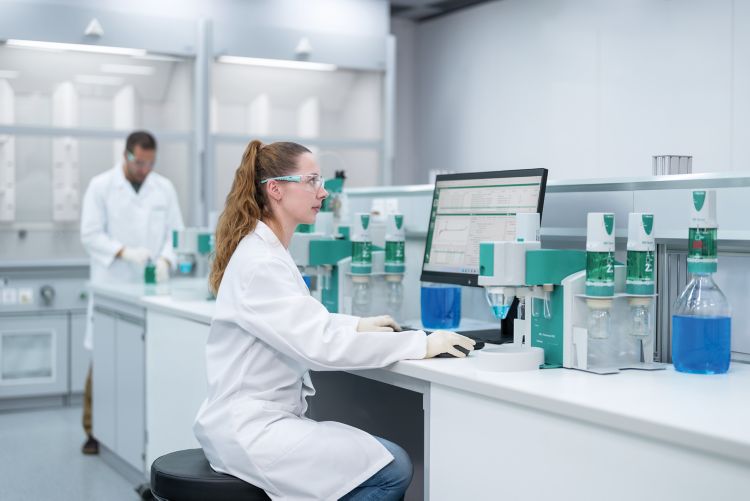
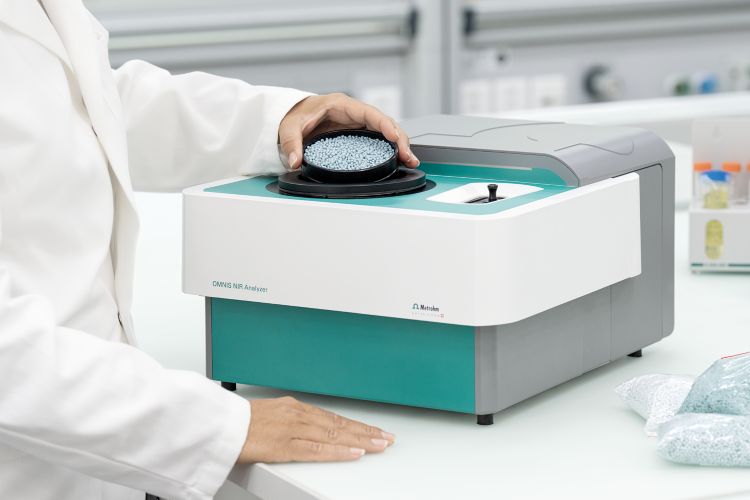
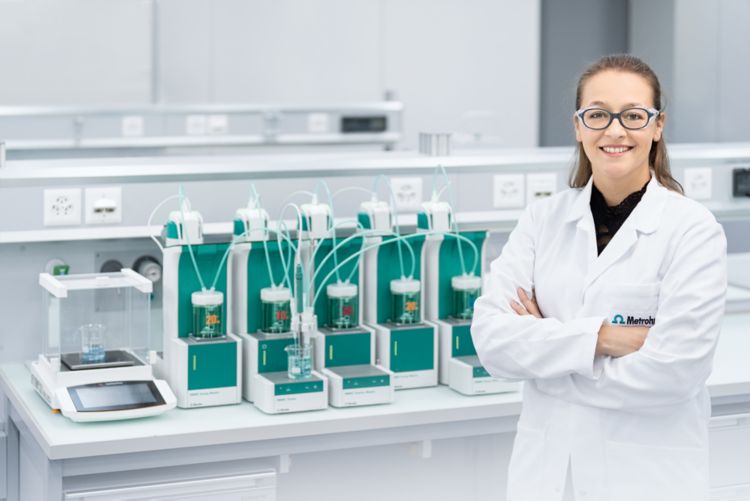
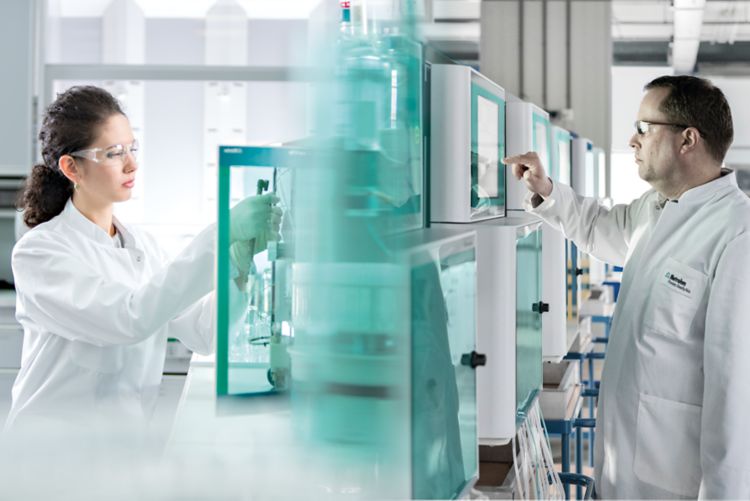
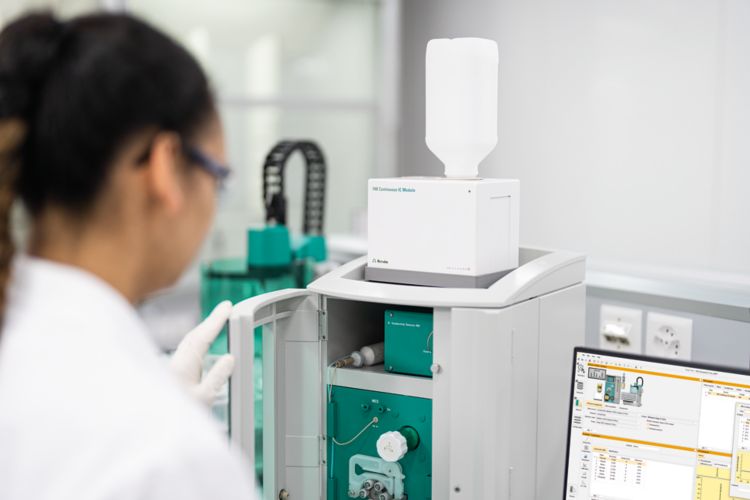
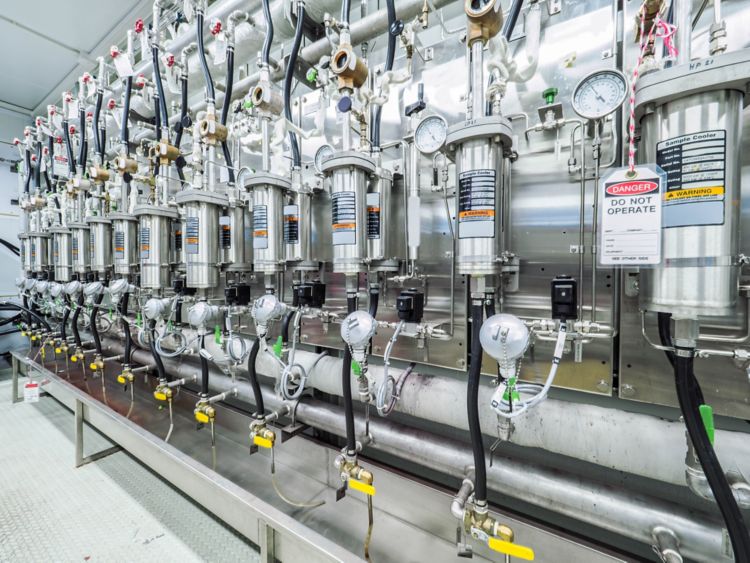
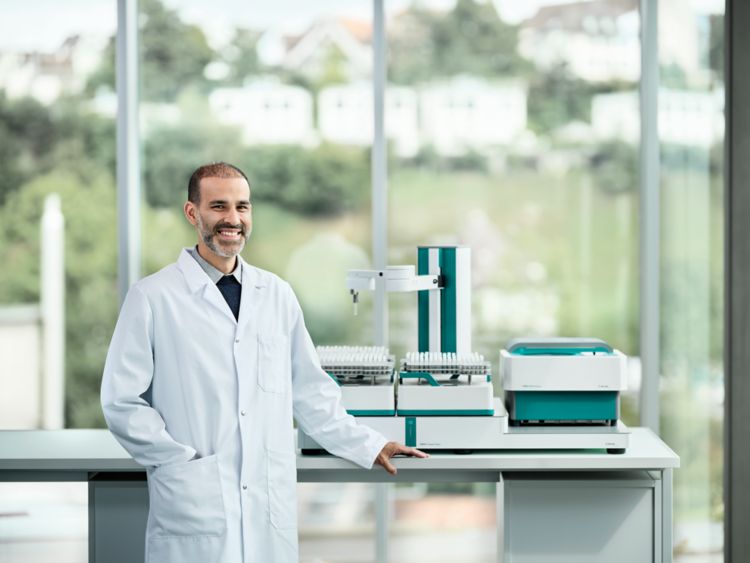


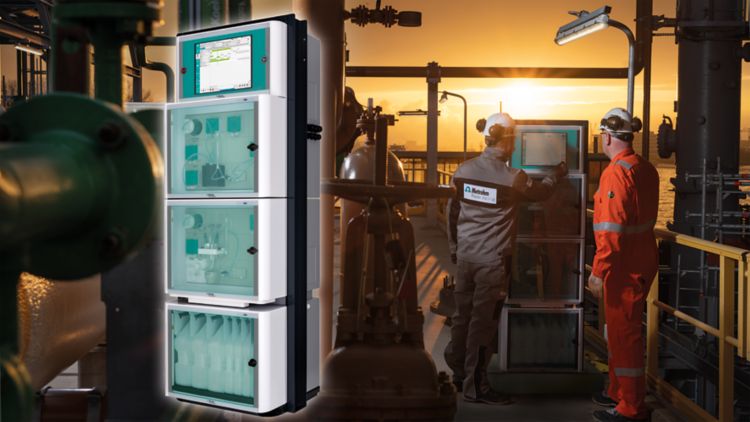
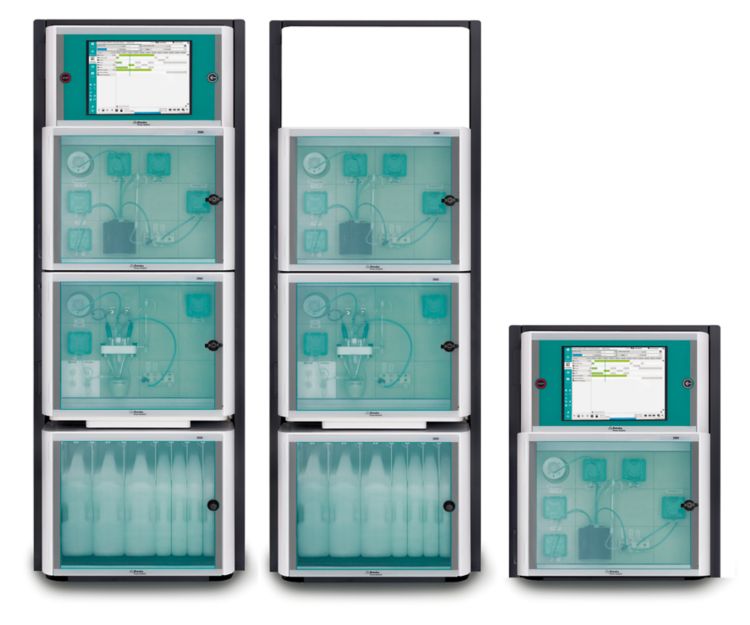

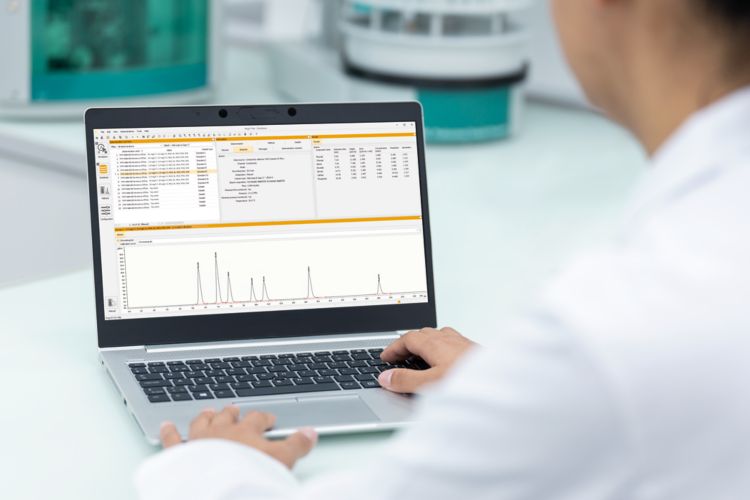

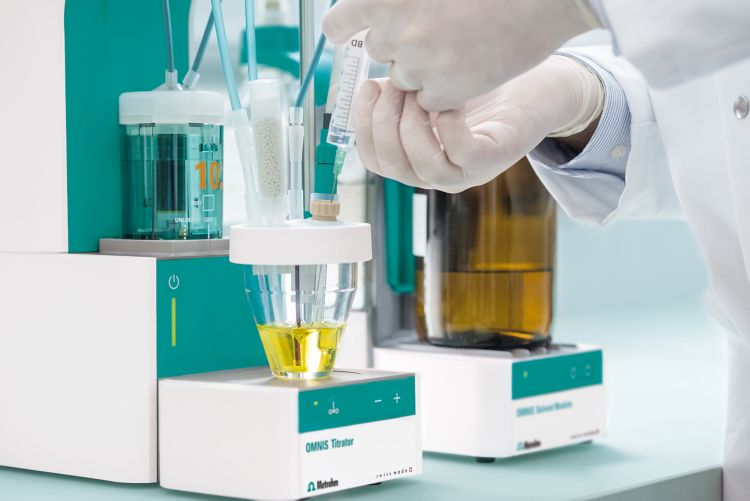
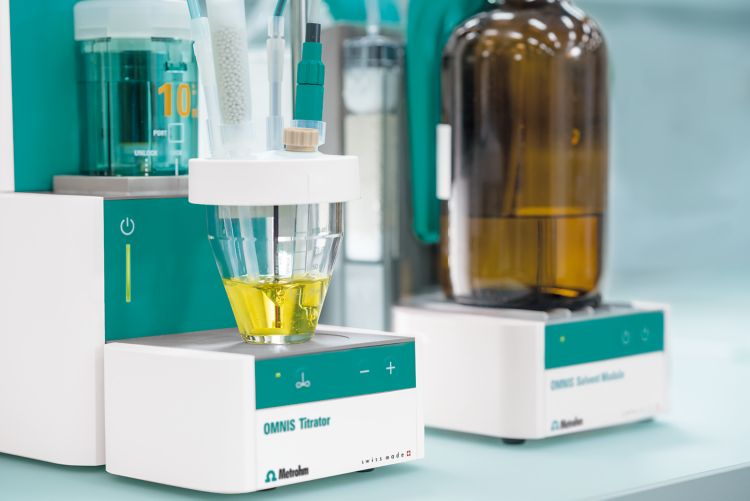
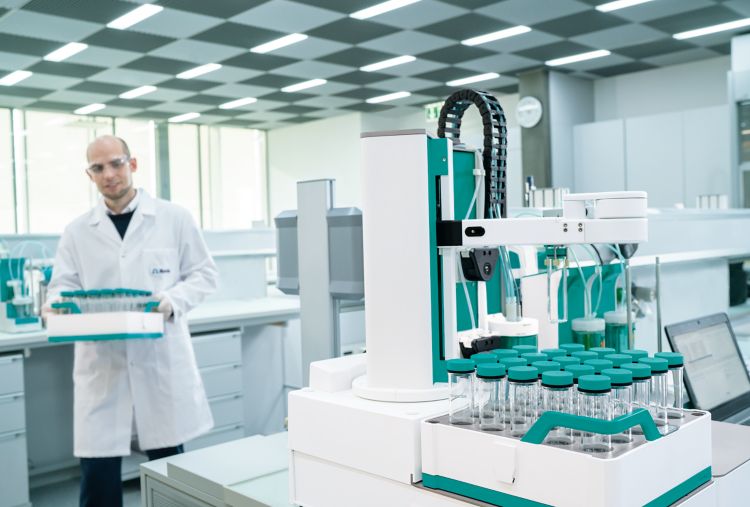
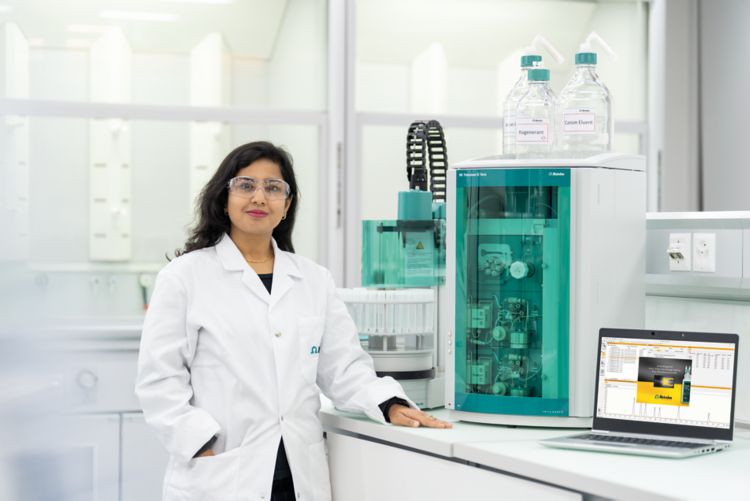

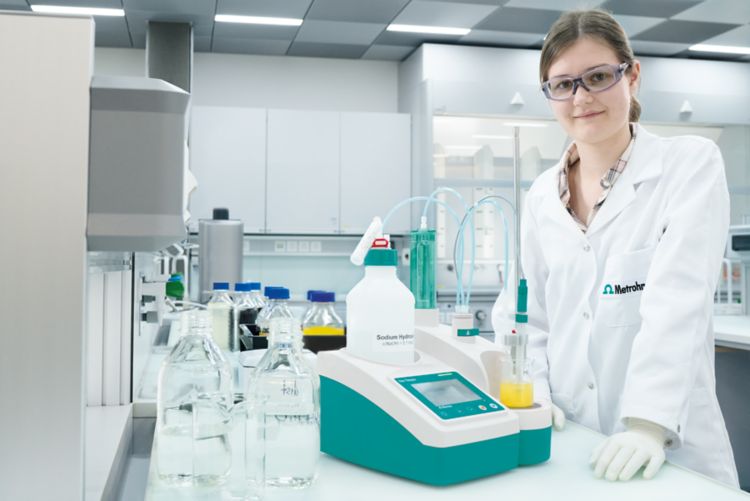
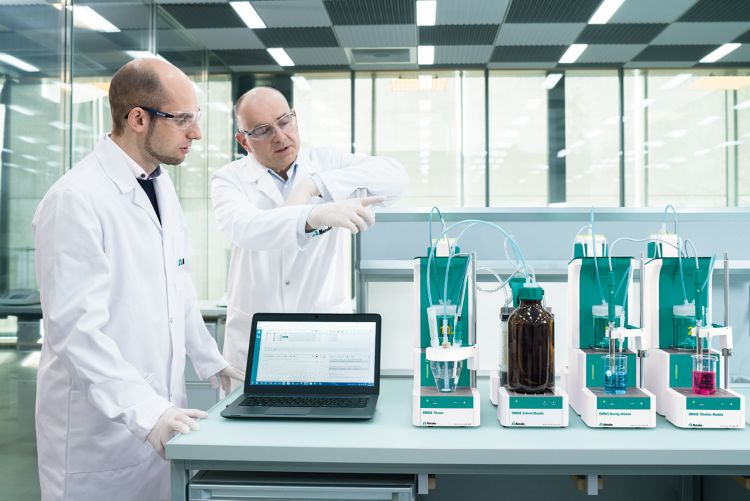
- Apr 27, 2020Why consider automation – even for simple titrations
Blog about the advantages of automated titrations.
- May 20, 2024Automated liquid handling: The key to accurate and reproducible results
Accurate liquid handling is critical in labs. Automation reduces errors, ensuring precise results. Learn more advantages of automated liquid handling in this blog.
- Jul 13, 2020The role of process automation in an interconnected world – Part 2
Process Analytical Technology to minimize the risk of breakdowns and downtimes.
- Jun 2, 2020Save money by using automated titration systems
Learn how you can save money by using automated titration systems.
- Jun 13, 2022Automation beyond the lab – Integrating the most precise lab pH measurements into production processes
Blog about pH sensors for process analysis with highly accurate results and low measurement uncertainty.
- Jan 10, 2022USP <645> – simple automated analysis of ultrapure water
Blog post on automated analysis and quality control of ultrapure water used for injections and other medical and pharmaceutical applications.
- Apr 1, 2024Lab of the future: Automated robotic analysis of petroleum products
Completely automated analysis of the total acid number and total base number in petrochemical products is possible using a robotic titration system using OMNIS software.
- May 6, 2024Advancing precision and efficiency in ion chromatography with automated inline dilution
Fully automated solutions for ion chromatography like the Metrohm Inline Dilution Technique (MIDT) streamline sample preparation and ensure precise results.
- Apr 1, 2020To automate or not to automate? Advantages of PAT – Part 1
Introduction and benefits of process analytical technology (PAT).
- Mar 16, 2020Boost your environmental analysis with Metrohm automated ion chromatography
Learn more about environmental analysis using ion chromatography.
- Nov 8, 2021Guide to online and inline surface finishing analysis
Online and inline surface finishing analysis for construction, automotive, semiconductor, and aerospace industries.
- Jul 11, 2022Coping with the daily challenges of routine water analysis
Automation is the key to cope with high sample throughput in water analysis. A setup is presented with which multiple parameters such as pH, alkalinity, and water hardness can be analyzed on a single workstation.
- Mar 31, 2025How does X-ray fluorescence work?
X-ray fluorescence (XRF) is a nondestructive technique for identifying and quantifying elements in solids, liquids, and powders. Learn about XRF and how it works in this blog article.
- Jul 1, 2024Increased efficiency of CVS routine analysis with Dosino sample transfer
This article highlights using Dosinos for automated sample handling in cyclic voltammetric stripping (CVS) applications to enhance PCB and semiconductor analysis.
- Aug 12, 2024Optimizing lab efficiency with MiPT for versatile, high-precision sample handling
The Metrohm intelligent Partial-Loop Injection Technique (MiPT) allows variable sample volumes and enhances precision with automated handling via a Dosino.
- Nov 28, 2022Save time and money with Metrohm Inline Sample Preparation solutions
When using ion chromatography (IC) as an analytical technique, samples often cannot be injected directly onto the separation column. Metrohm Inline Sample Preparation (MISP) techniques offer a broad spectrum of straightforward, cost- and time-saving solutions for these kinds of situations. This article gives an overview and some insights about MISP techniques—our solutions for automated inline sample preparation of various matrices for IC analysis.
- Oct 4, 2021NIR spectroscopy in the petrochemical and refinery industry: The ASTM compliant tool for QC and product screening – Part 2
Near-infrared spectroscopy for assessing the quality of gasoline, diesel, and jet fuel. Benefits, pre-calibrations, and application examples.
- Mar 6, 2023Protecting IC systems with Metrohm Inline Ultrafiltration and Inline Dialysis
An efficient way to prepare samples for IC analysis is by using Metrohm Inline Sample Preparation (MISP) techniques to automate the process. Either Metrohm Inline Ultrafiltration (UF) or Inline Dialysis can be used to safeguard the IC system from harmful matrix components while simultaneously reducing manual labor and increasing sample throughput.
- Jul 25, 2022Transform your routine electrochemical research – Go Multi!
A new multichannel instrument for electrochemical analysis makes multitasking possible for laboratories – μStat-i MultiX from Metrohm DropSens. Perform analyses automatically, run multiple experiments simultaneously, and control individual channels independently.
- May 11, 2026How to transfer manual titration to autotitration
There are many considerations when transferring from manual titration to autotitration. This blog article discusses how to choose a titrator and sensor, the titration setup, and even method optimization.
- Jun 15, 2020Comprehensive water analysis: combining titration, IC, and direct measurement in one setup
- Apr 22, 2024Titration – definition and principles
Titration is one of the oldest and well-established analytical methods. This blog covers the titration principle, its process, and presents different titration types.
- Feb 6, 2023Monitoring antioxidant content of in-service industrial lubricants with voltammetry
Testing of in-service lubricants for their remaining antioxidant content is critical for prolonging the uptime of capital equipment as well as reducing running costs and repair expenses. Voltammetry (VA) is a fast and established method for testing the remaining antioxidant content in industrial lubricants.
- Jan 29, 2024Laboratory vs. process analysis: Key factors for informed decision-making
Several factors should be considered when choosing between purchasing a laboratory instrument or a process analyzer. In many situations, one solution is clearly preferable over the other. This article discusses five major topics that need consideration before the decision is made: data traceability and communication, analysis frequency, safety, location, and implementation.
- Feb 3, 2020We are pioneers: Metrohm Process Analytics
- Feb 8, 2021ASTM D6304: Easier determination of moisture in petroleum products
- May 16, 2022History of Metrohm IC – Part 6
Blog post on the history of combustion ion chromatography from Metrohm for sulfur and halogen determination.
- Jun 4, 2025Understanding the role of eluent in ion chromatography
This article explores the importance of eluent selection and preparation, highlighting key considerations that ensure reliable and robust ion chromatography measurements.
- Mar 20, 2023Building a Smart(er) Factory by implementing Process Analytics 4.0 solutions
By implementing Industry 4.0 solutions, manufacturers can increase their efficiency, productivity, and profitability while remaining competitive and improving the customer experience. Process Analytics 4.0 focuses on the evolution of process analytics. This article covers how to successfully implement a Process Analytics 4.0 solution, including choosing the right PAT, ensuring proper sample preconditioning, and acquiring reliable data.
- Sep 13, 2021Frequently asked questions for beverage analysis with ion chromatography
Blog post on beverage analysis, e.g., water, milk, coffee, juice, soft drinks, beer, and wine, with ion chromatography.
- May 15, 2023Process control of electroless nickel plating baths with Hg-free sensors
Electroless nickel (EN) plating processes use various stabilizers like Pb, Bi, and Sb(III) to control the plating rate and prevent uncontrolled bath decomposition. As the stabilizer concentration must be kept at a constant level, monitoring the stabilizer concentration is therefore essential for an optimal plating process. One of the best ways to do so is by using voltammetric analysis (VA).
- Oct 26, 2020Thermometric titration – the missing piece of the puzzle
- Sep 20, 2021Coffee: serving up chemistry in every cup
The origins of coffee and how to determine the key quality parameters.
- Mar 22, 2021Analysis of prebiotics with IC-PAD: Improving AOAC 2001.02
- Aug 24, 2020History of Metrohm IC – Part 2
Metrohm IC: Metrohm Suppressor Module, modular IC systems, amperometric detection, UV/VIS detection.
- May 31, 2021Validation of titration methods
Learn more about titration method validation and USP 1225.
- Dec 16, 2024Introduction to Cyclic Voltammetric Stripping (CVS)
This article highlights Cyclic Voltammetric Stripping (CVS) for monitoring organic additives in Cu electroplating baths, crucial for achieving optimal deposition.
- Oct 12, 2020Oven method for sample preparation in Karl Fischer titration
Water and moisture content in insoluble samples and samples that contaminate the titration cell or react with the Karl Fischer reagent on our blog.
- Jan 23, 2023MIRA and IBEX: Out of the lab and into the unknown
Securing dangerous sites is the ultimate goal in any sensitive site exploitation (SSE) directive. Military personnel, first responders, and Hazmat specialists must be prepared to find anything while working, and they require tools that inform and protect them from hazards in the field. Metrohm has the ultimate solution – IBEX, a quadrupedal robot equipped with a standoff Raman spectrometer (MIRA XTR DS) and a suite of environmental sensors.
- Aug 3, 2020Making a better beer with chemistry
Improving the quality of beer with ion chromatography, titration, near-infrared spectroscopy, and other techniques.
- Apr 26, 2021Developing the electrochemical sensors of your dreams
Customized options and mass production of electrochemical sensors.
- Nov 18, 2024Ion chromatography for the pharmaceutical industry
The principles of ion chromatography are introduced, then some applications and benefits of using IC for pharma analysis according to USP General Chapter <1065>.
- Aug 9, 2021From corn to ethanol: improving the fermentation process with NIRS
Improved fermentation in bioethanol production with near-infrared spectroscopy analysis.
- Jan 20, 2025Understanding potentiometric titration: A vital technique in pharmaceutical analysis
Pharmaceutical quality control heavily relies on titration, a method highlighted in pharmacopeias like USP-NF General Chapter <541> for its accuracy and simplicity.
- Apr 12, 2021Recognition of endpoints (EP)
Learn more about potentiometric and photometric endpoint recognition in titrations.
- Jul 15, 2024How to avoid titration errors in your lab
This blog post explores common random and systematic errors in titration, offering guidance to identify and minimize these issues and enhance experimental accuracy.
- May 23, 2022Providing the Next Level of Safety with Hydranal™ NEXTGEN Reagents and OMNIS
Safe and accurate Karl Fischer titration with Metrohm OMNIS KF titrator and Hydranal™ NEXTGEN reagents.
- Dec 13, 2019When do I have to exchange the filtration membrane with Inline Ultrafiltration?
- Mar 8, 2021Unmatched flexibility in online ion analysis: The 2060 IC Process Analyzer
Blog post on the new 2060 IC Process Analyzer for real-time industrial monitoring.
- Aug 31, 2020Forewarned is Forearmed: Error and risk minimization in process analysis – Part 3
Minimize the risks and increase the functional safety of your process analysis system.
- Dec 12, 2022Quality control of semiconductor wafer pretreatment processes with online NIRS
Cleanliness is crucial inside of semiconductor fabrication facilities. Manufacturers implement extremely strict production control procedures, especially during wafer surface treatment with etching and cleaning baths. This article highlights the benefits for semicon manufacturers to implement near-infrared spectroscopy (NIRS) in wafer pretreatment processes for real-time analysis.
- Sep 23, 2024Quality control of cathode materials
This article highlights several key parameters crucial for Li-ion battery cathode production quality and efficient recycling and the methods to analyze them.
- Feb 17, 2020Determining the total sulfite in food and beverages: faster and easier than ever
Fast and easy determination of total sulfite in food and beverages using ion chromatography.
- Nov 16, 2020Real World Raman: Mira DS in Action – Detecting drugs safely in the field
- Sep 14, 2020History of Metrohm IC – Part 3
Blog post on Metrohm ion chromatography and the introduction of sequential suppression for increased sensitivity in ion chromatographic analysis.
- Jun 22, 2020Trace metal analysis with solid-state electrodes – Part 1
- Mar 1, 2021Supercharge your battery research and production
Learn more about key analytical parameters in the production of lithium batteries and in battery research and how to determine them using Metrohm technology.
- Nov 9, 2020History of Metrohm IC – Part 4
Metrohm IC: combing titration, direct measurement, and IC in one with TitrIC and voltammetry and IC with VoltIC.
- Dec 13, 2021NIR spectroscopy in the petrochemical and refinery industry: The ASTM compliant tool for QC and product screening – Part 4
Quality control of lubricants based on mineral oils and synthetic oils according to ASTM standards using near-infrared spectroscopy.
- Jun 14, 2021NIR spectroscopy in the polymer industry: The ideal tool for QC and product screening – Part 3
How to improve polyethylene terephthalate and PET analysis along the production cycle in the polymer industry with NIR spectroscopy.
- Jan 11, 2021Introduction to Analytical Instrument Qualification – Part 2
Metrohm IQ/OQ documentation provides you with the required documentation in strict accordance to the major regulations from the USP, FDA, GAMP, and PIC/S.
- Oct 17, 2022Analyzing halogenated organic compounds with CIC according to DIN 38409-59
This blog article explains how per- and polyfluorinated alkyl substances (PFASs) and other halogenated organic compounds have been used over the past several decades, their effects on our health and the environment, and how to monitor and analyze these substances with combustion ion chromatography (CIC) according to the new DIN 38409-59 standard.
- May 25, 2020Photometric complexometric titration
What is photometric complexometric titration and how does it work, read our chemistry blog.
- Jun 7, 2021Supercharge your battery research – Part 2
Battery research with electrochemistry. Learn more about electrochemical characterization techniques for lithium ion batteries.
- May 2, 2022Ion-selective electrodes: Standard addition and direct measurement – Part 2
How to do standard addition and direct measurements with ion-selective electrodes.
- Nov 23, 2020Trace metal analysis with solid-state electrodes – Part 5
The glassy carbon rotating disc electrode for heavy metal analysis.
- Apr 14, 2020Dissolved oxygen measurement – easier than ever
Learn more about the effects oxygen has when dissolved in liquids, which parameters affect the dissolved oxygen (DO) content, as well as how to accurately assess the DO concentration.
- Aug 2, 2021Chemical analysis of sourdough: pH and total titratable acidity (TTA)
The history of sourdough and how to achieve the best quality sourdough.
- Feb 13, 2021Chemistry of Chocolate
Components of a chocolate bar and applications for chocolate quality analysis.
- Oct 30, 2023A thermal rollercoaster: Unraveling temperature dependence in CVS determinations
Precision in PCB manufacturing demands accurate control of organic additives during copper plating. Cyclic Voltammetric Stripping (CVS) is used to quantify these additives, but temperature differences impact accuracy of the results. This article outlines the method for assessing organic additives in copper plating baths and explores temperature's influence on CVS measurements.
- Sep 28, 2020Frequently asked questions in near-infrared spectroscopy analysis – Part 1
Learn more about the difference of IR and NIR, prediction models, norms using NIRS in regulated and non-regulated environments, and more in this FAQ blog post.
- Sep 9, 2024Better waste incineration compliance with online process analysis
Waste incineration plants generate energy and reduce landfill volume. Online process analyzers can provide real-time monitoring data about the plant operations.
- Feb 7, 2022Five myths about online dispersive NIR spectroscopy, FT-NIR, and FT-IR – Part 1
Learn more about near-infrared and infrared spectroscopy and the differences.
- Mar 23, 2026How the updated GMP regulations and EU Cyber Resilience Act will affect laboratories
Discover how the updated GMP regulations and the EU Cyber Resilience Act (CRA) will impact laboratories. Learn what changes are coming, how to prepare your equipment and software, and how Metrohm supports labs in staying compliant.
- Mar 21, 2022Best practice for separation columns in ion chromatography (IC) – Part 3
Assessment of ion chromatography column performance and troubleshooting tips to fix issues with IC columns.
- Mar 29, 2021Real World Raman: Simplifying Incoming Raw Material Inspection
Reliable and fast raw material identification and verification with handheld Raman spectrometers.
- Jan 20, 2020Benefits of NIR spectroscopy: Part 1
- May 27, 2020Measuring herbicides in drinking water
How to measure glyphosate in drinking water using ion chromatography.
- Aug 10, 2020Trace metal analysis with solid-state electrodes – Part 2
- Mar 11, 2024High-frequency EIS: a powerful tool for the future of mobility
Electrochemical characterization of solid-state batteries can be difficult. Using electrochemical impedance spectroscopy (EIS) at high frequencies helps capture rapid processes.
- Jun 26, 2023Frequently Asked Questions (FAQ) about Raman spectroscopy: Applications
Raman spectroscopy is a ubiquitous tool that can be used for many different purposes. This blog article answers some frequently asked questions about the suitability of Raman spectroscopy for various applications.
- May 25, 2021NIR spectroscopy in the polymer industry: The ideal tool for QC and product screening – Part 2
Near-infrared spectroscopy for assessing the quality of polypropylene and polyethylene.
- Nov 2, 2020Frequently asked questions in near-infrared spectroscopy analysis – Part 2
Learn about detection limits, accuracy, instrument calibration, and maintenance of near-infrared spectroscopy and near-infrared spectrometers.
- May 18, 2020What to consider during back-titration
- Jan 8, 2024NIR spectroscopy pre-calibrations: Immediate results
Pre-calibrations are prediction models that can be used immediately for NIR analysis and provide satisfying results right from the beginning. Simply press one button and start the measurement.
- Aug 23, 2021Best practice for separation columns in ion chromatography (IC) – Part 1
Blog on how to handle IC separation columns: standard operating conditions, equilibration, operating limits, and more.
- Jul 26, 2021NIR spectroscopy in the polymer industry: The ideal tool for QC and product screening – Part 5
Near-infrared spectroscopy for assessing the quality of polyurethanes: basics, benefits, and applications.
- May 3, 2021NIR spectroscopy in the polymer industry: The ideal tool for QC and product screening – Part 1
Overview of near-infrared spectroscopy and how polymer manufacturers can benefit from using the NIR technology.
- Apr 20, 2020Moisture Analysis – Karl Fischer Titration, NIRS, or both?
Water content, moisture analysis, and moisture quantification with Karl Fischer titration and near-infrared spectroscopy.
- Apr 16, 2020What to consider when standardizing titrant
Blog about why titrant standardization is important and how to determine the titer.
- Apr 8, 2020Benefits of NIR spectroscopy: Part 4
- Nov 1, 2021The evolution of handheld 785 nm Raman spectroscopy: Raman extraction from fluorescence interference
Handheld 785 nm Raman spectroscopy offers excitation with shorter wavelengths, strong Raman scattering with short acquisition times, and high signal-to-noise ratio and with excellent spectral resolution.
- Jul 5, 2021NIR spectroscopy in the polymer industry: The ideal tool for QC and product screening – Part 4
Quality control of polyamides, PA66, or Nylon 66, and polymers using near-infrared spectroscopy.
- Feb 20, 2023How temperature influences the pH value
The temperature affects a pH measurement in several ways. This blog article will cover the reasons why and discuss how to handle the different effects from temperature on pH measurements.
- Sep 19, 2022Frequently Asked Questions (FAQ) about Raman spectroscopy: Theory and usage
Raman spectroscopy is a non-destructive analytical technique based on the inelastic scattering of photons related to the different vibrational modes of molecules. This article covers some of the most frequently asked questions about Raman spectroscopy regarding the theory behind it and how it can be used in practice.
- Apr 22, 2021Decarbonizing chemical processes with Thor
- Aug 17, 2020Frequently asked questions in Karl Fischer titration – Part 2
Karl Fischer titration FAQ, tips, tricks, and troubleshooting for KF titration.
- Apr 19, 2021Fire and ice: discovering volcanic eruptions with ion chromatography
- Apr 4, 2022Five myths about online dispersive NIR spectroscopy, FT-NIR, and FT-IR – Part 2
The benefits of near-infrared spectrometers over IR photometers in process analytical technology.
- Jul 29, 2024Edible oil analysis: A guide for beginners
Learn what edible oils are, how they are made, how to test their quality with different analytical techniques, and about the most important analysis parameters.


6.1414.080
Titration vessel lid automationTitration vessel lid for external use with the 6.1415.250 titration vessel base in automation.
6.01543.100
Aspiration tip automationAspiration tip for automated OMNIS titrations.
6.01543.110
Tubing for aspiration tip automation, 3 piecesReplacement hose for 601543100 aspiration tip.
DRP-SYNCONN96X
Automatic controller for CONNECTOR96XSYNCONN96X is an automatic controller of CONNECTOR96X that allows executing the assays sequentially without the need of employing the manual rotating selectors at the CONNECTOR96X.
6.5339.600
Equipment with the 807 Dosing Unit for automatic sample transfer for VA and CVS measurementsAccessory set for expanding VA or CVS systems for automatic sample transfer with the Dosino. Includes one 5 mL 807 Dosing Unit, one Dosino holder and connector material. Without Dosino.
6.5330.190
IC equipment: Dosino regenerationAccessory set for the assembly of a Dosino for automatic regeneration of the Metrohm Suppressor Module (MSM).
6.07311.040
Liquid Introduction Module, automated (TEI)The Liquid Introduction Module enables the combustion of liquid samples by using the Liquid Autosampler CIC to inject the sample directly. The module can be used for samples with a boiling point < 420 °C.This module can also guide gaseous or LPG samples from the GLS Sampler CIC into the oven.
6.2841.020
Rinse station for OMNIS Sample RobotThis set contains a rinse station for the automatic cleaning of the pipetting equipment of the OMNIS Sample Robot.The rinse station can be mounted upstream of the pump tower of the OMNIS Workstation Module. In order to function, the rinse station must be supplied with two pumps for the aspiration and extraction of solutions.
6.5334.020
Grounding equipment for Professional VA systems with automatic addition of solutionAccessory set for two auxiliary solutions for expanding semiautomated Professional VA systems. Contains one ground adapter for two Dosino instruments and one connection cable.
6.5330.090
IC equipment: Additional eluent on the Eluent Production ModuleAccessory set for Eluent Production Module. Contains all parts necessary for expansion by one eluent. The level sensor must be ordered in accordance with the application.
6.5330.100
IC equipment: Inline DialysisAccessory set for Inline Dialysis. For use with the 858 Professional Sample Processor and an additional 2-channel peristaltic pump.
6.5330.120
IC equipment: Inline dilutionAccessory set for Inline Dilution. For use with the 858 Professional Sample Processor, 800 Dosino and 741 Magnetic Stirrer.
6.5330.130
IC equipment: Liquid Handling Station, leftAccessory set for assembling the Liquid Handling Station on the Professional Sample Processor. The rinsing water supply can be accomplished by means of a peristaltic pump or a Dosino.
6.5330.140
IC equipment: MiPCTAccessory set for Inline Preconcentration (MiPCT) including Liquid Handling Station, left.
6.5330.150
IC equipment: Dose-in Gradient AnionsAccessory set for assembling the Dose-in Gradient for anion analyses.
6.5330.160
IC equipment: MiPCT-MEAccessory set for assembling a Dosino for Metrohm intelligent Preconcentration Technique with Matrix Elimination (MiPCT-ME).
6.5330.170
IC equipment: MiPuTAccessory set for assembling a Dosino for sample pick-up (Metrohm intelligent Pick-up Injection Technique).
6.5330.180
IC equipment: MiPTAccessory set for assembling a Dosino for Partial-Loop-Injection.
6.1826.020
PVC pump tubing (blue/blue)For online IC instruments and automation in voltammetry.
DRP-DIOC200SYNC96
PIO Cable suitable to connect the SYNCONN96X with STAT200Cable connector suitable to connect SYNCONN96X with STAT200 for automation of the electrochemical ELISA System
DRP-DIOC400SYNC96
PIO Cable suitable to connect the SYNCONN96X with STAT300 and STAT400Cable connector suitable to connect SYNCONN96X with STAT300 and STAT400 for automation of the electrochemical ELISA System
DRP-DIOC8000SYNC96
PIO Cable suitable to connect the SYNCONN96X with STAT4000/P and 8000/PCable connector suitable to connect SYNCONN96X with STAT4000/P and 8000/P for automation of the electrochemical ELISA System
6.7301.250
Flame sensorFlame sensor for fully automatic sample combustion
6.1621.000
Container 10 LAs rinsing or waste container in automated systems.
6.1627.000
PE bottle, 125 mL for ICThis bottle is used with fully automatic dilution.
6.7301.190
Sluice seal for ABDSeal for the sluice on the Automatic Boat Driver.
6.1562.100
Pipetting tubing / 10 mLPipetting tubing for fully automatic transfer of sample solutions.
6.1625.010
Collection container for SoliprepContainer for safe collection of used tools in automated systems
6.7301.180
Finger-Tight-Set 1/8 in.Finger-Tight for gas connection on the Automatic Boat Driver
6.5617.000
Equipment for reagent replacementEquipment for automatic reagent replacement with KF coulometer and connected Dosino.
6.7301.110
Hook for ABDQuartz glass hook for quartz glass boat in the Automatic Boat Driver of the Combustion Module.
6.1456.210
Measuring vessel / 10-90 mLMeasuring vessel for automated VA systems. Dilution vessel for Advanced IC Sample Processor
6.7301.100
Guide tubing for ABD (old)Guide tubing for Automatic Boat Driver of the Combustion Module (up to ABD serial number 1709 590).
6.7301.200
Guide tubing for ABD (new)Guide tubing for Automatic Boat Driver of the Combustion Module (ABD serial numbers starting with 1709591)
6.1820.070
Coupling 4 mm / 6 mm / M8 innerFor extending aspiration tubing in automated systems. Connects the M8 aspiration tubing directly to the 6.1812.000 PTFE tubing.
EC.Raman.ECAT.Starter
Metrohm Hyphenated EC-Raman Starter Electrocatalysis SolutionIncludes a compact Autolab PGSTAT204 with an Electrochemical Impedance Spectroscopy (EIS) module installed, a B&W Tek i-Raman Plus 532 H System, a B&W Tek Raman Video Microsampling System (532 nm) and an Autolab Trigger cable.Discover simultaneous structural and functional information about your catalysts quickly without complicated setups or worries about synchronizing measurements. This is all possible with the EC-Raman Starter Solution.• An electrochemical workstation with high accuracy EIS.• Two editable hyphenated EC-Raman procedures for the NOVA software as well as the BWSpec software for extended data analysis.• Measurements are automatically synchronized.• 532 nm laser excitation for higher Raman signal.
6.9958.007
Overflow buret (100 mL) for Sample ProcessorOverflow buret for rapid and automatic measuring of 100 mL of sample and for sample transfer into an external titration vessel.
6.2709.110
Stopper for the electrode opening on Professional VA/CVS instrumentsSet with 1 stopper for electrode opening (e.g. for pH electrode or Pt1000 temperature sensor), 6 stoppers for openings (auxiliary solutions and/or automatic sample addition).
6.2058.050
Fastening plate for deflector and holder for collection containerThe fastening plate is mounted at the side of the Sample Processor tower and allows the mounting of a deflector for the automatic pulling off the used tools.
6.2116.020
Cable plug F / F-angled / 1 mFor connecting 6.0335.010 Automated Hanging Mercury Drop Electrode (AHMDE) or 628 Rotating Disk Electrode (RDE) to 691 VA DetectorCable to connect the Spectrosense to a Titrino or Titrando
6.2116.030
Cable plug F / F-angled / 2 mConnecting 6.0335.010 Automated Hanging Mercury Drop Electrode (AHMDE) or 628 Rotating Disk Electrode (RDE) to 691 VA Detector Cable to connect the Spectrosense to a Titrino or Titrando
6.2058.060
Deflector for adapter 61808220The deflector is mounted with the fastening plate (6.2058.050) at the side of the Sample Processor tower and allows the automatic pulling off the used luer tools into the collection container (6.1625.010)
6.2058.070
Deflector for adapter 61808250The deflector is mounted with the fastening plate 6.2058.050 at the side of the Sample Processor tower and allows the automatic pulling off the used pipetting tips into the collection container 6.1625.010.
6.2116.000
Cable 2 x plug B / plug FFor connecting the analog output of 662 Photometer or 712 Conductometer with Titrinos and Titrando. For connecting 628 Rotating Disk Electrode (RDE) or 6.0335.010 Automated Hanging Mercury Drop Electrode (AHMDE) to current/voltage measuring instrument (506, 626 Polarecords, 611 VA Detector)
6.07506.070
Autofocus Stand-off Attachment (AFSO)Maximize safety with standoff identification of chemicals, explosives, drugs, and toxic materials.Identify threats from 2 meters away; Operate remotely when risk is high; Get quick and easy information with automated routines; Identify >20,000 substances in seconds; Robot mountable for complete hot-zone assessment ;
6.5339.620
Equipment: 807 Dosing Unit for pipetting system for Professional VA/CVS instrumentsAccessory kit for fully automated CVS pipetting system in combination with the 858 Professional Sample Processor. Contains one 807 Dosing Unit 5 mL and 50 mL each, clear glass bottles 2 L, pipetting tubing, rinsing station, safety shield and other accessories. Without Dosinos.
6.07311.030
Liquid Introduction Module, manual (TEI)The Liquid Introduction Module enables the combustion of liquid samples by using an automatic syringe to inject the sample directly. The module can be used for samples with a boiling point 420 °C.This module can also guide gaseous or LPG samples into the oven from the GLS Sampler CIC.
6.02850.200
Eluent producer cartridge AThe eluent producer cartridge A (EPC A) produces the high-purity hydroxide eluent from the 4 mol/L hydroxide concentrate, based on water electrolysis. The cation exchanger diaphragm enables the selective migration of cations into the eluent. The EPC A is fed ultrapure water, which can be operated fully automatically in connection with a water processing system.
ECI10M.S
High frequency impedance spectroscopyThe ECI10M extends the measurable range for electrochemical impedance spectroscopy to a maximum of 10 MHz.The ECI10M consists of a module, installed in the Autolab potentiostat/galvanostat and coupled to the FRA32M module and an external interface designed to be placed in close proximity of the electrochemical cell in order to minimize the effects from the electrode cables.The small form factor of the external interface allows measurements in a glove box or Faraday cage.The ECI10M uses the Automatic Amplitude Correction algorithm (AAC) to ensure that the amplitude applied on the cell corresponds to the required amplitude at all times, thus maximizing the resolution while respecting the linearity and stability conditions during the measurement.
MUX.MAC.204.S
Multiplexer moduleThe MUX module series allows you to perform electrochemical experiments on multiple cells or multiple working electrodes, sequentially. The cell to perform measurement on can be selected either manually or automatically using the sequencing option of NOVA. Metrohm Autolab offers two types of MUX modules.• MUX.MULTI4 - Used to multiplex all four connections from the Autolab. This allows sequential measurements on complete electrochemical cells, up to 64 cells with increments of 4.• MUX.SCNR16 - Used to multiplex the working electrode connection of the Autolab. This allows sequential measurements on cells that share the same counter, reference and sense electrode but different working electrode, up to 255 different working electrodes with increments of 16.• MUX.SCNR8 - Used to multiplex the reference and sense electrode connections of the Autolab. This allows sequential voltage sensing across different electrochemical cells, up to 128 cells with increments of 8.
MUX.MULTI4.S or MUX.SCNR16.S or MUX.SCNR8.S
Multiplexer moduleThe MUX module series allows you to perform electrochemical experiments on multiple cells or multiple working electrodes, sequentially. The cell to perform measurement on can be selected either manually or automatically using the sequencing option of NOVA. Metrohm Autolab offers two types of MUX modules.MUX.MULTI4 - Used to multiplex all four connections from the Autolab. This allows sequential measurements on complete electrochemical cells, up to 64 cells with increments of 4.; MUX.SCNR16 - Used to multiplex the working electrode connection of the Autolab. This allows sequential measurements on cells that share the same counter, reference and sense electrode but different working electrode, up to 255 different working electrodes with increments of 16.; MUX.SCNR8 - Used to multiplex the reference and sense electrode connections of the Autolab. This allows sequential voltage sensing across different electrochemical cells, up to 128 cells with increments of 8.;
MUX.S
Multiplexer moduleThe MUX module series allows you to perform electrochemical experiments on multiple cells or multiple working electrodes, sequentially. The cell to perform measurement on can be selected either manually or automatically using the sequencing option of NOVA. Metrohm Autolab offers two types of MUX modules.MUX.MULTI4 - Used to multiplex all four connections from the Autolab. This allows sequential measurements on complete electrochemical cells, up to 64 cells with increments of 4.; MUX.SCNR16 - Used to multiplex the working electrode connection of the Autolab. This allows sequential measurements on cells that share the same counter, reference and sense electrode but different working electrode, up to 255 different working electrodes with increments of 16.; MUX.SCNR8 - Used to multiplex the reference and sense electrode connections of the Autolab. This allows sequential voltage sensing across different electrochemical cells, up to 128 cells with increments of 8.;
pX1000.MAC.204.S
Voltage and pH measurement moduleThe pX1000 allows the measurements of pH or pX values during electrochemical experiments. This module also provides an additional Pt1000 input which allows recording of the temperature during the experiments, either through a Pt1000 sensor or through a combined pH/Pt1000 sensor. The temperature measurement allows automatic pH corrections.The pX1000 module can also be used as an additional differential electrometer, with the same specifications as the main Autolab electrometer. The pX1000 module is compatible with the Metrohm pH and temperature sensors. The user can connect any pH, pX or ‘double’ electrode to the pX1000 module. In case an electrode other than a pH electrode is used, the output is given as the voltage difference that is measured between the electrodes making it possible to connect a detection electrode to perform coulometric titration. The pX1000 module also works as an independent pH meter.
pX1000.S
Voltage and pH measurement moduleThe pX1000 allows the measurements of pH or pX values during electrochemical experiments. This module also provides an additional Pt1000 input which allows recording of the temperature during the experiments, either through a Pt1000 sensor or through a combined pH/Pt1000 sensor. The temperature measurement allows automatic pH corrections.The pX1000 module can also be used as an additional differential electrometer, with the same specifications as the main Autolab electrometer. The pX1000 module is compatible with the Metrohm pH and temperature sensors.The user can connect any pH, pX or ‘double’ electrode to the pX1000 module. In case an electrode other than a pH electrode is used, the output is given as the voltage difference that is measured between the electrodes making it possible to connect a detection electrode to perform coulometric titration. The pX1000 module also works as an independent pH meter.


- How to maintain the 807 Dosing Unit
Learn how to use automated cleaning, unblock the valve disk, and clean and grease your 807 Dosing Unit with step-by-step videos.
- Ion Chromatography
- viva
Find information on compatibility and download the viva voltammetry/CVS software as well as language packs.
- tiamo
Find information on compatibility and download the tiamo titration software as well as language packs.
- MagIC Net
Find information on compatibility and download the MagIC Net ion chromatography software as well as language packs.
- Ion chromatography g...Ion chromatography guide
Videos on maintaining Metrohm Ion Chromatography systems.
- tiBase - Discontinued
- Metrohm Qualification Services
We tailor our qualification approach to your environment and requirements, focusing on what is essential based on your risk assessment. This ensures your system gets exactly what it needs for maximum efficiency in the qualification process.
- StabNet
Find information on compatibility and download the StabNet software for Rancimat and Thermomat stability measurement instruments as well as language packs.


- Jan 15, 2026Metrohm receives new SelectScience® Seal of Quality awards
Metrohm has been recognized by SelectScience® with two new Seals of Quality for the OMNIS platform and 930 Compact IC Flex. This honor is based on verified customer reviews from scientists and laboratory professionals worldwide.
- Nov 13, 2025Thermometry enables direct sodium titration in foodstuffs
A free white paper presents how determining the sodium content of food by thermometric titration provides accurate results, involves very little work, and can be fully automated – making it the perfect choice for routine analysis applications.
- Jun 9, 2025OMNIS sets new milestones
Client/server networks for up to 1000 clients, working offline for 96 hours with automatic synchronization of your data to the server, and the possibility to use the services of Amazon and Microsoft to host OMNIS in the cloud are the most important features of the latest version of OMNIS, the analytical data management system from Metrohm.
- Apr 9, 2024OMNIS Coulometer and Sample Robot Oven launched
With the launch of the OMNIS Coulometer, users of OMNIS have now the complete scope of titration methods at their disposal: pH measurement, potentiometric, photometric, and thermometric titration, volumetric Karl Fischer titration, and coulometry for water determination in the trace level range.
- Apr 9, 2024OMNIS NIRS launched
With OMNIS NIRS, the universal platform for chemical analysis from Metrohm grows more powerful: In addition to all variants of titration, near-infrared spectroscopy with all its advantages is now also available in OMNIS.
- Jul 3, 2023Water hardness by photometric titration as per new ASTM D8192
ASTM has published method D8192 describing the determination of water hardness by automatic photometric titration in domestic and industrial water samples. The new standard method uses a photometric sensor to detect the titration endpoint with superior reliability. Along with a digital titrator, this provides for always accurate and reproducible results, even in colored sample matrices. A free Metrohm white paper describes the new method and its application to determine water hardness.
- May 1, 2023Thermometric titration implemented in OMNIS
Highly aggressive media or heavily contaminated samples can quickly destroy a potentiometric sensor making it impossible to follow the chemical reaction in the sample solution and accurately determine the titration endpoint. Thermometric titration can often be the solution for measuring such samples; and this titration mode has now been implemented in OMNIS, the universal platform for titration by Metrohm.
- Jan 30, 2023Highly sensitive analysis of amines, organic acids, and other ionic substances
A series of free white papers investigates the unique benefits of hyphenating ion chromatography (IC) from Metrohm with sensitive mass spectrometers (MS) for the determination of carbohydrates, organic acids, as well as many other ionic substances.
- Nov 28, 2022Chemical analyses for the production of lithium-ion batteries
Learn how to determine the water content, residual alkali content, ionic impurities, metal composition of cathode materials, and battery electrolyte composition.
- Nov 16, 2022EN plating bath monitoring with ion chromatography
Over time, orthophosphite builds up in the tank during EN plating. This can affect the appearance of the EN deposit and the corrosion protection it delivers. Other contaminants such as nitrate affect the EN deposit already at the trace level. Ion chromatography allows monitoring both trace level inorganic impurities and higher concentrated bath components like hypophosphite and orthophosphite.
- Mar 15, 2022Sample preparation techniques for ion chromatography
Metrohm published the 2nd edition of their monograph "Sample Preparation Techniques for Ion Chromatography".
- Jan 10, 2022Quality control and optimization of coating processes in chrome plating
- Apr 6, 2021Ion chromatography for carbohydrate analysis and more
Automated determination of GOS, β-galactooligosaccharides, and carbohydrates in novel foods and instant coffee, key anions and cations in beer, and organic acids in wine.
- Jun 7, 2021Modernizing pharmaceutical assay testing
- Feb 10, 2020What's suppression in ion chromatography all about? Theoretical aspects and practical benefits explained.
- May 8, 2020Free white paper: Safer production practices for propylene oxide using online and inline process analysis technology
Metrohm has published a white paper focusing on the improvement of various propylene oxide (PO) production methods through automated online and inline measurements of critical parameters directly at the process.


- 8.940.50058.940.5005Automation in Ion Chromatography - Save time and money through automated sample preparation and analysis
In Ion Chromatography, anions, cations, carbohydrates and polar substances are determined in a wide variety of matrices. Depending on the applications, samples must be analyzed that were originally solid, liquid or gaseous. The complete automation of determinations of this type is becoming increasingly important. The present brochure contains interesting information regarding automation in Ion Chromatography.
English
Other languages
- 8.000.55008.000.5500Brochure: OMNIS NIR Automation
Discover how OMNIS NIRS automation solutions can enhance your lab’s efficiency. This brochure showcases the powerful combination of NIR spectroscopy and the OMNIS Sample Robot NIR, offering high-throughput analysis for both liquid and solid samples. Scalable and flexible, these solutions can also be integrated with OMNIS titration to optimize your lab workflows.
English
Other languages
- 8.000.52678.000.5267Flyer: Conductivity measurement according to USP<645> – Automation increases reliability and productivity
Conductivity is an important quality parameter of ultrapure water. Metrohm offers a fully automated solution for this measurement according to USP<645>. This solution reduces the risk of human error increasing the reliability of results. More information about the method can be found in the brochure.
English
- 8.0010.50308.0010.5030Installation instruction: MVA-25 – 884 Professional VA fully automated for the determination of antioxidants with automatic sample preparation
The «MVA-25» is a fully automated system for the determination of antioxidants in lubricants, including automatic sample preparation. There is only a minimal amount of manual operation required. All other steps of the analysis procedure, including mixing the oil sample with the correct amount of electrolyte, evaluation of peaks, calculation of results, and rinsing the system between samples, are carried out automatically. The system can be used to determine aromatic amine type antioxidants based on ASTM D6971, hindered phenol type antioxidants based on ASTM D6810, or a combination of both methods.Download Method file here
English
- 8.0010.50228.0010.5022Installation instructions for MVA-20: 894 Professional CVS fully automated for CVS determinations
The «MVA-20» is a fully automated system for the determination of suppressor, brightener, and leveler in plating solutions in small sample series.Download Method file here
English
- 8.0010.50258.0010.5025Installation instructions for the MVA-22: 884 Professional VA full automated for trace analysis
This Application Bulletin contains the installation instructions for the MVA-22. This is a completely automated system for the determination of heavy metals and other voltammetrically active substances.Download Method file here
English
- 8.000.51618.000.5161Water determination according to Karl Fischer with MATi 4 – Complete system for fully automated, coulometric Karl Fischer titration
The present brochure contains interesting information on MATi 4. MATi 4 (MATi = Metrohm Automated Titration) is a fully automated titration system for water content determination using coulometric Karl Fischer titration. This brochure describes the advantages of MATi 4.
English
Other languages
- 8.000.51608.000.5160Brochure: Water determination according to Karl Fischer with MATi 10 – Complete system for fully automated,volumetric Karl Fischer titration
The present brochure contains interesting information on MATi 10. MATi 10 (MATi = Metrohm Automated Titration) is a fully automated complete system for water content determination using volumetric Karl Fischer titration. The advantages of the MATi 10 can be found in this brochure.
English
Other languages
- 8.0010.50238.0010.5023Installation instructions for MVA-21/MVA-23: 894 Professional CVS or 884 Professional VA fully automated for CVS determinations
This Application Bulletin contains the installation instructions for the MVA-21/MVA-23. This is a fully automated system for the determination of suppressors, brighteners, and levelers in electroplating baths.Download Method file here
English
- 8.000.51628.000.5162Water determination according to Karl Fischer with MATi 11 – Complete system for fully automated, volumetric Karl Fischer titration, including sample preparation
The present brochure contains information on MATi 11. MATi 11 (MATi = Metrohm Automated Titration) is a fully automated titration system for water content determination using volumetric Karl Fischer titration.This brochure describes the advantages of MATi 11.
English
Other languages
- 8.948.50008.948.5000Continuous Ion Chromatography Module: Enjoy the benefits of automatic generation of high-purity eluents
Manual preparation of hydroxide eluents costs valuable laboratory time and requires certain safety measures due to the corrosiveness of such eluents. Moreover, manual handling of chemicals is prone to human error, which can negatively impact the reproducibility of analytical results. The Continuous IC Module is the solution to these issues. Fully automated hydroxide eluent generation with the Continuous IC Module provides for safe handling of hydroxide eluents while improving reproducibility and accuracy of results.
English
Other languages
- 8.0010.50298.0010.5029Installation instruction: MVA-24 – 884 Professional VA fully automated for CVS with 858 Professional Sample Processor and Dosino sample transfer
The «MVA-24» is a fully automated system for the determination of suppressor, brightener, and leveler in plating solutions by CVS (cyclic voltammetric stripping) or CPVS (cyclic pulse voltammetric stripping). The most important feature is the automatic addition of all solutions including the precise dispensing of both small and large sample volumes. The measurement of the sample volume and the transfer from the rack of the sample changer to the measuring instrument is done by means of an 800 Dosino.Download Method file here
English
- 8.0010.50248.0010.5024Installation instructions for 884 Professional VA semiautomated MME: 884 Professional VA with the Multi-Mode electrode pro and 800 Dosinos for automatic dosing
This Application Bulletin contains the installation instructions for the 884 Professional VA semiautomated MME. This is a system for the determination of heavy metals and other voltammetrically active substances with automatic addition of auxiliary and standard solutions.Download Method file here
English
- 8.000.53458.000.5345Higher throughput, lower costs - Automate your routine analysis now
English
Other languages
- 8.108.50858.108.5085Monograph: Practical aspects of modern titration
Along with gravimetry, titration is one of the oldest analytical methods. It continues to hold significant relevance even with the introduction of numerous other analytical techniques. This sustained importance is attributed not only to the method's unique advantages but also to the significant advancements in instrumental titration. Innovations in sensor technology and high-resolution motorized burets have driven substantial progress in the methodology and automation of titrimetric determinations.This monograph provides a comprehensive overview of modern titration. Key points include:Sample preparation: For titration, samples must be in solution. Sample preparation not only includes digestion and decomposition methods, but also pretreatment methods to increase selectivity.; Basic principles of titrimetric analyses: Learn about the basic requirements for titration, common titrants, and the influence of the titration solvent.; Indication methods: The most common indication methods used in titration are discussed: potentiometric, amperometric and voltametric, conductometric, and photometric indication.; Performing titrations: Learn about the different titration modes offered by modern titrators to add titrants.; For more comprehensive and practical knowledge of modern titrimetric analysis, download the monograph.
English
Other languages
- 8.874.50028.874.5002Brochure: 874 USB Oven Sample Processor
Automatic thermal sample preparation for Karl Fischer titration. User benefits of the 874 USB Oven Sample Processor:The 874 USB Oven Sample Processor is simply connected to the USB port of a computer and is automatically recognized.; Use your own sample vessels. The oven and the rack can be adjusted to different sample vials.; An 800 Dosino can be connected directly to the MSB port of the 874 USB Oven Sample Processorand used with a Dosing Unit for automatic replacement of the reagent.; The optimum oven temperature for every sample can be determined with the temperature gradient.; A heated transfer tube ensures that the moisture is completely transferred to the titration cell.;
English
- 8.102.50108.102.5010Brochure: MagIC Net 4.2
MagIC Net is a control and database software for ion chromatography instruments.The software controls the components of the intelligent Metrohm ion chromatography systems as well as their peripheral devices for Liquid Handling and automation.All IC instruments can be controlled by MagIC Net rising from Eco to the microbore IC systems or combustion IC, different detectors (947 Professional UV/VIS Detector Vario, Amperometric Detector), and Sample Changers. MagIC Net supports automation of the systems including Inline Sample Preparation Techniques, intelligent Injection Techniques as well as logical features.
English
Other languages
- 8.863.50018.863.5001Brochure: 863 Compact VA Autosampler
Economical automation for voltammetric trace analysis.
English
Other languages
- 8.894.50038.894.5003Brochure: 894 Professional CVS
This brochure presents the 894 Professional CVS portfolio, including automation and the viva software.
English
- 8.000.54158.000.5415Brochure: 2060 The NIR Analyzer
2060 The NIR Analyzer – The perfect solution for 24/7 in-plant automation and online monitoring of chemical parameters through advanced spectroscopy.
English
Other languages
- 8.000.55178.000.5517Brochure: OMNIS NIR Pharma
This brochure shows the benefits of the Swiss-made OMNIS NIR Analyzer for the pharmaceutical market. It covers the topics Applications, Compliance, Automation and Client/Server.
English
Other languages
- 8.815.50018.815.5001Brochure: 815 Robotic USB Sample Processor XL
Precise and reproducible results; Automation for high numbers of samples; Sample preparation and Liquid Handling; Parallel preparation and analysis; Reliable, robust and safe; Greatest possible flexibility;
English
Other languages
- 8.814.50018.814.5001Brochure: 814 USB Sample Processor
Precise and reproducible results; Simple automation for medium numbers of samples; Measuring and titration directly in the sample beaker; Reliable, robust and safe; Grows along with your requirements;
English
Other languages
- 8.000.55208.000.5520Brochure: Metrohm Lab Robotics
This brochure gives you an insight into Metrohm Lab Robotics solutions. In addition to reasons for laboratory automation in general, you will receive an overview of our project approach for your customized robot system, including a brief presentation of projects that have already been implemented.
English
- 8.101.50028.101.5002Brochure: tiamo™ – Titration and more
tiamo™ is a control and database software for titrators and dosing devices as well as for complete laboratory automation, including client-server systems. The name tiamo™ stands for «titration and more - tiamo™ can do more than just titrate. tiamo™ is a titration network (NTDS = Networked Titration Data System).
English
Other languages
- 8.000.53298.000.5329Brochure: Water content in petroleum products and additives – Oven method as per ASTM D6304 makes coulometric Karl Fischer titration easier than ever
ASTM has revised method D6304. The standard method now includes the oven method. The benefits of this method are considerable:No contamination of the KF titration cell; No matrix interferences; Less solvents needed; More reliable analysis and better reproducibility of results; Automation possible for serial, completely unattended determination of multiple samples;
English
- 8.797.50028.797.5002Brochure: 797 VA Computrace
The 797 VA Computrace opens up new possibilities:Voltammetric trace analysis and additive determination in electroplating baths with a single instrument; Outstanding sensitivity thanks to a combination of the unique Multi-Mode Electrode with the newly designed potentiostat; Automation with the 863 Compact Autosampler or 838 Advanced Sample Processor; Data archiving in the database program Autodatabase with report generator; More than 220 important analytical methods are supplied; Output of the result in as many formats as required; Unique EXPLORATORY mode specially designed for training students in technical colleges and universities. Ideal in combination with the Metrohm monographs «Introduction to Polarography and Voltammetry and «Practical Voltammetry; Built-in quality assurance with GLP mode, individual rights of access for each user and automatic electrode test; Simple operation thanks to the clearly laid out user interface oriented on Windows operating procedures;
English
Other languages
- 8.890.50028.890.5002Brochure: 890 Titrando
With the 890 Titrando for Karl Fischer titration, Metrohm is opening up an attractive introduction into the world of Titrando for price-conscious customers. The instrument was designed for routine analysis in the titration laboratory and is addressed to all with limited budgets who expect a maximum in operating convenience, data management, automation and the traceability of analysis results.
Other languages
- 8.855.50028.855.5002Brochure: 855 Robotic Titrosampler
The 855 Robotic Titrosampler integrates automatic sample preparation and titrimetric analysis in a very small space. Main advantages:Space savings through compact design; Time savings due to automated routine tasks; Automatic sample preparation; High reproducibility and accuracy; High sample throughput; Automatic cleaning and conditioning of the sensor; Sample rack can be chosen at will; Stand-alone operation with Touch Control or software control through OMNIS; Possibility of connecting three burets; Robust and reliable; Tailorable packages for standard applications;
English
Other languages
- 8.851.50028.851.5002Brochure: 851 Titrando / 852 Titrando
The two coulometers 851 Titrando and 852 Titrando extend and complete the Titrando family of instruments. The advantages of the new coulometers:Parallel coulometric and volumetric titrations with the 852 Titrando; Bromine index; Automatic titration start; Automatic reagent replacement;
English
Other languages
- 8.000.51428.000.5142Brochure: Wastewater analysis in treatment plants
Metrohm offers you professional support for wastewater analysis in treatment plants. Our systems save you time and money.Chemical oxygen demand (COD) by titration:automatic addition of all necessary reagents; up to 40 samples can be analyzed fully automatically; Anions and cations by ion chromatography:simultaneous determination of anions and cations; flexible sample changer; Inline Ultrafiltration or Inline Dialysis;
English
Other languages
- 8.000.55168.000.5516Brochure: Metrohm Qualification Services
Your benefitsExperts you can trust: Our certified engineers ensure compliance with IQ/OQ procedures and regulatory standards.; Ensured Data Integrity: Traceable, digital documentation from day one.; Audit-ready documentation: Well-organized records for smooth audits and faster reviews.; Minimal Downtime: Automated tests ensure faster and error-free execution.; Remote Validation: Upon request, the automated software validation can be performed remotely.; Tailored Services: Expert consultation before purchase and continuous support throughout the system's lifecycle.;
English
Other languages
- 8.885.50018.885.5001Brochure: 885 Compact Oven Sample Changer
Affordable, automated sample preparation for Karl Fischer titration.
English
- 8.838.60138.838.6013Brochure: 838 Advanced VA Sample Processor (English)
The 838 Advanced VA Sample Processor allows the fully automatic and extremely flexible processing of large sample series in the routine monitoring of electroplating baths.
English
- 8.838.60118.838.6011Brochure: 838 Advanced VA Sample Processor
The 838 Advanced VA Sample Processor allows the fully automatic and extremely flexible processing of large sample series in the routine monitoring of electroplating baths.
Other languages
- 8.000.54618.000.5461Water hardness by photometric titration as per ASTM D8192
This flyer describes the determination of total and Ca/Mg Hardness by automatic photometric titration according to ASTM D8192-23. This method is an alternative to manual visual endpoint titration.
English
Other languages
- 8.0010.50108.0010.5010Installation instructions for ProfIC Vario 6 Cation
The ProfIC Vario 6 Cation is a Professional IC Vario system with Inline Dilution and Inline Ultrafiltration for the fully automatic determination of non-suppressed cations or anions in very high concentrations in matrices containing particles. This system enables users to dilute the sample and eliminate bacteria or particles prior to the analysis.Combining automated Inline Dilution and Inline Ultrafiltration saves time and increases sample throughput, data reliability, and accuracy as manual errors are reduced to an absolute minimum.The Application Bulletin describes the recommended equipment and the installation of a ProfIC Vario 6 Cation system for non-suppressed cation or anion determination with the MISP (Metrohm Inline Sample Preparation) technique combination of Inline Dilution and Inline Ultrafiltration. Method import and modification is also described within the document.
English
- 8.0010.50168.0010.5016Installation Instruction for ProfIC Vario 10 Anion
ProfIC Vario 10 Anion is a Professional IC Vario system with Inline Neutralization possibilities for strongly acidic or alkaline samples. With the Inline Neutralization technique, such samples can be prepared fully automatically during sample delivery and then analyzed directly.A small volume of the sample is transferred fully automatically to the preconcentration column. On its way, it passes through the sample preparation module where cation exchange takes place. The purified, pH-neutral sample is then transferred to the IC system. It is possible to neutralize both acidic and alkaline samples in this manner.This Application Bulletin describes the recommended equipment and the installation of a Professional IC Vario system with Inline Neutralization as well as the method import and handling in MagIC Net.
English
- 8.000.50658.000.5065Brochure: Permanganate index - an important parameter in drinking water analysis
The present brochure contains interesting topics on permanganate index. Permanganate index is an important parameter in drinking water analysis. Metrohm offers the fully automated determination of permanganate index according to DIN EN ISO 8467 (DIN 38409-5).
English
Other languages
- 8.865.50028.865.5002Brochure: 865/876 Dosimat plus
Metrohm Dosimats facilitate the routine tasks of liquid handling and dosing in laboratories all over the globe. The new Dosimats can be used as independent, manually controlled instruments or as automatic dosing devices for the Titrino/Titrino plus titrators.
English
Other languages
- 8.000.52078.000.5207Brochure: VoltIC Professional – The flexible solution for combined trace analysis.
This brochure shows you the advantages of VoltIC Professional. VoltIC Professional integrates voltammetry and ion chromatography in a single, fully automatic system that is controlled via a common software and that provides the user with the strengths of both analysis techniques.
English
Other languages
- 8.899.50008.899.5000Brochure: 899 Coulometer - Mobile coulometer for water determination anywhere you want
Although small and compact, the 899 Coulometer does not compromise on performance. Water contents can be determined with utmost precision down to trace levels. Extremely small & compact; Maximum flexibility due to independent power supply; Automatic titration start; Built-in magnetic stirrer; Integrated titration cell holder ;
English
Other languages
- 8.875.50058.875.5005Brochure: 875 KF Gas Analyzer – Straightforward determination of water content in liquefied and permanent gases
Accurate, reproducible results at the touch of a screen: The 875 Karl Fischer Gas Analyzer is a fully automated solution for reliable water determination in liquefied and permanent gases. Have a look at our brochure to get more information about the 875 Karl Fischer Gas Analyzer.
English
- 8.0010.50218.0010.5021Installation instruction: Professional CVS systems semiautomated
This Application Bulletin contains the installation instructions for semiautomated CVS setups. These setups are used for the determination of suppressors, brighteners, and levelers in electroplating baths. In the semiautomated setup, all auxiliary and standard solutions are dosed automatically with 807 Dosing Units.Download Method file here
English
- 8.940.50048.940.5004Brochure: Metrohm Inline Sample Preparation
Inline Sample Preparation is indispensable for secure and true analysis. Previously, all sample preparation steps had to be carried out manually. That is history. Nowadays, the opportunity exists of automating this procedure completely and of making each individual step retraceable. The present brochure provides an overview of the various techniques used in Inline Sample Preparation.
English
Other languages
- 8.862.50018.862.5001Brochure: 862 Compact Titrosampler
The 862 Compact Titrosampler - an all-in-one titrator and autosampler - is a completely automated titration station that takes up only as much bench space as a typical analytical balance. Forget lengthy system configuration processes and hours of user training. A large number of predefined titration methods, combined with straightforward operation, allow the system to be used immediately after installation.
English
Other languages
- 8.000.53318.000.5331Brochure: Industrial Process Analyzers – Multipurpose online, inline, and atline chemical analysis
The Metrohm Process Analyzers take the famous Metrohm laboratory solutions a step further. Fully automated, online, and customizable analyzers facilitate process monitoring across a wide array of industries. Drawing on our core competencies in titration, spectroscopy, ion chromatography, and electrochemistry, we leverage our applications knowledge to create reliable solutions for process analysis that optimize efficiency, decrease chemical consumption and create a safer work environment.
English
Other languages
- 8.109.50048.109.5004Brochure: 6.0730.000 Glass gel reference electrode for voltammetry
The new gel-filled VA reference electrode is absolutely maintenance-free. It maintains the reference potential over its entire lifetime without regular refilling of electrolytes. For this reason, it is ideal for use in systems which require great stability and reliability in addition to long maintenance intervals, for example at-line and on-line systems or other automated systems, and especially for CVS applications.
English
Other languages
- 8.109.60068.109.6006Flyer: Electrodes for USP monographs
The selection of the correct electrode when converting manual titration methods to automated titrations can be challenging. The selection depends on the sample, solvent, and titrant. This poster contains information on which electrode to use for the different volumetric solutions encompassed in the US Pharmacopeia (USP) in dependence of the sample and solvent. In addition, it contains practical tips on electrode storage and electrode care.
English
- 8.0010.50048.0010.5004Installation Instruction for ProfIC Vario 1 Cation
The ProfIC Vario 1 Cation is a Professional IC Vario system for the fully automatic determination of non-suppressed cations as well as anions. «ProfIC Vario 1» safely masters all routine tasks in ion chromatography. It is simple to use and extremely reliable.The Application Bulletin describes the recommended equipment and the installation of a non-suppressed IC system as well as the method import and handling in MagIC Net.
English
- 8.0010.50068.0010.5006Installation Instruction for ProfIC Vario 1 UV/VIS
The ProfIC Vario 1 UV/VIS is a Professional IC system for the fully automatic determination of UV/VIS-active compounds. «ProfIC Vario 1» safely masters all routine tasks in ion chromatography. It is simple to use and extremely reliable.The Application Bulletin describes the recommended equipment and the installation of a ProfIC Vario 1 UV/VIS system as well as the method import and handling in MagIC Net.
English
- 8.0010.50088.0010.5008Installation instructions for ProfIC Vario 1 Amperometry
ProfIC Vario 1 Amperometry is a Professional IC system for the fully automatic determination of electroactive compounds with amperometric detection. «ProfIC Vario 1» safely masters all routine tasks in ion chromatography. It is simple to use and extremely reliable.The Application Bulletin describes the recommended equipment and the installation of a ProfIC Vario 1 system with an amperometric detector as well as the method import and handling in MagIC Net.
English
- 8.0010.50038.0010.5003Installation Instruction for ProfIC Vario 1 Anion
ProfIC Vario 1 Anion is a Professional IC Vario system for the fully automatic determination of anions or cations with sequential suppression. «ProfIC Vario 1» safely masters all routine tasks in ion chromatography. It is simple to use and extremely reliable.The Application Bulletin describes the recommended equipment and the installation of a Professional IC Vario system with sequential suppression for anion or cation determination as well as the method import and handling in MagIC Net.
English
- 8.0010.50078.0010.5007Installation instructions for ProfIC Vario 1 PCR-UV/VIS
The ProfIC Vario 1 PCR-UV/VIS is a Professional IC system for the fully automatic determination of UV/VIS-active compounds after post-column reaction (PCR). «ProfIC Vario 1» safely masters all routine tasks in ion chromatography. It is simple to use and extremely reliable.The Application Bulletin describes the recommended equipment and the installation of a ProfIC Vario 1 UV/VIS system with PCR as well as the method import and handling in MagIC Net.
English
- 8.000.53938.000.5393NIRS Explosion Proof Analyzers – Safe operation in hazardous areas: good practice with Metrohm Process Analytics expertise
Where high concentrations of flammable gases, harmful vapors, or dust occur, it is vital that instruments be safe to operate and do not initiate an explosion. Explosion-proof process analyzers are configured to comply with explosion-proof electrical area classifications. (ATEX, ClassI Div2/ ClassI Div1…). For such environments, Metrohm Process Analytics offers fully automated (online or inline) solutions for wet chemistry (e.g. titration) and spectroscopy (e.g. near-infrared spectroscopy, «NIRS»). This brochure presents how Metrohm Process Analytics successfully implements NIRS process projects in hazardous environments.
English
Other languages
- 8.901.50028.901.5002Brochure: 901 Titrando - Intelligent Karl Fischer Titrator
Convincing advantages:The Magic Touch - Favorites for quick titration start; iConnect - mobile measuring input with digital data transmission; iTrodes - intelligent sensors for automatic electrode detection; Intelligent dosing elements; Karl Fischer and SET titration; Sample Processor control; Client server database with tiamoTM; Parallel titration with tiamoTM; Liquid Handling with the disposable Dosino; Fully compliant with GMP/GLP and with FDA regulations such as 21 CFR Part 11; USB interfaces for sample changer, printer, PC keyboard, barcode reader…; Wireless communication via Bluetooth for printer and balance;
English
Other languages
- 8.000.53288.000.5328Brochure: Corrosion Application Products – Compliance and convenience for your corrosion laboratory
No doubt you are concerned about data accuracy and reproducibility. You also want to maximize resources and create efficient, possibly automated workflows while measuring corrosion rates, investigating corrosion mechanisms, analyzing coating properties or screening for the best corrosion inhibitors. Metrohm Autolab’s reliable, high performing electrochemical instruments and accessories with dedicated measurement techniques brings the entire world of corrosion research in to your laboratory. You can recreate real world corrosion processes in the laboratory, save time and expand your research possibilities, improving the reproducibility and accuracy of the results.
English
- 8.0010.50018.0010.5001Installation Instruction for a Low-Pressure Gradient System
The Low-Pressure Gradient system is a Professional IC system for the fully automated determination of anions or cations with suppression, using gradient elution created by time-controlled valve shifts. Up to three different eluents can be mixed using the low-pressure gradient. It safely masters all routine tasks in ion chromatography, is simple to use, flexible, and reliable.The Application Bulletin describes the recommended equipment and the installation of a Low-Pressure Gradient system as well as the method import and handling in MagIC Net.
English
- 8.108.50708.108.5070Monograph Sample Preparation Techniques for IC
Content:• Sample preparation techniques for ion chromatography - an overview (Dr. W. Frenzel)• Solid-phase extraction as a sample preparation technique (Prof. Dr. A. Seubert)• Inline techniques for IC sample preparation (Dr. H. Schäfer)• Dialysis as an automatable sample preparation technique for ion chromatography (Dr. W. Frenzel)• Extraction techniques as sample preparation methods for IC (G. Bogenschütz)• Conventional digestion techniques in ion analysis with IC (J. Schäfer)• Quality assurance measures in concentration determinations with sample preparation techniques (Prof. Dr. A. Seubert)• Description of practical experiments (G. Bogenschütz)
English
- 8.0010.50058.0010.5005Installation Instruction for ProfIC Vario 1 AnCat
ProfIC Vario 1 AnCat is a very compact and professional IC system for the fully automatic determination of anions with sequential suppression and cations. With «ProfIC Vario 1 AnCat», anions and cations can be determined both in parallel as well as independently in order to save time. Both systems use the same 858 Professional Sample Processor with pump, which is controlled by the MagIC Net software.The Application Bulletin describes the recommended equipment and the installation of a ProfIC Vario 1 AnCat system as well as the method import and handling in MagIC Net.
English
- 8.0010.50138.0010.5013Installation Instruction for ProfIC Vario 7 Cation
The ProfIC Vario 7 Cation is a Professional IC Vario system with Inline Dilution and Inline Dialysis for the fully automatic determination of cations in high concentrations in matrices containing emulsions. This system enables users to dilute the sample and eliminate droplets of fat, organic solvents, or inorganic particles prior to the analysis.The Application Bulletin describes the recommended equipment and the installation of a Professional IC Vario system with combined MISP techniques Inline Dilution and Inline Dialysis for cation determination as well as the method import and handling in MagIC Net.
English
- 8.0010.50128.0010.5012Installation Instruction for ProfIC Vario 7 Anion
The ProfIC Vario 7 Anion is a Professional IC Vario system with Inline Dilution and Inline Dialysis for the fully automatic determination of anions with sequential suppression in very high concentrations in matrices containing emulsions. This system enables users to dilute the sample and eliminate droplets of fat, organic solvents, or inorganic particles prior to the analysis.The Application Bulletin describes the recommended equipment and the installation of a Professional IC Vario system with combined MISP techniques of Inline Dilution and Inline Dialysis for anion determination as well as the method import and handling in MagIC Net.
English
- 8.000.53378.000.53372029 Aluminum Analyzer – From Metrohm Process Analytics
Aluminum is the most abundant metallic element of the Earth’s crust (8%) and is a very reactive base metal. It has low density, high electrical and thermal conductivities and high corrosion resistance. Because of these remarkable characteristics, the metal is commonly used as a construction material for buildings, aircraft, and automobiles. It is also used in the production of metal alloys for semiconductors and as a coagulant in potable water plants. The 2029 Aluminum process analyzer from Metrohm Process Analytics is the most straightforward and easy-to-use tool to measure Al online. This brochure shows you the benefits of our 2029 Aluminum Analyzer.
English
- 8.0010.50198.0010.5019Installation Instruction for a High-Pressure Gradient System
The High-Pressure Gradient system is a Professional IC system for the fully automated determination of anions or cations with suppression, using gradient elution created by two or more high pressure pumps. Up to four different eluents can be mixed using the high-pressure gradient. However, if more than two eluents are required for the gradient, more pumps can be added with 942 Extension Modules. This system safely masters all routine tasks in ion chromatography, is simple to use, flexible, and extremely reliable.The Application Bulletin describes the recommended equipment and the installation of a 940 Professional IC Vario system with a High-Pressure Gradient as well as the method import and handling in MagIC Net.
English
- 8.109.50018.109.5001Brochure: 6.0258.600 Unitrode with plug-in head U
The proven Unitrode with Pt 1000 temperature sensor now also comes with a removable electrode cable. The advantages at a glance:Cost advantage: Lower replacement cost than for an electrode with fixed cable.; Simple storage: The electrode is easy to store between measurement series. There is no cable in the way, as it can be stored separately or remains on the instrument.; Faster electrode changing - easy to assemble even in automated systems: The cable remains permanently installed in the titration system; only the sensor on the titration head has to be changed.; Metrohm‘s contribution to environmental protection: Reduction in cable waste.; Reliability: Thanks to gold-plated contacts, the unique multi-pin connector for lab electrodes offers a high level of signal reliability.;
English
Other languages
- 8.0010.50098.0010.5009Installation Instruction for ProfIC Vario 6 Anion
The ProfIC Vario 6 Anion is a Professional IC Vario system with Inline Dilution and Inline Ultrafiltration for the fully automatic determination of anions or cations in very high concentrations with sequential suppression in matrices containing particles. This system enables users to dilute the sample and eliminate bacteria or inorganic particles prior to the analysis.With the combination of Inline Dilution and Inline Ultrafiltration, you can speed up laboratory throughput and increase data reliability and accuracy as manual mistakes are reduced to an absolute minimum.The Application Bulletin describes the recommended equipment and the installation of a ProfIC Vario 6 Anion system for anion determination with the MISP technique combination of Inline Dilution and Inline Ultrafiltration. The method import and modification are also described within.
English
- 8.0010.50118.0010.5011Installation Instruction for ProfIC Vario 6 AnCat
The ProfIC Vario 6 AnCat is a Professional IC Vario system with Inline Dilution and Inline Ultrafiltration for the fully automatic and parallel determination of anions and cations in very high concentrations in matrices containing particles. This system enables users to dilute the sample and eliminate bacteria or inorganic particles prior to the analysis.With the parallel analysis of anions and cations and the combination of Inline Dilution and Inline Ultrafiltration, you can speed up laboratory throughput and increase data reliability and accuracy as manual mistakes are reduced to an absolute minimum.The Application Bulletin describes the recommended equipment and the installation procedure of a ProfIC Vario 6 AnCat system for parallel analysis of anions and cations and using the MISP technique combination of Inline Dilution and Inline Ultrafiltration. The method import and modification are also described within.
English
- 8.0010.50028.0010.5002Installation Instruction for a Dose-in Gradient System
The Dose-in Gradient can be used together with Compact IC as well as with Professional IC systems for the fully automatic determination of anions or cations with suppression. The Dose-in Gradient setup is highly flexible and up to five different solutions can be combined into one eluent for your IC system. The gradient profile is created by one high-pressure pump working at a constant flow rate, and one or more Dosinos which deliver the additional solutions to be mixed into the main eluent flow. The portion of solution delivered by the Dosino(s), which ultimately determine the eluent concentration, can be easily programmed in MagIC Net. It is simple to use, flexible, and very reliable.The Application Bulletin describes the recommended equipment and the installation of a Dose-in gradient system as well as the method import and handling in MagIC Net.
English
- 8.0010.50178.0010.5017Installation Instruction for ProfIC Vario 11 Anion
ProfIC Vario 11 Anion is a Professional IC Vario system for trace analysis of anions with variable sample Preconcentration, Matrix Neutralization, and Matrix Elimination possibilities. With the «ProfIC Vario 11», analyte concentrations can be reliably determined down to the ppt range (ng/L) in various matrices. The intelligent 800 Dosino carries out the high-precision sample preconcentration on a preconcentration column which replaces the sample loop and removes all sample matrix using the Matrix Elimination technique.Inline Neutralization is recommended for strongly acidic or alkaline samples. With this technique, such samples can be neutralized fully automatically during sample delivery and then analyzed directly. This technique is also suitable for determining ultratrace analytes. After Inline Neutralization, even strongly alkaline samples can be preconcentrated, facilitating analyses in the ng/L concentration range.This Application Bulletin describes the recommended equipment and the installation of a Professional IC Vario 11 Anion system as well as the method import and handling in MagIC Net.
English
- 8.0010.50208.0010.5020Installation instructions for VoltIC Professional 1
The VoltIC Professional 1 system is used for the fully automated analysis of water samples using voltammetry and ion chromatography. Anions, cations, and heavy metals are determined within a short analysis time over a wide concentration range. Other Metrohm instruments can be incorporated in the existing system at any time and used to determine additional parameters.Analytical sequenceThe sample is transferred from the 858 Professional Sample Processor to the 940 Professional IC Vario TWO/SeS/PP for the anion and cation analysis. Consequently, the sample is transferred into the measuring vessel of the 884 Professional VA where the voltammetric determination of heavy metals is carried out.The whole procedure is controlled by the MagIC Net software. The user only enters the sample position and sample identification into MagIC Net where all sample liquid handling is done. The communication, such as starting the voltammetric analysis or transfer of the results from viva to MagIC Net, is done via RS-232.All data is summarized in a joint report containing all results by MagIC Net.Download Method file here
English
- 8.0010.50278.0010.5027Installation instructions TitrIC flex I
The TitrIC flex I system is used for the fully automatic analysis of water samples using direct measurement, titration, and ion chromatography (IC). The following parameters are determined within a very short time: temperature, conductivity, pH, alkalinity, water hardness, and in parallel, the concentrations of individual anions. Additional Metrohm instruments can be incorporated in the existing system at any time and used to measure other parameters.Analytical sequenceThe sample is transferred from the first Pick&Place Module to the 930 Compact IC Flex for the anion analysis. At the same time, the conductivity is measured. Following this measurement, the exact sample volume is transferred into the sample beaker of the second Pick&Place. Afterwards the temperature, pH, acid capacity (p and m value), and the hardness of the sample are determined.The entire procedure is controlled by the MagIC Net software. The user only enters the sample position and sample identification into MagIC Net. All liquid handling steps as well as the titration part are done by OMNIS. MagIC Net triggers the individual sequences in OMNIS and receives the titration results via RS-232.All data is summarized in a joint database containing all results by MagIC Net as well as the numerical values from OMNIS.
English
- 8.0010.50288.0010.5028Installation instructions TitrIC flex II
The TitrIC flex II system is used for the fully automatic analysis of water samples using direct measurement, titration, and ion chromatography (IC). The following parameters are determined within a very short time: temperature, conductivity, pH, acid capacity, and in parallel, the concentrations of individual anions and cations with the resulting water hardness and ion balance. Other Metrohm instruments can be incorporated in the existing system at any time and used to measure additional parameters.Analytical sequenceThe sample is transferred from the first Pick&Place Module to two 930 Compact IC Flex instruments for the anion and cation analysis. The conductivity is measured at the same time. Following this measurement, the exact sample volume is transferred into the sample beaker of the second Pick&Place. Afterwards the temperature, pH, and acid capacity (p and m values) of the sample are determined.The entire procedure is controlled by the MagIC Net software. The user enters the sample position and sample identification only into MagIC Net. All liquid handling steps as well as the titration part are done by OMNIS. MagIC Net triggers the individual sequences in OMNIS and receives the titration results via RS-232.All data is summarized in a joint database containing all results by MagIC Net as well as the numerical values from OMNIS.
English
Automotive and aerospace
Metrohm supports the automotive and aerospace industries with analytical solutions that ensure material quality, process reliability, and regulatory compliance.
Textile and leather
Whether you are producing synthetic fibers or processing natural leather, our solutions – ranging from automated titration and ion chromatography to near-infrared spectroscopy – enable fast, accurate, and cost-effective analysis.
First responders and firefighters
Metrohm supports first responders and firefighters with robust solutions for rapid and reliable chemical identification in emergencies.